SUBSCRIBE TO OUR FREE NEWSLETTER
Daily news & progressive opinion—funded by the people, not the corporations—delivered straight to your inbox.
5
#000000
#FFFFFF
To donate by check, phone, or other method, see our More Ways to Give page.
Daily news & progressive opinion—funded by the people, not the corporations—delivered straight to your inbox.
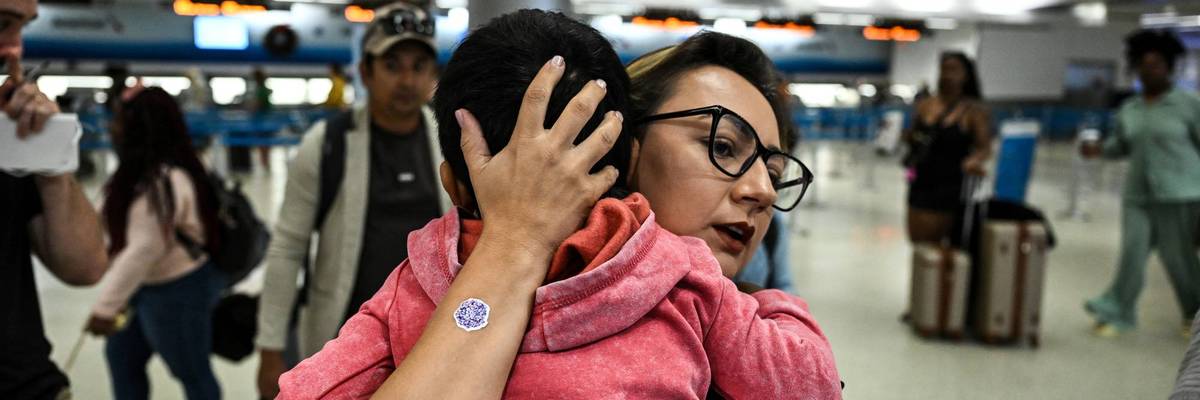
Louisa Gutierrez of the Guatemalan-Maya Center hugs 3-year-old US citizen Franklin as she escorts him and six other children from Miami International Airport to Guatemala, where they will reunite with their recently deported parents on December 4, 2025.
Federal immigration agents are required to allow parents to "make alternative care arrangements" for their children before they're detained.
The Trump administration's directive to federal immigration agents on the detention and deportation of parents of minor children is clear: US Immigration and Customs Enforcement agents must accommodate a parent's "efforts to make alternative care arrangements for their minor child(ren) prior to detention."
But a report released Wednesday by the Women's Refugee Commission (WRC) and Physicians for Human Rights (PHR) reveals that many parents, including dozens whom the groups interviewed at deportee reception centers in Honduras, have been forced to quickly leave their children in the "informal care" of friends, relatives, or even babysitters—many of whom are also vulnerable to deportation under the Trump administration—leaving them in precarious situations while traumatizing both parents and children.
According to the recently deported parents the group's researchers interviewed—many of whom reported symptoms associated with psychological trauma, such as an inability to eat or sleep, physical pain, and "acute emotional distress" with "uncontrollable crying and visible panic"—ICE agents frequently did not follow the agency's own guidelines to ask anyone they arrest whether they have children and to give parents an opportunity to take their children with them.
"They didn’t ask me anything," said one 22-year-old mother of a two-year-old. "They didn’t talk to me, only to yell at me, to humiliate. They never said: ‘You have a daughter, you can bring her,’ because I would have brought [my daughter], she is very attached to me."
Some parents told the researchers they had been ignored when they told arresting officers that they had children. One mother had three of her children with her when she was detained outside a hospital where she had gone to a medical appointment, and her three other children were at home. She was "dismissed" when she told the officers about her other children, and the family was separated.
Parents told researchers about being forced to abruptly leave their children in precarious situations—or even entirely alone.
A father who was arrested after leaving his three-year-old daughter with a babysitter said he begged the federal agents to allow him to go inside and tell the caretaker what was happening; his wife had already been detained.
"They didn’t ask me anything. They didn’t talk to me, only to yell at me, to humiliate. They never said: ‘You have a daughter, you can bring her,’ because I would have brought [my daughter], she is very attached to me."
“They just kept yelling at me to get on the ground,” he told the researchers. “I tried to get away but they threw me to the ground and wouldn’t let me say anything. They beat me really badly.”
The babysitter stayed with the child for 11 days when the father didn't return home.
A mother whose husband had previously been deported was forced to leave her four children entirely alone until their grandmother could get to them from out-of-state.
Michele Heisler, a physician with PHR, told The Guardian Thursday that ICE's refusal to follow its own directives on detaining parents "is going to create a really high burden of mental health distress."
“For a toddler, they are left with a sense of abandonment that’s kind of imprinted,” she said. “It’s hard for all of us to understand why there is this gratuitous level of cruelty happening."
DHS has repeatedly claimed that it does not separate children from their parents despite numerous reports showing otherwise.
The Trump administration weakened its protections for families in its "Detained Parents Directive" last year, eliminating a guideline that stipulated ICE agents must take into consideration whether or not an individual is a parent or legal guardian when deciding whether to detain or deport them at all.
But agents are still required to allow parents to bring their children if they are deported, and to decide what happens to their children when they are detained or removed from the country.
WRC and PHR called on Congress to codify parental interest protections, including a right to reunification with their children before and after deportation. They also urged Congress to require ICE to coordinate with state child welfare agencies to facilitate reunification and to require the Department of Homeland Security (DHS) to appoint a national coordinator on child welfare.
DHS appropriations bills must prevent "ICE, CBP, and other immigration agencies from using any appropriated funds for enforcement that violates laws or DHS policy pertaining to family separation, specifically the Detained Parents Directive."
Democrats in the Senate have vowed to block funding for ICE and other DHS agencies until the Trump administration agrees to immigration enforcement reforms, with the demands mainly relating to federal agents wearing masks during enforcement operations and entering private property without judicial warrants.
The report released Wednesday warned that the "scope and scale of these types of family separations is likely to worsen" as the impacts of the One Big Beautiful Bill Act—the law that provided $170 billion for immigration enforcement—are "fully realized" in the coming months.
WRC and PHR said they "aim to prevent further family separations and reunify separated families by documenting systemic violations of existing family unity policies, identifying reforms to protect children and parents, and working with receiving countries like Honduras to establish systems to ensure prompt reunification of separated families."
Dear Common Dreams reader, It’s been nearly 30 years since I co-founded Common Dreams with my late wife, Lina Newhouser. We had the radical notion that journalism should serve the public good, not corporate profits. It was clear to us from the outset what it would take to build such a project. No paid advertisements. No corporate sponsors. No millionaire publisher telling us what to think or do. Many people said we wouldn't last a year, but we proved those doubters wrong. Together with a tremendous team of journalists and dedicated staff, we built an independent media outlet free from the constraints of profits and corporate control. Our mission has always been simple: To inform. To inspire. To ignite change for the common good. Building Common Dreams was not easy. Our survival was never guaranteed. When you take on the most powerful forces—Wall Street greed, fossil fuel industry destruction, Big Tech lobbyists, and uber-rich oligarchs who have spent billions upon billions rigging the economy and democracy in their favor—the only bulwark you have is supporters who believe in your work. But here’s the urgent message from me today. It's never been this bad out there. And it's never been this hard to keep us going. At the very moment Common Dreams is most needed, the threats we face are intensifying. We need your support now more than ever. We don't accept corporate advertising and never will. We don't have a paywall because we don't think people should be blocked from critical news based on their ability to pay. Everything we do is funded by the donations of readers like you. When everyone does the little they can afford, we are strong. But if that support retreats or dries up, so do we. Will you donate now to make sure Common Dreams not only survives but thrives? —Craig Brown, Co-founder |
The Trump administration's directive to federal immigration agents on the detention and deportation of parents of minor children is clear: US Immigration and Customs Enforcement agents must accommodate a parent's "efforts to make alternative care arrangements for their minor child(ren) prior to detention."
But a report released Wednesday by the Women's Refugee Commission (WRC) and Physicians for Human Rights (PHR) reveals that many parents, including dozens whom the groups interviewed at deportee reception centers in Honduras, have been forced to quickly leave their children in the "informal care" of friends, relatives, or even babysitters—many of whom are also vulnerable to deportation under the Trump administration—leaving them in precarious situations while traumatizing both parents and children.
According to the recently deported parents the group's researchers interviewed—many of whom reported symptoms associated with psychological trauma, such as an inability to eat or sleep, physical pain, and "acute emotional distress" with "uncontrollable crying and visible panic"—ICE agents frequently did not follow the agency's own guidelines to ask anyone they arrest whether they have children and to give parents an opportunity to take their children with them.
"They didn’t ask me anything," said one 22-year-old mother of a two-year-old. "They didn’t talk to me, only to yell at me, to humiliate. They never said: ‘You have a daughter, you can bring her,’ because I would have brought [my daughter], she is very attached to me."
Some parents told the researchers they had been ignored when they told arresting officers that they had children. One mother had three of her children with her when she was detained outside a hospital where she had gone to a medical appointment, and her three other children were at home. She was "dismissed" when she told the officers about her other children, and the family was separated.
Parents told researchers about being forced to abruptly leave their children in precarious situations—or even entirely alone.
A father who was arrested after leaving his three-year-old daughter with a babysitter said he begged the federal agents to allow him to go inside and tell the caretaker what was happening; his wife had already been detained.
"They didn’t ask me anything. They didn’t talk to me, only to yell at me, to humiliate. They never said: ‘You have a daughter, you can bring her,’ because I would have brought [my daughter], she is very attached to me."
“They just kept yelling at me to get on the ground,” he told the researchers. “I tried to get away but they threw me to the ground and wouldn’t let me say anything. They beat me really badly.”
The babysitter stayed with the child for 11 days when the father didn't return home.
A mother whose husband had previously been deported was forced to leave her four children entirely alone until their grandmother could get to them from out-of-state.
Michele Heisler, a physician with PHR, told The Guardian Thursday that ICE's refusal to follow its own directives on detaining parents "is going to create a really high burden of mental health distress."
“For a toddler, they are left with a sense of abandonment that’s kind of imprinted,” she said. “It’s hard for all of us to understand why there is this gratuitous level of cruelty happening."
DHS has repeatedly claimed that it does not separate children from their parents despite numerous reports showing otherwise.
The Trump administration weakened its protections for families in its "Detained Parents Directive" last year, eliminating a guideline that stipulated ICE agents must take into consideration whether or not an individual is a parent or legal guardian when deciding whether to detain or deport them at all.
But agents are still required to allow parents to bring their children if they are deported, and to decide what happens to their children when they are detained or removed from the country.
WRC and PHR called on Congress to codify parental interest protections, including a right to reunification with their children before and after deportation. They also urged Congress to require ICE to coordinate with state child welfare agencies to facilitate reunification and to require the Department of Homeland Security (DHS) to appoint a national coordinator on child welfare.
DHS appropriations bills must prevent "ICE, CBP, and other immigration agencies from using any appropriated funds for enforcement that violates laws or DHS policy pertaining to family separation, specifically the Detained Parents Directive."
Democrats in the Senate have vowed to block funding for ICE and other DHS agencies until the Trump administration agrees to immigration enforcement reforms, with the demands mainly relating to federal agents wearing masks during enforcement operations and entering private property without judicial warrants.
The report released Wednesday warned that the "scope and scale of these types of family separations is likely to worsen" as the impacts of the One Big Beautiful Bill Act—the law that provided $170 billion for immigration enforcement—are "fully realized" in the coming months.
WRC and PHR said they "aim to prevent further family separations and reunify separated families by documenting systemic violations of existing family unity policies, identifying reforms to protect children and parents, and working with receiving countries like Honduras to establish systems to ensure prompt reunification of separated families."
The Trump administration's directive to federal immigration agents on the detention and deportation of parents of minor children is clear: US Immigration and Customs Enforcement agents must accommodate a parent's "efforts to make alternative care arrangements for their minor child(ren) prior to detention."
But a report released Wednesday by the Women's Refugee Commission (WRC) and Physicians for Human Rights (PHR) reveals that many parents, including dozens whom the groups interviewed at deportee reception centers in Honduras, have been forced to quickly leave their children in the "informal care" of friends, relatives, or even babysitters—many of whom are also vulnerable to deportation under the Trump administration—leaving them in precarious situations while traumatizing both parents and children.
According to the recently deported parents the group's researchers interviewed—many of whom reported symptoms associated with psychological trauma, such as an inability to eat or sleep, physical pain, and "acute emotional distress" with "uncontrollable crying and visible panic"—ICE agents frequently did not follow the agency's own guidelines to ask anyone they arrest whether they have children and to give parents an opportunity to take their children with them.
"They didn’t ask me anything," said one 22-year-old mother of a two-year-old. "They didn’t talk to me, only to yell at me, to humiliate. They never said: ‘You have a daughter, you can bring her,’ because I would have brought [my daughter], she is very attached to me."
Some parents told the researchers they had been ignored when they told arresting officers that they had children. One mother had three of her children with her when she was detained outside a hospital where she had gone to a medical appointment, and her three other children were at home. She was "dismissed" when she told the officers about her other children, and the family was separated.
Parents told researchers about being forced to abruptly leave their children in precarious situations—or even entirely alone.
A father who was arrested after leaving his three-year-old daughter with a babysitter said he begged the federal agents to allow him to go inside and tell the caretaker what was happening; his wife had already been detained.
"They didn’t ask me anything. They didn’t talk to me, only to yell at me, to humiliate. They never said: ‘You have a daughter, you can bring her,’ because I would have brought [my daughter], she is very attached to me."
“They just kept yelling at me to get on the ground,” he told the researchers. “I tried to get away but they threw me to the ground and wouldn’t let me say anything. They beat me really badly.”
The babysitter stayed with the child for 11 days when the father didn't return home.
A mother whose husband had previously been deported was forced to leave her four children entirely alone until their grandmother could get to them from out-of-state.
Michele Heisler, a physician with PHR, told The Guardian Thursday that ICE's refusal to follow its own directives on detaining parents "is going to create a really high burden of mental health distress."
“For a toddler, they are left with a sense of abandonment that’s kind of imprinted,” she said. “It’s hard for all of us to understand why there is this gratuitous level of cruelty happening."
DHS has repeatedly claimed that it does not separate children from their parents despite numerous reports showing otherwise.
The Trump administration weakened its protections for families in its "Detained Parents Directive" last year, eliminating a guideline that stipulated ICE agents must take into consideration whether or not an individual is a parent or legal guardian when deciding whether to detain or deport them at all.
But agents are still required to allow parents to bring their children if they are deported, and to decide what happens to their children when they are detained or removed from the country.
WRC and PHR called on Congress to codify parental interest protections, including a right to reunification with their children before and after deportation. They also urged Congress to require ICE to coordinate with state child welfare agencies to facilitate reunification and to require the Department of Homeland Security (DHS) to appoint a national coordinator on child welfare.
DHS appropriations bills must prevent "ICE, CBP, and other immigration agencies from using any appropriated funds for enforcement that violates laws or DHS policy pertaining to family separation, specifically the Detained Parents Directive."
Democrats in the Senate have vowed to block funding for ICE and other DHS agencies until the Trump administration agrees to immigration enforcement reforms, with the demands mainly relating to federal agents wearing masks during enforcement operations and entering private property without judicial warrants.
The report released Wednesday warned that the "scope and scale of these types of family separations is likely to worsen" as the impacts of the One Big Beautiful Bill Act—the law that provided $170 billion for immigration enforcement—are "fully realized" in the coming months.
WRC and PHR said they "aim to prevent further family separations and reunify separated families by documenting systemic violations of existing family unity policies, identifying reforms to protect children and parents, and working with receiving countries like Honduras to establish systems to ensure prompt reunification of separated families."