SUBSCRIBE TO OUR FREE NEWSLETTER
Daily news & progressive opinion—funded by the people, not the corporations—delivered straight to your inbox.
5
#000000
#FFFFFF
To donate by check, phone, or other method, see our More Ways to Give page.
Daily news & progressive opinion—funded by the people, not the corporations—delivered straight to your inbox.
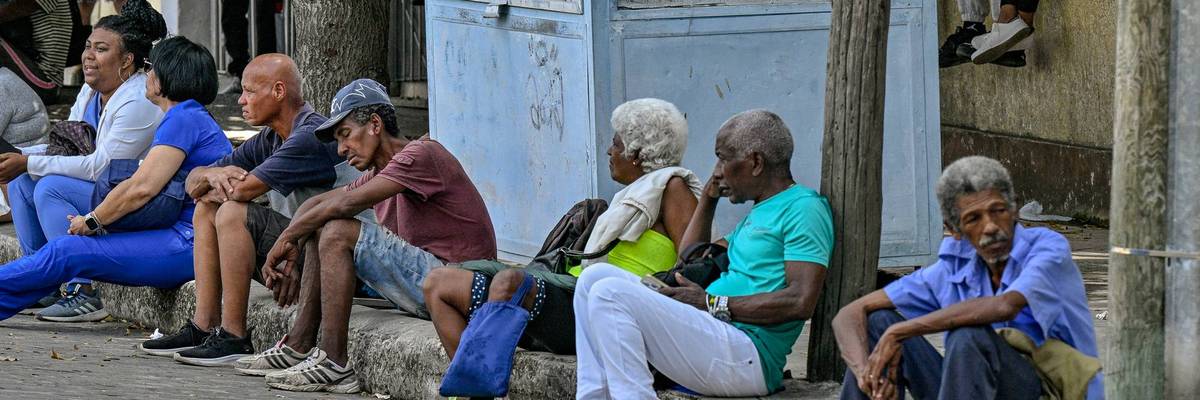
People wait at a bus stop in Havana, Cuba during a blackout on March 16, 2026.
"While we're busy destroying the Gulf, our side project is implementing a total siege on the island of Cuba," said one progressive critic. "Unbelievably cruel."
Cuba faced an island-wide blackout on Monday amid an energy crisis resulting from President Donald Trump's decision to ramp up the United States' decadeslong and legally contested blockade of the Caribbean country by cutting off shipments of Venezuelan oil.
"A total disconnection" of the island's electrical system had occurred, but "the causes are being investigated, and protocols for restoration are beginning to be activated," the Cuban Ministry of Energy and Mines said on social media. It later added that "no faults" were reported in the units operating when the grid collapsed, and "the restoration process continues."
While Cuba has endured power outages in recent years that officials and experts have blamed on both the condition of the country's system and US sanctions, there have been multiple major blackouts in recent months, since Trump sent soldiers to abduct Venezuelan President Nicolás Maduro and seized control of Venezuela's nationalized oil industry.
"Officials in the US [government] must be feeling very happy by the harm caused to every Cuban family," Cuban Deputy Foreign Minister Carlos Fernández de Cossío told CNN of the latest outage. The network noted that it had reached out to the White House for comment.
Blasting the blackout as "a direct consequence of Trump's economic warfare," Manolo De Los Santos of The People's Forum in New York City said on social media Monday that "the US has deliberately cut off fuel, spare parts, and equipment, crippling an already fragile grid. It's a genocidal siege, designed to starve and break the Cuban people into submission."
Similarly highlighting how "decades of US sanctions have made it harder for Cuba to access the fuel, equipment, and financing needed to maintain its energy grid," New York state Sen. Jabari Brisport (D-25), a democratic socialist, declared that "it's time to end the blockade and pursue diplomacy."
The blackout on the island of nearly 11 million people came after Cuban President Miguel Díaz-Canel publicly confirmed on Friday that his government recently held "sensitive" talks with the Trump administration "to determine the willingness of both parties to take concrete actions for the benefit of the people of both countries."
Specifically, according to The Associated Press, US Secretary of State Marco Rubio—the son of Cuban immigrants and longtime supporter of regime change on the island—and top aides met with Raúl Guillermo Rodriguez Castro on the sidelines of a Caribbean Community leaders meeting in St. Kitts and Nevis last month.
During his Friday remarks to reporters, Díaz-Canel also emphasized the impacts of Cuba not receiving oil shipments for over three months, including disruptions to communications, education, healthcare, and transportation across the island.
While Trump was speaking with reporters on Monday, he called Cuba a "failed nation," and claimed that "Cuba also wants to make a deal, and I think we will pretty soon, either make a deal or do whatever we have to do." He also signaled that any such action would come after the illegal war his administration and Israel are waging on Iran.
Although Sen. John Fetterman (D-Pa.) recently helped Senate Republicans block Sen. Tim Kaine's (D-Va.) war powers resolution intended to halt Trump's assault on Iran, Kaine has now partnered with Sens. Adam Schiff (D-Calif.) and Ruben Gallego (D-Ariz.) for a similar measure on Cuba.
Meanwhile, Sen. Ed Markey (D-Mass.) took to social media on Monday to weigh in on the grid collapse: "Cuba has gone dark. Trump's vindictive oil embargo—along with a sanctions regime that has starved Cuba of opportunities to develop its solar and wind—is depriving innocent Cuban citizens of basic necessities and creating a humanitarian crisis. Trump must end the embargo."
Markey and two other Massachusetts Democrats, Sen. Elizabeth Warren and Rep. Jim McGovern, had previously written to Trump in February to call for an end to the oil embargo, stressing that "Cuba poses no credible national security threat to the United States," and "the overt strategy of choking off oil imports to the island is inflicting severe hardship on the Cuban people, who rely on imported fuel for electricity, transportation, healthcare, and clean water."
"Taking action that sparks a humanitarian crisis as a means of leverage is not a strategy that results in long-term success or reflects who we are as Americans," they argued. "Policies that intensify fuel shortages, cripple essential services, and deepen economic desperation risk destabilizing not only Cuba, but the broader Caribbean region."
Dear Common Dreams reader, It’s been nearly 30 years since I co-founded Common Dreams with my late wife, Lina Newhouser. We had the radical notion that journalism should serve the public good, not corporate profits. It was clear to us from the outset what it would take to build such a project. No paid advertisements. No corporate sponsors. No millionaire publisher telling us what to think or do. Many people said we wouldn't last a year, but we proved those doubters wrong. Together with a tremendous team of journalists and dedicated staff, we built an independent media outlet free from the constraints of profits and corporate control. Our mission has always been simple: To inform. To inspire. To ignite change for the common good. Building Common Dreams was not easy. Our survival was never guaranteed. When you take on the most powerful forces—Wall Street greed, fossil fuel industry destruction, Big Tech lobbyists, and uber-rich oligarchs who have spent billions upon billions rigging the economy and democracy in their favor—the only bulwark you have is supporters who believe in your work. But here’s the urgent message from me today. It's never been this bad out there. And it's never been this hard to keep us going. At the very moment Common Dreams is most needed, the threats we face are intensifying. We need your support now more than ever. We don't accept corporate advertising and never will. We don't have a paywall because we don't think people should be blocked from critical news based on their ability to pay. Everything we do is funded by the donations of readers like you. When everyone does the little they can afford, we are strong. But if that support retreats or dries up, so do we. Will you donate now to make sure Common Dreams not only survives but thrives? —Craig Brown, Co-founder |
Cuba faced an island-wide blackout on Monday amid an energy crisis resulting from President Donald Trump's decision to ramp up the United States' decadeslong and legally contested blockade of the Caribbean country by cutting off shipments of Venezuelan oil.
"A total disconnection" of the island's electrical system had occurred, but "the causes are being investigated, and protocols for restoration are beginning to be activated," the Cuban Ministry of Energy and Mines said on social media. It later added that "no faults" were reported in the units operating when the grid collapsed, and "the restoration process continues."
While Cuba has endured power outages in recent years that officials and experts have blamed on both the condition of the country's system and US sanctions, there have been multiple major blackouts in recent months, since Trump sent soldiers to abduct Venezuelan President Nicolás Maduro and seized control of Venezuela's nationalized oil industry.
"Officials in the US [government] must be feeling very happy by the harm caused to every Cuban family," Cuban Deputy Foreign Minister Carlos Fernández de Cossío told CNN of the latest outage. The network noted that it had reached out to the White House for comment.
Blasting the blackout as "a direct consequence of Trump's economic warfare," Manolo De Los Santos of The People's Forum in New York City said on social media Monday that "the US has deliberately cut off fuel, spare parts, and equipment, crippling an already fragile grid. It's a genocidal siege, designed to starve and break the Cuban people into submission."
Similarly highlighting how "decades of US sanctions have made it harder for Cuba to access the fuel, equipment, and financing needed to maintain its energy grid," New York state Sen. Jabari Brisport (D-25), a democratic socialist, declared that "it's time to end the blockade and pursue diplomacy."
The blackout on the island of nearly 11 million people came after Cuban President Miguel Díaz-Canel publicly confirmed on Friday that his government recently held "sensitive" talks with the Trump administration "to determine the willingness of both parties to take concrete actions for the benefit of the people of both countries."
Specifically, according to The Associated Press, US Secretary of State Marco Rubio—the son of Cuban immigrants and longtime supporter of regime change on the island—and top aides met with Raúl Guillermo Rodriguez Castro on the sidelines of a Caribbean Community leaders meeting in St. Kitts and Nevis last month.
During his Friday remarks to reporters, Díaz-Canel also emphasized the impacts of Cuba not receiving oil shipments for over three months, including disruptions to communications, education, healthcare, and transportation across the island.
While Trump was speaking with reporters on Monday, he called Cuba a "failed nation," and claimed that "Cuba also wants to make a deal, and I think we will pretty soon, either make a deal or do whatever we have to do." He also signaled that any such action would come after the illegal war his administration and Israel are waging on Iran.
Although Sen. John Fetterman (D-Pa.) recently helped Senate Republicans block Sen. Tim Kaine's (D-Va.) war powers resolution intended to halt Trump's assault on Iran, Kaine has now partnered with Sens. Adam Schiff (D-Calif.) and Ruben Gallego (D-Ariz.) for a similar measure on Cuba.
Meanwhile, Sen. Ed Markey (D-Mass.) took to social media on Monday to weigh in on the grid collapse: "Cuba has gone dark. Trump's vindictive oil embargo—along with a sanctions regime that has starved Cuba of opportunities to develop its solar and wind—is depriving innocent Cuban citizens of basic necessities and creating a humanitarian crisis. Trump must end the embargo."
Markey and two other Massachusetts Democrats, Sen. Elizabeth Warren and Rep. Jim McGovern, had previously written to Trump in February to call for an end to the oil embargo, stressing that "Cuba poses no credible national security threat to the United States," and "the overt strategy of choking off oil imports to the island is inflicting severe hardship on the Cuban people, who rely on imported fuel for electricity, transportation, healthcare, and clean water."
"Taking action that sparks a humanitarian crisis as a means of leverage is not a strategy that results in long-term success or reflects who we are as Americans," they argued. "Policies that intensify fuel shortages, cripple essential services, and deepen economic desperation risk destabilizing not only Cuba, but the broader Caribbean region."
Cuba faced an island-wide blackout on Monday amid an energy crisis resulting from President Donald Trump's decision to ramp up the United States' decadeslong and legally contested blockade of the Caribbean country by cutting off shipments of Venezuelan oil.
"A total disconnection" of the island's electrical system had occurred, but "the causes are being investigated, and protocols for restoration are beginning to be activated," the Cuban Ministry of Energy and Mines said on social media. It later added that "no faults" were reported in the units operating when the grid collapsed, and "the restoration process continues."
While Cuba has endured power outages in recent years that officials and experts have blamed on both the condition of the country's system and US sanctions, there have been multiple major blackouts in recent months, since Trump sent soldiers to abduct Venezuelan President Nicolás Maduro and seized control of Venezuela's nationalized oil industry.
"Officials in the US [government] must be feeling very happy by the harm caused to every Cuban family," Cuban Deputy Foreign Minister Carlos Fernández de Cossío told CNN of the latest outage. The network noted that it had reached out to the White House for comment.
Blasting the blackout as "a direct consequence of Trump's economic warfare," Manolo De Los Santos of The People's Forum in New York City said on social media Monday that "the US has deliberately cut off fuel, spare parts, and equipment, crippling an already fragile grid. It's a genocidal siege, designed to starve and break the Cuban people into submission."
Similarly highlighting how "decades of US sanctions have made it harder for Cuba to access the fuel, equipment, and financing needed to maintain its energy grid," New York state Sen. Jabari Brisport (D-25), a democratic socialist, declared that "it's time to end the blockade and pursue diplomacy."
The blackout on the island of nearly 11 million people came after Cuban President Miguel Díaz-Canel publicly confirmed on Friday that his government recently held "sensitive" talks with the Trump administration "to determine the willingness of both parties to take concrete actions for the benefit of the people of both countries."
Specifically, according to The Associated Press, US Secretary of State Marco Rubio—the son of Cuban immigrants and longtime supporter of regime change on the island—and top aides met with Raúl Guillermo Rodriguez Castro on the sidelines of a Caribbean Community leaders meeting in St. Kitts and Nevis last month.
During his Friday remarks to reporters, Díaz-Canel also emphasized the impacts of Cuba not receiving oil shipments for over three months, including disruptions to communications, education, healthcare, and transportation across the island.
While Trump was speaking with reporters on Monday, he called Cuba a "failed nation," and claimed that "Cuba also wants to make a deal, and I think we will pretty soon, either make a deal or do whatever we have to do." He also signaled that any such action would come after the illegal war his administration and Israel are waging on Iran.
Although Sen. John Fetterman (D-Pa.) recently helped Senate Republicans block Sen. Tim Kaine's (D-Va.) war powers resolution intended to halt Trump's assault on Iran, Kaine has now partnered with Sens. Adam Schiff (D-Calif.) and Ruben Gallego (D-Ariz.) for a similar measure on Cuba.
Meanwhile, Sen. Ed Markey (D-Mass.) took to social media on Monday to weigh in on the grid collapse: "Cuba has gone dark. Trump's vindictive oil embargo—along with a sanctions regime that has starved Cuba of opportunities to develop its solar and wind—is depriving innocent Cuban citizens of basic necessities and creating a humanitarian crisis. Trump must end the embargo."
Markey and two other Massachusetts Democrats, Sen. Elizabeth Warren and Rep. Jim McGovern, had previously written to Trump in February to call for an end to the oil embargo, stressing that "Cuba poses no credible national security threat to the United States," and "the overt strategy of choking off oil imports to the island is inflicting severe hardship on the Cuban people, who rely on imported fuel for electricity, transportation, healthcare, and clean water."
"Taking action that sparks a humanitarian crisis as a means of leverage is not a strategy that results in long-term success or reflects who we are as Americans," they argued. "Policies that intensify fuel shortages, cripple essential services, and deepen economic desperation risk destabilizing not only Cuba, but the broader Caribbean region."