

SUBSCRIBE TO OUR FREE NEWSLETTER
Daily news & progressive opinion—funded by the people, not the corporations—delivered straight to your inbox.
5
#000000
#FFFFFF
To donate by check, phone, or other method, see our More Ways to Give page.
Daily news & progressive opinion—funded by the people, not the corporations—delivered straight to your inbox.
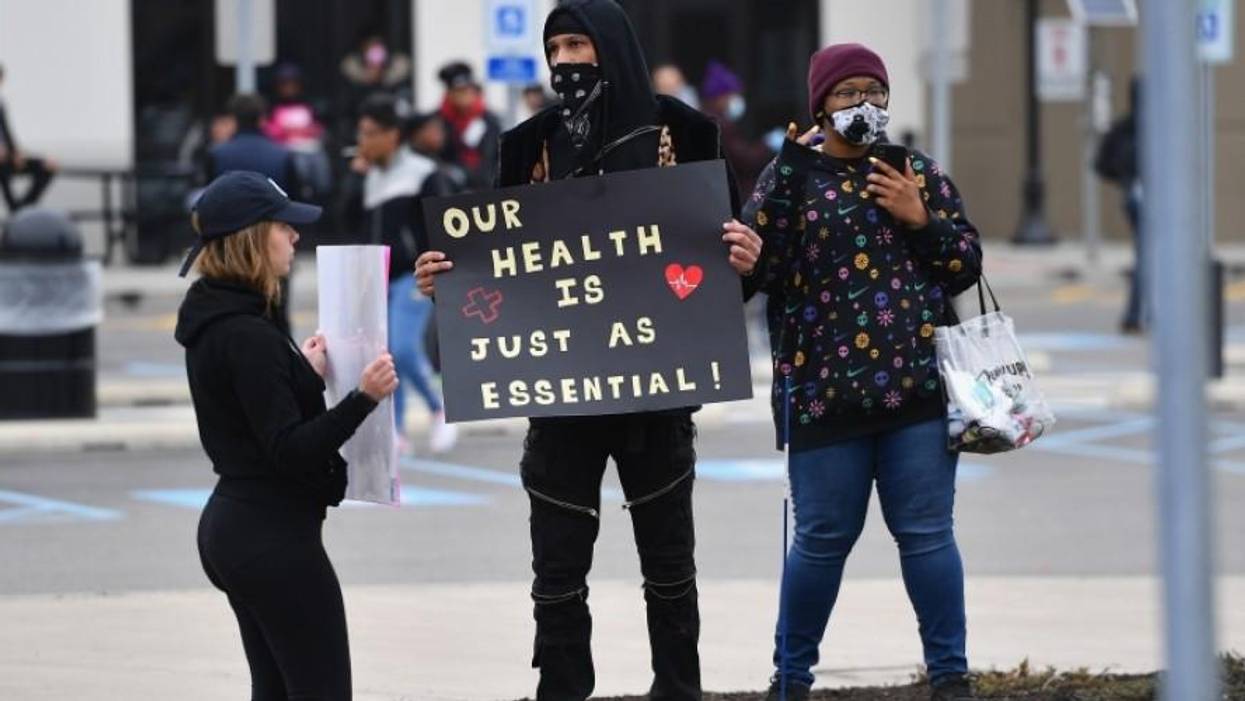
Conservative governors are now openly at odds with epidemiologists as plans move ahead for more than half the states to loosen social distancing and permit many businesses to re-open this month despite none of them meeting White House Coronavirus Taskforce guidelines.
Unlike re-openings in China, Hong Kong and South Korea where new cases fell rapidly after aggressive containment efforts, the United States, with nearly 1.4 million cases and over 81,000 COVID-19 deaths (as of May 11), must follow a different model.
Many critics blame the Trump Administration's laggard scale-up of testing for the dilemma. But studies of past emerging disease epidemics have taught us that testing alone will not prevent new outbreaks. To re-open the economy we must undertake the most massive effort to trace and isolate new infections in history.
Ironically, the states moving most rapidly to restore commerce--eg. Georgia, Texas, and Florida--not only have regions with high case loads, but also inadequate public health workers to contain new outbreaks, according to a study by Politico. In the Midwest, despite high case loads per capita in Iowa and Nebraska, officials are jumping ahead of federal criteria calling for two weeks of falling cases before relaxing stay-at-home rules. Robert Redfield, director of the Centers for Disease Control and Prevention (CDC), warns that re-opening requires not only ramped up testing, but "very aggressive" contact tracing of new cases. Such disease tracking, together with testing, was critical to controlling spread of the virus in South Korea, New Zealand, Germany and China.
An April 27 letter released by former public health officials, including Andy Slavitt, who ran Medicare and Medicaid in the Obama administration, and Scott Gottlieb, a former Food and Drug Administration chief under President Trump, estimated 180,000 contact tracers are needed to re-open the economy. Tom Frieden, who directed the CDC from 2009 to 2017, extrapolated from experiences in Asia to estimate that up to 300,000 such workers may be needed across the country. At present local health departments and the CDC have only about 2,200 professional "disease detectives," although other health staff often assist during a contagious outbreak.
Until early May, federal officials and the media have tended to ignore contact tracing despite the critical role it has played in every infectious disease outbreak. The labor-intensive nature of the task is probably why. Our chronically underfunded, and now overwhelmed, public health departments have no capacity for such a massive scale up without significant new funding.
A recent NPR survey and follow-up report on 44 state health departments turned up a total count of 11,142 workers trained in contact tracing. As a point of contrast, at the height of China's viral crisis it took 9,000 contact tracers in Wuhan alone to contain the outbreak. Officials in state health departments surveyed described a variety of plans to expand capacity, some relying on volunteers, with the goal of scaling up to 66,197. Most will need federal aid for the new hires.
Unfortunately, there is no federal health workforce or emergency fund up to the task. The closest we have to a US rapid response team might be the Medical Reserve Corps (MRC), which matches over 175,000 volunteers with public health and medical assistance needs across the country. Thousands of MRC volunteers are now deployed in call centers or administering tests during the coronavirus crisis. Some may be trained as contact tracers in coming months.
We also entered into the COVID-19 crisis with a shortage of nurses and primary care doctors. The Chinese government sent 42,000 health workers to the Wuhan from other parts of the country. Despite the likelihood that many new hot spots will crop up here as we re-open, the United States lacks a coherent mobile medical corps of professionals who can be deployed rapidly. Given the perpetual shortages of physicians in US rural areas, another program that deserves to be scaled up is the underfunded "National Health Service Corps" which ties medical school loan forgiveness to commitments by new doctors to practice for two years in underserved areas.
Our urgent need to scale up infectious disease control is not unlike the impetus for the Green New Deal (GND) jobs & infrastructure proposal to support a just energy/climate transition.
Our urgent need to scale up infectious disease control is not unlike the impetus for the Green New Deal (GND) jobs & infrastructure proposal to support a just energy/climate transition. Both ideas draw inspiration from President Franklin D. Roosevelt's response to mass unemployment in the Great Depression by creating the Works Progress Administration which hired millions of unemployed people over an eight-year period for public works projects.
Clearly the need to address the climate crisis remains urgent, but first we have to get out of the house safely. Jeremy Brecher, of the Institute for Policy Studies, has called for such an emergency GND that includes health. Such a new health corps could offer a win-win solution to our two acute (and simultaneous) dilemmas: record levels of unemployment and a vital need for more feet-on-the-ground to reduce our viral case load.
At present, many political observers predict that after the pandemic, citizens will demand more investment in health care and disease surveillance. Thus, a plan to strengthen health staffing--including new professional and community health workers--could address future needs as well as our current emergency. Besides containing new infections and providing vital paychecks to our unemployed, like other "essential" workers, new health workers would spend their funds into the economy boosting demand for goods and services.
Dr. Frieden argued in early May that lockdowns, while effective at stopping spread, are blunt tools that cause unemployment and bankruptcies. Instead, he said, "we have a sharper tool, (a strategy) to stop chains of transmission by widespread testing, isolation of cases, contact tracing and quarantine of contacts."
Frieden, who now directs the non-profit Resolve to Save Lives, gained extensive experience overseeing responses to the H1N1 influenza, Ebola and Zika epidemics while running the CDC. But the importance of contact tracers was brought home to him many years earlier in New York City. I did post-doctoral research in 1999 comparing two epidemics of resurgent multi-drug-resistant tuberculosis (MDR-TB) - one in New York City and one in Lima, Peru. I learned that Frieden, while working in the CDC's Epidemic Intelligence Service in 1991, helped demonstrate that MDR-TB was widespread in many poor neighborhoods of New York City, a finding that spurred the mayor to replace city health officials who had ignored mounting signs of the epidemic.
Frieden was appointed to lead the city's tuberculosis division and later credited for innovative policies thar brought the deadly outbreak under control. One key initiative was the hiring and training of community health workers (who did not have professional degrees) to do outreach, track cases and administer doses of anti-TB drugs, effectively cutting the chain of contagion and drug-resistance.
Community health workers were also the key to controlling MDR-TB in Peru. TB drug resistance was first identified in a barrio of Lima in the late 1990s by the Boston-based non-profit Partners in Health (PIH). Drs. Paul Farmer and Jim Yong Kim, who directed PIH, built a program at an urban clinic in Lima to address the deadly outbreak using a similar strategy of outreach and treatment with lay workers doing home visits and social programming with patients. In both the New York and Lima epidemics, a training staple for successful community outreach was cultural sensitivity and a willingness to establish relationships and trust with patients and their families. PIH's Peru work helped established a model for treating MDR-TB outbreaks in low-income countries.
PIH is now applying that experience to COVID-19 in Massachusetts where the health department recently contracted with PIH to hire 1,000 fulltime community health workers as half of a 2,000 person contingent who will do contact tracing statewide. Another model may be California which has invested in a well-designed disease tracking system, and now aims to combine hired staff and volunteers to ramp up to 10,000 contact tracers.
Since April 1 new US cases per day have exceeded 20,000 on every day except one, and have ranged as high as 38,000. Epidemic models predict the infection will continue to spread across the country in the months ahead, producing not hundreds of thousands, but millions of new infections, especially in places where social distancing is lax. Many states project using new electronic tracing systems for COVID-19 exposure which have been heavily hyped by tech companies, such as Google and Apple. But even if the serious privacy concerns raised by these apps are resolved, such systems will only be an aid, not a replacement for humans who follow-up with contacts exposed to the virus.
The work of a contact tracer, ideally hired from the same area where he or she would serve, starts with interviewing infected patients and following leads to find people that person was recently in contact with. These workers then help arrange testing for new contacts, advise them on self-isolation, and assist those who become sick with treatment and access to humane quarantine options like hotel rooms or other facilities for patients in crowded households so as to avoid infecting immune-compromised or elderly members. Support for patients in quarantine would include food and daily follow-up on medical needs. This level of support is the only way to prevent super-spreader events--such as the widely reported outbreaks at funerals or nursing homes that contributed to the US having a quarter of all reported cases globally.
When locally-based and trained well, community health workers are also the ideal outreach personnel to educate others on coronavirus prevention and treatment, including advice on chronic problems that contribute to high COVID-19 mortality rates in Latino and Black families. In the long run such a workforce could help address the long-standing shortage of primary care in the United States--including community-based programming to assist families with preventive health, nutrition, exercise, chronic diseases and mental health needs.
In their public letter, Drs. Gottlieb and Slavitt called for $46 billion in national support for states to trace contacts and isolate infected patients, with an additional $4.5 billion for quarantine facilities, including rental of otherwise vacant hotel rooms. While the last Congressional stimulus package (HR 266) contained $25 billion for state health departments, the bulk of those funds were aimed at scaling up testing, with only a small slice likely to be spent for tracing contacts.
To re-open safely, the country needs a more comprehensive approach. One promising bill, introduced by Sens. Kirsten Gillibrand (D-N.Y.) and Michael Bennet (D-Colo.), would allocate $55 billion a year for a new "Health Force"--training and hiring hundreds of thousands of new public health workers to do testing, contact tracing and eventually vaccinating the population. The Senators even cite FDR's Great Depression work program as an inspiration.
It is clear that re-opening alone will not rapidly reduce unemployment, and federal stimulus efforts to date to keep working people afloat are woefully inadequate. The country needs to look beyond welfare solutions. There is much work to be done. Why not hire the unemployed to find and stem new viral outbreaks so we can reopen without recurring waves of deadly outbreaks? Until we have an army of disease detectives, the virus will continue its massive crime wave.
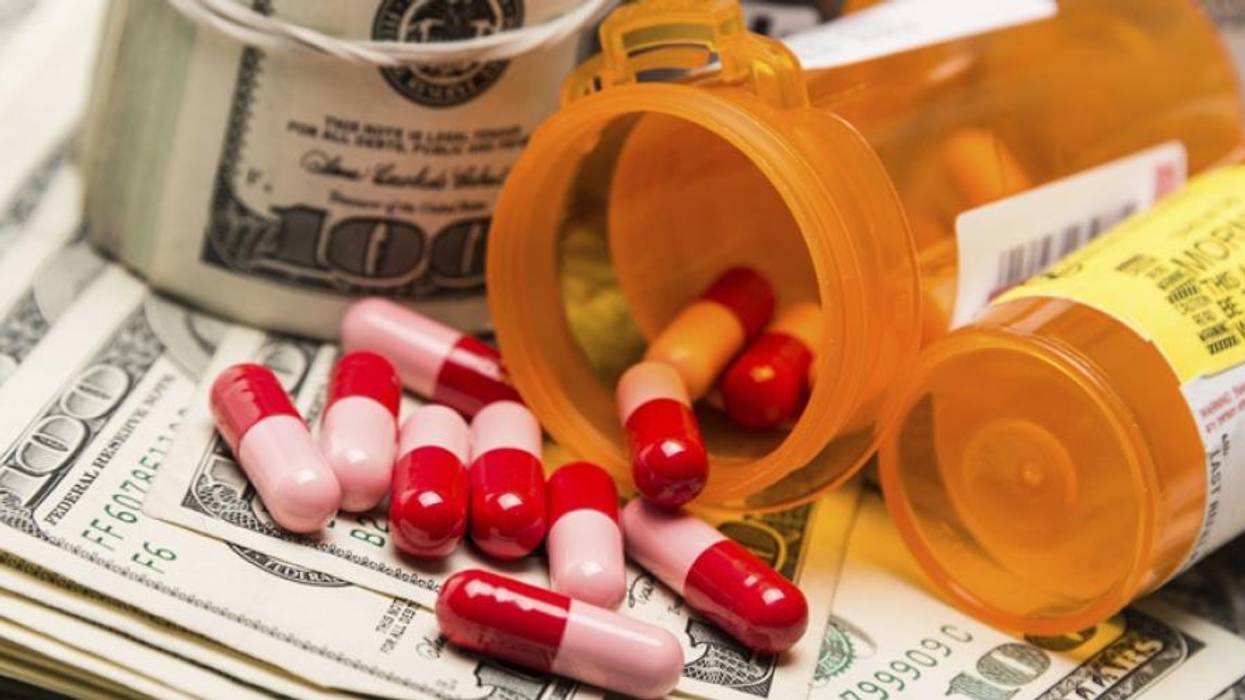
Media outlets keep telling us that we're all together in this pandemic. But we're not. The super-rich have separated themselves from the rest of us, with concierge medicine, private travel accommodations, isolated but well-stocked resort homes, and a variety of other advantages that allow them to look beyond the hardships endured by average Americans.
A few billionaires have contributed to the fight against Covid-19. But Luke Hildyard, Executive Director of the High Pay Centre, says, "Very generous individual grants can obscure the fact that on the whole, wealthy people's charitable giving is pretty minimal." In the most flagrant example of disregard for the rest of us, one company has installed private 'doomsday' bunkers in New Zealand with "luxury bathrooms, game rooms, shooting ranges, gyms, theaters and surgical beds."
There are at least three good reasons why wealthy Americans should be doing a LOT MORE to give something back to the nation that made them rich.
A Guaranteed Income Held Hostage: The Richest 5% Own Almost Two-Thirds of Our Nation's Wealth
The richest 5% have an average net worth of over $5 million. They came away with nearly $35 TRILLION dollars in the past ten years, mainly by waiting out the stock market, which has more than tripled in value since the recession. In the ten years from 2009 to 2019, the average member of America's richest 5% more than doubled his/her wealth from $2.6 million to $5.4 million.
Stock growth represents American prosperity. Everyone should benefit, probably by receiving a guaranteed income. Just a TWO-PERCENT TAX on total financial wealth would generate enough revenue to provide nearly a $14,000 annual stipend to every American household (including those of the richest families).
Big Tech and Big Pharma are Worth Trillions. They Were Built by the Taxpayers, Most of Whose Descendants Have Been Living Paycheck-to-Paycheck.
Bezos & Gates & Zuckerberg were "standing on the shoulders of giants" when they started their companies. The tallest giant was the U. S. taxpayer, who paid for 70 years of government research to develop all the technology that a few well-positioned individuals eventually claimed as their own.
The tallest giant was the U. S. taxpayer, who paid for 70 years of government research to develop all the technology that a few well-positioned individuals eventually claimed as their own.As Gar Alperovitz noted, "Between the mid-1980s and the mid-1990s the National Science Foundation spent $200 million to build and operate a network of regional supercomputing hubs called the NSFNET. Connected to the ARPANET, this network established Internet access for nearly all U.S. universities, making it a civilian network in all but name." Government funding for technology goes back much further, as explained by Mariana Mazzucato: "From the Internet that allows you to surf the Web, to GPS that lets you use Google Maps, to touchscreen display and even the SIRI voice-activated system -- all of these things were funded by Uncle Sam.."
But instead of returning some of this nationally-generated wealth to the millions of people living paycheck-to-paycheck, the billionaires keep taking more. As documented in the new Institute for Policy Studies report Billionaire Bonanza 2020, tech billionaires are even profiting from the pandemic!
In a similar vein, pharmaceutical companies wouldn't exist without money from the taxpayers, who have provided support for decades through the National Institutes of Health, and who still pay for most of the basic research for new drugs and vaccines. Yet both the tech and pharmaceutical companies claim patents on the products paid for and developed by the American people. And now, as author Gerald Posner puts it, "Pharmaceutical companies view Covid-19 as a once-in-a-lifetime business opportunity."
The Super-Rich Will Help Themselves by Leading the Fight Against Future Pandemics
Largely because of their lack of wealth and resources, African-Americans and people of low income have been much more severely impacted by COVID-19.
But a future pandemic could be even more virulent, reaching further into havens of wealth. The super-rich have to realize by now that by supporting a social need they're protecting themselves from global catastrophes. Not only from viral epidemics, but also from environmental disasters and terrorism. Sonia Shah, author of the 2017 book Pandemic, warns us that our negligent environmental policies make it more likely that a previously harmless microbe will cause a deadly outbreak. And as for the threat of terrorism, Dr. Ali S. Khan, author of The Next Pandemic, notes, "A deadly microbe like smallpox -- to which we no longer have immunity -- can be easily recreated in a rogue laboratory."
So for rich and poor alike, a commitment to anti-viral and infectious disease research is needed to reduce the threat of future pandemics. As Fortune explains, "Today, infectious diseases are emerging and reemerging more quickly than ever before. Between 1980 and 2013, the number of annual epidemics has gone from fewer than 1,000 to over 3,000. Infectious diseases such as Zika, MERS-CoV, SARS, cholera, tuberculosis, HIV/AIDS, influenza, and Ebola kill millions every year, and their outbreaks have decimated economies and triggered aftershocks and panic around the world."
Who's to Blame for America's Failures?
Unlike the farsighted and people-oriented decision-makers in other countries, America's unregulated capitalist leaders have failed us, both in the past and in our current crisis. We're not "all in this together" when so few people own so much of the wealth. And the state of our nation's health could easily get worse. As Noam Chomsky recently explained, "There's no profit in preventing a future catastrophe."

These are difficult times, especially for people who lack safe shelter, food and other necessities -- and for those on the front lines. Even though we must maintain physical distance, we need to come together more than ever.
As bad as things are, and could get, compassion and wisdom will ensure that good emerges from this. One hopeful trend in recent years is a growing recognition of the need to combine science with traditional Indigenous knowledge to get a more complete understanding of our place in nature and to find better ways to live within its limits.
People who have been connected to place for millennia often have a clear comprehension of how ecosystems work, of the importance of every component of the interconnected webs of which we're all a part. Western science tends to be reductionist, focusing things in isolation, often under controlled or artificial conditions such as flasks and growth chambers.
That can lead to unintended consequences. For example, Paul Mueller won the 1948 Nobel Prize in Physiology or Medicine for developing the powerful pesticide DDT. Although the compound effectively stemmed malaria and other insect-borne diseases, scientists missed the big picture until 1962, when Rachel Carson sounded the alarm in her book Silent Spring. Indiscriminate DDT application exterminated "pests," but the chemical also bioaccumulated in the food chain, killing birds and working its way into other animals, including humans.
This reductionist mindset also holds true for much of Western economics. Forests are seen only for their value as timber, not as communities of organisms that also provide irreplaceable services and benefits to people, from clean air and water to climate regulation -- even disease prevention.
As mentioned in last week's column, forest and habitat destruction is partly responsible for the fact that 60 per cent of emerging infectious diseases since 1940 (including HIV, Ebola, Zika and a number of coronaviruses) originated from animals -- two-thirds from wildlife and the rest from pets and livestock.
Growing research shows the importance of taking a holistic or systems approach to science and economics, and of learning from and working with Indigenous Peoples who have place-based knowledge from thousands of years of observation and experience.
Can we apply this thinking to find a better path from this crisis than the one we're on? I think we can.
Looking at all the good already around us, we see that most people care for each other and want to do the right thing. Altruism is spreading faster than any disease can -- and what is altruism but the innate recognition that we're all interconnected with each other and interdependent on all of nature?
We see front-line people in positions that aren't easy at the best of times -- health care, emergency services, grocery and food industries, mental health and more -- going above and beyond to make sure most of us are safe and fed.
In Canada, we're fortunate to have leaders at all political levels and in the health system keeping us informed and doing their best to help us through this.
Most people are willing to accept the restrictions placed on their lives so that we can overcome this emergency. Many are going out of their way to help neighbours in need. People are emerging onto their balconies or yards to sing or cheer for those who are making extraordinary efforts to keep the health care and food systems going strong.
In other words, people overall are more good than bad, and that should give us hope.
Yes, there are those who will act out of selfishness, or whose ignorance compels them to ignore anything not in their immediate interest. Unfortunately, some wield power and will do all they can to keep us on the same narrow, dangerous path. It appears plans are already in the works to bail out industries that should have been winding down long ago.
We're facing a crisis trifecta: COVID-19, climate disruption and plunging oil prices sparked by a feud between Russia and Saudi Arabia. This is exposing flaws in the systems we've been relying on far beyond their best-before dates.
Now, more than ever, we need to take care of ourselves and each other, so that we can help steer humanity onto a better course. We're showing we can do it.

With an unprecedented $2 trillion economic stabilization package at last finalized, and a flood of cash and credit emanating from the government to stem the dual crises of pandemic and economic meltdown--now more than $3.5 trillion and counting--America's priorities and vast resources are being unmasked for all to see.
As the human and financial toll spread out of control, the Federal Reserve injected an unprecedented $1.5 trillion in emergency loans into flailing markets--what one economist termed a "fiscal bazooka." Now, the White House and Congress have at last agreed on a $2.2 trillion economic stabilization package for a mix of industries, medical supplies, and checks of up to $1,200 for millions of Americans.
Amazing what's suddenly possible when everyone recognizes the necessity for swift action.
The massive aid package retains profound economic and policy inequities: $500 billion in bailout aid and loans for corporations, half that amount to middle- and lower-income Americans, and a meager $130 billion to hard-pressed hospitals. Republican senators were doggedly trying to strip worker protections from the deal; even in this moment of severe and intensifying crisis, Republicans are doing their damnedest to preserve and expand corporate power.
The Trump administration's criminally belated and brutally inadequate response has revealed a deeper perilous negligence, and an opportunity for change--the immense resources that can be expended to address a crisis once it is deemed urgent and life-threatening. Amazing what's suddenly possible when everyone recognizes the necessity for swift action.
Nobody can argue against the critical need to vastly expand medical capacity and to help stabilize working people's lives amid this health crisis which may go on for many months. Unemployment claims have already spiked as mass layoffs loom. The need for medical and financial assistance will likely grow in coming months, as experts warn of an onrushing economic recession or depression.
But this suddenly available torrent of funds raises the question: where were all these supposedly unattainable, unaffordable dollars for the healthcare and climate crises that have been taking lives for years? Remember those distant days just a couple of months ago, when millions of us sat next to each other watching Democratic debates, held in packed auditoriums, when moderators peppered Senator Bernie Sanders about how he'd pay for Medicare for All and a Green New Deal?
No moderator in any debate ever asked how candidates would pay for military expansions, wars, and interventions--not once. Nobody ever asked how the candidates would pay for today's vastly unequal economy and taxation system, wherein mega-billionaires like Jeff Bezos don't have to pay their fair share (or much of anything at all in some cases);what about all that lost money, which belongs to the public pie?
Where have all the politicians and dollars been for all these decades of deadly climate havoc, which poses a far graver mass existential threat than the current horrifying moment? Where have all the politicians and dollars been for all these years when many thousands of Americans have died due to lack of healthcare? Where have those fiscal questions and humanitarian concerns been when it came to preventing this massive loss of life stemming from our privatized for-profit healthcare system?
The answer, of course, is that the dollars and resources have been here all along--but the political will and urgency have been missing in what can only be considered a form of mass homicide.
The parallels between the COVID-19 pandemic, healthcare, and the climate crisis are inescapably real and direct. As author Mike Davis explains, America's systemic disinvestment and privatization of healthcare and hospitals since the Reagan era has left us horribly unprepared for this public health disaster: "According to the American Hospital Association, the number of in-patient hospital beds declined by an extraordinary 39 percent between 1981 and 1999," Davis reports. "The purpose was to raise profits by increasing 'census' (the number of occupied beds). But management's goal of 90 percent occupancy meant that hospitals no longer had the capacity to absorb patient influx during epidemics and medical emergencies."
Healthcare and hospitals for profit have severely undermined our nation's readiness for a pandemic--exacerbating the extent of illness and death. Answering this nightmare requires more than quarantines. To stem this pandemic and minimize harm from the next one, we need dramatic overhaul of our healthcare system.
Dr. Michele Barry, an infectious disease expert at Stanford University, explains that human climate-wrecking activities such as deforestation may have contributed to previous viral pandemics such as the Zika outbreak in Brazil. "There's been a lot of interesting discussion how deforestation may have played a role in that, and higher temperatures may have played a role in changing vectors, mosquito vectors in that role," Barry said on Democracy Now, while assuring that mosquitos are not contributing to the COVID-19 pandemic.
The global climate crisis is killing people, right now, due to willful political negligence and a larger systemic madness also known as capitalism. The World Health Organization predicts that between 2030 and 2050, "climate change is expected to cause approximately 250,000 additional deaths per year, from malnutrition, malaria, diarrhea and heat stress."
Where is the urgency and investment to prevent that human-propelled pandemic? Can you imagine the funds and response that would be immediately available if a new virus were killing that many people in the US? Why not the same urgency and action for a climate meltdown that is already killing people around the world and only growing more ferocious as we ignore, deny, and delay?
Many groups are in fact highlighting how a Green New Deal could help address many of the challenges we are now facing with the COVID-19 pandemic. Whenever we emerge from this viral nightmare, we will need to create millions of new jobs for people to rebuild their lives--and those jobs must involve climate-healing, community repairing work rather than digging our deadly climate hole yet deeper.
Crises like this are a time for compassionate action as well as reflection and change. Now is the time to create a healthcare system and economy that will help prevent and minimize the next pandemic. That means universal single-payer healthcare that provides testing and treatment for all, and a Green New Deal that creates millions of living-wage jobs to stabilize our now-teetering and soon-cratering economy while repairing climate harm that contributes to death and pandemics.
As the COVID-19 pandemic has made clear, we have more-than-ample resources to create these vital changes now. We can and must address the present nightmare by laying the economic, ecological, and public-health groundwork to prevent the next one.
As the coronavirus sweeps across the planet, leaving death and mayhem in its wake, many theories are being expounded to explain its ferocity. One, widely circulated within right-wing conspiracy circles, is that it originated as a biological weapon developed at a secret Chinese military lab in the city of Wuhan that somehow (perhaps intentionally?) escaped into the civilian population. Although that "theory" has been thoroughly debunked, President Trump and his acolytes continue to call Covid-19 the China Virus, the Wuhan Virus, or even the "Kung Flu," claiming its global spread was the result of an inept and secretive Chinese government response. Scientists, by and large, believe the virus originated in bats and was transmitted to humans by wildlife sold at a Wuhan seafood market. But perhaps there's another far more ominous possibility to consider: that this is one of Mother Nature's ways of resisting humanity's assault on her essential life systems.
Let's be clear: this pandemic is a world-shattering phenomenon of massive proportions. Not only has it infected hundreds of thousands of people across the planet, killing more than 40,000 of them, but it's brought the global economy to a virtual stand-still, potentially crushing millions of businesses, large and small, while putting tens of millions, or possibly hundreds of millions, of people out of work. In the past, disasters of this magnitude have toppled empires, triggered mass rebellions, and caused widespread famine and starvation. This upheaval, too, will produce widespread misery and imperil the survival of numerous governments.
Understandably, our forebears came to view such calamities as manifestations of the fury of gods incensed by human disrespect for and mistreatment of their universe, the natural world. Today, educated people generally dismiss such notions, but scientists have recently been discovering that human impacts on the environment, especially the burning of fossil fuels, are producing feedback loops causing increasingly severe harm to communities across the globe, in the form of extreme storms, persistent droughts, massive wildfires, and recurring heat waves of an ever deadlier sort.
Climate scientists also speak of "singularities," "non-linear events," and "tipping points" -- the sudden and irreversible collapse of vital ecological systems with far-ranging, highly destructive consequences for humanity. Evidence for such tipping points is growing -- for example in the unexpectedly rapid melting of the Arctic icecap. In that context, a question naturally arises: Is the coronavirus a stand-alone event, independent of any other mega-trends, or does it represent some sort of catastrophic tipping point?
It will be some time before scientists can answer that question with any certainty. There are, however, good reasons to believe that this might be the case and, if so, perhaps it's high time humanity reconsiders its relationship with nature.
Humans vs. Nature
It's common to think of human history as an evolutionary process in which broad, long-studied trends like colonialism and post-colonialism have largely shaped human affairs. When sudden disruptions have occurred, they are usually attributed to, say, the collapse of a long-lasting dynasty or the rise of an ambitious new ruler. But the course of human affairs has also been altered -- often in even more dramatic ways -- by natural occurrences, ranging from prolonged droughts to catastrophic volcanic activity to (yes, of course) plagues and pandemics. The ancient Minoan civilization of the eastern Mediterranean, for example, is widely believed to have disintegrated following a powerful volcanic eruption on the island of Thera (now known as Santorini) in the 17th century BCE. Archaeological evidence further suggests that other once-thriving cultures were similarly undermined or even extinguished by natural disasters.
It's hardly surprising that the survivors of such catastrophes often attributed their misfortunes to the anger of various gods over human excesses and depredations. In the ancient world, sacrifices -- even human ones -- were considered a necessity to appease such angry spirits. At the onset of the Trojan War, for example, the Greek goddess Artemis, protectress of wild animals, the wilderness, and the moon, stilled the winds needed to propel the Greek fleet to Troy because Agamemnon, its commander, had killed a sacred deer. To appease her and restore the essential winds, Agamemnon felt obliged -- or so the poet Homer tells us -- to sacrifice his own daughter Iphigenia (the plot line for many a Greek and modern tragedy).
In more recent times, educated people have generally seen coronavirus-style calamities as either inexplicable acts of God or as explicable, if surprising, natural events. With the Enlightenment and the Industrial Revolution in Europe, moreover, many influential thinkers came to believe that humans could use science and technology to overpower nature and so harness it to the will of humanity. The seventeenth-century French mathematician Rene Descartes, for example, wrote of employing science and human knowledge so that "we can... render ourselves the masters and possessors of nature."
This outlook undergirded the view, common in the last three centuries, that the Earth was "virgin" territory (especially when it came to the colonial possessions of the major powers) and so fully open to exploitation by human entrepreneurs. This led to the deforestation of vast areas, as well as the extinction or near-extinction of many animals, and in more recent times, to the plunder of underground mineral and energy deposits.
As it happened, though, this planet proved anything but an impotent victim of colonization and exploitation. Human mistreatment of the natural environment has turned out to have distinctly painful boomerang effects. The ongoing destruction of the Amazon rain forest, for example, is altering Brazil's climate, raising temperatures and reducing rainfall in significant ways, with painful consequences for local farmers and even more distant urban dwellers. (And the release of vast quantities of carbon dioxide, thanks to increasingly massive forest fires, will only increase the pace of climate change globally.) Similarly, the technique of hydraulic fracking, used to extract oil and natural gas trapped in underground shale deposits, can trigger earthquakes that damage aboveground structures and endanger human life. In so many ways like these, Mother Nature strikes back when her vital organs suffer harm.
This interplay between human activity and planetary behavior has led some analysts to rethink our relationship with the natural world. They have reconceptualized the Earth as a complex matrix of living and inorganic systems, all (under normal conditions) interacting to maintain a stable balance. When one component of the larger matrix is damaged or destroyed, the others respond in their unique ways in attempting to restore the natural order of things. Originally propounded by the environmental scientist James Lovelock in the 1960s, this notion has often been described as "the Gaia Hypothesis," after the ancient Greek goddess Gaia, the ancestral mother of all life.
Climate Tipping Points
Posing the ultimate threat to planetary health, climate change -- a direct consequence of the human impulse to dump ever more greenhouse gases into the atmosphere, potentially heating the planet to the breaking point -- is guaranteed to generate the most brutal of all such feedback loops. By emitting ever more carbon dioxide and other gases, humans are fundamentally altering planetary chemistry and posing an almost unimaginable threat to natural ecosystems. Climate-change deniers in the Trumpian mode continue to insist that we can keep doing this with no cost to our way of life. It is, however, becoming increasingly apparent that the more we alter the climate, the more the planet will respond in ways guaranteed to endanger human life and prosperity.
The main engine of climate change is the greenhouse effect, as all those greenhouse gases sent into the atmosphere entrap ever more radiated solar heat from the Earth's surface, raising temperatures worldwide and so altering global climate patterns. Until now, much of this added heat and carbon dioxide has been absorbed by the planet's oceans, resulting in rising water temperatures and the increased acidification of their waters. This, in turn, has already led to, among other deleterious effects, the mass die-off of coral reefs -- the preferred habitat of many of the fish species on which large numbers of humans rely for their sustenance and livelihoods. Just as consequential, higher ocean temperatures have provided the excess energy that has fueled many of the most destructive hurricanes of recent times, including Sandy, Harvey, Irma, Maria, Florence, and Dorian.
A warmer atmosphere can also sustain greater accumulations of moisture, making possible the prolonged downpours and catastrophic flooding being experienced in many parts of the world, including the upper Midwest in the United States. In other areas, rainfall is decreasing and heat waves are becoming more frequent and prolonged, resulting in devastating wildfires of the sort witnessed in the American West in recent years and in Australia this year.
In all such ways, Mother Nature, you might say, is striking back. It is, however, the potential for "non-linear" events and "tipping points" that has some climate scientists especially concerned, fearing that we now live on what might be thought of as an avenging planet. While many climate effects, like prolonged heat waves, will become more pronounced over time, other effects, it is now believed, will occur suddenly, with little warning, and could result in large-scale disruptions in human life (as in this coronavirus moment). You might think of this as Mother Nature saying, "Stop! Do not go past this point or there will be dreadful consequences!"
Scientists are understandably cautious in discussing such possibilities, as they are harder to study than linear events like rising world temperatures. But the concern is there. "Large-scale singular events (also called 'tipping points,' or critical thresholds) are abrupt and drastic changes in physical, ecological, or social systems" brought about by the relentless rise in temperatures, noted the U.N.'s Intergovernmental Panel on Climate Change (IPCC) in its comprehensive 2014 assessment of anticipated impacts. Such events, the IPCC pointed out, "pose key risks because of the potential magnitude of the consequences; the rate at which they would occur; and, depending on this rate, the limited ability of society to cope with them."
Six years later, that striking description sounds eerily like the present moment.
Until now, the tipping points of greatest concern to scientists have been the rapid melting of the Greenland and West Antarctic ice sheets. Those two massive reservoirs of ice contain the equivalent of hundreds of thousands of square miles of water. Should they melt ever more quickly with all that water flowing into neighboring oceans, a sea level rise of 20 feet or more can be expected, inundating many of the world's most populous coastal cities and forcing billions of people to relocate. In its 2014 study, the IPCC predicted that this might occur over several centuries, at least offering plenty of time for humans to adapt, but more recent research indicates that those two ice sheets are melting far more rapidly than previously believed -- and so a sharp increase in sea levels can be expected well before the end of this century with catastrophic consequences for coastal communities.
The IPCC also identified two other possible tipping points with potentially far-reaching consequences: the die-off of the Amazon rain forest and the melting of the Arctic ice cap. Both are already under way, reducing the survival prospects of flora and fauna in their respective habitats. As these processes gain momentum, entire ecosystems are likely to be obliterated and many species killed off, with drastic consequences for the humans who rely on them in so many ways (from food to pollination chains) for their survival. But as is always the case in such transformations, other species -- perhaps insects and microorganisms highly dangerous to humans -- could occupy those spaces emptied by extinction.
Climate Change and Pandemics
Back in 2014, the IPCC did not identify human pandemics among potential climate-induced tipping points, but it did provide plenty of evidence that climate change would increase the risk of such catastrophes. This is true for several reasons. First, warmer temperatures and more moisture are conducive to the accelerated reproduction of mosquitoes, including those carrying malaria, the zika virus, and other highly infectious diseases. Such conditions were once largely confined to the tropics, but as a result of global warming, formerly temperate areas are now experiencing more tropical conditions, resulting in the territorial expansion of mosquito breeding grounds. Accordingly, malaria and zika are on the rise in areas that never previously experienced such diseases. Similarly, dengue fever, a mosquito-borne viral disease that infects millions of people every year, is spreading especially quickly due to rising world temperatures.
Combined with mechanized agriculture and deforestation, climate change is also undermining subsistence farming and indigenous lifestyles in many parts of the world, driving millions of impoverished people to already crowded urban centers, where health facilities are often overburdened and the risk of contagion ever greater. "Virtually all the projected growth in populations will occur in urban agglomerations," the IPCC noted then. Adequate sanitation is lacking in many of these cities, particularly in the densely populated shantytowns that often surround them. "About 150 million people currently live in cities affected by chronic water shortages, and by 2050, unless there are rapid improvements in urban environments, the number will rise to almost a billion."
Such newly settled urban dwellers often retain strong ties to family members still in the countryside who, in turn, may come in contact with wild animals carrying deadly viruses. This appears to have been the origin of the West African Ebola epidemic of 2014-2016, which affected tens of thousands of people in Guinea, Liberia, and Sierra Leone. Scientists believe that the Ebola virus (like the coronavirus) originated in bats and was then transmitted to gorillas and other wild animals that coexist with people living on the fringes of tropical forests. Somehow, a human or humans contracted the disease from exposure to such creatures and then transmitted it to visitors from the city who, upon their return, infected many others.
The coronavirus appears to have had somewhat similar origins. In recent years, hundreds of millions of once impoverished rural families moved to burgeoning industrial cities in central and coastal China, including places like Wuhan. Although modern in so many respects, with its subways, skyscrapers, and superhighways, Wuhan also retained vestiges of the countryside, including markets selling wild animals still considered by some inhabitants to be normal parts of their diet. Many of those animals were trucked in from semi-rural areas hosting large numbers of bats, the apparent source of both the coronavirus and the Severe Acute Respiratory Syndrome, or SARS, outbreak of 2013, which also arose in China. Scientific research suggests that breeding grounds for bats, like mosquitoes, are expanding significantly as a result of rising world temperatures.
The global coronavirus pandemic is the product of a staggering multitude of factors, including the air links connecting every corner of the planet so intimately and the failure of government officials to move swiftly enough to sever those links. But underlying all of that is the virus itself. Are we, in fact, facilitating the emergence and spread of deadly pathogens like the Ebola virus, SARS, and the coronavirus through deforestation, haphazard urbanization, and the ongoing warming of the planet? It may be too early to answer such a question unequivocally, but the evidence is growing that this is the case. If so, we had better take heed.
Heeding Mother Nature's Warning
Suppose this interpretation of the Covid-19 pandemic is correct. Suppose that the coronavirus is nature's warning, its way of telling us that we've gone too far and must alter our behavior lest we risk further contamination. What then?
To adapt a phrase from the Cold War era, what humanity may need to do is institute a new policy of "peaceful coexistence" with Mother Nature. This approach would legitimize the continued presence of large numbers of humans on the planet but require that they respect certain limits in their interactions with its ecosphere. We humans could use our talents and technologies to improve life in areas we've long occupied, but infringement elsewhere would be heavily restricted. Natural disasters -- floods, volcanoes, earthquakes, and the like -- would, of course, still occur, but not at a rate exceeding what we experienced in the pre-industrial past.
Implementation of such a strategy would, at the very least, require putting the brakes on climate change as swiftly as possible through the rapid and thorough elimination of human-induced carbon emissions -- something that has, in fact, happened in at least a modest way, and however briefly, thanks to this Covid-19 moment. Deforestation would also have to be halted and the world's remaining wilderness areas preserved as is forever. Any further despoliation of the oceans would have to be stopped, including the dumping of wastes, plastics, engine fuel, and runoff pesticides.
The coronavirus may not, in retrospect, prove to be the tipping point that upends human civilization as we know it, but it should serve as a warning that we will experience ever more such events in the future as the world heats up. The only way to avert such a catastrophe and assure ourselves that Earth will not become an avenger planet is to heed Mother Nature's warning and cease the further desecration of essential ecosystems.

As the number of global COVID-19 cases soared past 254,000 and the death toll topped 10,000 on Friday, concerns persisted--particularly in the United States--about healthcare costs related to the ongoing outbreak, limited testing and protective medical supplies, and how corporations may try to cash in on the public health crisis.
The Intercept's Naomi Klein, author of the 2007 book The Shock Doctrine: The Rise of Disaster Capitalism, warned earlier this week in a video about "coronavirus capitalism" that the U.S. and other governments are "exploiting" the COVID-19 pandemic "to push for no-strings-attached corporate bailouts and regulatory rollbacks."
Klein took to Twitter Friday to highlight a New York Times report about how--although President Donald Trump on Wednesday signed legislation that orders free testing for COVID-19--even people with health insurance could face high medical bills, which experts worry will deterring people from seeking treatment.
"Coronavirus Tests Are Now Free, but Treatment Could Still Cost You" - anyone still unsure about what for-profit, price-gouging healthcare has to do with this pandemic needs to read this story. https://t.co/cagEkD5VJR
-- Naomi Klein (@NaomiAKlein) March 20, 2020
"The problem is we have reams and reams of evidence that if people know they face hundreds or thousands of dollars in bills, they'll hesitate, they'll wait and see," Sabrina Corlette, a research professor at Georgetown University, told the Times.
The newspaper detailed some ways in which people could walk away with bills after being tested for COVID-19:
It's possible, especially if you go somewhere that isn't in your health plan's network or undergo an array of unrelated tests. "There are still questions about the battery of testing people may receive and out-of-network testing," said Cheryl Fish-Parcham, the director of access initiatives at Families USA, a consumer advocacy group.
You could also face sizable out-of-pocket costs if you have something that looks like coronavirus, like the garden-variety flu, but isn't. While New Mexico is requiring insurers to cover the testing for flu and pneumonia, so far it's an exception.
The Kaiser Family Foundation (KFF) last week estimated the potential costs of coronavirus treatment for people in the United States with employer health plans. The KFF researchers found that based on 2018 data, the average cost--including both what was covered by insurance and patients' out-of-pocket contributions--of a hospital admission for pneumonia with major complications and at least one other medical condition was $20,292. They noted that "costs vary greatly across the country," ranging from $11,533 to $24,178. The average cost for patients with less serious complications was $13,767; for those with no complications it was $9,763.
"The typical deductible in employer sponsored plans is $1,396," the KFF researchers wrote. They found that out-of-pocket costs averaged $1,464 for admissions without complications and was "similar, though a bit lower for people with major complications," because people with other conditions may have earlier costs that contributed toward meeting their deductible. They concluded that "people with employer coverage who are admitted for COVID-19 treatment could face out-of-pocket costs exceeding $1,300," but "there are several reasons to believe out-of-pocket costs could be even higher during this outbreak than this analysis indicates."
The KFF researchers estimated that 18% of patients who had pneumonia with major complications or other conditions and were admitted to an in-network hospital still faced out-of-network charges, or "surprise" bills.
"This coronavirus pandemic exposes the incredible weakness and dysfunctionality of our current healthcare system."
--Sen. Bernie Sanders Although some private insurance companies have decided to waive or suspend co-pays or deductibles for medically necessary treatment related to COVID-19, the KFF researchers wrote that "the challenge of addressing these concerns over costs in the United States is exacerbated by a fragmented health insurance system and decentralized regulation process."
Democratic presidential candidate Sen. Bernie Sanders (I-Vt.) has repeatedly argued in recent days that "this coronavirus pandemic exposes the incredible weakness and dysfunctionality of our current healthcare system" and demonstrates the necessity of establishing a Medicare for All system that guarantees healthcare as a human right nationwide--a charge that has been echoed by other single-payer advocates.
The pandemic has also exposed the risks of limited federal regulation of companies that produce essential drugs and medical equipment. The Intercept reported Thursday that "in recent weeks, investment bankers have pressed healthcare companies on the front lines of fighting the novel coronavirus, including drug firms developing experimental treatments and medical supply firms, to consider ways that they can profit from the crisis."
"Gilead Sciences, the company producing remdesivir, the most promising drug to treat COVID-19 symptoms, is one such firm facing investor press," according to The Intercept. Although remdesivir was developed in partnership with the University of Alabama through a National Institutes of Health grant, the antiviral--which started as a treatment for dengue, West Nile virus, Zika, MERS, and SARS--is patented by the pharmaceutical company.
As The Intercept revealed:
During an investor conference earlier this month, Phil Nadeau, managing director at investment bank Cowen & Co., quizzed Gilead Science executives over whether the firm had planned for a "commercial strategy for remdesivir" or could "create a business out of remdesivir."
Johanna Mercier, executive vice president of Gilead, noted that the company is currently donating products and "manufacturing at risk and increasing our capacity" to do its best to find a solution to the pandemic. The company at the moment is focused, she said, primarily on "patient access" and "government access" for remdesivir.
"Commercial opportunity," Mercier added, "might come if this becomes a seasonal disease or stockpiling comes into play, but that's much later down the line."
The report also detailed examples of Steven Valiquette, a managing director at Barclays Investment Bank, asking representatives from healthcare distributors of N95 masks, ventilators, pharmaceuticals, surgical gowns, and other equipment about potential price increases in response to higher demand due to the pandemic.
Owens & Minor chief executive Edward Pesicka reportedly pushed back against Valiquette's questioning, saying that during this crisis, "we are not going to go out and leverage this and try to 'jam up' customers and raise prices to have short-term benefit."
Robert Weissman, president of public interest watchdog Public Citizen, told The Intercept that "notwithstanding the pressure they may feel from the markets, corporate CEOs have large amounts of discretion and in this case, they should be very mindful of price-gouging, they're going to be facing a lot more than reputational hits."
"There will be a backlash that will both prevent their profiteering, but also may push to more structural limitations on their monopolies and authority moving forward," added Weissman. He pointed to remdesivir when discussing how the government could work to prevent price-gouging, explaining that "the Gilead product is patent-protected and monopoly-protected, but the government has a big claim over that product because of the investment it's made."
"Even for products that have no connection to government funding, the government has the ability to force licensing for generic competition for its own acquisition and purchases."
--Robert Weissman, Public Citizen
"The government has special authority to have generic competition for products it helped fund and prevent nonexclusive licensing for products it helped fund," Weissman said. "Even for products that have no connection to government funding, the government has the ability to force licensing for generic competition for its own acquisition and purchases."
However, if the initial COVID-19 legislation Congress passed in early March is any indication, more public pressure is needed to push federal lawmakers to take action. As Politico reported, "Industry lobbyists successfully blocked attempts... to include language in the $8.3 billion emergency coronavirus spending bill that would have threatened intellectual property rights for any vaccines and treatments the government decides are priced unfairly."
Lawmakers from both major parties have unsuccessfully tried to advance legislation in recent months that would crack down on rising drug costs. Rep. Jan Schakowsky (D-Ill.), who has fought to ensure that coronavirus treatments developed with federal funding are affordable and accessible, told Politico that "the idea that drug companies should have free reign to set prices during an international pandemic is immoral and dangerous."
As for medical equipment that is in short supply, Trump on Wednesday invoked the Defense Production Act, a Korean War-era law that empowers the federal government to instruct private industry to produce essentials in a time of crisis. Although Trump initially said he would only use that power for "a worst case scenario in the future," the Associated Press reported Friday that he caved to pressure and moved to use the law to mandate the production of much needed medical supplies.

Officials in Washington State reported Tuesday that a resident was diagnosed with the coronavirus which was first detected in Wuhan, China last month, leading federal public health agencies which have suffered billions of dollars in cuts in recent years to issue warnings and post information about the illness.
"This is an evolving situation and again, we do expect additional cases in the United States and globally," Nancy Messonnier of the Centers for Disease Control and Prevention told the Washington Post.
On social media, observers in both the U.S. and Canada noted that the spread of the coronavirus follows cuts to the CDC and other agencies.
The Trust for America's Health (TFAH), a nonpartisan public health advocacy group, published a report last April saying that public health efforts are currently underfunded by $4.5 billion.
"Recent increases to funding for public health emergency preparedness, including for weather-related emergencies, have not made up for resources lost in earlier years, let alone emerging threats," the group wrote. "The CDC also lacks sufficient dedicated funding to adequately support the cross-cutting, foundational capabilities that form the backbone of comprehensive public health systems at the federal, state, and local levels."
As Modern Healthcare reported at the time, the Prevention and Public Health Fund (PPHF) provides state and local health agencies with the bulk of their funding, but the fund has been slashed numerous times in recent years.
In 2012, President Barack Obama signed a bill that diverted more than $6 billion from the fund over nine years to make up for cuts to Medicare physician payments. President Donald Trump's tax cuts for the wealthiest Americans in 2017 slashed the fund by $750 million.
The budget bill passed by Congress in 2018 cut the fund by $1 billion over 10 years. The Trump administration in 2018 further diverted millions of dollars from the National Institutes of Health (NIH), the Centers for Disease Control and Prevention (CDC).
"When CDC funding is cut, state and local governments are often forced to reduce funding for critical programs including those to prevent chronic and infectious diseases, to protect environmental health and to provide vaccinations for children, among many others," said John Auerbach, CEO of TFAH, last year as the group released its report. "These are programs Americans need and support. They shouldn't be constantly on the chopping-block."
Public health cuts in recent years have already sent federal officials scrambling to allocate funding in the midst of potential crises, according to Modern Healthcare. The CDC had to request emergency funding in 2014 when a number of people in the U.S. contracted Ebola during West Africa's epidemic, and in 2016 to fight an outbreak of Zika.
"That kind of funding impedes the ability of public health to actually prevent risk or to respond in a timely manner," Auerbach told Modern Healthcare. "If the funding comes in the midst of an emergency you're quickly doing catch-up."
The World Health Organization (WHO) is meeting Wednesday to determine whether the coronavirus should be considered a global health emergency.
The respiratory illness has killed at least six people in China and has sickened nearly 300 people there, as well as several in Thailand, Taiwan, Japan, and South Korea.
The risk for the general population in the U.S. is considered low, according to the CDC; older adults with health conditions may be at increased risk for infection.
[A] vile insect that has risen up in contempt
against the majesty of Heaven and earth.
-- Johnathan Edwards, The Justice of God . . . . (1734)
[A] vile insect that has risen up in contempt
against the majesty of Heaven and earth.
-- Johnathan Edwards, The Justice of God . . . . (1734)
It turns out it didn't make all that much difference except for the 1,700 newly confirmed cases of individuals who contracted the Zika virus during the time Congress was on holiday and whose fetuses may suffer life altering birth defects as a result. (Members of Congress do not refer to their time off as holiday. They call it "the district work period" a description that fools no one but makes members feel a lot better about being gone.)
When Congress went on vacation on July 14, 2016, it left many matters unattended to. One pertained to the right of individuals to fly the confederate flag in federal cemeteries, an important issue to be sure. It was an issue because in May a Bill was passed in the House that provided that Confederate Flags could no longer be flown in federal cemeteries. The provision restoring the right to fly the flag was part of the even more important issue of providing $1.1 billion to fight the Zika virus. There were no consequences for failing to act on the issue of the confederate flag. There were dire consequences for failure to provide funds to fight the Zika virus as health officials had warned Congress there would be.
Of the 1,700 new cases of people infected by the Zika virus, Florida got a share. When the House left Washington in July, Florida had four reported cases of Zika infection that were believed to have been caused by members of the local mosquito population as distinguished from having been imported from outside the United States. While members of Congress were enjoying their seven-week vacation, the mosquitos in Florida and elsewhere were enjoying a vacation from whatever actions those seeking to control its activities might have implemented had funding been provided by Congress. By the time Congress got back to Washington after its vacation, there had been a 13-fold increase in the number of locally transmitted cases of Zika in Florida. The new victims were, of course, distressed at their plight but members of Congress, like the uncontrolled mosquitos in Florida, had enjoyed a care free seven weeks during which they could conduct themselves as they saw fit.
If the Zika-bearing mosquitos thought that, with the return of Congress to Washington in early September, their days free from federal interference would come to an end, they did not need to have been concerned. Congress has, as of this writing, been back in session for almost two weeks and there is no sign it will provide funding to combat the mosquito, pay for research on potential vaccines or develop ways of quickly identifying those infected by Zika. In the case of Florida, however, that does not mean nothing is being done.
When in early August it became apparent that there had been four home grown cases of Zika, Governor Rick Scott announced that Zika prevention kits paid for with state funds would be distributed by the Florida Department of Health in order to curb the virus. Since this was Florida, however, Planned Parenthood clinics were exempt from the state sponsored distribution. They have not received any of the kits even though they serve a segment of the population that is low income and lacks the ability to get the kits for themselves. Planned Parenthood clinics did not receive kits from the state because, among other things, some Planned Parenthood clinics provide abortion services. When it comes to a question of whether (a) to help the mosquito by not providing state kits for Planned Parenthood to distribute to fight the Zika virus or (b) distribute kits to help Planned Parenthood fight the Zika carrying mosquito, Governor Scott has come down on the side of the mosquito. He favors the mosquito even though the funding for Planned Parenthood to help fight the Zika virus is to be used to pay for Zika testing and has nothing to do with providing abortions. Planned Parenthood is distributing its own kits through a door to door campaign in areas with high populations of women of child bearing age. The effort is being funded with funds provided by the national Planned Parenthood organization.
Here is what the foregoing tells us. For some members of Congress and Governor Scott, taking a stand against funding Planned Parenthood for any of its operations makes sense because some Planned Parenthood clinics provide abortion services that end the life of the fetus. Those people care about the lives of the unborn. They do not realize that failure to fund the fight against the Zika virus increases the chance that some children will be born with distressing birth defects. Someone should tell them.
[A] vile insect that has risen up in contempt
against the majesty of Heaven and earth.
--Johnathan Edwards, The Justice of God . . . . (1734)
[A] vile insect that has risen up in contempt
against the majesty of Heaven and earth.
--Johnathan Edwards, The Justice of God . . . . (1734)
It turns out it didn't make all that much difference except for the 1,700 newly confirmed cases of individuals who contracted the Zika virus during the time Congress was on holiday and whose fetuses may suffer life altering birth defects as a result. (Members of Congress do not refer to their time off as holiday. They call it "the district work period" a description that fools no one but makes members feel a lot better about being gone.)
When Congress went on vacation on July 14, 2016, it left many matters unattended to. One pertained to the right of individuals to fly the confederate flag in federal cemeteries, an important issue to be sure. It was an issue because in May a Bill was passed in the House that provided that Confederate Flags could no longer be flown in federal cemeteries. The provision restoring the right to fly the flag was part of the even more important issue of providing $1.1 billion to fight the Zika virus. There were no consequences for failing to act on the issue of the confederate flag. There were dire consequences for failure to provide funds to fight the Zika virus as health officials had warned Congress there would be.
Of the 1,700 new cases of people infected by the Zika virus, Florida got a share. When the House left Washington in July, Florida had four reported cases of Zika infection that were believed to have been caused by members of the local mosquito population as distinguished from having been imported from outside the United States. While members of Congress were enjoying their seven-week vacation, the mosquitos in Florida and elsewhere were enjoying a vacation from whatever actions those seeking to control its activities might have implemented had funding been provided by Congress. By the time Congress got back to Washington after its vacation, there had been a 13-fold increase in the number of locally transmitted cases of Zika in Florida. The new victims were, of course, distressed at their plight but members of Congress, like the uncontrolled mosquitos in Florida, had enjoyed a care free seven weeks during which they could conduct themselves as they saw fit.
If the Zika bearing mosquitos thought that, with the return of Congress to Washington in early September, their days free from federal interference would come to an end, they did not need to have been concerned. Congress has, as of this writing, been back in session for almost two weeks and there is no sign it will provide funding to combat the mosquito, pay for research on potential vaccines or develop ways of quickly identifying those infected by Zika. In the case of Florida, however, that does not mean nothing is being done.
When in early August it became apparent that there had been four home grown cases of Zika, Governor Rick Scott announced that Zika prevention kits paid for with state funds would be distributed by the Florida Department of Health in order to curb the virus. Since this was Florida, however, Planned Parenthood clinics were exempt from the state sponsored distribution. They have not received any of the kits even though they serve a segment of the population that is low income and lacks the ability to get the kits for themselves. Planned Parenthood clinics did not receive kits from the state because, among other things, some Planned Parenthood clinics provide abortion services. When it comes to a question of whether (a) to help the mosquito by not providing state kits for Planned Parenthood to distribute to fight the Zika virus or (b) distribute kits to help Planned Parenthood fight the Zika carrying mosquito, Governor Scott has come down on the side of the mosquito. He favors the mosquito even though the funding for Planned Parenthood to help fight the Zika virus is to be used to pay for Zika testing and has nothing to do with providing abortions. Planned Parenthood is distributing its own kits through a door to door campaign in areas with high populations of women of child bearing age. The effort is being funded with funds provided by the national Planned Parenthood organization.
Here is what the foregoing tells us. For some members of Congress and Governor Scott, taking a stand against funding Planned Parenthood for any of its operations makes sense because some Planned Parenthood clinics provide abortion services that end the life of the fetus. Those people care about the lives of the unborn. They do not realize that failure to fund the fight against the Zika virus increases the chance that some children will be born with distressing birth defects. Someone should tell them.
Outraged Miami Beach residents shut down a city commission meeting on Wednesday evening over the city's widespread spraying of the controversial pesticide naled to combat mosquitoes carrying the Zika virus.
"If you're going to spray, we want a say!" the protesters shouted.
The activists and concerned citizens "cursed elected officials and the U.S. Centers for Disease Control and Prevention for mixed messages about aerial spraying over South Beach and refusing to detail all locations where adult mosquitoes have been isolated with the virus," AP reports.
Watch footage of the demonstration here:
Miami Beach residents have been protesting the city's naled spraying with daily demonstrations outside of the city hall.
As Common Dreams has reported, many experts have warned that the city's spraying may be dangerous as well as ineffective.
Aerial spraying of naled in South Carolina also killed millions of honeybees earlier this month. (Widespread bee deaths have also been reported and photographed in the wake of spraying campaigns in Miami Beach.)
Moreover, while "officials call naled safe and effective for killing adult mosquitoes, they also say children should stay inside during spraying," AP notes.
"We don't think this poses a big risk, but people need to avoid unnecessarily being exposed to it. If aerial applications are occurring ... don't let your kids out to play," Jack Housenger, director of the Environmental Protection Agency's Office of Pesticide Programs, told AP. "If toys are outside, be sure to wash them off."
One commissioner was on the side of the anti-pesticide activists on Wednesday, observing that naled is a neurotoxin, and introduced a resolution to end the spraying. He was met with overwhelming cheers.
But most of the officials had no patience for the protesters. City Commissioner Ricky Arriola dismissed them outright, telling NBC: "You might not like the medicine, but you may have to take a little of it to get the Zika under control."
Despite residents' fears and concerns, the commission as a whole remained firm in its commitment to spraying the controversial pesticide. They did, however, pass a resolution to ask the state of Florida to research other options, CBS Miami reports.
Aerial spraying of naled resumed in Miami Beach on Friday, according to CNN.