

SUBSCRIBE TO OUR FREE NEWSLETTER
Daily news & progressive opinion—funded by the people, not the corporations—delivered straight to your inbox.
5
#000000
#FFFFFF
To donate by check, phone, or other method, see our More Ways to Give page.
Daily news & progressive opinion—funded by the people, not the corporations—delivered straight to your inbox.
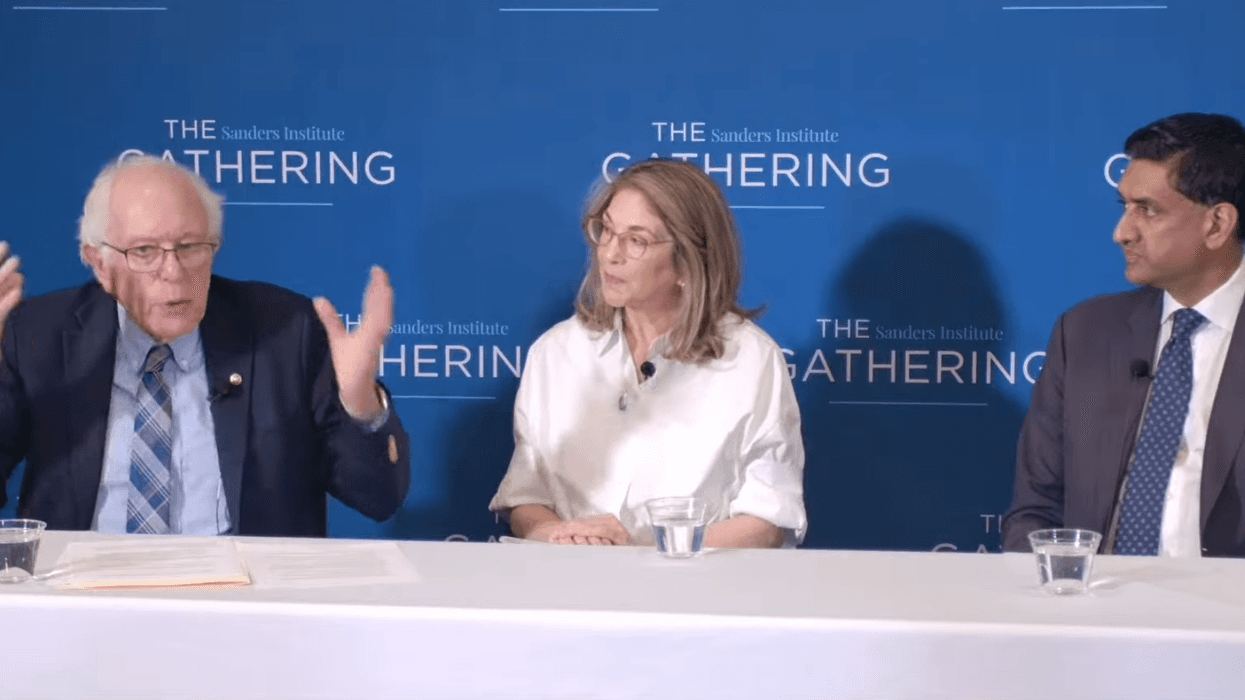
"AI is the most far-reaching and pivotal technological revolution in the history of humanity," notes the Sanders Institute. "The choices we make now will determine whether those changes make the world better or worse."
“You know you're in trouble when you can't describe reality without sounding crazy.”
That's how renowned author and activist Naomi Klein described society's relationship with rapidly—some say dangerously—evolving artificial intelligence technology during a Tuesday livestreamed panel discussion with Sen. Bernie Sanders (I-Vt.) and Rep. Ro Khanna (D-Calif.) hosted by the Sanders Institute.
Khanna and Klein are both fellows at the institute, cofounded by Sanders' (I-Vt.) wife and son, Jane O'Meara Sanders and David Driscoll. The Sanders Institute over recent years has convened an array of conferences and events focused on bringing together the best minds, top experts, and policy advocates on a host of issues.
“This AI and robotics revolution is the most sweeping technological change that the world has ever seen,” said Sanders. “People talk about the changes that the Industrial Revolution brought, which were profound. This is going to move a lot faster, with a lot more impact.”
“This revolution is being pushed by the wealthiest people in the world,” Sanders continued. “We’re talking about Elon Musk, Mark Zuckerberg, Jeff Bezos, Peter Thiel, and other multi-multi-billionaires who are spending hundreds and hundreds if not trillions of dollars combined trying to do the research and the implementation for these technologies.”
Turning to Khanna and Klein, the senator asked: “What are the motives of these guys? Do the American people think that Jeff Bezos and Elon Musk are sitting up nights saying, ‘Wow, we got this technology, we're going to improve life for working people?’”
Klein contended that “their motives are exactly the opposite, and they're very blunt about this, that they are in a race to reach something that they call AGI—artificial general intelligence—or even something beyond that, superintelligence.”
While agreeing with Sanders that AI will prove as transformative as the Industrial Revolution, Klein underscored one big difference between the two.
“Unlike the Industrial Revolution, which created huge numbers of jobs, the goal of this revolution is to eliminate jobs,” the Shock Doctrine author explained. “They've been absolutely transparent about what they want to achieve, which is a jobs apocalypse. They want to be free from their workers."
"They really don't like it when their workers organize and push back, whether in unions or outside of unions," Klein added. "And I think that's part of the appeal of AI for these guys, is the idea that they could become trillionaires with virtually no employees.”
Khanna, a potential 2028 presidential candidate who authored the book Progressive Capitalism: How to Make Tech Work for All of Us, has been a leading voice in the US House of Representatives on the issue of AI. The congressman pointed out that tech titans are “using technology to eliminate workers and maximize their profits, and if you look at the Industrial Revolution, for 60 years, worker wages fell… even as Britain became wealthy."
"And so the question, in my view, for AI is, are we going to let a few billionaires, trillionaires, call the shots, or are we going to make sure that the technology is actually used in any way to enhance workers, to enhance total productivity?” he asked.
Sanders noted that Bezos, Amazon's founder, "wants to raise $100 billion to do what? To automate factories in America and around the world."
"You know what that means? It means there will no longer be manufacturing jobs in the United States or in warehouses," the senator added. "He wants to get rid of the 600,000 Amazon workers and replace them with robots. Elon Musk is converting Tesla partially to a robotics company. He wants to produce a million robots a year… What do you think a robot is there for? It's to replace a union worker.”
Klein said that “if we lived in a world that took care of people… [where] if a job was eliminated, people had a guaranteed income, they knew that they had healthcare, they knew that they weren't going to get evicted, we'd be having a different conversation.”
It may be more than just jobs that are eliminated if humanity does not proceed with utmost caution.
Sanders cited AI pioneers like Geoffrey Hinton who have warned that superintelligent artificial intelligence could wipe out humanity. According to Hinton and others, the senator explained, “it’s not a question of if, it’s a question of when [AI] will become smarter than human beings, and the fear of these guys, which used to be science fiction, is that AI will essentially establish its independence from human control in order to protect itself... raising the possibility of horrific things happening.”
Khanna agreed that such an outcome is “a real risk" as countries remove guardrails to breakneck AI development with the excuse that if they don't do it, their rivals will—the same dangerous thinking that fueled the Cold War nuclear arms race between the US and Soviet Union.
“I don't know whether it will happen or not, but why would we not take every precaution to make sure it doesn’t?” the congressman asked. “And this is what I don't understand, when people say, ‘Well, we want to compete with other nations and have a race to the bottom."
While the specter of an AI apocalypse is growing, it remains much more a reflection of human anxieties that any sort of impending threat. The same cannot be said for lethal autonomous weapon systems—better known as killer robots, which are defined as arms that can operate without any meaningful human control.
Activists like those at the Campaign to Stop Killer Robots have long sounded the alarm on the development of weapons that can operate without human control. However, Khanna said that human decision-making alone “is not enough.”
“If AI is doing all the data analysis and saying, OK, here's the target, and you just have a human being saying, OK, I'm the one who's going to give the order [to attack]… well, there's a human last-minute judgment,” he said. "What's happened is just a dependence on these machines."
As an example, Khanna pointed to what he said was the US military's use of AI that “gave the target of the school” in southern Iran where 168 children and staff were massacred in a February 28 cruise missile strike.
Sanders raised the possibility that a future in which robots largely replace humans on the battlefield “makes it easier” for countries with such technology to wage war.
However, Khanna countered that such conflicts are “deeply asymmetrical," meaning that they're only "easier" for the more technologically advanced side.
“The United States can have drones and technology, and Israel can do that,” the congressman said. “But the people who were killed in what I call the genocide in Gaza, 70,000 people, they don't have that technology. The starving people in Cuba, because of our fuel blockade, don't have that technology. The people in Iran who were killed don't have that technology."
"So you have one side of political leadership in our country that doesn't have to worry as much about deaths for our people," he contended. "But then there’s no… moral deliberation about the dignity and worth of people who were killed.”
While such life-and-death matters are far removed from the reality of most Americans’ lives, the panelists gave examples of how AI is impacting everyday citizens and their privacy.
“We heard reports from a lot of people on the ground who were standing up to ICE,” Klein said, referring to the nationwide protests and individual acts of resistance against Immigration and Customs Enforcement and the Trump administration’s overall anti-immigrant blitz.
“They were having these very creepy experiences where ICE knew their names before they had said anything. They knew where they lived before they said anything," she added. "Scanning a face, scanning a license plate.”
Not everyone attends protests. But nearly everyone uses the internet and its accoutrements; most notably, social media. To that end, Khanna said that Big Tech isn’t just “taking our data, they’re trying to figure out what we think.”
“We've had no pushback to these companies,” he continued. “They have a profit motive to do this. They have a profit motive to get us as addictive to screen time as possible."
"They’re targeting young people… especially young girls that have had eating disorders... and suicidal thoughts because of the junk they've been fed," Khanna noted, calling the situation “a dereliction of Congress.”
“We have not passed any privacy legislation or restrictions really on social media companies as they've had total carte blanche to do what they want,” he said.
Sanders said that “to my mind, it is very clear why Congress is not dealing with this issue, and that is the power and the wealth of people who do not want us to deal with it.”
“To the best of my understanding, as of now, just for the 2026 elections, AI has already put $400 million into elections, and we've go… five to six more months to go,” he explained. “So let's assume that any candidate who gets up there and says, ‘You know, I have some real concerns about AI, let's slow it down, let's make it work for people rather than Elon Musk,’ that candidate will have billions of dollars thrown at him or her, which speaks to a corrupt campaign finance [system].”
Klein has similarly sounded the alarm about far-right tech oligarchs, including in a "must-read" essay with Astra Taylor about the fight against "end times fascism" published by The Guardian last year. The pair plans to release a related book in September.
“If we look at these Silicon Valley billionaires who lined up behind [President Donald] Trump during the election campaign… if you listen to what they have been saying about why they flipped, a lot of it was because there were some gentle regulations on crypto and AI during the Biden administration, including things like trying to figure out how to prevent AI from killing us all, and keeping it away from nuclear weapons," Klein said during Tuesday's panel. "Really sort of sensible policy… Apparently this was too much.”
While Congress fails to act, the people are stepping up.
“What we are seeing all over this country, from conservative areas, in progressive areas, [is] people saying, hey, thank you very much, we prefer not to have a data center in our community,” said Sanders—who recently introduced the Artificial Intelligence Data Center Moratorium Act with Rep. Alexandria Ocasio-Cortez (D-NY)—pointing to one example of people-powered victories.
“So this is really an unprecedented grassroots revolt, not only against the data centers, but against this whole idea... of very, very wealthy people operating in a secretive mode, pushing through what they want against the needs of ordinary people,” he added.
Klein said that “we need to have a national and international conversation, because these are global technologies, about how we can use these very powerful tools to make our lives better, to enhance life, to have a human-first AI policy.”
“And that means that we look at it holistically,” she continued. “We figure out how we do it in the least resource-intensive way to have the best results. And then it isn't about turning a bunch of guys into trillionaires.”
“It's about what kind of society we want to live in, how we want to treat each other, how we want to protect the natural world,” Klein added. “I think we should be having town hall conversations about it, and we might find out that we have more in common with our neighbors than we thought."
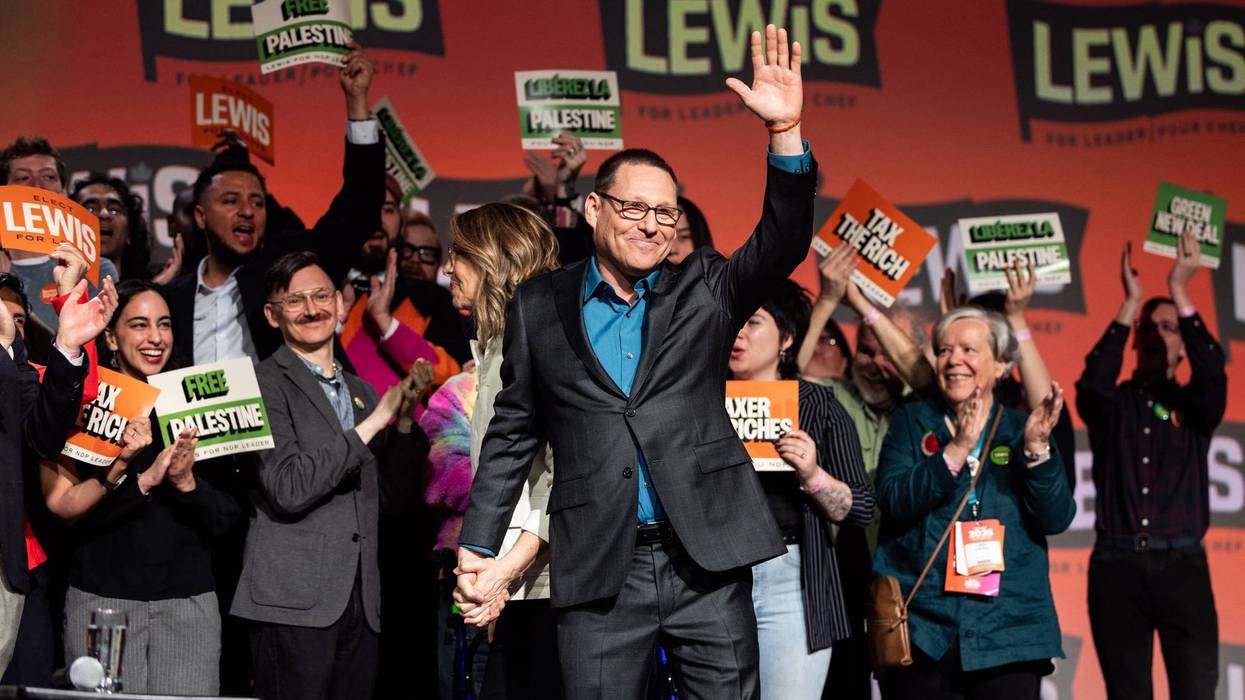
"The NDP will start winning again because we will become that beacon to the 99%," Lewis said.
Progressive activist Avi Lewis is pledging to bring Canada's New Democratic Party "out of the wilderness" after being decisively elected as its new leader on Sunday on the back of an ambitious, affordability-focused agenda aimed at winning back working-class voters.
Lewis, the grandson of one of the NDP's cofounders, cruised to a resounding victory, earning 56% of the vote to take over leadership of the long-ailing left-wing party, which has bled members in recent years to both Prime Minister Mark Carney's Liberals and Pierre Poilievre's Conservatives.
He was introduced at Sunday's Winnipeg convention by his wife, the acclaimed author and activist Naomi Klein, who said her husband's victory was an invitation for Canadians to “dream big once again" and renew the fight against corporate greed at a time when more than half of the population says they struggle to afford basic necessities.
Lewis has proposed a sweeping agenda of “public options” aimed at combating Canada’s affordability crisis, including publicly owned grocery stores and banks to compete with price-gouging corporate monopolies.
A scion of the party that helped to build Canada’s universal healthcare system—which covers hospital and physician care—he’s called for it to be expanded into a “head-to-toe” care system that guarantees dental, drugs, vision, hearing, and mental health services for all Canadians.
In order to pay for these programs and others—including public housing, green energy investment, and subsidized phone and internet plans—Lewis has campaigned to pass a wealth tax on the richest 1% of Canadians, who own nearly $1.25 trillion, almost as much as the bottom 80% of Canadians, according to a recent report by Oxfam Canada.
"This country is awash in wealth. We can have nice things," Lewis asserted to a raucous crowd during his acceptance speech. "Banks made $70 billion in profits last year alone. Oil companies are expecting a new windfall in the tens of billions. Grocery baron Galen Weston alone is worth $20 billion."
During his campaign, Lewis railed against tax cuts for wealthy Canadians passed by the Liberal government, which are projected to cost the government nearly $76 billion over five years and slash an estimated 57,000 public-sector jobs by 2028.
"It is time, far past time, to properly tax the billionaires and corporations that have been riding a tidal wave of profit," Lewis said.
While he acknowledged that Carney is still largely popular in Canada, in large part due to his fiery denunciations of US President Donald Trump's tariff war and threats to annex Canada, Lewis argued that the prime minister's revulsion toward Trumpism is only skin-deep.
"I think when you connect the dots, his moves do not add up to the vision that Canadians truly want and deserve in this perilous moment," he said. "Half a trillion dollars in a decade for weapons to make Canada a major arms exporter in a war-torn world. Slashing our cherished public services, sweeping aside indigenous rights... No regulations on AI and pipelines."
"In the last federal election, Canadians voted to say no to Trump and Trumpism," Lewis said. "What they're getting instead is our government following the US into a future of wars, fossil fuels, austerity, and job-killing generative AI."
Lewis will face a difficult task ahead in rebuilding the NDP from a disastrous loss of support under its previous leader, Jagmeet Singh, who stepped down from his post after the party suffered the worst defeat in its history during last April’s elections, dropping to just seven seats in Parliament—not even enough to be considered a “recognized” party.
The role of NDP leader is the highest office Lewis has held in his life, having run two failed campaigns for parliament in his native Vancouver in 2021 and 2025.
Though NDP currently sits at a distant third, with only about 7% support according to an Abacus poll from March, other polls show that their positions, including a wealth tax and expanding federal health coverage, are popular with the vast majority of voters across party lines.
Other polls show that Canadians, especially those with low incomes, increasingly view affordability and inequality as pressing issues, especially as Trump's war against Iran has caused global energy shortages and price hikes.
"The NDP is coming back because we know that a thriving world is possible, and we know who is standing in our way, and there are way more of us than there are of them," Lewis said. "The NDP will start winning again because we will become that beacon to the 99%."
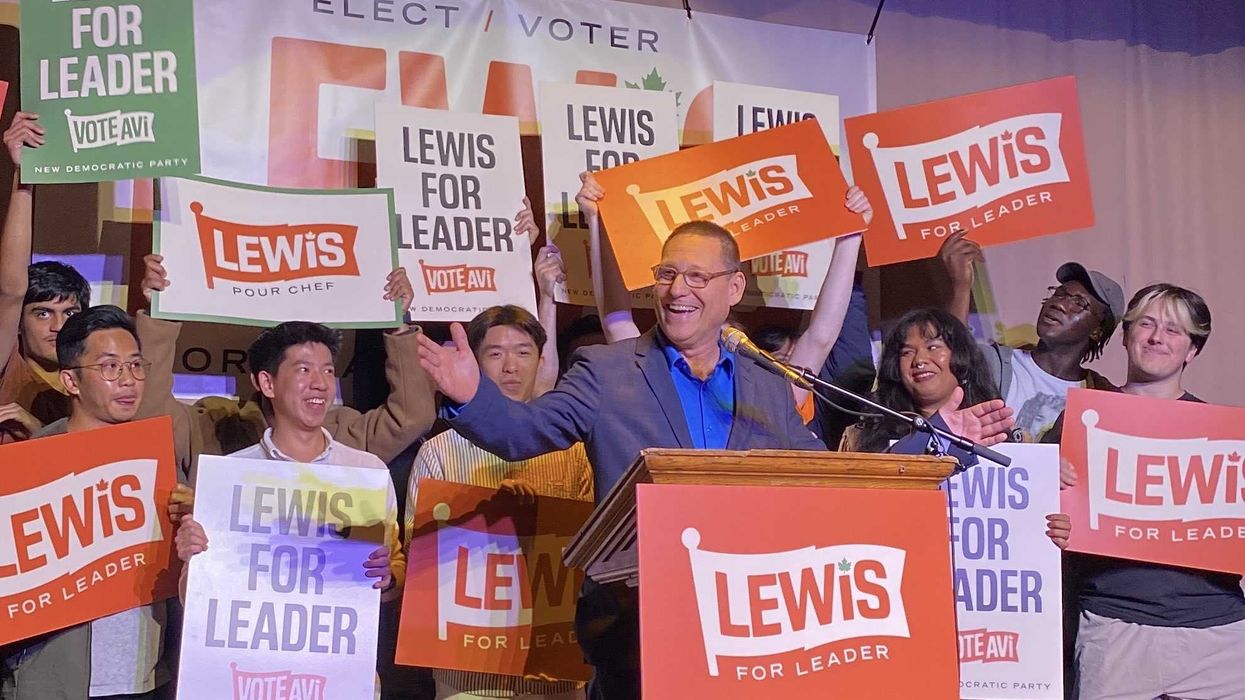
Lewis said NDP must “fling the doors wide open, and build a party for the 99%.”
The longtime progressive activist Avi Lewis officially launched his bid for leadership of Canada's New Democratic Party, which he aims to revitalize with a platform of economic populism.
Lewis, a journalist and documentarian whose grandfather helped to found the NDP in 1961, says the way to bring the party back to relevance amid an electoral low point is to “fling the doors wide open, and build a party for the 99%.”
At a kickoff party in Toronto on Wednesday, the former parliamentary candidate from Vancouver railed against the “Liberal-Conservative alliance” that dominates Canadian politics. The two major parties' leaders, Lewis said, "compete fiercely in public, while behind the scenes, they collude to boost corporate profits."
"In the name of protecting the country, the government is rapidly passing and proposing legislation that will change the culture and character of Canada," Lewis said. "From sweeping aside Indigenous rights and environmental protections for so-called nation-building projects, to rolling back higher taxes on the uberwealthy and digital giants, to the generational austerity of 15% cuts to public spending, to the $9 billion that materialized in an instant for the military this year, ramping up to $150 billion a year a decade from now—the changes afoot are extreme."
Lewis pledged to “build a government that is an instrument for the people, not for corporate Canada.”
The NDP—once Canada's third-largest national political party—has been ailing of late after a dismal showing in the nation's most recent parliamentary elections. The party, which held over 100 seats 14 years ago, dropped to a new low of just seven seats in 2025, not enough to even be recognized for committee assignments or federal funding.
The humiliating showing resulted in the resignation of Jagmeet Singh, who'd led the party for eight years, but was widely criticized by those on the left for his coziness with the establishment of the dominant Liberal Party and his failure to keep the NDP competitive. It is in this state of "political wilderness" that Lewis has emerged with an ambitious change agenda.
(Video: Avi Lewis for NDP Leader)
"Life in Canada today feels on the edge," Lewis said in a video released last week announcing his leadership run. "Everyone seeking a little stability, everyone being told 'You're all on your own.'"
He identified several causes of that precarity. One was the "economic attack" from US President Donald Trump, whom Lewis described as sending "disruption grenades" in the form of steep tariffs and annexation threats. But Lewis said that Trump merely "magnifies... the everyday emergency of trying to get by in an impossible economy."
According to one survey conducted in July, 57% of Canadians said their current incomes did not allow them to afford basic necessities like housing, groceries, energy, and cell phone plans.
"Working hard doesn't earn you a living," Lewis said.
"These days, every politician claims to be shocked by the costs," he continued. "What they don't talk about is why: The billions in profits for the tiny group of corporations that control every part of our economy. Three phone providers, three grocery giants, five oil companies, and the five big banks that fund them."
Lewis' plan to confront corporate power is years in the making. Alongside his wife, the acclaimed journalist and author Naomi Klein, Lewis rolled out the Leap Manifesto in 2015 as an agenda for the NDP. Leap focused on confronting the climate crisis, but its contents formed the basis of what he now refers to as a "Green New Deal." The accelerating climate emergency remains at the center of his agenda in 2025.
"Oil and gas CEOs," he said in the video, are "not just hoarding extreme wealth," but "foreclosing on our shared future."
Lewis has never held a parliamentary office, though he has run for a federal Vancouver-area seat twice before and achieved two third-place finishes, receiving 26% of the vote in 2021 and 12.5% in 2025.
In his bid to lead NDP, he has so far leaned heavily into his family legacy and his reputation as a lifelong activist who has "butted heads with the powerful," over issues like the North American Free Trade Agreement (NAFTA) and the privatization of healthcare and public transit.
"For four decades," he said, "I have stood with workers, telling stories of working-class heroes and organizing for dignity in factories and fields, classrooms and care homes, shop floors and fishing fleets."
Lewis, who also identified free trade deals as job killers, proposed a "Green New Deal" as a means to revive Canadian industry and create "millions of good-paying jobs."
He has also proposed a wealth tax, a national cap on rent increases, a public option for groceries, and expanded universal healthcare that covers "medication to mental health."
During his speech Wednesday night, Lewis described NDP as "the only party that can accurately diagnose the cause of our everyday emergency, and offer solutions as big as the crises we face."
"The federal government has the power, the resources, and the responsibility to ensure the fundamentals of a good life—healthy food, truly affordable housing, functioning public transit, and hey, maybe a proper vacation once in a while," he said. "But we won’t get it if we don’t fight for it. And that’s where the NDP comes in. After all, the NDP is the original party of workers’ struggle. And in this moment of epic change and uncertainty, the party is needed as never before."
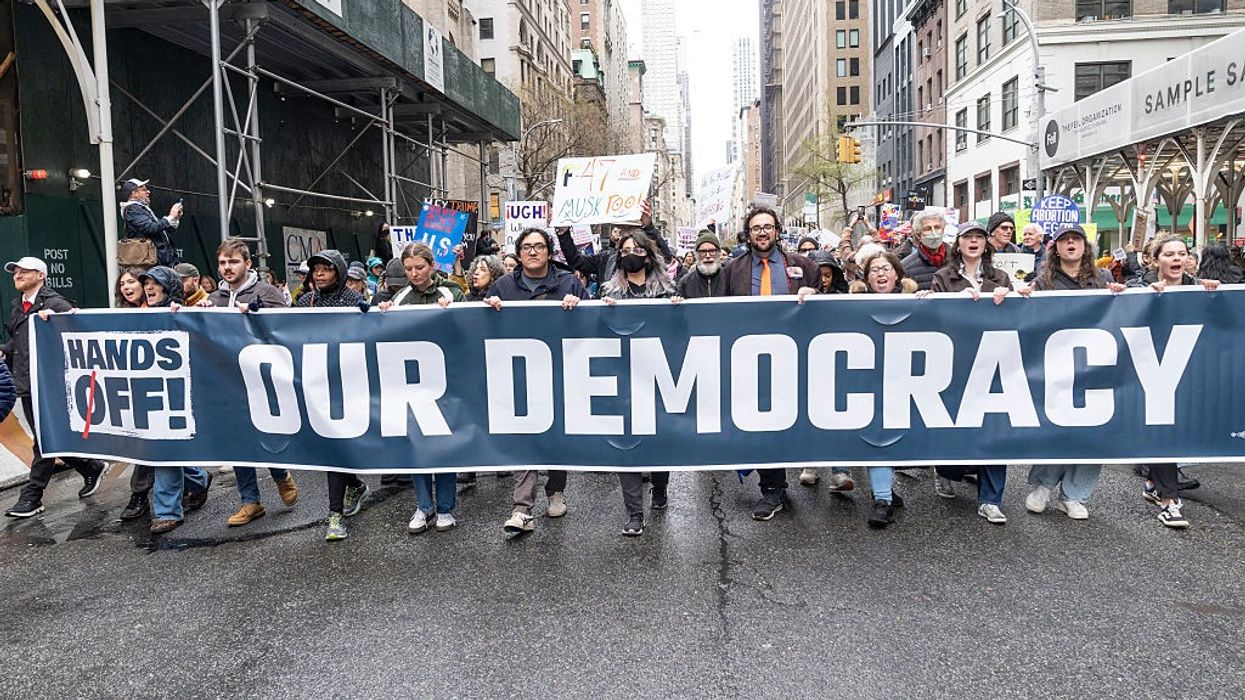
"We are up against an ideology that has given up not only on the premise and promise of liberal democracy but on the livability of our shared world—on its beauty, on its people, on our children, on other species."
In a "must-read" piece published Sunday by The Guardian, Naomi Klein and Astra Taylor laid out in over 5,000 words the "powerful possibilities for resistance" against the global rise of what they term "end times fascism."
Klein and Taylor began with "the extreme notion that wealthy, tax-averse people should up and start their own high-tech fiefdoms, whether new countries on artificial islands in international waters ('seasteading') or pro-business 'freedom cities' such as Próspera, a glorified gated community combined with a wild west med spa on a Honduran island."
"The first sign that fortunes were shifting came in 2023, when a campaigning Donald Trump, seemingly out of nowhere, promised to hold a contest that would lead to the creation of 10 'freedom cities' on federal lands," they noted. After winning the U.S. presidential contest last November, Trump returned to the Oval Office in January.
As Klein and Taylor detailed:
One might assume that it is contradictory for Trump, elected on a flag-waving "America first" platform, to lend credence to this vision of sovereign territories ruled over by billionaire god-kings. And much has been made of the colorful flame wars between the MAGA mouth-piece Steve Bannon, a proud nationalist and populist, and the Trump-allied billionaires he has attacked as "technofeudalists" who "don't give a flying fuck about the human being"—let alone the nation state. And conflicts inside Trump's awkward, jerry-rigged coalition certainly exist, most recently reaching a boiling point over tariffs. Still, the underlying visions might not be as incompatible as they first appear.
The startup country contingent is clearly foreseeing a future marked by shocks, scarcity, and collapse. Their high-tech private domains are essentially fortressed escape pods, designed for the select few to take advantage of every possible luxury and opportunity for human optimization, giving them and their children an edge in an increasingly barbarous future. To put it bluntly, the most powerful people in the world are preparing for the end of the world, an end they themselves are frenetically accelerating.
That is not so far away from the more mass-market vision of fortressed nations that has gripped the hard right globally, from Italy to Israel, Australia to the United States: In a time of ceaseless peril, openly supremacist movements in these countries are positioning their relatively wealthy states as armed bunkers.
One of Trump's primary campaign promises was "mass deportations," which he has begun delivering on by having plainclothes immigration agents yank foreign students critical of U.S. policy off the streets and sending hundreds of immigrants—many of them seemingly innocent of any crimes—to a mega-prison in El Salvador. The president has pursued this agenda despite expert warnings about the human and economic impacts, and it's not just his anti-migrant effort expected to cause harm on both fronts.
This is an era of climate breakdown, rising risk of nuclear war, skyrocketing inequality, and unregulated artificial intelligence, and "Trump 2.0's economic project is a Frankenstein's monster of the industries driving all of these threats—fossil fuels, weapons, and resource-ravenous cryptocurrency and AI," Klein and Taylor stressed. "Everyone involved in these sectors knows that there is no way to build the artificial mirror world that AI promises to construct without sacrificing this world—these technologies consume too much energy, too many critical minerals, and too much water for the two to coexist in any kind of equilibrium."
While reclaiming the most powerful post in the world, Trump has surrounded himself with billionaires, putting tech leaders willing to give big donations in prominent seats at his inauguration and installing ultrarich individuals—including Elon Musk, the wealthiest person on Earth and the leader of companies including SpaceX—in key positions within his second administration.
"For Musk, Mars has become a secular ark, which he claims is key to the survival of human civilization, perhaps via uploaded consciousnesses to an artificial general intelligence," Klein and Taylor wrote. "Much like religious end-timers who long to escape the corporeal realm, Musk's drive for humanity to become 'multiplanetary' is made possible by his inability to appreciate the multispecies splendor of our only home."
This is the most powerful thing The Guardian has published in years. “In order to make earthly planetary survival possible, some versions of this world need to end.”
[image or embed]
— Vivian Blaxell ( @vivianblaxell.bsky.social) April 13, 2025 at 9:44 AM
That rejection of protecting Earth and its myriad species is key. As Klein and Taylor argued, "The governing ideology of the far right in our age of escalating disasters has become a monstrous, supremacist survivalism."
"To bet against the future on this scale—to bank on your bunker—is to betray, on the most basic level, our duties to one another, to the children we love, and to every other life form with whom we share a planetary home," the pair wrote. "This is a belief system that is genocidal at its core and treasonous to the wonder and beauty of this world. We are convinced that the more people understand the extent to which the right has succumbed to the Armageddon complex, the more they will be willing to fight back, realizing that absolutely everything is now on the line."
"Our opponents know full well that we are entering an age of emergency, but have responded by embracing lethal yet self-serving delusions," they continued. "Having bought into various apartheid fantasies of bunkered safety, they are choosing to let the Earth burn. Our task is to build a wide and deep movement, as spiritual as it is political, strong enough to stop these unhinged traitors. A movement rooted in a steadfast commitment to one another, across our many differences and divides, and to this miraculous, singular planet."
Klein and Taylor also offered a solution for how to "break this apocalyptic fever." According to them:
First, we help each other face the depth of the depravity that has gripped the hard right in all of our countries. To move forward with focus, we must first understand this simple fact: We are up against an ideology that has given up not only on the premise and promise of liberal democracy but on the livability of our shared world—on its beauty, on its people, on our children, on other species. The forces we are up against have made peace with mass death. They are treasonous to this world and its human and non-human inhabitants.
Second, we counter their apocalyptic narratives with a far better story about how to survive the hard times ahead without leaving anyone behind. A story capable of draining end times fascism of its gothic power and galvanizing a movement ready to put it all on the line for our collective survival. A story not of end times, but of better times; not of separation and supremacy, but of interdependence and belonging; not of escaping, but staying put and staying faithful to the troubled earthly reality in which we are enmeshed and bound.
"To have a hope of combating the end times fascists, with their ever-constricting and asphyxiating concentric circles of 'ordered love,'" the pair asserted, "we will need to build an unruly open-hearted movement of the Earth-loving faithful: faithful to this planet, its people, its creatures, and to the possibility of a livable future for us all."
The essay has been met with high praise from academics, activists, advocacy groups, journalists, and more, many of whom described it as "essential reading" and "terrifying but ultimately hopeful."
Climate campaigner and writer Bill McKibbencalled it "the darkest—and in some ways most light-filled—take on our dire moment."
Naomi Klein and Astra Taylor offer hope through understanding, allowing us to counter their narratives with a far better story. @naomiaklein.bsky.social @astra.bsky.social
[image or embed]
— The Sanders Institute (@sandersinstitute.bsky.social) April 15, 2025 at 3:25 PM
J. Mijin Cha, an assistant professor of environmental studies at the University of California, Santa Cruz, said: "This piece by Naomi Klein and Astra Taylor is so sharp in its diagnosis of what we are facing and the way we fight back. We don't fight fascism with fascism-lite."
"What I mean by fascism-lite is the way the Dems have seen migrants, trans people, people of color, and other marginalized people as disposable in this call for 'moderation,'" she added. "You don't get ahead by leaving people behind. We need to have a positive vision. Not just—we aren't as bad as the other side."
Professor Deborah Lupton, leader of the Vitalities Lab at the University of New South Wales in Sydney, Australia, wrote on social media, "Read, weep, and then take action."
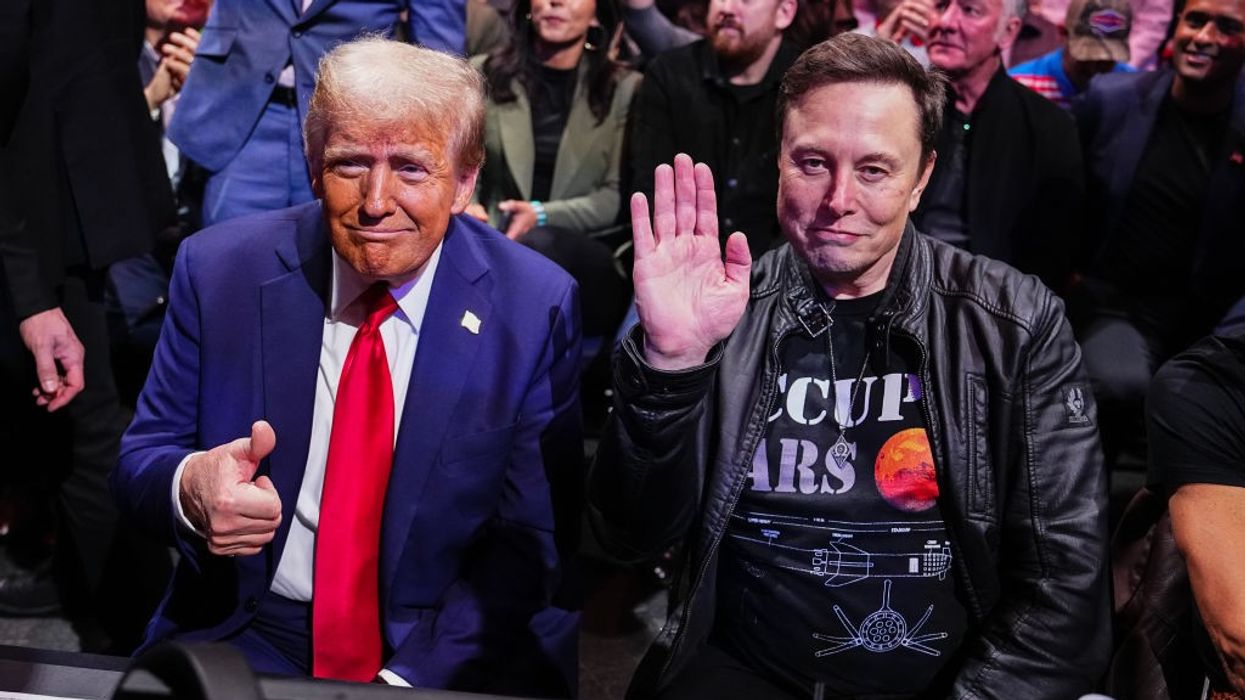
"If you think back at the last economic crashes... the rich were able to buy up assets on the cheap and emerged even wealthier and more powerful than before," noted one progressive commentator.
Are U.S. President Donald Trump, top adviser Elon Musk, and allied oligarchs deliberately trying to tank the economy in order to line their own gilded pockets?
More and more observers from both sides of the political aisle are asking the question this week as the U.S. president implemented steep tariffs on some of the country's biggest trade partners, threatened a global trade war, and is taking chainsaw to government spending and programs—policies that, while inflicting economic pain upon nearly everyone else, could dramatically boost their already stratospheric wealth.
Numerous observers have likened it to the " disaster capitalism" examined in Naomi Klein's seminal 2007 book, The Shock Doctrine: The Rise of Disaster Capitalism—politicians and plutocrats exploit the chaos of natural or human-caused crises to push through unpopular policies like privatization and deregulation that harm the masses while boosting the wealth and power of the ruling class.
Economic alarm bells were already ringing before Trump's 25% tariffs on most products from Canada and Mexico and an additional 10% on China—for a total of 20%—took effect on Tuesday, prompting retaliatory measures and threats of more to come.
Then, during his rambling joint address to Congress on Tuesday night, Trump threatened to impose reciprocal tariffs on every nation on Earth starting April 2 (because he "didn't want to be accused of April Fools' Day") if those countries did not lower barriers to trade with the United States.
@jamellebouie Replying to @C. Stetzer ♬ original sound - b-boy bouiebaisse
New York Times economic policy reporters Alan Rappeport and Ana Swanson called Trump's sweeping tariffs "one of the biggest gambles of his presidency," and a move "that risks undermining the United States economy."
But what if that's the whole point?
"I've been entertaining this theory a little bit more lately, because [Trump's] economic moves seem so stupid and terrible and counterproductive without thinking that he is intentionally trying to cause harm," progressive political commentator Krystal Ball—who also has a degree in economics and is a certified public accountant— said Tuesday on the social media site X.
Ball cited an X
post by Saikat Chakrabarti, a progressive Democrat running for Congresswoman Nancy Pelosi's (D-Calif.) House seat who worked on Wall Street for six years and helped found the online payment processing company Stripe, in which he accused Trump of "manufacturing a recession."
"But it makes sense when you realize his goal is to create something like Russia where the economy is run by a few oligarchs loyal to him," Chakrabarti added. "Creating that state is hard in a large, dynamic, powerful economy with too many actors who can oppose him. So he's accelerating concentrating money and power into the hands of his loyalists while he crashes the rest out."
Responding to this, Ball asserted that "at this point, until proven otherwise, the primary actor in the government and the economy is actually Elon, so I think it makes sense to think of Elon's incentives here and what he may actually want to accomplish."
"If you think back at the last economic crashes—both in Covid and in the 2008 financial crash—while initially everyone suffered, including the rich, out of both, the rich were able to buy up assets on the cheap and emerged even wealthier and more powerful than before," she noted.
"So in 2008, not only did they get their own custom bailout, but they were able to buy housing stock at absurdly low prices," Ball recalled. "The rich got richer than ever, inequality skyrocketed, and the big banks got bigger than ever."
"Same deal with the Covid-era recession," she continued. "So, while again, everyone suffered initially, there was a huge bailout package which, yes, did benefit ordinary people, but if you look at who came out really on top... you could see people like Elon Musk, people like Jeff Bezos, people like Mark Zuckerberg getting far wealthier. Their net worths, which were already very high, skyrocketed beyond anyone's wildest dreams."
Indeed, as Common Dreams reported, 700 billionaires got $1.7 trillion richer during two years of pandemic. Between March 2020 and April 2022, Musk got 10 times richer, while Zuckerberg's net worth more than tripled and Bezos' grew by nearly $80 billion, according to Forbes.
"Here's the other piece that's worth thinking about as well," Ball added. "Crash and crisis leads to governments and authoritarian leaders claiming more power for themselves. They can use the crisis and the emergency as a justification for taking on extraordinary powers and for taking extraordinary measures... measures that can be custom fit to primarily benefit oligarchs like Elon Musk."
"So I don't know guys, while we're running around here going... 'can't they understand how this is going to be devastating for the economy,' maybe they do understand," she concluded, "and maybe that's kind of the point."
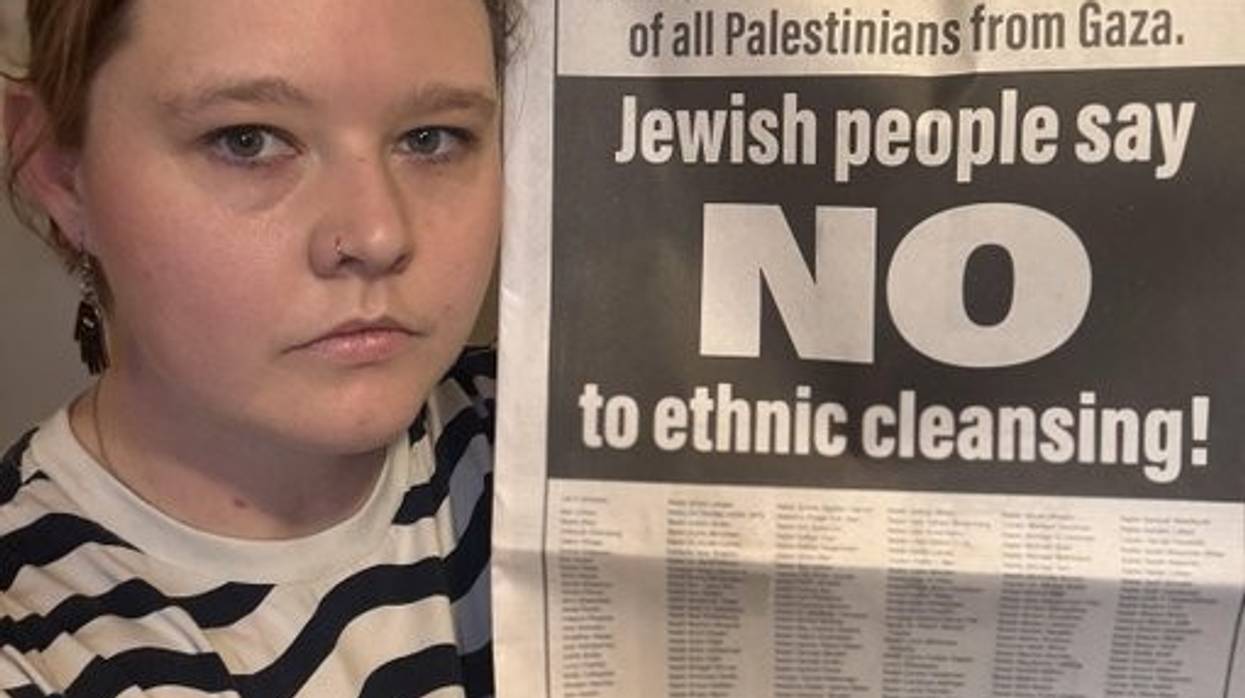
"It is vitally important that we in the American Jewish community add our voices to all those refusing to entertain this insidious plan," one rabbi said of Trump's proposal.
Over 350 rabbis and dozens of Jewish public figures on Thursday placed a full-page advertisement in The New York Times protesting President Donald Trump's proposal to force all Palestinians out of the Gaza Strip and take over the coastal enclave recently decimated by U.S.-armed Israeli forces.
"Trump has called for the removal of all Palestinians from Gaza," the ad states. "Jewish people say NO to ethnic cleansing!"
The ad then lists the hundreds of people who signed on, including V (formerly Eve Ensler), Peter Beinart, Judith Butler, Molly Crabapple, Ben Cohen, Ilana Glazer, Tavi Gevinson, Nan Goldin, Naomi Klein, and Joaquin, Rain, and Summer Phoenix.
"Donald Trump—like Pharaoh in the Bible—seems to believe he is God with authority to rule, own, and dominate our country and the world," said Rabbi Yosef Berman of New Synagogue Project in Washington, D.C., a signatory to the Times ad.
"Jewish teaching is clear: Trump is not God and cannot take away Palestinians inherent dignity or steal their land for a real estate deal," Berman continued. "Trump's desire to ethnically cleanse Palestinians from Gaza is morally abhorrent. Jewish leaders reject Trump's attempts to wring profit from displacement and suffering and must act to stop this heinous crime."
Glazer, a comedian and actor, similarly stressed that "we, Jews, and all of us who care about basic human rights, must speak up and stand up to ensure Palestinians remain on their land, so they can rebuild their homes and lives in Gaza after the genocidal destruction they have endured. All of our safety is intertwined."
Today's NY Times. We, too, #SayNoToEthnicCleansing! So proud of our ED, R' @mhughesrob.bsky.social (+ board member Rabbi Andrea London), among the hundreds of Jewish clergy, professionals, lay leaders who signed on. Add your support at www.saynotoethniccleansing.org - click "sign on" in URH corner.
[image or embed]
— Partners for Progressive Israel (@partners4israel.bsky.social) February 13, 2025 at 9:59 AM
Israel faces a genocide case at the International Court of Justice for its 15-month military response to the Hamas-led October 7, 2023 attack. The Israeli assault killed more than 61,000 Palestinians in Gaza, according to estimates by local officials. A fragile cease-fire took effect last month.
After Hamas threatened to suspend the release of additional hostages over Israeli violations of the deal—which prompted Israel to threaten more violence, seemingly backed by Trump—the group said Thursday it would free three captives this weekend.
The ad in the Times on Thursday is just part of the growing opposition to Trump's proposal to kick Palestinians out of Gaza and turn the territory into what he claimed could be the "Riviera of the Middle East." Polling published Wednesday by Data for Progress shows that a majority of Americans are against the United States seizing control of Gaza, and nearly 7 in 10 oppose sending U.S. troops for the takeover.
A coalition of over 100 groups led by A New Policy—founded by Biden administration officials who resigned in protest—and the Quaker organization Friends Committee on National Legislation said Monday that they "decry and oppose any effort or initiative, and any calls for, the forcible displacement of Palestinians from Gaza, and support the joint statement of Egypt, Jordan, Saudi Arabia, the United Arab Emirates, Qatar, the Palestinian Authority, and the Arab League that similarly rejected any such steps."
The Guardian reported Thursday that Cody Edgerly, director of the In Our Name Campaign and one of the organizers of the Times ad, pointed to Trump's relationship with Israeli Prime Minister Benjamin Netanyahu, saying that it came at "a critical time as political redlines that were once thought immovable are rapidly shifting as the Trump-Netanyahu alliance takes hold again."
It has been "heartening to witness such a rapid outpouring of support from across the denominational and political spectrum," added Edgerly. "Our message to Palestinians is that you are not alone, our attention has not wavered, and we are committed to fighting with every breath we have to stop ethnic cleansing in Gaza."
Every day, more and more Jewish leaders break from decades of silence to reject ethnic cleansing. Thank you to these 350 rabbis using your voices in this moment to oppose Trump’s plans in Gaza and #SayNoToEthnicCleansing. #GazaIsNotForSale
[image or embed]
— Jews For Racial & Economic Justice (@jfrejnyc.bsky.social) February 13, 2025 at 8:13 AM
Beinart, editor-at-large of Jewish Currents and author of Being Jewish After the Destruction of Gaza: A Reckoning, said in a statement that "as someone who loves the American Jewish community, and lives my life in the American Jewish community, and could not imagine another way of living. It is utterly horrifying to see the degree to which people who enjoy great legitimacy and respect in our community are willing to support something that would be considered one of the greatest crimes of the 21st century."
Another signatory to the ad, Rabbi Toba Spitzer of Congregation Dorshei Tzedek in Newton, Massachusetts, said that "it is vitally important that we in the American Jewish community add our voices to all those refusing to entertain this insidious plan."
Nazi leader Adolf Hitler's "dream of making Germany 'Judenrein,' 'cleansed of Jews,' led to the slaughter of our people," Spitzer added. "We know as well as anyone the violence that these kinds of fantasies can lead to. It is time to make the cease-fire permanent, bring all of the hostages home, and join in efforts to rebuild Gaza for the sake of and with the people who live there."

Renowned Canadian author, activist, and filmmaker Noami Klein on Wednesday implored French President Emmanuel Macron to "get out of the way" while urging voters in France to rally behind the left-of-center New Popular Front coalition that analysts say represents the last hope to stop Marine Le Pen's fascist National Rally from taking power.
"There is only one path for French voters to stop the extreme racist right, whose rise has been aided and abetted at every stage by corporatist centrists led by Macron," Klein said on social media. "That path is to support the New Popular Front, running a close second in the polls."
Le Pen's viciously xenophobic National Rally (RN) triumphed in the first round of last week's French elections, winning 33.2% of the vote. New Popular Front (NFP)—an alliance of center-left parties formed last month to thwart a fascist takeover after Macron called snap elections—came in second, with 28%.
Macron's centrist Ensemble coalition finished third with 22.4% of the vote. Critics accused the embattled president of grossly miscalculating support for the far-right.
Leaders of Macron's coalition and the NFP have been scrambling to stymie an RN victory in Sunday's final runoff round, saying they would withdraw candidates from races in districts where other RN opponents have better chances of winning. However, some centrists are more comfortable with far-right rule than they are with progressive left policies, and that worries Klein.
"History tells us that fascism wins when anti-fascist forces refuse to come together to defeat it, with the center fearing a strong left committed to redistribution more than the cruelties of the extreme right," she said. "The NPF has shown that it understands this terrible lesson of European history. It deserves the support of French voters."
"Macron, who created this crisis with years of uninterrupted arrogance, needs to get out of the way," she added.

"No one is free until everyone is free," read a banner representing a Seder plate. "Jews say stop arming Israel."
As U.S. Senate Majority Leader Chuck Schumer prepared to vote on Tuesday night for a foreign aid package including billions to continue arming Israel in its bombardment of Gaza, roughly 300 protesters were arrested outside his home in Brooklyn for holding an "emergency Passover seder" protest, demanding the U.S. end its support for an assault that has killed at least 34,262 Palestinians.
The protest was led by anti-Zionist Jewish organizers with Jewish Voice for Peace, IfNotNow, and Jews for Racial and Economic Justice, with a large round banner representing a traditional Seder plate at the center of the protest at Grand Army Plaza, a block from Schumer's home.
Hundreds of people, some wearing traditional Palestinian keffiyehs, linked arms and chanted, "Free, free Palestine!" while blocking traffic and displaying the Seder plate.
"No one is free until everyone is free," read the banner. "Jews say stop arming Israel."
Schumer's home has been the site of numerous protests since October, when Israel began its attacks on and blockade of Gaza, which have left parts of the enclave facing famine and the entire population of 2.3 million people suffering from "acute food insecurity," at a minimum.
"A genocide being carried out in our names as Jews demands that we adapt our sacred tradition again, take to the streets, and do everything we can to prevent more death," author and activist Naomi Klein said at the protest.
The Biden administration has approved numerous weapons transfers to Israel, and the Senate overwhelmingly voted Tuesday night in favor of the package that includes $17 billion more in unconditional aid for the Israel Defense Forces.
Sens. Bernie Sanders (I-Vt.), Peter Welch (D-Vt.), and Jeff Merkley (D-Ore.) were the only members of the Democratic caucus who voted against the funding bill. Fifteen Republicans also opposed the bill over its inclusion of Ukraine aid.
The demonstration at Grand Army Plaza was organized amid a burgeoning protest movement on U.S. college campuses, including at Columbia University, where more than 100 students were suspended and then arrested for trespassing last week after setting up an encampment to demand the school divest from all companies that work with the Israeli government.
The student-led protests have been denounced by President Joe Biden and other pro-Israel critics as "antisemitic" and endangering Jewish students, despite the fact that Jewish students have helped to organize the nonviolent demonstrations.
One organizer, Calvin Harrison, told The New York Times that he attended the Brooklyn protest Tuesday night "because I'm a Jew and I was raised to believe that Judaism is about justice."
"Passover is a celebration of liberation for the future," he told the Times. "We can't celebrate liberation for ourselves while we're oppressing Palestinians."
Yonah Lieberman, co-founder of IfNotNow, recalled the group's Liberation Seder in 2016 in New York, where campaigners protested the Anti-Defamation League's support for the Israeli occupation of the Palestinian territories.
"Eighteen of us were arrested," he said. "Tonight: [Organizers] led a Seder in the streets demanding Schumer stop arming Israel. Hundreds are being arrested. The movement grows."
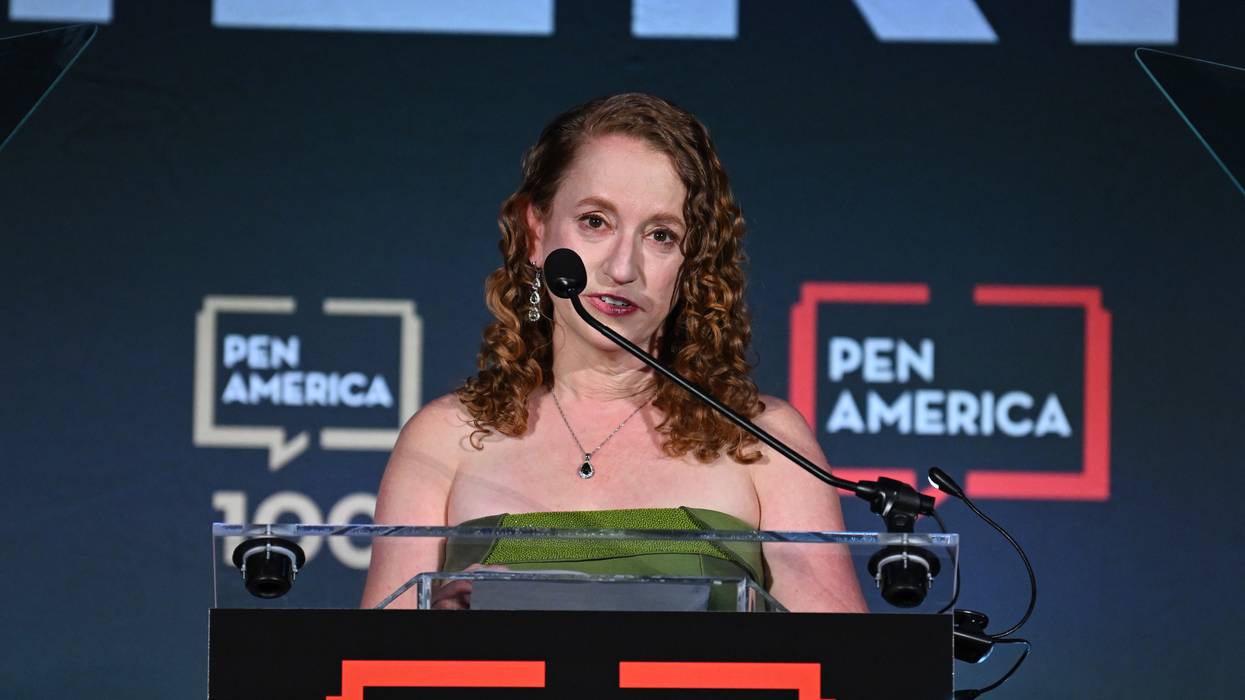
"We cannot, in good faith, align with an organization that has shown such blatant disregard of our collective values," a group of authors and translators wrote in an open letter.
The prominent free expression group PEN America announced Monday that it has canceled its 2024 literary awards ceremony amid growing backlash over the organization's response to Israel's assault on Gaza and alleged attempts to suppress dissent among its employees.
The decision came after nearly half of the authors nominated for PEN America awards withdrew their names from consideration, accusing PEN America of not sufficiently speaking out against Israel's war on Gaza and the dire consequences for free expression.
The awards ceremony was scheduled to take place on April 29 in Manhattan.
In an open letter released last week, dozens of authors and translators who refused to accept any honors from the organization wrote that "PEN America has remained shamefully unwilling to speak out against the systematic nature" of Israel's "often-targeted killings of Palestinian writers, professors, and journalists and their families."
"We stand in solidarity with one another and with the people of Palestine in our refusal to lend our names and tacit approval to PEN America's disgraceful inaction," reads the open letter, which demands the resignation of PEN America CEO Suzanne Nossel, president Jennifer Finney Boylan, and the group's entire executive committee.
"We cannot, in good faith, align with an organization that has shown such blatant disregard of our collective values," the letter adds. "We stand in solidarity with a free Palestine. We refuse to be honored by an organization that acts as a cultural front for American imperialism. We refuse to gild the reputation of an organization that runs interference for an administration aiding and abetting genocide with our tax dollars. And we refuse to take part in anything that will serve to overshadow PEN's complicity in normalizing genocide."
"We have been disgusted, for months, by the sight of these leaders clinging to a disingenuous façade of neutrality."
Clarisse Rosaz Shariyf, PEN America's literary programming chief officer, said in a statement Monday that "we greatly respect that writers have followed their consciences, whether they chose to remain as nominees in their respective categories or not."
"We regret that this unprecedented situation has taken away the spotlight from the extraordinary work selected by esteemed, insightful, and hard-working judges across all categories," Rosaz Shariyf added. "As an organization dedicated to freedom of expression and writers, our commitment to recognizing and honoring outstanding authors and the literary community is steadfast."
Outrage over PEN America's approach to Israel's war on the Gaza Strip has been intensifying for months.
In March, as Common Dreams reported at the time, Naomi Klein, Michelle Alexander, and other high-profile writers pulled out of the PEN World Voices Festival, accusing PEN America of betraying "the organization's professed commitment to peace and equality for all, and to freedom and security for writers everywhere."
After initially refusing to do so, PEN America late last month joined its global parent PEN International in calling for an immediate cease-fire in Gaza. But the organization's critics—including current and former employees—argue it has failed to clearly and forcefully condemn Israel's assault, which has killed more than 34,000 people in Gaza and fueled a catastrophic humanitarian emergency.
"We have been disgusted, for months, by the sight of these leaders clinging to a disingenuous façade of neutrality while parroting hasbara talking points," the open letter from PEN America award nominees states. "We have also been appalled to learn that management has sought to suppress the off-hours political speech and activity of its own workers, in part by suggesting language by which staffers could be punished for participating in any political activity that undermines PEN America's mission."
The Intercept reported late last month that PEN America staffers also raised concerns in December over Nossel's decision to visit Israel amid the country's devastating attack on Gaza.
"We are concerned that Suzanne Nossel's trip as planned will be perceived as a dismissal of the urgent and worsening humanitarian crisis in Gaza and free expression and human rights violations in the West Bank and in Israel," the staffers wrote.
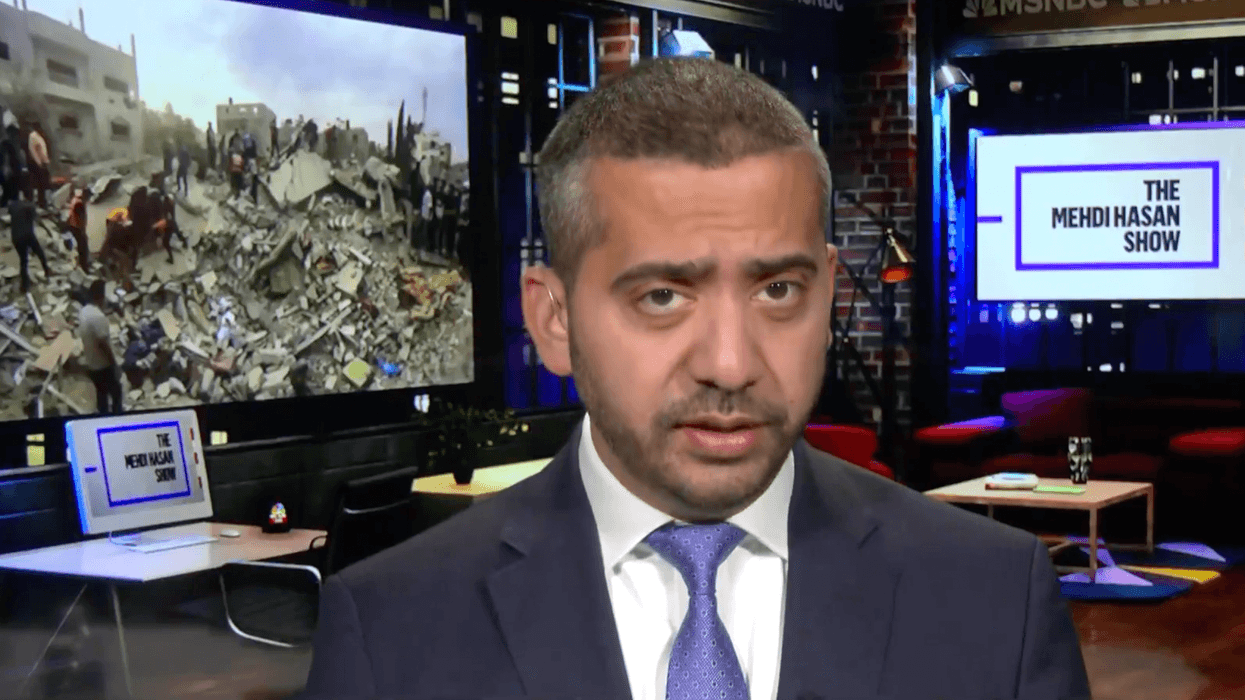
The journalist says Zeteo will feature "hard-hitting interviews and unsparing analysis" in op-eds, podcasts, and streaming shows.
After a few weeks of "soft launch" mode, journalist Mehdi Hasan on Monday officially debuted his new media platform, Zeteo, and declared that "this is not a one-man band."
The former MSNBC and Peacock host—whose show was canceled in November and wrapped up in January, after his incisive criticism of Israel's assault on the Gaza Strip—revealed nine of the contributors he has lined up so far, calling them "some of the biggest, boldest, and best names from media, activism, entertainment, and beyond."
They are Pulitzer Prize-winning journalist Spencer Ackerman, comedian and podcaster W. Kamau Bell, Palestinian Canadian lawyer Diana Buttu, former CNBC and CNN correspondent John Harwood, foreign policy analyst Rula Jebreal, author Naomi Klein, novelist Viet Thanh Nguyen, actor and activist Cynthia Nixon, and Swedish climate campaigner Greta Thunberg.
"The tough interviews and knowledgeable analysis are all coming back, along with a global cast of contributors," Klein said on social media Monday. "I was honored when Mehdi asked me to be one of them, along with Rula Jebreal and Greta Thunberg and many others yet announced."
"Mehdi and I will be having a regular conversation called 'Unshocked,'" noted Klein, who authored The Shock Doctrine.
Hasan—who has also produced content for Al Jazeera, The Guardian, and The Intercept—has said Zeteo will feature "hard-hitting interviews and unsparing analysis" in a variety of forms, from op-eds and podcasts to streaming shows, beginning with "Mehdi Unfiltered."
“What else do we call this other than the deliberate dehumanization of the Palestinian people?”
I called out media bias and racism, on Gaza, and brought receipts!, in the opening monologue of my new show #MehdiUnfiltered today.
Watch/share/subscribe:https://t.co/20UUcW06TK pic.twitter.com/oHA1bfZqWK
— Mehdi Hasan (@mehdirhasan) April 15, 2024
"To keep
Zeteo's journalism independent and free of advertiser and corporate influence," Hasan explained ahead of the formal launch, "and to allow us to continue investing in the future, we have to rely on our individual paid subscribers."