

SUBSCRIBE TO OUR FREE NEWSLETTER
Daily news & progressive opinion—funded by the people, not the corporations—delivered straight to your inbox.
5
#000000
#FFFFFF
To donate by check, phone, or other method, see our More Ways to Give page.
Daily news & progressive opinion—funded by the people, not the corporations—delivered straight to your inbox.
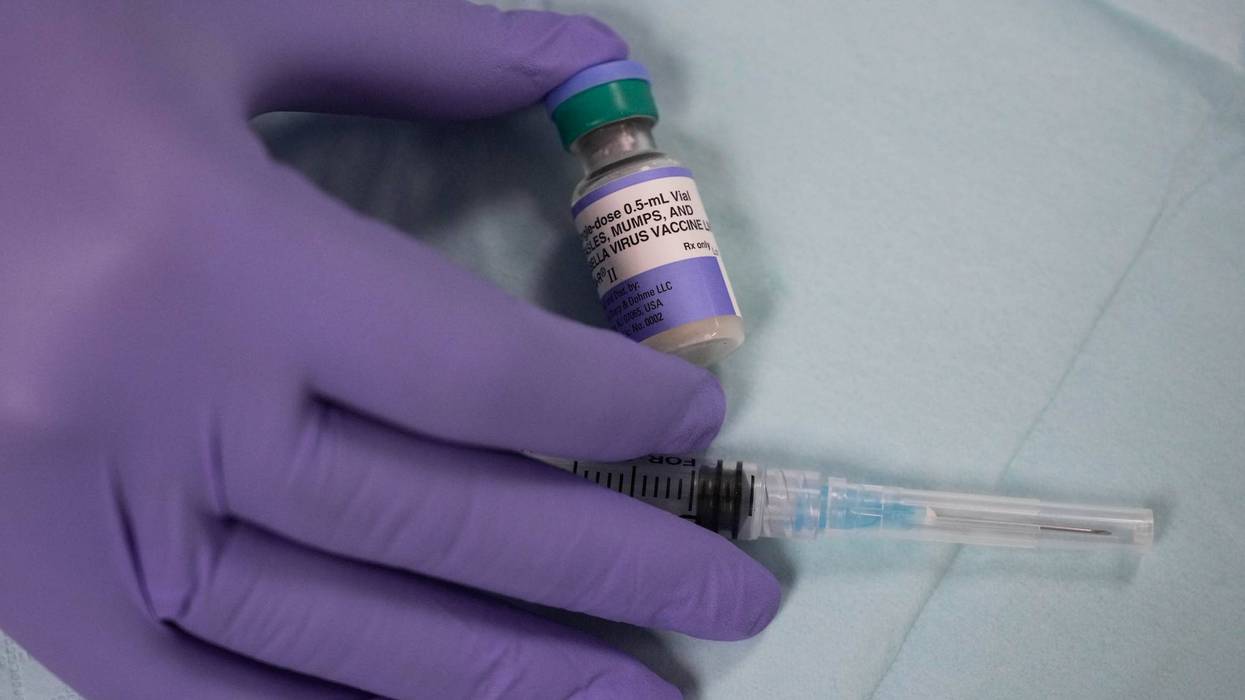
“The concerning rise in measles cases is due to a decrease in childhood vaccines driven by misinformation,” said the chair of the New York state Senate’s health committee.
As measles cases surge around the country—including in neighboring Pennsylvania, where the largest outbreak in decades is surging—New York declared a measles "emergency" on Monday.
The statewide emergency declaration, announced by Democratic New York Gov. Kathy Hochul, marks the first issued by a US state since last year, when the US saw over 2,000 cases of the illness after decades of it having been essentially eliminated.
This year has been even worse, with more than 3,900 cases reported across the US according to the Centers for Disease Control and Prevention (CDC) as of October 2—the worst outbreak since 1991. By comparison, 2024 saw just 285 reported cases. Outbreaks over the past two years have resulted in eight deaths across the country.
New York has identified at least 108 measles cases this year, mostly in rural communities with low vaccination rates.
The emergency order, which will be in effect through November 4, is set to expand the number of health professionals who can administer the measles-mumps-rubella (MMR) vaccine and order measles tests, allow pharmacists to vaccinate children as young as 2, and require vaccines to be reported to state immunization registries within 72 hours.
"No one should get seriously ill or die from a vaccine-preventable disease," Hochul said, announcing the order on Monday.
At the same time, Pennsylvania is experiencing a statewide outbreak unprecedented in the last three decades, surpassing 1,000 infections on Monday, according to state health officials. Since the outbreak began in April, at least 198 people have been hospitalized, and five have died. Officials said less than 1% of those cases were in people who'd been appropriately vaccinated.
Pennsylvania's Democratic Gov. Josh Shapiro has blamed the Trump administration's reversal of decades of federal vaccination policy for amplifying the crisis. He has singled out Health and Human Services Secretary Robert F. Kennedy Jr., who has spent decades sowing doubt about the safety and efficacy of vaccinations, including—as recently as August—pushing the long-discredited myth that the MMR vaccine is linked to autism.
Amid the measles resurgence over the past two years, RFK's approach has faced widespread criticism. He has repeatedly urged Americans to get the MMR vaccine. But he has often undercut that recommendation by claiming, without evidence, that the vaccine also causes deaths each year and that its benefits are "exaggerated" while promoting unproven alternative treatments.
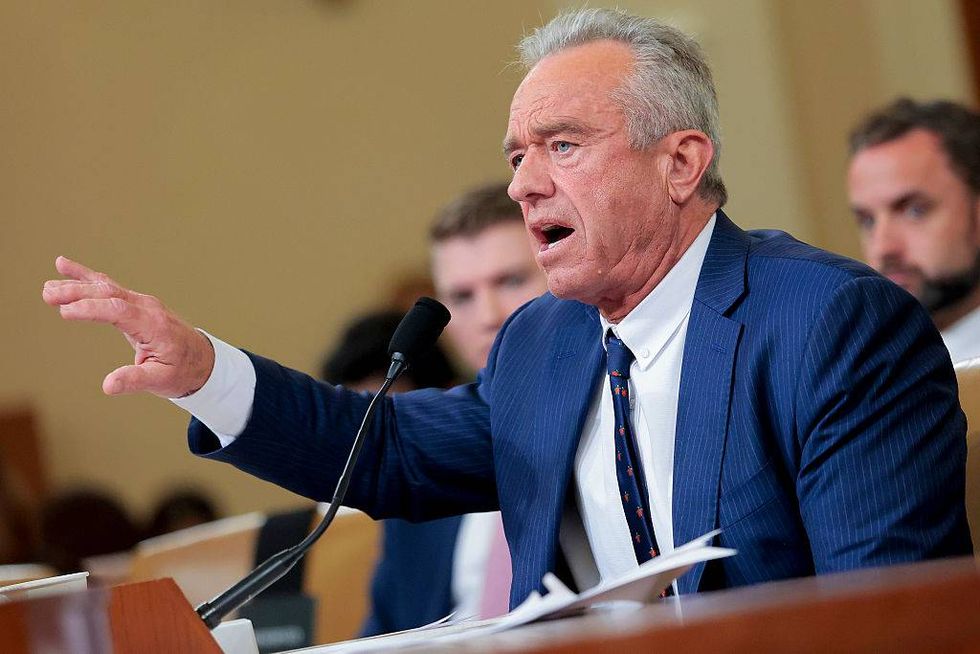 US Health and Human Services Secretary Robert F. Kennedy Jr. testifies during a hearing on Capitol Hill on April 16, 2026, in Washington, DC. (Photo by Heather Diehl/Getty Images)
As measles rampaged across Pennsylvania, Kennedy spoke on September 17 at a Washington, DC, convention hosted by Children's Health Defense, an anti-vaccine organization he helped to co-found.
He told the attendees, which included prominent anti-vaccine activists, that they "have a strong and steadfast friend in the White House" and praised Trump's executive order calling to divide the MMR vaccine into separate doses, against the recommendation of major medical organizations. Several Republican lawmakers were also in attendance.
When the first two measles deaths in Pennsylvania—of two unvaccinated people in Lancaster County—were reported in August, Kennedy suggested that they may have been “altogether fabricated by one of the governor’s hopeful staffers,” a claim that state health officials strenuously rejected. Since then, three more deaths have been recorded.
“RFK is playing games with people’s lives here in Pennsylvania, not just by discouraging vaccination," Shapiro said in an interview on the Meidas Touch News Network Monday. "He won’t even acknowledge the five deaths here in Pennsylvania. He actually accused me of fabricating it and making it up, even when the families of those loved ones who have perished have expressed publicly their sadness and their grief."
Despite the federal rollback, Shapiro said on Monday that Pennsylvania is making progress fighting the measles surge. He touted that the Department of Health had administered more than 53,000 doses of the MMR vaccine in September—more than double the average month's total.
Measles was declared eradicated in the US in 2000, with about 97% of kindergarten-age children having been fully immunized against the disease. Since then, vaccination coverage has dipped across the US to roughly 92%, with substantially lower rates in some communities where the largest outbreaks have taken hold.
The majority of that national dip has taken place in just the past half-decade, since the Covid-19 pandemic: In 2019-20, MMR coverage for kindergarteners was still at over 95%.
“The concerning rise in measles cases is due to a decrease in childhood vaccines driven by misinformation,” said New York state Sen. Gustavo Rivera (D-33), who chairs the state Senate’s health committee.
Jeanne Franklin, the health director for Chester County in Pennsylvania, told The Guardian that the rampant misinformation surrounding vaccinations, amplified by anti-vaccine influencers, has made efforts to fight the measles epidemic in her state more challenging.
"We have people in key positions saying it isn’t an outbreak, it isn’t a problem," Franklin said. "We have people who approach our nurses and say that they were told the vaccine will make them sterile, or that there’s a microchip within it."
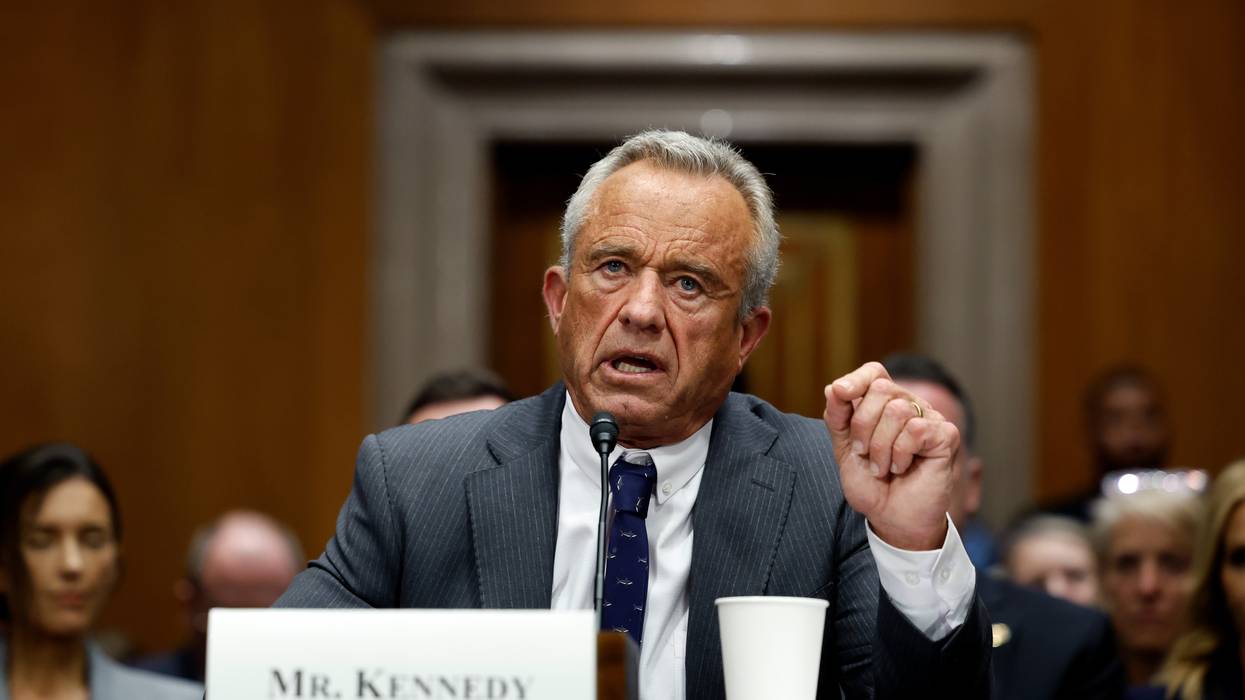
"He told us his Samoa trip had nothing to do with vaccines—now this letter shows that was false," Sen. Ed Markey said of President Donald Trump's health and human services secretary.
US Health and Human Services Secretary Robert F. Kennedy Jr. on Thursday faced calls for a criminal investigation after newly published documents appear to contradict his repeated testimony during Senate confirmation hearings that his 2019 trip to Samoa, which is linked to 83 measles deaths, “had nothing to do with vaccines.”
The advocacy group American Oversight on Thursday asked the US Department of Justice to investigate whether Kennedy knowingly made materially false statements during his 2025 Senate confirmation hearings. The request follows the publication of a January 2019 letter, signed by Kennedy and addressed to Samoa’s then-prime minister, Tuilaʻepa Saʻilele Malielegaoi, that explicitly proposed a vaccine-focused assessment of the Pacific island nation’s measles, mumps, and rubella (MMR) program.
“Robert F. Kennedy Jr. repeatedly testified before two separate Senate committees that his trip to Samoa had nothing to do with vaccines. But a letter he wrote to Samoa’s prime minister six years earlier appears to contradict that testimony,” American Oversight executive director Chioma Chukwu said Thursday in a statement.
“Congress relies on truthful testimony to do its job, particularly on matters as consequential as public health," Chukwu added. "If Kennedy lied to the Senate while seeking confirmation as the nation’s top health official, the Justice Department must investigate and hold him accountable.”
Questioned by Sen. Ron Wyden (D-Ore.) before the Senate Finance Committee, Kennedy said his trip had “nothing to do with vaccines,” describing it instead as an effort to introduce a medical informatics system to digitize the nation's health records.
The following day, when Sen. Ed Markey (D-Mass.) pressed him on the same issue before the Senate Health, Education, Labor, and Pensions Committee, Kennedy again said his trip had “nothing to do with vaccines.”
Markey's office released a statement Thursday noting that Kennedy "traveled to Samoa in 2019 to promote disinformation about the measles vaccine. Shortly after his trip, Samoa experienced a deadly outbreak of measles that killed over 80 people and has been attributed to mass vaccine disinformation."
My statement on new reporting that RFK Jr. lied to me in his Senate confirmation hearing.
[image or embed]
— Senator Ed Markey (@markey.senate.gov) August 27, 2026 at 1:47 PM
Of the 83 measles deaths during the outbreak, 72 were children under the age of 5. More than 1,860 hospitalizations in Samoa have been linked to the outbreak.
“New documents confirm what we already knew: RFK Jr. lied to Congress," Markey said. "He told us his Samoa trip had nothing to do with vaccines—now this letter shows that was false, just like it was false when he denied his role in the deadly outbreak that followed."
"This is a pattern, not a slip," he added. "RFK Jr. has lied to the Senate, lied to the American people, and jeopardized the health of children to advance his anti-vaccine agenda. He should never have been confirmed, and he cannot be trusted to run [the US Department of Health and Human Services] for even one more day."
Democratic Hawaii Gov. Josh Green, who is a physician, was invited by the Samoan government to help lead the measles response and recovery in the South Pacific archipelago.
“Misinformation and measles are a deadly combination—I saw that firsthand in Samoa," Green said on Thursday. "The truth is, this is a disease we know how to prevent. The MMR shot is the only proven and effective way to prevent the spread of measles."
"Vaccines save lives," he added. "Our public health decisions must be guided by doctors, scientists, and evidence—not conspiracy theories or political convenience. We owe it to every family to protect our children and communities, and make sure no one else dies from a preventable disease.”
The group 314 Action, which recruits, trains, and works to elect Democrats with expertise in science, published a statement Thursday noting that "now, America is facing its worst measles crisis in decades, and two more Americans have lost their lives to a disease we have long known how to prevent."
Public health experts have warned that the US is on track to lose its measles elimination status, which the country achieved in 2000, and blame the regression on declining vaccination driven by misinformation and conspiracy theories, including that vaccines are dangerous and even deadly.
Earlier this month, President Donald Trump signed an executive order overhauling federal recommendations for children that calls for separating the MMR vaccine into three individual shots.
"The only thing ‘lethal’ about vaccines is listening to RFK Jr.’s lies about them," said 314 Action. "America needs more leaders like Gov. Green who are willing to stand up to Trump and RFK Jr. and put public health over politics. We won’t stop fighting until RFK Jr. is fired or removed from office.”
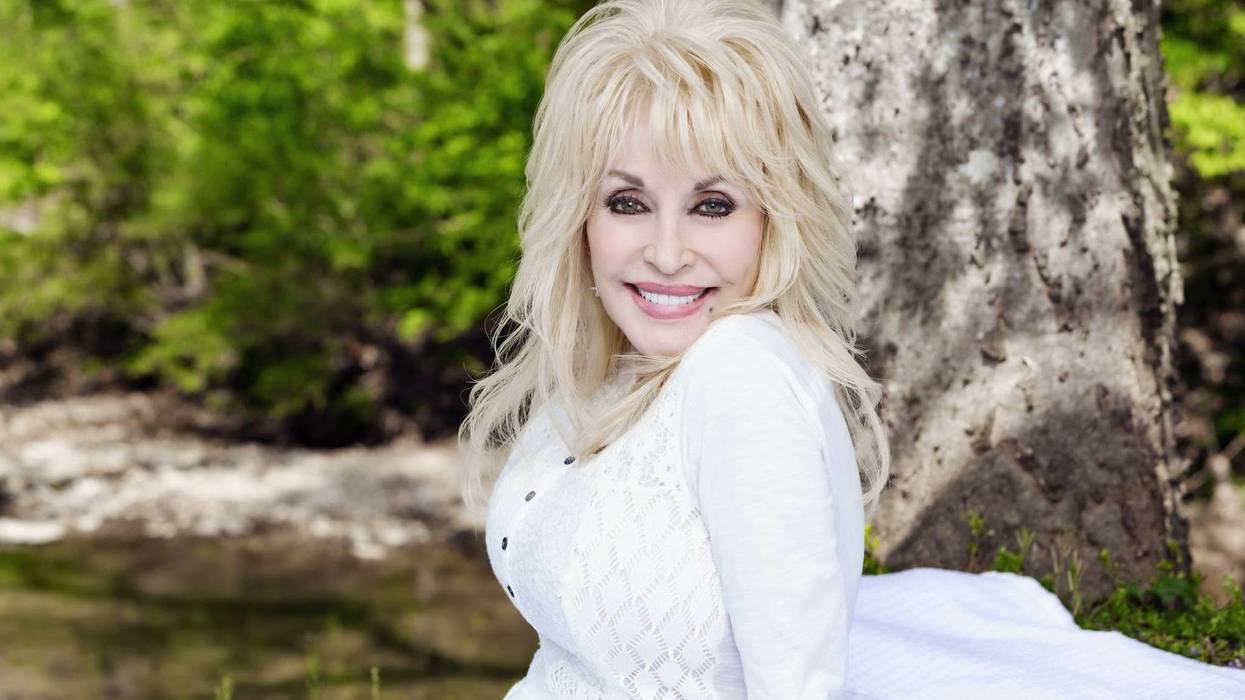
"She was not only a talented musician and songwriter, but a lifelong philanthropist and advocate for literacy, education, LGBTQ+ rights, healthcare, and disaster relief. Her music and humanity touched millions."
Dolly Parton died Tuesday in Nashville, Tennessee at the age of 80, and was fondly remembered by people around the world for not only her decades in the entertainment industry but also her philanthropy and promotion of the belief that "everybody should be treated with respect."
Parton's nephew and head of security, Bryan Seaver, confirmed the country music icon's passing in a video message shared on her social media accounts. As Rolling Stone reported, she "was born January 19, 1946, the fourth of Robert Lee and Avie Lee Owens Parton's 12 children, in a one-room cabin on the banks of the Little Pigeon River," and "grew up in rural poverty," lacking plumbing and electricity.
The obituary shared on Parton's platforms notes that she was preceded in death by her parents, as well as "her beloved husband of 59 years, Carl Thomas Dean," who died last year, and that "the family asks for donations to be made to Dolly Parton's Imagination Library," which was inspired by her father's inability to read and write, and has gifted more than 300 million books to children over the past three decades.
"Dolly Parton could have retired long ago having achieved greatness," Congressman Ro Khanna (D-Calif.) said of the singer and actress who won multiple Grammy and Emmy awards, among numerous others, and whose songs include "Coat of Many Colors," "I Will Always Love You," and "Jolene."
Rather than retiring from the spotlight, Khanna noted, "she chose to continue her life pursuing the arts, and pushing boundaries to advocate for inclusion, women's rights, children's literacy, and more. Dolly touched countless hearts and will forever be remembered."
US Sen. Bernie Sanders (I-Vt.) wrote on social media that "Dolly Parton was one of the great entertainers of our era. She was not only a talented musician and songwriter, but a lifelong philanthropist and advocate for literacy, education, LGBTQ+ rights, healthcare, and disaster relief. Her music and humanity touched millions. She will be sorely missed."
Sen. Elizabeth Warren (D-Mass.) said that "Dolly Parton gifted the world with her talent and heart. From supporting children, donating to science, investing in Tennessee, and giving us songs to sing our hearts out to (looking at you, '9 to 5'), she made the world a better place. Thank you, Dolly, for leading with love."
Democratic North Carolina Gov. Josh Stein said that "Dolly Parton was so special, so universally loved. The first word that came to my mind just now was 'authentic,' which is funny since she is well known for her big wigs and extravagant gowns. But she was always herself. Her music was powerful and moving... But her impact on the world was much greater—from providing kids free books to funding vaccine research and promoting tolerance. America lost one of our best today."
Similarly saying that "Dolly Parton represented the very best in America," former Labor Secretary Robert Reich wrote at his blog that "I think what I admired most was her empathy (the sentiment disparaged by Elon Musk. In fact, to my mind she was the human that embodied the exact opposite of Musk.) She felt the pain of those in poverty. She felt for women subordinated to patriarchy... She felt for working women."
Other key Democrats who posted remembrances included Kentucky Gov. Andy Beshear, Senate Minority Leader Chuck Schumer (NY), and former House Speaker Nancy Pelosi (Calif.), who called Parton "a singular American icon whose extraordinary voice, joyful spirit, and generous heart brought light to millions and made America kinder and more hopeful."
Parton took stances on topics that have become divisive in US politics—such as supporting LGBTQ+ rights and vaccine research—but she openly avoided wading into political races, and was also honored on Tuesday by various right-wing politicians and other figures, from Cabinet members, federal lawmakers, and governors to Republican President Donald Trump, who announced on Truth Social that "I am lowering the American flag throughout the United States for a one week period."
Meanwhile, as elected Republicans ban books and cut programs for the working class while giving more tax breaks to the ultrarich, Melanie D'Arrigo, executive director of the Campaign for New York Health, said that "Dolly Parton spent her life helping kids, marginalized communities, and people in need, while entertaining millions. She never had to, she chose to. In a world full of wannabe Donald Trumps, choose to be a Dolly Parton."
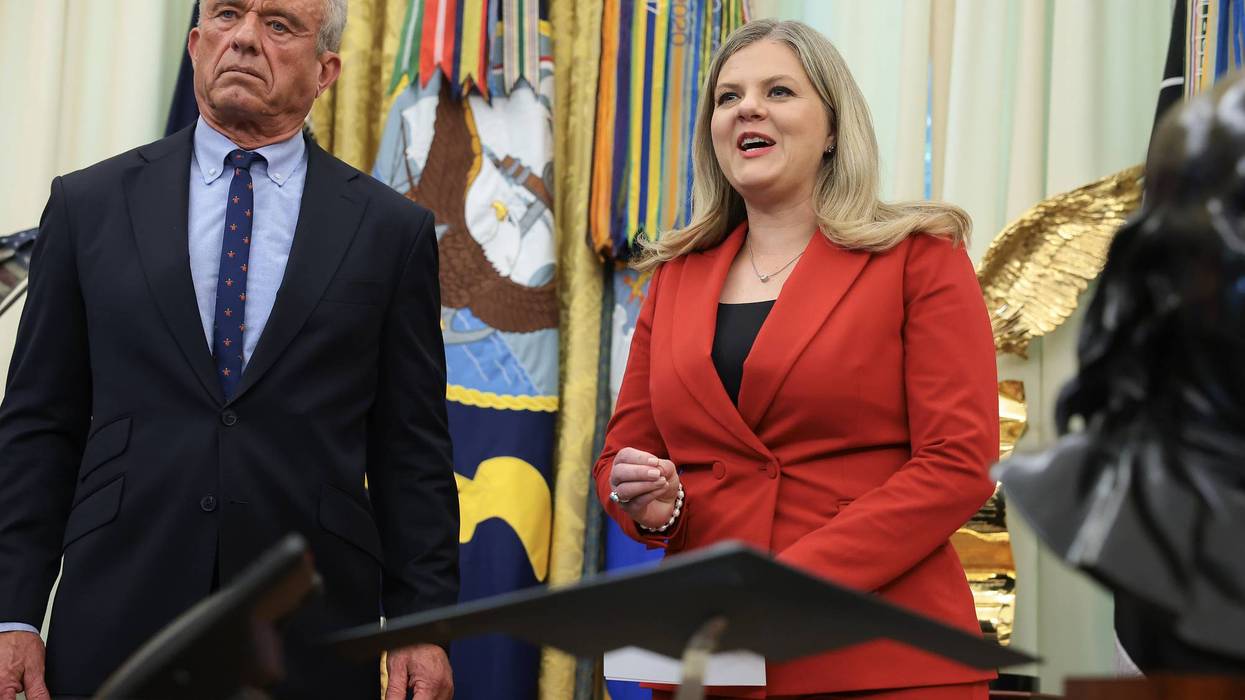
"The American people deserve someone who will put science and facts FIRST, not another Trump sycophant who will make it their mission to attack medication abortion," said one Democratic senator.
President Donald Trump on Wednesday tapped White House health policy adviser Dr. Heidi Overton to lead the Food and Drug Administration, a move that drew fierce opposition from Democratic lawmakers, reproductive rights advocates, and public health experts, who pointed to her opposition to abortion rights and support for controversial changes to federal vaccine policy as cause for alarm.
Trump took to his Truth Social network to announce his pick of Overton, a physician and deputy director of the White House Domestic Policy Council, to replace former FDA Commissioner Marty Makary, who resigned in May following months of turmoil at the agency. The president described Overton as a "ROCKSTAR" in his administration who will "deliver on the MOST TRANSFORMATIVE Health Agenda in History."
"Heidi is 'ALWAYS RIGHT,' Secretary Kennedy recently said in the Oval Office!" Trump continued, referring to Health and Human Services chief Robert F. Kennedy Jr. "We need her leadership at the FDA now to ensure that the US remains the WORLD LEADER for Scientific Discovery and CURES."
The president also said Overton would work with Centers for Medicare & Medicaid Services Administrator Mehmet Oz to advance his agenda of faster drug approvals, increased innovation, clinical trial reforms, and lower prescription drug prices.
However, skeptics argue that Overton’s policy record raises serious questions about whether she would maintain the FDA’s scientific and regulatory independence in an administration in which critics say loyalty to Trump is of paramount importance.
Reproductive Freedom for All—formerly the National Association for the Repeal of Abortion Laws and NARAL Pro-Choice America—noted that "Overton has an extensive anti-abortion record."
The group continued:
She celebrated the overturning of Roe v. Wade as a “huge victory,” and has advocated for the politicization of government agencies to help advance a nationwide anti-abortion agenda. She previously worked at America First Policy Institute, an extreme conservative think tank made up of former Trump administration officials, where she authored a brief pushing disinformation about the safety of medication abortion and calling for additional, medically unnecessary restrictions on access to mifepristone.
“Donald Trump is trying to put an anti-abortion extremist in charge of any agency that could seriously undermine reproductive healthcare—including the agency that could roll back access to mifepristone nationwide," Reproductive Freedom for All president and CEO Mini Timmaraju said. "Her nomination is another alarming step in Trump’s plan to weaponize every part of the federal government to restrict abortion nationwide.”
Overton's shifting stance on vaccines also raised eyebrows.
Endpoints News senior senior reporter Max Bayer highlighted how, while working at AFPI, Overton "and others praised Operation Warp Speed, the massive government initiative to expedite development and manufacturing of the Covid-19 vaccines" during Trump's first administration.
But less than a year later, Bayer said, Overton "advocated against Covid-19 school vaccine mandates, writing in an editorial the data supported more parental choice in the decision."
"Overton stood by Trump earlier in August as he announced a sweeping and contentious new executive order amending the childhood vaccine schedule and advising that the [measles, mumps, and rubella] vaccine be broken up into individual components," he added. "Makers of the vaccine pushed back on the directive, but now with Overton in line to lead the FDA, there could be enhanced pressure for drugmakers to follow through on the request."
Democratic US lawmakers also voiced opposition to Overton's nomination.
"Heidi Overton is a far-right, anti-abortion extremist who has no business leading the FDA," Sen. Patty Murray (D-Wash.) said on social media. "The American people deserve someone who will put science and facts FIRST, not another Trump sycophant who will make it their mission to attack medication abortion. I will vote NO."
At least one Republican lawmaker—who chairs the Senate Health, Education, Labor, and Pensions Committee—also questioned Trump's pick.
"While I respect Dr. Overton’s experience as a physician, I have strong concerns about her nomination to be FDA commissioner," Sen. Bill Cassidy (R-La.), a gastroenterologist, said on X. "Her lack of managerial experience does not prepare her well for leading a large organization that is already dealing with staffing and morale issues."
"Additionally, Dr. Overton’s active role in last week’s nonsensical vaccine executive order calls into question her commitment to standing up for sound science and protecting children’s health. That alone is almost disqualifying," added Casisdy, who earlier this year lost a primary race to a Trump-backed challenger.
Overton's nomination comes amid turmoil at an agency that has seen thousands of employees fired by Kennedy since last year amid Trump administration efforts to shrink the government in line with Project 2025, the Heritage Foundation-led framework for a far-right federal overhaul.
Chris Meekins, a former Trump health official who is now an analyst at the investment bank Raymond James, told clients that Overton would be "like Makary, but probably worse."
“Being seemingly inexperienced and unqualified is fine if you have self-awareness and humility and a strong team around you,” Meekins wrote. “Based off of our DC channel checks, she does not seem to have either."
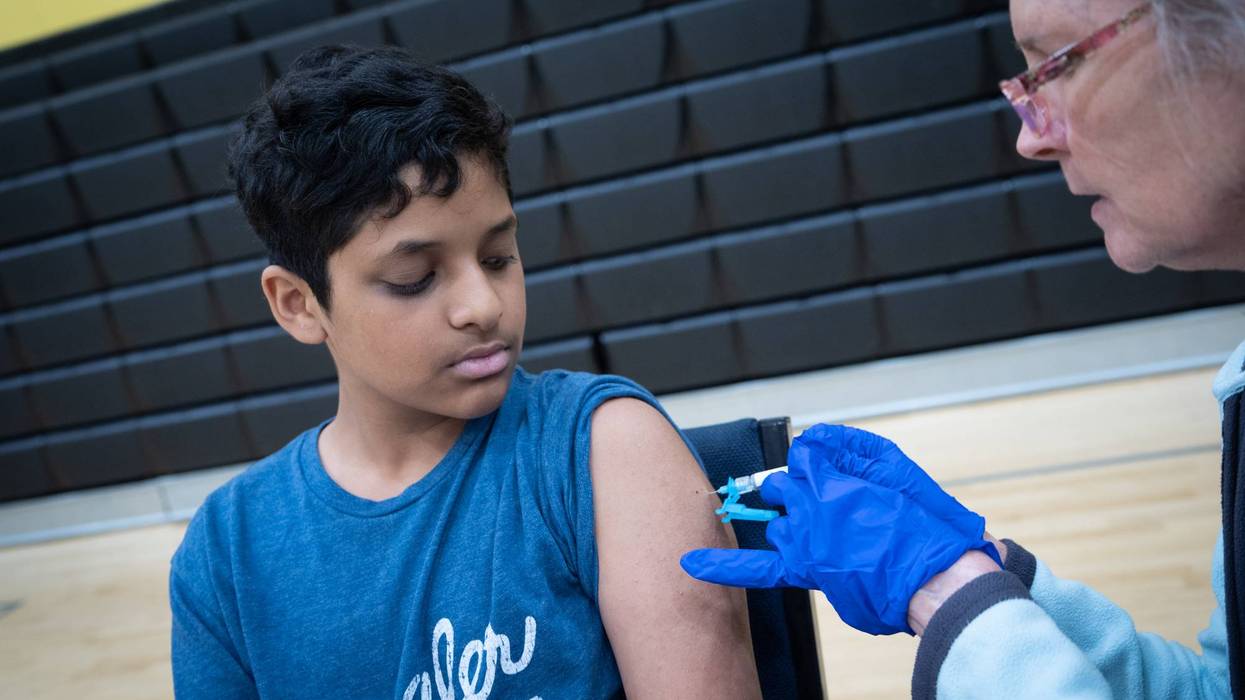
"The United States is experiencing a 35-year high for measles cases as federal officials continue to elevate misleading and disproven information about vaccines," said one medical expert.
Data released by the US Centers for Disease Control and Prevention on Monday showed that the rate of kindergartners with vaccine exemptions hit a record high over the last year as the nation's top health official continued to spread falsehoods about vaccine safety.
In all, CDC reported that 155,000 students, or 4.2% of all kindergartners enrolled in public schools, received vaccination exemptions in the 2025-2026 school year, an increase from the 3.6% of publicly enrolled kindergartners who received such exemptions in the prior school year.
The Washington Post noted in a Monday report on the data that "the biggest factor in the increasing exemption rate came from families seeking nonmedical exemptions," and that exemption rates now exceed 5% in nearly half of all US states.
The jump in vaccine exemptions comes as the US is dealing with the largest outbreak of measles it's experienced in over three decades.
Numbers released by the CDC last month revealed that there have been 2,318 recorded cases of measles this year, the highest number of cases recorded since the virus was declared eliminated in the country more than two decades ago.
Experts have said that this surge in measles cases is largely due to lower uptake of the measles vaccine.
Dr. James Campbell, member of the American Academy of Pediatrics' Committee on Infectious Diseases, told CBS News in an interview published Monday that the primary reason for the drop in vaccinations was the "chaos and confusion in vaccination recommendation systems in the last year or so," since the start of the second Trump administration.
Dr. Andrew Racine, president of the American Academy of Pediatrics, told the Post that it doesn't take a very large decrease in the vaccination rate to give the measles virus an opening.
"For some diseases like measles, even a small decrease in vaccination rates can lead to more outbreaks of disease," Racine explained, "because community immunity requires over 95% of susceptible individuals to be immunized."
"This risk is real," Raccine added. "The United States is experiencing a 35-year high for measles cases as federal officials continue to elevate misleading and disproven information about vaccines, inserting unnecessary fear and confusion into families’ decision making. And we are seeing the results."
The results could get even worse if President Donald Trump's executive order calling for the combined measles, mumps, and rubella (MMR) vaccination be divided into three separate shots gets implemented.
Experts have warned that separating the vaccines means that families will be less likely to have their children get all three shots, and the CDC's own website notes that "no published scientific evidence shows any benefit in separating the combination MMR vaccine into three individual shots."
Brad Woodhouse, president of Protect Our Care, said surging exemptions were a direct result of misinformation about vaccines being pushed by both Trump and US Health and Human Services Secretary Robert F. Kennedy Jr.
"Connect the dots," said Woodhouse. "Donald Trump and RFK Jr. frequently spew anti-vax lies to a national audience, parents get needlessly freaked out, exemptions surge, vaccination rates plummet, outbreaks of preventable diseases shatter records, kids die. Trump’s allergy to science and reality is its own deadly virus."
Dr. Jerome Adams, who served as US surgeon general during Trump's first term, also criticized Kennedy's leadership in a Tuesday social media post.
"You can’t be the leader of all health policy in America, AND claim you’re for childhood vaccinations, AND ignore this trend/not have a clear plan to increase vaccine uptake," Adams wrote, "at least not if you’re serious about improving America’s health."
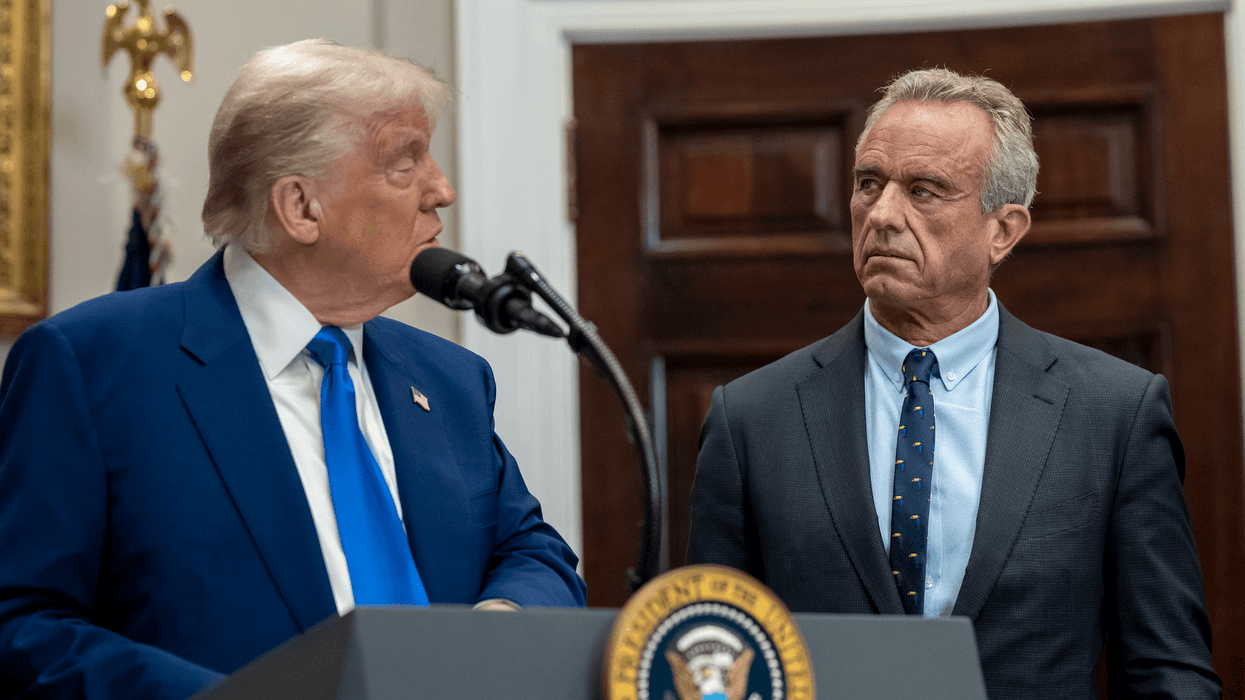
Protect Our Care called the president's decree on the measles, mumps, and rubella vaccine "a wildly dangerous escalation of the administration’s deadly anti-vax agenda."
US President Donald Trump on Monday signed an executive order overhauling federal childhood vaccine recommendations, reviving a discredited theory that vaccines may contribute to autism and prompting condemnation from public health advocates and even rebuke from a Republican senator.
Trump's order, “Delivering Gold Standard Childhood Vaccine Recommendations for Americans,” calls for separating the combined measles, mumps, and rubella (MMR) vaccination into three individual shots "once such products are domestically available." The directive also recommends administering childhood immunizations during separate medical visits, "to the maximum extent feasible."
At a press conference, Trump explained that the recommendations in his order concern "many subjects, but including autism in particular."
"Decades ago, children received only a small fraction of the vaccines required today," the president said. "In those times, people were much healthier and, of course, the high rates of autism now observed did not exist. So, there's a reason for such epidemic rates of autism. And we're going to bring it back to much closer to where it was."
"While we do not know exactly what the cause is with respect to autism, it is essential to our research efforts that we have the very best vaccine recommendations in the entire world," he added. "So we're reducing them, we're changing it to visits over the period of a year, a year and a half, so they get 20% of what they would have gotten in one big shot."
Decades of rigorous research have failed to produce any credible scientific link between vaccines and autism. That has not stopped influential figures, including Health and Human Services Secretary Robert F. Kennedy Jr., from claiming such a link. Trump and Kennedy also alarmed experts by claiming last year that acetaminophen, commonly known by the brand name Tylenol, is linked to autism spectrum disorders in developing fetuses when taken during pregnancy.
While anti-vaccine and vaccine skeptic voices applauded Trump’s order, public health experts said the directive will prove deadly.
Trump also claimed that inoculating children with all three components of the MMR vaccine could possibly be "quite lethal," but when asked by a reporter for evidence supporting that claim, the president could offer none.
I put together these two parts of Trump’s event on vaccines.
Trump claims there is a possibility that the MMR vaccine could be “quite lethal.” But later, when asked if he has any evidence to back up his claims, he says no pic.twitter.com/AwuW9IiYNl
— Acyn (@Acyn) August 10, 2026
The Affordable Care Act advocacy group Protect Our Care warned that Trump's executive order on the "nonexistent autism-vaccine link will get kids killed" and "is a wildly dangerous escalation of the administration’s deadly anti-vax agenda."
“Pushing parents to spread out these lifesaving vaccines over time is guaranteed to increase kids’ exposure to these very harmful diseases, including the simple reality that follow-up appointments will be missed," Protect Our Care senior adviserc Anne Shoup said in a statement. "If Trump’s baseless, science-free decree is followed, the end result will not be fewer children with autism, but far more in the ER or even the morgue."
"Whether or not state health departments follow Trump’s ignorant guidance, this official proclamation from the highest level of power will have a further chilling effect on vaccination rates across the board," Shoup added. "All Trump is doing is fanning more unfounded fear, pressuring a further drop in vaccination rates, and welcoming a resurgence of preventable diseases once thought eradicated. For the anti-vaxxer-in-chief, the current record-breaking measles crisis is apparently not on a grand enough scale.”
Anthony Wright, executive director at the health advocacy group Families USA, said in a statement that “today, the president announced yet another change in vaccine policy that is not based on science or medical evidence."
"The science has not changed. Vaccines that prevent common illnesses like rotavirus, hepatitis B, and the flu are just as safe and effective today as they were yesterday," he continued. "The new policy will simply create chaos and confusion for patients and providers, and increase costs for families when getting their kids vaccinated."
"This executive order seeks to sidestep the established panel of experts entirely, replacing decades of bipartisan, public, evidence-based review with the whims of a rogue White House and HHS secretary," Wright said. "This new directive sabotages a science-based process that has successfully prevented widespread outbreaks among American children for generations."
“Downgrading the universal recommendation for common, lifesaving vaccines will cause confusion for parents and providers alike, and confusion costs lives," he added. "Removing the presumption that every child should receive them isn't just dangerous; it risks undermining the guarantee that recommended vaccines are covered without cost-sharing, forcing families to choose between protecting their kids and paying for an expensive doctor's visit."
Dr. Robert Steinbrook, health research group director at the consumer advocacy group Public Citizen, said that "the Trump administration is continuing a mindless anti-scientific assault on the childhood vaccine schedule and falsely tying vaccines to autism."
"There is no medical reason for the MMR vaccine to be split into three separate single-disease shots that would be administered at separate office visits, changes that would only decrease vaccine coverage and increase healthcare costs," he continued. "Under the draft executive order, mandatory vaccine requirements for children to attend school would be also put at further risk. These and other directives are the exact opposite of ‘Gold Standard Childhood Vaccine Recommendations’ during the worst year for measles cases in decades."
The resurgence in measles is directly linked to vaccine refusal and hesitancy stoked by influential figures and fora like Kennedy and the Children's Health Defense nonprofit group he formerly chaired.
Trump will sign an executive order proposing reducing childhood vaccines, and separating the MMR vaccine into 3 individual shots.This reckless move will decrease vaccine uptake further at a time where measles cases are at a 35-year high, and the US is set to lose its measles elimination status.
— Dr. Lucky Tran (@luckytran.com) August 10, 2026 at 12:24 PM
“Senate confirmation of Dr. Erica Schwartz as director of the Centers for Disease Control and Prevention (CDC) should have restored sanity to the federal government’s vaccine policies," Steinbrook added. "Regrettably, within days of Schwartz’s confirmation, the Trump administration has offered only more irrational nonsense.”
Trump and Kennedy have pursued a broad rollback of federal vaccine policy, including by purging the CDC's entire vaccine advisory committee and replacing its members with controversial figures; reducing or eliminating universal recommendations for several vaccines, including Covid-19, flu, hepatitis B, and some childhood vaccines; canceling hundreds of millions of dollars in mRNA-vaccine development funding; and pushing individual decision-making.
Physicians serving in Congress from both parties also decried Trump's order.
“Donald Trump and RFK Jr. have gambled with American lives and seem determined to turn the clock back on decades of medical and scientific progress," said Congresswoman Kelly Morrison (D-Minn.), an OB-GYN. "Communities across the country continue to face outbreaks of preventable diseases, and Trump and RFK Jr. are doubling down on their dangerous disinformation."
"Meanwhile, working families continue to see their healthcare and prescription drug costs skyrocket—all so Trump can pay for tax handouts for billionaires," she added, referring to the so-called One Big Beautiful Bill signed by the president in July 2025. "Families shouldn’t have to worry that Trump and RFK Jr. will stand in the way of protecting themselves and their loved ones from serious illnesses.”
Sen. Bill Cassidy (R-La.), a gastroenterologist who voted to confirm Kennedy, wrote on X: "I’m a doctor. This executive order is wrong. The president does not have the expertise to make these changes."
"Vaccines are overwhelmingly safe. Vaccines are effective. Vaccines DO NOT cause autism," he continued. "Breaking up vaccines will mean children have to get more shots to get the same protection, not fewer shots. It will increase hesitancy and make children less safe."
"Parents should listen to their child’s pediatrician about vaccines rather than listening to an inaccurate executive order," Cassidy added. "This is so wrong."
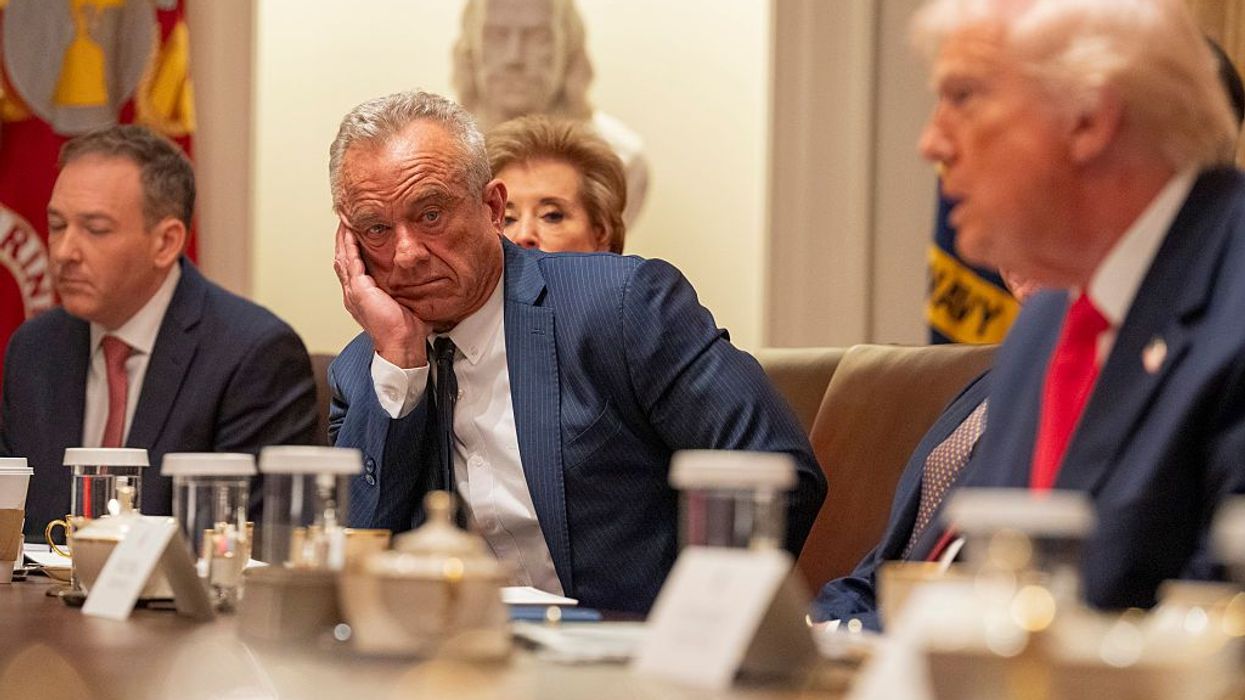
"If Trump gets his way and waters down the child vaccine schedule over the debunked autism myth, more American kids will suffer and die of preventable disease."
With the US already experiencing public health crises involving measles and explosive diarrhea, President Donald Trump reportedly believes it's time to further undermine Americans' faith in the safety of vaccines.
The Wall Street Journal reported on Monday that Trump in May asked US Health and Human Services (HHS) Secretary Robert F. Kennedy Jr. why he wasn't doing more to research disproven claims linking childhood vaccination with increased incidence of autism.
Trump specifically said he'd like to see Kennedy cut the number of shots the CDC recommends for children on the idea that doing so would make "autism rates drop, even if any such effect could take years."
Kennedy, despite being best known as an anti-vaccine conspiracy theorist before being appointed as the nation's top health official, was reportedly "taken aback" by Trump's demands, as White House political advisers had asked him to tone down his rhetoric about vaccinations.
During a White House meeting roughly a month later, the Journal reported, Trump complained that Kennedy "wasn't doing enough" to reduce the number of childhood vaccinations.
Multiple high-quality medical studies have found no link between vaccines and autism.
Brad Woodhouse, president of Protect Our Care, expressed horror at the president leading the charge against childhood vaccinations, which are estimated by the US Centers for Disease Control and Prevention (CDC) to prevent 4 million deaths per year worldwide.
"The reality is ugly," said Woodhouse. "If Trump gets his way and waters down the child vaccine schedule over the debunked autism myth, more American kids will suffer and die of preventable disease. We’re already in the middle of a record-breaking measles crisis thanks to vaccine lies amplified loudly by this administration, yet Trump is determined to do more damage."
Gavin Yamey, director of the Center for Policy Impact in Global Health at Duke University, declared himself "livid" at Trump's latest efforts to undermine confidence in vaccines.
"Ahead of the midterms, RFK Jr. and Trump... are ALL IN on their dangerous anti-vaxx activism and conspiracy theories," Yamey wrote in a social media post. "There is a wealth of high quality evidence that vaccines do not cause autism."
Claremont McKenna College political scientist Jack Pitney noted that Trump's false belief in a link between vaccines and autism stretches back years.
"For decades, Trump has pushed the lie that vaccines cause autism," Pitney wrote. "Now he reportedly wants RFK Jr. to push it even harder. The result? More US measles cases in the past 18 months than in the previous 20 years combined."
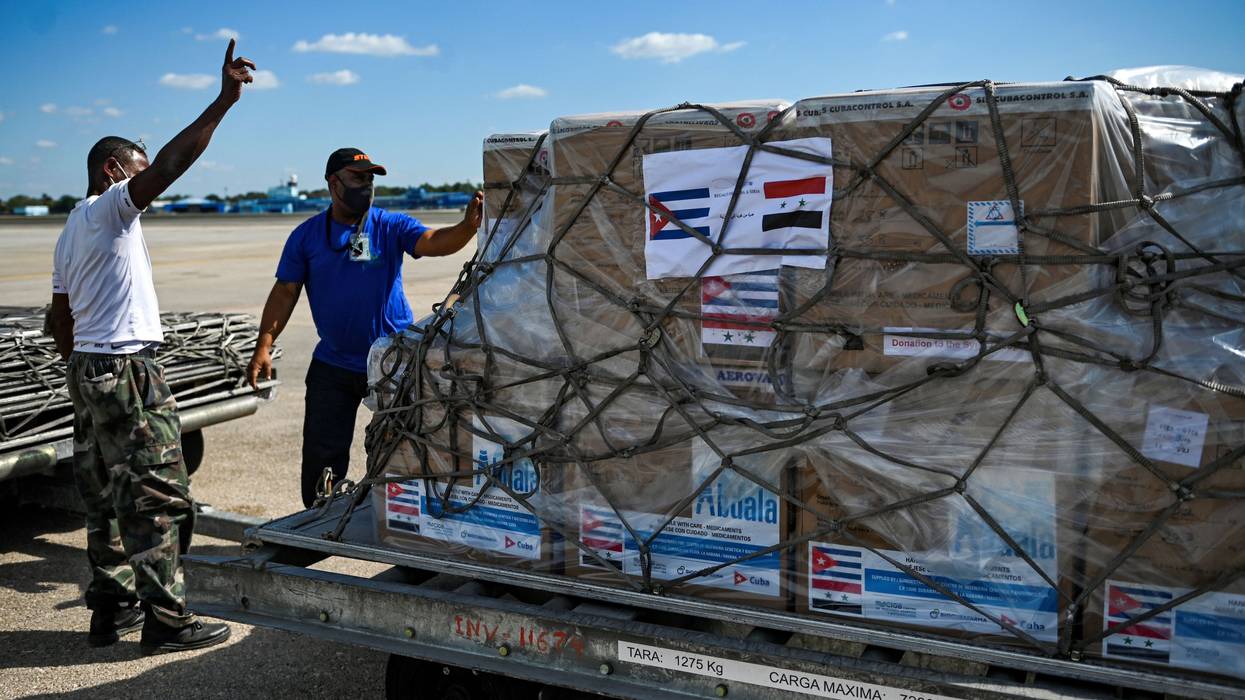
Cuba’s approach to providing healthcare is indicative of the nature of the revolution: to serve Cubans and the oppressed across the world.
Last week, the Cuban Center for Molecular Immunology, or CIM, announced a major health breakthrough with VAXIRA, a vaccine treatment for lung cancer. This is a remarkable achievement, made only more impressive by the fact that this is Cuba’s second lung cancer vaccine.
The vaccine stops the progression of cancer by developing the patient’s immune system to fight off cancer cells. This has proven to significantly prolong people’s survival. Since 2013, the vaccine has been monitored, trialed, and tested on more than 1,300 patients. Over a 10-year period, patients survived a median of 76.6 months, with 20% of all patients who were given VAXIRA experiencing unexpected long-term survival. Last year, VAXIRA was awarded the Technological Innovation Prize in Cuba for its contribution to healthcare in Cuba. This is an incredible feat for humanity and the battle against cancer—and it is being done by a country facing the longest and most severe blockade in history.
In 2011, Cuba developed CIMAvax, which remains the world’s only approved lung cancer vaccine. This vaccine works to induce the immune system to stop the growth of cancer cells and slow the progression of tumors. This vaccine has already treated more than 5,000 people across the world and many more thousands in Cuba itself. Given the immense significance of the vaccine, the United States agreed to a special arrangement to trial the vaccine in the US. The Roswell Park Cancer Institute in New York has been running clinical trials with CIM since 2018. They have run the first clinical trials of CIMAvax in the United States. The very same nation that is imposing a genocidal blockade on Cuba is also benefiting from the historic breakthroughs in healthcare.
These major developments in medicine to treat cancer are not Cuba’s only awe-inspiring health achievements.
The truth is that even with this genocidal blockade, Cuba maintains the principles of its revolution and the motivation to better the world.
During the Covid-19 pandemic, Cuba produced five vaccines: Ablada, Soberana 01, Soberana 02, Soberana Plus, and Mambisa. Cuba had one of the lowest Covid-19 deaths in the Western Hemisphere—and by 2021, Cuba’s fatality rate was just 0.59% compared with the 2.2% worldwide average. The vaccines were produced without the need for specialist refrigeration, which meant they could be easily transported and also distributed across the world to places where accessing such infrastructure would be impossible. Quickly, Venezuela, Iran, Vietnam, St. Vincent and the Grenadines, and Mexico all picked up the vaccine to protect their population.
By 2023, Cuba had the third-highest rate of vaccinations per 100,000 people. Despite the fact that the US banned the country from importing the syringes necessary to immunize its own population. In this context, Cuba was the first country in the world to vaccinate toddlers and children, as part of their push to reopen schools safely.
Cuba, like the United States, offered its Covid-19 vaccines to the world. While Cuba donated vaccines to St. Vincent and the Grenadines and sold them as cheaply as they could, the US bullied countries into putting up their assets, like embassy buildings and military bases, in order to access vaccines. This was to “protect” against future legal challenges that vaccine recipients might file against the manufacturer of the vaccine. This profit motive was a major cause for the vaccine apartheid in the distribution of Covid-19 protection across the world. As of August 2024, in high-income countries, more than 222 doses had been distributed per 100 people. While in low-income countries, this was less than 46. In 2021, US pharmaceutical companies that produced Covid-19 vaccines (Moderna, Pfizer, Johnson & Johnson) collected an eye-watering revenue of $31 billion. The concept that companies and shareholders should make money from a pandemic should be utterly outrageous.
Cuba leads the world in its vaccine breakthroughs. But, how is this all possible? It is not by accident that Cuba is able to develop world-leading health breakthroughs in medicine. Cuba has developed a world-class biotechnological sector that is state-owned and operates in the interests of the people, not profit. There are no profit motives to producing vaccines; research and development are for the collective benefit, and resources are shared to better the process of scientific development. This is quite the opposite situation in capitalist countries, where biotechnology is a major competition dominated by pharmaceutical companies motivated entirely by profits, which often means that when there are major developments in health, they are not accessible to people.
In 1981, Cuba opened the Biological Research Center, despite the blockade stopping the entry of equipment, materials, access to research journals, and medicines. In the first 9 years, the center produced three products. Between 1990 and 2000, it produced 18, and between 2001 and 2010, it produced more than 40. Today, that figure continues to grow. The center flourished into a world-class biotechnological sector that has made major health breakthroughs. Cuba produced the world’s first human vaccine to contain a synthetic antigen for Haemophilus influenzae type B.
In 1989, Cuba produced the world’s first Meningitis B vaccine during a severe outbreak of the disease in the country. This was the first ever vaccine produced to protect against Meningitis B and was exported to protect people in countries across Latin America. The US approved its first vaccine for Meningitis B in 2014.
Cuba once had among the lowest rates of infant mortality in the world. But since 2019, with the increase of more than 250 additional sanctions on Cuba, the rates of infant mortality have risen by 148%.
The following year, Cuba produced a vaccine for Hepatitis B. They joined just five other countries as a manufacturer of Hep B vaccines: France, South Korea, the United States, Indonesia, and Britain. As the US blockade made it virtually impossible and far too expensive to import the vaccine, Cuba produced their own and eliminated Hepatitis B in under 15 years.
In 2006, Cuba developed Heberprot-P, the only medicine in the world to reduce the amputation rate of patients with diabetic foot ulcers by 75%. Within 10 years, it was used in 23 countries. It has treated more than 400,000 people with foot ulcers. In 2024, the United States even broke its own blockade and approved it for trials and use. The very thought that Americans who suffer from diabetes might be treated by Cuban medicine while being fed propaganda against Cuba and funding a war against the very Cuban researchers and scientists helping them reveals how inhumane this blockade is.
By 2015, Cuba became the first country in the world to eliminate mother-to-child transmission of HIV and syphilis. Cuba managed this because of its socialist model, which is the same reason why it is not celebrated in mainstream media and looked to as a center for health advances in the US. This world historical achievement came as a result of Cuba’s universal health system that integrated maternal and child health programs with HIV and STI treatment. Cuba has one of the lowest rates of AIDS in the world and the lowest in the Americas, thanks to the free provision of antiretroviral treatment it has been distributing since 2001. Its vaccination programs have eradicated diseases that continue to cause death and suffering around the world, including diphtheria in 1979, measles in 1993, whooping cough in 1994, and rubella in 1995. Cuba has also developed the highest control of blood pressure in the world.
The same principles that led Cuba to produce world-leading medical breakthroughs are similar to its success in eliminating diseases. Cuba’s vaccination model is motivated by protecting its people. The National Immunization Program, which began in 1962, has saved the lives of at least 560,000 children who would have otherwise contracted diseases if it weren’t for the program. This is motivated by four directives: equity of vaccine distribution; integration of vaccination in primary healthcare; the inclusion of active community participation; and providing vaccines free of charge. These guiding principles indicate how central the health of all society is, not corporate interests or greed.
Cuba’s approach to providing healthcare is indicative of the nature of the revolution: to serve Cubans and the oppressed across the world. Before the revolution in 1959, 300 children were paralyzed by polio each year. One of the first measures by the revolutionary government was immunization for Cuban society. In 1962, the polio campaign launched through mobilizing 100,000 members of newly founded revolutionary committees to conduct a population census and vaccinate all children. Within months, polio was eradicated in Cuba, making it one of the first countries in the world to do so. Polio is still a leading cause of paralysis and death across the world.
These health achievements have massively benefited people across the world through access to new treatments and cures, affordable and accessible vaccines and medicines, and models for healthcare. But another awe-inspiring element of Cuba’s healthcare is its international solidarity.
Cuba has restored the eyesight for more than 4 million people with its joint program with Venezuela, Operation Miracle. They have sent more than 600,000 health workers on medical missions to 160 countries in response to pandemics, epidemics, natural disasters, and other crises where no other country would act. They have and continue to train doctors from the Global South for free so they go back to their home countries to practice medicine.
Cuba makes these miraculous achievements for humanity while facing a blockade that causes shortages of medicines in pharmacies across Cuba; blocks researchers from accessing health journals; and prevents the entry of equipment, spare parts, and laboratory materials that could make it easier and faster to conduct research. The US blockade should be seen as an attack on humanity itself. This is a genocidal act of war against a population that exports doctors across the world by an empire that exports bombs, fighter jets, and invading soldiers.
Cuba once had among the lowest rates of infant mortality in the world. But since 2019, with the increase of more than 250 additional sanctions on Cuba, the rates of infant mortality have risen by 148%. It is estimated that this has cost 1,800 lives of infants. This is the material result of a blockade that intends to kill, punish, and destroy a country for asserting its own sovereignty. Yet, even still, Cuba’s infant mortality rate is lower than that in the United States. The US enforces its blockade on Cuba so that it can try to claim Cuba is a “failed state,” which also means its universal, free healthcare system “fails”; all so it can maintain its abysmal healthcare system that operates purely for profit, despite the level of death, bankruptcy, and suffering it causes to poor Americans.
The truth is that even with this genocidal blockade, Cuba maintains the principles of its revolution and the motivation to better the world.
Like Fidel Castro said in 2003: “Our country does not drop bombs on other peoples, nor does it send thousands of planes to bomb cities; our country does not possess nuclear weapons, chemical weapons, or biological weapons. Our country’s tens of thousands of scientists and doctors have been educated in the idea of saving lives. It would absolutely contradict this concept to put a scientist or a doctor to work to produce substances, bacteria, or viruses to kill other human beings.”
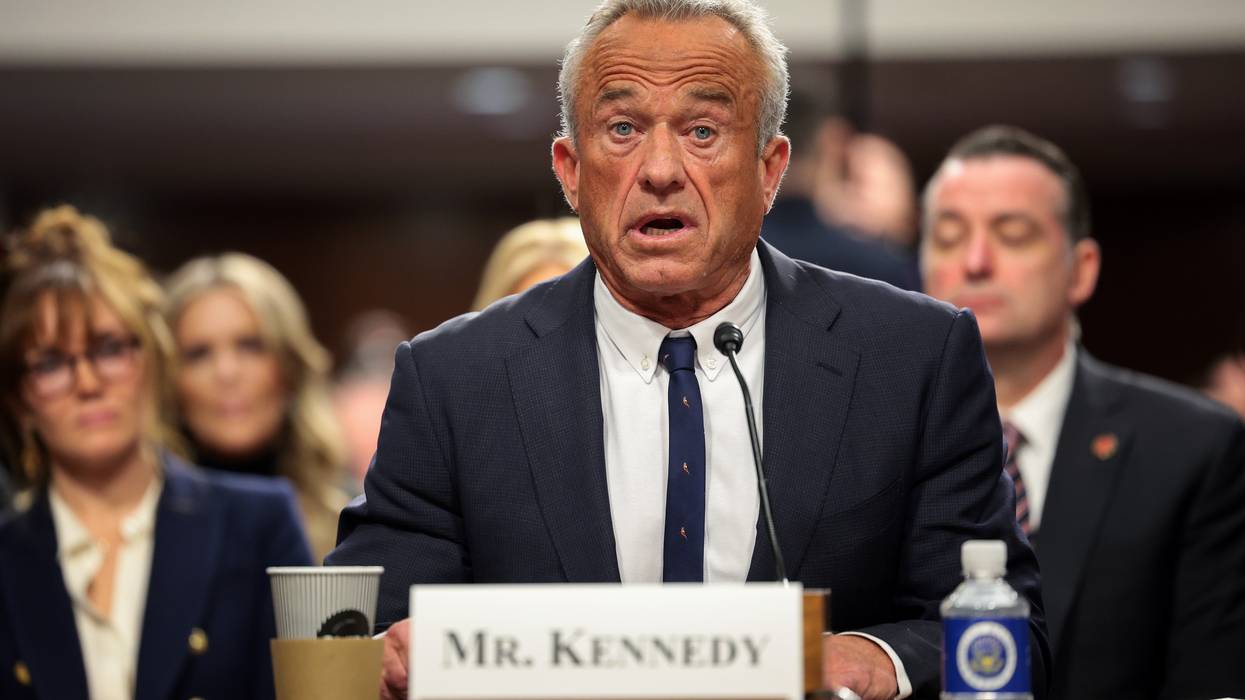
One physician and public health expert called the ruling "a much-needed victory for a sane approach to federal vaccine policy that relies on science, not misinformation and conspiracy theories."
In what advocates called a major victory for public health, a federal judge on Monday temporarily blocked US Health and Human Services Secretary Robert F. Kennedy Jr. from implementing a series of moves that critics have warned would weaken childhood immunization efforts and increase the likelihood of serious disease outbreaks.
US District Judge Brian E. Murphy of Massachusetts, an appointee of former President Joe Biden, invalidated Kennedy's reorganized Advisory Committee on Immunization Practices (ACIP) panel, which was set to meet later this week.
Kennedy—who was confirmed by the Senate last year over the objections of tens of thousands experts and despite being a purveyor of vaccine misinformation—replaced ACIP members with several people with ties to the anti-vaccine movement.
Murphy also blocked the committee's unprecedented changes to US immunization recommendations, writing that the "arbitrary and capricious" move stands in stark contrast with the long established decision-making process he called "a method scientific in nature and codified into law through procedural requirements."
“Unfortunately, the government has disregarded those methods and thereby undermined the integrity of its actions," the judge said.
The Department of Health and Human Services (HHS) under Kennedy revised the Center for Disease Control and Prevention's (CDC) childhood immunization schedule so that fewer vaccines are now universally recommended for all children. The agency also reclassified vaccines that were previously endorsed for all children into categories in which vaccination depends on designated risk groups and consultations with medical professionals, among other changes.
Twenty-nine states and the District of Columbia have announced that they would not follow the new CDC immunization recommendations.
Lookie Here! As of now, 29 states + DC, have announced that they are no longer going to follow CDC's recommendations for some or all childhood vaccines.Kennedy is not restoring public trust in science as he said he would. 🧪 www.kff.org/other-health...
[image or embed]
— Princess Vimentin PhD | Cancer Biologist (@princess-vimentin.bsky.social) March 12, 2026 at 11:47 AM
Plaintiffs' attorney Richard Huges IV said in a statement that "this ruling is a momentous step toward restoring science-based vaccine policymaking."
"The judge recognized that the actions of Secretary Kennedy and the Advisory Committee on Immunization Practices are not grounded in science and that they are destructive," he added. "We are thrilled that the court has discarded the baseless vaccine schedule changes made by Secretary Kennedy and is blocking the Advisory Committee on Immunization Practices from doing further damage to vaccine policy."
Dr. Robert Steinbrook, Health Research Group director at Public Citizen, said in response to the ruling that "Judge Murphy’s decision is a much-needed victory for a sane approach to federal vaccine policy that relies on science, not misinformation and conspiracy theories."
"Kennedy’s hand-picked ACIP has been a national embarrassment, thoroughly lacking in the ability to make careful fact-based decisions," he added. "The judge’s ruling offers a responsible path forward for public health and evidence-based federal vaccine policy.”
RFK Jr. fired all of the legitimate scientific experts on the Advisory Committee on Immunization Practices and replaced them with unqualified political appointees.A judge just ruled that the new members were not appropriately appointed, so ACIP cannot meet this week to spread more misinformation.
— Elizabeth Jacobs, PhD (@elizabethjacobs.bsky.social) March 16, 2026 at 1:38 PM
Anthony Wright, executive director of the advocacy group Families USA, said in a statement: "When politics override science, our children pay the price. Today’s decision helps ensure that medical evidence—not ideology—guides how we protect kids from preventable diseases."
Wright continued:
Secretary Kennedy’s attempt to remove universal recommendations for routine vaccinations only increased confusion among medical providers and families. The routine vaccines being questioned by HHS are the product of centuries of rigorous science and medicine and are why children today don’t die from measles or suffer the lifelong consequences of diseases we long ago learned to prevent. For a country as large, diverse, and mobile as ours, universal vaccine recommendations are the safest and most effective way to stop outbreaks before they start.
Amid several recent outbreaks, public health officials warned late last year that the United States is close to following Canada in losing its measles elimination status, a deadly and preventable setback many experts attribute to HHS' vaccine-averse policies and practices under Kennedy.
"We commend the court for this ruling, but families should not have to depend on litigation to ensure their child can receive a routine vaccine," Wright said. "Evidence-based medicine keeps children alive and in school. Preventing disease should be the foundation of any healthcare system serious about confronting the next disease outbreak or finding the next cure."
The group Protect Our Care called the decision "a major step in the right direction for children’s health after many setbacks under this administration."
“Most Americans, most states, and now a federal court have rejected the [President Donald] Trump-RFK Jr. scheme to make preventable disease great again among American children while exploding health costs across the country," Protect Our Care president Brad Woodhouse said. "While this ruling is a reprieve from harmful anti-vaccine policy based on nothing but junk science and discredited conspiracies, it’s clear the Trump administration is determined to resuscitate their agenda in a higher court because they care more about their anti-science agenda than keeping kids healthy.”
Indeed, HHS spokesperson Andrew Nixon said the agency "looks forward to this judge’s decision being overturned just like his other attempts to keep the Trump administration from governing.”
Public health advocates noted the limitations of judicial rulings.
"The courts can only do so much without Congress, which must fulfill its oversight responsibility and rein in an executive branch that is taking an axe to core public health protections," Wright said. "Transparency and scientific integrity are not optional, especially when children’s lives are at stake. Families deserve vaccine policy grounded in evidence and expert guidance—not ideology or personal bias—with the goal of making sure every child in America can grow up healthy.”
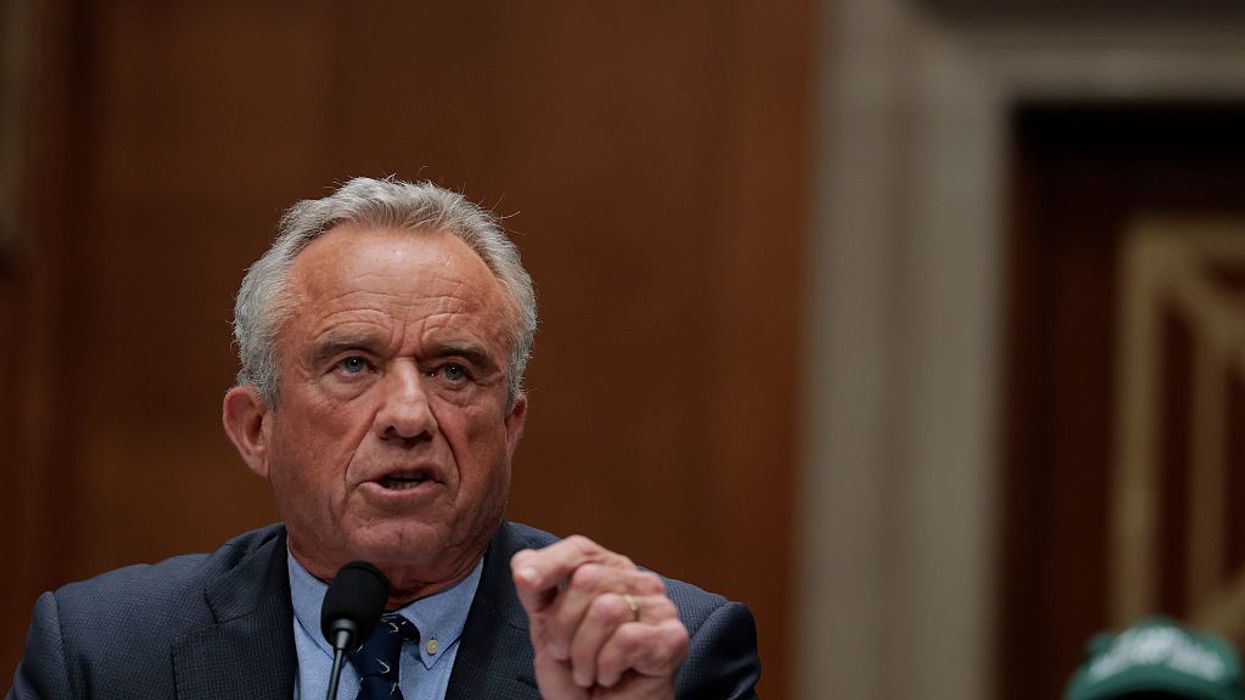
Kennedy has "made a habit of throwing good money after bad" by promoting "junk science and fringe beliefs."
A scathing editorial published Friday in one of the world's most prestigious medical journals took US Health and Human Services Secretary Robert F. Kennedy Jr. to task for what it described as "one year of failure."
In its editorial, the Lancet began by listing off several of the broken promises Kennedy made during his first speech after being confirmed to lead the US Health and Human Services Department (HHS), such as his vow to have "open and honest engagement with everyone willing to work towards making the USA healthy again" and usher in "a new era of unbiased science without hidden conflicts of interest, secrecy, or profiteering."
In fact, the Lancet found that it took Kennedy less than two weeks to break a key promise.
"Ten days after his speech about trust and openness," the journal noted, "HHS rescinded a 54-year-old policy of soliciting public comments for new rules and regulations, silencing the voices of many of the stakeholders he pledged to serve."
Things have only gotten worse since then, the editorial continued, as Kennedy has shelved research into mRNA vaccines and "made a habit of throwing good money after bad" by promoting "junk science and fringe beliefs."
The editorial concluded by warning "the destruction that Kennedy has wrought in one year might take generations to repair, and there is little hope for US health and science while he remains at the helm." The journal urged the US Congress to "hold Kennedy accountable for his record, or else accept responsibility for endorsing President Trump's decision to let him 'run wild on health.'"
The Lancet editorial drew a range of reactions from medical experts and academics.
Scott Forbes, an ecologist at the University of Winnipeg, explained the significance of a journal such as the Lancet publishing such an overtly political editorial.
"For context, the Lancet is one of the two most important medical journals on the planet," he wrote in a social media post. "When they put this on their front cover, it is only because there is something seriously wrong. That something is RFK Jr. He is a notorious crank and charlatan. But that's par for the course in the Trump regime."
Forbes' point was echoed by Krutika Kuppalli, associate professor at UT Southwestern Medical Center's Department of Internal Medicine.
"When a leading medical journal uses language like this, it’s not rhetoric," she wrote. "It’s a warning the world should take seriously."
Pediatrician Vincent Iannelli took the Lancet to task for publishing a since-retracted study in 1998 that falsely linked vaccination with the development of autism, which subsequently helped the anti-vaccination movement gain currency.
"Let's not forget that Wakefield's fraudulent paper that was published in the Lancet helped get us on this road," Iannelli said. "RFK Jr. was influenced by mothers who blamed vaccines for their child's autism."