SUBSCRIBE TO OUR FREE NEWSLETTER
Daily news & progressive opinion—funded by the people, not the corporations—delivered straight to your inbox.
5
#000000
#FFFFFF
To donate by check, phone, or other method, see our More Ways to Give page.


Daily news & progressive opinion—funded by the people, not the corporations—delivered straight to your inbox.
"Anyone who ever had a chance to say something pointed or political in American television entertainment owes Norman Lear their adoration and awe," said TV writer and producer David Simon.
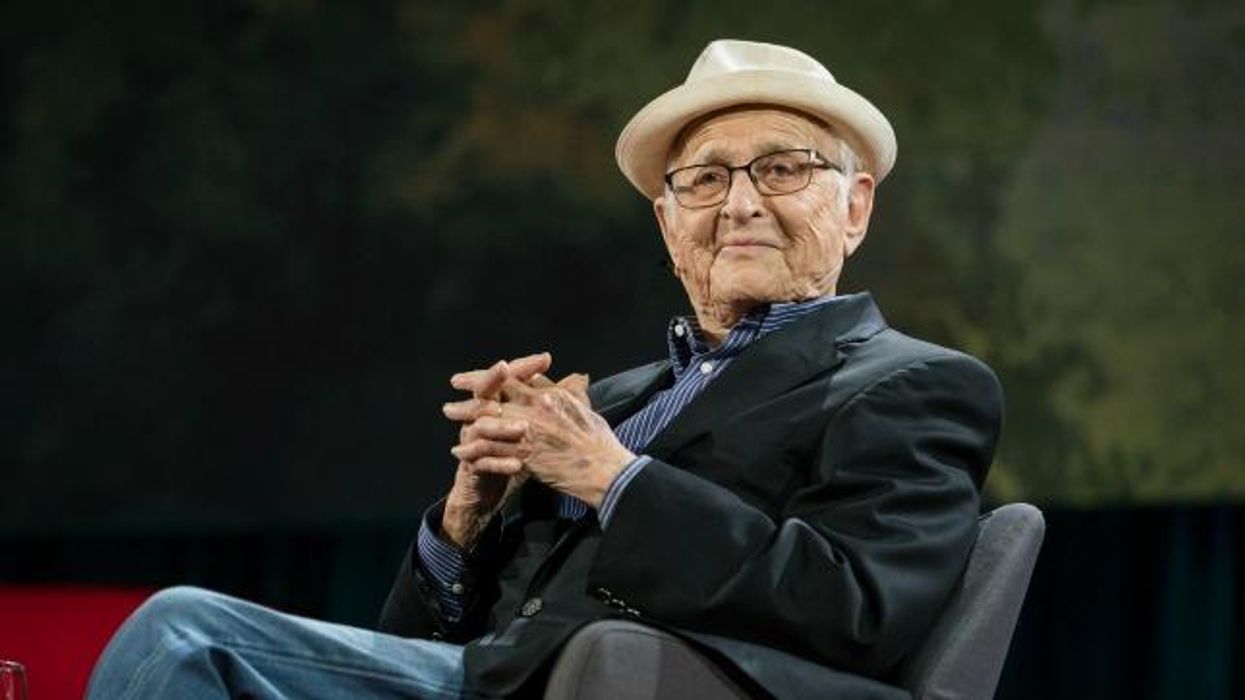
Actors and television and film producers were joined by progressive lawmakers, human rights advocates, and abortion rights groups in paying tribute to Norman Lear, the legendary TV writer and producer who ushered in an entirely new era of sitcom viewing to the American public in the 1970s, as his death at the age of 101 was announced Wednesday.
Lear has long been credited with expanding audiences' ideas about whether salient topics of the day like racism, poverty, and reproductive rights could be fodder for primetime television after his first smash hit, "All In the Family," was introduced in 1971.
The show, which ran for eight seasons and inspired several spin-offs, featured the bigoted Archie Bunker at its center, with his progressive daughter and son-in-law, influenced by the 1960s counterculture, frequently challenging his views.
"All In the Family" broke new ground by confronting Bunker's homophobia, his wife Edith's experience of going through menopause, widespread opposition to the U.S. war in Vietnam, and racism.
"Honesty about white racism was such a relief," reflected Maya Wiley, CEO and president of the Leadership Conference on Civil and Human Rights.
As critic Ben Brantley said on social media, Lear "redefined what could be said and seen on television" and "made the uncomfortably narrow American mind the center of a sitcom."
Other hit series included "The Jeffersons," which featured an upwardly-mobile Black family and which Lear said he was inspired to write after members of the Black Panthers told him, "Every time you see a Black man on the tube, he is dirt poor." The family at the center of the sitcom discussed issues including alcoholism, interracial relationships, and classism. As Danielle Cadet wrote at HuffPost in 2012, the show "opened doors for future black actors, and its success proved that African American sitcoms did, in fact, resonate with general audiences."
"Sanford and Son," about a Black junk dealer who often butts heads with his more open-minded son, "mine[d] laughs in a setting that in real life had been torn apart over police abuse issues not long before, during the Watts riots of August 1965," noted the International Academy of Television Arts and Sciences. In "Good Times," a Black woman faced challenges as she raised her family in public housing in Chicago.
The success of Lear's series meant that "anyone who ever had a chance to say something pointed or political in American television entertainment owes Norman Lear their adoration and awe," said TV writer and producer David Simon.
The nonprofit group Abortion Access Front paid tribute to another series, "Maude," in which the title character had an abortion in an historic 1972 episode.
"We humbly aim to continue the legacy of smashing stigma and promoting the vitality of abortion access through humor," said the group, posting a clip for the episode in which Maude's daughter says, "We're free, we finally have the right to decide what we can do with our own bodies."
The show "broke many barriers," said researcher Steph Herold, not only by being the first sitcom to contain a plotline dealing with abortion care, but also by having "the first abortion plotline that centered the woman instead of her partner, doctor, or lawyer, the first legal abortion plotline."
"Norman Lear moved minds through the moving image," said U.S. Sen. Ed Markey (D-Mass.). "His commitment to social justice ran through his work."
Lear founded the progressive group People for the American Way (PFAW) in 1981 and oversaw its advocacy on behalf of LGBTQ rights, freedom of speech, and other issues.
He later established groups that aimed to push for voter registration among young people, promote socially responsible behavior by corporations, and encourage the entertainment industry to educate viewers about environmental damage.
Lear was awarded lifetime achievement awards from the Producers Guild of America, the Television Critics Association, and the free expression group PEN Center USA, as well as a National Medal of Arts in 1999.
As Common Dreams reported in 2017, Lear refused to attend a reception at the White House to celebrate the Kennedy Center's decision to honor him that year, saying he did not want to mark the occasion at the home of then-President Donald Trump, who had slashed arts funding.
"I can't see myself visiting a White House, what [Trump] called a dump, that dumps on the National Endowment for the Arts," he told The Washington Post.
PFAW noted on Wednesday that Lear considered himself a patriot, and once wrote that he would not "surrender that word to those who play to our worst impulses rather than our highest ideals."
"That belief shone through in his work," said the group.
At a private home on the west side of Los Angeles in late January, two worlds collided: the grassroots environmental activists working in our city's low-income communities--where toxic oil wells drill near homes and schools--and the the celebrity-activist firepower of Jane Fonda.
It might be shooting the next season of Grace and Frankie that brought Jane back to Los Angeles, and we are excited to partner with her and a handful of her friends in "the industry" to launch the Fire Drill Friday movement here in Los Angeles. Together, we are facing a common enemy: the fossil fuel industry that drives the climate crisis and pollutes neighborhoods from South Los Angeles to the Harbor.
Los Angeles is the perfect city to host the launch of Fire Drill Fridays in California--where our "West Coast" image of environmental progressivism clashes with the reality of a city still grappling with its relationship to the fossil fuel industry. People know about our massive freeways, millions of cars and smoggy air. Fewer know that Los Angeles--and the entire state--are still taking huge amounts of oil out of the ground, and release massive amounts of toxic emissions into our air and climate.
"Aside from its health-protective benefits, a health and safety buffer is also an opportunity for Los Angeles to model for the rest of the state and the world what it looks like to make a just transition away from a fossil-fueled economy, leaving no community or worker behind."
While Mayor Eric Garcetti and our City Council position Los Angeles as an international climate leader, our city is home to the largest urban oil field in the nation. Hundreds of active oil wells drill for climate-shifting and health-harming fossil fuels a stone's throw from classrooms, homes, and parks. In the Southern California Air Basin, over 620,000 people live within a half-mile of a polluting oil well. Unsurprisingly, these wells are often clustered in low-income communities and communities of color, who are disproportionately exposed to health impacts such as increased rates of asthma attacks and other respiratory illness, increased cancer risk, and risk to the reproductive system.
Frontline communities--those experiencing the brunt of fossil fuel pollution--are leading the movement to protect Californians from the toxic impacts of the oil industry. Here in Los Angeles, communities in South Los Angeles, University Park, and Wilmington have organized and mobilized together as an environmental justice coalition called STAND-L.A. to urge the City Council to implement a 2,500-foot health and safety buffer that separates oil wells from homes, schools, and other sensitive areas.
A health and safety buffer can protect Angelenos--and hopefully, with action from Gov. Gavin Newsom, frontline communities across California--by removing their exposure to toxic chemicals and emissions from active oil wells in their neighborhoods, where they never belonged in the first place.
Aside from its health-protective benefits, a health and safety buffer is also an opportunity for Los Angeles to model for the rest of the state and the world what it looks like to make a just transition away from a fossil-fueled economy, leaving no community or worker behind.
"Just as frontline, working class communities have experienced the brunt of the pollution and have led the fight to transition away from fossil fuels, they should also be the first to benefit from the economic opportunities of a clean energy economy."
Just as frontline, working class communities have experienced the brunt of the pollution and have led the fight to transition away from fossil fuels, they should also be the first to benefit from the economic opportunities of a clean energy economy. In all the doom and gloom of the climate crisis, this is the silver lining of opportunity and justice.
This Fire Drill Friday in Los Angeles is the beginning of an intersectional, multi-generational series of actions, gathering Californians together to urge our elected leaders to take brave and visionary action in the face of our state's climate weakness: oil. The message that our elected leaders should take away from today's action is this: We need you to be bold in your commitment to frontline communities. We need to be visionary in your commitment to our future. And we need you to act now.
The artists that will be celebrated at this year's Kennedy Center Honors were just announced. But one of them--legendary television producer Norman Lear--has said he'll be boycotting the pre-gala White House reception in protest of President Donald Trump.
The New York Times described his boycotting of the reception as "a rare move in the Honors' 39-year history." Yet it is perhaps not at all surprising, given that the 95-year-old has said of Trump: "He IS Archie Bunker. I think of Donald Trump as the middle finger of the American right hand."
The Dec. 3 ceremony takes place at the Kennedy Center Opera House, but the ceremony is always preceded by a White House reception where the president hosts the honorees.
Lear cited Trump's proposal to slash arts funding as being behind his snubbing of the reception.
"I can't see myself visiting a White House, what [Trump] called a dump, that dumps on the National Endowment for the Arts," the progressive activist and "All In the Family" creator said to the Washington Post.
"This is a presidency that has chosen to neglect totally the arts and humanities--deliberately defund them--and that doesn't rest pleasantly with me," he said to the Times.
Those realms, Lear explained on his social media accounts, are of the utmost importance in the Trump era.
"I couldn't be more excited to be among this year's Kennedy Center honorees. If anything can bring us hope and encouragement in these difficult times, it has to be the arts and humanities," he wrote.
The other artists receiving the Kennedy Center honors this year are dancer and choreographer Carmen de Lavallade; singer-songwriter and actress Gloria Estefan; hip hop artist and entertainment icon LL Cool J; and musician and record producer Lionel Richie.
Estefan's recognition marks just the fourth time the honors go to a latina, while LL Cool J will be the first hip hop artist to receive the award. Estefan, for her part, addressed the current anti-immigrant White House, telling the Times that she plans on using the gathering with the president to stress to him the contributions of immigrants to the country.
"Each of this year's Honorees became known to and loved by the world because of their complete originality and bold genius," said Kennedy Center President Deborah F. Rutter. "They are creators of the highest order, and as President Kennedy's living memorial, the Kennedy Center is proud to shine a light on their boundless 'contributions to the human spirit.'"
The awards will be broadcast on CBS on Tuesday, December 26 at 9pm ET.
Picture it: Hollywood, 1985. The first episode of The Golden Girls airs, introducing the world to Blanche Devereaux, Rose Nylund, Sophia Petrillo, and Dorothy Zbornak. The show attracted more than 25 million viewers, becoming the highest-rated program of the week and consistently ranked in the top 10 sitcoms during its run. Over the course of seven seasons, the show racked up 68 Emmy nominations, 11 wins, and is one of only 4 shows in TV history whose principal actors all won Emmys for their roles. Despite Hollywood's obsession with youth, The Golden Girls is still beloved by audiences thirty years after its premiere.
Beyond the fact that the show is extremely well-written and well acted (thanks to Bea Arthur, Estelle Getty, Rue McClanahan, and Betty White), The Golden Girls also stands out for being one of the last sitcoms where progressive values were part of the show's DNA.
In an interview with Out Magazine, show creator Susan Harris explained, "We liked to tackle -- not outrageous issues -- but important issues. Things that I knew that people went through that hadn't been addressed on television." Harris was no stranger to shows that incorporated political story lines, having previously worked on Norman Lear's groundbreaking All in the Family, and having written the historic abortion episode for Maude, which won her the Humanitas Prize -- an award for film and television writing that promotes human dignity, meaning, and freedom. It is not surprising then that Harris brought this tradition to the writer's room of The Golden Girls each week. The following are just some of the reasons why, after 30 years, The Golden Girls is still the most progressive show on television.
A Feminist Show
The very premise of The Golden Girls -- four women navigating life after marriage and finding companionship in one another -- is feminist in nature. While the women exchange quips and get into fights, the overarching message of the show focuses on the importance of chosen family, and women supporting other women. Further, we see the women enjoying life after marriage. Over the course of the series, we see the characters focus on career ambitions, new hobbies, and more often than not, their unapologetic enjoyment of sex. So much so that the blog Refinery29 recently tallied how many men each character slept with (naturally, Blanche had the most at 165). What made their love lives particularly important was the fact that television shows rarely portray older women as sexual beings.
The very premise of The Golden Girls -- four women navigating life after marriage and finding companionship in one another -- is feminist in nature.
"Television is always several steps behind life. When do you see passionate older people on television?" Susan Harris told The New York Times in a 1985 interview shortly after the show's premiere. "There is life after 50. People can be attractive, energetic, have romances. When do you see people of this age in bed together? Eventually on this show, you will. It's kind of pathetic that this show is television's baby steps.''
And the impact this had on audiences was clear. During an episode of The Phil Donahue Show, an adoring caller thanked guests Bea Arthur and Betty White for making her "feel 52 and gorgeous." And the Winter 1989 issue of Media & Values magazine included survey responses from middle aged viewers of the show, such as one woman who responded, "I like this program because it gives me hope that there's life after 50!" Beyond the message of female empowerment, the fact that the characters were older was significant in and of itself for the unprecedented portrayal of aging on television.
Portrayals of Aging
"Probably the single most effective product to come out of Hollywood in terms of turning around the cultural stereotypes about older women was the hugely popular and successful television show The Golden Girls in the late 1980s and early 1990s," activist Ai-jen Poo wrote in her book Aging with Dignity. "Those four women, each with her own distinct history and personality...shattered the silence and the invisibility around aging in the most hilarious and endearing ways."
While the entertainment industry pressures actresses to go to great lengths to maintain or restore their youth, The Golden Girls embraced aging and all the humor, wisdom, and vulnerability that comes with it.
This is evident in the episode "Rose Fights Back," when Rose is cut off from her deceased husband's pension plan and must find a new job. She is soon faced with age discrimination and the fear of not being able to make her rent. In a poignant scene, Rose discusses often seeing an older woman digging through the trash. She tells the other ladies, "I wondered, what did she do to get herself into a fix like that? I thought, well, she must be lazy, or she must be pretty stupid to let something like this happen to her. The truth is: she's me."
In another episode, Sophia makes a friend, Alvin, at the Boardwalk, but soon discovers that he has Alzheimer's disease. She tells Dorothy, "people think if you live to be my age you should be grateful just to be alive. Well, that's not how it works. You need a reason to get up in the morning and sometimes even after you find one, life can turn right around and spit in your face."
While the entertainment industry pressures actresses to go to great lengths to maintain or restore their youth, The Golden Girls embraced aging and all the humor, wisdom, and vulnerability that comes with it.
Gay Rights
While the show's message about women and aging is tied to its premise, The Golden Girls was often ahead of its time on other social issues. Twenty-four years prior to the U.S. Supreme Court's historic ruling on marriage equality, The Golden Girls defended same-sex marriage before it was a mainstream position. In this episode, Blanche's brother Clayton pays a visit and announces that he is engaged to his partner, Doug. In one scene, Sophia perfectly explains marriage equality to an upset Blanche:
In an interview with Vulture, show writer Marc Cherry recalled, "We were young writers, and we got to say a little something about gay rights and how gay people see themselves. It was about two men getting married, which is something people at the time didn't talk about. And it was a really funny episode."
Off the screen, the actresses were dedicated to advancing the cause of gay rights. At the height of the AIDS epidemic, which tragically hit the gay community, Estelle Getty was a staunch AIDS activist. In a 1989 interview, she explained, "I've been in show business all my life, and the majority of my friends are gay...A lot of my friends have died from AIDS."
The show tackled the stigma surrounding AIDS head on in the episode "72 Hours," and worked to counteract the myth that it was a gay disease or punishment. In the episode, Rose finds out she may have contracted the disease from an operation, and grows increasingly scared and angry. In one scene she exclaims, "This isn't supposed to happen to people like me...I'm a good person!" Blanche argues back, "AIDS is not a bad person's disease, Rose. It is not God punishing people for their sins." The scene manages to be both humorous and raw.
Confronting Race
Much like the show did with gay rights, The Golden Girls confronted issues related to race in honest ways, rather than the imaginary "post-racial" interactions many sitcoms favor today. In one episode, Dorothy's son Michael announces he's getting married to Lorraine, a black singer in his band. The news causes Dorothy to cringe and cry out "Oh God," but she recovers to explain that her race doesn't matter. The scene portrays the complexity of prejudice, and dispels the idea that racism is something only "bad people" are guilty of -- a recognition that is necessary in order to truly overcome prejudice.
Rarely is America's complicated history with race woven into a sitcom storyline, much less as part of a white character's backstory.
In another episode, we are introduced to Blanche's "Mammy" from growing up, Viola Watkins. When Viola reveals that she had an affair with Blanche's father, she explains, "In another time and place, we would have been married. But at that time in the South, it wasn't an option." The episode highlighted how often white children grew attached to their black caretakers, while underscoring the racial animosity that existed around them. Rarely is America's complicated history with race woven into a sitcom storyline, much less as part of a white character's backstory.
Disability Visibility
One subject matter that most television shows ignore altogether is disability. The Golden Girls, however, had multiple episodes revolving around characters with disabilities, usually as part of the women's love lives. In these episodes, the women are forced to confront their own prejudices and misperceptions around what it means to be a person with a disability.
According to Lawrence Carter-Long, an expert on disability and media, "The best writing about disability focuses on character. Not a rehash of the same two-dimensional tragic or heroic movie-of-the-week stillness we've all seen a hundred times before."
This sentiment is perfectly demonstrated in the episode "Stand By Your Man." Blanche is nervous about dating Ted, a man in a wheelchair, played by Hugh Farrington, an actor who was paraplegic in real life. In the episode, Blanche gets past her prejudices and discovers that Ted is no different than anyone else, for better or worse. After learning that he has a wife, she says, "It never dawned on me that you could be a jerk in a wheelchair."
In another episode, Rose is dating Jonathan Newman, a doctor at the grief center where she works. Rose is initially embarrassed to reveal their relationship because Jonathan is a little person, but she is determined to make it work. In the end, however, Jonathan breaks things off with Rose because she isn't Jewish.
Fighting Poverty
Finally, as someone who does research and advocacy around fighting poverty, I am often frustrated by the myths and stereotypes that persist in film and television. The Golden Girls is not one of those shows. On many occasions, the show discusses poverty, but there is no better scene that demonstrates how well they did on the subject than in the episode "Have Yourself A Very Little Christmas," when the ladies volunteer at a church to serve Christmas dinner to the homeless. They soon discover that Dorothy's ex-husband, Stan, is among the people in need. The Church's Reverend goes on to perfectly explain how poverty is an experience (rather than a moral failing, which is often the message), how public policy plays a role, and closes the scene with a direct jab at then-President Ronald Reagan:
REVEREND AVERY
You'd be surprised how many people are only two or three paychecks away from being on the street. The suddenly poor are all around us. Once you've been knocked down like that, it's very hard to recover.DOROTHY
What's going to happen to all these people?REVEREND AVERY
I don't know. There's no affordable housing, the rents keep going up and up, and the minimum wage has been held down.ROSE
Seems so unfair.REVEREND AVERY
Well, that's because it is. There are three million homeless, hungry people in this country.BLANCHE
What bothers me is, those people out there are being fed today because it's Christmas, but what will they eat tomorrow?REVEREND AVERY
When the great communicator talked about his vision of a city on a hill, I wonder if it included people sleeping on gratings in the street.
Over the past few years, many politicians have credited television for advancing their views on gay rights. And a growing body of research confirms that "as we grow emotionally attached to characters who are part of a minority group, our prejudices tend to recede." In other words, television has the power to change the world. This makes what The Golden Girls accomplished even more critical. While the show wasn't perfect on every issue, particularly on perpetuating hurtful plot lines around trans characters, The Golden Girls was an unapologetically progressive show. The show gave visibility to older women while using this unique platform to champion a number of progressive ideals that often go untouched by television shows. Not only is this level of progressivism unmatched on the small screen, the entire show was made possible by the understanding that older actresses have value and women can be funny.
The strength of the characters, the incorporation of storytelling, and punch lines delivered with a simple facial expression are among the many devices that make The Golden Girls one of the funniest sitcoms of all time. But it's progressive message makes it one of the most important.
As a loyal fan, I'll be celebrating the show's 30th anniversary with my favorite episodes and a slice of cheesecake.
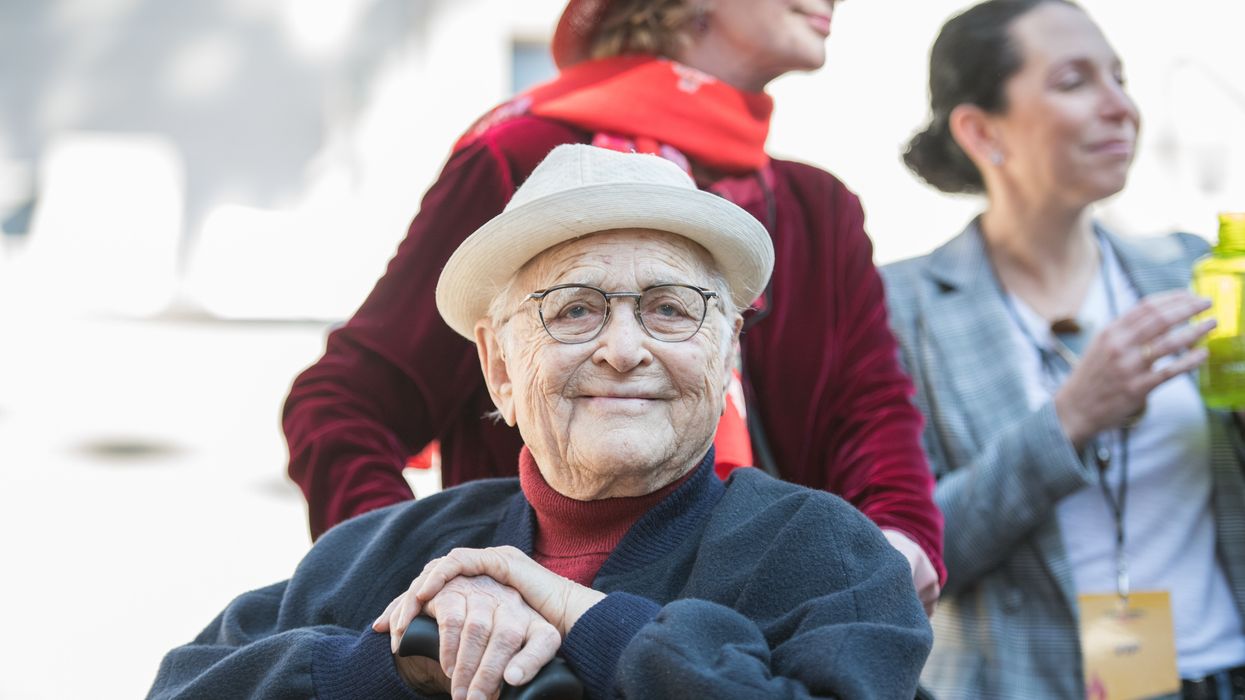
Legendary television writer and producer Norman Lear, creator of such landmark comedy series as All in the Family, Maude and The Jeffersons, and co-founder of People for the American Way, has spoken out in support of independent documentary filmmakers struggling to protect the broadcast of their work on public television.
At issue is the scheduling of two PBS series, Independent Lens and POV, important national showcases for independent film. In New York, WNET - Channel 13 -- has proposed moving the series to its smaller sister station, WLIW, with repeats airing on WNET at 11 pm on Sundays.
In an op-ed piece published in today's edition of The New York Times, Lear writes, "Moving the films out of prime time means fewer reviews, and less publicity. It also threatens funding: When filmmakers apply for grants from foundations or philanthropies, the promise of a robust distribution platform is crucial. The proposal also sends the signal that nonfiction films on challenging subjects are less important to PBS and WNET than costume dramas.
Independent Lens and POV take on critical social issues overlooked by commercial outlets. They leverage the power of television to expand freedom of expression for people whose voices are not easily heard in American media. Freedom of expression is hollow if you can't be seen or heard.
The two series also provide an outlet for minority filmmakers. A 2014 study by the Center for Media and Social Impact at American University found that Independent Lens was much more diverse than cable: over 80 percent of the documentaries had at least one minority character, and 30 percent of them had at least one minority director -- compared with 13 percent for documentaries on HBO and zero at CNN and ESPN. These two series attract among the largest audience of black viewers of any PBS program.
Executives at WNET wish Monday nights to be devoted to arts programming, "a driver of financial support for member stations," Lear notes, and far less controversial than documentaries and other public affairs programming. "Its decision could prompt PBS to shift the two series away from the prime-time schedule across much of the country."
Norman Lear concludes:
PBS, for almost a half-century, has been one place on the spectrum in which decisions were based on something far more fundamental and timeless than ratings and earnings: the public interest. Its member stations and programs get substantial government funding. Diversity, community and accountability are cornerstones of its founding charter. PBS should keep those principles in mind and keep independent documentary films where they belong: in prime time.
You can read Lear's complete article in The New York Times.
Following years of fierce environmental campaigning by a grassroots movement against the monied fossil fuel industry, President Barack Obama on Tuesday vetoed a Congressional bill approving the Keystone XL tar sands pipeline.
Only the third veto by this president, many hope that the action marks the end of a six-year approval process for an $8 billion pipeline project that would carry synthetic crude oil and diluted bitumen from the Athabasca tar sands mines in Alberta, Canada and connect to the completed portion of the pipeline in Steele City, Nebraska, which then would carry the oil to Gulf Coast refineries.
Though White House spokesman Josh Earnest said the president's rejection would occur without "a lot of drama or fanfare," reaction was immediately jubilant as many saw the move as a huge win for the climate movement.
May Boeve, Executive Director of 350.org, which spearheaded the fight against the Keystone pipeline, heralded the move as "conclusive proof that activism works."
"After four years of rallies, marches, sit-ins, and civil disobedience, we're thrilled to see President Obama take an important first step by vetoing this love letter to Big Oil," Boeve continued.
A coalition of environmental groups is holding a celebration outside of the White House in Lafayette Park.
Organized by 350.org, Indigenous Environmental Network, Natural Resources Defense Council, Energy Action Coalition, Sierra Club, Greenpeace, and Friends of the Earth, the rally is to let the President know that, while the veto is "a strong step in the right direction," that he must reject the pipeline "once and for all."
AP reports that the executive veto will put "a freeze on a top GOP priority--at least for now."
And as Bill Snape, Senior Counsel for the Center for Biological Diversity, explained to Common Dreams, the veto does not necessarily stop the pipeline. "Hopefully the president will reject the project," Snape said.
As Snape notes, Tuesday's veto is simply a rebuff of what Obama deems Congressional overreach. The Keystone pipeline still awaits a permit by the Secretary of State while the administration says that it will continue to weigh the so-called merits of the project. Obama has said he will not approve a project that significantly increases U.S. emissions of carbon dioxide.
Noting that other recent actions by the president have been less climate-friendly, Snape added: "And double hopefully, the president will reject harmful offshore oil drilling and public lands fracking as well. But we have a lot more work to do there."
In a statement, Greenpeace U.S. Executive Director Annie Leonard echoed the idea that other climate fights await. "The State Department needs to put the final nail in the coffin of Keystone XL, so we can focus on the real opportunity ahead: building America's new, clean energy economy," Leonard said.
Despite the much-anticipated rejection, Republican leaders vowed their continued support for the legislation, which was ushered through both chambers of the GOP-led Congress earlier this year.
"The allure of appeasing environmental extremists may be too powerful for the president to ignore," Senate Majority Leader Mitch McConnell (R-Ky.) and Speaker John Boehner (R-Ohio) wrote in an op-ed published Tuesday. "But the president is sadly mistaken if he thinks vetoing this bill will end this fight. Far from it."
Ahead of the veto, more than a hundred artists, actors, First Nations leaders, environmentalists and other leaders--including Willie Nelson, Naomi Klein, Van Jones, Laura Poitras, Thom Yorke, Norman Lear, Rebecca Solnit and James Hansen, among others--sent a letter to the president urging his full rejection of the pipeline.
The unity letter, circulated by 350.org, says that a few key points have emerged in the years-long campaign.
First, the letter states, "most of those who care about this project oppose it, and with an intensity matched by few issues in recent time." Citing the Tribal Nations and farmers who were the first to resist the project because of its threat to their beloved land, the letter says that the passionate opposition "spread over time to climate scientists, college students, moms, financial experts, many trade unionists, renewable energy proponents, nurses, artists and an ever-growing swath of the general population."
The second point, the group notes, is that more and more studies have shown that tar sands pose an undeniable threat to the ever-warming planet. "There is no way to reconcile this pipeline with a serious climate policy," the letter states.
"Rejecting the Keystone XL pipeline will powerfully demonstrate your commitment to stopping the rising of the oceans, set the stage for further climate action and build a legacy worth sharing."
Last, all of the arguments for the pipeline--jobs, energy independence, inevitability--have been clearly refuted, showing the true colors of the project as a "classic boondoggle, whose only beneficiaries will be a handful of rich oil companies while our families take on all the risk."
The group concludes saying they fully support the president's veto, predicting that it is an action sure to shape Obama's climate legacy.
"Many of the choices that define a presidency come by accident or chance," they write. "But this one is firmly in your control. Climate change will be a defining issue of this century. Rejecting the Keystone XL pipeline will powerfully demonstrate your commitment to stopping the rising of the oceans, set the stage for further climate action and build a legacy worth sharing."
We wrote and spoke about guns just a few days before Christmas, following the massacre in Newtown, Connecticut. So did Wayne LaPierre, CEO of the National Rifle Association. His now infamous, "no questions" press conference was the most stunning, cockeyed, one-man show since Clint Eastwood addressed that empty chair at the Republican National Convention.
"The only thing that stops a bad guy with a gun is a good guy with a gun," he pronounced.

LaPierre might well have plagiarized his vision of a wholly armed nation from another "man of the people" of 40 years ago, the protagonist in the famous sit-com All in the Family. On a 1972 episode, when a local TV station comes out in favor of gun control, Archie Bunker hits the airwaves with an editorial rebuttal:
Good evening, everybody. This here is Archie Bunker of 704 Hauser Street, veteran of the big war, speaking on behalf of guns for everybody. Now, question: what was the first thing that the Communists done when they took over Russia? Answer: gun control. And there's a lot of people in this country want to do the same thing to us here in a kind of conspiracy, see. You take your big international bankers, they want to -- whaddya call -- masticate the people of this here nation like puppets on the wing, and then when they get their guns, turn us over to the Commies...
Now I want to talk about another thing that's on everybody's minds today, and that's your stick-ups and your skyjackings, and which, if that were up to me, I could end the skyjackings tomorrow... All you gotta do is arm all your passengers. He ain't got no more moral superiority there, and he ain't gonna dare to pull out no rod. And then your airlines, they wouldn't have to search the passengers on the ground no more, they just pass out the pistols at the beginning of the trip, and they just pick them up at the end! Case closed.
Case closed. Except that Archie Bunker's a fictional character, created by Norman Lear, who knew better. Not Wayne LaPierre -- he's real and he means business. Big business.
Every time we have another of these mass slayings and speak of gun control, weapon sales go up. And guess what? As journalist Lee Fang reports in The Nation, "For every gun or package of ammunition sold at participating stores, a dollar is donated to the NRA." Customers can make a contribution at the point of purchase or the gun companies make an automatic donation every time the cash register rings. Last year, just one of those merchants of death, Midway USA, used one of these NRA programs to give the gun lobby a million dollars.
So naturally, in a country where even life and death are measured by the profit margin, the cure for gun violence is, yes, more guns! Bigger profits. Never mind that just before La Pierre spoke, three were shot and killed outside Altoona, Pennsylvania. Or that early on Christmas Eve morning, in Webster, New York, two volunteer firemen were called to the scene of a fire, then executed by an ex-con who allegedly set the blaze and murdered them with the same kind of assault rifle used against those school kids and their teachers in Newtown. Or that on New Year's Eve, in Sacramento, California, reportedly in a fight over a spilled drink, a 22-year-old opened fire in a bar, killing two and wounding two others. In fact, according to Slate.com and the Twitter feed @GunDeaths, at this writing, in just those few weeks since the Newtown slaughter of the innocent, more than 400 have died from guns in America. That should boost the last quarter profit margins. Not surprising, the merchants of death are experiencing a Happy New Year.
We have to keep talking about this, because Wayne LaPierre and the NRA will keep talking and they are insidious and powerful predators. Have you seen the reports in both the Journal of the American Medical Association (JAMA) and The Washington Post of how, 16 years ago, the NRA managed to get Congress to pull funding on gun violence studies at the Centers for Disease Control and Prevention? Since then, JAMA reports, "... at least 427,000 people have died of gunshot wounds in the United States, including more than 165,000 who were victims of homicide. To put these numbers in context, during the same time period, 4586 Americans lost their lives in combat in Iraq and Afghanistan."
Last year, Congress stopped the National Institutes of Health from spending any money that might be construed as advocating or promoting gun control. There's even a section that was snuck into President Obama's Affordable Care Act that prevents doctors from collecting information on their patients' gun use. Denise Dowd, an emergency-care physician in Kansas City and adviser on firearms issues to the American Academy of Pediatrics, told the Post, "This illustrates the fact that the NRA has insinuated themselves into the small crevices of anything they can to do anything in their power to prohibit sensible gun-safety measures."
As Wayne LaPierre's brazen call for an armed populace makes clear, the odds don't favor common sense. Several members of the new Congress are reintroducing bills that would change the gun laws and USA Today reports that the White House is "likely" to issue its recommendations January 15, but there are always those legislators willing to do the gun lobby's bidding as they profess their love of the Second Amendment and wait like hungry house pets for the next NRA campaign donation.
Every American packing heat is a frightening vision of our future. It doesn't have to be, if only we stop and think. That's what a fellow named Frank James did. He stopped, thought -- and changed directions. A pawn shop owner in Seminole, Florida, whose youngest child is six, Frank James told a local ABC station he has decided to stop selling guns.
"It'll probably cause my business to go out of business because it was a big part of it but I just couldn't live with myself," he said." I thought, wow, this is crazy. As a gun dealer myself, I'm like, yes, we need more gun control. Guns are getting into the wrong hands of the wrong people."
He also said, "I'm not going to be a part of it anymore. Conscience wins over making money."
Thank you, Mr. James.
Some people I respect are agonizing over their Presidential vote. Others are voting third-party, or not at all. Speaking only for myself, my choice wasn't made lightly: I'll be voting to re-elect a President whose Administration I've often criticized over the last four years. And yet, despite my concerns, I'll be casting that vote without despair.

Why not? Most Americans agree on a broad range of issues, according to polls. Across party lines and "left/right" boundaries, clear majorities oppose cutting Social Security or Medicare to balance the budget. They want to raise taxes on millionaires and billionaires. They want government to invest in restoring our economy. And they want Wall Street held accountable.
Neither candidate is fighting unequivocally for these majority positions. But like the old cliche says: Despair is not an option.
Which isn't to say it's not tempting. What creates despair? According to the informative (if sadistic) dog experiments of Martin Seligman, the culprit is "learned helplessness." Some of us entered this election season with the same emotions Seligman's dogs must have felt as they were led to their electrified cubicles, and with a similar analysis of our situation: Nothing I do matters.
But that's wrong. It does matter. Remember, a relative handful of Americans "Occupied" some public spaces and all of a sudden the political dialogue shifted. (And that movement isn't dead; it may yet regain its strength.)
Then there's this: As was later confirmed, the President intended to propose Social Security cuts in a State of the Union address. But then, as the Wall Street Journal reported, "The decision to hold off was made as the White House came under pressure from Democrats and liberal interest groups who oppose any cuts to Social Security benefits."
That may not sound like much of a victory. But try telling that to the millions of women who are getting by on $850 or so in Social Security checks every month.
Barack Obama and the Democrats will sometimes do the right thing. At other times they can be persuaded or pressured. Mitt Romney and the Republicans are beyond the reach of anything except corporate money.
If any single argument swayed my vote it was Norman Lear's spin on that Golden Oldie of Presidential politics, the Supreme Court. Lear says that Obama's appointees will someday vote to overturn Citizens United. Could he be wrong? Sure. But we know what Mitt Romney's appointees will do.
I live in California, which Obama will win. But if he prevails in the electoral college without winning the popular vote, the right will tie up government and he may never get his nominees confirmed. That's a scenario from hell. So is the election of Mitt Romney, a man who lacks a moral core and whose "closing argument" was a fusillade of cynicism, puffery, and thinly-veiled threats against our system of checks and balances.
And if that's not scary enough, remember: His election would leave Paul Ryan a heartbeat away from the Presidency.
I know, I know. I'm sick of the "lesser of two evils" argument too. It's time we confronted the Evil of Two Lessers, by confronting the systemic corruption in our political system. I can't keep supporting a party run by corporatist centrists in the Clinton mold.
But my first obligation today is to protect my communities - this country and this world are my communities - from catastrophe. Then comes the next obligation: either changing that party or finding another outlet for political action. Electoral politics is only one front in the nonviolent war for real change. And national elections are only one facet of electoral politics.
That's not to say that Thomas Franks doesn't have a point when he says that Obama's made the left "futile and irrelevant." Progressives like Matt Stoller and Chris Hedges have argued against voting for Obama, a position that some have greeted with disdain, contempt, and hostility. The disrespect and sarcasm is a mistake, and it's a poor excuse for an argument. Movements are built on respect, not personal attacks.
Here's an observation that could be used to support Stoller and Hedges: Progressives always vote Democratic, and the party always dismisses them. Tea Party members threatened to bolt, and the GOP's at their beck and call.
That's a reality the progressive movement needs to recognize -- and soon -- without looking for excuses in the Tea Party's funding or powerful backers. Sure, they've got the money, but we've got the numbers. Some of the blame for our "futility and irrelevance" lies not in our stars -- or our candidates -- but in ourselves.
If we passively turn our fate over to the people we vote into office, the critics may be proven right. But if we vote and then act - clearly, forcefully, and decisively - we'll have the chance to achieve some genuine victories.
Some have suggested that we refrain from criticizing the President until the election's over, but I respect people's intelligence and judgement too much for that. Others have tried to paint Barack Obama as a progressive superhero. But I respect my principles - and, more importantly, yours - too much for that. And hagiography is as disempowering as despair.
Besides, reality is reality: Not one Wall Street indictment in four years. A President who says he suspects he and Romney have a "somewhat similar position" on Social Security. A stimulus plan which was a good first step, but which hasn't been followed by unequivocal and persuasive proposals for more much-needed investment.
And yet behind Obama's studied ambiguity lies an inconvenient truth: An Obama victory would be a mandate, not for deficit deals, but for the stemwinding populist rhetoric of his speeches. It would be a victory for the economic plan his campaign promoted with keywords like "jobs," "manufacturing," "energy," "health care," and "retirement."
That's what most people will be voting for when they vote for Barack Obama. He must be held to those words.
We can't outsource our morals or duties to any elected official. Voting is where our obligations begin, not end. If the President who won my vote acts against my principles, I am morally complicit - in cuts to Social Security and Medicare, in drone attacks, in lost civil liberties, and in a free ride for Wall Street. The only antidote for complicity is political action - which also happens to be an antidote for cynicism and hopelessness. And you know what? It just might make a difference.
You can vote with despair. But if your vote comes with a pledge to act, you can vote against despair.
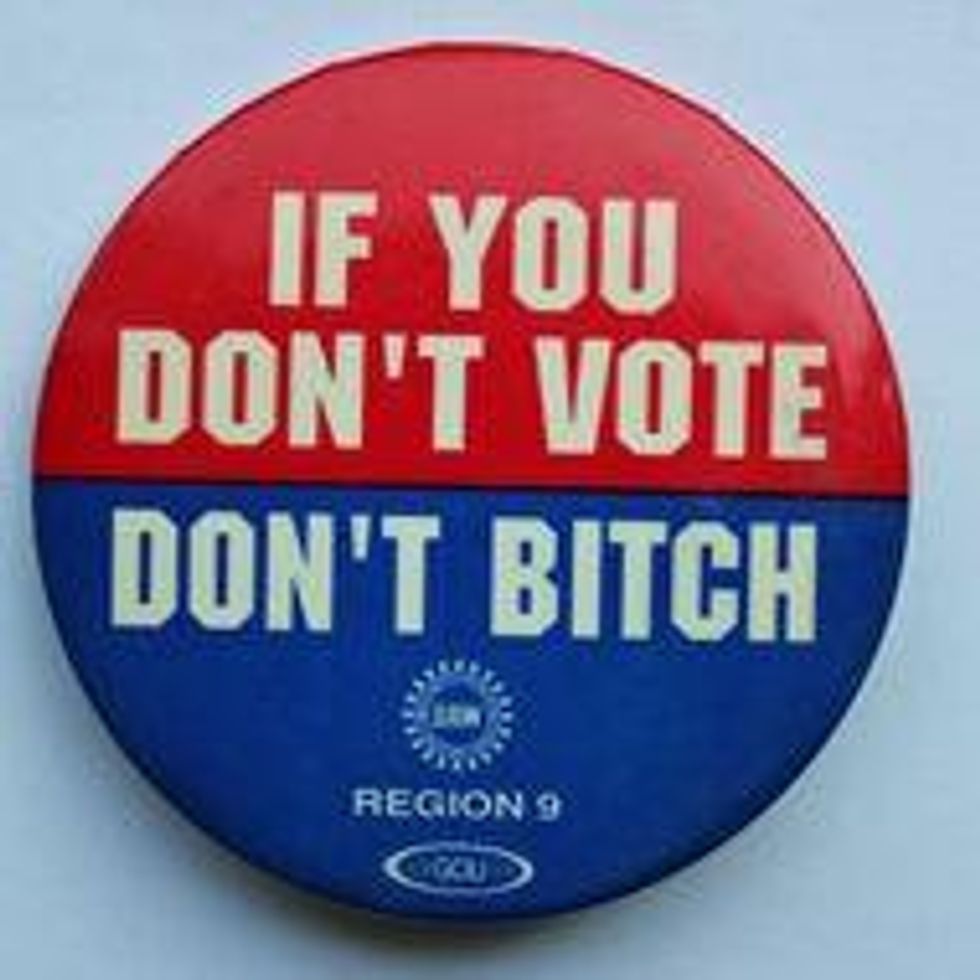
Steve Earle put a slogan on one of his records: "If you don't vote, don't bitch." He's right. And here's a new slogan: "If you do vote, do bitch" - although "bitch," in this case, means "make your voice heard." Vote, of course. And after that, the hell with learned helplessness. We can't let this country go to the dogs.
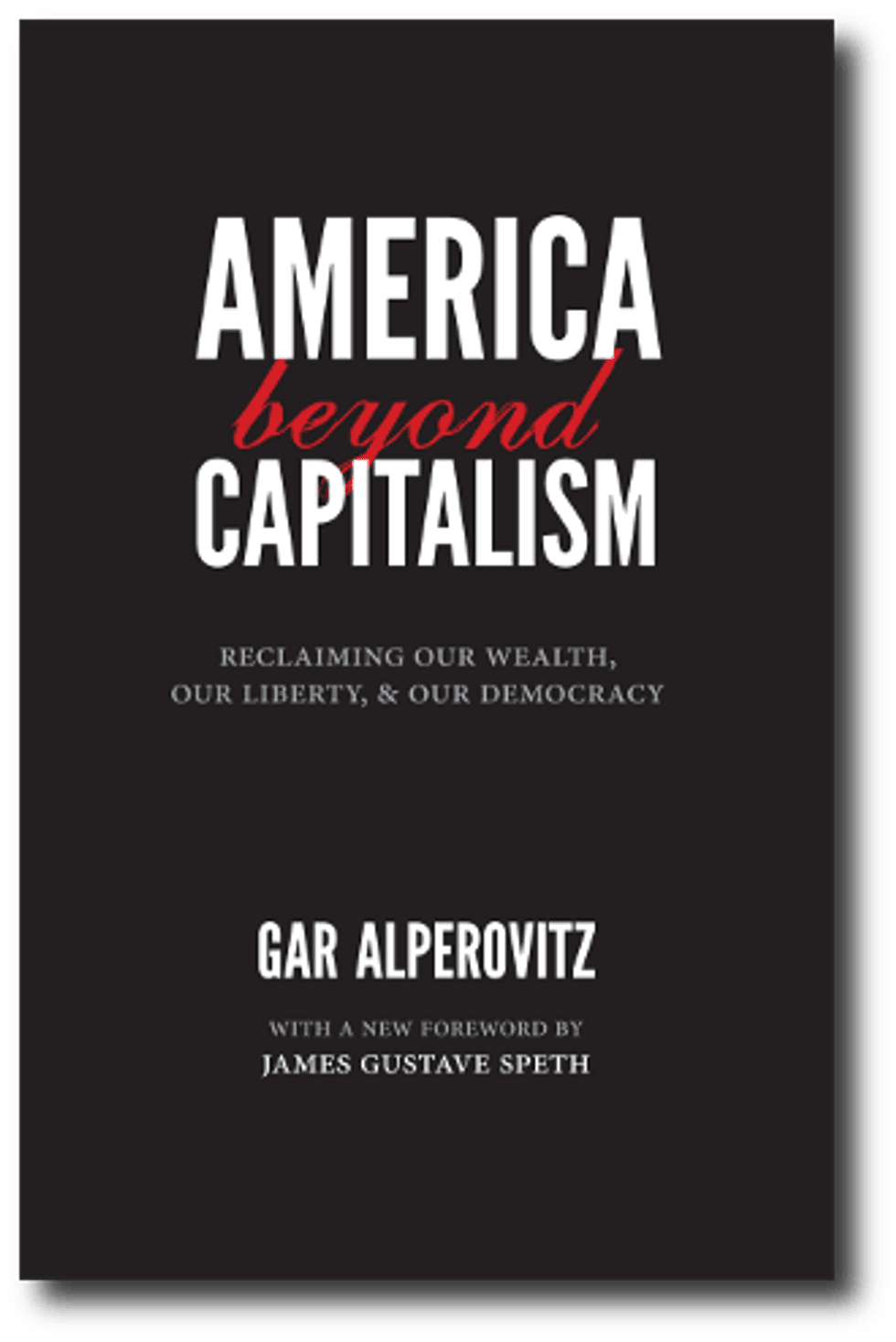
1. America Beyond Capitalism by Gar Alperovitz (Democracy Collaborative Press and Dollars and Sense, 2011). If you want to see how community economies are spreading to displace the sales and influence of companies such as Bank of America, ExxonMobil, Aetna, ADM and McDonalds, this is your book. Democratic credit unions, local renewable and efficient energy, community health clinics and farmer-to-consumer markets are some of the possibilities outlined in this optimistic book.
2. Retirement Heist: How Companies Plunder and Profit from the Nest Eggs of American Workers by Ellen E. Schultz (Portfolio/Penguin Hardcover, 2011), award-winning reporter for The Wall Street Journal. This book meticulously documents how big business and their attorneys avariciously turned pension plans into piggy banks, tax shelters and profit centers, at the expense of millions of trusting, loyal workers. This is the searing story of corporate greed on steroids.
3. This Changes Everything: Occupy Wall Street and the 99% Movement ed. by Sarah van Gelder of YES! Magazine. (Berrett-Koehler Publisher, Inc. San Francisco, 2011). Sixteen short essays viewing the Occupy initiatives around the country from a variety of perspectives. Very lively, forward-looking, and filled with interesting insights.
4. The Vertical Farm - Feeding the World in the 21st Century by Columbia University Professor Dickson Despommier (St. Martin's Press, New York, 2011). Scientific American writes "Imagine a world where every city has its own local food source grown in the safest way possible, where no drop of water or particle of light is wasted, and where a simple elevator ride can transport you to nature's grocery store - imagine the world of the vertical farm." This mind-stretcher shows how to feed people and save the environment - see if it is too good to be true!
5. Technology, Globalization, and Sustainable Development - Transforming the Industrial State by Nicholas A. Ashford and Ralph P. Hall (Yale University Press, New Haven, 2011). This is a big picture, big book integrating the design of multipurpose solutions to the sustainability challenge so that economics, employment, technology, environment, industrial development, national and international law, trade, finance, and public and worker health and safety are taken into account. If the piecemeal frustrate you, try this whole meal.
6. Amglish In, Like, Ten Easy Lessons: A Celebration of the New World Lingo by Arthur E. Rowse with illustrations and caricatures by John G. Doherty (Roman and Littlefield, Lanham, Maryland, 2011). Amglish is described as informal American English, influenced by the syntax of tweets and the slips-ups of celebrities that has begun to dominate the glob As William Powers says "Amglish is not only here to stay, it's a kind of party and Arthur E. Rowse shows us how to join in and have fun. Lively, illuminating and totally cool-smart."
7. Crude Awakening: Money, Mavericks and Mayhem in Alaska by Amanda Coyne and Tony Hopfinger (Nation Books, New York 2011). The authors, renowned for their tough scoops that regularly appeared in Alaska Dispatch pour out into this wonderful book their inside and outside knowledge of Alaska's combustible politics of big oil, their politicians and the underhanded dealings that attracted federal investigators who had their own problems. Read about power in Alaska and what its future portends for the lower 48.
8. All That We Share: A Field Guide to the Commons by Jay Walljasper (The New Press, New York, 2010). You may not know all of the commonwealth in our country that belongs to you and other Americans. Sure we own the valuable public lands- one third of our country - and the public airwaves. But the finest writers in this burgeoning field of awareness point to much more. But what we own - the immensity all around us - we do not control. Control has been the preoccupation of corporations that strive to turn our government against the core concept of the commons. Engage these engrossing pages and see how we can recover the commons for the good life and for our posterity.
9. While We Were Sleeping: Success Stories in Injury and Violence Prevention by David Hemenway. (University of California Press, Berkeley, 2009). In the swirl of corporate propaganda against health/safety regulation, this book did not receive the notice it and its celebrated author deserve. From his professional position at the Harvard School of Public Health, David Hemenway takes you into your daily world and shows how successful regulation made your immediate surroundings and environment safer and more healthful. It is an ode to brave legislators and regulators who stood up to the corporatists for a change, saved lives, and prevented injuries and illnesses.
10. Consequential Learning: A Public Approach to Better Schools by Jack Shelton (NewSouth Books, Montgomery, Alabama, 2005). A wake-up call to parents and students so indentured to sterile, high-frequency multiple-choice standardized tests. Mr. Shelton stresses that student learning comes from both the classroom and the community, with the lessons of the former applied to the benefit of the latter. He shows from his experience in Alabama's schools and colleges how students become "self-aware learners" from connecting school and community "in the formation of their personal characters." Filled with examples and strategies for both civic and academic growth.
11. Save the Humans?: Common Preservation in Action by Jeremy Brecher (Paradigm Publishers, Boulder, Colorado, 2011). This book is about "common preservation" past and present as "world leaders fail" to address problems of deep significance to billions of human beings and their environment. Brecher shows how common preservation worked in Gandhi's civil disobedience campaigns in colonial India and the Polish Solidarity movement that weakened the Soviet Union's control of Poldand. He takes his theme right to today's Occupy initiatives.
12. Stanley K. Sheinbaum: A 20th Century Knight's Quest for Peace, Civil Liberties and Economic Justice by Stanley K. Sheinbaum, with William A Meis Jr. (Fairtree, Los Angeles, 2011). Don't let this just-published, witty gem fall through the cracks. It is the absorbing story of a civic renaissance man who shaped foreign policy, influenced police practices in Los Angeles, protected whistle-blowers, pioneered campaigns of Eugene McCarthy and George McGovern and took the tough stands to advance first stage Israeli-Palestinian peace negotiations. Called a "fearless activist" by Norman Lear and "addicted to fairness and justice," by Barbara Streisand, Scheinbaum's nine decades of robust activity is filled with motivational and character lessons for a young generation looking for exemplary guidance.
Enjoy and replenish! Happy Holidays!
One of "the best and the brightest" died last week, and in Richard Holbrooke we had a perfect example of the dark mischief to which David Halberstam referred when he authored that ironic label. Holbrooke's life marks the propensity of our elite institutions to turn out alpha leaders with simplistic world-ordering ambitions unrestrained by moral conscience or intellectual humility.
Fresh from Brown University, Holbrooke marched off as a foreign service officer to win the hearts and minds of the Vietnamese, who were not buying it. He quickly became involved with the pacification program that herded peasants off their land into barbed-wire encampments while we bombed the surrounding areas.
Holbrooke was later so successful in the infamous CIA Phoenix program to kill Vietnamese civilians thought to be sympathetic to the Viet Cong that at the age of 24 he was brought back to Washington to work under the head of that program, R.W. Komer, on a top-level White House command to save Vietnam from the Vietnamese.
While in Washington, Holbrooke came to write a chapter of the secret Pentagon Papers study that exposed the falsehoods justifying the war. Shades of the WikiLeaks disclosures--when Daniel Ellsberg, who also worked on that report, revealed it to the world, the lies stood exposed. As Defense Secretary Robert McNamara acknowledged decades after commissioning the study, 3.5 million Indochinese died in a war that had little if anything to do with our national security. He concluded that he could indeed be judged a "war criminal," except that appellation is reserved for leaders of lesser states, like the Serbian and Iraqi leaders whose war crimes Holbrooke would later trumpet as excuses for other U.S. wars.
Holbrooke not only failed to learn from the U.S. mistakes in Vietnam; he repeated them in working for every Democratic president to follow. When Jimmy Carter was elected, there was Holbrooke as an assistant secretary of state supporting the Islamic mujahedeen in Afghanistan, a group fighting the Soviet-backed secular government in Kabul.
Indefatigable in his hubris, Holbrooke also got Carter to support a Cambodian exile coalition based in Thailand to attempt to overthrow the Vietnamese-backed government in Cambodia that had ousted the mass murderer Pol Pot. The fact that the coalition included this man who had killed millions of his own people did not perturb Holbrooke. I have written elsewhere of Holbrooke's arrogance in defending the U.S. backing of the coalition at a dinner at the home of legendary television producer Norman Lear; on that evening Holbrooke went off about the critical importance that a regime change in tiny Cambodia would hold for the future of civilization.
In recent years Holbrooke was influential in getting the Obama administration to commit to the folly of the U.S. surge in Afghanistan. Once again he was all about winning the hearts and minds of people who, as it appears from the WikiLeaks diplomatic memos, thought he was bonkers--as did quite a few in the U.S. military.
Throughout Holbrooke's career, and this is the persistent theme in his fawning obituaries, there was the apologia that whatever he did, his motives could not be questioned, for after all his was a life largely of public service. But here too the elite notion of public service is on sordid display if one follows Holbrooke through the revolving platinum door from public power to business greed. After messing up Cambodia and Afghanistan during the Carter years, Holbrooke teamed up with another Democratic Party operative, James Johnson, to form the business consulting firm Public Strategies while at the same time serving as an adviser at Lehman Brothers. The two proved quite successful in the business world, selling their company to Lehman Brothers, where Holbrooke became a managing director. Johnson went on to head Fannie Mae, presiding over its reckless expansion into the subprime and Alt-A housing market.
From 2001 to 2008 Holbrooke teamed up again with Johnson to head Perseus LLC, a private equity firm. During that same period, Holbrooke became a director of AIG, the insurance company whose credit default swaps almost brought down the economy and which required a $170 billion bailout from the taxpayers.
In the New York Times obituary on the "brilliant" Mr. Holbrooke, only a single short paragraph out of 32 refers to his career in the now-troubled financial markets: "Mr. Holbrooke also made millions as an investment banker on Wall Street. ... At various times he was a managing director of Lehman Brothers, vice chairman of Credit Suisse First Boston and a director of the American International Group."
The Times did not mention that Holbrooke left AIG, where he had been paid $268,000 a year plus stock options, two months before the insurer imploded. Further evidence that "the best and the brightest" had the same success with our banking system as they did in foreign policy.