SUBSCRIBE TO OUR FREE NEWSLETTER
Daily news & progressive opinion—funded by the people, not the corporations—delivered straight to your inbox.
5
#000000
#FFFFFF
To donate by check, phone, or other method, see our More Ways to Give page.

One thing is clear, MVP has been burying, and continues to bury, illegal, dangerous pipe. A study was done which proves that this is not debatable.
The people who are forced to live within MVP’s blast zone should not have to endure the daily stress of knowing it wasn’t built safely.
Bill McKibben hit the nail on the head when he wrote that the “transition away from fossil fuels” language agreed to at COP28 could be either meaningful or meaningless depending on whether or not it is acted upon. This is similarly true for a rule written into the U.S. Code of Federal Regulations and published in the Federal Register, which is, or at least should be, a million times more legally binding than anything that came out of Dubai. That rule says that pipelines MUST be protected from external corrosion by having a protective coating which, among other things, is “sufficiently ductile to resist cracking.”
The rule exists because long sections of pipe flex a great deal between the time they are manufactured and coated at the plant and when they finally come to rest in a ditch. If the corrosion-proof coating on the pipe is not “sufficiently ductile” (flexible) to also flex when the pipe does, then it will crack. Once a crack in the coating opens up, it creates a pathway for moisture to come in contact with the steel and begin corroding the pipe. Corrosion is a leading cause of pipeline explosions. Controlling corrosion is of particular concern regarding MVP because of its huge size (42-inch diameter) and the extremely high pressure (1,480 pounds per square inch, or psi,) it will be operating under.
In 2018 three-year-old Delaney Tercero was badly burned, as were her parents and younger sister, when a pipeline exploded near their home. Delaney died two days later after what must have been an agonizing ordeal in a hospital burn unit. The pipeline that killed her exploded because of corrosion due to defective pipe coating. It was a 10-inch pipeline. MVP is a 42-inch pipeline. It also has defective pipe coating.
On January 30, 2024 there was a gas pipeline explosion in Oklahoma. It shot flames 500 feet into the air. The fire could be seen from 36 miles away, and it took hours to bring it under control. It started because of corrosion in an 8-inch pipeline and is thought to have migrated to a 24-inch pipeline based on the intensity of the fire. MVP is a 42-inch pipeline.
A 24-inch gas pipeline explosion in Oklahoma in January 2024 sends flames 500 feet into the air. MVP is a 42-inch pipeline.
In July 2023, a gas pipeline exploded near Strasburg, Virginia, next to Interstate 81, shutting down traffic in both directions for hours. It was a 26-inch pipeline operating at 777 psi. MVP is a 42 inch pipeline that will operate at 1,480 psi.
Although language was inserted into last summer’s debt deal that allowed MVP to steamroll the normal permitting process, in no way did any of that language negate the “sufficiently ductile to resist cracking” rule, which has been on the books for over 50 years. Even MVP’s own attorney said that the debt deal dealt specifically and only with permitting issues.
The key to understanding why MVP pipe is illegal lies in a study reported on in the Jan/Feb 2020 issue of Corrosion Management (CM), a publication of the Institute of Corrosion. The article (on p. 16) is not very long nor is it difficult to understand, although there may be a word or two that requires googling. Everyone should read it and print a copy for future reference, before it becomes harder to access. To do so you might have to sign up for a free 30-day subscription to Scribd. The wording in the article and the results of the study make clear that MVP pipe coating has serious, unacceptable flaws.
It should be noted who undertook the study and wrote the article. It wasn’t anti-fossil fuel climate activists. Participants and contributors included TC Energy, the company that wanted to build the Keystone XL (KXL) pipeline, and Welspun, the company that manufactured and coated pipe for both KXL and MVP. One of the authors was James Ferguson, who worked for TC Energy (formerly Trans Canada) for over 18 years and who, at the time of the study, was the director of KXL Technical Services.
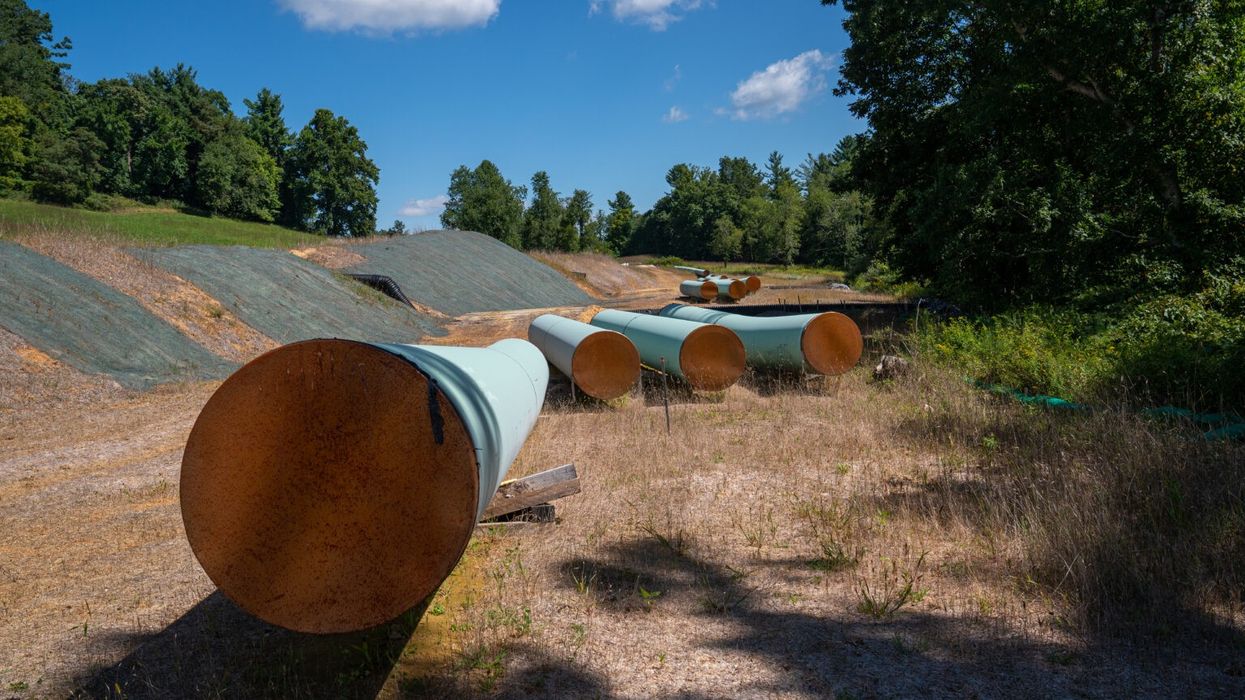
The point of the study was to determine how effective applying whitewash to KXL pipes was in terms of protecting the pipe coating from ultraviolet (UV) exposure, meaning the harmful effects of the sun. Most fossil fuel pipe, including KXL and MVP pipe, is coated with a greenish fusion bonded epoxy (FBE). FBE is, and is meant to be, flexible or ductile after it is applied and dries. However, exposure to the sun will reduce that flexibility over time and the coating can become brittle and crack. The National Association of Pipe Coating Applicators (NAPCA) recommends that FBE not be exposed to the sun for more than six months.
The beginning of the CM article has a paragraph with the heading “Effects of Ultraviolet Exposure on Fusion Bond Epoxy Coatings.” It says that “previous studies of exposed weathering of FBE coating had identified that UV exposure could have a serious deleterious effect on the inherent physical properties of the coating. This phenomenon is common to all FBE coatings that are primarily designed only for below ground service.” Over time, UV exposure will give the glossy green coating applied at the plant more of a chalky green look. Prolonged UV exposure will lead to “a noticeable reduction in the coating thickness” and cause all FBE coatings to “struggle to retain their original flexibility.” The change from glossy to chalky “clearly is accompanied by an embrittlement of the coating” and “reduction of flexibility performance.”
After KXL pipe was manufactured, the pipeline came up against all kinds of opposition for numerous very good reasons. And so it got delayed for years and was ultimately killed near the end of the Obama administration. Because TC Energy was aware of the problems UV creates for FBE coating, twice during that time period the company applied whitewash to the pipe to act as a sort of sunscreen. (It’s important to note here, and then remember, that whitewash was NOT applied to MVP pipe during the six to seven years it has sat in pipe yards and along the pipeline right of way. Dated satellite images can confirm this, as can photographs taken by frontline pipeline opponents.)
Regarding MVP, Buttigieg could rightly point to Sen. Joe Manchin (D-W.V.) as the reason it is being built. But it is on the secretary and a department under his control to make sure MVP is built safely and according to legal rules and regulations.
After former President Donald Trump was elected in 2016, Keystone XL came back to life, which is what prompted the study of its whitewashed pipe. They wanted to show that the whitewash had protected the FBE coating well enough that the pipe was still usable. But that’s not what they found.
The study tested three different groups of KXL pipe, which was generally stacked five layers high. One group included pipe below the top layer. Those pipes weren’t whitewashed, but they also were shaded from the sun by the pipe above them. The coating on those pipes tested OK.
The second group of pipe was from the top layer that had been whitewashed twice, once after 18-24 months of UV exposure and again four to five years later.
The third group involved the last few feet at the ends of top layer pipe. Those last few feet were not whitewashed so as not to cover up stenciling and markings. Those top layer pipe ends received no protection from the sun, and they best represent the coating on MVP pipe.
In eight out of ten tests, the whitewashed pipe failed to attain acceptable adhesion ratings. The non-whitewashed pipe ends “exhibited complete failures” regarding the adhesion test. In addition, the coating thickness on the non-whitewashed pipe ends had been reduced by more than 50%.
Another way to evaluate how well pipe coating will resist corrosion is to perform a catholic disbondment (CD) test. “The CD results of the non-whitewashed pipe ends exposed to UV were deemed total failures,” the study found.
“The flexibility tests were all deemed failures” on both the whitewashed and non-whitewashed pipe. All the flexibility tests “demonstrated similar results of cracking within the coating” even after they reduced the severity of the flexibility test three times from 2.5 degrees to 2.0 degrees to, finally, as little as 1.0 degree.
The first sentence under “Observations” states, “All non-whitewashed pipe that was exposed to continuous UV at the storage site” was “deemed no longer fit for purpose.” Even for whitewashed pipe, the flexibility of the underlying coating was “adversely affected to the point where it was no longer acceptable.”
In 2018 at an oil and gas forum in Canada, a KXL pipeline manager said that defective coating like this is not something that can be remedied in the field but instead it requires shipping the pipe back to the plant for proper stripping, cleaning, and re-coating. This short video shows the elaborate process undertaken to properly apply FBE coating.
The slipshod method that MVP is applying to its degraded pipe coating is wholly inadequate. The “no longer fit for purpose” phrase in the Corrosion Management article basically means that the pipe has a bad case of terminal skin cancer, which is not something MVP is going to remedy with its sporadic paintbrush-applied Band-Aids.
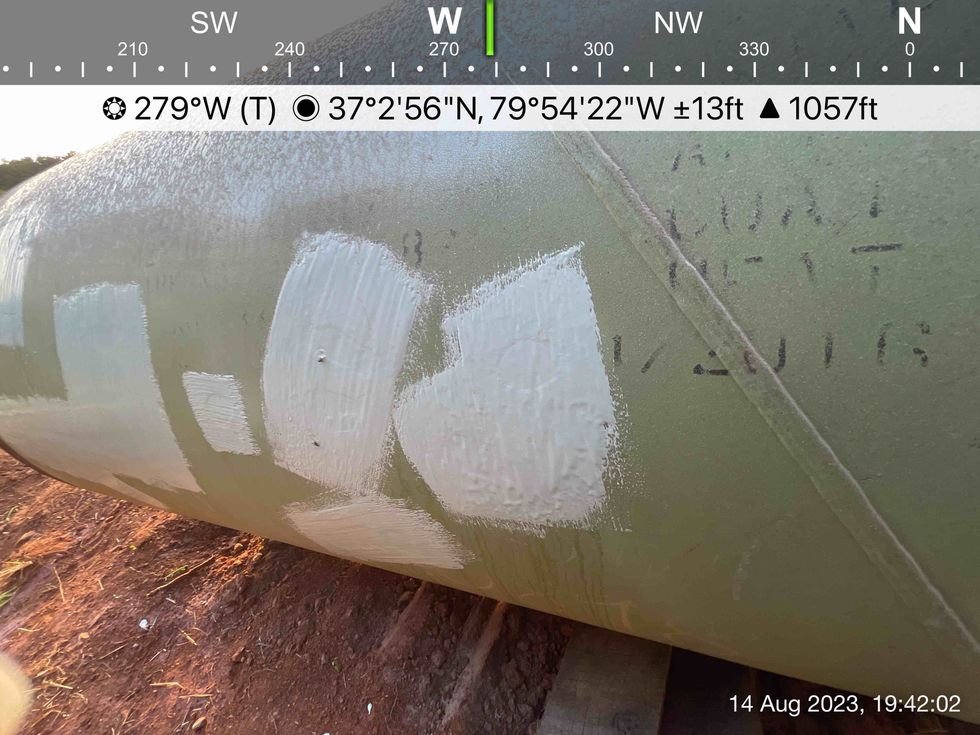 MVP’s band aid solution; the seven-year-old coating date, 2016, is barely visible.(Photo: POWHR/Mountain Valley Watch)
This coating problem is far from unique to MVP. Since 2010 the fossil fuel industry has built 70,000 miles of pipelines, and they have plans to build another 70,000 miles. Most of those pipelines have been and will be fought against, resulting in pipe sitting above ground for extensive periods of time instead of getting quickly buried.
Right now pipeline giant Williams is building the Regional Energy Access Expansion (REAE) project in Pennsylvania. It will lead to a significant increase in fracking in that state, which the majority of Pennsylvanians say they don’t want. Williams is also building the Louisiana Energy Gateway (LEG) project, which will increase gas flow to the LNG export terminals that the people living along the Gulf Coast are trying to shut down. Both REAE and LEG are being built with leftover pipe from the long dead Constitution Pipeline in New York. That pipe was manufactured and coated 10 years ago, and, like MVP pipe, its coating is shot.
But apparently and naturally, after sitting out in the sun for a decade, the pipe was cheap to buy. Cheap enough that it made economic sense for Williams to ship it all the way to Louisiana from New York. In fact, a Williams executive admitted that acquiring the surplus pipe helped keep costs down, making those pipeline projects possible.
Secretary of Transportation Pete Buttigieg was recently in the news during the one-year anniversary of the train derailment in East Palestine, Ohio. He said his department was doing all it could to prevent a similar disaster from happening again. He blamed Congress for not passing helpful legislation.
Regarding MVP, Buttigieg could rightly point to Sen. Joe Manchin (D-W.V.) as the reason it is being built. But it is on the secretary and a department under his control to make sure MVP is built safely and according to legal rules and regulations. That’s the whole reason that PHMSA, the Pipeline and Hazardous Materials Safety Administration, exists. It’s up to Buttigieg and PHMSA to enforce the “sufficiently ductile to resist cracking” rule. It’s up to them to publicly explain why they are disregarding the Corrosion Management study. The fact that now, in his fourth year on the job, Buttigieg still has not even filled the top job at PHMSA makes one ask just how seriously is he regarding pipeline safety.
MVP would never get built near Manchin’s or Buttigieg’s homes. The people who are forced to live within MVP’s blast zone should not have to endure the daily stress of knowing it wasn’t built safely.
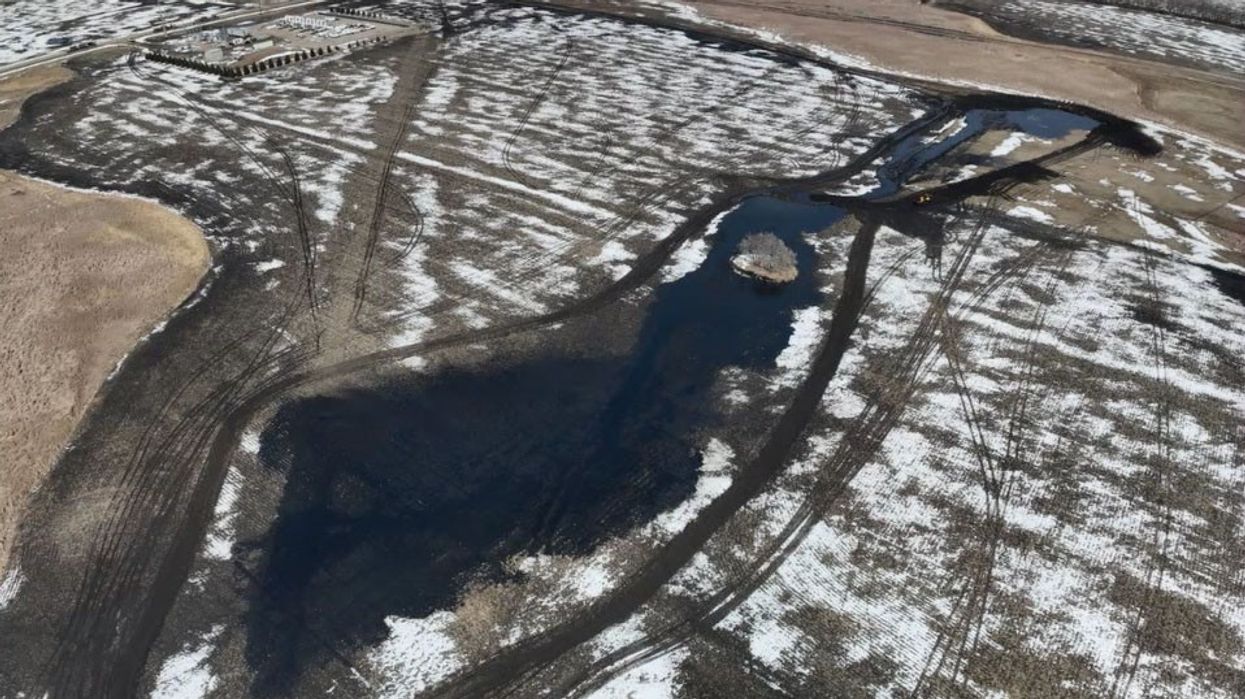
MVP and government regulators may argue that there are ways to detect corrosion and other problems before they cause harm. Yet the biggest climate disaster of 2022 was caused by corrosion and created by the same company, Equitrans, that is building MVP. That huge methane leak occurred just 10 days after the site had been inspected and no problem was detected. It took almost two weeks for Equitrans to bring the leak under control.
In 2008 five people were injured and two homes were destroyed when a Williams gas pipeline exploded near Appomattox, Virginia. It was a 30-inch pipeline operating at about half the pressure MVP will operate at. The cause of the explosion was external corrosion due to defective coating that had been compromised by rocks. An inspection undertaken shortly before the pipe exploded did not identify the corroded section of pipe.
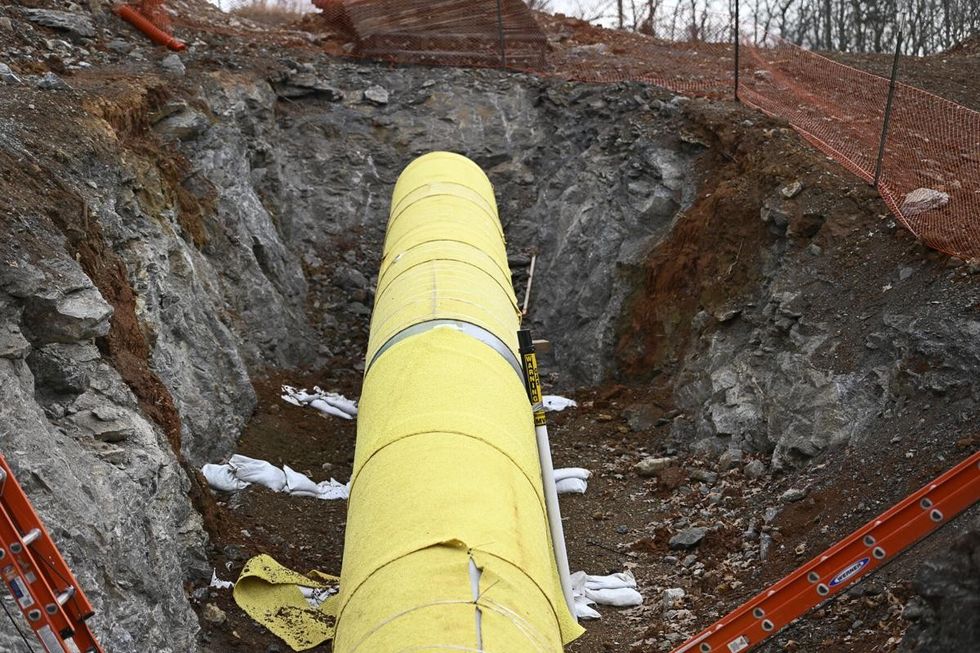 MVP has a rock problem, too.(Photo: POWHR/Mountain Valley Watch)
The Pennsylvania attorney general has charged Equitrans with crimes regarding a 2018 gas explosion that severely burned a four-year-old boy and his parents, killed their dog, and destroyed their home. The explosion resulted from a leaking Equitrans gas well that the company knew was leaking somewhere, but they never bothered to determine exactly where. Equitrans even had a protocol in place to help prevent corrosion at the well, but they didn’t follow it. One Equitrans employee testified that wells were often not serviced for budgetary reasons. And after the explosion, Equitrans didn’t even conduct the legally required investigation to determine the cause.
If Secretary Buttigieg and PHMSA are going to allow 42-inch MVP to come online with degraded pipe coating, they need to be asked, repeatedly, how they square that decision with the Corrosion Management article and the KXL study. And if someday another person meets Delaney Tercero’s fate because of a MVP explosion, Buttigieg and regulators at PHMSA can blame Equitrans and Manchin… but the fault will be theirs too.


A: “This pipeline’s purpose is to connect gas supplies, predominantly in southwestern Pennsylvania and north central West Virginia, with other markets in the country by traversing the route that’s shown and connecting into Transco’s interstate system. And from there, the suppliers or owners of the gas can market it to the various markets up and down the Eastern Seaboard and over to the Gulf Coast or into Florida.”
Then on pages 102-103:
Q: “And you mentioned the final termination point is Transco. Can you explain what that is please?”
A: “That’s correct. There’s station 165 in Pittsylvania County. There are several pipelines that connect the gas system up toward the Eastern Seaboard of the country and can also traverse gas backwards. Ultimately, it can go all the way to Texas-Louisiana—you know, those other areas where there are demand centers, like industrial demand, or demand for power generation.
“There’s also interconnects with other pipelines that could carry the gas to Florida as well.”
There are a lot of reasons, legal and otherwise, to fight MVP.
Bill McKibben recently wrote an important article in The New Yorker titled “The Biden Administration’s Next Big Climate Decision,” subtitled, “The liquefied-natural-gas buildout—and fossil-fuel exports—challenge progress on global warming.”
It explains why the proposed large scale buildout of U.S. liquefied natural gas (LNG) export terminals will be a monumental mistake regarding climate change and also lead to increased costs for American consumers. McKibben reports that the Biden administration may be deciding the fate of the largest of these terminals, CP2, or Calcasieu Pass 2, this fall.
Right now there’s an LNG export terminal in Maryland, another one in Georgia, three in Louisiana, and two in Texas. According to the most current (July 2022) map shown on the Department of Energy’s website, there are plans to build at least 23 more, 14 of which have already been approved—six in both Louisiana and Texas, along with one in Florida and another in Mississippi. Seven more in LA and two more in Texas have been proposed but not yet approved.
That’s a total of 30 LNG export terminals up and down the Eastern Seaboard, from Maryland to Florida and across the Gulf Coast to Texas, all of which, according to Robert Cooper’s testimony, MVP will be able to help feed. Perhaps that is why such an extra large (42-inch diameter), extra expensive pipeline was proposed in the first place.
According to the U.S. Energy Information Administration, the Marcellus shale play in the Appalachian Basin, spanning Ohio, Pennsylvania, and West Virginia, is the
largest source of natural gas from shale in America. The American Petroleum Institute says Marcellus shale is estimated to be the second largest natural gas find in the world.
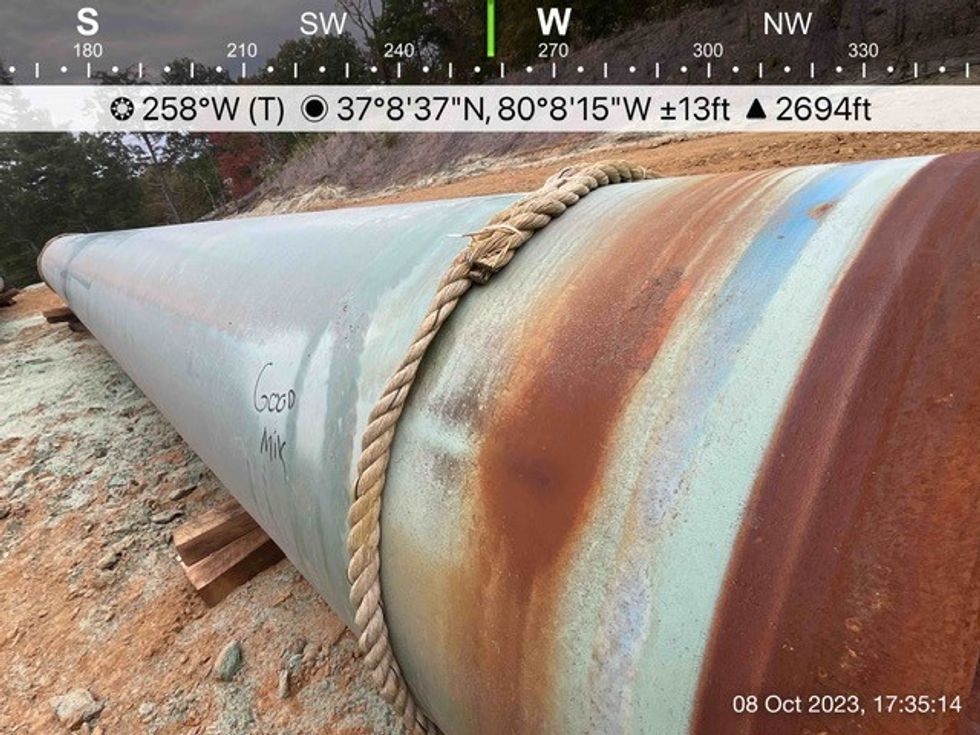
MVP, like LNG and CP2, is a climate disaster. It also presents an enormous safety risk. It’s being built up and down steep slopes where landslides have already occurred. There will be more when an unprecedented rain event, the kind we see so often these days, parks itself over the area someday. The coating on MVP pipe that is suppose to protect it from corrosion is defective, due to sitting out in the sun for 6 to 7 years, which is 10-12 times longer than the National Association of Pipe Coating Applicators (NAPCA) recommends.
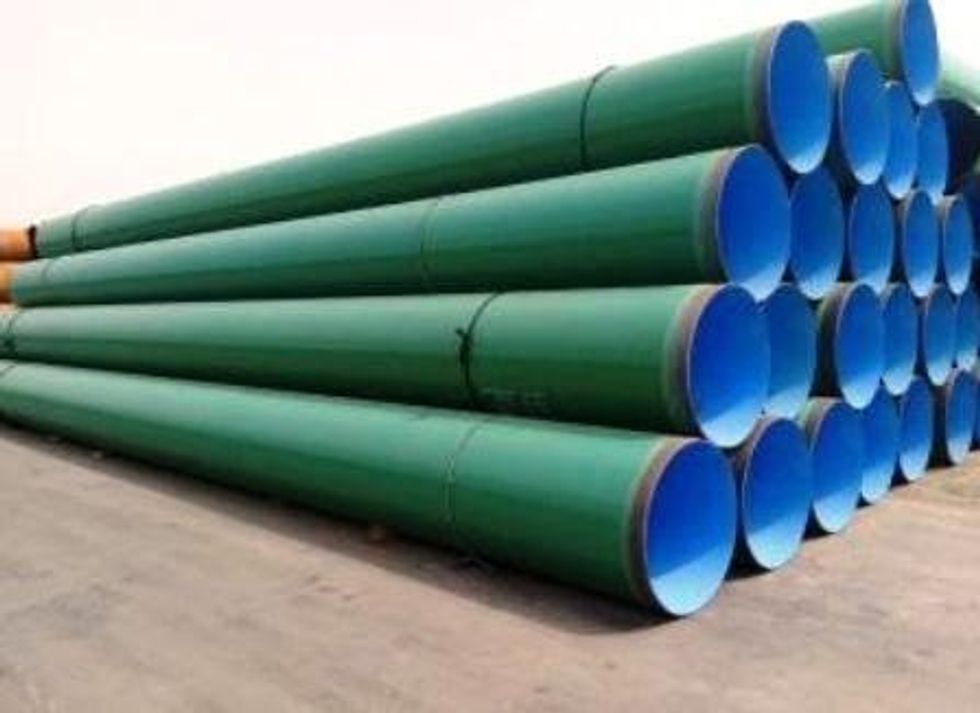
This is how fusion bonded epoxy (FBE) corrosion-proof coating is suppose to look.
This is how degraded, illegal MVP corrosion-proof coating looks in October 2023 after sitting out in the sun for over six years, which is ten times longer than the coating manufacturer recommends.
As MVP gets built, huge pieces of pipe are moved around and set in place. Each time this happens, they flex. Because the coating is old and brittle, it no longer flexes with the pipe. And so, it cracks. We know this because Keystone XL (KXL) pipe, which also sat out in the sun for years, and was manufactured and coated by the same company as MVP pipe was, had its coating tested. Every single KXL sample that underwent a flexibility test cracked (p. 19). And cracked coating isn’t just unsafe. It’s also illegal, precisely because it’s unsafe. In order to be legal, corrosion-proof coating MUST be “sufficiently ductile (meaning flexible) to resist cracking”.
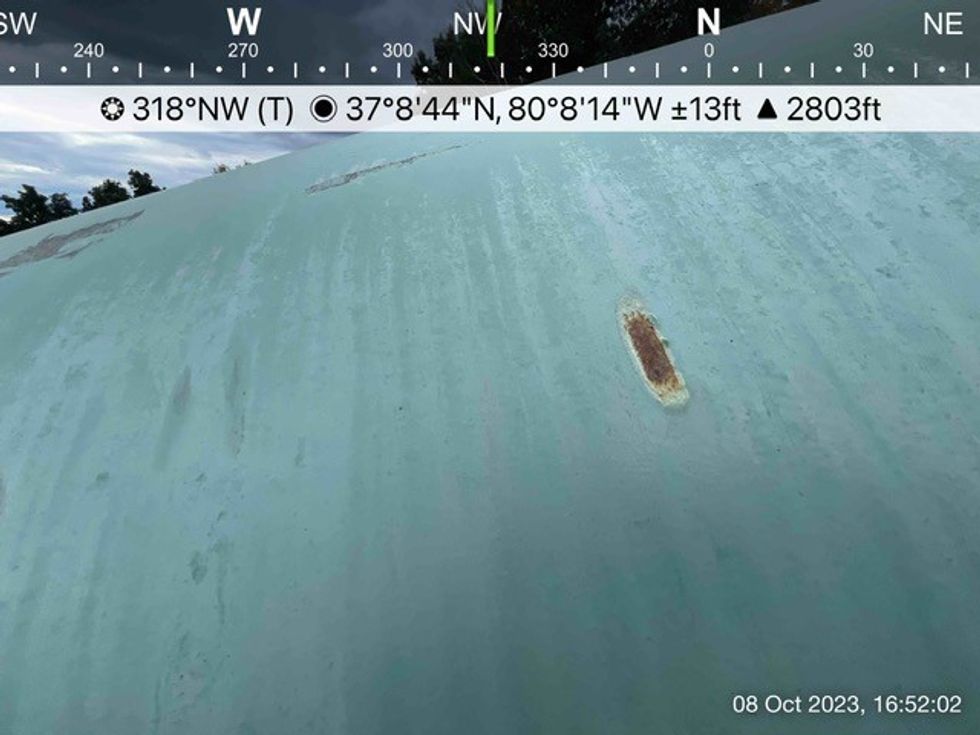 This photo shows degraded MVP pipe coating with a gouge that exposes bare steel.
Even Robert Cooper, during his testimony 69 months ago (p. 134), said that pipe needed to get in the ground soon to protect the coating from the sun. Of course then it was an argument for quickly taking land via eminent domain from property owners who were unwilling to sell.
MVP will operate under extremely high pressure. When a landslide breaks it apart or premature corrosion causes a rupture as gas is propelled full throttle on its way to an LNG terminal, it will be like nothing we have seen before. MVP doesn’t just go up and down steep mountains. It goes by people’s houses and their children’s schools. Given that it took Equitrans, the company building MVP, 13 days to stop last year’s biggest climate disaster, there’s no trust that they’re on top of any situation. Their climate disaster, by the way, was an out-of-control methane leak caused by… corrosion.
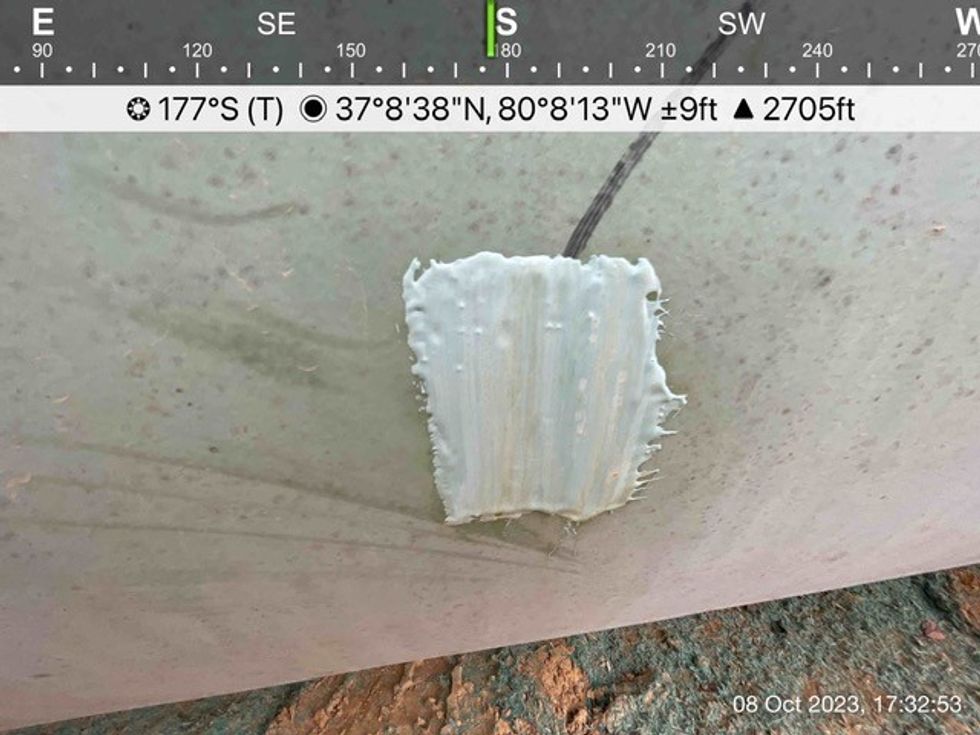 This photo shows how a gouge on MVP pipe was patched in a wholly inadequate manner.
The debt deal was a dirty deal, but it didn’t make MVP a done deal. They may be arresting protesters, but it is MVP that’s burying illegal pipe. There are a lot of reasons, legal and otherwise, to fight MVP. Bill McKibben’s article coupled with Robert Cooper’s testimony just gave us one more.