

SUBSCRIBE TO OUR FREE NEWSLETTER
Daily news & progressive opinion—funded by the people, not the corporations—delivered straight to your inbox.
5
#000000
#FFFFFF
To donate by check, phone, or other method, see our More Ways to Give page.
Daily news & progressive opinion—funded by the people, not the corporations—delivered straight to your inbox.
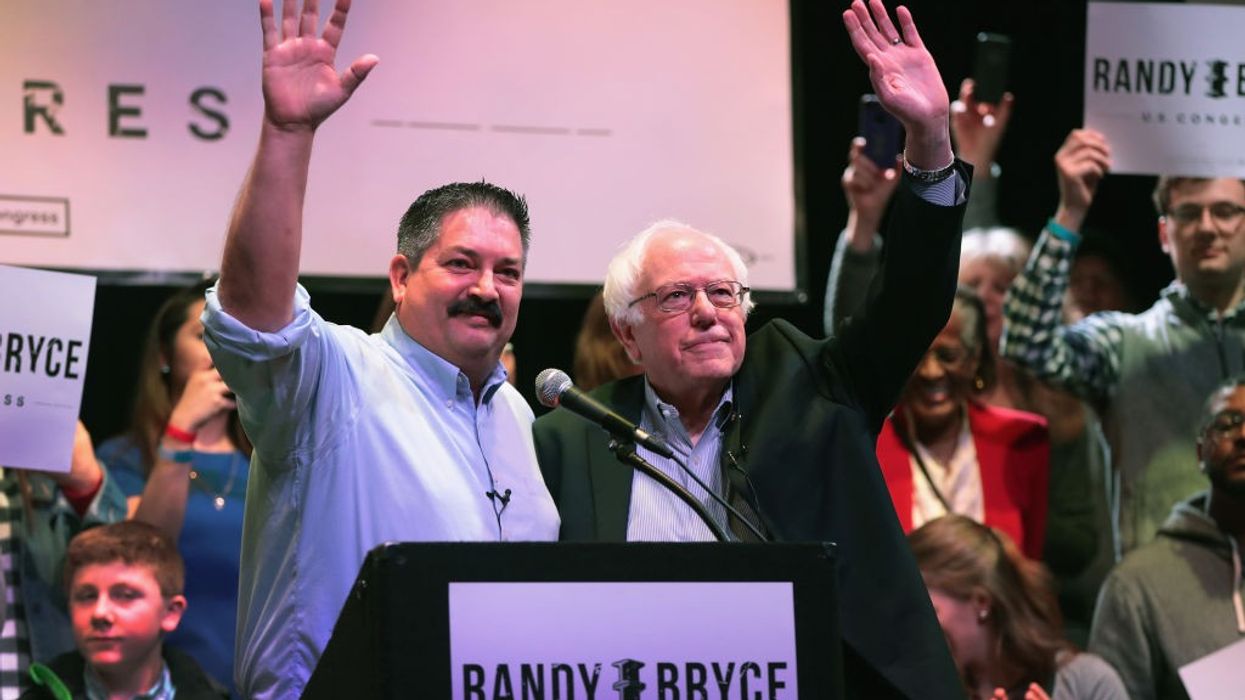
"With what Trump and Musk have been doing, it's more important than ever to get union people, working people, into Congress."
As congressional Republicans and the administration of President Donald Trump set their sites on slashing vital social services, former union ironworker-turned-progressive Democratic U.S. House candidate Randy Bryce announced Tuesday that he will seek to oust the incumbent Trump ally in 2026 and help save Medicaid, Medicare, and Social Security.
Bryce—also known as the "Iron Stache" due to his prominent moustache—is a disabled veteran who launched his 2018 campaign with a viral video skewering then-House Speaker Paul Ryan's (R-Wis.) attacks on healthcare. Bryce, who raised over $7 million with donations averaging around $25, won the Democratic primary but lost to Rep. Bryan Steil (R-Wis.) in the 2018 general election.He aims to face Steil in the next cycle.
"Every great story begins with a spark. Ours began in 2018, when one man stood up to Washington," Bryce said in an ad released Tuesday announcing his new campaign for Wisconsin's 1st Congressional District seat. "Now, as old enemies come out of the shadows, we need him one more time."
"Trump promised to bring manufacturing back," Bryce continued. "Eight years later, we're still waiting. We can't afford to wait any longer—not for jobs, or healthcare, or a damn living wage."
"This isn't about left versus right," he added. "This about the billionaires versus the rest of us, and we've got the numbers!"
As the Milwaukee Journal Sentinel reported Tuesday:
At the time, Bryce ran on supporting "Medicare for All" legislation, raising the minimum wage to $15 per hour, and boosting unions. He remains a member of the Ironworkers Local 853 and in the years since his first campaign, he said, has served as a union representative, worked with Social Security Works, an advocacy group seeking to expand Social Security, and more recently has helped people with disabilities find work.
Like his ally Sen. Bernie Sanders (I-Vt.), Bryce believes that Democrats lack a coherent vision for defeating Trumpism and the oligarchy that's enriching itself at the expense of working-class Americans.
The solution? "With what Trump and Musk have been doing, it's more important than ever to get union people, working people, into Congress," Bryce told Capital Times associate editor and Nation national affairs correspondent John Nichols on Tuesday, referring to de facto Department of Government Efficiency chief and world's richest person, Elon Musk.
Working-class Dem Randy Bryce Takes On Trump Ally Bryan Steil For Key Wisconsin House Seat. — Bryce is the union Ironworker whose 2018 challenge to Speaker Paul Ryan went viral and, ultimately, saw Ryan decide to quit. Bryce says he’s running in 2026 to save Medicaid, Medicare and Social Security.
[image or embed]
— John Nichols (@nicholsuprising.bsky.social) May 20, 2025 at 8:20 AM
"What Trump's doing, and what Bryan Steil is helping him do, is really scaring people," Bryce told Nichols. "I'm talking to veterans, to people who rely on Medicaid, to families that can't keep up with rising prices, to workers. They're all angry."
"You've got an administration that is strangling the Social Security system, laying off people, cutting services," he added. "The Republicans in Washington are pulling what's left of the rug out from under us. I just think this is a going to be an election where people in the 1st District say, Enough!"
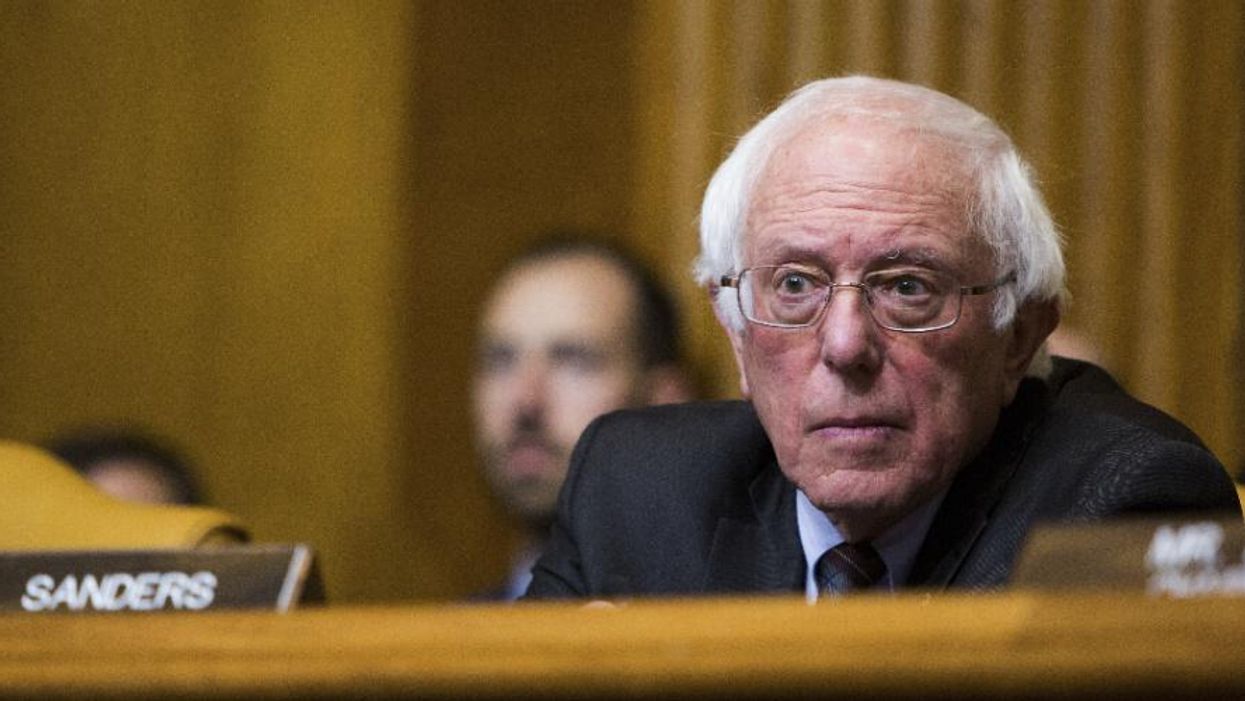
The long-held Republican nightmare that a champion of working-class people and the common good--one who has dedicated his political career to curbing poverty and injustice while denouncing corporate greed, endless war, and the cruelty of a for-profit health system that leaves millions upon millions uninsured or without affordable access to care--would assume the powerful position of chairing the Senate Budget Committee is about to become a reality.
"Time to face the harsh reality, socialist Bernie Sanders will become the chairman of the Senate Budget Committee. He has vowed to use his position to enact his progressive agenda on healthcare, climate, infrastructure spending, and cutting defense spending," Nikki Haley tweeted Saturday.
While it came from Trump's former U.S. ambassador to the United Nations as a kind of ominous warning, Sanders' wife, Jane O'Meara Sanders, was among those who shot back with a clever and simple quip. "Yes he has," she tweeted in response.
Not that Jane Sanders was alone:
"You forgot to mention raising the minimum wage and taxing your rich friends," the organizing group People for Bernie tweeted back at Haley.
Republican fears of Sanders taking over the committee go back to at least 2016 when Congressman Paul Ryan of Wisconsin, then-Speaker of the GOP-controlled House, said ahead of that year's election: "If we lose the Senate, do you know who becomes chair of the Senate Budget Committee? A guy named Bernie Sanders. You ever heard of him?"
The GOP trepidation over such a reality is about to materialize now that Democrats have seized razor-thin majority control of the Senate. And, while the gavel is yet to be placed in his hand, Sanders and his staff have signaled in recent days that he will be ready and willing to wield it to push the incoming Biden administration--as well as Democratic leadership in the House and Senate--to enact the kind of bold, working-class friendly policies that fueled both of his presidential runs.
Among the chief powers that the chair of the committee will utilize is fostering legislation through the Senate using the budget reconciliation process--a procedural tool that will allow, even under current rules, legislation to pass with a simple majority.
On Sunday, Sanders posted this social media:
"Yes, we can, and we must use budget reconciliation to increase the minimum wage to at least $15 an hour with a simple majority vote in the Senate, just like Republicans did to pass massive tax breaks to the 1%," declared Warren Gunnels, one of Sanders' most senior aides who went out of the way to identify himself as the "Incoming Majority Staff Director" for the "Senate Budget Committee" in a tweet Friday morning.
Following the Democratic wins in Georgia that gave the party back the majority in the Senate, Sanders told Politico in an interview that he has no plans to be sheepish from his perch atop the committee.
"I'm going to use reconciliation in as aggressive a way as I possibly can to address the terrible health and economic crises facing working people today," Sanders told the news outlet. "As we speak, my staff and I are working. We're working with Biden's people. We're working with Democratic leadership. We'll be working with my colleagues in the House to figure out how we can come up with the most aggressive reconciliation bill to address the suffering of the American working families today."
Nina Turner, national co-chair of Sanders' 2020 campaign and now running for U.S. House in her home state of Ohio, has been among those in the progressive movement championing the legislative potential of his powerful new role in the Senate:
In a tweet on Saturday evening, Sanders himself stated: "When Republicans controlled the Senate, they used the reconciliation process to provide huge tax breaks for the rich and large corporations. We're going to use reconciliation to protect working families, the sick and the poor."
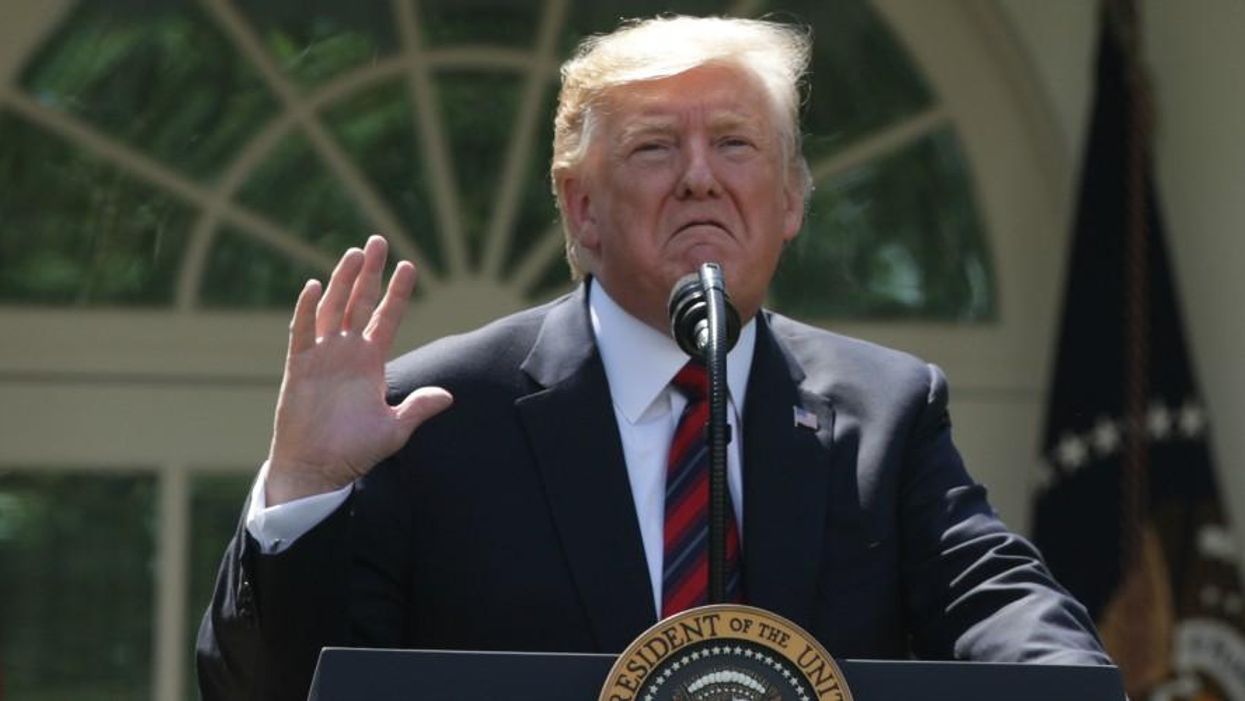
Every time it seems as though the firewall of apologists protecting Donald Trump might crumble, Republican politicians let us down over and over. In an interview Sunday, one of Trump's top Republican allies, Sen. Lindsey Graham, was asked in an interview whether he was open-minded about supporting impeachment if damning evidence of Trump's wrongdoing was to emerge. Graham said, "If you could show me that, you know, Trump actually was engaging in a quid pro quo outside the phone call, that would be very disturbing."
But just two days later, the high-ranking senator stood by Trump as the president used the most vile language in reference to his impeachment, saying on Twitter, "All Republicans must remember what they are witnessing here -- a lynching." In response, Graham said to reporters, "This is a lynching, in every sense." He did not say, "This is a symbolic lynching," or "In some sense, this is a lynching." (Even those terms would have been unacceptable given the history of quintessentially American racist terror the word references). But Graham said, "in every sense," this was a lynching of President Trump, implying that even in literal terms, Trump was, in his view, being strung up on a tree by a racist mob and murdered by hanging. Just as other high-ranking Republicans have done in the past, Graham went even further than Trump himself to defend him and his conduct. Are not all of Trump's supporters as guilty of the president's wrongdoing as he is?
There has been a mass exodus by Republicans from office and even the party the past two years, strongly suggesting that Trump's politics are too much for party members to tolerate. Among the earliest was the ambitious Republican star and former House Speaker Paul Ryan, who criticized Trump and then chose to retire, saying, "We're making really good progress on a lot of signature issues" -- as if Trump's destructiveness were a small price to pay for Ryan's chief economic concerns such as lowering taxes for the wealthy. Other high-profile lawmakers followed, including Sen. Bob Corker, who had been openly critical of Trump but then retired without speaking out. Sen. Jeff Flake also spoke up loudly against Trump but also chose to retire. House Republican Justin Amash became the first GOP congressman to say that Trump had met the standard for impeachment. He did so in May, before Democrats launched their formal impeachment inquiry -- and then made a bold stand by actually leaving the party. Sen. Mitt Romney is the highest-ranking Republican senator who remains in the party and who has spoken out strongly against Trump. According to Axios, Romney explained in an interview that "conservatives are trying to maintain the perception of a united front to voters so as not to risk internal shakeups that could lose them the Senate or Oval Office."
And there you have it. Fear of losing political gains has kept that Republican firewall around Trump strong regardless of what party members think of the president in private. The real reason Trump continues to be tolerated by his fellow Republicans is because he is delivering on the kind of economic reforms they are counting on. They see the rising tide of anti-capitalist populism in the country as Americans are fed up with the rich getting richer. They see the very real prospects of a Bernie Sanders or Elizabeth Warren presidential election in 2020. Senate Majority Leader Mitch McConnell knows that backing Trump unequivocally has given conservatives the chance to install two out of nine Supreme Court justices and win long-term right-wing influence in the nation's highest court. He understands that lowering corporate tax rates is worth the price of keeping Trump in the White House. While Trump is destroying the Republican Party, the Republican Party is destroying America.
Several people have asserted that if an impeachment trial were held in the Senate in secret, a large percentage of Republicans would vote to remove the president. Flake estimated that 35 would do so, while an unnamed Republican politician told Fox News' Chris Wallace that there was a 20% chance of the GOP voting to end Trump's presidency. But Republicans ought to have the courage to voice their opposition in public. Trump thrives on an impression of compliance and loyalty. He may suspect that Republicans are secretly turning against him, but if that resistance to him remains secret, it matters little. All he cares about is the perception of obedience and the view that he is winning no matter what e does.
One group, Republicans for the Rule of Law, has been working hard to expose Trump and encourage the GOP to take him on. They have operated openly without hiding who they are and are now calling on Romney to "pry the Republican Party from President Trump's hands." While their efforts are admirable, it remains to be seen if Republicans who are disgusted with Trump will take its advice.
With the testimony of the acting U.S. ambassador to Ukraine William Taylor confirming that Trump engaged in a quid pro quo to exact political dirt from Ukraine in exchange for military aid, one might imagine that Sen. Graham would stay true to his claim that he might consider impeachment if such a thing could be proved. But Graham, like McConnell and others, appears to have made the cold calculation that a guilty Republican in the White House is better than any Democrat.
Trump got into office because Republicans allowed it, and he remains in office because Republicans continue to allow it. Until they openly declare war on his presidency, his ongoing assault on our democracy is just as much their fault as his. He remains in office at their whim. They are his enablers, the facilitators of his evil. The stink of Trump's racist and misogynist hate, abject dishonesty and flagrant impunity over laws and the U.S. Constitution ought to follow every Trump supporter inside or outside government for the rest of their lives. The only way to save their soul from the complicity that history books will surely capture is to disavow him, and to do so now when it matters.
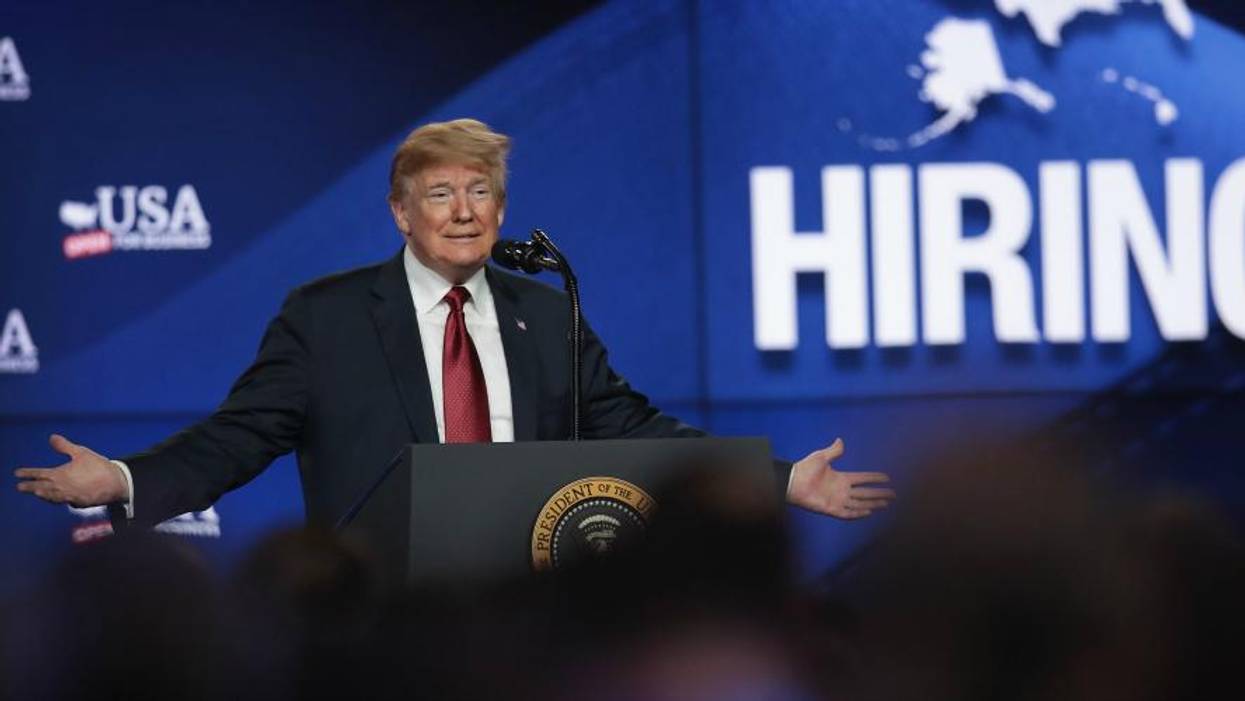
President Donald Trump, Wisconsin's former Republican Gov. Scott Walker, and former House Speaker Paul Ryan (R-Wis.) spent a lot of time at press events and photo-ops last year touting the 13,000 manufacturing jobs Foxconn was supposedly going to create in the U.S., but--as with many of his job claims--the president's soaring promises are looking increasingly hollow.
"Trump bragged about his deal with Foxconn to bring jobs to Wisconsin. So far 178 people were hired--but the company is on track to score over $4 billion in incentives.
That's $22M per job. #WhatADeal."
--Swing Left
As Reuters reported on Wednesday, the Taiwanese tech firm--which Walker lured to Wisconsin with over $4 billion in taxpayer subsidies--is now saying "it intends to hire mostly engineers and researchers rather than the manufacturing workforce the project originally promised."
In an exclusive interview with Reuters, Louis Woo, a special assistant to Foxconn chairman Terry Gou, said the company is completely walking back its plan to build $10 billion factory in Wisconsin.
"In Wisconsin we're not building a factory. You can't use a factory to view our Wisconsin investment," Woo said.
As Reuters notes, FoxConn "initially said it expected to employ about 5,200 people by the end of 2020; a company source said that figure now looks likely to be closer to 1,000 workers. It is unclear when the full 13,000 workers will be hired. But Woo, in the interview, said about three-quarters of Foxconn's eventual jobs will be in R&D and design--what he described as 'knowledge' positions--rather than blue-collar manufacturing jobs."
"Foxconn took Wisconsin for a ride. Other states, beware the allure of the mega deal," wrote Reid Wilson, reporter for The Hill.
News that FoxConn is slowly reversing its promises of manufacturing investment and job-creation will come as no surprise to progressive analysts and corporate welfare critics, who have argued all along that the sweetheart deal Walker and Wisconsin Republicans cut with FoxConn in 2017 was an "absolute fraud."
"I remain skeptical that the Foxconn project will ever play out as advertised," Greg LeRoy, executive director of Good Jobs First, told Bloomberg last week.
Following Reuters' report on Foxconn's moves to renege on its previous job pledges, critics pointed to footage of Trump participating in a "groundbreaking" ceremony with Walker, Ryan, and Foxconn's chairman at the site of the company's planned facility last June, where he touted the 13,000 manufacturing positions the tech firm vowed to create.
"I'm thrilled to be here in the Badger State with the hardworking men and women of Foxconn working with you," Trump declared during the event. "Moments ago, we broke ground on a plant that will provide jobs for much more than 13,000 Wisconsin workers. Really something. Really something."
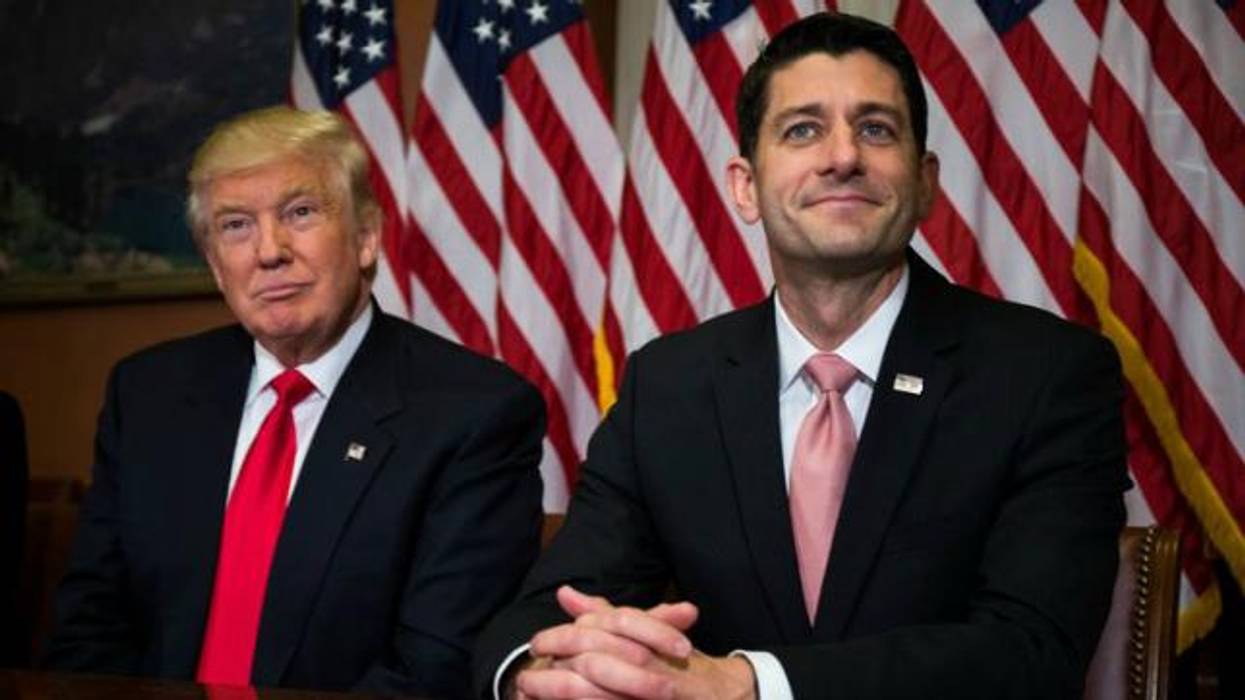
I recently attended a conference at the Niskanen Center. It was a think tank gabfest at which the participants were disillusioned conservatives hoping to chart a course toward a saner political center-right. Jonathan Chait did a near-ecstatic write-up of the meeting and its promise of a conservative movement with fewer XYY chromosomes. Jeet Heer was less optimistic.
"These are but a few of the crackpot nostrums peddled by conservatives in their supposed intellectual golden age."
What impressed me, however, was the elegiac note struck even by those thoroughly disenchanted participants who believed that American conservatism had not been hijacked by know-nothings, but contained the seeds of its own perversion.
They were almost uniformly nostalgic about the early 1980s, when most of them turned to the Republican Party. "Bliss it was in that dawn to be alive. But to be young was very heaven," or so it once seemed to these conservative apostates looking to the past. Back then, there was intellectual ferment on the Right, and the GOP was the party of ideas. But what were those ideas when considered in the cold light of empirical reality rather than soft-focus nostalgia?
Thirty-five years have given us plenty of time to test the truth of the main tenets of the Republican coalition when applied across economics, national security, social policy, and governance. Several of the most significant ideas follow:
Starve the beast. This was a popular rationale for tax cuts (beyond the real, tacit one of further enriching political donors) offered by reigning conservative demigod Milton Friedman. If you reduce revenue, it will force hated Big Government to shrink accordingly. Not only has this scheme never worked out, Republican administrations have expanded the national debt significantly more than Democratic ones.
Tax cuts pay for themselves (or even increase revenue). This absurd myth is still being mouthed by true believers like Paul Ryan, even as he leaves the speakership with an unprecedented record of fiscal failure at a time of a generally good economy.
The crazy implication of this tax-cut theology ought to be that if you cut taxes to zero, revenues will be infinite. This theory and "starve the beast" also achieve the difficult feat of each being completely wrong while flatly contradicting one another. It's like believing simultaneously in the Young Earth Creation and Steady State models of the universe - two contradictory and demonstrably false hypotheses.
Efficient markets hypothesis. Wall Street must, by a Newtonian law of nature, allocate capital and risk in the most efficient manner possible. Therefore, who needs regulations? A glance at the numerous financial panics throughout history ought to have disproved this idea, but Federal Reserve board chairman Alan Greenspan embraced it along with Ayn Rand's other crank notions. In 1999, Brooksley Born, chair of the Commodity Futures Trading Commission, attempted to argue that the near total deregulation of the futures market was a bad idea. Greenspan and the rest of the free-market establishment mowed her down, and so one more cause of the 2008 financial meltdown was set in concrete.
Government is the problem. Uttered by no less than Saint Ronnie, this sentiment is the leitmotiv of conservative thought. Funny, though, it somehow excludes the Pentagon, which consumes more than half the discretionary budget. And it's rarely practiced by those who preach it (many of whom have spent entire careers on the federal payroll). The disproportionately Republican voters of the hurricane belt expect FEMA (an agency that some conservatives otherwise believe exists to put them in concentration camps) to promptly write a check for damage caused by choosing to build in a flood zone. (Personal story: as a budget committee staffer, I got considerable phone traffic from the office of Mississippi Senator Trent Lott about expediting relief when Katrina wiped out the senator's house in Pascagoula). This reflex has become so Pavlovian that residents of Harlan County, KY, severely dependent on federal aid to prevent brute starvation, bitterly denounce government.
The gold standard. What John Maynard Keynes called the barbarous metal is an object of totemic worship by conservatives. Beginning with the Reagan candidacy, it has been a hardy quadrennial in GOP platforms. It is a product of the fallacy of misplaced concreteness: because you can see and touch gold, it represents for some deluded souls an avatar of value more lustrous than real wealth produced by labor.
In reality, the gold standard was only common from the mid-1870s until 1914 (a period characterized by many international panics), and was promptly suspended during World War I, when countries fighting for their lives could no longer afford the luxury of gold theology. Great Britain's postwar attempt to restore the gold standard was a failure, and virtually all countries abandoned the classic gold standard during the Depression, opting for a hybrid gold-exchange standard which itself collapsed in 1971.
Look at any conservative website, though, and advertisers are usually hawking overpriced gold coins; half-baked schemes to reinstate the gold standard frequently appear even in "respectable" conservative publications. President Trump has advocated the gold standard. Given his recent reverse-Midas touch with the stock market, be very afraid.
Run government like a business. This chestnut is rarely questioned, although a moment's thought proves it fallacious. Businesses sell products to customers for profitable revenue. Government is a citizens' compact to provide a gamut of services from policing to disease research to protecting land held in common to national defense, all financed by taxes. Government officials must obey governmental and constitutional rules; they are not autocratic CEOs who run their firms as they see fit.
The analogy is even more strained given that Republicans often seem to choose Enron as their governance model. In line with its mantra that government doesn't work, the GOP sets out to make it a self-fulfilling prophecy by adopting an exploitative rather than public service model. The merger of government with predatory business practices has now reached a culmination in the Trump administration, where everything from the location of the FBI headquarters to the security of the Middle East hinges on the private and opaque financial interests of the Trump Organization.
Law and order/personal responsibility. In the 1980s and 1990s, the GOP styled itself the Party of Personal Responsibility: "no defining deviancy down!" as scolds like Bill Bennett incessantly reminded us. Republican amendments to crime bills competed to be the toughest on crime, with capital punishment preferred. Many liberals called it coded racism, but it ultimately became something even worse: more like the Leninist who-whom principle whereby something is only a crime depending on the political status of the perpetrator.
Sexual harassment ceases to be heinous when potentially committed by a GOP aspirant to office, and we hear a lot these days about how campaign finance violations or even conspiring with an adversarial foreign power are mere "process crimes" if they're even illegal. Once upon a time, crack cocaine abusers deserved life imprisonment and traffickers death; now that opioid abuse is literally destroying a state that Trump carried by 42 percent, the GOP is suddenly all about compassion and the need for treatment.
Authoritarianism good/totalitarianism bad. Back in the early 80s, right-wing talking head Jeane Kirkpatrick caused a stir when she theorized that authoritarian regimes were to be tolerated, even indulged, because somehow they would evolve into democracies. But totalitarian regimes, meaning communist ones, were incapable of spontaneously democratizing and had to be resisted tooth and nail. This notion was prompted by the need to explain U.S. support for regimes like Chile or South Africa, while we opposed ones like Nicaragua. Rather than analysis, it was basically arbitrary labeling: four legs, good, two legs bad.
The fall of the Berlin Wall was massive disproof of the theory, but so are subsequent events: there is no consistent pattern to the transformation of either so-called authoritarian regimes or totalitarian states into democracies - or to the now-frequent backsliding of democracies into despotism.
There have never been rational criteria for U.S. obsequiousness toward feudal tyrannies like Saudi Arabia while we remain unremittingly hostile to Iran, which at least has something resembling a parliament. Trump, as usual, has carried Kirkpatrick's scheme to a bizarrely ironic conclusion: he prefers authoritarian rulers like Recep Erdogan or Mohammed bin Salman to democratic leaders responsible to their legislatures.
Blame America First/liberals hate America. This dogma got its legs when - again - Jeane Kirkpatrick pontificated that those critical of US foreign policy just wanted to "blame America first." It culminated in the common post-9/11 belief that anyone skeptical of the existence of WMD in Iraq hated America. But like many beliefs (voter fraud, "class warfare," etc.), it contains a massive dose of psychological projection. American conservatism is steeped in a cultural pessimism that sees our best days behind us, with America forever ruined by minorities, foreigners, and socialists (and sometimes uppity women).
Likewise, conservative economists like James M. Buchanan were never comfortable with American democracy, and felt the need to ring-fence billionaires' property rights against it. Fundamentalists see secular society as irredeemably sinful; those who are Christian reconstructionists want to overturn the Constitution in favor of theocracy. NRA-style gun nuts posit a sacred right to armed insurrection and overthrow.
Examples of this mentality include Jerry Falwell saying America got what it deserved on 9/11 (because: gays) and a legion of Trump apologists rationalizing that collusion with a hostile foreign power is harmless - or maybe, by means of Republican alchemy, even a higher act of patriotism.
These are but a few of the crackpot nostrums peddled by conservatives in their supposed intellectual golden age. While movement eggheads like Milton Friedman seem like hopelessly unworldly lunatics (he once posited that we didn't need a Food and Drug Administration because manufacturers would ensure safe products out of market efficiency and the goodness of their hearts - yeah, sure they would), they prevailed over time.
The infiltration and dominance of the Republican base by religious fundamentalists, whose creed is magic thinking reinforced by unwavering obedience to accepted authority, helped metastasize this syndrome of dogmatic illogic. It was also boosted by the rise of an integrated, conservative media-entertainment complex, whose non-stop, nation-blanketing repetition of falsehoods assisted their popular acceptance.
The conservative mainstreaming of pernicious ideas gradually overcame a more cautious postwar American pragmatism, dearly won after the misery of the Great Depression and the horror of World War II. The political movement that started as what Keynes described as the "frenzy [of] some academic scribbler of a few years back" has now, under Donald Trump, become like the children gone savage in Lord of the Flies, heeding not reason but the rattle of bones and the beat of tom-toms.

Each New Year's, my wife and I indulge one of our favorite traditions: the household purge. We scour our closets for stuff that's just taking up space, quietly draining our home's energy, and move it along. I can't recommend it enough.
This year, America's doing the same thing -- and putting House Speaker Paul Ryan out on the curb.
For years, the ten-term Wisconsin Republican -- who's retiring as Democrats prepare to take over the House -- enjoyed an improbable reputation as a "deficit hawk" and "deep thinker" about fiscal issues.
Year after year, as House budget chairman, Ryan would roll out his latest "blueprint." He'd literally roll up his sleeves for the cameras and detail his latest plans to slash rich people's taxes and scale back public services for everyone else.
For a while, mainstream liberals greeted Ryan as a serious interlocutor.
They treated his plans to privatize Medicare, eviscerate Social Security, and shred the safety net as valid viewpoints in the Adult Conversation they wanted politics to be. Even if you didn't agree with him, they said, you had to admit Ryan "had a plan" to "deal with the debt."
That scam propelled Ryan to the House speakership in 2015. Then the long con really took off.
For five straight years before Ryan took over, deficits had declined. By the time he gave his self-satisfied farewell, they'd increased by $343 billion -- a product of Ryan's tax breaks for corporations and millionaires, which will cost $2 trillion over the next decade.
No one who isn't a billionaire--or a bombmaker--will miss him.
Thanks to the very deficit he created, Ryan then left office warning that Congress needed to cut -- you guessed it -- Medicare and Social Security. (No doubt he's still stinging from his 2017 failure to throw 24 million Americans off their health care -- a feat of pure sociopathy he actually said he'd been dreaming about since he "was drinking out of kegs.")
Ryan was never a serious thinker and he didn't care about debt. He was a frat bro from a wealthy family who read a lot of Ayn Rand, a writer who called it "a disease" to do anything good for "the primordial savages" who made up "the collective" -- i.e., the public.
A bad model for public servants, if you ask me.
True to his training, Ryan presided over a massive cash grab by America's billionaires and left the rest of us "savages" to pick at the scraps. No wonder Ryan never mounted that "principled conservative" challenge to Donald Trump in 2016 -- on this they agreed entirely.
Ryan's crimes go beyond what fits in spreadsheets. After signing off on over $700 billion for the Pentagon -- no austerity for that agency, which has never passed an audit -- Ryan concluded his speakership with an act of pure villainy. He tucked a provision into this year's Farm Bill that prevented even a debate on ending U.S. support for the Saudi war in Yemen.
The silver lining is that Ryan's villainy -- like Trump's -- spurred the growth of powerful movements to expand health care, rebalance the economy, and get the U.S. out of immoral wars.
The UN calls that war the greatest humanitarian crisis on the planet. It's caused over 85,000 children to starve to death. Almost miraculously, after years of inaction, the U.S. Senate just concluded a remarkable bipartisan vote to get the U.S. out of it.
In stymieing that effort with low procedural tricks, Ryan "used the Farm Bill to starve children," as The American Conservative put it.
The silver lining is that Ryan's villainy -- like Trump's -- spurred the growth of powerful movements to expand health care, rebalance the economy, and get the U.S. out of immoral wars. Lawmakers from those movements -- Alexandria Ocasio-Cortez, Ilhan Omar, Rashida Tlaib, and others -- and a new House majority can now get to work burying Ryan's legacy forever.
No one who isn't a billionaire -- or a bombmaker -- will miss him.

In his latest attempt to deliver on his promise to shut down the government if he didn't get money to spend on his deeply unpopular border wall, President Donald Trump refused Thursday to approve the spending bill which passed in the Senate.
The news came to light when outgoing House Speaker Paul Ryan (R-Wis.) was forced to postpone his final press conference, after Trump told Republican leaders that he would not sign the bill if it crossed his desk because the Senate version, which was passed unanimously on Wednesday, did not include $5 billion for a wall along the U.S.-Mexico border.
Ryan declared the meeting "productive" after emerging, but admitted that the president's red line was holding up progress. The stopgap bill was intended to keep the government running through February 8. Without the spending bill entering into force, funding for seven agencies and nine departments which make up a quarter of the government could be in jeopardy.
Sen. Bernie Sanders (I-Vt.) noted that Trump's refusal to sign the bill also confirms what progressives and other critics knew about the president's priorities long before he took office in 2017--crystallizing his lack of support for working Americans including the 800,000 federal employees who face potential furloughs if the government partially shuts down.
Senate Minority Leader Chuck Schumer (D-N.Y.) and presumptive incoming House Speaker Nancy Pelosi (D-Calif.) stood firmly against the president's demands, with Schumer likening Trump's stance to a toddler's tantrum.
"Trump's allies in the House can pound their fists on the table all they want but it's not going to get a wall. They can, having caught the Trump temper tantrum fever, jump up and down, yell and scream. It's not going to get a wall," said Schumer.
As Trump faced a Democratic Party intent on denying him one of his signature campaign promises, the White House appeared to suggest that the border wall proposal had been dialed back, with Press Secretary Sarah Huckabee Sanders saying Thursday that Trump "does not want to go further without border security, which includes steel slats or a wall" echoing a tweet he had posted earlier in the day.
"This is not merely my campaign promise, this is the promise every lawmaker made," Trump said after his meeting with the Republicans. "It is the solemn promise to protect the United States of America and it is our sacred obligation."
Pelosi said Thursday that Democrats will work to keep the government open, but called the wall a "non-starter."
"We'll see what they come up with, in terms of disaster assistance," she told reporters. "But in terms of wall funding, that's a non-starter. I think they know that."
"We're right in the middle of a sort of meltdown on the part of the Republicans," she added.
The spending bill must be finalized by midnight Friday to keep parts of the government from shutting down.

It feels like a million years have passed since Paul Ryan was Mitt Romney's vice presidential candidate. But a story from back then speaks volumes about his legacy today.
On the campaign trail, Ryan took some heat for "ramrodding" his way into an Ohio soup kitchen -- without permission -- for a staged photo op. All the patrons had been served and the kitchen had been cleaned, so the Romney team snapped some pictures of Ryan washing a couple dishes. They left after 15 minutes.
There's no better anecdote to sum up Paul Ryan's career in politics -- masquerade as an advocate for poor people for the chance to pass policies that would hurt them most.
Still, Ryan managed to cement a reputation as a "deficit hawk," as an earnest but ultimately compassionate policy wonk making the shrewd budget choices that would allow people across the country to prosper. But nothing could be farther from the truth.
Ryan managed to cement a reputation as a "deficit hawk," as an earnest but ultimately compassionate policy wonk making the shrewd budget choices that would allow people across the country to prosper. But nothing could be farther from the truth.
There is, of course, the issue of Ryan's obvious hypocrisy on the national debt. The 2018 deficit ballooned under his supposedly watchful eye, thanks in large part to the disastrous tax cuts passed last year.
But it wouldn't be fair to the millions of people harmed by Ryan's political choices to assess his legacy based on his faux concern over the federal budget alone.
Time after time, Ryan has let his "moderate" mask slip to show the real motives for his policies -- to further enrich the wealthy while pretending to have the poor's interest at heart. He adopted the mantle of fiscal responsibility to advocate slashing social programs designed to protect the most vulnerable, while offering bigger and bigger handouts to the wealthiest.
Take those tax cuts. Just months after they passed, Ryan tried his hand at selling the hugely unpopular legislation to the American public by tweeting about a Pennsylvania secretary receiving an extra $1.50 a week in her paycheck.
How much do, say, the Koch brothers stand to gain from that bill? $1.4 billion a year, as Americans for Tax Fairness pointed out.
Look at the so-called "opportunity zones" embedded in that same tax bill, which Ryan calls a critical part of his "poverty fighting agenda." Ryan said he'd spent years trying to enact these tax breaks for developers building in low-income communities. But it's a recipe for increased gentrification that could displace the very low-income people Ryan promises they'll help. Goldman Sachs is already reaping the benefits.
And then there's the time he misappropriated the story of a homeless young boy to argue against free school lunch programs, of all things, in a speech to the Conservative Political Action Committee. "What they're offering people is a full stomach and an empty soul," Ryan said in 2014 about people arguing for the very basics of a social safety net.
As Trump wages his war against migrants, sexual assault survivors, and the poor, writers and analysts have pointed out that the spectacle of cruelty is at the heart of his politics. Ryan and his ilk have rightfully been criticized for enabling Trump, but being painted as a spineless coward is his best-case scenario of a legacy.
This is a man who casually noted that he'd dreamt about capping Medicaid since he was drinking out of kegs. He said he personally rejects a ban on Muslims coming into the United States, but then supported Trump's executive order to do just that.
Ryan had no problem telling the country Trump's "heart's in the right place" just weeks after his racist reaction to the Unite the Right rally in Charlottesville, where Heather Heyer was killed.
Cruelty has always been the point for Paul Ryan, too.
At one time, Ryan's viciousness seemed literally unimaginable to some members of the American public.
The Democratic super PAC Priorities USA asked a focus group about a proposed Ryan proposed budget back in 2012, letting them know that he wanted to defund programs specifically meant to help low-income people while slashing taxes on corporations and the wealthy. Participants "simply refused to believe any politician would do such a thing," the New York Times reported.
That was in 2012. Now, in 2018, as a politics of cruelty becomes more and more commonplace, we owe it to ourselves to be honest about the true intentions of Paul Ryan and the people like him who mask their ill intentions with wonky language.
The charade's up. Good riddance.

As House Speaker Paul Ryan (R-Wis.) delivered his farewell address on Wednesday after 20 years of relentlessly working to gut social programs for the poor and successfully ramming through "one of the biggest transfers of wealth to the richest one percent in U.S. history," progressives made sure to let the outgoing congressman know what they think of his legacy.
"Speaker Ryan will always be remembered for rigging the system to prioritize the wealthy and big corporations' greed over working families' needs."
--Americans for Tax Fairness
With the hashtag #GoodRiddanceRyan, progressive advocacy groups and commentators denounced Ryan for spending his 10-term tenure in the House pushing an agenda that rewards wealthy corporate donors at the expense of the American working class.
"He's a coward who sold our economy to the highest bidders," declared Patriotic Millionaires.
Americans for Tax Fairness echoed this assessment of Ryan's career, writing, "So long to a Speaker who has deliberately chosen to throw white, black, and brown families under the bus so the wealthy, big corporations, and his donors can receive massive tax cuts."
While the congressman's speech was mostly light on substance and littered with motivational platitudes--"always dream big" and "always raise your gaze"--Ryan's speech eventually turned to the subject of "entitlement reform"--the right-wing euphemism for slashing Medicare, Medicaid, and Social Security.
Ryan expressed deep regret that he and his party ultimately failed to gut these programs, which provide a lifeline for millions of Americans. The Wisconsin congressman has previously said he's been dreaming of cutting Medicaid since he was "drinking out of a keg" in college, and during his speech on Wednesday he described "entitlement reform" as his party's "greatest unfinished business."
"Speaker Ryan will always be remembered for rigging the system to prioritize the wealthy and big corporations' greed over working families' needs," concluded Americans for Tax Fairness.
"As a politics of cruelty becomes more and more commonplace, we owe it to ourselves to be honest about the true intentions of Paul Ryan and the people like him who mask their ill intentions with wonky language."
--Negin Owliaei, Institute for Policy Studies
Ryan's final goodbye speech to Congress came after the House Speaker's office aggressively promoted a revisionist "docu-series" that portrayed his crowning achievement--a deeply unpopular $1.5 trillion tax bill--as a historic victory for ordinary Americans, despite the mountains of evidence to the contrary.
"Paul Ryan does not deserve the courtesy of this kind of rose-colored glasses treatment," GQ's Jay Willis wrote of Ryan's documentary. "He is a political opportunist who spent two disgraceful years tolerating Donald Trump's corruption and enabling Donald Trump's malevolence, because he knew it was his best chance to enact a policy that enjoyed the support of his megadonors and no one else."
"We should remember this speaker as he's asked to be remembered: a man who insisted on celebrating his favorite failure because it qualified as his greatest accomplishment," Willis concluded.
In a piece for Inequality.org ahead of Ryan's farewell ceremony on Wednesday, Negin Owliaei, a researcher at the Institute for Policy Studies, wrote that "in 2018, as a politics of cruelty becomes more and more commonplace, we owe it to ourselves to be honest about the true intentions of Paul Ryan and the people like him who mask their ill intentions with wonky language."
"The charade's up," Owliaei concluded. "Good riddance."

Massive corporations are "flush with leftover cash" and Wall Street banks are raking in enormous profits. CEOs and the wealthiest Americans are getting even richer. Average workers are seeing crumbs.
That is the state of the American economy on the one-year anniversary of the passage of the GOP's $1.5 trillion dollar tax scam, which Americans for Tax Fairness said on Tuesday will go down as "one of the biggest transfers of wealth to the richest one percent in U.S. history."
"The wealthiest Americans are richer now than they have ever been and are hoarding trillions of dollars."
--Patriotic Millionaires
Contrary to President Donald Trump's soaring promises and outgoing House Speaker Paul Ryan's (R-Wis.) characterization of the tax law as a tremendous victory for ordinary Americans in his newly released "docu-series," tax policy experts and progressives argued on the tax law's first birthday that the plan has done virtually nothing for the working class, while making the wealthiest Americans and largest corporations tremendously richer.
"Trump promised his tax cut would give families a $4,000 pay raise. This has not been the case, to put it lightly," Patriotic Millionaires declared in a blog post on Wednesday. "This isn't to say that last year's tax cuts have had zero effect. After all, the wealthiest Americans are richer now than they have ever been and are hoarding trillions of dollars."
"The rich are winning," Bloomberg added in its rundown of the tax law's impact during its first full year in effect.
As if to celebrate the anniversary of the tax plan's passage, massive corporations further rewarded wealthy shareholders this week by rolling out billions more in stock buybacks, bringing the total sum of buybacks this year over $1 trillion "for the first time ever."
"That's money that could have been invested in these companies' workers," Sen. Sherrod Brown (D-Ohio) wrote of the record-shattering buybacks. "Instead, it went to those at the top."
According to the Economic Policy Institute (EPI), as the richest Americans have seen their fortunes grow exponentially thanks to the tax law, worker bonuses have risen just $0.02 in the year since the plan passed Congress last December.
Highlighting EPI's research, Sen. Bernie Sanders (I-Vt) wrote on Twitter, "Trump promised that his tax giveaway to the wealthy would put an extra $4,000 into the pockets of middle-class families. He lied."
"Our job: Repeal Trump's tax breaks for the wealthy and rebuild the disappearing middle class," Sanders added.
Patriotic Millionaires agreed with Sanders, arguing that "there's only one way to right this wrong, and that's by repealing the Tax Cuts and Jobs Act and making our tax code fairer for those who work."
"A year later, we can safely say that Republicans' tax overhaul was a huge payoff to donors, and a scam for average Americans," the group concluded. "The economy is not better off because of it, and neither are millions of poor and middle-class families who desperately needed real, comprehensive tax relief."