

SUBSCRIBE TO OUR FREE NEWSLETTER
Daily news & progressive opinion—funded by the people, not the corporations—delivered straight to your inbox.
5
#000000
#FFFFFF
To donate by check, phone, or other method, see our More Ways to Give page.
Daily news & progressive opinion—funded by the people, not the corporations—delivered straight to your inbox.
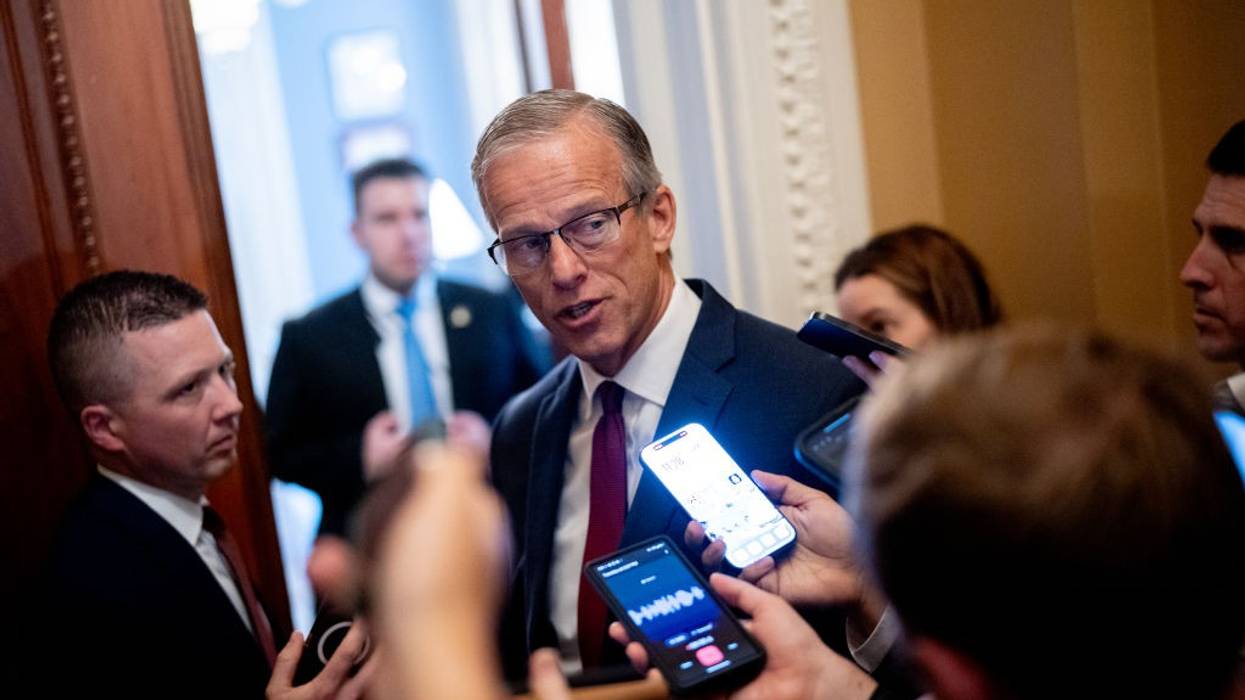
"If you're trying to ram through nominees without Senate and public scrutiny, it's a pretty good guess that you have something to hide."
Dozens of civil rights and pro-democracy organizations teamed up Wednesday to express opposition to President-elect Donald Trump's push to use recess appointments to evade the Senate confirmation process for his political nominees, many of which have
glaring conflicts of interest.
The 70 groups—including People For the American Way, Public Citizen, the Constitutional Accountability Center, and the NAACP—sent a letter to U.S. senators arguing that Senate confirmation procedures provide "crucial data" that helps lawmakers and the public "evaluate nominees' fitness for the important positions to which they are nominated."
"The framers of the Constitution included the requirement of Senate 'Advice and Consent' for high-ranking officers for a reason: The requirement can protect our freedom, just as the Bill of Rights does, by providing an indispensable check on presidential power," reads the new letter. "None of that would happen with recess appointments. The American people would be kept in the dark."
Since his victory in last month's election, Trump has publicly expressed his desire to bypass the often time-consuming Senate confirmation process via recess appointments, which are allowed under the Constitution and have been used in the past by presidents of both parties. The need for Senate confirmation is already proving to be a significant obstacle for the incoming administration: Trump's first attorney general nominee, Matt Gaetz, withdrew amid seemingly insurmountable Senate opposition, and Pentagon nominee Pete Hegseth appears to be on the ropes.
"Giving in to the president-elect's demand for recess appointments under the current circumstances would dramatically depart from how important positions have always been filled at the start of an administration," the groups wrote in their letter. "The confirmation process gathers important information that helps ensure that nominees who will be dangerous or ineffective for the American people are not confirmed and given great power, and that those who are confirmed meet at least a minimum standard of acceptability."
"The American people deserve full vetting of every person selected to serve in our nation's highest offices, and Trump's nominees are no exception."
Scholars argue recess appointments were intended as a way for presidents to appoint officials to key posts under unusual circumstances, not as an exploit for presidents whose nominees run up against significant opposition.
The Senate could prevent recess appointments by refusing to officially go on recess and making use of pro forma sessions, but incoming Senate Majority Leader John Thune (R-S.D.) has said that "we have to have all the options on the table" to push through Trump's nominees.
"We are not going to allow the Democrats to thwart the will of the American people in giving President Trump the people that he wants in those positions to implement his agenda," Thune said last month.
Trump has also previously threatened to invoke a never-before-used provision of the Constitution that he claims would allow him to force both chambers of Congress to adjourn, paving the way for recess appointments.
Conservative scholar Edward Whelan, a distinguished senior fellow of the Ethics and Public Policy Center, denounced that proposed route as a "cockamamie scheme" that would mean "eviscerating the Senate's advice-and-consent role."
Svante Myrick, president of People For the American Way, said in a statement Wednesday that "if you're trying to ram through nominees without Senate and public scrutiny, it's a pretty good guess that you have something to hide."
"The American people deserve full vetting of every person selected to serve in our nation's highest offices," said Myrick, "and Trump's nominees are no exception."
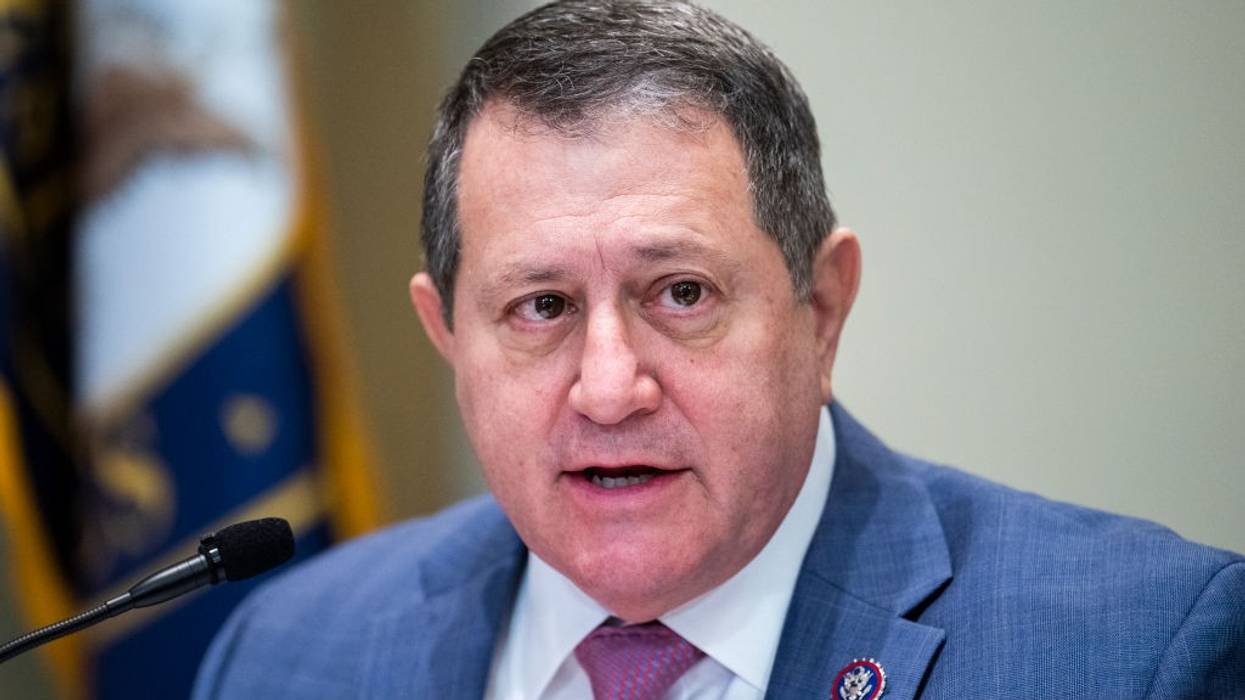
"It is incumbent upon Congress to fix this problem, and with his proposed constitutional amendment, Rep. Joseph Morelle is taking the first step," said the head of one group backing the effort.
The top Democrat of the Committee on House Administration on Wednesday proposed an amendment to the U.S. Constitution that would reverse the Supreme Court's recent decision to grant presidents "absolute immunity" from criminal prosecution for "official acts."
Led by Chief Justice John Roberts, the court's right-wing members ruled in favor of former President Donald Trump, the GOP nominee for the November election, triggering a wave of warnings, including from liberal Justice Sonia Sotomayor, who wrote in her early July dissent that "the president is now a king above the law."
Congressman Joe Morelle (D-N.Y.) is leading the fight for an amendment to reverse that ruling. He said in a statement that the high court "undermined not just the foundation of our constitutional government, but the foundation of our democracy."
"At its core, our nation relies on the principle that no American stands above another in the eyes of the law," he continued. "I introduced this constitutional amendment to correct a grave error of this Supreme Court and protect our democracy by ensuring no president is ever above the law. The American people expect their leaders to be held to the same standards we hold for any member of our community. Presidents are not monarchy, they are not tyrants, and shall not be immune."
Morelle proposed an amendment that would make clear "there is no immunity from criminal prosecution for an act on the grounds that such act was within the constitutional authority or official duties of an individual," and presidents may not pardon themselves.
"The Roberts Court, in a fit of neomonarchical enthusiasm for Donald Trump, has tried to lay out the red carpet for a lawless autocratic president."
The effort is backed by over 40 other House Democrats, including Rep. Jamie Raskin of Maryland, a constitutional law scholar.
"We must do everything in our power to reverse the Supreme Court's outrageous betrayal of more than two centuries of constitutional law in America," said Raskin. "Nothing has been more sacred to American constitutional jurisprudence than the idea that no one is above the law, but the Roberts Court, in a fit of neomonarchical enthusiasm for Donald Trump, has tried to lay out the red carpet for a lawless autocratic president."
"We should do everything we can in a statutory way to repair the damage," he argued, "but ultimately, this will require some kind of constitutional amendment to block a fundamental change in American constitutional and political culture."
Advocacy groups are also supporting Morelle's proposal and highlighting what the recent ruling could mean for the future.
"The Supreme Court's decision in Trump v. United States has imposed serious obstacles to holding Trump accountable for his role in the violence on January 6 and the attempt to stop the peaceful transfer of power," said Public Citizen co-president Lisa Gilbert. "As Justice Sotomayor wrote in her dissent, under the holding of Trump v. United States, a president could order the assassination of a rival, take a bribe for pardons, or order a military coup and—in each case—be immune from criminal liability."
"It is incumbent upon Congress to fix this problem, and with his proposed constitutional amendment, Rep. Joseph Morelle is taking the first step to right an obvious constitutional wrong," she continued. "By design, it's not easy to pass a constitutional amendment. But it can be done—and in this case, it must be done. Public Citizen strongly supports this amendment, and along with our allies in the Not Above the Law coalition are committed to ensuring its passage, to restore presidential accountability and basic democratic norms."
People for the American Way president and CEO Svante Myrick stressed that "big problems need big solutions, and the Supreme Court's ruling granting presidents unprecedented immunity is a big problem. Not just now, in the specific case involving Donald Trump, but in countless foreseeable and unforeseeable ways in the future."
"Our democracy is built on the principle that nobody is above the law," he added. "People For the American Way is proud to support this proposed amendment to strengthen and shore up that principle at this critical moment in our history."
Common Cause has also endorsed the effort. Virginia Kase Solomón, the group's president and CEO, called the court's decision "dangerous" and a departure from "what the framers intended."
"We thank Congressman Morelle for his leadership to uphold the rule of law and ensure accountability for all Americans, and we urge Congress to quickly pass this constitutional amendment," she said.
In the United States, constitutional amendments may be proposed either by Congress with two-thirds majority support in both chambers or by a constitutional convention called for by two-thirds of the state legislatures.
Although Morelle's proposal lacks the support it would need to get through Congress, it sends a clear signal to voters going into the November election, when control of both chambers is up for grabs and the American people will likely get to choose between Trump and Vice President Kamala Harris, the presumptive Democratic nominee.
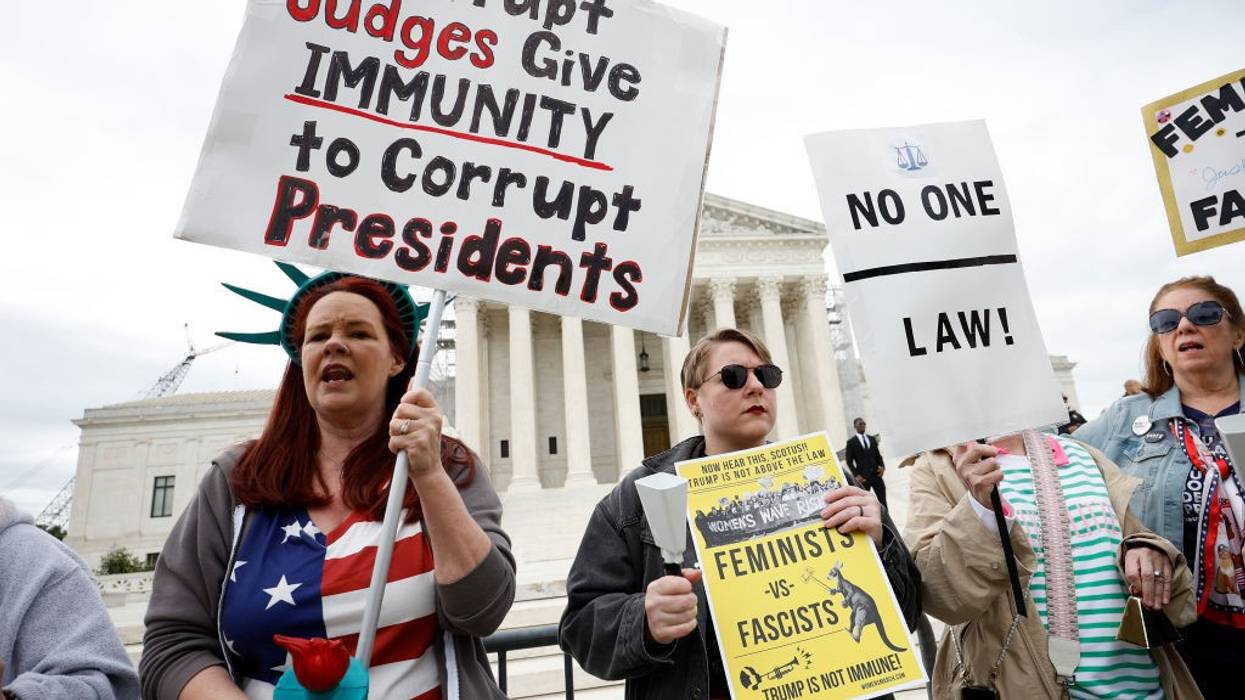
"It'd be a travesty for justices to delay matters further," said one legal expert.
After about three hours of oral arguments Thursday on former President Donald Trump's immunity claims, legal experts and democracy defenders urged the U.S. Supreme Court to rule swiftly, with just over six months until the November election.
Trump—the presumptive Republican candidate to challenge Democratic President Joe Biden, despite his 88 felony charges in four ongoing criminal cases—is arguing that presidential immunity should protect him from federal charges for trying to overturn his 2020 loss to Biden, which culminated in the January 6, 2021 insurrection at the U.S. Capitol.
Justices across the ideological spectrum didn't seem inclined to support Trump's broad immunity claims—which critics have said "reflect a misreading of constitutional text and history as well as this court's precedent." However, Citizens for Responsibility and Ethics in Washington (CREW) shared examples of what it would mean if they did.
"Trump could sell pardons, ambassadorships, and other official benefits to his wealthy donors, members of his clubs, or cronies who helped him commit other crimes," CREW warned. "Trump could sell nuclear codes and government secrets to help pay back crippling debts."
"But this isn't just about what Donald Trump could do. It's really about how total immunity for the president would threaten our democratic system of checks and balances," the group continued. "The president could order the military to assassinate activists, political opponents, members of Congress, or even Supreme Court justices, so long as he claimed it related to some official act."
After warning that a president could also order the occupation or closure of the Capitol or high court to prevent actions against him, CREW concluded that "the Supreme Court never should have taken this appeal up in the first place. They should rule quickly and shut these ludicrous claims down for good."
The organization was far from alone in demanding a quick decision from the nation's highest court.
"In the name of accountability, the court must not delay its decision," the Brennan Center for Justice said Thursday evening. "The Supreme Court's time is up. It needs to let the prosecution move forward. The court decided Bush v. Gore in three days—it should act with similar alacrity in deciding Trump v. U.S."
In Bush v. Gore, the case that decided the 2000 election, the high court issued a related stay on December 9, heard oral arguments on December 11, and issued a final decision on December 12.
On Thursday, the arguments "got away from the central question: Is a former president immune from criminal prosecution if he tried to overthrow a presidential election, using private means and the power of his office to do so?" the Brennan Center noted. "The answer is simple: No."
"It is not an 'official act' to try to overthrow the peaceful transfer of power or the Constitution, even if you conspire with other government officials to do it or use the Oval Office phone," the center said. "Trump's attorney was pushing the court to come up with a sea change in the law. That's unnecessary and a delay tactic that will hurt the pursuit of justice in this case."
In a departure from previous claims, Trump's attorney, D. John Sauer, "appeared to agree with Special Counsel Jack Smith, who is leading the prosecution, that there are some allegations in the indictment that do not involve 'official acts' of the president," NBC News reported, noting questions from liberal Justice Elena Kagan and conservative Justice Amy Coney Barrett, a Trump appointee.
Barrett summarized various allegations from the indictment and in three cases—involving dishonest election claims, false allegations of fraud, and fake electors—Sauer conceded that Trump's alleged conduct sounded private, suggesting that a more narrow case against the ex-president that excluded any potential official acts could proceed.
According to NBC:
Matthew Seligman, a lawyer and a fellow at the Constitutional Law Center at Stanford Law School who filed a brief backing prosecutors, said Sauer's concessions highlight that Trump is "not immune for the vast majority of the conduct alleged in the indictment."
Ultimately, he said, the case will go to trial "absent some external intervention—like Trump ordering [the Justice Department] to drop the charges" after having won the election.
At the same time, Sauer's backtracking might have little consequence from an electoral perspective. Further delay in a trial, which Sauer is close to achieving, is a form of victory in itself.
Slate's Mark Joseph Stern pointed out that when Barrett similarly questioned Michael Dreeben, the U.S. Department of Justice lawyer arguing the case for Smith, it seemed like they "were trying to work out some compromise wherein the trial court could distinguish between official and unofficial acts, then instruct the jury not to impose criminal liability on the former."
"It was fascinating to watch Barrett nodding along as Dreeben pitched a compromise that would largely preserve Smith's January 6 prosecution but limit what the jury could hear, or at least consider," Stern added. "That, though, would take months to suss out in the trial court. More delays!"
Stern and other experts signaled that the decision likely comes down to Barrett and Chief Justice John Roberts, with the three liberals seemingly supporting the prosecution of Trump and the other four conservatives suggesting it is unconstitutional.
People for the American Way president Svante Myrick said in a statement that "today's argument brought both good and bad news. It was chilling to hear Donald Trump's lawyer say that staging a military coup could be considered part of a president's official duties."
"Thankfully, the majority of the court, including conservative justices, did not seem to buy that very broad Trump argument that a former president is absolutely immune from prosecution under any circumstances," Myrick added. "On the other hand, it's not clear that there is a majority on this court that will quickly reject the immunity arguments and let the case go forward in time for a trial before the election. That's a huge concern."
Trump was not at the Supreme Court on Thursday; he was at his trial in New York, where he faces 34 counts for allegedly falsifying business records related to hush money payments to cover up sex scandals during the 2016 election cycle. The are two other cases: a federal one for mishandling classified material and another in Georgia for interfering with the last presidential contest.
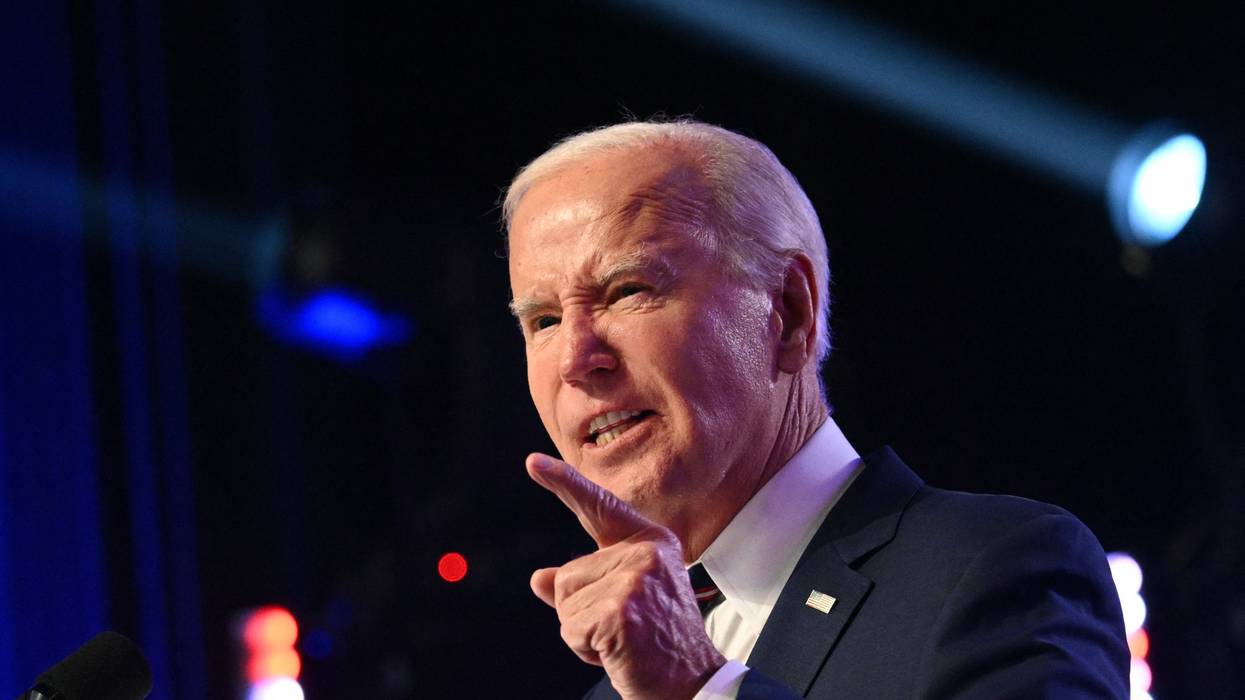
"The guy who claims law and order stands for lawlessness and disorder," said the Democratic president in speech ahead of third anniversary of January 6 insurrection. "Trump's not concerned about your future, I promise you."
Noting that the violent insurrection that engulfed the U.S. Capitol on January 6, 2021 was "not the beginning of a fight and neither was it the end of a fight" for U.S. democracy, civil society leaders and progressive lawmakers on Friday marked the third anniversary of the attack Friday by outlining the threat posed by right-wing extremists and why former President Donald Trump must once again be defeated.
The event was held shortly before President Joe Biden gave his first major national address of 2024 near Valley Forge, Pennsylvania, asking American voters whether democracy is still "America's sacred cause."
Three years after the insurrection, said Biden, that question "is what the 2024 election is all about.”
On Capitol Hill, joined by Reps. Jamie Raskin (D-Md.), Glenn Ivey (D-Md.), and Eleanor Holmes Norton (D-D.C.), advocates applauded the extent to which participants in the insurrection have been held to account, with more than 700 people convicted or pleading guilty to crimes ranging from misdemeanors such as trespassing and illegal picketing, to seditious conspiracy—a felony.
For his part, Trump has pleaded not guilty to charges related to his alleged criminal efforts to stop the peaceful transfer of power leading up to the attack, in which his supporters—some of them armed—marched to the Capitol and breached the building, sending U.S. House members into hiding when they had been assembled to certify Biden's election victory.
The U.S. Supreme Court is expected to hear arguments soon regarding Trump's potential removal from 2024 election ballots, while a federal appeals court is scheduled next week to take up Trump's attempt to have his charged dismissed, based on his claim of presidential immunity.
"The good news is that our system of justice is working," said Lisa Gilbert, executive vice president of the consumer advocacy group Public Citizen. "Donald Trump is in the midst of being held accountable for his crimes in the courts. The more stressful news is that it is 2024, so we are now less than a year out from the next presidential election. And reasonable people are justifiably worried about whether the will of the American people will actually prevail."
While the courts are gradually holding some people responsible for January 6 to account, those at the Capitol Hill press event pointed out how Republican lawmakers across the country followed the insurrection with efforts to make voting less accessible and spreading false conspiracy theories about nonexistent levels of election fraud.
Meanwhile, Biden emphasized in his speech, Trump has made clear in his campaign, which the former president opened with a video of the insurrection, that his "assault on democracy isn't just part of his past—it's what he’s promising for the future. He's been straightforward. He's not hiding the ball."
"The guy who claims law and order stands for lawlessness and disorder," he added. "Trump's not concerned about your future, I promise you. Trump is now promising a full scale campaign of revenge and retribution, his words, for some years to come."
The U.S. Justice Department said in August that more than a dozen people have been charged so far with sending death threats to election workers since the Biden administration opened a task force to confront such threats. In 2021, a Reuters analysis found that Trump supporters, inspired by the former president's "Big Lie" that the 2020 election was stolen, had sent threats to more than 100 poll workers.
"The Big Lie continues to this day," said Dustin Czarny, elections commissioner of the Onondaga County Board of Elections in New York, on Capitol Hill on Friday. "It resulted in decreased resources for Boards of Elections to do their job. I'm hopeful that we could see legislation in this next year in the states and in the federal government and resources directed, so that those boards of elections can do their job in a safe and accurate manner and deliver the voice of the American people to the ballot box and give them their choice in this election.”
Svante Myrick, president of People for the American Way, noted that advocates have "turned back hundreds of state [voter suppression] bills, but 56 of them have gotten through—12 in the last year alone have gotten through, pushed by far-right extremists to restrict people's right to vote."
"On January 6, I watched and it occurred to me that there are forces in this country that, left unchecked, could unravel everything that we've built," said Myrick at the press conference. "If we fight through this year, in 2024 we can keep safe everything we hold dear, because our democracy is not an abstract thing. Our democracy is the key to keeping us all safe."
Christina Harvey, executive director of Stand Up America, warned in a statement that a mass mobilization is needed to ensure Trump does not win a second term in 2024, which he is "desperately seeking... in the hopes of avoiding accountability for his crimes."
"If Trump is reelected, he and other MAGA Republicans are already plotting schemes to pardon themselves, exact revenge on their enemies, and further undermine our democracy, rather than focusing on the needs of everyday Americans," said Harvey. "The presidency isn't a 'get out of jail free' card, and over the next year, the Stand Up America community will be mobilizing to ensure that Trump is held accountable in the court of law and at the ballot box."
Part of the necessary work ahead of the 2024 election, said Gilbert, will be focused on pushing for the passage of far-reaching federal voting rights legislation.
"The truth of the matter is that in the three years since the insurrection, we actually have not done enough to protect our democracy," said Gilbert. "We need real concrete action to fix that. We need to adequately fund our elections, we need to protect our poll workers and election workers on the ground. We need to fight against mis- and disinformation, including the new threat of artificial intelligence generated as misinformation. We need to continue to hold accountable the perpetrators of the big lie... And of course we need to pass all of this as legislation."
"That comes in the form of the Freedom to Vote Act and the John R. Lewis Voting Rights Advancement Act," she said. "Together we can all make sure that we don't repeat these mistakes, and that we have a robust democracy that is blacked up by the confidence of the American people."
In his speech, Biden warned that Trump has again refused to commit to respecting the results of the 2024 election.
"America, as we began this election year, we must be clear: Democracy is on the ballot," said the president. "Your freedom is on the ballot. Yes, we’ll be voting on many issues and the freedom to vote and have your vote counted. The freedom of choice. Freedom to have a fair shot. A freedom from fear. We will debate, disagree. Without democracy, no progress is possible."
"Think about it," he added. "The alternative to democracy is dictatorship."
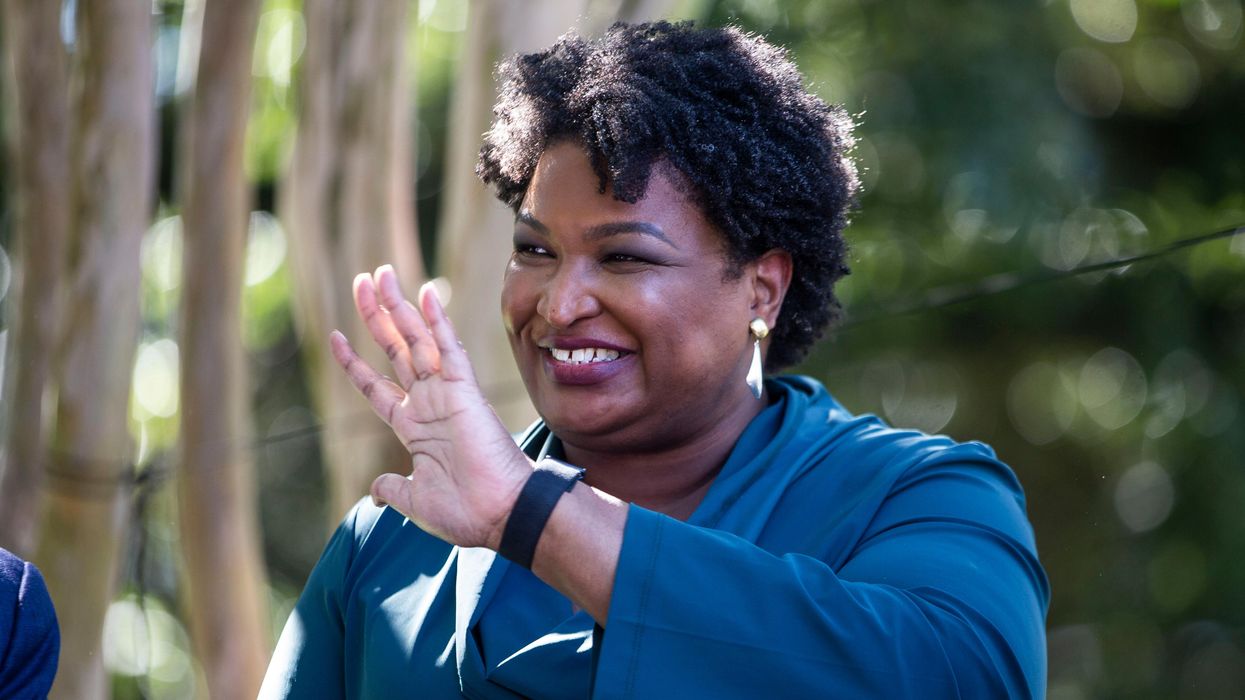
Declaring that "opportunity in our state shouldn't be determined by zip code, background, or access to power," attorney, author, and voting rights campaigner Stacey Abrams announced Wednesday that she would once again seek the Democratic nomination for Georgia governor, setting up a rematch with Republican Gov. Brian Kemp in the November 2022 contest.
"Abrams already came well within striking distance of Brian Kemp in 2018--before she mobilized millions of Democrats to flip Georgia blue in 2020."
"If our Georgia is going to move to its next and greatest chapter, we're going to need leadership," Abrams said in her announcement video. "Leadership that knows how to do the job, leadership that doesn't take credit without taking responsibility, leadership that understands the true pain folks are feeling and has real plans."
"That's the job of governor, to fight for one Georgia--our Georgia," she added. "And now, it's time to get the job done."
Abrams, who served a decade in the Georgia House of Representatives, was the first Black female nominated for a major party's gubernatorial candidacy in U.S. history. She narrowly lost the 2018 Georgia governor's race to Kemp amid widespread evidence of GOP voter suppression efforts.
Democratic Governors Association executive director Noam Lee called Abrams "a powerhouse leader who has spent her life fighting for equal opportunity for all Georgians."
"With a historic campaign built on expanding access to healthcare and creating good-quality jobs, Abrams already came well within striking distance of Brian Kemp in 2018--before she mobilized millions of Democrats to flip Georgia blue in 2020," Lee told The Washington Post. "Now more than ever, it's clear Brian Kemp's days as governor are numbered."
While there was much talk of a 2020 presidential run for Abrams, she instead chose to focus on boosting voter turnout to help ensure that Georgia played a critical role in electing President Joe Biden and that the U.S. Senate passed from Republican to Democratic control with the election of Jon Ossoff and Raphael Warnock in January.
In addition to her pro-democracy work, Abrams has drawn widespread praise for paying down over $1.3 million in medical debt via her Fair Fight political action committee.
"Stacey Abrams' decision to run for governor of Georgia in 2022 is great news for the people of her state and for America."
The trouncing suffered by GOP candidates in the November 2020 and January 2021 elections motivated Georgia Republicans to pass one of the nation's most sweeping voter suppression laws, as well as to gerrymander the state's congressional districts to heavily favor the right-wing party.
While Abrams--a self-described "pragmatic" politician--has been criticized by some progressives for being too closely aligned with the corporate right wing of the Democratic Party, at least one progressive advocacy group has already endorsed her candidacy.
"Stacey Abrams' decision to run for governor of Georgia in 2022 is great news for the people of her state and for America," Ben Jealous, president of People for the American Way, said in a statement.
"Stacey has been a leader and a fighter for justice and civil rights throughout the decades I have known her," he added. "She is a person of profound integrity, empathy, courage, and intellect who as governor will work tirelessly to ensure all Georgians have access to the opportunity to succeed and to live healthy and fulfilling lives."

Confirming fears progressive critics shared ahead of the confirmations of all three U.S. Supreme Court Justices appointed by former President Donald Trump, an analysis published Friday details the devastating impact of having a GOP supermajority on the nation's highest court.
"The harmful rulings coming out of this court make it critical that Congress pass legislation to protect voting rights and shore up our democracy."
--Ben Jealous, PFAW
"The 2020-2021 term that just ended shows that our rights are not safe at the Supreme Court, and that we must work to change the makeup of the court," warns the progressive advocacy group People For the American Way (PFAW) in its latest annual report.
This is the first term that includes Justice Amy Coney Barrett, who Trump appointed after the death of Justice Ruth Bader Ginsburg last year. The other two Trump appointees are Justices Brett Kavanaugh and Neil Gorsuch.
"This Supreme Court is dominated by Trump-appointed justices, with predictably disastrous results for voting rights as well as workers, consumers, and immigrants this term," said PFAW president Ben Jealous in a statement Friday.
"The harmful rulings coming out of this court make it critical that Congress pass legislation to protect voting rights and shore up our democracy," Jealous added. "We also have to build a strategy to reinforce the importance of fair courts and fair-minded judges, so we can counter the decadeslong efforts by the far right to pack our courts, including our Supreme Court, with ultraconservative judges."
PFAW's analysis came just a day after a pair of 6-3 SCOTUS rulings on Arizona's voting restrictions and California's dark money disclosure rules that led Senate Majority Chuck Schumer (D-N.Y.) to dub Thursday "one of the darkest days in all of the Supreme Court's history."
As Paul Gordon, PFAW senior legislative counsel and the main author of the report, put it: "This Supreme Court term wrapped up with a one-two punch to voting rights and our democracy."
Those cases--Brnovich v. Democratic National Committee and Americans for Prosperity Foundation v. Bonta--are just two of several that PFAW highlights as examples of the six right-wing justices harming the American public and democracy.
According to PFAW:
In this term, the court in some cases bypassed controversial issues and reached surprising compromises. For instance, the justices avoided ruling on the merits of the challenge to the Affordable Care Act, and they issued a narrow ruling in a case that had threatened to let religious liberty be used as a license to discriminate against LGBTQ+ people.
Yet in other cases, the ultraconservatives are clearly taking full advantage of their ill-gained majority. They have continued to abet Republican efforts to make it harder for popular majorities to vote them out of office through free and fair elections; let racial injustice fester in the criminal justice system; continued to give special rights to religious organizations far beyond what the Constitution contemplates; made life harder for undocumented immigrants trying to exercise their legal rights; advanced their agenda to weaken Congress and undo the New Deal; and reinterpreted the Constitution to give corporations a new weapon to neutralize ordinary health and safety regulations.
The report's criminal justice section points out that in Edwards v. Vannoy, "the far-right justices made it easier for states to keep people in prison even when the procedures used to convict them are later deemed unconstitutional."
The 6-3 right-wing majority also "abandoned two recent precedents that protected minors from unconstitutionally excessive prison sentences" in Jones v. Mississippi.
In Johnson v. Guzman Chavez, Barrett, Gorsuch, and Kavanaugh "cast deciding votes in a 6-3 decision to reverse a lower court and ruled that the government can indefinitely detain refugees, who are seeking through sometimes lengthy proceedings to avoid being returned to their home countries because of a reasonable fear of torture or persecution, without even a bond hearing."
The trio of Trump justices also "cast deciding votes to invalidate part of a congressional law that provides for the appointment of independent patent judges in cases concerning the reconsideration of patents." That case, United States v. Arthrex, was a 5-4 split.
TransUnion LLC v. Ramirez was another 5-4 decision enabled by the Trump justices. The court's majority "made it much harder for victims of corporate malfeasance to use class action lawsuits to hold companies accountable when they violate the rights of vast numbers of people."
That's not the only recent ruling favoring corporate interests. PFAW notes that in Cedar Point v. Hassid, "the far-right majority made possible by the Trump justices expanded the meaning of the Takings Clause in a way that limits organized labor in this particular case, and that threatens any number of government protections that affect monied interests."
"The court's rightward tilt is very pronounced and raises serious concerns about risks to our rights."
--Paul Gordon, PFAW
The analysis concludes by looking ahead to the next term, warning about the potential impact of the six right-wing justices weighing in on abortion restrictions, gun violence, and constitutional rights for Puerto Ricans. The court has already agreed to hear cases on all three.
"While there were some bright spots, including the failure of the right once again to destroy the Affordable Care Act," said Gordon, reflecting on the term that just ended, "the court's rightward tilt is very pronounced and raises serious concerns about risks to our rights."
"We believe that as Republican-appointed justices and judges do more and more harm to people and to the country, the long-term movement to improve our courts will only get stronger," the report author added.
One proposal is to expand the court. Sen. Ed Markey (D-Mass.) joined with Reps. Jerry Nadler (D-N.Y.), Hank Johnson (D-Ga.), and Mondaire Jones (D-N.Y.) earlier this year to introduce the Judiciary Act of 2021, which would increase the number of justices from nine to 13.
"We must pass my Judiciary Act of 2021 to expand the Supreme Court and restore balance to our top court," Markey said Thursday. "If we fail to do so, it is a near-certainty that the court's conservative majority will continue to rule in favor of the far-right interests of those that orchestrated the theft of these seats."

Following the "hot mess" that was the first presidential debate on Tuesday night--which sparked a promise of reforms for future events and charges that Donald Trump is the "most dangerous" president in U.S. history--a new report took aim at the efforts of right-wing groups, along with Trump and the GOP, to suppress voting.
"Tens of millions of dollars are being spent, which makes the efforts this year the biggest coordinated effort to suppress votes that we have ever seen."
--Adele Stan, Right Wing Watch
Even before early in-person and mail-in voting started for the November general election, Trump--who is facing Democratic presidential nominee Joe Biden--generated alarm with repeated, baseless attacks on the security of voting by mail, a practice that's expected to be widely used nationwide this year because of the Covid-19 pandemic.
The new report by writer Bob Moser, entitled The Propaganda War Against Voting by Mail, was published Wednesday by Right Wing Watch, a project of the progressive advocacy organization People For the American Way (PFAW). Moser begins by recalling the politicized battle over in-person voting for Wisconsin's April primary.
Wisconsin's right-wing state Supreme Court and Republican legislative leaders quashed last-minute efforts of Democratic Gov. Tony Evers to address public health concerns related to in-person voting. The fiasco bolstered nationwide calls for Congress to allocate $4 billion to make safety adjustments for the November election.
As Moser details:
The threat of robust turnout figures posed by mail-in voting had fully stirred the right-wing propaganda machine by now--and it had given them a fresh new story to tell about what they claimed was the looming threat of mass left-wing "voter fraud." The same day Wisconsin's primary results were announced, an apparently new group called the Honest Elections Project aired an Orwellian TV and digital ad across the country--a six-figure buy--casting what happened in Wisconsin as Democrats' "brazen attempt to manipulate the election system for partisan advantage by exploiting the coronavirus pandemic." It was, the narrator intoned, a sign of election-rigging to come: "The facts about the Wisconsin election: Record absentee voting. Five times more than 2016. Democrats didn't think they could win so they tried lawsuits, changing the rules, even canceling the election. They create chaos. It's wrong."
The Honest Elections Project turned out to be a legal alias for the Judicial Education Project, a powerful dark-money PAC funded by the Donors Trust, a nonprofit donor-advised fund often referred to as the "dark money ATM" of the right, with such heavy-hitting benefactors as billionaire Charles Koch and the (Betsy) DeVos family. It was the brainchild of Leonard Leo, a Trump confidant who was instrumental in the choice and confirmations of the president's Supreme Court nominees, and it would soon begin filing lawsuits seeking to block the expansion of remote voting, and other pandemic-inspired election reforms--using the same lead attorney, longtime Washington litigator William Consovoy, as the Trump campaign.
At least three other lavishly funded far-right groups--Judicial Watch, the Public Interest Legal Foundation, and True the Vote--are also combining legal challenges with propaganda efforts designed to discredit, and disable, remote voting for November. The Republican National Committee issued a statement this spring promising to devote at least $20 million to such lawsuits as well. The messages they're all promoting are identical to Trump's rhetoric about the dangers of mail-in balloting and the Democrats' purportedly cynical promotion of it to allegedly rig the election. Their combined resources and firepower add up to the biggest coordinated effort to suppress votes in history. Until this year, battles over voting rules were mostly waged by Republican state lawmakers and right-wing legal firms not quite acceptable to the mainstream, cheered on by talk-radio shouters and extremist websites like The Gateway Pundit and Breitbart.
While state and local officials have worked in recent months to ease voting restrictions going into November because of the coronavirus crisis, Moser points out that "the crusade to suppress votes in the 2020 election began long before Covid-19 existed, and long before the pandemic led to a popular clamor for more voting by mail."
"Ahead of the 2018 midterm elections, Judicial Watch and PILF sent 248 letters to state and local election officials across the country, threatening lawsuits if they didn't undertake massive, aggressive 'purges' of their voter rolls," he notes. The "primary purpose" of the letters, he suggests, "was to stoke publicity about voter fraud."
According to Moser:
Most of this year's election lawsuits are related to Covid-19--or, more precisely, they target attempts by states and municipalities to make voting easier and safer during the pandemic. The number of these cases is staggering: More than 200 were still percolating through the courts in mid-August. Many have been brought by the Trump campaign, the Republican National Committee, Judicial Watch, PILF, and the Honest Elections Project, all of whom have the same agenda: Keep voting restrictions in place. Three more states have switched to all-mail elections this year: California, Nevada, and Vermont. When lawmakers in Nevada, where Trump lost by just 27,000 votes in 2016, approved all-mail voting in a special session on the first Sunday of August, Trump called it "an illegal late-night coup" on Twitter, with the promise, "See you in court!" Two days later, still fuming, he posted a tweet falsely stating that voting by mail would mean a "Rigged Election." It became the first tweet flagged by Twitter as untrue. The same day, the Republican National Committee, the Trump campaign, and Nevada Republican Party all filed suit against Nevada.
On Tuesday, while debating Biden, Trump stoked fears about "tens of thousands of ballots being manipulated" and urged his supporters "to go into the polls and watch very carefully." The president's comments--which contradict evidence about just how rare voter fraud actually is--alarmed election officials and voting rights experts.
"Everyday citizens can't just show up in the polling places unless they are there to vote. They can vote and they can leave, but they can't just be there to watch other peoples' votes," Sean Morales-Doyle, deputy director of the Election Reform Program at New York University's Brennan Center for Justice, told The Hill Wednesday. "It is concerning that the president would reference that kind of activity, and it is illegal."
" Donald Trump is making totally false claims that voting by mail will lead to a fraudulent election, while at the same time his campaign is promoting it to his supporters--and he's voting by mail himself," PFAW president Ben Jealous said in a statement about Moser's new report.
"Voters this spring received robo-calls from the Trump campaign urging them to vote safely by mail," Jealous added. "Trump is trying to have it both ways, and he's willing to do or say anything if he thinks it will either win the election or cast doubt on the results if he doesn't."
Right Wing Watch director Adele Stan noted, "An entire right-wing industry has grown up around voter suppression, and the attacks on voting by mail are just part of it."
"Tens of millions of dollars are being spent, which makes the efforts this year the biggest coordinated effort to suppress votes that we have ever seen," said Stan. "It's critically important that people understand the forces at work and also understand that this is not the year to skip voting."

The U.S. Supreme Court on Monday struck down a Consumer Financial Protection Bureau statute shielding the agency's director from being fired by the president without cause, a decision that critics warned threatens the bureau's ability to protect the public from corporate abuses without political interference.
The high court's conservative majority ruled that the CFPB provision requiring cause for the president to terminate the bureau's director gave the agency too much independence from the executive branch and was therefore unconstitutional. The court's decision severs the for-cause firing provision but leaves intact the rest of the agency, which was established in the wake of the 2008 financial crisis.
"Greedy banks, predatory lenders, and other financial scammers won't stop until the agency is fully dismantled."
--Jeremy Funk, Allied Progress
Sen. Elizabeth Warren (D-Mass.), one of the original architects of the CFPB, tweeted that the court's ruling hands "more power to Wall Street's army of lawyers and lobbyists to push out a director who fights for the American people."
"Even after today's ruling, the CFPB is still an independent agency," Warren said. "The director of that agency still works for the American people. Not Donald Trump. Not Congress. Not the banking industry. Nothing in the Supreme Court ruling changes that."
Jeremy Funk, spokesman for consumer watchdog group Allied Progress, said in a statement that the "CFPB's independence is what allowed it to be a powerful and effective advocate for consumers in the past, but the high court ruled that the agency should instead be guided by the political whims of the president."
"Greedy banks, predatory lenders, and other financial scammers won't stop until the agency is fully dismantled," said Funk.
The current director of the CFPB is Kathy Kraninger, a former White House budget official who President Donald Trump nominated in June of 2018 to replace then-Acting CFPB Director Mick Mulvaney, who has since left the White House.
"It goes without saying that the people who pay the highest price will be poor people and people of color."
-- Ben Jealous, People for the American Way
Mulvaney's appointment as acting chief of the CFPB was deeply controversial and--according to some consumer groups--illegal. Trump appointed Mulvaney to lead the CFPB in an acting capacity in 2017 after former director Richard Cordray resigned and attempted to name his deputy Leandra English as his replacement.
A Trump-appointed federal judge in November of 2017 rejected English's legal effort to stop Mulvaney from leading the agency.
Since being taken over by Trump appointees, the CFPB has repeatedly come under fire from advocacy groups for siding with corporate interests over consumers. The agency is currently finalizing a rule that watchdogs say could leave vulnerable people even more susceptible to the abuses of predatory lenders.
Ben Jealous, president of advocacy group People For the American Way, said in a statement that the Supreme Court's ruling Monday could tilt the CFPB even further in the direction of favoring corporate interests over consumers.
"The far-right has been trying for decades to do away with government protections for consumers so big corporations can run roughshod over all of us," Jealous said. "This ruling just gave them a serious leg up, and it goes without saying that the people who pay the highest price will be poor people and people of color."

Nearly 80 organizations on Monday unveiled a sweeping policy agenda intended to improve sexual and reproductive healthcare and rights.
"We can do more than fight back--it's time to move forward," women's rights group UltraViolet said in a tweet about the plan.
Entitled Blueprint for Sexual and Reproductive Health, Rights, and Justice (pdf), the over 100-page document represents a far-reaching vision. It notes that "sexual and reproductive health and rights are inextricably linked to economic justice, voting rights, immigrants' rights, LGBTQ liberation, disability justice, and the right to community safety and racial equity."
Those intertwined issues are reflected in the diversity of endorsing organizations, which include the Center for Reproductive Rights, the National LGBTQ Task Force, People for the American Way, and Sierra Club.
Recent moves, say the organizations, have made clear that the nation is on a "dangerous trajectory."
"The last two years," reads the document, "have seen increasingly hostile attacks on reproductive autonomy and rights, creating a palpable urgency for action that demands a proactive and transformative agenda"
It notes, for example, the fact that in "seventeen states, abortion is simply a theoretical right for many individuals, as laws and policies have made it virtually impossible for people to access safe and legal abortion."
With areas of concern encompassing the state, federal and global levels, the new agenda focuses on five principles. They are, as noted in the document:
Flushed out within those principles are a number of specific policy recommendations to advance sexual and reproductive health and rights. Among them are for states to expand their Medicaid programs; full federal funding of USAID HIV programs; ending the anti-choice Hyde, Helms, and Weldon Amendments; and terminating the so-called domestic and global gag rules.
Advancing reproductive rights and bodily autonomy, the blueprint explains, also includes policymakers supporting the decriminalization of self-managed abortion, both in the U.S. and globally, as well as supporting families' economic opportunities with policies including paid family and medical leave.
Adding to the recommendations are a call for authorities to treat detained immigrants with respect, and to take quick action on the climate crisis because people have the right to a healthy environment.
"This blueprint represents the future we want to live in where each individual has sexual and reproductive autonomy over their own body," the organizations say. "It provides a playbook on how to get there. And it is drafted with the expectation that it will be implemented as soon as we have a supportive Congress and Administration."
"That future is coming," they write, "and we are ready."

New Hampshire on Thursday became the 20th state in the U.S. to call for a constitutional amendment to allow limits on political spending.
The state Senate passed the measure in a 14 to 10 vote, following the lead of the state House, which approved the resolution on March 7.
The resolution, which aims to roll back the infamous Citizens United 2010 Supreme Court case that largely erased any limit on campaign spending, allows for legislators at the state and federal level to "regulate the role of money in elections and governance to ensure transparency, prevent corruption, and protect against the buying of access to or influence over representatives."
"No such regulation shall be deemed in violation of freedom of speech rights in the Constitution of the United States or its Amendments," the bill reads.
New Hampshire joins 19 other states and 803 localities in passing a resolution calling for restrictions in political spending--the total amount representing 46 percent of Americans, 141 million people, according to advocacy group United for the People.
Jeff Clements, the president of the anti-corruption advocacy group American Promise, said in a statement that Thursday's vote represented years of hard work.
"For years, Granite Staters have been working together across party lines, trying to get a constitutional amendment to renew the promise of equal citizenship and effective self-governance," Clements said. "The unflagging work of so many citizens has paid off."
Olivia Zink, executive director for Open Democracy NH, said that she was delighted to see the resolution pass.
"I am elated, that my state, New Hampshire, becomes the 20th state to call for constitutional amendment to address the role of money in our elections," said Zink.
Advocacy groups acknowledged there's still work to be done.
In a statement, People for the American Way executive vice president Marge Baker praised New Hampshire activists for their efforts to pass the bill.
"We applaud the thousands of activists, organizers, and other citizens who fought for years in New Hampshire for the idea that our democracy belongs to all of us, not just corporations and the very wealthy," said Baker. "Misguided Supreme Court decisions like Citizens United let wealthy special interests set the political agenda at the expense of ordinary Americans, but activists nationwide are fighting back with measures like H.B. 504."
Baker added she hoped the New Hampshire resolution would be a rallying cry for other state and federal lawmakers.
"We hope that others will be as encouraged as we are by what organizers and policymakers have accomplished today in New Hampshire and use this moment to redouble our efforts to take back our democracy and to pass the Democracy For All amendment," she said.
John Pudner, the executive director of Take Back Our Republic, said that the bipartisan approval for the amendment that his group sees across the country and in New Hampshire is a hopeful sign.
"A constitutional amendment is [in] everyone's best interests," said Pudner. "It's good for voters, it's good for candidates, and it's good for elected officials who want to be able to focus on their constituents rather than Big Money donors."