

SUBSCRIBE TO OUR FREE NEWSLETTER
Daily news & progressive opinion—funded by the people, not the corporations—delivered straight to your inbox.
5
#000000
#FFFFFF
To donate by check, phone, or other method, see our More Ways to Give page.
Daily news & progressive opinion—funded by the people, not the corporations—delivered straight to your inbox.

“This report is a ready-made roadmap for prosecutors, investigators, and members of Congress to finally start holding the Epstein class accountable," said Sen. Ron Wyden.
A yearslong Senate investigation released on Tuesday revealed how some of the world's largest banks allegedly broke federal money laundering laws by failing to stop or promptly report financial transactions that allegedly helped sustain the sex trafficking of children and young women by Jeffrey Epstein, the late billionaire and former friend of President Donald Trump.
Released by Senate Finance Committee Ranking Member Ron Wyden (D-Ore.), "Looking the Other Way" examines "how years of complicity by top officials at multiple Wall Street Banks enabled Jeffrey Epstein to transfer hundreds of millions of dollars around the world to finance his sex trafficking operation."
"Major compliance failures at several Wall Street banks enabled Epstein for years," the publication states. "By failing to report—or choosing not to report—his suspicious financial transactions to federal law enforcement, these banks allowed Epstein to send cash payments and wire transfers to his victims, friends, and collaborators around the world. The bankers who needed to be asking questions didn’t ask them. Jeffrey Epstein’s crimes were hiding in plain sight."
"The investigation found significant evidence that JPMorgan Chase (JPMC), Deutsche Bank, and Bank of America violated federal anti-money laundering laws by failing to screen and report Epstein’s suspicious financial transactions in a timely manner," the report continues.
"A review by Sen. Wyden’s staff of records housed at the US Department of the Treasury as well as internal bank records determined that top executives at major Wall Street banks were aware of Epstein’s suspicious financial activity for years but withheld information from the US government and protected Epstein from federal scrutiny," the publication says.
According to the report:
Wall Street banks looked the other way as Epstein withdrew millions of dollars in cash with no clear business purpose and was party to thousands of suspicious wire transfers worth more than $1 billion. These banks failed to conduct appropriate due diligence on more than $170 million in payments to Epstein from billionaire Leon Black. In fact, documents reviewed during this investigation demonstrate that JPMC’s senior leadership repeatedly protected Epstein as a client despite repeated warnings from internal compliance personnel.
The documents also show that even after JPMC formally terminated Epstein as a client due to human trafficking concerns, the bank still waited years to report his activity to regulators, and top bankers eagerly continued to work with him informally and through other channels where he could continue to be a source of referrals for other ultrawealthy clients.
The three banks were among four financial institutions from which House Judiciary Committee Ranking Member Jamie Raskin (D-Md.) last year demanded records concerning over $1.5 billion in “suspicious” financial transactions tied to Epstein’s trafficking ring.
“I said from the start that if you want to get to the bottom of the Jeffery Epstein cover-up, you had to follow the money," Wyden said Tuesday in a statement announcing the report's publication.
"My small team of investigators did what Trump’s attorney general and treasury secretary said was impossible: They connected the dots and found evidence of multiple crimes related to Epstein’s associates," the senator continued. "Bank records they reviewed, along with public court filings, detail a shocking pattern of the biggest Wall Street banks in the country choosing to ignore clear evidence of sex trafficking and money laundering, just to keep a wealthy client on the books."
"This report is a ready-made roadmap for prosecutors, investigators, and members of Congress to finally start holding the Epstein class accountable," Wyden added.
That's highly unlikely to happen under the current Republican-controlled Congress. Republicans spent years insisting the Epstein case exposed elite corruption, promising full transparency, and rallying behind Trump's 2024 reelection bid in part because he vowed to release every file.
Trump, former Attorney General Pam Bondi, FBI Director Kash Patel, and others promised transparency. Instead, the Trump administration has missed legal deadlines, released heavily redacted records, and withheld millions of pages in what critics say are violations of the bipartisan Epstein Files Transparency Act. Signed by the president last year, the law compelled the Department of Justice (DOJ) to publish all unclassified Epstein-related records within 30 days and explain every omission to Congress.
Acting US Attorney General Todd Blanche, Trump's former personal attorney, angered many Epstein victims and others by announcing that there was no evidence of a secret client list, by falsely claiming that the DOJ was fully complying with the law, and by meeting with Epstein’s co-conspirator Ghislaine Maxwell in prison shortly before she was suspiciously transferred to a lower-security prison.
The Senate Judiciary Committee voted 12–10 Tuesday along party lines to advance Blanche's nomination to become permanent attorney general, sending it to the full upper chamber for a confirmation vote expected later this week.
As the Trump administration fails to fully comply with the Epstein Files Transparency Act, its authors—Reps. Ro Khanna (D-Calif.) and Thomas Massie (R-Ky.)—recently proposed an updated version of the legislation, which strengthens the original by allowing state attorneys general, Epstein victims, members of Congress, and certain prosecutors to sue the DOJ if it fails to release required records.
The business-focused news site Bloomberg sought comment from the three banks. Deutsche Bank declined to respond, JPMC said it began notifying regulators “after the full scope of [Epstein's] crimes became public in 2019," and a spokesperson for Bank of America said that "we take our legal and regulatory responsibilities seriously and, as we have previously said, the bank did not facilitate wrongdoing.”
An attorney for Black told Bloomberg that the report's assertions “outrageous and false.”
Wyden's report came on the same day that The New Republic's Ellie Quinlan Houghtaling revealed that CBS' "60 Minutes" killed its own scoop on Wall Street's long-standing financial ties to Epstein after the network's incoming Trump-aligned boss, Bari Weiss, fired correspondent Sharyn Alfonsi, who led the investigative report. Alfonsi had interviewed Wyden for the segment.
Yep. Earlier this year I was interviewed by Sharyn Alfonsi of 60 Minutes about my Epstein investigation. Subsequently, CBS pulled the segment and fired the reporter. The MAGA buyout of media is aiding the Trump administration’s Epstein cover up.
[image or embed]
— Senator Ron Wyden (@wyden.senate.gov) August 4, 2026 at 7:17 AM
"Yep," Wyden said on Bluesky, confirming his interview with Alfonsi. "The MAGA buyout of media is aiding the Trump administration’s Epstein cover-up."
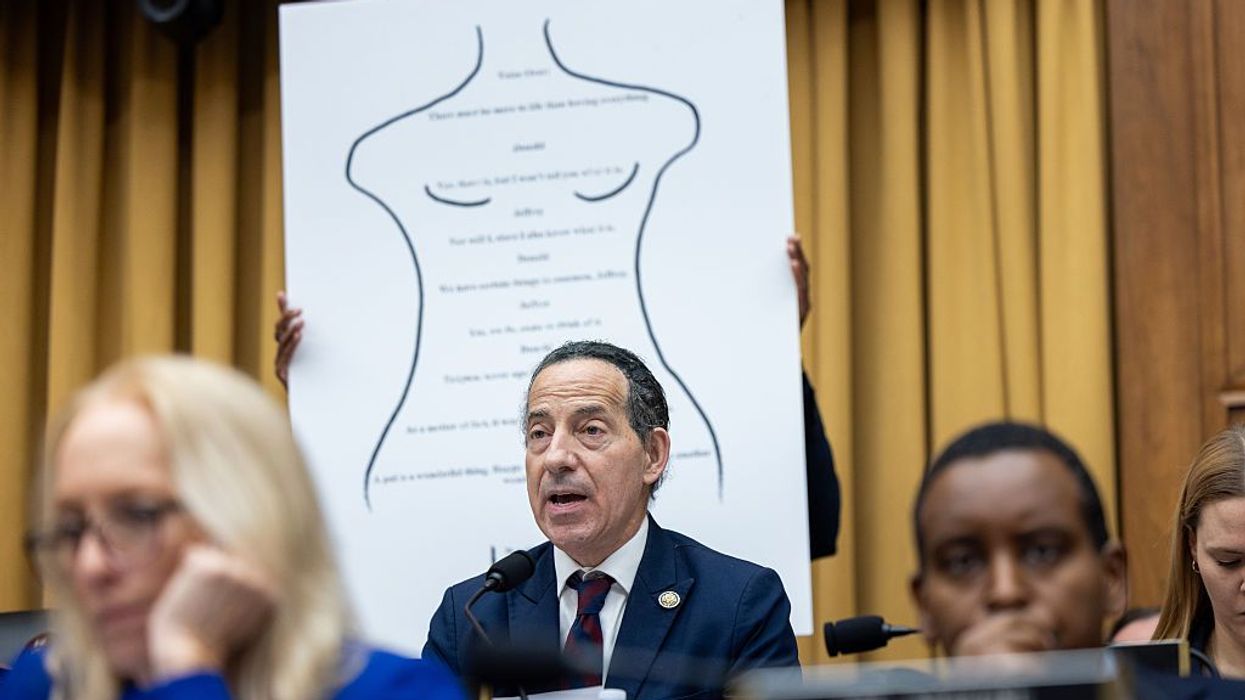
"Will your bank choose to be part of the cover-up for this massive, international sex trafficking ring that victimized more than 1,000 women and girls?"
US House Judiciary Committee Ranking Member Jamie Raskin on Wednesday sent letters to four major banks demanding records related to more than $1.5 billion in "suspicious" financial transactions tied to Jeffrey Epstein's sex trafficking ring.
"Can Bank of America help Congress understand how Jeffrey Epstein, Ghislaine Maxwell, and their co-conspirators were able to use your bank and others to conduct more than $1.5 billion in suspicious financial transactions to operate their international sex trafficking ring for years without ever being caught?" Raskin (D-Md.) wrote to the bank's CEO, Brian Moynihan.
The congressman began his letters to Bank of New York Mellon CEO Robin Vince, Deutsche Bank CEO Christian Sewing, and JPMorgan Chase CEO Jamie Dimon the same way.
Epstein, a financier and convicted sex offender, was found dead in a Manhattan jail cell in 2019 while facing federal charges for sex trafficking. His death was ruled a suicide, but that has been met with deep skepticism. Maxwell is currently serving a 20-year federal sentence for her related crimes.
The US Department of Justice has refused to release all of its files on Epstein, heightening public, media, and congressional attention on his friendship with President Donald Trump in the 1990s until their alleged falling out in the early 2000s.
"In September, at a hearing with the Federal Bureau of Investigation (FBI) Director Kash Patel, it became clear that the FBI has failed to 'follow the money' with regard to more than $1.5 billion in suspicious transactions related to Jeffrey Epstein's sex trafficking ring," Raskin wrote Wednesday.
"In light of this startling information, House Judiciary Committee Democrats moved to subpoena financial records related to Jeffrey Epstein from these four banks, but Republicans, with the exception of Rep. Thomas Massie (R-KY), blocked these efforts," he explained, urging the institutions to willingly work with the panel.
"For over 15 years, JPMorgan turned a blind eye to evidence of Jeffrey Epstein's child sex trafficking."
Under the Bank Secrecy Act, institutions must implement anti-money laundering policies, which include requiring compliance officers, often in consultation with executives, to file a suspicious activity report (SAR) within 60 days of noticing an activity that raises a red flag, "so federal authorities can be alerted to the potential criminal activity and investigate," the letters stress.
"Despite the public nature of Mr. Epstein's crimes, and the hundreds of millions of his funds flowing through your bank, it appears Bank of America filed only two significantly delayed SARs relating to his conduct—covering $170 million in transactions between Mr. Epstein and billionaire investor Leon Black," Raskin wrote to Moynihan.
The letter to Vince says that "while reports indicate that you filed SARs covering $378 million in payments to and from Mr. Epstein's accounts, these SARs were reportedly filed years after Mr. Epstein's death, well beyond when was statutorily required and when the opportunity to intervene and prevent his conduct had passed."
Raskin's letter to Dimon is particularly scathing, stating: "For over 15 years, JPMorgan turned a blind eye to evidence of Jeffrey Epstein's child sex trafficking. Senior executives at your bank helped Mr. Epstein open 134 accounts and processed over $1 billion in transactions for Mr. Epstein, including after his 2008 conviction for soliciting minors."
"Mr. Epstein had an extensive pattern of suspicious transactions with JPMorgan, including a $175,000 cash withdrawal in 2003 that was used to pay child victims, a series of enormous cash withdrawals totaling more than $1.7 million in 2004 and 2005, and a slew of requests for credit cards and bank accounts for teenagers and young women," he detailed.
Raskin continued:
Despite the flagrant nature of Mr. Epstein’s activities, JPMorgan did not file a single SAR during that time It was only after Mr. Epstein's death that JPMorgan retroactively conducted a review of Mr. Epstein's transactions and filed its first SARs, covering a staggering 4,700 transactions totaling $1.1 billion. Many of these SARs were filed over a decade later than statutorily required.
Documents further show that Mr. Epstein repeatedly communicated with the chief executive of the investment bank at JPMorgan, who alerted Mr. Epstein to the bank's sensitivity about his constant cash withdrawals, and offered him the opportunity to alter his tactics to avoid detection. The JPMorgan executive also repeatedly intervened to ensure that JPMorgan's compliance functions would not interfere with Mr. Epstein's activities. Even more disturbing, in 2010, after Mr. Epstein pleaded guilty to engaging in sex with a minor, the same JPMorgan executive visited Mr. Epstein's properties in New Mexico, New York, and the Caribbean.
In his letter to Sewing, Raskin pointed out that "in 2013, Mr. Epstein moved his financial accounts from JPMorgan to Deutsche Bank."
"Despite news reports indicating Mr. Epstein's serious crimes, Deutsche Bank appeared focused on the potential profitability of its relationship," he wrote. "Deutsche Bank memos advocating opening an account for Mr. Epstein emphasized how lucrative his business would be."
The congressman accused Deutsche Bank of failing to report a "stream of red flags," called out compliance officers for accepting Epstein and his lawyers' "farfetched answers that these transfers were for 'tuition' or 'rent' for Mr. Epstein's 'friends,'" and noted that his attorney "made 100 cash withdrawals totaling over $800,000 in four years, often in amounts just below the $10,000 federal reporting threshold."
"So, Mr. Sewing, we ask: Is Deutsche Bank willing to put its past behind it and help reveal the truth about Jeffrey Epstein, Ghislaine Maxwell, and their co-conspirators? Or will your bank choose to be part of the cover-up for this massive, international sex trafficking ring that victimized more than 1,000 women and girls?" he inquired, asking the same questions of the other CEOs.
Raskin also provided each bank with a list of specific requests for documents and information to send to the panel by October 22.
JPMorgan and Deutsche Bank have each paid hundreds of millions of dollars for claims related to Epstein. Asked about Raskin's letter, Deutsche Bank said in a statement to CNBC that it "takes its legal obligations seriously, including appropriately responding to authorized investigations and proceedings."
Bank of America and BNY Mellon did not respond to CNBC's requests for comment, while JPMorgan declined to comment.
The letters come as the federal government is shut down and House Speaker Mike Johnson (R-La.) has held off on swearing in Rep.-elect Adelita Grijalva (D-Ariz.), the key 218th signature on a discharge petition to force a vote on legislation that would require the Justice Department to release the Epstein files. Johnson claimed earlier this week that her position on the matter was not the reason for the delay, but many Democrats in Congress and other critics are not buying that.
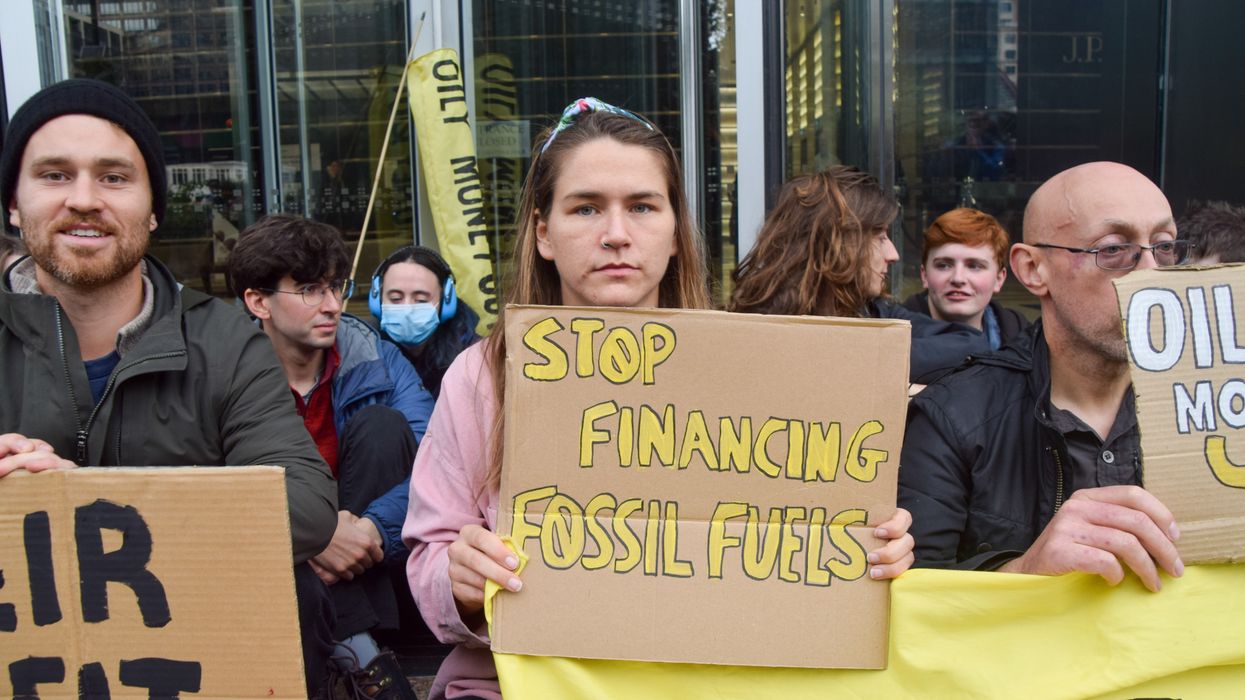
"The time for climate justice is now, and that means ending fossil fuel investment at its source and holding banks and financial institutions accountable," said one Native American environmental activist.
The 16th annual Banking on Climate Chaos report, which was released Tuesday, found that dozens of the world's biggest banks committed $869 billion to firms engaged in fossil fuels in 2024—a "tremendous" increase from the overall fossil fuel financing that was recorded the year prior, according to the authors of the study.
The report comes a few months after the World Meteorological Organization announced a new milestone in the climate crisis: Not only was 2024 the warmest year in a 175-year observational period, reaching a global surface temperature of roughly 1.55°C above the preindustrial average for the first time, but each of the past 10 years was also individually the 10 warmest on record.
The new report analyzed the globe's 65 largest banks by assets according to S&P Global's annual rankings and was authored by several climate-focused groups, including Rainforest Action Network (RAN), Sierra Club, Indigenous Environmental Network (IEN), and others.
The report has been endorsed by hundreds of organizations in dozens of countries, according to a statement from RAN, and all banks in the report were given the opportunity to review the financing attributed to them prior to the report's release.
Big picture, the report shows that Wall Street investment banks and other financial institutions are "complicit in the climate crisis," according to Tom BK Goldtooth, executive director of the Indigenous Environmental Network and study co-author.
"The time for climate justice is now, and that means ending fossil fuel investment at its source and holding banks and financial institutions accountable," Goldtooth added.
The bank financing compiled in the report includes things such as the role banks play in facilitating bond issuances or their lending of money, according to the methodology section. Banks play a crucial role in enabling fossil fuel production because, as senior research strategist at RAN Caleb Schwarz explained, fossil fuel companies are quite rich but they don't have enough capital to finance their projects solely on their own.
Fossil fuel financing had been in on the decline between 2021 and 2023, dropping by $215 billion during that time period to $707 billion—meaning the rise in 2024 is a turnaround of over $162 billion.
"This growth in fossil fuel finance is troubling because new fossil fuel infrastructure locks in more decades of fossil fuel dependence," according to the report. "While various macroeconomic and political factors likely influenced specific decisions, at the end of the day, what matters is the outcome: Banks poured even more money into the expansion of the fossil fuel industry, despite the clear societal need for them to do the opposite."
Other topline findings include that the 65 banks featured in the report have committed $7.9 trillion in fossil fuel financing since 2016, and over two-thirds of the banks upped their fossil fuel financing between 2023 and 2024.
The world's biggest offender when it comes to fossil fuel financing in 2024 was JPMorgan Chase, which tallied $53.5 billion in fossil fuel financing, per the report. Bank of America came in second place.
"This should be a wake-up call to national governments and regional supervisory bodies that they need to step in," said Allison Fajans-Turner, bank engagement and policy lead at RAN and one of the co-authors of the report, on Tuesday. "Banks are not policing themselves. Regulators need to set rules to manage the financial risk that banks are putting into the system."
The authors of the report lay out several demands for banks, including that they drop all finance for fossil fuel expansion, adopt "binding and mandatory emissions reduction targets for upstream, midstream, and downstream fossil fuels," and increase financing for a "just transition," among others.
Earlier this week, Bank of America and Citigroup also said they were leaving the Net-Zero Banking Alliance.
On Thursday, the Wall Street titan Morgan Stanley became the latest financial institution to leave the Net-Zero Banking Alliance, a United Nations-convened group of banks committed to "aligning their lending, investment, and capital markets activities with net-zero greenhouse gas emissions by 2050."
The defections keep piling up. Earlier this week, Bank of America and Citigroup said they were leaving the alliance, and earlier in December Goldman Sachs Group and Wells Fargo announced they were doing the same.
“We will continue to report on our progress as we work towards our 2030 interim financed-emissions targets,” Morgan Stanley told Bloomberg in an email.
While Morgan Stanley didn't offer an explanation for the exit, according to Reuters, financial firms have repeatedly found themselves in the crosshairs of some members of the GOP who argue that corporate efforts to limit fossil fuels run afoul of antitrust law.
Last summer, the Republican members of the House Judiciary Committee published a report accusing financial institutions colluding to impose "radical environmental, social, and governance (ESG) goals on American companies." Their probe was largely focused on another climate group, Climate Action 100+, which is made up of financial institutions who strive to engage companies they invest in on climate issues. That coalition has also experienced a number of defections.
In December, 11 GOP-led states sued three asset managers in federal court, arguing that the firms had "artificially constrained the supply of coal, significantly diminished competition in the markets for coal, increased energy prices for American consumers, and produced cartel-level profits" for the firms in violation of antitrust law.
Despite the stated goals of the Net-Zero Banking Alliance, Morgan Stanley and other firms who are a part of the alliance have remained a major financial life lines for fossil fuel companies.
According to a report published by a group of NGOs in 2023, 56 of the largest banks in the Net-Zero Banking Alliance—including Morgan Stanley—have provided nearly $270 billion in the form of loans and underwriting to more than 100 "major fossil fuel expanders," from Saudi Aramco to ExxonMobil to Shell.
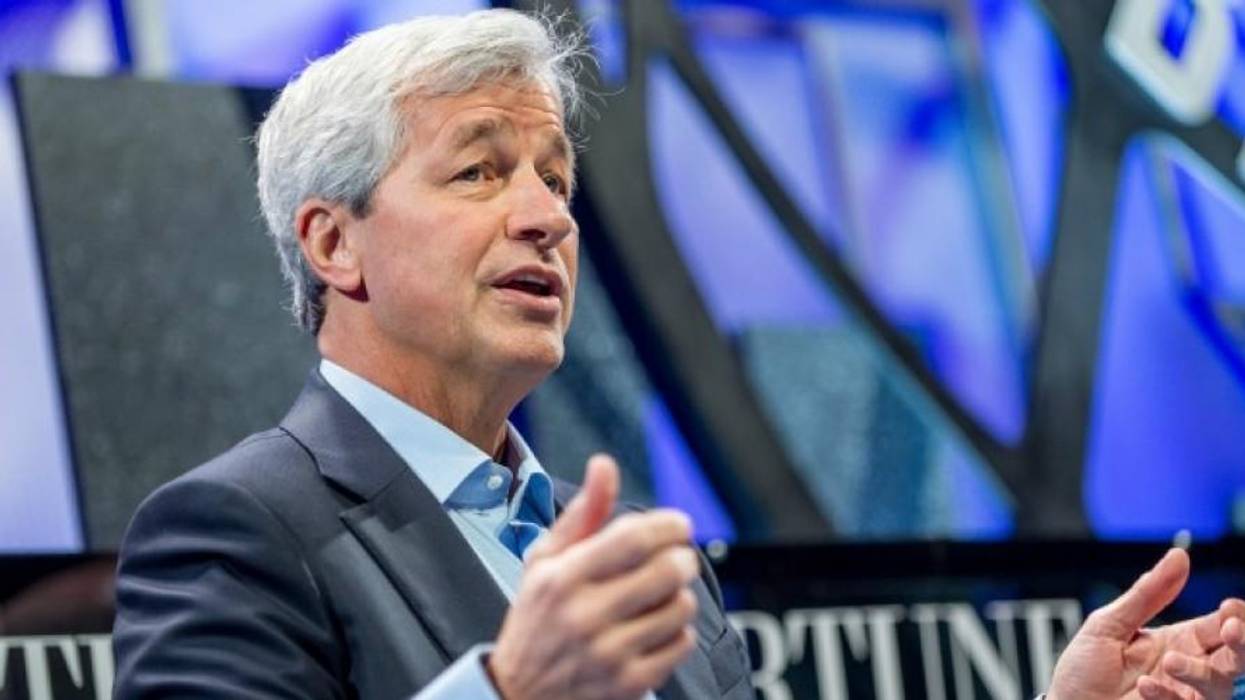
"The CFPB must stop this ploy by the biggest banks to keep us trapped under their thumbs."
Consumer advocates applauded last month as the Consumer Financial Protection Bureau finalized a rule aimed at making it easier for people to switch financial institutions if they're unhappy with a bank's service, without the bank retaining their personal data—but on Thursday, more than a dozen groups warned the CFPB that major Wall Street firms are trying to stop Americans from benefiting from the rule.
Several advocacy groups, led by the Demand Progress Education Fund, wrote to CFPB director Rohit Chopra warning that major banks—including JP Morgan Chase, Bank of America, Citi, TD Bank, and Wells Fargo—sit on the board of the Financial Data Exchange (FDX), which has applied to the bureau for standard-setting body (SSB) status, which would give it authority over what is commonly known as the "open banking rule."
Standard-setting authority for the banks would present a major conflict of interest, said the groups.
The banks are also on the board of the Bank Policy Institute, which promptly filed what the consumer advocates called a "frivolous lawsuit" to block the open banking rule when it was introduced last month, claiming it will keep banks from protecting customer data.
At a panel discussion this week, Bank of America CEO Brian Moynihan also said the open banking rule, by requiring financial firms to unlock a consumer's financial data and transfer it to another provider for free, would cause "chaos" and amplify concerns over fraud.
"The American people are fed up with Wall Street controlling every aspect of their lives and the open banking rule is an opportunity to give all of us some financial freedom."
The groups wrote on Thursday that big banks want to continue to "maintain their dominance by making it unduly difficult for consumers to switch institutions."
"The presence of these organizations on both the FDX and BPI boards undermines the credibility of FDX and presents various concerns relating to conflict of interest, interlocking directorate, and antitrust law," they wrote.
Upon introducing the finalized rule last month, Chopra said the action would "give people more power to get better rates and service on bank accounts, credit cards, and more" and help those who are "stuck in financial products with lousy rates and service."
The coalition of consumer advocacy groups—including Public Citizen, the American Economic Liberties Project, and Americans for Financial Reform—urged Chopra to reject FDX's application for standard-setting authority so long as the banks remain on its board.
“It would be a flagrant conflict of interest for the same banks who are suing to block the open banking rule because it threatens their market dominance to also be in charge of implementing it," said Demand Progress Education Fund corporate power director Emily Peterson-Cassin. "The American people are fed up with Wall Street controlling every aspect of their lives and the open banking rule is an opportunity to give all of us some financial freedom. The CFPB must stop this ploy by the biggest banks to keep us trapped under their thumbs."
The groups called the open banking rule "a historic step forward for the cause of giving consumers true freedom intheir financial lives."
"For this reason, it is imperative that SSB status not be granted to an organization whose board members are, either directly or through a trade association they are participating in, suing the CFPB to stop the rules from taking effect, particularly when such members may be ethically conflicted from such dual participation," said the groups. "By rejecting SSB status for FDX or any other organization with similar conflicts of interest pertaining to Section 1033, the CFPB will help prevent big banks from sabotaging open banking rules."
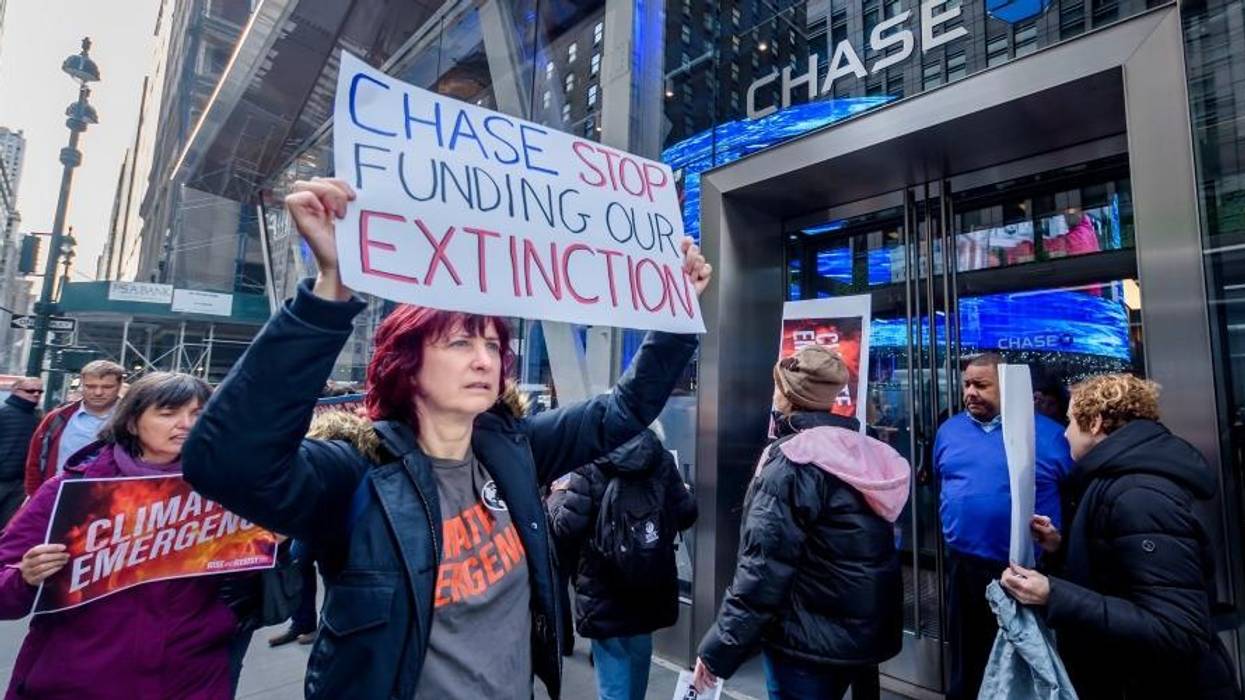
"Banks that profit from climate chaos invent new greenwash every year, but we have the receipts that show how much money they put into fossil fuels," said one report author.
The world's 60 biggest banks funded fossil fuels to the tune of $6.9 trillion in the eight years following the Paris agreement.
That's the conclusion of the 15th annual Banking on Climate Chaos report, which was published Monday and also found that the financial institutions lavished $705 billion on oil, gas, and coal in 2023—the hottest year on record.
"Financiers and investors of fossil fuels continue to light the flame of the climate crisis," Tom BK Goldtooth, report co-author and executive director of the Indigenous Environmental Network, said in a statement. "Paired with generations of colonialism, the fossil fuel industry and banking institutions' investment in false solutions create unlivable conditions for all living relatives and humanity on Mother Earth."
U.S. financial giants JPMorgan Chase, Citigroup, and Bank of America topped the "dirty dozen" list of the banks that gave the most to fossil fuels since 2016, at $430.9 billion, $396.3 billion, and $333.2 billion respectively. In 2023, U.S. banks provided 30% of total fossil fuel finance, the largest share of any country. JPMorgan also topped the 2023 list at $40.88 billion, with Japanese bank Mizuho Financial overtaking the No. 2 spot with $37.04 billion, and Bank of America remaining in third place with $33.68 billion.
"The science shows that over half of fossil fuels in existing fields and mines must stay underground to limit global warming to 1.5°C, and our Big Oil Reality Check analysis finds that none of the major oil and gas companies we analyze plan to do anything even close to what is needed to hold global warming to 1.5°C," report-co-author David Tong, the global industry campaign manager at Oil Change International, said in a statement. "By injecting a staggering $70[5] billion into fossil fuel financing in 2023 alone, the world's largest banks fund the climate chaos fossil fuel companies wreck on communities worldwide."
The report also tracks how much the financial institutions spent on companies that had fossil fuel expansion plans, according to the Global Oil and Gas Exit List and the Global Coal Exit List. The banks spent $3.3 trillion since 2016 and $347.5 billion in 2023 alone on these companies, or nearly half of total expenditures. Report co-author April Merleaux, research and policy manager at Rainforest Action Network, called the 2023 expansion finance figure "dangerous and inconsistent with real climate commitments."
Overall, Citibank has spent the most on fossil fuel expansion since 2016 at $204 billion, while JPMorgan was the top funder of expansion in 2023 with $19.3 billion.
"As this report is worth nothing if it doesn't turn into action, we call on the banks to finally become fossil free banks, and on the wider climate justice movement to use this data to mobilize for a fossil free banking world."
The researchers also looked at what fossil fuel companies and activities the banks were financing. All told, they considered funding to 4,228 companies. Clients with major expansion plans in 2023 included the pipeline companies Enbridge, TC Energy Corp, and Sempra as well as NextDecade Corp and Rio Grande Valley LNG, which are developing new liquefied natural gas (LNG) export capacity.
Fossil fuel financing did decrease in 2023, down from $778.7 billion in 2022.
"The trend of decreased financing from traditional banks to fossil fuel companies is good news, tempered by the reality that financing for fossil fuel expansion should be zero," the report authors wrote. "But there is little evidence that the decline is driven by voluntary commitments by the banks, especially given the policy rollbacks among major banks."
Indeed, in 2023, Bank of America rolled back commitments to not fund Arctic drilling, thermal coal, or coal-fired plants. Instead, the report authors suggested the downturn in finance was due to external economic and geopolitical factors.
"Unless banks take action to rule out finance for such clients, the decline may not be permanent," they warned.
When it came to the funding of individual high-risk fossil fuel activities, funding for overall expansion, fracking, tar sands, coal- and gas-power plants, and Amazon, Arctic, and deepwater oil and gas all declined. At the same time, funding for metallurgical coal, coal mining, and methane LNG all increased, with LNG funding rising from $116 billion in 2022 to $121 billion in 2023.
"In a year with record climate impacts, I am shocked to see financing for any category of fossil fuels increase. And yet in 2023 this report shows a big increase in financing to companies developing methane gas terminals and related infrastructure," Merleaux said. "Banks should be listening to those on the frontlines and stepping away from these projects."
This year the report—which is a collaboration between Rainforest Action Network; BankTrack; the Center for Energy, Ecology, and Development; Indigenous Environmental Network; Oil Change International; Reclaim Finance; Sierra Club; and Urgewald— features updated methodology that primary sources revealing the role of banks in corporate financial deals. The banks were given a chance to review the data and respond.
"Wall Street's top concern is its profit. Our top concerns are the climate and human rights. Banks that profit from climate chaos invent new greenwash every year, but we have the receipts that show how much money they put into fossil fuels," Merleaux said. "Our new methodology uncovers previously unreported details on banks' support for fossil fuels and gives campaigners new tools to hold them accountable."
Accountability is the report's main goal, according to co-author Diogo Silva, who leads the banks and climate campaign at BankTrack.
"As this report is worth nothing if it doesn't turn into action, we call on the banks to finally become fossil free banks, and on the wider climate justice movement to use this data to mobilize for a fossil free banking world," Silva said. "Later might just be too late. Fossil banks, no thanks!"

Last week, Bank of America engaged in perhaps the single most irresponsible about-face of the climate era.
Bank of America has its roots in California. Founded in Los Angeles in 1923, it was acquired by a San Francisco bank, which took the name in 1930—and over time it has grown to become the world’s second-largest bank by deposits, second only to New York-based Chase.
I tell you this for two reasons. One, California is, as of this writing, being absolutely battered by an “atmospheric river” that has knocked out power to hundreds of thousands and caused mudslides on high ground along the Pacific Coast. As Andrew Dessler pointed out yesterday, the physics are pretty simple: “A warmer planet has more water vapor in the atmosphere. And, everything else being the same, an atmospheric river carrying more water vapor will cause more rainfall when it hits land and starts rising.”
And second, Bank of America is a proximate cause of this kind of chaos, because it refuses to stop lending for fossil fuel expansion. Indeed, last week it engaged in perhaps the single most irresponsible about-face of the climate era.
They’re far more afraid of some oil-soaked GOP state treasurer than they are of an atmospheric river bearing down on the world’s fifth largest economy.
Three years ago—in the wake of the Greta-inspired mass uprising of young people around the world—Bank of America apparently felt it had to make some gesture, so it chose a pretty easy route to demonstrate its newfound greenness. It said it would no longer lend for new coal mining or coal-fired power plants or for new oil exploration in the Arctic. These were seen to be beyond the pale because… well, they are. They represent some of the most egregious possible insults to this planet.
But last week they said, never mind. If you want some money for a new coal mine, our window is open again. If you’re an oil company that feels like searching for oil in the Arctic now that you’ve melted it, we can make a deal. As the Times reported last week
Bank of America’s change follows intensifying backlash from Republican lawmakers against corporations that consider environmental and social factors in their operations. Wall Street in particular has come under fire for what some Republicans have called “woke capitalism,” a campaign that has pulled banks into the wider culture wars.
That is to say, they’re far more afraid of some oil-soaked GOP state treasurer than they are of an atmospheric river bearing down on the world’s fifth largest economy. It’s proof, of course, that their words about climate change were just pious nonsense. They’d insisted that they understood how crucial it was to change: “Climate change is no longer a far off risk but rather a global concern with impacts that are already beginning to unfold, including increased frequency and severity of extreme weather conditions, melting glaciers, loss of sea ice, accelerated sea-level rise, and longer, more intense heatwaves and droughts.” But that was, we now understand, to be understood entirely as greenwashing, an effort to reduce the heat they were temporarily feeling.
The actual heat they could care less about. It’s not like something has happened since 2021—except the hottest year in the last 125,000, which takes us back even before the advent of money, if BofA executives can even imagine such a time.
But the only weather change they’ve noticed is political. Out with Greta et al., in with GOP politicians saying scary things. And BofA is not alone. The Bureau of Investigative Journalism reported last week that global giant HSBC, despite a solemn promise that it would stop financing new oil and gas fields, has found ways to keep
selling shares in the refining business of Saudi Aramco, one of the most aggressive expanders of oil and gas. An investor in HSBC told the Bureau of Investigative Journalism that the bank’s policy has been cleverly worded to allow it to fund some of the world’s biggest polluters while boasting about its green credentials.
An analysis of Refinitiv data by TBIJ has found that in the year since HSBC’s new policy was announced, the bank has helped raise more than $47 billion (£37 billion) for companies that are expanding the production of oil and gas, despite dire warnings from scientists that this will push the world beyond its survivable limits.
This is all just sick. The International Energy Agency said in 2021 that if we had a chance of meeting the Paris temperature targets, finance for fossil fuel expansion had to end now. But the banks, and big asset managers like BlackRock, just can’t help themselves. For short-term gain, and to protect themselves from attack by right-wing politicians, they are willing to break the back of the planet’s climate system. The unbelievable economic fallout of those decisions—the fact that the world be immensely poorer, with its prospects hugely degraded, by the resulting rise in temperature—will be the problem of some other CEO down the road; it’s hard not to see our financial system as a suicide machine.
Fighting back is hard. At places like Third Act, we’ve done loads of sit-ins and pickets, and it helps—that’s the kind of action that forced these pledges in the first place. But we need some big players on our side. We’re trying, for instance, to convince Costco to pressure its banker Citi; we need the big tech companies, too, to worry not just about about the climate impact of their phones but also about the climate impact of their money (which is far far larger).
We have some champions, of course, but they’re not as hard-hitting as their Red State counterparts. Brad Lander, comptroller of New York City, gets credit for being willing to take the banks on—last week he announced that he’d try to get them to disclose their ratio of dirty energy to clean energy lending, which would certainly be good to know.
“Despite all their talk, the big banks have made little progress in the energy finance transition over the past couple of years,” said Comptroller Lander. “As long-term investors exposed to climate risk, we can’t just take their word for it. Reporting transparently on their ratios of clean energy to fossil fuel finance is key to seeing whether or not they are living up to their net-zero commitments. Right now, they aren’t—and that must change. Our planet, our economy, and our investment portfolios are all at stake.”
All of that is true. But if the planet is at stake, then perhaps a somewhat harder shove might be required. Lander’s plan seems like a way to win slowly, which on most political issues makes sense. But unless he also has a plan to refreeze a melted Arctic, this kind of pressure seems a tad too gentlemanly.
As you can tell, this about face by BofA stings. It takes so much work to move these guys an inch, and then given half a chance they slide right back to where they were before.
Small banks seem able to make money doing decent things—here’s a nice story about a merger of local California banks where they pledged, among other things, to “refrain from any new financing of fossil fuel extraction activities, especially expansion projects that would develop and lock in dependence on new fossil fuel infrastructure, either through corporate or project-based finance, subject to compliance with banking rules and regulations.”
But the big boys? Damn them to hell, which is clearly where they’re content to send all of us.
JPMorgan Chase led the pack with more than $141 billion invested between 2016 and 2022, followed by Citi with $119 billion, and Bank of America with $92 billion.
Major banks funneled more than $150 billion in 2022 toward "carbon bomb" fossil fuel projects that would blow through the world's chances of limiting global heating to 1.5°C above pre-industrial levels.
The data, published by The Guardian Tuesday, shows that major banks in the U.S., Europe, and China funded the companies behind these projects with a total of $1.8 trillion between 2016 and 2022, with U.S. banks contributing more than half a trillion of that total.
"Criminal," Nuclear Consulting Group chair Paul Dorfman tweeted in response to the news.
"We need to rapidly decline our production of fossil fuels and support for fossil fuels, whether that's regulatory or financial."
The "carbon bombs" are 425 fossil fuel extraction projects identified by The Guardian and other nonprofit and media organizations and compiled in an online database in 2022. Each bomb has the potential to release more than a gigaton of carbon dioxide over its lifetime. At first, it was calculated that igniting all 425 bombs would release emissions more than double the remaining carbon budget that scientists say humans can spend and still have a 50% chance of limiting warming to 1.5°C. However, research published Monday calculated that the remaining carbon budget is actually around 250 gigatons of carbon dioxide, not the 500 previously believed. The carbon bombs would release a combined total of more than 1,000 gigatons, or four times the revised number.
"The budget is so small, and the urgency of meaningful action for limiting warming is so high, [that] the message from [the carbon budget] is dire," study co-author Joeri Rogelj of Imperial College London told The Guardian Monday.
That narrowing window makes it all the more urgent that banks stop financing fossil fuels, yet that is not what they are doing, according to the analysis of the carbon bomb data completed by French nonprofits Data for Good and Éclaircies, along with European media partners.
The data includes a list of the top ten financial backers of companies operating carbon bombs.
JPMorgan Chase led the pack with more than $141 billion invested between 2016 and 2022, followed by Citi with $119 billion, Bank of America with $92 billion, the Chinese ICBC with $92.2 billion, and BNP Paribas with $71.9 billion. Last year alone, the banks directly or indirectly funded the projects with around $161 billion. This comes despite greenwashing rhetoric from financial institutions pledging to act on climate.
For example, JPMorgan has promised to set goals to reduce the emission intensity of its portfolios for key sectors, including oil and gas, electricity, and auto making.
"We provide financing all across the energy sector: supporting energy security, helping clients accelerate their low-carbon transitions, and increasing clean energy financing with a target of $1 trillion for green initiatives by 2030," a JPMorgan Chase spokesperson told The Guardian. "We are taking pragmatic steps to meet our 2030 emission intensity reduction targets in the six sectors that account for the majority of global emissions, while helping the world meet its energy needs securely and affordably."
The data suggests these institutions need to do more and faster.
"We need to rapidly decline our production of fossil fuels and support for fossil fuels, whether that's regulatory or financial," Shruti Shukla, a National Resources Defense Council energy campaigner who was not involved with the research, told The Guardian.
In a worse-case scenario, nothing will be done to limit emissions, these carbon bombs will be exploited and burned, and weather will turn ever more extreme. However, if world leaders do succeed in rapidly phasing out fossil fuels, these projects could become stranded assets for the companies and banks that invested in them, and if this happens all at once, it could trigger a financial crash, University of Witten-Herdecke sustainable finance research fellow Jan Fichtner told The Guardian.
To avoid this, the world must work to make fossil fuels less profitable, Fichtner said.
"In a capitalist system, profitability is the most important current," Fichtner told The Guardian. "You can try to swim against the current, it's possible, but it's very, very difficult."

Now is the time to keep building momentum and bringing a lot more pressure to bear, because we’ve hardly won yet.
The rain was pouring down hard, but that didn’t seem to deter the big protest crowd gathered outside the Federal Reserve building. Amid the typical Monday morning bustle of Wall Street, we chanted for the Fed to stop fossil fuel financing as cops arrested row after row of protesters blocking the building’s entrances during what ultimately became the largest climate-focused civil disobedience ever in New York City.
We were coming off the 75,000-person March to End Fossil Fuels the previous day: a protest that shattered our attendance expectations as organizers, uplifted our spirits, and landed on the front page of The New York Times the next day. Earlier that week, hundreds of activists and groups like Climate Defenders, Oil & Gas Action Network, Stop the Money Pipeline, and my own, New York Communities for Change, had disrupted two of the largest fossil fuel financiers in the world, shutting down Citi’s global headquarters for a whole morning and halting traffic in front of BlackRock’s global HQ. With Planet Over Profit, a youth-led group I co-founded, we forced the Museum of Modern Art to close for an afternoon because of its ties to dirty fossil fuel investor KKR. And the morning after shutting down the Fed, another dirty financier, Bank of America, found its New York office the site of another act of civil disobedience.
Others reflecting on these protests have noted how this September felt like a potential turning point. The U.S. climate movement enjoyed the biggest revival of street protest since the pandemic. With the march, unlike previous climate mass mobilizations, we were laser focused on calling out a specific decision-maker (President Joe Biden), making it impossible for him to ignore the broad-based, diverse support for our laser-focused specific demand (ending fossil fuels). And when it came to Wall Street, with thousands of white-collar Citi employees unable to get into work for hours, for example, we made it clear that if Citi’s bottom line included profiting off fossil fuels, then that bottom line would not go undisrupted.
If we’re to have any chance of ending fossil fuels, and transitioning to a more just system, we need sustained, committed resistance against these fossil fuel-loving powers that be.
We sent a statement of intent to both Biden and Wall Street: End fossil fuels, or expect resistance. Now it’s time to keep building on that momentum, and bring a lot more pressure to bear, because we’ve hardly won yet.
Politicians continue to approve new fossil fuel permits, and financiers continue to move more fossil fuel financing. It’s not for lack of awareness: These are well-informed elites who know well the scientific consensus that we have already maxed out our carbon budget with existing projects and that our carbon accounts cannot afford any more fossil fuel expansion. Nor do the actual financials necessitate fossil fuels: Power from renewables is now cheaper to produce than power from fossil fuels in many places, and besides, we simply cannot enjoy stable, functional global economies on a planet beset by endless storms and fires, widespread drought and famine, and hundreds of millions crossing borders to flee unlivable conditions.
The simple reason the fossil fuel industry and its enablers won’t change course on their own is because the status quo is working splendidly for them right now. Oil majors have been reporting record-breaking profits, and generally speaking, elites have continued to consolidate their wealth and power within a global political economy still powered largely by fossil fuels. (For instance, in 2015, the richest 1% in the world owned as much as the remaining 99% combined; those state of affairs have only worsened during a pandemic during which those at the top gained trillions in wealth while ordinary people suffered.)
Plus, these planet-wrecking elites, as Andreas Malm writes, “do not worry at the sight of islands sinking; they do not run from the roar of the approaching hurricanes; their fingers never need to touch the stalks from withered harvests; their mouths do not become sticky and dry after a day with nothing to drink.” The climate crisis may be coming for the whole world over at some point—but those at the very top do not currently face many serious consequences, and many of them may assume that they never really will in their lifetimes. Meanwhile, there are fossil fuel lobbies to please, and fossil fuel profits to reap.
So: We’re up against immensely powerful fossil fuel executives and some of the most powerful financiers and politicians in the world. All of them are highly incentivized to maintain the status quo of enabling mass death. If we’re to have any chance of ending fossil fuels, and transitioning to a more just system, we need sustained, committed resistance against these fossil fuel-loving powers that be.
If you are a bank like Citi that continually pours billions into fossil fuels each year: You should not expect to be able to operate and greenwash without having your bottom line impacted and the lives of your business elite constantly disrupted. Your CEOs and execs should expect to be challenged at public events, your offices’ operations should be continually disturbed, your brand and client deals should be scrutinized and protested. If you are Biden, who approves climate bomb after climate bomb, you and your administration should assume there will be disruptions at your public appearances and lagging enthusiasm from your base to turn out to the polls next fall.
What hangs in the balance, after all, is everything we know and love. We want to enjoy safe, stable societies; we want to breathe clean air, drink clean water; we want to live rich, dignified lives uninterrupted by profound climate upheaval. And we won’t be able to do that for much longer on this planet if we don’t force a move away from fossil fuels with serious, sustained pressure.
We don’t live in a world yet in which fossil fuel-loving politicians and capitalists face constant, sustained pressure, direct action, and disruption of business-as-usual. So let’s keep rolling up our sleeves. Let’s keep organizing more people. And let’s keep escalating with more hard-hitting protest to force an end to fossil fuels. If they don’t at the moment have enough incentive to give up their profits to save our lives—well, then let’s create some incentive for them.

"Underwriting is a huge missing piece of net-zero transition plans, allowing big U.S. banks to continue to help fossil fuel companies raise billions of dollars with limited scrutiny," said one campaigner.
A report out Monday sheds light on how big U.S. banks' underwriting of bonds and equities for polluting corporations constitutes a "hidden pipeline" for fossil fuel financing.
It's no secret that financial institutions play a leading role in driving the climate emergency. Since 2016, the year the Paris agreement took effect, the world's 60 largest private banks have provided more than $5.5 trillion in financing to the fossil fuel industry, flouting their pledges to put themselves and their clients on a path to net-zero greenhouse gas emissions as the window to avert the worst consequences of the intensifying climate crisis rapidly closes.
But banks' underwriting activities receive far less attention than their direct lending practices, even though both are instrumental in enabling fossil fuel expansion and must be reformed to rein in the industry most responsible for imperiling the planet's livability.
That's the key takeaway from a new analysis of Wall Street's participation in capital markets published by the Sierra Club's Fossil-Free Finance campaign.
"By only focusing on emissions reduction targets for their lending activities, banks are conveniently excluding half of their fossil fuel financing from their climate commitments."
"Banks play a vital role in capital markets," the report explains. "Acting as underwriters, they are the gatekeepers of fossil fuel companies: they advise companies issuing bonds and equities, hold the vital information on the issuer, and help market the instruments to investors disclosing only the necessary risk."
Since 2016, the six largest U.S. banks—JPMorgan Chase, Citi, Wells Fargo, Bank of America, Morgan Stanley, and Goldman Sachs—have provided more than $433 billion in lending and underwriting to 30 of the companies doing the most to increase fossil fuel extraction and combustion worldwide, the report notes. More than three-fifths (61%) of that financing comes from underwriting, with those half-dozen banking giants issuing $266 billion in new bonds and equities for the world's top 30 fossil fuel expansion firms.
Climate justice advocates have long criticized the concept of "net-zero" because, they argue, allowing planet-heating pollution to be "canceled out" via dubious carbon offset programs or risky carbon removal technologies is an accounting trick that doesn't guarantee the significant emissions cuts needed to avoid the climate emergency's most destructive impacts.
But even if one accepts the premise of net-zero, big U.S. banks' policies on the topic are misleading.
"Despite the importance of capital markets activities in helping fossil fuel companies secure new funding, banks focus primarily on lending, while downplaying the importance of underwriting, when setting their emissions reduction targets," the report says. "Banks are performing sleight of hand, distracting investors and regulators with net-zero transition plans that are half-finished, while continuing to funnel money to fossil fuel companies via capital markets with limited scrutiny."
In a statement, Adele Shraiman, senior campaign strategist with the Sierra Club's Fossil-Free Finance campaign, said that "without banks, fossil fuel companies cannot raise money through capital markets."
"By downplaying their role in capital markets and refusing to include facilitated emissions in their climate targets, big U.S. banks are intentionally sidestepping a major source of real-world emissions and making it impossible to meet their own net-zero commitments," said Shraiman.
According to the report: "Only three of the six major Wall Street banks include bond and equity underwriting in their sectoral emissions reduction targets—JPMorgan Chase, Goldman Sachs, and Wells Fargo. The remaining three banks have so far chosen to only apply emissions reduction targets to lending activities."
However, "even among those who have set emissions reduction targets that include underwriting, insufficient disclosures and lack of standardization make it difficult to understand how robust banks' facilitated emissions accounting methodologies are, and what progress they are making toward achieving their emissions reduction targets," the report adds.
In a blog post, Shraiman wrote that "banks don't want us to know all of the ways they help fossil fuel companies raise funds to continue building the pipelines, oil rigs, fracking wells, and coal mines that are destroying the climate and hurting communities."
"But investors, regulators, and customers around the world see through their duplicity," she continued. "We are demanding complete, robust, and transparent net-zero plans that cover all types of financing activities and will lead to real-world emissions reductions in line with our global climate goals."
"Banks don't want us to know all of the ways they help fossil fuel companies raise funds to continue building the pipelines, oil rigs, fracking wells, and coal mines that are destroying the climate."
Monday's report comes at a key moment in the fight to stop Wall Street from continuing to fund climate chaos.
As the Sierra Club observed, "Banks currently point to a lack of industry standards on underwriting to justify why they do not disclose or set targets for facilitated emissions." However, the industry-led Partnership for Carbon Accounting Financials is expected to release its updated methodology on accounting for and reducing facilitated emissions in the near future.
"Underwriting is a huge missing piece of net-zero transition plans, allowing big U.S. banks to continue to help fossil fuel companies raise billions of dollars with limited scrutiny," Shraiman said. "By only focusing on emissions reduction targets for their lending activities, banks are conveniently excluding half of their fossil fuel financing from their climate commitments."
"It's time," she added, "for the major Wall Street banks to adopt a robust and consistent methodology for accounting facilitated emissions, and take full responsibility for the climate impacts of their underwriting decisions."
The International Energy Agency has stated unequivocally that there is "no need for investment in new fossil fuel supply in our net-zero pathway."
After the Intergovernmental Panel on Climate Change released its latest assessment in March, United Nations Secretary-General António Guterres said that limiting temperature rise to 1.5°C is possible, "but it will take a quantum leap in climate action," including a ban on approving and financing new coal, oil, and gas projects as well as a phaseout of existing fossil fuel production.