SUBSCRIBE TO OUR FREE NEWSLETTER
Daily news & progressive opinion—funded by the people, not the corporations—delivered straight to your inbox.
5
#000000
#FFFFFF
To donate by check, phone, or other method, see our More Ways to Give page.
Daily news & progressive opinion—funded by the people, not the corporations—delivered straight to your inbox.
"The result will be fewer opportunities for creators, fewer jobs across the production ecosystem, higher costs, and less choice for audiences."
A group of Hollywood actors, directors, and producers on Monday published an open letter demanding the proposed merger between Paramount and Warner Bros. Discovery be blocked.
In their letter, the Hollywood heavyweights outlined the harms that would come from allowing Paramount—which is owned by David Ellison, son of billionaire Trump donor Larry Ellison—to acquire Warner Bros. Discovery.
"This transaction would further consolidate an already concentrated media landscape, reducing competition at a moment when our industries—and the audiences we serve—can least afford it," the letter states. "The result will be fewer opportunities for creators, fewer jobs across the production ecosystem, higher costs, and less choice for audiences in the United States and around the world. Alarmingly, this merger would reduce the number of major US film studios to just four."
The letter goes on to describe how consolidation in the entertainment industry has already "accelerated the disappearance of the mid-budget film, the erosion of independent distribution, the collapse of the international sales market, the elimination of meaningful profit participation, and the weakening of screen credit integrity."
Looking at the bigger picture, the letter notes that "competition is essential for a healthy economy and a healthy democracy," then goes on to praise California Attorney General Rob Bonta and other state AGs for filing legal actions aimed at blocking the merger amid fears that the Trump administration could rubber-stamp it.
"We are grateful for their leadership," the letter concludes, "and stand ready to support all efforts to preserve competition, protect jobs, and ensure a vibrant future for our industry, for American culture, and for our single most significant export."
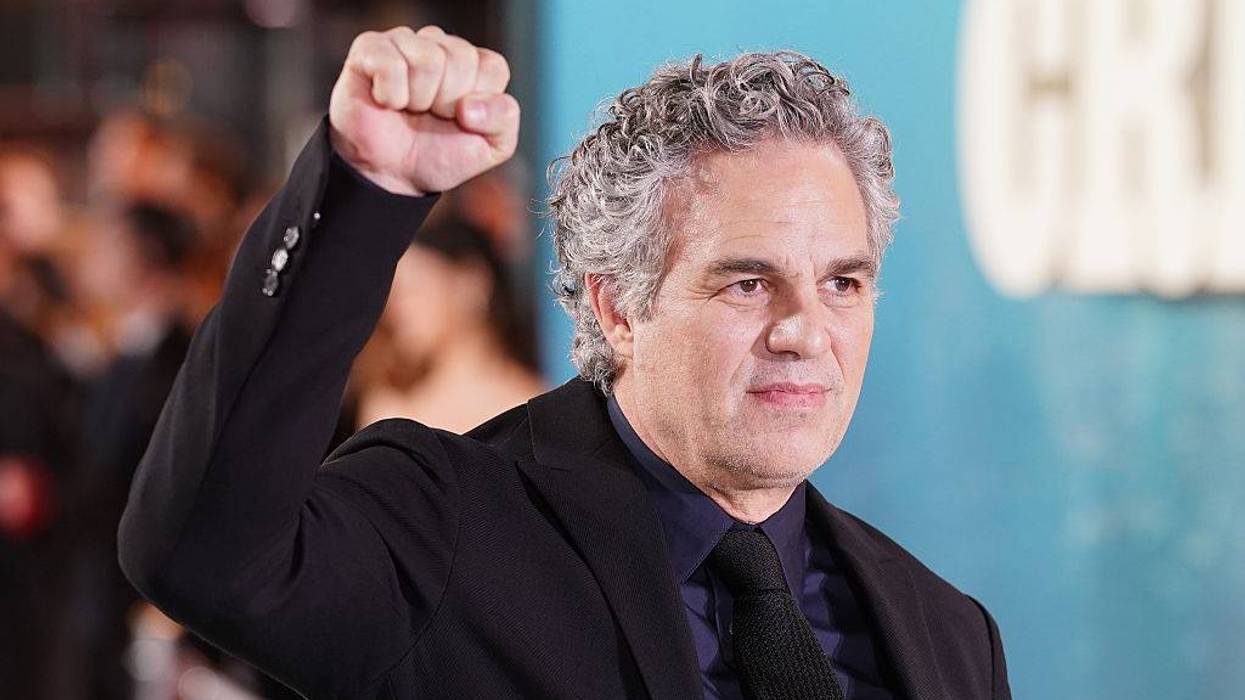
Actor Mark Ruffalo, a signatory of the letter, published an article on his Substack page outlining his own reasons for opposing the merger, which he described as "the epitome of crony capitalism and the oligarchs consolidating more corporations and media power to shape the outcome of their business interests."
Ruffalo also said he's spoken with others in Hollywood who were reluctant to sign the letter over concerns about retaliation from Trump or Ellison should the attempt to block the merger fail.
"The people pushing monopolies such as this one use fear to keep the workers in line," Ruffalo said. "I have heard it time and time again from my fellows, they are afraid of retribution. Some didn’t want to sign because they are afraid. How sad is that? In America the artists are afraid to speak out against power."
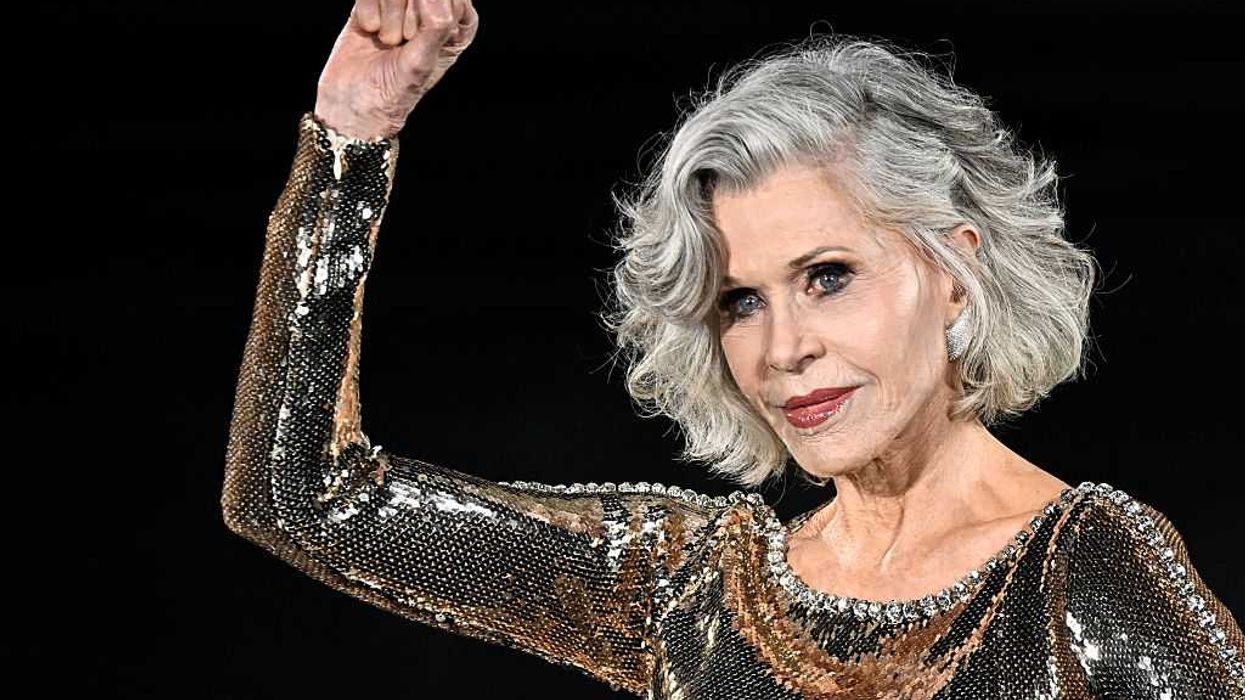
Actress Jane Fonda, founder of the modern Committee for the First Amendment, said that the proposed Paramount-Warner Bros. merger "would be one of the most destructive threats to free speech and creative expression in our history," because it would put "unprecedented power in the hands of a single corporation that already appears to have proven itself willing to sacrifice integrity for political favor."
The letter earned praise from democracy and antitrust advocates, who argued that blocking the merger was necessary to stopping President Donald Trump's ambitions for a right-wing takeover of US media.
“The future of free media and a strong entertainment industry in America is at stake here,” said Norm Eisen, co-founder and executive chair of Democracy Defenders Fund. “This proposed merger would not only harm competition and creativity, it would erode the very bedrock of our democracy."
Matt Stoller, director of research at the American Economic Liberties Project, noted that "consolidation in Hollywood has been a disaster, and has led to the weak state of the industry," and said the Paramount-Warner Bros. merger needed to be blocked to prevent further damage.
"Not only does this kind of concentration hollow out creative markets," said Stoller, "it concentrates control over culture and information in the hands of a few unaccountable executives, and in this case totalitarian Gulf countries, undermining a free and pluralistic media ecosystem that democracy depends on."
“They’re betting on our fear and our silence,” Fonda said. “But our industry—and artists around the world—have a long history of refusing to be silenced, even in the darkest times.”
As the US descends into authoritarianism under President Donald Trump and Republicans, hundreds of celebrities led by actor and progressive activist Jane Fonda on Wednesday revived a free speech initiative originally launched by Hollywood stars including her father during the right-wing repression of the post-World War II McCarthy era.
Fonda and over 550 celebrities rebooted the Committee for the First Amendment, which was first formed in 1947 by a bevy of actors including Henry Fonda in response to hearings held by the House Un-American Activities Committee (HUAC) and blacklisting of actual and suspected communists throughout US society, including Hollywood.
“The federal government is once again engaged in a coordinated campaign to silence critics in the government, the media, the judiciary, academia, and the entertainment industry,” the renewed committee said in a statement. “We refuse to stand by and let that happen.”
Other members of the newly re-formed committee include filmmakers Spike Lee, Barry Jenkins, J.J. Abrams, Patty Jenkins, Aaron Sorkin, and Judd Apatow; TV show creator Quinta Brunson; musicians Barbra Streisand, John Legend, Janelle Monáe, Gracie Abrams, and Billie Eilish; comedians Tiffany Haddish and Nikki Glaser; as well as actors Mark Ruffalo, Anne Hathaway, Kerry Washington, Pedro Pascal, Natalie Portman, Viola Davis, and Ben Stiller. Another signatory is actor Fran Drescher, who last month ended a term as the president of the SAG-AFTRA union.
"This committee was initially created during the McCarthy era, a dark time when the federal government repressed and persecuted American citizens for their political beliefs," the initiative's founders wrote. "They targeted elected officials, government employees, academics, and artists. They were blacklisted, harassed, silenced, and even imprisoned."
"The McCarthy era ended when Americans from across the political spectrum finally came together and stood up for the principles in the Constitution against the forces of repression," they added. "Those forces have returned. And it is our turn to stand together in defense of our constitutional rights."
Fonda’s committee revival comes after Jimmy Kimmel's late-night talk show was temporarily removed from ABC's airwaves earlier this month following pressure form Brendan Carr, Trump’s Federal Communications Commission (FCC) chief, over a monologue by the comedian about far-right podcaster Charlie Kirk’s accused assassin. Kimmel's show returned amid massive public backlash.
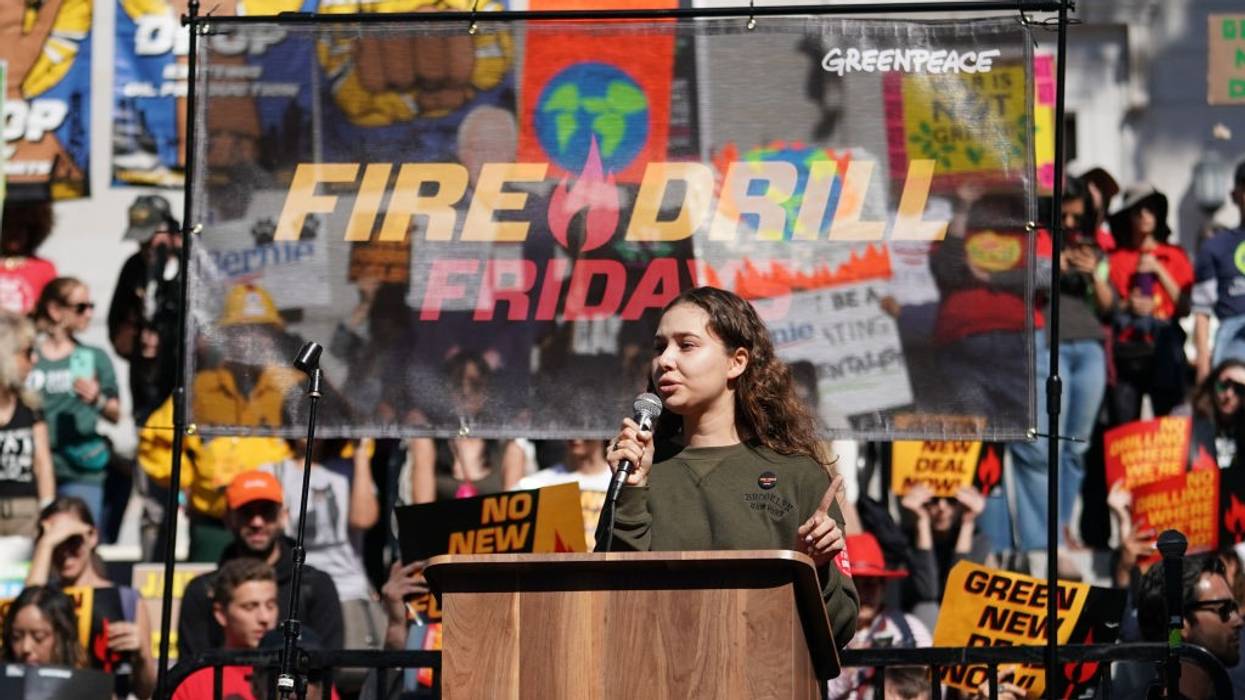
Fonda has more than 60 years of political activism under her belt, starting with the civil rights and anti-Vietnam War movemements and continuing through Fire Drill Fridays, #StopLine3, and the Jane Fonda Climate PAC in more recent years.
"I'm 87 years old. I've seen war, repression, protest, and backlash. I've been celebrated, and I've been branded an enemy of the state," Fonda said in a letter inviting people to join the committee.
"But I can tell you this: This is the most frightening moment of my life," she continued. "When I feel scared, I look to history. I wish there were a secret playbook with all the answers—but there never has been. The only thing that has ever worked—time and time again—is solidarity: binding together, finding bravery in numbers too big to ignore, and standing up for one another."
“They’re betting on our fear and our silence,” Fonda added without identifying anyone by name. “But our industry—and artists around the world—have a long history of refusing to be silenced, even in the darkest times.”
"Republicans are STILL trying to sell off public lands in their budget bill," said Sen. Ron Wyden. "If you care about keeping your public lands please make your voice heard."
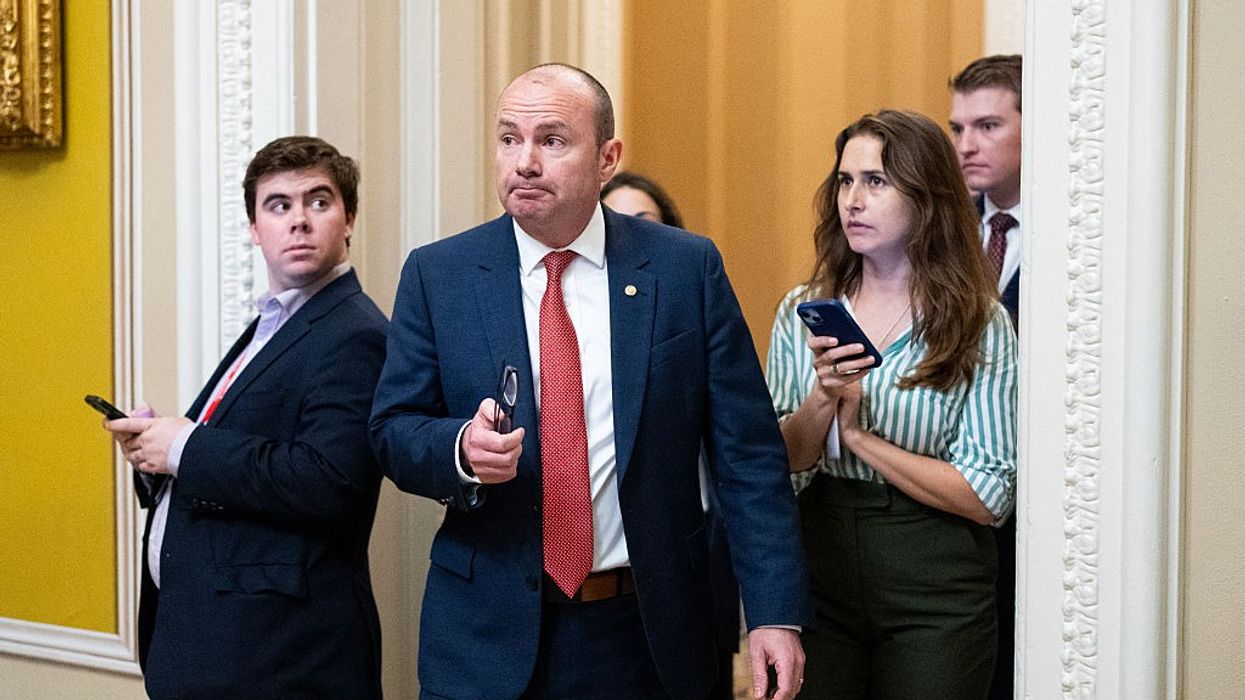
Ahead of a vote on Republicans' budget reconciliation package expected as soon as noon Saturday, U.S. Senate Committee on Energy and Natural Resources Chair Mike Lee revived his effort to sell off public lands.
Senate Parliamentarian Elizabeth MacDonough has blocked multiple provisions of the GOP megabill, including several under the jurisdiction of the Utah Republican's panel. Among them is his attack on public lands.
"Here we go again," Sen. Ron Wyden (D-Ore.) said on social media after Lee released new text for his committee late Friday.
"Republicans are STILL trying to sell off public lands in their budget bill," Wyden continued. "Republicans are trying to get this over the finish line by the end of the weekend. If you care about keeping your public lands please make your voice heard."
"Americans left, right, and center have come together with one voice to say these landscapes shouldn't be sold off to fund tax cuts for the uberwealthy—not now, not ever."
Athan Manuel, director of Sierra Club's Lands Protection Program, said in a Saturday morning statement that "the new version of Mike Lee's public lands sell-off is like cutting 'most' of the mercury out of your diet. The fact of the matter is that Mike Lee has spent the better part of a decade trying to privatize our public lands, and with his new power in the Senate, he's trying to push that agenda even further without public input, without transparency, and shame."
"Americans left, right, and center have come together with one voice to say these landscapes shouldn't be sold off to fund tax cuts for the uberwealthy—not now, not ever," Manuel added. "Congress needs to listen to their constituents, not billionaires and private developers, and keep the 'public' in public lands.”
A document from Lee states that his "amended proposal dramatically narrows the scope of lands to be sold for housing... in communities where it is desperately needed" in the U.S. West. The new version would exclude all Forest Service land and reduce the amount of Bureau of Land Management acres to be sold by half.
"It's still bullshit," responded Noelle Porter, government affairs director at the National Housing Law Project.
Sen. Martin Heinrich (D-N.M.), the ranking member of the Senate Energy and Natural Resources Committee, has recently said: "This isn't about building more housing or energy dominance. It's about giving their billionaire buddies YOUR land and YOUR money."
"From the Sierra Club to Joe Rogan, everybody is pissed off about Republicans' public lands sell-off," he wrote on social media Friday. "This is the broadest coalition I've seen around public lands in my lifetime, so keep making sure your voices are heard because we're winning."
Jane Fonda's climate-focused political action committee similarly stressed on social media Friday that "Lee is committed to including a massive public land sale provision in the Big Beautiful Bill. We need you to keep up the pressure and reach out to your senators today and demand they reject any new sales of public lands in this legislation."
And it's not just the land sales in the Friday night text of what critics call the "big, ugly bill." It also "creates new fees for renewable energy projects on public lands, and cuts royalty rates for oil, gas, and coal production on public lands," noted Sam Ricketts, co-founder of S2 Strategies, which is working to build a clean energy economy. "Make it make sense."
As Manuel and Heinrich pointed out, some right-wingers are also outraged by Lee's push to sell off public lands. Benji Backer, founder of Nature Is Nonpartisan and the American Conservation Coalition, took aim at the committee chair on social media Friday night.
"Mike Lee just quietly doubled down on his mass public lands sel-loff by releasing new text," Backer said. "The Senate could consider it as soon as tomorrow. The secrecy is gross—and intentional. Lee knows it's his only path. America, we NEED to stand strong.
Tagging the Senate GOP account and Majority Leader John Thune (R-S.D.), Backer added that "Americans are entirely UNITED in opposition against this. Please ask Sen. Lee to let this provision... stand on its own—at the very least."
Even if the Senate somehow advances Lee's legislation, it could face trouble in the House of Representatives, which is also narrowly controlled by the GOP. On Thursday, Republican Reps. Ryan Zinke (Mont.), David Valadao (Calif.), Mike Simpson (Idaho), Dan Newhouse (Wash.), and Cliff Bentz (Ore.) warned that "we cannot accept the sale of federal lands that Sen. Lee seeks."
"If a provision to sell public lands is in the bill that reaches the House floor, we will be forced to vote no," warned the lawmakers, led by Zinke, who was the interior secretary during President Donald Trump's first term. Lee's provision, they wrote, would be a "grave mistake, unforced error, and poison pill that will cause the bill to fail should it come to the House floor."
Republican nominee Donald Trump "wants to do away with all regulations and open up the floodgates for the fossil fuel industry and the nuclear industry," she said. "So the choice is very clear."
Actor and activist Jane Fonda took aim at Republican U.S. presidential nominee Donald Trump and his climate-wrecking plans in comments published Monday from her wide-ranging conversation with CBS News, The Guardian, and Rolling Stone.
The interview with Fonda, which took place in California earlier this month, was coordinated by Covering Climate Now and is set to air on "CBS Saturday Morning" on September 28. It comes as she travels the country to support climate champions including Vice President Kamala Harris and Minnesota Gov. Tim Walz, the Democrats taking on Trump and Sen. JD Vance (R-Ohio) in the November election.
Trump "invited all the CEOs of the fossil fuel industry to Mar-a-Lago" and promised to roll back the Biden administration's progress on the climate crisis for just $1 billion in campaign cash, Fonda highlighted, warning that "the future of the planet is at stake."
"This is a collective crisis, and it requires a collective solution," she continued. "[Trump] wants to do away with all regulations and open up the floodgates for the fossil fuel industry and the nuclear industry. So the choice is very clear, do we vote for the future, or do we vote for burning up the planet?"
"We have the solution to the climate crisis, why don't we employ it, instead of allowing a bunch of rich people to destroy everything that's been created by humankind?"
The longtime activist, who is taking time off from acting to focus on this year's elections, acknowledged that some voters who lean toward Democrats, particularly younger people, are angry with Harris, especially over U.S. support for Israel's assault on the Gaza Strip. However, she argued, "to sit this out or to vote for a third-party candidate, is to allow fascism."
"That will elect somebody who will deny you any voice in the future of the United States," Fonda stressed. "Vote for a voice if you really care about Gaza, vote to have a voice so that you can do something about it, and then be ready to turn out into the streets by the millions and fight for it… If the young people stay home, we're going to lose."
"Every candidate has issues. Nobody's perfect, but the Harris-Walz ticket is the ticket that will allow us to fight, to get the solutions that climate scientists are saying we need," she said. "They give us a chance, at least, to fight. They give us a platform on which we can try to pressure."
In addition to backing the Democratic presidential ticket—including by knocking on doors in Michigan, a key swing state—the 86-year-old is working to elect candidates endorsed by the Jane Fonda Climate Political Action Committee (PAC), which she founded in 2022, after she was arrested five times during Fire Drill Fridays, a protest series she started with Greenpeace USA a few years earlier.
The PAC is now supporting over 100 candidates at the local level, "where the really robust work is being done on climate," according to Fonda. The group only endorses candidates who don't take money from the fossil fuel industry, which she said has a "stranglehold over our government."
"We've had so many moderate Democrats that blocked the climate solutions we need because they take money from the fossil fuel industry," she noted. "It's very hard to stand up to the people that are supporting your candidacy."
"We are being killed with cancer, heart diseases, because of the burning of fossil fuel," Fonda said. "We have the solution to the climate crisis, why don't we employ it, instead of allowing a bunch of rich people to destroy everything that's been created by humankind? We've got to rise up."
"You need millions of people in the streets," she said, also emphasizing that "you need people in the halls of power with ears and a heart to hear the protests, to hear the demands."
Together, we are forging a path toward a world where every voice is heard, every life is valued, and every community thrives free from the threat of environmental harm.
Our win against fossil fuel giants in California last month—a modern-day David and Goliath fight—marks a profound victory in our ongoing battle for a cleaner, healthier world.
In the face of overwhelming opposition, California oil and gas drillers withdrew a challenge at the ballot box to a landmark state law that banned new oil drilling within 3,200 feet of a community and requires tighter health and safety standards for existing wells. The ban is now in effect. This triumph resonates far beyond the immediate victory; it reaffirms the enduring power of community and the relentless pursuit of justice. In California, we have shattered the illusion that profit should outweigh the health and safety of our people. Our collective voice has risen above that of the oil industry, proclaiming that our lives are not negotiable commodities.
Nearly 30,000 oil and gas wells in California sit within 3,200 feet of sensitive land, exposing the health and safety of nearly 3 million innocent Californians. These wells are disproportionately placed in communities of color, and their emissions can cause birth defects, respiratory illnesses, and even cancer. In 2021, an independent scientific advisory panel advised California officials that a 3,200-foot setback between oil wells and sensitive receptors is the minimum distance to protect public health.
In California, we have shattered the illusion that profit should outweigh the health and safety of our people. Our collective voice has risen above that of the oil industry, proclaiming that our lives are not negotiable commodities.
In the face of these stark realities, California Senate Bill (SB)1137 emerged as a beacon of hope—a legislative effort to establish a health and safety buffer zone between oil operations and communities. This bill aimed to safeguard public health and the environment by imposing sensible setbacks, ensuring that our neighborhoods are no longer sacrificed for corporate gain. However, the road to implementing this crucial legislation was blocked when the drillers put a referendum on the ballot to overturn the law and undo the will of the people.
The oil industry, driven by profits and indifferent to the suffering of kids and communities, launched a relentless campaign against SB 1137. Pouring a staggering $61 million into efforts to overturn the law, they sought to drown out our voices with misleading campaigns and political maneuvers. Their deep pockets funded a barrage of advertisements, lobbyists, and deceptive rhetoric aimed at undermining the very protections that our communities won and desperately need.
But we refused to be silenced. Armed with determination and unwavering resolve, we mobilized grassroots movements, rallied community support, and engaged lawmakers to stand firm against industry pressure. Our collective advocacy turned the tide, demonstrating that people power can triumph over corporate interests. Despite the formidable opposition, SB 1137 stood strong, embodying our unwavering commitment to justice and public health.
My childhood was stolen by the impacts of the fossil industry, and they cast a shadow over my future. I fight every day to ensure that my story will end with me.
My personal journey into activism was fueled by firsthand experience—the profound impact of living 30 feet away from an active oil and gas well that poisoned my health and threatened my future. This intimate connection to the issue ignited a fire within me, propelling me into advocacy at a young age. The diagnosis of stage 2 reproductive cancer at 19 was a devastating consequence of this environmental injustice—a reminder of the stakes in our fight. My childhood was stolen by the impacts of the fossil industry, and they cast a shadow over my future. I fight every day to ensure that my story will end with me.
Last month's victory, and Big Oil’s unconditional surrender, is not just about legislative success; it is a testament to the resilience of communities and the power of grassroots activism. It symbolizes hope for a future where our children can grow up without fear of toxic exposure and where justice prevails over corporate greed. Together, we have proven that when we unite in pursuit of a common cause, we can achieve transformative change.
As we celebrate this milestone, let us remember that our work is far from over. Big Oil has already announced plans to sue over the law, hoping to overturn our victory in the courts. We must stand together and continue defending the 3,200-foot setback law to ensure that all Californians are protected from toxic oil drilling in their neighborhoods.
Let this victory propel us forward, energized and emboldened, to continue pushing for environmental justice and equity. Let us hold steadfast in our commitment to protect our communities, our health, and our planet from the harms of industrial pollution. Let’s continue to bring the fight to Big Oil and keep them on the run.
Together, we are forging a path toward a world where every voice is heard, every life is valued, and every community thrives free from the threat of environmental harm. This victory is not the end of our journey but a pivotal step forward in the ongoing fight for a better, healthier future for all.
"We can't address the housing crisis by chopping the weed off at the top. We have to pull it out by the roots," said one panelist at the intimate event in Los Angeles that looked at the issue from the local, state, and federal level.
We want to educate the public. We want to shift the narrative. We want to organize for transformational and lasting change.
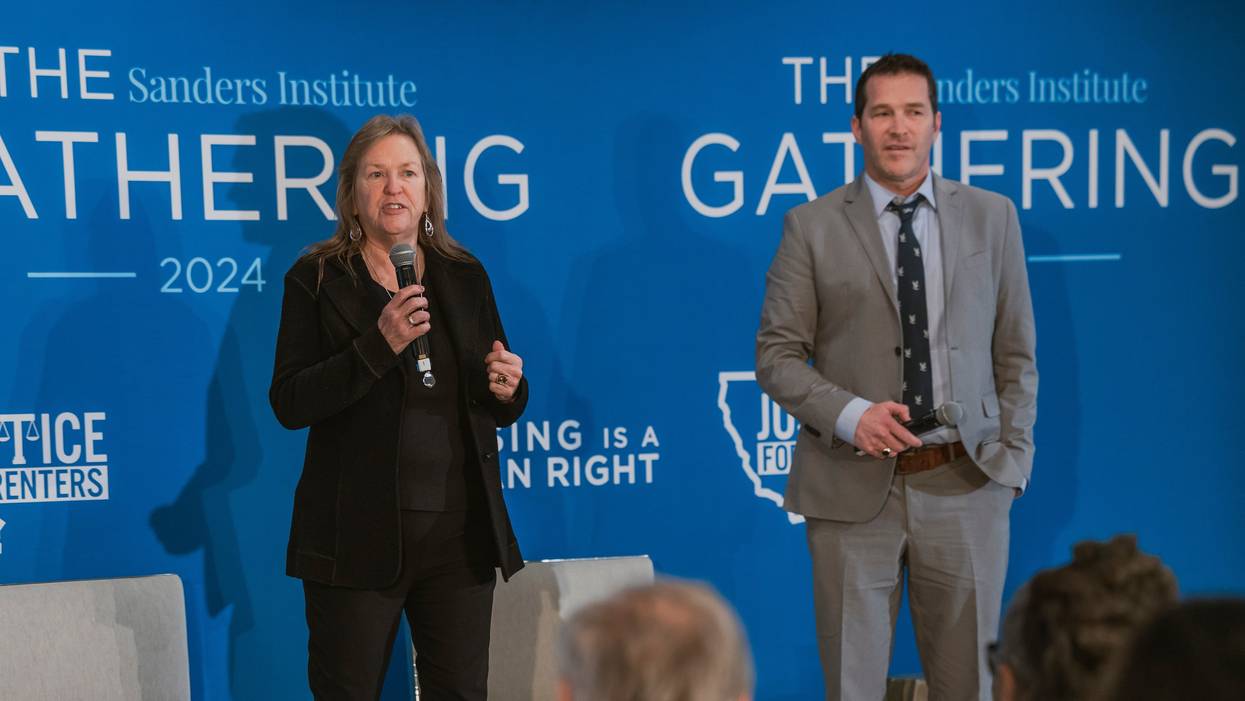
Those were the stated goals and repeated themes at the heart of a three-day event in Los Angeles over recent days, a gathering focused on the national housing crisis organized by the Sanders Institute, spearheaded by co-founder Dr. Jane O'Meara Sanders and executive director Dave Driscoll.
While the policy discussion around housing has a reputation for being dynamic and complex—especially as an issue that straddles municipal, state, and federal governance—the human story at the center of what it means to have a home or be housed is simple and universal, a thread woven into over a dozen panels, presentations, and keynote speeches by progressive lawmakers, top experts, frontline advocates, academics, and community organizers.
In a conversation with Common Dreams, Sanders and Driscoll explained that everyone who attended the event—kept intentionally small and low-profile—was told that the focus would be on "concrete remedies" and "replicable policies" with the ultimate purpose of informing a national audience about not only how severe the housing crisis has become, but also the concrete ways to address it.
"We believe democracy requires an informed electorate and civil discourse and bold ideas. That's part of our mission," Sanders said. "And the purpose was to come at the housing crisis from many aspects—not all of the aspects, but many of them—with the goal of actionable solutions."
"None of us are very interested in making small incremental change, which might mean building some more affordable housing or supporting this or that initiative. That's not what this is about." —Dr. Jane O'Meara Sanders, The Sanders Institute
But why housing? Why now? According to Sanders, the issue is potent politically because it's an issue that is not just about the poor and unhoused, but also central to the working class.
"Everybody knows somebody that has a problem getting affordable housing or just affording their life and having to make different choices," she told Common Dreams. "It's middle-income people, it's everybody having a problem with the housing crisis, and elected officials are getting pressure. Those lawmakers and politicians are hearing it more and more. And we said, okay, now's the time to bring people together around this."
Driscoll targeted private equity, Wall Street investors, and real estate developers that have used their outsized economic and political power to further skew the nation's housing market in search of ever-larger profits, squeezing out low- or middle-income individuals and families in the process.
"It's just another way in which the gap is growing between the rich and the poor and increasing inequality," said Driscoll. "And that needs to stop."
It is powerful interests most of all, says Michael Weinstein, president of the AIDS Healthcare Foundation (AHF), who must be named, shamed, and overcome if any of the progressive solutions championed at the gathering—including rent control, social housing models, community land trusts, more climate-resilient communities, and proven efforts to curb homelessness—are to have any hope of being implemented at the necessary scale.
Weinstein—a driving force behind the event, a supporter of the Sanders Institute, and a major player in California's healthcare and housing political landscape—agrees fully with Sanders and Driscoll that the moment, both in California and nationally, is ripe for an invigorating politics focused on housing.
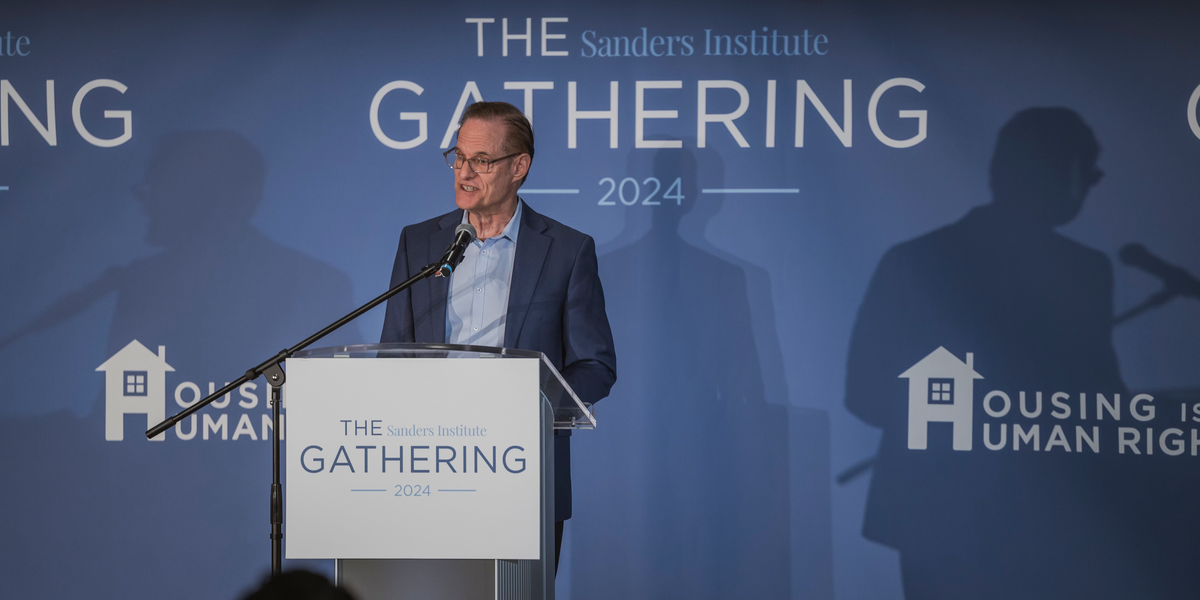
Michael Weinstein, president of the AIDS Healthcare Foundation, presenting at the Sanders Institute event in Los Angeles on Thursday, April 4, 2024. (Photo: © Bryan Giardinelli / The Sanders Institute)
During opening remarks focused on "perpetually affordable housing" and a 2024 ballot initiative in California that would end the state's existing ban on local rent control ordinances, Weinstein said that he has argued for years that "the housing issue was not high enough on the progressive agenda."
"This is a battle for the poor and working-class people in California," Weinstein said of the Justice for Renters campaign, an effort funded by AHF, local unions, and others to see the Justice for Renters Act become law via a ballot measure this year.
"There are 17 million renters in California—that's 45% of the population," he explained. "There are tens of millions more renters across the country. Our primary job as progressives is to improve the lives of people and housing is their greatest need."
If enacted, the law would remove the existing ban on rent control laws in California, encourage expanded rent control at the local level, and curb the power of "predatory landlords" who charge "unfair and unaffordable" rent.
While everyone at the gathering agreed more housing stock is a key part of the solution, Weinstein was among those who emphasized that the biggest obstacle is unaffordability of homes and rental units—a problem attributable to the greed of landlords and the investor class within an economy designed to siphon the wealth of workers into the coffers of the already rich.
"We can't address the housing crisis by chopping the weed off at the top. We have to pull it out by the roots," Weinstein explained. "And high rents are the root cause of the housing affordability crisis. It's that transfer of wealth that's causing the problem. And if we do nothing about rising rents, then nothing else we do in terms of producing housing or other changes will make a difference. If we continue to treat housing as a commodity, we'll never be able to house everyone. It's very similar to healthcare. If we leave it up to the marketplace, we're lost."
With the homeless population in Los Angeles estimated to be over 70,000—in a city of approximately 3.9 million—Weinstein said that L.A. is "not just the homeless capital of this country" but the "homeless capital of the world." This, he lamented, is "truly shameful," but also the reason why California has a vital role to play in showing people that the crisis can be confronted.
As a veteran healthcare advocate and the head of a nonprofit organization focused on AIDS, Weinstein rejected the accusation he sometimes receives from political opponents that he is somehow "out of his lane" by pushing so loudly and aggressively for rent control reforms. One reason that assessment is wrong, Weinstein explained, is that housing is the largest predeterminant of health, which is also why so many at the gathering rallied around the demand that housing be treated like the human right it is.
"But the main reason I'm involved in housing," Weinstein told the audience at the gathering, "is that I feel the same outrage about the housing situation and homelessness today as I did in the 1980s about AIDS, where the benign neglect saw tens of thousands of people die needlessly."
In his remarks, Weinstein stressed the crisis is a result of the most powerful in society refusing to meet the needs of its most vulnerable. But he said the galvanizing potential of housing—and the political potency and opportunities of social uplift embedded in the solutions presented at the conference—must be recognized.
"This is a cry for unity," he said. "Unity behind rent control and unity behind opposing corporate real estate and unity behind housing justice. There's no better time than now."
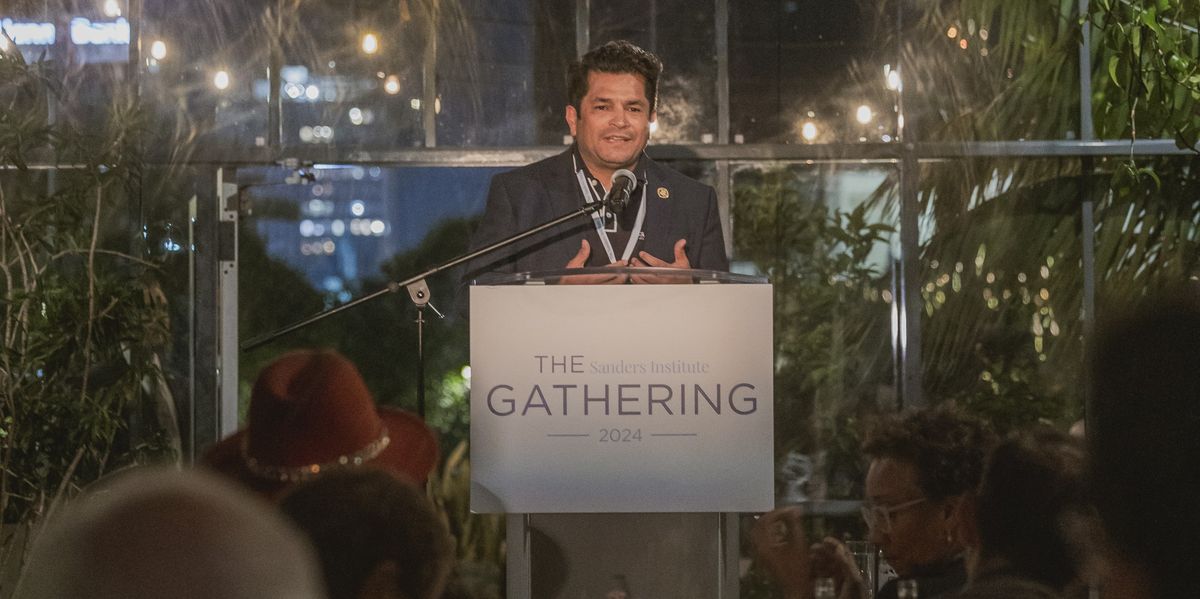
Rep. Jimmy Gomez (D-Calif.) said during the event that Democrats are ready to put housing back at the top of the party's national agenda. (Photo: © Bryan Giardinelli / The Sanders Institute)
The sense of urgency felt by attendees of the event was unmistakable.
Speaking at the opening night dinner for the conference, Rep. Jimmy Gomez (D-Calif.), who represents parts of Los Angeles County, said the creation of the Renters Caucus in Congress last year is a sign that lawmakers are beginning to take housing more seriously at the federal level.
The goal of the new caucus, Gomez said, "is to make sure that the renters agenda is at the top of the Democratic Party agenda." This was a focus of all the members of Congress who attended the gathering in some capacity, including Reps. Pramila Jayapal (D-Wash.) and Ro Khanna (D-Calif.) as well as Sen. Bernie Sanders (I-Vt.), also notable as Jane's husband. Driscoll is their son.
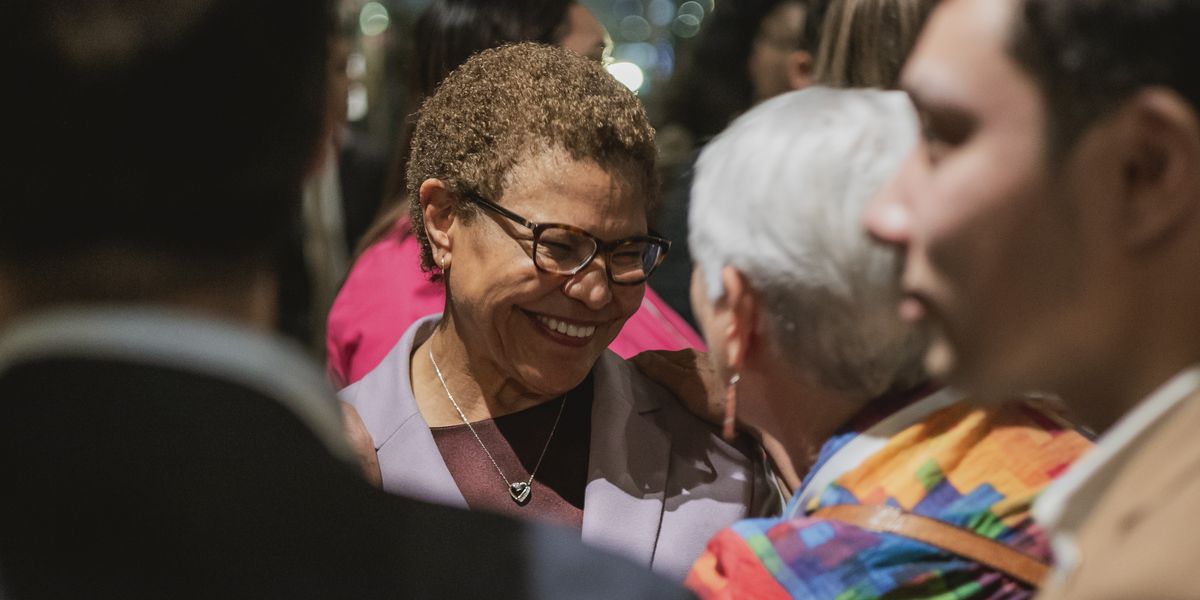
Los Angeles Mayor Karen Bass speaking with attendees at the event focused on the housing crisis, where she delivered an opening speech on the issue that focused on both the local battles for housing and, as a former member of Congress, the need for federal action. (Photo: © Bryan Giardinelli / The Sanders Institute)
Democratic Los Angeles Mayor Karen Bass, who left Congress to provide more local leadership, said she did so because she saw that the rightward political shift at the local government level was set to take the city backward on a numerous fronts, including on the issues of affordable housing, education, and homelessness.
Calling housing "one of the most important issues of our lifetime right now," Bass praised the Sanders Institute's focus on the crisis and for bringing the event to California. "I know that you are going to be the brains behind what we need, which is a national movement," said Bass. "That's the only thing that is going to bring about the type of fundamental change that we need."
"What we need... is a national movement." —Los Angeles Mayor Karen Bass
Speaking after Jayapal—who had told the audience the battle for better housing policy in the United States should be viewed much like the battle for universal healthcare—Bass acknowledged there are things on the housing agenda that will require action by leaders at every level of government.
"But nothing takes the place of the grassroots day-to-day organizing that is needed," she said, "so that we can win what Pramila said: Housing should be a human right in the richest country in the history of the world, just like healthcare should be a human right."
According to Sen. Sanders, who delivered the keynote address and was an active participant throughout, the purpose of the gathering was to get beyond talk in order to get down to the real work of making change.
"Our task is to organize and to educate," Sanders said. "It's easy to come up with rhetoric—which I have done once or twice in my life—but when you're the mayor of a city, you're going to need some concrete plans. How do you do it? You're going to have to bring a lot of smart people together to figure out the best way forward."
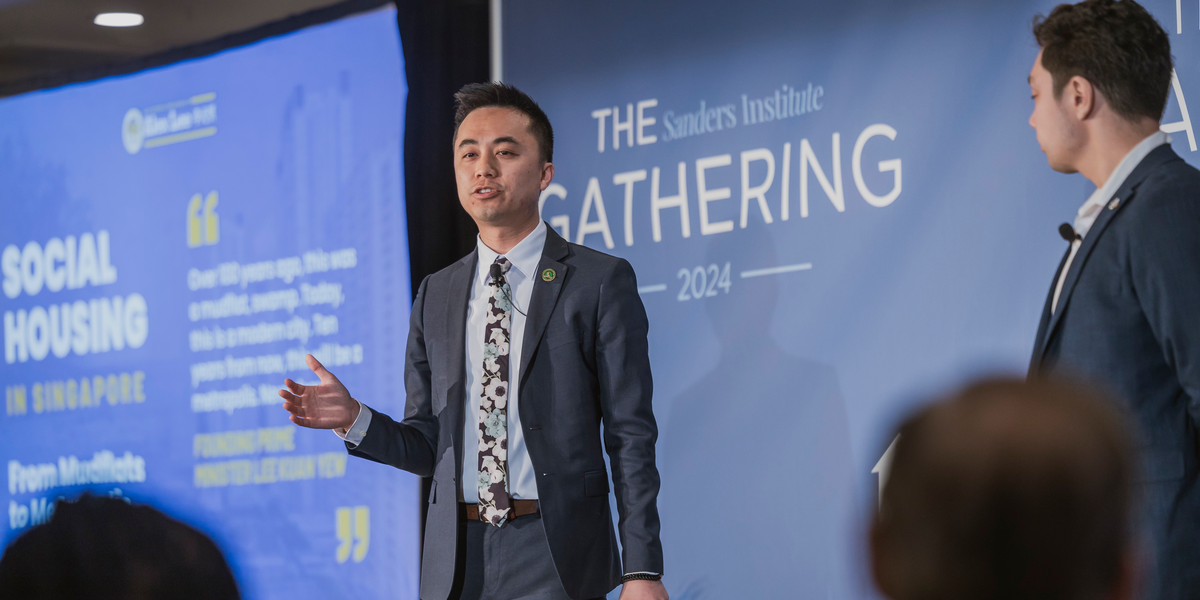
California Assemblyman Alex Lee (D-25), center, and South San Francisco Mayor James Coleman, right, present on social housing models during the event in Los Angeles on Thursday, April 4, 2024. (Photo: © Bryan Giardinelli / The Sanders Institute)
A constant theme at the event was that not only does the housing crisis demand progressive solutions, but the implementation of those solutions are themselves opportunities to revive democracy, increase social cohesion, and expand the public imagination.
In their joint presentation on social housing, California Assemblymember Alex Lee (D-25) and South San Francisco Mayor James Coleman, also a Democrat, detailed a vision for "social housing" which aims to demolish preconceived notions that tend to dominate understandings of "public housing" throughout the United States.
When it comes to defining the term "social housing," Lee explained that he likes to "keep it simple." Social housing, he said, "is beautiful, sustainable, and publicly led developed housing that is available to everyone and for everyone."
The idea of universality, he emphasized, is critical in the U.S. context where public housing is typically subsidized housing only for low-income individuals or families. Social housing models across the world provide housing across economic classes, which creates more buy-in from communities and residents.
"There's a very deliberate reason of why we stick to the term social housing," Lee said, "even though it is three letters away from a scary thing that Americans fear." But it is the term used around the world, he explained—both in highly capitalistic economies like Singapore's as well as in the various social democracies of Europe and beyond.
Because it's housing for everyone—the poor, the middle class, and even the upper-middle class—Lee and Coleman explained that "universality" and the lack of means-testing are core components of a model they believe can transform people's understanding of what's possible in this country.
"With social housing," argued Coleman, "you'll see broad spots of the public be able to look at it and say: 'That is quality housing. I want to live there. I want my children to live there and I know I'm going to be paying lower rents than market rate.' And when people start seeing that, then they're going to want to continue to invest in social housing and we won't see the decades of disinvestment that we have seen here in the United States for our public housing program."
In an interview with Common Dreams, Lee offered a parallel example.
"In America," he said, "there is no constitutional guarantee of education, yet every parent will wake up tomorrow not having a single doubt in their mind that their child will go to school." Lee acknowledged not all children go to the same kinds of school, but said that people never doubt that education will be there for their families.
"But there is not the similar sense of options in housing—people don't have that." But they should, he said, and there are models out there—not just abroad but also examples in the U.S.—that show how it could work.
Citing housing construction in the post-war years, Lee said the country has shown it's capable of amazing things when it comes to housing.
"We could end the housing crisis in four years, at true scale," said Lee. "That's why it's really important to prove that this can work at the state level, especially in a state as populous as California. If we prove the concept here, we can show nationally how it can be done."
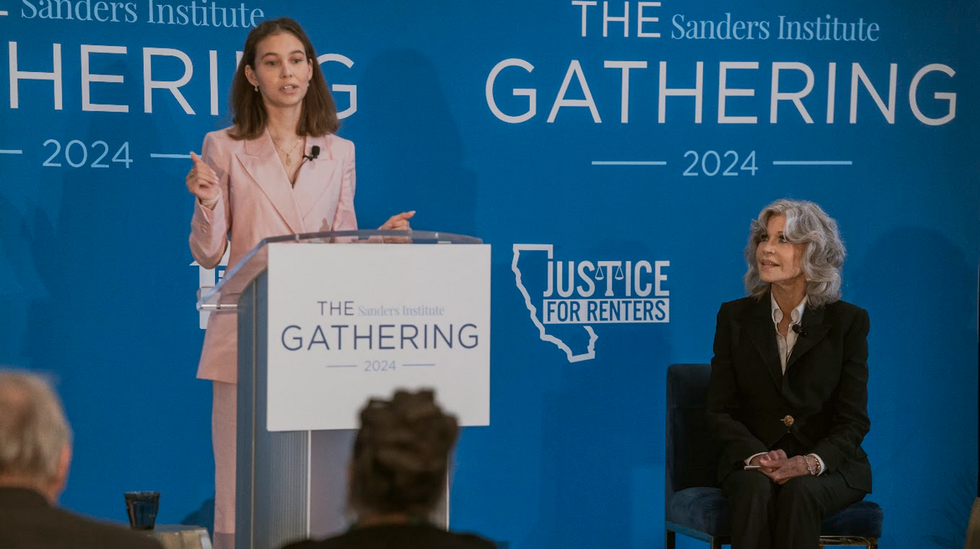
Actor and activist Jane Fonda and community organizer Nalleli Cobo speak to the audience at The Gathering. (Photo: © Bryan Giardinelli / The Sanders Institute)During another session, actor and activist Jane Fonda presented alongside local activist Nalleli Cobo, a cancer survivor who has been fighting the oil industry that operates drilling wells in her urban neighborhood since she was a child.
Cobo, co-founder of the South Central Youth Leadership Coalition and a 2022 Goldman Environmental Prize winner for the activism that she initiated while still a teenager living in South Los Angeles, told the audience that the hard-fought victories she and her allies were able to win against the fossil fuel industry "were made possible because of a frontline community that was historically viewed as silenced, invisible, and disposable finally said: 'Enough is enough. We deserve to open our windows and our home and we deserve to breathe clean air.'"
"This is the largest crisis humanity has ever faced. We're running out of time and we have to fight back." —Jane Fonda
Living her whole life in a home neighboring a fossil fuel operation beset Cobo with health challenges throughout her childhood and ultimately led to a cancer diagnosis. Now three years in remission, she said affordable and healthy housing is something that every single member of society is entitled to.
"They may not be drilling in your community right now, but they can be unless we stand up and fight back," she said.
With nearly 3 million Californians living within a mile or less from oil and gas drilling wells, Fonda championed the courage and determination of Cobo to end this toxic practice, including with a ballot fight in California this year to ban such operations permanently.
"What Nalleli didn't tell you," Fonda told the audience when she took the podium, "is that at age 10 and 11, she and her mother had to be put into a witness protection program because of her organizing in the community to shut the oil well down; that at 19 she had to have a total hysterectomy; that her dream was to be a dancer and now that is no longer possible for her."
People must understand, Fonda said, that "the climate crisis is actually a massive health crisis" for people living in communities made toxic by fossil fuels all over the country and around the world. A cancer survivor in her own life, Fonda said she was told by someone when she threatened to tattoo the phrase "climate emergency" on her bald head if the chemotherapy took her hair that "the cancer community doesn't like to be looped in with other causes."
"Causes?!" she recalled exclaiming in response. "Honey, the climate crisis is not a cause. This is the largest crisis humanity has ever faced. We're running out of time and we have to fight back."
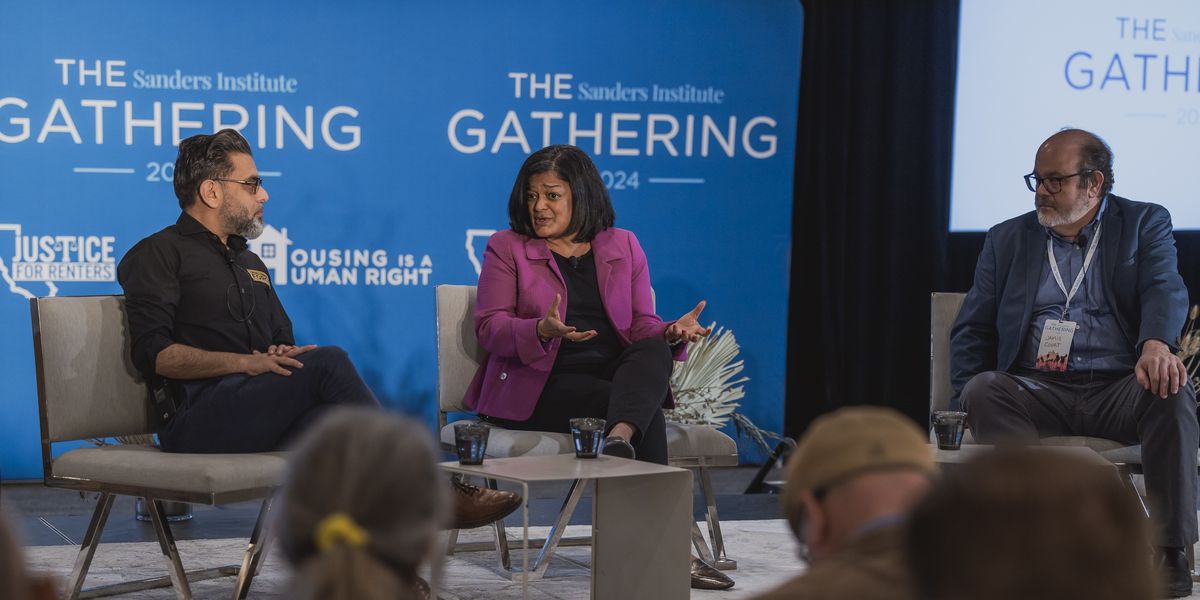
(From left): Author and labor organizer Saket Soni, Rep. Pramila Jayapal (D-Wash.), and Consumer Watchdog's Jamie Court. (Photo: © Bryan Giardinelli / The Sanders Institute)
Also on the climate front—which highlighted the intersectional style of the Sanders Institute's gathering—Congresswoman Jayapal joined with author and labor organizer Saket Soni as well as Jamie Court of the California-based Consumer Watchdog, an advocacy group, to discuss the linked issues of community resilience amid extreme weather disasters and soaring insurance costs that have arrived hand-in-hand with rising global temperatures.
While Soni in his work has been at the forefront of building up climate resilience in communities for decades—both by helping to mitigate the impact of extreme weather and also working on disaster relief and rebuilding—Jayapal explained that she has a bill in the U.S. House—called the Climate Resilience Workforce Act—that would formalize processes and establish funding to make such work a more integral part of federal, state, and local planning.
Among others, one component of the legislation would be to make sure that people in communities "disproportionately affected by climate change are actually at the table" when federal funds are dispersed.
According to the panel, the increasing impacts of climate change are a key driver of housing costs but nothing will get better without a justice lens through which to see the crisis of housing in an increasingly hotter world that is resulting in more floods, larger fires, and too little accountability for the corporate interests profiting from those extremes.
"In the context of our climate crisis," Soni explained during the panel discussion, "there is an opening for justice that Jayapal's bill is trying to take and that we're all trying to take. There is an opening where resilience is a framework that can accelerate housing justice, justice for the incarcerated, and justice for immigrants. And that's what we should all be trying to do, is look at how resilience is a real majoritarian framework—maybe one of the last ones left in our country—and inside of that there is so much consensus that we can push justice forward in many, many ways."
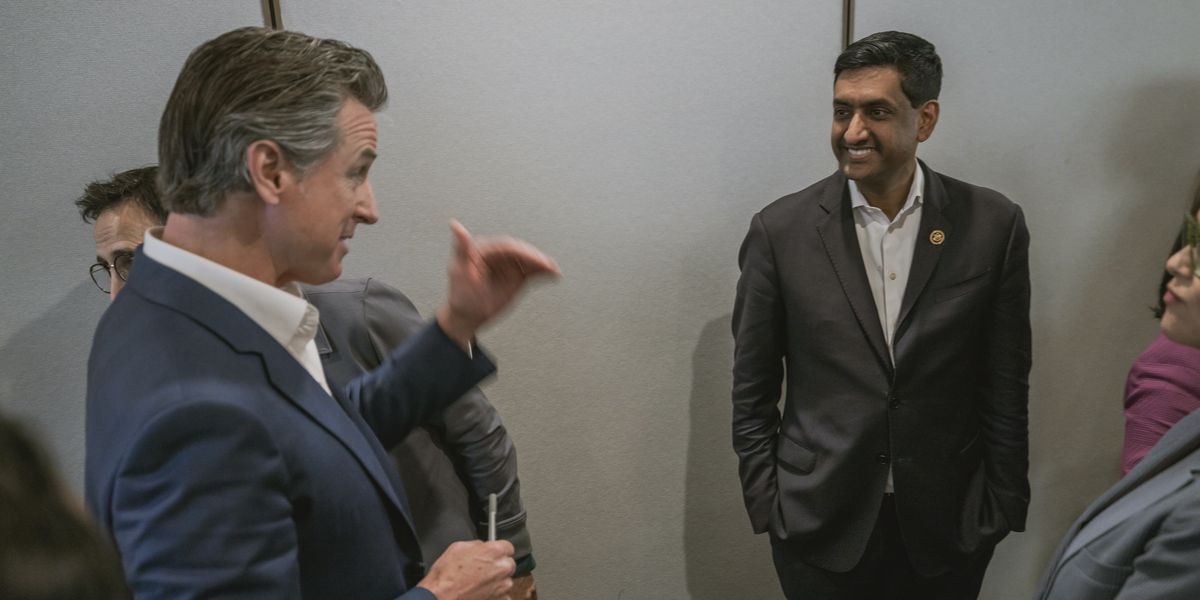
California's Democratic Gov. Gavin Newsom talks with Rep. Ro Khanna (D-Calif.) during the event in Los Angeles on Thursday, April 4, 2024. (Photo: © Bryan Giardinelli / The Sanders Institute)
On the state level, California's Democratic Gov. Gavin Newsom arrived at the event to champion the recently approved measure known as Proposition 1, which will, among other things, provide state revenue from a nearly $6.4 billion bond to build and service more treatment beds for those experiencing severe mental health and addiction disorders as a way to curb homelessness across California.
During a panel discussion with Sacramento Mayor Darrell Steinberg and California Secretary of Health & Human Services Dr. Mark Ghaly, both Democrats, Newsom said that Prop. 1 would allow for a "strike force" that could better confront the overlapping issues of housing, homelessness, mental health, and substance addiction disorders.
Acknowledging the potential for hyperbole, Newsom said he believes what's contained in the new law "are the most significant" and far-reaching "behavioral health reforms happening anywhere in the United States of America."
While the debate over Proposition 1 was heated in the state, including among progressives who landed on various sides of the initiative, a subsequent panel focused on the implementation mostly landed on the side of cautious optimism for what it could be and what kind of model it might represent.
"There is a lot of potential for Prop 1," said Dr. Margot Kushel, professor of medicine at University of California San Francisco and director of the UCSF Benioff Homelessness and Housing Initiative.
"No matter where you stood on it before it passed," Kushel added, "there is a lot of potential now that it's here and we need to exercise that in the right way, which is that we need to be sure that it is used to enable these living-in-the-community, choice-driven, client-driven, but very supportive programs for people who are suffering terribly."
The evidence for what it will take to solve the mental health crisis as it pertains to homelessness, said Kushel, is overwhelming. "You don't need me to do more studies on it," she said, "we actually just need to bring to bear that funding [supplied by Prop 1] to solve some of these really sticky funding issues so that we can create the workforce, sustain the workforce, and create the programming" that will really serve the unhoused population "with dignity" in the communities they live in.
Several researchers presented on the severe impacts that homelessness and housing insecurity have on students and young people, including those in the foster care system. Other presenters described how community land trusts and other innovative housing collaborations, including faith-based initiatives, are providing models that could be replicated nationwide. Separately, a panel focused on the struggle of homeless veterans told the harrowing tale of former U.S. soldiers denied access to housing and care in Los Angeles who remain in a protracted legal fight with the U.S. Department of Veterans Affairs over land set aside for exactly that purpose.
"We don't suffer from scarcity in this country, we suffer from greed. We have enough money to house people and to create situations where people aren't going to fear for what tomorrow's going to look like." —Rep. Pramila Jayapal
In her reflections as a presenter and participant of the gathering, Congresswoman Jayapal explained to Common Dreams that the event was significant because "it lifted up an issue that" has been central for progressives but too often ignored and neglected by those in the media and within both major political parties.
"We don't suffer from scarcity in this country. We suffer from greed," Jayapal said. "We have enough money to house people, and to create situations where people aren't going to fear for what tomorrow's going to look like."
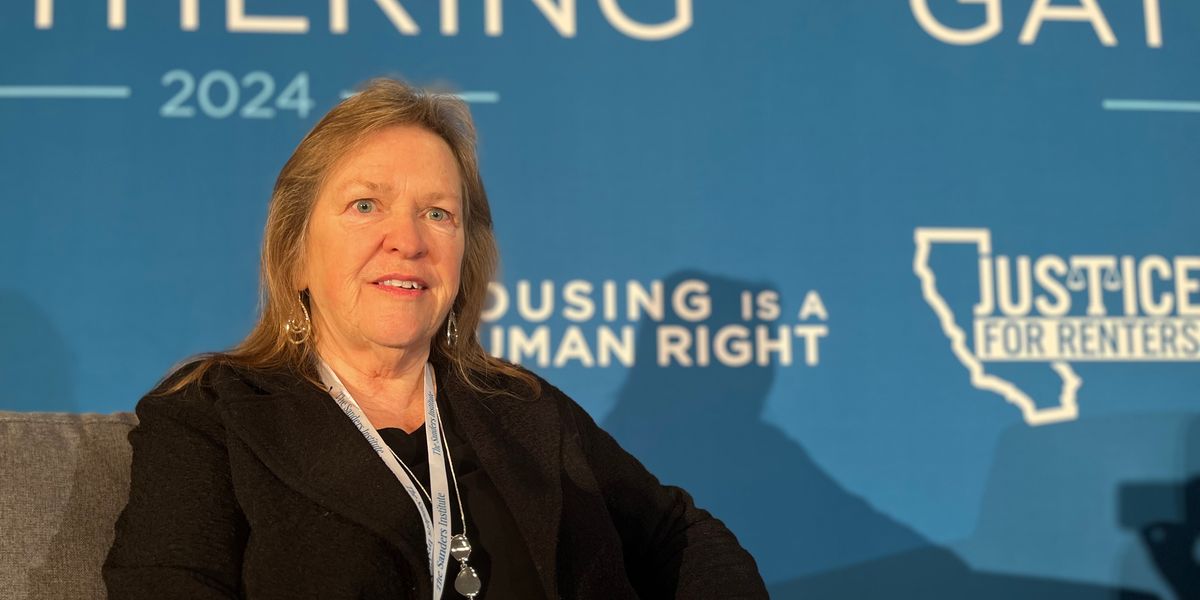
Sanders Institute co-founder Dr. Jane O'Meara Sanders in Los Angeles on Friday, April 5. "We're talking about transformational change," she said about the event. (Photo: J. Queally / Common Dreams)
The germination of the gathering, Jane Sanders explained to Common Dreams in the wake of the three days, was like "peeling back the onion" as one area of focus led to another, and a discussion with one invited expert resulted in the introduction to another.
As she realized the issue of housing was such a "hornet's nest" of intersecting issues, overlapping viewpoints, and innovative thinking, Sanders said it became increasingly clear that was exactly the reason to go forward with the event.
"We're talking about transformational change," she said of the work that she, Driscoll, and their colleagues are doing at the Sanders Institute. "None of us are very interested in making small incremental change, which might mean building some more affordable housing or supporting this or that initiative. That's not what this is about."
The Sanders Institute was initially in founded in 2018 with the goal of extending the energy, ideas, and political movement sparked during Bernie's presidential run in 2016. When the senator decided to run again in 2020, Jane and Dave decided to pause operations and then went into full hiatus when the coronavirus pandemic hit. In this context, holding an intimate housing conference in Los Angeles was conceived as a reawakening for the organization and a chance to let people know the time has now arrived to continue their original mission.
Reflecting on his experience after the gathering had concluded, Driscoll said it had been great to see so many people—whether in government or through an organization or at the grassroots level—having the chance to connect, learn from one another, and hopefully collaborate in the future.
"Sometimes this can be a lonely fight, whether or not you're fighting for housing or you're fighting for healthcare, sometimes you feel like you're not getting anywhere," he said. "But when you bring all these people together like we did over the last couple days, I felt at times a real energy in the room. People felt good about a really tough fight. So I think it inspired and fired people up, and also gave people hope for the future."
While they don't have it pinned down yet—that was the admission of the gathering—the point going forward is to clarify what the progressive agenda on housing should be and help push out to others how that fits into the broader movement for bold and lasting change.
When it comes to the opponents of such transformational proposals—national rent control, expansion of social housing, ending homelessness, or forging the Green New Deal for public housing—Driscoll said it's important that people understand powerful financial interests will fight such ideas with everything they have.
"We need to start calling people out like we did with tobacco money or with oil money," Driscoll said. "We need to start calling people out and saying, you're taking money from big real estate and developers that are causing this harm and stopping this progress." As is true in so many other areas of policy and politics, he said, following the money will be key in the battles to come.
"I don't like to call out individuals," Sanders said, "but we need to call out the system."
"It's a systematic problem that we don't say 'housing is a human right.' That's not shared in a capitalist society," she continued. "Not everybody would agree with that statement. We agree with that statement, but it's not one of those accepted truisms in this country. So what's our goal? That it become one."
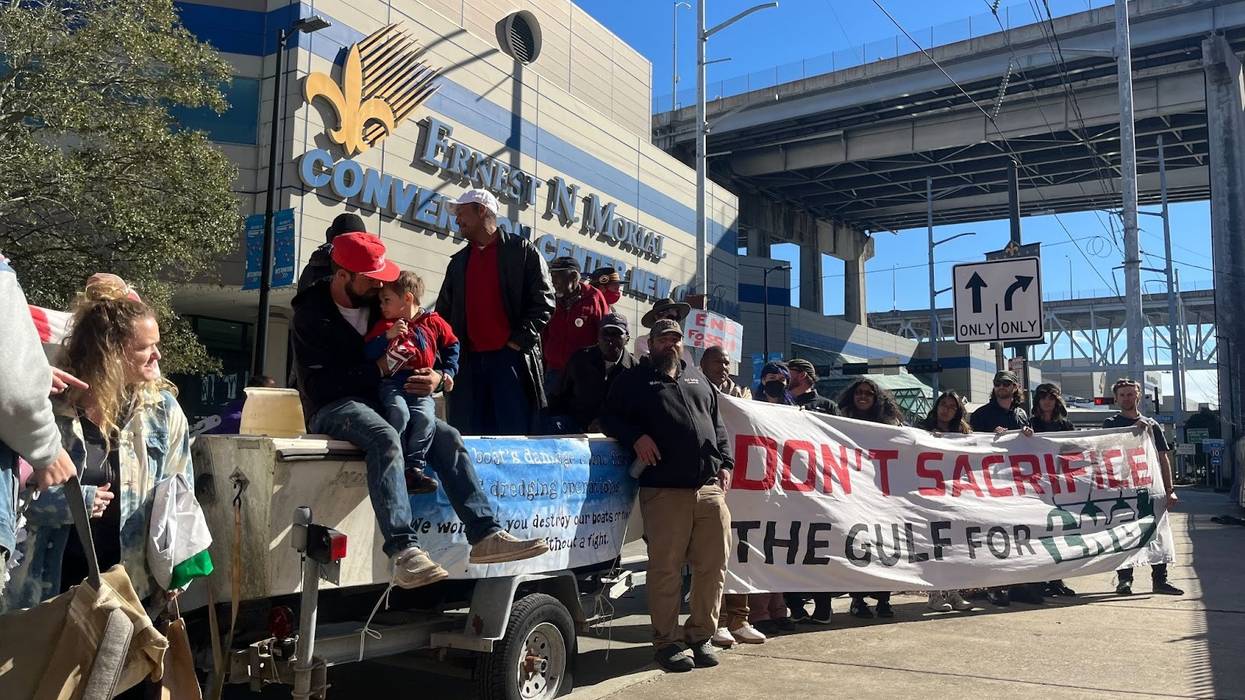
"We want our oystering back. We want our shrimp back. We want our dredges back. We want LNG to leave us alone," one participating fisherman said.
Frontline fishers and environmental justice advocates forced the meeting of the Americas Energy Summit in New Orleans to end two hours early on Friday, as they protested what the buildout of liquefied natural gas infrastructure is doing to Gulf Coast ecosystems and livelihoods.
Fishers and shrimpers from southwest Louisiana say that new LNG export terminals are destroying habitat for marine life while the tankers make it unsafe for them to take their boats out in the areas where fishing is still possible. The destruction is taking place in the port of Cameron, which once saw the biggest catch of any fishing area in the U.S.
"We want our oystering back. We want our shrimp back. We want our dredges back. We want LNG to leave us alone," Cameron fisherman Solomon Williams Jr. said in a statement. "With all the oil and all the stuff they're dumping in the water, it's just killing every oyster we can get. Makes it so we can't sell our shrimp."
The protest was part of the growing movement against LNG export infrastructure, which is both harming the health and environment of Gulf Coast residents and risks worsening the climate crisis: Just one of the more than 20 proposed new LNG terminals, Venture Global's Calcasieu Pass 2, would release 20 times the lifetime emissions of the controversial Willow oil drilling project in Alaska. Activists have also planned a sit-in at the Department of Energy in Washington, D.C., from February 6-8 to demand the agency stop approving new LNG export terminals.
The Americas Energy Summit is one of the largest international meetings of executives involved in the exporting of natural gas. More than 40 impacted fishers brought their boats to New Orleans to park them outside the Ernest N. Morial Convention Center, where the meeting was being held. After a march from Jackson Square, the fishers revved their engines to disrupt the meeting. One attendee said the disruption forced the meeting to conclude at 11 am ET, two hours earlier than scheduled.
"Wen you're here on the ground, seeing it with your own eyes and talking to the people... it feels like looking into the devil's eyes."
"They going to run us out of the channel and if they run us out of the channel then it's over," Phillip Dyson Sr., a fisherman who attended the protest with his children, grandchildren, and great-grandchildren, said in a statement. "We fight for them. We fight for my grandson. Been a fighter all my life. I ain't going to stop now. So long as I got breathe I'm going to fight for my kids. They are the future. Fishing industry been here hundreds of years and now they're trying to stop us. I don't think it's right."
The fishers were joined by other local and national climate advocates, including Sunrise New Orleans, Permian Gulf Coast Coalition, Habitat Recovery Project, the Vessel Project, For a Better Bayou, the Louisiana Bucket Brigade, and actress and activist Jane Fonda.
"I thought I understood. I read the articles, I read the science, I've seen the photographs. But when you're here on the ground, seeing it with your own eyes and talking to the people... it feels like looking into the devil's eyes," Fonda said at the protest. "I've talked to people who have lost what was theirs over generations and are losing their livelihoods, the fishing, the oystering, the shrimping…"
Fonda called on the Biden administration to take action: "If President [Joe] Biden declared a climate emergency he could take money from the Pentagon and he could reinstate the crude oil export [ban]. Once the export ends, the drilling will end. They're only drilling because they can export it."
The successful action came despite interference from police, who threatened to issue tickets and tow away the six boats the fishers had originally parked in front of the convention center. Some participants agreed to move their boats, but the group was able to park two boats in front of the center and persevere in their protest.
"We're standing in the fire down there. And these people over here, the decisions that they make, for which our fishermen are paying the price. That's bullshit," Travis Dardar, who organized the fishers' trip and founded the group Fishermen Involved in Sustaining our Heritage (FISH), said in a statement."The police got us blocked here, they got us blocked there. But know that the fishermen are here and we're still going to try and give them hell."
"Will you be the president who helped put an end to the plastic pollution crisis, or someone who let it spiral further out of control?"
Actors known for their environmental advocacy—including Jane Fonda, Jason Momoa, Joaquin Phoenix, Susan Sarandon, and Laura Dern—joined Greenpeace USA on Thursday in an open letter to U.S. President Joe Biden urging his administration to "protect the planet from plastic pollution" and slash carbon emissions "by supporting a strong global plastics treaty."
"We appreciate your leadership in securing a global oceans treaty that creates a path to protecting 30% of our oceans by 2030," the letter's signers told Biden. "Winning the treaty was truly a historic moment, one of the greatest environmental achievements in history."
"We're calling on President Biden to put aside fossil fuel and plastics industry interests and lead us on the path that prioritizes human health, biodiversity, and our communities."
"At the end of May, delegates from around the world will convene in Paris for the second round of negotiations on a global plastics treaty," the letter continues, referring to talks hosted by the United Nations Environment Program (UNEP).
"While you have signaled support for this treaty, the U.S. position is not yet strong enough," the letter argues. "Currently, the U.S. is not calling for a cap on plastic production—which is the only real way to stop plastic pollution. In 2021, the U.S. only recycled a mere 5% of plastics produced."
The letter continues:
Plastics are polluting and harmful at every stage of their life cycle—from extraction to disposal. Ninety-nine percent of plastics come from fossil fuels; cutting plastic production will make a significant dent in carbon emissions. There are communities living next to refineries and petrochemical facilities who are bearing the combined brunt of the climate and plastic crises. People living near these facilities—overwhelmingly people of color—face higher rates of cancer, asthma, and adverse birth outcomes.
"President Biden, you have a once-in-a-lifetime opportunity to help our climate, our oceans, and our communities this year by supporting a strong and ambitious global plastics treaty," the signers asserted. "The decision you make on this critical issue will help define your legacy—will you be the president who helped put an end to the plastic pollution crisis, or someone who let it spiral further out of control? We're calling on you to do the right thing."
Other actors who signed the letter include Rosana Arquette, Alec Baldwin, Ed Begley, Ted Danson, Piper Perabo, Kyra Sedgwick, William Shatner, and Shailene Woodley.
Greenpeace is proposing a seven-point plan for the global plastics treaty:
"Many environmental groups and frontline communities are disappointed with the U.S.' current position on the treaty, as it does not call for a cap on plastic production and instead focuses on recycling," Greenpeace USA senior plastics campaigner Lisa Ramsden said in a statement.
"Recycling will never solve the plastic waste problem," Ramsden added. "We must stop plastic waste at its source, and we're calling on President Biden to put aside fossil fuel and plastics industry interests and lead us on the path that prioritizes human health, biodiversity, and our communities."
On Tuesday, UNEP published a report contending that global plastic pollution can be reduced by 80% by 2040 if countries and corporations enact major changes using existing technologies. However, the report was criticized by some environmentalists for promoting the burning of plastic waste.
UNEP has also come under fire in recent days for issuing just one pass per organization attending the Global Plastics Treaty negotiations in Paris.
The goal of the New York protest was to call out President Biden for backtracking on his climate commitments by approving fossil fuel developments like the Willow project.
Climate campaigners including actress and activist Jane Fonda and human rights lawyer Steven Donziger took over New York's Fifth Avenue Wednesday night outside a $25,000-per-plate fundraiser for President Joe Biden's reelection bid.
The coalition of protesters assembled under the banner of Climate Defiance, which broke onto the scene by blockading the White House Correspondents' Dinner last month. The activists called on Biden to honor his climate commitments as he seeks reelection.
"The goal was to call out President Biden on his backtracking on climate and to make sure that people understand he promised to be better on climate than he has been," New York Communities for Change senior director of data and research José González, who attended the protest, told Common Dreams.
Climate Defiance is a new group that uses nonviolent direct action to push for climate policies in line with scientific reality. Their goals include ending oil and gas drilling on public lands and waters, stopping the practice of allowing frontline communities to serve as "sacrifice zones" for extractive industries, and making support for fossil fuels as taboo on the left as opposing abortion rights or gay marriage. They proposed the idea for Wednesday's protest, while New York Communities for Change helped to coordinate local participation, González said.
One of Climate Defiance's goals is to "make clear to Democratic lawmakers that the youth vote will only deliver for them if they deliver for us," and this last point was a major theme at Wednesday's protest, which took place blocks away from the Upper East Side home of former Blackstone executive Tony James, where Biden was attending a $25,000-per-plate fundraiser for his 2024 reelection campaign, The Villager reported.
"The president is over there taking corporate money," Donziger—who challenged Chevron over oil spills in the Ecuadorian Amazon and ended up under house arrest when the company retaliated against him—said at the protest, as the Independent reported. "He claims to be the climate president yet he's taking corporate money from these industries that are destroying the planet. You cannot do both."
"He was elected by people who were very concerned about it, who trusted him."
Young and climate-focused voters have felt betrayed by Biden after he ran on a promise to end fossil fuel extraction on public land, but has since approved more oil and gas drilling permits during his first two years than former President Donald Trump during the same timeframe.
"He was elected by people who were very concerned about it, who trusted him," González told Common Dreams.
Biden has especially come under fire for approving the controversial Willow project in Alaska, which could release around 280 million metric tons of carbon dioxide into the atmosphere, despite the fact that the International Energy Agency has said that governments must avoid new fossil fuel developments if they want to reach net-zero by 2050 and limit global warming to 1.5°C above preindustrial levels.
Michael Greenberg of Climate Defiance criticized Biden for attending a dinner at an apartment worth $29.4 million while refusing to respond to the more than three million people who signed a petition opposing the Willow project. Greenberg observed that the president's approval ratings have decreased since he approved the ConocoPhillips' drilling plan.
"Climate voters elected Joe Biden and we cannot and will not be ignored," Greenberg said.
Laura of the Sunrise Movement—which helped get out the youth vote for Biden in 2020— implied in an interview with Jon Farina that the president was hurting his 2024 chances by not taking a stronger stand against new fossil fuel projects.
"We can't tell people to vote for him in the next election if he is not going to protect our planet, protect our future, and phase down fossil fuels in the next six, seven years," Laura said.
The 50 to 100 activists first gathered in Doris C. Freedman Plaza for a rally, then marched up Fifth Avenue toward the building where the fundraiser was being held. Gonzalez said they made it within eye-shot of the building before the 10 to 12 police barricading the street stopped their progress.
Chants included, "Joe Biden, get off it. Put people over profit," and, "We need clean air! Not another billionaire!"
Among the coalition were members of Sunrise Movement NYC, New York Communities for Change, Food & Water Watch, Climate Defenders, Climate Families NYC, and Reclaim Our Tomorrow, González confirmed.
He said that he sensed a shift in tone at the demonstration, as people who were worried about the climate emergency and angry at Biden's actions or lack thereof felt prepared to take their activism to the next level, and he said this was reflected in Fonda's remarks.
"Now is the time for civil disobedience, right?" she asked the crowd. "We've marched. We've protested. We've written. We've made speeches. We have to up the ante now to save our planet and our future. The window on that is closing rapidly, and we have to do something about it, and we have to be very brave."
González also said that passersby seemed more eager than usual to give their numbers and get involved, and that they only faced one right-wing counterprotester.
Going forward, González said the coalition represented by Wednesday's protest will continue to put pressure on Biden across the country.
"I don't think we see a choice," he said. "This has to happen now. There needs to be a plan to wean the country, the world off of fossil fuels. That's what we want."
"We have to show young people we have their back," said veteran climate advocate Bill McKibben.
Determined not to leave all the responsibility for climate action with young campaigners like Greta Thunberg and the Sunrise Movement, older Americans are organizing a nationwide Day of Action planned for Tuesday, with the aim of wielding the relative political and economic power of people aged 60 and up to pressure big banks to stop funding fossil fuel projects.
Following actor and activist Jane Fonda's "Fire Drill Friday" protests that began in Washington, D.C. in 2019, longtime climate advocate Bill McKibben founded Third Act last year to mobilize older Americans who wanted to show solidarity with the Generation Z activists leading worldwide climate protests in recent years.
The grassroots effort quickly attracted 50,000 members, many of whom are taking part in the organization's Stop Dirty Banks action on Tuesday—a nationwide blockade of the branches of banks like Wells Fargo, Chase, Citibank, and Bank of America, which have collectively poured $1.1 trillion into fossil fuel projects since the 2015 Paris climate agreement was forged.
Nearly 100 public actions on Tuesday will include a literal "Rocking Chair Rebellion," as McKibben has called the movement, with advocates placing painted rocking chairs at the entrances of bank branches, slicing credit cards with giant pairs of scissors, and displaying papier mache orcas that will eat credit cards to demonstrate that older Americans will no longer support companies that back plant-heating oil and gas projects.
"We have everything we need to turn toward clean energy," said Akaya Windwood, a longtime social justice leader who leads Third Act's advisory council, in a video posted to social media ahead of the protest. "All we're lacking is the political and economic will, so we're calling out the big banks to disinvest in fossil fuels and invest in air that all of us can breathe."
Windwood filmed herself cutting up her credit card ahead of the Day of Action, as did writer Rebecca Solnit, mountain climber Kitty Calhoun, and ocean conservationist Wendy Benchley.
In an op-ed for Common Dreams last week, McKibben, who is 62, noted that his generation on the whole has amassed more "structural power" than the young people who have worked to pressure lawmakers to support the Green New Deal and organized school walkouts as part of the Fridays for Future movement.
"We all vote, so the political impact of the 70 million Americans over 60 is much magnified," wrote McKibben. "And we ended up—fairly or not—with something like 70% of the country's financial assets, so we can put some pressure on banks."
McKibben added that it is "ignoble and impractical" to leave climate action up to younger people.
"So far the kids have had to do all of the work and they've done an amazing job but it's not fair to ask 18-year-olds to solve this problem," the author and 350.org cofounder told The Guardian. "We have to show young people we have their back. I'm going to be dead before the climate crisis is at its absolute worst, but being nearer the exit than the entrance concentrates one's mind to notions of legacy and we are the first generation to leave the world in a worse place than we found it."
McKibben will join rally-goers on Tuesday in Washington, D.C., where activists will stage a "rocking chair rebellion" in an intersection outside two of the "big four" banks.
The nationwide Day of Action is being held a day after the Intergovernmental Panel on Climate Change (IPCC) issued its latest report on the climate crisis, showing, as United Nations Secretary-General António Guterres said, that all licensing and funding of new oil and gas extraction must be ceased and all public and private funding of coal must come to an end.
From California to New York, McKibben said Monday on social media, advocates have been alerting bank branches about the coming public actions—displaying all-night projections at Wells Fargo and Chase locations that warn, "Banks: Cut it out or we'll cut it up."
"Banks have particular reason to listen to older people, because so much of the money in the vault belongs to them," wrote McKibben last week. "And because we're hard to outwait. Youth climate organizers have only a decade or so before they're on to the next stage of their lives. Sixty year-old climate activists are likely to have twice that long or more—and we've often got lots of free time."
"Chase and Citi and Wells Fargo and Bank of America should be worried: we're not going anywhere any time soon," he added. "We'll just keep rocking on."