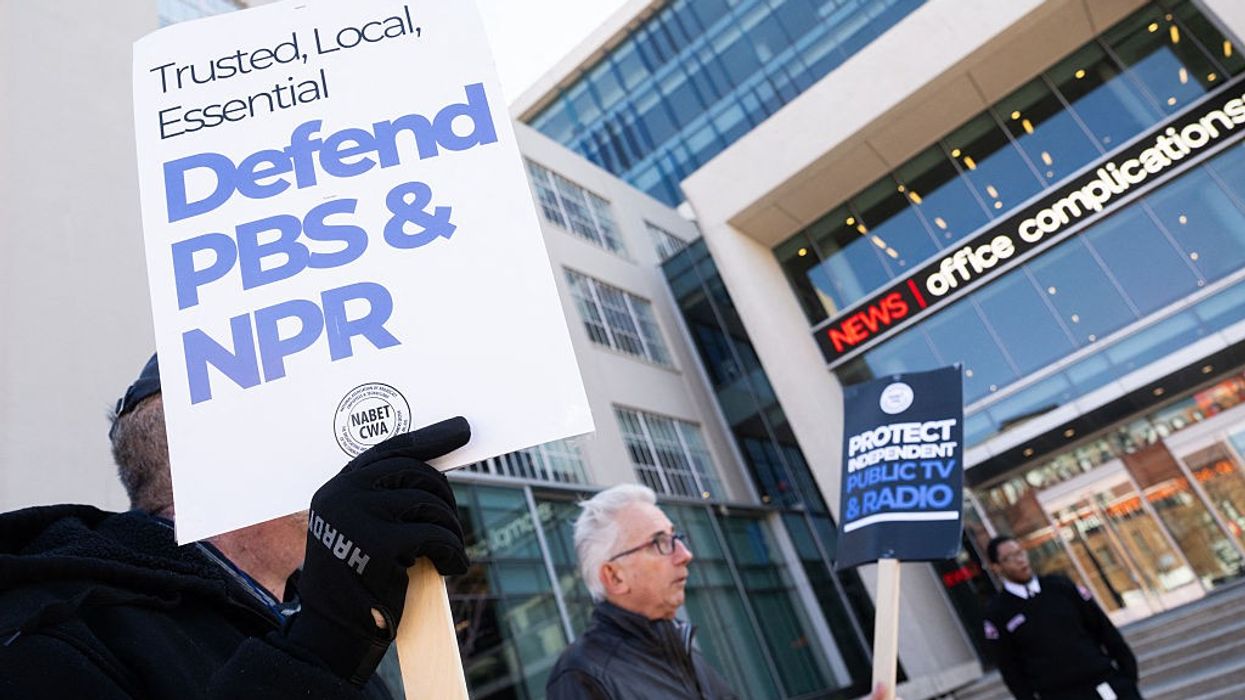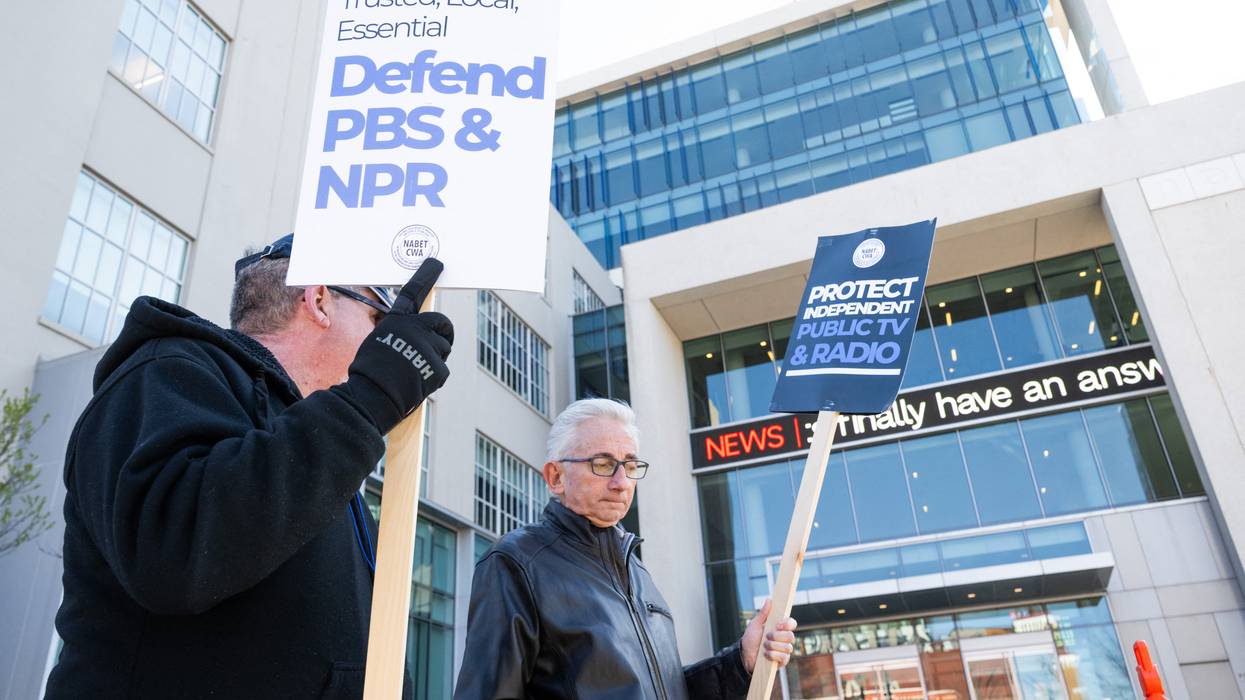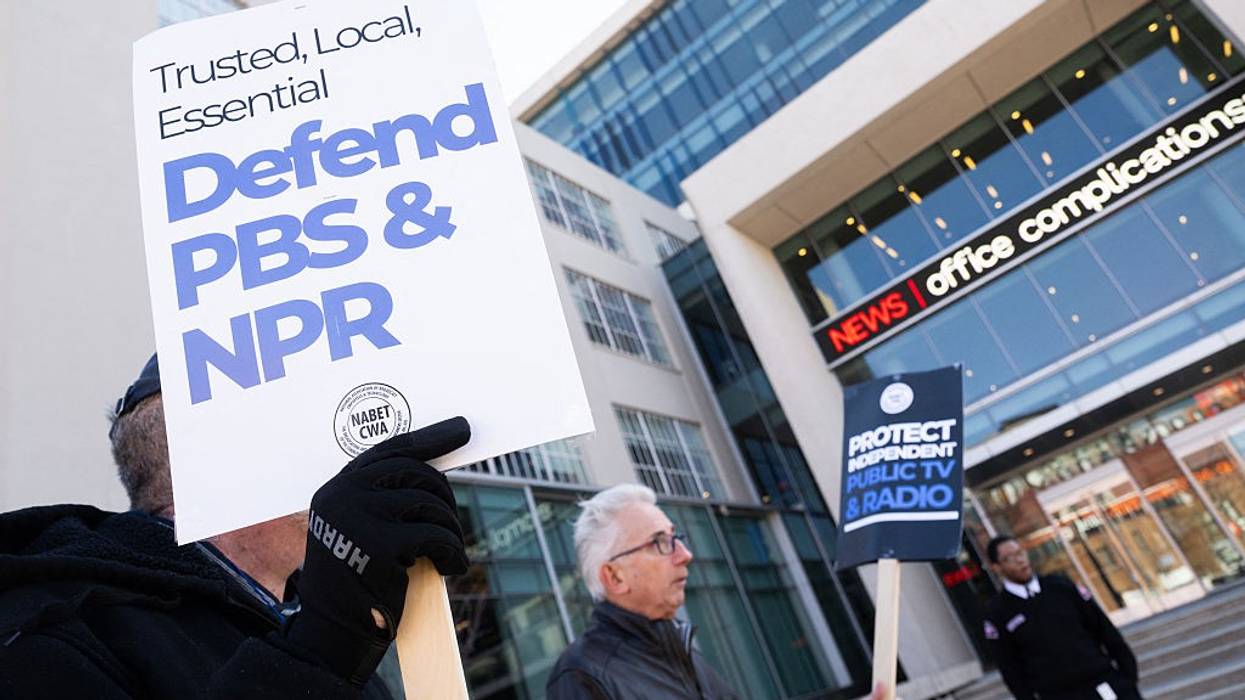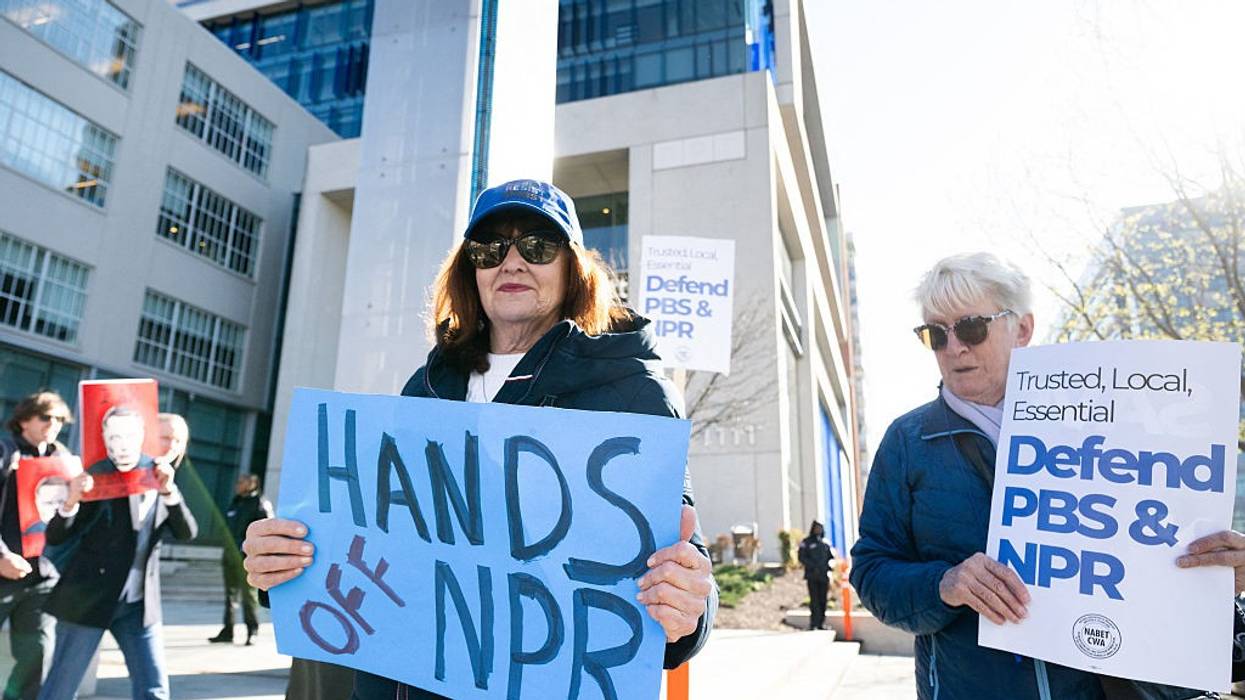
Win for Public Media as Federal Judge Blocks Trump Assault on NPR, PBS Funding
NPR's CEO called the ruling "a decisive affirmation of the rights of a free and independent press."
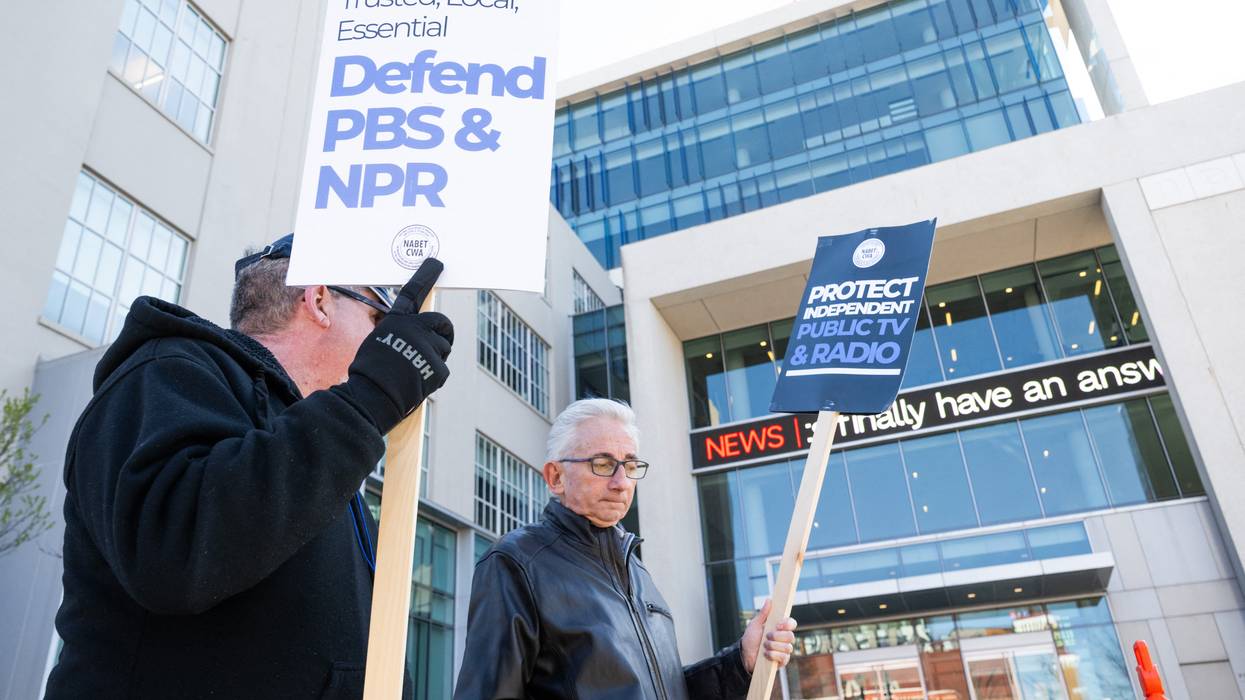
Although the Corporation for Public Broadcasting dissolved at the beginning of the year, National Public Radio and the Public Broadcasting Service still celebrated a win in court on Tuesday, when a federal judge in Washington, DC blocked President Donald Trump's executive order intended to strip the organizations of federal funding.
NPR's attorney, Theodore Boutrous, called US District Judge Randolph's permanent injunction "a victory for the First Amendment and for freedom of the press."
"As the court expressly recognized, the First Amendment draws a line, which the government may not cross, at efforts to use government power—including the power of the purse—'to punish or suppress disfavored expression' by others," he said in a statement to The Associated Press. "The executive order crossed that line."
Katherine Maher, NPR's CEO, similarly described the ruling as "a decisive affirmation of the rights of a free and independent press."
PBS said in a statement that "we're thrilled with today's decision declaring the executive order unconstitutional."
"As we argued, and Judge Moss ruled, the executive order is textbook unconstitutional viewpoint discrimination and retaliation, in violation of long-standing First Amendment principles," the network added. "At PBS, we will continue to do what we've always done: serve our mission to educate and inspire all Americans as the nation's most trusted media institution."
Trump last May ordered the Corporation for Public Broadcasting to "cease direct funding to NPR and PBS, consistent with my administration's policy to ensure that federal funding does not support biased and partisan news coverage." As private donations poured in to NPR and PBS, Congress then voted to claw back nearly $1.1 billion from CPB.
The congressionally created and funded nonprofit corporation, which distributed federal funding to locally managed public radio and television stations across the United States, then announced it would shut down—which it ultimately did following a January vote by its board of directors. Still, NPR and PBS fought back in court, leading to Tuesday's decision.
"The president may, of course, engage in his own expressive conduct, including criticizing the views, reporting, or programming of NPR, PBS, or any other news outlet with whom he disagrees," wrote Moss, an appointee of former President Barack Obama.
"The government may also fund its own speech and may fund government programs that promote specific perspectives on issues of public importance, and it may decide which views or perspectives to convey—and which not to convey—in any such government speech or program," Moss continued. "And it may impose limits on federal grants to ensure that they are deployed to further the legitimate purposes of the program, and may pick and choose among applicants based on legitimate criteria."
"But the First Amendment draws a line, which the government may not cross, at efforts to use government power—including the power of the purse—'to punish or suppress disfavored expression' by others," the judge stressed. "As the Supreme Court and DC Circuit have observed on more than a dozen occasions, the government 'may not deny a benefit to a person on a basis that infringes his constitutionally protected... freedom of speech even if he has no entitlement to that benefit."
Moss found that "Executive Order 14290 crosses that line. It does not define or regulate the content of government speech or ensure compliance with a federal program. Nor does it set neutral and germane criteria that apply to all applicants for a federal grant program. Instead, it singles out two speakers and, on the basis of their speech, bars them from all federally funded programs."
"It does so, moreover, without regard to whether the federal funds are used to pay for the nationwide interconnection systems," he explained, "which serve as the technological backbones of public radio and television; to provide safety and security for journalists working in war zones; to support the emergency broadcast system; or to produce or distribute music, children's, or other educational programming, or documentaries."
The judge noted that the order applied to grants from not only the now-defunct CPB but all federal entities, including the Department of Education, Federal Emergency Management Agency, and National Endowment for the Arts.
Because of those other potential sources of money, CNN reported Tuesday, "the ruling could—emphasis on could—lead to some funding for PBS and NPR in the future."
Tim Karr of Free Press also told Common Dreams that "should Congress decide to restore funding at some later point," the executive order "won't have any legal effect on preventing it from doing so."
Welcoming the decision in a statement, Public Citizen co-president Lisa Gilbert said that "NPR and PBS are valuable resources for the American public. Children across socioeconomic backgrounds rely on their programming, and the political persecution of both stations by the Trump administration has been reprehensible."
"This ruling is a straightforward win for the rule of law," she continued. "The Constitution is very clear: Congress holds the power of the purse. This judicial ruling is appropriate, impactful, and a victory for democracy."
Seth Stern, chief of advocacy at Freedom of the Press Foundation, tied the development to the Trump administration's other attacks on the media, specifically those from Federal Communications Commission (FCC) Chair Brendan Carr and Defense Secretary Pete Hegseth.
"As the court said, it's long been the law that the government can't circumvent the Constitution by conditioning benefits on censorship where it can't censor directly," Stern said. "That goes for publicly funded media, but it also goes for Brendan Carr's FCC conditioning broadcast licenses or merger approvals for private media companies on editorial concessions to please Donald Trump, Pete Hegseth conditioning access to the Pentagon on journalists forfeiting established rights, or Trump himself steering transactions like the Paramount-Warner Bros. Discovery merger to supporters of his who promise him 'sweeping changes' to bend the news to his liking."
"Virtually all of the administration's 'wins' in reshaping the media that Carr and Trump have bragged about at CPAC and in social media posts violate this well-established constitutional principle," he added, referring to the Conservative Political Action Conference that just concluded. "More news outlets should sue and win."
This article has been updated with comment from Free Press.