Trump’s crusade should not come as a total surprise. After all, he told his supporters at a March 2023 rally: “For those who have been wronged and betrayed… I am your retribution.” What is shocking is the capitulation rate. One by one, Trump has been picking off his alleged adversaries. To be sure, some are fighting back, but too many are keeping their head down and trying to stay out of the line of fire. That has to change, and change soon, or they—and we—will all hang separately.
Trump Fought Big Law, and Big Law Lost
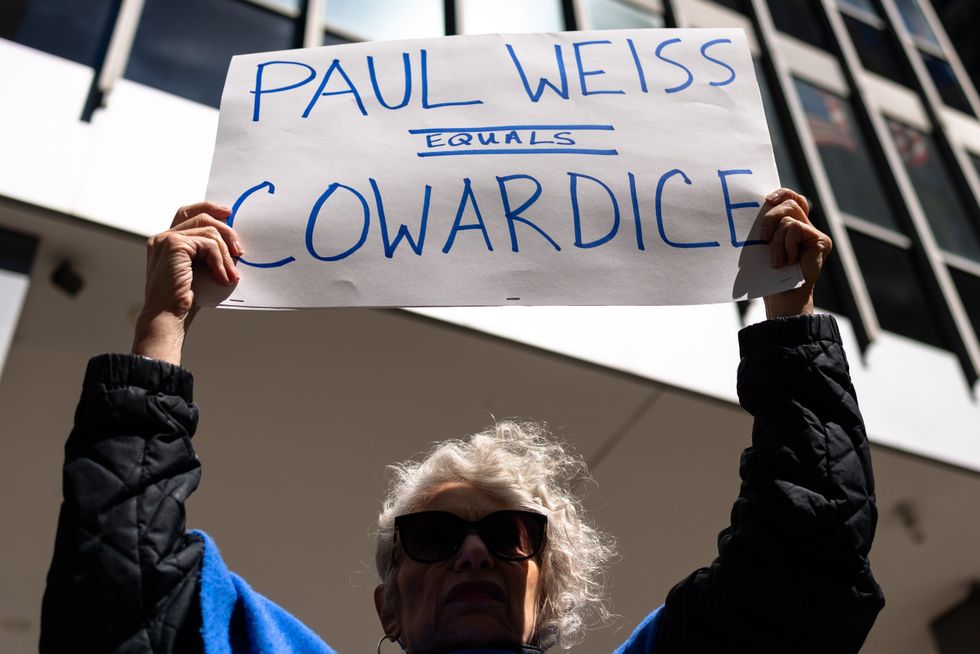
 people hold signs as they protest outside of the offices of Paul, Weiss, Rifkind, Wharton, & Garrison LLP on March 25, 2025 in New York City. (Photo: Michael M. Santiago/Getty Images)
Nine prominent law firms, including Paul Weiss, Skadden Arps, and Latham & Watkins, have struck deals to avoid punitive executive orders Trump issued because they represented clients or took legal positions at odds with his administration. The orders would have revoked the firms’ security clearances, blocked their access to government buildings, and canceled their federal contracts. To get Trump to back down, they agreed to provide a total of $940 million in pro bono legal services to support Trump’s pet causes and eliminate diversity, equity, and inclusion (DEI) considerations in hiring and promotion.
At least four other major law firms, including Perkins Cole and WilmerHale, are resisting. They filed lawsuits arguing that Trump’s executive orders are unconstitutional retaliations that threaten the rule of law and violate First Amendment protections. Judges have issued temporary injunctions to block the executive orders.
Trump has not issued any executive orders against law firms since April, but the threat has had a chilling effect. “Some of the country’s largest law firms have declined to represent clients challenging the Trump administration…,” a recent ProPublica investigation found, “while others have sought to avoid any clients that Trump might perceive as his enemies.”
A Blow to Press Freedom
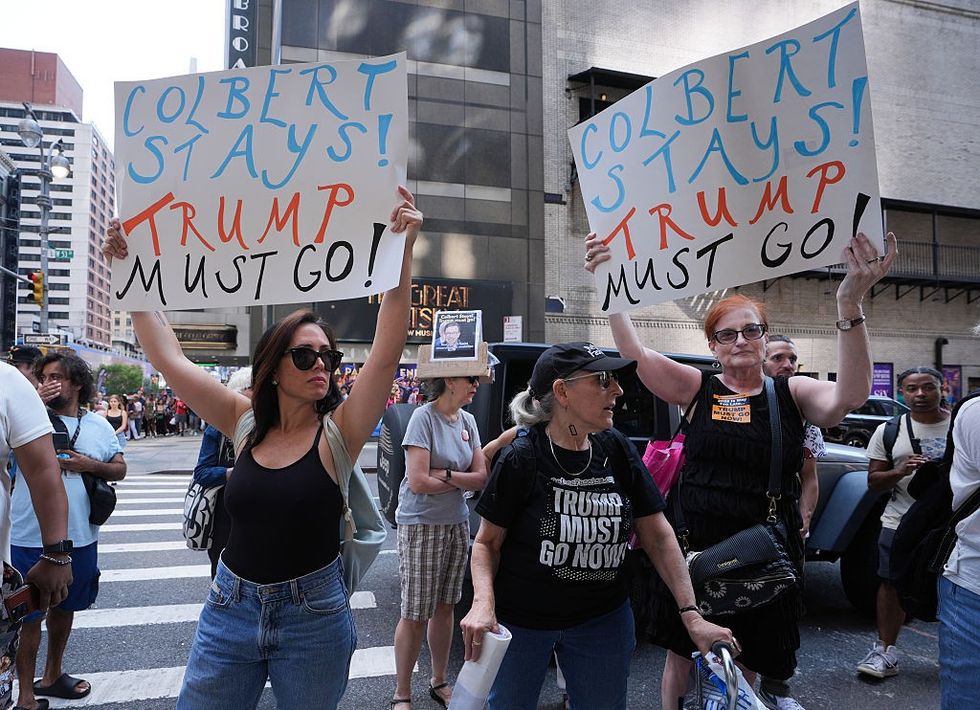
 Dozens of anti-Trump demonstrators gathered outside the Ed Sullivan Theater in New York City to protest the cancelation of CBS late-night host Stephen Colbert on July 21, 2025. (Photo by Lokman Vural Elibol/Anadolu via Getty Images)
Both ABC News and Paramount, owner of CBS News, crumpled in the face of a meritless Trump lawsuit.
Trump’s case against Disney’s ABC News, which settled last December for $15 million for Trump’s presidential library, largely turned on semantics. Anchor George Stephanopoulos incorrectly stated on air that Trump was found civilly liable for raping writer E. Jean Carroll. In fact, he was found guilty of sexually assaulting (and defaming) Carroll. That said, the judge handling the case said the claim that Trump raped Carroll was “substantially true,” but the term “rape” is narrowly defined by New York state law. At any rate, to win the case, Trump would have had to clearly prove that Stephanopoulos’ comment was false and that he said it with “actual malice”—that he knew it was false or acted with reckless disregard of the truth. Trump would have lost.
Will news organizations now think twice before criticizing Trump? Most likely, yes.
Paramount’s July 2 settlement of $16 million for Trump’s library was tantamount to bribery. Trump sued Paramount for $10 billion last October, alleging that “60 Minutes” deceptively edited an interview with presidential candidate Kamala Harris to make her look good. No matter that editing interviews for time and clarity is what broadcast news organizations do.
Trump did not have a case, but Paramount had a $8.4 billion merger with Skydance, a Hollywood studio, pending before the Federal Communications Commission (FCC)—now chaired by Project 2025 coauthor Brendan Carr—and it didn’t want to antagonize Trump. On July 14, CBS “Late Show” host Stephen Colbert called Paramount’s settlement a “big fat bribe.” The network cancelled his show three days later. On July 24, the FCC approved the merger.
Critics characterized the two settlements as acts of cowardice that threaten press freedom by emboldening frivolous lawsuits. Will news organizations now think twice before criticizing Trump? Most likely, yes.
News Outlets Fight Back
 A man walks out of Associated Press (AP) headquarters January 9, 2003 in New York City. (Photo by Mario Tama/Getty Images)
At least a handful of news organizations, including the Associated Press and NPR, have pushed back against Trump’s bullying, but the results were hardly a victory for the First Amendment.
The Associated Press (AP) sued the White House in February for blocking its reporters from Oval Office briefings and Air Force One press pools because the news service didn’t adopt Trump’s new name for the Gulf of Mexico. AP argued banning its reporters violates its First Amendment rights. The case is still tied up in court.
In late April, the Corporation for Public Broadcasting (CPB) sued Trump for firing three of its five board members. In late May, NPR and PBS sued the Trump administration over the executive order to revoke federal funding for public broadcasting. Late last month, Trump signed a bill canceling $1.1 billion in public broadcast funding—which Congress had originally approved—in a “rescission” package, and on August 1, CPB announced it was shutting down.
More recently, Trump filed a $10 billion defamation lawsuit after the Wall Street Journal published a story on a sexually suggestive letter Trump sent to Jeffery Epstein for his 50th birthday. Denying that he had written the letter, Trump sued Rupert Murdoch; News Corp and its CEO, Robert Thomson; Dow Jones & Company; and the reporters who wrote the piece, calling the article “false, malicious, defamatory, FAKE NEWS” on Truth Social. The Journal stands by the story and is prepared to defend it in court.
“There’s nothing inherently wrong with a president bringing a libel suit,” the renowned constitutional lawyer Floyd Abrams told the AP. “But this claim [against the Wall Street Journal] certainly seems like nothing more or less than an effort to suppress speech that our president finds discomforting. That’s not why we have libel law. It’s why we have a First Amendment.”
“Professors Are the Enemy”
 A protester holds a sign reading "Educate, Don't Capitulate!!" featuring Harvard University shields during a rally at Cambridge Common. (Photo by Erin Clark/The Boston Globe via Getty Images)
Under the pretext of rooting out antisemitism and DEI programs on campus, Trump has been bludgeoning the most prominent American universities, threatening to cancel their federal research funding unless they change their policies.
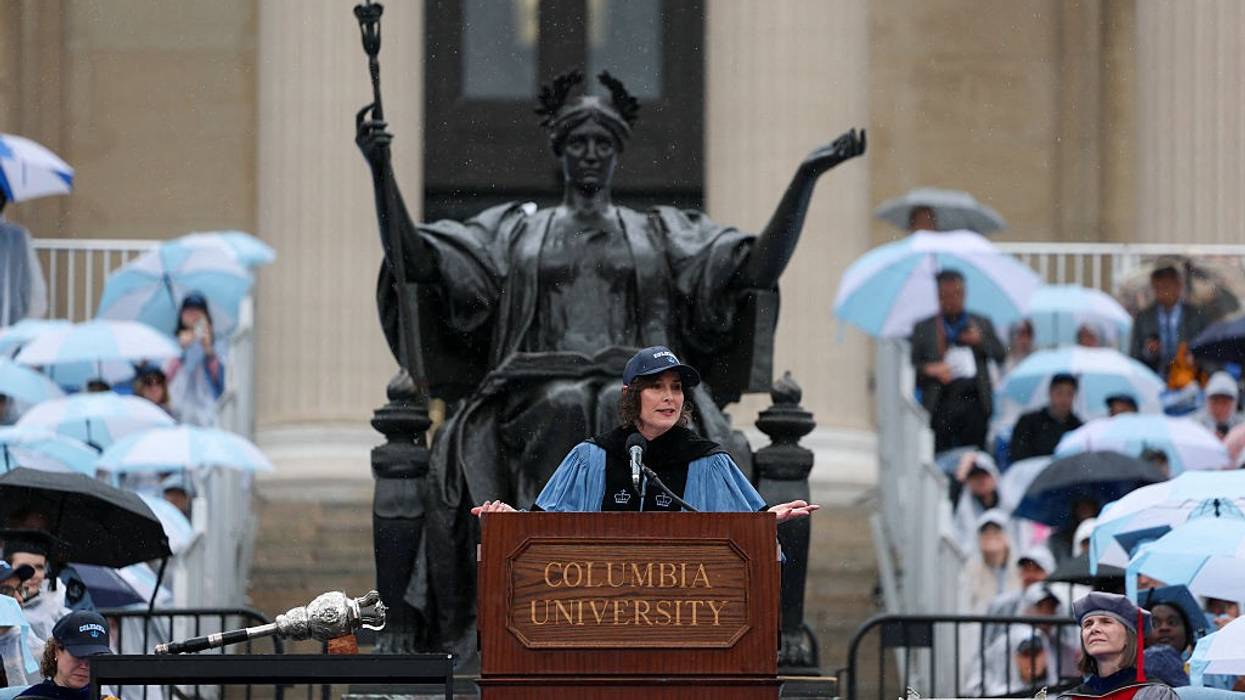
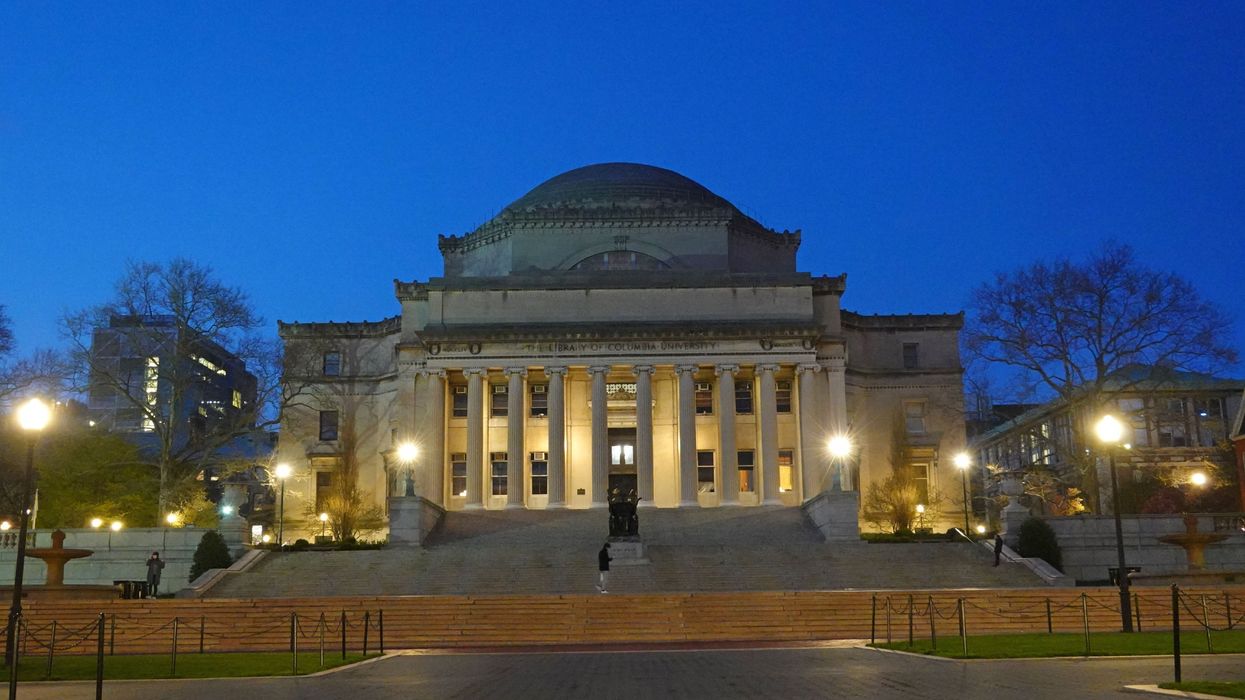
On July 23, my alma mater Columbia University and the University of Pennsylvania were the first to capitulate. Columbia did not admit to any wrongdoing, but agreed to pay a $200 million fine; stop considering race in admissions and hiring; share with the federal government applicants’ standardized test scores, grade point averages, and race; and pay an additional $21 million to settle US Equal Employment Opportunity Commission investigations. In return, the school regains access to nearly $1.3 billion in annual federal funding that was placed on hold. Penn settled the same day but did not agree to pay anything. Among other things, it promised to align its athletic department’s policies with the Trump administration’s position banning transgender athletes.
Less than a week later, my other alma mater, Brown University, settled with the administration, agreeing to dismantle DEI programs and spend $50 million over 10 years on Rhode Island workforce development organizations. In return, the administration will reinstate $510 million in federal contracts and grants it threatened to block. Like Columbia, Brown also agreed to share details about its applicants with the federal government. Trump celebrated the agreement with a post on Truth Social proclaiming: “Woke is officially DEAD at Brown.”
In a March interview with the AP, former Trump White House lawyer Ty Cobb said giving in to a bully makes things worse by creating a snowball effect. “
Harvard University, which initially stood up for academic freedom and sued the administration, is reportedly moving toward a settlement requiring the university to pay $500 million to vocational or work force training programs instead of directly to the federal government or Trump’s presidential library. If finalized, the Trump administration would then restore billions of withheld federal dollars to the school for research and other programs.
The administration’s professed rationale for punishing universities because of antisemitism on campus doesn’t pass the smell test. It’s a ruse. It’s all about trying to stamp out perceived leftist ideology and snuff out speech it opposes, according to Trump’s education secretary, Linda McMahon.
In a July 24 interview with Fox Business, McMahon applauded the Columbia settlement as “a monumental victory for conservatives who wanted to do things on these elite campuses for a long time because we had such far left-leaning professors…” “We’re really hopeful,” she added, “this particular settlement agreement is going be a template for other universities to follow.”
Likewise, Vice President JD Vance has made it clear that, in his opinion, “professors are the enemy.” In November 2021, he delivered the keynote address at the National Conservatism Conference in Orlando. He spent 30 minutes railing about corrupt American universities and then closed by quoting Richard Nixon, who he called a “great prophet and statesman.”
“I think in this movement of national conservatism what we need more than inspiration is we need wisdom,” Vance said, “and there is a wisdom in what Richard Nixon said approximately 40 or 50 years ago. He said, and I quote: ‘The professors are the enemy.’” (During that same taped conversation, ironically with former professor Henry Kissinger, Nixon also said “the press is the enemy.”)
Hang Together or Hang Separately
 WASHINGTON - APRIL 20: New York Times columnist David Brooks (L) speaks as moderator Tim Russert (R) looks on during a taping of "Meet the Press" at the NBC studios April 20, 2008 in Washington, DC. (Photo by Alex Wong/Getty Images for Meet the Press)
In a March interview with the AP, former Trump White House lawyer Ty Cobb said giving in to a bully makes things worse by creating a snowball effect. “The more of them that cave, the more extortion that that invites,” he said. “You’ll see other universities and other law firms and other ‘enemies’ of Trump assaulted and attacked into submission because of that.”
So, what is to be done?
New York Times columnist David Brooks addressed this question on the “PBS News Hour” during his weekly discussion with MSNBC’s Jonathan Capehart on July 25.
“Well, there are two possible responses,” he said. “One, the one that’s being chosen by most organizational leaders right now, is lay low. It’s so, well, maybe they won’t pick on me, or maybe we will make a concession and they won’t pick on me...”
“The other option, which I thought we were going to have, is a broad coalition, not only of all universities, but all law firms, businesses, nonprofits, foundations, anybody in any sector that could be part of the extortion attempt,” he continued. “And they would say, we will band together. There’s strength of numbers. If they come for one of us, they come for all of us, sort of a domestic NATO Article 5.”
I would take Franklin’s proposition a bit further: It is the first responsibility of every citizen to defy authority when that authority is illegitimate.
I made the exact same argument in my graduation speech at Brown in 1976. I wasn’t talking about how to buck an authoritarian government, I was talking about how to challenge a top-down, undemocratic workplace, but it’s analogous.
The nation’s bicentennial year wasn’t a great time for a recent grad to be looking for a job. Industrial output had rebounded from a slump and corporate profits were up, but the recovery was jobless, and states and municipalities—and colleges—were facing major deficits. Given the scarcity of jobs in academia and the difficulty of earning a living as a solo practitioner, I warned my classmates: “More often than not we will find ourselves in basically undemocratic, hierarchical institutions that are resistant to change. These institutions are characterized by authoritarian control from above, and those who are not in the upper reaches of the hierarchy are excluded from the decision-making process.”
How did Brown prepare us for that future? By providing a taste of it. I cited examples of how, during my time there, Brown acted like any other corporation to protect its interests at the expense of its students, faculty, and workers. And then, like David Brooks, I spelled out the two ways to respond to authoritarians.
The first, I explained that June morning, is the “individual survival” response. One person alone has little chance against an institution, so it makes sense to keep your head down and accept the status quo. (By the same token, one university, one law firm, or one news organization alone has little chance against an authoritarian government.)
The second, more effective way is with a collective, community response. The civil rights, women’s, anti-war, gay, and environmental movements my generation grew up with demonstrated firsthand that united action can lead to positive change. It’s clear that strength comes in numbers, be it in school, the workplace, the voting booth, or the streets.
As mentioned above, 200 years before I gave that speech, Benjamin Franklin said: “We must all hang together, or assuredly we shall all hang separately.” He also pointed out: “It is the first responsibility of every citizen to question authority.”
I would take Franklin’s proposition a bit further: It is the first responsibility of every citizen to defy authority when that authority is illegitimate.
Certainly, there are significant risks to sticking your neck out, but the risks of doing nothing are even greater. If I learned anything during my four years at Brown—and my 40 years in Washington, DC—it’s that democracy is not a spectator sport, and we are all being tested by the worst political crisis of our lifetime.
This article first appeared at the Money Trail blog and is reposted here at Common Dreams with permission.

 people hold signs as they protest outside of the offices of Paul, Weiss, Rifkind, Wharton, & Garrison LLP on March 25, 2025 in New York City. (Photo: Michael M. Santiago/Getty Images)
  Dozens of anti-Trump demonstrators gathered outside the Ed Sullivan Theater in New York City to protest the cancelation of CBS late-night host Stephen Colbert on July 21, 2025. (Photo by Lokman Vural Elibol/Anadolu via Getty Images)
  A man walks out of Associated Press (AP) headquarters January 9, 2003 in New York City. (Photo by Mario Tama/Getty Images)
 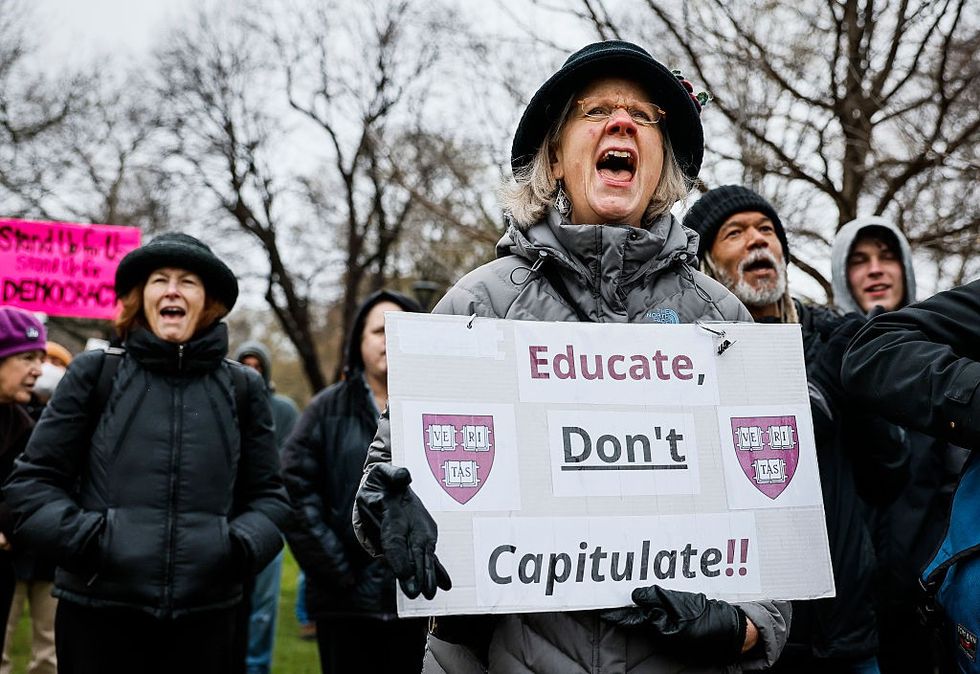 A protester holds a sign reading "Educate, Don't Capitulate!!" featuring Harvard University shields during a rally at Cambridge Common. (Photo by Erin Clark/The Boston Globe via Getty Images)
 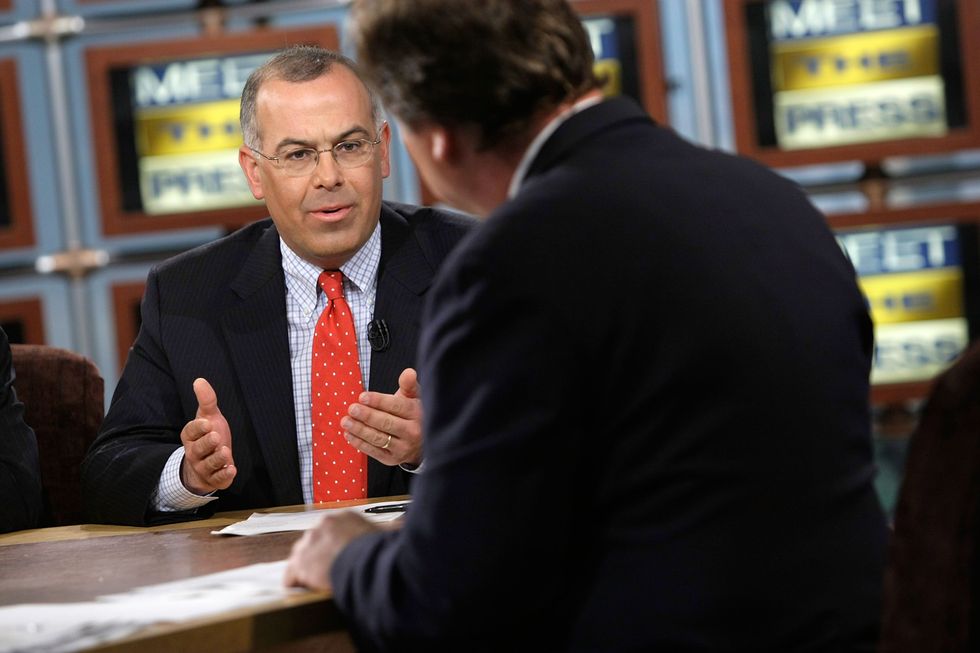 WASHINGTON - APRIL 20: New York Times columnist David Brooks (L) speaks as moderator Tim Russert (R) looks on during a taping of "Meet the Press" at the NBC studios April 20, 2008 in Washington, DC. (Photo by Alex Wong/Getty Images for Meet the Press)