April, 19 2012, 12:05pm EDT

For Immediate Release
Contact:
Drew Courtney or Josh Glasstetter,Phone: 202-467-4999,Email:,media@pfaw.org
Romney and Bork, a Dangerous Team: People For the American Way Campaign Exposes Romney's Embrace of Judicial Extremism
Today, People For the American Way launched a major new campaign - including a website, a web ad and an exclusive report - exposing Mitt Romney's dangerous agenda for America's courts.
WASHINGTON
Today, People For the American Way launched a major new campaign - including a website, a web ad and an exclusive report - exposing Mitt Romney's dangerous agenda for America's courts.
The campaign highlights Romney's choice of Robert Bork to lead his constitutional and judicial advisory team. By allying with Bork, a jurist so extreme he was rejected by a bipartisan majority of the U.S. Senate 25 years ago, Romney has sent a clear signal that he means to drag America's courts even farther to the right, endangering many of the civil rights, liberties and economic protections won by the American people over the past five decades.
The ad, Don't Let Romney Bork America, and the report, Borking America: What Robert Bork Will Mean to the Supreme Court and American Justice, can be viewed at www.RomneyCourt.com.
"The debates over health care and immigration have reinforced the importance of the Supreme Court to all Americans," said Michael Keegan, President of People For the American Way. "However, few are aware of the extreme agenda Mitt Romney has for the High Court - an agenda exemplified by his close alliance with Robert Bork.
"In 1987, People For the American Way led the fight to keep Judge Bork off the Supreme Court," Keegan continued. "25 years later, we are as relieved as ever that we succeeded. When Bork was nominated, Americans across the political spectrum rejected the dangerous political agenda that he would have brought to the bench - his disdain for modern civil rights legislation, his acceptance of poll taxes and literacy tests, his defense of contraception bans and criminal sodomy laws, his continued privileging of corporations over individuals. Since then, he has dug his heels even deeper into a view of the law that puts corporations first and individuals far behind.
"It is frightening that a quarter century after Robert Bork's jurisprudence was deemed too regressive for the Supreme Court, a leading presidential candidate has picked him to shape his legal policy."
People For the American Way Senior Fellow Jamie Raskin, the author of the report, added: "The return of Robert Bork and his reactionary jurisprudence to national politics should be a three-alarm wake-up call for all Americans. In his work on the bench as a judge and off the bench as a polemicist, Bork has consistently placed corporations above the government and government above the rights of the people. The idea that Bork could be central to shaping the Supreme Court in the 21st century is shocking because he wants to turn the clock back decades in terms of the civil rights and civil liberties. His constitutional politics are even more extreme today than in 1987, when a bipartisan group of 58 senators rejected his nomination to the Supreme Court."
The new report and ad review Bork's record from his days as solicitor general to President Richard Nixon to his turn as co-chair of the Romney campaign's committee on law, the Constitution and the judiciary. Highlights of Bork's career include:
- Consistently choosing corporate power over the rights of people. As a judge, Bork regularly took the side of business interests against government regulators trying to hold them accountable, but the side of the government when it was challenged by workers, environmentalists and consumers pressing for more corporate accountability.
- Opposing civil rights, voting rights, reproductive rights, gay rights and individual free speech. Bork disparaged the Civil Rights Act of 1964; defended the use of undemocratic poll taxes and literacy tests in state elections ; disagrees with the Supreme Court ruling that overturned sodomy laws; and believes that the government should be able to jail people for advocating civil disobedience.
- Advocating censorship and blaming American culture first. Bork promotes censorship to combat what he calls the "rot and decadence" of American society, saying "I don't make any fine distinctions; I'm just advocating censorship." He writes that "the liberal view of human nature" has thrown American culture into "free fall."
- Rejecting the separation of church and state. Bork rejects the science of evolution, advocates legalizing school-sponsored prayer and has written that he wants to see the Constitution's wall of separation between church and state "crumble."
- Turning back the clock on women's rights: Bork has argued against Supreme Court decisions upholding abortion rights and decisions upholding the right to contraception for single people and even married couples. He believes that the heightened protections of the Constitution's Equal Protection Clause don't apply to women. As a judge, he authored a decision reversing the Secretary of Labor and holding that federal law permits a company to deal with toxic workplace conditions by demanding that female employees be sterilized or lose their jobs.
Learn more at www.RomneyCourt.com.
People For the American Way works to build a democratic society that implements the ideals of freedom, equality, opportunity and justice for all. We encourage civic participation, defend fundamental rights, and fight to dismantle systemic barriers to equitable opportunity. We fight against right-wing extremism and the injustice it fosters.
1 (800) 326-7329LATEST NEWS

JD Vance Says If His Work With Trump 'Leads to the End Times' That Is 'OK'
"Show this clip to anyone who says Iran is run by religious lunatics," responded one podcaster.
Sep 01, 2026
Shortly before US President Donald Trump on Tuesday spurred fresh fears that he'll use nuclear weapons in his illegal war on Iran, Vice President JD Vance told a Christian podcaster that he's fine with the administration's work leading to the end times.
"Do I think that we're in the end times? I don't know," Vance told 22-year-old podcaster Bryce Crawford nearly an hour into a lengthy video interview released Monday. While admitting his fascination with the theories, the VP said that "I think that it's probably bad for me, spiritually, to focus too much on it."
As The New Republic's Ellie Quinlan Houghtaling explained: "The Christian end times refer to the religion's interpretations of the final days of humanity. That's detailed in the Bible as a period involving widespread turmoil and deception (such as wars, earthquakes, and a false prophet), a seven-year stretch of unprecedented hardship known as the Great Tribulation that will end in Armageddon, the emergence of the Antichrist and a cadre of their followers who reject Christ's teachings, and a final judgment by God."
As Vance sat beside a propped-up edition of his new book on his religious journey, including his conversion to Catholicism, he said that "I think that there are... things about the world that make me feel like not shocked if the Antichrist was walking among us, but again, I try not to focus too much on it."
"One of the things that I think that Catholics are very focused on, that I think is very good for me, is this idea that... we don't know when God is coming, but we're commanded to try to, as much as possible, try to make the world the kind of world that God wants it to be," the vice president continued.
"While I wouldn't be shocked if we are living in the end times," he added, "what I'm trying to focus on is doing as much of God's work as possible right now, and if that leads to the end times, OK, and if that leads to, you know, us building a better world that thrives and survives for a very long time after I'm gone, that's great, too."
Those remarks—from a man expected to compete with figures such as Donald Trump Jr. and Secretary of State Marco Rubio for the GOP's 2028 presidential nomination, if the president doesn't try for an unconstitutional third term—were met with alarm.
Critics wrote that "this should concern us all" and wondered: "WTF does that mean? Is he OK with using nuclear weapons?"
Sharing a clip of Vance's comments on social media, Iranian-American writer Alex Shams noted that "these guys are trying to convince you Iran is ruled by a crazed messianic theocracy."
Podcaster and writer Katie Halper said, "Show this clip to anyone who says Iran is run by religious lunatics."
As Vance's video interview began circulating on Monday, over six months into the Iran War, a reporter in the Oval Office asked Trump if he's ruled out using a nuclear weapon against the Mideast country.
While suggesting he has ruled out nuclear war, Trump also said: "What a stupid question that is, actually. Here they are, they're totally defeated militarily, so now I defeat them, and now I should use a nuclear weapon on top of them?"
Just a day later, Trump triggered speculation that he'll pursue a nuclear attack. On Tuesday, while bombing alleged Iranian military targets, he wrote on his Truth Social platform, "If the failed Nation of Iran retaliates for this very justified attack, they will be hit again at a much harder and higher level, but it will not be the biggest attack of them all, that is waiting in the wings and, when it is over, there will be very little left of the Islamic Republic of Iran!"
Keep ReadingShow Less
'Declare a Worldwide Climate Emergency': Death Toll in Nepal-Tibet Floods Tops 1,000
"The glacial collapse and deluge," one scientist said, "was the structural failure of a mountain itself, nature's latest commentary on the deadly consequences of human-caused planetary warming."
Sep 01, 2026
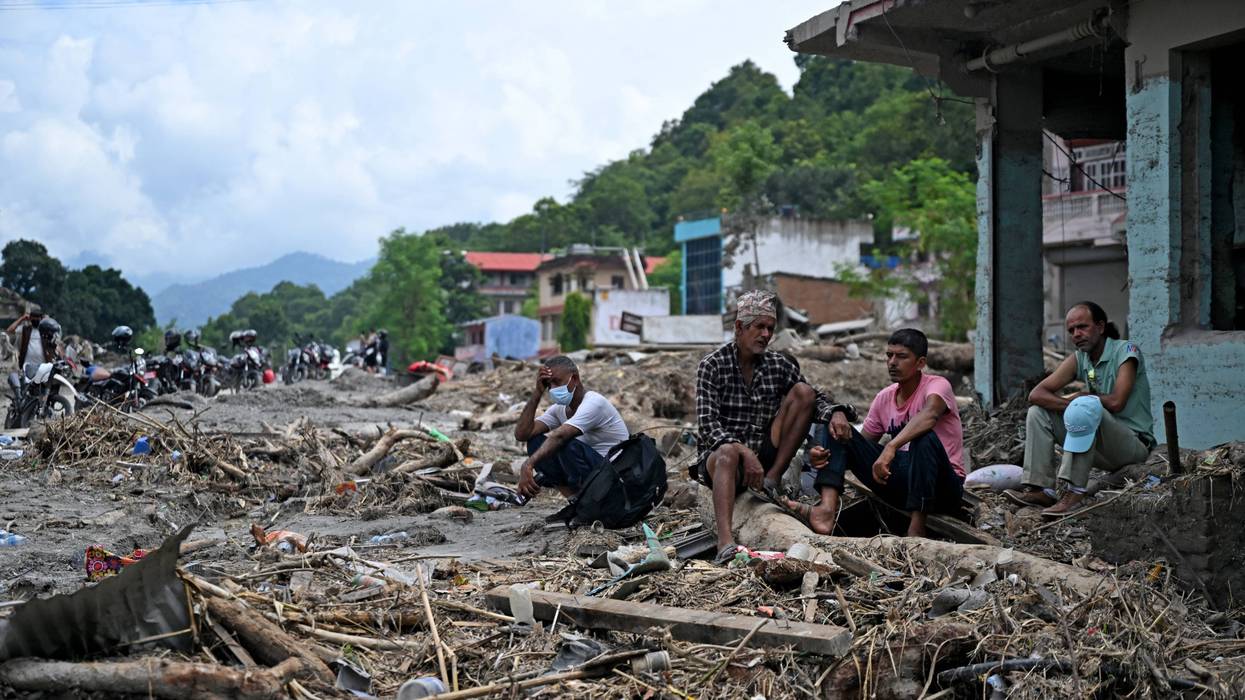
With more than 1,000 people dead as of Tuesday and rescue teams still searching for the thousands missing after a glacial collapse in the Himalayas that created a flooding crisis in Nepal and Tibet last week, campaigners, politicians, and scientists reiterated the need for global climate action.
China confirmed at least 16 people are dead and 546 are missing in Tibet, including 261 foreign nationals, while Nepal reported 1,003 deaths and 3,916 more unaccounted for, including 583 foreigners, according to The Associated Press. Among those missing in Nepal are about 900 workers from a dozen hydropower projects, 500 of whom are believed to be trapped in tunnels.
Thousands have been rescued since last Wednesday, and as the AP noted, "authorities in Nepal have been burying bodies in temporary graves until they can be identified. They are preserving DNA samples, photographing distinguishing facial features, and recording other identifying details. Each body is assigned a reference number to help families identify and claim the remains later."
Nepali Prime Minister Balendra Shah has emphasized in recent days that "the flood in the Bhote Koshi River in Rasuwa was not an ordinary flood," and "it is now time for us to strongly raise with the international community the issue of the disasters we are experiencing as a result of climate change."
In a Monday interview with The New York Times, Maheshwar Dhakal from Nepal's Ministry of Agriculture, Forest, and Environment also linked the disaster to human-caused climate change and said that "those who have contributed the least are suffering the most."
Dhakal estimated the recovery cost at $5 billion, and shared his government's letter to the United Nations' fund for such disasters, which says in part that "early action in Nepal would send a signal that the fund is capable of responding with humanity, speed, flexibility, and solidarity when climate-vulnerable countries face losses and damages beyond their capacity to address alone."
Declare a world-wide #climate emergency www.nytimes.com/live/2026/08... #nepal #floods #flooding
[image or embed]
— Nikolas Kozloff (@nikolaskozloff.bsky.social) August 27, 2026 at 4:29 PM
Stefan Rahmstorf, a scientist at the Potsdam Institute for Climate Impact Research in Germany, highlighted on social media Tuesday that experts have long warned about the kinds of disasters seen in the Himalayas over the past week.
"Why are climate scientists not surprised about mountains being destabilized by glacier melt and permafrost thaw?" he asked. "Because they have long predicted that as a result of global heating."
Bill McGuire, professor emeritus of geophysical and climate hazards at University College London, wrote in a Tuesday column for The Guardian that "the increasingly temperamental behavior of the Earth beneath our feet teaches us that global heating is all-pervasive. It will intrude into every aspect of our lives and livelihoods, and leave no part of the planet untouched. As the world processes the horror of the events in Nepal and Tibet, it is a lesson that we ignore at our peril."
Also writing for the British newspaper on Tuesday, Michael Mann, a renowned climate scientist at the University of Pennsylvania, similarly stressed that "the glacial collapse and deluge in Nepal and Tibet was not a freak weather event; it was the structural failure of a mountain itself, nature's latest commentary on the deadly consequences of human-caused planetary warming. And it was the exclamation point on a summer of extremes, illustrating with a sole unnatural disaster the apocalyptic future that lies in store if we fail to take dramatic climate action."
Mann pointed to the lack of such action in the United States—the world's largest historical climate polluter—where President Donald Trump openly courted Big Oil on the campaign trail and has served the climate-wrecking fossil fuel industry's interests since returning to the White House last year, from declaring a national energy emergency and ditching the Paris Agreement, again, to waging a war on renewable power projects.
"Trump and enabling congressional Republicans continue to double down on policies favoring fossil fuel extraction and dependence at the very time we need to be moving even more quickly away from fossil fuels toward clean energy," Mann wrote. "These extreme events underscore the urgency of taking action now, and—while there are many things we can do—one of the greatest opportunities Americans will have to affect climate policy is the upcoming midterm election. You can make support for urgent and dramatic climate action a litmus test issue as you go to the voting booth."
Highlighting that dozens of Americans are among those still missing in Asia, the US-based watchdog group Public Citizen argued on social media Tuesday that "this isn't just a climate change catastrophe. It's a crime. For decades, Big Oil knew fossil fuels would lead to disasters like this. Big Oil must be held accountable."
In 2024, the group published a legal memo detailing how local or state prosecutors in the United States could bring criminal charges against Big Oil for deaths from extreme heat made more likely by the fossil fuel-driven climate emergency. With rapidly advancing attribution science, the approach could also be applied to other disasters linked to the human-caused crisis.
Greenpeace International also demanded accountability for the industry on Tuesday, saying that "it makes us SICK to think of people losing their homes, their livelihoods, and the people they love to fires, floods and storms, while fossil fuel companies make billions. A FRACTION of those obscene profits could help communities rebuild. MAKE POLLUTERS PAY."
"Make oil, coal, and gas corporations pay their fair share for the damage they cause," the advocacy group added. "Introduce new taxes or fines on them to help communities at home and around the world rebuild from climate disasters and invest in climate solutions."
Keep ReadingShow Less
Federal Panel Halts What Would Be First Data Center on Public Lands
"The Trump administration is pulling out all the stops to let tech companies build massive data centers on our public lands. This tremendous victory proves communities have the power to fight back and win.”
Sep 01, 2026
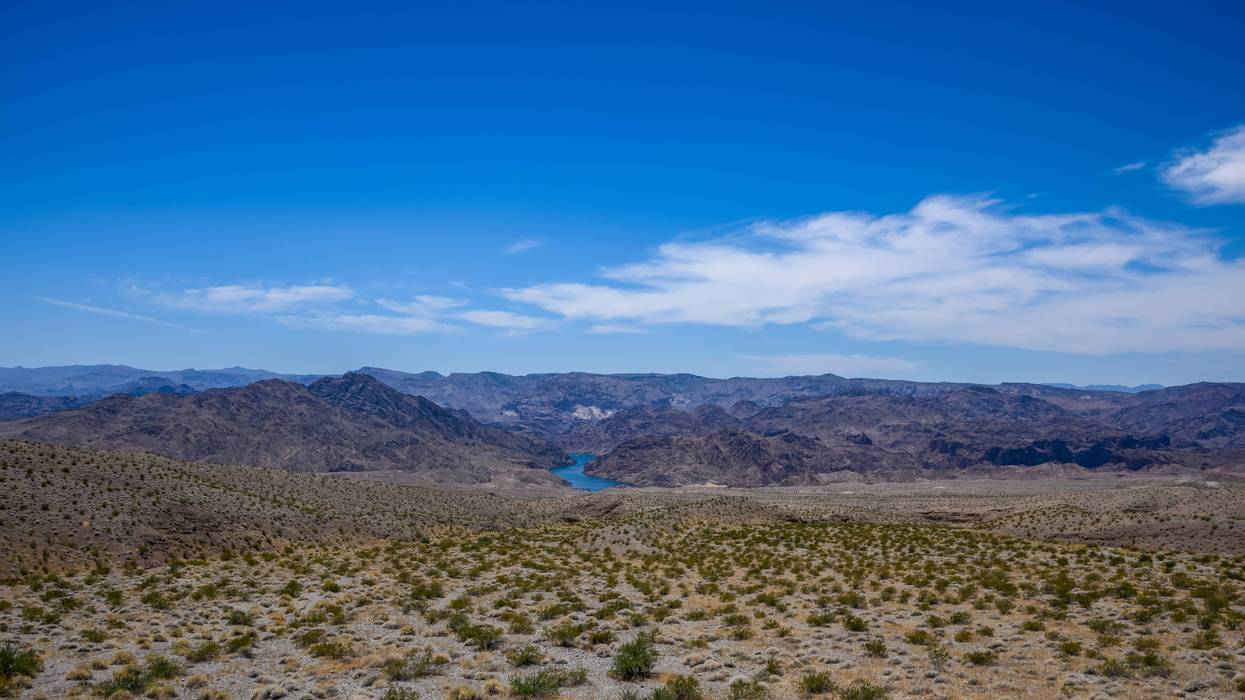
Environmental groups are celebrating on Tuesday after a federal panel halted construction of what would be the first artificial intelligence data center to be built on US public lands.
The Interior Board of Land Appeals, an appellate body within the US Department of the Interior, put a temporary stay on the Bureau of Land Management's (BLM) approval of the proposed 80-acre Townsite Data Center near Boulder City, Nevada, which environmental groups warned would jack up electricity demand and water usage and threaten local species.
The board sided with the Sierra Club, the Center for Biological Diversity (CBD), and the local government of Boulder City, which argued that the BLM had not conducted the legally required review of the plan's environmental impacts.
The BLM had approved the site based on a review of a proposed solar power plant, but had not reevaluated the impacts of a data center.
The board said that the environmental groups were "likely to prevail" in their case that the BLM had acted illegally "because the two projects are not ‘substantially the same.’” It also ruled that continuing the project without a proper review was likely to cause "irreparable harm" to the landscape—including soil disruption, habitat loss for species like the Mojave desert tortoise, and construction activities that pollute the air.
The temporary stay blocks the data center project from continuing while the board considers the environmental groups' appeal.
While it was not a final ruling on whether the project will be built at all, Patrick Donnelly, Great Basin director at the CBD, said the group was "thrilled that this data center has been stopped dead in its tracks."
Townsite has been described as a test case as BLM considers approving other data center proposals on federal lands, including in Nevada, where 80% of the land is federally managed.
Building data centers on federal lands is a major priority of the Trump administration's "AI Action Plan," which was published by the White House in 2025 and directs US agencies to identify public lands “well-situated for large-scale data centers."
Under the plan, the US Department of Energy announced in July 2025 that it had identified at least four other sites around the country for potential development, including the Idaho National Laboratory, the Oak Ridge Reservation in Tennessee, the Paducah Gaseous Diffusion Plant in Kentucky, and the Savannah River Site in South Carolina.
Donnelly said Tuesday's ruling had shown BLM would not be able to approve these and other sites without conducting the appropriate environmental reviews.
"The Trump administration is pulling out all the stops to let tech companies build massive data centers on our public lands," he said. "This tremendous victory proves communities have the power to fight back and win.”
Boulder City is one of many locales around the country where plans for large data centers have received public backlash. For months, the project faced protests at City Hall from residents who raised concerns about energy and water use, light pollution, and impacts on the local desert habitat.
Public anger ultimately led the Boulder City Planning Commission to turn against the project, voting in May against adding data centers to the city's land management process. To bypass the city, BLM approved the same project on adjacent federal lands. Boulder City responded by joining environmental groups' appeal against the project.
“The BLM essentially, sweepingly, approved a new land use without following processes in federal law, which include a meaningful engagement process with the city," City Attorney Brittany Walker told the Nevada Current in July, after the City Council unanimously voted to appeal.
Olivia Tanager, director of the Sierra Club Toiyabe chapter, called Tuesday's ruling "a victory for democracy, public participation, and the principle that our public lands should serve the public."
"The people of Boulder City have made clear that they do not want a data center on public lands, and this ruling gives their voices the weight they deserve," she said. "Data centers do not belong on public lands, and we will continue to fight unfettered data center development.”
Townsite is just one of several data center proposals being considered on federal lands in Nevada. In June, BLM officials told local leaders that it had received four applications for data centers on public lands around Silver Springs, a small community east of Reno in Lyon County, which has eight facilities planned in total, according to the US Data Center Map.
The sudden explosion of data center planning in the area has led many residents to push for a moratorium on new data center approvals.
Brynn deLorimier, a Boulder City resident who joined the appeal, said she hopes her city's victory will help to protect neighboring communities from unaccountable data center growth.
“We love our community and our desert, and we’re so grateful to our friends and neighbors for working hard to protect both,” she said. “We’re also grateful to the Interior Board of Land Appeals for recognizing that this case matters far beyond Boulder City and could set an important precedent for public lands in Nevada and across the country.”
Keep ReadingShow Less
Trump Issues New Mass Murder Threat, Warning Iran of 'Biggest Attack of Them All'
The president's threat came just a day after he appeared to rule out using nuclear weapons.
Sep 01, 2026
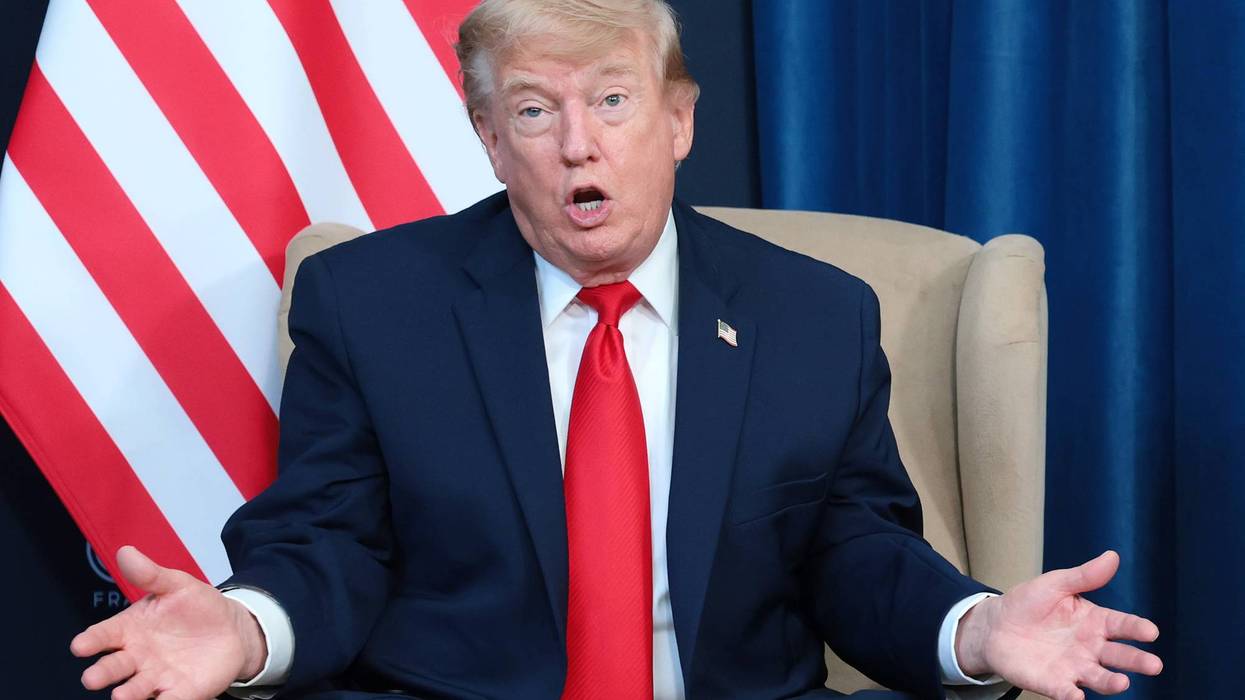
President Donald Trump on Tuesday issued yet another unhinged threat to commit mass murder as the US military restarted its illegal bombing campaign against Iran.
In a Truth Social post, the president warned Iran against striking back at the US shortly after American forces began bombing Islamic Revolutionary Guard Corps (IRGC) targets in the country.
"If the failed Nation of Iran retaliates for this very justified attack, they will be hit again at a much harder and higher level," Trump wrote, then ominously added that "it will not be the biggest attack of them all, that is waiting in the wings and, when it is over, there will be very little left of the Islamic Republic of Iran!"
Iran appeared undeterred by Trump's saber-rattling, however, as The Associated Press reported on Tuesday that the country retaliated by launching missiles and drones shortly after the US attack.
On Monday, a reporter in the Oval Office asked the president if he would consider using nuclear weapons against Iran, and he appeared to rule it out.
"There's no reason for it," Trump said. "What a stupid question that is, actually. Here they are, they're totally defeated militarily, so now I defeat them and now I should use a nuclear weapon on top of them?"
"Have you ruled out using a nuclear weapon against Iran?"@POTUS: "They're totally defeated militarily — so I defeat them and now I should use a nuclear weapon on top of them? What a stupid question." pic.twitter.com/Gv9dXAJ9Zu
— Rapid Response 47 (@RapidResponse47) August 31, 2026
In April, Trump issued a similarly unhinged threat to commit mass murder in Iran, warning that "a whole civilization will die tonight, never to be brought back again" unless Iran surrendered to the US. Trump backed down from that threat hours later and agreed to a since-expired ceasefire agreement with Iran.
Brett Erickson, managing partner at Obsidian Risk Advisors, warned in a Tuesday social media post that the president's threats should not be dismissed simply because he hasn't followed through on them in the past.
"Throughout this entire war, I have been incredibly skeptical of any claims that President Trump is so much as DISCUSSING the use of nuclear weapons," Erickson wrote. "This reads to me clear as day that they are on the table now."
Keep ReadingShow Less

Nearly 2.5 Million Children Have Lost Medicaid and CHIP—So Far—During Trump’s Second Term
The drop in children covered by Medicaid comes before the most draconian changes to the program made by Republicans' 2025 budget law are set to take effect next year.
Sep 01, 2026
Nearly 2.5 million children living in the US have lost access to Medicaid or Children's Health Insurance Program coverage during President Donald Trump's second term, according to data published on Monday by the Georgetown University Center for Children and Families.
In total, five states have seen children's enrollment in Medicaid and CHIP fall by 10% or higher since January 2025, with Indiana seeing a drop in enrollment in those programs of more than 23%.
Colorado and Hawaii were the only two states to see a net increase in children in Medicaid or CHIP over that same period.
Joan Alker, executive director of the Center for Children and Families, described the drop in children enrolled in the programs as "a lot," and said it was important to track because "when Medicaid child enrollment declines, the number of uninsured kids typically goes up."
President Donald Trump and congressional Republicans cut spending on Medicaid by an estimated $900 billion over a 10-year period when they enacted the One Big Beautiful Bill Act in 2025. The Congressional Budget Office projects these cuts will leave more than 10 million fewer people enrolled in the program by 2034.
One way the GOP budget law is projected to kick people off Medicaid has been to add extra administrative burdens and paperwork for people who qualify for the program.
As explained by a Scripps News report published last week, Medicaid starting next year will make beneficiaries enroll twice a year instead of just once, while also mandating adults who "earn above a typical income cutoff and do not have children... work or volunteer at least 80 hours a month, or enroll in school."
Eileen Appelbaum, co-director of the Center for Economic and Policy Research, told Scripps News that this will result in many people not receiving Medicaid coverage despite being qualified for it.
"The best guesses from the experts are that two-thirds of the people that will be disqualified will actually be eligible, but they just couldn't handle the paperwork," Appelbaum explained.
In an op-ed published by Stat on Monday, Brown University epidemiologists Abdullah Shihipar and Brandon DL Marshall highlighted how getting out of the new Medicaid work requirements by proving yourself "medically frail" is shaping up to be a "nightmare scenario for millions of Americans."
"Let’s say you are undergoing cancer treatment, but you don’t have the right paperwork for your renewal," Shihipar and Marshall wrote. "As a result, you’re disenrolled from Medicaid. You desperately try to fix the mistake, but you are faced with long wait times and no answers, so you cease treatment altogether... Paperwork here is not merely an annoyance, it is a matter of life or death for millions with Medicaid coverage."
Keep ReadingShow Less

'Blood Is On Their Hands': Haitian Student Dies In Apparent Suicide After Trump Ends Deportation Protections
"Because of the blatant cruelty and racism of Trump’s immigration policies, Pierre Damas Bel was denied the chance to fulfill his dreams."
Sep 01, 2026
Since President Donald Trump was running for office two years ago, Springfield, Ohio has been a central target of Trump and Vice President JD Vance's racist attacks and violent mass deportation operation, with the White House threatening the city's Haitian population with forced removal back to their unstable home country.
On Monday, Springfield became the site of a new tragedy that immigrant rights advocates said was directly caused by the Trump administration's xenophobic agenda, particularly its termination of Temporary Protected Status (TPS) for 350,000 Haitian migrants, when 20-year-old Pierre Damas Bel was killed by a tractor trailer on Interstate 70—apparently dying by suicide after the loss of the protections pushed him into despair.
As The Washington Post reported Tuesday, college student and aspiring doctor Bel parked on the highway's shoulder Monday morning, got out of his car, and walked into westbound traffic. He was pronounced dead at the scene after being struck.
Ohio authorities are investigating, but Bel's family believes his death to be a suicide.
His family told the Post that Bel had become distressed in recent weeks after the US Supreme Court allowed Trump's termination of TPS for Haitians and Syrians.
Although he had a pending asylum case and a hearing scheduled for October, Bel was required to report to a US Immigration and Customs Enforcement (ICE) office after the Supreme Court ruled in favor of terminating TPS. Officers placed an electronic monitoring device on his ankle.
In late July, Bel wrote in an Instagram post: “I came to this country to pursue my education. I didn’t come here to commit a crime or hurt anyone. Yet now I’m walking through the streets of the United States with a GPS monitor on my leg, carrying a feeling of shame and humiliation that I never imagined I would experience.”
The Post reported that classmates bullied Bel over the bracelet, and he was unable to continue playing soccer as he had for years.
“He felt like he was treated like an animal,” his father, Pierres Ronal Bel, told the Post.
Last Friday, it appeared that Bel would not be able to continue in the Junior Reserve Officer Training Corps (JROTC) due to the Trump administration's monitoring of him as it pursued deportation. As the Post reported:
His JROTC class instructor handed students their uniforms, which resemble those of the US armed forces, but did not give one to Bel. His father said the college student concluded it was because of the device strapped around his ankle.
“He came home that day feeling very bad,” Pierres Ronal Bel said through a translator.
Bel "killed himself because of the Trump administration’s obsession with hurting Haitians and the humiliating shame of an ICE ankle monitor," said Aaron Reichlin-Melnick, a senior fellow at the American Immigration Council. "His blood is on their hands."
The White House had threatened to flood Springfield with ICE agents earlier this year when it first announced it was ending TPS, which for 16 years has provided Haitians with deportation protections. During the 2024 election, Springfield ended up in Trump and Vance's crosshairs as the two Republicans spread baseless, racist lies that Haitian community members there were eating their neighbors' pets.
TPS was initially granted to Haitians after the 2010 earthquake that killed more than 300,000 in Haiti—one of the worst disasters in modern history and one that the country has struggled to fully recover from, as it's also faced soaring violence and unrest following the assassination of President Jovenel Moïse in 2021. The US State Department warns Americans not to travel to Haiti for any reason due to gang violence, kidnappings, and an ongoing humanitarian crisis there.
Despite that, Homeland Security Secretary Markwayne Mullin has gloated that "the T in TPS stands for TEMPORARY" and urged Haitians who have been legally living and working in the US for years to go back to "Home Sweet Haiti"—making such comments as at least 47 people were killed and 50 were kidnapped in a gang attack near the Haitian capital of Port-au-Prince late last month.
Guerline Jozef of the Haitian Bridge Alliance told the Post that the Trump administration's policies "are what caused [Bel's] untimely death."
Bel came to the US in 2024 to reunite with his parents, who had left Haiti three years earlier. Reichlin-Melnick said that "he almost certainly flew here through the [Cubans, Haitians, Nicaraguans, and Venezuelans] parole program, entering legally after a background check and probably with his parents having sponsored him. He broke not a single law. Not one."
Rep. Jesús "Chuy" García (D-Ill.) said that "because of the blatant cruelty and racism of Trump’s immigration policies, Pierre Damas Bel was denied the chance to fulfill his dreams."
"This never should have happened," he said. "His blood, and the blood of all those who have died as a result of these policies, is in the hands of Trump and his top officials who have championed them."
The 988 Suicide & Crisis Lifeline—which offers 24/7, free, and confidential support—can be reached by calling or texting 988, or through chat at 988lifeline.org.
Keep ReadingShow Less
Iran Says Trump's New Attacks Show Americans 'Stuck in the Massive Error They’ve Made'
"We cannot accept any orders being dictated upon us," said the spokesperson for Iran's Foreign Ministry. "If they continue with this philosophy, they will not get any different result.”
Sep 01, 2026
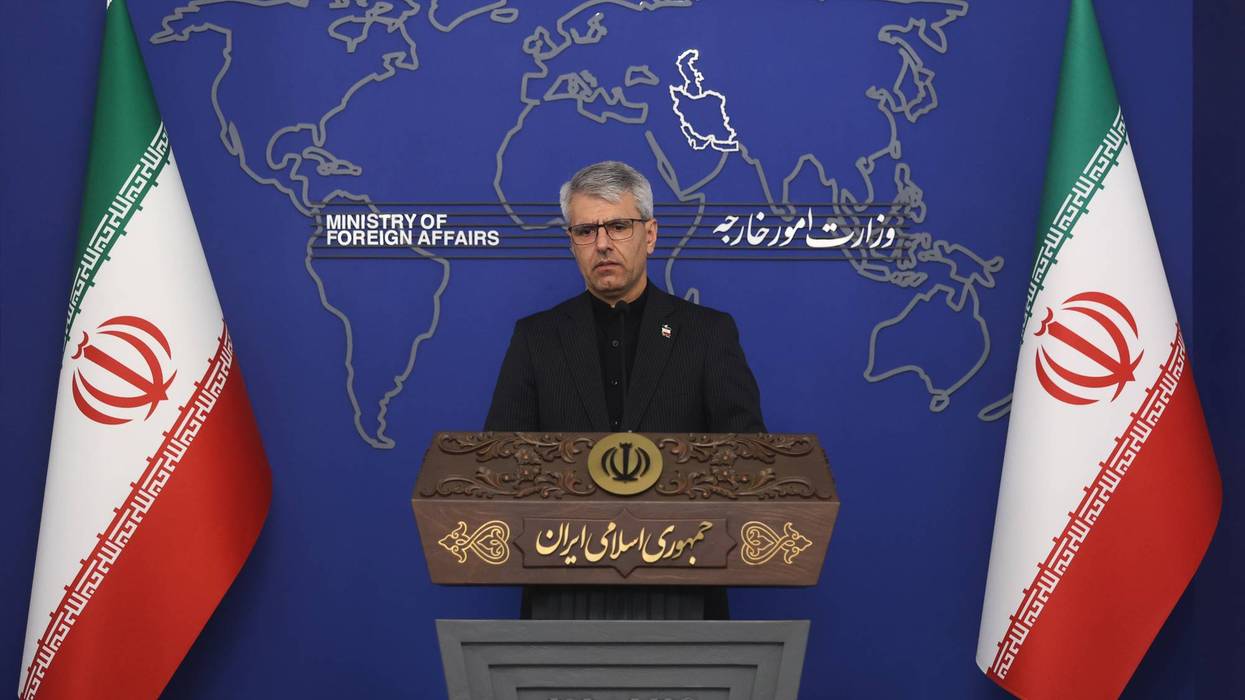
As US President Donald Trump returns to bombing Iranian territory, Esmaeil Baghaei Hamaneh, the spokesperson for Iran's Foreign Ministry, said at a press conference on Tuesday that it's only a sign of the quagmire he's found himself in, and emphasized that the only way out will be negotiation rather than force.
"It has become clear they are now stuck in the massive error they’ve made, and it’s their usual habit to raise excessive demands," Baghaei said, noting that mediation efforts by Pakistan were continuing even as the Trump administration claims that Iran is refusing "meaningful negotiations."
When Trump launched the war in February, he predicted that Iran would be brought to its knees in a matter of weeks. Six months later, there is no sign that an end to the conflict is in sight as Trump rejects a return to the negotiating table.
Baghaei said it's clear that the US was once again falling into "a state of miscalculation." Iran, he said, had been adhering to the Memorandum of Understanding reached in June, while the US refused to abide by its terms of ending its economic blockade, unfreezing assets, and ending threats of aggression, as well as ending attacks by US ally Israel in Lebanon.
Baghaei said Iran was willing to reach another agreement to end the war. The problem, he said, was that Trump had shown himself unwilling to follow any deal that included concessions to Iran and was demanding its full capitulation.
"We cannot accept any orders being dictated upon us," Baghaei said. "If they continue with this philosophy, they will not get any different result.”
Iranian President Masoud Pezeshkian echoed Baghaei's position on Tuesday, saying that Iran would “immediately reciprocate” if Washington honored its commitments under the June interim agreement.
Failing to break Iran with military might, Trump tried to switch last month to a strategy of "economic warfare," imposing "the toughest sanctions in history" and pressuring other nations around the world to do the same in an effort to isolate Iran and fully topple its government.
Baghaei acknowledged that US sanctions were having a devastating effect on the people of Iran. According to Reuters, Iran's foreign trade is down by 35%, and inflation reached 66% in July, cranking up the pain felt by the civilian population.
But efforts to create the "greatest coordinated economic isolation in the history of the world," as Treasury Secretary Scott Bessent described it, have faced resistance, with Iran's major trading partners such as China and Pakistan refusing to cut ties.
"Six months of US bombing and naval blockade have produced no US victory, so the plan now is to starve Iran into capitulation," wrote Columbia University professor Jeffrey Sachs and UN Sustainable Development Solutions Network adviser Sybil Fares on Monday for Al Jazeera. "The new approach is illegal, cruel, and will fail for several reasons."
"To begin with, there is the historical record. Economic sanctions do not bring down governments determined to survive them. Yes, sanctions can impoverish populations, empower the security services that control smuggling, and hand the targeted nation a rallying point built on US malice," Sachs and Fares wrote.
They added that at a time when Iran's restrictions on travel through the Strait of Hormuz have spiked oil prices and sent shocks through the global economy, there is little incentive for the world to cut off Iran's oil exports as well.
"The US proposes to deepen a stagflationary shock already being borne by Europe, Japan, and its other allies, and orders those countries to enforce sanctions that will throttle their economies," they wrote.
And due to Trump's erratic policy, disregard for the United Nations Charter in launching a war of aggression, and the demonstration that his assurances are "unreliable," Sachs and Fares noted that countries are increasingly reaching agreements that rely less on US military guarantees and dollar-based trade.
"Pride goeth before the fall, and no government today is more arrogant than the US under Trump and his enforcer, Bessent," they wrote. "Governments around the world will not follow the US blindly into disaster."
Keep ReadingShow Less
'Wealthy Tax Cheats Reaping the Benefits': IRS Audit Revenue Plummets After Trump Purge
"While working families are expected to pay their fair share, Trump is making it easier for the rich to get away with not paying theirs."
Sep 01, 2026
A report published Monday by an independent federal watchdog shows that Internal Revenue Service audit revenue plummeted last fiscal year as the Trump administration gutted the chronically understaffed and underfunded tax agency's workforce, rolling back recent Democratic efforts to bolster enforcement.
The Treasury Inspector General for Tax Administration (TIGTA) found that IRS audit revenue fell by 35% last year compared to fiscal year 2024, when enforcement revenue reached a historic high. The report notes that the audit revenue plunge followed the Trump administration's 27% cut to the agency's examination and collection staff, the effects of which "are likely to become more apparent over time." Among the gutted IRS units was one tasked with auditing billionaires and other super-rich individuals.
Rep. Don Beyer (D-Va.), a member of the House's chief tax-writing committee, wrote in response to the new figures that "Trump gutted the IRS and wealthy tax cheats are reaping the benefits."
"While working families are expected to pay their fair share," Beyer wrote on social media, "Trump is making it easier for the rich to get away with not paying theirs."
The huge decline in audit revenue comes years after congressional Democrats and then-President Joe Biden approved nearly $80 billion in additional funding for the IRS, including more than $45 billion for enforcement.
But Biden and congressional Democrats subsequently cut a deal with Republicans that rescinded much of the funding boost, which the IRS had said could yield roughly $560 billion in federal revenue over a decade—largely from rich tax cheats and large corporations.
"We know who benefits the most when the IRS doesn't have enough staff to dedicate to audits," the Institute on Taxation and Economic Policy said in response to the TIGTA report. "It's the richest Americans."
We know who benefits the most when the IRS doesn't have enough staff to dedicate to audits. It's the richest Americans. pic.twitter.com/bVvK23k1eU
— ITEP (@iteptweets) September 1, 2026
The IRS is currently headed by scandal-plagued former financial services executive Frank Bisignano, whom Treasury Secretary Scott Bessent picked to serve as the agency's first "CEO."
Bisignano has defended the Trump administration's massive IRS staffing cuts, insisting that there is "no staffing shortage here."
But the TIGTA report notes that "staffing reductions starting in January 2025 significantly reduced enforcement staffing," leaving the agency less equipped to audit the often complex returns of ultra-rich Americans and big corporations.
"An obvious fact: If you get rid of auditors, you raise less money from audits," Natasha Sarin, president of Yale University's Budget Lab, said Tuesday.
"Winners are tax cheats, losers are those who are playing by the rules," Sarin added.
Keep ReadingShow Less
100+ Civil Society Groups Condemn Trump Attack on Democratic Establishment Think Tank
"We stand with the Center for American Progress, not in agreement with every view they hold, but in steadfast support for their rights to voice those views freely and without political retribution."
Sep 01, 2026
A diverse coalition of around 150 organizations on Tuesday collectively spoke out against US President Donald Trump's recent attack on the Center for American Progress, a liberal think tank with ties to the Democratic Party establishment.
The Republican president, through one of his lawyers, threatened to sue the center last month over its July report concluding that there was no evidence his deployment of the National Guard in Washington, DC did anything to reduce violent crime.
"Since our nation's founding, the rights to free speech, association, and the press have been the bedrock on which American democracy has thrived," begins the coalition's statement, spearheaded by Nonprofits Together. "We reaffirm, as has each generation before us, our unqualified commitment to the First Amendment and its foundational protections."
"In so doing, we stand in strong solidarity with the Center for American Progress (CAP), a nonpartisan think tank, and its right to publish expert analysis on the impact of the Trump administration's—or any administration's—policies," it continues. "The free exchange of ideas—including ideas that are inconvenient to those in power—is critical for Americans to understand the nature and impact of the actions of their government."
Trump's legal attack on CAP is just "the latest salvo in the administration's ongoing efforts to suppress the speech of organizations that challenge their policies, defend the rule of law, and protect civil rights and vulnerable communities," the coalition noted.
Other authoritarian attacks—as detailed last December in the Free Press report "Chokehold: Donald Trump's War on Free Speech & the Need for Systemic Resistance"—include the White House taking control of the presidential press pool, legal action such as Trump's lawsuit against Rupert Murdoch and the The Wall Street Journal over reporting on the president's ties to deceased sex offender Jeffrey Epstein, and the administration working to deport foreign scholars and journalists who criticize US policy.
First it was law firms, then universities, and now Trump has threatened a research organization in an attempt to silence them.We're proud to join 150+ organizations standing up for @americanprogress.bsky.social and the First Amendment. Read the full statement: nptogether.org/press/cap-st...
[image or embed]
— American Oversight (@weareoversight.bsky.social) September 1, 2026 at 12:14 PM
Stressing that there are often disagreements "even within think tanks," the coalition warned Tuesday that attempting to silence sources of information "degrades our free exchange of ideas, and risks leaving only distortions in the public square."
"This is infinitely more damaging to our democratic ideals when done for purely political purposes," the groups argued. "There are few issues more fundamental to the First Amendment than the right of an independent organization to publish evidence-based analysis of a government policy and how it is or is not working."
"This is not about ideology or partisanship," the organizations continued. "This is true regardless of who is in power, and who is issuing public critiques of that power. We stand with the Center for American Progress, not in agreement with every view they hold, but in steadfast support for their rights to voice those views freely and without political retribution."
The signatories range from environmental, labor, and legal groups to those focused on faith, housing, immigration, LGBTQ+ rights, reproductive freedom, and more. They include the ACLU, Center on Budget and Policy Priorities, Drug Policy Alliance, Economic Policy Institute, Giffords, Greenpeace USA, Human Rights Campaign, Indivisible, National Education Association, Oxfam America, Public Citizen, and Union of Concerned Scientists.
“The free exchange of ideas—including ideas that are inconvenient to those in power—is critical for Americans to understand the nature and impact of the actions of their government.” CAC stands with @americanprogress.bsky.social: nptogether.org/press/cap-st...
[image or embed]
— CAC (@myconstitution.bsky.social) September 1, 2026 at 11:30 AM
CAP was founded in 2003 by John Podesta, who has served in various roles under former Democratic Presidents Bill Clinton, Barack Obama, and Joe Biden. The center's current president, Neera Tanden, has also worked for key party leaders. In response to Trump's threat last month, she emphasized that the think tank "is an independent, nonpartisan research organization, and our work is grounded in rigorous, evidence-based research and analysis."
Blasting the threatened lawsuit as "baseless" and "a transparent attempt to silence us," Tanden pledged that "we will neither cower nor bend in the face of it."
"In America, profound disagreements over public policy are resolved through robust public debate, not through threats or intimidation," she added. "Independent data, evidence, and analysis are essential to that debate. Efforts to silence independent research because its findings are unwelcome by an administration or president should alarm every American."
Keep ReadingShow Less
Jewish Artists Condemn Corporate 'Smear Campaign' Against Mark Ruffalo for Israel Criticism
"The time is over for spurious charges of antisemitism to be trotted out, this time in the defense of war, oligarchy, and AI domination."
Sep 01, 2026
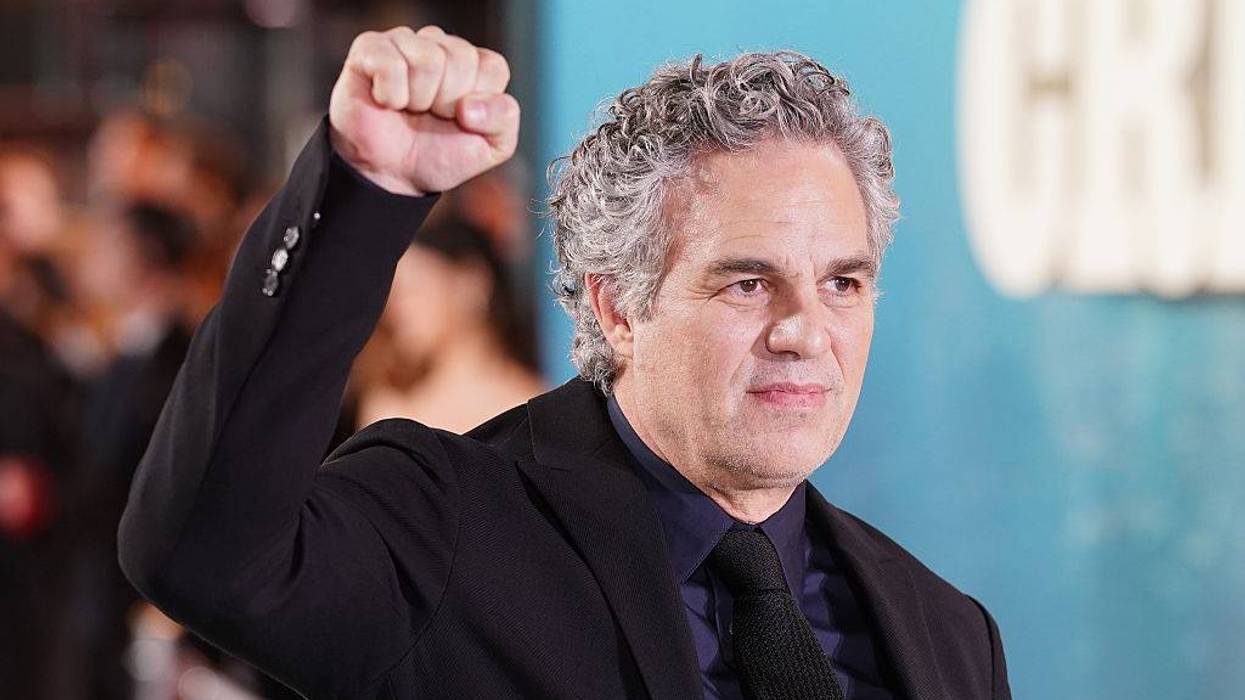
A group of over 170 Jewish figures, including many who work in the entertainment industry, have come to the defense of actor Mark Ruffalo as he faces antisemitism accusations from executives at Paramount for criticizing the Israeli government and its ties to powerful corporations.
In a letter released Tuesday, prominent Jewish figures—including filmmaker Joel Coen, director and author Miranda July, actress Debra Winger, actress and director Ilana Glazer, actress and comedian Hannah Einbinder, and playwright Tony Kushner—accused Paramount of waging a "smear campaign" to shield corporate interests from legitimate criticism.
"Enough with the false and dangerous weaponization of charges of antisemitism," the letter states, "against those who are brave enough to point out the obvious: that the assault on the Palestinian people and the assault on our liberties at home are deeply interconnected, and there is nothing antisemitic about recognizing that fact."
Ruffalo was accused of being an antisemite after he cited the work of Oracle founder Larry Ellison, father of Paramount CEO David Ellison, in helping the Israeli military carry out a years-long assault on Gaza that has left an estimated 73,500 Palestinians dead.
The actor specifically said that Oracle was powering "an apartheid system of oppression" in the Middle East, which he warned could be exported everywhere if "merged into one of the largest media conglomerates in the world," a reference to the proposed $110 billion megamerger between Paramount and Warner Bros. Discovery.
However, the Jewish figures' letter points out that there is nothing at all antisemitic about expressing concerns about corporate megamergers that could fuse the power of mass media with the power of a technology giant.
In particular, the letter says that the Paramount-Warner Bros. merger is part of "a larger project of tech-driven domination, a project Larry Ellison and his partners have never been shy about trumpeting—and one they themselves have explicitly linked to their support for the ongoing depredations being visited on the people of Palestine and their silencing of critics of those horrors."
The letter also slams Ellison for trying to create an "Orwellian world" as he "consolidates control over what we watch and how we watch it, knowing that as we watch he and his corrupt cohort will always be watching us."
"The time is over for spurious charges of antisemitism to be trotted out, this time in the defense of war, oligarchy, and [artificial intellignece] domination," the letter concludes. "That tired playbook has run its course. We stand proudly with Mark Ruffalo, and with all decent people who are bravely rising and speaking truth to power."
Keep ReadingShow Less
See More
Most Popular