SUBSCRIBE TO OUR FREE NEWSLETTER
Daily news & progressive opinion—funded by the people, not the corporations—delivered straight to your inbox.
5
#000000
#FFFFFF
To donate by check, phone, or other method, see our More Ways to Give page.
Daily news & progressive opinion—funded by the people, not the corporations—delivered straight to your inbox.
One expert said Israel's continued assault on Lebanon, which led Iran to announce its closure of the strait, posed an "existential threat" to the ceasefire.
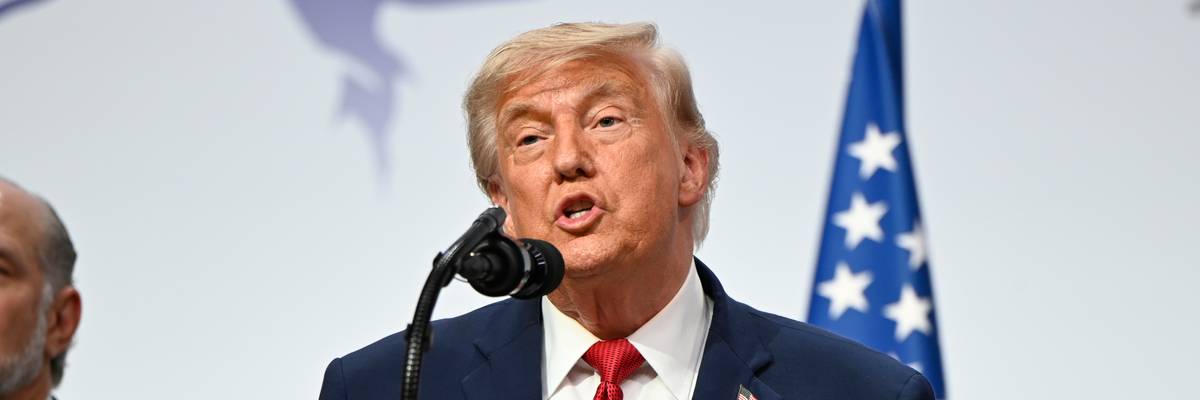
Rather than force Israel to halt its occupation in Lebanon in accordance with the memorandum of understanding, President Donald Trump on Sunday responded to Iran's announcement that it was closing the Strait of Hormuz with a new litany of psychotic threats—claiming that if the waterway were closed, he would blow up the country, launch a full ground invasion to take it over, and assassinate Iranian negotiators.
According to Fox News correspondent Trey Yingst, Trump told the Iranian negotiators overnight that if they close the strait, which Iran claimed to have shuttered once again on Saturday, “you won’t have a country,” adding that they “won’t even make it back to their f***ing country,” in what appeared to be a threat to assassinate the negotiators, as happened during the initial phase of the war.
Responding to statements by Iranian President Masoud Pezeshkian, who said Iran would not give up its “right to enrich uranium” and that the US “will be forced to accept it,” Trump reportedly said Pezeshkian had better “watch his mouth” and “shape up,” or the US “will take over the rest of the country.”
It’s yet another sharp reversal from Trump, who—after months of claiming Iran must agree to “zero enrichment”—suddenly acknowledged this week that it was “common sense” for the nation to be allowed to have a nuclear energy program as other countries do.
Trump’s renewed threats against Iran, which mirror his genocidal threats earlier in the war to wipe out Iran’s “whole civilization” and “blow up” the entire country, also appear to violate the first clause of the memorandum of understanding, which calls on signatories to “refrain from the threat or use of force against each other.”
The threat to fully occupy Iran, which Trump made publicly for the first time on Sunday, stands in sharp contrast to his comments that continuing the war for much longer would cause “economic catastrophe” and that even limited ground operations, such as one he had proposed to seize Iran’s uranium, would be too big an effort to be worth it.
The war with Iran is already deeply unpopular among the American public, even without US boots on the ground. Polls have shown that even a majority of Republicans would be opposed to Trump escalating the war by deploying ground troops, and military officials have shelved planned operations to occupy certain strategic locations, including Kharg Island, fearing a large number of American casualties.
Nevertheless, Trump also told Yingst that the US could become the “guardian angel” of the Strait of Hormuz, collecting tolls and taking oil from countries using the waterway for exports. He did not make clear how the US would gain control of the strait under such a scenario.
Iran announced that it would close the strait again on Saturday after Israel deepened its occupation and escalated its bombing of southern Lebanon, despite the MOU’s ceasefire agreement covering all fronts.
Iranian negotiators have described an end to Israel’s Lebanon occupation, which has killed more than 4,000 people and forced more than 1.2 million Lebanese civilians from their homes in the south, as a red line for negotiating peace.
Behind the scenes, Trump has acknowledged that Israeli Prime Minister Benjamin Netanyahu is using Lebanon to sabotage the ceasefire and drag the US back into a full-scale war.
In the phone call with Yingst, Trump once again said he was “disappointed Israel can’t put Hezbollah away,” adding that Israel “can’t do anything without knocking buildings down.” He also said he was close to allowing Syrian President Ahmed al-Sharaa—the former leader of al-Qaeda’s Syrian affiliate—to take over the operation against Hezbollah.
While this is yet another instance of Trump using harsher rhetoric toward Israel—which Vice President JD Vance has also done in recent days—there is no indication yet that he is willing to take the next step of forcing Netanyahu to accept the ceasefire agreement by imposing material consequences, such as suspending military aid.
Even as Israel’s attacks continued unabated and threatened to derail the deal entirely, Vance did not indicate that he thought the US needed to exert more pressure.
“I think Trump and the US have done more to stop the conflict in Lebanon than any government anywhere in the world,” he said at a press conference in Switzerland on Sunday.
Trita Parsi, executive vice president at the Quincy Institute for Responsible Statecraft, described Israel’s continued escalations as “an existential threat” to the peace process between the US and Iran.
He told ABC News on Saturday that Iran’s threat to close the strait just before a meeting in Geneva this weekend was meant to be “part of a background of how serious they are” about ensuring that the US understands the stakes if Israel refuses to withdraw.
“Israel would prefer for this war to continue until you have a complete defeat of the Iranians, which, of course, is not in the cards,” Parsi said. “The Israelis sold this war to Trump as a quick, easy fix to the region’s problems that would take no more than four days, and they were dead wrong.”
“Now, Trump is recognizing that US interests necessitate that he pull out of this war and strikes this deal, but the Israelis are trying to sabotage it because they are afraid they’re going to be left out, that the balance in the region is going to shift against their interests,” he added. “They’re willing to essentially jeopardize their relationship with the United States over this.”
Dear Common Dreams reader, It’s been nearly 30 years since I co-founded Common Dreams with my late wife, Lina Newhouser. We had the radical notion that journalism should serve the public good, not corporate profits. It was clear to us from the outset what it would take to build such a project. No paid advertisements. No corporate sponsors. No millionaire publisher telling us what to think or do. Many people said we wouldn't last a year, but we proved those doubters wrong. Together with a tremendous team of journalists and dedicated staff, we built an independent media outlet free from the constraints of profits and corporate control. Our mission has always been simple: To inform. To inspire. To ignite change for the common good. Building Common Dreams was not easy. Our survival was never guaranteed. When you take on the most powerful forces—Wall Street greed, fossil fuel industry destruction, Big Tech lobbyists, and uber-rich oligarchs who have spent billions upon billions rigging the economy and democracy in their favor—the only bulwark you have is supporters who believe in your work. But here’s the urgent message from me today. It's never been this bad out there. And it's never been this hard to keep us going. At the very moment Common Dreams is most needed, the threats we face are intensifying. We need your support now more than ever. We don't accept corporate advertising and never will. We don't have a paywall because we don't think people should be blocked from critical news based on their ability to pay. Everything we do is funded by the donations of readers like you. When everyone does the little they can afford, we are strong. But if that support retreats or dries up, so do we. Will you donate now to make sure Common Dreams not only survives but thrives? —Craig Brown, Co-founder |
Rather than force Israel to halt its occupation in Lebanon in accordance with the memorandum of understanding, President Donald Trump on Sunday responded to Iran's announcement that it was closing the Strait of Hormuz with a new litany of psychotic threats—claiming that if the waterway were closed, he would blow up the country, launch a full ground invasion to take it over, and assassinate Iranian negotiators.
According to Fox News correspondent Trey Yingst, Trump told the Iranian negotiators overnight that if they close the strait, which Iran claimed to have shuttered once again on Saturday, “you won’t have a country,” adding that they “won’t even make it back to their f***ing country,” in what appeared to be a threat to assassinate the negotiators, as happened during the initial phase of the war.
Responding to statements by Iranian President Masoud Pezeshkian, who said Iran would not give up its “right to enrich uranium” and that the US “will be forced to accept it,” Trump reportedly said Pezeshkian had better “watch his mouth” and “shape up,” or the US “will take over the rest of the country.”
It’s yet another sharp reversal from Trump, who—after months of claiming Iran must agree to “zero enrichment”—suddenly acknowledged this week that it was “common sense” for the nation to be allowed to have a nuclear energy program as other countries do.
Trump’s renewed threats against Iran, which mirror his genocidal threats earlier in the war to wipe out Iran’s “whole civilization” and “blow up” the entire country, also appear to violate the first clause of the memorandum of understanding, which calls on signatories to “refrain from the threat or use of force against each other.”
The threat to fully occupy Iran, which Trump made publicly for the first time on Sunday, stands in sharp contrast to his comments that continuing the war for much longer would cause “economic catastrophe” and that even limited ground operations, such as one he had proposed to seize Iran’s uranium, would be too big an effort to be worth it.
The war with Iran is already deeply unpopular among the American public, even without US boots on the ground. Polls have shown that even a majority of Republicans would be opposed to Trump escalating the war by deploying ground troops, and military officials have shelved planned operations to occupy certain strategic locations, including Kharg Island, fearing a large number of American casualties.
Nevertheless, Trump also told Yingst that the US could become the “guardian angel” of the Strait of Hormuz, collecting tolls and taking oil from countries using the waterway for exports. He did not make clear how the US would gain control of the strait under such a scenario.
Iran announced that it would close the strait again on Saturday after Israel deepened its occupation and escalated its bombing of southern Lebanon, despite the MOU’s ceasefire agreement covering all fronts.
Iranian negotiators have described an end to Israel’s Lebanon occupation, which has killed more than 4,000 people and forced more than 1.2 million Lebanese civilians from their homes in the south, as a red line for negotiating peace.
Behind the scenes, Trump has acknowledged that Israeli Prime Minister Benjamin Netanyahu is using Lebanon to sabotage the ceasefire and drag the US back into a full-scale war.
In the phone call with Yingst, Trump once again said he was “disappointed Israel can’t put Hezbollah away,” adding that Israel “can’t do anything without knocking buildings down.” He also said he was close to allowing Syrian President Ahmed al-Sharaa—the former leader of al-Qaeda’s Syrian affiliate—to take over the operation against Hezbollah.
While this is yet another instance of Trump using harsher rhetoric toward Israel—which Vice President JD Vance has also done in recent days—there is no indication yet that he is willing to take the next step of forcing Netanyahu to accept the ceasefire agreement by imposing material consequences, such as suspending military aid.
Even as Israel’s attacks continued unabated and threatened to derail the deal entirely, Vance did not indicate that he thought the US needed to exert more pressure.
“I think Trump and the US have done more to stop the conflict in Lebanon than any government anywhere in the world,” he said at a press conference in Switzerland on Sunday.
Trita Parsi, executive vice president at the Quincy Institute for Responsible Statecraft, described Israel’s continued escalations as “an existential threat” to the peace process between the US and Iran.
He told ABC News on Saturday that Iran’s threat to close the strait just before a meeting in Geneva this weekend was meant to be “part of a background of how serious they are” about ensuring that the US understands the stakes if Israel refuses to withdraw.
“Israel would prefer for this war to continue until you have a complete defeat of the Iranians, which, of course, is not in the cards,” Parsi said. “The Israelis sold this war to Trump as a quick, easy fix to the region’s problems that would take no more than four days, and they were dead wrong.”
“Now, Trump is recognizing that US interests necessitate that he pull out of this war and strikes this deal, but the Israelis are trying to sabotage it because they are afraid they’re going to be left out, that the balance in the region is going to shift against their interests,” he added. “They’re willing to essentially jeopardize their relationship with the United States over this.”
Rather than force Israel to halt its occupation in Lebanon in accordance with the memorandum of understanding, President Donald Trump on Sunday responded to Iran's announcement that it was closing the Strait of Hormuz with a new litany of psychotic threats—claiming that if the waterway were closed, he would blow up the country, launch a full ground invasion to take it over, and assassinate Iranian negotiators.
According to Fox News correspondent Trey Yingst, Trump told the Iranian negotiators overnight that if they close the strait, which Iran claimed to have shuttered once again on Saturday, “you won’t have a country,” adding that they “won’t even make it back to their f***ing country,” in what appeared to be a threat to assassinate the negotiators, as happened during the initial phase of the war.
Responding to statements by Iranian President Masoud Pezeshkian, who said Iran would not give up its “right to enrich uranium” and that the US “will be forced to accept it,” Trump reportedly said Pezeshkian had better “watch his mouth” and “shape up,” or the US “will take over the rest of the country.”
It’s yet another sharp reversal from Trump, who—after months of claiming Iran must agree to “zero enrichment”—suddenly acknowledged this week that it was “common sense” for the nation to be allowed to have a nuclear energy program as other countries do.
Trump’s renewed threats against Iran, which mirror his genocidal threats earlier in the war to wipe out Iran’s “whole civilization” and “blow up” the entire country, also appear to violate the first clause of the memorandum of understanding, which calls on signatories to “refrain from the threat or use of force against each other.”
The threat to fully occupy Iran, which Trump made publicly for the first time on Sunday, stands in sharp contrast to his comments that continuing the war for much longer would cause “economic catastrophe” and that even limited ground operations, such as one he had proposed to seize Iran’s uranium, would be too big an effort to be worth it.
The war with Iran is already deeply unpopular among the American public, even without US boots on the ground. Polls have shown that even a majority of Republicans would be opposed to Trump escalating the war by deploying ground troops, and military officials have shelved planned operations to occupy certain strategic locations, including Kharg Island, fearing a large number of American casualties.
Nevertheless, Trump also told Yingst that the US could become the “guardian angel” of the Strait of Hormuz, collecting tolls and taking oil from countries using the waterway for exports. He did not make clear how the US would gain control of the strait under such a scenario.
Iran announced that it would close the strait again on Saturday after Israel deepened its occupation and escalated its bombing of southern Lebanon, despite the MOU’s ceasefire agreement covering all fronts.
Iranian negotiators have described an end to Israel’s Lebanon occupation, which has killed more than 4,000 people and forced more than 1.2 million Lebanese civilians from their homes in the south, as a red line for negotiating peace.
Behind the scenes, Trump has acknowledged that Israeli Prime Minister Benjamin Netanyahu is using Lebanon to sabotage the ceasefire and drag the US back into a full-scale war.
In the phone call with Yingst, Trump once again said he was “disappointed Israel can’t put Hezbollah away,” adding that Israel “can’t do anything without knocking buildings down.” He also said he was close to allowing Syrian President Ahmed al-Sharaa—the former leader of al-Qaeda’s Syrian affiliate—to take over the operation against Hezbollah.
While this is yet another instance of Trump using harsher rhetoric toward Israel—which Vice President JD Vance has also done in recent days—there is no indication yet that he is willing to take the next step of forcing Netanyahu to accept the ceasefire agreement by imposing material consequences, such as suspending military aid.
Even as Israel’s attacks continued unabated and threatened to derail the deal entirely, Vance did not indicate that he thought the US needed to exert more pressure.
“I think Trump and the US have done more to stop the conflict in Lebanon than any government anywhere in the world,” he said at a press conference in Switzerland on Sunday.
Trita Parsi, executive vice president at the Quincy Institute for Responsible Statecraft, described Israel’s continued escalations as “an existential threat” to the peace process between the US and Iran.
He told ABC News on Saturday that Iran’s threat to close the strait just before a meeting in Geneva this weekend was meant to be “part of a background of how serious they are” about ensuring that the US understands the stakes if Israel refuses to withdraw.
“Israel would prefer for this war to continue until you have a complete defeat of the Iranians, which, of course, is not in the cards,” Parsi said. “The Israelis sold this war to Trump as a quick, easy fix to the region’s problems that would take no more than four days, and they were dead wrong.”
“Now, Trump is recognizing that US interests necessitate that he pull out of this war and strikes this deal, but the Israelis are trying to sabotage it because they are afraid they’re going to be left out, that the balance in the region is going to shift against their interests,” he added. “They’re willing to essentially jeopardize their relationship with the United States over this.”