
SUBSCRIBE TO OUR FREE NEWSLETTER
Daily news & progressive opinion—funded by the people, not the corporations—delivered straight to your inbox.
5
#000000
#FFFFFF
To donate by check, phone, or other method, see our More Ways to Give page.


Daily news & progressive opinion—funded by the people, not the corporations—delivered straight to your inbox.
"What happened to Birch Glacier is what we would expect from rising temperatures in the Alps and elsewhere," one scientist said.
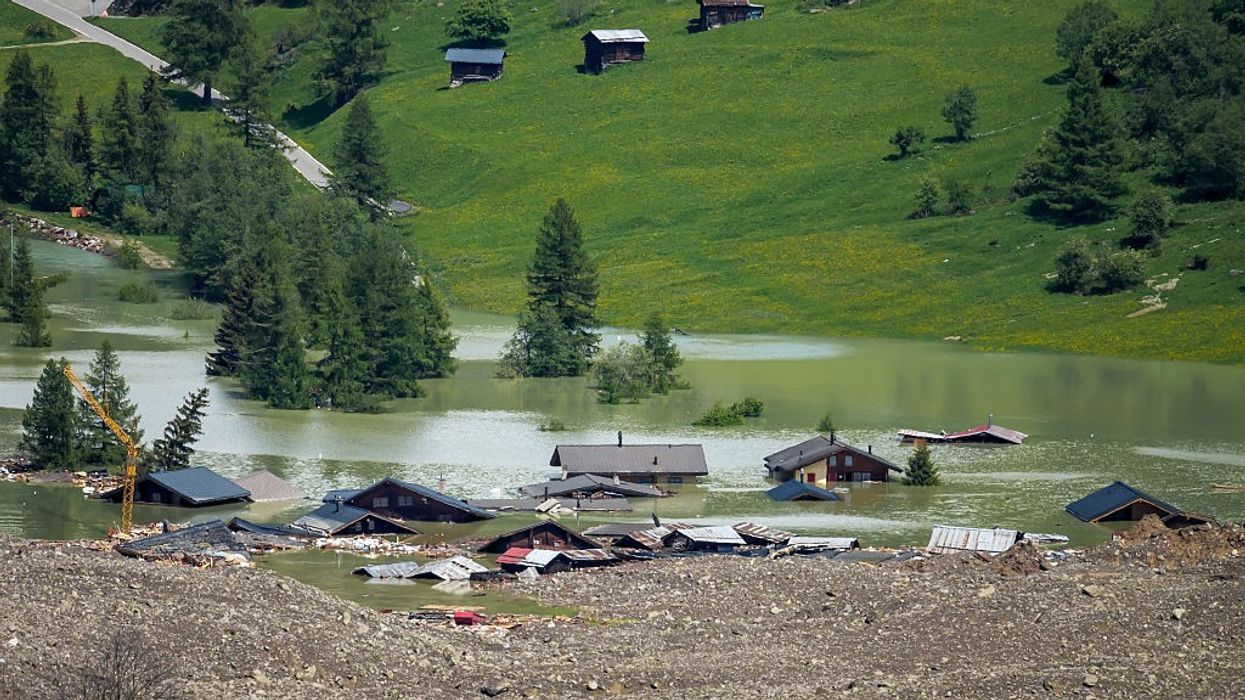
Thawing permafrost exacerbated by human-caused global heating is the likely culprit behind a massive glacier collapse that buried nearly the entire Swiss town of Blatten, one scientist said Thursday while warning of the likelihood of similar disasters in the future.
The alpine hamlet of 300 inhabitants—who were evacuated earlier amid warning signs of disaster—was almost completely wiped out on Wednesday after the Birch Glacier, located in the Lötschental Valley in northern Switzerland, collapsed. The glacial avalanche, laden with boulders and other debris, cascaded down the mountainside and into the village, obliterating everything in its path. Local officials said around 90% of Blatten was buried.
"We've lost our village," Blatten Mayor Matthias Bellwald told reporters. "The village is under rubble. We will rebuild."
before and after today’s glacier collapse that buried 90% of blatten, switzerland
[image or embed]
— ian bremmer ( @ianbremmer.com) May 28, 2025 at 3:01 PM
While there are no verified casualties from the disaster, one 64-year-old man has been reported missing.
Mathieu Morlighem, a glaciologist at Dartmouth College in New Hampshire, told ABC News that permafrost thaw under and along the sidewalls surrounding the glacier likely caused the collapse.
"What happened to Birch Glacier is what we would expect from rising temperatures in the Alps and elsewhere," he explained. "I think we can expect more events like this in the future."
As ABC News reported:
Glaciers in Switzerland have lost almost 40% of their volume since 2000, and the loss is accelerating, according to the Swiss Federal Institute for Forest, Snow, and Landscape Research. Record-high summer temperatures in 2022 and 2023 caused a 10% glacial ice loss in the country.
Experts warn that Switzerland's glaciers could disappear completely by 2100 due to the climate emergency.
As Common Dreams reported in March, the crisis is planetary and is predicted to adversely affect nearly 2 billion people who depend upon glaciers for agricultural irrigation and drinking water.
"Most of the world's glaciers, including those in mountains, are melting at an accelerated rate worldwide," a United Nations Educational, Scientific, and Cultural Organization report published earlier this year warned. "Combined with accelerating permafrost thaw, declining snow cover, and more erratic snowfall patterns... this will have significant and irreversible impacts on local, regional, and global hydrology, including water availability."
The Swiss collapse happened a day before Thursday's opening of the
High-Level International Conference on Glaciers' Preservation in Tajikistan, which aims to "highlight the vital role of glaciers in maintaining global ecological balance and addressing water-related challenges."
"It is clear that we are currently on a dangerous trajectory," said one University of Exeter professor.
Scientists on Wednesday released yet another study warning that humankind is at risk of triggering various climate "tipping points" absent urgent action to dramatically reduce planet-heating emissions from fossil fuels.
The new peer-reviewed paper, published Wednesday in the journal Earth System Dynamics, comes from a trio of experts at the United Kingdom's University of Exeter and the University of Hamburg in Germany.
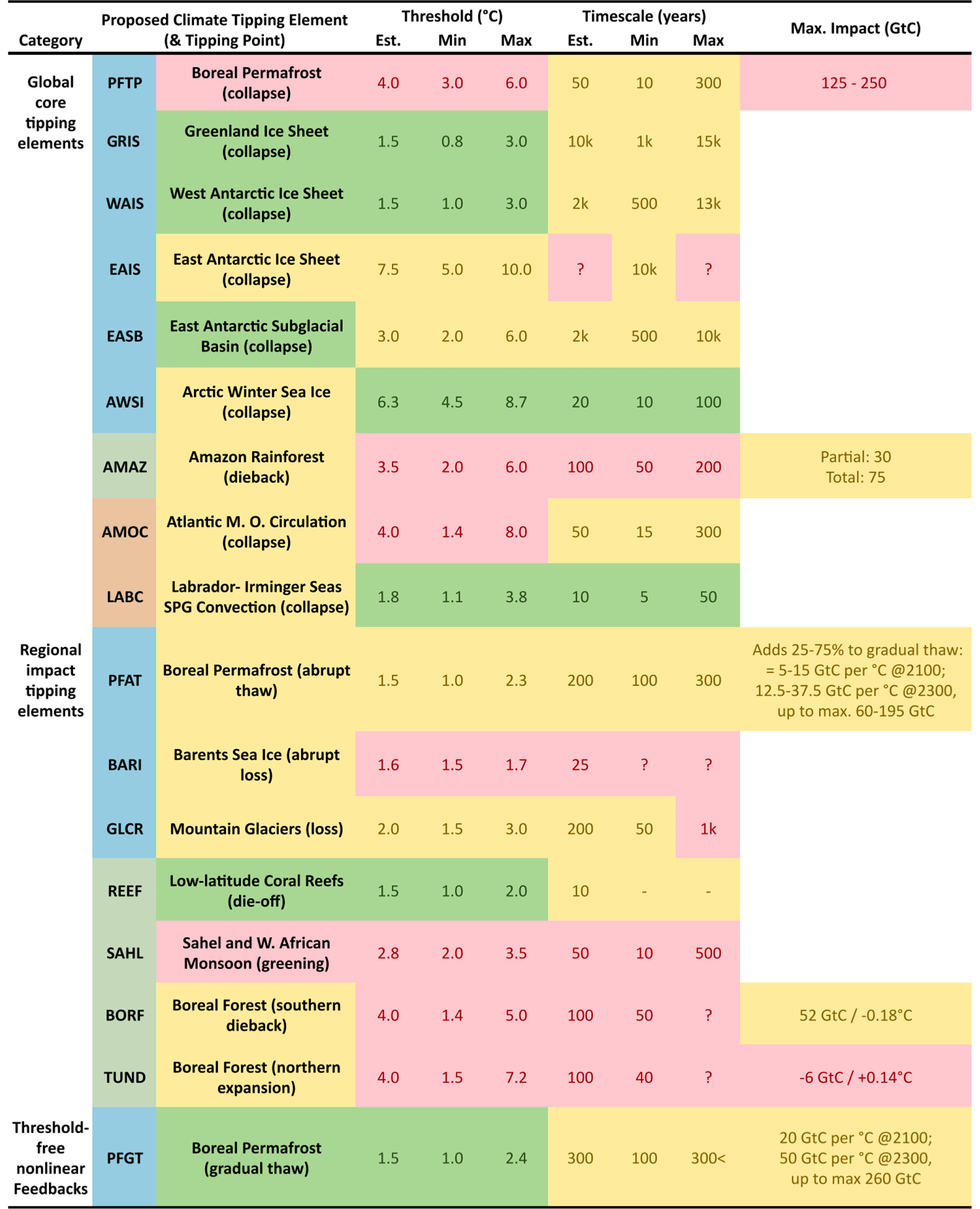
Climate scholars use the term "tipping point" to describe a critical threshold which, when crossed, "leads to significant and long-term changes of the system," the paper notes. Debate over it "has intensified over the past two decades," prompting several studies of specific risks.
"Climate tipping points could have devastating consequences for humanity," said co-author Tim Lenton in a statement. "It is clear that we are currently on a dangerous trajectory—with tipping points likely to be triggered unless we change course rapidly."
"We need urgent global action—including the triggering of 'positive tipping points' in our societies and economies—to reach a safe and sustainable future," added the Exeter professor and Global Systems Institute director.
Lenton's team calculated the probabilities of triggering 16 tipping points. They looked at the risks of serious damage to key glaciers, ice sheets, sea ice, and permafrost; the dieback of forests such as the Amazon; the die-off of low-latitute coral reefs; and the collapse of the Atlantic Meridional Overturning Circulation (AMOC), which is part of a crucial "global conveyor belt" of ocean currents.
To assess the risk of current policies triggering climate tipping points, the researchers focused on a scenario in which median warming of 2.8°C takes place by the end of the century.
On that pathway, the study says, "our most conservative estimate of triggering probabilities averaged over all tipping points is 62%... and nine tipping points have a more than 50% probability of getting triggered."
Under scenarios with lower temperature rise, "the risk of triggering climate tipping points is reduced significantly," the study continues. "However, it also remains less constrained since the behaviour of climate tipping points in the case of a temperature overshoot is still highly uncertain."
The paper concludes that "rapid action is needed to reduce greenhouse gas emissions, since climate tipping points are already close, and it will be decided within the coming decades if they will be crossed or not."
Lead author Jakob Deutloff shared that takeaway a bit more optimistically, saying that "the good news from our study is that the power to prevent climate tipping points is still in our hands."
"By moving towards a more sustainable future with lower emissions, the risk of triggering these tipping points is significantly reduced," he added. "And it appears that breaching tipping points within the Amazon and the permafrost region should not necessarily trigger others."
▶️New paper from Jakob Deutloff, Hermann Held and Tim Lenton highlights the need for action to prevent triggering climate tipping points. More on this at The Global Tipping Points conference @exeter.ac.uk Register now! global-tipping-points.org/conference-2... esd.copernicus.org/articles/16/...
[image or embed]
— Global Systems Institute (@gsiexeter.bsky.social) April 23, 2025 at 4:45 AM
The paper was published during Covering Climate Now's joint week of media coverage drawing attention to the 89% of people worldwide who want their governments to do more to address the global crisis; ahead of a Global Systems Institute conference on tipping points this summer; and just over six months away from the next United Nations climate summit, COP30, in Brazil.
While some governments are trying to prevent the worst-case scenario by taking action to cut emissions, U.S. President Donald Trump has made clear since returning to office in January that he aims to deliver on his pro-fossil fuel campaign pledge to "drill, baby, drill."
On the heels of the
hottest year in human history, Trump is working to gut key agencies, ditched the Paris climate agreement, and has taken executive action to boost planet-wrecking coal, gas, and oil, including declaring a national energy emergency.
The study was published as President Donald Trump was blasted for an executive order that one critic said shows he wants to turn the Alaskan Arctic into the "the world's largest gas station."
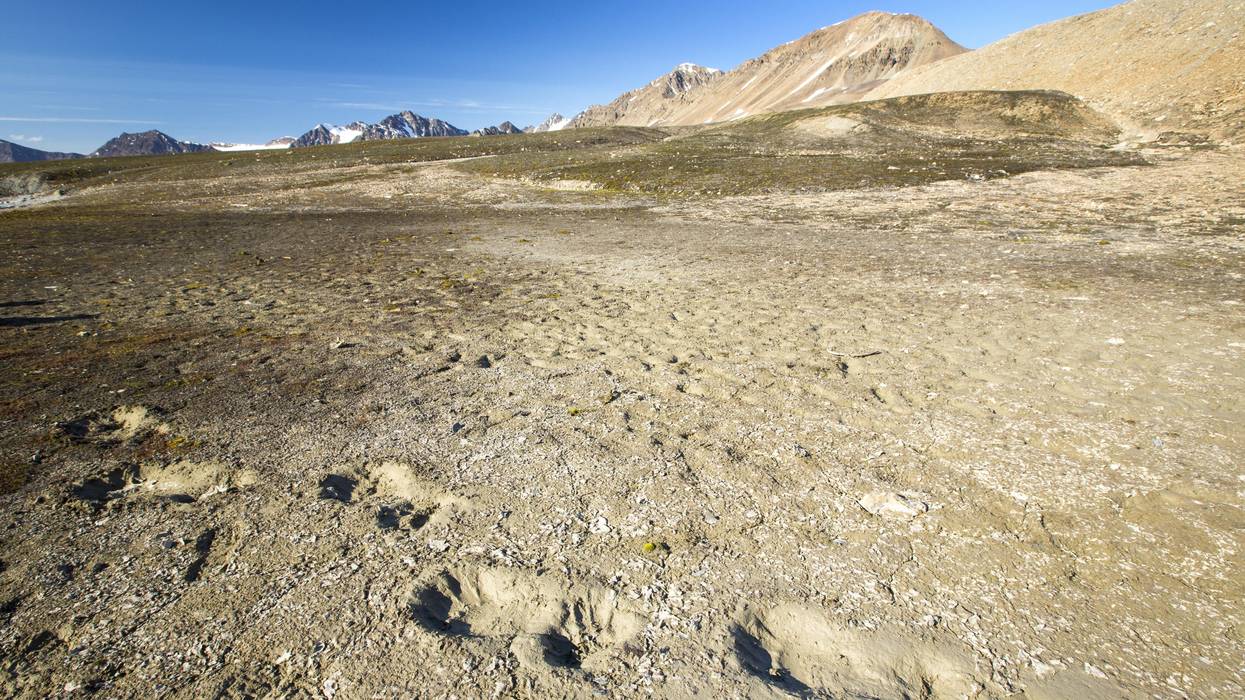
For thousands of years, the land areas of the Arctic have served as a "carbon sink," storing potential carbon emissions in the permafrost. But according to a study published in the journal Nature Climate Change Tuesday, more than 34% of the Arctic is now a source of carbon to the atmosphere, as permafrost melts and the Arctic becomes greener.
"When emissions from fire were added, the percentage grew to 40%," according to the Woodwell Climate Research Center, which led the international team that conducted the research.
The study, which was first reported on by The Guardian, was released the day after President Donald Trump issued multiple presidential actions influencing the United States' ability to confront the climate crisis, which is primarily caused by fossil fuel emissions, including one directly impacting resource extraction in Alaska, a section of which is within the Arctic Circle.
Sue Natali, one of the researchers who worked on the study published in Nature Climate Change, told NPR in December (in reference to similar research) that the Arctic's warming "is not an issue of what party you support."
"This is something that impacts everyone," she said.
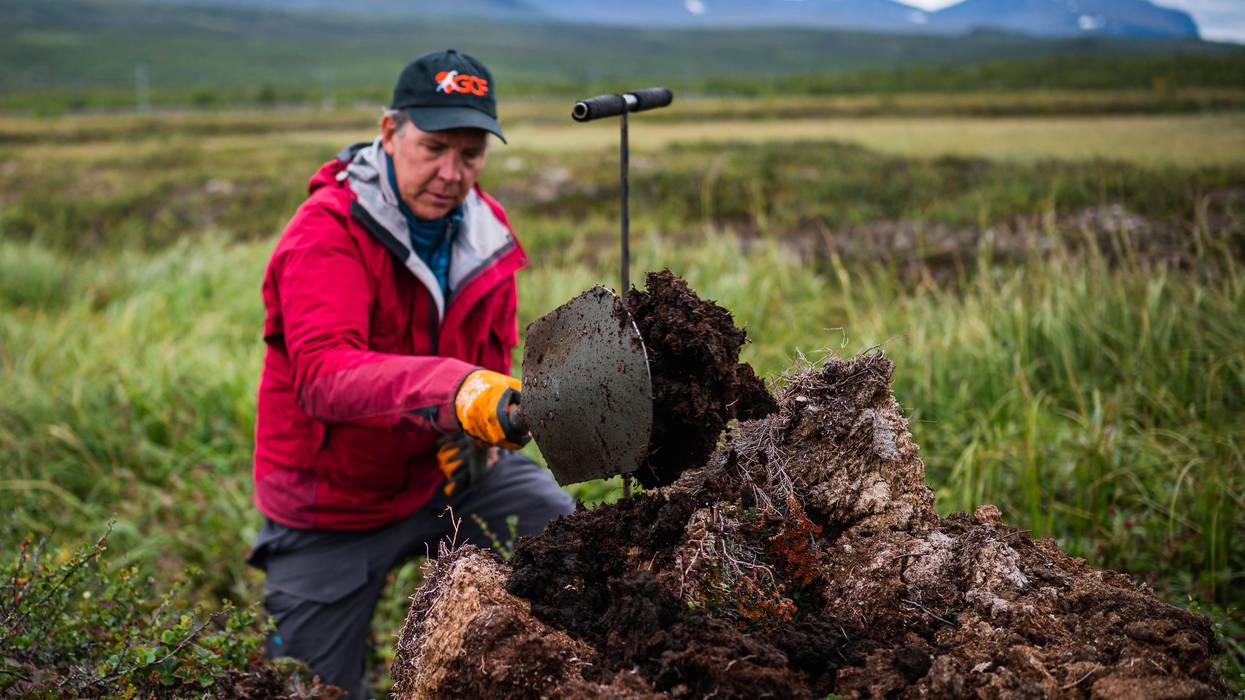
As the permafrost—ground that remains frozen for two or more years—holds less carbon, it releases CO2 into the atmosphere that could "considerably exacerbate climate change," according to the study.
"There is a load of carbon in the Arctic soils. It's close to half of the Earth's soil carbon pool. That's much more than there is in the atmosphere. There's a huge potential reservoir that should ideally stay in the ground," said Anna Virkkala, the lead author of the study, in an interview with The Guardian.
The dire warning was released on the heels of Trump's executive order titled "Unleashing the Alaska's Extraordinary Resource Potential" that calls for expedited "permitting and leasing of energy and natural resource projects in Alaska," as well as for the prioritization of "development of Alaska's liquefied natural gas (LNG) potential, including the sale and transportation of Alaskan LNG to other regions of the United States and allied nations within the Pacific region."
The order also rolls back a number of Biden-era restrictions on drilling and extraction in Alaska, which included protecting areas within the Arctic National Wildlife Refuge from oil and gas leasing.
"Alaska is warming four times faster than the rest of the planet, a trend that is wreaking havoc on communities, ecosystems, fish, wildlife, and ways of life that depend on healthy lands and waters," said Carole Holley, managing attorney for the Alaska Office of the environmental group Earthjustice, in a statement Monday.
"Earthjustice and its clients will not stand idly by while Trump once again forces a harmful industry-driven agenda on our state for political gain and the benefit of a wealthy few," she added.
Trump wants to turn the Alaskan Arctic into the "the world's largest gas station," said Athan Manuel, director of Sierra Club's Lands Protection Program, in a statement Monday. "Make no mistake, Trump's rushed and sloppy actions today are an existential threat to these lands and waters, and the communities and wildlife that depend on them."