

SUBSCRIBE TO OUR FREE NEWSLETTER
Daily news & progressive opinion—funded by the people, not the corporations—delivered straight to your inbox.
5
#000000
#FFFFFF
To donate by check, phone, or other method, see our More Ways to Give page.
Daily news & progressive opinion—funded by the people, not the corporations—delivered straight to your inbox.
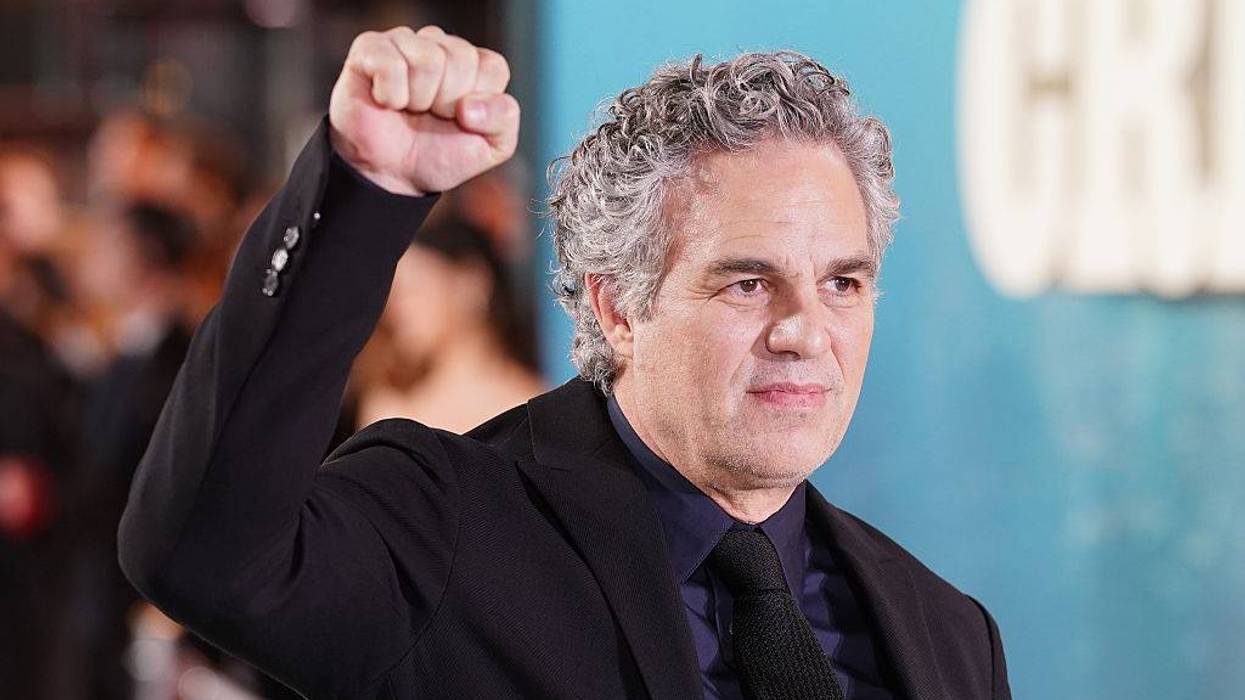
"The time is over for spurious charges of antisemitism to be trotted out, this time in the defense of war, oligarchy, and AI domination."
A group of over 170 Jewish figures, including many who work in the entertainment industry, have come to the defense of actor Mark Ruffalo as he faces antisemitism accusations from executives at Paramount for criticizing the Israeli government and its ties to powerful corporations.
In a letter released Tuesday, prominent Jewish figures—including filmmaker Joel Coen, director and author Miranda July, actress Debra Winger, actress and director Ilana Glazer, actress and comedian Hannah Einbinder, and playwright Tony Kushner—accused Paramount of waging a "smear campaign" to shield corporate interests from legitimate criticism.
"Enough with the false and dangerous weaponization of charges of antisemitism," the letter states, "against those who are brave enough to point out the obvious: that the assault on the Palestinian people and the assault on our liberties at home are deeply interconnected, and there is nothing antisemitic about recognizing that fact."
Ruffalo was accused of being an antisemite after he cited the work of Oracle founder Larry Ellison, father of Paramount CEO David Ellison, in helping the Israeli military carry out a years-long assault on Gaza that has left an estimated 73,500 Palestinians dead.
The actor specifically said that Oracle was powering "an apartheid system of oppression" in the Middle East, which he warned could be exported everywhere if "merged into one of the largest media conglomerates in the world," a reference to the proposed $110 billion megamerger between Paramount and Warner Bros. Discovery.
However, the Jewish figures' letter points out that there is nothing at all antisemitic about expressing concerns about corporate megamergers that could fuse the power of mass media with the power of a technology giant.
In particular, the letter says that the Paramount-Warner Bros. merger is part of "a larger project of tech-driven domination, a project Larry Ellison and his partners have never been shy about trumpeting—and one they themselves have explicitly linked to their support for the ongoing depredations being visited on the people of Palestine and their silencing of critics of those horrors."
The letter also slams Ellison for trying to create an "Orwellian world" as he "consolidates control over what we watch and how we watch it, knowing that as we watch he and his corrupt cohort will always be watching us."
"The time is over for spurious charges of antisemitism to be trotted out, this time in the defense of war, oligarchy, and [artificial intellignece] domination," the letter concludes. "That tired playbook has run its course. We stand proudly with Mark Ruffalo, and with all decent people who are bravely rising and speaking truth to power."

"Now is the time to dive boldly into all these issues," said the Avengers actor and social justice activist, "not step back or concede."
Mark Ruffalo, the actor known worldwide for both his role as the Incredible Hulk in the Avengers movie franchise as well as his work as a dedicated humanitarian and voice for social justice, did not back down Saturday after his criticism of the pending merger between Paramount Skydance and Warner Bros. was cast as antisemitic by executives at Paramount, largely owned by billionaire Larry Ellison and run by his son, David.
While Ruffalo has been outspoken in his opposition to the Paramount-Warner Bros. deal for months—warning like many other critics that further consolidation by such media behemoths will hurt consumers, squeeze workers in the entertainment industry, minimize the range of viewpoints and creativity available, and further entrench right-wing control of the nation's media system—what apparently sparked the accusation against him was the recent sharing of a years-old video clip of Paramount board member Safra Catz discussing “really profoundly scary technologies” that Oracle, which offers software and database services and the company upon which Larry Ellison built his vast wealth, provided to the Israeli military over recent years.
While the Instagram post Ruffalo shared has expired, the clip of Catz has been circulating on time for quite some time, seen as evidence of the close and well-documented ties that Oracle has had with the Israeli military:
“We have some really profoundly scary technology at Oracle, and we wanted to make sure that it was available for the effort.”
A recently resurfaced video of former Oracle CEO Safra Catz has sparked outrage after she boasted about providing advanced technology to the Israeli army pic.twitter.com/r3gJWx9sTu
— Middle East Eye (@MiddleEastEye) August 15, 2026
In Ruffalo's post, in which he reportedly warned that the Ellisons were “powering some of the most destructive and inhuman forces in the world," he also made reference to the genocide in Gaza being carried out by the Israeli military as well as the apartheid under which Palestinians live in the Occupied West Bank.
"This merger has real consequences for real people, and for the entire country. Scrutinizing the Ellisons, including Oracle’s business built on data, surveillance technology and government contracts, and the serious threat to editorial freedom and the loss of a livelihood for thousands of families, is fair and necessary."
Noting Catz's comments in the video about Oracle, Ruffalo said, "This is the company that Larry Ellison is using to fund his son David’s Warner Bros acquisition." And the "really profoundly scary technologies" that Catz mentioned, he continued, "will most likely be merged into one of the largest media conglomerates in the world and one day used on you. Look how she revels in what we now have come to see as a genocide, which was built on an apartheid system of oppression powered by Oracle.”
In apparent reaction to Ruffalo's post, which Variety characterized as the actor going "scorched earth on Paramount-Warner Bros. merger," a spokesperson for Paramount issued a statement on Saturday saying that the company is "troubled when antisemitic tropes are invoked in purported service of a business dispute. Words like ‘genocide’ and ‘apartheid,’ applied to a corporate transaction, aren’t just wrong—they’re a bridge too far, and they cheapen the very real suffering those words are meant to describe. This doesn’t deserve a response in kind—and to be clear, we don’t tolerate prejudice of any kind, against anyone.”
But in response to these accusations of antisemitism on Saturday, Ruffalo issued a new post on social media. It reads in full:
The accusation that I am antisemitic is appalling and fundamentally dishonest. Criticizing the actions of the Israeli prime minister, a military technology contract or the executives who supply it is not the same as criticizing Jewish people. This critical and necessary dialogue is then dishonestly framed as being anti-Israel. To be clear, my views come from my own political convictions and should never be interpreted as hostility toward Jewish people, for whom I have deep love and respect. Everything I know about acting, activism and humanism has been profoundly shaped by the Jewish friends, colleagues and loved ones who have been integral and family throughout every point of my life.
This merger has real consequences for real people, and for the entire country. Scrutinizing the Ellisons, including Oracle’s business built on data, surveillance technology and government contracts, and the serious threat to editorial freedom and the loss of a livelihood for thousands of families, is fair and necessary. The $111 billion deal would hand one family control over CNN, HBO and Warner Bros., backed in part by foreign money whose influence on editorial decisions has never been fully explained to the public.
Lawmakers on both sides of the aisle have called for serious national security review, and regulators still haven’t given the public a real answer. Until they do, the merger shouldn’t move forward. Now is the time to dive boldly into all these issues, not step back or concede.
Commentators on social media also came to Ruffalo's defense, calling Paramount's accusations nothing more than a smear against well-founded criticisms of Oracle's business model, the crimes of the Israeli government, and warnings about what powerful, right-wing billionaires like the Ellisons could do with what could become one of the largest media corporations on the planet.
"Despicable to call Ruffalo antisemitic," said John Abrams, an entertainment editor. "Hi, I’m Jewish. I will be the one to tell you when something is antisemitic, you dishonest clowns. It is not antisemitic to decry Israel’s crimes. In fact, it is our moral obligation—as Jews, and as human beings."
Journalist Mehdi Hassan called the accusations "truly cynical, shameless, and dangerous."
"The Israel crybully lobby will try, as they always do," wrote author and media critic Adam Johnson, "to make an example out of Ruffalo because he had the temerity and integrity to note the Ellisons’ open advocacy and financial support for a military every major human rights group on earth had determined committed genocide."
"My unsolicited advice," Johnson continued. "Don’t give these cynical assholes an inch. Don’t accept their 'antisemitism' shrieking as good faith."
Noting that "Ellison put out a press release EXPLICITLY BOASTING about how his Paramount purchase would be good for Israel and his financial support for the IDF," Johnson argued that somebody "cannot do this THEN CRY ANTISEMITISM when they are held responsible for the actions of the state and military they support."
"The result will be fewer opportunities for creators, fewer jobs across the production ecosystem, higher costs, and less choice for audiences."
A group of Hollywood actors, directors, and producers on Monday published an open letter demanding the proposed merger between Paramount and Warner Bros. Discovery be blocked.
In their letter, the Hollywood heavyweights outlined the harms that would come from allowing Paramount—which is owned by David Ellison, son of billionaire Trump donor Larry Ellison—to acquire Warner Bros. Discovery.
"This transaction would further consolidate an already concentrated media landscape, reducing competition at a moment when our industries—and the audiences we serve—can least afford it," the letter states. "The result will be fewer opportunities for creators, fewer jobs across the production ecosystem, higher costs, and less choice for audiences in the United States and around the world. Alarmingly, this merger would reduce the number of major US film studios to just four."
The letter goes on to describe how consolidation in the entertainment industry has already "accelerated the disappearance of the mid-budget film, the erosion of independent distribution, the collapse of the international sales market, the elimination of meaningful profit participation, and the weakening of screen credit integrity."
Looking at the bigger picture, the letter notes that "competition is essential for a healthy economy and a healthy democracy," then goes on to praise California Attorney General Rob Bonta and other state AGs for filing legal actions aimed at blocking the merger amid fears that the Trump administration could rubber-stamp it.
"We are grateful for their leadership," the letter concludes, "and stand ready to support all efforts to preserve competition, protect jobs, and ensure a vibrant future for our industry, for American culture, and for our single most significant export."
Actor Mark Ruffalo, a signatory of the letter, published an article on his Substack page outlining his own reasons for opposing the merger, which he described as "the epitome of crony capitalism and the oligarchs consolidating more corporations and media power to shape the outcome of their business interests."
Ruffalo also said he's spoken with others in Hollywood who were reluctant to sign the letter over concerns about retaliation from Trump or Ellison should the attempt to block the merger fail.
"The people pushing monopolies such as this one use fear to keep the workers in line," Ruffalo said. "I have heard it time and time again from my fellows, they are afraid of retribution. Some didn’t want to sign because they are afraid. How sad is that? In America the artists are afraid to speak out against power."
Actress Jane Fonda, founder of the modern Committee for the First Amendment, said that the proposed Paramount-Warner Bros. merger "would be one of the most destructive threats to free speech and creative expression in our history," because it would put "unprecedented power in the hands of a single corporation that already appears to have proven itself willing to sacrifice integrity for political favor."
The letter earned praise from democracy and antitrust advocates, who argued that blocking the merger was necessary to stopping President Donald Trump's ambitions for a right-wing takeover of US media.
“The future of free media and a strong entertainment industry in America is at stake here,” said Norm Eisen, co-founder and executive chair of Democracy Defenders Fund. “This proposed merger would not only harm competition and creativity, it would erode the very bedrock of our democracy."
Matt Stoller, director of research at the American Economic Liberties Project, noted that "consolidation in Hollywood has been a disaster, and has led to the weak state of the industry," and said the Paramount-Warner Bros. merger needed to be blocked to prevent further damage.
"Not only does this kind of concentration hollow out creative markets," said Stoller, "it concentrates control over culture and information in the hands of a few unaccountable executives, and in this case totalitarian Gulf countries, undermining a free and pluralistic media ecosystem that democracy depends on."
Actor and activist Mark Ruffalo said that “extreme wealth inequality enabled” President Donald Trump, “and is the root cause of the trend towards authoritarianism we’re witnessing in the US and around the world.”
For years, progressives such as Sen. Bernie Sanders and Rep. Alexandria Ocasio-Cortez have made the case that the world's richest people wield a dangerous level of influence over US politics—and it turns out that many millionaires agree.
New polling conducted on behalf of Patriotic Millionaires surveyed 3,900 millionaires across the world and found that 77% of them believe that extremely wealthy people are able to buy political influence, with 62% believing that extreme wealth is a threat to democracy itself.
Furthermore, 82% of millionaires surveyed endorsed limits from how much politicians and political parties can receive from individual contributors, while 65% supported higher taxes on the highest earners to invest in public services.
President Donald Trump's second term also received low marks from the millionaires surveyed, with 59% saying he has had a negative impact on global economic stability, and 58% saying that he's hurt US consumers' ability to afford basic necessities.
The poll's release coincided with the sending of an open letter signed by hundreds of millionaires across 24 countries asking world leaders gathered in Davos, Switzerland for the World Economic Forum to increase taxes on the ultrawealthy in the name of rescuing global democracy. Trump is set to speak at the event on Wednesday.
"A handful of global oligarchs with extreme wealth have bought up our democracies; taken over our governments; gagged the freedom of our media; placed a stranglehold on technology and innovation; deepened poverty and social exclusion; and accelerated the breakdown of our planet," states the letter. "What we treasure, rich and poor alike, is being eaten away by those intent on growing the gulf between their vast power and everyone else."
Actor Mark Ruffalo, a signatory of the letter, argued that the extreme dangers posted by Trump and his political movement were the direct result of global wealth inequality that has gone unaddressed for decades.
"Donald Trump and the unique threat that he poses to American democracy did not come about overnight," Ruffalo explained. "Extreme wealth inequality enabled his every step, and is the root cause of the trend towards authoritarianism we’re witnessing in the US and around the world."
"Why is it that cinema, a breeding ground for socially committed works, seems to be so indifferent to the horror of reality and the oppression suffered by our sisters and brothers?"
On Monday, in the lead-up to the annual Cannes Film Festival in France, nearly 400 international actors, directors, and producers released an open letter condemning Israel's genocide in the Gaza Strip.
The letter—published by French newspaper Libération and U.S. magazine Variety—begins with Fatma Hassona a 25-year-old Palestinian freelance photojournalist killed in an Israeli military strike on April 16, 2025, just a day after it was announced that Sepideh Farsi's film Put Your Soul on Your Hand and Walk, in which she stars, was selected to premiere at a section of the festival.
Just weeks earlier, in March, "Palestinian filmmaker Hamdan Ballal, who won an Oscar for his film No Other Land, was brutally attacked by Israeli settlers and then kidnapped by the army, before being released under international pressure," the letter details, noting that the Academy of Motion Picture Arts and Sciences was pushed to apoloize for not adequately supporting him.
"We are ashamed of such passivity," asserted the signatories, including Pedro Almodóvar, Javier Bardem, Ralph and Sophie Fiennes, Richard Gere, Jonathan Glazer, Viggo Mortensen, Cynthia Nixon, Ruben Östlund, Guy Pearce, Laura Poitras, Mark Ruffalo, and Susan Sarandon.
"Let us collectively dare to look at it with the precision of our sensitive hearts, so that it can no longer be silenced and covered up."
"Why is it that cinema, a breeding ground for socially committed works, seems to be so indifferent to the horror of reality and the oppression suffered by our sisters and brothers?" they asked. "As artists and cultural players, we cannot remain silent while genocide is taking place in Gaza and this unspeakable news is hitting our communities hard."
In addition to condemning silence in the face of genocide, they argued that "far-right, fascism, colonialism, anti-trans and anti-LGBTQIA+, sexist, racist, islamophobic, and antisemitic movements are waging their battle on the battlefield of ideas, attacking publishing, cinema, and universities, and that's why we have a duty to fight."
"Let's refuse to let our art be an accomplice to the worst," the letter declares. "Let us rise up. Let us name reality. Let us collectively dare to look at it with the precision of our sensitive hearts, so that it can no longer be silenced and covered up. Let us reject the propaganda that constantly colonizes our imaginations and makes us lose our sense of humanity."
 Iranian filmmaker Sepideh Farsi looks at a portrait of the late Palestinian photographer Fatima Hassona at her home in Paris, France on May 5, 2025. (Photo: Joel Saget/AFP via Getty Images)
Farsi—who also signed the letter—welcomed the impact of her film featuring Hassona but also called on Cannes organizers to denounce Israel's ongoing assault on Gaza, which has killed over 52,900 Palestinians since October 2023 and left the enclave's more than 2 million survivors struggling to access essentials, due to an Israeli blockade on humanitarian aid.
"There needs to be a real statement," Farsi
told Agence France-Presse. "Saying 'the festival isn't political' makes no sense."
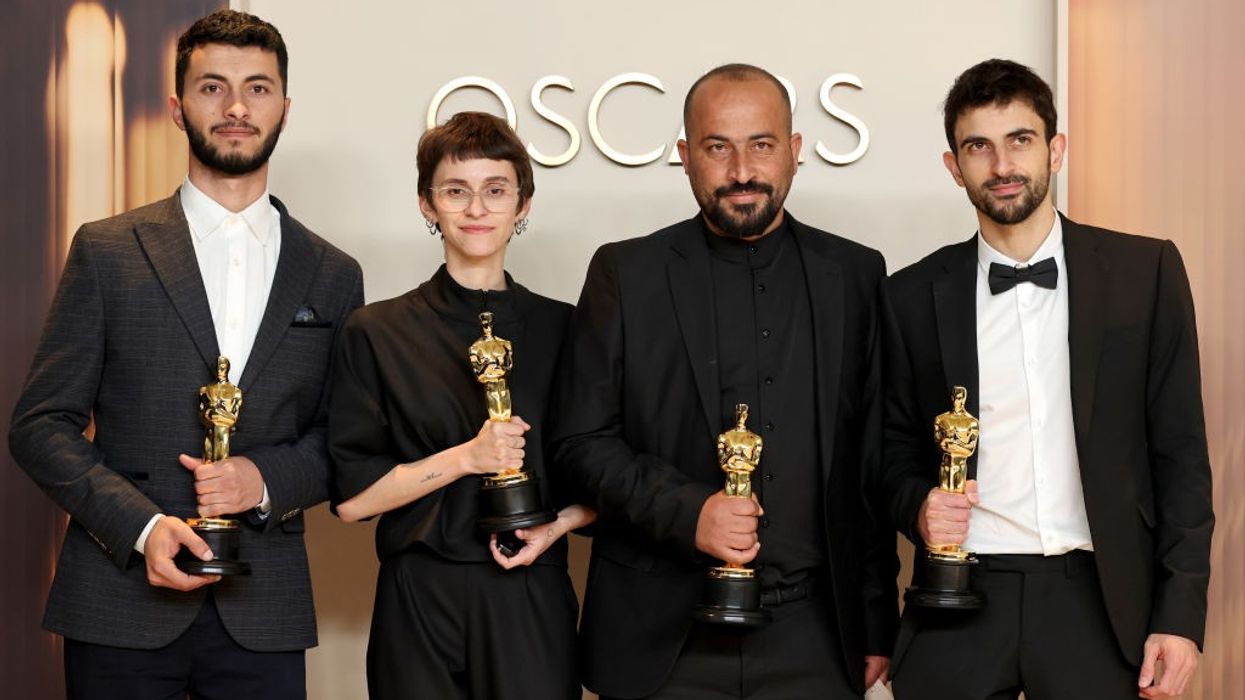
"After being handcuffed all night and beaten in a military base, Hamdan Ballal is now free and is about to go home to his family," said No Other Land co-director Yuval Abraham.
Palestinian filmmaker Hamdan Ballal, who earlier this month won an Academy Award for No Other Land—a documentary about ethnic cleansing in the illegally occupied West Bank—was released from Israel Defense Forces custody Tuesday after being brutally attacked by Israeli settlers and violently detained by army troops.
Yuval Abraham, one of two Israeli co-directors of No Other Land, said on the social media site X that "after being handcuffed all night and beaten in a military base, Hamdan Ballal is now free and is about to go home to his family."
On Monday, Israeli settlers attacked the village of Susya in the southern Hebron Hills, injuring numerous residents and activists, according to Palestinian human rights activist Ihab Hassan, who posted video of the assault. Members of the activist group Center for Jewish Nonviolence who went to Susya to document the attack said they were assaulted by settlers who smashed their car windows, punched them, and hit them with sticks.
"The sickening reality is this is what many Palestinians face and we don't even hear about it."
Abraham said that settlers beat Ballal, injuring his head and stomach. Israel Defense Forces (IDF) soldiers then "invaded the ambulance he called" and seized Ballal, according to Abraham.
Lamia Ballal, the filmmaker's wife, told The Associated Press that she saw three men in uniform beating Ballal with their rifles and another person in civilian clothing who appeared to be recording the attack.
"Of course, after the Oscar, they have come to attack us more," she said. "I felt afraid."
The IDF claimed that Ballal and two other Palestinians were detained on suspicion of throwing rocks during the settler attack. One Israeli was also detained.
Lea Tsemel, an attorney for the three detained Palestinians, said the men spent the night on the floor of a military base and received the bare minimum of medical care.
Responding to Monday's events, Basel Adra, No Other Land's second Palestinian co-director, said that "this is how they erase Masafer Yatta," the collection of 19 West Bank hamlets whose ongoing ethnic cleansing is documented in the film.
The international film industry led condemnation of Ballal's detention and demands for his release.
"Such treatment of an internationally acclaimed filmmaker gravely undermines artistic freedom, human rights, and freedom of speech—core values vital to democratic societies," a Change.org petition by "members of the global film community" said.
The Berlin Film Festival, where No Other Land premiered and won best documentary last year, called Ballal's ordeal "very distressing" in a Tuesday Instagram post.
"It is vital in open democracies that we safeguard the role of journalism and documentary filmmaking and protect its makers from reprisal and violence," the organization said.
U.S. actor and activist Mark Ruffalo, a longtime Palestine defender,
wrote on Instagram: "Every filmmaker and Academy [of Motion Picture Arts and Sciences] member should be acting together in protest. No matter where you stand on this issue this is an attack on our beloved art form of filmmaking. Hamdan Ballal is a political prisoner and this is an international incident and violation of human rights."
"Many of us are not surprised by this behavior from the lawless settlers and the IDF at this point," Ruffalo added. "Kill[ing] journalists and abducting filmmakers is not an accident but a design for the eradication of a people and their culture. Free Ballal!"
Israel has illegally occupied the West Bank including East Jerusalem for 58 years. Today, more than 700,000 Israelis live in over 140 settlements built and expanded on Palestinian land. Last year, the International Court of Justice—which is hearing a genocide case against Israel led by South Africa—issued an advisory opinion that Israel's occupation is an illegal form of apartheid that must end immediately.
Assaults on Palestinians by Israeli settlers, who are protected and sometimes joined by IDF troops, have increased dramatically since the October 7, 2023 attack on Israel led by Gaza-based Hamas, with more than 900 West Bank residents killed and thousands more wounded over the past 17 months,
according to the United Nations agency for Palestinian refugees.
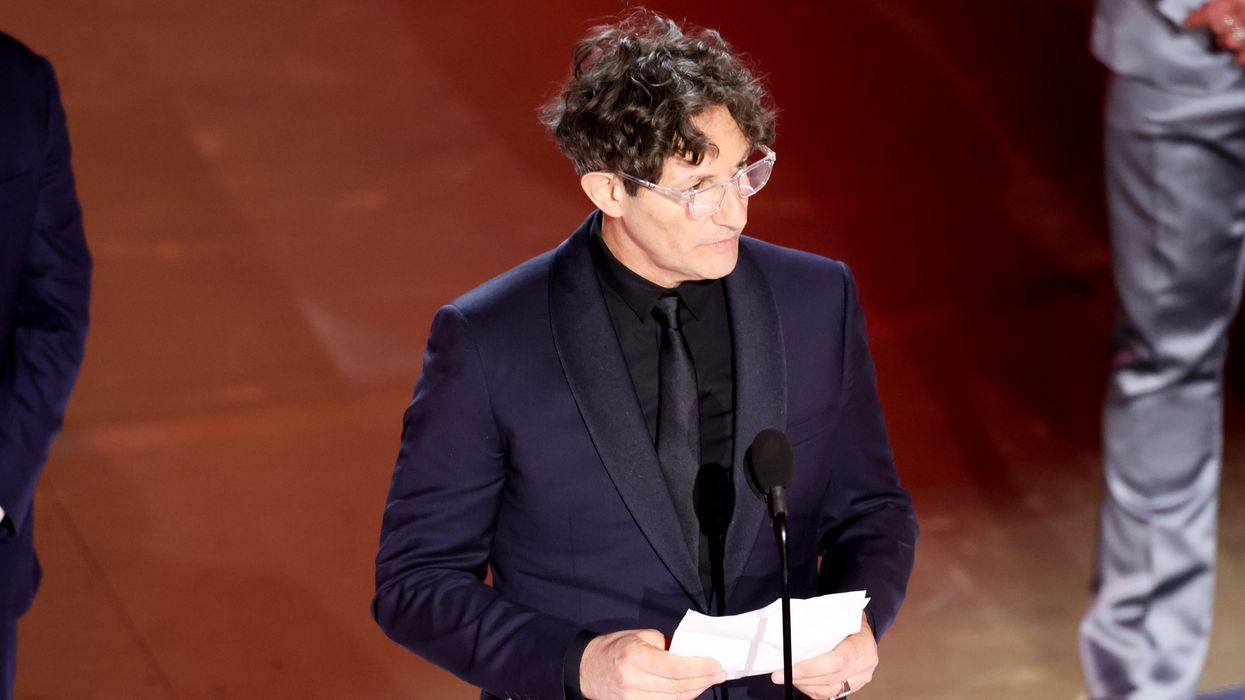
"Our film shows where dehumanization leads at its worst," said Jonathan Glazer, director of The Zone of Interest.
The 96th annual Academy Awards on Sunday evening were marked by a number of statements—some vocal and some sartorial—in favor of Palestinian rights and against Israel's occupation and bombardment of Gaza, with filmmaker Jonathan Glazer directly addressing Zionists who have "hijacked" the Holocaust to justify relentless attacks on civilians.
Glazer accepted the award for Best International Feature Film for The Zone of Interest, his film about a Nazi commander who lives with his family just outside the walls of Auschwitz concentration camp, where gunshots and other sounds of the extermination of Jewish prisoners are audible from the commander's garden.
Glazer and producer James Wilson were adamant as they accepted the award that The Zone of Interest should not be viewed as a film about past events, but one that was "made to reflect and confront us in the present."
"Not to say, 'Look what they did then,' rather 'Look what we do now,'" said the director. "Our film shows where dehumanization leads at its worst."
"We stand here as men who refute their Jewishness and the Holocaust being hijacked by an occupation which has led to conflict, for so many innocent people.”
'Zone of Interest' director Jonathan Glazer spoke out about Israel's weaponisation of the Holocaust in his Oscar… pic.twitter.com/SM9JfhxvrO
— Middle East Eye (@MiddleEastEye) March 11, 2024
Glazer then noted that both he and Wilson are among many Jewish people who object to the Israeli government's perennial claim—supported by Western countries including the U.S.—that Israel's occupation of Palestinian land and subjugation of Palestinian people is necessary to provide Jewish people with safety from the kind of persecution that ultimately led to the Holocaust.
"Right now, we stand here as men who refute their Jewishness and the Holocaust being hijacked by an occupation which has led to conflict for so many innocent people," continued Glazer. "Whether the victims of October 7 in Israel or the ongoing attack on Gaza, all the victims of this dehumanization—how do we resist?"
Glazer's comments were immediately decontextualized by right-wing commentators including Newsweek opinion editor Batya Ungar-Sargon, who claimed the director displayed "moral rot" by telling the audience he refuted "his Jewishness."
"You're lying about what they said by adding a period in the middle of their sentence,"
said Yonah Lieberman, co-founder of the Jewish-led Palestinian rights group IfNotNow, which has frequently been accused of antisemitism by pro-Israel groups for objecting to Israeli apartheid. "They clearly meant they refute the way their Jewishness has been hijacked. You're supposed to be a journalist."
The Israeli group Breaking the Silence (BtS), run by veterans of the Israel Defense Forces who now object to the occupation, compared the outraged reaction to Glazer's speech to the aftermath of Israeli filmmaker Yuval Abraham's comments at the Berlin International Film Festival, where he spoke out against the subjugation of Palestinians in the West Bank.
Abraham was immediately denounced as antisemitic by Israeli media and received death threats, while the German government announced it would open an investigation into the filmmaker's comments.
"These 'misunderstandings' aren't new," said BtS regarding the response of Ungar-Sargon and others.
"It's possible to oppose the killing of innocent civilians in Gaza and still care for the safety of Israeli hostages," added the group. "One can worry about Israelis who were evacuated from their homes after October 7 and still be horrified by the conditions in which so many are currently living in Gaza. We refuse to let this harsh reality make us less human, and that we refuse to accept the ease with which the blood and lives of civilians is used as a justification for political ideologies, or as a bargaining chip. Empathy is not a zero-sum game."
Other than Glazer's speech, most commentary about Israel's assault on Gaza—now in its sixth month and having killed at least 31,045 Palestinians as the Israeli government blocks nearly all humanitarian aid from reaching the population—was made through Oscar attendees' clothing choices.
Several actors and filmmakers wore red pins in support of Artists4Ceasefire, which told The Hill that members showed "collective support for an immediate and permanent cease-fire, the release of all of the hostages, and for the urgent delivery of humanitarian aid to civilians in Gaza."
Musician Billie Eilish, director Ava DuVernay, and actors including Ramy Youssef, Mark Ruffalo, Riz Ahmed, and Mahershala Ali were among those who wore the red pins.
Billie Eilish, Ramy Youssef, Ava DuVernay and other celebrities wore red pins at the Oscars in support for a cease-fire in Gaza. The design featured a single hand holding a heart and was organized by the group Artists4Ceasefire. pic.twitter.com/sj6HBzsoYi
— The Associated Press (@AP) March 11, 2024
"We're all calling for an immediate and permanent cease-fire in Gaza," Youssef told reporters. "We're calling for the safety of everyone involved, and we really want lasting justice and peace for the Palestinian people... We really want to say, just stop killing children."
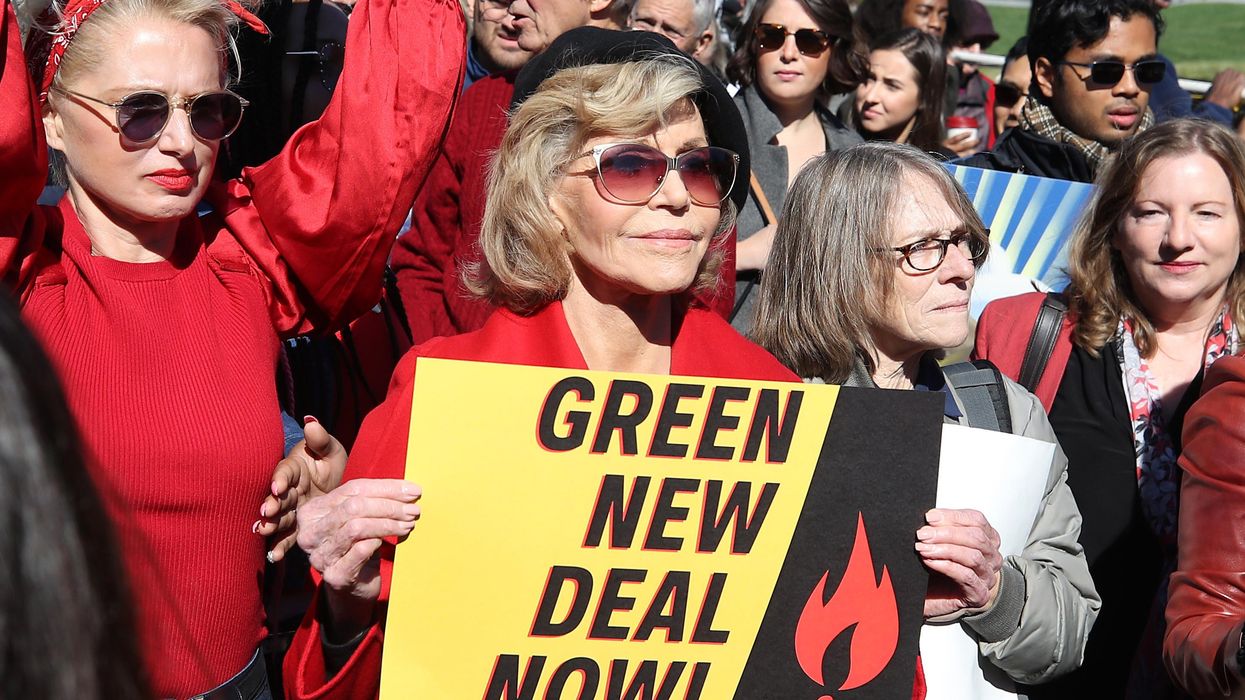
Building on the long legacy of activist entertainers, here are five ways movements for justice and famous supporters can partner to promote change.
Today there exist significant numbers of celebrities with progressive politics and a desire to support movements for social justice. These people bring unique resources to the table, including the capability to activate new bases and access new sources of power. Given the immense cultural power of celebrities in our society, and the degree to which artists of all kinds skew progressive, one would think that this would be a great advantage for progressive movements.
And yet, something seems to be missing. Why don’t social movements get more traction from their association with celebrities who are willing to move from being mere spokespeople for charity into positions of genuine solidarity?
Addressing this issue requires action on both sides of the equation: Movements need to think more carefully about why and how they might collaborate with celebrity allies to advance their work; and, for their part, well-known artists and musicians who want to support change must invest in building the relationships that facilitate long-term engagement.
On the movement side, organizers are often averse to thinking about celebrity power for a variety of reasons. Grassroots groups are based on the idea of organizing ordinary people, giving voice to the voiceless, and coming together to collectively lift up those without fancy connections or insider influence. Feeding into a culture of celebrity is antithetical to this orientation. Even if they wanted to enlist well-known supporters, most groups have little to no access to rarified celebrity circles. Moreover, movements based on people power take pride in distinguishing themselves from glitzy, star-powered charities that exist to raise money for feel-good causes but do not take on structural issues of corporate power, racism or patriarchy.
All of these concerns are valid. But there is good reason for movement leaders to take a second look at the issue, and for organizers to consider whether the influence afforded to celebrities can be used in the service of social and economic justice.
Since the early days of Hollywood, studio executives have understood that stars possess extraordinary charisma and ability to attract a devoted following. The market is adept at learning how to commodify celebrity to affect consumer behavior, using endorsements and the allure of association with fame to build brand identities and sell products. This influence has only grown in the past decade with the rise of social media. Today’s celebrities are no longer just distant, idealized figures whose public identities are carefully controlled by corporate managers. Instead, they now have a two-way relationship with their public that is historically unique.
Social media platforms allow them to influence behavior and markets by communicating directly with fans, and by inspiring large numbers of fans to communicate with one other. More easily than ever, bands, artists, and “influencers” are able to create new social bases and to affect the behavior of these bases. Compared with how the commercial mainstream has deployed celebrities to advance its interests, the potential power that celebrities might lend to social movements has barely been tapped.
Celebrities are often not asked to show up for movements, because grassroots groups lack the relationships and capacities to make these requests. Still, the willingness among actors, artists and musicians is often there. Organizers should recognize that many performers come from creative subcultures that are generally progressive and bohemian, or from countercultures that celebrate non-market values.
Conservatives are well aware that creative communities tend to be aligned against them, which is why they blast those actors, artists, athletes and musicians who dare to speak out on social and political issues — except in the relatively rare cases when celebrities support the right, and then are eagerly embraced (for example, Arnold Schwarzenegger, Dr. Oz, Kanye West or Donald Trump). Learning from these adversaries, progressive social movements should think creatively about how to leverage the advantage that prominent supporters can provide.
If the previously mentioned issues represent hurdles for movements to overcome, there are two key challenges on the celebrity side. First, well-known entertainers are surrounded by handlers and associates who in most cases do not want them to spend their social capital helping movements, because it does not increase the bottom line for everyone who is getting a cut of their profits. Yet many celebrities manage to work around that, hiring teams who are aligned with their political and social values. The second problem is that there has not been enough strategic thinking on the real nature of celebrity power and how those with it can most effectively help make social change. As a step toward addressing this, it is worth mapping out some key opportunities for collaboration.
Five opportunities for action
Among prominent entertainers, there are already a variety of individuals who are well known as progressive activists — think Tom Morello, Jane Fonda, Talib Kweli or Mark Ruffalo — and who are making significant contributions to social justice causes. There is much to be learned from their examples. And yet, we must recognize that they are the exception to the rule.
While a great number of celebrities aim to somehow “give back” to the community, their default actions involve charity and social service that is generally apolitical in nature. Not many celebrities speak loudly on social justice. Among those who try to take stands on social media, show up at benefits, wear branded clothing in public, or mention social justice issues in interviews, most are only loosely connected with organized movements — if they are linked at all. Because their actions are not part of coordinated movement strategies, their actions have limited consequence.
Actors, artists, athletes and musicians who want to maximize their impact — as well as the movements that want to join with them in using celebrity power to advance campaigns for social justice — have a variety of intriguing options for how to remedy this lack of coordination and devise effective action. Five areas they can explore in developing more creative and impactful interventions are:
1. Making better political endorsements
One common form of celebrity engagement involves entertainers making endorsements of individual candidates for elected office. This form of action is tied to what is sometimes called the “monolithic view of power.” A mainstream understanding of history, which is widely reinforced in the American media, teaches that change comes about through the actions of a small number of powerful individuals — senators and generals, presidents and CEOs who hold positions of great consequence.
The best way to affect change, in this view, is to lobby those in charge and urge them toward a personal epiphany. Following this model, celebrities are enlisted to use their access and nudge the positions of prominent individuals in the right direction. Or, in the case of electoral campaigns, famous friends are used to bolster the credibility and glamor of monolithic leaders, who are meant to “do the right thing” once in office.
Social movements look at the process of change in a different way, and therefore possess a different vision of how to best take action. In contrast to the monolithic view of power, the social view of power understands that those in positions of authority are dependent upon the cooperation and support of the governed. It recognizes that the major egalitarian changes of the past century have come about through popular mobilization — through organized people confronting the power of organized money.
Accordingly, movement activists emphasize how the combined efforts of grassroots organizations and disruptive protest can set the terms of debate and compel authorities to respond in ways they would not otherwise. While it is true that politicians sometimes change their minds in ways that lead to progress, evidence suggests that they are more often followers than leaders. Their views typically “evolve” only after a shift in public opinion alters the political calculus of what stance might advance their political careers. It is social movements that are decisive in prompting such shifts.
Those who are armed with a social view of power will approach their activism differently — and this extends into how they look at making political endorsements. If an endorsement is merely tied to the advancement of a single, monolithic candidate who is meant to enact changes once elected, the impact of these endorsements is limited. We know all too well that candidates who profess social justice values commonly do not live up to those ideals when they are in office. How then, can we develop better criteria for choosing endorsements, so that they have the greatest impact in propelling movement causes?
Celebrities should aim to support electoral interventions that attempt to bring social power into the realm of mainstream politics. To this end, they can look to social justice organizations for guidance as to which candidates have listened to them and committed to processes to govern in the best interest of their communities. They can focus in particular on supporting the campaigns of “movement candidates” that come from the ranks of these organizations rather than through conventional party channels.
They can publicize their partnership with grassroots groups, signaling that politicians who want their support need to seek approval from movement and social justice organizations. And if celebrities are meeting the candidates, they can bring leaders from these movements with them to further drive home this point. Celebrities can also encourage their followers to give donations to these organizations in connection with an appeal to vote for a candidate. These actions are a way of transferring some of the celebrity’s power to organizations representing people on the ground, thereby boosting their efforts.
Electoral campaigns oriented toward building social power have several distinctive traits: They champion politicians that attempt to realign local, state or national party structures to be more responsive to poor and working-class constituencies. They seek to leave behind organizational infrastructure after the end of a particular political cycle. And they focus on volunteer organizing and field mobilization, rather than just expensive ad buys. Celebrities that look for these qualities and grant endorsements based on them have the ability to contribute to important electoral upheavals, rather than being just another famous name shaking hands with a potential senator or president.
2. Amplifying trigger events
Occasionally a highly publicized event — whether a political scandal, natural disaster, viral footage or shocking incident — captures the public spotlight and shines attention on an unresolved social problem. These incidents, known to social movement scholars as “trigger events,” can draw people with no prior interest or experience in politics into mass protests. They create periods of intense consciousness-raising in which new bases of potential allies emerge and become ripe for politicization. The murder of George Floyd in May 2020 was one such recent trigger, and the election of Donald Trump in 2016 was another — prompting the expansive Women’s March the day after his inauguration.
Trigger events provide organic opportunities for engagement and mobilization. In each of the previously mentioned cases, the protests featured participation from many celebrity supporters, which helped to increase overall turnout. That said, more should be done to realize the full potential of the whirlwind moments that can emerge in the wake of prominent trigger events.
On the celebrity side, there are several things that famous supporters can do: For one, they can try to intervene earlier, so that nascent protests have a better chance of reaching a critical mass. Second, beyond showing up themselves, they should try to actively mobilize their fans and get them involved. (Musicians inviting their followers to join them for impromptu performances in Zuccotti Park during Occupy Wall Street was an example of this type of contribution.) Finally, it is helpful if celebrities take steps to integrate their actions with the efforts of an organization, so that the loose ties that are temporarily organized in the wake of a trigger event can be absorbed into more lasting structures — whether through something as simple as a mailing list or as robust as a mass training program that provides an onramp for new recruits into future activism.
On the movement side, it is crucial for organizers to learn how to harness the spontaneous responses of well-known supporters in order to make them deeper and more sustainable. And it is also important to think ahead and develop relationships in advance. Although some public crises are truly unpredictable, we know that other types of triggers are likely to recur — whether the rolling back of previously won rights, a natural disaster prompted by climate change, a graphic video of police abuses, or gross impropriety from an elected official. Knowing that these are uniquely powerful moments in terms of shaping public opinion, movements can work to anticipate future triggers and plan how to maximize their potential.
3. Boosting organizing campaigns
Separate from spontaneous trigger events, there are occasional strikes and demonstrations that benefit from gaining public attention. Structure-based organizations such as unions and community groups generally focus on organizing their core constituencies, and they are often not concerned with reaching out beyond that. However, there are times when these groups arrive at key points in their campaigns and need to make their case to wider audiences. At these pivotal junctures, celebrity power can be very important.
It can be difficult to convince the media or outside participants to take interest in a local protest or workplace picket line. Having a star with a large following show up to such an event can make a world of difference, with a celebrity potentially drawing hundreds or even thousands of people and widely increasing the popular appeal of an action. In these cases, the presence of a famous person can do much to elevate other speakers — including movement leaders and other voices from the grassroots.
Some celebrities already make these sorts of appearances, but this type of involvement could be greatly ramped up. This would involve both celebrities and movement organizations investing in developing the types of relationships that make this possible. One challenge here is that social movement organizations often do not know how to reach out or where to market their events in order to draw attention from those outside of their base.
Some of the most powerful examples of mobilizing “outside of structure,” as this type of outreach might be called, have come when celebrities themselves help create and publicize an event, with input from movement leaders. The involvement of the Beastie Boys’ Adam Yauch in creating the Tibetan Freedom Concert in the late 1990s serves as just one example. It is important to note that celebrities need not — and often should not — present themselves as issue experts or spokespeople for a cause; their role, instead, is to use their platform to legitimize and amplify frontline leaders that may otherwise be ignored.
4. Shifting the Overton Window
The Overton Window refers to the range of public policy positions considered “acceptable” to politicians who want to stay in power. Stances outside of this window are typically marginalized and considered “out of bounds.” The window shows what is seen as politically possible in a given moment; at the same time, the view it offers is not permanently fixed. Changes in public opinion — whether initiated by historical events, gradual cultural shifts or active agitation — can move it.
Celebrities typically lend their support to causes that are already popular. But the potential for impact is greater when they lend their support to causes and movements that exist outside of current norms, and thereby work to expand the bounds of public acceptance. Celebrities coming out, standing up for LGBTQ rights, or supporting activism around AIDS in the 1980s helped those causes to gain more widespread acceptance. At a time when bigotry was rampant and ingrained public taboos surrounded these issues, these actions contributed to shifting the window of possible political responses.
Today, for example, forward-thinking celebrities can help raise awareness of ideas such as restorative justice as an alternative to our broken criminal justice system. By supporting non-mainstream causes that align with their values, they can help pry open the artificially narrow window of debate. Understanding this strategy and joining with groups that are consciously trying to move ideas from the fringes into the mainstream of political discussion allows celebrities to be a part of long-term transformations in public attitudes.
5. Fueling boycotts
Celebrities have enormous untapped power to influence consumer behavior. This power can be used to supercharge boycott campaigns aiming to put pressure on corporations.
Historically, left movements have been more inclined to focus on production (through strikes and other workplace actions), rather than consumption (through actions such as consumer boycotts). As a result, boycott strategies remain seriously underdeveloped, even as the potential power of the tactic has grown. In recent decades, strike power has declined due to factors including globalization, changing patterns of corporate ownership, and unfavorable labor law; and yet, the ability to turn consumers against a company and to inflict serious “brand damage” has in many ways expanded, with social media providing an important assist. The creation in the early 2000s of the Business Ethics Network — an effort to enhance the strategic sophistication of anti-corporate campaigns — was a promising development. But it was also a short-lived one, and conversations in that network revealed that the field was still in its infancy.
Today, there are only a handful of people in progressive circles capable of running large, sophisticated brand campaigns. There is now enormous potential for such campaigns to wield celebrity power more effectively, but the right relationships are not yet in place to make this possible.
It can be extremely powerful when a celebrity suggests that their fans boycott a particular organization. For example, when musician Harry Styles urged fans to boycott SeaWorld in 2015, groups such as PETA amplified his remarks and the company’s reputation took a major hit. Some even claimed that the stock price of the company collapsed after Styles’ remarks. The support of Rage Against the Machine was important to the success of a 1997 anti-sweatshop campaign that targeted the clothing maker Guess. As Hillary Horn, then spokeswoman for the Union of Needletrades, Industrial and Textile Employees, or UNITE, explained at the time, the band’s involvement had “been a boost to the campaign because Guess has been trying to market their clothes to the same type of people who listen to their music.”
Notwithstanding these examples, this kind of celebrity power is massively under-used. Brands have done a far better job of harnessing celebrity power to burnish their reputations and maximize their profits than organizers have of using the same power to take on exploitative companies. Partly, this is because movement organizations with limited capacity are not asking celebrities to do enough. Expanding the ability to collaborate with well-known supporters should be a part of the effort to increase boycott capabilities more generally.
For their part, celebrities should recognize that boycotts work much better when they are collectively organized efforts, rather than framed as expressions of individual preferences. Dogging a brand is far more powerful when followers can be pointed to groups that are organizing around corporate abuses and have a strategy in place to win concrete concessions.
How are celebrities organized into activism?
Actors, artists, athletes and musicians developing relationships with movements is an important first step in exploring these avenues for engagement. Another key step is when celebrities organize one another.
In his book “When Movements Anchor Parties,” political scientist Daniel Schlozmann emphasizes the historic importance of “brokers” or bridge figures who could mediate between social movements and political parties. These individuals, who have one foot in the world of social movement activism and one foot in the party structures of mainstream politics, have played a critical role in serving as an interface between the two worlds.
A similar argument might be made about the importance of bridge figures who historically have been vital in connecting activists and celebrities. Some of these figures have been well-known entertainers themselves: For example, Paul Robeson, Eartha Kitt, Ossie Davis, Ruby Dee and Harry Belafonte were among those who played important roles in the civil rights movement, just as performers including Joan Baez, Pete Seeger and Jane Fonda were prominent figures in anti-Vietnam War activism. In the 1980s, Martin Sheen was an outspoken supporter of the Central American Solidarity movement, while Danny Glover and Bruce Springsteen bandmate Steven Van Zandt became leaders in organizing artists against South African apartheid.
There are countless other examples, of course, of celebrities taking political stances. But the distinction between a bridge figure and a star who might occasionally speak out on an issue is that bridge figures maintain long-standing commitments, cultivate connections with grassroots organizations and leaders, see themselves as accountable to a movement base, and — crucially — persuade their peers to participate in activist causes.
A celebrity who wants to grow into the role of being a bridge figure first needs to seek out opportunities to deeply learn about issues alongside movement organizers who are working intensively on them. They should ask questions about the structural impediments to change, as well as how they can use their power and access to help remove those blocks.
In addition, progressive organizers and movements need to start thinking about how to cultivate more bridge figures and create the kind of long-term relationships that can serve as pipelines for future engagement among new generations of artists and entertainers. It is important that the consultants who sometimes facilitate relationships between artists and social causes are not people who have a monolithic view of power, but instead that more brokers emerge from community organizations that are thinking about using celebrity power in creative ways.
In the social media era, organizers have only barely begun to think about the prospective ability of celebrities to widen the reach of social movements. And even celebrities wishing to support social justice causes frequently have little idea of how they can use their prominence and influence to elevate grassroots voices. Nevertheless, the possibilities for partnership — and the models of past artists who have moved from charity to solidarity — are potent enough that they should not be ignored.

Ahead of the Friday night global premiere of Invisible Hand--which its creators are calling the world's first documentary film on the Rights of Nature movement--some U.S. campaigners fighting to grant ecosystems legal status as rights-bearing entities welcomed the Democratic Party's recent gestures toward their demands but warned against watering down the movement's vision.
"Rights of Nature is deep system change, not tinkering at the margins of a rigged system."
--Pennie Opal Plant, Movement Rights
As the Community Environmental Legal Defense Fund (CELDF) explained in a recent video, "Rights of Nature is honoring and recognizing that nature has the right to exist, flourish, and thrive." The movement advocates for fundamentally rethinking the current treatment of nature as property that landowners or corporations are legally entitled to pollute and destroy.
"Now we're not talking about giving every tree a lawyer," noted the video from CELDF, which supports treating ecosystems as living communities. "We're talking about creating a guardianship so that ecosystems can be seen in court as more than just a place to stick the next future Superfund site--and this idea isn't new, it's been around for millennia."
In a Friday statement from CELDF, advocates detailed developments this year in U.S. politics, highlighting that in June the Democratic National Committee Council on the Environment and Climate Crisis included in its 2020 platform recommendations creating a Rights of Nature commission like the President's Council on Sustainable Development to explore incorporating the movement's principles into U.S. law.
Although the final platform--which disappointed climate and environmental campaigners on various fronts--didn't include the panel's commission proposal, organizer Markie Miller said Friday "the fact that the DNC is contemplating this is a testament to the bravery of local communities willing to take action."
Miller, a Toledo resident, was involved with the Lake Erie Bill of Rights effort. The Ohio city ultimately allowed the historic legislation to die in court this May, but the measure still garnered international acclaim as "the first law on United States settler colonial land to recognize the rights of a specific ecosystem," according to CELDF.
"We cannot lose track of the fact that grassroots organizers are pushing this conversation, and the creative approaches to new governance," Miller emphasized. That message, and concerns that a commission created by Democratic leadership would be "sanitized for the political system," were shared by several other Rights of Nature advocates.
While some members of the movement welcome the party's partial embrace of the Rights of Nature push, many also remain concerned that Democratic politicians could diminish the legal arguments or co-opt aspects of the political fight.
"In theory, a Rights of Nature commission is a step in the right direction of environmental justice; but in reality, a corporate-friendly DNC platform could derail the real work and advances of the global and national Rights of Nature movement," explained Pennie Opal Plant, co-founder and Indigenous Program director of Movement Rights. She continued:
Rights of Nature is deep system change, not tinkering at the margins of a rigged system. Rights of Nature requires policy and business decision-making based on the needs of the ecosystem as a whole, which will mean a massive and necessary shift of how business is done, including how communities of color are targeted for the most polluting projects. The question is whether the DNC is ready to embrace the idea that humans are part of--and not owners of--the natural world, and whether their interpretation of Rights of Nature would dilute its framework of revolutionary change.
Mililani Trask, an attorney and leader in the Hawaiian sovereignty movement, warned that such commissions can "merely reflect the political system--and water down more transformative demands. At worst Indigenous peoples and grassroots environmental groups would be left out. At best, their voices and concerns would be marginalized."
Trask added that if Democrats decide to launch a Rights of Nature commission in the future, they must remain committed to grassroots organizers' demands and "engage a deep outreach campaign," underscoring the importance of involving Indigenous Hawaiians, Alaska Natives, and Indian Nations.
Diane St. Germain--an advocate for a first-in-the-nation 2008 law that barred corporate water extractions in Barnstead, New Hampshire--denounced the DNC's interest in establishing a commission as "disingenuous," charging that its failure to "challenge the corporate stranglehold on policy is evident in omissions from the platform."
Even some Democrats, such as New Hampshire State Rep. Ellen Read, who sponsored state constitutional amendment efforts to empower municipalities to recognize the rights of local ecosystems, worry "there is a pro-corporate element in the party structure itself that may seek to either water down, or worse, pervert this push."
"We need real Democratic leadership that understands the well-being of life on this planet is dependent upon survival strategies tied to recognizing, respecting, and investing in regenerative relationships built in collaboration with the Earth's intelligence and her interconnected systems."
--Monique Verdin, United Houma Nation
"Recognizing the Rights of Nature is not some hippie-dippy concept; it is nothing less than the full acknowledgement of the very concrete reality that humanity is a part of the ecosystem, and dependent on the life-sustaining systems of the Earth," Read said. "Although I commend the DNC for taking up the issue of Rights of Nature, past experience has taught me to be wary."
Despite concerns about intentions and potential consequences of Democratic policymakers backing the movement, Monique Verdin, a citizen of United Houma Nation who is involved with the grassroots collaborative Another Gulf Is Possible, declared that "we are at a time when the Rights of Nature must be centered and can no longer be ignored."
Verdin said that "at the end of the Mississippi River, just north of the Gulf of Mexico's hypoxic 'Dead Zone,' south of the petrochemical corridor known as 'Cancer Alley,' our ancestral Houma lands and waters and delta wetland territories are witnessing what happens when the Rights of Nature are ignored, suffering the consequences as sea-levels rise and land subsides, as politicians debate over which of our coastal communities are to be sacrificed to the sea."
"We need real Democratic leadership that understands the well-being of life on this planet is dependent upon survival strategies tied to recognizing, respecting, and investing in regenerative relationships built in collaboration with the Earth's intelligence and her interconnected systems," she added.
Rights of Nature advocates' commentary on the Democratic Party preceded the 6:00 pm ET online premiere of Invisible Hand, which executive producer Mark Ruffalo said aims to show "how to fight the forces that put profit above all else while addressing the root cause of our flawed system."
"Our legal system is rigged to commodify Nature, to favor private property above Life," said Invisible Hand co-writer and director Melissa Troutman. "It's a system that makes it perfectly legal to harm innocent people without their consent and threaten the survival of the planet."
The film "is about witnessing the elephant in the room before it's extinct," according to co-writer and director Joshua Pribanic. "It's showing us that, when face-to-face with the harmful effects of capitalism and our current way of life, Rights of Nature becomes the battle cry. My hope is that wherever you are, this film can speak to your fight."
Ruffalo, Troutman, Pribanic, and experts featured in the film are set join a public discussion immediately after the Friday screening. Tickets, which cost $1 for Public Herald patrons or $15 on PayPal and are available to the public, can be purchased at Invisiblehandfilm.com.