

SUBSCRIBE TO OUR FREE NEWSLETTER
Daily news & progressive opinion—funded by the people, not the corporations—delivered straight to your inbox.
5
#000000
#FFFFFF
To donate by check, phone, or other method, see our More Ways to Give page.
Daily news & progressive opinion—funded by the people, not the corporations—delivered straight to your inbox.

“A badge—or in my case, a police Velcro patch that looks like it was bought off Amazon—is not a free pass to intimidate, terrorize, or mistreat people,” said Dayanne Figueroa, a US citizen.
WARNING: The following article contains graphic descriptions of sexual assault that some people may find disturbing…
A Chicago woman is seeking up to $1 million in damages from the US government after she was "unlawfully and violently arrested" during last fall's "Operation Midway Blitz," according to a lawsuit announced Tuesday.
After dropping her 5-year-old son off at school on the morning of October 10, 2025, Dayanne Figueroa—a single mother and US citizen by birth—suddenly had her car rammed on West Hubbard Street by US Immigration and Customs Enforcement (ICE) agents.
Video shows that agents pointed guns at Figueroa, then 31, dragged her out by her legs, threw her onto the pavement, and pinned her face down using their knees. According to the complaint, one of the agents placed a knee near an incision from a recent kidney surgery, which she said “caused acute and severe pain.”
Despite repeatedly identifying herself as a US citizen, Figueroa was detained without a warrant. She said agents put her phone into airplane mode, preventing her friends and family from contacting her. They then spirited her away in an unmarked red van with other detainees.
While en route to Broadview Detention Center in suburban Chicago, Figueroa suffered a panic attack, according to the complaint.
As she shook, cried, and gasped for air, agents photographed her, and one told her: “You’re a criminal. No one will help you.” Figueroa had no prior criminal record and was never charged with a crime.
While at Broadview—an ICE processing facility that became notorious for overcrowding and conditions described as "dehumanizing" after it became a de facto detention center during Midway Blitz—Figueroa said she was subject to “invasive body searches and to sexualized and degrading comments, mockery, and coercive questioning.”
The complaint alleges that before being permitted to use a restroom, she was subject to another purported search involving an agent “touching her private parts.” She said she was eventually allowed to use the restroom under surveillance, without any privacy.
She said agents knew she was recovering from recent major kidney surgery but withheld water and medical assistance until she began urinating blood.
After several hours in custody and a transfer to another facility in Lombard, Figueroa was released and transferred to a hospital for emergency evaluation.
When Figueroa’s boyfriend, mother, and family lawyer arrived at the Lombard facility in search of her, an agent informed them that she was “fine.”
In fact, the complaint said the force used by the officers had broken one of her dental crowns and caused internal bleeding. Meanwhile, her surgical wounds were aggravated, and the denial of medical care exacerbated her underlying kidney condition and delayed her recovery.
The damage to Figueroa went beyond the physical. The lawsuit says the ordeal "destroyed her sense of safety, security, and peace," and that she "suffers from severe emotional and psychological trauma, which continues to affect her ability to live her life as she did prior to the incident."
The Department of Homeland Security (DHS) blamed Figueroa for the collision, accused her of assaulting federal officers, and described her as an “agitator," who "violently resisted arrest," claims contradicted by video evidence.
An investigation by the Illinois Accountability Commission released this April found that there was "no credible evidence suggesting that Figueroa intentionally rammed her vehicle into the agents’ vehicle."
The report concluded that agents “may have falsified the narratives” in their report to justify forcefully detaining Figueroa. It cites multiple glaring inaccuracies—including the claim that Figueroa kicked officers using black high-heeled shoes, when in fact her shoes had fallen off as she was dragged out of her vehicle.
In December 2025, Figueroa was one of five US citizens who testified about their mistreatment by federal immigration agents at a congressional forum convened by Sen. Richard Blumenthal (D-Conn.) and Rep. Robert Garcia (D-Calif.).
Figueroa, a first-generation Mexican American, described her experience as "violence, blatant racial profiling, and a shocking abuse of federal authority."
Last week, while confronting DHS Secretary Markwayne Mullin, Rep. Delia Ramirez (D-Ill.), a Chicago native who is seeking to chair the House Homeland Security Committee’s oversight subcommittee next year, described Figueroa’s case as an example of how federal agents have abused their power under President Donald Trump.
"They don’t respect the civil rights of our neighbors or the rule of law; they terrorize our communities; they act with impunity," Ramirez said.
The assault of Figueroa fits into a much broader pattern of documented abuse during the Trump administration's mass deportation campaign, including the violent detention of US citizens, warrantless arrests, racial profiling, denial of medical care, and official accounts of confrontations that have been contradicted by video evidence.
During Operation Midway Blitz, federal agents shot US citizen Marimar Martinez five times and falsely accused her of ramming their vehicle, dragged US citizens from their homes and detained them for hours during a military-style apartment raid, and denied medical care to a man after an agent repeatedly punched him in the head.
As of October, ProPublica had identified at least 519 US citizens who had been detained by federal immigration agents since Trump returned to office, and said the real number was likely higher.
“What happened to me is what happens to people when our government is allowed to act with impunity and trample our Constitution,” Figueroa said in a statement on Tuesday. “A badge—or in my case, a police Velcro patch that looks like it was bought off Amazon—is not a free pass to intimidate, terrorize, or mistreat people.”
"These reckless federal agents are an insult to every legitimate law enforcement officer and a complete and utter embarrassment from the very top all the way down,” she added. “They have made a mockery of everything this country claims to stand for, and I hope this lawsuit helps hold those responsible for my attack accountable, and puts an end to this horrific abuse.”
The lawsuit includes claims of false arrest, false imprisonment, assault, battery, negligence, and the intentional infliction of emotional distress under Illinois law. She is being represented by Democracy Forward, a nonprofit legal advocacy organization, and the California-based Carrillo Law Firm.
“Ms. Figueroa has endured one of the most horrifying experiences imaginable—having her personal safety attacked by masked ICE agents who took the law into their own hands,” said Luis Carrillo of the Carrillo Law Firm. “Ms. Figueroa had broken no laws when she was savagely attacked while on her way to work. But today is the first step in her fight for justice. She is tremendously courageous for speaking out not just for herself, but for the voiceless who cannot speak. We look forward to joining the fight for justice for her.”
The US National Domestic Violence Hotline can be reached at 1-800-799-SAFE (7233), by texting “START” to 88788, or through chat at thehotline.org. RAINN’s National Sexual Assault Hotline can be reached at 1-800-656-HOPE (4673) or by texting “HOPE” to 64673. Both offer 24/7, free, and confidential support. DomesticShelters.org has a list of global and national resources.

“More nuclear weapons, particularly lower-yield weapons that leaders may perceive to be more ‘usable,’ will only increase the risk of a catastrophic nuclear war.”
A pair of Democratic senators on Tuesday urged US Defense Secretary Pete Hegseth to abandon the Pentagon's renewed embrace of so-called "tactical" or battlefield nuclear weapons under President Donald Trump, warning that the development and potential use of lower-yield fissile armaments makes nuclear war more likely.
Sens. Edward Markey (D-Mass.) and Jeff Merkley (D-Ore.) sent a letter to Hegseth condemning the Trump administration's reported push to widen options for so-called "limited" nuclear warfare, arguing that the strategy threatens to undermine decades of efforts to prevent the use of such weapons after the US unilaterally waged history's only nuclear war over 80 years ago.
"More nuclear weapons, particularly lower-yield weapons that leaders may perceive to be more 'usable,' will only increase the risk of a catastrophic nuclear war," wrote the senators, who co-chair the Nuclear Weapons and Arms Control Working Group.
"Tactical nuclear weapons are the gateway drug to nuclear destruction, and we urge you to drop these plans immediately," they added.
The letter comes amid reports that the Pentagon is revising US nuclear guidance to emphasize tactical weapons and limited nuclear options in conflicts, possibly including the increasingly protracted Iran War.
The push aligns with Hegseth's doctrine of "maximum lethality," which—when paired with his embrace of autonomous warfare and stated disdain for “stupid rules of engagement” designed to minimize civilian harm—risks treating the mass slaughter of noncombatants as the unfortunate but acceptable price of battlefield success.
Undersecretary of Defense for Policy Elbridge Colby has defended the mainstreaming of tactical nukes as necessary to provide the president with more options in any war against a nuclear-armed adversary.
"We want to be able to give the president and secretary credible, rational nuclear options," Colby said at an August conference hosted by US Strategic Command.
While Trump’s own intelligence agencies have concluded that Iran does not have and is not trying to build nuclear weapons, in addition to the United States, China, France, India, Israel, North Korea, Pakistan, Russia, and the United Kingdom possess such arms.
Arms control advocates warn that the very idea of a limited nuclear war is dangerously misleading. A weapon's smaller explosive yield does not guarantee that a nuclear-armed adversary will respond in a similarly restrained fashion, or that a catastrophic escalation could be avoided, as the 1983 "Proud Prophet" war game chillingly demonstrated.
Whitley Strieber and James Kunetka's bestselling 1984 novel Warday recounts in an investigative journalistic style a "limited" nuclear exchange between the United States and the Soviet Union that lasts less than an hour, destroying just a handful of cities on each side. Yet tens of millions of people are killed in the United States alone on the day of the war and in the following years, and five years on, much of the world has been transformed almost beyond recognition.
Recalling that perilous era of hair-trigger tensions and nuclear near-misses, Markey and Merkley noted that during the Cold War, the US military maintained thousands of tactical nuclear weapons, including torpedoes, artillery shells, short-range missiles, and even portable atomic "backpack" devices designed for soldiers to carry behind enemy lines on suicide missions.
"Any use of nuclear weapons carries with it the high and inescapable risk of escalation into catastrophic nuclear war, which no one would win."
As the Cold War wound down, the US eventually abandoned much of that arsenal. In 1991, then-President George HW Bush announced plans to eliminate virtually all US tactical nuclear weapons, and the country's stockpile of such weapons has since declined by more than 90%, according to the senators' letter.
But the Trump administration has been moving in the opposite direction. Trump's first term saw the deployment of the lower-yield W76-2 warhead on submarine-launched ballistic missiles, and the president is currently pursuing a new nuclear-armed sea-launched cruise missile and an accelerated weapons development initiative known as the Rapid Capabilities Program.
"If President Trump perceives the use of lower-yield weapons as more credible, their deployment increases the risk of nuclear war," Markey and Merkley wrote.
A September analysis by the Centre for International Security and Economic Strategy warned that expanding the role of tactical nuclear weapons risks normalizing their use in military conflicts and potentially triggering a renewed nuclear arms race.
The rise of lethal autonomous weapons systems, popularly called killer robots, has added an unprecedented level of risk—and urgency—to the equation.
Markey and Merkley urge Hegseth to abandon plans to expand the development and potential use of tactical nuclear weapons, while demanding answers about the Pentagon’s nuclear strategy, weapons programs, and whether it believes a limited nuclear exchange could avoid escalating into all-out thermonuclear Armageddon.
"Any use of nuclear weapons carries with it the high and inescapable risk of escalation into catastrophic nuclear war, which no one would win," the senators wrote. "The clear firebreak against such a worldwide disaster is to draw a bright line between nuclear weapons and all other weapons. We must strive to keep that firebreak wide and strong."
"Blurring the line by developing more tactical nuclear weapons is deeply unwise and increases nuclear risk," they added. "We urge you to abandon these plans immediately."

"They have billionaires. We have people."
United Auto Workers president Shawn Fain resoundingly won reelection as the union's leader last month, and a grassroots movement is already pushing him to set his sights on a bigger office.
"Clock In, Fain," a campaign started by rank-and-file workers, is urging the UAW chief to seek the presidency in 2028, in what is projected to be a crowded Democratic Party primary.
The campaign's organizers acknowledge that Fain has said he has no interest in running for president, but they are asking him to reconsider.
"Working people don't wait to be asked," the group's website states. "We show up... If he ever thinks about it, he'll know we're with him. They have billionaires. We have people."
The campaign is collecting digital "draft cards," where supporters sign their names, ZIP codes, and emails to demonstrate their interest in a 2028 Fain presidential run.
Fain rose to national prominence in 2023 when he led strikes at the three biggest US auto manufacturers—Ford Motor Company, General Motors, and Stellantis—which delivered contracts that not only increased pay, but ended two-tiered wage systems.
Even though Fain told Politico in August that "the only presidency I have ever had any interest in is with the UAW," he has repeatedly talked about politics outside the context of his union.
Fain has called for a broad May Day 2028 strike—right after the three auto contracts are set to expire.
“If we are going to truly take on the billionaire class and rebuild the economy so that it starts to work for the benefit of the many and not the few,” Fain said, “then it’s important that we not only strike, but that we strike together.”
Fain was also a featured speaker at the 2024 Democratic National Convention, where he ripped President Donald Trump and Vice President JD Vance as "two lap dogs for the billionaire class who only serve themselves."
Fain in October was reelected as union president with 68% of the vote, according to an unofficial tally released last month by UAW.

"We call on all senators who caucus with the Democrats to... commit to supporting candidates who are dedicated to accountability, transparency, and the bold agenda voters demanded."
Around three dozen Hollywood stars and Democratic donors have signed a joint statement supporting Sen. Chris Van Hollen over Senate Minority Leader Chuck Schumer to lead the party's caucus when it takes over the chamber next month.
"When someone is too old, in power too long, their ability to truly understand and relate to everyday people becomes impossible," Alexis Bittar, a Brooklyn-based jewelry designer and political bundler who helped organize the letter, told New York Times correspondent Benjamin Oreskes. "Chuck Schumer has hit that point."
Schumer (NY) has signaled he has the support needed to win the secret vote scheduled for December 1, but Van Hollen (Md.) has continued to pick up backers—particularly progressive senators and newcomers, as well as advocacy groups and organizers—since Democrats reclaimed both the Senate and House of Representatives in the midterm elections earlier this month.
"We are donors, fundraisers, and artists who have invested in electing Democrats to the US Senate," states the letter, which Oreskes, posted on social media. On November 3rd, voters delivered not only a mandate but an opportunity for change: a government that delivers real value in the daily lives of working families."
"That change will only come from renewed leadership with a vision for the future," the signatories argued. "The Democratic Party has a trust and credibility problem, and fixing it requires Senate leaders willing to challenge the entrenched interests and power structures that protect those in power, in both parties."
The letter notes that "the Senate Democratic leader will be chosen behind closed doors, by secret ballot. No senator will ever have to tell voters, or us, how they voted. We believe a decision this consequential deserves public accountability."
"We call on all senators who caucus with the Democrats to publicly support Sen. Chris Van Hollen to be the next Senate majority leader and commit to supporting candidates who are dedicated to accountability, transparency, and the bold agenda voters demanded," it concludes.
NY Times: About 35 celebrities and political donors, largely from New York and Los Angeles, released a letter Tuesday backing Senator @vanhollen.senate.gov, a Democrat from Maryland who is challenging Senator Chuck Schumer of New York for the majority leader post.
[image or embed]
— Indivisible ❌👑 (@indivisible.org) November 24, 2026 at 12:28 PM
Hollywood figures who signed on include Robert De Niro, Jane Fonda, Chelsea Handler, David Mandel, Marisa Tomei, and V, previously known as Eve Ensler. Others include software engineer and angel investor Ross Boucher, Chuck Collins of the Institute for Policy Studies, and human rights attorney Steven Donziger.
The celebrities and donors behind the new letter "say they have donated or helped to raise about $23 million for Democratic Senate and House candidates this cycle," according to Oreskes.
Democrats secured 56 seats in the Senate and at least 259 in the House, where a few races have not been settled yet. They will have to contend with Republican President Donald Trump, who has both suggested there may be policies on which they can make progress together but also promised to be "Mr. Veto."
"Americans voted for the change necessary to fight the corruption, cruelty, and policies of Trump and his Epstein-class cronies," De Niro said in a statement to the Times, referring to deceased sex criminal Jeffrey Epstein, a former friend of the president.
"That's why I'm supporting change in Senate leadership," he added, calling Van Hollen "a fierce fighter."
Voters prefer Chris Van Hollen over Chuck Schumer as leader of the Senate Democrats at a 2:1 margin.40% of Democrats support Van Hollen.19% support Schumer.48% of Harris voters support Van Hollen.18% support Schumer.
[image or embed]
— Prem Thakker ツ (@premthakker.bsky.social) November 24, 2026 at 3:45 PM
In an interview with the Vox podcast "America, Actually" this week, Van Hollen explained his decision to run for the leadership post—after his office was flooded with calls urging him to do so: "When I saw the results of this election, which was a sweeping crying out from the American people about the need for change, my view was that this was clearly a rejection of the policies of Donald Trump."
"But Democrats were still on probation, and I don't think we earned people's trust by simply going back to the status quo," he asserted. "We've been given this big opportunity, with 56 senators. We cannot blow it, and we need to show people that we’re going to deliver and fight for them."
He also said that "this election, in my view, was a message of economic populism: People saying they want to take on a system that’s rigged in favor of the very wealthy, against working people, and fueled by political corruption. My record has been taking on big money special interests for the public good."
"If you look at all the issues our candidates ran on, there's going to be an army of lobbyists descending on Washington, DC, in the Capitol to eat away at what Democrats said they wanted to do," he added. "My view is you need someone with a record of taking on those interests at this very important moment."
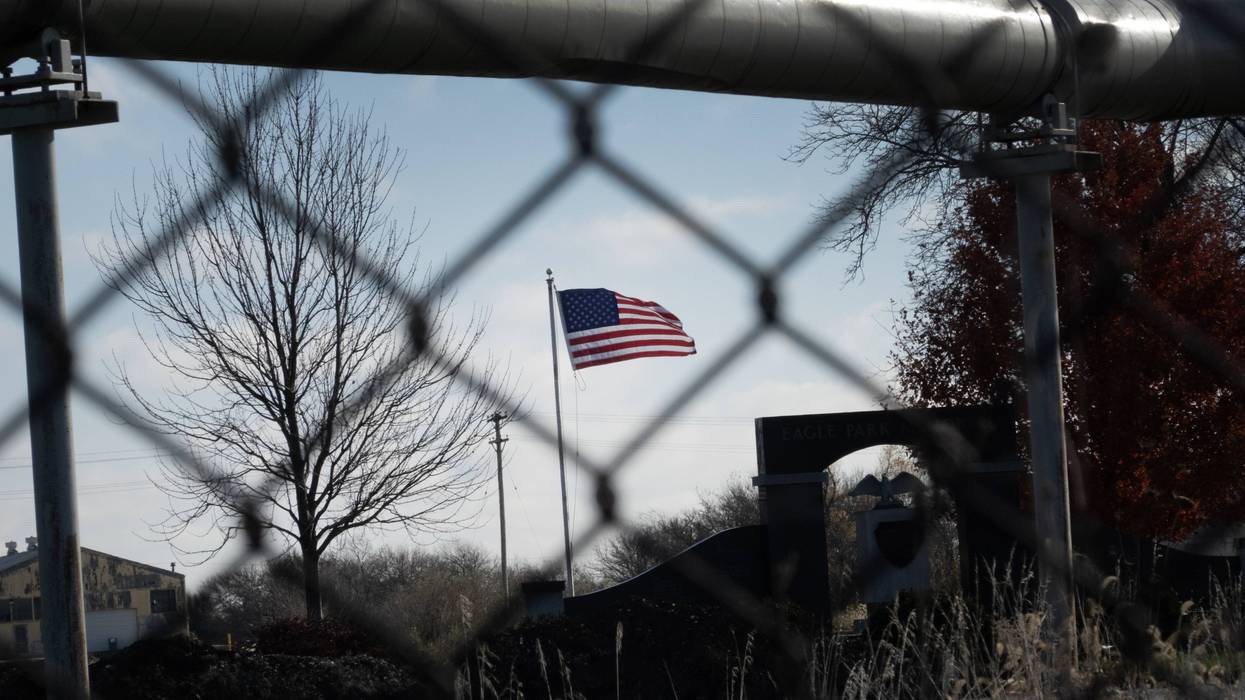
“We urge EPA to work with the Army to explore an alternative that protects public health and disposes of a highly toxic poison," said the leader of a union representing agency employees in the Midwest.
The plume of toxic dust from the US Army’s detonation of lead-based explosives on Wednesday in Iowa could expand further than previously projected.
The Army published updated maps Tuesday morning showing that the toxic cloud could reach all the way to northern Missouri, 100-110 miles from ground zero, within eight hours of the explosion at the Iowa Army Ammunition Plant in Middletown.
Despite urgent calls for a delay by environmental groups and lawmakers in both parties, the explosion is scheduled to take place at 9:00 am Central Standard Time on Wednesday, November 25, the day before Thanksgiving, after a federal appeals court lifted a temporary block on the Environmental Protection Agency's (EPA) permit.
The Department of Health and Human Services warned pregnant women and children under 6 to evacuate the projected affected area, citing their heightened vulnerability to lead exposure, which can irreversibly damage developing brains and nervous systems and increase the risk of miscarriage, premature birth, and developmental disabilities.
 An updated public advisory from the US Army on November 24, 2026, warns residents to avoid an area stretching from southeastern Iowa to northern Missouri that it projects will be affected by the detonation of nearly 10,000 pounds of degraded lead azide at the Iowa Army Ammunition Plant in Middletown, Iowa. (Image by US Army)
At a press conference on Tuesday, the Army sought to quell rising public fear about the explosion.
EPA Associate Administrator Tom Croci said the agency had “created a blanket of sampling teams and testing teams that... will be there during detonation with air monitoring systems and then after detonation to all of the places within the affected area that need to be sampled.”
“We don’t believe that the public should be in a panic,” said acting Army Secretary Adam Telle. “We are very calm about this. We understand it to the best of our ability.”
Why wasn’t this all in place before the planned detonation last Friday, and only happened after the public raised concern?
— Joseph Allen (@j_g_allen) November 24, 2026
While the Army has described a controlled detonation of the materials as safer than risking an accidental explosion, Nicole Cantello, president of the Chicago-based American Federation of Government Employees (AFGE) Local 704, which represents about 1,000 EPA employees in six Midwestern states, said it should be "delayed until more protective alternatives can be fully evaluated."
Cantello pointed to the "disclosure of safer alternatives" by the Army, which was reported by The New York Times over the weekend. In March, the Army hired the Georgia-based firm MuniRem to chemically dissolve the lead azide, then canceled its contract two months later.
The Army said it canceled the contract because it would require opening the drums, which could cause the unstable materials inside to detonate accidentally.
MuniRem’s founder, Valentine Nzengung, has questioned this rationale. In an interview with the Des Moines Register Monday, he explained that he'd personally opened drums of unstable lead azide and neutralized their contents safely. He said the government provided little explanation for why it believed detonation was a safer option.
Though he acknowledged that opening the drums was the most dangerous step of the process, he said that “overall, detonation of stored lead azide under these conditions would likely result in extensive long-term environmental contamination requiring costly remediation and monitoring of air, soil, surface water, groundwater, and debris for many years or decades."
“I wish they would just take some time,” Nzengung said of the Army. “There is just so much rush. I wish everybody would take a deep breath so, at the end of the day, we do the right thing and protect humans and our environment."
“It doesn’t have to be the technology of my company that is used," he added. "I’m just saying, let science drive the decisions being made.”
 A sign identifying the facility sits inside a fence surrounding the Iowa Army Ammunition Plant on November 19, 2026, in Middletown, Iowa. (Photo by Scott Olson/Getty Images)
In a lawsuit, the Iowa Environmental Council and Sierra Club argued that the Army’s reasoning for rejecting alternative treatments of the lead azide “is unsupported by any publicly available documents” and accused the Army of moving forward with a potentially harmful detonation “without fully considering alternatives.” The 8th Circuit denied their request for an emergency stay Monday.
“It is my opinion that the [Army's environmental assessment] has hastily rejected the option of chemical neutralization," said Ranajit Sahu, a mechanical engineer and environmental consultant in a declaration supporting the environmental groups’ legal challenge.
He also drew attention to the fact that the Army first solicited a contract regarding lead azide neutralization at the same Iowa facility as far back as September 2025, more than six months before it supposedly discovered the dangerous chemicals.
"This raises questions about when the Army knew of the problem," Sahu said.
We urge that the planned detonation of hazardous lead azide be delayed until more protective alternatives can be fully evaluated and the most protective solution implemented to protect the public health of the people of the Midwest.
— AFGE Local 704 (@704afge) November 24, 2026
Cantello said the Army should delay the detonation, "until... the most protective solution [can be] implemented to protect the public health of the people of the Midwest."
“At a time when Congress is considering rolling back permitting procedures that protect the American people, this proposed release of toxic airborne pollutants brings into sharp relief the dangers of imposing risky solutions prior to full evaluation by the public,” she added. “We need not default to the Army’s century-old practice of open-air detonation when a more protective solution may be available. We urge EPA to work with the Army to explore an alternative that protects public health and disposes of a highly toxic poison.”
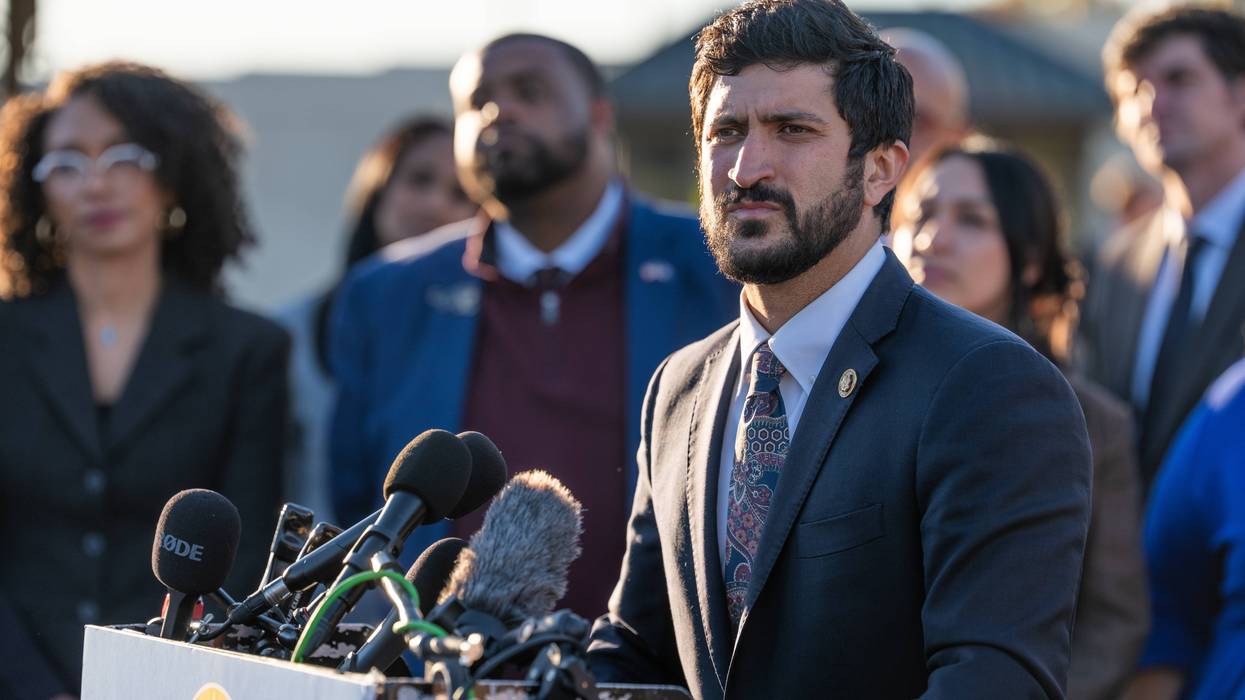
"This is the kind of bold, pro-worker policy Democrats should be voting on every week in the new majority."
The chair of the Congressional Progressive Caucus on Tuesday called for Democrats, when they take control of Congress in January, to vote on "bold, pro-worker policy" including the Protecting the Right to Organize Act, on a weekly basis, signaling to workers and families across the United States that the party aims to put people before corporate profits.
Rep. Greg Casar (D-Texas) responded on social media after NBC News reported that a source with direct knowledge of the US House Democratic leadership's plans for 2027 said the PRO Act will be a "top early priority in the first 100 days” of the new congressional session.
The legislation, which has previously been passed by the House, would protect workers' right to organize their workplace by barring companies from replacing striking workers; prohibiting employers from holding captive audience, anti-union meetings; holding employers accountable for misclassifying employees as independent contractors; and ensuring workers and the National Labor Relations Board set union election procedures without the involvement of employers.
The bill is vehemently opposed by Republicans and pro-corporate interest groups. A poll by Vox and Data for Progress in 2021 found that 74% of Democratic voters, 58% of independents, and 40% of Republicans supported the legislation.
Responding to the news that the Democratic majority is set to prioritize the bill as part of a package of pro-union policies, Casar said, "Hell yes... Let's get it done."
House Minority Leader Hakeem Jeffries (D-NY) is expected to be speaker after receiving the vast majority of votes from the Democratic caucus in a leadership election at a closed-door meeting. Some newly elected progressives who opposed Jeffries, who does not support some top progressive proposals including Medicare for All, said there was "work to be done to ensure that the direction our party takes this coming Congress reflects what our constituents are demanding of leadership."
A spokesperson for the American Federation of Labor and Congress of Industrial Organizations said the news that the PRO Act would be a priority was "great to hear" on Tuesday.
"If Democrats want to deliver on the promise of making life more affordable and better for working people, giving everyone a fair shot to join a union and negotiate higher pay and good benefits has to be a top priority," said Steve Smith. "The PRO Act gets us there."

"The prediction markets have created a ‘Wild West’ situation which invites insider self-enrichment, with no social benefit. It’s time to shut them down."
The watchdog organization Public Citizen on Tuesday called for an investigation into suspiciously well-timed prediction market bets that Jensen Huang would be reinstated as chief executive of the AI chip giant Nvidia—including wagers placed within hours of the CEO's return.
Public Citizen identified several bets on the prediction market platforms Polymarket and Kalshi that it said are worthy of investigation. One account "sat idle for almost a year" before betting roughly $18,000 that a successor to Huang would not be announced by the end of the year. The account ultimately cashed out for over $128,000.
Another account bet over $20,000 that there would be no successor to Huang by year's end and over $8,000 that Huang would rejoin the company by December 31. The account reaped a total payout of around $200,000.
“On its face, there’s no way to know if any of these bets were the result of access to insider information. Maybe these bettors just got lucky, while others lost out. But the timing of the bets raises questions sufficient to merit investigation," said Robert Weissman, co-president of Public Citizen. "We have well-regulated capital markets where people can make bets on stocks with reasonable, if inadequate, safeguards in place. The prediction markets have created a ‘Wild West’ situation which invites insider self-enrichment, with no social benefit."
"It’s time to shut them down," Weissman added, "and if political realities mean we have to tolerate them, we need much stronger prohibitions on insider dealing and beefed up consumer protections."
Far from cracking down on prediction markets, President Donald Trump's Commodity Futures Trading Commission has threatened and taken legal action against states that have worked to restrict the platforms.
Public Citizen's statement came a day after The Wall Street Journal reported that Bubblemaps, a blockchain analytics firm, found that "two 'suspicious clusters' of Polymarket accounts collectively made more than $340,000 by correctly betting that Jensen Huang would return to Nvidia."
"All of the accounts bet exclusively on Nvidia-related markets and began placing bets within minutes of when their creators deposited funds in them," the Journal noted. "The first group of five accounts was funded November 16, while the second group of 11 accounts was funded Monday, just hours before Nvidia’s board announced it was reinstating Huang as CEO, Bubblemaps said."
"One of the accounts, which doesn’t have a username, started placing bets soon after 2 am ET, Polymarket data shows," the newspaper continued. "The anonymous account bought contracts that would pay out if Huang rejoined Nvidia by the end of November, which only cost 3 cents apiece—meaning that the market saw only a 3% chance of such a scenario happening—as well as a similar contract that would pay out if Huang returned by the end of December."
According to TIME, the market for bets on Nvidia's CEO situation "became Kalshi's seventh-largest active market and its largest outside sports and elections."
"More than $14 million was traded from Friday through Monday, including $8.6 million on Monday morning alone," TIME noted.
On Monday morning, Nvidia's board announced Huang's reinstatement, for which Trump promptly took credit. Trump—who has significant holdings in Nvidia—and other top members of his administration privately pushed the company's board over the weekend to bring Huang back.

“It wasn’t happening just in our unit,” said one Israel Defense Forces veteran. “It became clear to me then that this is a broader pattern, and that it was obvious we weren’t the only ones doing this.”
The Israeli military has opened criminal investigations into the documented practice by its troops of using Palestinian human shields in Gaza and the illegally occupied West Bank, according to a report published Tuesday.
Haaretz, Israel's oldest daily newspaper, reported that Israel Defense Forces (IDF) investigators are probing 16 cases, 10 of which allegedly occurred in Gaza and six in the West Bank, since October 2023.
The revelations suggest that the use of Palestinians to shield Israeli troops from potential attacks was not confined to isolated incidents or a single theater of operations. Haaretz called the practice "widespread" at the start of Israel's genocidal assault on Gaza. Accounts from Israeli soldiers, Palestinian survivors, and human rights organizations have repeatedly described a tactic that appears to have become embedded in military operations.
First-hand accounts from IDF troops and veterans, Palestinian survivors, and human rights groups have repeatedly described Israeli soldiers' use of civilians, including women and children, to shield them from potential attacks by Palestinian resistance fighters. For years, the IDF whistleblower group Breaking the Silence has published testimonies from soldiers describing the use of Palestinians to search buildings, tunnels, and suspected explosive sites before Israeli troops entered.
"He's like a dog in Oketz," one Israeli soldier told Breaking the Silence of Palestinians used as human shields, referring to the IDF's canine unit. "He looks for things like explosive devices. If there's one, he'll set it off, and that's how we find out."
"It's terrible, just terrible. I think that's one of the reasons I wanted to speak out," the soldier said. "After I left Gaza, and following conversations with other people, I realized this was a widespread phenomenon—it wasn't happening just in our unit. It became clear to me then that this is a broader pattern, and that it was obvious we weren't the only ones doing this."
Using human shields is prohibited under international humanitarian law, including Article 28 of the Fourth Geneva Convention and Article 51(7) of Additional Protocol I to the Geneva Conventions. The practice is a war crime under the Rome Statute of the International Criminal Court. It was also outlawed by Israel's Supreme Court in 2005 in an explicit repudiation of the erstwhile long-standing practice.
While Israel and its supporters often accuse Palestinian resistance groups including Hamas—which led the October 2023 attack on Israel—of using human shields, United Nations investigators and international human rights groups have found little evidence that Palestinians are intentionally doing so.
Meanwhile, a May 2025 Associated Press investigation found that Israeli soldiers had systematically used Palestinian civilians as human shields in Gaza, citing survivors of the practice and Israeli military personnel. One Israeli officer told the AP that by the end of his nine-month deployment, nearly every infantry unit was using Palestinians to clear buildings before troops entered.
"Once this idea was initiated, it caught on like fire in a field," the officer said. "People saw how effective and easy it was."
Dubbed the "mosquito protocol," the practice involved forcing detained Palestinians to enter potentially booby-trapped buildings and tunnels ahead of Israeli soldiers. Some were dressed in IDF uniforms, fitted with cameras, bound, and threatened with death if they refused.
In one case, a Palestinian man said Israeli soldiers attached a camera to his forehead and forced him to enter homes to check for explosives and Palestinian fighters. He was passed between military units for more than two weeks, spending nights bound in a dark room before being sent out again.
"These are not isolated accounts," Breaking the Silence executive director Nadav Weiman told the AP. "They point to a systemic failure and a horrifying moral collapse."
Haaretz has also reported testimony from Israeli soldiers indicating that commanders knew about the practice. One soldier said that after seeing Al Jazeera footage documenting the use of Palestinians as human shields, he recognized the tactic immediately.
"There's pride in it," another soldier reportedly said, while describing the attitude among troops toward using Palestinians to protect Israeli personnel.
Women, children, and elders have not been spared from the practice.
In the occupied West Bank, Palestinian mother Hazar Estity told the AP that Israeli soldiers took her from her home in the Jenin refugee camp in November 2024 and forced her to enter and photograph apartments before troops went inside.
Estity pleaded with soldiers to let her return to her 21-month-old son, but they refused.
"I was most afraid that they would kill me," she told the AP. "And that I wouldn't see my son again."
Multiple IDF soldiers told Israeli investigative journalist Illy Pe'ery last year about an incident in which "a senior officer in the Israeli army’s Nahal Brigade tied an explosive cord around the neck of an 80-year-old Palestinian man and forced him to serve as a human shield, ordering him to scout out abandoned houses under threat of having his head blown off."
"After he had served this purpose, the soldiers ordered the man to flee with his wife, but upon being spotted by another battalion, they were both shot dead on the spot," Pe'ery wrote.
Defense for Children International-Palestine has documented Israeli forces using Palestinian children as human shields, including forcing minors to walk ahead of soldiers during dangerous military raids.
Accountability has remained extraordinarily limited. According to Haaretz, none of the soldiers implicated in the 16 investigations opened since October 2023 have been prosecuted.
Israeli soldiers who have confronted superior officers about using human shields say they have been rebuffed.
“We talked to our commander, and we asked him to stop doing it,” one soldier told CBS News last year, “but we were ordered to continue. He told us it was policy.”
“It's fucked up, you know," he added, "to use citizens as your human shield like a dog.”

The Wall Street Journal last month reported that the raid on US Rep. Ilhan Omar was part of a "multipronged effort" to rescind her citizenship.
Matthew Berry, general counsel for the US House of Representatives, accused the US Department of Justice on Tuesday of misrepresenting his views on legal questions surrounding a search warrant executed on Rep. Ilhan Omar's property.
In a Monday court filing, the DOJ revealed that it had notified Berry, a Republican who was appointed as general counsel by former Speaker Kevin McCarthy (R-Calif.), before it carried out a raid on Omar's (D-Minn.) home in Washington, DC last month.
The DOJ then claimed that Berry "refused to be involved in the search" because he agreed with the department's position that protections to elected officials provided by the US Constitution's Speech or Debate Clause "do not extend to a member's private residence."
In a statement released on Tuesday, Berry said the DOJ's assertion that he "refused to be involved" in the search of Omar's home because he "agreed" with the department's legal analysis was "categorically false."
"I explained in an email to a department official why an attorney from the House Office of General Counsel would not be involved in the search," Berry said. "While I specifically noted my appreciation of the court's efforts to ensure the protection of materials covered by the Speech or Debate Clause, I explained... that the House Office of General Counsel does not represent targets of criminal investigations."
Berry added that Omar's personal attorney should be allowed to advise the congresswoman during the search "on whether to assert privilege over materials."
Berry said he would give the court a copy of his email exchange with the DOJ "in order to ensure that the record in this matter is accurate."
In a Tuesday social media post, Politico legal reporter Kyle Cheney predicted that Berry's rebuttal of DOJ claims would upset US Magistrate Judge Matthew Sharbaugh, who signed the warrant on Omar's property, given that the judge "has already found DOJ to be making far-fetched claims to push the boundaries of investigating a member of Congress."
The Wall Street Journal reported last month that the raid on Omar’s home by Department of Homeland Security agents was part of an effort to build “a case to strip her of her US citizenship and ultimately deport her."
“The multipronged effort is focused at least in part on how Omar obtained her citizenship after she arrived in the US from Somalia decades ago,” the Journal explained. “Investigators are focused both on the congresswoman and actions of her deceased father."
Omar condemned the raid as "part of the fascist playbook" whose goal was "to rile up Trump’s die-hard supporters and give them a big distraction in advance of the midterms."

"This victory means that others can join us in challenging these crimes without fear of punishment for exercising their First Amendment rights."
A federal district judge this week delivered another blow to US President Donald Trump's war on the International Criminal Court, blocking the administration from punishing Americans who provide evidence to or otherwise engage with the ICC, as well as a United Nations expert and Palestinian human rights groups.
"This landmark ruling dismantles a core part of Trump's ICC draconian sanctions regime," Omar Shakir, executive director at Democracy for the Arab World Now (DAWN), declared Tuesday. "The court has affirmed that every American has the constitutional right to advocate for justice on Palestine without fear of reprisal."
DAWN and Taxpayers Alliance Against Genocide (TAAG) sued over Trump's February 2025 Executive Order 14203, which allows sanctions against foreigners who support ICC probes into US and Israeli nationals, and bars the provision or receipt of "services by, to, or for the benefit of" a targeted entity or person.
Under the order, the administration has sanctioned the ICC as well as its prosecutors and judges; the groups Al-Haq, al-Mezan, and the Palestinian Center for Human Rights (PCHR); and Francesca Albanese, the UN special rapporteur on the situation of human rights in the Palestinian Territory occupied since 1967.
Last month, Judge Jesse Furman, appointed to the Southern District of New York by former President Barack Obama, found that the "services" ban violates the First Amendment to the US Constitution and blocked the Trump administration from enforcing that prohibition against DAWN and TAAG—which convinced the judge to expand his injunction on Monday.
"The court holds that plaintiffs are entitled to an injunction that bars enforcement of the services prohibition against anyone who provides or receives speech-based services, thereby engaging in First Amendment-protected speech and association," Furman wrote, noting that the government tried to use a 2025 US Supreme Court decision to prevent the expansion.
In Trump v. CASA, the majority "held that a federal court generally may grant injunctive relief only to the parties before it," but that "does not necessarily overrule its earlier precedents approving of broader injunctions where, as here, a First Amendment facial overbreadth challenge succeeds," the judge explained.
Earlier this month, after Furman's first ruling, TAAG held a press conference during which American taxpayers, including human rights activists and lawyers, formally submitted video footage, firsthand eyewitness accounts, and other evidence to the ICC, and called on the court to issue arrest warrants for Trump, Secretary of State Marco Rubio, and other top US officials over their alleged complicity in Israel's ongoing genocide in the Gaza Strip.
"We challenged Trump's executive order on the ICC because we refused to let his regime intimidate us into silence while it used our tax dollars to fund crimes against humanity," Anna Marie Stenberg of TAAG said Tuesday. "This victory means that others can join us in challenging these crimes without fear of punishment for exercising their First Amendment rights."
"Ordinary people have a right to seek justice, and our government cannot take that right away," she added. "We must always stand up to a bully!"
DAWN said Tuesday that it will "hold a press conference in The Hague on December 1, 2026 to announce its next steps as ICC member states meet there under a US ultimatum to rein in the court."

The Bipartisan American Affordability and Jobs Act would create a regulatory regime that "runs counter to what science shows we need to do to resolve climate change," said the scientists.
In copies of a letter that arrived at the offices of every member of the US House of Representatives late Monday, more than 160 climate scientists said they were aware of the need for "trade-offs and compromise when passing bipartisan legislation" like the permitting reform bill being pushed by Democrats including Sens. Sheldon Whitehouse and Martin Heinrich.
“But as scientists we feel strongly that the costs of this bill to the climate are too high," said the experts, urging lawmakers to vote against the Bipartisan American Affordability and Jobs Act of 2026 (BAAJA).
Whitehouse, Heinrich, and other supporters of the bill have argued the legislation, which passed in the Senate last week with 15 members of the Democratic caucus joining 47 Republicans in approving it, would speed the construction of renewable energy infrastructure.
The bill would limit federal courts' authority to block a variety of energy projects due to environmental protections, and could stop future administrations from rolling back approvals of projects that have previously been permitted. BAAJA could potentially speed up the modernization of electric grids and transmission lines for solar and wind energy projects.
But with international climate experts warning in recent months that continued fossil fuel emissions have all but eliminated the possibility of avoiding a global temperature rise surpassing 1.5°C over preindustrial levels—and more of the catastrophic, deadly extreme weather that such warming causes—the climate scientists emphasized on Monday that the benefits to renewable energy industries won't outweigh the dangers embedded in the bill, which would also speed up approvals for oil and gas projects and pollution-causing data centers.
The bill would "prevent the rapid and nearly total phaseout of coal, oil, and fossil gas from the US and global energy systems," reads the letter. "Without this phaseout, and the subsequent reduction of emissions to (net) zero, the world will be unable to halt global heating. BAAJA represents a step away from the transition to a (net) zero economy."
The scientists noted that under the "Disparate Treatment" standard in the bill, which creates a right for developers to challenge project delays and denials, "even if Congress passes climate legislation in the future, fossil-energy companies can sue federal agencies and win the full cost of their projects, plus attorney fees and economic damages," to be paid with public funds.
"This means that agencies may be required, by law, to continue permitting fossil fuel projects, lest they be sued and the government be subject to massive penalties," wrote the scientists, including Michal Mann of the University of Pennsylvania, Michal Oppenheimer of Princeton University, and J. Timmons Roberts of Brown University. "This Disparate Treatment standard will be, moreover, measured against the collective decisions of six years of the Trump administrations and four of the Biden administration, when clean energy met new demand but did not yet replace fossil energy."
The legislation, therefore, would create "a regulatory regime that makes the current balance of energy sources permanent" and "runs counter to what science shows we need to do to resolve climate change."
Along with climate scientists, energy experts have acknowledged in recent years that the world must transition away from fossil fuels to avoid the worst impacts of planetary heating, which has already been linked to deadly heatwaves, flooding, and wildfires.
The scientists questioned an analysis frequently cited by proponents of BAAJA, in which the Rhodium Group projected that the legislation could prevent up to 1.5 billion metric tons of US emissions through 2040.
"But that represents roughly 1/36th of current annual emissions, a tiny fraction of the reductions we need to achieve (net) zero emissions," they wrote. "In Rhodium’s high-emissions scenario US emissions rise between 2033-2040."
"Moreover, the Rhodium Group estimate is based primarily on the transmission provisions of BAAJA, and does not take into account what the bill does to the [National Environmental Policy Act] and other environmental laws," the scientists added, referring to the bill's exemptions for projects including pipeline expansions from environmental reviews.
The experts urged members of Congress to instead consider modeling from Purdue University engineering professor Kevin Kirchner, who found "that BAAJA likely increases domestic greenhouse gas emissions outright and also increases domestic mortality attributable to air pollution," and a report from Columbia University’s Center for Global Energy Policy, which warned that "the emissions effects of the bill are 'highly uncertain.'"
"It is our opinion as climate and Earth scientists that, even if BAAJA reduced emissions to the degree modeled above, those reductions would not offset the bill’s codifying of coal, oil, and natural gas in the US energy mix," the experts said. "Even reduced emissions continue to make global warming worse so long as they are ongoing."
In recent weeks, journalist and lawyer Aaron Regunberg said, the public has heard "lots of back-and-forth about whether BAAJA, backed by both the clean energy industry and Big Oil, is good or bad for climate."
"Climate scientists just weighed in with a very loud 'BAD,'" he said.
On Tuesday, US Rep. Pramila Jayapal (D-Wash.) explained on social media why she is "a strong NO on the Bipartisan American Affordability and Jobs Act when it comes to the House," noting that the bill disregards tribal sovereignty and creates "forever permits" for broadly unpopular artificial intelligence data centers.
"Democrats are ready to accelerate the clean energy transition—BAAJA is not how we reach that, though," said Jayapal. "I am proud to be one of 164 members who support the Energy Bills Relief Act, legislation that we should quickly pass next Congress. Waiting until the next Congress to pass permitting reform would provide a real opportunity to negotiate that never occurred with the current bill. I urge my colleagues to vote NO on this bill and listen to the resounding call of voters across the country to fight for our agenda, not fold."