
SUBSCRIBE TO OUR FREE NEWSLETTER
Daily news & progressive opinion—funded by the people, not the corporations—delivered straight to your inbox.
5
#000000
#FFFFFF
To donate by check, phone, or other method, see our More Ways to Give page.


Daily news & progressive opinion—funded by the people, not the corporations—delivered straight to your inbox.
"This is what happens when you go against corporate America and their allies," said the United Auto Workers president.
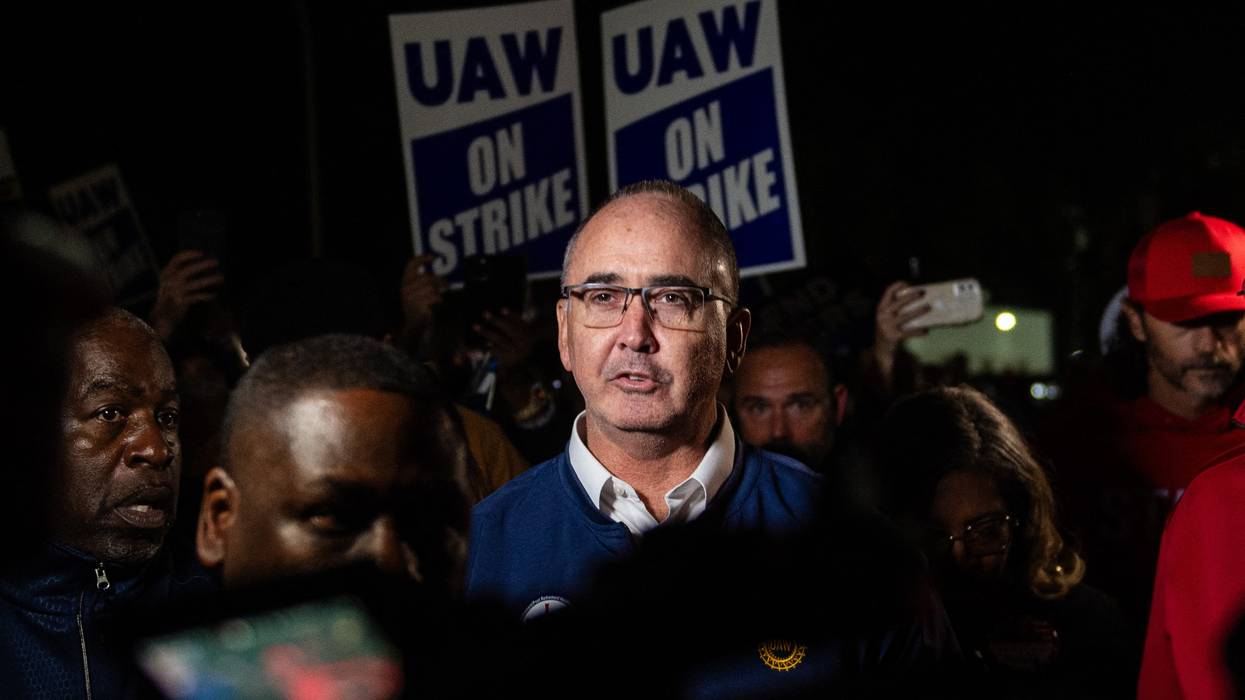
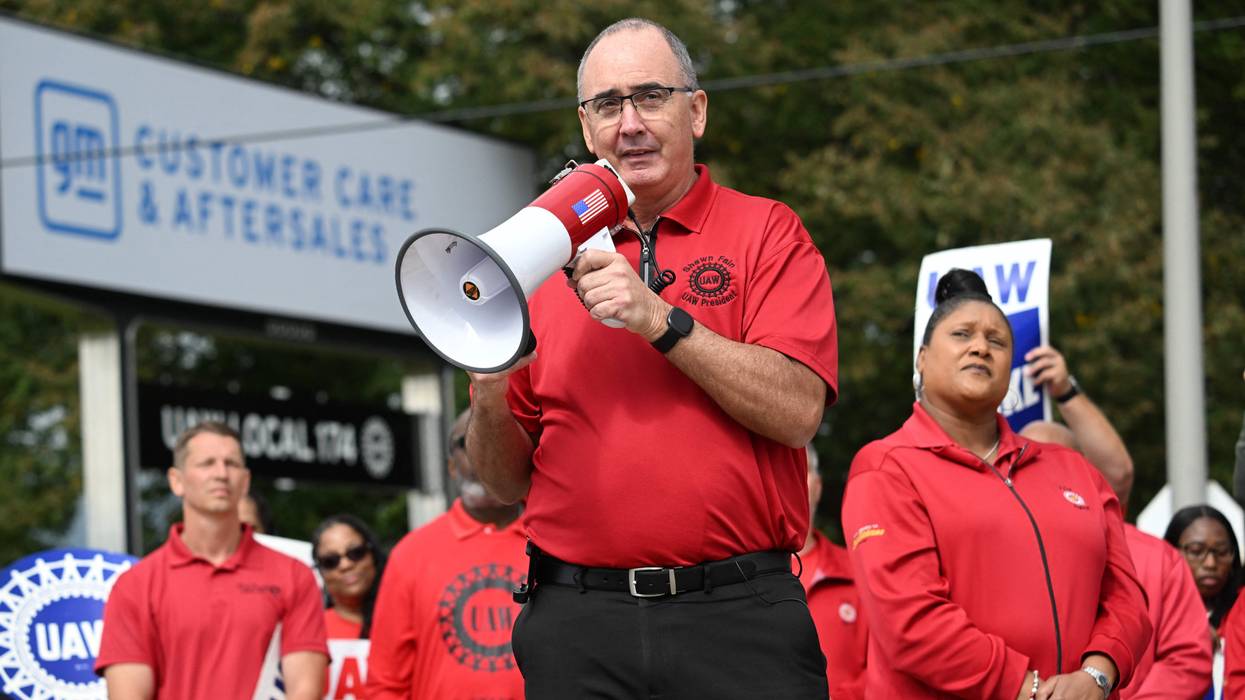
United Auto Workers president Shawn Fain issued a fiery statement on Sunday vowing to "fight back hard" as President Donald Trump's Justice Department launched a probe into allegations that the union leader abused his authority to seek benefits for his fiancée and her sister.
Fain rejected the claims as "false" and accused UAW vice president Rich Boyer, who is vying for the union presidency, of "trying to weaponize these bogus allegations to steal the upcoming UAW election." Fain also hit out at court-appointed federal monitor Neil Barofsky, whom the union president accused of harboring "a political grudge against me because the UAW took an anti-war stance about what was happening in Gaza."
"Rich Boyer has fed the monitor false allegations about me," said Fain. "We're going to fight back hard."
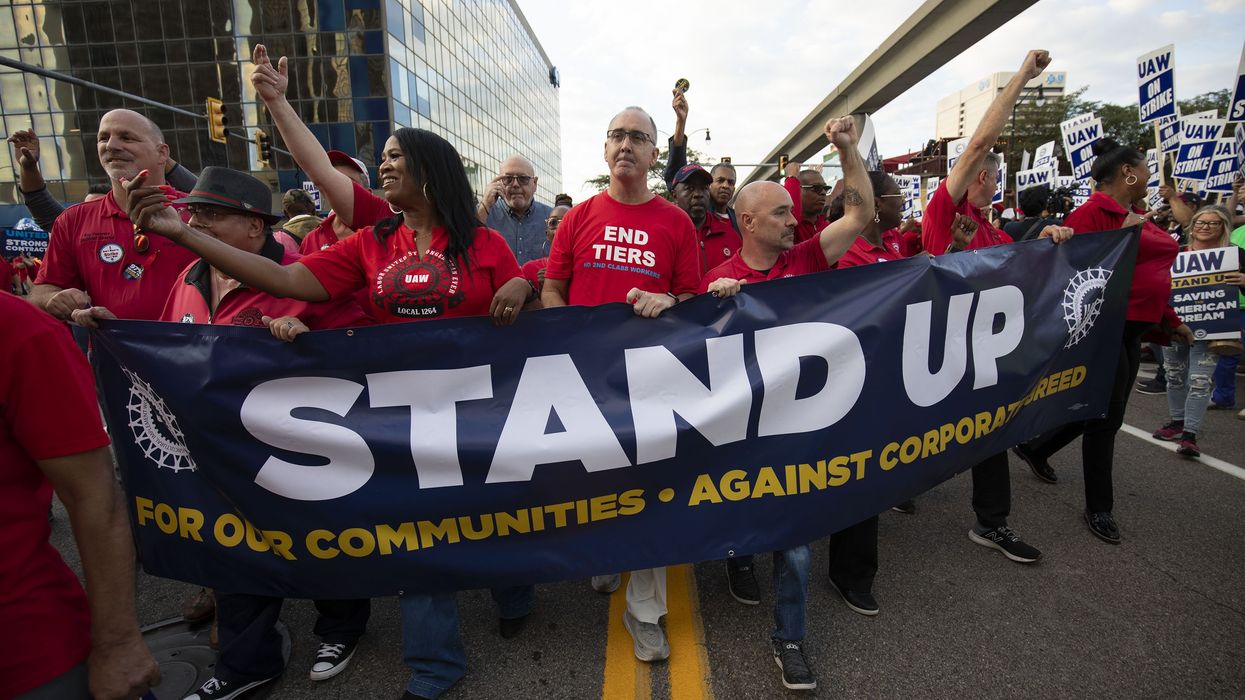
In 2023, Fain emerged as one of the most prominent union leaders in the nation during the UAW's weeks-long "Stand Up Strike" against the Big Three automakers, which yielded historic contracts for UAW members. On Sunday, Fain suggested that the union's successes under his leadership are fueling his opponents' attacks.
"This is what happens when you go against corporate America and their allies," said Fain, "and I'm not going to be intimidated or harassed out of serving our membership."
Bloomberg reported Sunday that the US Justice Department has launched a grand jury probe into allegations that Fain "sought a financial bonus for his fiancée and pushed for a worker’s compensation claim for her sister."
"He allegedly retaliated against Boyer for refusing to approve the benefits by stripping the official of his duties as chief negotiator with Stellantis NV, the maker of Jeep and Ram vehicles," Bloomberg noted. "The allegations became public last month in a report by the court-appointed monitor."
Fain on Sunday denied retaliating against Boyer. "The truth when it comes to Boyer," Fain said, "is that I didn't want him running the Stellantis Department because he wasn't doing a good job for our members."
The UAW president went on to accuse Boyer of trying to "hire family members into UAW positions" and failing to enforce the union's contract with Stellantis.
"Boyer is bad for our union and I'm not going to let him use the monitor's bogus investigation so he can try to fail upwards into a bigger title," said Fain. "Our election is in six weeks. Neil Barofsky will not run our union, no matter how hard he tries. And no company sellout like Boyer is going to dictate our elections."
Barofsky was appointed as UAW monitor in 2021—around two years before Fain was sworn in as union president—as part of a consent decree with the Justice Department in the wake of a corruption investigation.
Relations between Fain and Barofsky have reportedly been strained since late 2023, when the UAW became the largest union in the US to call for a ceasefire in Gaza as the Palestinian enclave faced a massive Israeli assault.
Shortly after the UAW's demand, according to The Detroit News, Barofsky "called Fain for a personal conversation related to the ceasefire statement and other issues around the war—a call Fain would later indicate made him uncomfortable, and that a union lawyer told Barofsky was out of line."
In February 2024, weeks after the UAW's ceasefire call, Fain and Barofsky had an "expletive-laden discussion" that Fain says "led to the monitor launching an investigation into him," The Detroit News reported last week. Fain reportedly said at one point during the February phone meeting that Barofsky accused the union leader of being antisemitic, which Fain furiously denied.
"For anybody to ever f------ say I'm antisemitic, brother, I'll fight your ass in front of this building in a heartbeat," Fain said, according to The Detroit News. "I do not f------ like that, and I don't appreciate it."
"This bill isn't governance," said United Auto Workers president Shawn Fain. "This is a class war waged from Capitol Hill."
After Republicans pushed their unpopular reconciliation package through Congress last week, U.S. House Speaker Mike Johnson hailed the legislation as a step toward "a future where working Americans can feel relief."
But Shawn Fain, the president of the United Auto Workers (UAW), argued in an op-ed Tuesday for The Detroit News that such "hollow promises" are an attempt to obscure "a brutal agenda: stripping working-class people of security, dignity, and power while lining the pockets of billionaires" with trillions of dollars in tax breaks.
"The budget reconciliation bill that the Republicans just passed isn't just bad policy—it's a full-blown attack on America's working class," wrote Fain. "For the UAW and the millions of workers we represent, four core issues define what it means to live and work with dignity: a livable wage, affordable healthcare, retirement security, and time to enjoy life beyond the job. On every one of those fronts, this bill delivers nothing but setbacks."
Fain pointed specifically to the GOP law's more than $1 trillion in cuts to Medicaid. Those cuts, combined with Republicans' refusal to extend Affordable Care Act subsidies that are set to lapse at the end of the year, are expected to strip health coverage from around 17 million Americans over the next decade, according to the nonpartisan Congressional Budget Office.
The UAW president also points to the Republican law's lesser-known attack on Medicare recipients. The legislation, which President Donald Trump signed into law late last week, would restrict enrollment in Medicare Savings Programs—potentially causing more than a million low-income seniors to lose access—and force more than $500 billion in automatic cuts to Medicare.
"These aren't numbers on a spreadsheet," Fain wrote. "These are real people losing access to lifesaving care."
"By passing this legislation, the government is telling working-class families they're on their own while billionaires get even more tax breaks."
While the Trump White House and congressional Republicans have tried to cast the budget law's tax provisions as worker-friendly—in some cases by outright lying about what's in the legislation—Fain noted that the law's limited deductions for tips and overtime will only benefit a small sliver of Americans, and only until 2028.
"On the other hand, many of the tax benefits in this bill for the wealthy are indefinite and have no expiration date," Fain wrote. "This is the same bait-and-switch the Trump administration used to sell its 2017 billionaire tax giveaway to the American people: small, temporary tax breaks for working people, with massive, long-term benefits for the wealthy and corporate America."
"This bill isn't governance. This is a class war waged from Capitol Hill," Fain continued. "It shifts the balance of power even further toward the billionaire class and hollows out the rights and dignity of labor. By passing this legislation, the government is telling working-class families they're on their own while billionaires get even more tax breaks."
"It's a total betrayal," he added.
Fain is among many prominent labor leaders who spoke out forcefully against the Republican budget measure and warned about its potentially catastrophic impact on millions of workers.
National Nurses United, the nation's largest nurses union, called the day of the bill's final passage one of "the darkest days in the history of U.S. healthcare."
"People will suffer and die because of the cuts in this legislation to fund tax cuts for billionaires—certainly in the short term and potentially for decades to come if nothing is done," the union said. "Lawmakers have effectively signed the death warrants for millions."
Liz Shuler, president of the AFL-CIO, said that "every member of Congress who voted for this devastating bill picked the pockets of working people to hand billionaires a $5 trillion gift."
"But if the politicians who rammed through this shameful bill think they can sneak away without anyone knowing the damage they've done and the chaos they've created," said Shuler, "they don't know anything about the labor movement."
The United Auto Workers on Monday released a video highlighting former Democratic New York governor and mayoral candidate Andrew Cuomo's "failures for working-class New Yorkers."
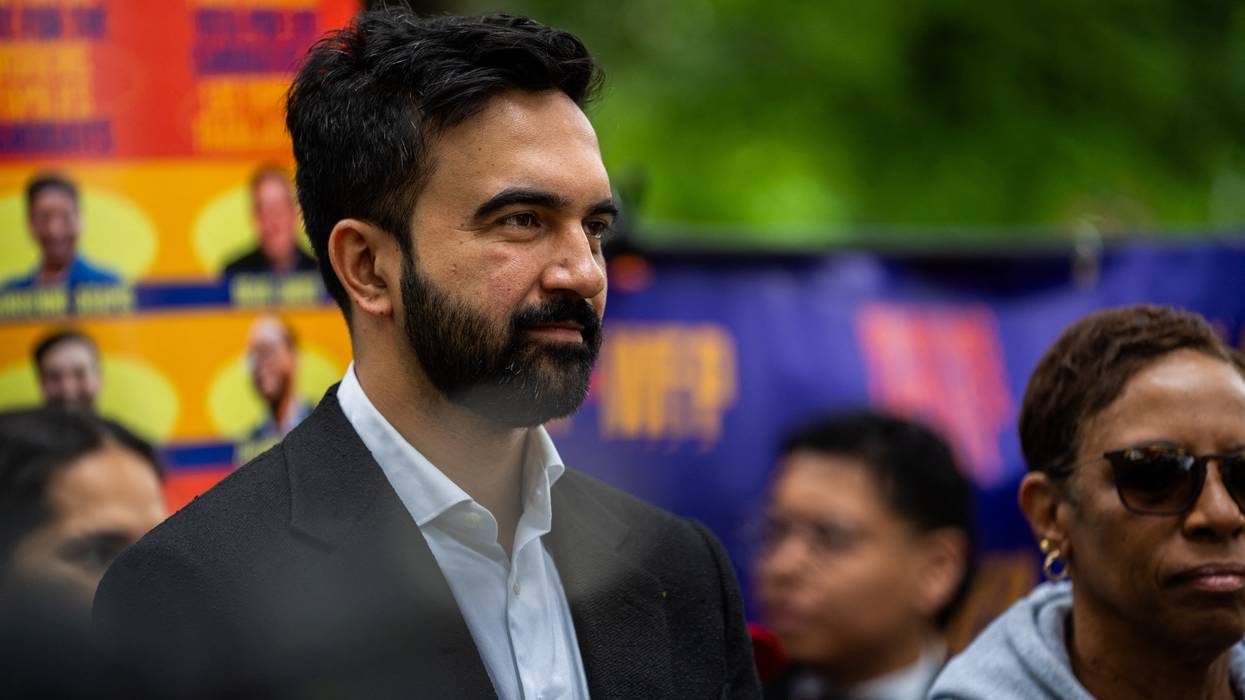
With only a few weeks to go until New York City's Democratic mayoral primary, the United Auto Workers released a video on Monday denouncing former New York Democratic Gov. Andrew Cuomo and featuring mayoral candidate and state Assemblymember Zohran Mamdani, whom UAW Region 9a recently announced as their first pick in the race.
The video includes clips of Mamdani, fellow mayoral candidate and city Comptroller Brad Lander, and UAW officials, who highlight episodes from Cuomo's tenure as governor which they indicate make him a unfit to lead New York City as mayor.
Mamdani highlights Cuomo's backing of "Tier 6," an unpopular policy approved in 2012 that cut pension benefits for future public employees and raised the retirement age to 63. Cuomo has said on the campaign trail that he would roll back that policy.
Wence Valentin III, Region 9a Community Action Program director, said in the video that in 2019, when thousands of UAW workers at General Motors were on strike, Cuomo did not sign legislation that would have given striking workers in New York State earlier access to unemployment benefits.
The video concludes with text on screen that says: "UAW says no to Cuomo."
"In the UAW, our endorsements are earned," said UAW International President Shawn Fain in a statement released with the video on Monday. "We support politicians who stand with us, and who have the courage to fight for the working class."
"Zohran Mamdani has stood shoulder to shoulder with us in our fight against some of the toughest bosses in New York City. He's been to countless UAW picket lines. He's fought for better wages, for our livelihoods, and for a livable city for UAW members," added Fain.
Mamdani, who recent polling shows is now solidly in second place behind Cuomo, was endorsed by United Auto Workers (UAW) Region 9a, which includes several union locals based in New York City, back in December alongside two other candidates in the race, Lander and state Senator Jessica Ramos.
New York City uses ranked choice voting for certain elections, including primary and special elections for mayor. The system allows voters to rank multiple candidates on their ballots. Because voters can rank multiple candidates, many entities that offer endorsements have given out endorsements as a slate and given guidance on how to rank the candidates.
On Friday, Region 9a announced that it is recommending voters rank Mamdani first on their ballot. Region 9a is calling on voters to rank Lander second and Ramos third.
Also on Friday, the Working Families Party released the ranking of its endorsements. The political party is urging voters to rank Mamdani first, Lander second, City Council Speaker Adrienne Adams third, state Senator Zellnor Myrie fourth, and Ramos fifth.
While the UAW has been critical of Cuomo, other influential unions are supporting him in the race. Two affiliates of the Service Employees International Union (SEIU), SEIU 32BJ and 1199SEIU United Healthcare Workers East, have endorsed Cuomo, as has the Hotel and Gaming Trades Council.
The primary is on June 24 and early voting begins on June 14.
"We will not accept oligarchy, we will not accept authoritarianism, we will not accept kleptocracy," the democratic socialist senator said. "We're gonna fight back, and we're gonna win."
The Democratic Party may have twice stymied Sen. Bernie Sanders' White House ambitions, but the National Tour to Fight Oligarchylaunched last month by the democratic socialist has been drawing crowds that would be the envy of any presidential campaign.
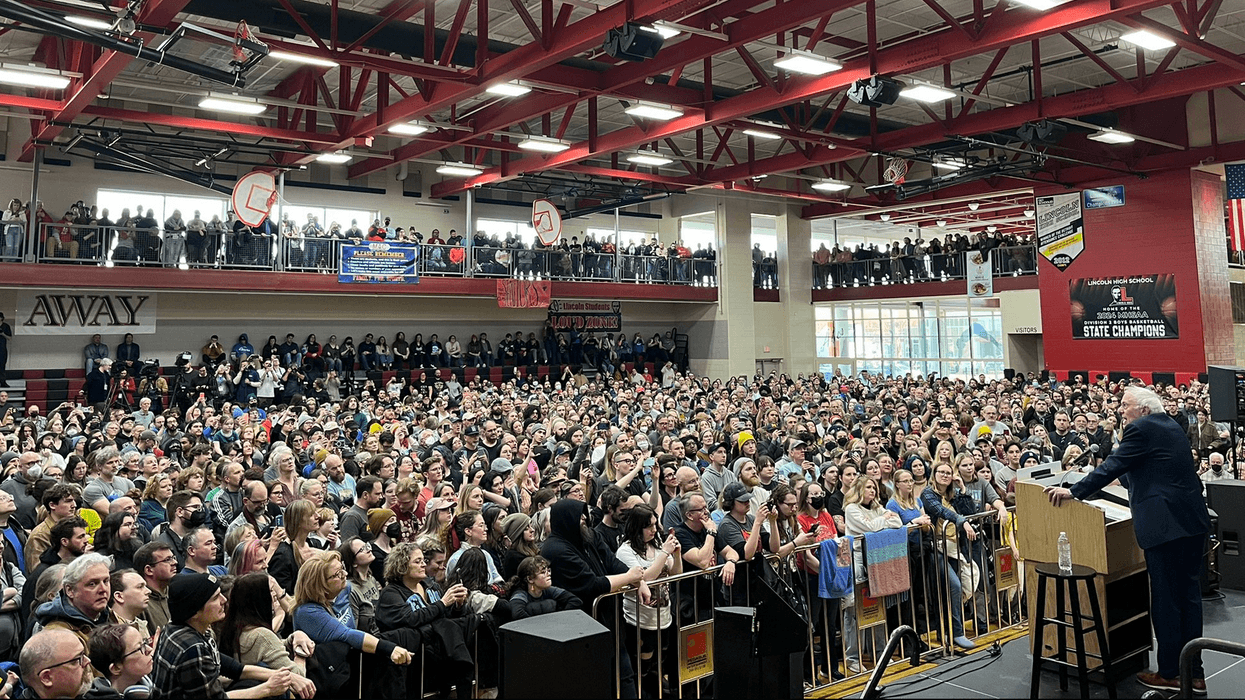
On Saturday, more than 10,000 people turned out to see Sanders (I-Vt.) speak in Warren, Michigan. Not only did they pack the main event space—the gymnasium at Lincoln High School—literally to the rafters, they filled two overflow rooms, with hundreds turned away outside, according to Michigan Advance.
"We have an administration that is leading us to oligarchy, an administration that is leading us to an authoritarian form of society, an administration that is leading us towards kleptocracy," Sanders said at the beginning of his speech.
Noting that three of the world's richest men—Tesla CEO Elon Musk, Amazon CEO Jeff Bezos, and Meta CEO Mark Zuckerberg—sat in the front row of President Donald Trump's inauguration, Sander said that "instead of a government of the people, by the people and for the people, we have now become a government of the billionaire class, for the billionaire class."
Sanders also took aim at Trump's false election claims and the wider "post-truth" trend on the right, telling the crowd: "We're up against a phenomenon that we have never seen, and that is the Big Lie. The Big Lie is not just stretching the truth; the Big Lie is not just fibbing. The Big Lie is creating a parallel universe, a set of ideas that have no basis in reality."
The senator also linked past struggles against injustice with the current crisis, arguing that "the change that we have experienced over hundreds of years of our nationhood only occurs when ordinary people stand up against oppression and injustice and fight back."
Sanders was joined on stage by United Auto Workers president Shawn Fain, who wore a T-shirt reading "Eat the Rich" and told the audience that "billionaires don't have a right to exist."
Wayne County Health Director Abdul El-Sayed, who ran for Michigan governor in 2018 and is considering a Senate run, pointed to the size of Saturday's crowd in Warren as proof of the enduring power of progressivism.
"They want us to step back, and today, all of you have said that we are not stepping back, we are stepping forward," El-Sayed told Michigan Advance. "We are recognizing that in one another, we have all we need to build that government for the people and by the people."
In a dig at the unofficial motto of some Silicon Valley startups, El-Sayed said that the Trump administration wants "to move fast and break things."
"But what they're breaking is the government that our hard-earned tax dollars have been funding," he said. "And we're here to say that that is our money, that is our government, take your damn billionaire hands off of it."
The Warren rally was the latest on a tour that's seen overflow crowds at almost every stop. Thousands also turned out in Altoona, Wisconsin on Saturday and Kenosha, Wisconsin on Friday to see Sanders speak.
There's more to Sanders' tour than just raging against Trump and the oligarchy. He chose to visit districts where Republicans narrowly won congressional races, hoping to pressure GOP lawmakers to vote against proposed cuts to programs upon which working-class people rely, in order to pay for the $4.5 trillion cost of extending Trump's first-term "tax scam" that overwhelmingly benefited the ultra-wealthy and corporations.
"Today, the oligarchs and the billionaire class are getting richer and richer and have more and more power," Sanders said in a statement Friday. "Meanwhile, 60% of Americans live paycheck to paycheck and most of our people are struggling to pay for healthcare, childcare, and housing. This country belongs to all of us, not just the few. We must fight back."
Correction: This article originally said Sanders held a rally in Altoona, Pennsylvania. The rally was in Altoona, Wisconsin.
"The future of Illinois manufacturing depends on the power of our workforce," said Sen. Tammy Duckworth (D-Ill.)
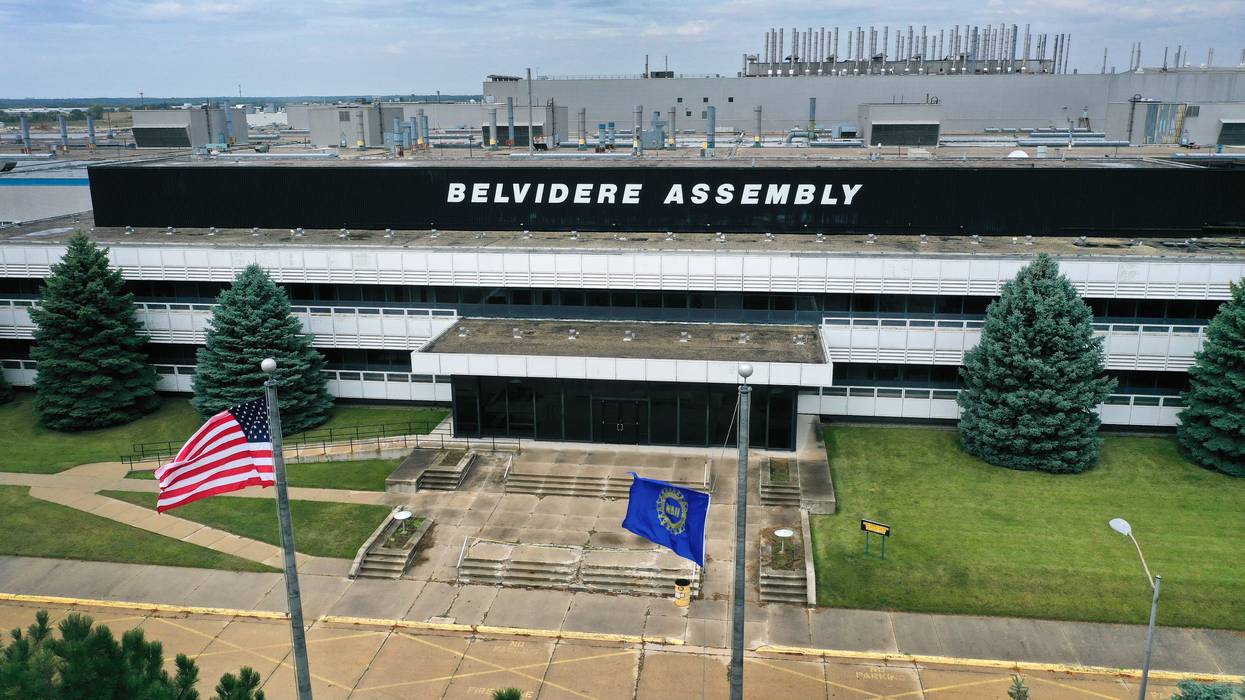
The automaker Stellantis announced Wednesday that it will build the next generation Dodge Durango at its Detroit Assembly Complex and will reopen the Belvidere Assembly Plant in Illinois—two issues that the United Auto Workers union said the firm had agreed to in a 2023 union contract, but then had tried to walk back.
According to the announcement, the reopening of the Belvidere plant will return some 1,500 UAW-represented employees back to work there, and the plant will also be used to produce a new mid-sized pick up truck.
Democratic lawmakers and the UAW leadership cheered the development. In a letter released Wednesday, UAW president Shawn Fain and UAW Stellantis Department director Kevin Gotinsky wrote that the "victory is a testament to workers standing together."
On X, Sen. Tammy Duckworth (D-Ill.) wrote: "The future of Illinois manufacturing depends on the power of our workforce. Proud to see Stellantis honor their historic deal with UAW—bringing 1,500+ jobs back to their Belvidere Assembly Plant. Incredible win for Illinois." The AFL-CIO posted on X, cheering the development, as did Sen. Gary Peters (D-Mich.) and Rep. Debbie Dingell (D-Mich.).
The United Auto Workers represents unionized workers at Stellantis (formerly Chrysler), as well as General Motors and Ford. UAW-represented workers ratified a contract with the three automakers, collectively known as "the Big Three," that yielded worker wage gains in 2023.
According to the union, Stellantis agreed in the 2023 contract to reopen the Belvidere plant and to manufacture the next generation Dodge Durango in Detroit, but the company's old leadership had failed to uphold those commitments.
Former CEO Carlos Tavares, who spearheaded aggressive targets for sales and cost cuts and tangled with both the board and the union, according to Reuters, resigned in December. The letter from Fain and Gotinsky credited the union members with his exit.
"Thank you to the thousands of members and leaders who rallied, marched, filed grievances, and talked to coworkers. Your solidarity forced Carlos Tavares out as CEO of this company, and it's been a game-changer. Since Antonio Filosa has taken over as North American COO at Stellantis, we have been meeting with their team, and the difference is clear," according to the letter from Fain and Gotinsky.
The union had filed charges with the National Labor Relations Board accusing the automaker of unlawfully refusing to release information about plans to move Dodge Durango production from a Detroit factory to one outside of the United States, and also filed grievances over delays in reopening the plant in Belvidere, according to The Associated Press. Union members had threatened to strike over the issue of the Belvidere plant.
In October 2024, members of the Senate and the House of Representatives sent two separate letters to Stellantis leadership urging them to keep the company's commitments.
On Wednesday, Stellantis "also committed to a significant investment in Kokomo, announcing plans to build Phase II of the GME-T4 EVO engine beginning in 2026, reversing plans to move work out of this country. There will be no change to existing GME-T4 EVO production at the Dundee Engine Plant. Finally, the company committed to increased component production at the Toledo Machining Plant," according to a press statement from UAW.
"No one—not Donald Trump or JD Vance, nor any one CEO—can stop solidarity," said AFL-CIO president Liz Shuler. "Organized labor is the path forward."
The largest labor unions in the United States are ready for a fight.
That much was made clear within hours of Donald Trump's victory over Vice President Kamala Harris in Tuesday's election, an outcome that will soon bring to power a former president who aggressively pursued anti-worker policies during his first four years in the White House despite posturing as an ally of rank-and-file union members.
For Shawn Fain, the fiery president of the United Auto Workers, the struggle for the nation's working class in the wake of Trump's victory is identical to the one it faced prior to the election: "unchecked corporate greed destroying our lives, our families, and our communities."
"It's the threat of companies like Stellantis, Mack Truck, and John Deere shipping jobs overseas to boost shareholder profits. It's the threat of corporate America telling the working class to sit down and shut up," said Fain, who led the UAW through a six-week strike last year that yielded historic contracts with the nation's three largest car manufacturers.
"We've said all along that no matter who is in the White House, our fight remains the same," Fain added. "The fight for a living wage, affordable healthcare, and time for our families continues. It's time for Washington, D.C. to put up or shut up, no matter the party, no matter the candidate. Will our government stand with the working class, or keep doing the bidding of the billionaires? That's the question we face today. And that's the question we'll face tomorrow. The answer lies with us. No matter who's in office."
"We've seen assaults on our fundamental rights before. In the days, months, and years ahead, labor's task will be to defend working people when it happens again."
While energized by recent victories, the U.S. labor movement is broadly in disrepair, battered by a decades-long corporate assault. Last year, according to the latest figures from the Bureau of Labor Statistics, the country's union membership rate was just 10%, down from 20.1% in 1983.
And union members were hardly unified behind one candidate in Tuesday's election:
Exit polling shows that members of union households backed Harris by a relatively narrow margin of 53% to Trump's 45%.
But organized labor, weakened and divided as it is, still represents "the most promising and powerful tool to turn this all around," journalist Hamilton Nolan wrote for In These Times on Wednesday.
In a separate piece ahead of Tuesday's election, Nolan argued that "unions are inherently progressive."
"Not because they endorse a particular political party, but because the nature of the work they do is about empowering the working class and increasing equality and enabling regular people to stand up effectively to the power of capital, of the rich, of corporations, of unrestrained capitalism," he wrote. "When you win a union and sign a union contract it is not just an act of improving your own life and the lives of your coworkers; it is a battle won in the class war. And the political war that you are stressed about right now is, at its heart, a class war."
Claude Cummings, president of the Communications Workers of America, affirmed that message in a statement following Tuesday's election, saying that "corporate CEOs are intent on dividing us against each other so they can drive down wages and cut corners on safety to boost profits for big investors."
"Now it is time to reunite around our shared values," said Cummings. "No matter who is in office, our goals are always the same—to use our collective power to protect our rights, to improve our working conditions, and to give everyone an opportunity to have a union voice on the job."
Want to build worker power against the billionaires and corporate CEOs? Form a union. https://t.co/OfgO2NOTVk
— CWA (@CWAUnion) November 7, 2024
In the second Trump administration, unions are likely to face a billionaire-shaped government hostile to organized labor's rights and aspirations for a more just and equitable society.
While no final decisions have been made, The Washington Post reported earlier this month that Trump sees former fast-food executive Andrew Puzder—an enemy of unions and opponent of raising the minimum wage—as a top contender for the labor secretary post. Trump selected Puzder for the role in his first White House term, but Puzder withdrew his nomination in the face of bipartisan backlash.
The Post also reported that Trump intends to fire National Labor Relations Board (NLRB) General Counsel Jennifer Abruzzo—a champion of workers—on day one and "reverse wins for unions under Biden," including "a 2023 landmark ruling that forces employers found using illegal tactics to fight labor organizing to recognize unions." The NLRB ruling has provided a boost to unionization efforts.
Liz Shuler, president of the AFL-CIO, said in a statement Wednesday that the Project 2025 agenda crafted by Trump allies and members of his first administration "promises to dismantle labor unions because we are a pillar of democracy and a check on power."
Acknowledging that Trump's win represents "a blow for every worker who depends on our elected leaders to fight for our jobs, our unions, and our contracts," Shuler said that "we stand for solidarity—the kind that is built when working people stand together to take on the biggest, richest bosses and the most powerful extremist politicians."
"Most importantly, we know how to fight back when anyone comes after our freedoms," said Shuler. "No one—not Donald Trump or JD Vance, nor any one CEO—can stop solidarity. Organized labor is the path forward."
Service Employees International Union (SEIU) president April Verrett echoed that sentiment.
"We are putting corporations, billionaires, and extremist politicians on notice—we see you, we know just what you're trying to do, and we won’t back down. We know what it's like to face down bullies," Verrett added. "We will not allow anyone to take away our fundamental rights and freedoms. Hear us: when you attack just one of us, you're attacking every worker who makes our communities, our economy, and our nation strong."
"Donald Trump left workers behind when he was president," said United Auto Workers president Shawn Fain.
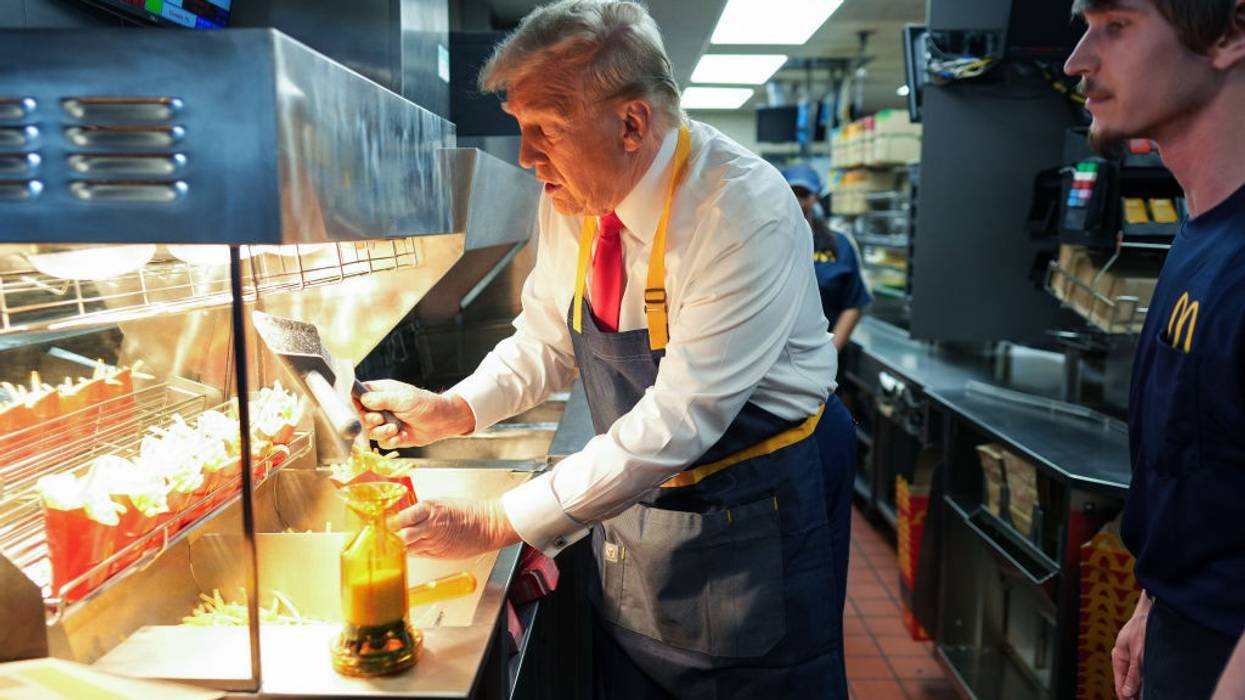
The final stretch of the 2024 U.S. presidential race has seen Donald Trump, the billionaire Republican nominee, perform a staged shift at a Pennsylvania McDonald's and dress as a garbage truck driver in a clear effort to appeal to working-class voters who are set to play a decisive role in Tuesday's election.
But a detailed examination of Trump's first four-year term in the White House shows that despite his recent cosplaying, the GOP nominee was no ally of the working class when he was in a position to influence and enact policy.
"When Donald Trump was president, he repeatedly tried to raise the rent on at least 4 million of the poorest people in this country, many of them elderly or disabled," the investigative outlet ProPublica reported over the weekend. "He proposed to cut the federal disability benefits of a quarter-million low-income children, on the grounds that someone else in their family was already receiving benefits. He attempted to put in place a requirement that poor parents cooperate with child support enforcement, including by having single mothers disclose their sexual histories, before they and their children could receive food assistance."
Additionally, the outlet noted, Trump "tried to enact a rule allowing employers to pocket workers' tips" and succeeded in enacting "a rule denying overtime pay to millions of low-wage workers if they made more than $35,568 a year"—all of which casts serious doubt on the Republican candidate's pledge to prioritize the economic interests of U.S. workers in a second term.
ProPublica also analyzed Trump's proposed federal budgets from 2018 to 2021 and found that the former president "advanced an agenda across his administration that was designed to cut healthcare, food, and housing programs and labor protections for poor and working-class Americans."
Meanwhile, Trump worked with his Republican allies in Congress to ram through a massive tax cut for the rich and large corporations—a measure he wants to double down on if he defeats Democratic nominee Kamala Harris on Tuesday.
Trump's 2024 campaign has featured some policy proposals aimed at boosting the working class, such as eliminating taxes on tips and overtime pay.
But economists and progressive organizers have argued that the benefits of such policy changes would be marginal compared to broader proposals that Trump has not backed, such as raising the federal minimum wage and eliminating subminimum wages for tipped workers. A recent Institute on Taxation and Economic Policy analysis found that Trump's economic plans overall would cut taxes for the richest 5% of U.S. households while raising them for the bottom 95%.
During his McDonald's stunt last month, Trump ignored a question about whether he supports raising the federal minimum wage, which has been stuck at $7.25 an hour for over 15 years. Harris, by contrast, has expressed support for lifting the federal wage floor to at least $15 an hour.
"He does not give a damn about working-class people," United Auto Workers president Shawn Fain said of Trump during an appearance on MSNBC alongside Rep. Alexandria Ocasio-Cortez (D-N.Y.) late last week. "Donald Trump left workers behind when he was president. He did nothing to stop manufacturing plants leaving this country."
"With the Harris and Biden administration, we have seen a bigger investment in this country and manufacturing than I have ever seen in my lifetime. They walk the walk," Fain added. "Trump is all talk."
In a video message to the country ahead of Election Day, Sen. Bernie Sanders (I-Vt.) similarly criticized Trump as an opponent of union rights and argued Harris is the "clear" choice for those who want to improve the lives of working-class Americans.
"While some of us may have differences of opinion and disagree with Kamala Harris on this or that issue, I hope very much we will not sit out this election. We cannot sit it out," said Sanders. "So let's get involved. Let's do everything we can. Let's come out and vote on Election Day, and let's make sure that Donald Trump is defeated and that Kamala Harris is our next president."
"We can't sit this one out," said United Auto Workers president Shawn Fain. “Every organizing campaign, every contract, every grievance settlement will be impacted by this election."
United Auto Workers president Shawn Fain late Tuesday called for working class unity against Republican nominee Donald Trump in the final stretch of the 2024 race, warning that the former president would serve the interests of his own class and embolden the nation's executives to intensify their decades-long war on the labor movement.
Responding to members who question why the UAW is involved in the political process at all, Fain said during a video livestream that "we are up against a billionaire class that will not stop their attack on us at the bargaining table."
"They will not stop at the workplace, they will not stop at the border—they will take every inch we give them," said the president of the UAW, which has endorsed Democratic nominee Kamala Harris. "We don't engage in political activity because we like a candidate. We don't do it for ourselves, as your union leadership. We don't do it for the Democratic or Republican parties. We engage in politics as a union because it is core to our fight for economic and social justice."
Fain said that the United States is currently trapped in a "vicious cycle" in which the "ruling class has waged a one-sided class war on the working class, and they've been winning."
"We're in a vicious cycle where the billionaire and corporate class take more and more for themselves and rewrite the rules of the game to keep it that way," said Fain. "They use their insane wealth to buy off politicians and elections. The lap dogs of the billionaires then pass more laws that restrict unions and keep working-class people down. They consolidate the fruits of our labor into the hands of Wall Street and corporate America, and that cycle goes on and on."
"It is an embarrassment to our democracy when billionaires can openly buy elections. But it's also a devastating situation for the working class."
Fain acknowledged that "it's a bipartisan issue" and that billionaires have "done everything they can to buy off both parties," characterizing the GOP as the outspoken party of big business and condemning "corporate Democrats" who "have also cozied up to the rich."
"It is an embarrassment to our democracy when billionaires can openly buy elections," said Fain. "But it's also a devastating situation for the working class."
But in the 2024 election, Fain argued, the choice is stark.
"The Democratic Party is interested in working-class people and what they have to say, and they want us to be in their coalition," said Fain. "On the other side, we have the Republicans, who—on a national level in particular—have embraced the billionaire class. They embraced their billionaire candidate, and they embrace his billionaire buddies, and they explicitly push policies that help billionaires and hurt anyone who might challenge that system."
"We can't sit this one out," the union president said. "Every organizing campaign, every contract, every grievance settlement will be impacted by this election. If the billionaires take back our presidency through their lap dog, that lap dog Donald Trump, you can be damn sure that every single CEO in this country will smell blood in the water."
Watch Fain's full remarks, which he urged union members to share with their co-workers, friends, and families:
Fain has used the waning days of the 2024 presidential race to highlight the slew of anti-worker policies Trump pursued and implemented during his first term in the White House, including the United States-Mexico-Canada Agreement (USMCA)—a trade deal that the UAW president has called "Trump's NAFTA."
"The proof of Trump is already in the body of work," Fain said in a recent interview with The Nation. "Trump was president for four years. Auto plants were closing. He didn't do a damn thing to stop any of it, to save any of it. He didn't even make an effort to curtail any of that. He continues to tell this lie that he's fixing this and he fixed that and he's saving auto jobs and he's saving working-class jobs. But his body of work when he was president shows different. He didn't [fix things]. We lost jobs under Trump, and nothing improved with trade."
The UAW's messaging and organizing against Trump appear to have had an impact on the union's members: According to survey data released last week, Harris is leading Trump by 22 percentage points among UAW members in the key battleground states of Michigan, Pennsylvania, Wisconsin, North Carolina, Georgia, Arizona, and Nevada.
The poll found that "among those who say they have been contacted by the union," Harris' lead over Trump was 29 percentage points.
"What we do in this election matters," Fain said Tuesday, pointing to the survey results. "What we do as a union matters. When we talk to our co-workers about this election, it has an impact. When we talk to our families about this election, it has an impact. What you do in the next week matters—it matters for the next four years, it matters for your next contract negotiation, and it matters for your next organizing drive."
"For us in the UAW, it ain't about a campaign, it ain't about one day—it's about power," Fain continued. "No matter what happens in this election, we're all UAW, and we either rise together or we fall together. You can disagree with me, and you can vote however you're going to vote, but you cannot ignore our duty as a union to fight like hell for social and economic justice for every single member of this union, and every single member of the working class."
"We believe that if Stellantis can afford to spend over $8 billion this year on stock buybacks and dividends, it can live up to the contractual commitments it made to the UAW."
In what the United Auto Workers hailed as "a powerful show of solidarity," scores of U.S. lawmakers on Thursday sent letters to "Big Three" automaker Stellantis and its CEO, Carlos Tavares, urging them to honor their contractual obligation to their employees, protect American jobs, and stop making excuses amid record profits and multibillion-dollar stock buybacks and dividends.
"We are writing to express our growing concerns about the failure of Stellantis, under your leadership, to honor the commitments it made to the United Auto Workers (UAW) in last year's collective bargaining agreement," says one letter led by Sens. Bernie Sanders (I-Vt.), Gary Peters (D-Mich.), Dick Durbin (D-Ill.), Debbie Stabenow (D-Mich.), and Tammy Duckworth (D-Ill.) and signed by 18 of their Democratic colleagues.
"We urge Stellantis not to renege on the promises it made to American autoworkers and to provide details on the timelines for these investments," the senators wrote.
Meanwhile, 56 members of the Congressional Labor Caucus led by Reps. Debbie Dingell (D-Mich.), Mark Pocan (D-Wis.), and Donald Norcross (D-N.J.) sent a separate letter, this one to Stellantis' board of directors, calling on Chrysler's parent company to "follow through on promises to workers to invest in its domestic workforce."
"Given the significant governmental financial support for Stellantis over the years, we have become alarmed by a steady stream of reports indicating your plans to lay off auto workers and move production out of the United States, and that you are failing to honor contractual commitments that Stellantis made as part of the 2023 national collective bargaining agreement," the letter states.
Last November, UAW workers at the Big Three—GM, Ford, and Stellantis—ended a six-week "stand-up strike" and signed new contracts with better pay, benefits, and working conditions. Stellantis committed to making nearly $19 billion in new domestic investments, reopening its "indefinitely idled" Belvidere, Illinois plant, continue manufacturing the Dodge Durango SUV in Detroit through 2025, and build the next-generation Durango in the city starting in 2026, among other promises.
However, according to the senators' letter:
Stellantis is now delaying planned investments to reopen and expand the Belvidere assembly plant, leaving behind thousands of American workers who built the company into the auto giant it is today. We are also concerned with reporting that Stellantis is planning to move production of the next-generation Dodge Durango out of the United States, after previously announcing layoffs that threaten the economic security and well-being of thousands of autoworkers.
Moreover, Stellantis has stated publicly that it plans to source 80% of supply from "low-cost countries" like Mexico. By your own admission, Stellantis' growth plan hinges on shifting "industrial production into cost-competitive countries" like Mexico, where workers are making substandard wages. These actions violate the obligations Stellantis made to the UAW.
"Taxpayers are currently funding consumer incentives for several Stellantis vehicles and Stellantis is slated to receive $585 million under the Domestic Manufacturing Conversion Grant Program," the House lawmakers noted in their letter. "Under this program, Stellantis is on track to pocket $335 million to reopen the Belvidere Assembly plant in Belvidere, Illinois. As stewards of taxpayer funding, we have a responsibility to ensure these investments benefit the public interest."
"We hope it is clear to you that the American people will not tolerate taxpayer subsidies for a company that is cutting production and slashing jobs—all the while it increases executive compensation, dividends to shareholders, and stock buybacks," the letter adds.
The senators noted that "this year, Stellantis has spent over $8 billion on stock buybacks and dividends to benefit its wealthy executives and stockholders, and that "last year, while blue-collar auto workers in Belvidere were being laid off indefinitely, you were able to receive a 56% pay raise boosting your total compensation to $39.5 million, which made you the highest paid executive among traditional auto companies."
"During the first six months of this year, Stellantis has generated over $6 billion in profits, making it one of the most profitable auto companies in the world," the letter adds. "We believe that if Stellantis can afford to spend over $8 billion this year on stock buybacks and dividends, it can live up to the contractual commitments it made to the UAW."
Last week, the UAW published a powerful video in which union president Shawn Fain makes some of the same demands that are in the lawmakers' letters.
"For years, this company has picked us off, plant by plant, and our leadership lacked the will and the means to fight back," Fain said in the video. "Those days are over."
Fain continued:
Stellantis management has launched a campaign of intimidation and harassment against our members, our local unions, and the International UAW to try to get us to back down from the fight to save our jobs.
I have bad news for Stellantis: We're not going anywhere.
Their corporate lawyers are claiming that our fight to keep jobs in Belvedere, Detroit, and America is based on what they call "sham grievances."
But here's the real sham: Over the past nine weeks, Stellantis has spent over a billion dollars on stock buybacks, all while saying they can't afford to keep their commitments to their own employees. In fact, Stellantis has spent $3 billion on stock buybacks this year alone.
The real sham is this campaign of intimidation and interference in our union's business. Stellantis managers are calling members, threatening their jobs. They're emailing our local presidents threatening lawsuits. This is what happens when a CEO is cornered and isolated. His dealers in America and Europe are turning against him. His suppliers and shareholders are suing him, and he's pushing our customers away.
And the sham is that he will walk away with a golden parachute of millions and millions of dollars, while American autoworkers are left holding the bag.
"The sham took place this week when he was asked about stepping down or being replaced, Carlos Tavares said, and I quote, 'I signed a contract,'" Fain said. "Well, Carlos, the workers at Stellantis signed a contract too, and it's time for you to honor it."
Calling on UAW members to sign a strike authorization pledge over Stellantis' broken promises, Fain vowed that "we will once again save this company from mismanagement, from corporate greed, and from killing tens of thousands of good jobs."
"But only if we stick together," he stressed. "So, are you in? If you are, sign your strike authorization pledge today. And you can do that by going to shitcancarlos.com."
"Let the company know where you stand," Fain added. "And together, let's tell Stellantis: The days of plant closures are over, and Carlos Tavares needs to go."
"Kamala Harris has stood with labor," said Shawn Fain. "She's walked the walk. Donald Trump serves himself. He's always served himself."
The head of the largest U.S. autoworkers union on Thursday highlighted the yawning chasm between former President Donald Trump's campaign promises to protect the country's auto industry and the 2024 Republican nominee's White House record—which includes hundreds of thousands of lost manufacturing jobs.
Speaking on a call hosted by the campaign for Vice President Kamala Harris, the Democratic nominee, United Auto Workers president Shawn Fainargued that "there is a stark contrast between Donald Trump and Kamala Harris."
"Kamala Harris has stood with labor," Fain said of the UAW-endorsed candidate. "She's walked the walk. Donald Trump serves himself. He's always served himself."
Taking aim at Trump's claims that he's the best choice for U.S. autoworkers and that he's "always had their back," Fain said:
Look at the Lordstown, Ohio assembly plant. [Trump] told workers there, "Don't sell your houses." The plant closed. He came to Warren, Michigan, a week ago or two. Again, wants to talk about how he cares about autoworkers. But we had [General Motors'] powertrain plant in Warren closed under his watch. He did nothing. Trump stood there in 2016 and promised that he wouldn't allow a single plant to close.
However, plant closures and offshoring increased during the Trump administration, during which domestic auto production plummeted from nearly 12.2 million units in 2016, the last full year of the Obama administration, to under 8.2 million units in 2020, Trump's last full year in office, according to the U.S. Bureau of Transportation Statistics. While Covid-19 affected that year's production, fewer than 10.9 million vehicles were manufactured domestically in pre-pandemic 2019.
Fain, who noted this trend, called Trump the "job-killer-in-chief."
The UAW chief also mocked reports that numerous attendees wearing "autoworkers for Trump" T-shirts at a Tuesday rally for the Republican in Detroit weren't actually autoworkers.
"It's pathetic. Everything he does is a con," Fain said of Trump.
Referring to the multibillionaire CEO of electric vehicle maker Tesla, Fain added that Trump "sits there and applauds Elon Musk for trying to fire striking workers, and they laugh about that."
"And that's why I said Donald Trump is a scab," the union leader added, using the term for nonunion workers who cross picket lines during strikes.
During last year's UAW strike for a fair contract, President Joe Bidenmade history by becoming the first-ever sitting U.S. president to join striking workers on a picket line. Four years earlier, Harris, then a U.S. senator from California running for president, walked a picket line with striking UAW workers in Reno, Nevada.
The Biden-Harris administration has often been called the most pro-labor presidency in modern history.
Fain's remarks came hours before Trump infuriated many Michiganders by telling local business owners at a Detroit rally that if Harris wins, the entire country will "end up being like Detroit"—which is in the midst of an economic revival.
Congressman Shri Thanedar (D-Mich.), who represents the city,
admonished Trump to "keep Detroit and our people out of your mouth."
"Detroit is a city with a booming economy, diverse culture, and some of the best people in America," he said, adding that the heavily Democratic city "will elect Kamala Harris."
Michigan Democratic Party Chair Lavora Barnes said Thursday: "Plain and simple, a second Donald Trump presidency would be a disaster for Michigan workers. His agenda will raise costs and kill jobs."
"When he was president," she added, "Trump gave tax cuts to the wealthy at the expense of Michigan's working families, tanked our economy during the pandemic, and only helped the rich get richer."