

SUBSCRIBE TO OUR FREE NEWSLETTER
Daily news & progressive opinion—funded by the people, not the corporations—delivered straight to your inbox.
5
#000000
#FFFFFF
To donate by check, phone, or other method, see our More Ways to Give page.
Daily news & progressive opinion—funded by the people, not the corporations—delivered straight to your inbox.

Our movements must question mythologies and admit contradictions if we intend to build a new world that’s sustainable, reciprocal, and inclusive for all.
As a guest on the 2019 podcast “Post-doom with Michael Dowd,” terrestrial ecologist Tom Wessels agrees humanity is entering a “bottleneck,” a condition that can afflict any species that ceases to live in relationship and reciprocity. Ballooning populations get stuck trying to claim space in an un-expandable hole, and many die.
This is what’s going through my head as I idle in an impossibly long single line of traffic on the road into Mount Kisco, New York. My kids are in the back of the car, asking for snacks. It is three days since Renee Good’s murder, 10 days since the end of the deadliest month in the deadliest year for people in Immigration and Customs Enforcement (ICE) custody.
“No snacks,” I tell the kids, scanning for parking. “You should eat your meals. Then I wouldn’t have to throw away food and bring a buffet everywhere we go.”
Pedestrians pass our car with protest signs as car exhaust blows through the vents. I feel an unexpected pang of tenderness for our quiet kitchen table, its leftover bowls of cereal and uneaten peanut-butter toasts. I already know I’ll give in, as all mothers do, when they can, when their children want to eat.
This land is no one’s land. This land was not made for you and me. This land is part of us, as we are part of it.
“But we compost the food,” my 7-year-old says, “so it’s actually good for the Earth when we throw it away.”
Our eyes meet in the rearview mirror as I prepare a response, but then the car behind me beeps and I see a distant light has turned green.
We crawl past the demonstration and I honk in support. Upbeat `80s pop blares from a speaker, backdrop to the protesters’ screams, whistles, and bells. My three-year-old, already a musician, moves his head as close as his car seat will allow, trying to deconstruct the music and noises.
“Go again, mommy,” he says. But at that moment I find a miraculous spot, just down the street from the main event, open perhaps because of the one-hour limit on the meter. I claim the space anyway; lug the kids, coats, and backpack out of the car; lock the doors; fill the meter; and grab hands for the walk toward the protest.
A few steps into the journey, a woman asks if she can photograph my kids. I smile and say, "No thank you," covering their faces with my hands. Photos become a constant request over the next hour. Many people ask, but others just lift and click. My son picks up a sign in the grass and I read it to him: No Fascist USA. More phones point in our direction.
I survey the crowd and think of something Monique Cullars-Doty, co-founder of Black Lives Matter Minnesota, said on the news the other day. “America has never addressed its love affair with white supremacy,” she said, connecting the ICE murder of Renee Good to the state-sanctioned violence that has assaulted Black and brown communities for centuries.
It is one thing to agree with this assessment—that white supremacy made colonialism possible, slavery imperative, resource hoarding commendable, ecological collapse acceptable, and ICE inevitable. It is quite another to admit our complicity, to connect our daily transgressions—a need for the latest gadget, an idling tailpipe, a thoughtless unkindness—to the generations of violence that made all this possible.
I squat in the wet grass and dig through the backpack, dipping my fingers deeper until I hear crinkling plastic. The kids hold out their hands expectantly and whisper, “Yes!” when their favorite granola bars emerge from the bag.
The music stops abruptly, and a woman with a kind face speaks over a microphone. She is Woody Guthrie’s granddaughter, simply by association evoking a simpler time, a sepia time, a time of acoustic guitar and faith in good intentions.
Thinking of her grandfather makes me think of mine—a Jewish Romanian immigrant’s son who stood with Black neighbors in 1950s Milwaukee when other Jewish neighbors, newly minted “white” by America’s slippery standards, wanted to prevent more Black families from moving in. My grandfather now floats above the scene, a beloved figure whose own people’s history was weaponized as justification for more land grabs and violence.
Guthrie’s granddaughter begins to sing:
This land is your land; This land is my land
And my blue-eyed son who loves music, the child I’ve always somehow felt the need to remind people is technically Jewish despite his blonde hair and last name, drops his snack, steps forward into the circle, and opens his mouth to sing along. A hundred phones rise in unison to capture the image.
I resist the urge to cover his face, crouch next to him, and try to join in. But the words catch in my throat.
My land. Your land.
As far as I can tell, not a single Indigenous Lenape person, the first peoples who walked this place now called Mt. Kisco, is present.
This land was made for you and me.
Behind the song circle is a vast cement parking lot, and before it a busy road. The bear, wild turkey, wolves, birds, and aquatic species once so abundant as to be considered eternal, are nowhere to be seen.
From California to the New York island
Places unnamable and unknowable, claimed in this song that once defined a movement, but never created a path or vision for us all.
And yet, here is my son singing, somber, understanding that what he’s participating in is important. And there is my daughter, running around behind the crowd, feeling the joy of community together, the freedom of cool air on her skin. The wrongness and the beauty of it all seem too hard to untangle, and I wonder if this is one way the bottleneck shows up—as the end of the road for a fundamental myth.
In the 2019 interview, Wessels addresses this. He speaks with curiosity about what might come next. Communities for much of human history were “…actually emotionally quite rich,” he says. “They had vibrant relationships within their clan community, they had a vibrant relationship with Mother Earth, they had stories and myths that made that linkage even stronger… so life could have been physically hard, but might have been experientially rich.”
Is there a way for us to treat our past myths with tenderness, while still recognizing where they went horribly wrong? Can we compost rather than discard them, and maintain the parts that serve? Can we teach our children new myths to carry them to a richer, more vibrant, gentle, reciprocal, and inclusive world?
This land is no one’s land. This land was not made for you and me. This land is part of us, as we are part of it.
The song ends, and worries of a parking ticket push a new world’s mythologies from my mind. I grab my son’s hand and scan for my daughter, whose silhouette I spot immediately. She’s reaching for the branches of an ancient fir tree by the road, drawn in by its shade and pungent scent, as so many have been before.
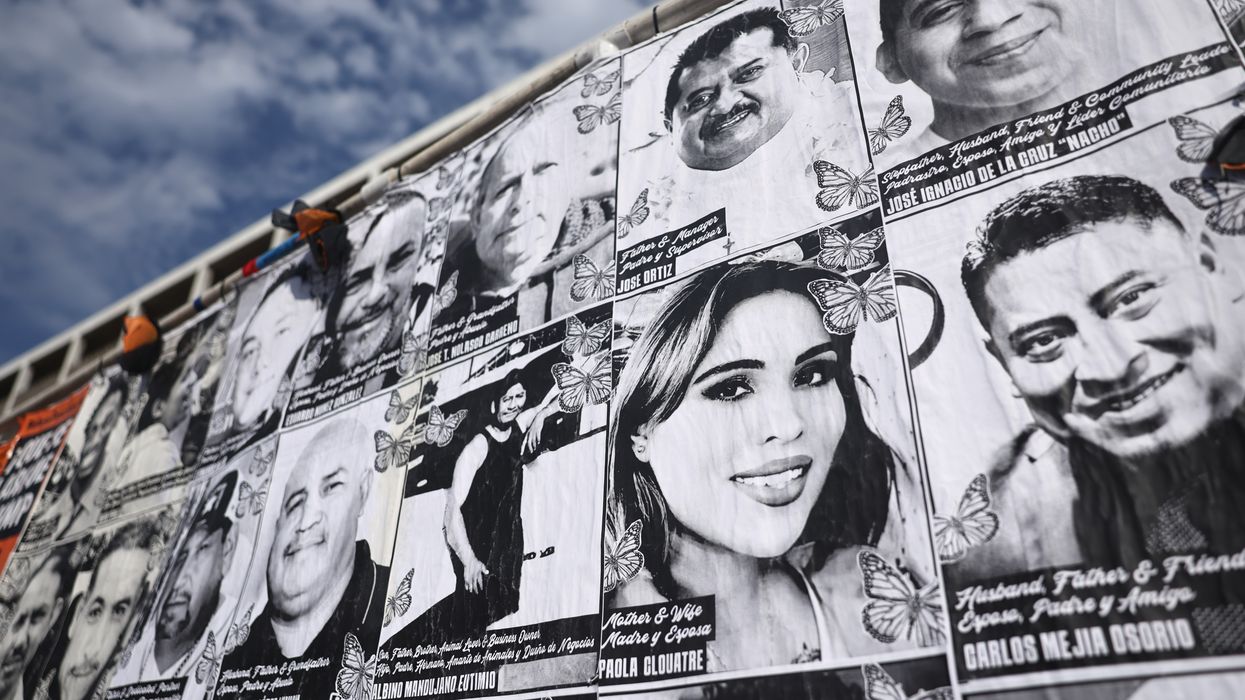
A recording of an iconic Woody Guthrie folk song has resurfaced just as the Trump administration has unleashed another wave of deportations against immigrants it tries to keep nameless.
Goodbye to my Juan, goodbye, Rosalita,
Adios mis amigos, Jesus y Maria;
You won’t have your names when you ride the big airplane,
All they will call you will be “deportees”—“Deportees,(Plane Wreck at Los Gatos)” Woody Guthrie, 1948
On January 28, 1948 a small plane transporting 28 migrants with three flight crew members and a guard departed Oakland bound for a deportation center in El Centro, California near the Mexican border. The aircraft, which had come from Burbank, however, had been switched in Oakland to a smaller aircraft. It was now loaded with more passengers than outfitted for, and overdue for a required safety inspection. It never reached El Centro.
Near Coalinga, California in Fresno County, the airplane caught fire in midair, and fell to Earth, “crashing in a spectacular fireball” in Los Gatos Canyon, killing all aboard. The crash was reported in The New York Times, San Francisco Chronicle, and other outlets, with the names of the crew and guard. The others who horribly died were identified only, as the Times put it, as Mexican nationals who entered the United States Illegally (though one was actually a Spaniard and another Filipino, as author-artist Tim Hernandez told National Public Radio 60 years later).
Or as legendary folk singer and social activist Woody Guthrie, who was moved to honor the migrants left nameless in one of the most iconic protest songs in U.S. history, put it: “Who are all these friends, all scattered like dry leaves? The radio says, "They are just deportees.”
On multiple levels, the haunting words and tones of “Deportee” have even more resonance today.
Since 1948, Woody’s plaintive song has been recorded by scores of legendary musicians and featured in a book by Hernandez. What brought it back to life this week was the announcement July 14, Woody’s 113th birthday, of the release of an unearthed collection of home recordings made available now through the use of new equipment and software. The newly released tapes would be his last due to his early signs of Huntington’s disease. Woody never studio recorded “Deportee,” it was “lost to history, until now,” as the Rolling Stone notes.
Introducing disclosure of the 20 newfound gems, including home recordings of many of his classics, The New York Times reports that his estate and record company fittingly chose to publicly release one particular song, “Deportee.”
It was a decision surely reflective of the politics of a songwriter whose guitar was famously adorned, “This Machine Kills Fascists.” And whose working-class politics are beautifully delineated by this nugget in the Times report: “‘Backdoor Bum and the Big Landlord,’ a parable about two characters trekking toward heaven. The bum has practical skills—building a fire, cooking a stew—while the landlord weighs himself down with gold, expecting to buy his way into salvation. In a Woody Guthrie song, that doesn’t happen.”
Though not mentioned by Times, the selection of “Deportee” is highlighted in a Rolling Stone headline as “an Ode to Deported Workers, [That] Has Never Been More Relevant.” On multiple levels, the haunting words and tones of “Deportee” have even more resonance today.
For a nation of immigrants—none of us are native, save Indigenous peoples—immigration has long been controversial, especially of those less desired due to race or ethnicity, other than enslaved people dragged in by chains. Restrictive immigration laws date to as early as a 1790 act which required immigrants to be “free white persons.” Similar racist intent characterized the notorious 1882 Chinese Exclusion Act and 1924 Johnson-Reed Act, which gave special preference to white immigrants from Northern and Western Europe.
But the nation has also long depended on the hard labor—from the fields to transcontinental railroads to garment factories, construction, and meat processing plants of today—of immigrants of color who could be exploited with low wages, harsh living conditions, and coercive threats of deportation.
Unleashed by U.S. President Donald Trump, Miller and his fellow immigrant haters have adopted the most racist and militaristic practices of the past, and the same disregard to who is rounded up.
Mass deportations are sadly not new either. They include a large early 1930s Depression expulsion of migrants of Mexican descent, though 60% were American citizens. Until now the most notorious mass expulsions occurred in 1953-54 under the racist title of “Operation Wetback,” estimated to seize as many as 1.3 million low-income migrant workers. “Tens of thousands of immigrants were shoved into buses, boats, and planes and sent to often-unfamiliar parts of Mexico, where they struggled to rebuild their lives,” writes Erin Blakemore.
“In Chicago,” she continues, “three planes a week were filled with immigrants and flown to Mexico. In Texas, 25% of all of the immigrants deported were crammed onto boats later compared to slave ships, while others died of sunstroke, disease, and other causes while in custody.”
“The short-lived operation used military-style tactics to remove Mexican immigrants—some of them American citizens—from the United State,” notes Blakemore. It has no doubt served as a model and inspiration to Stephen Miller, the fanatical architect of today’s mass deportation crusade.
Unleashed by U.S. President Donald Trump, Miller and his fellow immigrant haters have adopted the most racist and militaristic practices of the past, and the same disregard to who is rounded up. They have escalated the mass deportations to new depths, flagrantly flaunting court orders, with masked secret agents in unmarked vehicles kidnapping people and terrorizing immigrants and communities of color.
Their campaign was kicked off with the mid-March dispatch of three planeloads of hundreds of mostly Venezuelan men, only 32 with criminal accusations, renditioned in secret, with no notice to their families or attorneys and with no due process to a notorious torture prison in El Salvador.
As with the Los Gatos Canyon deportees, none had their names disclosed. But within days, court filings revealed that at least one man, Kilmar Abrego Garcia, had been mistakenly deported. By April, about 90% were shown to have no criminal record. They included gay makeup artist Andry Hérnandez, Venezuelan professional soccer player Jerce Reyes, baker Neri Alvarado whose alleged “gang” tattoo was actually an autism awareness image honoring his brother, and Frengel Reyes, all ultimately identified by family members, careful legal work, and media investigative research.
Unlike the 1948 crash, or the 1930s and 1950s mass deportations, most of their names eventually became known due to the rise of multiple immigrant legal rights groups and sleuthing of investigative reporters and families. After months of legal work and public protests, 250 of the Venezuelans have been finally released from the Salvadoran prison and flown to Venezuela. It’s an alarming prospect for anyone who came to the U.S. for legal protection due to credible security concerns in their native country.
Subsequently, the Trump administration doubled down with other renditions of immigrants to foreign, often failed and dangerous countries, where the deportees may not speak the language or have any resources. When Trump and Miller realized dispatching alleged gang members and undocumented people already in prisons was not generating the numbers they desired, they turned to setting arbitrary quotas of 3,000 abductees a day.
That led to the daily Gestapo-style raids of farms, factories, construction sites, Home Depot parking lots, and courthouses where immigrants have gone to fulfill their legal obligations. The raids have targeted mostly brown and Black people, whether legal immigrants, people with temporary protected legal status, even citizens. And, as reports have found, most with no criminal record. The draconian crusade has engendered a fierce backlash by other Americans that has led to plummeting poll support for Trump’s signature issue of immigration policy.
As Woody sang:
Some of us are illegal, and some are not wanted,
Our work contract’s out and we have to move on;
Six hundred miles to that Mexican border,
They chase us like outlaws, like rustlers, like thieves.
Most of those being seized today are regular working people—day laborers, restaurant and hotel employees, meat processing workers, janitors, landscapers, and farm workers. Though it takes family members, immigrant rights attorneys, and activists to find them, they now have names—and often videos of brutal assaults while being grabbed by masked secret agents—widely circulated so others can recognize what their neighbors are enduring and demand justice.
For the deportees honored by Woody Guthrie, it took author Hernandez and another “son of a migrant farm worker, just like myself” years later to find a list of the names in “annals of the Fresno County Hall of Records,” he explained to NPR in 2013, and their burial site in a mass Fresno grave marked with a headstone from an anonymous donor that just reads, "28 Mexican Nationals Who Died In A Plane Crash Are Buried Here." Hernandez gave “these 28 passengers what every human being is afforded, and that’s the right to have their name. Our names are really what represent who we are.”
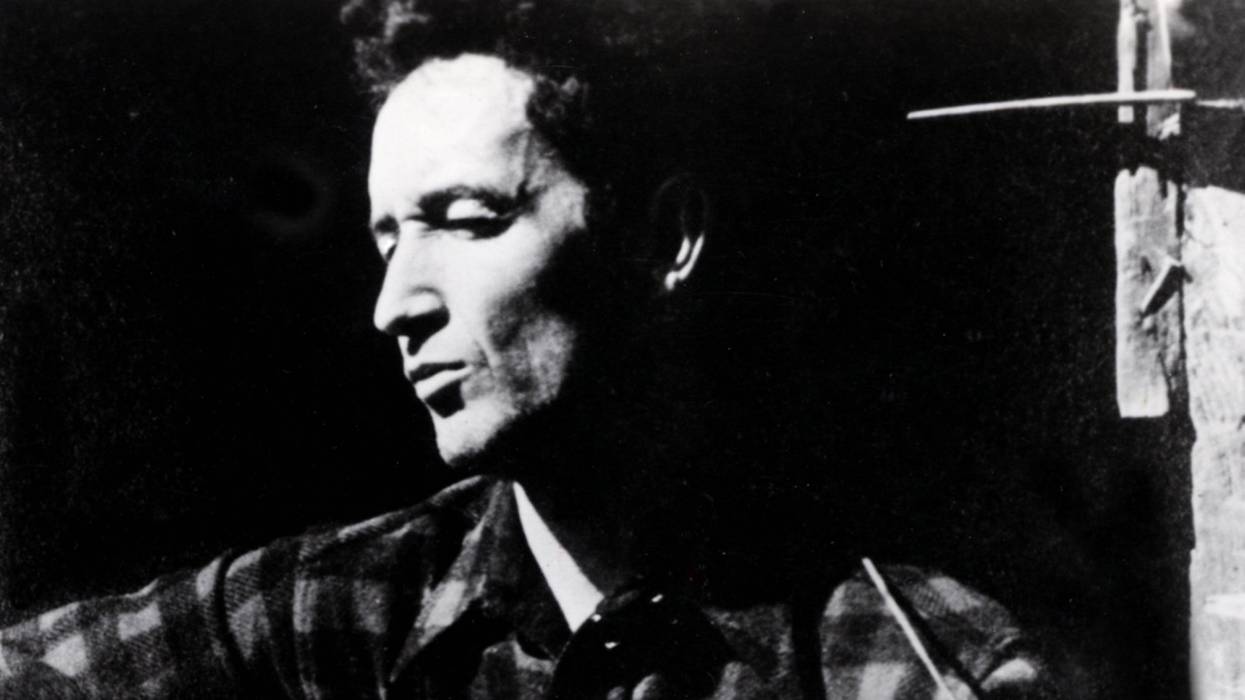
Progressives understand that people can disagree with their government and still love their country and its ideals.
This July 4 Americans can celebrate Independence Day by expressing their patriotism around a set of ideas and principles.
To some, patriotism means “my country — right or wrong.” To others, it means loyalty to a set of principles, and thus requires dissent and criticism when those in power violate those standards.
One version of patriotism suggests “Love it or leave it.” The other version embraces “Love it and fix it.”
This is a longstanding debate in American history.
For progressives, dissent and protest are patriotic. This year, they can express their patriotism by walking a picket line with striking hotel workers, writers, actors, Starbucks baristas, and journalists at 50 Gannett newspapers. Bring the flag. It is your flag, too.
Former President George W. Bush questioned the patriotism of anyone who challenged his war on terrorism. In his 2001 State of the Union address, for example, Bush famously claimed, “You’re either with us, or with the terrorists.” He introduced the Patriot Act to codify this view, giving the government new powers to suppress dissent.
In contrast, President Barack Obama said: “I have no doubt that, in the face of impossible odds, people who love their country can change it.” He observed that, “Loving your country shouldn’t just mean watching fireworks on the Fourth of July. Loving your country must mean accepting your responsibility to do your part to change it. If you do, your life will be richer, our country will be stronger.”
Since the American Revolution, each generation of progressives has expressed an American patriotism rooted in democratic values that challenged jingoism and “my country — right or wrong” thinking. They rejected blind nationalism, militaristic drum beating, and sheep-like conformism.
Obama was echoing the words of Rev. Martin Luther King, who declared, in a speech during the Montgomery bus boycott in 1955, “the great glory of American democracy is the right to protest for right.”
President Joe Biden has said that “we’re all part of a chain of patriots” who fought for democracy, freedom, fair play, peace, security, and opportunity. Patriots, he explained, seek “the right to equal justice under the law, the right to vote and have that vote counted, the right to breathe clean air, drink clean water, and know that our children and grandchildren will be safe on this planet for generations to come, the right to rise in the world as far as your God-given talent can take you, unlimited by barriers of privilege or power.”
That is so different from Donald Trump’s insistence that patriotism is about fealty to one man and his government.
As president, Trump would often fetishize the American flag, other American symbols, and the concept of patriotism broadly while displaying a shallow, ahistorical, and sometimes downright bizarre understanding of what they meant. At a speech to the American Legion in Cincinnati, Trump said, “We want young Americans to recite the Pledge of Allegiance.” He promised the war veterans that he would work “to strengthen respect for our flag.” He pledged that: “We will be united by our common culture, values and principles, becoming one American nation, one country under one constitution saluting one American flag — and always saluting it — the flag all of you helped to protect and preserve, that flag deserves respect.”
Once, at a campaign rally in Tampa, as his cult followers chanted “build that wall,” Trump interrupted his speech to give a bear hug to an American flag on the stage behind him — apparently as a way to demonstrate his patriotism.
“We want to make sure that anyone who seeks to join our country, shares our values and has the capacity to love our people,” Trump said at a rally at the Kennedy Center in 2017.
“We all salute the same great American flag,” Trump said in his 2017 inauguration address — a line he has repeated in many speeches since then.
To Trump and his followers, the flag was synonymous with “America First”: deporting undocumented immigrants and caging their children in detention centers, restricting visitors from Muslim countries, withdrawing from the Paris climate accord and other international agreements, and engaging in friendships with likeminded dictators.
To Trump, anyone who disagrees with him is unpatriotic, perhaps even un-American (or even, gasp, a socialist).
Progressives understand that people can disagree with their government and still love their country and its ideals. The flag, as a symbol of the nation, is not owned by the administration in power, but by the people. We battle over what it means, but all Americans — across the political spectrum — have an equal right to claim the flag as their own.
In 1968, in a famous speech against the Vietnam war, Norman Thomas, the aging leader of the Socialist Party, proclaimed, “I come to cleanse the American flag, not burn it.” That is the appropriate way for Americans to express their patriotism and protest the white supremacist, anti-immigrant, and reactionary forces that have recently gripped our country.
Indeed, throughout our history, many American radicals and progressive reformers have proudly asserted their patriotism. To them, America stood for basic democratic values — economic and social equality, mass participation in politics, free speech and civil liberties, elimination of the second-class citizenship of women and racial minorities, a welcome mat for the world’s oppressed people. The reality of corporate power, right-wing xenophobia, and social injustice only fueled progressives’ allegiance to these principles and the struggle to achieve them.
Two of the greatest patriots in American history were Francis Bellamy, the Christian socialist who wrote the Pledge of Allegiance, and Katherine Lee Bates, the poet who penned America the Beautiful, who was not only a socialist but also a lesbian?
Bellamy, a Baptist minister who lived from 1855 to 1931, wrote the Pledge of Allegiance in 1892 to express his outrage at the nation’s widening economic divide. He had been ousted from his Boston church for his sermons depicting Jesus as a socialist, and for his work among the poor in the Boston slums.
It was the Gilded Age, an era marked by major political, economic, and social conflicts. Progressive reformers were outraged by the widening gap between rich and poor, and the behavior of corporate robber barons who were exploiting workers, gouging consumers, and corrupting politics with their money. Workers were organizing unions. Farmers were joining forces in the so-called Populist movement to rein in the power of banks, railroads and utility companies. Reformers fought for child labor laws, against slum housing and in favor of women’s suffrage. Socialists and other leftist radicals were gaining new converts.
In foreign affairs, Americans were battling over the nation’s role in the world. America was beginning to act like an imperial power, justifying its expansion with a combination of white supremacy, manifest destiny and the argument that it was spreading democracy. At the time, nativist groups across the country were pushing for restrictions on immigrants — Catholics, Jews, and Asians — who were cast as polluting Protestant America. In the South, the outcome of the Civil War still inflamed regional passions. Many Southerners, including Civil War veterans, swore allegiance not to the American but to the Confederate flag.
Bellamy, a cousin of Edward Bellamy, author of two bestselling radical books, Looking Backward and Equality, believed that unbridled capitalism, materialism, and individualism betrayed America’s promise. He hoped that the Pledge of Allegiance would promote a different moral vision to counter the rampant greed he argued was undermining the nation.
When composing the Pledge, Bellamy had initially intended to use the phrase “liberty, fraternity, and equality,” but concluded that the radical rhetoric of the French Revolution wouldn’t sit well with many Americans. So he coined the phrase, “one nation, indivisible, with liberty and justice for all,” as a means to express his more egalitarian vision of America, and a secular patriotism aimed at helping unite a divided nation.
Bellamy wrote the Pledge of Allegiance for Youth’s Companion, a magazine for young people published in Boston with a circulation of about 500,000. A few years earlier, the magazine had sponsored a largely successful campaign to sell American flags to public schools. In 1891, the magazine hired Bellamy to organize a public relations campaign to celebrate the 400th anniversary of Christopher Columbus’s discovery of America by promoting use of the flag in public schools.
Bellamy gained the support of the National Education Association, along with President Benjamin Harrison and Congress, for a national ritual observance in the schools, and he wrote the Pledge of Allegiance as part of the program’s flag salute ceremony.
Bellamy thought such an event would be a powerful expression on behalf of free public education. Moreover, he wanted all the schoolchildren of America to recite the pledge at the same moment. He hoped the pledge would promote a moral vision to counter the individualism embodied in capitalism and expressed in the climate of the Gilded Age.
In 1923, over the objections of the aging Bellamy, the National Flag Conference, led by the American Legion and the Daughters of the American Revolution, changed the opening, “I pledge allegiance to my flag,” to “I pledge allegiance to the flag of the United States of America.” Ostensibly, it was revised to make sure that immigrant children — who might have thought that “my flag” referred to their native countries — knew that they were pledging allegiance to the American flag.
In 1954, at the height of the Cold War, when many political leaders believed that the nation was threatened by godless communism — the Knights of Columbus led a successful campaign to lobby Congress to add the words “under God.”
A year after Bellamy composed the Pledge, the same social conditions and political sympathies inspired Bates to write the poem America the Beautiful, which was later set to music written by Samuel Ward, the organist at Grace Episcopal Church in Newark, New Jersey. (The Mormon Tabernacle Choir sang their song at Trump’s inauguration.)
Like Bellamy, Bates was a Christian socialist. A well-respected poet and professor of English at Wellesley College, Bates (1859-1929) was also a lesbian who lived with and was devoted to her colleague Katharine Coman, an economics professor. They were both part of progressive circles in the Boston area that supported labor unions, advocated for immigrants, and fought for women’s suffrage. She was an ardent foe of American imperialism.
America the Beautiful was initially published in 1895 to commemorate the Fourth of July. The poem is usually heard as an unalloyed paean to American virtue. But a close reading of her words makes it clear that she had something more in mind. She wrote:
America! America!
God shed His grace on thee
Till selfish gain no longer stain,
The banner of the free!
Bates hoped that a progressive movement, inspired by both religious and secular beliefs, could overcome the Gilded Age’s greed.
Most Americans are unaware that much of our patriotic culture — including many of the leading symbols and songs — was created by people with decidedly progressive sympathies.
Consider the lines inscribed on the Statue of Liberty: “Give me your tired, your poor/Your huddled masses yearning to breathe free.” Emma Lazarus was a poet of considerable reputation in her day, who was a strong supporter of Henry George and his “socialistic” single-tax program, and a friend of William Morris, a leading British socialist. Her welcome to the “wretched refuse” of the earth, written in 1883, was an effort to project an inclusive and egalitarian definition of the American Dream.
In the Depression years and during World War II, the fusion of populist, egalitarian and anti-racist values with patriotic expression reached full flower.
Langston Hughes’ poem, Let America Be America Again, written in 1936, contrasted the nation’s promise with its mistreatment of his fellow African-Americans, the poor, Native Americans, workers, farmers and immigrants:
O, let my land be a land where Liberty
Is crowned with no false patriotic wreath
But opportunity is real, and life is free
Equality is in the air we breathe.
In 1939, composer Earl Robinson teamed with lyricist John La Touche to write Ballad for Americans, which was performed on the CBS radio network by Paul Robeson, accompanied by chorus and orchestra. This 11-minute cantata provided a musical review of American history, depicted as a struggle between the “nobody who’s everybody” and an elite that fails to understand the real, democratic essence of America.
Robeson, at the time one of the best-known performers on the world stage, became, through this work, a voice of America.
America now confronts a new version of the Gilded Age, brought upon by Wall Street greed and corporate malfeasance.
Broadcasts and recordings of Ballad for Americans (by Bing Crosby as well as Robeson) were immensely popular. In the summer of 1940, it was performed at the national conventions of both the Republican and Communist parties. The work soon became a staple in school choral performances, but it was literally ripped out of many public school songbooks after Robinson and Robeson were identified with the radical left and blacklisted during the McCarthy period. Since then, however, Ballad for Americans has been periodically revived, notably during the bicentennial celebration in 1976, when a number of pop and country singers performed it in concerts and on TV.
Aaron Copland’s Fanfare for the Common Man and A Lincoln Portrait, both written in 1942, are now patriotic musical standards, regularly performed at major civic events. Few Americans know that Copland was a member of a radical composers’ group.
Many Americans consider Woody Guthrie’s song This Land Is Your Land, penned in 1940, to be our unofficial national anthem. Guthrie, a radical, was inspired to write the song as an answer to Irving Berlin’s popular God Bless America, which he thought failed to recognize that it was the “people” to whom America belonged.
The words to This Land Is Your Land reflect Guthrie’s belief that patriotism and support for the underdog were interconnected. In this song, Guthrie celebrated America’s natural beauty and bounty, but criticized the country for its failure to share its riches. This is reflected in the song’s last and least-known verse, which Pete Seeger and Bruce Springsteen included when they performed the song in January 2009 at a pre-inaugural concert in front of the Lincoln Memorial, with President-elect Obama in the audience:
One bright sunny morning;
In the shadow of the steeple;
By the relief office;
I saw my people.
As they stood hungry;
I stood there wondering;
If this land was made for you and me.
During the 1960s, American progressives continued to seek ways to fuse their love of country with their opposition to the government’s policies. The March on Washington in 1963 gathered at the Lincoln Memorial, where Martin Luther King Jr. famously quoted the words to My Country ‘Tis of Thee, repeating the phrase “Let freedom ring” 11 times.
Phil Ochs, then part of a new generation of politically conscious singer-songwriters who emerged during the 1960s, wrote an anthem in the Guthrie vein, The Power and the Glory, that coupled love of country with a strong plea for justice and equality. The words to the chorus echo the sentiments of the anti-Vietnam War movement:
Here is a land full of power and glory;
Beauty that words cannot recall;
Oh her power shall rest on the strength of her freedom;
Her glory shall rest on us all.
One of its stanzas updated Guthrie’s combination of outrage and patriotism:
Yet she’s only as rich as the poorest of her poor;
Only as free as the padlocked prison door;
Only as strong as our love for this land;
Only as tall as we stand.
This song later became part of the repertoire of the U.S. Army band.
In recent decades, Bruce Springsteen has most closely followed in the Guthrie tradition. From Born in the USA to his songs about Tom Joad (the militant protagonist in John Steinbeck’s The Grapes of Wrath), to his anthem about the 9/11 tragedy (Empty Sky), to his album Wrecking Ball (including its opening song, We Take Care of Our Own), Springsteen has championed the downtrodden while challenging America to live up to its ideals.
Steve Van Zandt is best known as the guitarist with Springsteen’s E Street Band and for his role as Silvio Dante, Tony Soprano’s sidekick on the TV show, The Sopranos. But his most enduring legacy should be his love song about America, I Am a Patriot, including these lyrics:
I am a patriot, and I love my country;
Because my country is all I know.
Wanna be with my family;
People who understand me;
I got no place else to go.
And I ain’t no communist,
And I ain’t no socialist,
And I ain’t no capitalist,
And I ain’t no imperialist,
And I ain’t no Democrat,
Sure ain’t no Republican either,
I only know one party,
And that is freedom.
Since the American Revolution, each generation of progressives has expressed an American patriotism rooted in democratic values that challenged jingoism and “my country — right or wrong” thinking. They rejected blind nationalism, militaristic drum beating, and sheep-like conformism.
Throughout the United States’ history, they have viewed their movements — abolition of slavery, farmers’ populism, women’s suffrage, workers’ rights, civil rights, environmentalism, gay rights, and others — as profoundly patriotic. They believed that America’s core claims — fairness, equality, freedom, justice — were their own.
America now confronts a new version of the Gilded Age, brought upon by Wall Street greed and corporate malfeasance. Americans are upset by the unbridled selfishness and political influence-peddling demonstrated by banks, oil companies, drug companies, insurance companies, and other large corporations. They are angry at the growing power of American-based global firms who show no loyalty to their country, outsource jobs to low-wage countries, avoid paying taxes, and pollute the environment.
As president and now as an ex-president, Trump tapped into a new wave of hate and bigotry. Trump may want to require American schoolchildren to recite the Pledge of Allegiance, but his vision of America is a far cry from Bellamy’s – or any progressive who fights to push the country to live up to its ideals.
Each generation does what it can to change society, and then hands the baton to the next generation to continue the struggle for justice.
Throughout American history, progressive movement had won major victories and also experienced setbacks. When those setbacks occur, it is understandable that people sometimes lose hope, and even give up the fight. But our history also teaches us that we can’t give up, because we must keep the struggle alive for a new generation.
One lesson of our history is that America’s corporate ruling class is not invincible, that racist and reactionary movements can be defeated, that public opinion can change, and that electing progressives to office helps thwart right-wing assaults on our democracy. It is possible to imagine a better world.
But it doesn’t happen overnight. The socialist writer and organizer Michael Harrington used to say that activists for justice had to be long-distance runners. But we prefer the metaphor of a relay race. Each generation does what it can to change society, and then hands the baton to the next generation to continue the struggle for justice.
The recent rulings by the Republican-dominated Supreme Court against abortion, affirmative action, student loan forgiveness, voting rights, and other issues – and ability of Republicans in Congress to thwart progress on many key issues - are surely disheartening. It is important to see these setbacks as part of a reactionary backlash against early progressive victories. So, too, the growing efforts by white nationalists and religious zealots to ban the teaching about Black and LGBTQ lives and history in our public schools are backlashes against previous civil rights and LGBTQ victories. They reactionaries can try to push back, but they can’t erase or nullify those victories.
These forces are waging a rear-guard effort to turn back the clock on the victories on the labor, civil rights, feminist, LGBTQ, and environmental justice movements since the 1960s. These movements are still alive. Occupy Wall Street changed how Americans’ thought about corporate power and wealth inequality. Recent public opinion polls show that the vast majority of Americans – even a majority of Republicans – think that big corporations and the super-rich don’t pay enough taxes and have too much political influence. Black Lives Matter woke many Americans up to the reality of police abuse and other forms of systemic racism. The Dreamers immigrant rights movement, the Green New Deal movement, the #MeToo movement, the Fight for $15 campaign, the growing upsurge of union organizing, the burgeoning tenants rights movement in cities across the country, and the persistent battle for Medicare for All, and the growing number of progressives and democratic socialists elected to office in Congress, and in municipal and state government, are all part of a new wave of activism around progressive ideals.
They all embody the Pledge of Allegiance’s idea of “liberty and justice for all.” It reflects America’s tradition of progressive patriotism. It recognizes that conservatives don’t have a monopoly on Old Glory.
Happy July 4.

It was a racially charged era, fascism was in a resurgence, and people were fighting for political and economic justice at the grassroots. That was 1943, and on January 1st of that year a great American troubadour, Woody Guthrie, handwrote (and doodled) a list of "New Years Rulin's" that serve as a pretty good reminder of what's important in life and how to engage the world for positive change.
You probably know a bit about Guthrie's life and work. He grew up in the Dust Bowl, was involved with a multitude of progressive and radical political scenes, wrote "This Land Is Your Land" in 1940 (as a response to more popularized songs such as "God Bless America"), and inspired a generation of folk singers in the process. He was famously anti-fascist (often appearing with the sticker "This Machine Kills Fascists" on his guitar), stood up against racism and the "color line," and even did battle over these types of issues with "Old Man Trump" (the President's father, specifically) in struggles and in his songs.
So all things considered, we could do worse than embracing Woody's resolutions for the new year. In particular, a few of them stand out as being spot-on for the tenor of our times. Here's a brief overview:
1-12: Take Care of Ourselves
A reminder that whatever else we do in the world, taking care of ourselves and staying healthy is paramount. Woody gets very specific here, so consider these as they might apply to your own life, but some are generally resonant: "eat good" and "look good" sum up a common personal growth trajectory.
13-14: Listen and Read
This was before the video era took off, but the lessons still hold: "read good books" and "listen to the radio" are ways to stay informed, keep one's mind engaged, and maintain long-form mental capacities. This is more critical than ever in a wired world that truncates attention spans and outsources thinking.
15-20: Stay Positive
Here Woody starts to get into the inner realm, with reminders to "stay glad" and "dream good." His call to "KEEP HOPING MACHINE RUNNING" could serve as a 2020's slogan in light of today's existential challenges around climate change and environmental degradation, and the evident struggles up ahead.
21-24: Follow the Money
This area may not have been Woody's strong suit, but he understood the importance of covering the bills and keeping the lights on, so to speak. The calls to "save dough" and "don't waste time" connect two spheres that are always under pressure in a digital economy where time and money are solicited.
25-27: "This Machine..."
Woody's gift was prolific songwriting that discerned the human experience in a way that was accessible, and his life's work connected song and dance with revolutionary politics. He took seriously the notion that it was essential to "beat fascism" and likewise understood that celebrating the good is part of this.
28-31: All You Need Is Love
A timely reminder of the power of love, which can be challenging to maintain both close in and far away. Woody connects the two realms, asking us to love not only selected individuals but to "love everybody" without qualifiers; this doesn't mean we forgo contestation, just that we do it with compassion at heart.
32-33: Wake Up!
This isn't a time for fence-sitting and being wracked with doubt about appearances and popularity. Woody is asking us to "make up your mind" on issues that matter, and to manifest this energy with the plaintive call to "WAKE UP AND FIGHT." It's hard to imagine a more apt moment to take this seriously.
Whatever the year and decade ahead has in store, it's likely to be a combination of devastation and inspiration with many points on the spectrum in between. But the poles of profound crisis and compelling opportunity are almost certain to continue manifesting with greater clarity, as the social and political fabric further rends and as the planet's ecological processes are thrown into deeper chaos. As we enter this decade--which may be our best remaining window of time to take action--it's worth looking back for some encouragement to continue the struggle and keep hope with us. May it be so.
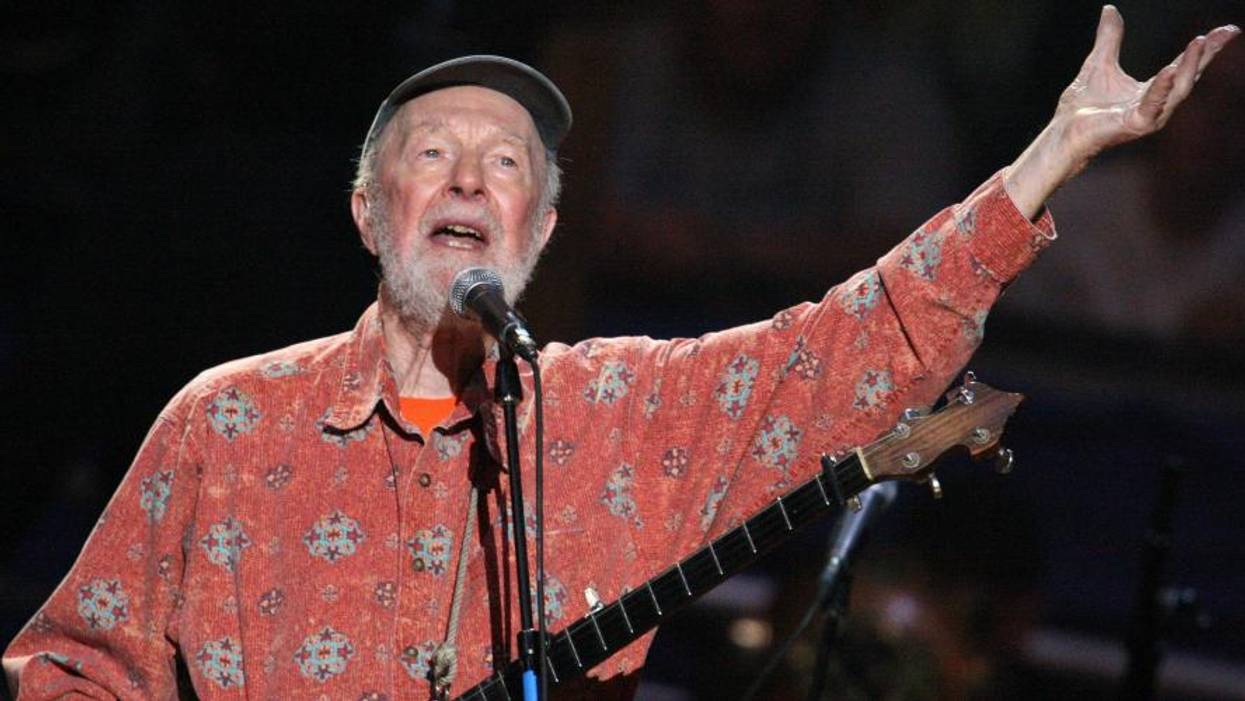
Go tell all the little children...
[on our] one earth...give it one more try,
to show [our] Rainbow race, it's too soon to die.
--Pete Seeger "Rainbow Race"
Today--May 3rd, 2019--marks the 100th anniversary of the birth of legendary folk singer Pete Seeger. Not just a songwriter, public citizen, educator, and activist, Seeger was also a champion of social justice, peace, worker rights, and environmental sanity.
Pete wrote "Rainbow Race" fifty years ago as a love song to the earth and a warning to humanity that the future is being killed by systems that place profits over people and the rest of nature. That stark reality is now all too clear as the earth-life-disaster-linked-to-climate-disruption rages on across the planet.
Pete lived a long and fruitful life (94 years) that included considerable time engaging people in communal singing that uplifted the spirit, encouraged social responsibility, and helped folks understand and overcome their troubles. Pete said "participation" was his religion. "If there is a human race still here in a hundred years," he said, "[not only will...] women save the day...[but] people will know the importance of participating, and not just being spectators."
Pete--possessed of a courageous humility and profoundly influenced by Woody Guthrie--in turn influenced generations of "people's music" singers including Bob Dylan, Joan Baez, Bernice Johnson, Judy Collins, Bruce Springsteen, Richie Havens, Tom Morello, and countless others.
Pete had great confidence and great doubts. It is that contradiction, as Bruce Springstee has suggested, that keeps us awake, alive, attuned and alert. In other words, Pete was hopeful: he knew there were possibilities that we could-- through collective participation and struggle--build a better world, but there are no guarantees that even our best efforts will succeed. Yet despite those doubts, Pete carried on - and so must we.
Today, "Pete Seeger Lives!" in what John Steinbeck called "the American spirit of resistance" to tyranny and authoritarianism.
Pete lives in the hearts and minds of all who care about people, a decent society, and a livable world; all who struggle for social justice, substantive freedom, individual rights, and participatory democracy; and all who resist tyrants and racists while respecting human dignity, human diversity, and our common humanity.
Pete lives in those working to overcome racism, classism, sexism, and imperialism; and those who believe that sharing is better than exploiting; kindness is better than callousness, cooperation is better than domination; egalitarianism is better than authoritarianism; and that democracy is a human value.
Pete lives in all who love to sing songs, dance across a room, recite poems, create art, and laugh out loud; all who believe that love can conquer hate, peace can vanquish war, and solidarity can defeat systems that alienate and atomize.
Pete lives in our spirit of human decency, compassion, and conviviality; in all who appreciate modest nobility, the spirit of generosity, the genius of simplicity, and the willingness to change while remaining rooted in fundamentally loving and caring principles.
Pete lives in all who revel in the beauty of a river flowing, a sun rising, a flower blooming, a garden growing, a butterfly floating, an ocean roaring - in all who hold onto defiant optimism and energized hope.
And Pete lives on in all who maintain a deep faith in the will and ability of people to work together to resist and overcome the horrors of iniquitous institutions and to construct new social structures through which all can live fulfilling, joyful, and meaningful lives; he lives in all who think humanity and nature are more important than commodities and profits.
Pete Seeger was loved by people across the world because Pete actively loved people across the world. He worked to create a world in which it is not idiotic to love and, in the words of Richard Levins, "not idiotic to be kind." It seems clear that for Pete love meant finding joy, fulfillment, and happiness in being the source of joy, fulfillment, and happiness of others. Love for Pete meant creating the conditions through which others can creatively flourish while they do the same for you - call it "social love."
For more than 75 years Pete stayed true to struggles against exploitation and oppression and for a substantively free, equal, and democratic society. In return for this commitment, he was blacklisted for seventeen years "officially" and arguably nine more "unofficially." This spirit was reflected in Pete's beloved communal singing where the creative participation of each nurtures and nourishes the flourishing of all, and vice versa.
Pete said "great acts of love are rooted in great anger." Pete's righteous anger against systemic injustice and violence was profoundly rooted in deep and active love for the victims of injustice and violence.
Pete said he'd only be a musician if music could bring peace. Music alone will not bring peace; it will not overcome institutions grounded in exploitation, violence and greed; it will not overcome the root causes of the intensifying earth-life-disasters-linked-to-climate-disruption, it will not alone build a world liberated from domination, tyranny and subjugation. But Pete demonstrated it can play a crucial, critical, and nurturing role.
Because music alone cannot bring peace and social justice, Pete Seeger participated in, contributed to, and learned from every major progressive social cause and movement from the 1930s up to his death in 2014, including labor movements, civil rights movements, women's movements, anti-war movements, anti-nuke movements, environmental justice movements, etc. We can be sure that Pete would be supporting and learning from the international youth uprisings today embodied in The Sunrise Movement, Extinction Rebellion, Fridays for Future, Student Strike 4 Climate, etc.
Pete, following Bertolt Brecht, believed, music can hold up honest mirrors to current realities; open windows into new and better realities, and it can provide us with hammers with which to build from where we are to where we wish to be.
Pete said that some music can help us escape our troubles; other music can help us understand our troubles; the best music can help us do something to overcome our troubles. Pete embodied that humanizing and revolutionary spirit dedicated to overcoming our troubles.
Pete said he wanted to die with a hammer in his hands. Pete lives in all those willing to pick up a hammer to build the possible better world we so urgently need.
When Pete died, many people said: "The world is a better place because Pete Seeger lived."
Let us work to keep Pete's loving, creative and revolutionary spirit alive and flourishing in all of us... let all of us work to make the world a better place. Given the perils ahead and the crises we face on our shared "one earth," our future depends on it.

Friday marked what would have been Pete Seeger's 100th birthday, and fans took to social media to celebrate the folk music giant and activist's life and legacy.
Seeger died in 2014 at 94. He was, rocker Tom Morello said upon his death, "Absolutely the best that humans can aspire to be."
For the singer's birthday, musicians and advocacy groups drew attention to Seeger's performances and work for environmental and social justice over a roughly seven-decade career. Other observers resurfaced old interviews or reflected on the mark Seeger's music and activism left on their own lives.
Seeger was optimistic about the world, he told Democracy Now! in 2004.
"There's a wonderful parable in the New Testament: The sower scatters seeds. Some seeds fall in the pathway and get stamped on, and they don't grow. Some fall on the rocks, and they don't grow," Seeger said.
"But some seeds fall on fallow ground, and they grow and multiply a thousandfold," he added. "Who knows where some good little thing that you've done may bring results years later that you never dreamed of?"
"Pete was hopeful," guitarist Doug Morris wrote at Common Dreams Friday, "he knew there were possibilities that we could--through collective participation and struggle--build a better world, but there are no guarantees that even our best efforts will succeed. Yet despite those doubts, Pete carried on-- and so must we."

Bernie Sanders wrapped up a weekend campaign swing through California with a Sunday afternoon speech to 16,000 of us a few miles from the Golden Gate Bridge. News coverage seemed unlikely to convey much about the event. The multiracial crowd reflected the latest polling that shows great diversity of support for Bernie, contrary to corporate media spin. High energy for basic social change was in the air.
Speaking from the podium, Bernie 2020 co-chair Nina Turner asked and answered a question about the campaign: "What's love got to do with it? Everything."
Those words made me think of a little-known statement by Martin Luther King Jr., as vitally true in 2019 as in 1967. "Now, we got to get this thing right," he said. "What is needed is a realization that power without love is reckless and abusive, and that love without power is sentimental and anemic. Power at its best is love implementing the demands of justice, and justice at its best is love correcting everything that stands against love."
And so, Dr. King was saying, love and power need each other. Just one or the other just won't do. Combining the two is essential. That's a way to understand what Turner said at the rally in San Francisco: "This is a moment of transcendence."
The Sanders campaign is a nationwide struggle for the kind of power that Dr. King extolled as "love implementing the demands of justice." In his words, "Power properly understood is nothing but the ability to achieve purpose."
The Sanders campaign is a political opportunity unlike any we've seen in our lifetimes. With profound purpose, it raises the stakes to fit the magnitude of what is at stake; it challenges in national electoral terms the kind of destructive domination that has ruled with dispiriting and deadly results. "We're going to have to fight Wall Street, neoliberals, those who don't want the change to come," Turner said.
Alone among the candidates for the 2020 Democratic presidential nomination, Bernie Sanders has always been part of progressive movements. The only way that the campaign can overcome corporate media, Wall Street and other power centers of the establishment will be with massive bottom-up mobilization in communities across the country. As Bernie said on Sunday, "We are going to put together an unprecedented grassroots campaign."
A current media meme -- ignoring the importance of Bernie's longstanding record -- assumes that he is likely to lose many votes to other candidates who've recently endorsed his 2016 campaign proposals.
But it matters greatly that Bernie has unique credibility as someone who has been part of progressive social movements during the last several decades -- and who hasn't waited for opinions to become fashionable before expressing them.
"It's hard not to be a bit wary of people who know how the wind is blowing and now are blowing with it," I told a San Francisco Chronicle reporter who quoted me in an article that appeared hours before the rally. "Bernie is part of movements that create the wind. Bernie is not a wind sock."
For decades, Bernie has been tirelessly advocating for Medicare for All single-payer healthcare. In the last few years or months, some of his opponents have come around to voice often-equivocal support. The credibility of commitment is vastly different. When Sanders declared for the umpteenth time at the San Francisco rally that "healthcare is a human right," no one could doubt that he really meant it.
Similarly, Bernie has long been calling for drastic new policies to push back against climate change. He voiced concerns about a warming planet as early as the 1980s.
Overall, a vast number of issues fall under a clear approach that Bernie has long stated, as he did on Sunday: "We say no to oligarchy, yes to democracy."
Bernie's speech in San Francisco included clarity on some issues that has become sharper than ever, as in his denunciations of the prison-industrial complex, the cruel injustice of cash bail and systemic racism. And at last, as a presidential candidate, he is calling out by name "the military-industrial complex."
Declaring that he aims for a presidency to challenge the bloated military budget, Bernie said: "We are not going to invest in never-ending wars." It was a statement that caused some of the loudest cheering of the afternoon, along with chants of "No more wars!" As those chants subsided, he said: "I know it's not easy, but our job is to lead the world away from war and invest in human needs."
Bernie called for breaking up the big banks. And he addressed the power of the pharmaceutical and insurance industries: "When we talk about lowering prescription drug costs and moving to Medicare for All, we have got to recognize, we have a battle in front of us. These guys will spend endless amounts of money. Will you stand with me and take on the drug companies and the insurance companies?"
And he went on: "If we're going to protect family-based agriculture from Vermont to California, we have got to stand up to agribusiness. We have got to stand up to the prison-industrial complex. We've got to stand up to the fossil fuel industry. In other words, it's easy enough for somebody to give you a speech about all the things he or she wants to do. But those changes do not take place unless people stand up and fight back. And that is what this campaign is about."
When Bernie finished his speech, a woman stepped to the microphone with a guitar and began to play some familiar chords. Bernie returned to the mic to quickly say: "This is Sarah Guthrie, granddaughter of Woody Guthrie."
And she began to sing:
As I was walking that ribbon of highway
I saw above me that endless skyway
I saw below me the golden valley
This land was made for you and me
Moments later, Sarah Guthrie sang a version of a verse that has been rarely heard:
There was a great high wall
That tried to stop me
And on the wall said "No Trespassing"
But on the other side
It didn't say nothing
That side was made for you and me
And:
Oh nobody living could ever stop us
As we go walking on freedom highway
Nobody living can make us turn back
This land was made for you and me
Full Video:

On this coming Fourth of July, it's worth pondering the true meaning of American patriotism - as opposed to the malignant, distorted view of it propounded by Donald J. Trump.
For Trump, the central challenge of American patriotism is to secure our borders. "Without borders, there can be no nation," he says.
But excluding foreigners has never been a dominant part of American patriotism. For most of its existence America has been relatively open to people from the rest of the world, especially those fleeing tyranny and violence.
America's core struggle has been one of inclusion, not exclusion. We have strived to extend equal citizenship to Native Americans, African Americans, women, and LGBTQs.
The poems of Walt Whitman and Langston Hughes, and the songs of Woody Guthrie, expressed loving devotion to America while turning that love into a demand for justice.
"This land is your land, this land is my land" sang Guthrie. "Let America be America again," pleaded Hughes: "The land that never has been yet-/And yet must be - the land where everyone is free./The land that's mine - the poor man's, Indian's Negro's, ME -."
Trump's patriotism centers on symbolic displays of loyalty like standing for the national anthem and waving the American flag.
But such displays haven't been at the center of American patriotism, either. Historically, American patriotism has meant taking a fair share of the burdens of keeping the nation going.
This includes volunteering time and energy to improving the community and country. It has meant paying taxes in full rather than lobbying for lower taxes, seeking tax loopholes, or squirreling away money abroad.
It also means refraining from making political contributions that corrupt our politics, and blowing the whistle on abuses of power even at the risk of losing one's job.
Real patriotism involves strengthening our democracy - defending the right to vote and ensuring more Americans are heard, not claiming without evidence that millions of voted fraudulently and pushing for laws that make it harder for blacks and Latinos to vote.
True patriots don't inundate government with industry lobbyists, attack the freedom of the press, criticize judges who disagree with them, or fill the airwaves with lies. They don't direct employers to fire employees who exercise their freedom of speech.
True patriots don't court foreign dictators, and don't excuse tyranny by denigrating America.
When asked whether Vladimir Putin is a killer, Trump responded "you think our country's so innocent?" When asked about Turkish strongman Erdogan's disdain for civil liberties, Trump said "when the world looks at how bad the United States is, and then we go and talk about civil liberties, I don't think we're a very good messenger."
True patriots don't fuel racist, religious or ethnic divisions. They aren't homophobic or sexist. To the contrary, true patriots seek to confirm and strengthen and celebrate the "we" in "we the people of the United States."
Trump is the first United States president to use the term "we" to refer only to his supporters. "My supporters are the smartest, strongest, most hard working and most loyal that we have seen in our countries history," he tweeted recently. "As we get stronger, so does our country."
A majority of today's Americans do worry that the nation is losing its national identity. But that identity has never been centered on our support for a particular president or his policies.
Nor, more fundamentally, has our identity depended on the whiteness of our skin or the uniformity of our ethnicity.
Our national identity has been our shared ideals.
If we are losing our national identity it is because we are losing those ideals: a commitment to the rule of law, to our democratic institutions, to truth, to tolerance of our differences, to equal political rights and equal opportunity, to participating in our civic life and making necessary sacrifices for these ideals we hold in common.
We must share these ideals if we are to have a functioning society. Without them, there is no America.
Trump is doing everything he can to destroy these ideals. We must do everything we can to strengthen them.
This is the true test of our patriotism.

Having been born in a coal and steel company town but destiny delivered, as an adult, to reside, during extended intervals, in the East and West Coast cities of Los Angeles and New York City, and, at present, the continent of Europe, I have come to conclude, people born into situations providing economic advantage, both liberals and conservatives alike, experience difficulty, more often than not, envisaging the lives of those born into a labouring class existence. Worse, a wilful obtuseness, in combination with a supercilious posture is, all too often, evinced, by reflex, towards those scorned as "hillbillies," "trailer trash," and "genetic retreads."
"That is what Woody meant by, 'This machine kills fascists.' His music and that of other inspired troubadours kills the soul-dead ideology of fascism with the life-vivifying veracity of truth."
Among groups possessing economic advantage, a lack of curiosity prevails as to the nature of the lives of individuals who have spent their lifetime subjected to the life-defying tyrannies of full-spectrum, company town capitalism. Life circumstances, under the present, neoliberal order, that are, in all but rare cases, intractable; wherein, the meagre and fraught with economic instability livelihoods earned as a mine, mill, factory worker, and, in the service industry economy in the US wage and debt slave archipelago of fast food outlets, Big Box retailers and Dollar Discount stores, and as a domestic worker, presents, for the vast majority of workers, the degrading, anxiety-inducing option of submitting to low pay, no benefits, long hours of tedious, vastly under-compensated labor or facing homelessness and hunger.
I was born in the foothills of Appalachia. I know, bones to brain, the painful plight of the labouring class. I will go so far as to say, the transforming, I would even suggest, redemptive element, in my life was a house stocked with books and an indomitable yearning to seek out the music indigenous to the region.
My family, later, moved to the then small, Piedmont region city of Atlanta, Georgia. Shortly thereafter, in the living room of a musician, science fiction writer, and general Beat polymath my father had befriended, I swooned--was, I suspect, transformed--when a guest in the home (where a young Bob Dylan used to crash when in Atlanta--which was, at the time, a rundown, mafia-owned apartment house but where, decades earlier, Margaret Mitchell had penned Gone With The Wind--North Georgia-born folksinger and activist Hedy West played her most famous song, "500 Miles Away from Home" also known as "Railroaders' Lament."
During childhood, a period of life in which one is transmigrating through a wilderness of archetypes, for me, the experience of being in West's presence felt as if I had been transported to glens and gardens inhabited by a veritable muse.
In the year, 1970, in the summer I turned 14, in Piedmont Park, in Atlanta, Georgia, the Allman Brothers, among other bands, would perform free, impromptu concerts for a tie-dye-clad, reefer-reeking, bell-bottoms-caressing-the-Georgia-red-dirt gatherings of "freaks"--which was the preferred tribalist term, as opposed to the media-created, socially pejorative--hippies ... which, when bandied among counterculture insiders, was generally applied ironically.
Although the park was located only a few miles from my family's home, undertaking the trip presented a degree of peril. To make one's way to the park included traversing a tough, in-town, White working class neighborhood (now a gentrified into soul-sucking blandness, yuppie enclave) where, from the perspective of its denizens, their world, and all they held in reverence and reference, was under siege.
And, although inchoate, their animus was instantly distilled, simply upon a glimpse of the untamed tresses of a singular, thin of wrist, dirty hippie, commie faggot--whose mere presence was considered an affront to their pomade-crowned, muscle car-thundering parcel of redneck paradise.
Accordingly, the locals were pledged to do their part to fight the scourge ... by increasing their intake of PBRs and Jack Daniels, and, upon sight of said dirty hippie interlopers, bestowing ass-stompings -- and for no-extra-charge--involuntary haircuts upon errant longhairs caught in their midst.
Yet as the era progressed, the savage dance between hippie freak and redneck belligerent changed in tone and tempo, an extemporaneous type of metaphysical jujitsu occurred, in which the predator was subdued and seduced by the prey ... as if by cultural contact buzz, redneck fury yielded to counterculture insouciance.
"When the individual feels, the community reels" --Aldous Huxley
Briefly, this was the anatomy of the seduction: In their pursuit of fleeing freaks into the park, the young males of the cracker tribe happened upon a few of the things of this vast and vivid world even more compelling than the possibility of ass-kicking ... in the form of attractive young women.
Yet to the young men, the hippie sphinxes, sirens, waifs and gypsy queens were baffling, unapproachable; these women were less than taken by their greasy, pompadoured forelocks and aggressive bearing.
In short, and to appropriate the parlance of the era, the hippie chicks didn't get off on these young men's "bad vibes ... it, like, really harshed their high."
But these great, great grandsons of the Lost Cause proved much more malleable in countenance than the ossified in memory, now enshrined in marble statuary, of their confederate forefathers.
Consequently, a kind of cracker Lysistrata started to unfold. The pomade lacquer faded from stiff pompadours, yielding to lank, draping locks of hippie plumage. The habit of rebel bellicosity was sublimated into an avidity to "boogie." The zealots of ass-kicking became the acolytes of acid and devotees of the gospels of kicking back and getting down.
As time passed, on weekends, as the Allman Brothers preached Sunday sermons vis-a-vis guitar and drum solos, these newly minted freaks could be found in positions of repose and reflection upon the grassy hills of the park, eating Orange Sunshine and drawling, "aw mahn, Dwayne's guitar is shootin' sparks into mah brain..."
Or as Marcel Proust put it, "The real act of discovery consists not in finding new lands but in seeing with new eyes."
If the US is great in any regard, it is not because of the psychotic belief in its own exceptionalism or its risible grandiosity involving the claim to be the one and only "indispensable nation." Conversely, its best quality is evinced in the voices of the country's economically bereft rabble, as expressed in the blues, in jazz, folk, country/western, and hip hop music, in which the powerless find a voice that moves the heart by inducing the soul to be able to penetrate the thick walls of shame that the class-based capitalist prison state imposes on the laboring class.
Waylon Jennings rendition of Billy Joe Shaver's outlaw country classic, and its Cracker Zen philosophy of: The more adept one becomes at growing down--even composting--one's pride, ego, pretensions, and careerist striving the richer the soil of the soul grows.
(Billy Joe Shaver's mother, eight months pregnant with him, was severely beaten by her husband and left for dead in a ditch. Later spotted labouring in the scorching heat of an eastTexas cotton field, a child harness to her back, young Billy at her side, by a recruiter for local honky-tonks scouting the area to fill waitress positions. Shaver's red-haired mother's good looks proved providential for exposing him to venues of country/western music.)
The early 1980s. I am attempting to navigate, and failing on a psychical basis, the vales and canyons of Los Angeles. It is the advent of the Reagan years. The idiot stare of the encompassing dome of the LA sky is too much for my Appalachian Hill country psyche. There is no green-on-green canopy to filter the relentless sheen of sunlight. It renders me manic, angst-ridden, and sleepless.
The damp evening air envelops one at sundown in LA. It gets damn cold. A clinging chill wafts from the Pacific Ocean. But the phenomenon is not weather related; instead, the cold is the embrace of the ghosts of the dead dreams of the city's inhabitants.
X captures in tone and limns in lyric the effects of the atomised LA landscape upon my besieged psyche... I slouch in the direction of The Whiskey to catch them.
This song, by Elizabeth Cotten, here, interpreted by Rhiannon Giddens, seems to me, concerns the type of release borne of lament, whereas one has lost everything and made every attempt to right oneself with circumstance and fate but to no avail. Every worldly possession is in hock...but destitution has not been dodged.
Oh Lordy me, didn't I shake sugaree
Everything I got is done and pawned
Everything I got is done and pawned
Yet a stark, painfully beautiful, indomitable truth rises up from the soul. I am still here. My voice still rises heavenward. The deathless heart of my song endures in the face of misfortune and grief.
Wallace Stevens captures the sentiment in verse: Excerpted from his poem: A Weak Mind in the Mountains:
Yet there was a man within me
Could have risen to the clouds,
Could have touched these winds,
Bent and broken them down,
Could have stood up sharply in the sky.
One can imitate, with virtuoso precision, musical and poetic technique--but the verities garnered from life lived cannot be counterfeited, no matter how perfect the mimicry. The performance will remain at surface level.
Conversely, as is the case with Roscoe Holcomb, the sublimity of his exquisite rawness arrives from the authenticity of his experience. Listening, at least in my case to his Appalachian cadences, causes my wounded heart to bleed lambent light.
As I write these words, it has been dark for hours here in Munich, Germany, as, collectively, we, in the Northern Hemisphere trudge into the long, dark nights of the dying year. Short daylight hours, haunted with grim and grisly news. Our era, lit up but not illuminated, by twenty four/seven artificial light. Perpetual media distractions at our finger tips. Nature banished. Communal experience atomised.
We attempt to grieve, but remain empty, by means of the same Mephistophelian illusion that has left us estranged from the beating heart of earthly life. Conversely, the US blues/gospel/folk tradition captures the cadences of grief wrought by the knowledge of the vastness of creation, within which unfolds the tragic dance between the fragility of human life and the reality of ever present human folly.
This ballad by the Carter Family defines the form and reveals what has been scoured away by Mephistophelian light. (As a general rule, songs about trains are about anything but trains.)
Pete Seeger, a few years before his death, told me and a small group of others this anecdote about he and Woody Guthrie. The two of them were playing a gig for striking coal miners, deep in the Ozarks. Because no one present could afford babysitters, the union hall was filled with women and small children. A short time into their performance, a squad of large, brutal company goons, wearing long coats concealing clubs and other weapons, entered the hall.
Pete inquired of Woody as to how they should respond. Woody told him to keep playing, and play for all they were worth, which they did. They continued their show and no trouble came to pass that night. Afterwards, one of the members of the goon squad approached Woody and Pete and confessed to them. "We came here to bust up the meeting. But what was going on was not what we were told. You seem like good people."
Pete related, Woody, much taken with the declaration, returned to their quarters and wrote his song Union Maid, in a single sitting. That is what Woody meant by, "This machine kills fascists." His music and that of other inspired troubadours kills the soul-dead ideology of fascism with the life-vivifying veracity of truth.

Activist and artist Harry Belafonte could be sitting or standing when you meet him, but he's usually the only true giant in the room. Meeting Mr. Belafonte and his wife, Pamela, in the green room of the Carnegie Music Hall last Friday was a perk resulting from having interviewed him by phone the week before.
Mr. Belafonte was in Pittsburgh ostensibly to give a speech about the state of civil rights and black politics. The truth is that he could've come to town to read from the phone book and still attracted the 1,000 people who turned up for what he would call on stage later that night his "last public appearance."
When he extended his hand in the green room, I was struck by the fact that it was the same hand that had gripped Paul Robeson's and Eleanor Roosevelt's in gratitude for their mentorship in the 1940s. It was the same hand that clasped Martin Luther King's in friendship in the early 1950s, years before he was the civil rights leader he would eventually become.
When you shake hands with Mr. Belafonte, you're one degree of separation from Charlie Parker, Miles Davis and Lester Young at the Royal Roost giving advice to an earnest young singer who had until recently been a janitor's assistant in Harlem.
When Harry Belafonte smiles at you, you wonder if the magnetism radiating from him in torrents is something his fellow thespians Marlon Brando, Tony Curtis, Bea Arthur and Sidney Poitier recognized when they all took acting workshops together in Greenwich Village in the postwar years.
If you can avoid a sense of giddiness having your hand clasped by a man who shook hands with Woody Guthrie and Leadbelly after catching them in concert at the Village Vanguard, then you're blessed with a less imposing sense of history than I am.
After all, this was the same hand that James Baldwin shook. It was these fingers that caressed Dorothy Dandridge's cheeks in "Carmen Jones." It belongs to the man who gave Bob Dylan his first professional recording gig. Coretta Scott King cried on this man's shoulders after her husband was assassinated. Decades later, Nelson Mandela would embrace him in revolutionary solidarity for producing music that helped keep him alive. I was shaking hands with a man who constantly stood at the apex of American history.
I don't often find myself at a loss for words around famous people, but somehow I kept my prattling to a minimum while he regaled the four of us in that room with tales from an impossibly glamorous life.
I sat to the side as Janis Burley Wilson, the new president and CEO of the August Wilson Center, gave Mr. Belafonte a sneak preview of some of the questions members of the audience would ask during the Q&A later that night.
Charlene Foggie-Barnett, the archive specialist for the Teenie Harris Archives at the Carnegie Museum of Art, tried to prompt his memory about where pictures taken of him by the famed photographer in the Hill District decades go were staged. She also presented him with a book of Teenie's photos that absolutely delighted him.
Me? I had no gifts to bring. All I really wanted was a photo with Harry Belafonte, but after seeing how much he teased and hassled Charlene and Janis when they asked to do "selfies" with him, I thought better of it.
After relenting to their request, he then photo-bombed the session by smiling playfully like the Joker and making faces instead of being totally cooperative. I don't remember who said it, but I'm sure I heard one of the women mutter "now you're just being silly."
It made me laugh out loud to see Harry Belafonte, the first man to sell a million records, casting superstar decorum aside to make mischief. We were the only men in the room, which is probably why we laughed so hard.
A half hour later, Mr. Belafonte, dressed in a gray suit and navy turtleneck and carrying a cane, was lead to one of two red chairs on the stage by hip-hop activist Jasiri X., who could easily be mistaken for one of his sons. He tipped the baseball cap he was wearing to a thunderous standing ovation.
What followed was one of the most moving evenings I think I've ever experienced in Pittsburgh. He shared the news that he'd had a stroke recently, so this was probably his last public appearance. His voice was strong, but husky. Still, the anecdotes rolled off his tongue like fire.
Mr. Belafonte effortlessly recalled his hardscrabble youth in Harlem and Jamaica, giving credit to his single mom for keeping him in line. "Never come upon an injustice you do not pause to fix," he said, mimicking her Jamaican accent.
His life with all of its twists and turns -- poverty, sudden fame, McCarthyism, civil rights activism, a dire prediction about fascism in America -- was laid bare on the stage.
He shared one final anecdote before leaving the stage. It was about a dispirited MLK days before he was assassinated, privately confessing to aides that those pushing him to become more radical had a point. MLK agreed that the civil rights movement was asking blacks to integrate "into a burning house." When asked what their strategy should be going forward, MLK reportedly said, "We just have to become firemen."
With that, the 90-year-old performer waved a final goodbye to the audience before he was led from the stage and into history's grateful embrace.