SUBSCRIBE TO OUR FREE NEWSLETTER
Daily news & progressive opinion—funded by the people, not the corporations—delivered straight to your inbox.
5
#000000
#FFFFFF
To donate by check, phone, or other method, see our More Ways to Give page.
Daily news & progressive opinion—funded by the people, not the corporations—delivered straight to your inbox.
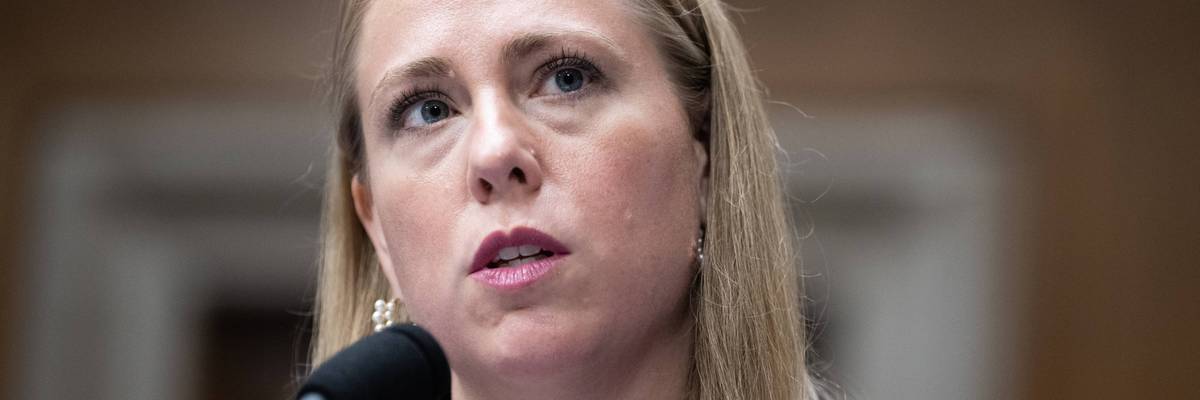
Andrea Lucas, a nominee for the US Equal Employment Opportunity Commission, testifies during a Senate Health, Education, Labor, and Pensions Committee confirmation hearing at the Dirksen Senate Office Building in Washington, DC, on June 18, 2025.
"It’s unconscionable to force workers to choose between the care they need and keeping their job," said one reproductive health advocate, "which is why the Trump administration is waiting until after the election to roll this out."
In addition to renewing its war on abortion rights, the Trump administration is planning to roll back workplace protections for women dealing with a range of reproductive health conditions after Tuesday's midterm elections.
The New York Times reported on Monday, citing several people familiar with the plans, that the US Equal Employment Opportunity Commission (EEOC) was prepared to rewrite regulations issued under the 2022 Pregnant Workers Fairness Act (PWFA).
Signed by then-President Joe Biden, the bipartisan law was meant to fill in gaps in civil rights legislation that left pregnant women and others with reproductive health concerns at risk of being denied basic accommodations like bathroom and water breaks, exemptions from heavy lifting on the job, and time off for prenatal appointments.
The law requires employers to make reasonable accommodations for workers with limitations due to “pregnancy, childbirth, or related medical conditions,” language that has existed in antidiscrimination law for nearly half a century.
In 2024, the Biden administration enacted a rule interpreting the law to cover a wide range of conditions and procedures related to women’s reproductive health—including fertility treatments, abortion, and menstruation.
President Donald Trump’s EEOC, led by Andrea Lucas, a conservative employment lawyer, is reportedly leading the effort to narrow the scope of the rule.
In her dissent from the final rule, Lucas argued that it “errs in conflating pregnancy and childbirth accommodation with accommodation of the female sex, that is, female biology and reproduction.”
Republicans have objected to the rule’s requirement to accommodate workers seeking abortions. A federal judge in Louisiana struck down the rule’s requirement to accommodate elective abortions last year, though protections for other reproductive health conditions remained in place.
But Lucas’ argument went far beyond abortion. She said the law should exclude infertility and in vitro fertilization (IVF), menstruation and menopause, hormonal conditions, lactation-related conditions, contraception and its side effects, and other reproductive health issues she considered unrelated to pregnancy or immediate postpartum recovery.
According to the Times, Lucas is expected to shorten the list of “related medical conditions” covered by the rule and expand religious exemptions, which could allow employers to refuse accommodations they deem incompatible with their beliefs.
In May, 15 Democratic senators, including Elizabeth Warren (D-Mass.), Tammy Duckworth (D-Ill.), and Chuck Schumer (D-NY), sent a letter urging Lucas to abandon plans to scrap accommodations for workers undergoing IVF. They noted that Trump had dubbed himself “the fertilization president” and pledged to increase access to fertility treatments.
The senators, including Duckworth, who conceived her two daughters through IVF, described it as an intensive process with “serious impacts on women’s lives.” Treatment can involve daily injections, regular blood draws and ultrasounds, and egg retrieval and embryo transfer procedures that cannot easily be rescheduled. Side effects can include nausea, vomiting, and fatigue.
"The current regulation explicitly protects the right of workers undergoing IVF to request reasonable accommodations like short breaks to take medication, a schedule that accommodates daily monitoring appointments and medical procedures, or even access to a chair," the lawmakers said. "Removing them from this rule does not change the fact that these workers are owed these protections, but it does make it more likely that employers will illegally deny women undergoing IVF their rights under PWFA."
The EEOC is reportedly holding off on the changes until after the election. The US Department of Justice is also waiting until then to step up efforts to restrict access to abortion pills, potentially even in states where abortion is legal, according to reporting last month.
On Tuesday, Mini Timmaraju, president and CEO of Reproductive Freedom for All, said, “It’s unconscionable to force workers to choose between the care they need and keeping their job, which is why the Trump administration is waiting until after the election to roll this out.”
"Today’s elections," she added, "are a crucial opportunity to establish checks on a corrupt administration that continues to leave pregnant workers and working families behind.”
This country and this world are at a monumental crossroads. US voters have an opportunity to beat back the forces of fascism and confront the billionaires who are rigging the economy, our media system, and our democracy, making it increasingly impossible for ordinary people to get by. We’re not just talking about the election. We’re talking about what must be done once these fascist elements are vanquished from power. We need a bolder set of solutions than what either major party has so far been willing to offer and a working-class movement ready to fight like hell for it. Trump didn't emerge from nowhere. The conditions that fueled MAGA authoritarianism were created by decades of radical neoliberal economic policies and a corrupt political system dominated by corporate interests. They slashed taxes on the super-rich, promising that the benefits would trickle down. They said giveaways to the corporate titans would make life more affordable for the rest of us. It was all bullshit. And when a bitter, betrayed populace searches for someone to blame, right-wing demagogues have little trouble finding scapegoats. People know when they're being lied to, but you won't hear any of this from the corporate media. Only independent journalism—powered and funded by people who believe in building a better world—can deliver truly trustworthy daily news. If you share our vision, please contribute whatever you can to sustain our work. |
In addition to renewing its war on abortion rights, the Trump administration is planning to roll back workplace protections for women dealing with a range of reproductive health conditions after Tuesday's midterm elections.
The New York Times reported on Monday, citing several people familiar with the plans, that the US Equal Employment Opportunity Commission (EEOC) was prepared to rewrite regulations issued under the 2022 Pregnant Workers Fairness Act (PWFA).
Signed by then-President Joe Biden, the bipartisan law was meant to fill in gaps in civil rights legislation that left pregnant women and others with reproductive health concerns at risk of being denied basic accommodations like bathroom and water breaks, exemptions from heavy lifting on the job, and time off for prenatal appointments.
The law requires employers to make reasonable accommodations for workers with limitations due to “pregnancy, childbirth, or related medical conditions,” language that has existed in antidiscrimination law for nearly half a century.
In 2024, the Biden administration enacted a rule interpreting the law to cover a wide range of conditions and procedures related to women’s reproductive health—including fertility treatments, abortion, and menstruation.
President Donald Trump’s EEOC, led by Andrea Lucas, a conservative employment lawyer, is reportedly leading the effort to narrow the scope of the rule.
In her dissent from the final rule, Lucas argued that it “errs in conflating pregnancy and childbirth accommodation with accommodation of the female sex, that is, female biology and reproduction.”
Republicans have objected to the rule’s requirement to accommodate workers seeking abortions. A federal judge in Louisiana struck down the rule’s requirement to accommodate elective abortions last year, though protections for other reproductive health conditions remained in place.
But Lucas’ argument went far beyond abortion. She said the law should exclude infertility and in vitro fertilization (IVF), menstruation and menopause, hormonal conditions, lactation-related conditions, contraception and its side effects, and other reproductive health issues she considered unrelated to pregnancy or immediate postpartum recovery.
According to the Times, Lucas is expected to shorten the list of “related medical conditions” covered by the rule and expand religious exemptions, which could allow employers to refuse accommodations they deem incompatible with their beliefs.
In May, 15 Democratic senators, including Elizabeth Warren (D-Mass.), Tammy Duckworth (D-Ill.), and Chuck Schumer (D-NY), sent a letter urging Lucas to abandon plans to scrap accommodations for workers undergoing IVF. They noted that Trump had dubbed himself “the fertilization president” and pledged to increase access to fertility treatments.
The senators, including Duckworth, who conceived her two daughters through IVF, described it as an intensive process with “serious impacts on women’s lives.” Treatment can involve daily injections, regular blood draws and ultrasounds, and egg retrieval and embryo transfer procedures that cannot easily be rescheduled. Side effects can include nausea, vomiting, and fatigue.
"The current regulation explicitly protects the right of workers undergoing IVF to request reasonable accommodations like short breaks to take medication, a schedule that accommodates daily monitoring appointments and medical procedures, or even access to a chair," the lawmakers said. "Removing them from this rule does not change the fact that these workers are owed these protections, but it does make it more likely that employers will illegally deny women undergoing IVF their rights under PWFA."
The EEOC is reportedly holding off on the changes until after the election. The US Department of Justice is also waiting until then to step up efforts to restrict access to abortion pills, potentially even in states where abortion is legal, according to reporting last month.
On Tuesday, Mini Timmaraju, president and CEO of Reproductive Freedom for All, said, “It’s unconscionable to force workers to choose between the care they need and keeping their job, which is why the Trump administration is waiting until after the election to roll this out.”
"Today’s elections," she added, "are a crucial opportunity to establish checks on a corrupt administration that continues to leave pregnant workers and working families behind.”