

SUBSCRIBE TO OUR FREE NEWSLETTER
Daily news & progressive opinion—funded by the people, not the corporations—delivered straight to your inbox.
5
#000000
#FFFFFF
To donate by check, phone, or other method, see our More Ways to Give page.
Daily news & progressive opinion—funded by the people, not the corporations—delivered straight to your inbox.
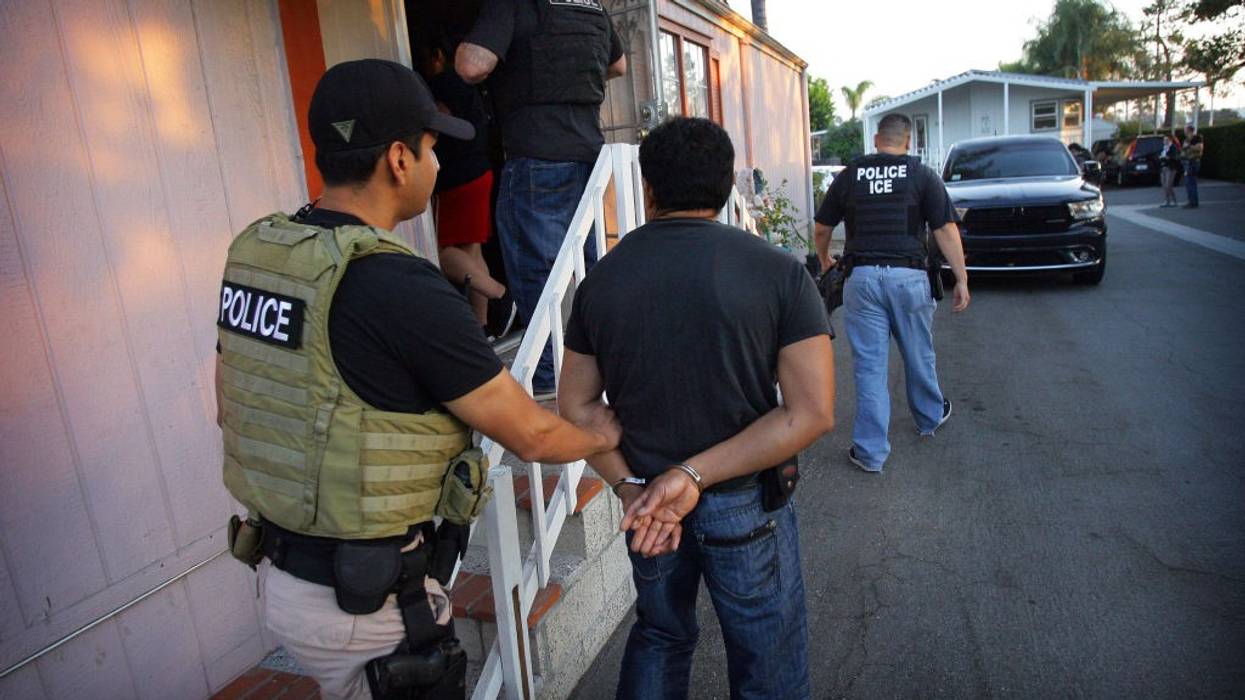
“The detentions are happening in a flash—we’re talking, like, 90 seconds from the time ICE shows up to that person being driven away,” said one immigration attorney.
The Trump administration may have deliberately toned down its highly visible, militarized immigration raids that generated widespread backlash, but US Immigration and Customs Enforcement is arresting more people than ever, an investigation published Monday by The Guardian revealed.
The British newspaper examined what it called the increasingly “invisibilized” immigration dragnet reaching into workplaces, airports, traffic stops, convenience stores, and communities far from the US-Mexico border, declaring "ICE is everywhere."
“Before, [ICE] were storming around, making a lot of noise,” Gracie Willis, a rapid-response attorney with the National Immigration Project, told The Guardian. “Now, they are moving more quietly.”
"More quietly" does not mean fewer arrests. In fact, The Guardian reported that ICE apprehended nearly 50,000 people in July, a record high. The agency has also more than doubled its workforce this year to more than 22,000 officers and staff after Congress provided the Department of Homeland Security with $75 billion in additional funding.
As of September 15, ICE had also signed more than 2,500 agreements allowing state and local law enforcement agencies to participate in federal immigration enforcement.
“The detentions are happening in a flash—we’re talking, like, 90 seconds from the time ICE shows up to that person being driven away,” Willis said. “And often they are moving very quietly, with very soft feet.”
The shift in tactics came after the administration's highly publicized operations provoked intense opposition, especially following a series of fatal shootings, including of American citizens.
President Donald Trump said earlier this year that “maybe we could use a little bit of a softer touch,” while Homeland Security Secretary Markwayne Mullin told senators that "my goal in six months is that we’re not in the lead story every single day.”
Still, immigration attorney Kate Lincoln-Goldfinch told The Guardian that “we’re seeing a lot of racial profiling" in immigration enforcement, adding that agents “might have their sights set on a big job site... and just slowly patrol that site and just take people in day after day until nobody’s going to work there anymore.”
The Guardian investigation comes amid continued condemnation of ICE's methods.
Amnesty International published a report last week based on interviews with 154 people affected by enforcement operations in Chicago, Minneapolis-St. Paul, New Orleans, and Washington, DC, documenting allegations including racial discrimination, arbitrary detention, excessive force, unlawful surveillance, incommunicado detention, and inhumane detention conditions.
“Masked and armed federal agents attacking people in the streets with impunity doesn’t make our communities safer—it puts everyone in danger,” said Amnesty International USA Executive Director Nadia Daar. “ICE is fundamentally broken and cannot be fixed.”
An increasing number of Republicans—especially those facing tough reelection battles—are criticizing the administration's heavy-handed immigration enforcement.
A campaign ad for Congresswoman Monica De La Cruz (R-Texas) even features a woman whose husband the lawmaker helped free from immigration detention.
“I have been very direct with the White House, with leadership, that enforcement policy should be focused on the criminals and on the cartels that are terrorizing our communities,” De La Cruz said last week during an interview on "The Joe Pags Show."
“They should not be on hardworking immigrants that are navigating the immigration process," she added.
In July, Democratic lawmakers sent a letter to Department of Homeland Security officials noting that agents had shot at least 22 people during Trump's second term, and that in multiple cases, federal authorities had made allegations against shooting victims that were later contradicted by evidence.
More than 50 people have died in ICE custody since Trump returned to the White House last year.
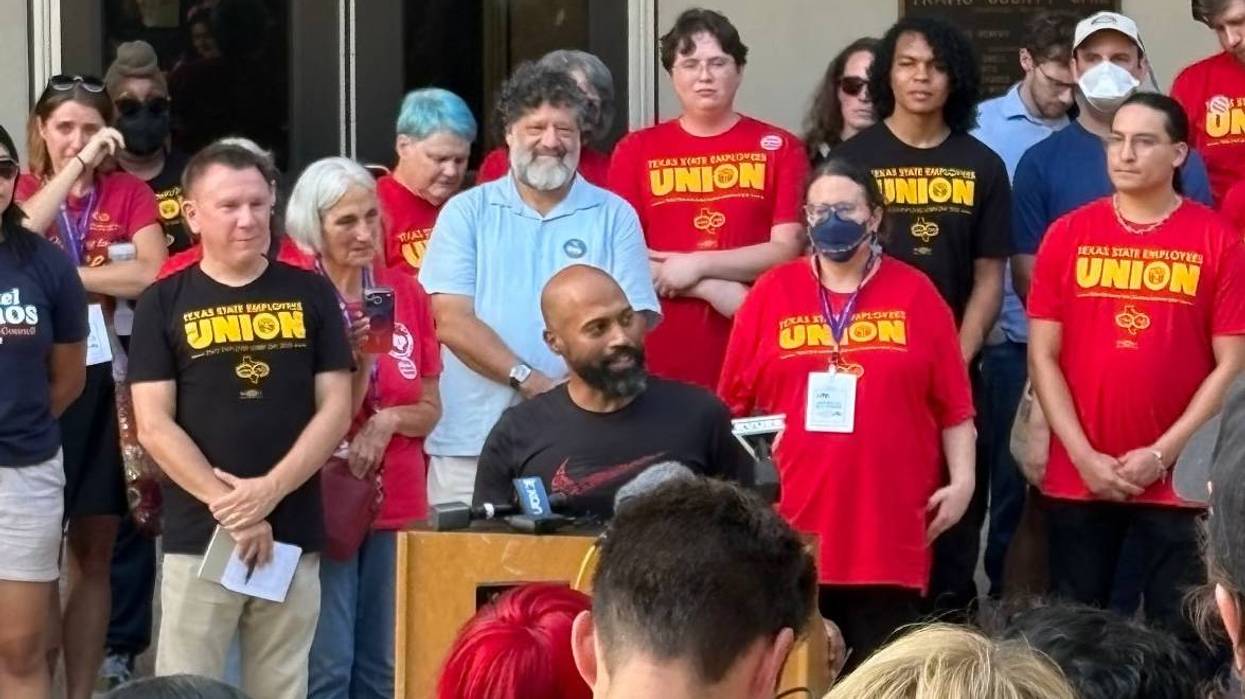
"We must end the terror in our communities created by the fascist administration in Washington and here in Texas—I will never stop standing up and speaking out for our community."
Misael Ramos, a democratic socialist running for City Council in Austin, was arrested by Texas troopers on Saturday morning for protesting US Immigration and Customs Enforcement after an ICE agent shot Wilber Rafael Garcés Pérez in the state's capital.
"At approximately 8:50 am this morning, two neighbors witnessed several state troopers, including many in unmarked vehicles, approach Misael while he was walking his dog and proceed to detain him," his campaign said on social media. "They never showed him a warrant for his arrest, but proceeded to arrest him anyway."
The Travis County Sheriff's Office website shows that the 40-year-old candidate for District 1 was booked at the county jail shortly after that and charged with a Class B misdemeanor for "riot participation." His campaign said the charge appears to be "related to his participation in the protest last Sunday at the site of Wilber's shooting by ICE."
The Austin American-Statesman reported that the Texas Department of Public Safety (DPS) could not be reached for comment.
"That these officers felt emboldened to do this to me, as a candidate on the ballot, speaks volumes to the level of impunity they feel to do this to our neighbors, who are living in fear of these kinds of abductions every day," Ramos said in a statement from jail. "We must end the terror in our communities created by the fascist administration in Washington and here in Texas—I will never stop standing up and speaking out for our community."
ABC affiliate KVUE reported that "at least four people were arrested by DPS and the Austin Police Department during Sunday's demonstration, including for charges of rioting, obstructing a highway, resisting arrest, and assault on a peace officer. Ramos' campaign said additional arrests have been made on DPS warrants throughout the week."
Ramos' campaign held a Saturday afternoon press conference outside the jail with representatives from various organizations, including the Austin chapter of the Democratic Socialists of America (DSA)—which has endorsed him—as well as the Austin Lawyers Guild and Texas State Employees Union.
"People have a constitutional right to gather, speak, protest, and criticize the government," George Lobb, an attorney and spokesperson for the Austin Lawyers Guild, said in a statement ahead of that event. "Arresting someone does not establish that they committed a crime, and pretrial conditions must comply with the Constitution."
Ramos was released from jail during the press conference, eliciting cheers from the crowd gathered outside. He made his way to the podium, hugging audience members, and began by thanking everyone who "spoke up" and "spoke out" on Saturday, including a neighbor who recorded his arrest and notified people he asked her to contact.
"This should not be happening on our streets," but "this is why I fight," the candidate declared, reiterating that he was approached while walking his dog—which one officer threatened to shoot—and never shown a warrant. "Thank you again, and let's keep fighting."
The crowd broke out into chants of "this is what solidarity looks like," and "Fuck ICE, ICE OUT."
Protests have been held in Texas since an ICE agent shot Garcés Pérez during a traffic stop last Sunday while he was making DoorDash deliveries. A federal judge has temporarily barred the President Donald Trump's administration from deporting the 28-year-old Venezuelan, who remains in ICE custody, despite having a bullet lodged in his back, near his spine.
Congressional Progressive Caucus Chair Greg Casar (D-Texas), whose district includes Austin, visited Garcés Pérez at a detention center in Pearsall on Wednesday. Afterward, according to The New York Times, the congressman told reporters that a doctor has advised the immigrant to have surgery to remove the bullet.
"If Wilber and his wife decide that he needs to go through his surgery, then ICE needs to expedite his care," said Casar. "I am making it very clear to every part of the federal government that ICE needs to take the medical care of Wilber Garcés extremely seriously."
Since returning to office last year, Trump has deployed ICE in cities across the United States as part of his mass detention and deportation campaign. Members of the agency and Customs and Border Protection have shot immigrants and US citizens alike—some fatally—and violated the rights of numerous others. Additionally, over 50 people have died in ICE custody.

"Remember when Donald Trump promised to get rid of ‘waste, fraud, and abuse’ in Washington?" said one senior Democratic senator. "Well, GAO continues to uncover incompetence and waste at the highest levels of ICE."
The Trump administration's deadly immigration crackdown has not only resulted in widespread abuse of detained immigrants, it has also wasted millions of dollars on facilities and services that were never used, were quickly abandoned, or were far more expensive than necessary, according to an audit published Thursday by the Government Accountability Office.
The nonpartisan congressional watchdog found that US Immigration and Customs Enforcement (ICE) has poured billions of dollars into six detention expansion initiatives since January 2025 without the comprehensive planning needed to determine whether the investments were necessary, affordable, or capable of meeting federal detention standards.
"ICE pursued this and the other initiatives without necessary analysis and planning," the GAO said, concluding that the agency's approach has already resulted in "millions of dollars of waste."
The report contends that "urgent planning" is "needed to avoid further waste of taxpayer dollars."
Heather MacLeod, director of Homeland Security and Justice at GAO, said Friday that "we just saw a real lack of planning overall."
"The lack of planning has really led to stops and starts which have ultimately resulted in waste," she added.
Among the most striking examples highlighted in the report is the administration's purchase of 11 warehouses for roughly $1.07 billion, with plans to convert them into detention centers. ICE subsequently decided to sell seven of the properties. More than $20 million had already been spent on costs—including security and zoning assessments—that cannot be recovered.
In May, More Perfect Union detailed how members of Trump's inner circle were cashing in on the warehouse-buying spree.
The GAO also exposed spending for almost no apparent use at Guantánamo Bay. For example, after Trump ordered officials to expand immigration detention capacity at the US military base in Cuba, the Pentagon assembled tents intended to accommodate thousands of people. However, DHS subsequently determined that the tents failed to meet ICE detention standards and they were dismantled, costing approximately $2.85 million.
Meanwhile, an average of just 16 immigrants per day were detained at Guantánamo during fiscal year 2026. Pentagon and State Department inspectors general had previously found that roughly $68 million had been committed for immigration detention there between October 2024 and May 2026, while ICE separately committed approximately $43 million through June 2026.
The report also highlights the now-shuttered Florida facility commonly known as Alligator Alcatraz. The Federal Emergency Management Agency awarded Florida a $608.4 million detention support grant, even though there was no agreement or contract authorizing the facility to detain immigrants, according to senators who requested an investigation into the matter.
The GAO's findings came after Congress approved an unprecedented $45 billion for ICE detention expansion under Trump's so-called One Big Beautiful Bill Act, a boon for the private prison industry. Yet the agency still lacks a comprehensive strategic plan governing how many beds it needs, where they should be located, or how to account for detainees' medical and other needs.
This, as more than 50 people have died in ICE custody during Trump’s second term.
ICE has also failed to adequately consider long-term affordability, according to the new report. As of July, the agency had spent $2.5 billion purchasing warehouses and detention facilities but had only estimated operating costs for the first three years—even though some of the funding supporting the expansion expires after fiscal year 2029.
A separate GAO investigation published in June found millions in waste and serious safety and operational deficiencies at Camp East Montana at Fort Bliss in El Paso, Texas. The nation's largest immigrant detention facility opened last year under a $1.3 billion contract.
Responding Friday to the new GAO report, a DHS spokesperson told CBS News that ICE is "working at turbo speed on cost-effective and innovative ways to deliver on the American people's mandate for mass deportations of criminal illegal aliens."
Senate Minority Whip Dick Durbin (D-Ill.) said on social media in response to the GAO revelations: "Remember when Donald Trump promised to get rid of ‘waste, fraud, and abuse’ in Washington? Well, GAO continues to uncover incompetence and waste at the highest levels of ICE."
"Americans are outraged at ill-conceived immigration detention projects," he added, "and it’s time to hold DHS and ICE responsible."
"Saying a war should come to a successful end hardly repudiates the president who started it," said one critic.
Republican politicians who have spent years kowtowing to President Donald Trump are suddenly scrambling to distance themselves from him, as his approval ratings hit record lows less than six weeks before the midterm elections.
Some critics, however, are questioning the seriousness of the Republicans' purported dissents.
A Thursday report from The New York Times highlighted instances of Republican Senate candidates in battleground states such as Iowa and Michigan calling for an end to Trump's illegal war with Iran, which has sent energy prices soaring over the last six months.
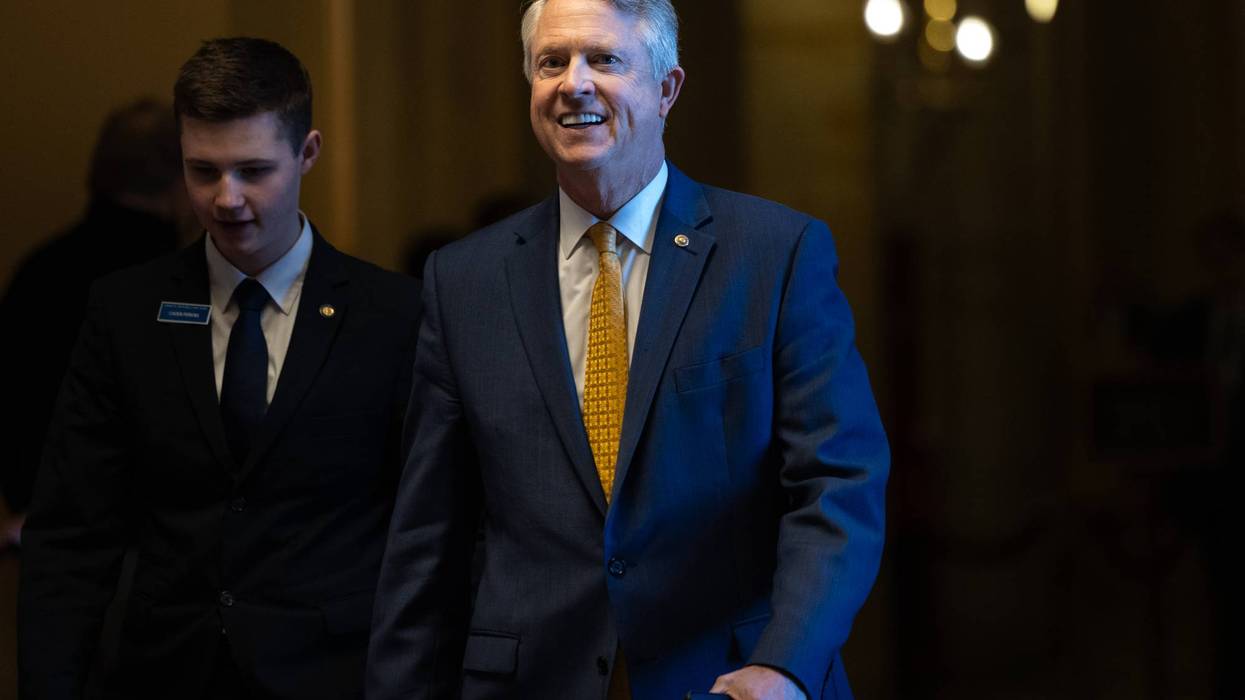
Apparent Republican queasiness over Trump policies in an election year isn't limited to the Iran War, as Sen. Roger Marshall (R-Kan.) on Wednesday issued a statement pushing back on tactics used by US Immigration and Customs Enforcement (ICE) in his home state.
"When ICE operates in Kansas, it needs to coordinate with our local law enforcement," Marshall wrote in a social media post. "Our sheriffs and police know these communities better than anyone, and working together keeps officers and residents safe."
Marshall's statement came one week after Rep. Maria Elvira Salazar (R-Fla.) publicly broke with Trump on immigration policy, telling the president that his mass deportations were going "too far" and leaving Latino voters who backed him in 2024 feeling "betrayed."
Former Rep. Carlos Curbelo (R-Fla.) told the Times that the abrupt breaks with Trump show that "this is survival mode time for Republicans," as they no longer have to fear that the unpopular president will back primary challengers against them this year.
Marc Short, former chief of staff to Vice President Mike Pence, told the Times he was skeptical about Republicans succeeding in portraying themselves as independent-minded Trump critics given how they have dutifully supported him in lockstep for the last two years.
"If you’ve been carrying the president’s water on all his legislation priorities and his issues, it’s hard now to distance yourself," Short explained. "It appears now as if it’s just for political convenience."
Former CBS News anchor John Dickerson similarly questioned how sincere Republicans were being in their last-minute pushback against certain Trump policies.
Specifically, Dickerson pointed to Iowa GOP US Senate candidate Ashley Hinson, who called on Trump to bring his illegal war "to a successful and immediate end" to lower energy costs for American farmers.
"Hinson hasn't said starting the war was a mistake," Dickerson wrote in an analysis published Thursday on his Substack page. "She has repeatedly voted against House resolutions to limit Trump's war powers, most recently last week... Saying a war should come to a successful end hardly repudiates the president who started it."
Drop Site News reporter Ryan Grim echoed Dickerson's analysis in a Tuesday social media post.
"Ashley Hinson [is] out with a statement whining and crying about the consequences of the war she supported," Grim wrote. "If you read far enough in, you find she’s calling for an end to it. But just last week the House voted on a war powers resolution to end the war and she voted against it."
In an op-ed published Thursday, Bloomberg columnist Mary Ellen Klas offered a critical examination of Salazar's seeming revolt against Trump's hardline immigration policies, describing it as a signal "to fellow Republicans that they had permission to publicly distance themselves from their party leader to save themselves from electoral collapse."
"Republicans who didn’t have the courage to speak up as Trump corrupted the executive branch and usurped congressional authority," Klas added, "have suddenly grown backbones."
In a separate social media post promoting her column, Klas accused Republicans of showing "cowardice, not conviction" in their last-minute shifts.

"DHS must not obstruct or otherwise interfere with this investigation by removing Mr. Garces Perez from the country," said lawmakers.
The attorney representing Wilber Rafael Garces Perez said Tuesday that a federal judge had granted her emergency request to block the Trump administration from deporting the 28-year-old delivery driver, who was shot by an immigration agent Sunday and has since been transferred multiple times between hospitals and a detention center—all while the officer's bullet reportedly remains lodged in his back.
"We have filed a federal lawsuit, and the judge has ordered that he be present at the first hearing, which is scheduled for Wednesday, September 30," said Kate Lincoln-Goldfinch. "And that means he won't be deported in the meantime."
Lincoln-Goldfinch applauded the rare piece of "good news" that has come out of Garces Perez's case since he was shot by an Immigration and Customs Enforcement (ICE) agent while making DoorDash deliveries in his car Sunday afternoon.
As Common Dreams reported, Garces Perez was transferred from an ICE detention center in Pearsall, Texas to a hospital late Monday after reporting that he had lost feeling in the left side of his body, likely as a result of the bullet that remained close to his spine.
But Lincoln-Goldfinch and Rep. Joaquin Castro (D-Texas) said Tuesday that Garces Perez had again been taken back to the detention center.
Castro said he and Rep. Greg Casar (D-Texas) plan to visit Garces Perez at South Texas ICE Processing Center on Wednesday, to "check on his condition and demand his release."
"It is nothing more than a prison," said Castro. "Wilber came to the United States legally. He had work permits and was an asylum seeker. None of this should have ever happened."
Garces Perez arrived in the US in 2024 from Venezuela, using a government program for asylum seekers and the CBP One app that was introduced by the Biden administration to make an appointment for approval from immigration agents. He received a work permit and applied for asylum.
He mistakenly missed an immigration hearing after a notice was sent to an old address, The New York Times reported, which led to his deportation order. He has no criminal history.
Lincoln-Goldfinch had been planning to visit her client in the hospital Tuesday, where he was taken after he called in to a press conference the lawyer was holding Monday and said that he had not received medical treatment for his gunshot wound.
After speaking to Garces Perez via a video call Tuesday morning, Lincoln-Goldfinch reported on social media:
Wilber tells me that after he spoke publicly, guards at the Pearsall detention center forcibly took the tablet from his hands, revoked his communication privileges, and moved him out of the infirmary into an isolated room with a flat bed that cannot be adjusted like a medical bed.
[...]
At the hospital, Wilber says doctors finally spoke directly to him about his care and gave him IV morphine for his pain. We now understand that the gunshot fractured his clavicle and that he has significant swelling and is wearing a sling. We still do not have clarity about the cause or extent of the loss of movement he experienced.
He was discharged back to Pearsall around midnight. Today, he tells me he is receiving only Tylenol and ibuprofen for pain. He remains in isolation, on a flat bed, and without the tablet he previously used to communicate. We are asking for his communication privileges to be immediately restored and for him to be provided an appropriate medical bed and adequate medical care. Most importantly, we are continuing to advocate for Wilber’s IMMEDIATE release.
Also on Tuesday, it was revealed that the ICE agent who shot Garces Perez was not wearing a body camera at the time of the shooting—similar to the case of Johan Sebastián Durán Guerrero, who was fatally shot by an ICE agent in Maine in July.
"Before we hear anything from ICE about, 'We pulled him over, or he was fleeing, or he was aggressive,' our response to any statements like that is, 'We won't believe you until you show us,'" said Goldfinch-Lincoln. "Show us your body cam footage, show us your dash cam footage."
On Tuesday, more than 100 members of Congress signed a letter to Homeland Security Secretary Markwayne Mullin and acting ICE Director David Venturella, spearheaded by Casar, calling on ICE to release Garces Perez and "abandon efforts to swiftly deport him or remove him from Texas."
"ICE has provided no justification for this shooting, and there is no indication Mr. Garces Perez posed a threat to officers," reads the letter, noting that the Department of Homeland Security (DHS) "has a history of withholding information and attempting to obstruct active investigations into wrongdoing by its agency."
"DHS must not obstruct or otherwise interfere with this investigation," said the lawmakers, "by removing Mr. Garces Perez from the country or interfering with the release of footage, data, or other information by Texas state or local agencies involved in the operation."
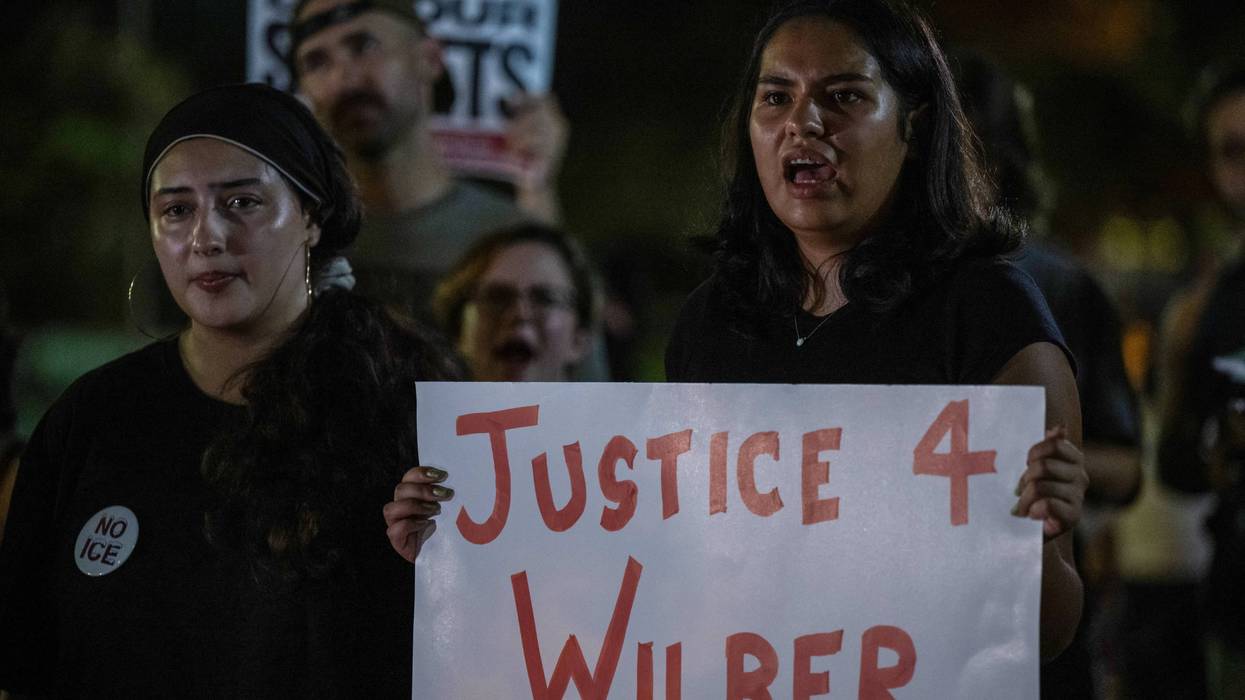
"This isn't law enforcement," said US Senate candidate James Talarico. "It's lawlessness."
Democrats in Congress on Monday evening were demanding a full, independent investigation into US Immigration and Customs Enforcement's shooting on Sunday of Wilber Rafael Garces Perez, as it was reported that he had been held in an ICE detention center with a bullet still lodged in his back—close to his spine—and that he was finally being taken to a hospital only after he lost feeling in the left side of his body.
In a video posted on social media, US Rep. Joaquin Castro (D-Texas) recounted how Perez was initially hospitalized after ICE agents in an unmarked SUV sideswiped his car as he was making DoorDash deliveries in Austin, Texas, and then shot him through his windshield as he was trying to pull over.
But "only a few hours after being shot, he was forced out of the hospital," said Castro, "and sent over to what is known as STIPC, in Pearsall, Texas, along I-35, the South Texas ICE Processing Center."
Castro and Rep. Greg Casar (D-Texas) spent Monday attempting to gain permission to visit with Perez and raising alarm over the fact that ICE's bullet had not been removed from his back before he was taken to STIPC, where he was reportedly forced to sleep on a floor.
"He reported that he's in incredible pain, that he'd not been given any medication," said Castro. "It's basically abuse that you would take somebody who has been shot and move them from a hospital to a prison, that kind of prison, within a matter of hours, and then also, it looks like, start the process to deport them immediately."
Update on the condition of Wilber Rafael Garcés Pérez at the South Texas Ice Processing Center. He’s being taken to the hospital. He is in tremendous pain and tells us that the bullet is still inside his left side. He can’t move the left side of his body. pic.twitter.com/SWquC2AOrj
— Joaquin Castro (@JoaquinCastrotx) September 21, 2026
Perez entered the country two years agoafter using the CBP One application to set up an appointment with immigration agents. The app was introduced by the Biden administration, but President Donald Trump abruptly terminated it immediately after he took office last year. Perez was permitted to enter the country, applied for asylum, and received a work permit.
As Common Dreams reported Monday, Perez's lawyer, Kate Goldfinch-Lincoln, and his wife were unable to make contact with him when he was first taken from the hospital on Sunday.
After Perez briefly called in from the detention center to a press conference held by Goldfinch-Lincoln on Monday, she said she received a call from another detainee who told her "that officers came in and handled Wilber roughly."
"According to this detainee, Wilber then lost feeling on the left side of his body, including his arm and leg," she said. "Wilber has a bullet lodged near his spine. I was told that he was handcuffed, shackled at the feet, placed in a waist chain, and taken to a hospital. I am waiting to find out how he is doing and what his current condition is. We need answers. We need to know that Wilber is safe and receiving appropriate medical care. So far, he has not."
In response to the update on Perez's condition, Democratic US Senate candidate James Talarico said: "This isn't law enforcement. It's lawlessness."
Casar called Perez's transfer back to the hospital "a positive first step," and credited immigrant rights advocates and community members for "speaking up."
"Now, we have to make sure he fully recovers, is reunited with his family, and gets to tell law enforcement the full story of how he was shot in the back by ICE," said Casar.
Reps. Rashida Tlaib (D-Mich.), Ro Khanna (D-Calif.), and Maxwell Frost (D-Fla.) were among the lawmakers calling for a full investigation into the shooting and ICE's treatment of Perez.
"This is absolutely horrific," said Frost. "ICE must be stopped. Their regime of cruelty will continue until they are held accountable."
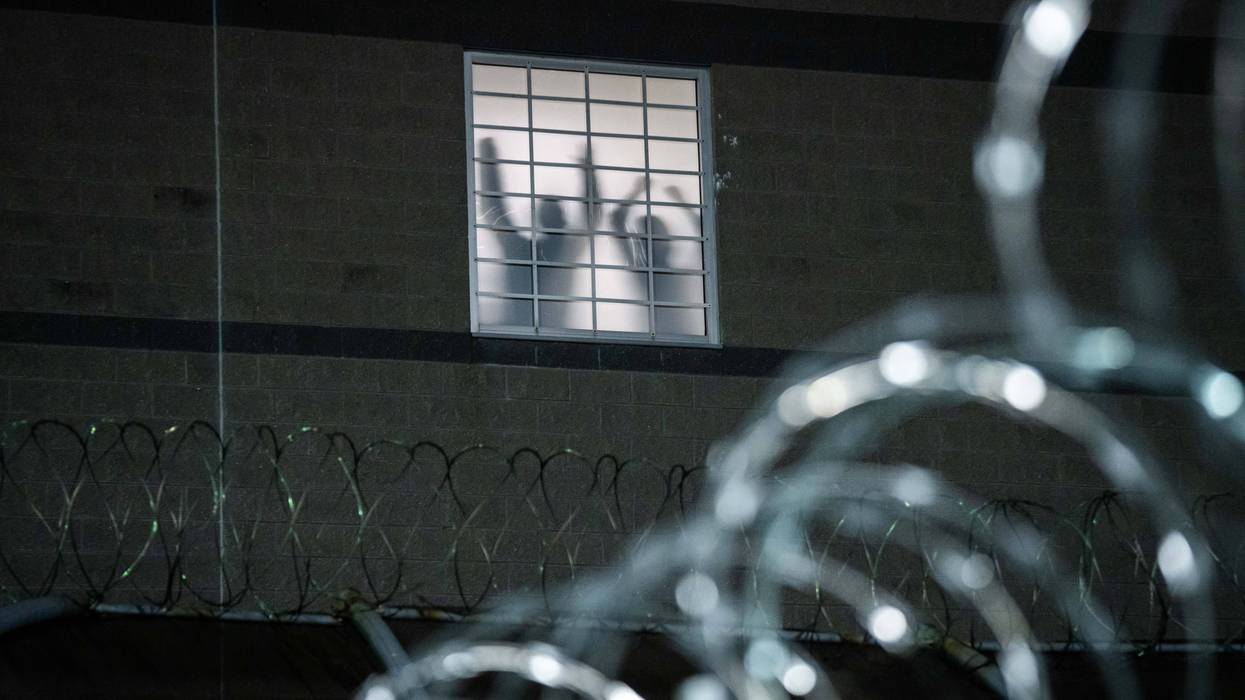
"Hiding prisoners from the courts is unconstitutional," said one expert.
Critics reacted with horror to a Monday report from The Associated Press detailing how US Immigration and Customs Enforcement has abruptly ended its practice of disclosing the locations of thousands of detainees.
According to the AP, ICE "has stopped publicly revealing where it is holding... detainees who are subject to final deportation orders, an unannounced move that has made it far more difficult for lawyers and relatives to find them."
Immigration attorneys who spoke with the AP said that their clients had "vanished" from the system after ICE removed them from its online detainee locator system last week.
Greg Chen, senior director of government relations at the American Immigration Lawyers Association, told the AP that families of detainees "are freaking out because they think the person has been deported and they don’t know where the person might be."
Chen added that the new policy has "serious implications" for attorneys' ability to make contact with their clients.
Michelle Mendez, legal director at the National Immigration Project, told the AP that the new policy is "just another iteration of disappearing people."
"Why would we do that in the United States of America?" Mendez asked. "It's something we’d hear about in another country and be concerned about individual rights and due process."
Tom Jawetz, senior fellow at the Center for American Progress, echoed Mendez's analysis, writing in a social media post that the AP report reveals "an official government policy of disappearing people," as "systems for attorneys and loved ones to know where—even whether—a person with a final removal order is in ICE custody have been wiped clean."
Aaron Reichlin-Melnick, senior fellow at the American Immigration Council, described the new ICE policy as "unprecedented" for US immigration enforcement.
"People who have been detained for months are suddenly disappearing from the locator system—even if they haven't been moved anywhere," Reichlin-Melnick explained. "And people newly arrested are not showing up at all, their location now hidden from view."
Georgetown University political scientist Jonathan Ladd argued that the ICE policy was a fundamental violation of long-established rights in the US that date to before the country's official founding.
"The government moving or hiding jailed people to avoid review by courts isn't some loophole in our habeas corpus rights," Ladd explained. "This government behavior has been considered a violation of the people's habeas corpus rights since at least the Habeas Corpus Act of 1679."
Ladd further pointed out that "habeas corpus rights are guaranteed by Article I of our Constitution," which means "hiding prisoners from the courts is unconstitutional."
Journalist Gillian Brockell observed that the new ICE policy "will make it nearly impossible to file habeas petitions, because attorneys won’t even know what federal district their client has been moved to to stage for their removal."
Among those sharing the AP report on social media was Kate Lincoln-Goldfinch, an attorney for Wilbur Rafael Garces Perez, a 28-year-old Venezuelan shot by ICE in Austin, Texas on Sunday.
Initially, she and the immigrant's wife could not make contact with him, because ICE moved him from the hospital "to an undisclosed location," but Lincoln-Goldfinch said Monday afternoon that her client "is being held at Pearsall for interrogation."
"We got Wilber on the phone live from detention at the press conference," the attorney added. "He says he still has the bullet lodged in his shoulder. He says he is not doing well and has not received the medical care he needs."
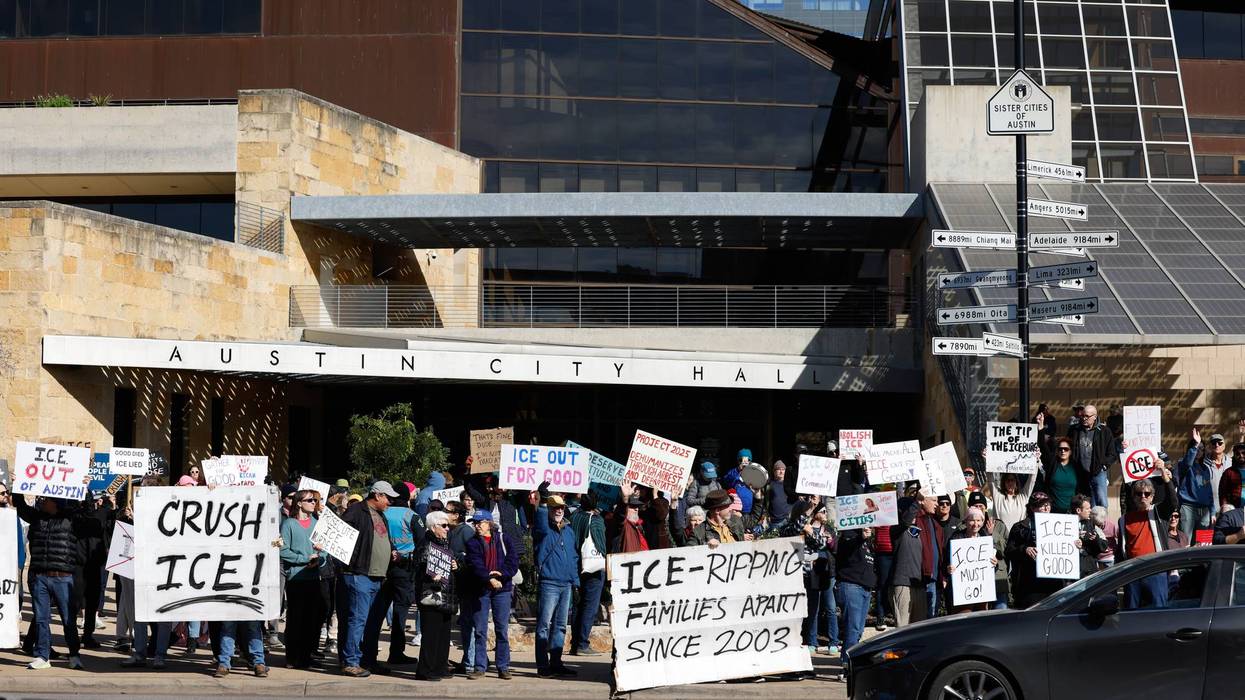
"ICE has been terrorizing our country for far too long," said Congressional Progressive Caucus Chair Greg Casar, who represents the district where the shooting occurred.
An Immigration and Customs Enforcement agent shot and wounded a man in Austin, Texas on Sunday, prompting demands for an independent investigation and renewed calls from progressive lawmakers and activists to abolish ICE amid the Trump administration's deadly immigration crackdown.
Local ABC affiliate KVUE reported that the shooting occurred in the 7000 block of West Anderson Lane, near the intersection of Research Boulevard and Anderson Square. An unidentified man was taken to a hospital. His condition was initially unclear; the Austin American-Statesman later reported that he was alert and talking.
The circumstances leading to the shooting are under investigation.
Independent journalist Emiliano Tahui Gómez spoke with two witnesses.
"Nedevia Bolaños and her husband, Carlos, own a business just off the intersection where the shooting happened," Gómez reported on social media. "Shortly before 1 pm they say they heard what sounded like two gunshots. Carlos ran out first. A blue Toyota sedan and a black Escalade were stopped under the highway."
Carlos said he saw a man who looked like he was in his 30s "leaning backwards against his seat. A masked agent was standing outside the car. The agent refused to answer questions. Within a few minutes, as many as 10 other ICE agents arrived."
Gómez continued:
Carlos asked the victim if he was ok. “Yes,” the man said in Spanish, but he looked exhausted. Carlos asked why they had shot him. “Because I didn’t stop.”
Bolaños ran up next. She said she continuously asked the ICE agents about why they’d shot him and if they were going to render aid. They didn’t answer her. It was an [Austin Police Department] officer who later arrived and cut open the young man's shirt, revealing a deep hole between his shoulder blades.
The ambulance arrived about 10 minutes after and carried him off.
“I’ve never seen all this. Thank God I’m a citizen,” Bolaños said in Spanish. “Or I’d be living like this. In a dream of terror.”
CBS Austin reporter Vinny Martorano said on social media that Austin City Councilman Mike Siegel told him that "an ICE agent, who is well-known in the city’s Latino community, sideswiped the man’s car. Then the officer got out and shot the driver five times through the windshield."
Congressional Progressive Caucus Chair Greg Casar (D-Texas)—who represents the district where the shooting occurred—said on social media that "the horror has come to our city: ICE has shot a person in Austin this morning."
"As the facts emerge, I am demanding a full, independent investigation, immediate release of the body camera footage, and accountability for any ICE officer who broke the law," he continued. "Over and over, ICE has shot people and then lied about what happened. We can see the lies with our own eyes. We will demand truth, transparency, and accountability."
"Just like Americans have from Minneapolis to Houston, Austinites will speak out peacefully against this deadly mass deportation machine," Casar added. "ICE has been terrorizing our country for far too long. We will not be silent."
Breaking: ICE shot and injured a man in Austin, Texas, earlier today. Trump has allowed ICE to flood our streets and put our communities in harms way again and again and Governor Abbott is complicit every time.I am demanding the body camera footage and full accountability.
[image or embed]
— Joaquin Castro (@joaquincastrotx.bsky.social) September 20, 2026 at 1:39 PM
Austin Mayor Kirk Watson, a Democrat, said at a press conference: "I'm very angry about this. I'm extremely unhappy. A person being shot on the streets of Austin by someone purporting to be law enforcement, particularly when it's ICE, is something that causes me to be unhappy and angry about it."
"And while I'm unhappy and I'm angry about it, I'm not surprised at all," he added. "It's happened in other cities with the nature of ICE and the way ICE is doing its business these days and the chaos that we see it performing and fomenting. There's no reason for us to be surprised by it."
Texas state Rep. Vikki Goodwin (D-47), who is running for lieutenant governor, said that "this violence cannot continue."
Congresswoman Delia Ramirez (D-Ill.) contended that the US Department of Homeland Security (DHS) "remains the biggest threat to our collective safety."
"This weekend, after abusing and hurting peaceful protesters in Illinois, they have just shot another person in Austin, Texas," she added. "The pattern is clear. The agency can't be reformed. I’ve heard the community: I am ready to melt ICE and dismantle DHS! My colleagues in Congress should be too."
Sunday's shooting came 10 weeks after an ICE agent fatally shot Lorenzo Salgado Araujo, a 52-year-old Mexican man, in Houston. Salgado's death followed a series of shootings involving federal immigration agents, including the January killing of US citizens Renée Good and Alex Pretti in Minneapolis.
A letter sent in July by Democratic lawmakers to DHS officials noted that agents had shot at least 22 people since President Donald Trump's return to office, with six of those shootings fatal. The lawmakers said that in multiple cases, federal authorities had made allegations against shooting victims that were later contradicted by evidence.
More than 50 people have died in ICE custody during Trump's second term.
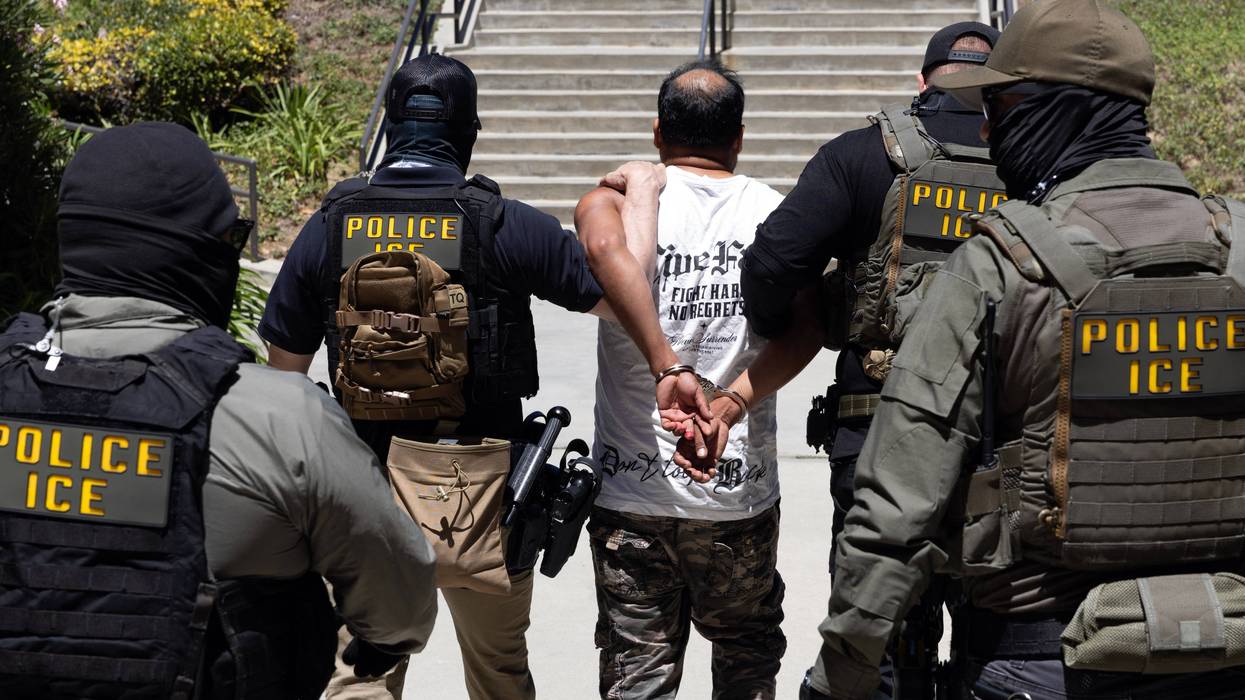
"If our government can close off channels of exchange and the free flow of ideas, it is no more than a dictatorship."
A coalition of 15 press freedom advocacy organizations on Friday demanded the release of Nicaraguan journalist Luis Galeano, who was arrested by federal immigration enforcement officials earlier this week.
The groups—which include Free Press, the Committee to Protect Journalists, the Freedom of the Press Foundation, the National Association of Hispanic Journalists, and Reporters Without Borders (RSF)—released a letter decrying Galeano's detention at the hands of US Immigration and Customs Enforcement (ICE) agents on Monday.
The organizations expressed concern about Galeano being potentially deported back to Nicaragua, where he could face imprisonment for his past work exposing that government's human rights abuses. According to a Wednesday report in The Guardian, Galeano fled his home country eight years ago shortly after police raided the news outlet where he worked.
The groups also said Galeano's detention marked "a troubling escalation of attacks on journalists and media workers, particularly immigrant journalists, who consistently provide much-needed journalism and civic information for their communities."
Galeano was taken into custody despite entering the US legally in 2018 and having a pending asylum case. The Nicaraguan journalist also has a work permit and a Social Security number.
Nora Benavidez, senior counsel at Free Press, called Galeano's arrest "horrifying," while noting that the Nicaraguan is "the latest in a long line of journalists who came to the United States to report on issues of the day and instead face deportation."
"These cases aren’t just about cracking down on immigration," said Benavidez. "They are about cutting off community access to vital coverage and scaring reporters from holding those in power accountable. If our government can close off channels of exchange and the free flow of ideas, it is no more than a dictatorship."
Edith Rodríguez Cachera, vice president of RSF Spain, pointed out that Galeano was also a citizen of Spain, and urged the Spanish government to secure his freedom.
"Spain cannot stand by while one of its citizens, a journalist persecuted for doing his job, is detained in the United States and faces the risk of being sent back to a country he fled because of severe repression," said Rodríguez Cachera, "where his safety could be seriously endangered if he is deported. Spain must use every diplomatic and consular instrument at its disposal to safeguard his security and prevent his return to a country where he will likely be targeted due to his journalistic work."
Galeano's wife, Deykell Santamaría, said in an interview with El País published Thursday that she has been able to contact her husband during his detention, but she still fears "for his safety, his freedom, and his integrity if he were to be sent to Nicaragua."
Javier Melendez, a longtime friend of the detained journalist, was even blunter about what would happen to Galeano were he to be deported, describing it as nothing less than a "death sentence" in an interview with The Guardian.
The El País report noted that US Reps. María Elvira Salazar (R-Fla.) and Mario Díaz-Balart (R-Fla.) have expressed concerns about Galeano's detention, with Salazar saying that the US government should "always know how to distinguish between a criminal and a political exile."

"Our bill will force ICE to pay the price for the damage they’ve left in their wake and ensure that these devastating operations can never be repeated," said the Minneapolis congresswoman.
On January 10, days after US Immigration and Customs Enforcement agents fatally shot US citizen and mother of three Renee Nicole Good in Minneapolis, US Rep. Ilhan Omar stood in the bitter cold of her home city, surrounded by a crowd of angry residents who'd taken to the streets.
It was just over a month into the Trump administration's "Operation Metro Surge"—a campaign that would come to be marked by the staggering scale of racial profiling that led to the arrests of US citizens, brazen defiance of court orders, and stunning displays of force, including two more shootings, one of them fatal.
Of the thousands of armed and masked agents who'd arrived to inflict terror upon the Twin Cities, Omar (D-Minn.) declared, "We are going to make sure that these people pay for what they have done to us." A cheer erupted from the crowd.
On Thursday, Omar introduced a piece of legislation aimed at fulfilling that promise. Titled the Make ICE Pay Act, the bill would block the roughly $140 billion allocated to immigration enforcement in last year's massive Republican budget law and redirect it to recovery efforts in communities reeling from ICE sieges.
"For over a year, ICE has been tearing through our nation, leading racist terror campaigns that have caused devastating damage to our cities, to our businesses, and to the lives of our constituents," Omar said.
"In Minneapolis, Operation Metro Surge cost our community nearly $700 million," she said, citing an estimate by the city of Minneapolis. "We have a moral responsibility to end this abuse of power. Our bill will force ICE to pay the price for the damage they’ve left in their wake and ensure that these devastating operations can never be repeated."
The Trump administration has used this funding to construct an enormous network of detention camps that have often held people in squalid conditions without contact with their loved ones or lawyers and to launch a hiring blitz that has swelled the agency's ranks with poorly vetted recruits, some of whom have gone on to commit deadly abuses of their newfound power.
It has also been used to supercharge ICE's footprint nationwide. With 51,000 arrests, August was the third consecutive month in which the agency set detention records.
And more than ever, the agency has gone after immigrants without criminal records, as well as asylum seekers, green card and visa holders, and Haitian and Syrian immigrants the administration abruptly stripped of Temporary Protected Status.
Through the US Department of Housing and Urban Development, Omar's bill would redirect this funding to states and cities on the receiving end of ICE abuses.
It would be used to provide them with economic relief, reimburse them for extra costs and lost economic activity resulting from raids, support schools and colleges that were disrupted, and provide mental health and social support to those affected.
Funds could also be allocated to support record-keeping and investigations into immigration agencies' conduct and to commissions that allow members of the public to testify about their experiences.
In addition to Minnesota, Omar's bill identifies several other localities that would be eligible for funding after being besieged by ICE, including California, Illinois, Louisiana, Maine, North Carolina, and Oregon, where numerous incidents of misconduct have also been documented.
The legislation is co-sponsored by Rep. Jesús "Chuy" García (D-Ill.), Rep. Rashida Tlaib (D-Mich.), Rep. Chellie Pingree (D-Maine), Rep. Sydney Kamlager-Dove (D-Calif.), Rep. Janelle Bynum (D-Ore.), and Rep. Angie Craig (D-Minn.).