
SUBSCRIBE TO OUR FREE NEWSLETTER
Daily news & progressive opinion—funded by the people, not the corporations—delivered straight to your inbox.
5
#000000
#FFFFFF
To donate by check, phone, or other method, see our More Ways to Give page.


Daily news & progressive opinion—funded by the people, not the corporations—delivered straight to your inbox.
"The Swedish government since 2010 has been blatantly disregarding the wolf's special protection status, allowing a yearly licensed quota hunt and thereby breaking E.U. law," one campaigner said.
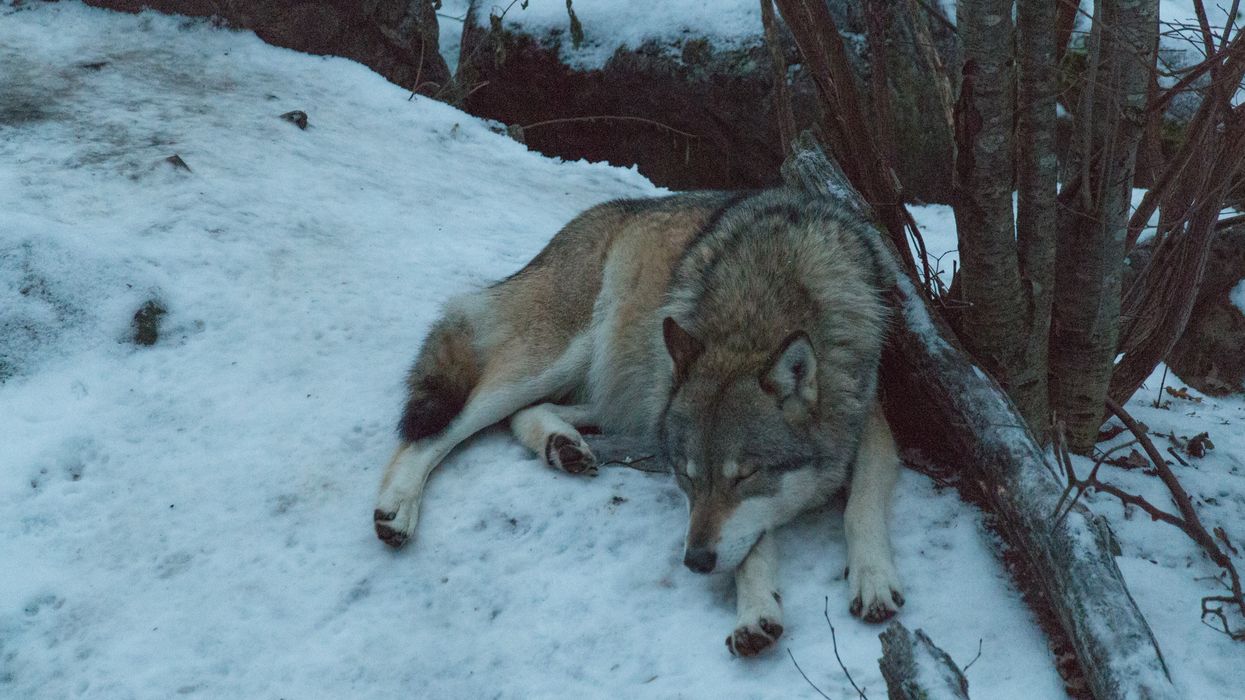
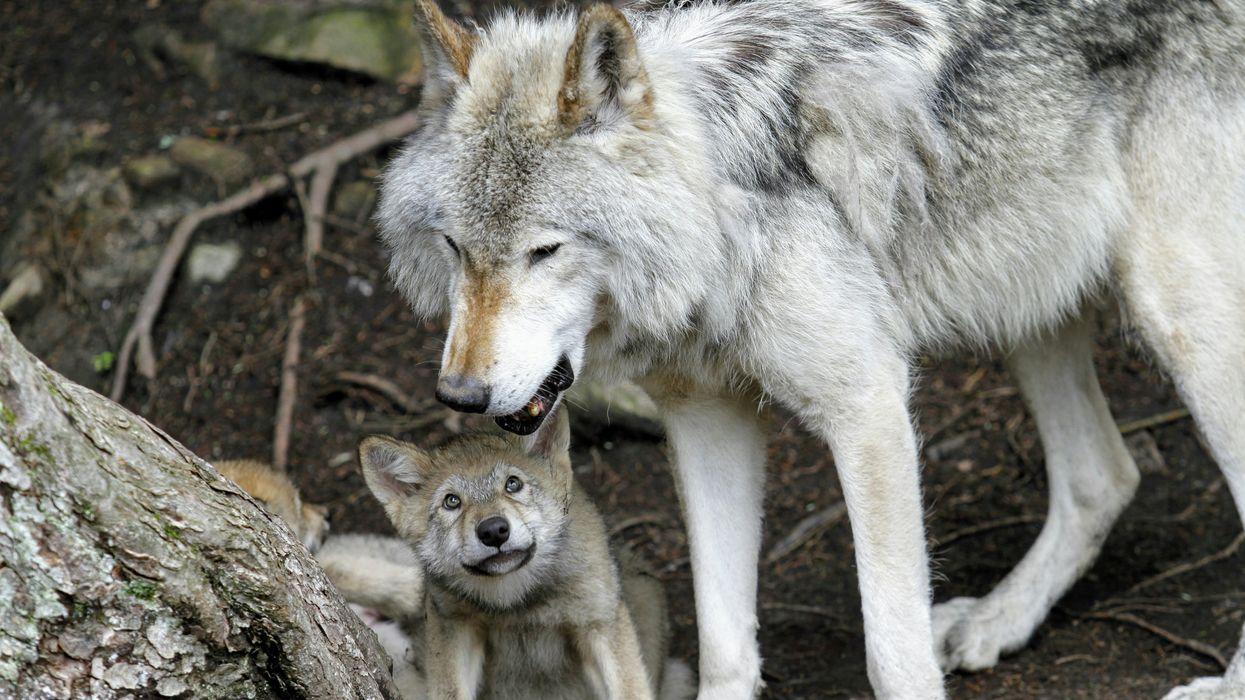
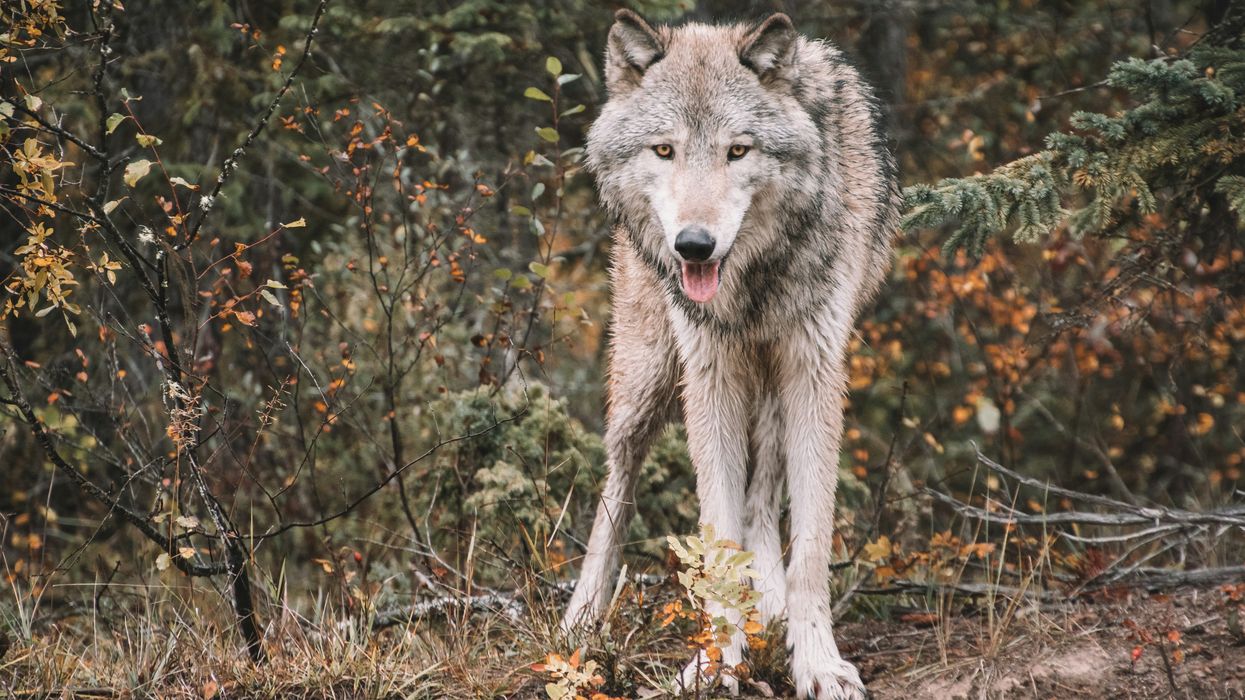
Sweden is set to start a controversial wolf hunt on Thursday that could see its declining wolf population fall by another 8%.
The country has authorized the killing of 30 of the nation's 375 wolves—or five entire families—in a move that conservationists say is illegal under European Union law. Ultimately, the Swedish government wants to nearly halve the minimum number of wolves for "favorable conservation status" from 300 to 170.
'Imagine... the outcry if this were Sri Lanka killing leopards, or Botswana lions, both much trickier animals to live with," U.K. environmentalist Ben Goldsmith wrote on social media. "Shame, shame on Sweden."
"If Sweden, one of the richest countries in the world with a population of 10.5 million people, can't accept a population of 375 wolves, what hope is there for the planet's biodiversity?"
Under the Council of Europe's Convention on the Conservation of European Wildlife and Natural Habitats, or Bern Convention, countries must preserve the populations of protected species so that they remain above a sustainable level. However, Magnus Orrebrant, the chair of the Swedish Carnivore Association, told The Guardian that E.U. law has not meant much for Sweden's wolves.
"The Swedish government since 2010 has been blatantly disregarding the wolf's special protection status, allowing a yearly licensed quota hunt and thereby breaking E.U. law," Orrebrant said. "We filed a formal complaint to the E.U. commission, leading to an infringement procedure against Sweden, as yet to no avail."
Excessive wolf hunting has been a problem in Sweden for decades, and was part of the reason that the country had no breeding population at all between 1966 and 1983. In addition, increased hunting slashed the population by nearly 20% between 2022 and 2023.
Beyond licensed hunts, Sweden's wolf population also faces pressure from poachers, according to conservation group Revolution Rov, with DNA evidence suggesting that up to 80 wolves are killed illegally each year.
"In many license hunting decisions on wolves in recent years, it has been argued that if legal hunting is allowed, illegal hunting will disappear, but that has not happened at all... Instead, even more wolves have had to die," the group wrote in a petition against 2024's hunt.
The group also wrote that Sweden's wolf population is genetically vulnerable, with many mating pairs being closely related. For the population to remain healthy, it needs an influx of new genes from wolves migrating from Finland or Russia, but these wolves are often killed before they can pair off.
Wildlife advocates outside of Sweden also criticized the 2025 hunt.
"I believe that one of the hallmarks of human progress is learning to coexist with other species that our ancestors once feared," wrote Wildlife Trusts CEO Craig Bennett on social media. "And sadly, it often feels like we still live in the Dark Ages."
Ecologist and conservationist Alan Watson Featherstone wrote: "I really do despair about humanity—we are such a selfish species. If Sweden, one of the richest countries in the world with a population of 10.5 million people, can't accept a population of 375 wolves, what hope is there for the planet's biodiversity?"
However, Sweden is not alone in Europe in its hostility to wolves. The Bern Convention in December accepted an E.U. proposal to lower the wolf's status from "strictly protected" to "protected." The decision followed complaints from farmers that the continent's rebounding wolf population was harming livestock, but conservationists say that allowing the killing of wolves will threaten the species in a vulnerable moment and is not the solution to livestock killings.
"The wolf is still endangered in many parts of Europe, and weakening its protection will only lead to further conflict and threaten its recovery," Ilaria Di Silvestre, regional director of policy at the International Fund for Animal Welfare, told The Associated Press in December.
The Bern Convention's decision, which will go into effect on March 7, will clear the way for the European Commission to alter its habitats directive for wolves to reflect their higher numbers in the mountains and forests of Scandinavia and Western Europe, which will then make it easier to approve more wolf killings.
"We are very critical to the path that the E.U. is now taking, downgrading the protection status of the wolf," Orrebrant told The Guardian. "If the E.U. follows up the latest Bern Convention decision by changing the wolf's protection status in the habitat directive, the result will be very negative not only for the wolves, but for all wildlife in Europe."
"The Fish and Wildlife Service is thumbing its nose at the Endangered Species Act and letting wolf-hating states sabotage decades of recovery efforts," said one conservation leader.
A pair of conservation coalitions on Monday made good on their threats to sue the U.S. government over its denial of federal protections for gray wolves in the northern Rocky Mountains, where state killing regimes "put wolves at obvious risk of extinction in the foreseeable future."
The organizations filed notices of their plans for the lawsuits in early February, after the U.S. Fish and Wildlife Service (FWS) determined that Endangered Species Act protections for the region's wolves were "not warranted." The Interior Department agency could have prevented the suits in the U.S. District Court for the District of Montana by reversing its decision within 60 days but refused to do so.
"The Biden administration and its Fish and Wildlife Service are complicit in the horrific war on wolves being waged by the states of Idaho, Wyoming, and Montana," declared George Nickas, executive director of Wilderness Watch, one of 10 organizations represented by the Western Environmental Law Center (WELC).
"Idaho is fighting to open airstrips all over the backcountry, including in designated wilderness, to get more hunters to wipe out wolves in their most remote hideouts," Nickas noted. "Montana is resorting to night hunting and shooting over bait and Wyoming has simply declared an open season."
"These states are destroying wolf families in the northern Rockies and cruelly driving them to functional extinction via bounties, wanton shooting, trapping, snaring, even running over them with snowmobiles."
Brooks Fahy, executive director of Predator Defense, another WELC group, pointed out that "these states are destroying wolf families in the northern Rockies and cruelly driving them to functional extinction via bounties, wanton shooting, trapping, snaring, even running over them with snowmobiles. They have clearly demonstrated they are incapable of managing wolves, only of killing them."
KC York, founder and president of Trap Free Montana, also represented by WELC, said that "Montana, Idaho, and Wyoming know that they were let off the hook in their brutal and unethical destruction of wolves even acknowledged as such by the service."
"They set the stage for other states to follow," York warned. "We are already witnessing the disturbing onset of giving the fox the key to the hen house and abandoning the farm. The maltreatment is now destined to worsen for these wolves and other indiscriminate species, through overt, deceptive, well-orchestrated, secretive, and legal actions."
The other organizations in the WELC coalition are Alliance for the Wild Rockies, Friends of the Clearwater, International Wildlife Coexistence Network, Nimiipuu Protecting Our Environment, Protect the Wolves, Western Watersheds Project, and WildEarth Guardians.
The second lawsuit is spearheaded by the Center for Biological Diversity, Humane Society of the United States, Humane Society Legislative Fund, and Sierra Club, whose leaders took aim at the same three states for their wolf-killing schemes.
"The states of Montana, Idaho, and Wyoming act like it's 1880 with the most radical and unethical methods to kill as many wolves as possible in an effort to manage for bare minimum numbers," said Sierra Club northern Rockies field organizer Nick Gevock. "This kind of management is disgraceful, it's unnecessary, and it sets back wolf conservation decades, and the American people are not going to stand by and allow it to happen."
"Rather than allow states to cater to trophy hunters, trappers, and ranchers, the agency must ensure the preservation of wolves."
Margie Robinson, staff attorney for wildlife at the Humane Society of the United States, stressed that "under the Endangered Species Act, the U.S. Fish and Wildlife Service cannot ignore crucial scientific findings. Rather than allow states to cater to trophy hunters, trappers, and ranchers, the agency must ensure the preservation of wolves—who are vital to ensuring healthy ecosystems—for generations to come."
The Center for Biological Diversity's carnivore conservation program director, Collette Adkins, was optimistic about her coalition's chances based on previous legal battles, saying that "we're back in court to save the wolves and we'll win again."
"The Fish and Wildlife Service is thumbing its nose at the Endangered Species Act and letting wolf-hating states sabotage decades of recovery efforts," Adkins added. "It's heartbreaking and it has to stop."
"The current killing regimes in Idaho, Montana, and Wyoming put wolves at obvious risk of extinction in the foreseeable future, and this core population is key to wolf survival in the West."
Two coalitions of conservation groups on Wednesday filed notices of their intent to sue the U.S. government for not granting federal endangered or threatened species protections to gray wolves in the northern Rocky Mountains or across the western United States.
The notices, sent to U.S. Secretary of the Interior Deb Haaland and Fish and Wildlife Service Director Martha Williams, give the FWS 60 days to change its finding that Endangered Species Act (ESA) protections for the region's wolves are "not warranted," or face two lawsuits. The agency's finding was
announced last week and published in the Federal Register Wednesday.
Since a congressional legislative rider and court battles stripped the area's wolves of ESA protections over a decade ago, states have stepped up their killing efforts while local and national groups have fought to protect the animals—including with a pair of petitions calling on FWS to reconsider the issue, which led to the service's latest finding.
"It's beyond frustrating that federal officials are harming wolf recovery by denying wolves in the northern Rockies the powerful federal protections they deserve," declared Andrea Zaccardi, carnivore conservation legal director at the Center for Biological Diversity, which has partnered with the Humane Society of the United States, Humane Society Legislative Fund, and the Sierra Club.
"Unlike the Fish and Wildlife Service, we refuse to sanction the annual slaughter of hundreds of wolves."
"Unlike the Fish and Wildlife Service, we refuse to sanction the annual slaughter of hundreds of wolves," she continued. "Allowing unlimited wolf killing sabotages decades of recovery efforts in the northern Rockies, as well as those in neighboring West Coast and southern Rockies states."
Nick Gevock, Sierra Club field organizer for the northern Rockies, specifically called out FWS for failing to recognize the impacts of policies in Idaho and Montana, asserting that "the regimens these states have pursued are reminiscent of the 1800s effort to eradicate wolves, and they have no place in modern wildlife management."
In recent years, Montana legislators have
advanced various measures opposed by conservationists and experts, including a "bounty program" law to reimburse hunters and trappers for their expenses. In Idaho, the state can use taxpayer money to hire private contractors to kill wolves, and there is no limit on how many wolf tags hunters can obtain.
"Nearly 30 years after wolves were reintroduced to Yellowstone National Park, wolves in the region are once again in danger of extinction," said Margie Robinson, staff attorney for wildlife at the Humane Society of the United States. "The U.S. Fish and Wildlife Service must make decisions that protect precious native wildlife for generations to come, rather than allowing states to cater to trophy hunters, trappers, and ranchers."
Yellowstone stretches across parts of Idaho and Montana but is largely in Wyoming, which has come under fire for designating gray wolves as "predatory animals" across much of the state, meaning they can be killed without a license.
Members of the coalition represented by the Western Environmental Law Center (WELC) also blasted all three states' policies. Erik Molvar, a wildlife biologist and executive director of the Western Watersheds Project, warned that "the current killing regimes in Idaho, Montana, and Wyoming put wolves at obvious risk of extinction in the foreseeable future, and this core population is key to wolf survival in the West."
Both coalitions argue that the FWS ignored "the best available science" and should not rely on the states' wolf tallies. Molvar said that "even if the states' population estimates were defensible—and they aren't, according to recent scientific analyses—the feds are underestimating the extinction agendas of anti-wolf state governments and the small and tentative state of recovering wolf populations elsewhere in the West."
Brooks Fahy, executive director of Predator Defense, also part of the WELC coalition, stressed that "Idaho, Montana, and Wyoming have become the poster children for what happens when politics trumps science."
"They are cruelly driving wolves in the northern Rockies to extinction via wanton shooting, trapping, snaring, even driving over them with a snowmobile," Fahy said. "Science shows us the importance of intact pack structures. Each family member has a vital role to play and they grieve each loss."
Joining the Molvar and Fahy's groups are the Alliance for the Wild Rockies, Friends of the Clearwater, International Wildlife Coexistence Network, Nimiipuu Protecting Our Environment, Protect the Wolves, Trap Free Montana, WildEarth Guardians, and Wilderness Watch.
"It's deeply concerning to hear that the U.S. Fish and Wildlife Service has decided not to list gray wolves, a sacred species to Native Americans in the western U.S., under the Endangered Species Act, while ignoring traditional sacred religious beliefs of traditional Native Americans," said Roger Dobson of Protect the Wolves.
"It's important to protect these intelligent and family-oriented predators to maintain ecosystem health, and to protect Native American sacred religious beliefs," Dobson added. "Hopefully, the service will take steps to address the problems with their determination before it's too late for these native wildlife species, before violating Indigenous religious beliefs."
"The FWS is tasked with preventing extinctions, using sound science when making decisions to prevent those extinctions, and with being accountable to the entire public—not funding controversial predator-control actions for the purported benefit of a few."
A rulemaking petition demanding an end to federal support for the removal of wolves and bears from states such as Alaska has been languishing at the U.S. Interior Department for almost two years, nearly three dozen conservation groups and scientists said in a letter to Interior Secretary Deb Haaland on Tuesday as they raised alarm about a recent killing operation.
Led by Public Employees for Environmental Responsibility (PEER), the Humane Society of the United States, and the Global Indigenous Council, 35 organizations wrote to the secretary to raise alarm about the U.S. Fish and Wildlife Service's (FWS) continued funding of "irresponsible and controversial predator-control projects."
Nearly 30 groups
signed the petition in September 2021 that demanded a rulemaking process to stop federal subsidies from supporting so-called "conservation projects" in which state officials oversee the killing of certain predator species—regardless of their federal protected status—in order to boost populations of other species.
"Since its submission the petitioners have not received a response," wrote the groups on Tuesday. "We request a meeting with the secretary to discuss the rulemaking petition."
The letter was sent two months after the Alaska Department of Fish and Game (ADFG) concluded a large-scale operation in which it gunned down 94 brown bears, including cubs, five black bears, and five wolves in order to increase "caribou calf recruitment" in southwestern Alaska. Caribou are often targeted by game hunters in the state.
Claiming to run a program aimed at boosting sustainability in Alaska, ADFG agents "shoot brown bears and black bears from helicopters, snare bears, and even shoot mother brown bears accompanied by cubs," wrote the groups. "Wolves face similar fates, and are targeted in the controversial 'Judas wolf' program in which radio-collared wolves who return to their pack enable ADFG agents to discover and eliminate the entire pack. The agency also aerial-guns wolves and poisons their pups in their dens."
The recent operation that took place in Alaska this spring appeared to be the largest of its kind in the state's history, with agents "inexplicably" killing at least four times as many brown bears as it had originally planned to.
The agency and other state game departments use federal aid that exceeds $1 billion annually to conduct such operations, according to PEER.
Haaland's rejection of the funding could help end the large-scale killings, the groups suggested Tuesday as they asked the interior secretary to meet with them.
Wendy Keefover, senior strategist for native carnivore protection for the Humane Society, said killing operations like the one that took place in Alaska "directly contradict federal wildlife policy," as the FWS is tasked with protecting species including brown bears and gray wolves and managing biodiversity.
"The Biden administration should suspend all further payments of federal funds to the Alaska Department of Fish and Game until its wildlife management complies with federal ecological standards," said Keefover.
Rick Steiner, board chair of PEER, also noted that killing operations are "economically counterproductive" in addition to being "scientifically bankrupt," as "millions of tourists travel to Alaska spending billions of dollars annually—just to catch a glimpse of Alaska's iconic bears and wolves in the wild."
The groups pointed to a letter signed by 55 wildlife scientists in 2018, which objected to the repeal of protections for carnivores in the interest of growing populations of caribou and other species—"privileging the human use" of wildlife "over all other considerations, including maintaining sustainable wildlife populations for future generations." The practice is ineffective, said the scientists, in addition to being disruptive of natural biodiversity.
"The scientific consensus for the last several decades has generally concluded that carnivores modulate ungulate prey populations and make them more vigorous, because predators remove the sick and weak animals which would die of other natural causes anyway, or because they reduce their competitors, including smaller wild carnivores such as coyotes, which prey on young ungulates," wrote the scientists. "Predator-control schemes, unpopular with both the Alaskan and American public are an unreliable and ineffective way to increase the abundance of ungulate."
In their letter to Haaland Monday, the groups warned that "the extinction crisis is not an abstraction; it is a clear and present danger and an impending catastrophe."
"The FWS is tasked with preventing extinctions, using sound science when making decisions to prevent those extinctions, and with being accountable to the entire public—not funding controversial predator-control actions for the purported benefit of a few," they wrote. "For these reasons, we urge your office to again consider our petition and meet with us to discuss the issues."
"It's disastrous for the entire ecosystem," warned one activist. "The existence of wolves contributes to a richer animal and plant life. Human survival depends on healthy ecosystems."
Wildlife defenders in Sweden and beyond decried the start on Monday of what's being called the largest wolf cull in modern times, arguing that killing nearly a fifth of the country's critically endangered lupine population could have grave consequences for biodiversity.
Swedish public broadcaster SVT reports hunters in the five Swedish counties with the most wolves—Gävleborg, Dalarna, Västmanland, Örebro, and Värmland—will be allowed to kill a total of 75 wolves out of a national population of 460 animals.
"The existence of wolves contributes to a richer animal and plant life. Human survival depends on healthy ecosystems."
Last winter, Sweden authorized the killing of 27 wolves, while hunters in neighboring Norway had permission to kill 51 wolves—about 60% of the lupine population—and Finland approved the culling of 27 wolves.
While Gunnar Glöersen, the predator manager at the Swedish Hunters' Association, says "hunting is absolutely necessary to slow the proliferation of wolves," Daniel Ekblom of Sweden's Nature Conservation Society called the cull "tragic."
"It could have consequences for a long time to come," Ekblom told SVT.
Other opponents of the cull noted Sweden's relatively low wolf population. Italy, for example, is only about half as large as Sweden but has around 3,000 wolves, which are strictly protected by law.
"Wolves as top predators in the food chain are a prerequisite for biodiversity," Marie Stegard, president of the anti-hunting group Jaktkritikerna, told The Guardian, warning that killing so much of "the population through hunting has negative consequences for animals and nature."
"It's disastrous for the entire ecosystem," she said. "The existence of wolves contributes to a richer animal and plant life. Human survival depends on healthy ecosystems."
Stegard added:
It is obvious that there is strong political pressure for licensed hunting for wolves, and also lynx and bear.
There is a large majority of Swedes who like wolves, even where they live. In our opinion, the reason for these hunts is simply that there is a demand for shooting wolves among hunters. The hunters' organizations have enormous power in Sweden. It is a fact that the Swedish parliament has a hunters' club open to members of all parties, with a shooting gallery underneath the parliament. This sounds like a joke but it's absolutely true.
The Swedish Parliament is also lobbying the European Union to remove wolves and bears from its list of species in need of protection.
Hanna Dittrich-Söderman, who leads the Swedish Environmental Protection Agency's wolf program, says the lupine predators hold a special place in national folklore, evoking primal fears and irrational hatred.
"There is no other animal that is so easy to both demonize and glorify as the wolf—an imagined fear or hatred has been attached to it," Dittrich-Söderman told The Local. "We have almost made it a symbol of our fearful nature as a whole, it has almost mythical qualities."
As the Biden administration on Wednesday insisted a final decision has not been made, conservation groups responded with alarm to a move that could lead to the U.S. government challenging a federal court ruling that restored protections for gray wolves in much of the United States.
"Despite President Biden's warnings about the looming threat of biodiversity loss, his administration is attempting to quash a significant ecological victory."
"The U.S. Department of Justice filed a protective notice regarding the recent decision by the U.S. District Court for the Northern District of California on federal protections for gray wolves," the Interior Department told the Duluth News Tribune. "This action is a procedural step that will provide the federal government the time needed to assess its path forward and does not signal that the federal government has determined that an appeal will be pursued."
Jamie Rappaport Clark, CEO and president at Defenders of Wildlife, was among the conservationists who expressed concern about this week's filing, framing it as a potential betrayal by President Joe Biden after the Endangered Species Act protections for gray wolves were stripped away under his predecessor.
"This announcement marks a stunning and supremely disappointing reversal by the administration," she said in a statement. "Despite President Biden's warnings about the looming threat of biodiversity loss, his administration is attempting to quash a significant ecological victory."
Related Content

The February decision that restored protections--which Clark had called "a significant victory for gray wolves and for all those who value nature and the public's role in protecting these amazing creatures"--is already under attack from hunting and ranching groups.
Collette Adkins, carnivore conservation director at the Center for Biological Diversity, vowed to the News Tribune that "no matter who appeals, we're prepared to defend the well-reasoned court order that returned lifesaving federal protections to wolves."
Outraged wildlife advocates demanded action from the U.S. government on Friday after learning that an endangered Mexican gray wolf--famous for wandering across the Southwest and named Anubis by schoolchildren--was illegally shot and killed in the Kaibab National Forest near Flagstaff, Arizona.
"The killing of Anubis... is another tragic reminder that the U.S. Fish and Wildlife Service needs to expand the recovery area."
"It's tragic that Anubis was killed and many of us are grieving his loss, but despite this heinous crime, it is also profound confirmation that Northern Arizona should be part of the wolf recovery effort," said Greta Anderson, deputy director of Western Watersheds Project, in a statement.
"The arbitrary boundary at Interstate 40 is not based on science or suitability but on the continued reluctance of the state game agencies to let wolves be wild and roam wherever they choose," she added.
The Arizona Republic reports that the U.S. Fish and Wildlife Service (USFWS) disclosed the January 2 killing to Anderson when she inquired about the location of Anubis, who was previously relocated by state officials.
According to the newspaper:
While details of the killing are limited because of the ongoing investigation, a USFWS official confirmed to The Arizona Republic on Friday that the wolf, also called m2520 by state and federal wildlife officials, was illegally shot.
"The U.S. Fish and Wildlife Service can confirm that Mexican wolf male 2520 was killed the first weekend in January," read a statement sent via email. "The incident is currently under investigation and therefore, no additional information will be released at this time."
Killing Mexican gray wolves--which are protected by the Endangered Species Act--can be punished with a year in jail plus thousands of dollars in penalties.
Conservation organizations are urging anyone with information about Anubis' death to call 1-844-397-8477 or email fws_tips@fws.gov. The USFWS, state agencies in Arizona and New Mexico, and wildlife groups are offering rewards for information that leads to a conviction.
Anubis' killing has increased pressure on the USFWS to expand the boundary of the recovery area for Mexican gray wolves. Proposed changes to how the species is managed at the federal level are open to public comment until January 27.
"The killing of Anubis, a Mexican gray wolf, is another tragic reminder that the U.S. Fish and Wildlife Service needs to expand the recovery area for this species to include Grand Canyon National Park," asserted Bryan Bird, Southwest program director at Defenders of Wildlife.
"The surrounding wilderness is the perfect habitat for Mexican gray wolves," he noted. "As the species continues to recover, conservation and coexistence must be a priority."
Emily Renn, executive director of the Grand Canyon Wolf Recovery Project, said that "we are heartbroken to learn that our adventurous young disperser wolf had his life illegally cut short by a human's bullet."
"Anubis filled us with the hope that wolves will keep coming back to the excellent habitat of the Grand Canyon region," she continued. "I am grateful for the time knowing he was in the forests nearby."
Renn predicted that "the power of people who love and care for wild creatures and want to see wolves restored to their rightful place will someday overcome the small minority of people who kill for no reason."
In what wildlife defenders called "the biggest news so far for wolf protection in the United States in 2021," a Wisconsin court on Friday sided with conservation groups and canceled this year's wolf trophy hunt season just 15 days before it was set to begin.
"Zealots hell-bent on eliminating wolves invited this legal action."
In an oral bench ruling expected to be appealed, Dane County Circuit Judge Jacob Frost issued a temporary injunction halting the hunting season--which would have started on November 6--by reducing a 300-wolf kill quota to zero until the state Department of Natural Resources (DNR) complies with its own rules, Wisconsin Public Radio reports.
"I'm not overruling the wolf hunt law. In fact, I'm saying it has to be enforced as it was written and intended," Frost explained, adding that DNR "is currently not following the law" or the state constitution.
"[DNR's] decisions are built on a faulty basis, meaning they can't stand, either," the judge added. "DNR needs to stop it. They need to actually comply with the law."
Paul Collins, Wisconsin state director for Animal Wellness Action, said in a statement that "the court brought sanity and balance to the wolf debate in Wisconsin by requiring DNR to follow the constitution and stop taking unlawful actions related to wolf management, including its reckless approach to the planned November wolf hunt."
"Zealots hell-bent on eliminating wolves invited this legal action," he added.
Michelle Lute, who has a doctorate in wolf management and is the national carnivore conservation manager for the advocacy group Project Coyote, said that "we are heartened by this rare instance of reason and democracy prevailing in state wolf policy."
"The DNR violated the constitution and... the wolf slaughter scheduled to start in November would result in catastrophic and irreparable harm," she added.
Last month, Ojibwe tribes and environmental groups sued Wisconsin seeking a preliminary injunction to stop the state from holding November's hunt.
According to the Associated Press:
Among other things, the coalition argued that the season is illegal because the Department of Natural Resources hasn't updated its regulations setting up season parameters and has been relying on an emergency rule put in place shortly after then-Gov. Scott Walker signed a law in 2012 authorizing annual seasons.
Lac du Flambeau Band of Lake Superior Chippewa President John Johnson explained in a court declaration that "the Ojibwe that hunt, fish, and gather; we take and give back. We are supposed to be looking out for the next seven generations."
"I try to do that by teaching my grandsons to just take what they need to survive," he added. "When we know it is wrong to hunt, we do not hunt. We take a step back and assess the damage. We determine how we can help so we can have the animals, the plants, the fish, for our future."
Last month, organizations representing nearly 200 tribes signed a letter to U.S. Interior Secretary Deb Haaland urging her to restore Endangered Species Act (ESA) protections to wolves nationwide, a move the groups said would "allow for the Biden administration to not only show its commitment to Indian Country, but [also] correct a wrong birthed by the previous administration."
During the final weeks of the Trump administration in January, the U.S. Fish and Wildlife Service delisted gray wolves from the ESA after 45 years of protection, despite warnings from Indigenous leaders and other conservation experts. According to a July study, Wisconsin lost as much as a third of its gray wolf population following the move.
Related Content

"The delisting of the gray wolf without tribal consultation is a stain that we are certain you don't want to preserve under your leadership," the groups wrote to Haaland.
Gussie Lord, an attorney at EarthJustice--which represents tribal nations in separate legal challenge set to be argued in federal court next week--said in a statement Friday that while "we applaud today's well-crafted decision... we also understand that it may not be the last word on this issue in the Wisconsin court system."
"We intend to pursue every opportunity to protect the Ojibwe tribes and the Wisconsin wolf population," she added.
Less than a year after a February wolf hunt condemned as "an outright slaughter," conservation advocates are warning that the animals in Wisconsin are at risk of being wiped out after state officials voted Wednesday to approve a kill quota of 300 wolves for the fall 2021 hunting season--more than twice the number proposed by the state Department of Natural Resources.
"Authorizing another aggressive hunt this year creates a real risk of nearly wiping out Wisconsin's wolves."
--Collette Adkins, Center for Biological Diversity
The "harvest quota" was approved in a 5-2 vote at an in-person meeting of the Natural Resources Board.
"The February wolf hunt in Wisconsin sparked national outcry as the fate of our ecosystems are in the midst of an extinction crisis," said Wisconsin Sierra Club chapter director Elizabeth Ward. "Yet instead of learning from this mistake, our state's Natural Resources Board voted today to double down on wolf management that goes against science and ethical norms. A wolf slaughter was approved today that will have an even more devastating impact."
Board members heard plenty of comment opposed to such a high cap. According to the Milwaukee Journal Sentinel, "Thirty-six of 48 organizations or people who testified Wednesday asked for a quota of fewer than 130, with many requesting a zero quota." The Associated Press added, "Nearly 60 people registered to speak at the board meeting Wednesday, with most calling for the DNR to put a stop to wolf hunting altogether."
In a memo (pdf) to the board, Keith Warnke, Fish Wildlife and Parks Division administrator, pointed to previous wolf hunt in February as reason for a quota grounded in "conservativism and caution." He said there was still no data on how the population fared following that event, nor any "population management experience with a second hunt in the same calendar year.
"But several board members pushed for a higher kill," the Journal Sentinel reported. Among them was Greg Kazmierski, who proposed a 504 cap. That proposal failed, but board member Terry Hilgenberg's push for a quota of 300 did.
The decision, said Ward, "represents an unprecedented and extreme departure from sound, science-based wildlife practices."
"The working quota for state-licensed hunters will almost certainly be less than 300, however," AP reported. "The state's six Ojibwe tribes," who view wolves as sacred beings connected to humans, "are entitled to claim up to half of the quota within ceded territories under treaty rights dating back to the 1800s, according to DNR spokesperson Sarah Hoye. If tribes claim their full half of the quota, state-licensed hunters will be allowed to kill only 150 wolves."
In its waning days, the Trump administration stripped federal protections for the gray wolf, paving the way for Wisconsin to resume wolf hunts. While the DNR pushed for the hunt to be postponed, the Kansas-based right-wing group Hunter Nation successfully sued. The resulting February hunt--during the wolves' breeding season--was harshly criticized.
That's in part because state hunters far surpassed the quota of 119 wolves, killing an estimated 216, the majority of which were hunted down by dogs. A study also estimated that former President Donald Trump's initial announcement of delisting likely sparked "cryptic poaching" of as many as 100 additional wolves in months ahead of that hunt.
As AP previously noted, the February hunt also elicited outrage from tribal officials in Wisconsin, Minnesota, and Michigan. In the spring edition of Mazina'igan, the publication of the Great Lakes Indian Fish & Wildlife Commission, editor Charlie Otto Rasmussen wrote, "In this unprecedented late season, with pelts degraded and of little value, the hunt was more about killing wolves than harvesting a resource for an authentic use." He further denounced "the poor application of scientific decision-making in wolf management."
Among those testifying at the Wednesday board meeting was Collette Adkins, the Minneapolis-based carnivore conservation program director at the Center for Biological Diversity.
"Authorizing another aggressive hunt this year creates a real risk of nearly wiping out Wisconsin's wolves," she said in a statement.
"Science and conservation don't seem to matter to most board members, who set this wolf-killing quota like they were haggling over a used car," she added. "We need federal protections restored so that Wisconsin's wolf population can start to heal from the extensive damage done earlier this year."
In the hours following the massacre of Walmart shoppers, targeted for being Latinx, by a killer who authored a white male nationalist screed, the right-wing disinformation machine cranked into gear.
The attack was actually a deep-state "false flag" operation, tweeted conspiracy theorist Mark Taylor, the self-described "firefighter prophet." Brendan Dilley, who hosts a MAGA-themed YouTube program, took to Twitter to ascribe the El Paso massacre to antifa, the often pugilistic anti-fascist movement. Two days later, the president of the United States, he of the alpha Twitter feed, blamed the media for both the attack in El Paso, Texas, and a subsequent massacre at a bar in Dayton, Ohio. For the small-time gaslighters like Dilley and Taylor, it was an epic assist from the Big Guy.
Taylor and Dilley are but two of the right-wing social media personalities who traffic in outlandish theories involving the so-called "deep state" or advancing the cryptic comments of an anonymous commenter who goes by the moniker "Q" in what has become known as the QAnon movement, which works on a premise that is an outgrowth of the Pizzagate conspiracy theory. That phantasmagorical theory nearly got a family restaurant shot up in December 2016 when a man with a gun drove from North Carolina to Washington, D.C., with the aim of liberating children who were said to be held in the restaurant for the alleged pleasure of top figures in the Democratic Party. Thankfully, the round he shot lodged in the restaurant's door, and the gunman was apprehended by police.
Last week, Yahoo News reported that an internal document from the Federal Bureau of Investigation designated the spread of such conspiracy theories as a violent threat to the population at large. From the leaked document: "The FBI assesses these conspiracy theories very likely will emerge, spread, and evolve in the modern information marketplace, occasionally driving both groups and individual extremists to carry out criminal or violent acts."
As Juliette Kayyem, a former official in the Department of Homeland Security, notes in the Washington Post, acts of violence committed in the name of white nationalism or white supremacy are often cast as the work of a "lone wolf." But in reality, she says, "there are no lone wolves." While Kayyem primarily focuses her attention on message boards 4chan and 8chan (the latter has been disabled since it was used to disseminate the El Paso killer's racist screed), there's a whole cottage industry of right-wing talkers, preachers and pontificators whose utterances seem designed to prompt the unhinged to unleash mayhem upon unsuspecting people.
Wiktionary defines the term "stochastic terrorism" this way: "The use of mass public communication, usually against a particular individual or group, which incites or inspires acts of terrorism which are statistically probable but happen seemingly at random."
Kayyem describes the 8chan and 4chan internet spaces, where anonymous commenters often post misogynistic, racist and other hateful messages, as places where stochastic terrorism is stoked. So, too, is virtually every social media space you ever entered--be it Twitter, YouTube or Facebook---and many you haven't even heard of.
I edit a website called Right Wing Watch, where my colleagues muck around in the fever swamps. Among the many thinly-veiled calls to violence issued through these accounts are frequent ominous warnings about a coming civil war, ostensibly fomented by progressives.
The voices articulating these predictions range from a former Republican nominee for the lieutenant governorship of the Commonwealth of Virginia to an outright white nationalist to religious-right figures and at least one well-known right-wing commentator.
You could argue that the civil war is already underway, and it's looking pretty one-sided at the moment, thanks to the stochastic terrorists of the far-right, aided by the president of the United States.