SUBSCRIBE TO OUR FREE NEWSLETTER
Daily news & progressive opinion—funded by the people, not the corporations—delivered straight to your inbox.
5
#000000
#FFFFFF
To donate by check, phone, or other method, see our More Ways to Give page.


Daily news & progressive opinion—funded by the people, not the corporations—delivered straight to your inbox.
Why we can’t afford to lose the progress frontline communities have built.
The climate justice infrastructure dedicated to serving vulnerable communities across the United States took decades to build. And it is now at risk.
After nearly 20 years working in frontline communities on environmental justice and community development, I joined Emerald Cities Collaborative as president and CEO in April 2022. Hope around renewed commitments to climate justice, community resilience, and economic opportunities was palpable, as the Infrastructure Investment and Jobs Act and Inflation Reduction Act had just been signed into law shortly after my start. With an influx of federal investments and mandates for racial equity, the promise of that moment energized the climate justice and environmental justice movements.
Today, a coordinated attack on the environmental nonprofit sector and diversity, equity, and inclusion threatens to dismantle the physical and social support networks that serve frontline communities. It is imperative that we understand what’s at stake, who benefits from the current infrastructure, and what the consequences of inaction could be.
Climate justice infrastructure provides the framework for implementing equitable climate investments for all that advance racial justice, economic justice, and environmental justice. This infrastructure includes the physical investments—such as green buildings, solar panels, green infrastructure—and the social supports necessary to ensure their equitable implementation. From community organizing to capacity building for grassroots nonprofits and workforce development programs, environmental nonprofits serve as the backbone of this social infrastructure. These efforts address both climate change and the systemic inequality that leads to disproportionate impacts on vulnerable communities.
We must stand up for nonprofits and the future that they help build—a climate future that is not only green but just.
Significant public and private investments in greener, more resilient energy, water, food, and housing infrastructure—driven by the urgency of climate change—created an unprecedented opportunity to address the environmental, income, wealth, and health disparities within low-income communities and communities of color. Realizing the full potential of these rapidly accelerating investments required a coordinated strategy that integrated local coalition building, policy, project, workforce, and small business development support. This is where the environmental nonprofits stepped in. Environmental nonprofits provided their expertise, on-the-ground leadership, capacity building, and connective tissue to support community-led climate projects, advocacy, and policy.
The breadth of organizations building this critical climate justice infrastructure is remarkable—from national nonprofits and statewide advocacy groups to grassroots organizations and volunteer community groups. We are grateful for their commitment! At Emerald Cities Collaborative (ECC), our history, experience, and dedication to climate justice, along with our support for coalitions and partnerships, equity-centered clean energy policies, and economic inclusion efforts, uniquely positioned us to serve as an intermediary within the broader ecosystem. ECC deployed a coordinated strategy of local coalition building, policy education, project implementation, workforce initiatives, and contractor development to connect disadvantaged communities nationally and in our primary regions (Northwest, Northern California, Southern California, DC-Maryland-Virginia, and Northeast) to the growing clean energy economy. We connected federal and state funding to grassroots implementation and translated new federal initiatives into community-accessible dialogue. The overarching goal was to ensure that the climate and economic benefits of the emerging clean economy were reachable to low-income communities and communities of color.
As a result of the efforts of national nonprofits, community-based organizations, and institutions, many organizations and communities historically left out were able to access federal funding for community climate investments, many for the first time. Communities that have borne the brunt of environmental injustice have benefited from stronger leadership, enhanced organizational capacity, and new tools for community education and organizing.
These gains are all at risk due to the growing attack on environmental nonprofits, the rollback of climate policies, and the disintegration of environmental justice funding. Legal and reputational attacks, such as naming Emerald Cities Collaborative in the House Energy and Commerce Committee’s Exploring the Green Group Giveaway Behind the Biden-Harris Environmental Justice Programs report, demonstrate how politically motivated attacks are being used to sway public opinion. This, coupled with the outright illegal termination of environmental justice grants, has had a chilling effect on our work.
However, the impacts are not evenly distributed. Grassroots organizations and BIPOC-led nonprofits are disproportionately vulnerable to these attacks compared with large national organizations with greater resources and political capital. Fear and misinformation have caused some philanthropic funders to pull back. Organizations are being forced to divert resources from mission-critical work to legal defense and crisis communications. And this does not include the mental and emotional toll that environmental justice and climate justice leaders are experiencing.
The stakes are high. Without the valuable work of these organizations, climate solutions may revert to top-down, extractive models that center profit over community. The loss of high-road jobs, apprenticeships, and clean energy workforce programs, along with increased vulnerability to extreme climate events, will unduly affect frontline communities already facing the greatest risk. At the same time, the voices of Black, Indigenous, and immigrant-led movements are in danger of being systematically excluded from the climate conversation.
For us to meet our national climate goals and the just transition agenda, we need strong local, community-driven infrastructure. How can we ensure that the momentum for equitable climate investments in frontline communities is not entirely lost? Will we use this moment to accelerate climate justice—or allow fear and misinformation to dismantle it?
Now is the time for philanthropy, government, and the public to stand in solidarity with national and frontline organizations. Philanthropy must fund general operating support and legal protections for national BIPOC-led and frontline nonprofits. We must resist and roll back state-level attacks on nonprofit speech and operations, as well as the easing of climate policies. And we must educate audiences, donors, and lawmakers about the irreplaceable role of climate justice organizations.
The attack on climate justice infrastructure is about PEOPLE, PROGRESS, and PRINCIPLES! We must stand up for nonprofits and the future that they help build—a climate future that is not only green but just. We must stand up for communities that are resilient and thriving, not just surviving. The alternative is not an option.
"These bipartisan investments need to start flowing immediately," the top Democrat on the Senate Appropriations Committee said of the GAO finding as a lawsuit over the funding got a boost from green groups.
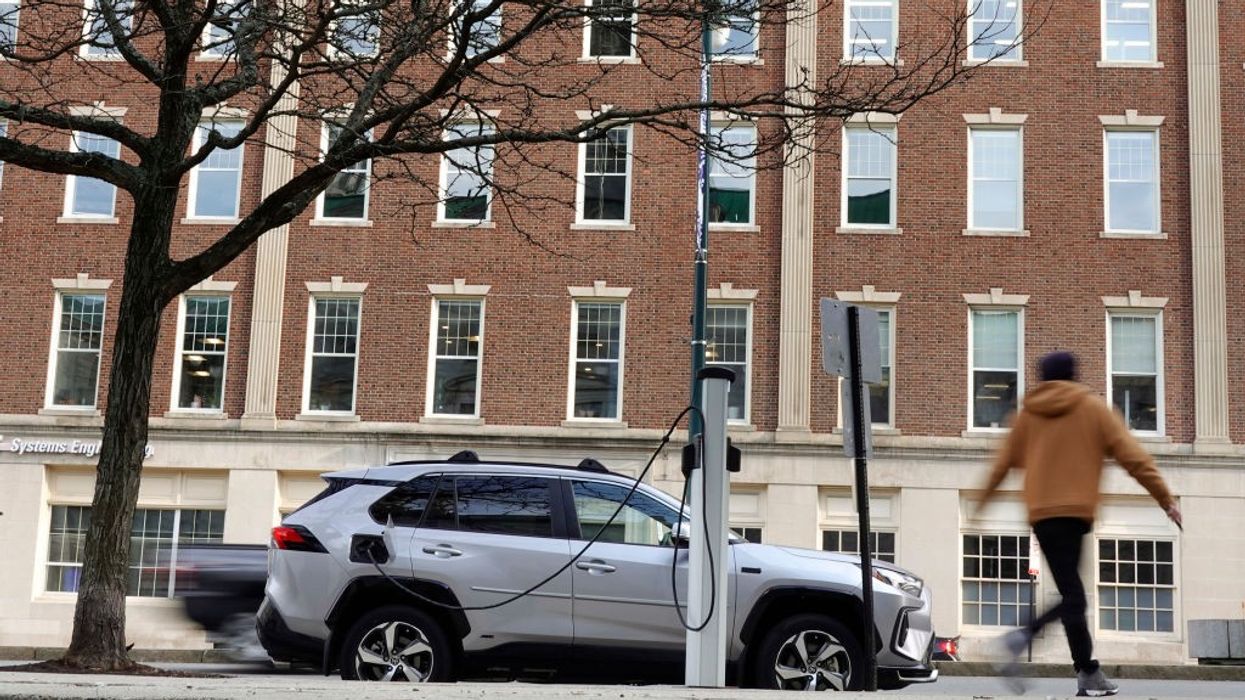
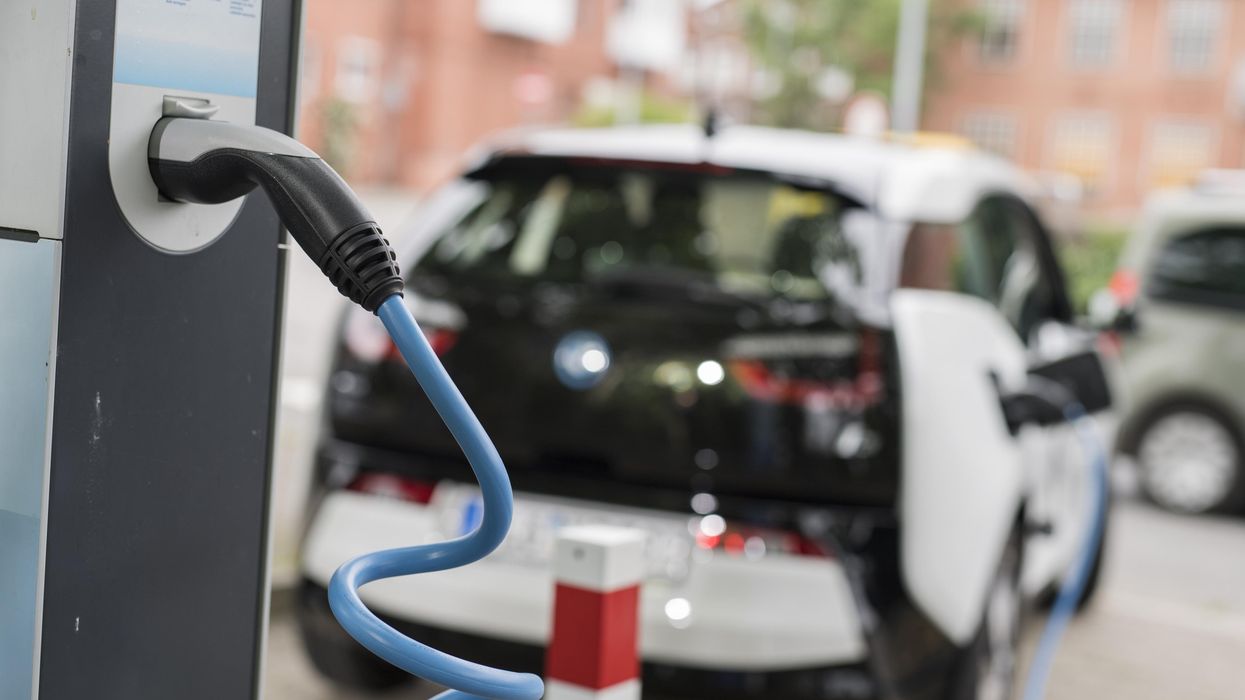
Key congressional Democrats on Thursday welcomed a government watchdog's finding that the Trump administration unlawfully withheld appropriated funds for building electric vehicle charging infrastructure across the United States‚ a decision that came as advocacy groups joined a related lawsuit filed by state attorneys general.
Shortly after returning to office in January, President Donald Trump issued an executive order directing agencies to pause disbursement of funds appropriated under the Inflation Reduction Act and the bipartisan Infrastructure Investment and Jobs Act, specifically mentioning the National Electric Vehicle Infrastructure (NEVI) Formula Program.
In response, the U.S. Department of Transportation (DOT) and one of its agencies, the Federal Highway Administration, in February canceled previously issued guidance for the NEVI program and suspended plans that states had submitted for grant money—which led to calls for Congress to stand up to the administration's "illegal attempts to halt legally mandated funding."
The Government Accountability Office (GAO) said in its Thursday decision that the department violated the Impoundment Control Act: "DOT is not authorized to withhold these funds from expenditure and DOT must continue to carry out the statutory requirements of the program. While DOT cannot withhold these funds under the ICA, DOT could propose funds for rescission or otherwise propose legislation to make changes to the NEVI Formula Program for consideration by Congress."
"The Trump administration didn't just break the law—it shortchanged the American people."
Politico reported that "the GAO could issue similar rulings in the coming months, as the independent, nonpartisan watchdog agency works through at least 39 investigations into whether the Trump administration violated the Impoundment Control Act. GAO rulings are nonbinding but could influence Congress' response to... Trump's freezing of billions of dollars lawmakers intended to flow to specific programs and projects, as well as the many ongoing lawsuits challenging the president's tactics."
In a Thursday statement about the GAO findings, U.S. Senate Appropriations Committee Vice Chair Patty Murray (D-Wash.) said, "This legal decision affirms what we've long known: The president is breaking the law to block funding Congress passed on a bipartisan basis and that is owed to the American people—simply because he disagrees with it. This plain fact is unacceptable—and it cannot stand any longer."
"Congress passed the Bipartisan Infrastructure Law by wide margins and specifically provided funding for every state to build out a network of chargers for the electric vehicles that families are increasingly turning to and that are being made right here in America, she continued. "These investments should be getting out the door—creating new jobs and helping Americans get where they need to go without interruption—but President Trump has illegally choked this funding off."
"These bipartisan investments need to start flowing immediately—as do the hundreds of billions of dollars in other investments President Trump is holding up," she added, taking aim at his Office of Management and Budget (OMB) director. "I don't care about Russ Vought's personal interpretation of our spending laws; the Constitution is clear, and President Trump simply does not have the power of the purse—Congress does."
House Budget Committee Ranking Member Brendan Boyle (D-Pa.) released a similar statement welcoming the GAO's new legal opinion that "the Trump administration broke the law when it blocked funding that Congress had already approved."
"That money was supposed to build and maintain a nationwide EV charging network—and with it, create good-paying jobs in communities across the country," he stressed. "Instead, the administration stalled economic growth, delayed critical infrastructure, and undermined job creation—all without a shred of legal authority."
"This wasn't just a legal violation. It was an economic setback for American workers, and a direct hit to the communities counting on these investments," Boyle added. "The Trump administration didn't just break the law—it shortchanged the American people."
According to Politico, while the DOT could not be reached for comment, an OMB spokesperson called GAO's opinion "wrong" and said the department is "appropriately using the authority granted to it by statute to review state plans."
Standing up for cleaner vehicles and clean air. @sierraclub.org @climatesolutions.org @earthjustice.org and allies sue Trump Admin for illegally impounding funds that Congress appropriated for EV charging. www.sierraclub.org/press-releas...
[image or embed]
— Ross Macfarlane (@rossmacfarlane.bsky.social) May 22, 2025 at 3:53 PM
The attorneys general of 16 states and the District of Columbia disagree, and have filed a lawsuit in the U.S. District Court for the Western District of Washington. The Sierra Club, CleanAIRE N.C., Climate Solutions, Earthjustice, Natural Resources Defense Council, Plug In America, the Southern Alliance for Clean Energy, the Southern Environmental Law Center, and the West End Revitalization Association joined that legal challenge on Thursday.
" Donald Trump is trying to cut jobs, increase pollution, and endanger our health. We refuse to let him," said Sierra Club executive director Ben Jealous in a statement. "NEVI benefits everyone, whether you drive an EV or not, and the only people who benefit from blocking it are Big Oil and auto executives seeking to keep us hooked on fossil fuel-powered cars, while communities in every corner of the country lose out on infrastructure investments in our growing clean energy economy."
"The NEVI program is working and states are legally entitled to the money allocated to them by Congress," Jealous added. "Once again, we are taking the Trump administration to court over its reckless and illegal actions."
"Freezing these EV charging funds is yet another one of the Trump administration's unsound and illegal moves," said one climate advocate.
Climate campaigners are blasting the Trump administration's move to halt a $5 billion initiative to build electric vehicle chargers along highways across the United States and calling on Congress to fight back against the attack on the grant program from the 2021 bipartisan infrastructure law.
The National Electric Vehicle Infrastructure (NEVI) Formula Program was established by the Infrastructure Investment and Jobs Act. Natural Resources Defense Council's Beth Hammon said in a Friday statement that "on a bipartisan basis, Congress funded this program to build a new vehicle charging network nationwide. The Trump administration does not have the authority to halt it capriciously."
Hammon, a senior vehicle charging advocate at the group, warned that "stopping funding midstream will result in chaos and delays in states across the nation. It will throw state efforts into turmoil, wreak havoc with the companies that install the chargers, and risk the jobs of their workers. The only winner from this chaos is the oil industry."
"This should not stand. Courts have already blocked the Trump administration's other illegal attempts to halt legally mandated funding," she added. "Congress needs to stand up for itself: This move and many others from the Trump administration steals away its constitutionally established spending authority."
Katherine García, director of the Sierra Club's Clean Transportation for All campaign, similarly declared Friday that "freezing these EV charging funds is yet another one of the Trump administration's unsound and illegal moves. This is an attack on bipartisan funding that Congress approved years ago and is driving investment and innovation in every state, with Texas as the largest beneficiary."
"Throwing out states' plans, which were carefully built together with business, utilities, and communities, only hurts America's growing clean energy economy," she stressed. "The NEVI program has helped the U.S. build out the infrastructure needed to support our nation's necessary transition to pollution-free vehicles. More electric vehicle charging means better public health, reduced climate emissions, good-paying green jobs, and healthier communities."
President Donald Trump has taken various anti-climate actions since Inauguration Day—declaring a "national energy emergency," ditching the Paris agreement again, and enabling new liquefied natural gas exports. One executive order calls for "terminating the Green New Deal," and directs agencies to pause disbursement of funds appropriated through the Inflation Reduction Act and the 2021 law, specifically mentioning the NEVI program.
Trump targeted the initiative despite his ties to Tesla CEO Elon Musk, head of the president's destructive Department of Government Efficiency. Wired reported that the billionaire's "electric automobile company has been a recipient of $31 million in awards from the NEVI program, according to a database maintained by transportation officials, accounting for 6% of the money awarded so far."
The Federal Highway Administration on Thursday sent a letter—first reported by InsideEVs—informing state transportation departments that "the new leadership of the Department of Transportation (U.S. DOT) has decided to review the policies underlying the implementation of the NEVI Formula Program," and, as a result, "is also immediately suspending the approval of all" state deployment plans previously greenlit by the Biden administration.
As Heatmap detailed:
According to Paren, an EV charging data analytics firm that has been closely following the rollout of the NEVI program, states are legally entitled to spend roughly $3.27 billion on NEVI. That accounts for plans approved for fiscal years 2022 through 2025. To date, states have awarded about $615 million of the funds to just under 1,000 projects—with 10% of those projects being led by Tesla.
The letter says states will still be able to get reimbursed for expenses related to previously awarded projects, "in order to not disrupt current financial commitments." But the more than $2.6 billion that has not been awarded will be frozen.
The outlet noted that advocates expected Trump's attacks on the program won't survive legal challenges.
"This should be carefully scrutinized by states and the legal community," said Justin Balik, the senior state program director for Evergreen Action, "as it looks like an attempt to sabotage the program based on ideology that's dressed up in bureaucratic language about plan and guidance revisions."
Andrew Rogers, a former deputy administrator and chief counsel of the Federal Highway Administration, told Wired that "there is no legal basis for funds that have been apportioned to states to build projects being 'decertified' based on policy."
Paren chief analyst Loren McDonald also doesn't think that the Trump administration can legally suspend the program.
"I'm assuming the lawsuits from states will start soon, and this will go to court and Congress," McDonald told Politico. "But the Trump [administration] will succeed in just causing havoc and slowing things down for a while."
Already, Alabama, Oklahoma, Missouri, Rhode Island, Ohio, and Nebraska have put their NEVI programs on hold.
Whether Congress—particuarly Democrats, who are the minority party in both chambers—will fight back is unclear. Hill Heat's Brad Johnson pointed out on the social media platform Bluesky that two dozen members of the Senate Democratic Caucus voted with Republicans to confirm Trump's DOT chief, Sean Duffy.
After 24 Senate Democrats joined all GOP to confirm climate denier Sean Duffy as Transportation Secretary, he illegally called for the shut down of the National Electric Vehicle Charging Program, established by the Bipartisan Infrastructure Law.
[image or embed]
— Brad Johnson ( @climatebrad.hillheat.com) February 6, 2025 at 11:36 PM
As Common Dreams reported last month, right after Duffy was confirmed, the secretary directed DOT staff to immediately begin the process of rescinding or replacing former President Joe Biden's clean car pollution standards.
"These commonsense, popular fuel economy standards save drivers money at the pump and reduce dangerous pollution from vehicles," Sierra Club's García said at the time. "Sean Duffy is selling American families out to Big Oil, burdening us with higher fuel prices and more polluting gas-guzzlers that harm our health."
"Our report clearly lays out the way carbon capture tax credits rig the system in favor of the oil and gas industry to the tune of billions of dollars," one expert said.
As the U.S. moves to invest in climate solutions, is the money going toward projects that will meaningfully reduce emissions and transition the nation's energy system away from fossil fuels?
A report released Wednesday by worker-owned corporate accountability and environmental justice research organization Empower found that just 34 carbon capture and storage (CCS) projects in Texas could receive between $3.2 billion and $33 billion in annual tax subsidies.
At the same time, most of the carbon dioxide pipelines in the state are managed by the major oil and gas companies like Kinder Morgan, Occidental Petroleum, and ExxonMobil that played a disproportionate role in creating the climate crisis in the first place.
"Carbon capture and storage is the most expensive and least effective carbon mitigation solution. It's really not where we need to be investing our money," said Paige Powell, the policy manager at Commission Shift, at a press briefing announcing the new research. "And the public dollars coming from the federal government to fossil fuel companies are our dollars, our taxpayer dollars that could be better spent elsewhere."
"I think it's important for us to ask ourselves, if carbon capture is receiving so much public dollars, why is there little public input?"
For its report, Empower turned up 98 carbon dioxide-related projects in the state of Texas, including 47 pipelines and 13 Class VI Geological Storage projects. These projects are currently primarily funded through tax breaks and U.S. Department of Energy (DOE) subsidies; the report authors found little evidence of any private investments.
"Our report clearly lays out the way carbon capture tax credits rig the system in favor of the oil and gas industry to the tune of billions of dollars," Empower's Samuel Rosado said in a statement. "Public funding and tax breaks are the largest sources of revenue for CCS projects. Without the massive federal investment, the private sector deems most CCS projects unprofitable."
The main tax credit for CCS is the 45Q tax credit, which assigns a dollar amount for every metric ton of carbon dioxide captured and permanently stored. While this credit was first created by the Energy Improvement and Extension Act of 2008, the Inflation Reduction Act expanded it, raising the credit to $85 per metric ton. At the same time, the Infrastructure Investment and Jobs Act earmarked more than $8 billion for the DOE's CCS programs.
"These are the key bills that were enacted that enabled CCS to be at least more financially available than it previously was," Rosado said in the briefing.
Yet climate and accountability advocates are concerned that the money is being misdirected.
Powell noted that CCS technology had been around for 50 years, but had failed to advance.
"All of these projects have been largely unprofitable, and they haven't expanded the way that renewables and other climate solutions have, primarily because the technology is problematic," Powell said. "It's unsafe, it's fraught with mechanical failures, and not to mention wildly expensive when compared to other climate solutions."
Dominic Chacon of the Texas Campaign for the Environment said that industry boosting of CCS amounted to a form of "greenwashing."
"It is essentially a marketing PR branding ploy to downplay the obvious risks associated with fossil fuels, to try and rebrand this industry as something that we need for the future," Chacon said.
Autumn Hanna, the vice president of Taxpayers for Common Sense, noted that there was a history of fraud in past allocation of CCS subsidies.
"A Treasury investigation found that from 2010 to 2019, 90% of tax credit claimants failed to comply with IRS [Internal Revenue Service] and EPA [Environmental Protection Agency] requirements," Hanna said in a statement. "Instead of throwing good money after bad, we should focus our limited resources on climate solutions we know are safe and effective."
At the same time, most federal CCS subsidies actually ended up going toward injecting carbon dioxide into depleted oil wells in order to extract even more oil, which is currently the only profitable use of the technology.
"Continuing to funnel these subsidies and tax breaks to the oil companies, which mostly use it to extract more fossil fuels, really weakens its supposed climate benefits," Hanna said in the briefing.
In Texas specifically, there are concerns about the safety of CCS infrastructure and its impact on ecosystems and communities, given the state's weak regulatory culture.
"We need to chart a new course here in Texas and in Washington to incentivize climate solutions that actually work."
"Our state oil and gas regulator, the Railroad Commission of Texas, is reluctant to oversee the industry in a way that protects people and the environment," Powell said.
The Empower report found that 19 CCS projects overlap with at least 24 million acres of water, threatening both coastal and river environments. The report authors also ran into a lack of transparency.
After filing Freedom of Information Act (FOIA) requests to the Environmental Protection Agency to access data about CCS projects, they received documents with entire pages redacted on the behest of the companies and with the permission of the EPA.
"This is very dangerous when it comes to corporate accountability and transparency on environmental issues, because entire pages were redacted from FOIA requests and public information requests that are incredibly important for communities and safety in these communities," Rosado said.
The advocates called for greater transparency and accountability around public financing for untested and expensive climate solutions.
"I think it's important for us to ask ourselves, if carbon capture is receiving so much public dollars, why is there little public input?" Chacon asked. "There is no public transparency on this technology."
Hanna called for putting "the breaks on the whole thing until we start to really answer some big questions that are out there instead of just autopilot expansions and extensions that carry huge costs and, again, leave us with these big questions and this lack of transparency and oversight."
Community organizations in the Lone Star State are petitioning the EPA to reject the Texas Railroad Commission's request to have primary oversight over CCS projects in the state.
"Allowing Texas to continue down this path is irresponsible and only serves oil and gas interests. That's why it's critical that the Environmental Protection Agency not hand over regulation of dangerous CCS projects to the Railroad Commission of Texas, which has shown that it's in the pocket of fossil fuel companies, which stand to profit while putting our communities at risk," Powell said in a statement. "We need to chart a new course here in Texas and in Washington to incentivize climate solutions that actually work."
To that end, Commission Shift is also urging concerned residents to comment on new EPA draft permits for CCS projects in the Permian Basin.
"Let them know we need an extension to review the permits and that we really just don't want these here in the Permian, it's not the right place for all these projects," Powell said.
"If we want to tackle congestion and the climate crisis, instead of offering platitudes, the next transportation bill needs to offer clean mobility options, like transit, car share, active modes, and electrification," said one analyst.
The law that the Biden administration has heralded as "a once-in-a-generation investment in America's infrastructure" that would help to "build a clean energy economy" has led to an explosion in state-level spending on highway expansion, leading one transportation advocacy group to project on Wednesday that the Bipartisan Infrastructure Law will result in more emissions from transport than if it hadn't passed.
The law, officially known as the Infrastructure Investment and Jobs Act (IIJA), gave state transportation officials discretion over how to spend money distributed by the $1.2 trillion package, but Transportation for America warned in a new analysis of 57,000 projects that the law has revealed itself to be a "climate time bomb," with more than half of the funds—about $70 billion—so far spent on resurfacing and expanding highways.
Only about $25 billion of the money dispersed to states has been spent on transit and passenger rail, even as Americans clamor for more public transportation options.
As Inequality.org reported last week, a 2023 nationwide survey found that 71% of respondents believed the U.S. "should be shifting funding from highways to public transit," and 70% said such a shift would be better for people's "health, safety, and economy."
"Considering the billions of federal dollars already spent on highway expansion projects, it's going to take more than self-congratulation over the bill's historic funding to undo the environmental harms."
Just 18% said building more highways and highway lanes would reduce traffic, cutting down on greenhouse gas emissions—of which transportation is already the biggest source globally and in the United States.
Transportation for America found that unless states change course, highway expansions paid for by the IIJA will lead to more than 178 million tons of greenhouse gas emissions by 2040 and will be only slightly offset by emissions-reducing measures in the law.
"While the IIJA could have been a win for the environment, across the country, states have instead used this once-in-a-generation level of funding to expand roadways the same way they've been doing for years," wrote Corrigan Salerno, a policy associate for the group. "Considering the billions of federal dollars already spent on highway expansion projects, it's going to take more than self-congratulation over the bill's historic funding to undo the environmental harms."
The group noted that the Biden administration advised states to prioritize highway repairs over expansion, but states including Texas and California have forged ahead with plans to increase congested roads' capacity for more vehicles.
"So much of the decision making falls to state departments of transportation," Mary Buchanan, research and policy manager at TransitCenter told The Guardian. "There are essentially 50 opportunities to get this right, I guess, or to potentially get it wrong, in terms of how money is being spent."
The analysis was released a day after an Indiana state House committee approved a bill delaying implementation of dedicated bus lanes in Indianapolis to "study the transportation option," with Republicans in favor of the bill saying the state needs to have an "overall conversation about road funding."
One Democratic lawmaker who has advocated for more public transit options in the city "broke into tears," according to local public broadcasting affiliate WFYI, as he called the decision "really, really, really bad public policy."
Indianapolis residents had testified for months against the bill, WFYI reported.
Salerno called on the Biden administration and the U.S. Congress to "explore every means available" to reduce transportation emissions.
"Congress needs to get real—the largest and most growing sector of emissions is transportation," Salerno wrote. "If we want to tackle congestion and the climate crisis, instead of offering platitudes, the next transportation bill needs to offer clean mobility options, like transit, car share, active modes, and electrification—not just the same strategies that got us in this position in the first place."
The congressionally mandated assessment finds that the climate crisis is already increasing the number of deaths, injuries, and illnesses in every region of the United States.
I’ve read dozens of harrowing stories about extreme heat this year, but there’s one I just can’t shake. Ramona and Monway Ison, who were in their 70s, died along with their dog Belle from heat-related causes the very night they were approved for a loan to fix their broken air conditioner. The A/C in their mobile home had been out for days during a brutal heatwave. But due to limited income, mobility issues, and a belief that they were used to the Texas heat, the couple stayed put—and perished as a result.
Heatwaves and other climate-fueled extremes are coming for us all, but they’re coming faster and harder for people with intersecting vulnerabilities like the Isons. That’s one of the main messages from the Fifth National Climate Assessment, released Tuesday by the Biden-Harris administration. The congressionally mandated assessment of the current and future risks of climate change finds that the climate crisis is already increasing the number of deaths, injuries, and illnesses in every region of the United States. Systematic racism, discrimination, and disinvestment are exacerbating these harms, particularly in low-income households, communities of color, and Indigenous communities.
For example, the report repeatedly invokes the threat of heat to workers—particularly farmworkers, who toil for long hours outdoors for little pay. Anyone who’s spent hours doing yard work or outdoor exercise has an inkling of how rough the heat can be. But regular exposure to high temperatures combined with insufficient access to food, drinking water, indoor cooling, and healthcare is a recipe for tragedy. Even workers who don’t die from heat face lost work hours and high healthcare costs.
Cutting emissions will help households like the Isons survive the summers of the future, but adaptation is needed to protect people now.
Lest you think farmworkers dying in the heat is a sad problem, but not your problem, think again. As the assessment states, “These effects on farmworker safety and productivity influence the broader economy through reduced agricultural output and higher food prices.”
So, what’s to be done?
One: We need to drastically reduce the pollution from fossil fuels that’s heating our climate up to dangerous levels. Although the United States still has a lot of work to do to meet its national commitments, historic investments through the Infrastructure Investment and Jobs Act of 2021 and the Inflation Reduction Act of 2022 will help move us in the right direction.
Policies that cut climate-changing pollution—known as mitigation—also protect our health by cleaning up the air. In fact, the assessment finds that “The economic value of avoided hospitalizations and premature deaths from mitigation activities is larger than the cost of implementation.”
Two, and just as importantly: We need to reduce the risks of climate impacts that we’re already experiencing today and prepare for additional impacts in the future. This set of actions, known as climate adaptation, is admittedly complex and getting harder the warmer the world gets. Policymakers, funders, and the private sector have also moved far more slowly on adaptation than on mitigation.
But relying solely on mitigation is not an option. Per the assessment, “Even if greenhouse gas emissions fall substantially, the impacts of climate change will continue to intensify over the next decade.” Cutting emissions will help households like the Isons survive the summers of the future, but adaptation is needed to protect people now.
The National Climate Assessment offers multiple adaptation options to protect health, including:
However, none of these options are sufficient on their own. For example, the Isons would probably still be alive today if their A/C was repaired more quickly or if they had spent a few days with a neighbor. But we can’t air condition our way out of the growing threat of extreme heat, and instead need to rethink how entire neighborhoods and cities are laid out. Similarly, occupational heat standards are essential to protect the workers repairing our roads, delivering our packages, and growing our food. But heat standards will only get us so far without tackling the exploitative labor practices that force heat-vulnerable workers to choose their job over their lives.
In other words, adaptation will have to be nothing less than transformational. That will require upending the historic laws, policies, and practices that are putting Americans in harms’ way and keeping them from living their full, productive, joyful potential. And it requires getting started now.
Not one new pipeline or drilling rig should needlessly threaten communities and our planet when we know that the end of the fossil fuel era is on the horizon.
The following is part of a series of opinion pieces Common Dreams is publishing in the lead-up to the March to End Fossil Fuels on Sunday, September 17 in New York City. Read the rest of the series and our complete coverage here.
This Sunday, I will join thousands of people in New York City for the biggest climate mobilization since before the pandemic, urging President Biden and other world leaders to act boldly to stop fossil fuel expansion and extraction.
Among those thousands demanding a just transition away from fossil fuels will be Sierra Club staff, members, and volunteers and allies from Michigan and Wisconsin, representing the years-long fight to shut down Line 5, an aging and deteriorating oil pipeline operating illegally in the Great Lakes and threatening the drinking water of 40 million people.
We will also be joined by representatives from Gulf Coast communities in Texas and Louisiana who already experience disproportionate harms from the fossil fuel and petrochemical industries and are now being put at even greater risk by the industry’s planned expansion of methane gas exports, with almost 30 new or expanded facilities proposed or under construction in the Gulf Coast region alone.
Watching these extreme weather events claim lives and destroy livelihoods is scary, and it is even scarier to think this summer could be just a preview of what’s to come if we don’t change course.
For far too long, these communities and many more have lived with the daily threat of toxic pollution, explosions, leaks, and spills from fossil fuel operations. And they’re not the only ones who suffer the consequences of the fossil fuel industry’s unchecked expansion. The unprecedented heatwaves and devastating wildfires, hurricanes, and floods that have faced communities across the country this summer have made it clearer than ever that we have no time to waste in ending our reliance on the dirty fossil fuels that are polluting our communities and driving the climate crisis.
Watching these extreme weather events claim lives and destroy livelihoods is scary, and it is even scarier to think this summer could be just a preview of what’s to come if we don’t change course. But here’s the good news: We already have the tools to avert the worst of the climate crisis and rapidly transition to a cleaner, more just, more prosperous future by going all-in on clean energy and winding down our use of dirty fuels like coal, oil, and gas.
In fact, the International Energy Agency, the world’s leading energy analysis and policy organization, is now projecting that we are “witnessing the beginning of the end of the fossil fuel era” and that the world will hit peak demand for fossil fuels before 2030. According to the IEA, demand will decline earlier than many anticipated, in large part due to the rapid increase in clean energy.
That explosion in clean energy deployment has been accelerated by ambitious policy driven by the Biden administration through the Infrastructure Investment and Jobs Act and the Inflation Reduction Act, the largest investments in our climate and clean energy in U.S. history. Collectively, these unprecedented investments will put us on a path to cutting climate pollution by 40% by 2030 while creating over 9 million family-sustaining jobs over the next decade. True to his commitment to do more to advance climate justice than any president before him, President Joe Biden has also taken action to block oil and gas drilling in landscapes sacred to Indigenous communities like the Greater Chaco region and the Arctic National Wildlife Refuge.
But at the same time, the United States remains the biggest producer of oil and gas in the world, and major new fossil fuel projects like the fracked gas Mountain Valley Pipeline, the Willow oil project in Alaska, and gas export terminals on the Gulf Coast are still receiving federal approvals to move forward.
Not one new pipeline or drilling rig should needlessly threaten communities and our planet when we know that the end of the fossil fuel era is on the horizon. As communities across the country are ravaged by extreme weather and countless more are threatened by the daily threat of toxic fossil fuel pollution, we simply cannot afford to compromise or sacrifice any more to the fossil fuel industry.
President Biden has the power to break free from fossil fuels, and he should use it. We are coming together to urge him to stop federal approvals for new fossil fuel projects, phase out fossil fuel extraction in our public lands and waters, and do everything in his power to block dangerous, polluting projects like Line 5, Dakota Access Pipeline, and gas export facilities in the Gulf Coast and Alaska. By doing so, he will build on the important progress his administration has already made toward cutting climate pollution and advancing environmental justice.
We all deserve a world free from fossil fuels. This is a critical moment for our planet and for President Biden to lead the world toward a clean energy future. This weekend we will be in the streets urging him to seize it.
Even as climate advocates push for the equitable and effective implementation of the IRA and IIJA, we also need to be thinking about our next big steps.
A reporter recently asked me what the next big piece of climate legislation would ideally include. Great question, right? With the help of my colleagues across the Climate & Energy and Clean Transportation programs at the Union of Concerned Scientists, or UCS, I’ve started a wish list!
Yes, over the past year, Congress has made unprecedented investments in our climate future. The largest of these investments has been the Inflation Reduction Act (IRA), which includes hundreds of billions of dollars in funding for clean energy, though the Bipartisan Infrastructure Law, or Infrastructure, Investment, and Jobs Act (IIJA) also includes funding for building climate resilience. Those investments were hard won and are already starting to benefit the U.S. economy and the nation’s clean energy infrastructure, particularly in Southeast states and GOP congressional districts.
The U.S. is in a critical moment when it comes to the preservation and implementation of these two historic bills because, while imperfect and insufficient on their own, they are central to meeting our country’s climate goals of reducing national emissions by at least 50-52% by 2030 and achieving net zero by 2050. They are also under a barrage of attacks, even as people across the country are enduring a brutal summer of heat, wildfires, smoke, and flooding. But if this Danger Season has shown us anything, it’s that we remain unprepared for the types of hazards that come along with a warming world.
And so even as UCS and other climate advocates push for the equitable and effective implementation of the IRA and IIJA, we also need to be thinking about our next big steps: Steps that can fill the gaps that still remain; steps that address the need to build climate resilience head on; steps that go beyond U.S. borders; and steps that align our systems and infrastructure with the realities of climate change.
When it comes to determining whether we’ll be able to avoid the worst consequences of climate change, we’re in a make-or-break decade. Cutting heat-trapping emissions sharply and building true climate resilience as a nation and fostering the growth of such climate action around the world will require a strong implementation of both the IRA and IIJA as well as additional, transformative financial, policy, and structural investments. So, while it’s critical to make the most of the IRA and IIJA by ensuring they withstand partisan attacks and by implementing the hell out of them, it’s also important to think big about what comes next.
The story of the grassroots initiative that launched a solution-oriented Ocean Climate Action Plan that helped shape the Biden Administration’s approach to climate.
The ocean was the hottest ever recorded last year according to a report from a team of international scientists. Half the world’s oceans may experience marine heat waves by September according to NOAA. July 4 was the hottest day in our blue planet’s recorded history.
Those findings are alarming but not surprising given that the ocean absorbs over 90% of the heat and a third of the carbon dioxide generated by fossil fuel fired greenhouse gas emissions. However, rather than despair over these and other climate impacts ravaging our planet, some of us decided to launch a solution-oriented Ocean Climate Action Plan that within a few years helped shape the Biden Administration’s approach to climate.
It’s not an easy process to go from a grassroots initiative to government law and policy, but how it got done could be instructive to others involved in social movements seeking to change our political economy despite the undemocratic influence of paid corporate lobbyists and campaign contributors.
While vulnerable coastal counties comprise less than 10% of the U.S. landmass, they generate 46% of gross domestic product (GDP). In California, the world’s fourth largest economy, 19 coastal counties generate 85% of that state’s $3.3 Trillion GDP. A significant part of this activity is driven by the “blue economy.”
This sector, defined by the World Bank as “sustainable use of ocean resources for economic growth, improved livelihoods and jobs, and ocean ecosystem health,” includes ocean-dependent recreation and tourism; transportation (shipping and ports); coastal real estate and infrastructure; clean energy (offshore wind, tides, and waves); sustainable fisheries, such as wild Alaskan salmon; and the farming of shellfish and seaweed.
Joe Biden is the first U.S. President to fully recognize the value of the blue economy and promote its equitable and just growth through two major legislative achievements, the Infrastructure Investment and Jobs Act (IIJA) and the Inflation Reduction Act (IRA). These laws are the nation’s first major commitments to climate action and include billions of dollars for expanding and promoting new technology. The IRA is super-charging manufacturing, with $150 billion in new clean energy investments already announced, as well as helping communities adapt to the climate crisis with over $10 billion in coastal resilience funding.
Our plan had two goals: to use ocean and coastal resources to reduce greenhouse gas emissions and to enable coastal communities and industries to adapt to climate impacts more effectively and equitably, aims now mirrored closely in the White House’s OCAP.
In addition, the Biden administration has been a strong advocate for the transition from offshore oil and gas to offshore wind energy, although IRA drilling provisions introduced by Senator Joe Manchin (D-W.Va.) complicates the process. This spring the White House also announced an Ocean Climate Action Plan to coordinate all its federal efforts.
While only a first step, these actions have been deeply satisfying to those of us who helped launch the citizen-based Ocean Climate Action Plan (OCAP) in 2020. Our plan had two goals: to use ocean and coastal resources to reduce greenhouse gas emissions and to enable coastal communities and industries to adapt to climate impacts more effectively and equitably, aims now mirrored closely in the White House’s OCAP.
The ocean climate work began in response to another grassroots movement, when in the fall of 2018 the Sunrise youth movement occupied Rep. Nancy Pelosi’s (D-Calif.) office demanding climate action and were joined by then Rep.-elect Alexandria Ocasio- Cortez (AOC). Not long after, in 2019 AOC (D-N.Y.) and Senator Ed Markey (D-Mass.) introduced a Green New Deal resolution in Congress to reduce greenhouse gas emissions and build climate resilience.
Upon reviewing the Green New Deal framework, Blue Frontier, a Richmond, California, based nonprofit advocacy group for “seaweed” (marine grassroots) organizations, and the Center for the Blue Economy, an economics and policy research center based at the Middlebury Institute, realized that while the science is clear that there can be no climate solutions without addressing the role of the ocean, ocean-based solutions were largely absent from the deal.
In March 2019 the two organizaitons’ directors (and the authors of this article) wrote a joint commentary for Mongabay, a global environmental news site titled, “Putting the Blue in the Green New Deal,” addressing eight ocean issues that should be included in any climate legislation, including federal flood insurance, ports and shipping, offshore clean energy, and sustainable fisheries and aquaculture.
Combining the center’s research and academic resources with the media and grassroots strength of Blue Frontier, we launched an Ocean Climate Action Plan campaign starting in California, where both groups are based, and where there is a long history of strong ocean leadership.
In October 2019 we organized a California Summit in Monterey with 60 participants including the state controller and representatives from labor, fishing, conservation, academia, youth, and coastal communities. Out of this initial meeting a consensus was built around four action areas for the Ocean Climate Action Plan:
Plans were then made to hold a larger follow-up meeting of several hundred people in Washington D.C. in 2020 to finalize a consensus draft. This live event was derailed by the global Covid-19 pandemic; moving online, however, allowed for consultations with an even greater number of individuals and organizations. The Ocean Action Climate Plan (OCAP) was eventually supported by over 200 bottom-up (and a few top-down) leaders and organizations, including former Secretary of State (and future Biden Climate Envoy) John Kerry, who became a signatory largely based on OCAP’s inclusion of Marine Protected Areas and his longtime aim of protecting 30% of the land and ocean by 2030 (known as 30 by 30).
Other signatories ranged from former CIA Director and Secretary of Defense Leon Panetta to longtime antiwar activist and actor Jane Fonda to “the father of Environmental Justice,” Dr. Robert Bullard, along with Indigenous coastal leaders, leaders in clean tech and the fishing industry, and marine scientists such as Dr. Sylvia Earle and future NOAA administrator Rick Spinrad; plus, a member of congress, Rep. Jared Huffman (D-Calif.) who would go on to chair the Water, Oceans, and Wildlife Subcommittee of the House Natural Resources Committee.
Yet no single coalition can move policy by itself, especially during a presidential election year when Democrats were busy choosing the candidate with the best chance to defeat President Donald Trump, a climate denier who had taken steps to remove the U.S. from the Paris agreement.
In December 2019 Presidential Candidate Senator Elizabeth Warren (D-Mass.) announced her own “Blue New Deal” plan as part of her campaign, and her advisor, marine biologist Elizabeth Ayana Johnson, penned a supportive editorial for The Washington Post. Senator Bernie Sanders (I-Vt.) also pushed hard for a broad range of climate actions with the support of the Sunrise movement and others.
In January 2020 a first consensus draft of OCAP was completed, and in April 2020 over 800 people participated in a five-hour Zoom webinar to vet the ideas in the plan, which was increasingly viewed as a template for future legislation and policy.
“We need an outside force and an inside force to make anything happen in Congress.”
Among those participating were insurance, wind, shipping, and shellfish industry representatives, and officials from cities, including Miami Beach, working on the frontline of sea level rise. Participants also reflected regional diversity with Congresswoman (now first Indigenous Secretary of Interior) Deb Haaland of New Mexico saying, “We all need to care about the ocean no matter where we live… that’s why I’ve included elements of the Ocean Climate Action Plan into several of my own bills.”
Senator Jeff Merkley of Oregon was even more explicit, telling participants that, “this type of work you are engaged in is so important… we need an outside force and an inside force to make anything happen in Congress and so let’s forge that together, bring the best ideas forward, craft legislation, and help save our oceans and our world.”
In July 2020 the final draft of the Ocean Climate Action Plan was produced and distributed to key policymakers, activists, and the media. At 32 pages it read like Cliff Notes for a legislative package.
During a presidential campaign, a Covid crisis, and a record-breaking hurricane season it also generated articles and opinion pieces in outlets ranging from The Hill, The Nation, and Huffington Post to specialty publications like Alert Diver and Sea Technology.
In November 2020 Rep. Raul Grijalva (D-Ariz.) then chair of the House Natural Resources Committee, introduced the ‘Ocean-Based Climate Solutions Act of 2020’ (HR-8632) with input from Rep. Jared Huffman (D-Calif.), which quickly became the new legislative template for ocean climate action.
The OCAP coalition suggested expanding the bill’s commitment for offshore wind from 25 gigawatts (GW) to 30 GW by 2030 and to strengthen the legislation’s already solid commitment to racial and social equity.
After an election that took days to call but resulted in a popular and electoral victory for Joe Biden, the new Biden-Harris administration was sworn in, having already adopted many of the climate proposals of their former democratic rivals, Bernie Sanders and Jay Inslee.
NOAA Administrator Rick Spinrad noted that when he now says ‘30 by 30’ some audiences think he’s talking about marine biodiversity conservation and others offshore wind energy, and he sees no conflict in that confusion.
In a February 2020 Hill article we tweaked President Biden’s announcement that the U.S. would double its offshore wind production, pointing out this would still be less than 1% of what the European Union was already producing, and again, calling for 30 GW by 2030, enough to power over 22 million homes and create more than 85,000 jobs (according to the wind industry association).
In late March President Biden announced plans to generate 30 GW of offshore wind by 2030 through executive order. In a 2023 interview with Blue Frontier’s Rising Tide Ocean Podcast, NOAA Administrator Rick Spinrad noted that when he now says ‘30 by 30’ some audiences think he’s talking about marine biodiversity conservation and others offshore wind energy, and he sees no conflict in that confusion.
In April 2021 OCAP organized a ‘virtual’ lobby for over 300 people from 30 states and territories. They heard opening addresses by Dr. Sylvia Earle, Senator Ed Markey (D-Mass.), Rep. Joe Neguse (D-Colo.), and Rep. Grijalva who noted that, “If we’re going to meaningfully address the climate crisis, we need grassroots organizers like you weighing in and supporting us every step of the way.”
Meetings were held with 107 members of the House and 33 Senators or their staff. Many of the meetings were led by citizens who had never spoken with a member of Congress or their staff before, and participant leadership ranged in age from 17-year-olds to seniors in their 70s. Additional meetings were held with the White House Council on Environmental Quality and 10 federal agencies to bring them up to speed. That same month the administration committed to promoting living shorelines and decarbonizing the maritime sector (ports and ships) as forms of climate resilience.
In November 2021 the “infrastructure week” jokes that had endured during the previous administration ended, and the Infrastructure Investment and Jobs Act became law, including nearly $3 billion over five years for NOAA to work on coastal habitat restoration, resilience, and improved extreme-weather forecasting. In December the administration also officially committed to the other “30 by 30” goal of preserving 30% of US federal waters as Marine Protected Areas by 2030. Then on World Ocean Day, June 8, 2022, the White House announced its commitment to create “America’s First-Ever Ocean Climate Action Plan.”
That same month a coalition of 93 organizations coordinated by the ‘Ocean Defense Initiative’ and including major national environmental, policy, and marine conservation groups put out a “Blueprint for Ocean Climate Action,” which, along with the four areas outlined in the 2020 OCAP, included sections on plastic pollution reduction and ending all new offshore oil leasing.
On August 16 President Biden signed the IRA into law, which includes over $10 billion for coastal restoration and resilence, greening ports, offshore wind, and other key elements of the original Ocean Climate Action Plan.
In March of 2021 President Biden had signed the $2.2 Trillion Covid Relief CARES Act that helped rescue a largely shuttered U.S. economy in a year that saw 425,000 U.S. Covid deaths. Yet, with a razor-thin Democratic majority in the Senate it seemed the follow up $1.75 Trillion ‘Build Back Better’ bill that passed the House in November 2021 was going nowhere in the Senate due to resistance from Manchin and Kyrsten Sinema (then D-Ariz.) plus all 50 Republican Senators opposed it. Within this progressive package’s climate provisions was language from the earlier Ocean-based Climate Solutions Act that Chairman Grijalva had introduced. Negotiations dragged on but seemed to go nowhere.
Then miraculously, following the Congressional summer recess, Senator Manchin suddenly agreed to preserve almost all the climate provisions in the renamed Inflation Reduction Act, with a greatly reduced $370 billion price tag, and it passed 51-50 with Vice President Kamala Harris’s tie breaking vote.
On August 16 President Biden signed the IRA into law, which includes over $10 billion for coastal restoration and resilence, greening ports, offshore wind, and other key elements of the original Ocean Climate Action Plan.
Like dozens of other climate, labor, and environmental justice coalitions that worked hard to get this law passed, OCAP coalition members were thrilled and gratified while also remaining realistic. The IRA law is a first, important step in responding to the climate emergency, but implementing it will be incredibly complex.
In the 2022 off-year elections the Republicans failed to do as well as expected (in part because of the Supreme Court’s overturning of Roe v. Wade) but still won a small majority in the House. OCAP activists saw almost no chance of any new ocean climate legislation. They did, however, recognize that the IRA needs to be the first tronche of billions in new investments if we’re to stabilize the climate and ocean. None of that is likely to happen if IRA spending includes any kind of waste, fraud, or abuse so we have turned our attention to making sure the law is implemented well.
The OCAP authors joined forces with the Ocean Defense Initiative and dozens of other groups to produce a new report tracking progress the administration is making across 10 categories of ocean climate action and identifying priority actions that still need to be taken, in part by using on-the-ground (and in-the-water) examples—the Port of Ricmond California, ‘Cancer Alley’ on the lower Mississippi, North Carolina’s wetlands and seagrasses—of what’s working and what’s not.
That report, Turning U.S. Ocean Climate Policy into Action, was released June 5, 2023, three days before World Ocean Day. It was presented in meetings we organized with the White House Council on Environmental Quality, EPA, Bureau of Ocean Energy Management (BOEM) and NOAA that included both ocean advocates and agency leaders. Even the director of BOEM, which has been legally mandated to continue leasing offshore oil and gas under the IRA, asked us to, “keep doing what you’re doing.”
And of course we will, because out of the countless reports, meetings, marches, lawsuits, citizen lobbies, occupations, and rallies we work on, along with civil society activists from sea to shining sea and across the planet, we too deeply believe that when the people lead, the leaders will follow.
"As we envision a clean energy future, we must actively ensure that the build-out sacrifices none and serves all," said one advocate.
As the United States ramps up clean energy production, the growing recognition that the nation's electricity grid currently lacks the capacity required to fully integrate renewables has prompted calls from across the political spectrum for so-called "permitting reforms" that proponents say are necessary to expedite the construction of transmission lines and related infrastructure.
On Thursday, a coalition of environmental justice groups staunchly opposed to those calls—on the grounds that the reforms proposed so far amount to discarding hard-won regulations—published a white paper outlining how to "address the transmission bottleneck and rapidly scale up infrastructure that advances an equitable clean energy future... while preventing harm to impacted communities and without eroding bedrock environmental protections."
The new blueprint for a just acceleration of transmission capacity was developed by WE ACT for Environmental Justice, Earthjustice, Environmental Defense Fund, Center for American Progress, League of Conservation Voters, National Hispanic Medical Association, Natural Resources Defense Council, Sierra Club, and Union of Concerned Scientists.
Building on principles the nine groups released in December, the white paper provides "clear, actionable steps for policymakers," including some "that can be implemented under existing legal authorities and others that require legislative action."
Before recommending solutions, the coalition spells out the problem:
To accelerate the essential transition from fossil fuel-fired power plants to renewable energy, we need to build more transmission to move clean energy across the country in addition to scaling up local, distributed clean energy resources. Transmission is also critical to ensuring grid reliability and resilience, particularly as we face extreme weather events caused by climate change.
However, we are not building transmission at the pace and scale needed today: The current annual growth rate of transmission infrastructure is just 1%. The result is a backlog of roughly 8,000 generators waiting to connect to the grid and significant uncertainty for clean energy developers about whether and when their projects will be able to provide power to homes and businesses. The transmission bottleneck leaves huge climate benefits on the table, including those made possible through the Inflation Reduction Act. To fully realize the IRA's emissions reductions benefits and transition to a clean grid, we need to at least double current transmission capacity by the end of this pivotal decade.
The problem has also been detailed by The Washington Post in December and by the National Bureau of Economic Research in a working paper published this month. Even though rapidly "electrifying everything" and cleaning up electricity by replacing coal, oil, and gas with wind, solar, and other carbon-free energy sources is key to averting the worst consequences of the climate crisis, insufficient transmission capacity is leading to "interconnection queues," increasing the "curtailment"—or temporary dropping from the grid—of power supplied by renewables, and otherwise hindering lifesaving decarbonization efforts.
A wide range of political actors have endorsed the need for so-called "permitting reform." Not all of them are champions of green energy generation. For instance, congressional Republicans and right-wing Democratic Sen. Joe Manchin (D-W.Va.) have pushed to weaken rules around building infrastructure of all kinds because the fossil fuel industry they are beholden to stands to benefit from deregulation.
"Urgency cannot become a pretext for gutting the requirements of environmental review and public engagement as we embark on what could be the greatest U.S. infrastructure build-out in nearly a century."
But even some clean energy advocates have argued that "environmental laws are used to kill climate-friendly development," as University of California Davis law professor Chris Elmendorf put it earlier this year in Mother Jones. Meanwhile, Democratic California Gov. Gavin Newsom—currently embroiled in a fight with progressive activists who warn that his proposal to expedite the construction of green infrastructure ignores the need for democratic deliberation and transparency—recently told The New York Times' Ezra Klein that "we need to build. You can't be serious about climate and the environment without reforming permitting and procurement in this state."
The coalition agrees that "we urgently need policy reform," stating in its white paper: "We need to modify and improve the rules of the road for planning, paying for, and siting transmission. And we need to create a federal pathway for siting transmission lines that are essential to bringing new renewable generators online."
However, "we must also reject the false choice between quickly ramping up transmission and protecting communities from harmful permitting decisions," the paper continues. "Urgency cannot become a pretext for gutting the requirements of environmental review and public engagement as we embark on what could be the greatest U.S. infrastructure build-out in nearly a century. To build transmission faster and more fairly, we need smart reforms that target the drivers of the transmission bottleneck while preserving critical environmental, health, and community protections and enhancing community engagement."
The "smart reforms" identified in the coalition's roadmap include:
"To cut emissions and save lives, we need to shift swiftly and equitably to a 100% clean electricity grid," Jill Tauber, vice president of litigation for climate and energy at Earthjustice, said in a statement. "Transmission plays a key role in this essential transition, but we face serious barriers to building clean energy infrastructure at the speed and scale needed."
"The key reforms outlined in this paper—many of which the federal government can implement today—will help build the backbone of a zero-emissions economy, while preserving and strengthening community and environmental protections," said Tauber. "We must do both to build a clean energy future that leaves no one behind."
Tauber's sentiment was echoed by Jasmine Jennings, an attorney at WE ACT for Environmental Justice.
"We must build infrastructure necessary to transmit clean, renewable energy and transition beyond dirty, polluting fossil fuel infrastructure," said Jennings. "It is equally important that the build-out is just, equitable, and sustainable and that communities are not harmed in the process."
"Early and ongoing engagement with impacted communities, increased grid reliability and resilience, sustainable pathways for interregional transmission projects, and cost allocation are key to this transition," Jennings added. "As we envision a clean energy future, we must actively ensure that the build-out sacrifices none and serves all."