SUBSCRIBE TO OUR FREE NEWSLETTER
Daily news & progressive opinion—funded by the people, not the corporations—delivered straight to your inbox.
5
#000000
#FFFFFF
To donate by check, phone, or other method, see our More Ways to Give page.
Daily news & progressive opinion—funded by the people, not the corporations—delivered straight to your inbox.
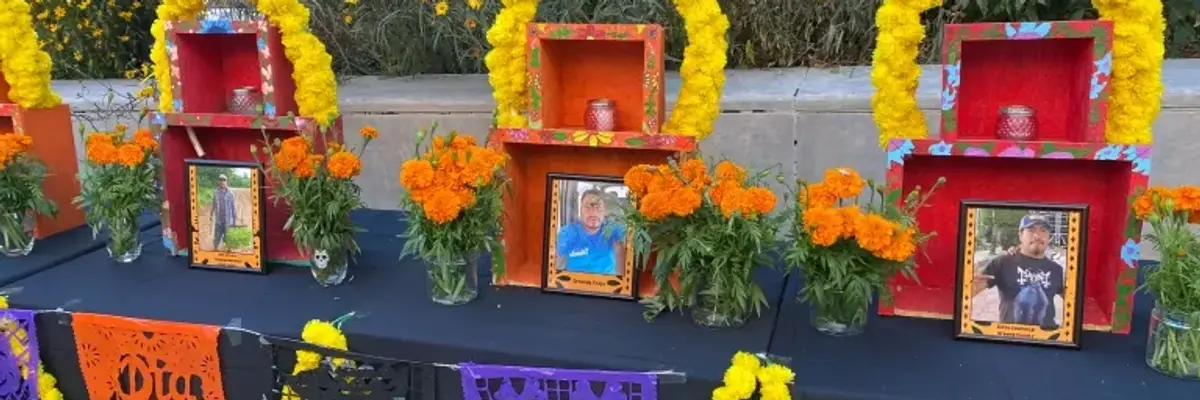
A Día de Los Muertos (Day of the Dead) altar honors North Carolina farmworkers who died from heat and other preventable workplace hazards in 2023.
The congressionally mandated assessment finds that the climate crisis is already increasing the number of deaths, injuries, and illnesses in every region of the United States.
I’ve read dozens of harrowing stories about extreme heat this year, but there’s one I just can’t shake. Ramona and Monway Ison, who were in their 70s, died along with their dog Belle from heat-related causes the very night they were approved for a loan to fix their broken air conditioner. The A/C in their mobile home had been out for days during a brutal heatwave. But due to limited income, mobility issues, and a belief that they were used to the Texas heat, the couple stayed put—and perished as a result.
Heatwaves and other climate-fueled extremes are coming for us all, but they’re coming faster and harder for people with intersecting vulnerabilities like the Isons. That’s one of the main messages from the Fifth National Climate Assessment, released Tuesday by the Biden-Harris administration. The congressionally mandated assessment of the current and future risks of climate change finds that the climate crisis is already increasing the number of deaths, injuries, and illnesses in every region of the United States. Systematic racism, discrimination, and disinvestment are exacerbating these harms, particularly in low-income households, communities of color, and Indigenous communities.
For example, the report repeatedly invokes the threat of heat to workers—particularly farmworkers, who toil for long hours outdoors for little pay. Anyone who’s spent hours doing yard work or outdoor exercise has an inkling of how rough the heat can be. But regular exposure to high temperatures combined with insufficient access to food, drinking water, indoor cooling, and healthcare is a recipe for tragedy. Even workers who don’t die from heat face lost work hours and high healthcare costs.
Cutting emissions will help households like the Isons survive the summers of the future, but adaptation is needed to protect people now.
Lest you think farmworkers dying in the heat is a sad problem, but not your problem, think again. As the assessment states, “These effects on farmworker safety and productivity influence the broader economy through reduced agricultural output and higher food prices.”
So, what’s to be done?
One: We need to drastically reduce the pollution from fossil fuels that’s heating our climate up to dangerous levels. Although the United States still has a lot of work to do to meet its national commitments, historic investments through the Infrastructure Investment and Jobs Act of 2021 and the Inflation Reduction Act of 2022 will help move us in the right direction.
Policies that cut climate-changing pollution—known as mitigation—also protect our health by cleaning up the air. In fact, the assessment finds that “The economic value of avoided hospitalizations and premature deaths from mitigation activities is larger than the cost of implementation.”
Two, and just as importantly: We need to reduce the risks of climate impacts that we’re already experiencing today and prepare for additional impacts in the future. This set of actions, known as climate adaptation, is admittedly complex and getting harder the warmer the world gets. Policymakers, funders, and the private sector have also moved far more slowly on adaptation than on mitigation.
But relying solely on mitigation is not an option. Per the assessment, “Even if greenhouse gas emissions fall substantially, the impacts of climate change will continue to intensify over the next decade.” Cutting emissions will help households like the Isons survive the summers of the future, but adaptation is needed to protect people now.
The National Climate Assessment offers multiple adaptation options to protect health, including:
However, none of these options are sufficient on their own. For example, the Isons would probably still be alive today if their A/C was repaired more quickly or if they had spent a few days with a neighbor. But we can’t air condition our way out of the growing threat of extreme heat, and instead need to rethink how entire neighborhoods and cities are laid out. Similarly, occupational heat standards are essential to protect the workers repairing our roads, delivering our packages, and growing our food. But heat standards will only get us so far without tackling the exploitative labor practices that force heat-vulnerable workers to choose their job over their lives.
In other words, adaptation will have to be nothing less than transformational. That will require upending the historic laws, policies, and practices that are putting Americans in harms’ way and keeping them from living their full, productive, joyful potential. And it requires getting started now.
Dear Common Dreams reader, It’s been nearly 30 years since I co-founded Common Dreams with my late wife, Lina Newhouser. We had the radical notion that journalism should serve the public good, not corporate profits. It was clear to us from the outset what it would take to build such a project. No paid advertisements. No corporate sponsors. No millionaire publisher telling us what to think or do. Many people said we wouldn't last a year, but we proved those doubters wrong. Together with a tremendous team of journalists and dedicated staff, we built an independent media outlet free from the constraints of profits and corporate control. Our mission has always been simple: To inform. To inspire. To ignite change for the common good. Building Common Dreams was not easy. Our survival was never guaranteed. When you take on the most powerful forces—Wall Street greed, fossil fuel industry destruction, Big Tech lobbyists, and uber-rich oligarchs who have spent billions upon billions rigging the economy and democracy in their favor—the only bulwark you have is supporters who believe in your work. But here’s the urgent message from me today. It's never been this bad out there. And it's never been this hard to keep us going. At the very moment Common Dreams is most needed, the threats we face are intensifying. We need your support now more than ever. We don't accept corporate advertising and never will. We don't have a paywall because we don't think people should be blocked from critical news based on their ability to pay. Everything we do is funded by the donations of readers like you. When everyone does the little they can afford, we are strong. But if that support retreats or dries up, so do we. Will you donate now to make sure Common Dreams not only survives but thrives? —Craig Brown, Co-founder |
I’ve read dozens of harrowing stories about extreme heat this year, but there’s one I just can’t shake. Ramona and Monway Ison, who were in their 70s, died along with their dog Belle from heat-related causes the very night they were approved for a loan to fix their broken air conditioner. The A/C in their mobile home had been out for days during a brutal heatwave. But due to limited income, mobility issues, and a belief that they were used to the Texas heat, the couple stayed put—and perished as a result.
Heatwaves and other climate-fueled extremes are coming for us all, but they’re coming faster and harder for people with intersecting vulnerabilities like the Isons. That’s one of the main messages from the Fifth National Climate Assessment, released Tuesday by the Biden-Harris administration. The congressionally mandated assessment of the current and future risks of climate change finds that the climate crisis is already increasing the number of deaths, injuries, and illnesses in every region of the United States. Systematic racism, discrimination, and disinvestment are exacerbating these harms, particularly in low-income households, communities of color, and Indigenous communities.
For example, the report repeatedly invokes the threat of heat to workers—particularly farmworkers, who toil for long hours outdoors for little pay. Anyone who’s spent hours doing yard work or outdoor exercise has an inkling of how rough the heat can be. But regular exposure to high temperatures combined with insufficient access to food, drinking water, indoor cooling, and healthcare is a recipe for tragedy. Even workers who don’t die from heat face lost work hours and high healthcare costs.
Cutting emissions will help households like the Isons survive the summers of the future, but adaptation is needed to protect people now.
Lest you think farmworkers dying in the heat is a sad problem, but not your problem, think again. As the assessment states, “These effects on farmworker safety and productivity influence the broader economy through reduced agricultural output and higher food prices.”
So, what’s to be done?
One: We need to drastically reduce the pollution from fossil fuels that’s heating our climate up to dangerous levels. Although the United States still has a lot of work to do to meet its national commitments, historic investments through the Infrastructure Investment and Jobs Act of 2021 and the Inflation Reduction Act of 2022 will help move us in the right direction.
Policies that cut climate-changing pollution—known as mitigation—also protect our health by cleaning up the air. In fact, the assessment finds that “The economic value of avoided hospitalizations and premature deaths from mitigation activities is larger than the cost of implementation.”
Two, and just as importantly: We need to reduce the risks of climate impacts that we’re already experiencing today and prepare for additional impacts in the future. This set of actions, known as climate adaptation, is admittedly complex and getting harder the warmer the world gets. Policymakers, funders, and the private sector have also moved far more slowly on adaptation than on mitigation.
But relying solely on mitigation is not an option. Per the assessment, “Even if greenhouse gas emissions fall substantially, the impacts of climate change will continue to intensify over the next decade.” Cutting emissions will help households like the Isons survive the summers of the future, but adaptation is needed to protect people now.
The National Climate Assessment offers multiple adaptation options to protect health, including:
However, none of these options are sufficient on their own. For example, the Isons would probably still be alive today if their A/C was repaired more quickly or if they had spent a few days with a neighbor. But we can’t air condition our way out of the growing threat of extreme heat, and instead need to rethink how entire neighborhoods and cities are laid out. Similarly, occupational heat standards are essential to protect the workers repairing our roads, delivering our packages, and growing our food. But heat standards will only get us so far without tackling the exploitative labor practices that force heat-vulnerable workers to choose their job over their lives.
In other words, adaptation will have to be nothing less than transformational. That will require upending the historic laws, policies, and practices that are putting Americans in harms’ way and keeping them from living their full, productive, joyful potential. And it requires getting started now.
I’ve read dozens of harrowing stories about extreme heat this year, but there’s one I just can’t shake. Ramona and Monway Ison, who were in their 70s, died along with their dog Belle from heat-related causes the very night they were approved for a loan to fix their broken air conditioner. The A/C in their mobile home had been out for days during a brutal heatwave. But due to limited income, mobility issues, and a belief that they were used to the Texas heat, the couple stayed put—and perished as a result.
Heatwaves and other climate-fueled extremes are coming for us all, but they’re coming faster and harder for people with intersecting vulnerabilities like the Isons. That’s one of the main messages from the Fifth National Climate Assessment, released Tuesday by the Biden-Harris administration. The congressionally mandated assessment of the current and future risks of climate change finds that the climate crisis is already increasing the number of deaths, injuries, and illnesses in every region of the United States. Systematic racism, discrimination, and disinvestment are exacerbating these harms, particularly in low-income households, communities of color, and Indigenous communities.
For example, the report repeatedly invokes the threat of heat to workers—particularly farmworkers, who toil for long hours outdoors for little pay. Anyone who’s spent hours doing yard work or outdoor exercise has an inkling of how rough the heat can be. But regular exposure to high temperatures combined with insufficient access to food, drinking water, indoor cooling, and healthcare is a recipe for tragedy. Even workers who don’t die from heat face lost work hours and high healthcare costs.
Cutting emissions will help households like the Isons survive the summers of the future, but adaptation is needed to protect people now.
Lest you think farmworkers dying in the heat is a sad problem, but not your problem, think again. As the assessment states, “These effects on farmworker safety and productivity influence the broader economy through reduced agricultural output and higher food prices.”
So, what’s to be done?
One: We need to drastically reduce the pollution from fossil fuels that’s heating our climate up to dangerous levels. Although the United States still has a lot of work to do to meet its national commitments, historic investments through the Infrastructure Investment and Jobs Act of 2021 and the Inflation Reduction Act of 2022 will help move us in the right direction.
Policies that cut climate-changing pollution—known as mitigation—also protect our health by cleaning up the air. In fact, the assessment finds that “The economic value of avoided hospitalizations and premature deaths from mitigation activities is larger than the cost of implementation.”
Two, and just as importantly: We need to reduce the risks of climate impacts that we’re already experiencing today and prepare for additional impacts in the future. This set of actions, known as climate adaptation, is admittedly complex and getting harder the warmer the world gets. Policymakers, funders, and the private sector have also moved far more slowly on adaptation than on mitigation.
But relying solely on mitigation is not an option. Per the assessment, “Even if greenhouse gas emissions fall substantially, the impacts of climate change will continue to intensify over the next decade.” Cutting emissions will help households like the Isons survive the summers of the future, but adaptation is needed to protect people now.
The National Climate Assessment offers multiple adaptation options to protect health, including:
However, none of these options are sufficient on their own. For example, the Isons would probably still be alive today if their A/C was repaired more quickly or if they had spent a few days with a neighbor. But we can’t air condition our way out of the growing threat of extreme heat, and instead need to rethink how entire neighborhoods and cities are laid out. Similarly, occupational heat standards are essential to protect the workers repairing our roads, delivering our packages, and growing our food. But heat standards will only get us so far without tackling the exploitative labor practices that force heat-vulnerable workers to choose their job over their lives.
In other words, adaptation will have to be nothing less than transformational. That will require upending the historic laws, policies, and practices that are putting Americans in harms’ way and keeping them from living their full, productive, joyful potential. And it requires getting started now.