
SUBSCRIBE TO OUR FREE NEWSLETTER
Daily news & progressive opinion—funded by the people, not the corporations—delivered straight to your inbox.
5
#000000
#FFFFFF
To donate by check, phone, or other method, see our More Ways to Give page.


Daily news & progressive opinion—funded by the people, not the corporations—delivered straight to your inbox.
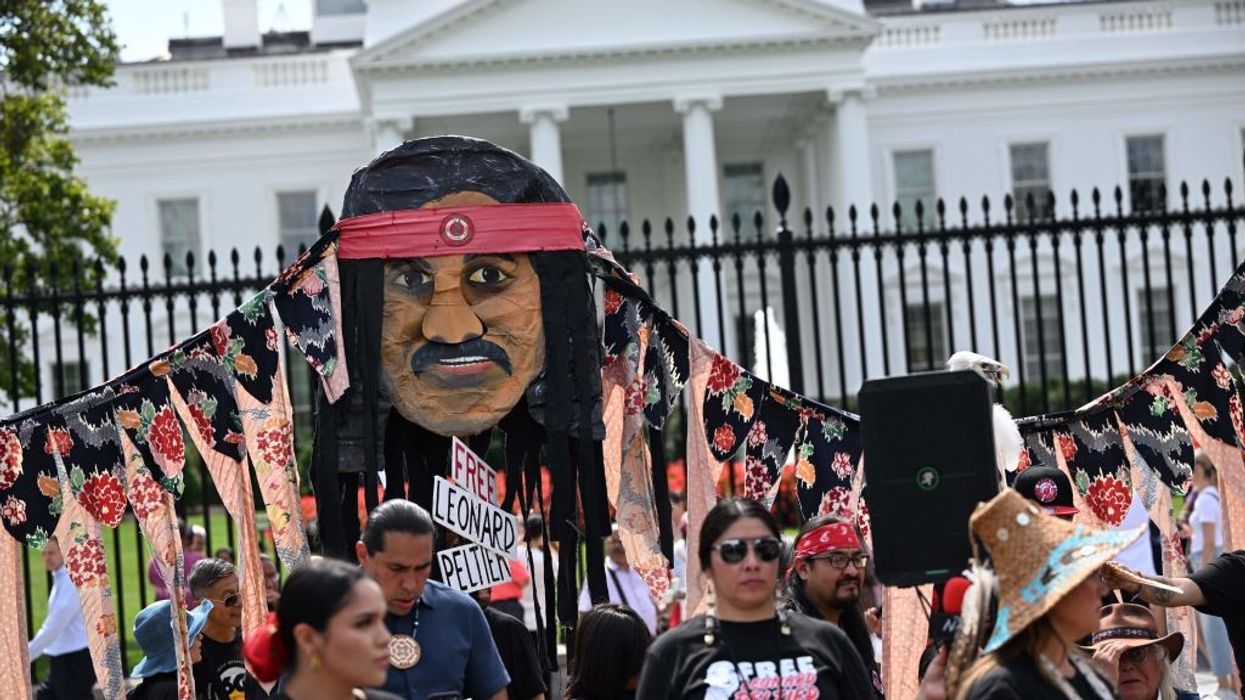
"The victory of freeing Leonard Peltier is a symbol of our collective strength—and our resistance will never stop," vowed one Indigenous organizer.
Just minutes before leaving office, Joe Biden on Monday commuted the life prison sentence of Leonard Peltier, the elderly American Indian Movement activist who supporters say was framed for the murder of two federal agents during a 1975 reservation shootout.
"It's finally over, I'm going home," Peltier, who is 80 years old, said in a statement released by the Indigenous-led activist group NDN Collective. "I want to show the world I'm a good person with a good heart. I want to help the people, just like my grandmother taught me."
While not the full pardon for which he and his defenders have long fought, the outgoing Democratic president's commutation will allow Peltier—who has been imprisoned for nearly a half-century—to "spend his remaining days in home confinement," according to Biden's statement, which was no longer posted on the White House website after Republican President Donald Trump took office Monday afternoon.
🚨BREAKING🚨 Leonard Peltier Granted Executive Clemency After 50 years of unjust incarceration and the tireless efforts of intergenerational grassroots organizing and advocacy, our elder and relative Leonard Peltier has been granted executive clemency.
[image or embed]
— NDN Collective ( @ndncollective.bsky.social) January 20, 2025 at 9:02 AM
"Tribal Nations, Nobel Peace laureates, former law enforcement officials (including the former U.S. attorney whose office oversaw Mr. Peltier's prosecution and appeal), dozens of lawmakers, and human rights organizations strongly support granting Mr. Peltier clemency, citing his advanced age, illnesses, his close ties to and leadership in the Native American community, and the substantial length of time he has already spent in prison," Biden explained.
Biden Interior Secretary Deb Haaland, the first Indigenous cabinet secretary in U.S. history, said in a statement: "I am beyond words about the commutation of Leonard Peltier. His release from prison signifies a measure of justice that has long evaded so many Native Americans for so many decades. I am grateful that Leonard can now go home to his family. I applaud President Biden for this action and understanding what this means to Indian Country."
Congressman Raúl Grijalva (D-Ariz.), who last month led 34 U.S. lawmakers in a letter urging clemency for Peltier, said in a statement that "for too long, Mr. Peltier has been denied both justice and the pursuit of a full, healthy life at the hands of the U.S. government, but today, he is finally able to go home."
"President Biden's decision is not just the right, merciful, and decent one—it is a testament to Mr. Peltier's resilience and the unwavering support of the countless global leaders, Indigenous voices, civil rights and legal experts, and so many others who have advocated so tirelessly for his release," Grijalva added. "While there is still much work to be done to fix the system that allowed this wrong and so many others against Indian Country, especially as we face the coming years, let us today celebrate Mr. Peltier's return home."
NDN Collective founder and CEO Nick Tilsen said Monday that "Leonard Peltier's freedom today is the result of 50 years of intergenerational resistance, organizing, and advocacy."
"Leonard Peltier's liberation is our liberation—we will honor him by bringing him back to his homelands to live out the rest of his days surrounded by loved ones, healing, and reconnecting with his land and culture," Tilsen continued.
"Let Leonard's freedom be a reminder that the entire so-called United States is built on the stolen lands of Indigenous people—and that Indigenous people have successfully resisted every attempt to oppress, silence, and colonize us," Tilsen added. "The victory of freeing Leonard Peltier is a symbol of our collective strength—and our resistance will never stop."
Amnesty International USA executive director Paul O'Brien said that "President Biden was right to commute the life sentence of Indigenous elder and activist Leonard Peltier given the serious human rights concerns about the fairness of his trial."
While Peltier admits to having participated in the June 26, 1975 gunfight at the Oglala Sioux Reservation at Pine Ridge, South Dakota, he denies killing Federal Bureau of Investigation agents Jack Coler and Ronald Williams.
As HuffPost senior political reporter Jennifer Bendery recapped Monday:
There was never evidence that Peltier committed a crime, and the U.S. government never did figure out who shot those agents. But federal officials needed someone to take the fall. The FBI had just lost two agents, and Peltier's co-defendants were all acquitted based on self-defense. So, Peltier became their guy.
His trial was rife with misconduct. The FBI threatened and coerced witnesses into lying. Federal prosecutors hid evidence that exonerated Peltier. A juror acknowledged on the second day of the trial that she had "prejudice against Indians," but she was kept on anyway.
The government's case fell apart after these revelations, so it simply revised its charges against Peltier to "aiding and abetting" whoever did kill the agents—based entirely on the fact that he was one of dozens of people present when the shootout took place. Peltier was convicted and sentenced to two consecutive life terms.
American Indian Movement (AIM) activist Joe Stuntz Killsright was also killed at Pine Ridge when a U.S. Bureau of Indian Affairs agent sniper shot him in the head after Coler and Williams were killed. Stuntz' death has never been investigated.
Some Indigenous activists welcomed Peltier's commutation while also remembering Annie Mae Pictou Aquash, an Mi'kmaq activist who was kidnapped and murdered at Pine Ridge in December 1975 by her fellow AIM members. Some of Aquash's defenders believe her killing to be an assassination ordered by AIM leaders who feared she was an FBI informant.
Before leaving office, Biden issued a flurry of eleventh-hour preemptive pardons meant to protect numerous relatives and government officials whom Trump and his allies have threatened with politically motivated legal action.
However, the outgoing president dashed the hopes of figures including Steven Donziger, Charles Littlejohn, and descendants of Ethel Rosenberg, who were
seeking last-minute pardons or commutations.
The move stands in stark contrast with Republican President-elect Donald Trump's first-term record of shrinking national monuments and opening public lands to environmentally and culturally destructive extraction.
U.S. President Joe Biden is set to sign proclamations Tuesday establishing two new national monuments in California, a move the White House said will protect the environment and honor Indigenous peoples in a state where they suffered one of the worst genocides in the nation's history.
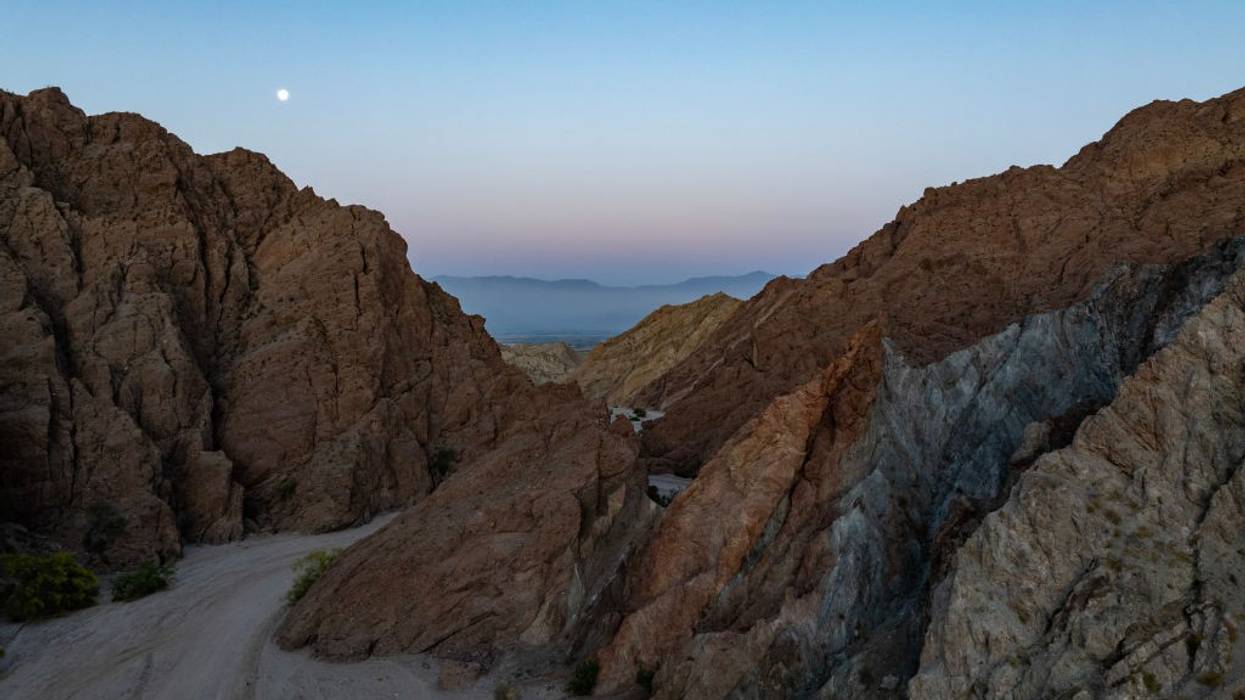
Biden's creation of the Chuckwalla National Monument in the Colorado Desert and the Sáttítla Highlands National Monument in the Cascade Range "will protect 848,000 acres of lands in California of scientific, cultural, ecological, and historical importance," the White House said in a statement. The national monument designations—which were authorized under the Antiquities Act—mean new drilling, mining, and other development will be banned on the protected lands.
"In addition to setting the high-water mark for most lands and waters conserved in a presidential administration, establishing the Chuckwalla National Monument in southern California is President Biden's capstone action to create the largest corridor of protected lands in the continental United States, covering nearly 18 million acres stretching approximately 600 miles," the White House said.
"This new Moab to Mojave Conservation Corridor protects wildlife habitat and a wide range of natural and cultural resources along the Colorado River, across the Colorado Plateau, and into the deserts of California," Biden's office added. "It is a vitally important cultural and spiritual landscape that has been inhabited and traveled by tribal nations and Indigenous peoples since time immemorial."
🌟 Historic news! President Biden designated two new national monuments—Chuckwalla National Monument and Sáttítla Highlands National Monument —protecting over 848,000 acres of ecologically & culturally significant lands! 🏜️🌲 Read more: bit.ly/3Pral7m
[image or embed]
— Sierra Club (@sierraclub.bsky.social) January 7, 2025 at 8:07 AM
The Chuckwalla National Monument spans over 624,000 acres in southern California near Joshua Tree National Park and includes the ancestral homelands of the Cahuilla, Chemehuevi, Mojave, Quechan, Serrano, and other Indigenous peoples.
The Sáttítla Highlands National Monument covers more than 224,000 acres in northern California on the ancestral lands of the Karuk, Klamath, Modoc, Pit River, Shasta, Siletz, Wintu, and Yana.
U.S. Interior Secretary Deb Haaland, who is a member of the Laguna Pueblo tribe, said in a statement Tuesday that "President Biden's action today will protect important spiritual and cultural values tied to the land and wildlife. I am so grateful that future generations will have the opportunity to experience what makes this area so unique."
Biden's designation follows calls from Indigenous tribes and green groups, and legislation introduced last April by U.S. Sen. Alex Padilla (D-Calif.), then-Sen. Laphonza Butler (D-Calif.), and Congressman Raul Ruiz (D-Calif.) to create the monuments.
"This historic announcement accelerates our state's crucial efforts to fight the climate crisis, protect our iconic wildlife, preserve sacred tribal sites, and promote clean energy while expanding equitable access to nature for millions of Californians," Padilla said in response to the president's move.
"This designation reflects years of tireless work from tribal leaders to protect these sacred desert landscapes," he added. "President Biden has joined California leaders in championing our treasured natural wonders, and I applaud him for further cementing his strong public lands legacy."
The Tribal Council of the Fort Yuma Quechan Indian Tribe said: "The protection of the Chuckwalla National Monument brings the Quechan people an overwhelming sense of peace and joy. This national monument designation cements into history our solidarity and collective vision for our peoples."
"The essence of who we are lies in the landscapes of Chuckwalla and Avi Kwa Ame," the council added. "Every trail, every living being, and every story in these places is connected to a rich history and heritage that runs in our DNA. That is why we look forward to the day when we can celebrate adding the proposed Kw'tsán National Monument for protection as well."
Sierra Club executive director Ben Jealous said in a statement: "Our public lands tell the history of America. They must be protected for us to learn from, and to be enjoyed and explored, for this generation and those to come. Throughout his time in office, President Biden has not only recognized that, he has acted with urgency."
Jealous continued:
From the ecologically rich Chuckwalla deserts in the south to the primordial network of Sáttítla aquifers in the north to the fragile habitats and ecosystems of the Southwest, communities and wildlife will continue to benefit from the clean water, protected landscape, and more equitable access to nature these monuments preserve.
For years, tribes and Indigenous voices have called for these landscapes to be protected. As he has throughout his presidency, President Biden answered those calls. Each new national monument adds a chapter to the story our public lands tell. We must continue the work to expand that story, protect the lands and waters that make this country special, and preserve the historical, cultural, and spiritual connections the original stewards of these landscapes continue to have with these places.
Trust for Public Land CEO Carrie Besnette Hauser noted that "national monuments like Chuckwalla and Sáttítla play a vital role in addressing historical injustices and ensuring a fuller, more inclusive telling of America's story. They stand alongside recent landmark designations—such as the Emmett Till and Mamie Till-Mobley National Monument and Baaj Nwaavjo I'tah Kukveni-Ancestral Footprints of the Grand Canyon—as reflections of our nation's diverse heritage and shared values."
California's Indigenous peoples suffered one of the worst genocides in North America. The state's Native American population plummeted from around 150,000 in 1848—the year gold was discovered at Sutter's Mill—to roughly 16,000 at the turn of the 20th century. The second half of the 19th century was a period of state-sponsored genocidal extermination, enslavement, and dispossession of California's more than 100 Indigenous tribes.
The national monuments designation comes a day after Biden permanently banned offshore oil drilling across 625 million acres of U.S. coastal territory.
Biden's national monument expansion stands in stark contrast with Republican President-elect Donald Trump's record during his first administration, which saw a major contraction of national monuments in service of opening public lands to mining, fossil fuel extraction, and other environmentally and culturally destructive intrusions.
"During his first term, Trump made his hostility toward public lands clear as he reduced national monuments and rolled back regulations on fossil fuel extraction," High Country News contributing editor Jonathan Thompson recently wrote. "This time, he promises a repeat performance, backed by a GOP-dominated Congress, a conservative-leaning Supreme Court, and an army of professional ideologues who have been eagerly preparing for this moment for the last four years."
"For centuries, the U.S. government has broken every promise it's made to Native tribes," says Standing Rock Sioux Chair Janet Alkire. "It's time for that to stop."
Leaders of the Standing Rock and Oglala Sioux said Wednesday that the two Native American tribes are joining forces in an effort to pressure the Biden administration into a reckoning over a dubious 19th-century treaty that—like just about every other one signed between the U.S. and Indigenous peoples—was broken by Washington.
The two tribes are seeking nation-to-nation consultations between U.S. Interior Secretary Deb Haaland and Assistant Indian Affairs Secretary Bryan Newland—both Native Americans—and the remaining signatory tribes to the Fort Laramie Treaty.
"This is about correcting an injustice," Standing Rock Chair Janet Alkire said. "For centuries, the U.S. government has broken every promise it's made to Native tribes. It's time for that to stop."
"Furthermore," she added, "we're calling on the Biden-Harris administration to take active steps to correct the record."
Treaty rights remain a critical point of contention for the Sioux, who in recent years have fought against violations of their land, water, and sovereignty, including the Dakota Access and Keystone XL pipelines—the latter of which was canceled by President Joe Biden.
"We'd like the current government to take an honest look at what happened."
In the 1860s, fierce Indigenous resistance to Euro-American encroachment on the Great Plains and an Army already weakened by the Civil War resulted in a series of U.S. defeats, including a December 1866 ambush led by Lakota, Cheyenne, and Arapaho warriors that killed all 81 soldiers under the command of Capt. William Fetterman during the Powder River War. It was the worst defeat of U.S. forces on the Great Plains until Little Bighorn a decade later.
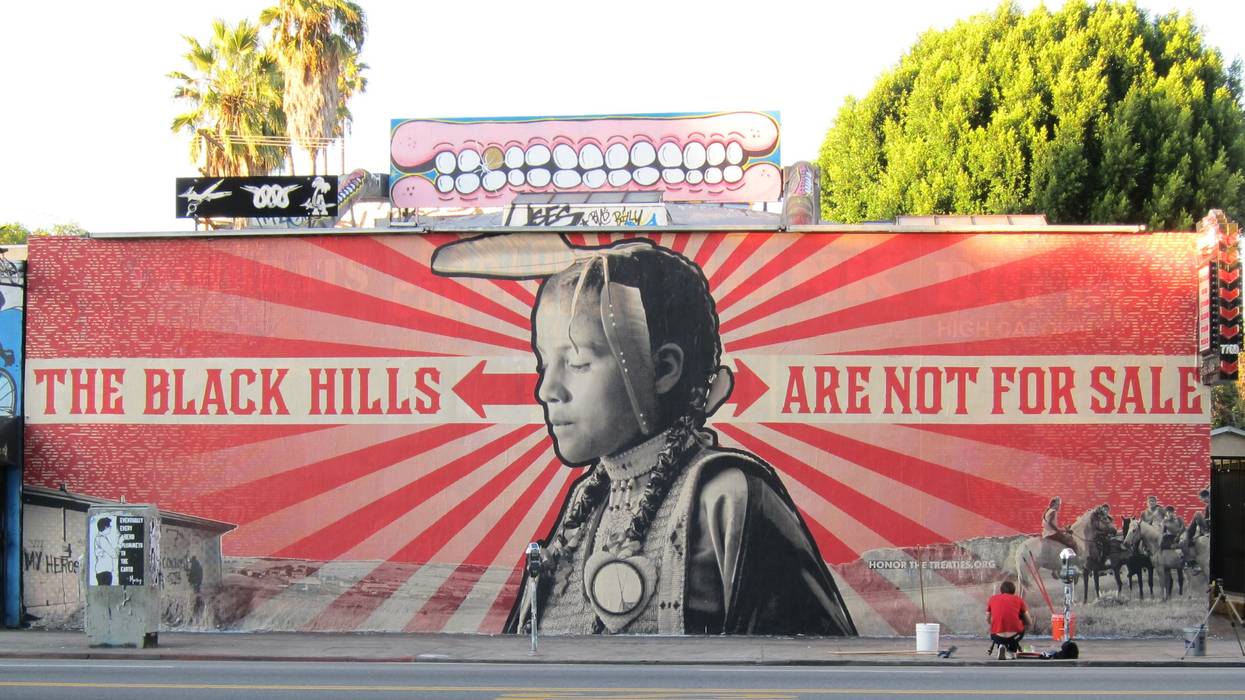
In 1868, the U.S. signed the Fort Laramie Treaty with the Arapaho and the Dakota, Lakota, and Nakota Sioux. The treaty established the Great Sioux Reservation and designated the Black Hills as "unceded Indian territory" to be "set apart for the absolute and undisturbed use and occupation" of Indigenous peoples.
However, the tribes claim U.S. officials subsequently—and surreptitiously—added language to the treaty stating that the Indians "relinquish all claims or rights" to lands outside the designated reservation. The U.S. then blatantly abrogated the treaty following the discovery of gold in the Black Hills of South Dakota and, when Indians fought back, unleashed a fresh wave of genocidal violence against them.
"U.S. treaty negotiators snuck the relinquishment language into Article II of the treaty after it was signed by the Sioux chiefs to end the Powder River War," said Oglala Sioux Tribe President Frank Star Comes Out. "We'd like the current government to take an honest look at what happened."
The Indian Claims Commission, a judicial relations arbiter between the U.S. government and Indigenous tribes, concluded in 1976 that the treaty "effectuated a vast cession of land contrary to the understanding and intent of the Sioux."
In 1980, the U.S. Supreme Court ruled that the United States had illegally taken the Black Hills and awarded over $100 million in reparations to the Sioux Nation, which refused the money—now worth over $1 billion—on the grounds that the tribe never wanted to part with its lands in the first place.
"The Black Hills are not for sale," Alkire said Wednesday, "and they never were."
"Beyond the illegality of Willow's approval, Interior's decision to greenlight the project in the first place moved us in the opposite direction of our national climate goals in the face of the worsening climate crisis."
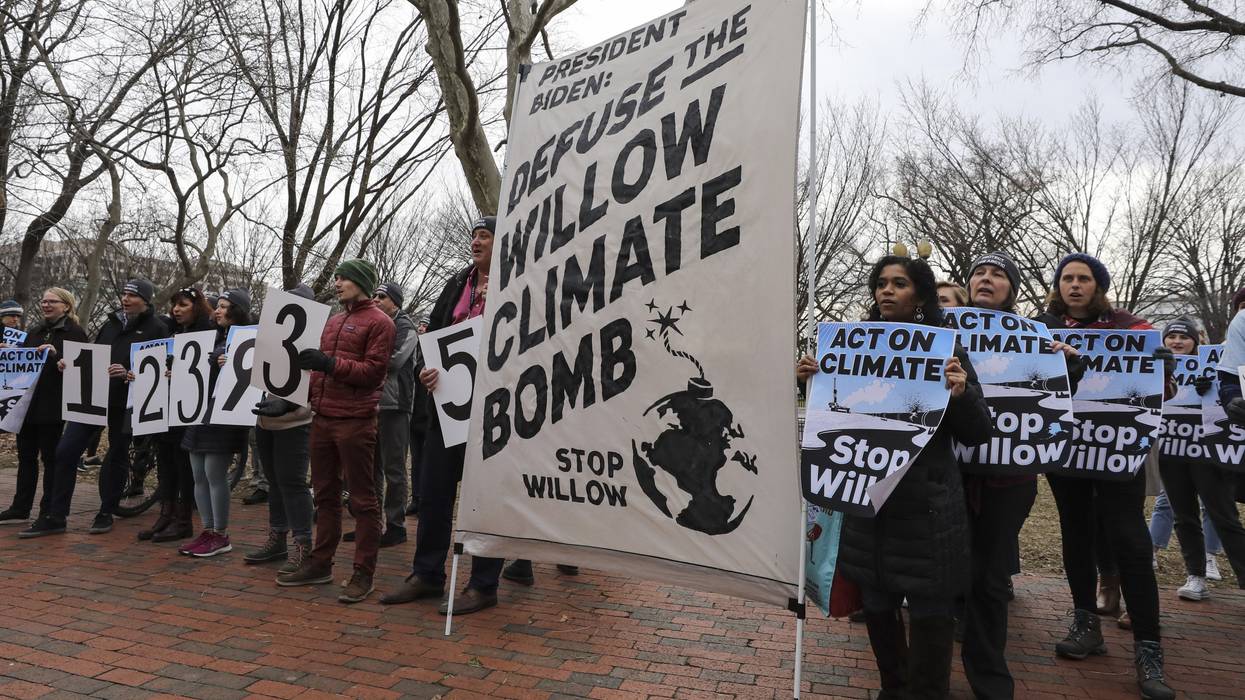
A federal judge in Anchorage ruled Thursday that ConocoPhillips' $8 billion oil drilling project on Alaska's North Slope can proceed, rejecting a pair of lawsuits arguing that the Biden administration failed to adequately consider the initiative's impact on the climate, local communities, and wildlife before approving it earlier this year.
Willow is the largest proposed oil and gas drilling project on public lands in U.S. history, and it comes at a time when scientists are warning that any new fossil fuel extraction is incompatible with preventing catastrophic planetary warming.
But despite warnings about Willow's potentially devastating impact, U.S. District Court Judge Sharon Gleason—an Obama appointee—deemed the Biden administration's environmental assessments of the project sufficient and in line with federal law. The ruling was handed down a day after a U.N.-backed report cautioned that fossil fuel expansion plans by the world's top producers are "throwing humanity's future into question."
Climate groups voiced strong disagreement and outrage in response to Gleason's decision, which gives ConocoPhillips a green light to resume construction of the massive project next month.
"This decision is bad news not just for our clients, but for anyone who cares about the climate and future generations," said Bridget Psarianos, senior staff attorney with Trustees for Alaska, which sued the Biden Interior Department on behalf of the Sovereign Iñupiat for a Living Arctic and others.
"The Biden administration added a little more window dressing when it rubber-stamped the previous Trump approvals, but Interior handed out permits without even looking at options that would reduce the impact on local people or preclude drilling in sensitive ecosystems," Psarianos added. "It again did not consider the accumulation of impacts of greenhouse gas emissions and climate change, nor the way those accumulations harm people, animals, habitat, and the planet in deep and tangible ways."
"While today's ruling is disappointing, we are entirely confident in our claims, and plan to appeal to the higher court."
In March, the Biden Interior Department—headed by Deb Haaland, who criticized the proposed Willow project when she was in Congress—approved what it characterized as a scaled-back version of the ConocoPhillips drilling initiative, drawing protests and criticism from environmentalists, Indigenous groups, and the United Nations.
The administration approved the project with three drilling sites instead of the five that ConocoPhillips wanted. But even the smaller version of Willow will be disastrous for the climate, green groups argued.
According to Earthjustice, which sued the administration on behalf of several climate organizations, the approved project "will still add about 260 million metric tons of carbon emissions into the atmosphere over the next 30 years, the equivalent of an extra two million cars on the road each year for 30 years."
"While today's ruling is disappointing, we are entirely confident in our claims, and plan to appeal to the higher court," Erik Grafe, deputy managing attorney in Earthjustice's Alaska regional office, said in a statement Thursday. "Beyond the illegality of Willow's approval, Interior's decision to greenlight the project in the first place moved us in the opposite direction of our national climate goals in the face of the worsening climate crisis."
Even with oil spill prevention measures, said one advocate, "offshore drilling simply will never be safe."
Environmental advocates on Tuesday said the Biden administration's decision to reinstate offshore drilling safety rules would help undo damage caused by former Republican President Donald Trump's repeal of the regulations, but were clear that the rules would not change the fact that fossil fuel extraction is imperiling ecosystems and the planet.
U.S. Interior Secretary Deb Haaland announced that the rules have once again been finalized and will go into effect in October, governing the use of safety equipment on offshore oil rigs.
The rules were originally put in place by the Obama administration after BP's 2010 Deepwater Horizon disaster, which sent four million barrels of oil into the Gulf of Mexico and killed 11 people, an estimated one million seabirds, and up to five million fish.
The oil and gas industry strongly supported Trump's repeal of the rules, which Kristen Monsell, a senior attorney at the Center for Biological Diversity, said at the time would "make dirty offshore drilling even more dangerous" by making oil spills more likely.
But Jackie Savitz, chief policy officer for the ocean conservation group Oceana, said new safety regulations for drilling operations are no replacement for halting offshore drilling altogether.
"Offshore drilling simply will never be safe," she said. "When there is a spill like Deepwater Horizon, it's too late, our options are severely limited, so prevention is the only solution and this is a good step in that direction."
The reinstated rules are "a big step in getting us back on track" to ensuring there's no repeat of disasters like Deepwater Horizon, Savitz said, but "there is no way we can do enough to prevent an oil spill."
"It is an inherently risky business and it's not a matter of if, but when we will have another one," she added. "So a big part of prevention has to be to stop selling new leases."
The newly reinstated rules will require:
Ahead of the announcement, Zero Hour founder and executive director Zanagee Artis and Taproot Earth national policy director Kendall Dix wrote an op-ed in the Miami Herald, calling on U.S. President Joe Biden to "move the country off of its addiction to fossil fuels by barring new leasing on public lands and waters," as he promised to when he campaigned for the presidency in 2020.
With the Interior Department considering a five-year oil and gas leasing program that would allow the fossil fuel industry to conduct extraction operations in even more areas of the nation's oceans—a proposal expected to be finalized this fall as the revived safety regulations go into effect—"the risk of environmental disaster from offshore drilling is not a question of if disaster will strike, but when," wrote Artis and Dix.
They pointed out that in addition to the International Energy Agency's call for an immediate end to fossil fuel extraction in order to achieve net zero carbon emissions by 2050 and the United Nations' warning that oil and gas drilling are "incompatible with human survival," offshore operations are simply not necessary "to meet the nation's energy needs."
"An analysis by industry experts found that, even without a single new lease offering, oil production in the United States will remain steady into 2035, at which point the nation's transition to renewable energy will be approaching maturity," Artis and Dix wrote.
"We don't need to sell off more of our ocean to Big Oil," they added. "Every oil spill began with an offshore lease sale."
"The FWS is tasked with preventing extinctions, using sound science when making decisions to prevent those extinctions, and with being accountable to the entire public—not funding controversial predator-control actions for the purported benefit of a few."
A rulemaking petition demanding an end to federal support for the removal of wolves and bears from states such as Alaska has been languishing at the U.S. Interior Department for almost two years, nearly three dozen conservation groups and scientists said in a letter to Interior Secretary Deb Haaland on Tuesday as they raised alarm about a recent killing operation.
Led by Public Employees for Environmental Responsibility (PEER), the Humane Society of the United States, and the Global Indigenous Council, 35 organizations wrote to the secretary to raise alarm about the U.S. Fish and Wildlife Service's (FWS) continued funding of "irresponsible and controversial predator-control projects."
Nearly 30 groups
signed the petition in September 2021 that demanded a rulemaking process to stop federal subsidies from supporting so-called "conservation projects" in which state officials oversee the killing of certain predator species—regardless of their federal protected status—in order to boost populations of other species.
"Since its submission the petitioners have not received a response," wrote the groups on Tuesday. "We request a meeting with the secretary to discuss the rulemaking petition."
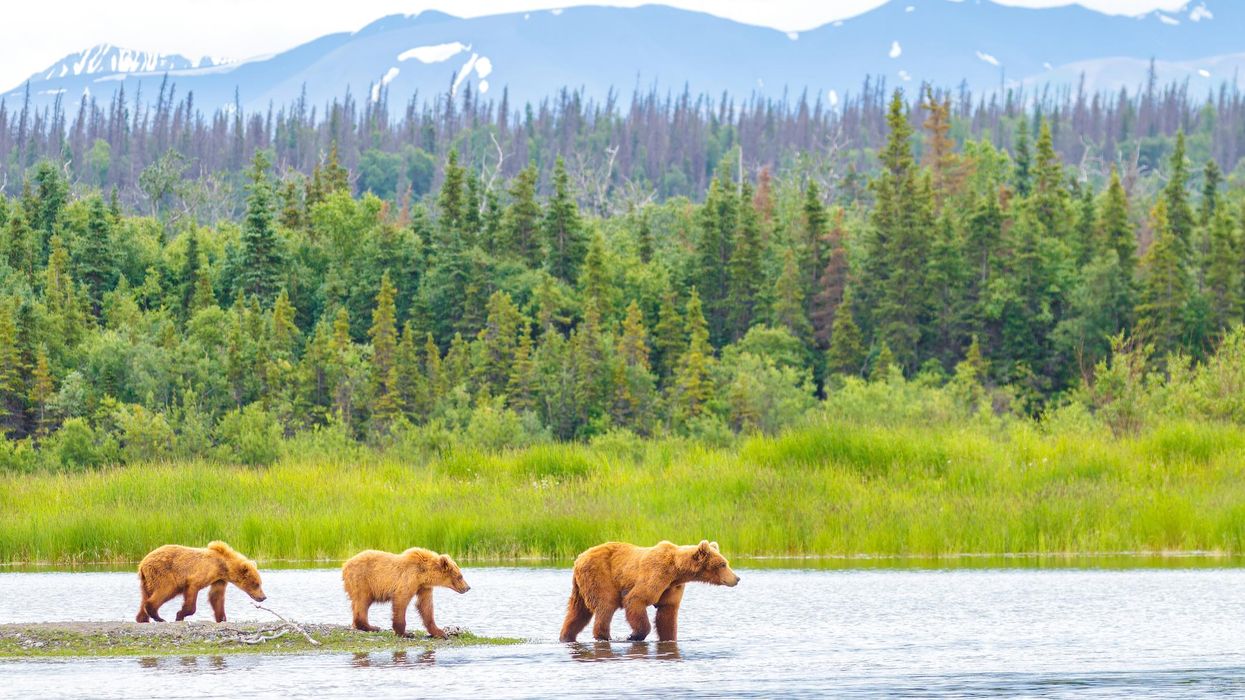
The letter was sent two months after the Alaska Department of Fish and Game (ADFG) concluded a large-scale operation in which it gunned down 94 brown bears, including cubs, five black bears, and five wolves in order to increase "caribou calf recruitment" in southwestern Alaska. Caribou are often targeted by game hunters in the state.
Claiming to run a program aimed at boosting sustainability in Alaska, ADFG agents "shoot brown bears and black bears from helicopters, snare bears, and even shoot mother brown bears accompanied by cubs," wrote the groups. "Wolves face similar fates, and are targeted in the controversial 'Judas wolf' program in which radio-collared wolves who return to their pack enable ADFG agents to discover and eliminate the entire pack. The agency also aerial-guns wolves and poisons their pups in their dens."
The recent operation that took place in Alaska this spring appeared to be the largest of its kind in the state's history, with agents "inexplicably" killing at least four times as many brown bears as it had originally planned to.
The agency and other state game departments use federal aid that exceeds $1 billion annually to conduct such operations, according to PEER.
Haaland's rejection of the funding could help end the large-scale killings, the groups suggested Tuesday as they asked the interior secretary to meet with them.
Wendy Keefover, senior strategist for native carnivore protection for the Humane Society, said killing operations like the one that took place in Alaska "directly contradict federal wildlife policy," as the FWS is tasked with protecting species including brown bears and gray wolves and managing biodiversity.
"The Biden administration should suspend all further payments of federal funds to the Alaska Department of Fish and Game until its wildlife management complies with federal ecological standards," said Keefover.
Rick Steiner, board chair of PEER, also noted that killing operations are "economically counterproductive" in addition to being "scientifically bankrupt," as "millions of tourists travel to Alaska spending billions of dollars annually—just to catch a glimpse of Alaska's iconic bears and wolves in the wild."
The groups pointed to a letter signed by 55 wildlife scientists in 2018, which objected to the repeal of protections for carnivores in the interest of growing populations of caribou and other species—"privileging the human use" of wildlife "over all other considerations, including maintaining sustainable wildlife populations for future generations." The practice is ineffective, said the scientists, in addition to being disruptive of natural biodiversity.
"The scientific consensus for the last several decades has generally concluded that carnivores modulate ungulate prey populations and make them more vigorous, because predators remove the sick and weak animals which would die of other natural causes anyway, or because they reduce their competitors, including smaller wild carnivores such as coyotes, which prey on young ungulates," wrote the scientists. "Predator-control schemes, unpopular with both the Alaskan and American public are an unreliable and ineffective way to increase the abundance of ungulate."
In their letter to Haaland Monday, the groups warned that "the extinction crisis is not an abstraction; it is a clear and present danger and an impending catastrophe."
"The FWS is tasked with preventing extinctions, using sound science when making decisions to prevent those extinctions, and with being accountable to the entire public—not funding controversial predator-control actions for the purported benefit of a few," they wrote. "For these reasons, we urge your office to again consider our petition and meet with us to discuss the issues."
The U.S. Bureau of Land Management "has failed to evaluate how these projects heat the climate, guzzle water, and add to some of the dirtiest air in the country," said one attorney.
Five environmental groups on Thursday sued the Biden administration in an attempt to prevent the "unlawful" drilling of new oil wells on public land in California's San Joaquin Valley.
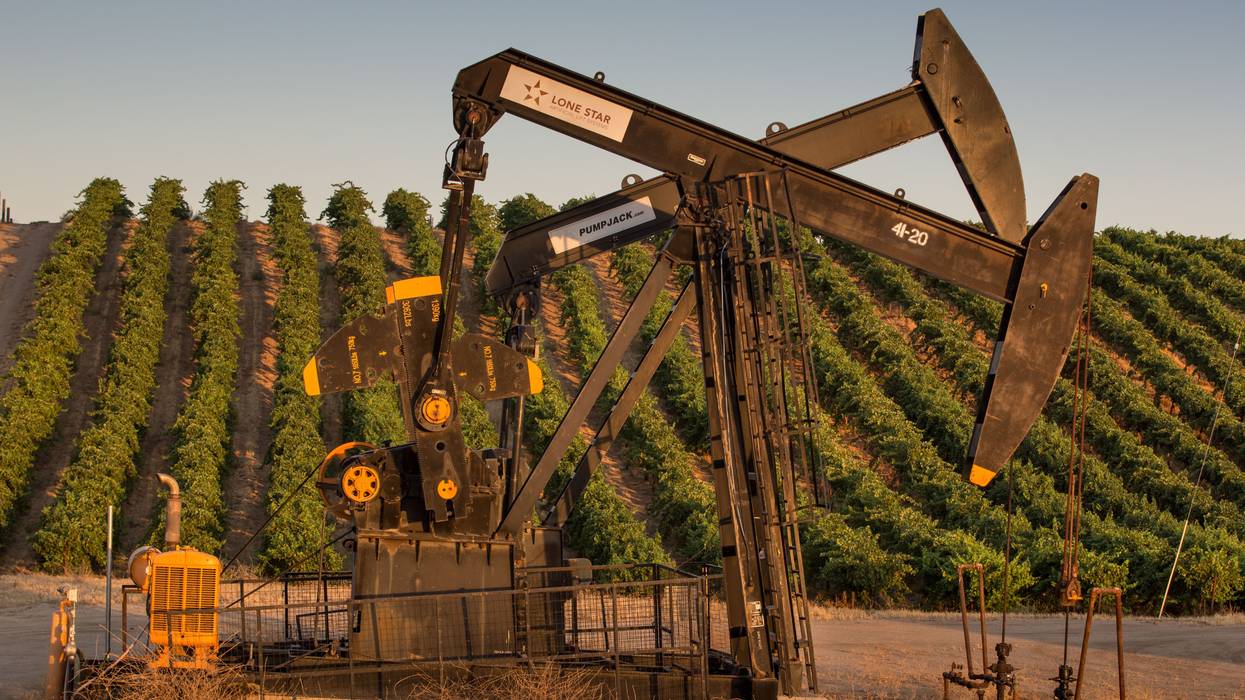
According to Earthjustice—which filed a lawsuit against the U.S. Bureau of Land Management (BLM) on behalf of the Center for Biological Diversity, Friends of the Earth, the Natural Resources Defense Council, and the Wilderness Society—BLM on May 31 "rushed" the approval of six drilling permits in the Mount Poso oil field near Bakersfield "without allowing input from the public and nearby communities, as required by federal law."
The plaintiffs argued that "BLM failed to comply with multiple laws requiring the agency to consider the cumulative, harmful impacts this drilling will have on air quality, water, climate, and environmental justice in one of the most polluted areas of the country," Earthjustice noted. "To date, BLM has never examined the overall harms caused by its permitting decisions in the San Joaquin Valley, yet continues to approve new drilling activity."
The groups asked the U.S. District Court for the Eastern District of California to halt drilling at the locations affected by the six permits BLM recently issued, pending resolution of the lawsuit and BLM's compliance with various federal laws, including the Clean Air Act, the National Environmental Policy Act, the Federal Land Policy and Management Act, the Mineral Leasing Act, and the Freedom of Information Act.
"It is our hope that the court sees the clear violations of federal law and pumps the brakes before irreversible damage occurs."
"BLM's reckless disregard for public health and the environment violates multiple federal laws meant to prevent these exact harms," Earthjustice attorney Radhika Kannan said in a statement. "Its blatant attempt to withhold its decision-making from public scrutiny further adds insult to injury for residents in the San Joaquin Valley, who cannot afford any more pollution in their communities."
"The San Joaquin Valley is the most polluted air basin in the country, and oil and gas production is a major contributor," Kannan continued. "BLM is not above the law and must answer to the local communities where residents experience the most asthma-related emergency room visits, heart attacks, and low birth-weight infants in the state of California."
Friends of the Earth legal director Hallie Templeton said that "we have done everything we can to warn the Biden administration of the myriad environmental and socioeconomic risks associated with more drilling in Kern County."
"We were deeply disappointed to see these permits granted, and the only option we have left is this lawsuit," said Templeton. "It is our hope that the court sees the clear violations of federal law and pumps the brakes before irreversible damage occurs."
"At every step, the BLM has failed to evaluate how these projects heat the climate, guzzle water, and add to some of the dirtiest air in the country," said Liz Jones, attorney at the Center for Biological Diversity's Climate Law Institute. "It's an appalling violation of our nation's environmental laws to pretend that new drilling won't make the Central Valley's pollution problems worse."
Wilderness Society director Ben Tettlebaum noted that "residents and activists in the Central Valley work every day to make their communities healthy. The last thing they need is for the BLM to threaten their air and water by unlawfully approving more oil and gas drilling in their backyards."
"BLM's oil and gas permitting process is broken," added Tettlebaum. "Its practice of rubber-stamping applications in the shadows without public input and failing to consider the cumulative air, water, climate, and environmental justice impacts is far too common—and it's also illegal. BLM must commit to an open, lawful permitting process that stays true to the Biden administration's commitment to prioritize local communities and environmental justice."
Earthjustice pointed out that the new complaint builds on earlier litigation it filed on behalf of the same coalition, which "successfully challenged BLM's failure to analyze the cumulative harms of oil and gas development in Central California."
As the group explained:
Pursuant to settlement agreements filed in summer 2022, BLM has agreed to complete a proper environmental review for the region. Yet the agency has continued to approve new drilling without the benefit of that analysis. As a result, beginning in 2022, a coalition of local community organizations and national groups submitted extensive comments to BLM documenting how its Bakersfield Field Office routinely issues permits in violation of multiple federal laws and without evaluating the impacts to air quality, water quality and scarcity, climate change, local species, or public health, all while denying nearby communities an opportunity to review and comment on the permits.
Although President Joe Biden vowed on the 2020 campaign trail to crack down on federal leasing for fossil fuel extraction, his administration approved more permits for oil and gas drilling on public lands in its first two years than the Trump administration did in 2017 and 2018.
As a presidential candidate, Biden pledged to ban new oil and gas lease sales on public lands and waters and to require federal permitting decisions to consider the social costs of additional planet-heating pollution. However, since Biden's first-week executive order suspending new fossil fuel leasing was challenged by a group of Big Oil-funded Republican attorneys general, the White House has forsaken those earlier promises—angering voters and worsening the life-threatening climate crisis it claims to be serious about mitigating.
Progressive lawmakers and advocacy groups have urged the Biden administration on several occasions to use its executive authority to phase out oil and gas production on public lands and in offshore waters. A petition submitted last year included a regulatory framework to wind down oil and gas production by 98% by 2035. According to the coalition that drafted it, the White House can achieve this goal by using untapped provisions of the Mineral Leasing Act, Outer Continental Shelf Lands Act, and the National Emergencies Act.
That same coalition sued the Biden administration in April for refusing to respond to their petition for rulemaking. The lawsuit came just weeks after the White House greenlighted ConocoPhillips' massive Willow oil drilling project in the Alaskan Arctic. The Biden administration has also taken steps to expand fracked gas export capacity, especially in the U.S. Gulf South, since Russia invaded Ukraine last February.
Biden's moves fly in the face of warnings from scientists, who said last year that wealthy countries must end oil and gas production entirely by 2034 to give the world a 50% chance of limiting global warming to 1.5°C—beyond which the climate emergency's impacts will grow increasingly deadly, especially for the world's poor who bear the least responsibility for the crisis.
"By ruling on the side of children's health and safety, the U.S. Constitution, and centuries of precedent, the justices have landed on the right side of history," said one Cherokee chief.
In what one chief called "a major victory" for Native American tribes, the United States Supreme Court on Thursday upheld a federal law enacted to protect Indian children from being separated from their families.
The justices' 7-2 decision in Haaland v. Brackeen leaves intact the Indian Child Welfare Act (ICWA), a 1978 law passed in response to over a century of Native American children being taken from their relatives and often placed in state or religious institutions or with white families.
"Today, the Supreme Court once again ruled that ICWA, heralded as the gold standard in child welfare for over 40 years, is constitutional," Cherokee Nation Principal Chief Chuck Hoskin Jr. said in a statement. "Today's decision is a major victory for Native tribes, children, and the future of our culture and heritage. It is also a broad affirmation of the rule of law, and of the basic constitutional principles surrounding relationships between Congress and tribal nations."
"We hope this decision will lay to rest the political attacks aimed at diminishing tribal sovereignty and creating instability throughout Indian law that have persisted for too long," Hoskin added. "By ruling on the side of children's health and safety, the U.S. Constitution, and centuries of precedent, the justices have landed on the right side of history."
The ICWA gives preference to Native American families in adoption and foster care proceedings, a policy challenged by a white couple, the state of Texas, and others, who claimed the law is race-based and therefore violates the equal protection clause of the 14th Amendment.
Chad and Jennifer Brackeen, a Texas couple, had already adopted a Navajo boy and are also trying to adopt his half-sister, who is 4 years old and has lived with them since she was an infant. The Navajo Nation opposes the adoption.
"Before us, a birth mother, foster and adoptive parents, and the state of Texas challenge the act on multiple constitutional grounds. They argue that it exceeds federal authority, infringes state sovereignty, and discriminates on the basis of race," Justice Amy Coney Barrett wrote for the majority. "The United States, joined by several Indian tribes, defends the law."
In addition to the Navajo, the Cherokee, White Earth Band of Ojibwe, and Ysleta del Sur Pueblo tribes were defendants in the case.
"The issues are complicated," Barrett added. "But the bottom line is that we reject all of petitioners' challenges to the statute, some on the merits and others for lack of standing."
Justices Samuel Alito and Clarence Thomas dissented, with the latter writing that "the Constitution confers enumerated powers on the federal government. Not one of them supports ICWA."
Justice Brett Kavanaugh concurred with the majority but wrote that the ICWA's race-based nature—specifically a hypothetical scenario in which "a prospective foster or adoptive parent may in some cases be denied the opportunity to foster or adopt a child because of the prospective parent's race"—raises "significant questions under bedrock equal protection principles and this court's precedents."
"Courts, including ultimately this court, will be able to address the equal protection issue when it is properly raised by a plaintiff with standing—for example, by a prospective foster or adoptive parent or child in a case arising out of a state-court foster care or adoption proceeding," Kavanaugh added.
Before passage of the ICWA, between 25% and 35% of Native American children were being taken from their homes and placed with other families for adoption, in foster care, or in church- or state-run institutions.
During and after the peak decades of the U.S. genocide against the Western Indians, vanquished tribes were forced to send their children to boarding schools to be "civilized." Under the mantra "kill the Indian, save the man," hundreds of thousands of Native children suffered this cultural genocide. Many never returned home again, as diseases claimed many lives. Parents who resisted giving up their children were often imprisoned, sometimes on California's foreboding Alcatraz Island.
The 2021 discovery of hundreds of Indigenous children buried in unmarked graves at a Canadian boarding school prompted U.S. Interior Secretary Deb Haaland to write about how her Laguna Pueblo grandparents were stolen from their families when they were 8 years old in "an effort to eradicate our culture and erase us as a people."
Responding to Thursday's Supreme Court ruling, Haaland said that "for nearly two centuries, federal policies promoted the forced removal of Indian children from their families and communities through boarding schools, foster care, and adoption."
"Those policies were a targeted attack on the existence of tribes, and they inflicted trauma on children, families, and communities that people continue to feel today," she added. "Congress passed the Indian Child Welfare Act in 1978 to put an end to those policies."
"Today's decision just isn't enough to give our communities a fighting chance against the climate emergency," said one campaigner.
Climate and environmental protection campaigners welcomed an announcement by the Biden administration on Friday that the U.S. Interior Department is blocking new oil and gas leases in the area surrounding Chaco Canyon in New Mexico, but emphasized that the move will not undo the damage done by President Joe Biden's approval of drilling on other public lands or by years of fossil fuel extraction in the region.
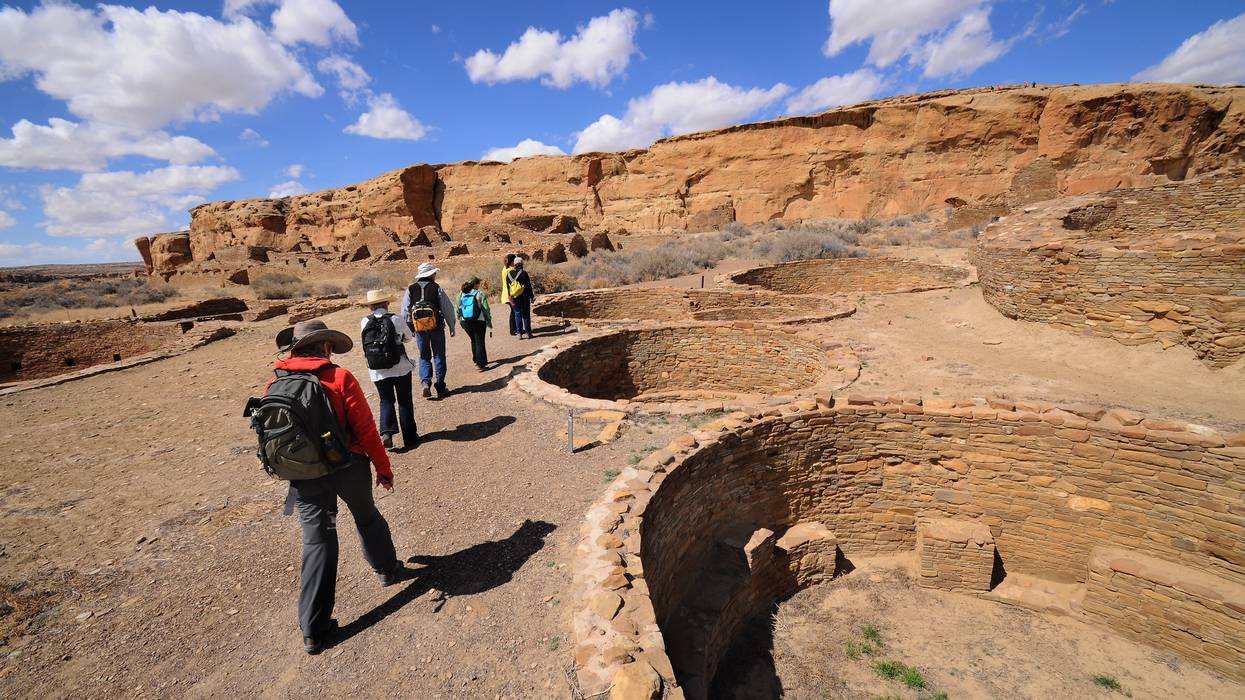
Interior Secretary Deb Haaland announced that after a public comment period and decades of campaigning by Indigenous rights groups, her agency will block new oil and gas leasing on public lands within a 10-mile radius of the Chaco Canyon National Historical Park.
Existing oil and gas leases on public and private lands within the 10-mile area will not be affected, and Diné C.A.R.E., a group representing Diné, or Navajo, communities affected by environmental issues, noted that the Greater Chaco Region in northwestern New Mexico is suffering the effects of oil and gas drilling, including the formation of a 2,500-square-mile methane cloud over the area.
"Protection of Chaco Canyon is a great first step, but protections for the Greater Chaco Region, where there are living communities of Diné relatives, wildlife, and plant life, including countless sacred sites throughout the region, are just as critical and should be a priority for the Biden administration," said Robyn Jackson, executive director of Diné C.A.R.E. "We cannot ignore the devastating impacts that oil and gas have on our climate, region, culture, living communities, and future generations."
Jackson called on the Biden administration to entirely phase out fossil fuel extraction, as climate scientists and energy experts have said all countries must in order to avoid planetary heating over 2°C above preindustrial levels, and "support a renewable and sustainable economy."
"We will continue to push for an end to oil and gas drilling on all public land in the U.S. so we may all enjoy a healthy, livable future in which our leaders prioritize environmental justice."
"Our Indigenous communities deserve environmental justice," she said.
The Chaco Canyon National Historical Park is a UNESCO World Heritage site and covers roughly 30,000 acres which were integral to Pueblo culture between the ninth and 13th centuries.
The Chaco Canyon Coalition, which includes Indigenous groups and has demanded protections for the park and the surrounding region for years, noted that the Interior Department's own estimates have found the administration's decision will block only a few dozen oil and gas wells, reducing natural gas production in the area by 0.5% and oil production by 2.5%.
"More than 90% of Greater Chaco is already either industrialized by oil and gas extraction or promised to industry for more drilling in the future, even as we recognize this activity's impacts on the area's communities and the climate," said attorney Ally Beasley of the Western Environmental Law Center, a member of the coalition. "We will continue to push for an end to oil and gas drilling on all public land in the U.S. so we may all enjoy a healthy, livable future in which our leaders prioritize environmental justice."
The limited protections for Chaco Canyon are "a welcome first step," said Soni Grant, New Mexico campaigner for the Center for Biological Diversity, on Friday. "But the Biden administration needs to follow up by ending all fossil fuel leasing on public lands and phasing out extraction."
"The only way to solve the long-term shortage on the Colorado River is to take a lot less water out of the system," said one agricultural economics professor. "Which necessarily means permanent reductions in crops grown."
California, Arizona, and Nevada on Monday struck a deal with the Biden administration in which the states agreed to take less water from the dangerously overdrawn Colorado River—an agreement cautiously welcomed by conservationists, who warned that the cuts are insufficient to stabilize a system upon which tens of millions of people rely.
Monday's breakthrough agreement follows nearly a year of negotiations and missed deadlines and involves the Biden administration, the three states, Indigenous tribes, water management districts, and agribusinesses. Under the plan, the federal government will distribute around $1.2 billion worth of Inflation Reduction Act funds to cities, tribes, and water districts if they cut back on water use. The three states agreed to use 3 million acre-feet less water between them by the end of 2026. This would amount to 13% of their total Colorado River allocation.
"There are 40 million people, seven states, and 30 tribal nations who rely on the Colorado River Basin for basic services such as drinking water and electricity," U.S. Interior Secretary Deb Haaland said in a statement. "Today's announcement is a testament to the Biden-Harris administration's commitment to working with states, tribes, and communities throughout the West to find consensus solutions in the face of climate change and sustained drought."
"The agreed-to cuts are significantly less than what federal scientists and officials had said were necessary to stabilize the river system on which tens of millions in the Southwest rely."
Last August, amid extreme drought driven by the climate emergency and warnings of a possible "catastrophic collapse" of the Colorado River, the U.S. Interior Department announced the first-ever tier 2 shortage for the waterway, triggering water-use cuts in Arizona, Nevada, and the country of Mexico for 2023.
U.S. Bureau of Reclamation Commissioner Camille Calimlim Touton called the agreement "an important step forward towards our shared goal of forging a sustainable path for the basin that millions of people call home."
Arizona Gov. Katie Hobbs, a Democrat, hailed the "partnership with our fellow Basin states and historic investment in drought funding," while asserting that "we now have a path forward to build our reservoirs up in the near-term."
"From here, our work must continue to take action and address the long-term issues of climate change and overallocation to ensure we have a sustainable Colorado River for all who rely upon it," Hobbs added.
Luke Runyon, president of the Society of Environmental Journalists, noted on Twitter that "the agreed-to cuts are significantly less than what federal scientists and officials had said were necessary to stabilize the river system on which tens of millions in the Southwest rely."
John Entsminger, general manager of the Southern Nevada Water Authority, told E&E News that "the plan set forth by the Lower Basin states is not a panacea for the river, but rather a consensus solution that will help manage near-term water demands while serving as a bridge to negotiate the post-2026 operating criteria."
"The Colorado River Basin has a warmer and drier future ahead and reducing water use, increasing water efficiency, and maximizing water recycling and reuse is paramount to a sustainable future for the 40 million people that depend upon this critical water supply," he added.
As Common Dreams reported last month, advocacy groups including Food & Water Watch also criticized proposed deals between the administration and states for failing to address the overexploitation of water resources by corporate agriculture and fossil fuel companies.
While unusually heavy snowfall and subsequent spring meltwater have helped temporarily avert what experts warned last year could be a "doomsday scenario" for the Colorado River Basin in 2023, the vital waterway remains in danger of running too low to provide enough water for all who rely upon it.
The Colorado River historically ran about 1,450 miles from its headwaters high in the Rocky Mountains of northern Colorado into Utah, through the Grand Canyon in Arizona, and then along Nevada and California's southeastern borders before flowing into the northernmost tip of the Gulf of California in Mexico.
The river—which is an oasis in the unforgiving desert that surrounds it for much of its course—long sustained Indigenous peoples both before and after the genocidal colonization of the Southwest, and since the U.S. conquered the region from Mexico it has been a lifeline for American settlers and cities as well as Native tribes.
Western states began dividing the river's water between them around a century ago, and throughout the 20th century, massive dams and channels diverted water hundreds of miles away to sprawling, thirsty farms on previously desert lands and to rapidly expanding cities like Los Angeles, Phoenix, San Diego, and Las Vegas.
Under the Colorado River Compact, states sidestepped Indigenous tribes and agreed to annual water allocations that they must use in full or face usage-based cuts the following year. This "use it or lose it" system has created what critics call "perverse" incentives for farmers to grow water-intensive crops in the desert.
Today, around three-quarters of the river's flow is siphoned off to irrigate more than five million acres of farmland, according to the U.S. Bureau of Reclamation. Hydroelectric plants along the Colorado also generate more than 12 billion kilowatt hours of electricity annually.
The river has been running especially low in recent decades as worsening droughts driven by the climate emergency have gripped the Southwest and as the population of the nation's driest region explodes. The Colorado no longer empties into the sea, and models predict that by the year 2100 its flow could be further reduced by more than half.
"The only way to solve the long-term shortage on the Colorado River is to take a lot less water out of the system," environmental and resource economist Nick Hagerty stressed in reaction to Monday's announcement. "Which necessarily means permanent reductions in crops grown. That's where the focus needs to be."