

SUBSCRIBE TO OUR FREE NEWSLETTER
Daily news & progressive opinion—funded by the people, not the corporations—delivered straight to your inbox.
5
#000000
#FFFFFF
To donate by check, phone, or other method, see our More Ways to Give page.
Daily news & progressive opinion—funded by the people, not the corporations—delivered straight to your inbox.

US Transportation Secretary Sean Duffy said President Donald Trump is "trying to drive these prices down," even though the president's war has been the primary reason they've been going up.
The price of diesel fuel in the US hit another record high on Saturday, as data published by the American Automobile Association showed the average cost for a gallon of diesel now stands at $5.88.
According to a Saturday report from Axios, incumbent Republicans are fretting about the impact that skyrocketing gasoline and diesel prices will have on the 2026 midterm elections, particularly since their own internal polling shows voters are placing blame for the price hikes on President Donald Trump's illegal war with Iran.
"Diesel's at an all-time high," one GOP operative told Axios. "Gas is about $4 a gallon. We can't message that away."
Another Republican source told Axios that GOP candidates don't even have the option of distancing themselves from the president and his unpopular war given the iron grip he has on voters they will need to turn out in crucial races.
"We have no choice," said the source. "We're stuck on the boat with him whether we like it or not."
US Secretary of Transportation Sean Duffy tried to spin the record-high diesel prices as something outside the president's control during a Saturday interview on Fox News.
"When you look at diesel, you have to look at Russia and Ukraine," Duffy said. "Russia was a major exporter, the second-biggest exporter in the world, on diesel. They stopped their exports, so that puts pressure on the global market. But President Trump has pushed American energy dominance, we are producing more energy now than in the past."
Duffy added that "it's only President Trump who's trying to drive these prices down," even though the president's war has been the primary reason they've been going up.
Fox & Friends weekend host Charlie Hurt gives Trump credit for record high diesel prices: "Uhhh, they'd be a lot higher if it wasn't for the efforts of the administration"
"When you look at diesel, you have to look at Russia and Ukraine," Duffy replies 🥴 pic.twitter.com/Wm5bLJ6exA
— Aaron Rupar (@atrupar) September 5, 2026
As a report published Friday by The Associated Press explained, the cost of diesel has a particularly strong impact on the price of food since the fuel is used to power both farm equipment and the trucks used to deliver food to grocery stores.
"Fuel accounts for roughly 15% to 30% of the total cost of food, according to the Independent Grocers Alliance, a grouping of 7,500 global supermarkets," reported the AP. "So higher diesel costs often result in more expensive groceries, although it can take a while for energy shocks to wind their way through the supply chain."
The rising cost of groceries has been a major source of stress for US consumers for years, and Trump during the 2024 presidential campaign vowed that prices on groceries would come down starting on his very first day in office.
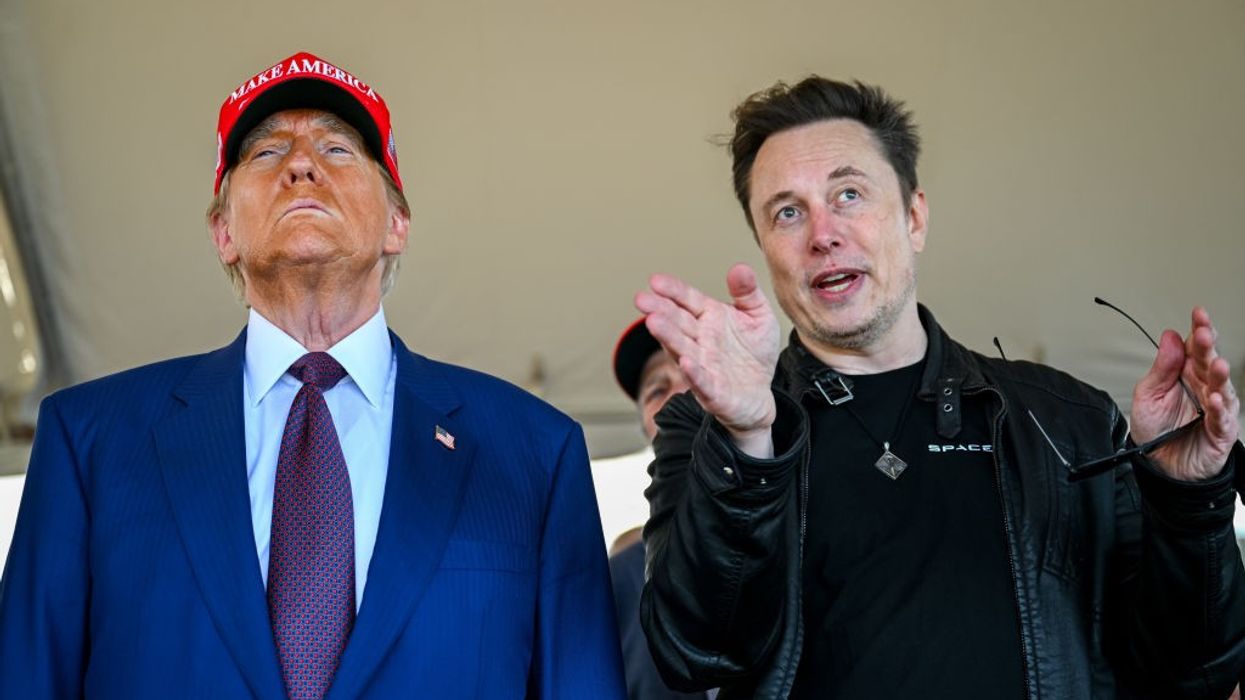
"This would put untold species directly in harm's way," the Center for Biological Diversity warned.
Under pressure from companies owned by billionaires like Elon Musk and Jeff Bezos, the Trump administration announced this week that it will waive what it called "unnecessary environmental laws and regulations" in order to expedite the approval of commercial rocket launches.
The US Department of Transportation's (USDOT) Federal Aviation Administration (FAA) is proposing to waive numerous environmental review requirements and related federal laws that currently apply to commercial space launches, citing legal authority Congress granted to the secretary of transportation.
The proposed changes—on which the public has 30 days to comment—would make it much faster and easier for space profiteers to get permission to launch rockets or operate commercial spaceports in the United States by allowing the FAA to waive part or all of over a dozen laws and rules, including National Environmental Policy Act, the Endangered Species Act, the Clean Water and Clean Air acts, the National Historic Preservation Act, and the Marine Mammal Protection Act.
“America won the first space race, and we can do it again—but only if we get government red tape out of the way,” US Transportation Secretary Sean Duffy said on Tuesday. "That’s why President [Donald] Trump has charged USDOT with unlocking the final frontier and reestablishing the United States’ dominance in space."
Trump’s FAA announced today that it intends to exempt #space launches and spacecraft reentries from complying with environmental laws like the #EndangeredSpeciesAct. This will put untold species directly in harm’s way.You can be sure we’ll fight this obscene giveaway to special interests 🚀🚀
— Center for Biological Diversity (@biologicaldiversity.org) July 28, 2026 at 4:08 PM
The USDOT said that other federal agencies, such as the National Aeronautics and Space Administration (NASA) or the US military, may still be required to conduct environmental reviews under the law for launches on some federal property.
The proposal follows Trump's August 2025 executive order, "Enabling Competition in the Commercial Space Industry," which critics charge was issued to benefit Musk, the world's richest person, and his company SpaceX, which is seeking to dramatically increase launches and landings and has suffered a series of rocket explosions. Trump has boosted other companies—including X and Tesla—led by Musk, who served for a period last year as de facto head of the president's so-called Department of Government Efficiency, or DOGE.
Opponents warn that, if approved, the proposed changes mean that the FAA would generally no longer require environmental studies or consultations before issuing commercial space licenses.
“NASA has conducted space launches for decades in a responsible way, but now Trump wants to gut even the most basic environmental safeguards to enrich some of the world’s wealthiest people,” said Brett Hartl, government affairs director at the Center for Biological Diversity (CBD). “We’ve seen real environmental damage from the exploding rocket toys of the superrich. You can be damn sure we’ll fight this obscene giveaway to special interests.”
In 2024, SpaceX was punished with a paltry $150,000 in fines for violating the Clean Water Act after it discharged tens of thousands of gallons of industrial waste from a launch pad in Boca Chica, Texas.
CBD and other green and Indigenous groups last month sued the US Fish and Wildlife Service in a bid to stop the Trump administration from handing over 715 acres of the Lower Rio Grande Valley National Wildlife Refuge in South Texas to SpaceX in exchange for 683 acres elsewhere.
On Wednesday, CNBC revealed that six US lawmakers from both major parties—including five who sit on committees that regulate SpaceX—had or have family investments in the company, raising concerns over apparent conflicts of interest.
In addition to environmental concerns, Trump has also come under fire for militarizing space in contravention of the Outer Space Treaty—which the US has ratified—by launching the Space Force as an official service branch during his first term.
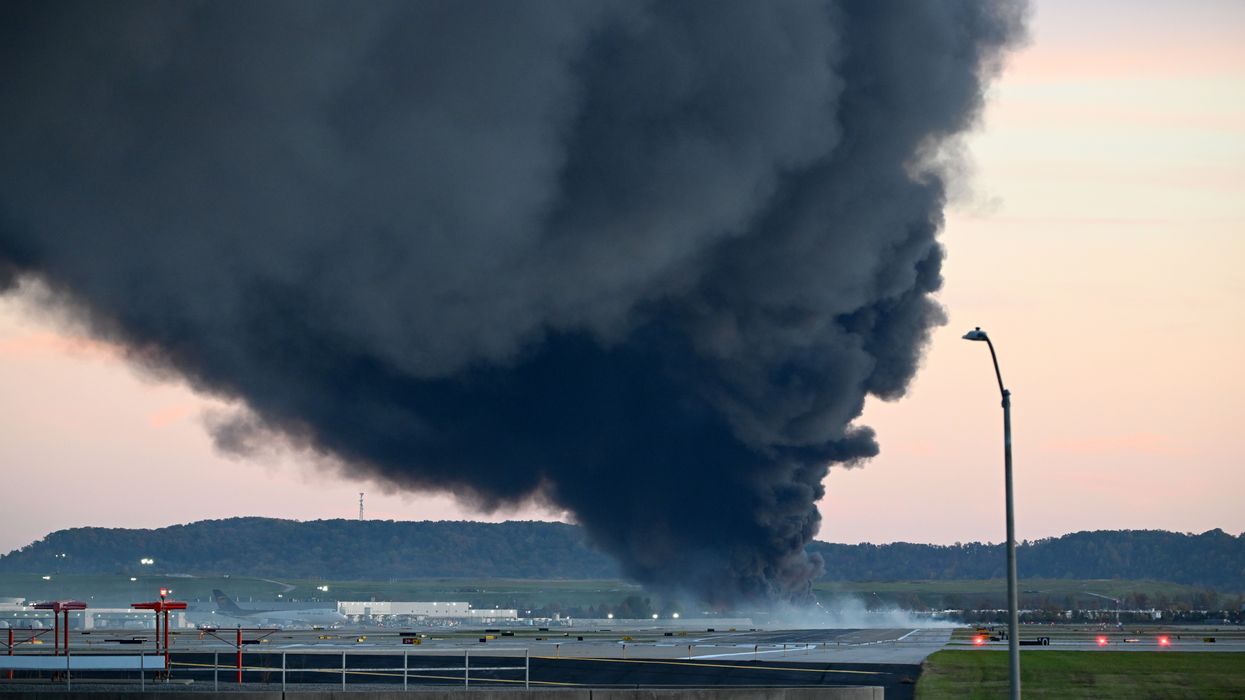
Police announced a shelter-in-place order for "all areas north of the airport to the Ohio River."
This is a developing story… Please check back for updates…
Aerial footage showed plumes of black smoke and flames around the Louisville Muhammad Ali International Airport in Kentucky after a UPS plane crashed during its departure on Tuesday evening.
The Federal Aviation Administration said on social media that UPS Flight 2976—a McDonnell Douglas MD-11 bound for Daniel K. Inouye International Airport in Honolulu, Hawaii—crashed around 5:15 pm local time. The agency added that the FAA and National Transportation Safety Board will investigate, with the NTSB providing all updates.
The Louisville Metro Police Department confirmed that the LMPD and multiple other agencies were responding to the scene, where there are "injuries reported."
LMPD initially announced a shelter-in-place order "for all locations within five miles of the airport," which was then expanded to "all areas north of the airport to the Ohio River."
The airport—which confirmed that "the airfield is closed" after the crash—is the UPS global hub. The shipping giant said in a statement that there were three crewmembers onboard and "at this time, we have not confirmed any injuries/casualties."
"UPS will release more facts as they become available, but the National Transportation Safety Board is in charge of the investigation and will be the primary source of information about the official investigation," the company added.
As CNN reported Tuesday:
The McDonnell Douglas MD-11F is a freight transport aircraft manufactured originally by McDonnell Douglas and later by Boeing. The aircraft is primarily flown by FedEx Express, Lufthansa Cargo, and UPS Airlines for cargo.
The plane also served as a popular wide-bodied passenger airplane after it was first flown in 1990. The aircraft involved in Tuesday's crash was built in 1991.
As fuel costs increased for the three engine jets many of them were converted to freighters. The plane can take off weighing in at a maximum 633,000 pounds and carrying more than 38,000 gallons of fuel, according to Boeing, which bought McDonnell Douglass.
The International Brotherhood of Teamsters said that it "is monitoring this developing tragic event on the ground," and "as this horrific scene is being investigated, prayers on behalf of our entire international union are with those killed, injured, and affected, including their families, co-workers, and loved ones."
Louisville Mayor Craig Greenberg said that he and his wife, Rachel, "are praying for victims of the UPS plane that crashed."
"We have every emergency agency responding to the scene," the Democrat added. "There are multiple injuries and the fire is still burning. There are many road closures in the area—please avoid the scene."
Democratic Kentucky Gov. Andy Beshear, who is headed to Louisville for a briefing with the mayor, said, "Please pray for the pilots, crew, and everyone affected."
Republican President Donald Trump's transportation secretary, Sean Duffy, similarly said, "Please join me in prayer for the Louisville community and flight crew impacted by this horrific crash."
During a press conference earlier on Tuesday, Duffy had warned of "mass chaos" if the ongoing government shutdown continues, saying: "You will see mass flight delays. You'll see mass cancellations, and you may see us close certain parts of the airspace, because we just cannot manage it because we don't have the air traffic controllers."
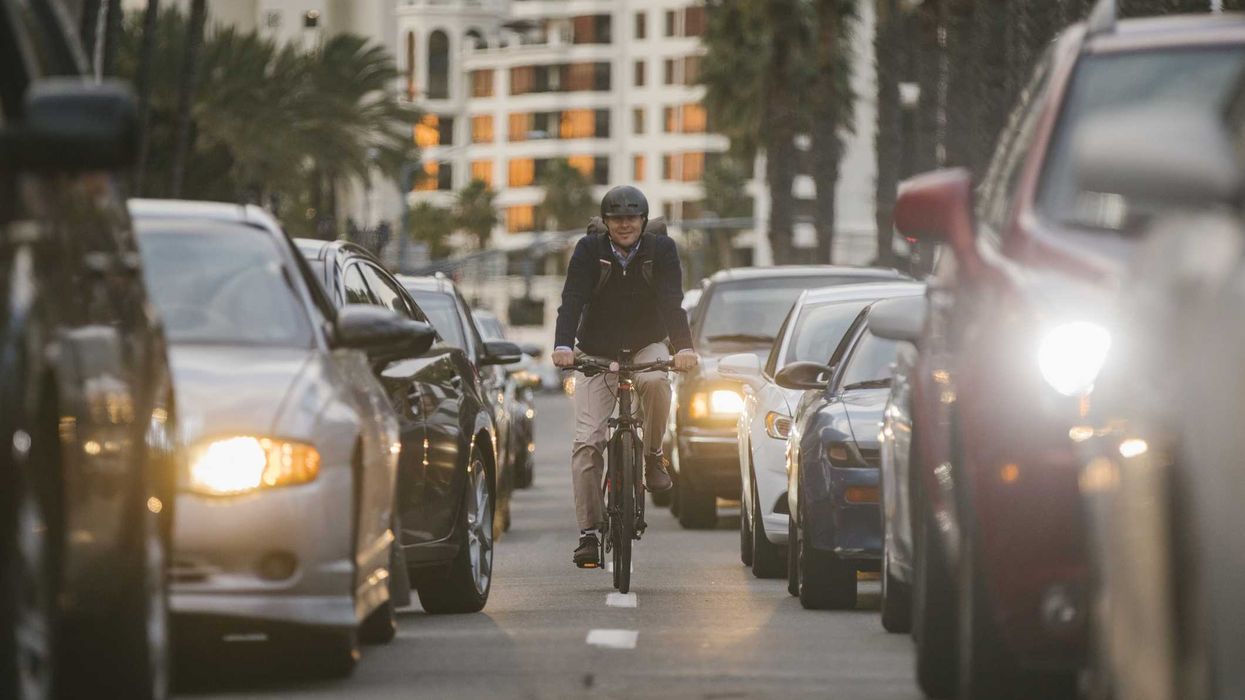
More than 7,148 pedestrians were killed by personal motor vehicles in 2024, just shy of a 40-year high. Meanwhile, travelers are much more likely to die in cars than on public transit.
The US Department of Transportation began earlier this month to rescind federal funding for local projects across the country to improve street safety and add pedestrian trails and bike lanes, because they were deemed "hostile" to cars.
A report Monday in Bloomberg cited several examples of multimillion-dollar grants being axed beginning on September 9, all with the same rationale:
A San Diego County road improvement project including bike lanes “appears to reduce lane capacity and a road diet that is hostile to motor vehicles,” a US Department of Transportation official wrote, rescinding a $1.2 million grant it awarded nearly a year ago.
In Fairfield, Alabama, converting street lanes to trail space on Vinesville Road was also deemed “hostile” to cars, and “counter to DOT’s priority of preserving or increasing roadway capacity for motor vehicles.”
Officials in Boston got a similar explanation, as the Trump administration pulled back a previously awarded grant to improve walking, biking, and transit in the city’s Mattapan Square neighborhood in a way that would change the “current auto-centric configuration.” Another grant to improve safety at intersections in the city was terminated, the DOT said, because it could “impede vehicle capacity and speed.”
These are just a few of the projects cancelled in recent weeks by the Trump administration. According to StreetsBlog, others included a 44-mile walking trail along the Naugatuck River in Connecticut, which the administration reportedly stripped funding from because it did not "promote vehicular travel," and new miles of rail trail in Albuquerque for which DOT said funding would be reallocated to "'car-focused' projects instead."
The cuts are part of a broader effort by the Trump administration to slash discretionary federal grants under the Bipartisan Infrastructure Act signed by former President Joe Biden in 2021.
These include the RAISE infrastructure grant and Safe Streets and Roads for All programs, for which Congress has allocated a combined $2.5 billion annually to expand public transportation and address the US's worsening epidemic of pedestrian deaths.
Data published in July by the group Transportation for America revealed that the Trump administration has been implementing funds for safety grants at about 10% of the speed of the Biden administration.
According to a report published in July by the Governors Highway Safety Association, US drivers struck and killed 7,148 pedestrians in 2024, "enough to fill more than 30 Boeing 737 jets at maximum capacity." Though fatalities have decreased slightly from a 40-year peak in 2022, the number of fatalities last year was 20% higher than in 2016.
Research has overwhelmingly shown that adding bicycle and pedestrian lanes to streets can reduce these fatalities. Even the DOT's own Federal Highway Administration website recommends introducing "Road Diets" that reduce four-lane intersections to three lanes, making room for pedestrian refuge islands and bike lanes to serve as a "buffer" between automobile traffic and sidewalks.
According to the website, "studies indicate a 19 to 47% reduction in overall crashes when a Road Diet is installed on a previously four-lane undivided facility as well as a decrease in crashes involving drivers under 35 years of age and over 65 years of age."
Car crash fatalities are also up in general, according to preliminary data from the Department of Transportation: 39,345 were killed in motor accidents in 2024 compared with 32,744 a decade prior, a 20% increase.
Despite this, the Trump administration has made its preference for maximizing car travel abundantly clear. Trump has attempted to block California from constructing a massive new high-speed rail line from Los Angeles to San Francisco and has tried to stymie New York's wildly successful congestion pricing program.
Citing isolated cases of subway and train crime, he and other members of the Republican Party often paint public transit as excessively dangerous.
In one interview on Fox News in May, Transportation Secretary Sean Duffy ranted that, "if you're liberal, they want you to take public transportation." While stating that he was "OK with public transportation," he said, "the problem is that it's dirty. You have criminals. It's homeless shelters. It's insane asylums. It's a work ground for the criminal element of the city to prey upon the good people."
However, data show that between 2007 and 2023, deaths from automobile accidents were 100 times more likely than deaths on buses and 20 times more likely than on passenger trains.
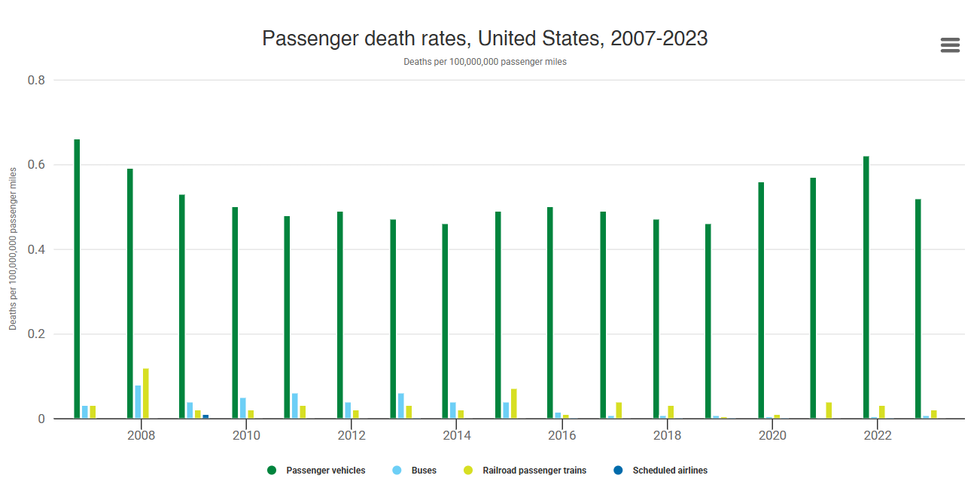 Data: Highway passenger deaths from the Fatality Analysis Reporting System (FARS) data. Railroad passenger deaths from the Federal Railroad Administration. Airline passenger deaths from the National Transportation Safety Board (NTSB). Passenger miles estimates from the Bureau of Transportation Statistics. All other figures are estimates from the National Safety Council. (Graphic: National Safety Council)
That hostility extends toward efforts to expand bicycle usage. In March, Duffy announced that the department would "review" all grants related to green infrastructure, including bike lanes, which was characterized as an effort to combat the previous president's attempts to reduce US transportation's carbon footprint.
Grant criteria sent to communities for the Safe Streets and Roads for All program explicitly warned communities that if "the applicant included infrastructure [resulting in] reducing lane capacity for vehicles," the application would be "viewed less favorably by the department."
When asked about this decision at a panel the next month, StreetsBlog reported that Duffy "grimaced and grumbled the word 'bikes' like it was an expletive, before repeating a string of corrosive myths about bike lanes that are all too common among people who only get around by car," including that they supposedly increase traffic congestion.
Many of the communities that have lost funding for their projects say they are still going to move ahead with them in some capacity. However, they argue that the government providing funds to improve road safety should be common sense.
Rick Dunne, the executive director of the Naugatuck Valley Council of Governments, stated that the effort to build a trail along the river will continue, even without the funding. But he expressed bewilderment at the administration's statement that investing in highway travel would better serve residents' "quality of life."
“Look, if your definition of improving quality of life is promoting vehicular travel, that's just, on its face, bad. Increase vehicle travel, increase pollution, increase safety risks,” Dunne told the CT Post. “Taking this money from this project, putting it into highway travel, is in no way going to increase economic efficiency. I don't see how you argue that it improves the quality of life of Americans, or the residents of this valley.”
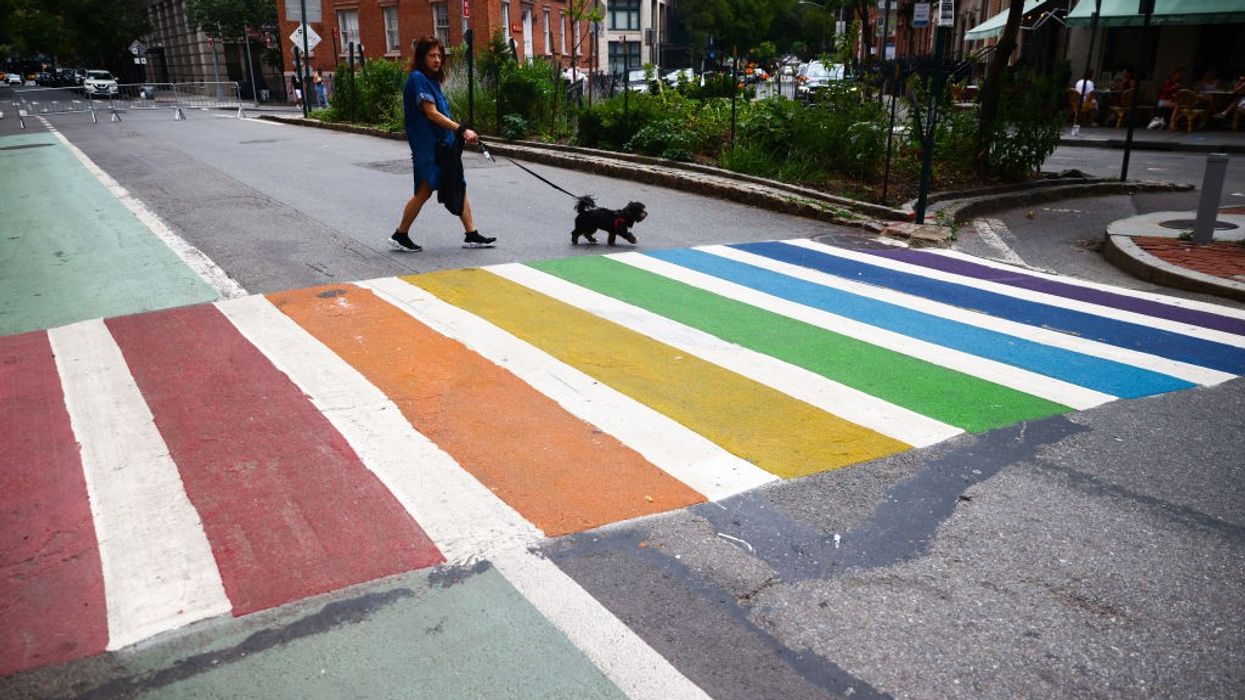
"Removing that crosswalk was a mean-spirited attempt to demoralize the LGBTQ+ community and an insult to the 49 people who lost their lives," said Democratic Florida state Sen. Lori Berman.
Republican Florida Gov. Ron DeSantis, following a directive from US President Donald Trump's administration, painted over a rainbow crosswalk in Orlando that for years had served as a memorial to the victims of the 2016 massacre at Pulse, a local LGBTQ+ nightclub.
As reported by local news station WESH, the removal of the rainbow display came in response to a directive from Transportation Secretary Sean Duffy, who sent a notice to governors last month that crosswalks should be free of potential distractions for drivers such as political messages.
The removal of the memorial was immediately denounced by Orlando Mayor Buddy Dyer, who slammed the move as "cruel."
"We are devastated to learn that overnight the state painted over the Pulse Memorial crosswalk on Orange Avenue," he said. "This callous action of hastily removing part of a memorial to what was at the time our nation's largest mass shooting, without any supporting safety data, or discussion, is a cruel political act."
Democratic Florida state Sen. Lori Berman offered a similarly scathing statement about the removal of the crosswalk, which she pointed out was originally approved by the administration of former Republican Gov. Rick Scott, who is now serving as one of Florida's US senators.
"The rainbow crosswalk at Pulse was a tribute, not a political statement—and a tribute authorized by a Republican administration, at that," she said. "It was specifically designed to enhance pedestrian safety for people paying their respects. Removing that crosswalk was a mean-spirited attempt to demoralize the LGBTQ+ community and an insult to the 49 people who lost their lives there nearly a decade ago."
DeSantis defended the crosswalk's removal, claiming the rainbow signified that Florida's roads had been "commandeered for political purposes."
However, within hours of the rainbow crosswalk's removal, local residents took matters into their own hands and painted it back, resulting in cheers from onlookers and appreciative honks from passing drivers.
Orlando recolors the Pulse Memorial Sidewalk Rainbow after DeSantis paved over it. We are Orlando Strong and no one can ever erase the LGBTQIA+ Community 🏳️⚧️🏳️🌈 pic.twitter.com/NLS7pOz1xQ
— 🍒Jeremy Rodriguez🍒 (@jeremy_rodrigue) August 21, 2025
The memorial paid tribute to the 49 people who were killed on June 12, 2016, when a 29-year-old man named Omar Mateen barged into the club and began opening fire on patrons.
During the massacre, Mateen placed a call to 911 in which he said that he had pledged his allegiance to the terrorist organization Islamic State. He later told a law enforcement negotiator that his killing spree was being done in reaction to American military intervention in Iraq and Syria.
Shortly after this, Mateen was killed in a shootout with local police.
The transportation secretary has called for upgrades to the systems used by air traffic controllers; he voted against such improvements when he was in Congress.
Travelers at Newark Liberty International Airport in New Jersey on Monday were still being impacted by flight delays and cancellations after numerous technical issues in recent days interrupted air traffic control operations—disruptions that U.S. Transportation Secretary Sean Duffy said Sunday are likely to spread to the nation's other airports.
Duffy told NBC's "Meet the Press" on Sunday that he is currently "concerned about the whole airspace," but said traveling by air is still safe.
"The lights are blinking, the sirens are turning," said Duffy. "What you see in Newark is gonna happen in other places across the country."
The Federal Aviation Administration (FAA) said in a statement that Newark's most recent technical disruption on Sunday was the result of a "telecommunications issue" at Philadelphia Terminal Radar Approach Control (TRACON) Area C facility, which guides aircraft in and out of Newark.
Air traffic control systems were also disrupted on Friday, with controllers at the same facility losing radar and radio contact for about 90 seconds.
At least five air traffic controllers at TRACON Area C are currently on 45 days of trauma leave after a similar incident on April 28 during a busy afternoon.
The air traffic control team at the facility lost contact with all planes while they were managing 15-20 flights. One air traffic controller at Newark told NBC News after this incident that the airport is "not a safe situation right now for the flying public."
The disruption led to thousands of flight cancellations and delays—some longer than five hours—in and out of Newark, which serves more than 24 million travelers per year and is the nation's 12th busiest airport.
Duffy denied on Sunday that job cuts affecting about 400 staffers at the FAA—spearheaded by the so-called Department of Government Efficiency, headed by billionaire tech mogul Elon Musk—had anything to do with the problems at Newark.
But representatives of the Professional Aviation Safety Specialists union, which represents about 11,000 employees who support air traffic controllers, warned earlier this year that layoffs would result in critical workers guiding planes in and out of airports with less support from the FAA.
The job cuts affected workers including administrative and logistics technicians, aeronautical information specialists, and maintenance mechanics.
The FAA has blamed many of the issues at Newark, where TRACON Area C has been affected by outages four times since November, on equipment failures and staffing shortages.
Duffy has called for air travel upgrades including investments in digital flight data management, improvements to radio systems, and extending the retirement age for air traffic controllers to 61, up from 56.
On CNN last week, Kaitlan Collins pointed out that Duffy, then a Republican member of the U.S. House, joined his party in voting against upgrades to air traffic control systems.
On Sunday, signs were already emerging that staffing and technical issues could be spreading to other airports with impacts on travel.
An equipment outage at Hartsfield-Jackson Atlanta International Airport—the busiest in the world—led to a ground stop for more than an hour, delaying 1,337 flights. FAA staffing shortages at a control tower in Austin, Texas also led to delays for 145 flights.
Republicans, said one feminist writer, "don't care about making the world better, safer, or healthier for American families and children. They just want women to have more babies."
Political observers have warned that U.S. President Donald Trump has spent his first months in office "flooding the zone"—unleashing a torrent of executive actions and Republican proposals meant to overwhelm his opponents while furthering his right-wing agenda, including pushes to slash healthcare for more than 36 million children, eliminate funding for early childhood education, and weaken environmental justice initiatives.
But new reporting this week revealed that while taking significant actions that are expected to directly harm millions of children—and make the cost of living higher for parents across the country—White House officials have been considering a range of proposals aimed at encouraging people to have more children.
As The New York Times reported Monday, White House aides have met in recent weeks with policy experts and advocates for boosting U.S. birth rates, which have been declining since 2007.
Simone and Malcolm Collins, activists who founded Pronatalist.org, which they describe as "the first pronatalist organization in the world," told the Times that they have sent multiple draft executive orders to the White House, including one that would bestow a "National Medal of Motherhood" on women who have six children or more—a scheme with history in numerous fascist regimes, including those of Italian dictator Benito Mussolini, Nazi leader Adolf Hitler, and Soviet leader Joseph Stalin.
Other proposals aides have discussed would reserve 30% of Fulbright scholarships for people who are married or have children; grant a $5,000 "baby bonus" to families after they have a baby; and fund programs that educate women on their menstrual cycles so they can use "natural family planning" and determine when they are able to conceive.
"Just so we're clear: Instead of teaching kids about birth control and sexual health, the government would fund programs that teach little girls how to get pregnant," wrote Jessica Valenti at the Substack newsletter Abortion, Every Day.
The latter proposal would likely be offered without offering women any information about contraception or other comprehensive sex education, which President Donald Trump vehemently opposed in his first term.
The administration's "pronatalist" push has been steadily building since before Trump won the presidency. During the campaign last year, Vice President JD Vance provoked an uproar when he doubled down on his comments from 2021 when he had said the Democratic Party was run by "childless cat ladies." He said last summer that people without biological children "don't really have a direct stake in" the future and defended his previous remarks that the government should "punish the things that we think are bad"—meaning not having children.
"For years, proposals and debates have separated having children from raising children. But parents aren't dumb. They'll look around and ask whether this is a world where it's good to have children."
Vance's claim that the Democratic Party is "anti-family and anti-child" was based largely on his belief that politicians on the left are too negative about the future—frequently expressing concern about the scientific consensus that continuing to extract fossil fuels, which Trump has promised to ramp up, will cause more frequent and devastating extreme climate events.
Since Trump took office, he has pledged to be a "fertilization president"—touting his support for in vitro fertilization even as federal researchers in reproductive technology were dismissed from their jobs—and his transportation secretary, Sean Duffy, told staffers to prioritize infrastructure projects in areas with high birth and marriage rates.
But the Republican Party, including Trump, has long scoffed at concrete policy proposals meant to make raising children—not just birthing them—more accessible for American families.
The Michigan Republican Party penned a memo in 2023 saying a paid family leave proposal was a "ridiculous idea" akin to "summer break for adults," and a budget proposal by Trump in 2018 claimed to require states to provide paid parental leave, but it was derided as "phony and truly dangerous" by one policy expert.
Senate Republicans last year blocked legislation that would have helped lift 500,000 children out of poverty by expanding eligibility for the child tax credit.
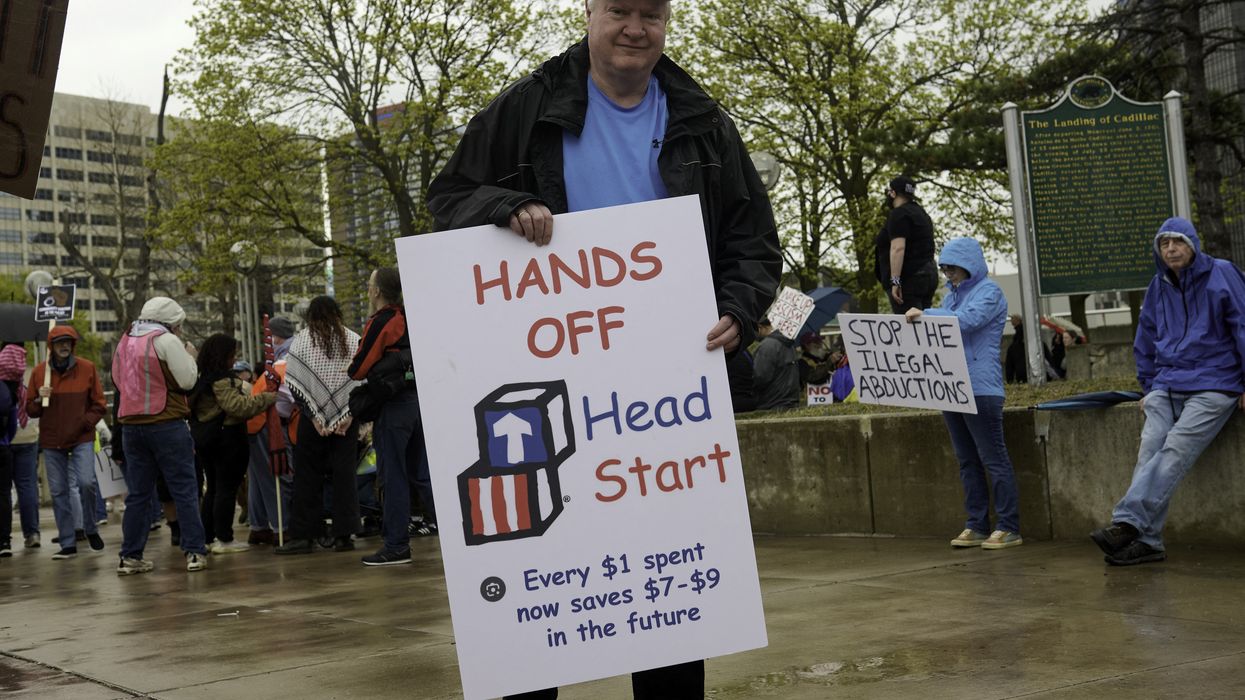
According to a leaked draft for the Health and Human Services Department's budget, Trump is now proposing eliminating federal funding for Head Start, which provides early childhood education and other support services for low-income children and their families, helping nearly 40 million children since it began six decades ago.
Bruce Lesley, president of First Focus on Children, said of the proposed cuts to Head Start last week that it was "shocking to see an administration consider a proposal that will impose such widespread harm on children."
"Rarely has there been such a clear, targeted attack on children," said Lesley. "Parents already have trouble finding available childcare and early learning programs, and even when they do, they struggle to afford them. The average annual cost of center-based childcare for an infant is over $15,000, more than in-state college tuition in many states. And who has the least access and greatest financial challenges to care? The children served by Head Start.
Meanwhile, the federal budget proposal passed by House Republicans earlier this month would help pay for "huge tax giveaways for wealthy households and businesses," said the Center for Budget and Policy Priorities, by cutting health coverage for 72 million people who rely on Medicaid and food assistance for an estimated 13.8 million children who receive Supplemental Nutrition Assistance Program (SNAP) benefits.
Responding to the reports of Trump's potential "pronatalist" proposals, Ellen Galinsky, president of the Families and Work Institute, told the Institute for Public Accuracy that the White House "can't just encourage people to have children. You have to think about what happens to those children after they're born."
"The countries that have been more successful in [raising children] have given family allowances, parental leave, and focused on who will teach and take care of children," said Galinsky. "The more children you have, the more likely it is you'll need to work and bring in a salary. Do parents have flexibility at their workplace?"
"For years, proposals and debates have separated having children from raising children," she added. "But parents aren't dumb. They'll look around and ask whether this is a world where it's good to have children."
Republicans' proposed cuts to essential services for families demonstrate that they "don't care about making the world better, safer, or healthier for American families and children," wrote Valenti. "They just want women to have more babies."
"What happens after that?" she added. "They couldn't care less."
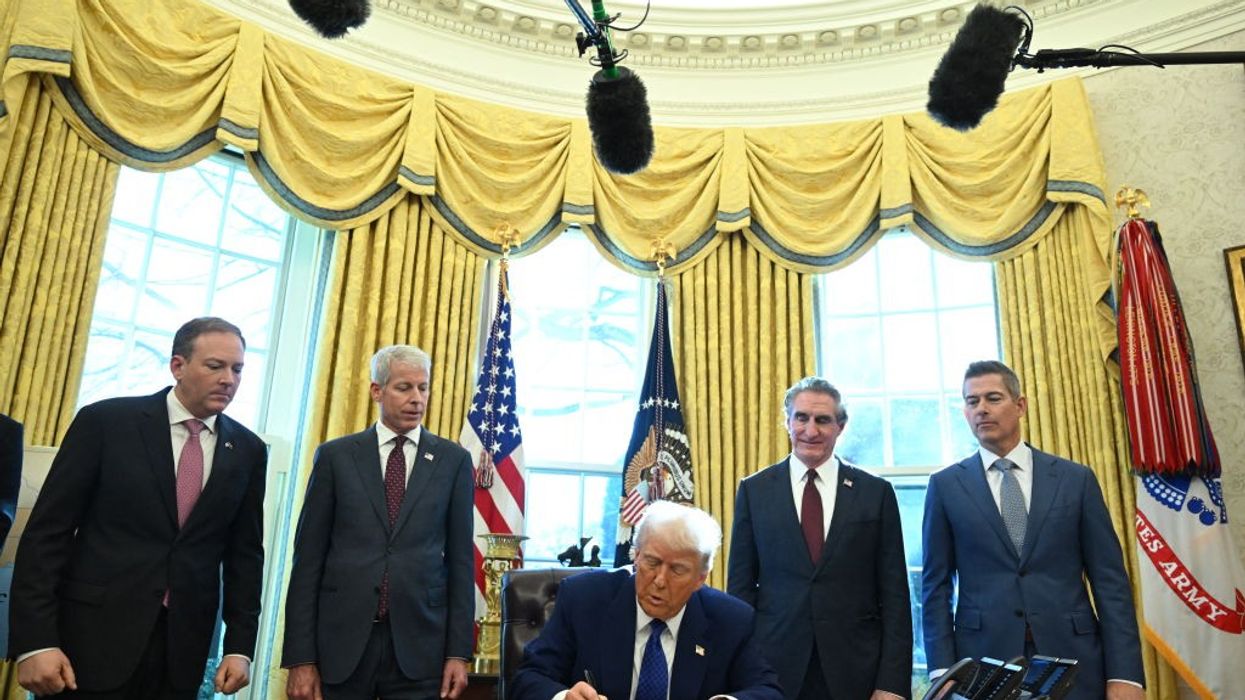
In just one month, the only demonstrated deference of Zeldin, Burgum, Wright, Duffy, and Lutnick is to President Trump’s mantra of “drill, baby, drill” and the deregulation of toxic industries.
Lee Zeldin was full of pablum in his January Senate confirmation hearing to run the Environmental Protection Agency, or EPA. A former member of Congress from Long Island, New York, with scant regulatory experience, Zeldin promised to “defer to the research of the scientists” on whether climate change made oceans more acidic. In even more laudatory language, he said he would “defer to the talented scientists,” on whether Earth had hit thresholds for runaway climate change.
He said he “would welcome an opportunity to read through all the science and research” on pesticides and search for “common sense, pragmatic solutions” on environmental issues. Claiming there was “no dollar large or small that can influence the decisions that I make,” Zeldin went so far as to say, “It is my job to stay up at night, to lose sleep at night, to make sure that we are making our air and our water cleaner.”
It was all a lie. Last week, U.S. President Donald Trump said Zeldin was considering firing 65% of EPA’s staff, which would amount to nearly 10,000 of the agency’s 15,000 workers. The White House later issued a clarification—as if it made any difference—that Zeldin was “committed” to slashing 65% of the agency’s budget. The EPA issued a statement saying President Trump and Secretary Zeldin “are in lockstep.”
When Lee Zeldin promised at his confirmation hearing that he would “defer” to talented scientists on climate change data, it was a mere six days after NOAA and many other weather agencies around the world confirmed that Earth had its hottest year yet in 2024.
Also last week, the news broke that Zeldin is urging the White House to strike down the 2009 EPA finding that global warming gases endanger public health and the environment. That finding, made under the Obama administration, girded federal efforts to reduce vehicle and industrial emissions. The finding, long a legal target for climate deniers, has so far held up, even in an ultra-conservative Supreme Court, but that has not stopped the administration from attacking it. Project 2025, the blueprint organized by the Heritage Foundation to guide this White House, calls for an “update” to the endangerment finding. Leading climate denier and former Trump transition adviser Steve Milloy told The Associated Press last week that without the finding, “everything EPA does on climate goes away.”
This is after Zeldin told senators in written answers for his confirmation that he planned to “learn from EPA career staff about the current state of the science on greenhouse gas emissions and follow all legal requirements.” Instead, Zeldin has scientists in a state of bewilderment. In one fell month, he has every employee looking over their shoulder, fearing the dismissal of their work or the tap of outright dismissal.
Zeldin’s latest “lockstep” actions cap an already-breathtaking first month in running the EPA.
He has launched an illegal effort to claw back $20 billion in EPA clean energy funding significantly targeted for disadvantaged communities. He placed nearly 170 workers in the office of Environmental Justice on administrative leave and oversaw the firing of about 400 probationary staff (although some have momentarily been brought back after public outcry).
Zeldin has begun a rollback of Biden administration energy efficiency and water conservation regulations for home appliances and fixtures, and is asking Congress to repeal waivers for California to phase out new, gasoline-only vehicle sales and stricter emissions standards for heavy-duty trucks. Many other states in recent years have decided they would follow California’s standards, as they are allowed to under the Clean Air Act. Combined, these states add up to 40% of the automobile market in the United States.
There are surely many more attempts to come that will turn back the clock on environmental protection.
Zeldin’s EPA includes a rogue’s gallery from President Trump’s first term.
Returning to the EPA in top spots for chemical regulation are Nancy Beck and Lynn Dekleva. Both formerly served on the American Chemistry Council, the top lobbying arm of chemical manufacturers, and Dekleva spent more than three decades at DuPont, one of the most notorious companies for burying the dangers of PFAS.
In the first Trump administration, Beck was at the center of the suppression on science to resist the most stringent regulation or bans on carcinogenic chemicals such as trichloroethylene, PFAS, methylene chloride, and asbestos. She was also reported to have helped in burying the strongest possible health and safety guidelines to help communities reopen during the height of the Covid-19 pandemic. Dekleva was accused during her first stint in President Trump’s EPA of pressuring employees to approve new chemicals and colluding with industry to weaken the Toxic Substances Control Act.
The nominee to be Zeldin’s assistant administrator, David Fotouhi, is another returnee who was at the center of the first Trump administration’s efforts to strip wetlands protections. When not inside the EPA, Fotouhi has a long record defending industries in legal battles over standards or contamination lawsuits about toxic chemicals, such as asbestos, PFAS, PCBs, and coal ash.
Holding high-level positions in the Office of Air and Radiation are Abigale Tardif and Alex Dominguez. Tardif lobbied for the oil and petrochemical industry and was a policy analyst for the Koch-funded network Americans for Prosperity. Dominguez lobbied for the American Petroleum Institute, which opposed the vehicle pollution standards of the Biden administration.
Aaron Szabo has been nominated to be assistant secretary for Air and Radiation. Szabo was a contributing consultant to the Project 2025 chapter on the EPA that recommends sharply curtailing the agency’s monitoring of global warming gases and other pollutants and eliminating the Office for Environmental Justice and External Civil Rights.
Other recent EPA appointees who also contributed to Project 2025 (which President Trump disavowed during the presidential campaign) are Scott Mason and Justin Schwab. Steven Cook, a former lobbyist for plastics, chemicals, and oil refining, and another veteran of the first Trump administration, is also returning.
Zeldin may be inexperienced at regulation, but none of the above are. Kyle Danish, a partner at Van Ness Feldman, a consulting firm for energy clients, told The New York Times, “This group is arriving with more expertise in deploying the machinery of the agency, including to unravel regulations from the prior administration. They all look like they graduated one level from what they did in the first Trump administration.”
Other agencies responsible for addressing climate change pollution have also quickly deployed the machinery of environmental destruction.
Transportation Secretary Sean Duffy issued a memorandum ordering a review of the fuel economy standards of the Biden administration, claiming without evidence that the standards would destroy “thousands” of jobs and “force the electrification” of the nation’s auto fleets. This is despite the agency’s own analysis showing the rules would save consumers $23 billion in fuel costs and result in annual health costs benefits of $13 billion from reduced air pollution.
Secretary Duffy also issued a memorandum canceling the Department of Transportation’s plans to address environmental justice in low-income populations and communities of color, climate change, and resilience polices for department assets and the department’s Equity Council. Again, no facts were offered as to why communities disproportionately beset with pollution and pollution-related diseases should be excluded from protection. He was just following President Trump’s Orwellian executive order that aims to wipe any consideration of race, gender, climate, equity, and disproportionate impacts from federal programs.
Over in the Interior Department, Secretary Doug Burgum issued a memorandum directing all his assistant secretaries to provide action plans that “suspend, revise, or rescind” more than two dozen regulations. The obvious goal is to plunder more public land and water for private profit for the fossil fuel and mining industries. Many of those regulations to be revised or killed involve endangered wildlife and plants; landscape and conservation health; the Migratory Bird Treaty; and accounting for the benefits to public health, property, and agriculture of reducing climate-related pollution.
In a recent interview on Fox News, Secretary Burgum said he was “completely embracing” the massive shrinking of the federal workforce by the Department of Government Efficiency, a cruel act that means he is just fine with DOGE’s 2,000 job cuts at Interior, including 1,000 in the chronically understaffed National Park Service, which has a $23.3 billion backlog for deferred maintenance.
And then we have the reported layoff of between 1,200 and 2,000 workers at the Energy Department, now run by Chris Wright, a former CEO of one of the nation’s largest fracking companies. In President Trump’s Cabinet, Secretary Wright is the most blunt in dismissing the effects of the climate crisis. In 2023, he said the “the hype over wildfires is just hype to justify” climate policies. He said, “There is no climate crisis, and we’re not in the midst of an energy transition.”
He has doubled down on his rhetoric during his first month in office. Wright told a conservative policy conference in February—without evidence—that net zero goals for carbon emissions by 2050 were “sinister” and “lunacy.” Wright also went on Fox Business in February to say that climate change is “nowhere near the world’s biggest problem today, not even close.”
Despite all the evidence already unfolding that climate change is a factor in the increasing number of billion-dollar weather disasters in the U.S., and despite a major 2023 study projecting that 5 million lives a year could be saved around the world by phasing out fossil fuels and their pollution, Wright said a warmer planet with more carbon dioxide is “better for growing plants.” Never mind the communities living in the crosshairs of contamination and climate catastrophe or conservationists who are concerned anew about endangered species.
Wright spent his first month in office postponing Biden-era energy efficiency standards for home appliances, claiming without evidence that they have “diminished the quality” of them. His office announced the canceling of $124 million in contracts, many of them connected to diversity, inclusion, and equity initiatives. He said those contracts were “adding nothing of value to the American people.” When asked if he wanted fossil fuels to “come back big time,” Wright responded, “Absolutely.”
And over in the Commerce Department, the 6,700 scientists and 12,000 staffers at the National Oceanic and Atmospheric Administration (NOAA) are reeling from the recent first wave of hundreds of layoffs. Many more job losses are threatened, with sources telling major media outlets that the Trump administration and new Secretary Howard Lutnick are considering a 50% cut in staff and a 30% cut in the agency’s budget.
It is irrelevant to the Trump administration that NOAA is a bedrock agency that protects the public with its real-time tracking of dangerous storms. It is at the center of long-term federal analysis on climate, the toll in property and life of global warming, the health of our oceans, and the state of our fisheries. Instead of being placed on a pedestal for this central role, NOAA is as much a bullseye for polluters and plunderers as the EPA. Project 2025 calls for the breaking up of NOAA because it “has become one of the main drivers of the climate change alarm industry and, as such, is harmful to future U.S. prosperity.”
Lutnick, a billionaire Wall Street financier, told senators in his January confirmation hearing that he had “no interest” in dismantling NOAA. The firings suggest the dismantling has begun.
When Lee Zeldin promised at his confirmation hearing that he would “defer” to talented scientists on climate change data, it was a mere six days after NOAA and many other weather agencies around the world confirmed that Earth had its hottest year yet in 2024. That was obviously lost on him. In just one month, the only demonstrated deference of Zeldin, Burgum, Wright, Duffy, and Lutnick is to President Trump’s mantra of “drill, baby, drill” and the deregulation of toxic industries.
Left in the wake are demonized and demoralized federal scientists.
In his address to Congress this week, President Trump boasted about ending “environmental restrictions that were making our country far less safe and totally unaffordable.” Hopefully it will not be one hurricane, one contamination, or one disappearing species too many to realize we cannot afford to be without those scientists. We will be far less safe without them.
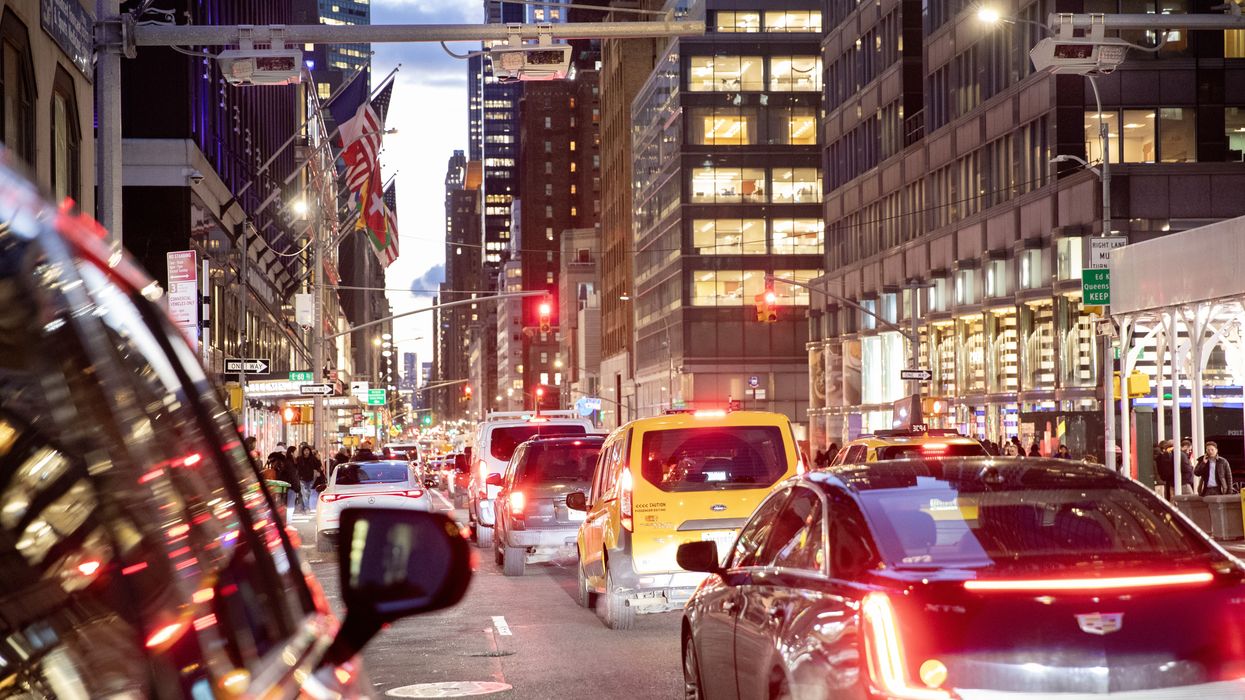
Rep. Jerry Nadler of New York called the U.S. Department of Transportation's rationale for terminating tolling approval for the program "utterly baseless and frankly, laughable."
The Trump administration on Wednesday notified New York Gov. Kathy Hochul that it is moving to terminate New York City's congestion pricing program, a tolling scheme launched earlier this year that levies a $9 fee on most drivers entering Manhattan below 60th Street.
The program, which is slated to generate $15 billion in revenue for New York City's mass transit system, was a hard-fought victory for environmental groups, mass transit advocates, and New York's Metropolitan Transportation Authority (MTA). New York State Lawmakers approved the initiative in 2019 after which point it entered a multiyear federal approvals process.
Congestion pricing has been opposed by various groups and public figures, including the New Jersey governor, the labor union the United Federation of Teachers, and some lawmakers who represent voters in outer boroughs and the suburbs.
Democratic leaders in New York have vowed to fight the Trump administration's move and the MTA has already filed a lawsuit in federal court challenging the order.
In a letter to Hochul, Transportation Secretary Sean Duffy wrote that he and U.S. President Donald Trump have concerns about congestion pricing's impact on residents that use the tolled roads and that, in a reversal of a determination made by the previous administration in late November, the scheme is "not eligible" under the Federal Highway Administration's Value Pricing Pilot Program. By rescinding the agreement signed under the pilot program, the administration is aiming to effectively end the initiative's tolling authority.
Duffy called the program a "slap in the face to working-class Americans and small business owners," and separately, U.S. President Donald Trump took to his social media platform Truth Social on Wednesday to celebrate, writing: "CONGESTION PRICING IS DEAD. Manhattan, and all of New York, is SAVED. LONG LIVE THE KING!"
In response to the administration's aims to shut down the program, Hochul said Wednesday that "public transit is the lifeblood of New York City and critical to our economic future—as a New Yorker, like President Trump, knows very well."
"We are a nation of laws, not ruled by a king... We'll see you in court," said the Democratic governor, who was widely criticized for halting congestion pricing last year before it had launched. The program later did move ahead with cheaper tolls.
MTA chairman and CEO Janno Lieber said in a Wednesday statement that "it's mystifying that after four years and 4,000 pages of federally supervised environmental review—and barely three months after giving final approval to the Congestion Relief Program—[U.S. Department of Transportation] would seek to totally reverse course."
Rep. Jerry Nadler (D-N.Y.) called the arguments made in Duffy's letter "utterly baseless and frankly, laughable."
"The notion of revoking approval for a federal initiative of this magnitude is nearly without precedent. I firmly believe that there is no legal basis for the President to unilaterally halt this program," he said.
Rep. Dan Goldman (D-N.Y.) called Trump's rationale for the move "hypocritical and groundless"
According to The New York Times, legal experts have doubts about whether the federal government can shut down congestion pricing.
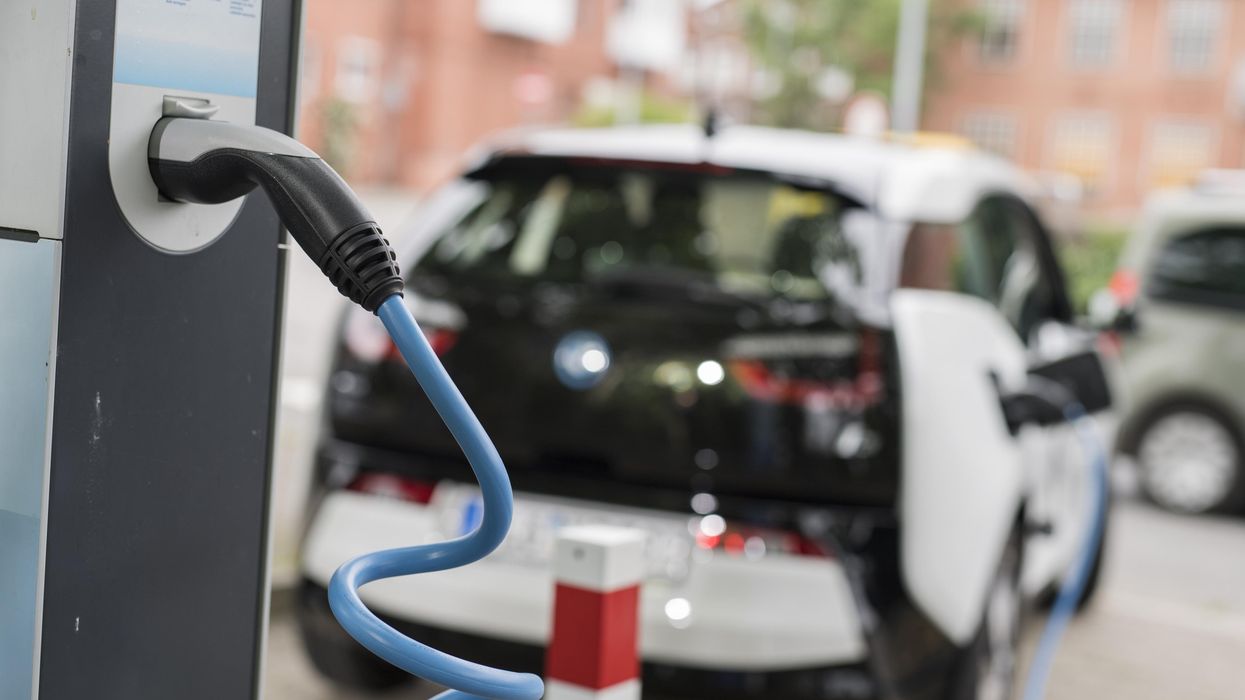
"Freezing these EV charging funds is yet another one of the Trump administration's unsound and illegal moves," said one climate advocate.
Climate campaigners are blasting the Trump administration's move to halt a $5 billion initiative to build electric vehicle chargers along highways across the United States and calling on Congress to fight back against the attack on the grant program from the 2021 bipartisan infrastructure law.
The National Electric Vehicle Infrastructure (NEVI) Formula Program was established by the Infrastructure Investment and Jobs Act. Natural Resources Defense Council's Beth Hammon said in a Friday statement that "on a bipartisan basis, Congress funded this program to build a new vehicle charging network nationwide. The Trump administration does not have the authority to halt it capriciously."
Hammon, a senior vehicle charging advocate at the group, warned that "stopping funding midstream will result in chaos and delays in states across the nation. It will throw state efforts into turmoil, wreak havoc with the companies that install the chargers, and risk the jobs of their workers. The only winner from this chaos is the oil industry."
"This should not stand. Courts have already blocked the Trump administration's other illegal attempts to halt legally mandated funding," she added. "Congress needs to stand up for itself: This move and many others from the Trump administration steals away its constitutionally established spending authority."
Katherine García, director of the Sierra Club's Clean Transportation for All campaign, similarly declared Friday that "freezing these EV charging funds is yet another one of the Trump administration's unsound and illegal moves. This is an attack on bipartisan funding that Congress approved years ago and is driving investment and innovation in every state, with Texas as the largest beneficiary."
"Throwing out states' plans, which were carefully built together with business, utilities, and communities, only hurts America's growing clean energy economy," she stressed. "The NEVI program has helped the U.S. build out the infrastructure needed to support our nation's necessary transition to pollution-free vehicles. More electric vehicle charging means better public health, reduced climate emissions, good-paying green jobs, and healthier communities."
President Donald Trump has taken various anti-climate actions since Inauguration Day—declaring a "national energy emergency," ditching the Paris agreement again, and enabling new liquefied natural gas exports. One executive order calls for "terminating the Green New Deal," and directs agencies to pause disbursement of funds appropriated through the Inflation Reduction Act and the 2021 law, specifically mentioning the NEVI program.
Trump targeted the initiative despite his ties to Tesla CEO Elon Musk, head of the president's destructive Department of Government Efficiency. Wired reported that the billionaire's "electric automobile company has been a recipient of $31 million in awards from the NEVI program, according to a database maintained by transportation officials, accounting for 6% of the money awarded so far."
The Federal Highway Administration on Thursday sent a letter—first reported by InsideEVs—informing state transportation departments that "the new leadership of the Department of Transportation (U.S. DOT) has decided to review the policies underlying the implementation of the NEVI Formula Program," and, as a result, "is also immediately suspending the approval of all" state deployment plans previously greenlit by the Biden administration.
As Heatmap detailed:
According to Paren, an EV charging data analytics firm that has been closely following the rollout of the NEVI program, states are legally entitled to spend roughly $3.27 billion on NEVI. That accounts for plans approved for fiscal years 2022 through 2025. To date, states have awarded about $615 million of the funds to just under 1,000 projects—with 10% of those projects being led by Tesla.
The letter says states will still be able to get reimbursed for expenses related to previously awarded projects, "in order to not disrupt current financial commitments." But the more than $2.6 billion that has not been awarded will be frozen.
The outlet noted that advocates expected Trump's attacks on the program won't survive legal challenges.
"This should be carefully scrutinized by states and the legal community," said Justin Balik, the senior state program director for Evergreen Action, "as it looks like an attempt to sabotage the program based on ideology that's dressed up in bureaucratic language about plan and guidance revisions."
Andrew Rogers, a former deputy administrator and chief counsel of the Federal Highway Administration, told Wired that "there is no legal basis for funds that have been apportioned to states to build projects being 'decertified' based on policy."
Paren chief analyst Loren McDonald also doesn't think that the Trump administration can legally suspend the program.
"I'm assuming the lawsuits from states will start soon, and this will go to court and Congress," McDonald told Politico. "But the Trump [administration] will succeed in just causing havoc and slowing things down for a while."
Already, Alabama, Oklahoma, Missouri, Rhode Island, Ohio, and Nebraska have put their NEVI programs on hold.
Whether Congress—particuarly Democrats, who are the minority party in both chambers—will fight back is unclear. Hill Heat's Brad Johnson pointed out on the social media platform Bluesky that two dozen members of the Senate Democratic Caucus voted with Republicans to confirm Trump's DOT chief, Sean Duffy.
After 24 Senate Democrats joined all GOP to confirm climate denier Sean Duffy as Transportation Secretary, he illegally called for the shut down of the National Electric Vehicle Charging Program, established by the Bipartisan Infrastructure Law.
[image or embed]
— Brad Johnson ( @climatebrad.hillheat.com) February 6, 2025 at 11:36 PM
As Common Dreams reported last month, right after Duffy was confirmed, the secretary directed DOT staff to immediately begin the process of rescinding or replacing former President Joe Biden's clean car pollution standards.
"These commonsense, popular fuel economy standards save drivers money at the pump and reduce dangerous pollution from vehicles," Sierra Club's García said at the time. "Sean Duffy is selling American families out to Big Oil, burdening us with higher fuel prices and more polluting gas-guzzlers that harm our health."