

SUBSCRIBE TO OUR FREE NEWSLETTER
Daily news & progressive opinion—funded by the people, not the corporations—delivered straight to your inbox.
5
#000000
#FFFFFF
To donate by check, phone, or other method, see our More Ways to Give page.
Daily news & progressive opinion—funded by the people, not the corporations—delivered straight to your inbox.

"This is more than a victory," said organizers in Arizona. "It is a mandate. A signal that voters are ready for fearless leadership, not capitulation, not confusion, but action."
Economic and social justice organizers in Arizona applauded Wednesday after Democrat Adelita Grijalva, the daughter of late US Rep. Raúl Grijalva and a longtime local political leader, easily won a special election to succeed her father and represent the state's 7th District in Congress.
The local organization Living United for Change in Arizona (LUCHA) emphasized that in the primary election she won in July and her contest against Republican opponent Daniel Butierez, Grijalva ran a campaign "fueled by working-class voters, young people, Latinos, and long-time movement builders."
"As the first Latina elected to represent Arizona, her win sends a clear message: The old playbook isn’t working, and voters are demanding something different," said the group. "This is more than a victory. It is a mandate. A signal that voters are ready for fearless leadership, not capitulation, not confusion, but action."
Grijalva campaigned on defending Medicare, Medicaid, and Social Security from Republican cuts and attacks; protecting workers' right to unionize; and lowering the cost of housing. She won endorsements from Sen. Bernie Sanders (I-Vt.) and Rep. Alexandria Ocasio-Cortez (D-NY) ahead of the primary.
“Adelita’s win is a turning point,” said Alejandra Gomez, executive director of LUCHA. “She’s not going to Congress to blend in. She’s going to lead, to fight, and to remind the Democratic Party what it looks like to be grounded in people, not corporate donors.”
It is unclear when Grijalva will officially be sworn in, with the House out of session until October and lawmakers currently working to avert a government shutdown that could begin October 1, but when she takes office the Democrats will have narrowed the Republican Party's majority to 219-214. There are two remaining vacancies that also need to be filled.
The grassroots progressive group Our Revolution called Grijalva's victory "a big step toward building the progressive power we need to block MAGA’s extremist agenda and deliver for working people."
“There’s real energy right now for a different kind of politics, one that puts working people first. Voters are tired of politicians who hide in the pockets of their billionaire donors,” said Maurice Mitchell, national director of the Working Families Party. “We know that Adelita is going to be a tireless fighter for working families in her district.”
Grijalva's victory also gives a crucial 218th vote to a bipartisan effort led by Reps. Ro Khanna (D-Calif.) and Thomas Massie (R-Ky.) to force a vote ordering the Justice Department to release unredacted files related to Jeffrey Epstein, the financier and convicted sex offender who died in prison while awaiting trial on sex trafficking charges in 2019 and who was a friend of President Donald Trump.
Grijalva said this week that "if elected, on my very first day in Congress, I’ll sign the bipartisan discharge petition to force a vote on releasing the Epstein files."
House Speaker Mike Johnson (R-La.) has refused to call a vote on releasing the files, which Trump opposes. Khanna and Massie introduced a discharge petition to circumvent the House leadership, which has been signed by every Democratic member.
Three Republicans—Reps. Lauren Boebert of Colorado, Nancy Mace of South Carolina, and Marjorie Taylor Greene of Georgia—have joined the Democrats in supporting the maneuver, and Grijalva's signature will give the Democrats the 218th vote they need.
Grijalva told CNN ahead of the election that she heard on the campaign trail from voters who want the files to be released.
"They believe the survivors deserve justice," said Grijalva, "and Congress must fulfill its duty to check the executive branch and hold Trump accountable."
Rep. Yassamin Ansari (D-Ariz.) said Grijalva will be "a true progressive fighter and partner in our fight against authoritarianism."
"Arizona’s delegation just got even stronger," she said.
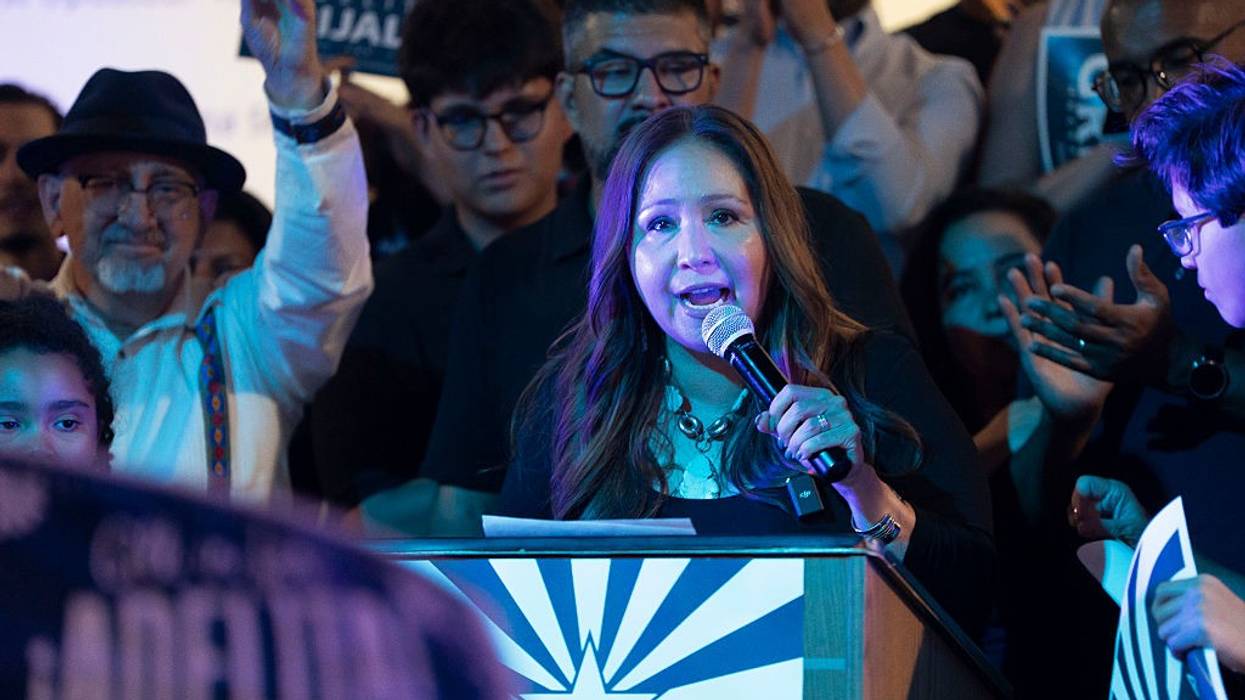
"Adelita's victory tonight isn't just a win for families in Southern Arizona," said the national director of the Working Families Party. "It's a win for all those who believe in a government that works for everyday people."
Adelita Grijalva prevailed Tuesday in an Arizona Democratic primary race to fill the U.S. House seat left vacant by the death of her father, progressive stalwart Raúl Grijalva.
Grijalva previously served on the Pima County Board of Supervisors and the Tucson Unified School District Governing Board, and her congressional bid is backed by prominent progressive lawmakers and organizations including Sen. Bernie Sanders (I-Vt.), Rep. Alexandria Ocasio-Cortez (D-N.Y.), the Congressional Progressive Caucus PAC, National Nurses United, and the Working Families Party.
Rep. Greg Casar (D-Texas), the chair of the Congressional Progressive Caucus, implored Arizona voters to turn out for Grijalva in a video message posted on the morning of the primary contest, calling her "the fighter we need to take on Trump and the establishment."
With more than three-quarters of the vote tallied, Grijalva has 62% support. Deja Foxx, a 25-year-old activist and Grijalva's closest competitor, has received 21% of the vote as of this writing, according to The Associated Press.
"This is a victory not for me, but for our community and the progressive movement my dad started in Southern Arizona more than 50 years ago," Grijalva said following her decisive win.
"We know that Adelita is going to be a fearless fighter for working families in her district."
Arizona's 7th Congressional District is heavily Democratic, so Grijalva—who campaigned on defending Medicare, Medicaid, and Social Security from Republican attacks, bolstering workers' right to unionize, and lowering housing costs—is virtually guaranteed to win the September special election.
"Adelita's victory tonight isn't just a win for families in Southern Arizona. It's a win for all those who believe in a government that works for everyday people," Maurice Mitchell, national director of the Working Families Party, said in a statement late Tuesday. "Voters are tired of politicians who hide in the pockets of their billionaire donors. We know that Adelita is going to be a fearless fighter for working families in her district."
"There's real energy right now for a different kind of politics, one that puts working people first," Mitchell added. "That's exactly why the Working Families Party was founded—to take on the corporate interests and billionaires who are rigging our economy and taking a wrecking ball to our democracy."
The New York Times faced backlash for its specious coverage of the race's outcome, which characterized Grijalva's win as a blow to progressive momentum generated by Zohran Mamdani's victory in New York City's Democratic mayoral primary.
The newspaper, whose coverage of Mamdani's mayoral bid has been a frequent source of outrage and ridicule, described Foxx as "a Gen Z activist who tried to recreate the youthful magic" of Mamdani's campaign, glossing over ideological differences and other factors.
Mamdani did not weigh in on the race, and many of the progressive lawmakers and groups that supported the New York City democratic socialist backed Grijalva. Foxx, who has a large social media following, was endorsed by a PAC founded by activist David Hogg.
"This is where superficial generational discourse gets you," writer Adam Johnson observed on social media in response to the Times coverage of the Arizona contest. "An AOC and Bernie-endorsed candidate wins and it's somehow an indictment on Mamdani—who didn't endorse anyone and has nothing to do with the race."
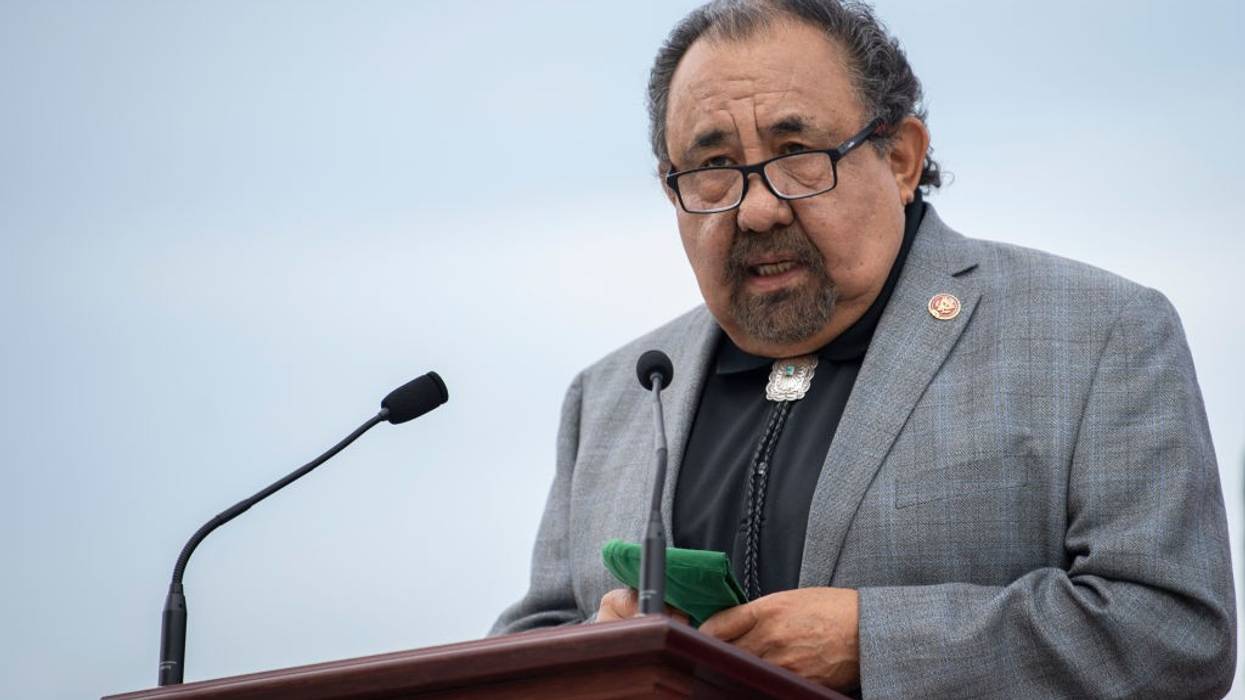
"Rep. Grijalva fought a long and brave battle," his staff said. "He passed away this morning due to complications of his cancer treatments."
Condolences and remembrances swiftly mounted on Thursday after the staff of U.S. Congressman Raúl Grijalva announced that the Arizona Democrat died at the age of 77, following a fight with lung cancer.
"Rep. Grijalva fought a long and brave battle. He passed away this morning due to complications of his cancer treatments," according to the office of the late congressman, who announced his diagnosis last April.
Grijalva, who represented Arizona's 7th District, was first elected to Congress in 2002. While on Capitol Hill, he rose to leadership roles, including co-chair of the Congressional Progressive Caucus and chair of the House Natural Resources Committee.
"From permanently protecting the Grand Canyon for future generations to strengthening the Affordable Care Act, his proudest moments in Congress have always been guided by community voices," Grijalva's staff said. "He led the charge for historic investments in climate action, port of entry modernization, permanent funding for land and water conservation programs, access to healthcare for tribal communities and the uninsured, fairness for immigrant families and Dreamers, student loan forgiveness, stronger protections for farmers and workers exposed to extreme heat, early childhood education expansion, higher standards for tribal consultation, and so much more."
"From Tucson to Nogales and beyond, he worked tirelessly for transformational improvements. Rep. Grijalva pushed for new public parks, childcare centers, healthcare clinics, local businesses, and affordable housing [that] breathed new life into neighborhoods across Southern Arizona. Improvements to our roads, bridges, and streetcar system have improved our daily lives and attracted new businesses and industries to the area," the office added. "Rep. Grijalva's passion was not only for his community, but for preservation of the planet."
Grijalva's colleagues also highlighted key parts of his legacy. Sen. Ed Markey (D-Mass.), a former House member, said that "I am heartbroken by the news of Congressman Raúl Grijalva's passing. For climate justice, economic justice, health justice—Raúl fought fearlessly for change. We served a decade together on the Natural Resources Committee, and I will forever be grateful for his leadership and partnership."
Sen. Bernie Sanders (I-Vt.), who also previously served in the lower chamber, said that "I mourn the death of Rep. Raúl Grijalva, a former colleague of mine and one of the most progressive members of the U.S. House. Raúl was a fighter for working families throughout his entire life. He will be sorely missed."
Congresswoman Alexandria Ocasio-Cortez (D-N.Y.) called his death "a genuinely devastating loss," adding: "Raúl Grijalva stood as one of the biggest champions for working people in all of Congress. His leadership was singular. He mentored generously and was an incredible friend. I will always be grateful for his lifelong courage and commitment."
Rep. Delia Ramirez (D-Ill.) said that "today we lost a dedicated progressive leader in Raúl Grijalva. The son of a bracero, Rep. Grijalva's 12-term commitment to our environment, to immigrant communities, and to his constituents in Tucson enriched this country. His passing is a monumental loss for our caucus and communities."
Congressman Maxwell Alejandro Frost (D-Fla.) wrote: "Wow. This is such a loss for Arizona and our country. Chair Raúl Grijalva has been a champion for progressive change his entire life. From the school board to Congress, his leadership and voice inspired so many. Myself included. Rest in power, Chairman Grijalva."
Rep. Yassamin Ansari (D-Ariz.), elected to Congress in November, said that "I'm devastated to hear of the passing of my colleague Raúl Grijalva. He was a fighter for Arizonans and a champion for Indigenous communities and our planet. We will all miss him dearly. My thoughts are with his family, friends, loved ones, and constituents."
Sen. Ruben Gallego (D-Ariz.), who switched chambers after the last election, said that "Congressman Grijalva was not just my colleague, but my friend. As another Latino working in public service, I can say from experience that he served as a role model to many young people across the Grand Canyon State. He spent his life as a voice for equality."
"In Congress, I was proud to see firsthand his leadership as chairman of the House Natural Resources Committee as he stood up for Arizona's water rights, natural beauty, and tribes," Gallego added. "I am praying for his family during this time of grief, and I hope that they find comfort knowing his legacy is one that will stand tall for generations."
Advocacy group leaders also weighed in, with Kierán Suckling, executive director and founder of the Center for Biological Diversity, calling his death "a heartbreaking, devastating loss for the people of Southern Arizona and everyone around this nation who loves the natural world."
"Raúl was a great friend and partner in our fight for clean air and water, our beautiful public lands, and wildlife great and small," Suckling said. "We can all look to him as the model of what every member of Congress and every person of dignity and hope should aspire to be."
"From Mexican wolves to spotted owls to the New Mexico meadow jumping mouse, every creature in this country had a friend in Raúl," Suckling added. "He was as fierce as a jaguar, and that's why we called him our Macho G. I'll miss him dearly."
According to KVOA, the NBC affiliate in Tucson, Grijalva's office "will continue providing constituent services during the special election" to fill his seat.
Grijalva's death follows that of Congressman Sylvester Turner (D-Texas), who died on March 5. His seat will also need to be filled by a special election.
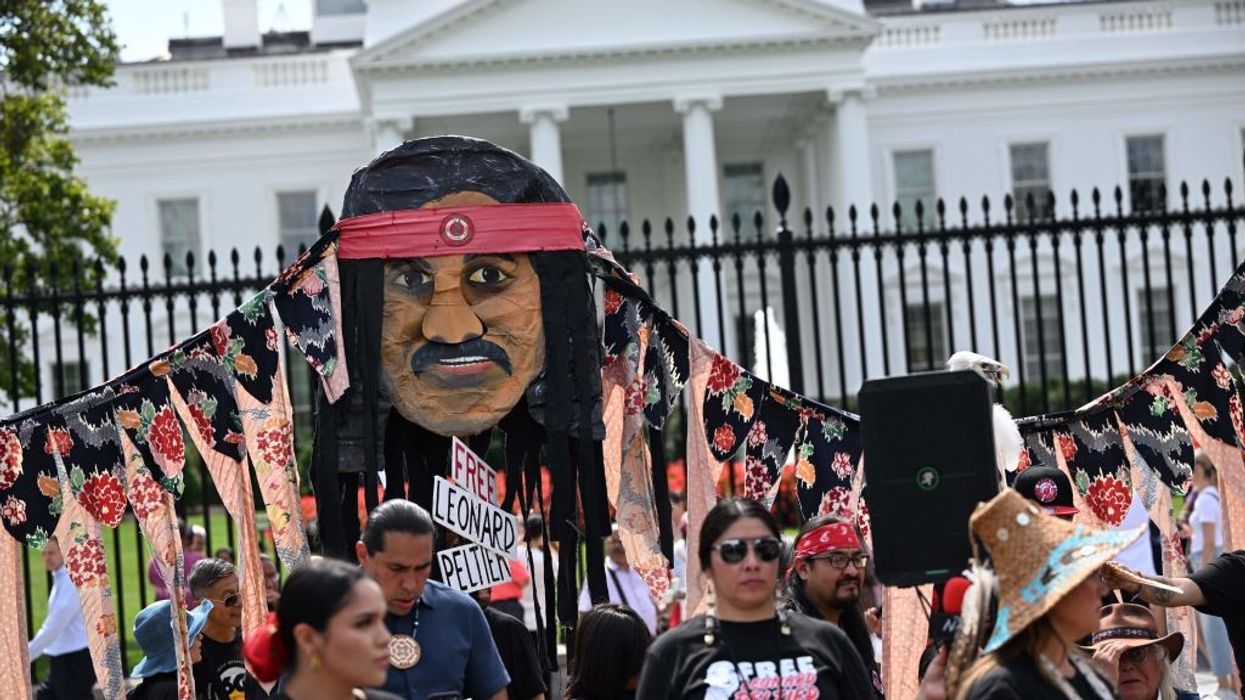
"The victory of freeing Leonard Peltier is a symbol of our collective strength—and our resistance will never stop," vowed one Indigenous organizer.
Just minutes before leaving office, Joe Biden on Monday commuted the life prison sentence of Leonard Peltier, the elderly American Indian Movement activist who supporters say was framed for the murder of two federal agents during a 1975 reservation shootout.
"It's finally over, I'm going home," Peltier, who is 80 years old, said in a statement released by the Indigenous-led activist group NDN Collective. "I want to show the world I'm a good person with a good heart. I want to help the people, just like my grandmother taught me."
While not the full pardon for which he and his defenders have long fought, the outgoing Democratic president's commutation will allow Peltier—who has been imprisoned for nearly a half-century—to "spend his remaining days in home confinement," according to Biden's statement, which was no longer posted on the White House website after Republican President Donald Trump took office Monday afternoon.
🚨BREAKING🚨 Leonard Peltier Granted Executive Clemency After 50 years of unjust incarceration and the tireless efforts of intergenerational grassroots organizing and advocacy, our elder and relative Leonard Peltier has been granted executive clemency.
[image or embed]
— NDN Collective ( @ndncollective.bsky.social) January 20, 2025 at 9:02 AM
"Tribal Nations, Nobel Peace laureates, former law enforcement officials (including the former U.S. attorney whose office oversaw Mr. Peltier's prosecution and appeal), dozens of lawmakers, and human rights organizations strongly support granting Mr. Peltier clemency, citing his advanced age, illnesses, his close ties to and leadership in the Native American community, and the substantial length of time he has already spent in prison," Biden explained.
Biden Interior Secretary Deb Haaland, the first Indigenous cabinet secretary in U.S. history, said in a statement: "I am beyond words about the commutation of Leonard Peltier. His release from prison signifies a measure of justice that has long evaded so many Native Americans for so many decades. I am grateful that Leonard can now go home to his family. I applaud President Biden for this action and understanding what this means to Indian Country."
Congressman Raúl Grijalva (D-Ariz.), who last month led 34 U.S. lawmakers in a letter urging clemency for Peltier, said in a statement that "for too long, Mr. Peltier has been denied both justice and the pursuit of a full, healthy life at the hands of the U.S. government, but today, he is finally able to go home."
"President Biden's decision is not just the right, merciful, and decent one—it is a testament to Mr. Peltier's resilience and the unwavering support of the countless global leaders, Indigenous voices, civil rights and legal experts, and so many others who have advocated so tirelessly for his release," Grijalva added. "While there is still much work to be done to fix the system that allowed this wrong and so many others against Indian Country, especially as we face the coming years, let us today celebrate Mr. Peltier's return home."
NDN Collective founder and CEO Nick Tilsen said Monday that "Leonard Peltier's freedom today is the result of 50 years of intergenerational resistance, organizing, and advocacy."
"Leonard Peltier's liberation is our liberation—we will honor him by bringing him back to his homelands to live out the rest of his days surrounded by loved ones, healing, and reconnecting with his land and culture," Tilsen continued.
"Let Leonard's freedom be a reminder that the entire so-called United States is built on the stolen lands of Indigenous people—and that Indigenous people have successfully resisted every attempt to oppress, silence, and colonize us," Tilsen added. "The victory of freeing Leonard Peltier is a symbol of our collective strength—and our resistance will never stop."
Amnesty International USA executive director Paul O'Brien said that "President Biden was right to commute the life sentence of Indigenous elder and activist Leonard Peltier given the serious human rights concerns about the fairness of his trial."
While Peltier admits to having participated in the June 26, 1975 gunfight at the Oglala Sioux Reservation at Pine Ridge, South Dakota, he denies killing Federal Bureau of Investigation agents Jack Coler and Ronald Williams.
As HuffPost senior political reporter Jennifer Bendery recapped Monday:
There was never evidence that Peltier committed a crime, and the U.S. government never did figure out who shot those agents. But federal officials needed someone to take the fall. The FBI had just lost two agents, and Peltier's co-defendants were all acquitted based on self-defense. So, Peltier became their guy.
His trial was rife with misconduct. The FBI threatened and coerced witnesses into lying. Federal prosecutors hid evidence that exonerated Peltier. A juror acknowledged on the second day of the trial that she had "prejudice against Indians," but she was kept on anyway.
The government's case fell apart after these revelations, so it simply revised its charges against Peltier to "aiding and abetting" whoever did kill the agents—based entirely on the fact that he was one of dozens of people present when the shootout took place. Peltier was convicted and sentenced to two consecutive life terms.
American Indian Movement (AIM) activist Joe Stuntz Killsright was also killed at Pine Ridge when a U.S. Bureau of Indian Affairs agent sniper shot him in the head after Coler and Williams were killed. Stuntz' death has never been investigated.
Some Indigenous activists welcomed Peltier's commutation while also remembering Annie Mae Pictou Aquash, an Mi'kmaq activist who was kidnapped and murdered at Pine Ridge in December 1975 by her fellow AIM members. Some of Aquash's defenders believe her killing to be an assassination ordered by AIM leaders who feared she was an FBI informant.
Before leaving office, Biden issued a flurry of eleventh-hour preemptive pardons meant to protect numerous relatives and government officials whom Trump and his allies have threatened with politically motivated legal action.
However, the outgoing president dashed the hopes of figures including Steven Donziger, Charles Littlejohn, and descendants of Ethel Rosenberg, who were
seeking last-minute pardons or commutations.
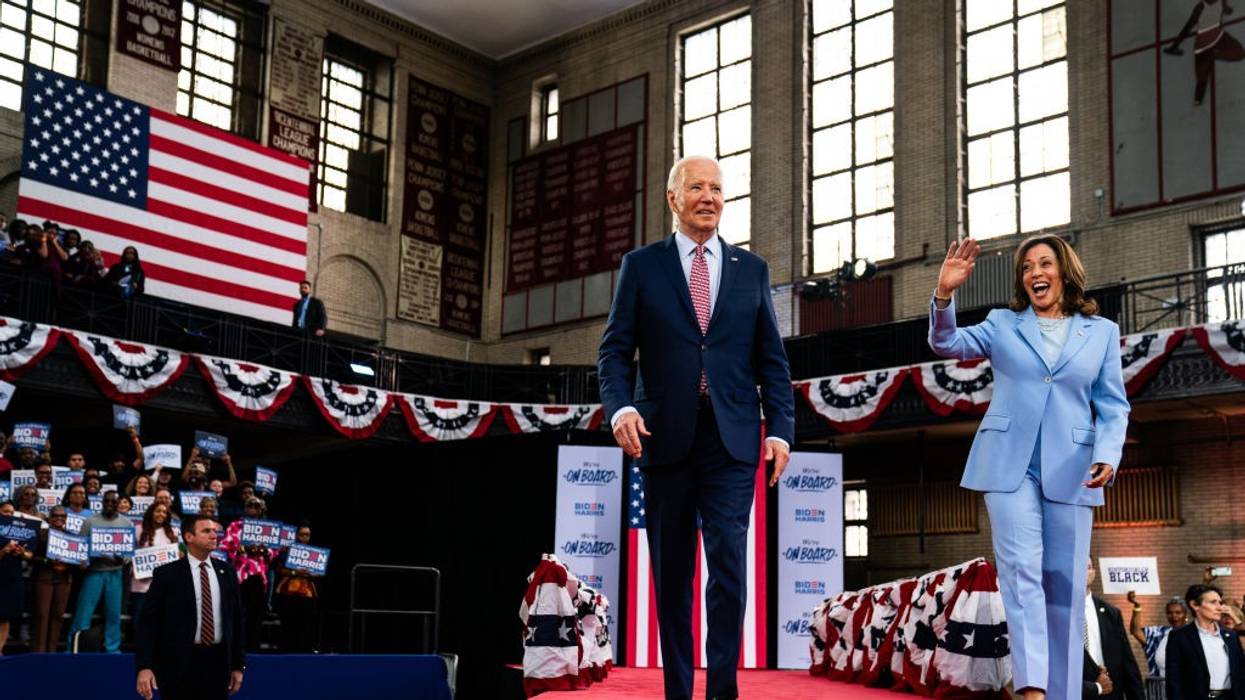
The president's message comes as a second Democrat in Congress suggested that he should exit the race.
"I'm running," declared the subject line of a fundraising email that U.S. President Joe Biden sent on Wednesday as the Democrat's reelection campaign sought to combat the criticism that has mounted since his poor debate performance last week.
"I'm the Democratic Party's nominee. No one is pushing me out. I'm not leaving, I'm in this race to the end,
and WE are going to win this election," wrote Biden, who won't be the official nominee until the convention next month. "I've been knocked down and counted out my whole life. I'm sure the same is true for many of you."
After quoting his father—who supposedly used to say: "Champ, it's not how many times you get knocked down. It's how quickly you get up."—Biden expressed confidence that he and Vice President Kamala Harris will beat the presumptive Republican nominee, former President Donald Trump, in November, as they did in 2020.
However, recent polls and reporting suggest that Democratic voters and elected officials are less confident post-debate—particularly given the stakes, with Trump emboldened by a new U.S. Supreme Court ruling, pledging to be a dictator on "day one," and expected to pursue the far-right's Project 2025 policy agenda.
Since the debate, multiple political commentators have called for replacing Biden as the Democratic candidate. On Tuesday, U.S. Rep. Lloyd Doggett of Texas became the first Democrat in Congress to call on the president to withdraw from the race, saying that he "saved our democracy by delivering us from Trump in 2021. He must not deliver us to Trump in 2024."
In a Wednesday interview with The New York Times, Congressman Raúl Grijalva of Arizona became the second.
"If he's the candidate, I'm going to support him, but I think that this is an opportunity to look elsewhere," Grijalva said. "What he needs to do is shoulder the responsibility for keeping that seat—and part of that responsibility is to get out of this race."
As Reuters reported Tuesday:
There are 25 Democratic members of the House of Representatives preparing to call for Biden to step aside if he seems shaky in coming days, according to one House Democratic aide.
A second House Democratic aide said moderate House Democrats in competitive districts—often called "frontliners"—were getting hammered with questions in their districts this week.
Democratic Reps. Marie Gluesenkamp Perez (Wash.) and Jared Golden (Maine)—Blue Dog Coalition co-chairs who, as the Times noted, are both "facing challenging reelection races in rural districts"—have not called on Biden to bow out of the contest but separately suggested this week that he is going to lose to Trump in November.
In addition to insisting that he is still running in the email to supporters, Biden on Wednesday "unexpectedly joined a Zoom call" with campaign and Democratic National Committee (DNC) staff, according to Politico.
Citing two people on the call who were granted anonymity, the outlet detailed:
"Let me say this as clearly as I possibly can—as simply and straightforward as I can: I am running... no one's pushing me out. I'm not leaving. I'm in this race to the end and we're going to win," Biden said on the call.
Biden's forcefulness and resolve, especially compared to how he came across during last week's debate, was as reassuring to several attendees, who discussed the call afterward via text message, as what he said.
...Harris, whose profile has risen in recent days as Democrats focus on her with new seriousness as a possible replacement atop the ticket, was seated beside Biden on the video call.
"We will not back down," Harris said. "We will follow our president's lead. We will fight, and we will win."
Several names have been floated as possible replacements if the president does decide to end his campaign—including the Democratic governors of California, Illinois, Michigan, and Pennsylvania—but Reuters spoke with seven unnamed sources at the Biden campaign, DNC, and White House who all agreed that Harris is the top alternative.
While Harris' aides have so far publicly dismissed such a scenario, party donors and insiders—such as Democratic strategist Michael Trujillo and Donna Brazile, the former interim DNC chair—also told the news agency that should Biden decide against seeking a second term, it would make sense for the vice president to step in.
Democratic Congressman Jim Clyburn (S.C.), a key Biden ally, has reaffirmed his support for the president since the debate but also made clear that he would back Harris if Biden exited the race.
According to the Times, which also gave anonymity to its sources:
Mr. Biden's allies said that the president had privately acknowledged that his next few appearances heading into the July 4 holiday weekend must go well, particularly an interview scheduled for Friday with George Stephanopoulos of ABC News and campaign stops in Pennsylvania and Wisconsin.
"He knows if he has two more events like that, we're in a different place" by the end of the weekend, said one of the allies, referring to Mr. Biden's halting and unfocused performance in the debate. That person, who talked to the president in the past 24 hours, spoke on the condition of anonymity to discuss a sensitive situation.
White House Press Secretary Karine Jean-Pierre stressed during Wednesday's briefing that Biden isn't dropping out and rejected the Times reporting, saying, "That is absolutely false."
New national polling of likely voters from the Times and Siena College shows Trump beating Biden 49% to 43%, a three-point shift in the GOP's favor since before the debate. Polling published Wednesday by The Wall Street Journal similarly has Trump leading Biden 48% to 42%.
Survey results released Wednesday by CBS News feature a smaller margin but still favor the Republican: "Trump now has a three-point edge over President Biden across the battleground states collectively, and a two-point edge nationally."
Polling released Tuesday suggests Harris may do better against Trump. CNN found that while Trump beats Biden 49% to 43%, the former president only leads Harris by two points, 47% to 45%.
The voters surveyed by Ipsos were split, with 40% supporting Trump and the same share backing Biden. In the Trump-Harris matchup, the split was 42% to 43% in the Republican's favor.

"The historic challenges faced by garment workers in Bangladesh are part of a shared global struggle for good-paying jobs, safe working conditions, and the right to organize," said eight lawmakers.
The uprising of thousands of garment workers in Bangladesh over chronically low wages in recent weeks has not gone unnoticed by U.S. lawmakers, eight of whom wrote to a leading apparel industry trade group Monday to demand its support for the workers.
Reps. Ilhan Omar (D-Minn.), Jim McGovern (D-Mass.), and Jan Schakowsky (D-Ill.) spearheaded the letter to the American Apparel and Footwear Association (AAFA), and co-signers include Reps. Raúl Grijalva (D-Ariz.), Barbara Lee (D-Calif.), Alexandria Ocasio-Cortez (D-N.Y.), David Trone (D-Md.), and Susan Wild (D-Penn.).
The lawmakers urged AAFA CEO Stephen Lamar to use his influence to help secure living wages for workers who help the $351 billion U.S. apparel industry run, noting that Bangladesh's wage board in October rejected the workers' minimum wage demand of $208 per month.
The Bangladesh Garment Manufacturers and Exporters Association offered just $90 per month—up from the $75 per month that workers now receive as a minimum wage, forcing them to work long overtime hours to make ends meet.
The wage increase "would not even meet the rising cost of living," wrote the lawmakers, calling the U.S. apparel industry's refusal to back the workers' demand of $208 per month "not only disheartening but shameful."
"While we were encouraged to see several U.S. brands express support for a wage increase and a fair, transparent wage setting process, words are not enough," said the Democrats, asking the AAFA to "pressure the government and garment manufacturers of Bangladesh."
Earlier this month, journalist Sonali Kolhatkar noted that the workers' campaign for fair wages has escalated as shoppers in the U.S. and other wealthy countries enjoy holiday sales.
"On the other side of the planet, there's a high cost for those low prices," wrote Kolhatkar at OtherWords.
She noted that the AAFA has asked the Bangladeshi government to respect collective bargaining rights and the U.S. State Department issued a statement commending U.S. clothing retailers "who have endorsed union proposals for a reasonable wage increase."
But Kolhatkar questioned whether U.S. companies are "really committed to raising garment workers' wages," pointing out that companies like Zara and H&M have "underpaid factories for garment purchases, making it harder for them to pay their workers."
In their letter Monday, lawmakers also raised alarm about Bangladeshi authorities' violent response to garment workers who have joined in mass protests in recent weeks.
"Police have responded with violence against protesters and trade union leaders, resulting in at least four deaths, numerous injuries, and a wave of unjust arrests, detentions, and indefinite factory shutdowns," reads the letter.
The lawmakers pressured the AAFA to "call for an immediate end to the violence perpetrated by police and other security forces against workers," urge authorities to stop arresting workers and union leaders, and demand an end to retaliatory tactics by garment industry suppliers in Bangladesh, which have filed "false criminal charges" against workers who have protested and subjected them to "dismissal, blacklisting, or other harassment."
"We believe that our actions abroad should always reflect our values at home," states the letter. "The historic challenges faced by garment workers in Bangladesh are part of a shared global struggle for good-paying jobs, safe working conditions, and the right to organize. When we support workers' rights in one part of the world, we bolster the fight for those rights everywhere."
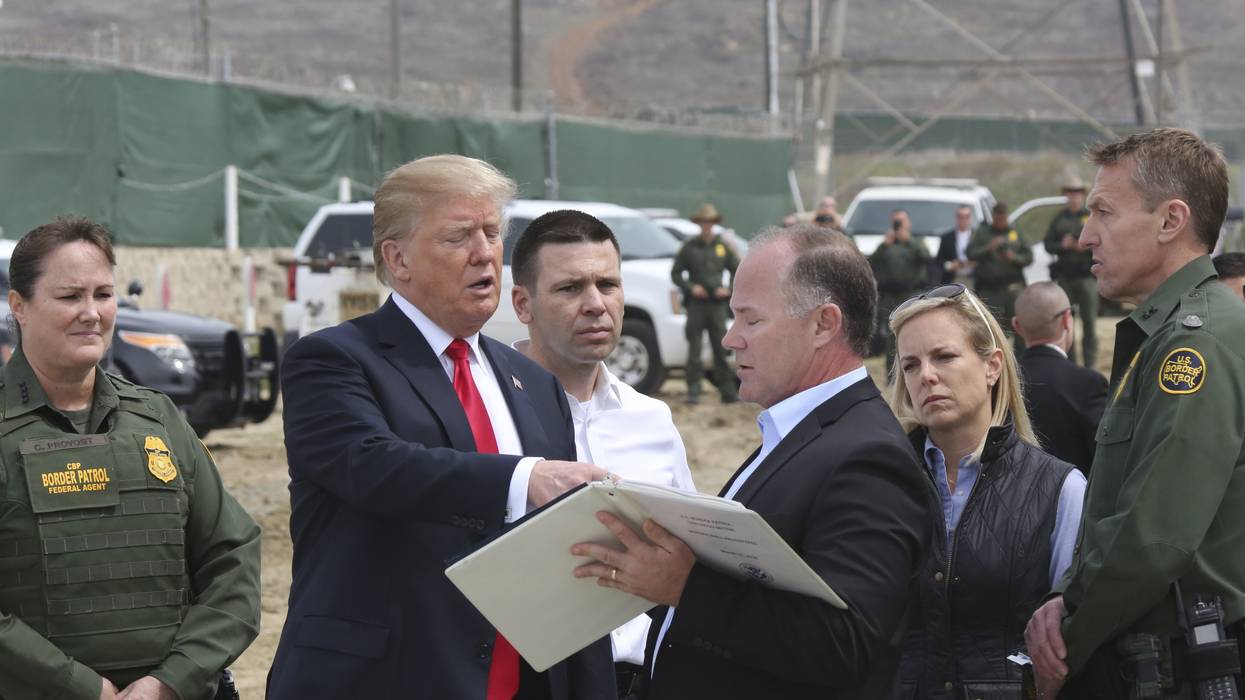
"This racist political stunt has been an ineffective waste of billions of American taxpayers' dollars—and now we know it has caused immeasurable, irreparable harm," said Congressman Raúl Grijalva.
A U.S. government watchdog agency on Thursday released a report exposing how former President Donald Trump's wall construction along the nation's border with Mexico negatively affected cultural and natural resources, as critics have long argued.
"The Department of Homeland Security's (DHS) U.S. Customs and Border Protection (CBP) and the Department of Defense (DOD) installed about 458 miles of border barrier panels across the southwest border from January 2017 through January 2021," according to the Government Accountability Office (GAO) report. "Most (81%) of the miles of panels replaced existing barriers."
"The agencies installed over 62% of barrier miles on federal lands, including on those managed by the Department of the Interior," the report continues. "Interior and CBP officials, as well as federally recognized tribes and stakeholders, noted that the barriers led to various impacts, including to cultural resources, water sources, and endangered species, and from erosion."
The GAO document details how the border wall work caused severe erosion; disrupted natural water flows; damaged native plants while spreading invasive species; disturbed wildlife habitats and migration patterns, including for threatened and endangered species; and destroyed Indigenous burial grounds and sacred sites.
"From the start, President Trump's border wall was nothing more than a symbolic message of hate, aimed at vilifying migrants and bolstering extreme MAGA rhetoric," said U.S. House Natural Resources Committee Ranking Member Raúl Grijalva (D-Ariz.), who requested the report in May 2021. "This racist political stunt has been an ineffective waste of billions of American taxpayers' dollars—and now we know it has caused immeasurable, irreparable harm to our environment and cultural heritage as well."
"So much damage has been done, but we still have the opportunity to keep it from getting worse," he stressed. "Environmental restoration and mitigation work must be led by science and input from the right stakeholders, including tribes and communities along the border. So many corners were cut in building the wall—let's not repeat history by cutting corners in repairing the damage it caused."
"The report also makes clear that federal land management agencies, like the Interior Department and U.S. Forest Service, must be involved in environmental restoration and mitigation. These agencies have the utmost expertise and scientific knowledge of the borderlands," he added, calling on Congress to include funds for Interior and the Forest Service in the fiscal year 2024 budget "to make sure they have a strong leadership role going forward."
The GAO's report broadly recommends that the CBP commissioner and Interior secretary jointly document "a strategy to mitigate cultural and natural resource impacts from border barrier construction that defines agency roles and responsibilities for undertaking specific mitigation actions; identifies the costs, associated funding sources, and time frames necessary to implement them; and specifies when agencies are to consult with tribes."
The document adds that "the commissioner of CBP, with input from Interior, DOD, tribes, and stakeholders, should evaluate lessons learned from its prior assessments of potential impacts." The agencies have agreed to implement the recommendations, according to the GAO.
Building the border wall—which also increased rates of serious injuries and deaths among migrants—was a prominent pledge in Trump's 2016 campaign messaging. It was part of a broader anti-migrant platform that continued into his presidency, which also featured the notorious family separation policy.
When Democratic President Joe Biden took office in January 2021, he delivered on a campaign promise to suspend work on the wall. The following month, he ended Trump's related emergency declaration and halted funding toward wall construction. That April, DOD announced that it was canceling all border barrier projects paid for with funds originally intended for other military uses.
While Biden was widely praised for those moves, the GAO report points out that "pausing construction and canceling contracts exacerbated some of the negative impacts because contractors left project sites in an incomplete or unrestored state as of the January 2021 pause, and the sites remained that way, at times, for more than a year."
Biden—who has faced criticism from rights groups for some of his immigration policies—is seeking reelection in 2024. He is expected to face the Republican nominee. Trump is currently the GOP front-runner, despite his various legal problems and arguments that he is constitutionally barred from holding office again after inciting the January 6, 2021 insurrection.
The GAO report was released the same day as a United Nations International Children's Emergency Fund (UNICEF) alert that the number of kids traveling major migration routes in Latin America and the Caribbean hit a new record, due to gang violence, instability, poverty, and the climate emergency. As Common Dreams reported earlier Thursday, CBP has recorded more than 83,000 children entering the United States in the first eight months of this year.
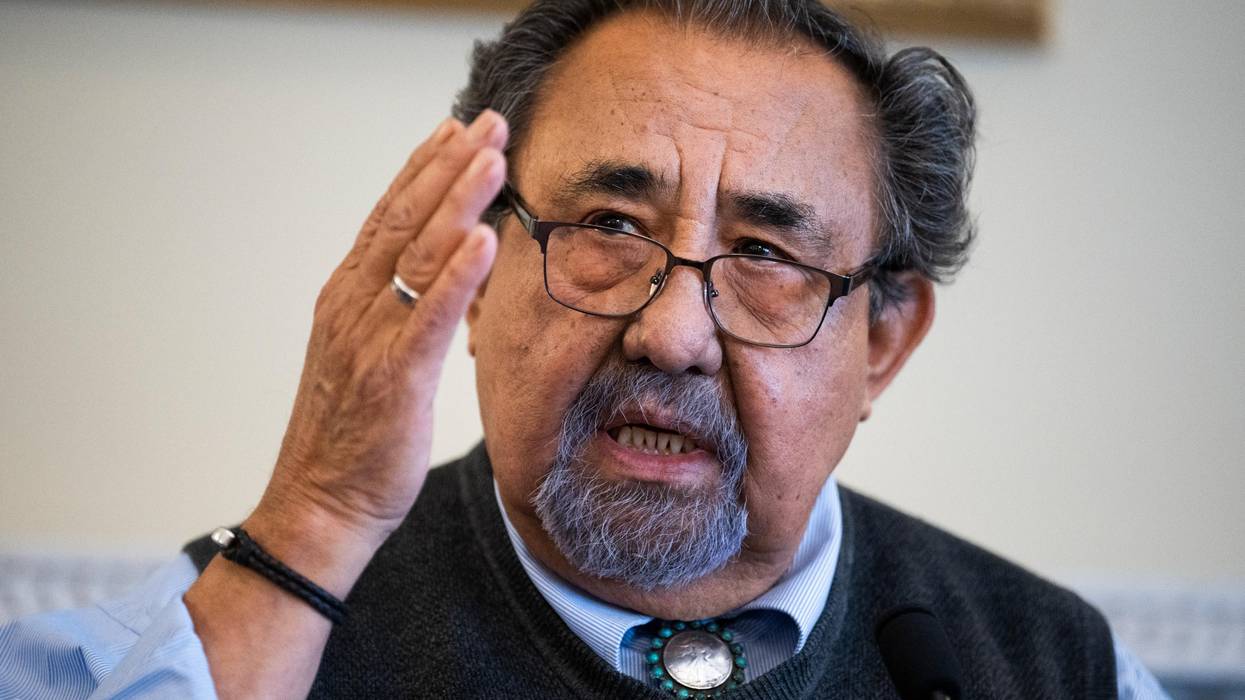
"We shouldn't compromise on protecting our most vulnerable and disproportionately impacted communities," said Rep. Raúl Grijalva.
The number of Democratic lawmakers who said they plan to oppose legislation to raise the debt ceiling steadily grew on Wednesday, due to provisions that would slash food assistance, require approval of a gas pipeline that would cause the equivalent of more than 89 million metric tons of carbon emissions, and end the federal moratorium on student loan payments—all while maintaining hundreds of billions of dollars in Pentagon spending and low taxes for corporations and the wealthiest Americans.
Ahead of a vote in the U.S. House that's expected Wednesday evening, Rep. Pramila Jayapal (D-Wash.), who chairs the Congressional Progressive Caucus (CPC), told reporters that she plans to vote no on the so-called Fiscal Responsibility Act of 2023, and that the caucus at-large may also actively oppose the legislation.
An internal count on Wednesday showed that "the majority of our members" oppose the bill, she said.
Jayapal said that progressives in the House object both to the Republican Party's tactic of threatening a default on the United States' debt—which could send the U.S. and global economies into turmoil—in order to secure concessions from Democrats, and the policies that were included in the bill as a result of that approach, such as new work requirements for programs that serve low-income households.
"We should have raised the debt ceiling long ago with no strings attached," said Jayapal.
Jayapal was among the progressives stating their opposition in the hours before lawmakers voted 241-187 in favor of the rule governing debate on the bill, with more than 50 Democrats joining Republicans to clear the procedural hurdle.
The CPC chair's comments followed Rep. Alexandria Ocasio-Cortez's (D-N.Y.) statement of opposition last week, when she told The Hill, "My red line has already been surpassed."
"I mean, where do we start? [No] clean debt ceiling. Work requirements. Cuts to programs. I would never—I would never—vote for that," said Ocasio-Cortez.
U.S. Treasury Secretary Janet Yellen has said Congress has until June 5 to raise to nation's arbitrary debt limit. While lawmakers have increased or suspended the debt ceiling 78 times before, mostly under Republican presidents, House Speaker Kevin McCarthy (R-Calif.) has refused to do so without major spending cuts.
" House Republicans raised the debt ceiling with no preconditions three times under the Trump administration, and yet, [House Speaker Kevin McCarthy (R-Calif.)], at the urging of his extremist members, manufactured an economic crisis and threatened default to impose a partisan agenda," said Rep. Raúl Grijalva (D-Ariz.). "The hypocrisy reeks."
Rep. Cori Bush (D-Mo.) also confirmed Wednesday afternoon that she will vote no on the debt ceiling legislation, noting that she filed an amendment that would have eliminated from the bill the expansion of work requirements for the Supplemental Nutrition Assistance Program (SNAP)—but the Republican House leadership refused to allow a vote on the proposal.
"We need to break away from the vicious, nonsensical cycle where Republicans get to hold our economy hostage every few years," said Bush.
Confirming his plan to vote no, Rep. Ro Khanna (D-Calif.) cited the bill's provisions for the Mountain Valley Pipeline, a $6.6 billion project that's been held up in legal battles over its threats to drinking water and public health. The bill requires the U.S. Army Corps of Engineers to approve all remaining permits for the pipeline, which would carry gas from West Virginia across nearly 1,000 streams and wetlands to Virginia.
"Of everything in the debt ceiling agreement, the Mountain Valley Pipeline is the hardest to justify to future generations," said Khanna. "We are facing a climate crisis; locking us into fossil fuel dependency is a big step in the wrong direction."
Grijalva said he would not support Republicans' "reckless hostage-taking" and rejected the party's demand that Democrats "choose between economic catastrophe or a healthy planet."
"We shouldn't compromise on protecting our most vulnerable and disproportionately impacted communities," said Grijalva, who chairs the House Natural Resources Committee. "I'm drawing a red line in the sand against devastating cuts that impact the health and well-being of my constituents and the communities I represent. It's time House Republicans stopped the gamesmanship. The American people deserve better."
Sen. Bernie Sanders (I-Vt.) was the first senator to say that if the legislation comes up for a vote in the upper chamber, he will vote against it.
"The best thing to be said about the current deal on the debt ceiling is that it could have been much worse. Instead of making massive cuts to healthcare, education, childcare, nutrition assistance, and other vital programs over the next decade, this bill proposes to make modest cuts to these programs over a two-year period," said Sanders. "Having said that, I cannot vote for this bill."
"At a time of massive wealth and income inequality I cannot, in good conscience, vote for a bill that takes vital nutrition assistance away from women, infants, children, and seniors, while refusing to ask billionaires who have never had it so good to pay a penny more in taxes," he continued. "At a time when climate change is, by far, the most existential threat facing our country and the entire world I cannot, in good conscience, vote for a bill that makes it easier for fossil fuel companies to pollute and destroy the planet by fast-tracking the disastrous Mountain Valley Pipeline."
House Minority Leader Hakeem Jeffries (D-N.Y.) said Wednesday that he is supporting the legislation "without hesitation or reservation or trepidation," but the message to Democrats in a closed-door caucus meeting was, "Do what you think is right," Rep. Steny Hoyer (D-Md.) told Axios.
Republicans including Reps. Nancy Mace (R-S.C.), Chip Roy (R-Texas) have indicated they will vote against the bill.
A senior House Democrat told Axios that McCarthy will likely need to "solicit [Democrats'] support and offer a sweetener to get them" in order to pass the bill.
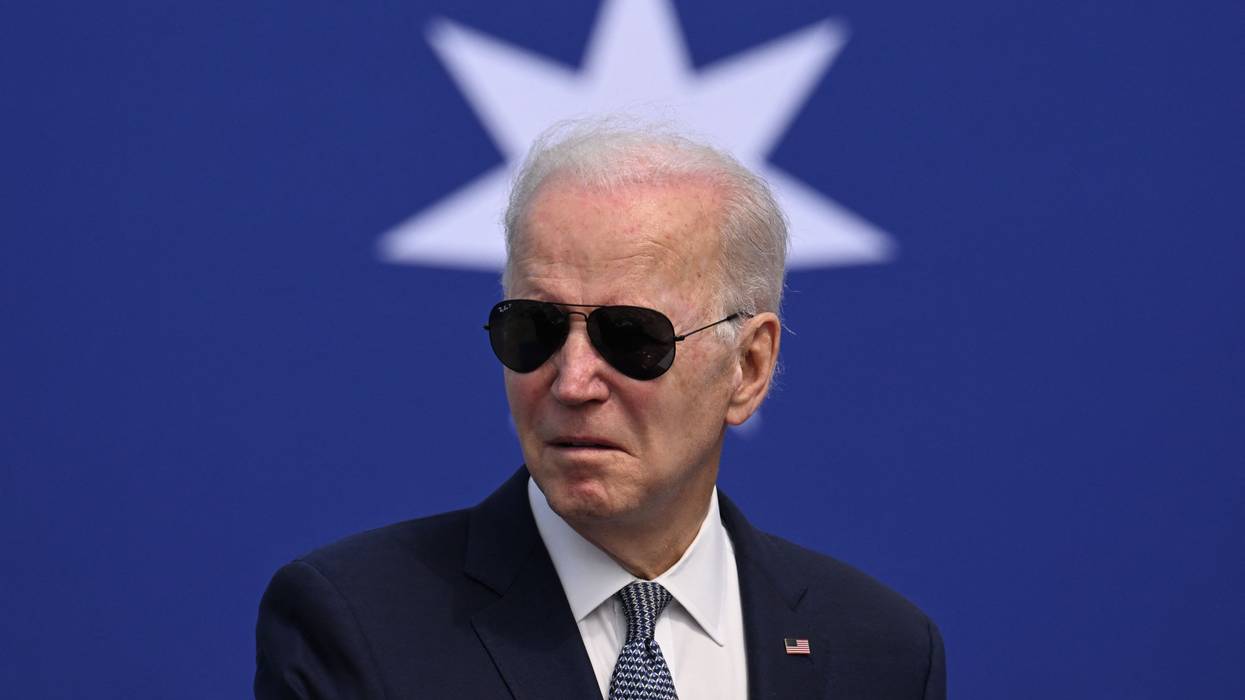
Calling the decision "wrong on every level," one Democratic senator said it "destroys our climate goals and undermines international climate ambition."
Progressives on Capitol Hill joined climate advocates and Indigenous leaders across the country Monday in blasting U.S. President Joe Biden for his administration's approval of ConocoPhillips' Willow oil project on federal land in Alaska.
"The Biden administration has committed to fighting climate change and advancing environmental justice—today's decision to approve the Willow project fails to live up to those promises," declared U.S. Sen. Ed Markey (D-Mass.) along with a trio of House Natural Resources Committee leaders, Reps. Raúl Grijalva (D-Ariz.), Alexandria Ocasio-Cortez (D-N.Y.), and Jared Huffman (D-Calif.).
The four Democrats argued that "their decision ignores the voices of the people of Nuiqsut, our frontline communities, and the irrefutable science that says we must stop building projects like this to slow the ever more devastating impacts of climate change."
"We are failing frontline environmental justice communities who are bearing the brunt of climate chaos."
In a move widely seen as an attempt to temper criticism of the decision to greenlight Willow, the Biden administration on Monday also announced new restrictions for offshore oil lease sales in the Arctic Ocean and across Alaska's North Slope.
"While we acknowledge that the administration also just announced that it is conserving new public lands and waters in the Arctic, split decisions in the face of the climate crisis are not good enough," the Democrats said. "This administration clearly knows what the path to a cleaner and more just future looks like—we wish they hadn't chosen to stray so far from that path with today's Willow decision. The only acceptable Willow project is no Willow project."
Markey—who earlier this month co-led a letter to Biden with Grijalva—added in a solo statement that "approval of the Willow Project is an environmental injustice. The Biden administration's decision to move forward with one of the largest oil development projects in decades sends the wrong message to our international partners, the climate and environmental justice movement, and young people who organized to get historic clean energy and climate investments into law last year."
"This decision not only leaves an oil stain on the administration's climate accomplishments and the president's commitment not to permit new oil and gas drilling on federal land, but slows our progress in the fight for a more livable future and puts into harm's way the neighboring Native Village of Nuiqsut and the Arctic landscape," the senator warned.
"By investing in the fossil-fueled past and not the green-energy future, we are failing frontline environmental justice communities who are bearing the brunt of climate chaos, and American consumers who remain at the whim of rising and volatile prices of oil and gas," he continued. "I am in solidarity with the community of advocates who oppose this disastrous decision and will continue fighting alongside them to put our people and our planet ahead of the profits of Big Oil."
Huffman similarly called the administration's move "incredibly disappointing" while also stressing that "the fight isn't over—I'll keep working to stop this climate disaster and protect the tribes and wildlife that depend on a fossil fuel-free Arctic."
Amid expectations that the project soon will be challenged in court, other federal lawmakers also piled on.
After highlighting Biden's failure to deliver on a 2020 campaign pledge to prevent new fossil fuel leases for public lands and waters, Rep. Rashida Tlaib (D-Mich.) said that "this disastrous decision to approve the Willow project in Alaska, one of the largest oil development projects in decades, will have devastating consequences on our planet, frontline communities, and wildlife."
The president "is making the wrong decision approving the Willow project," charged Congressman Jamaal Bowman (D-N.Y.). "Our beautiful federal lands and indigenous communities will be harmed when they need to be protected. It's time we plan for the clean energy future instead of continuing on the path of fossil fuels."
Sen. Jeff Merkley (D-Ore.) suggested that Willow—if the 30-year project moves forward as planned—will further damage not only the planet but also the Biden administration's global reputation in terms of battling the climate emergency.
The "decision on Willow is wrong on every level," he said. "It destroys our climate goals and undermines international climate ambition. We can't ask other nations to curb dirty energy production if we're greenlighting fossil projects."
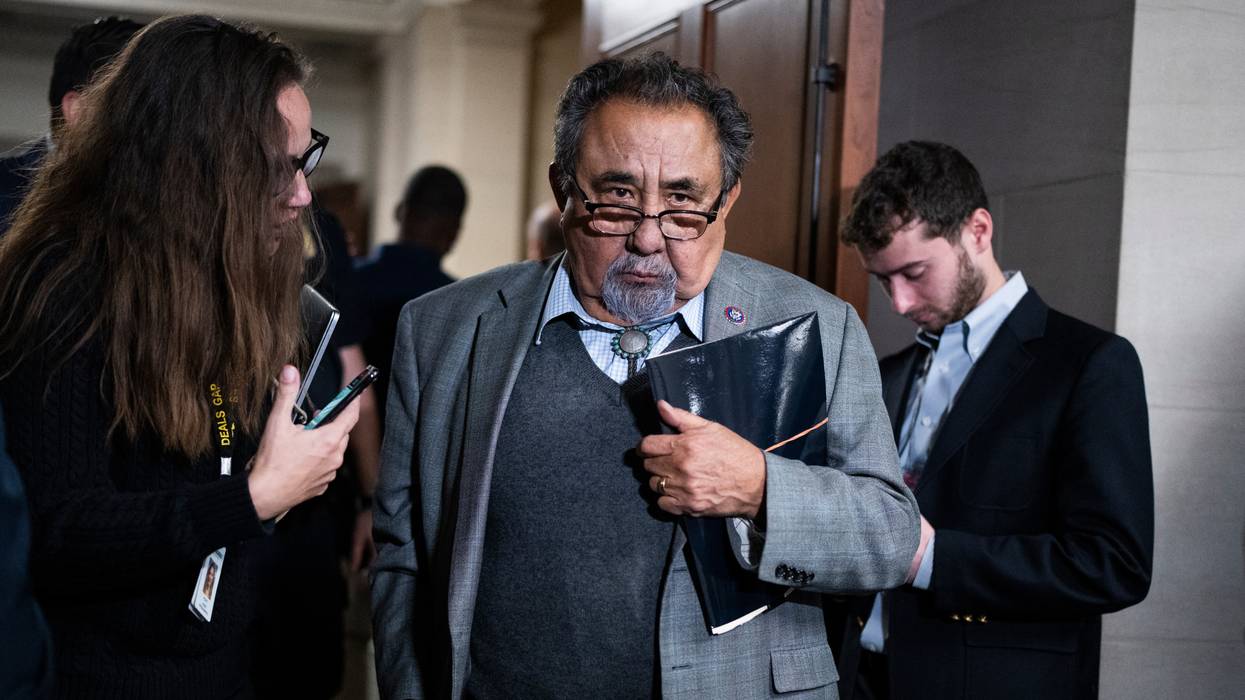
Rep. Raúl Grijalva said the practice "serves two purposes: lining the pockets of private prison companies and acting as a useless deterrent to prevent migrants from seeking their legal right to asylum."
Reports that the Biden administration is considering a plan to revive migrant family detentions drew outrage from members of the president's own party on Tuesday, with Democratic lawmakers imploring the White House to reject the cruel practice that it largely shut down in late 2021.
Rep. Raúl Grijalva (D-Ariz.), who condemned the use of family detention under the Obama and Trump administrations, said in a statement that the policy "serves two purposes: lining the pockets of private prison companies and acting as a useless deterrent to prevent migrants from seeking their legal right to asylum."
"This failed policy is callous and inhumane," Grijalva added. "I urge President Biden to instead focus on the root causes of migration, expanding our nation's asylum process to ensure that it is fair, humane, and orderly, and reunite the children forcibly separated under the previous administration."
On Tuesday evening, Reps. Pramila Jayapal (D-Wash.), Judy Chu (D-Calif.), and Nanette Barragán (D-Calif.)—respectively the chairs of the Congressional Progressive Caucus, the Congressional Asian Pacific American Caucus, and the Congressional Hispanic Caucus—issued a joint statement calling on the Biden administration to dismiss "this wrongheaded approach."
To bolster their case against family detention, the trio quoted Biden's Homeland Security Secretary Alejandro Mayorkas, who declared in March 2021 that "a detention center is not where a family belongs."
"We should not return to the failed policies of the past," the lawmakers said. "There is no safe or humane way to detain families and children, and such detention does not serve as a deterrent to migration. We strongly urge the administration to reject this wrongheaded approach."
The responses from Democratic lawmakers came as the White House refused to say whether family detention is under consideration as the administration prepares for the May lapse of Title 42, a Trump-era migrant expulsion policy that Biden has expanded despite claiming to oppose it.
Speaking to reporters on Tuesday, White House Press Secretary Karine Jean-Pierre dodged questions about family detention, calling reports on the administration's internal policy discussions "rumors."
"I'm not saying it's being considered," said Jean-Pierre, "and I'm not saying it is not. I'm saying that I'm not going to speak to rumors. There are rumors out there. Clearly, the Department of Homeland Security is working through ways on how to move forward once Title 42 is lifted. I’m just not going to get into speculations."
Citing an unnamed source "working closely with the White House migrant policy team," The New Republic's Pablo Manríquez reported Tuesday that White House domestic policy adviser Susan Rice—who previously served as national security adviser under the Obama administration—"has been pushing for a reinstatement of family detention."
Immigration and Customs Enforcement (ICE) facilities that previously held migrant families who crossed into the U.S. via the southern border are now used to detain individuals. The Biden administration's current policy allows families to enter the U.S. under surveillance as their cases proceed through the court system.
One unnamed official told The Guardian on Tuesday that if families are detained under new Biden administration policy, "they would be held for short periods of time, perhaps just a few days, and their cases expedited through immigration court."
That the Biden administration would even consider returning to family detention infuriated immigrant rights groups, some of which took legal action against previous administrations over the policy.
"This shameful and immoral practice, which President Biden has rightly condemned and discontinued, inflicts lasting harm on children and families," said Kica Matos, executive vice president of programs and strategy at the National Immigration Law Center. "It goes against the values we aspire to as a nation, while doing nothing to advance a humane and orderly immigration system."
"Reviving family detention sets us back and sends a misguided message that criminalizing those seeking refuge is the right solution," Matos argued. "It would be a grave error and a new low for an administration already down a backwards path of embracing failed deterrence policies at the border."
Anthony Romero, the ACLU's executive director, vowed that his organization will fight Biden "every step of the way" if he revives family detention.
"How we choose to respond to the children and families fleeing violence and persecution who come to our border seeking safety says a lot about who we are as a nation," said Romero. "Putting children and their parents behind barbed wire to deter them from seeking safety should shock the conscience of every American who believes in fairness, safety, and basic human dignity for all people."