

SUBSCRIBE TO OUR FREE NEWSLETTER
Daily news & progressive opinion—funded by the people, not the corporations—delivered straight to your inbox.
5
#000000
#FFFFFF
To donate by check, phone, or other method, see our More Ways to Give page.
Daily news & progressive opinion—funded by the people, not the corporations—delivered straight to your inbox.
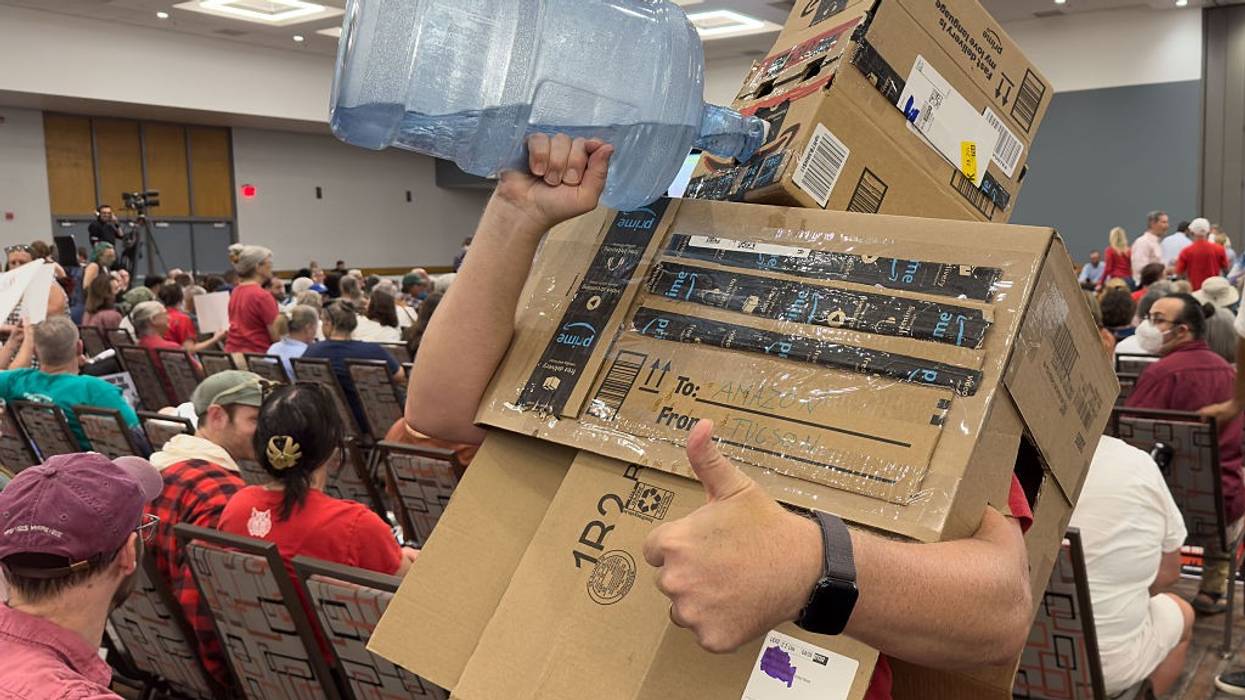
The responsibility to protect access to clean water must guide their decisions on data centers, carbon capture and storage facilities, and other large industrial projects.
Increasingly, communities are facing threats to clean water from large industrial projects such as data centers and carbon capture and storage, or CCS, facilities that are being proposed and constructed in communities across the United States. The question is how should decisions about these facilities be made? Should government officials privilege capital and financial investments? Should they balance investment with other considerations such as noise, water, and energy costs?
Of all the issues raised by these large projects, water is one of the most crucial for the simple reason that we cannot live without water. Given this necessity, access to clean water must be treated as a human right with governments charged with the ethical responsibility to serve as the trustees of water to protect it for present and future generations. This responsibility to protect access to clean water as a human right must guide their decisions on data centers and CCS facilities and other large industrial projects.
Data centers are buildings, sometimes the size of large warehouses, that can contain hundreds of thousands of computer chips that provide processing and storage for online data including data used for energy-intensive artificial intelligence and cryptocurrency, as well as less energy-intensive activities such as storing websites and other data. Carbon capture and storage facilities capture carbon dioxide emitted from industrial facilities and store it underground to prevent the CO2 from escaping into the atmosphere where it would contribute to climate change. Carbon capture facilities can include factory-size machinery that removes carbon dioxide from industrial air emissions, pipelines that transport the CO2, and underground storage repositories. Data centers and carbon capture and storage facilities typically consume large amounts of energy and water. They commonly also have toxic emissions, posing further risks to air, water, and health.
People have a human right to a clean environment—an idea recognized by the United Nations and enshrined in the constitutions of multiple states including Hawaii, Illinois, Massachusetts, Montana, and Pennsylvania. The provisions from Hawaii, Massachusetts, Montana, and Pennsylvania explicitly mention the importance of protecting water supplies. Pennsylvania’s Environmental Rights Amendment says, for example: “The people have a right to clean air, pure water, and to the preservation of the natural, scenic, historic and esthetic values of the environment. Pennsylvania’s public natural resources are the common property of all the people, including generations yet to come. As trustee of these resources, the Commonwealth shall conserve and maintain them for the benefit of all the people."
Current projects being rushed through city councils or county boards, cloaked in non-disclosure agreements and granted tax credits, deny the public the right to full information about the project and undermine the ability of governments to fulfill its public trust duties.
Most constitutions, like Pennsylvania’s that contain the human right to a clean environment have a parallel provision, that asserts the responsibility of government to serve as the trustee of the commons or natural resources. For purposes of an ordinance on water, government, as the trustee of water, has a duty to make decisions that guarantee water quality and quantity now and into the future for the people within its jurisdiction.
If access to adequate, clean water is a human right—and given the uncertainty about water quantity and quality in light of unstable climate and weather patterns, increasing demands, and aging infrastructure—arguably the most appropriate decision-making tool for governments to use to fulfill its trustee responsibilities is the precautionary principle. The principle stands for the premise that we should take action, even in the face of scientific uncertainty, to prevent harm by
This principle is the commonsense idea behind many adages: “Better safe than sorry.” “Look before you leap.” “First do no harm.”
One step in implementing the precautionary principle to protect water requires special focus: the public’s right to give free, prior, and informed consent to projects that will impact water quantity and quality. The consent of the governed is fundamental to democracy as expressed in documents dating back to the Declaration of Independence. Current projects being rushed through city councils or county boards, cloaked in non-disclosure agreements and granted tax credits, deny the public the right to full information about the project and undermine the ability of governments to fulfill its public trust duties.
By protecting local water supplies that may be threatened by these new, energy- and water- intensive uses, communities can help ensure that our most important natural resource remains clean and abundant for generations yet to come.
This retreat shows that these projects and their false climate solutions are not just unpopular, they’re also a major financial risk to companies, investors, and communities.
Plans for one of the world’s largest blue hydrogen and ammonia projects have collapsed, wasting billions of dollars in a risky bet that frontline communities resisted for years. Despite "clean" marketing, the project would have relied on dirty fracked gas.
The gas and chemicals company Air Products canceled its proposed $4.5 billion Louisiana Clean Energy Complex, wasting $2.9 billion—more than half of the overall cost—after concluding the project no longer met its financial expectations. Once promoted as the company’s largest US investment—and the world’s largest carbon sequestration project—the cancellation is more than a corporate setback. It is a signal of the end of the so-called "low carbon" hydrogen hype despite years of industry promotion, generous public subsidies, and claims that these technologies can be used to tackle climate change.
This retreat shows that these projects and their false climate solutions are not just unpopular, they’re also a major financial risk to companies, investors, and communities. For Louisiana communities that opposed the project from the beginning, however, the announcement means something else: proof that projects portrayed as inevitable can be stopped.
When Air Products first announced the project in 2021, the company described it as a transformational investment. Their plans included the production of 1,700 metric tons of hydrogen per day from fracked gas with up to 95% of emissions mitigated through carbon capture and storage (CCS). They planned to pump the hydrogen—called "blue" hydrogen due to the addition of CCS—through a pipeline along the Gulf Coast for refineries and petrochemical plants, or turn it into ammonia, which is a toxic, fossil fuel-derived chemical—used primarily as a fertilizer.
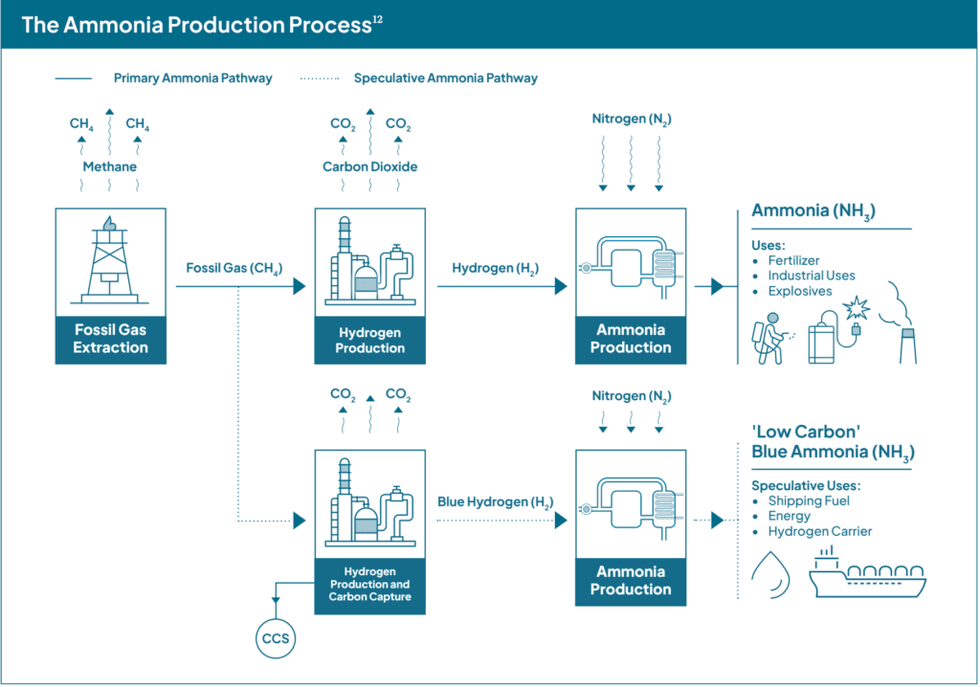 (Graphic via CIEL Ammonia Factsheet)
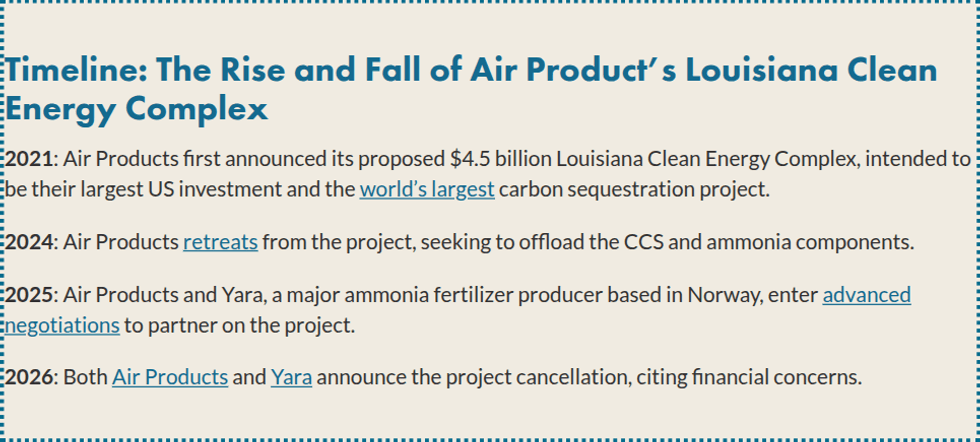
That vision quickly began to unravel. By 2024, Air Products was already seeking partners to offload parts of the project, including the ammonia and carbon capture components. In 2025, it entered advanced negotiations with Norwegian fertilizer giant Yara. By mid-2026, both companies announced the project had been abandoned, citing financial concerns and an inability to find customers for a speculative market.
The cancellation reflects a broader reality: Despite billions in public funds and years of political backing, many blue hydrogen projects continue to struggle with rising costs, uncertain markets, and technical challenges.
Air Products is not alone. At least 45 hydrogen and ammonia production facilities have been proposed in recent years across the US—mostly clustered in Texas and Louisiana—with only one making it to the construction phase, and many more on hold. Although more than 80% of ammonia produced in the US is used to manufacture fertilizer, much of the proposed buildout depends on speculative markets—including using ammonia as a shipping fuel, hydrogen carrier, and energy source—none of which are possible at scale today.
To make these projects appear climate friendly, companies increasingly market them as "clean," "blue," or "low-carbon" by pairing fossil fuel-based hydrogen and ammonia production with CCS. Yet, CCS has repeatedly failed to deliver emissions reductions while putting communities at elevated risk for pollution and related disasters. Despite that record, federal carbon capture subsidies were expanded in 2022 and again in 2025, potentially leading to the transfer of $1 trillion in public funds to private corporations over the coming decades.
The collapse of one of the industry’s flagship projects should prompt investors and policymakers alike to ask whether this business model is built on wishful thinking rather than sound evidence and economics.
Air Products’ proposed Louisiana Complex would have consisted of a hydrogen and ammonia plant in Ascension, Louisiana, with 38 miles of pipeline sprawling across five parishes, connecting to one of at least 10 separate injection wells underneath Lake Maurepas. The project would have formed part of a larger effort to transform Louisiana into a national hub for CCS.
More than just a proposed storage site, Lake Maurepas is an important estuarine ecosystem beloved by locals for recreational activities like boating, fishing, and wildlife observation. One of the nation’s largest forested wetlands borders the lake, supporting wildlife, commercial fishing, and local businesses. For generations, communities have depended on these waters—not simply for income, but as part of their identity. From the moment residents learned about the Air Products project, they organized against it.
Today, more than 30 CCS projects are under review across the state by the Louisiana Department of Conservation and Energy. Many would be built alongside communities already burdened by decades of petrochemical pollution in the 85-mile stretch along the Mississippi River between New Orleans and Baton Rouge, known locally as Cancer Alley.
These communities have long borne the health costs of fossil fuel development. Siting this experimental and knowingly dangerous CCS technology alongside frontline communities already overburdened by industrial pollution would force them to shoulder another layer of industrial risk, while companies stand to gain hundreds of billions of dollars in public money over the next 20 years through a federal tax credit.
The failure of Air Products’ vision is not a surprise to anyone watching the proposed CCS buildout; the ballooning costs and failure to deliver on ambitious promises follow a familiar pattern.
The Kemper “clean coal” project in Mississippi was once celebrated as the future of carbon capture, claiming it would capture 65% of emissions from the power plant. Originally budgeted at $3 billion, the costs of the project more than doubled to $7.5 billion over the seven years of its construction (2010-2017), before the carbon capture system was abandoned altogether. Despite the massive investment, the Kemper facility never operated as promised and was partially demolished in 2021. Local residents are still paying for the corporate loss from this experiment through their electricity bills.
The failure of the Kemper project should have been a warning for future investments and should have prompted the more fundamental question: Who bears the cost of these projects?
While Louisiana leads the nation in oil refining, natural gas production, and chemical production, the state consistently ranks among the poorest and least educated states in the US. CCS projects will no doubt add to the unequal environmental burden that the state population is forced to bear for the benefit of corporations. While many of the hardships can be quantified, the joy and love for the land by its residents is immeasurable. There’s no metric that captures the experience of paddling a canoe across Lake Maurepas, seeing alligators bask in the sun, listening to birdsongs echo across the wetlands, or watching the flotant—marsh grasses that float on top of the water—bob with the waves.
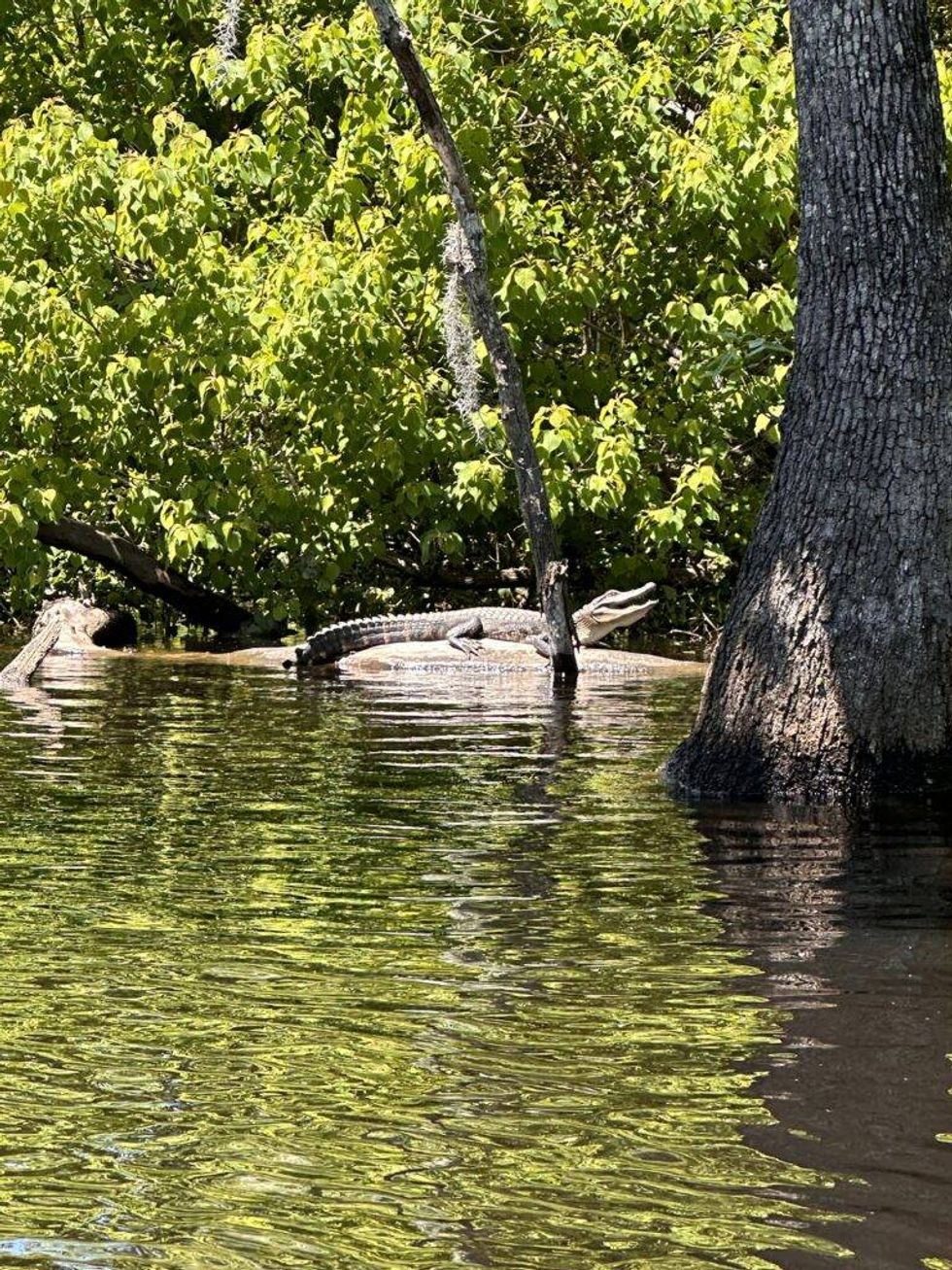 An alligator basks in Lake Maurepas, Louisiana, US. (Photo by Jessi Parfait, CIEL.)
For the communities that have called this place home for generations, protecting the lake has never been about stopping a single project—it has been about safeguarding a way of life. The cancellation of the project is a victory not only for the hundreds of community members who organized against it—showing what is possible when people stand together to fight against false solutions—but also for the future generations who will continue to enjoy this remarkable ecosystem.
The cancellation is also a major win for communities that spent years warning about the project’s risks. Concerned residents across the complex’s planned footprint partnered with environmental groups to speak out at public hearings, organize neighbors, and challenge permits, refusing to accept that the project was inevitable.
Their persistence mattered. For years, the fossil fuel industry insisted that carbon capture represented the future—that projects like this were necessary and unavoidable. But as James Hiatt, founder of For a Better Bayou based in Lake Charles, Louisiana, put it:
Air Products pulling out proves that nothing here is inevitable. Industry wants us to believe these projects are a done deal, that our voices don’t matter. They do. Elected and regulators didn’t hand us this win; community pressure did. Consistent, persistent organizing works.
Air Products’ withdrawal is not simply a failed investment by one company. It is a warning to policymakers considering whether public money should continue subsidizing projects that repeatedly fail to deliver.
Communities increasingly reject being asked to bear new risks in exchange for promises that never materialize. And this failure is likely not the last ammonia and CCS project to be canceled. Even now, many projects are on hold or delayed, further signaling to companies, investors, and communities that they are a bad bet.
The cancellation also sends a broader message: Expensive, speculative technologies designed to prolong fossil fuel production aren’t fooling anyone and companies pushing these risky projects will be footing the bill.
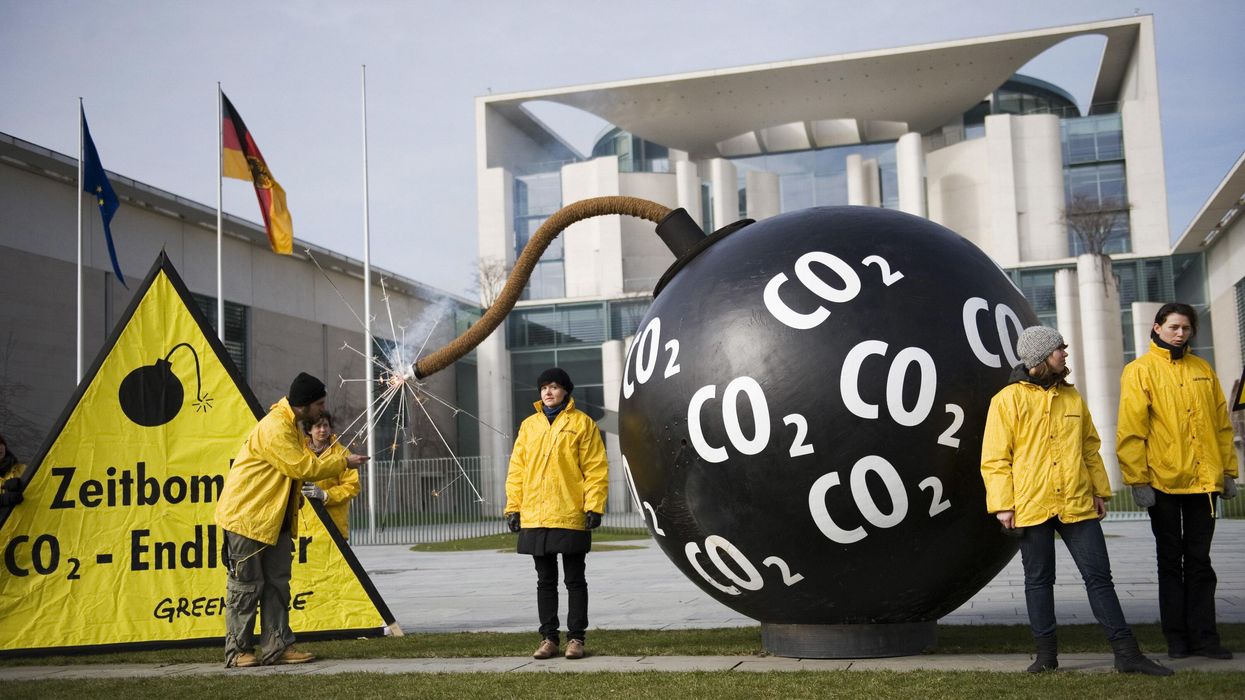
"Rejecting the influence of the fossil fuel industry and investing in climate action that can actually deliver emissions cuts and steer a just transition from the fossil fuel economy is crucial."
As attendees gathered in the south of France Thursday for the start of a European Union-hosted summit on carbon capture and storage, an international coalition of green groups warned against funding "reckless, unscientific, and lobbyist-driven" false climate solutions and instead urged investment in "a just transition that prioritizes renewable energy, energy demand reduction, and energy efficiency."
"Today the Industrial Carbon Management Forum (ICMF) kicks off in Pau, France," 43 organizations wrote in a letter to the European Commission. "This forum has been revealed to be dominated by fossil fuel interests to the exclusion of civil society stakeholders and other expert voices with critical views."
The letter points to a report published Thursday by the Institute for Energy Economics and Financial Analysis (IEEFA), which concluded that "most of Europe's planned carbon capture and storage (CCS) applications are too expensive to work on a commercial basis and are nowhere near ready to be rolled out."
According to the report, Europe's planned CCS projects will cost an estimated €520 billion ($569 billion), which IEEFA energy finance analyst and report author Andrew Reid said "will force European governments to introduce eye-wateringly high subsidies to prop up a technology that has a history of failure."
The green groups' letter also notes widespread criticism of CCS, which has been panned by Food & Water Watch—whose European branch signed the letter—as a "false climate solution" and a "lifeline for the fossil fuel industry."
The signers wrote that the United Nations Intergovernmental Panel on Climate Change "has labeled CCS as one of the most costly and least effective emissions reduction methods, and an Oxford study found high-CCS pathways could cost $30 trillion more globally than renewable alternatives," the signers wrote, referring to the United Nations Intergovernmental Panel on Climate Change.
The letter continues:
As well as being prohibitively expensive, plans for carbon capture and storage (CCS) at scale face overwhelming technical challenges and the records show 50 years of failure. Even with $83 billion in investment since the '90s, research found that nearly 80% of large-scale projects fail. The industry itself has acknowledged that for all these efforts, only 52 metric tons of carbon dioxide have ever been stored long-term, highlighting the unlikeliness of achieving the E.U.'s stated goal of storing 280 metric tons of CO2 by 2040...
The union has already spent over €3 billion ($3.3 billion) on CCS and hydrogen projects—hydrogen is often paired with CCS to attempt to capture the carbon dioxide emissions released during hydrogen production from fossil fuels in order to label hydrogen a low-carbon fuel. However, this ignores the ineffectiveness of CCS to reduce emissions and the continued use of fossil fuels in the process.
"We cannot afford to give further investments to the fossil fuel industry to gamble with our future and our tax money," the green groups stressed. "Money allotted to CCS would be better spent on the communities and countries that need it most and on ensuring a full and fair phaseout of fossil fuels."
In stark contrast, E.U. Energy Commissioner Kadri Simson said during the opening session of the CCS summit that the 27-nation bloc's climate target plan "underlines that industrial carbon management is not just an alternative, it is a vital complement to renewable energy and energy efficiency."
The letter's signers are calling on E.U. policymakers to:
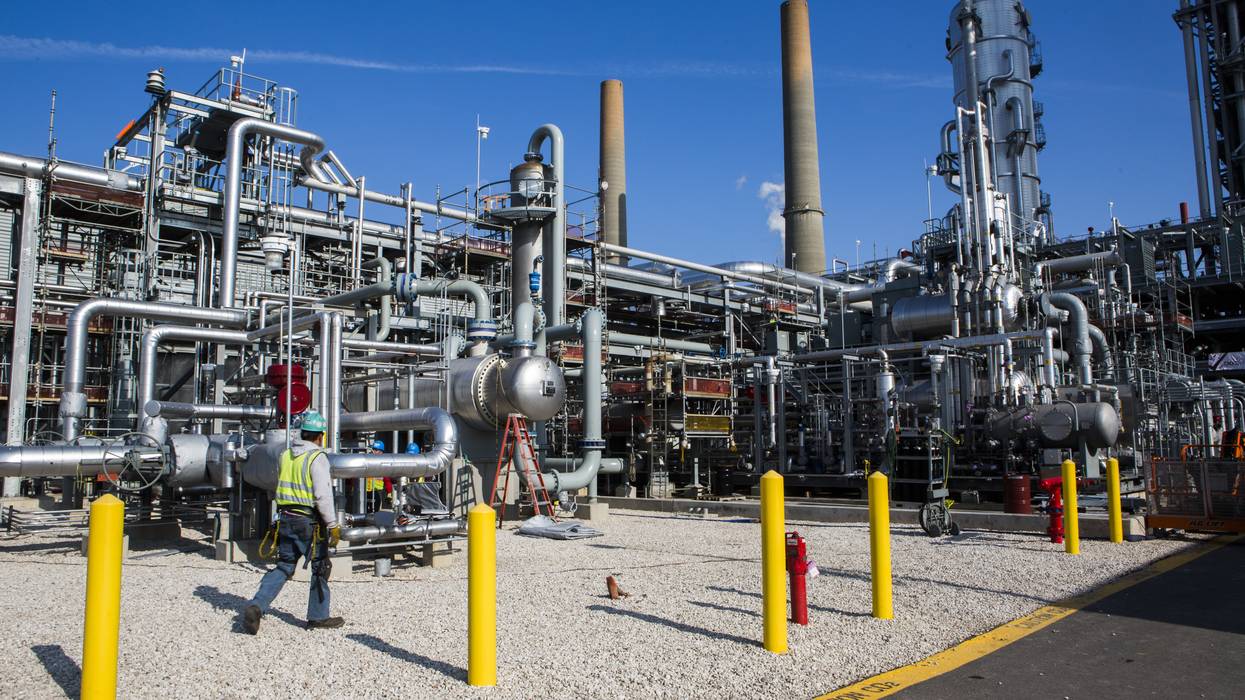
"Our report clearly lays out the way carbon capture tax credits rig the system in favor of the oil and gas industry to the tune of billions of dollars," one expert said.
As the U.S. moves to invest in climate solutions, is the money going toward projects that will meaningfully reduce emissions and transition the nation's energy system away from fossil fuels?
A report released Wednesday by worker-owned corporate accountability and environmental justice research organization Empower found that just 34 carbon capture and storage (CCS) projects in Texas could receive between $3.2 billion and $33 billion in annual tax subsidies.
At the same time, most of the carbon dioxide pipelines in the state are managed by the major oil and gas companies like Kinder Morgan, Occidental Petroleum, and ExxonMobil that played a disproportionate role in creating the climate crisis in the first place.
"Carbon capture and storage is the most expensive and least effective carbon mitigation solution. It's really not where we need to be investing our money," said Paige Powell, the policy manager at Commission Shift, at a press briefing announcing the new research. "And the public dollars coming from the federal government to fossil fuel companies are our dollars, our taxpayer dollars that could be better spent elsewhere."
"I think it's important for us to ask ourselves, if carbon capture is receiving so much public dollars, why is there little public input?"
For its report, Empower turned up 98 carbon dioxide-related projects in the state of Texas, including 47 pipelines and 13 Class VI Geological Storage projects. These projects are currently primarily funded through tax breaks and U.S. Department of Energy (DOE) subsidies; the report authors found little evidence of any private investments.
"Our report clearly lays out the way carbon capture tax credits rig the system in favor of the oil and gas industry to the tune of billions of dollars," Empower's Samuel Rosado said in a statement. "Public funding and tax breaks are the largest sources of revenue for CCS projects. Without the massive federal investment, the private sector deems most CCS projects unprofitable."
The main tax credit for CCS is the 45Q tax credit, which assigns a dollar amount for every metric ton of carbon dioxide captured and permanently stored. While this credit was first created by the Energy Improvement and Extension Act of 2008, the Inflation Reduction Act expanded it, raising the credit to $85 per metric ton. At the same time, the Infrastructure Investment and Jobs Act earmarked more than $8 billion for the DOE's CCS programs.
"These are the key bills that were enacted that enabled CCS to be at least more financially available than it previously was," Rosado said in the briefing.
Yet climate and accountability advocates are concerned that the money is being misdirected.
Powell noted that CCS technology had been around for 50 years, but had failed to advance.
"All of these projects have been largely unprofitable, and they haven't expanded the way that renewables and other climate solutions have, primarily because the technology is problematic," Powell said. "It's unsafe, it's fraught with mechanical failures, and not to mention wildly expensive when compared to other climate solutions."
Dominic Chacon of the Texas Campaign for the Environment said that industry boosting of CCS amounted to a form of "greenwashing."
"It is essentially a marketing PR branding ploy to downplay the obvious risks associated with fossil fuels, to try and rebrand this industry as something that we need for the future," Chacon said.
Autumn Hanna, the vice president of Taxpayers for Common Sense, noted that there was a history of fraud in past allocation of CCS subsidies.
"A Treasury investigation found that from 2010 to 2019, 90% of tax credit claimants failed to comply with IRS [Internal Revenue Service] and EPA [Environmental Protection Agency] requirements," Hanna said in a statement. "Instead of throwing good money after bad, we should focus our limited resources on climate solutions we know are safe and effective."
At the same time, most federal CCS subsidies actually ended up going toward injecting carbon dioxide into depleted oil wells in order to extract even more oil, which is currently the only profitable use of the technology.
"Continuing to funnel these subsidies and tax breaks to the oil companies, which mostly use it to extract more fossil fuels, really weakens its supposed climate benefits," Hanna said in the briefing.
In Texas specifically, there are concerns about the safety of CCS infrastructure and its impact on ecosystems and communities, given the state's weak regulatory culture.
"We need to chart a new course here in Texas and in Washington to incentivize climate solutions that actually work."
"Our state oil and gas regulator, the Railroad Commission of Texas, is reluctant to oversee the industry in a way that protects people and the environment," Powell said.
The Empower report found that 19 CCS projects overlap with at least 24 million acres of water, threatening both coastal and river environments. The report authors also ran into a lack of transparency.
After filing Freedom of Information Act (FOIA) requests to the Environmental Protection Agency to access data about CCS projects, they received documents with entire pages redacted on the behest of the companies and with the permission of the EPA.
"This is very dangerous when it comes to corporate accountability and transparency on environmental issues, because entire pages were redacted from FOIA requests and public information requests that are incredibly important for communities and safety in these communities," Rosado said.
The advocates called for greater transparency and accountability around public financing for untested and expensive climate solutions.
"I think it's important for us to ask ourselves, if carbon capture is receiving so much public dollars, why is there little public input?" Chacon asked. "There is no public transparency on this technology."
Hanna called for putting "the breaks on the whole thing until we start to really answer some big questions that are out there instead of just autopilot expansions and extensions that carry huge costs and, again, leave us with these big questions and this lack of transparency and oversight."
Community organizations in the Lone Star State are petitioning the EPA to reject the Texas Railroad Commission's request to have primary oversight over CCS projects in the state.
"Allowing Texas to continue down this path is irresponsible and only serves oil and gas interests. That's why it's critical that the Environmental Protection Agency not hand over regulation of dangerous CCS projects to the Railroad Commission of Texas, which has shown that it's in the pocket of fossil fuel companies, which stand to profit while putting our communities at risk," Powell said in a statement. "We need to chart a new course here in Texas and in Washington to incentivize climate solutions that actually work."
To that end, Commission Shift is also urging concerned residents to comment on new EPA draft permits for CCS projects in the Permian Basin.
"Let them know we need an extension to review the permits and that we really just don't want these here in the Permian, it's not the right place for all these projects," Powell said.
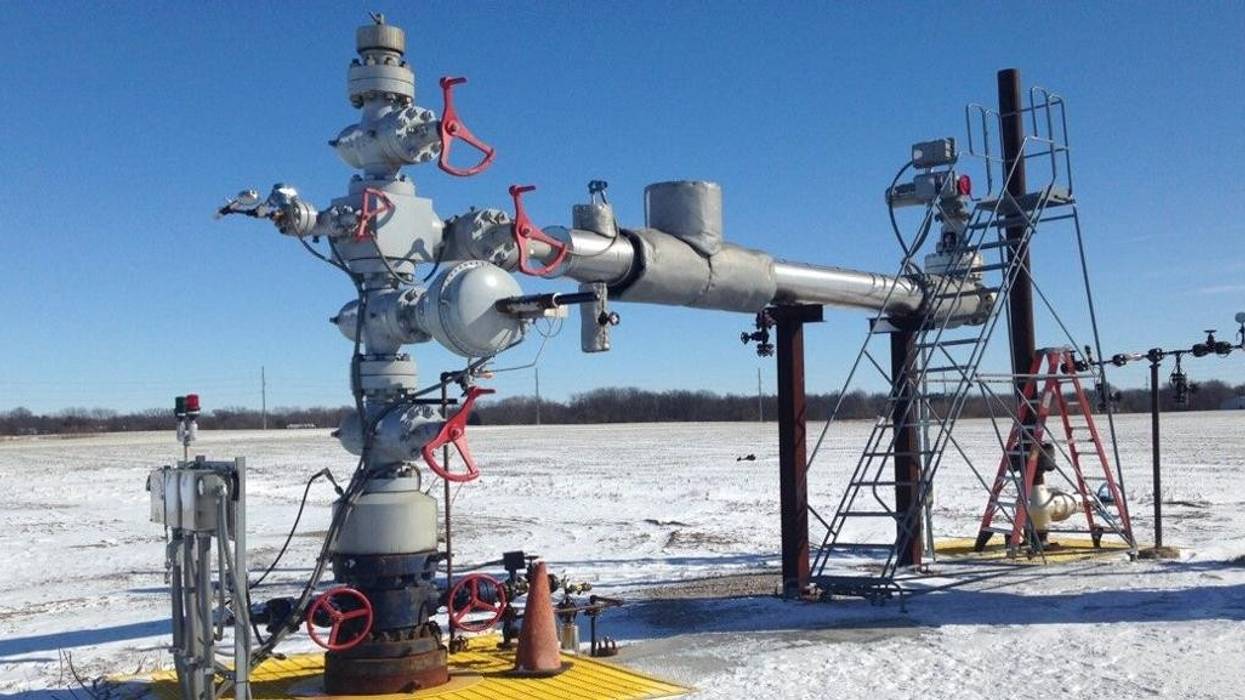
"This incident puts an exclamation point on concerns communities across the country have been raising for years about the dangers the CCS industry poses to public safety and drinking water," said one climate group.
Environmental groups said Friday that a newly reported leak at the first CO2 injection site in the United States highlights the threat—and false promise—of carbon capture and storage efforts, which climate advocates have long criticized as a ploy by the fossil fuel industry to preserve its extractive business model.
E&E News reported Friday that the Environmental Protection Agency (EPA) has "issued a violation notice to the operator of the country's first carbon dioxide injection wells for permanent storage, alleging that the company hasn't complied with its federal permit."
The facility operator is Archer Daniels Midland (ADM), an agribusiness giant that has received hundreds of millions of dollars in federal funding for carbon capture and storage (CCS) efforts—with underwhelming results.
E&E News published a three-page notice that the EPA sent to Archer Daniels Midland, alerting the company to a violation of the Safe Drinking Water Act at its CCS injection well in Decatur, Illinois.
The EPA said the company allowed "injection and formation fluids" to move into "unauthorized zones."
A spokesperson for ADM told E&E News that the company in March "detected some corrosion in a section of one of two deep monitoring wells at approximately 5,000 feet and below." According to E&E News, "that corrosion allowed CO2 and formation fluid to migrate into a formation where those liquids weren't permitted to go."
"There are significant risks at every step of the CCS process, and it's not a matter of if carbon sequestration facilities leak, but rather when."
Jim Walsh, policy director for Food & Water Watch, criticized the EPA for its "lack of transparency" surrounding the leak, adding that
"carbon dioxide injection wells are a dangerous endeavor, even if EPA does not capitulate to industry demands to rush permitting."
"This incident puts an exclamation point on concerns communities across the country have been raising for years about the dangers the CCS industry poses to public safety and drinking water," said Walsh. "The reality is this: CCS is a technologically unsound and economically unviable scheme, perpetuated by the fossil fuel industry to allow oil and gas companies to keep on drilling, keep on fracking, and keep on polluting our planet."
The Illinois Clean Jobs Coalition said in a statement Friday that the incident underscores that "there are significant risks at every step of the CCS process, and it's not a matter of if carbon sequestration facilities leak, but rather when."
"This incident demonstrates how important strict CCS regulations are to protect our communities and environment, and is exactly why we passed the CCS Protections Act in Illinois this year," the group said. "There are real concerns from many legislators, community partners, and Illinoisans who rely on public drinking water about the need for even stronger protections, and this incident shows that these concerns need to be taken seriously to ensure Illinoisians are protected to the fullest extent possible."
Concerns about leaks and other harms associated with CCS projects are expected to grow as the U.S. continues promoting them with taxpayer dollars.
"Federal and state regulators are reviewing 69 projects or permits to store CO2 underground, with 24 of those in Louisiana. Nine projects have already been approved while one more, in California, is pending," Inside Climate News reported earlier this year. "Companies plan to inject carbon dioxide into porous rock formations that are usually filled with brine containing not only extremely high salt levels but often heavy metals, hydrocarbons, and radioactive elements. Brine leaks, therefore, can be even more worrying than the escape of CO2."
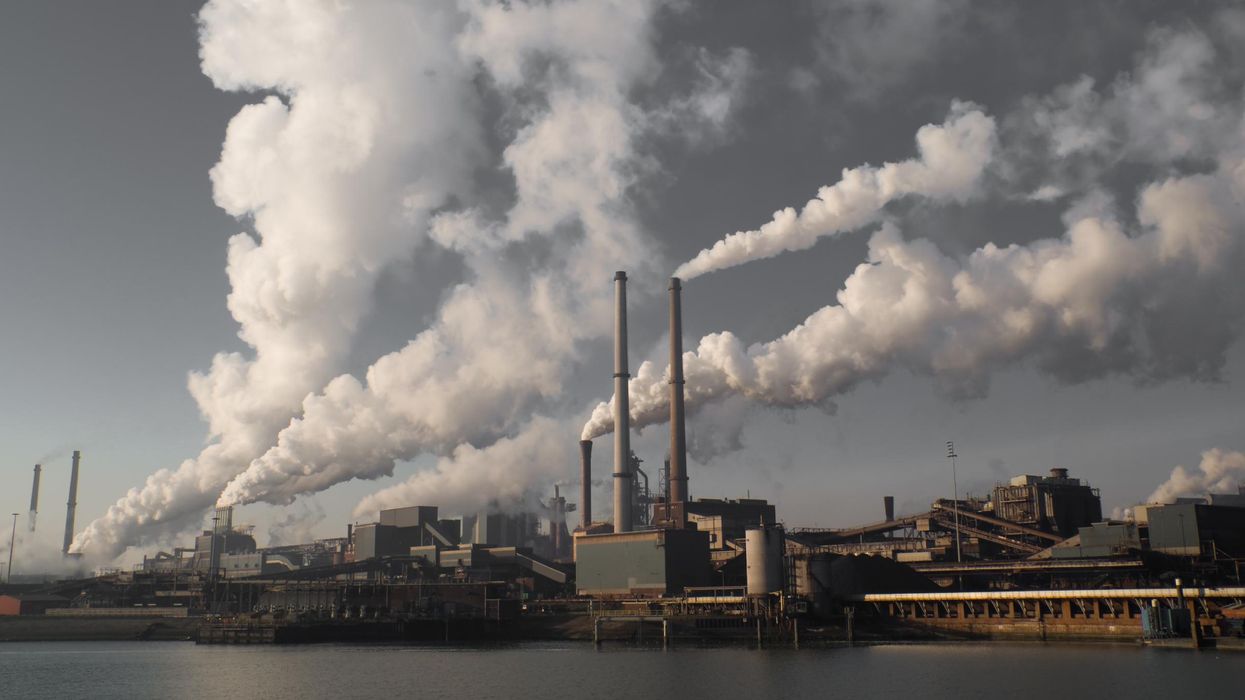
As the climate crisis esscalates, the fossil fuel industry continues to mislead.
As we celebrate Earth Day, there are unrelenting warning signs the climate crisis could have reached a catastrophic tipping point. To bring us back from the edge, we must ignore the siren calls from the fossil fuel industry that they have the solutions to the crisis they created.
After decades of obfuscation, denial, and delay, time is not on our side. We have just experienced the warmest March on record. The 10 previous months also set a new temperature record and were ranked as the hottest on record. Scientists from the European Union climate change monitoring service are “very concerned.”
Other leading climate scientists, such as Gavin Schmidt, the director of NASa’s Goddard Institute for Space Studies, believe that if temperatures do not fall by the end of this year, we could be moving into “unchartered territory.”
If the snowballing effects of our climate crisis seem overwhelming, the solutions have always been straightforward. “The main driver of the warming is fossil fuel emissions,” says Friederike Otto, a climate scientist at Imperial College London’s Grantham Institute.
The solutions to our climate crisis have been evident for decades: As our window for action decreases as our collective carbon budgets get smaller, we need a fast, fair, full, and funded fossil fuel phaseout. We need to stop fossil fuel subsidies and without dangerous distractions such as gas certification, Carbon Capture and Storage (CCS), and carbon offsetting. We need a just transition to clean, renewable energy as soon as possible.
The industry’s Plan A for survival is to convince you that they are integral to the climate fight, and Plan B is to push plastics. Both of these are flawed.
To speed up the transition, we need to stop the market-manipulating incentives to use more fossil fuels, and one of those is subsidies. According to the International Monetary Fund, global fossil fuel subsidies were worth a staggering $7 trillion, or 7.1% of GDP, in 2022, reflecting a $2 trillion increase since 2020 due to government support from surging energy prices caused by the Ukraine war.
Subsidies for false solutions also create a double roadblock preventing the transition to clean energy. One of the key technologies being pushed by the oil industry and its allies is CCS, which, despite the hype, has a 50-year history of false hope and failure. In September 2023, the International Energy Agency (IEA) noted that “the history of CCUS has largely been one of ‘underperformance’ and ‘unmet expectations.’”
Despite this, governments are determined to hand more public money to an industry that rakes in record profits. They have spent over $20 billion and legislated or announced policies that could spend up to $200 billion more of public money on CCS. This is providing a lifeline for the fossil fuel industry.
Many countries want you to see them as climate leaders, but are actually climate villains. In December last year, Oil Change International (OCI) revealed that Norway spent $1 out of every $5 spent on CCS. Only the United States spent more public money on CCS subsidies: $8.08 billion.
Similarly, companies that want you to believe they are integral to the climate solution remain central to the problem. None of the Big Oil companies’ plans are remotely aligned with the 1.5°C warming Paris goals. Back in 2022, OCI and dozens of other civil society groups revealed that the eight largest oil and gas companies alone are involved in over 200 expansion projects on track for approval from 2022 through 2025—equivalent to the lifetime emissions of 77 new coal power plants.
More recently, the CarbonTracker think tank examined the 25 largest listed oil and gas companies and evaluated the extent to which they are aligned with the Paris climate goals. They concluded that none were aligned at all. Maeve O’Connor, the report author, said that although the world’s largest oil companies claimed to “be part of the solution in accelerating the energy transition… we see that none are currently aligned with the goals of the Paris agreement.”
Just as the companies are not aligned with Paris’ goals, neither are leading oil- and gas-producing countries. A recent OCI analysis found that none of the oil- and gas-producing countries in the North Sea are on track to stop drilling in time to reach the 1.5°C warming limit.
Although companies and countries are way off the pace to secure a liveable future, they are also trying to spin that they are an integral part of the climate solution and pushing back against a transition to renewable energy.
The fossil fuel hawks, like the boss of Saudi Aramco, the world’s largest oil company, even told a recent influential oil and gas event that the world should give up on the “fantasy” idea of phasing out oil and gas altogether.
Others say gas could be integral to our future because it can be made “carbon neutral” by cleaning up leaking methane emissions through certification and carbon offsetting. Both of these strategies are flawed. Last year, OCI and Earthworks revealed that the growing gas certification industry, where third parties use monitors to identify leaks along the U.S. gas network, from drilling to distribution, was unreliable and ineffective.
The report quoted Chris Romer, the boss of one of the U.S.’s leading certification companies, Project Canary, stating, “We are going to be able to solve climate change with measurement.” Romer had argued that Project Canary’s “goal” was to allow the oil and gas industry to maintain “a social license to operate” and that “clean” certified carbon would allow the industry to operate “for many decades to come.” He called certified gas a “climate solution.” There are also leading American fracking companies, such as EQT, that are pushing the message that gas is central to the climate fight too.
It is not all doom and gloom. There is good news. According to the IEA, the world added 50% more renewable capacity in 2023 than the year before. And in the next five years, we will see the fastest growth yet. Last year, it also set a new record in renewables deployment in the power sector by reaching a total capacity of 3,870 gigawatts (GW) globally.
Last year at the COP28 climate talks, for the first time in United Nations history, the final agreement text named fossil fuels as the problem and pointed towards a solution, calling for “transitioning away from fossil fuels in energy systems, in a just, orderly, and equitable manner.”
The agreement is far from perfect, but history was made.
This Earth Day, the theme is “Planet versus Plastics.” According to the IEA plastics are set to drive nearly half of new oil demand growth by mid-century. So, the industry’s Plan A for survival is to convince you that they are integral to the climate fight, and Plan B is to push plastics. Both of these are flawed. “Plastics is the Plan B for the fossil fuel industry,” argues Judith Enck, Founder and President of Beyond Plastics.
Both the industry’s Plan A and B will tip us into climate chaos. If we are going to reduce our use of plastics, we have to reduce our use of oil. To do that, we must see through the spin and continue to push for a fast, fair, full, and funded phaseout of fossil fuels.

"This move is intended to make sure policymakers continue to make bad bets on carbon capture ever working," said one critic.
CarbonCapture Inc. on Wednesday announced the appointment of Neil Chatterjee to its board of directors—sparking fresh criticism of technology to capture and store carbon dioxide, the former U.S. regulator, and the revolving door between government and industry.
Chatterjee was appointed to the Federal Energy Regulatory Commission in 2017 by then-President Donald Trump, now the presumptive Republican presidential nominee. Chatterjee served as FERC's chair twice before his term expired in 2021. Prior to joining the commission, he advised U.S. Senate Minority Leader Mitch McConnell (R-Ky.) on energy.
"After greenlighting oil and gas expansion at FERC, Chatterjee is now capitalizing off of attempts to undo those harms," Hannah Story Brown, a senior researcher in climate and governance at the Revolving Door Project, told Common Dreams. "It would have been far less costly to the public interest and the public purse if Chatterjee had helped stanch the flow of carbon pollution into our atmosphere when he was in the position to."
"After greenlighting oil and gas expansion at FERC, Chatterjee is now capitalizing off of attempts to undo those harms."
Food & Water Watch policy director Jim Walsh said that "the so-called 'carbon capture' industry relies on billions of dollars in giveaways from the federal government, so it should not be a surprise that a company like this would add a Beltway insider to its board of directors."
CarbonCapture Inc.'s statement on Chatterjee celebrates his "deep ties in Washington and across the industry," saying that "in his time on Capitol Hill and at FERC, he established a reputation as a bipartisan operator who built alliances and cut through red tape."
The company's CEO, Adrian Corless, said that Chatterjee's "deep understanding of the energy landscape in the U.S. and abroad will be incredibly important as we source large amounts of clean energy in the face of grid expansion challenges and bottlenecks."
The firm builds "deeply modular" direct air capture (DAC) machines, which "use solid sorbents that soak up atmospheric CO2 when cooled and release concentrated CO2 when heated," as its website details. "The captured CO2 can then be permanently stored underground or used to make synthetic fuels, low-carbon concrete, carbon black, or other industrial products that require clean CO2."
Stressing the need to "decarbonize the atmosphere as quickly as possible," Chatterjee said Wednesday that "CarbonCapture's groundbreaking, modular direct air capture machines have put our country on the fast track to scale a proven solution at the speed and cost necessary to make a meaningful impact."
Food & Water Watch agrees that the warming world requires swift and sweeping action on planet-heating pollution. Along with advocating for a rapid and just global phaseout of fossil fuels, the group prioritizes "calling foul on fake solutions" to the climate emergency.
"The fossil fuel industries are eager to tout carbon waste sequestration and direct air capture because they bolster the dominance of dirty energy sources like oil and gas," Walsh told Common Dreams. "This is why they are called 'false solutions'—they delay the necessary actions to get off fossil fuels."
Citing an International Energy Agency analyst in an article about the "major hurdles" that remain as DAC ramps up, Yale Environment 360 reported last week that "about three-quarters of all globally captured CO2 (which comes mainly from industrial flue stacks) is currently being used for enhanced oil recovery," which involves injecting CO2 into wells to bury it and extract more oil.
As a pair of Walsh's colleagues detailed for Food & Water Watch's website last year, other issues with DAC include the technology's high energy needs, toxic solvents, and risky storage options.
"Carbon capture has a long history of failure in the real world, but these companies have had great success in securing billions in government handouts."
"Carbon capture has a long history of failure in the real world, but these companies have had great success in securing billions in government handouts," Walsh said. In terms of Chatterjee's appointment, he added that "this move is intended to make sure policymakers continue to make bad bets on carbon capture ever working."
As Story Brown pointed out, "Neil Chatterjee's prototypical spin of the revolving door, moving from pro-industry regulator to regulated industry, comes with added irony."
"As a regulator, he positioned himself as preferring market-based 'solutions' over government mandates, subsidies, and regulations," she explained. "But all that skepticism apparently vanished when he joined the carbon capture business, whose only hope of profitability comes from government subsidies like those in the Inflation Reduction Act."
Corless was among those who welcomed what Time called a "bonanza for the carbon capture industry" in the 2022 legislation. Shortly before President Joe Biden signed the bill, the CEO said that "it's going to make it easy for us to raise the capital to build the project earlier and to build it faster."
However, it's not just the government that is bankrolling CarbonCapture Inc. and similar ventures, as Story Brown noted.
"Neil Chatterjee hasn't left the lure of market magic behind," she said. "His firm has pre-sold millions in carbon removal credits so that energy-guzzling firms from Amazon to Aramco can greenwash their operations."
Given the chokehold the fossil fuel industry has on conversations about climate change mitigation, journalists must be clear and realistic in their reporting about the capabilities—and very serious limitations—of carbon capture.
The COP 28 UN climate conference concluded with countries agreeing to a plan to transition away from fossil fuels, using language that fell short of calling for an explicit phaseout. In the debates over whether countries need to phase fossil fuels “out” or merely “down,” carbon capture and storage (CCS), a form of so-called fossil fuel “abatement,” played a central role.
Rather than exposing CCS as the greenwashing ploy it essentially is, some reporting placed disproportionate significance on the technology, adding to the confusion and misunderstandings about climate change that fossil fuel companies have been funding for decades.
While oil companies’ greenwashed PR campaigns tout CCS, corporations and governments continue to ramp up extraction.
During a November livestream event, Al Jaber falsely claimed there was “no science” indicating a phaseout of fossil fuels was necessary to keep warming levels below the 1.5°C threshold set by the Paris Agreement. He added that phasing out fossil fuels would “take the world back to the caves” (Guardian, 12/3/23).CCS technology—which involves capturing carbon from sources like power plants and steel mills, and storing it underground—has become a key part of the fossil fuel industry’s arguments against the elimination of its environmentally devastating product. Instead of rapidly ending the extraction and burning of fossil fuels, the claim goes, we can simply “abate” the emissions with CCS.
The reality is that even optimistic estimates see CCS (also known as carbon capture and sequestration) as playing only a limited role in mitigating emissions from difficult-to-decarbonize sectors. But polluters aggrandize its potential contributions in order to keep expanding fossil fuel extraction while at the same time claiming to take action on climate (Scientific American, 12/4/23). In fact, most successful CCS projects are actually used to force more oil out from underground, in a process called “enhanced oil recovery” (Washington Post, 10/25/23).
Given the chokehold the fossil fuel industry had on this COP and subsequent conversations about climate change mitigation, journalists must be clear and realistic in their reporting about the capabilities of carbon capture, and its role in both climate crisis solutions and fossil fuel industry greenwashing.
But what’s the evidence on offer? The article mostly described the failures of expensive carbon capture projects to even get off the ground. The only reference to that supposedly “valuable role” linked to three studies or reports. The titles of two were “[Carbon Capture]—Too Little, Too Late, Too Slow—It’s No Panacea” (S&P Global, 10/18/23) and “Heavy Dependence on Carbon Capture and Storage ‘Highly Economically Damaging,’ Says Oxford Report” (SSEE, 12/4/23).
A third, seemingly more optimistic, report came from the International Energy Agency (11/27/23). But that agency’s latest report actually offered the opposite message, its executive director explained (Toronto Star, 11/23/23): Oil companies’ plan to achieve “net zero”—removing as much carbon from the atmosphere as they emit—by capturing emissions while increasing production is an “illusion” based on “implausibly large amounts of carbon capture.” Lucky for those companies, New York Times headline writers are here to keep up that illusion.
The Times article itself even noted that “total fossil fuel use will have to fall sharply no matter what to keep global warming at relatively low levels,” and that carbon capture is “no silver bullet.” It cited the IEA’s roadmap to lowering carbon emissions to net zero by mid-century, noting that even in this ideal plan, CCS would account for just 8% of the world’s total emissions cuts, and that “the vast majority of reductions would come from countries shifting away from fossil fuels entirely.”
While CCS could play a part in mitigating emissions from industries like cement, steel and fertilizers, the benefit can only be realized if the technology’s logistical and financial limitations are addressed, explained Jonathan Foley in a piece for Scientific American (12/4/23). Food and Water Watch (7/20/21) characterizes CCS as an “expensive failure” that’s energy intensive and actually increases emissions.
Even while outlining CCS’s “limitations,” the Times managed to both-sides the issue:
One big dispute is over how big a role this technology, known as carbon capture and storage, should play in the fight against global warming. Some oil and gas producers say it should be central in planning for the future. Others, including many activists and world leaders, dismiss carbon capture as too unproven and too risky.
In a “dispute” about how to cut carbon emissions, oil and gas producers’ arguments should certainly not be taken at face value. And, while “activists and world leaders” are among those who “dismiss carbon capture,”crucially, so are scientists.
The Times piece played down the many economic and logistical failures of CCS as “limitations.” While removing carbon will likely play a necessary—albeit small—role in meeting climate goals, CCS’s success hinges on our abilities to phase out fossil fuels. The tone of the piece’s headline is overly optimistic, offering a false sense of hope—and “hype”—for a technology that’s used more as a fossil fuel fig leaf than a climate change solution.
In addition to CCS, the piece highlighted direct air capture (DAC), another carbon capture technology that removes carbon that is already in the atmosphere, rather than at the site of emission, and also performs at a tiny fraction of the scale that would be necessary for it to be an actual solution. According to the article, the largest DAC hub in the world, found in Iceland, only removes the equivalent of the annual emissions of 250 average US citizens.
For more context, the Regional Direct Air Capture Hubs that Biden’s Department of Energy is supporting are anticipated to suck only about 1 million metric tons of CO2 from the atmosphere annually. In 2022, global emissions of CO2 were 40.5 billion metric tons (Scientific American, 12/4/23)–adding more than 40,000 times as much carbon as the hubs are supposed to take out.
To say these technologies are “falling short” is quite the understatement.
To say they’re “vital” requires context. The Bloomberg piece explained:
Even if solar and wind energy largely supplant fossil fuels, holding temperatures down will require capturing large amounts of emissions produced by activities that are hard to decarbonize, such as making cement.
That much is true. However, it leaves out the most important part: Carbon capture can only make a difference in a world that drastically cuts emissions. Without that priority being met, its impacts are marginal at best—and, at worst, a distraction that permits fossil fuel companies to increase emissions and worsen the crisis.
In a press briefing with Covering Climate Now (11/9/23) regarding CCS and carbon dioxide removal, David King, former chief science adviser to the British government, emphasized that reducing greenhouse gas emissions was still the No. 1 priority, as human activity continues to emit the equivalent of about 50 billion tons of carbon dioxide into the atmosphere each year.
The agreement also called for the rapid phase-down of “unabated coal.” The Post explained carbon capture and sequestration:
Some environmentalists view CCS as a false climate solution, saying it could prolong the life of polluting facilities for decades to come. They note that the International Energy Agency has warned that humanity cannot build any new fossil fuel infrastructure if it hopes to limit warming to 1.5°C.
Like the Times report, the Post framing failed to give readers the unvarnished truth they need, that CCS is only seen as a key climate solution by industries whose profitability depends upon the further burning of fossil fuels. No further information on the IEA report was given, or any information about the other litany of scientific studies, reports and information on the failures of CCS, allowing the specific concerns of “some environmentalists” to go unmentioned.
All of these pieces fail to mention why the fossil fuel industry is so gung ho about this dubious technology: While oil companies’ greenwashed PR campaigns tout CCS, corporations and governments continue to ramp up extraction.
Carbon capture and removal will likely play a small role in avoiding the most devastating effects of climate change, but it’s spitting in the ocean without a fossil fuel phaseout. It is journalists’ job to explain this accurately, while reminding audiences to not forget the No. 1 priority: eliminating fossil fuels.

"This COP has once again proven that the COP processes are not working in our favor," the climate activist said.
Swedish climate activist Greta Thunberg called the outcome of the 28th United Change Climate Conference—which agreed to "transitioning away from fossil fuels" but stopped short of the phaseout demanded by civil society and climate-vulnerable nations—a "betrayal and a stab in the back."
COP28 concluded in the United Arab Emirates on December 13. The outcome, also called the "UAE Consensus," marks the first time that fossil fuels have made it into the final text to emerge from a U.N. climate summit. While some are celebrating this milestone, Thunberg was not impressed.
"The final outcome of COP28 is not a 'historic win,'" she wrote on social media Friday. "It is yet another example of extremely vague and watered down texts full of loopholes that in no way is even close to being sufficient for staying within the 1.5°C limit and ensur[ing] climate justice."
Speaking to Reuters at a protest outside the Swedish parliament on Friday, Thunberg said the agreement was the "bare minimum" and rejected the idea that it was a "first step."
"We've already had first steps and they haven't led us anywhere," Thunberg said. "The emissions are still increasing. We are experiencing record highs."
She also questioned the validity of U.N. climate negotiations.
"This COP has once again proven that the COP processes are not working in our favor," she told Reuters. "They are not designed to solve the climate crisis. They are more working as an alibi for world leaders" to hide behind their signature on a document while continuing to do nothing.
"We need drastic immediate emission cuts and binding commitments from the largest contributors of the climate crisis to finance loss and damages, adaptation, and a just transition in the most affected areas."
Thunberg's remarks build on her criticism of COPs in recent years. She stopped attending the gatherings beginning with last year's COP27 in Sharm El Sheikh, Egypt, which she called an opportunity for "greenwashing, lying, and cheating," according to Euronews Green.
This year, she particularly criticized the fact that members of small island states were not in the room when the final deal was adopted.
Thunberg said this was "undemocratic" and "completely unacceptable."
"We cannot talk about climate justice when without having the most affected in the room," she told Reuters.
On her Friday social media thread, Thunberg outlined what she thought successful climate action would look like.
"We need drastic immediate emission cuts and binding commitments from the largest contributors of the climate crisis to finance loss and damages, adaptation, and a just transition in the most affected areas," she said.
Thunberg's remarks add to those of many other climate activists and scientists who have criticized the deal for falling short of ensuring the 1.5°C target, inadequately funding the renewable energy transition in the Global South, and allowing dangerous loopholes such as carbon capture and storage technology promoted by the fossil fuel industry as a way to keep pumping while promising to "abate" their emissions.
"Although the text mentions a transition away from fossil fuel energy systems in a just and equitable manner, the text is full of loopholes and false solutions on unproven and expensive technology like nuclear, abatement, carbon capture and storage, transitional fuels, etc.," Philippines climate activist Mitzi Jonelle Tan said, as Euronews Green reported.
The group Scientist Rebellion put out a statement Friday calling for a global movement to keep fossil fuels in the ground.
"The United Nations climate summit, hijacked by the fossil fuel cartel, has gifted a blank check to rich countries and Big Oil to kill one billion people and force billions more to flee their homes by 2100," the group wrote. "The so-called 'historic' outcome of COP28 fails to deliver the most basic and necessary measures which would have prevented societal and 'Earth systems' collapse, as outlined by the IPCC: eliminate fossil fuel subsidies and halt all new gas and oil projects."
Their statement concluded: "It is time to listen to the scientists, hundreds of whom have been driven out of their labs and into the streets to engage in civil disobedience: If we want to avoid condemning both this generation and all that follow to the worst outcomes of the climate crisis, we must all rise together in order to keep fossil fuels in the ground. The time is now."
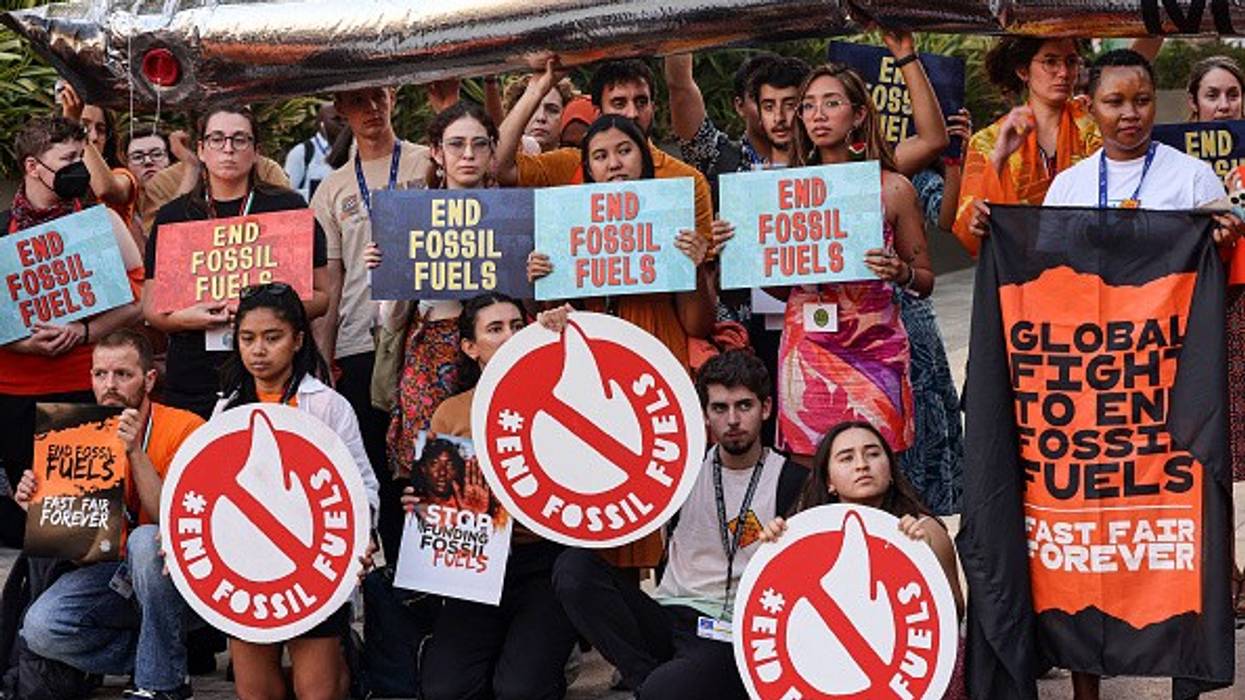
"Nations committed to climate action must reject this weakened proposal," said one campaigner.
The most recent draft text of the agreement world leaders are hoping to reach by the end of the United Nations Climate Change Conference on December 12 does not include any mention of a phaseout of fossil fuels.
Instead, the document released Monday calls for "reducing both consumption and production of fossil fuels, in a just, orderly, and equitable manner so as to achieve net zero by, before, or around 2050 in keeping with the science."
"COP28 is now on the verge of complete failure," former U.S. Vice President Al Goretweeted in response to the release. "The world desperately needs to phase out fossil fuels as quickly as possible, but this obsequious draft reads as if OPEC dictated it word for word. It is even worse than many had feared. It is 'Of the Petrostates, by the Petrostates, and for the Petrostates.'"
"How do we go home and tell our people that this is what the world has to say about our futures?"
An agreement to phase out fossil fuels at COP28 has been a major demand of civil society groups and influential delegations including the European Union and nations especially vulnerable to the climate crisis, according to Reuters. The call comes as nations' current pledges under the Paris agreement put the world on a path for 2.9°C of warming, even as 2023 is almost certain to be the hottest year on record.
Yet there were concerns leading into the U.N. talks that the influence of the fossil fuel industry would undermine an ambitious outcome. COP28 President Sultan Ahmed Al Jaber is also the CEO of the United Arab Emirates' national oil company, and reports emerged that he had used talks surrounding COP28 to push oil and gas deals.
The latest language on fossil fuels comes in the text of the Global Stocktake, a mechanism by which parties to the Paris agreement assess their progress and set new goals. It is one bullet in a list of actions that the draft says nations "could include" in the path to "deep, rapid, and sustained reductions in greenhouse gas emissions."
Other actions in the list include
"The COP28 draft text resembles a disjointed wish list, far from the stringent measures required to limit warming to 1.5°C," Andreas Sieber, associate director of policy and campaigns at 350.org, said in a statement. "The presidency, displaying a troubling lack of leadership, has notably weakened commitments to phasing out fossil fuels and promoting renewables."
Sieber also criticized the lack of urgency in the text's overall language.
"By framing actions as 'could' instead of 'shall,' and with weak language on short-term declines and renewable targets, this draft falls short. Nations committed to climate action must reject this weakened proposal, insisting on transformative changes for a meaningful impact on global warming."
The Alliance of Small Island States, meanwhile, told the Financial Times that the "weak language on fossil fuels was completely insufficient."
Joseph Sikulu, Pacific managing director of 350.org, added, "This week we felt that the goal of phasing out fossil fuels was within reach, but the lack of climate leadership shown by the presidency and the blatant watering down of commitments to a 'wish list' is an insult to those of us that came here to fight for our survival. How do we go home and tell our people that this is what the world has to say about our futures?"
Environmental Defense associate director of national change Julia Levin called the draft text "unacceptable," while Jean Su from the Center for Biological Diversity told The Associated Press that it "moves disastrously backward from original language offering a phaseout of fossil fuels."
"If this race-to-the-bottom monstrosity gets enshrined as the final word, this crucial COP will be a failure," Su said.
Climate campaigners are also concerned that the text opens the doorway to untested technological solutions like carbon capture and storage that can be used to extend the burning of fossil fuels.
"The word 'phaseout' has been phased out."
"It's incredibly dangerous for the fossil fuel industry and its enablers in government to promote the idea that they can keep burning fossil fuels while pulling carbon out of the air or out of the smokestacks with technologies that consistently fail to deliver," Collin Rees, the U.S. program manager at Oil Change International, told New York Times opinion writer Peter Coy before the latest draft was released.
Despite these warnings, one of the suggested actions in the text is "accelerating zero and low emissions technologies, including, inter alia, renewables, nuclear, abatement, and removal technologies, including such as carbon capture and utilization and storage, and low carbon hydrogen production, so as to enhance efforts towards substitution of unabated fossil fuels in energy systems."
"Like the smog-ridden Dubai skyline, the mention of fossil fuels in the final outcome is at best murky, and at worst, dangerous," Cansin Leylim, 350.org associate director of global campaigns, said in a statement. "This outcome leaves the doors wide open to dangerous distractions and false technologies like carbon capture and storage (CCS), which will surely blow us past the 1.5°C planetary limit, and fails to integrate the crucial finance and equitability aspects of the just transition to renewable energy that we need."
Sara Shaw with Friends of the Earth International agreed that "the fossil fuel text is alarmingly weak and opens the door to risky, dangerous CCS/CCUS, hydrogen, nuclear, and carbon removal technologies (geoengineering, or nature-based). These loopholes prolong the fossil fuel era, and delay and distract from any meaningful phaseout."
However, she added there was more going on behind the scenes.
"Countries who claim to be climate champions like the U.S. and E.U. are calling for stronger fossil fuel phaseout text, despite planning massive fossil fuel expansion," Shaw said. "And they are seeking to water down the climate finance provisions (one of the elements of the text which is better than expected) so urgently needed to enable the energy transition in the global South."
Activists are still hoping to strengthen the language before negotiations conclude Tuesday.
"The word 'phaseout' has been phased out," Li Shuo, director of the Asia Society Policy Institute, told AP. "We need to phase in the word phaseout. I think there's still a chance for countries to do so."
Peri Dias, 350.org Latin America representative at COP28, said: "In the coming hours, we will either witness a historic decision for the good of the planet, or one for its end. Are the parties at COP28 going to agree to a rapid and fair elimination of fossil fuels or not?"
Gore concluded: "There are 24 hours left to show whose side the world is on: the side that wants to protect humanity's future by kickstarting the orderly phase out of fossil fuels or the side of the petrostates and the leaders of the oil and gas companies that are fueling the historic climate catastrophe."
"In order to prevent COP28 from being the most embarrassing and dismal failure in 28 years of international climate negotiations, the final text must include clear language on phasing out fossil fuels," he said. "Anything else is a massive step backwards from where the world needs to be to truly address the climate crisis and make sure the 1.5°C goal doesn't die in Dubai."