

SUBSCRIBE TO OUR FREE NEWSLETTER
Daily news & progressive opinion—funded by the people, not the corporations—delivered straight to your inbox.
5
#000000
#FFFFFF
To donate by check, phone, or other method, see our More Ways to Give page.
Daily news & progressive opinion—funded by the people, not the corporations—delivered straight to your inbox.
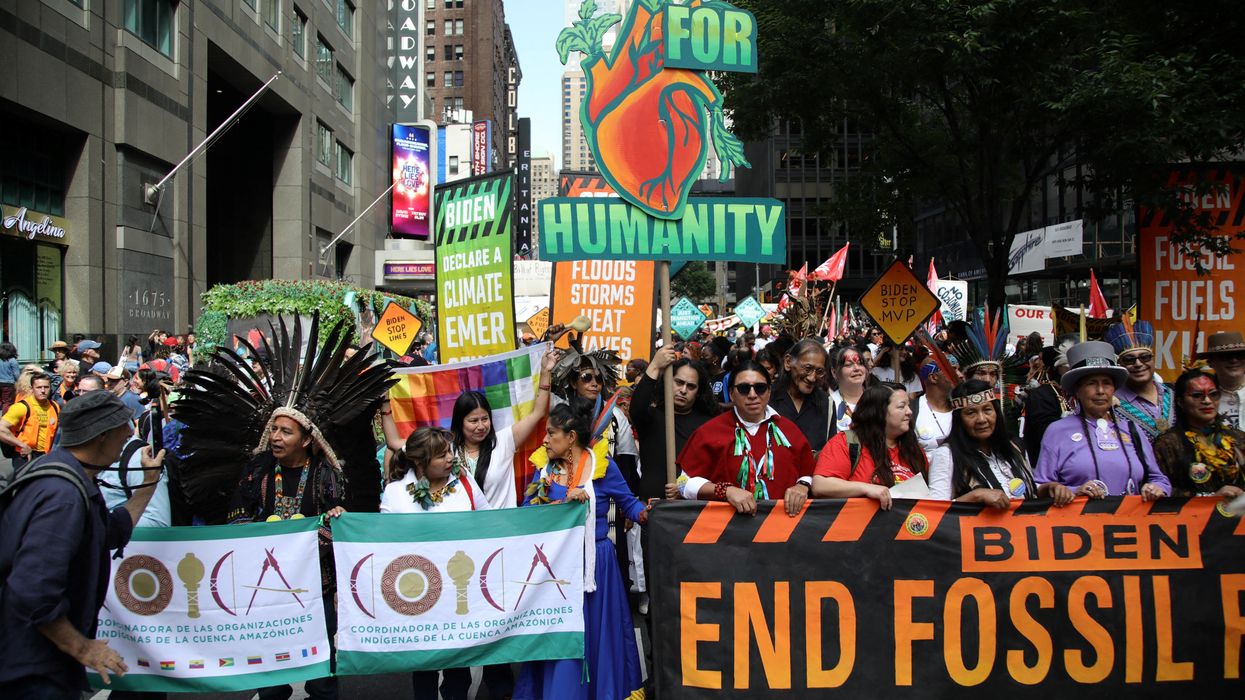
More than a novel, this international public awareness campaign tells the story of how people can rise up and demand change to power our planet in a way that puts human survival before profit.
The apocalypse is not coming. The future is coming, and we don’t yet know what the future holds. Because the future isn’t set yet. It depends on the decisions human beings make right now.
These days, we are seeing more extreme weather events around the world, as the climate crisis escalates. While every individual weather event is a surprise, the overall pattern has long been predicted. Both by our scientists and by our artists. One such artist, Octavia Butler, wrote of a world torn by racism, misogyny, and climate disaster in her 1993 novel, Parable of the Sower.
Lauren Olumina, the protagonist, leads a band of characters to a safe haven on a ravaged planet. Butler had intended to create a Parable series, where the final book focused on climate solutions. Reportedly, she was frustrated in her various attempts to finish the series, because she was unable to envision climate solutions. I find this unsurprising because part of climate disinformation has included obscuring both the problem and all solutions that significantly disrupt the profitability of the fossil fuel industries. Perhaps because she lacked access to this crucial information, Butler never finished the project in her lifetime.
Climate Week was a glimpse of the power that this movement can hold as we move forward.
But a lot has changed since she passed away in 2006. There is a growing climate movement with powerful Black and Indigenous leadership. We have a clear vision of the solutions needed to solve the climate crisis. What we lack is the political will among elected officials and corporate leaders to make the large-scale changes necessary to ensure a livable planet.
And that is where our movements come in. At the Black Hive, we have developed a Black Climate Mandate that lays out the changes needed so that all Black people worldwide can thrive. Ultimately, we believe that our movement for climate justice can be Octavia Butler’s final book—Parable of the Movement. More than a novel, this international public awareness campaign tells the story of how people can rise up and demand change, can build the power to pressure political and industry leaders to divest from fossil fuels and to power our planet in a way that puts human survival before profit. And we don’t just wait for those in power to change—as we build our movement to demand change, we also build structures, networks, and resources for food and energy independence, community care and mutual aid, and climate resiliency.
Meanwhile, in order to ensure a livable future, we need to phase out fossil fuels and other dirty-energy industries, starting with an end to all direct and indirect subsidies and policy incentives these industries receive. As those industries end, we need a just transition for workers—making sure fossil fuel corporations provide retraining and transitioning them to new green jobs, and making sure that they can continue to make a living and support their families as we shift our economy.
We need to prioritize the needs and leadership of those most impacted by the crisis, particularly Indigenous communities. Their local ecological knowledge, lived experiences, and thought leadership are essential to tackling the climate crisis. This includes climate reparations for all frontline communities and workers who are harmed first and worst by both the climate crisis and the polluting industries driving the crisis.
Climate justice is part of a bigger vision of justice. Climate problems and solutions are deeply interconnected with all the other current planetary crises: war, poverty, pollution, forced migration, police and prison violence, and other forms of harm that happen when societies put profit over human safety and survival. All these harms need to be recognized and addressed in all climate policies and climate action strategies.
Recently, the Black Hive participated in New York Climate Week, and over 100,000 people took to the streets. This was an important demonstration to the U.N. Climate Ambition Summit that the people demand change. Our leaders need to listen, and the movement will keep building the pressure until they do.
In Parable of the Sower, the characters find their safe haven. But as the climate crisis escalates, there is no place that can be guaranteed as safe. Now is the time to fight for a bigger picture of justice and safety—one that is worldwide and where no one is left behind. It’s a tall order, and will require a mass movement. Climate Week was a glimpse of the power that this movement can hold as we move forward. Let us aspire to be a Parable of the Movement, Octavia Butler’s final book, the biggest battle in human history, in which—if enough people fight—we can win.
Failing to clearly spell out the connection between protesters’ actions and the existential threats behind them leads to the framing of their demonstrations as merely symbolic at best and hysterical at worst. This blindspot, makes quality reporting impossible.
Tens of thousands of climate protesters gathered in Midtown Manhattan on September 17, kicking off Climate Week as President Joe Biden arrived in New York to speak at the United Nations General Assembly. These protests—some of the biggest since before Covid—had a pointed message, largely directed at Biden himself: End fossil fuels.
The Biden administration has passed historic climate legislation through the Inflation Reduction Act, which seeks to create clean energy jobs, increase investments in renewables and build infrastructure to support resilience in communities most vulnerable to the climate crisis.
At the same time, however, oil and gas production are still expanding. This year, the US exported a record amount of petroleum, and was also the biggest liquefied natural gas exporter in the world. The Biden administration also greenlit the ConocoPhillips Willow Project, a new oil drilling venture in Alaska (Vox, 9/8/23).
Meanwhile, the scientific consensus is straightforward—and bleak. We are at imminent risk of surpassing the internationally agreed-upon threshold of 1.5°C above pre-industrial levels. The Intergovernmental Panel on Climate Change’s 2023 report warned that global emissions need to be cut by almost half by 2030 if we are to meet this goal. The planet’s current 1.1°C increase has already led to more frequent and deadly severe weather across the globe.
The urgency with which we need to bring down emissions is clear. Still, news media muddy the waters, encouraging public apathy by focusing on protesters’ tactics at the expense of their demands.
The piece compared traditional climate marches to more disruptive, but still nonviolent direct action tactics utilized by groups like Extinction Rebellion, Just Stop Oil and Blockade Australia in recent years. Across the world, demonstrators have taken to blocking roads and airport runways, overrunning billionaire-frequented Hamptons destinations, deflating SUV tires, gluing themselves to various surfaces—including the US Open tennis court—and, yes, throwing tomato soup on (glass-protected) Van Gogh paintings.
The piece outlines why many activists feel they need to engage in more extreme demonstrations to gain more attention—by citing a problem it is complicit in:
The rise of disruptive protests is, in part, a reaction to the feeling among some activists that traditional mass actions aren’t effective. Marches—even quite large ones—don’t always get widespread media coverage, limiting their usefulness in garnering attention.
The piece demonstrates just how to perpetuate that problem, offering only one paragraph on protesters’ demands, in the form of a quote from local youth activist Bree Campbell:
“We’re marching to make clear to President Biden that we expect him to uphold his campaign promise for him to be the climate president that we elected,” says Campbell. Those taking part want him “to stop approving fossil fuel projects and leases, phase out fossil fuel production on public lands and waters, and to declare a climate emergency so that he could halt crude oil exports and investments in fossil fuel projects abroad.”
Beyond this statement, there is no acknowledgement of the reality that these demands are not only urgent, but in line with scientific consensus and the UN’s Paris Agreement. Instead, Bloomberg moves on to questioning mass protest marches’ ability to change policy, relying on the expertise of cognitive psychologist Colin Davis, a protest researcher at Britain’s University of Bristol.
“We had 2 million people on the streets [in the UK in 2003], protesting against the invasion of Iraq,” he said. “Obviously, it happened anyway, despite the people coming out against it.”
Davis cited a similar dilemma with Brexit.
The piece would have benefited from some introspection: News media played a crucial role both in disseminating government lies about nonexistent Iraqi weapons of mass destruction that ratcheted up support of the war, and in framing Brexit as a popular anti-establishment rebellion (FAIR.org, 3/22/23, 10/15/21).
Bloomberg spent considerable time analyzing and pathologizing climate activists’ strategies by comparing their movement to the ostensible efficacy of others—including Black militant movements of the 1960s. Yet it spent almost no time explaining the life-threatening conditions that caused activists to develop these strategies in the first place.
Failing to clearly spell out the connection between protesters’ actions and the existential threats behind them leads to the framing of their demonstrations as merely symbolic at best and hysterical at worst. In reality, these protesters’ demand to end fossil fuels is concrete and in line with scientific consensus.
If the media avoid making these clear connections, it won’t matter what tactics protesters use.

Now is the time to keep building momentum and bringing a lot more pressure to bear, because we’ve hardly won yet.
The rain was pouring down hard, but that didn’t seem to deter the big protest crowd gathered outside the Federal Reserve building. Amid the typical Monday morning bustle of Wall Street, we chanted for the Fed to stop fossil fuel financing as cops arrested row after row of protesters blocking the building’s entrances during what ultimately became the largest climate-focused civil disobedience ever in New York City.
We were coming off the 75,000-person March to End Fossil Fuels the previous day: a protest that shattered our attendance expectations as organizers, uplifted our spirits, and landed on the front page of The New York Times the next day. Earlier that week, hundreds of activists and groups like Climate Defenders, Oil & Gas Action Network, Stop the Money Pipeline, and my own, New York Communities for Change, had disrupted two of the largest fossil fuel financiers in the world, shutting down Citi’s global headquarters for a whole morning and halting traffic in front of BlackRock’s global HQ. With Planet Over Profit, a youth-led group I co-founded, we forced the Museum of Modern Art to close for an afternoon because of its ties to dirty fossil fuel investor KKR. And the morning after shutting down the Fed, another dirty financier, Bank of America, found its New York office the site of another act of civil disobedience.
Others reflecting on these protests have noted how this September felt like a potential turning point. The U.S. climate movement enjoyed the biggest revival of street protest since the pandemic. With the march, unlike previous climate mass mobilizations, we were laser focused on calling out a specific decision-maker (President Joe Biden), making it impossible for him to ignore the broad-based, diverse support for our laser-focused specific demand (ending fossil fuels). And when it came to Wall Street, with thousands of white-collar Citi employees unable to get into work for hours, for example, we made it clear that if Citi’s bottom line included profiting off fossil fuels, then that bottom line would not go undisrupted.
If we’re to have any chance of ending fossil fuels, and transitioning to a more just system, we need sustained, committed resistance against these fossil fuel-loving powers that be.
We sent a statement of intent to both Biden and Wall Street: End fossil fuels, or expect resistance. Now it’s time to keep building on that momentum, and bring a lot more pressure to bear, because we’ve hardly won yet.
Politicians continue to approve new fossil fuel permits, and financiers continue to move more fossil fuel financing. It’s not for lack of awareness: These are well-informed elites who know well the scientific consensus that we have already maxed out our carbon budget with existing projects and that our carbon accounts cannot afford any more fossil fuel expansion. Nor do the actual financials necessitate fossil fuels: Power from renewables is now cheaper to produce than power from fossil fuels in many places, and besides, we simply cannot enjoy stable, functional global economies on a planet beset by endless storms and fires, widespread drought and famine, and hundreds of millions crossing borders to flee unlivable conditions.
The simple reason the fossil fuel industry and its enablers won’t change course on their own is because the status quo is working splendidly for them right now. Oil majors have been reporting record-breaking profits, and generally speaking, elites have continued to consolidate their wealth and power within a global political economy still powered largely by fossil fuels. (For instance, in 2015, the richest 1% in the world owned as much as the remaining 99% combined; those state of affairs have only worsened during a pandemic during which those at the top gained trillions in wealth while ordinary people suffered.)
Plus, these planet-wrecking elites, as Andreas Malm writes, “do not worry at the sight of islands sinking; they do not run from the roar of the approaching hurricanes; their fingers never need to touch the stalks from withered harvests; their mouths do not become sticky and dry after a day with nothing to drink.” The climate crisis may be coming for the whole world over at some point—but those at the very top do not currently face many serious consequences, and many of them may assume that they never really will in their lifetimes. Meanwhile, there are fossil fuel lobbies to please, and fossil fuel profits to reap.
So: We’re up against immensely powerful fossil fuel executives and some of the most powerful financiers and politicians in the world. All of them are highly incentivized to maintain the status quo of enabling mass death. If we’re to have any chance of ending fossil fuels, and transitioning to a more just system, we need sustained, committed resistance against these fossil fuel-loving powers that be.
If you are a bank like Citi that continually pours billions into fossil fuels each year: You should not expect to be able to operate and greenwash without having your bottom line impacted and the lives of your business elite constantly disrupted. Your CEOs and execs should expect to be challenged at public events, your offices’ operations should be continually disturbed, your brand and client deals should be scrutinized and protested. If you are Biden, who approves climate bomb after climate bomb, you and your administration should assume there will be disruptions at your public appearances and lagging enthusiasm from your base to turn out to the polls next fall.
What hangs in the balance, after all, is everything we know and love. We want to enjoy safe, stable societies; we want to breathe clean air, drink clean water; we want to live rich, dignified lives uninterrupted by profound climate upheaval. And we won’t be able to do that for much longer on this planet if we don’t force a move away from fossil fuels with serious, sustained pressure.
We don’t live in a world yet in which fossil fuel-loving politicians and capitalists face constant, sustained pressure, direct action, and disruption of business-as-usual. So let’s keep rolling up our sleeves. Let’s keep organizing more people. And let’s keep escalating with more hard-hitting protest to force an end to fossil fuels. If they don’t at the moment have enough incentive to give up their profits to save our lives—well, then let’s create some incentive for them.
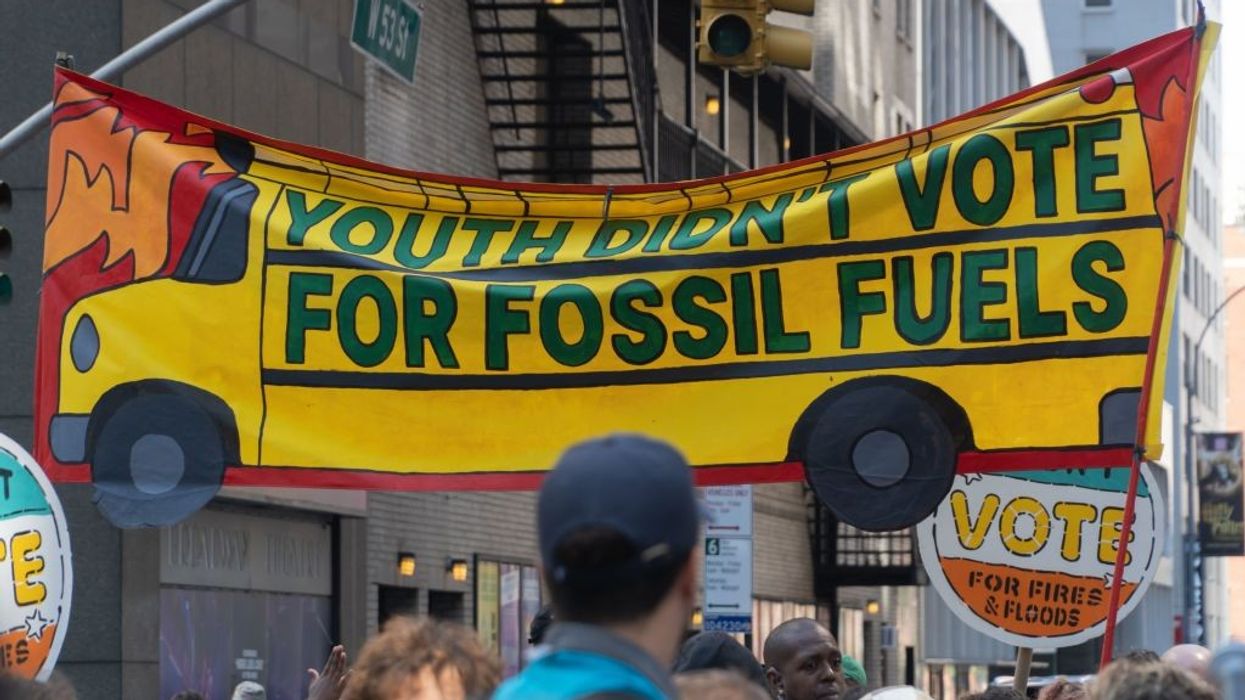
It is past time for our country to acknowledge the fear and the anger that comes with the prediction of 99% of climate scientists that we need to make radical changes in order to allow our young people to survive in the future.
A recent high point for many East Coast climate activists was the amazing march in New York City on Sunday, September 17. I also was a marcher in the huge New York climate march almost a decade ago. This time around, the march was as diverse as the city itself, but another striking aspect of this march was the amazingly creative and excited youth marchers.
I was able to walk along the march on the sidewalk before things really started going, and what I saw was the most colorful, joy filled and transformational presence of people who were not yet adults when the march occurred in 2014. There is a serious reason that Vivek Ramaswamy, the far-right piece of ego running for president, says that our voting age should be 25! I am hearing more serious Republicans discussing 21 as a voting age—three years older than the age when one can enlist in the military.
The MAGA crowd, who don't have any respect for voting rights for others, is happy to disenfranchise the next generation. Young voters are being blocked from voting from colleges by Republicans in order to suppress their voices. We understand that they are the future—from the lawsuits young people are initiating against oil companies, to disrupting events such as the U.S. Open.
So many of the cruel policies punishing women, nonbinary folks, people of color, environmentalists, and generally anyone with a shred of kindness seem to be aimed at youth.
As I observed the march, I saw some of the most colorful, original signs, costumes, body paint, floats, and dancing. Much of the art on view was rainbows, hearts, neon colored, and represented all the images that the far right wants to eliminate. Much of the art was created with a tiny fraction of the single use plastics still sold freely in this country. Greenpeace created an amazing sculpture using all e-waste. Some young people used trashed plastic bottles to make "fish" on sticks that swam through the air. There was some incredible use of papier-mache, body paint, and such original signage.
In walking through this group, I was struck by the joy, the color, the openness of this crowd to all the people, music, books, artwork, that the right wing is trying to ban from our lives. The generation who has come of age in the 21st century is beautifully made up of the many varieties of people who exist—and they are open to and proud of their differences. It seems clear that the book bans, the teacher firings, the petty anger at all the "wokeness" all appear to be an attempt by the far right to prevent the coming up from taking power. So many of the cruel policies punishing women, nonbinary folks, people of color, environmentalists, and generally anyone with a shred of kindness seem to be aimed at youth.
Franklin Roosevelt lowered the age for drafting young men from 21 to 18. For 30 years, there was a campaign to lower the voting age to 18. The anti-war protests of the late 1960's included a demand that those young men who were being used as cannon fodder should have a vote as to foreign policy. In 1971, Richard Nixon signed the 26th Amendment into law giving the vote to 18-year-olds. The 26th Amendment is not going anywhere.
Every time there is a national election, the demographics speak for themselves. As a white 69-year-old who worked tirelessly for Bernie Sanders, who has been a progressive my entire life, I am always astounded to see the terrible voting record of white women my age in the U.S. In the states that voted for Donald Trump, the percentage of older white MAGA voters is terrifying. For example, in Alabama, 80% of white women voted for Trump. The golf cart driving seniors in Florida's huge retirement complex, the Villages, are much more the norm, even though many of those same seniors have grandchildren who are terrified about their future due to the destruction of the climate. I always wonder how these people justify their unlimited, unthinking use of fossil fuels that will create an even less livable world for their grandchildren.
It is past time for our country to acknowledge the fear for the future and the anger that comes with the prediction of 99% of climate scientists that we need to make radical changes in order to allow our young people to survive in the future. The ultimate selfishness of the climate change deniers is overwhelming. As Jimmy Carter was ridiculed for asking people to wear a sweater and turn down the thermostat to save carbon-based fuel, Bernie Sanders was mocked by the media for being the only 2016 debate participant to answer that climate change was the issue of the future. Can you even remember the other Democrats' answers? If we don't step it up, stop extracting fossil fuels, and challenge the cancer of capitalism. all the fears of our amazing younger generation will be realized. I want my grandchildren to have a livable planet and will be working to that end for the rest of my life.
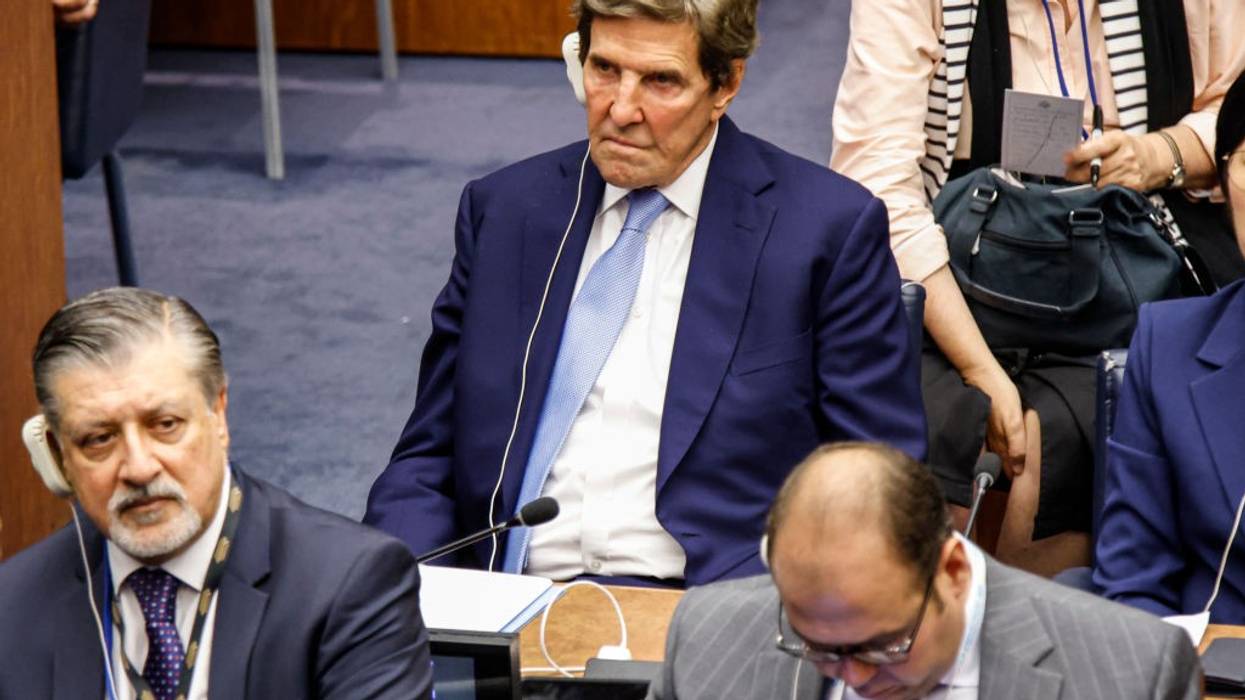
President Joe Biden still has a chance to correct course before COP28.
It was stunning to see U.S. Climate Envoy John Kerry stalking the sidelines of the United Nations’ historic Climate Ambition Summit last week, firmly shut out from the opportunity to speak. The United States isn’t used to being sidelined on the global stage. Indeed it may be the first time in U.N. history that the U.S. was barred from speaking at an international summit.
The U.S. got itself into the climate summit’s “time-out corner” because of its wretched record on fossil fuels. And the stakes couldn’t be higher for President Joe Biden to correct course.
In line with his “Roadmap for a Livable Planet,” U.N. Secretary General António Guterres set strict guidelines for those invited to speak at the summit. Chief among them: concrete plans to phase out fossil fuels.
President Biden can no longer hide his abysmal fossil fuel record behind renewable energy investments. The oil rig in the room has been exposed for all the world to see.
It was that demand that brought us and 75,000 others into the streets on the Sunday ahead of the summit for the “March to End Fossil Fuels.”
After the hottest summer on record and its devastating consequences from Lahaina to Libya, people around the world are waking up to the urgency of ending the extraction and use of oil, gas, and coal, which cause 85% of climate-heating pollution.
That urgency was palpable in Guterres’ opening remarks as he declared to leaders that “the future of humanity is in your hands.”
Indeed, Biden has ample tools at hand to confront fossil fuels and protect humanity. But many of the president’s actions have done more to boost the “foot-dragging, arm-twisting… naked greed of entrenched interests” that Guterres railed against.
Despite its climate rhetoric, the U.S. is the biggest oil and gas producer in the world and the number one exporter of gas.
At a time when the narrow path to a stable climate demands no new fossil fuel expansion, the United States is also the world’s largest expander of oil and gas. The U.S. alone accounts for a full third of planned oil and gas expansion from now through 2050, according to the groundbreaking “Planet Wreckers” report from Oil Change International.
Another new study from Jeremy Symons finds that greenhouse gas emissions from U.S. fossil fuel exports are expected to undermine emissions reductions from the Inflation Reduction Act.
After New York’s historic summit and march, President Biden can no longer hide his abysmal fossil fuel record behind renewable energy investments. The oil rig in the room has been exposed for all the world to see.
It’s telling that while Kerry sat on the sidelines, the only U.S. leader invited to speak was California Gov. Gavin Newsom, whose administration has ramped down oil and gas permitting and just launched a landmark lawsuit against Big Oil. The typically staid U.N. hall erupted in applause when Newsom declared, “This climate crisis is a fossil fuel crisis.”
All this is testament to the incredible strides we’ve made as an advocacy community on fossil fuels. The U.N. Secretary-General holding this summit with its laser focus on fossil fuels is a response to years of vocal clamoring by low-lying nation-states like Tuvalu and Vanuatu, climate scientists, advocacy groups, frontline leaders, and mass mobilizations that have relentlessly pushed the focus from vague ‘climate action’ onto ending oil, gas, and coal.
We have top-down pressure from the U.N. chief, and bottom-up pressure from people around the world who mobilized in 700 actions from the Philippines to Germany, Nepal to the North Pole—all culminating in 75,000 marchers joyfully and resolutely pounding the pavement in New York.
Biden is clearly feeling the pressure. The same day as the summit, the president announced the creation of the American Climate Corps.
Our friend and fellow march organizer, 18-year-old Keanu Arpels-Josiah, astutely pointed out that while it doesn’t address fossil fuels, the move shows “Biden clearly knows he can use his executive powers to take bolder steps on climate.”
In the two months between now and the COP28 climate summit in Dubai, Biden needs to use those powers to make up for drastic missteps and lost time.
The president doesn’t control everything, but he can do much more to protect people and our planet—all without Congress. Essential actions for Biden to take now include:
Biden must also come to COP28 in December with commitments to an updated Nationally Determined Contribution that includes a commitment to stopping all new fossil fuel expansion and phasing out existing production. It should also include a recognition of the greenhouse gas pollution emitted by U.S. fossil fuel exports—a hefty line item that gets put on other countries’ climate balance sheets while evading the U.S.’ emission totals.
Not only will these actions make bold leaps toward a livable future for all, they’ll be hugely beneficial to the economy. The International Energy Agency’s latest report finds that staying below 1.5°C of warming will save $12 trillion worldwide and create more jobs than are lost.
So what is President Biden waiting for to become the global climate leader the world desperately needs?
Taking urgent actions to end fossil fuels can help Biden save face on the world stage and secure his legacy, but he should take them to save people and wildlife from climate catastrophe.

The Dirty Debt Deal did not make MVP a Done Deal; as Seeger sang, “We can never give up hope.”
Last week’s
climate march and actions, coupled with the annual Farm Aid concert, brought back fond memories of Pete Seeger. Ten years ago, at age 94, Pete dragged his long, lean, tired body 130 miles upstream from his Beacon, New York, home to the 2013 Farm Aid concert in Saratoga. His sole purpose for going was to sing an anti-fracking verse he had just written to Woody Guthrie’s “This Land.”
Pete had long been a part of New York’s powerful grassroots anti-fracking movement. He would show up every January, banjo in hand, at Albany’s Empire State Plaza, where a raucous crowd always greeted politicians and big wigs on their way to hear Andrew Cuomo deliver his annual State of the State address. The Saratoga Farm Aid concert was Pete’s last big hurrah. Two months later, he joined Arlo and family, as he always did, at Carnegie Hall. But he needed two canes to walk onstage, and he had to sit throughout. His mind was still sharp, but the rest of his body was giving out. Two months later, it did.
But that September night in Saratoga was magical. It almost didn’t happen. It was touch and go whether Pete’s daughter Tinya, her parents’ caregiver and gatekeeper, would allow it. She was told that if she didn’t think he was up to it, she needn’t say more. But if she thought he was, it would definitely be great for the anti-fracking movement and likely for him, personally, as well. And it certainly was, on both counts.
If Pete was still alive and able, I think he would have also made his way down to Virginia and West Virginia to witness and speak out against the Mountain Valley Pipeline (MVP).
No one in the audience knew Pete would be there, and when he walked out on stage he got the warmest of welcomes. He could no longer really sing himself, but he relied on his specialty—getting the audience to sing. Pete’s hearing was pretty well shot, too, and things got a little chaotic when he and Neil (who was thoroughly enjoying the moment) sang different verses at the same time. Then Pete raised his hand, hushed the crowd, and said “I’ve got a verse you’ve never heard before.”
New York is my home
New York is your home
From the upstate mountains
Down to the ocean foam
Then came the part about diversity, which Pete championed his whole life.
With all kinds of people
Yes, we’re polychrome
And then the kicker—
New York was meant
To be frack-free
The crowd erupted. Rolling Stone called it the high point of an always tremendous Farm Aid concert.
The following summer Jackson Browne came to Albany. Jackson was (and is) against fracking, and he was asked to pay tribute to Pete by singing “This Land” with Pete’s verse. Word came back that he wouldn’t sing “This Land,” but he would add Pete’s verse to “I Am A Patriot,” which caused some head scratching. How was he going to pull that off? Turns out, masterfully. And in hindsight it was no doubt very thoughtful on Jackson’s part, a nod to all that Pete had to put up with back in the Joe McCarthy era. Jackson introduced the verse by saying, “Pete was one of the greatest American songwriters, certainly one of the greatest Americans ever.” For sure.
A few months later New York banned fracking.
Pete was a world famous guy who could be seen holding a sign on his hometown street corner during a Saturday morning protest with neighbors. He sang about war and peace, but he also said something like, “How can you save the world if you can’t even clean up the river in your own backyard?” And so he built a boat called the Clearwater and founded an organization with the same name to do just that—clean up the Hudson River.
If Pete was still alive and able, he certainly would have been at the climate march in NYC. I think he would have also made his way down to Virginia and West Virginia to witness and speak out against the Mountain Valley Pipeline (MVP).
A few weeks ago, Denali Sai Nalamalapu, a frontline organizer trying to stop MVP, wrote a very good article asking why so many people would be going to the NYC climate march when so few were going to Appalachia to protest MVP. The main reason may be that most people erroneously believe MVP is a lost cause, which isn’t surprising because mainstream media, by and large, has said it is. But the Dirty Debt Deal does not mean that MVP is a done deal.
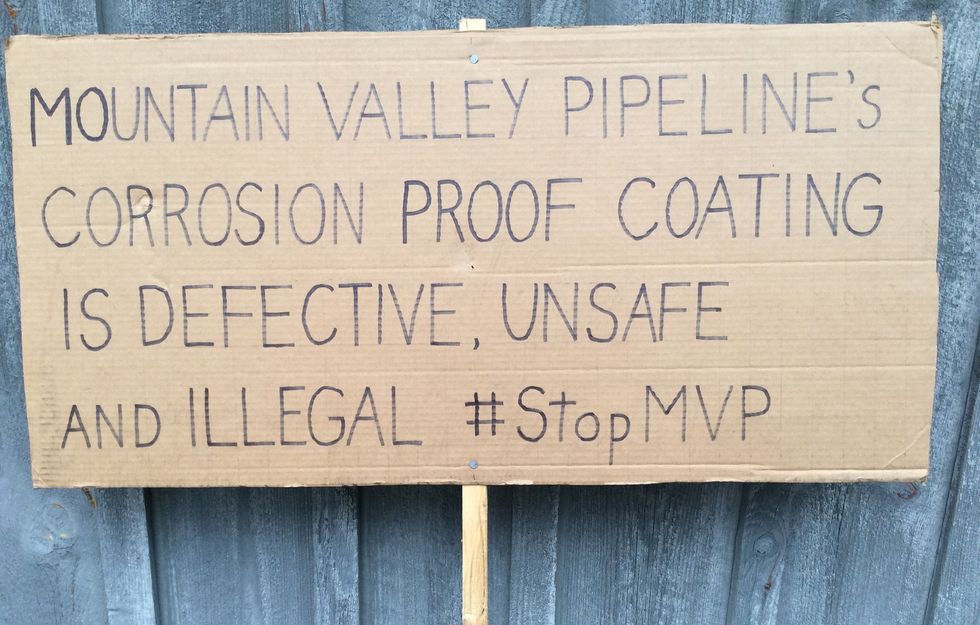
Even MVP’s own lawyer said that the debt deal does not prevent bringing legal claims as long as they are outside of the permitting process. MVP is violating a 52-year-old law that has nothing to do with the permitting process. It says that ALL pipe MUST have a corrosion-proof external coating that is “sufficiently ductile to resist cracking.” The reason is simple and obvious. Cracked corrosion-proof coating is an oxymoron.
MVP’s coating is no longer ductile (meaning flexible) enough to resist cracking because it has sat out in the sun for over six years, 12 times longer than the coating manufacturer recommends. Even a senior MVP vice president, testifying in court 68 MONTHS AGO, during an eminent domain hearing, said that they needed to quickly get the pipe in the ground so that the sun wouldn’t deteriorate the coating (p 134). If you had to take a really important medicine to prevent a really bad health problem, would you take one that expired six years ago? Adequate corrosion-proofing is critical for gas pipelines. We recently saw how inferior materials can lead to disaster. People have died due to explosions caused by corroded pipe. MVP is a particularly dangerous pipeline. It’s huge (42-inch diameter). It will be able to operate under extremely high pressure (1,480 pounds per square inch). And it is being built up and down very steep terrain that is prone to landslides.
Unless and until MVP pipe coating is thoroughly and independently tested in a transparent manner, test results of Keystone XL (KXL) pipe coating, which also sat out in the sun for years, should be what guides decision making. Every sample of KXL coating cracked when subjected to a flexibility test. They all failed the “sufficiently ductile to resist cracking” legal requirement. And no less than a KXL pipeline manager said that the coating can’t be fixed in the field. He said it required shipping the pipe back to the factory where it could be properly stripped, cleaned, and recoated.
The Pipeline and Hazardous Materials Safety Administration (PHMSA) recognizes that MVP has coating (and other) problems. It sent Equitrans, the company building MVP, a Notice of Proposed Safety Order ( NOPSO) on August 11. NOPSOs are rare. Only two have been issued this year and, on average, only 2.7 have been issued yearly for the past decade.
The NOPSO said that MVP (Equitrans) could request an informal consultation with PHMSA to discuss the proposed safety order. If that consultation results in an agreement between the parties on a plan and schedule to address each safety risk identified, then PHMSA would issue a consent order outlining the terms of the agreement. If an agreement is not reached, then MVP can request a formal hearing. Following the hearing, if the associate administrator finds MVP to have a condition that poses a pipeline integrity risk to the public, property, or the environment, the associate administrator may issue a final safety order. PHMSA’s associate administrator for pipeline safety is Alan K. Mayberry, the senior federal career official for pipeline safety in the United States. The day after the NOPSO was sent, MVP asked for a consultation and reserved the right to ask for a hearing. The NOPSO said that all material MVP submits in response to the enforcement action would be subject to being made publicly available. So far, almost seven weeks since the NOPSO was sent, there has been no further information released to the public. One can only imagine what kind of pressure is being applied to career public servants at PHMSA by higher up PHMSA political appointees, Equitrans, and politicians like Sen. Joe Manchin (D-W.Va.).
Equitrans, by the way, was responsible for last year’s biggest U.S. climate disaster, a methane leak that it was unable to stop for 13 days. The leak was caused by… corrosion.
So let’s hope that Mr. Mayberry, eastern regional director Robert Burrough, and others at PHMSA are real serious about safety, and that some lawyer or environmental organization is ready to file suit concerning the “sufficiently ductile to resist cracking” rule, if need be.
What comes to mind when thinking about Joe Manchin and MVP is that old Pete Seeger song:
Well, I’m not going to point any moral,
I’ll leave that for yourself
Maybe you’re still walking, you’re still talking
You’d like to keep your health.
But every time I read the papers
That old feeling comes on;
We’re, waist deep in the Big Muddy
And the big fool says to push on.
But I also think of one of his most inspiring songs: “God’s Counting On Me, God’s Counting On You:”
When there’s big problems to be solved
Let’s get everyone involved
and
When we work with younger folks
We can never give up hope
President Joe Biden needs to think more about these younger folks’ future when he considers approving new fossil fuel infrastructure, and he sure shouldn’t let any pipelines get built that might blow up in their backyard or next to their school.

The world has changed in the seven centuries since Dante, but human nature hasn’t.
“Humanity has opened the gates of hell,” United Nations Secretary-General António Guterres said in his welcome to world leaders at the first ever UN Climate Ambition Summit, convened during this year’s UN General Assembly. “Horrendous heat is having horrendous effects. Distraught farmers watching crops carried away by floods, sweltering temperatures spawning disease and thousands fleeing in fear as historic fires rage. Climate action is dwarfed by the scale of the challenge.”
Guterres was likely invoking Dante’s epic medieval poem, The Inferno. In it, Dante describes being led by the Greek poet Virgil through the nine circles of hell after passing through gates bearing the warning, “Abandon all hope, ye who enter here.”
Given the increasing frequency and intensity of climate-driven extreme weather disasters, Guterres’ reference to The Inferno is frighteningly timely; we are entering something akin to the nine circles of catastrophic climate change. Yet, despite what Guterres rightly describes as “the scale of the challenge,” many people around the world are refusing to abandon hope. Climate activists, scientists, water and land defenders and others who deeply care about the future of the planet are stepping up, from the frontlines and fencelines of impacted communities to the heart of global capitalism on Wall Street.
In Dante’s descent through the nine circles of hell, he portrayed what he saw as the great sins, including gluttony, greed, fraud and treachery. He might have been describing the fossil fuel industry.
Last Sunday, an estimated 75,000 people marched through Manhattan, rallying near the United Nations headquarters. Though it was a message to world leaders, the banner on the rally stage read, “Biden: End Fossil Fuels.”
“We need to have leaders understand: Get out of fossil fuel now,” Mary Robinson, former president of Ireland and chairperson of the Elders, an independent group of global leaders founded by Nelson Mandela, said at the rally news conference. “We’re in a climate and nature crisis, and we have to move much more rapidly…all governments are not doing enough. But those most responsible are not doing nearly enough: the United States, the European Union, but also countries, big emitters like Russia, China, India, Saudi Arabia.”
The march was accompanied by a series of direct actions, with 149 protesters arrested outside of New York’s Federal Reserve Bank, as part of a growing movement challenging the financial backers of the fossil fuel industry.
“Climate chaos is not in some distant future,” Renata Pumarol, organizer at Climate Defenders, said on the Democracy Now! news hour. “The only way to stop the fossil fuel industry is to stop the financing of fossil fuels. That’s why this week hundreds of activists targeted the financiers of fossil fuels, like BlackRock, KKR, Citibank, and Bank of America.”
Among the many protests, activists shut down MoMA, the Museum of Modern Art, for its close connection to its billionaire patron, Henry Kravis, cofounder of Wall Street investment firm KKR. Among the chants at the many protests was, “We need clean air, not another billionaire!”
Many activists, born after the UN’s climate negotiations began in the early 1990s, feel the UN process has been captured and corrupted by fossil fuel interests.
This year’s annual UN climate summit is not doing much to discourage that perception. COP28, the 28th Conference of Parties to the climate negotiations, will be in Dubai, in the United Arab Emirates, a petrostate with no press freedom and where protests are banned. The president of this year’s COP is Sultan Ahmed Al Jaber, CEO of the Abu Dhabi National Oil Company.
Marta Schaaf of Amnesty International said recently, “The UAE’s priority at COP28 appears to be greenwashing its fossil fuel expansion plans and massaging its own reputation…to avoid discussion of its dismal human rights record and continuing abuses.”
UN Secretary General Guterres said at the Climate Ambition Summit, “The move from fossil fuels to renewables is happening – but we are decades behind,” “We must make up time lost to foot-dragging, arm-twisting and the naked greed of entrenched interests raking in billions from fossil fuels.”
In Dante’s descent through the nine circles of hell, he portrayed what he saw as the great sins, including gluttony, greed, fraud and treachery. He might have been describing the fossil fuel industry. New documents confirm Exxon and other oil companies have known for decades that fossil fuels were dangerously heating the planet. In response, they financed and spread climate disinformation, and lobbied to derail legislative and policy solutions to the climate emergency.
The world has changed in the seven centuries since Dante, but human nature hasn’t. It will take concerted, global grassroots climate action to ensure a just transition to a green economy, containing the inferno and slamming shut the gates of hell.
Despite living through the hottest summer in history, as well as wildfires, tropical storms, and rapidly warming oceans, the news media continues to be outdone by popular culture when it comes to elevating and explaining the climate crisis.
The news media needs to stop treating climate change as a niche topic—and start treating it as the most important story of our time.
The climate crisis has become inescapable in much of what we see, hear, and read. Don’t Look Up spent weeks as the most-streamed movie ever on Netflix. Pop star Billie Eilish sings about hills burning in California. At the bookstore, climate fiction has become a genre of its own, while Jeff Goodell’s The Heat Will Kill You First, a harrowing nonfiction account of what life on a warming planet will mean, is entering its second month on the New York Times bestseller list.
And where is journalism in all of this? Despite living through the hottest summer in history, as well as wildfires, tropical storms, and rapidly warming oceans, the news media continues to be outdone by popular culture when it comes to telling the most urgent story of our time. Inexplicably, climate change remains a niche concern for most mainstream news outlets. Most American TV coverage of this summer’s hellish weather did not even mention the words “climate change,” much less explain that the burning of oil, gas, and coal is what’s driving that hellish weather. Too many newsrooms continue to see climate as a siloed beat of specialists.
"Every newsroom in every community needs to think about climate change not as a beat but as a through line involving everything we do. No corner of the newsroom is exempt—not business or culture, not sports or city hall."
There are, of course, notable exceptions. The Guardian, for example, has long delivered abundant science-based, comprehensive coverage of the climate crisis as well as its solutions, as have other big global outlets such as the AFP news agency and Al Jazeera. But those outlets, as excellent as they often are, are among the outliers; much of the rest of media—particularly television, which, even in today’s digital era, remains the leading source of news globally for the largest number of people—struggle to find their climate footing.
We wish it were otherwise. As founders of Covering Climate Now, a global journalism collaboration formed to break the “climate silence” that long prevailed in the media, we’ve been working to help our colleagues throughout the news business amp up their coverage of the climate story.
In 2019, the media’s climate silence began to break, and in the past four years, we’ve seen encouraging successes: In the United States, major outlets including The Washington Post now treat climate change as a subject to cover every day and not solely as a weather story. Telemundo 51, a Spanish-language TV station in Miami, is pursuing an “all of newsroom” approach that encourages reporters on every beat to talk about climate change, including its solutions. Overseas, France Télévisions (France’s counterpart to Britain’s BBC) has jettisoned traditional weathercasts in favor of a daily “weather-climate bulletin,” where viewers can track global warming in real time as an eight-digit electronic counter shows how much today’s temperatures exceed the preindustrial average. (As of September 12, the number was 1.19829708 degrees Celsius.)
These mold-breaking innovations are notable, but they remain exceptions. Dramatic changes in climate have made increased news coverage of extreme weather unavoidable. But explaining the climate connection to extreme weather is a different task. News coverage needs to start systematically pointing out the links between changes in the weather and the decisions being made by industry, and government, that have overheated the planet.
As journalists, we have to do better. The broad, general public needs to understand what is happening, why it matters, and, above all, that they can help fix it—for example, by voting, by not buying unsustainable products, and by talking to friends and family about doing the same.
Journalism is at its best when it effectively explains and connects the dots between seemingly disparate events. That means, for instance, learning lessons from how the media covered Covid—also a sprawling, complicated story dictated by science. Nobody in the media debated the need to dedicate resources to helping audiences understand Covid and then playing the story big. Most outlets ran multiple Covid stories every day, which helped even casual news consumers understand that something important was happening. Journalists grounded our coverage in science, but we didn’t silo it on the science desk: We covered Covid as a health story, a politics story, a business, education, and a lifestyle story. And we talked not only about the problem but also about its solutions (e.g., masking, social distancing, vaccinations).
Climate coverage could take the same approach. Every newsroom in every community needs to think about climate change not as a beat but as a through line involving everything we do. No corner of the newsroom is exempt—not business or culture, not sports or city hall.
On the national level, journalism has to figure out how to make climate change central to our politics coverage. Next year will bring elections in the US, the UK, the European Union, India, Indonesia, Mexico, and Egypt that will have profound effects on the prospects for global climate action. Can politics reporters and editors scale back their fixation on horse-race coverage and instead provide the kind of coverage that voters need to make informed choices? Election coverage should help audiences understand what the candidates will do about the climate crisis if elected, not just what they say. It should hold candidates accountable not by asking them (as Fox did at the first US Republican debate last month) whether they believe in climate change but rather, “What is your plan to deal with the climate crisis?”
Overall, we also need much more and better coverage of climate solutions. Our colleagues at the Solutions Journalism Network have rightly criticized news coverage that talks only about what’s wrong. Understanding a problem is important, of course, but telling the whole story also requires examining how that problem might be fixed.
What else does “more and better” climate coverage mean? We expect some answers to emerge this week at “Climate Changes Everything: Creating a Blueprint for Media Transformation,” a conference at the Columbia Journalism School in New York cosponsored by Covering Climate Now; our founders, the Columbia Journalism Review and The Nation, our lead media partner, The Guardian; and the Solutions Journalism Network. Reporters and editors from news outlets worldwide—large and small, commercial and nonprofit—will chart a course for how journalists everywhere can tackle the climate story in ways that drive attention and impact and highlight solutions and justice. The assembled journalists will draw lessons and inspiration from some of the best climate coverage of the past year, as exemplified by winners of the 2023 Covering Climate Now Journalism Awards, which were just announced. (The conference will be livestreamed and recordings will remain available.)
With the planet on fire, more and better news coverage is itself an essential climate solution. Only when the general public understands what is happening, why, and what needs to be done can enough people compel governments and corporations to change course. Many news outlets have made significant progress in recent years. But the news industry as a whole is still not matching the scale of the crisis with the kind of coverage that’s required. Until that happens, journalism is letting down our readers, viewers, and listeners—and letting Netflix and Billie Eilish handle a job that’s ours to do.

Elected officials should stand against the powerful—not with them—when the powerful are obstructing reforms badly needed by working people and the planet.
I was one of the tens of thousands of participants at Sunday’s “March to End Fossil Fuels” in New York City, an inspiring protest that was very much powered by the young and people of color, with indigenous activists at the head of the march.
Besides targeting the fossil fuel industry, the multiracial and multigenerational protest focused on a single individual: Joe Biden.
The president’s name was on most of the placards, including the most prevalent one -- “Biden: Declare a Climate Emergency.” Many other pre-printed signs zeroed in on the president, for example: “SCIENTISTS TO BIDEN: END FOSSIL FUELS” and “BIDEN: OUR FUTURE IS ON FIRE” and “I WANT A FOSSIL FREE PRESIDENT.” There were homemade signs as well, from “PRESIDENT BIDEN: STOP MAKING IT WORSE!” to “F**k Joe Biden.” Young activists handed out thousands of stickers alluding to Biden’s broken promises: “I DIDN’T VOTE FOR FOSSIL FUELS.”
The march culminated at a rally not far from United Nations headquarters, where speaker after speaker denounced or criticized President Biden. He was condemned for saying he wouldn’t join other world leaders at this week’s UN Climate Ambition Summit in New York. He was repeatedly criticized for not using his enormous executive power to address the crisis. He was slammed for his recent reversals on fossil fuels: more drilling in the Gulf of Mexico, the massive Willow drilling project on Alaska’s North Slope, the new LNG export facility in Alaska, and the Mountain Valley Pipeline in Virginia and West Virginia.
One of the first speakers was an African American climate justice activist from Louisiana, who began her talk by denouncing Biden for his “bald face lie” that he’d already declared a climate emergency. She warned of trouble at the ballot box if he didn’t shape up.
With Biden on virtually every marcher’s mind—whether mildly disappointed in him or fully outraged—there was one speaker who didn’t single out the president: Congresswoman Alexandria Ocasio-Cortez. I'm sure I wasn’t the only activist present who noticed the lack of more direct and forceful criticism.
The march culminated at a rally not far from United Nations headquarters, where speaker after speaker denounced or criticized President Biden.
Don’t get me wrong. AOC delivered a wonderful, rousing, militant speech. People roared their approval when she was introduced, and the crowd loved it when she demanded “urgency” on the climate issue, when she reminded folks that she’d introduced the Green New Deal in 2019, and when she said that the transition to a renewable-energy economy must be “public, democratically controlled” so we don’t “go from oil barons to solar barons.” After she finished her six-minute talk, the crowd chanted “AOC, AOC, AOC.”
But she did not focus on Biden in her speech, nor specifically criticize any of his recent climate reversals. There was only a general reference to “the United States continuing to approve a record number of fossil fuel leases” and broad call for change from “our leaders, from President Biden to the UN General Assembly, to all of our elected officials.”
What’s worse, Ocasio-Cortez has actually endorsed Joe Biden for reelection. She did that early, back in July, seven months before the first Democratic primary. AOC’s endorsement was lukewarm—she said she was supporting Biden for re-election “given that field” of Biden, RFK Jr., and Marianne Williamson. “I think he’s done quite well,” said AOC, “given the limitations that we have.” Her comments led to headlines like this from AP: “Ocasio-Cortez endorses Biden’s reelection campaign, sending a strong signal of Democratic unity.”
But today there is no Democratic unity, certainly not among Democratic voters—most of whom keep telling pollsters that they want a different candidate to lead the party in 2024.
In November 2018, when Rep.-elect Ocasio-Cortez joined Sunrise protesters as they occupied the office of Nancy Pelosi on behalf of a Green New Deal, she was positioning herself as a legislator more at home with movement activists than with Democratic leaders. She was signaling her belief that making demands brings more change than making friends. That even elected officials should stand against the powerful—not with them—when the powerful are obstructing reforms badly needed by working people and the planet.
I know AOC’s role as a legislator is different than our roles as activists. But given that President Biden has gone in reverse on an issue Ocasio-Cortez is so deservedly identified with—the climate crisis—maybe it’s time for her to shift into reverse and withdraw or suspend her endorsement of Joe Biden.
Correction: The original version of this column said that Rep. Ocasio-Cortez did not mention Biden in her speech at Sunday’s climate rally, which was inaccurate. There was a reference to demanding change of “our leaders, from President Biden to the UN General Assembly, to all of our elected officials.”

It is more important than ever for moms to continue doing what they have done throughout history: build a better world for our children.
The following is part of a series of opinion pieces Common Dreams is publishing in the lead-up to and aftermath of the March to End Fossil Fuels on Sunday, September 17 in New York City. Read the rest of the series and our complete coverage here.
Throughout our nation's history, mothers have been at the forefront of social change. From Anna Jarvis, the inspiration for Mother's Day, who pioneered the public health movement in the U.S. after losing eight children, to Mamie Till who sought justice for her son, catalyzing the civil rights movement, to Candace Lightner who created Mothers Against Drunk Driving (MADD) just four days after her own daughter was struck by a drunk driver, mothers have continuously channeled their anger, fear, pain, and most importantly, their love for their children to fight for a better world.
This weekend, mothers from around the nation gathered for the March to End Fossil Fuels to demand an end to a growing, global threat to their children's health, lives, and future: climate change.
Mothers have had enough with corporations profiting and elected officials serving them instead of addressing the real human cost of climate change. The impacts of this greed and lack of concern for human life can be felt now. Asthma and cancer are rampantly rising in at-risk communities positioned near fossil fuel pollution, with low income communities and communities of color disproportionately bearing the brunt of the exposure and harms. The latest research shows that rising levels of global particulate matter pollution—caused by wildfires, the combustion of fossil fuels, and other factors—are cutting 2.3 years off of the average human's life expectancy, comparable to the impact of smoking. More than 100 million Americans were exposed to extreme weather conditions this summer, including record heat, deadly fires, and disastrous floods. Climate anxiety is rising, and kids and young adults perceive they have no future or that humanity is doomed.
Concerned mothers, grandmothers, and other caregivers of children are fed up with the status quo and refuse to allow the threat to our children's lives to continue to be ignored.
In fact, last month the United Nations affirmed these fears that the climate, biodiversity, and pollution crises present "an urgent and systemic threat to children's rights globally." Based on consultations with over 16,000 children worldwide, the U.N. Committee on the Rights of the Child updated the 1989 Convention on children's rights to say that there is an urgent need to address the "triple planetary crisis" and to explain "how children's rights under the Convention on the Rights of the Child apply to environmental protection, and confirms that children have a right to a clean, healthy, and sustainable environment."
UNICEF reported in 2021 that 240 million children are "highly exposed" to flooding in coastal areas, 400 million are exposed to cyclones and hurricanes, 820 million are exposed to extreme heat, and 1 billion are exposed to "exceedingly high levels of air pollution." We expect this to now be even higher in 2023. Approximately 1 billion children worldwide are at "extremely high risk" of being exposed to potentially deadly environmental and climate shocks. The organization proclaimed that the climate crisis is a child's rights crisis, meaning to me that it is more important than ever for moms to continue doing what they have done throughout history: build a better world for our children.
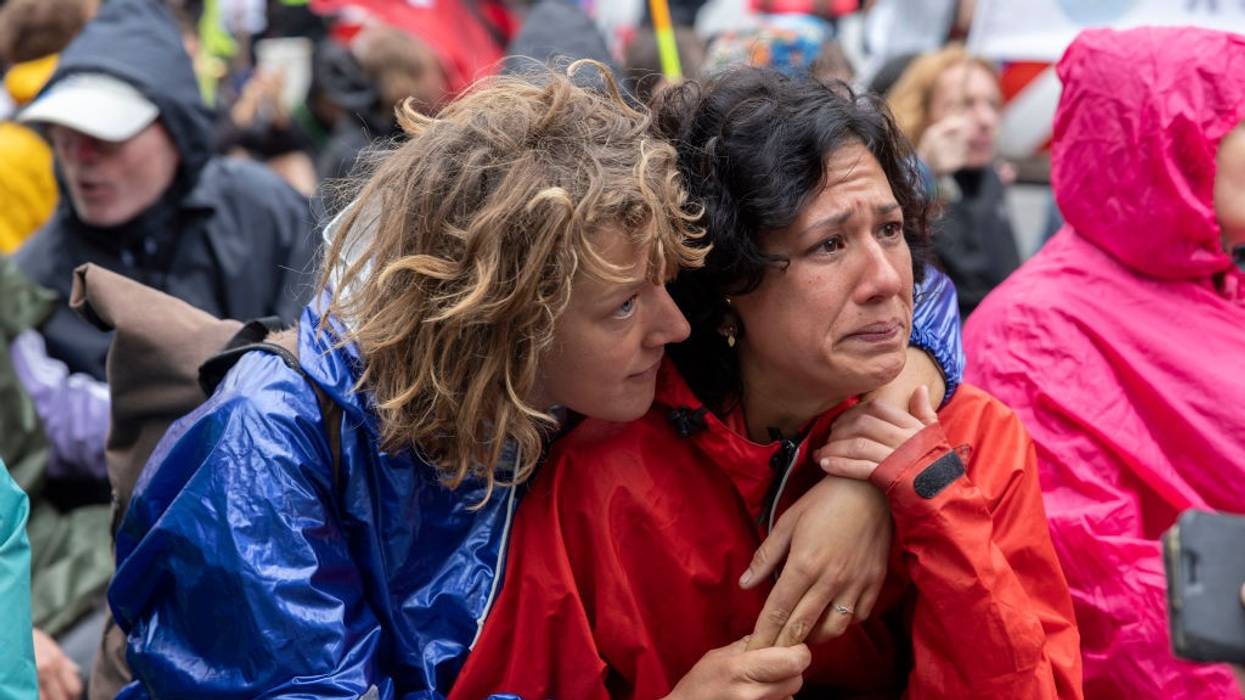
Concerned mothers, grandmothers, and other caregivers of children are fed up with the status quo and refuse to allow the threat to our children's lives to continue to be ignored. Change needs to happen now! That is why over the weekend, thousands of activists, mothers, youth, politicians,and everyday concerned citizens of Earth joined together to march outside of the United Nations and call on President Joe Biden to end the expansion of fossil fuels. Over 150 members of Mothers Out Front from Colorado, Massachusetts, Virginia, New Jersey, and New York, an inclusive movement where mothers' voices are front and center, showed up, joining over 10,000 participants to voice their concerns and demand change.
As world leaders plan to gather on September 20 for the U.N. Climate Ambition Summit, our fight continues. America is the largest producer of oil and gas in the world, and Biden must use the privilege of his unparalleled position as United States president to lead the world toward cleaner, less polluting energy options and eliminate the danger of fossil fuels.
An immediate and just transition to a more sustainable future can be achieved if President Biden and world leaders:
1. STOP FEDERAL APPROVALS for new fossil fuel projects and repeal permits for climate bombs like the Willow Project and the Mountain Valley Pipeline;
2. PHASE OUT FOSSIL FUEL DRILLING on our public lands and waters;
3. DECLARE A CLIMATE EMERGENCY to halt fossil fuel exports and investments abroad, and turbo-charge the build-out of more just, resilient distributed energy (like rooftop and community solar); and
4. PROVIDE A JUST TRANSITION to a renewable energy future that generates millions of jobs while supporting workers' and community rights, job security, and employment equity.
We mothers have not given up hope. A livable future is possible. If our nation's leaders, including President Biden, take real action by declaring a climate emergency and creating change that benefits the people over corporate greed, we can build a new legacy. One where a just and safe future for our children, grandchildren, and planet is not a vision but a reality, so that mothers no longer have to live in fear of what tomorrow's climate chaos may bring. Mothers will continue to fight for the lives of our loved ones, not backing down until we have policies that protect all children across the globe.