

SUBSCRIBE TO OUR FREE NEWSLETTER
Daily news & progressive opinion—funded by the people, not the corporations—delivered straight to your inbox.
5
#000000
#FFFFFF
To donate by check, phone, or other method, see our More Ways to Give page.
Daily news & progressive opinion—funded by the people, not the corporations—delivered straight to your inbox.
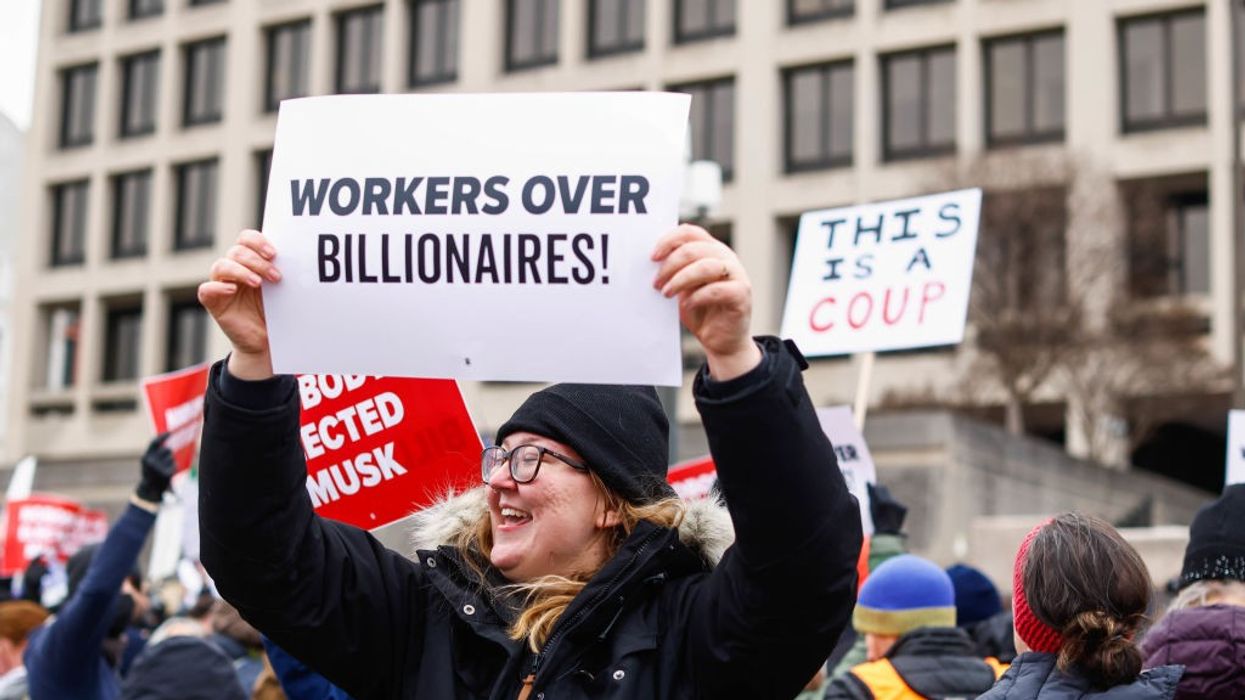
The prevailing issue that demands consensus is the economic exploitation and deprivation of our economic model for working people of all demographics.
The oligarchs are laughing. The corporatists are laughing.
They are laughing at working people as the big con continues. They are laughing at the corporate Democratic Party whose genetic code lacks the heart to challenge the autocracy now unfolding. “Good billionaires vs. bad billionaires.” Really?
The political left spectrum is largely catatonic. Progressives lament the ineffectiveness of their wing of the Democratic Party. “Outsider” leftists are skeptical of both political parties, but too small in numbers yet to pose a threat to corporate Democrats.
The time of milquetoasts is over. It is time to recognize what must be done.
Liberals on the left spectrum are flummoxed; some stalwarts attribute their recent political debacle to the inability of the Democratic Party to distribute a cogent message of their accomplishments.
It was not the message that flopped. Rather economic numbers proved that our economic model continued to squash the interests of working people. They then sent a clear message that they were not buying the corporate Democratic dose of doldrums. They voted for President Donald Trump.
Working people are comprised of the middle-working class and working class. The middle-working class identifies itself as “middle class.” The term is designed to divide working people.
Economic class has nothing to do with salaries or wages; it is about economic power. “Middle class” interests are closer to the working class than the dominant economic class.
Michael Zweig pointed this out in an insightful book in 2000 and revised in 2012. He identified the working class at 63% and the middle class at 35%. The combination presents a significant percentage of Americans who live and work largely by the undemocratic capriciousness of the 2%.
The income disparity in our country is at record levels as reported by the Congressional Budget Office. The income gap between the rich and everyone else is stunning. Income disparities are now so pronounced that America’s richest 1% of households averaged 139 times as much income as the bottom 20% in 2021.
The wealth disparity is just as shameful. Statista reported that in the first quarter of 2024, almost two-thirds of the total wealth in the United States was owned by the top 10%; the lowest 50% only owned 2.5% of the total wealth.
Make no mistake, If Americans do not take seriously the activities of the dominant economic class, it will be too late for working people.
The Ludwig Institute for Shared Prosperity (LISEP) reported an actual unemployment rate. LISEP tracks the percentage of the U.S. labor force that does not have a full-time job, wants one, has no job, or does not earn a living wage, conservatively pegged at $25,000 annually before taxes.
Their actual unemployment rate for this January was 23.3%.
Shadow Government Statistics (SGS) reported another actual unemployment rate. A significant demographic was mysteriously defined out of the Bureau of Labor Statistics (BLS) in 1994. Those discouraged workers who searched for work for more than one year simply vanished from the BLS unemployed numbers.
SGS reported that the actual unemployment rate for this January was 26.8%.
The government’s Consumer Price Index (CPI) is a measure of the cost of maintaining a constant standard of living and measuring the cost of out-of-pocket expenses. However, since the 1980s the BLS has been altering its methodologies to decrease the actual inflation rate provided to the public.
The BLS ignores food and energy prices in “core” inflation numbers as if food and energy are not basic necessities for living.
The BLS transitioned from their historic fixed-weight basket of goods and services to a quasi-substitution-based basket of goods.
It also changed from arithmetic weighting to geometric weighting and to owners’ equivalent rent (OER) numbers.
Another BLS method to decrease the real inflation rate was a transition to hedonic measures, which actually attempts to measure how much enjoyment a person receives from changing from one product to another.
These changes reflected the BLS intentional artificial deflation of accurate CPI numbers from the American public.
SGS reported that the actual inflation rate for this January was 10.81%.
Naturally, working people are seeking relief from this economic suffocation; according to the Council on Foreign Relations we have the largest disparity in wealth and income than any other developed country.
Good paying manufacturing jobs with other benefits left the country in dramatic numbers in the 1960s and 70s. How did this happen?
We can begin with an abysmal fact:
The economic empire of the U.S. is presently over, done, finished.
Our demise began when corporations moved to countries with low wages, regulations were minimal or nonexistent, and unions were absent. This was paradise for the corporate owner class.
This trend is continuing, and those good paying jobs are gone with no reason to return despite the bluster and gibberish emanating from the Trump administration.
The Economic Policy Institute reported that the U.S. lost 5 million manufacturing jobs in the last 25 years. To place our country in an advantageous position again will require transformation to a different economic model with smart negotiations and intelligent diplomacy with other countries.
A troubling result of the massive exodus of manufacturing jobs is the U.S. declining Gross Domestic Product (GDP). Consider in 2024, the GDP of the U.S. grew 2.8%; the GDP of China grew 5%. India, another member of the BRICS economic bloc, grew 5.6%.
It is not that complicated here.
Our economic model is characterized by an economic tree for working people. At the root of the tree is the primary issue of wages and salaries.
Moving up the tree are branches that comprise secondary issues. They are viable employment opportunities; effective, affordable healthcare; comprehensive educational opportunities; comfortable, secure housing opportunities; wholesome nutrition; safe, reliable transportation; environmentally clean water, air, and land.
Will progressive organizations coalesce into a national movement for economic and political democracy and seize the Democratic Party?
The third branch are cultural issues: They are reasonable gun control, effective immigration reform, women’s healthcare rights, and LGBTQ rights. These issues are important to their demographics; however, they have been manipulated into wedge issues that distract working people from the real source of their discontent—that is the political power that maintains the privilege and power of the dominant economic class.
Working people must accept cultural issues without necessarily agreeing with them. The prevailing issue that demands consensus is the economic exploitation and deprivation of our economic model for working people of all demographics.
Emphasizing cultural issues with so called “woke” identity politics over economic class politics has resulted in the grotesque policies of Mr. Trump and the Republican Party cult.
It is these tertiary issues that Mr. Trump used to provoke and frighten MAGA working people. It distracted them into ignoring their economic class malaise.
An effective political party must work to transform primary issues into an inclusive party. Until then, cultural issues will be little but distractions for marginalized groups without actual progress for their causes; Democrats will continue to bay in the wind and lose elections while an autocratic political model is established. Project 2025 is that model and a blueprint financed by the corporate and oligarch class.
The shelf life is over for assorted corporate Democrats and corporate union leaders. Their vapid strategies and tactics unwittingly encouraged working people to support Mr. Trump. Consider that Sen. Bernie Sanders (I-Vt.) defeated Mr. Trump in polls in 2016 and 2020. Yet the Democratic Party corporate sycophants denied Sen. Sanders the nomination.
The time of milquetoasts is over. It is time to recognize what must be done.
The arc of our progressive history includes the abolitionists, labor rights, women’s suffrage, civil rights, anti-war activities, and environmental movements. All had a common theme: They were mass movements that began as large groups of people who knew they could do better.
This may be what it requires to shake us free from the dehumanizing, exploitative crimes and corruption of neofascism that Mr. Trump and his MAGA cabal have been implementing. As contradictions sharpen and immiseration increases, the choices are stark.
Make no mistake, If Americans do not take seriously the activities of the dominant economic class, it will be too late for working people. The flurry of political attacks on our Constitution are not some frivolous actions that will be remedied in two or four years. The Trump cabal is playing the long game. Even the legal foundation of American democracy, Marbury v. Madison, is in jeopardy.
The judicial branch may strike down some of the more absurd legal and constitutional excesses of Mr. Trump’s supporters. However, his cult leaders of Project 2025 are preparing for a permanent autocratic model to replace our democratic republic. It will have the veneer of democracy, but will be an autocracy in form.
Each day, the administration plows ahead with truculent policies chipping away at the lives of working people. Will the time arrive for working people to create a national database of progressive organizations as an informational foundation for an authentic progressive movement? Will it facilitate petitions, mass demonstrations, civil disobedience, and general strikes?
Will progressive organizations coalesce into a national movement for economic and political democracy and seize the Democratic Party? Third-party options, while advancing democracy, are chimerical at this time. ICE is the new Gestapo, and waiting for a new political party to emerge is delusional.
Will our spiritual and secular organizations lead a movement or remain docile?
Pope Paul VI wrote Populorism Progressio in 1967. He stated that the restructuring of society was a welcome possibility. Though he admonished against violent means, he acknowledged a form of violence was an option:
Everyone knows, however, that revolutionary uprisings—except where there is manifest, longstanding tyranny which would do great damage to fundamental personal rights and dangerous harm to the common good of the country—engender new injustices, introduce new inequities, and bring new disasters. The evil situation that exists, and it surely is evil, may not be dealt with in such a way that an even worse situation results.
The question must be asked about a time table for ameliorating the poverty, deprivation, and suffering that will surely follow the scabrous policies of Mr. Trump. Each day is a new attack on our political and social norms; neofascist laws appear like a new head regenerated on a hydra. The courts may strike one down and another one is hatched immediately by the Trump cult.
This is addressed in a quote from Mexican poet Homero Aridjis in 1991: “There are centuries in which nothing happens and years in which centuries pass.”
We will certainly find out soon enough. We must ask ourselves are we Americans willing to take the risk; as Victor Hugo stated in an essay in 1845: “You have enemies, Good. That means you’ve stood up for something, sometime in your life.”

Trump winning twice is not an accident. It’s the result of the abject failure of a left political strategy that ignores financial reform and attempts to nudge the Democratic Party forward based more on identity than class.
“What the Democrats are not saying is how they propose to fix what was wrong with the system Trump is destroying. I won’t repeat the numbers here. But the richest country on Earth is also one of the most unequal, unhealthy, and unhappy countries on Earth—probably half the nation is again ‘ill-fed, ill-clothed, and ill-housed,’ to quote FDR. Is it any wonder many people are fed up? Is it any wonder they grasp at straws? The most radical proposal I have heard from the establishment Democrats is to shut the government down. In other words, the best they can come up with is what the Republicans have been demanding for years. Shoot me now!” —Professor Mike Merrill, Rutgers University, February 2025
Democrats and the Left are terrified of the threat to democracy posed by the Trump administration and by his assault on needed government programs. But so far, the public doesn’t seem to care all that much.
U.S. President Donald Trump’s approval rating is at 49%, three points higher than his disapproval rating, (according to fivethirtyeight.com). Former President Joe Biden’s end of term approval rating was only 37%.
Build a worker political movement outside the Democratic Party—a movement, an association, an organization by and for working people.
Flailing away at every perceived Trump transgression isn’t working any better now than it did during the Harris campaign. The Center for Working Class Politics demonstrated that focusing on Trump and the threat to democracy was the least effective message for Pennsylvania voters, while a bold populist message was the strongest. Which supports Merrill’s point—voters, especially working-class voters, want proposals “to fix what was wrong with the system Trump is destroying.”
But aren’t working people the problem? Aren’t they getting what they really want? A dictator to own the libs? An enforcer to put America first? An attacker of DEI, transgender people, and criminal immigrants who bedevil the country? Don’t they really crave a sexist, racist leader willing to play footsie with authoritarians the world over? Isn’t this just another populist uprising, like others which have historically been threats to democracy and liberty?
That’s not what we’ve found in the hundreds of day-long Reversing Runaway Inequality workshops we’ve conducted for working-class union members. (See curriculum here.) We ask, during these sessions, rather than tell, and we listen to what the participants say.
After spending much of the workshop day reviewing materials on the economy and having small group discussions about the causes of rising inequality, the participants are asked:
“What would the world look like if we were able to reverse runaway inequality? How is your vision different from the world we live in today?”
The trainers then give each small group a piece of easel paper and some markers and ask them to create a map or drawing of what a community would look like in a world without runaway inequality. After they finish the drawings each group in turn goes to the front of the room and describes their vision.
In workshop after workshop, workers all along the blue-red political spectrum come up with joyful expressions of the world they want. When shared with the class, applause always breaks out, eyes water, there’s hope bursting out all over the room. (Full disclosure: At first, I thought this exercise would be hokey. But my colleagues, thankfully, ignored me. I was wrong.)
While every picture is different, the common elements are predictable. The groups want job security, better pay, vacation time, responsive institutions, reliable and affordable healthcare, and a safe environment. The drawings represent a party platform of ideas supported by the working class across party lines.

Here’s my version of what a working-class agenda would include:
Why isn’t the Democratic Party vigorously supporting these kinds of policies? They certainly fall within the Roosevelt and Truman agendas and are akin to the Freedom Budget developed by A. Philip Randolph and Bayard Rustin in 1966. Full employment legislation was once a cause celeb for the Democrats. Not any longer. Why is that?
Today, far too many Democrats are no longer interested in radically changing the institutions that are reproducing rising inequality and job insecurity. They support a system that has served them well. Change would require more than messaging and branding. It would require going after Wall Street and large corporations through much tougher regulations, higher taxes on the wealthy, price controls on price gougers, ending stock buybacks, and more.
Many Democrats also believe that the pendulum will swing their way without major changes. The inevitable rise of the knowledge economy, pushed forward by AI, means that more and more educated workers will replace those without degrees, they think. As those more educated voters flock to the Democrats, the party will gain an electoral advantage. So best to stay the course and not panic!
That’s not exactly an inspirational call to working people. As educated voters turn to the Dems, workers and business owners without degrees have turned to the Republicans. At some point progressive Democrats and the Left need to face up to reality. Trump winning twice is not an accident. It’s the result of the abject failure of a left political strategy that ignores financial reform and attempts to nudge the Democratic Party forward based more on identity than class.
What should we do?
We should do what working-class activists have done for the last 150 years. Build a worker political movement outside the Democratic Party—a movement, an association, an organization by and for working people.
That’s a tall order and will require a great deal of debate, discussion, and planning. It will require dozens of pilot programs to find a model that can scale up. It will require most of all a belief and commitment to the idea that something new needs to be built. Working people are desperate for a political voice independent from the two major parties.
The alternative is more of the same: resist, resist, resist, while, in effect, defending the elite establishment that so many voters detest.
If that’s all we do, don’t be surprised if Trump’s wrecking ball makes him even more popular.
If we do have the courage to face up to our strategic failures, we may become as hopeful as the workers who share their depictions of a fair and just society.
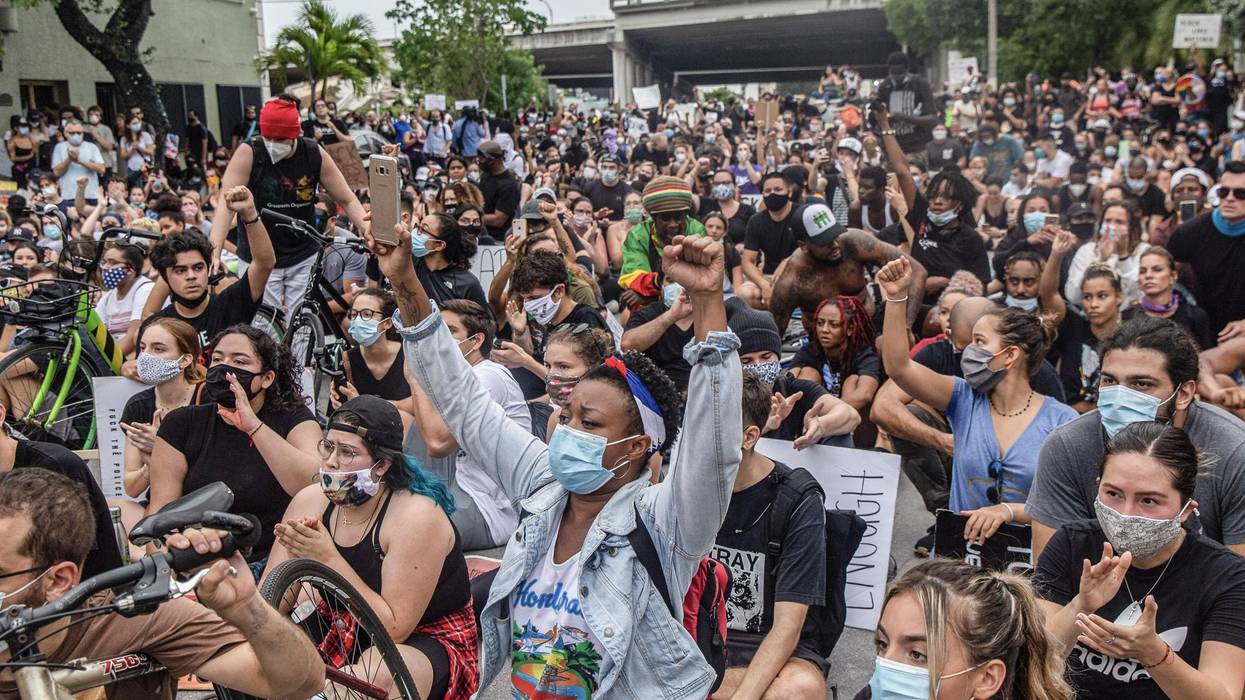
Leaders must reject false choices rooted in the idea that social and economic advancement is a zero-sum game or that working-class people must spar over scraps while all the spoils go to the elite few.
Since the election, two themes have recurred in analyses of the current political moment: Pundits are calling on progressive political leaders to abandon so-called identity politics and center working-class concerns, and others are defining this election as a potential realignment of political parties.
We and our colleagues at Dēmos are laser-focused on this drumbeat because it strikes at the core of our mission to build a just, inclusive, multi-racial democracy and economy where ordinary people hold power.
Working class is as much an identity as gender, religious affiliation, immigrant status, place, race, and ethnicity. All of us hold multiple identities. But in the political context, “identity politics” is often a dog whistle for Black and brown communities or members of the LGBTQIA+ community. Political leaders and pundits’ calls to deprioritize communities of color and marginalized groups distort the nation’s power dynamic and risk sidelining voices working to build a more equitable society. Such takes also pretend the far-right offers credible solutions to pressing economic issues while minimizing the critical role progressives play in challenging the systems that drive economic inequality. Any critique of movement or “identity politics” without a power analysis misses the forest for the trees.
Average incomes will not increase as more corporations shut down their DEI offices.
Last month, Demos released its Power Scorecard, a data-driven tool that tests our core theory: Political and economic power are inextricably linked, and one is predictive of the other. The tool ranks and measures people power in all 50 states (called a power score) by examining 30 indicators of economic well-being and 30 indicators of civic and democratic vitality. Some economic measures include the percentage of households that can cover everyday costs, avoid debt, maintain stable housing, and access affordable childcare. Measures of civic vitality include voter turnout, percentage of unopposed elections, ease of voting, and descriptive representation in government.
Our findings shed light on how conditions in each state influence the agency and control ordinary people exert in our democracy and economy. Common threads among the highest-ranked states include lower rates of child poverty and incarceration, less concentrated poverty, a greater percentage of workers represented by unions, higher voter turnout rates, and more state checks on corporate contributions to political candidates.
We could not disaggregate data by race for all indicators, but a limited analysis reveals “identity groups” are most disempowered in all states. This is not surprising, and it’s precisely why progressive activists advocate for bold, structural changes such as living wages, access to healthcare as a human right, expanded labor rights and protections, and policies to curb corporate power. And yes, they also call for political leaders to address racial and gender inequalities. Movement activism is rooted in the understanding that economic disparity, systemic racism, and gender inequality are interconnected problems requiring interconnected solutions.
We are aware that opinion polling over the last couple of years continuously revealed voters’ worries about their ability to make ends meet and financially get ahead. Policymakers on all sides of the political spectrum should heed these concerns. But as political leaders assess their messaging failures and policy disconnects, they must avoid the convenience of tunnel vision or public discourse that falsely suggest “identity groups” wield undue or disproportionate influence. Working-class people of all races are constrained by a system in which economic and political power are concentrated in the hands of an elite few.
As much as progressives are agitating to dismantle economic and racial disparities, a well-funded opposition is invested in maintaining a power structure that bends to the will of the wealthy and powerful. The far-right may have successfully tapped into some voters’ frustrations, but their policy proposals will exacerbate economic polarization and diminish ordinary people’s political power. Their standard bearers continue to favor tax cuts for the wealthy, deregulation, weakening unions, and restricting access to the ballot. If progressive political leaders acquiesce to calls to sideline “identity groups,” they will alienate the very movement voices working to address root causes of economic insecurity. Culture wars are a divisive political tactic, not an economic policy solution.
To put a finer point on it, average incomes will not increase as more corporations shut down their DEI offices. Housing will not be more affordable due to mass deportation. Grocery prices will not decline due to state legislation banning transgender people from public bathrooms. And tax cuts for the wealthy and corporations will not and have never trickled down to ordinary people.
Black and brown communities bear a disproportionate share of economic hardship, from unaffordable housing and inflationary pressure on consumer goods to exploitative labor practices. There are historical and ongoing systemic reasons for this disparity—a historical record that the far-right is actively trying to erase with book bans and factually diluted K-12 curriculums. Ignoring these complicated truths in the name of appealing to an idealized working-class voter devoid of any identity is a failing strategy—and the people who will suffer most are working-class voters of all races and identities.
Progressive leaders must reject false choices rooted in the idea that social and economic advancement is a zero-sum game or that working-class people must spar over scraps while all the spoils go to the elite few. Instead, they should amplify the voices of those actively challenging systems that sustain social injustice and vast economic inequality.

Both parties now engage in a kind of political theater, where the appearance of representation often substitutes for meaningful policy reforms.
In a move that surprised few but disappointed many, former U.S. President Donald Trump has chosen JD Vance, the bestselling author of Hillbilly Elegy and junior senator from Ohio, as his potential running mate for the 2024 presidential election. This choice, while generating the expected media buzz, represents far more than just another calculated political maneuver. It embodies a troubling trend in American politics: the weaponization of identity politics by both major parties to create a veneer of representation while sidestepping substantive policy changes.
Vance's nomination is a clear play for the rural working-class vote, a demographic that has become increasingly crucial to Republican electoral success. His personal narrative—rising from an impoverished Appalachian-adjacent background to Yale Law School and eventual political office—is meant to resonate with voters who feel left behind and "forgotten" by globalization and technological change. In this way, the GOP is attempting its own version of identity politics, one focused not on racial or ethnic minorities, but on the white working class that forms much of its base.
This strategy mirrors long-standing Democratic efforts to court historically marginalized communities through high-profile appointments and symbolic gestures. Both parties now engage in a kind of political theater, where the appearance of representation often substitutes for meaningful policy reforms. It's a game where faces change, but the underlying power structures too often remain frustratingly the same.
JD Vance's meteoric rise from obscure memoirist to potential vice presidential nominee encapsulates the GOP's attempted pivot towards a more worker-friendly image. His critiques of coastal elites and championing of Rust Belt revival have positioned him as a voice for the disaffected working class. Yet, a closer examination reveals a stark disconnect between Vance's rhetoric and his actual policy positions.
While Vance speaks passionately about the struggles of working-class Americans, his actual views and voting record in the Senate has consistently aligned with traditional Republican pro-business stances. He has voiced support for tax cuts that disproportionately benefit the wealthy and policies directly threatening the power of unions. Indeed behind his "pro-worker" stance appears to be a xenophobic nationalism centred on the mass deportation of immigrants.
The selection of Vance represents an attempt by the Republican establishment to co-opt the language of economic populism without embracing its substance.
The rise of figures like JD Vance reflects a new conservative policy agenda championed by groups such as American Compass, which seeks to blend traditional conservative values with populist economic nationalism. This approach advocates for policies like family-friendly labor laws and restrictions on global trade, supposedly representing a new "Trumpian version of the GOP, the one that threw away the country club, Chamber of Commerce, free trade, and foreign wars."
However, beneath this worker-friendly veneer lies a fundamentally corporate-aligned ideology. While paying lip service to workers' concerns, this brand of "national conservatism" often stops short of embracing true economic democracy or structural reforms that would significantly shift power to workers. Instead, it offers a limited, top-down version of economic populism that ultimately preserves corporate interests and existing power structures.
This contradiction lays bare the hollowness of the GOP's newfound "populist" messaging. It is a Party that invites the head of the Teamsters to speak at its convention while doing all it can to undermine unions and actual worker power. The selection of Vance represents an attempt by the Republican establishment to co-opt the language of economic populism without embracing its substance. By elevating a figure who can speak convincingly about working-class struggles, the party hopes to maintain its grip on a crucial voting bloc while continuing to advance policies that often work against their economic interests.
This approach is not without precedent. The Tea Party movement of the early 2010s similarly channeled working-class anger into support for policies that ultimately benefited the wealthy and corporate interests. Vance's nomination suggests a continuation of this strategy, repackaged for the post-Trump era.
While the Republicans court the white working class through figures like Vance, the Democratic Party has long engaged in its own form of identity politics, particularly focused on racial and ethnic minorities. The selection of Kamala Harris as Joe Biden's running mate in 2020 exemplifies this approach.
Harris, as the first woman of African-American and Asian descent to serve as vice president, undoubtedly brings important representation to the executive branch. Her nomination was deservedly celebrated as a historic milestone, particularly for Black and South Asian Americans. However, much like Vance, Harris' personal identity and the symbolism of her position often overshadow the substance of her political record.
The narrative surrounding Harris' candidacy has largely centered on what she represents demographically, rather than critically examining her track record, policy proposals, or how she might address the pressing issues facing the nation.
Throughout her career as a prosecutor and later as California's attorney general, Harris often took stances that were at odds with the criminal justice reform movement that has become central to many progressive platforms. Her "smart on crime" policies and past resistance to independent investigations of police shootings contrast with calls for police reform and racial justice that have gained prominence in recent years.
This critique of Kamala Harris is not meant to single her out or suggest a monolithic view on crime among Black voters. Rather, the point is to highlight a broader pattern of symbolic representation with limited substantial policy change. Indeed, the Biden administration has fallen far short on its promises to address disproportionate levels of Black unemployment, the plight of Black farmers, and the need for far-reaching criminal justice reform.
Since President Biden's unexpected withdrawal from the 2024 presidential race, the phenomenon of performative representation has been thrown into stark relief with Vice President Kamala Harris emerging as the presumptive Democratic nominee. Media coverage has overwhelmingly fixated on Harris' identity as a woman of Jamaican and Indian heritage, often at the expense of substantive policy discussions. Pundits and commentators repeatedly emphasize her racial background and historic potential to be the first female president, while giving comparatively little attention to her actual policy platform or vision for the country.
This focus on identity over substance exemplifies the troubling trend in American politics where symbolic representation often overshadows meaningful policy debates. The narrative surrounding Harris' candidacy has largely centered on what she represents demographically, rather than critically examining her track record, policy proposals, or how she might address the pressing issues facing the nation. This imbalance in coverage risks further entrenching a political culture that prioritizes optics over genuine progress.
This underscores a systemic problem wherein political gestures often substitute for meaningful reform, leaving many of the underlying issues unaddressed and communities still grappling with longstanding injustices. The growing potential of a Harris to be the presumptive Democratic nominee for present, while breaking important barriers, also reveals the limitations of representation without corresponding policy shifts. Her presence in the administration often served as a shield against criticism, with her identity being invoked to deflect concerns about the administration's failure to enact far-reaching changes.
The nomination of JD Vance as Trump's running mate, much like the selection of Kamala Harris as Biden's VP and now likely presidential nominee, represents a troubling trend in American politics. It reflects a system where the appearance of representation often substitutes for meaningful transformation, where identity is weaponized to maintain existing power structures rather than challenge them.
This allows political parties, far too often, to avoid grappling with difficult structural issues. By focusing on representation at the top levels of government, parties can sidestep the harder work of addressing systemic inequalities or economic challenges. The result is a politics of gestures rather than genuine action.
While increasing representation and challenging the traditional white rich male dominance over U.S. politics is urgent and necessary, it is far from enough. Real progress requires policies that address the root causes of inequality and injustice, not just gestures towards inclusivity. Ultimately, revitalizing American democracy will require embracing a politics of substance over symbolism. Advances in political representation must be coupled with a genuine commitment to addressing the deeper needs and concerns of all Americans. Only then can we move beyond the politics of performance and toward a more responsive and effective system of governance that can legitimately address the nation's deeper problems.

A united left is a formidable opponent that cannot only halt the surge of neo-fascism, but can also offer a positive and inspiring vision for the future.
Far-right forces have gained ground across Europe, particularly in Austria, France, Germany, and the Netherlands. In fact, the Netherlands has a new government, a coalition between far right and right, and the far right came first in the first-round of France’s snap election. But fearful of the prospect of a neo-fascist and xenophobic party in government, French voters came out in record numbers and rallied not behind Ensemble—the centrist coalition led by President Emmanuel Macron—but behind the coalition of left forces calling themselves the New Popular Front (NFP), delivering in the end a blow to Marine Le Pen’s National Rally (RN) which had made historic gains in the first round and topped the poll with 33.15 percent of the votes cast. NFP came in first in the run-off election, with 188 seats, but falling short of majority.
France’s snap parliamentary election results help us to make sense of the surge of the far right and offer valuable lessons for the left all over the world, including the U.S. where a centrist democrat and a wannabe dictator face off in November.
First, it is crystal clear that the main reason for the rise of Europe’s far right, authoritarian, and ethnonationalist forces is the status quo of neoliberal capitalism. The neoliberal counterrevolution that begun in the early 1980s and undermined every aspect of the social democracy model that had characterized European political economy since the end of the Second World War has unleashed utterly dangerous political forces that envision a return to a golden era of traditional values built around the idea of the nation by fomenting incessant and socially destructive change.
France’s snap parliamentary election results help us to make sense of the surge of the far right and offer valuable lessons for the left all over the world.
True to its actual aims and intent, neoliberalism has exacerbated capitalism’s tendency to concentrate wealth in the hands of fewer and fewer, reduced the well-being of the population through mass privatization and commercialization of public services, hijacked democracy, decreased the overall functionality of state agencies, and created a condition of permanent insecurity. Moreover, powerful global economic governance institutions—namely, the unholy trinity of the World Bank, the International Monetary Fund, and the World Trade Organization—took control of the world economy and became instrumental in the spreading of neoliberalism by shaping and influencing the policies of national governments. It is under these conditions that ethnonationalism, racism, and neofascism resurfaced in Europe, and in fact all over the world.
In France, the rise of the far right coincided with President François Mitterand’s turn to austerity in the 1980s as his government fell prey to the monetarist-neoliberal ideology of the Anglo-Saxon world. Once Mitterand made his infamous neoliberal turn, the rest of the social democratic regimes in southern Europe (Greece under Andreas Papandreou, Italy under Bettino Craxi, Spain under Felipe Gonzalez, and Portugal under Mario Soares) tagged along, and the eclipse of progressivism was underway.
Less than two decades later, reactionary political forces had emerged throughout Europe as extreme neoliberal economic policies had paved the way for the emergence of political tendencies with an eye to exploiting the catastrophic social and economic impacts of neoliberalism by tapping into a huge reservoir of public anger and discontent with the establishment. Indeed, as neoliberalism tightened its grip on domestic society, far right forces gained more ground. The surge of Marine Le Pen’s RN occurs against the backdrop of Macron’s obsession with converting France into a full-fledged neoliberal society.
A crucial lesson offered by the results of France’s snap election (as well as by Labour’s victory in UK) is that economics remains the rule of the day. Political forces that seek to promote multiculturalism and social rights while pushing at the same time the neoliberal economic agenda will, in the end, get the short end of the stick.
Initially, Macronism was a strategy of trying to appeal to a wide range of center-left and center-right voters by defending secular social rights and even making gestures to LGBTQ people but always with an eye to transforming the social contract and freeing up the “energy of the workforce.” Macron’s “progressive liberalism” philosophy worked up to a point. It backfired in a big way along the way when workers, farmers, and minority groups realized that their economic future was at stake by Macron’s pro-market policies—and that was clearly far more important to them than concerns over social issues and even the environment itself. The “yellow vest” movement that rocked Macron’s presidency in 2018 and left an “indelible mark” on French politics was the first indication that any set of government reforms that carried a disproportionate impact on the working and middle classes was going to be severely challenged.
In the end, Macronism even lost the support it initially had from women’s and LGBTQ organizations, and not simply because Macron’s stance on social policies hardened along the way as part of an opportunistic and desperate attempt on his part to stir conservative voters away from the arms of the far right. It is worth pointing out here that, unlike most social movements which are male-dominated, the “yellow vest” movement was distinguished by the “high proportion of women” that took part in the protests. It was economics that drove French women out into the streets, demonstrating against Macron government’s unjust tax reform measures.
Again, the lesson here is that voters are unlikely to be deceived by the sort of political rhetoric that emphasizes diversity, multiculturalism, and environmental concerns while policies are being pursued in favor of a brutal neoliberal economic setting. Social rights under neoliberalism is a mirage. This is a critical lesson for all left forces in an age in which multiculturalism and the politics of identity play such a prominent ideological role. We see the counter effects of this ultimately “pro-capitalist-stratagem” in the U.S. where voters without college degrees, which amount to over 60 percent of the population, are overwhelmingly on Trump’s camp. A similar tendency can be seen in the Latino community as a growing segment of Hispanic voters are joining Trump’s GOP party.
Voters are unlikely to be deceived by the sort of political rhetoric that emphasizes diversity, multiculturalism, and environmental concerns while policies are being pursued in favor of a brutal neoliberal economic setting.
For the benefit of political expediency and ideological integrity alike, the left should stick to its universalist traditions while remaining of course sensitive to diversity and particularism. But it has no business playing the game of identity politics that has become the hallmark of corporate capitalism and of the liberal political establishment. Last thing we need is a cultural and post-material left morphed into a movement vying for space in a capitalist dominated universe.
More important, as the unique experience of the formation of a coalition of leftist parties in France for the snap parliamentary election attests, the left’s best hope for making major inroads in today’s western societies, which are unquestionably highly complex and diversified, is by introducing and promoting an attractive yet realistic economic agenda that addresses the immediate concerns of average people but without losing sight of the broader objective of the leftist vision which is none other than social transformation.
The “shocking” success of the New Popular Front in the run-off election in France did not materialize simply because French voters wanted to halt the rise of the far right to power, which is the mainstream interpretation. French voters backed NFP for two key reasons: first, because they finally saw the left leaving behind factionalism and, second, because they were lured by its radical manifesto.
For the first time since the 1930s, not only has an anti-fascist alliance been revived in France but there is now hope for the future of the left because of its economic vision, assuming of course that the left can stay united beyond the election. And this is perhaps the greatest lesson leftist forces should draw from the French snap elections: a united left is a formidable opponent that cannot only halt the surge of neo-fascism but can also offer real hope for a humane and sustainable future.
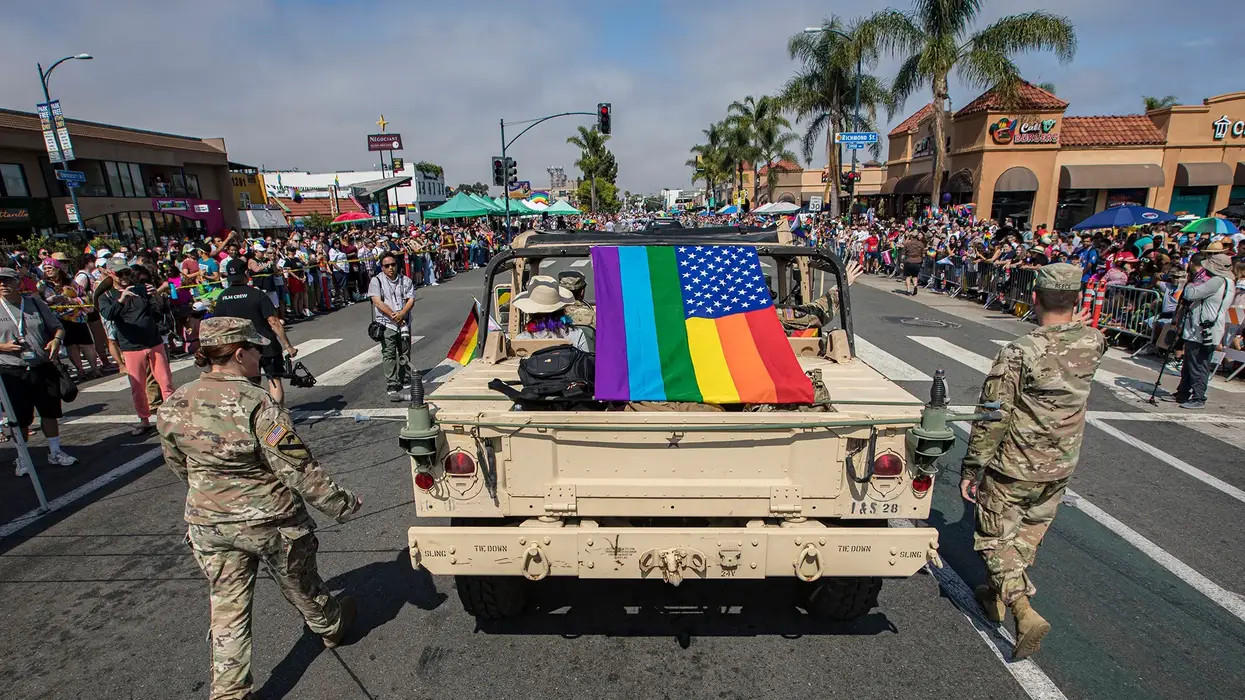
Diversity is important. But diversity, when devoid of a political agenda that fights the oppressor on behalf of the oppressed, is window dressing.
The brutal murder of Tyre Nichols by five Black Memphis police officers should be enough to implode the fantasy that identity politics and diversity will solve the social, economic and political decay that besets the United States. Not only are the former officers Black, but the city’s police department is headed by Cerelyn Davis, a Black woman. None of this helped Nichols, another victim of a modern-day police lynching.
The militarists, corporatists, oligarchs, politicians, academics and media conglomerates champion identity politics and diversity because it does nothing to address the systemic injustices or the scourge of permanent war that plague the U.S. It is an advertising gimmick, a brand, used to mask mounting social inequality and imperial folly. It busies liberals and the educated with a boutique activism, which is not only ineffectual but exacerbates the divide between the privileged and a working class in deep economic distress. The haves scold the have-nots for their bad manners, racism, linguistic insensitivity and garishness, while ignoring the root causes of their economic distress. The oligarchs could not be happier.
Did the lives of Native Americans improve as a result of the legislation mandating assimilation and the revoking of tribal land titles pushed through by Charles Curtis, the first Native American Vice President? Are we better off with Clarence Thomas, who opposes affirmative action, on the Supreme Court, or Victoria Nuland, a war hawk in the State Department? Is our perpetuation of permanent war more palatable because Lloyd Austin, an African American, is the Secretary of Defense? Is the military more humane because it accepts transgender soldiers? Is social inequality, and the surveillance state that controls it, ameliorated because Sundar Pichai — who was born in India — is the CEO of Google and Alphabet? Has the weapons industry improved because Kathy J. Warden, a woman, is the CEO of Northop Grumman, and another woman, Phebe Novakovic, is the CEO of General Dynamics? Are working families better off with Janet Yellen, who promotes increasing unemployment and “job insecurity” to lower inflation, as Secretary of the Treasury? Is the movie industry enhanced when a female director, Kathryn Bigelow, makes “Zero Dark Thirty,” which is agitprop for the CIA? Take a look at this recruitment ad put out by the CIA. It sums up the absurdity of where we have ended up.
Colonial regimes find compliant indigenous leaders — “Papa Doc” François Duvalier in Haiti, Anastasio Somoza in Nicaragua, Mobutu Sese Seko in the Congo, Mohammad Reza Pahlavi in Iran — willing to do their dirty work while they exploit and loot the countries they control. To thwart popular aspirations for justice, colonial police forces routinely carried out atrocities on behalf of the oppressors. The indigenous freedom fighters who fight in support of the poor and the marginalized are usually forced out of power or assassinated, as was the case with Congolese independence leader Patrice Lumumba and Chilean president Salvador Allende. Lakota chief Sitting Bull was gunned down by members of his own tribe, who served in the reservation’s police force at Standing Rock. If you stand with the oppressed, you will almost always end up being treated like the oppressed. This is why the FBI, along with Chicago police, murdered Fred Hampton and was almost certainly involved in the murder of Malcolm X, who referred to impoverished urban neighborhoods as “internal colonies.” Militarized police forces in the U.S. function as armies of occupation. The police officers who killed Tyre Nichols are no different from those in reservation and colonial police forces.
We live under a species of corporate colonialism. The engines of white supremacy, which constructed the forms of institutional and economic racism that keep the poor poor, are obscured behind attractive political personalities such as Barack Obama, whom Cornel West called “a Black mascot for Wall Street.” These faces of diversity are vetted and selected by the ruling class. Obama was groomed and promoted by the Chicago political machine, one of the dirtiest and most corrupt in the country.
“It’s an insult to the organized movements of people these institutions claim to want to include,” Glen Ford, the late editor of The Black Agenda Report told me in 2018. “These institutions write the script. It’s their drama. They choose the actors, whatever black, brown, yellow, red faces they want.”
Ford called those who promote identity politics “representationalists” who “want to see some Black people represented in all sectors of leadership, in all sectors of society. They want Black scientists. They want Black movie stars. They want Black scholars at Harvard. They want Blacks on Wall Street. But it’s just representation. That’s it.”
The toll taken by corporate capitalism on the people these “representationalists” claim to represent exposes the con. African-Americans have lost 40 percent of their wealth since the financial collapse of 2008 from the disproportionate impact of the drop in home equity, predatory loans, foreclosures and job loss. They have the second highest rate of poverty at 21.7 percent, after Native Americans at 25.9 percent, followed by Hispanics at 17.6 percent and whites at 9.5 percent, according to the U.S. Census Bureau and the Department for Health and Human Services. As of 2021, Black and Native American children lived in poverty at 28 and 25 percent respectively, followed by Hispanic children at 25 percent and white children at 10 percent. Nearly 40 percent of the nation’s homeless are African-Americans although Black people make up about 14 percent of our population. This figure does not include people living in dilapidated, overcrowded dwellings or with family or friends due to financial difficulties. African-Americans are incarcerated at nearly five times the rate of white people.
Identity politics and diversity allow liberals to wallow in a cloying moral superiority as they castigate, censor and deplatform those who do not linguistically conform to politically correct speech. They are the new Jacobins. This game disguises their passivity in the face of corporate abuse, neoliberalism, permanent war and the curtailment of civil liberties. They do not confront the institutions that orchestrate social and economic injustice. They seek to make the ruling class more palatable. With the support of the Democratic Party, the liberal media, academia and social media platforms in Silicon Valley, demonize the victims of the corporate coup d’etat and deindustrialization. They make their primary political alliances with those who embrace identity politics, whether they are on Wall Street or in the Pentagon. They are the useful idiots of the billionaire class, moral crusaders who widen the divisions within society that the ruling oligarchs foster to maintain control.
Diversity is important. But diversity, when devoid of a political agenda that fights the oppressor on behalf of the oppressed, is window dressing. It is about incorporating a tiny segment of those marginalized by society into unjust structures to perpetuate them.
A class I taught in a maximum security prison in New Jersey wrote “Caged,” a play about their lives. The play ran for nearly a month at The Passage Theatre in Trenton, New Jersey, where it was sold out nearly every night. It was subsequently published by Haymarket Books. The 28 students in the class insisted that the corrections officer in the story not be white. That was too easy, they said. That was a feign that allows people to simplify and mask the oppressive apparatus of banks, corporations, police, courts and the prison system, all of which make diversity hires. These systems of internal exploitation and oppression must be targeted and dismantled, no matter whom they employ.
My book, “Our Class: Trauma and Transformation in an American Prison,” uses the experience of writing the play to tell the stories of my students and impart their profound understanding of the repressive forces and institutions arrayed against them, their families and their communities. You can see my two-part interview with Hugh Hamilton about “Our Class” here and here.
August Wilson’s last play, “Radio Golf,” foretold where diversity and identity politics devoid of class consciousness were headed. In the play, Harmond Wilks, an Ivy League-educated real estate developer, is about to launch his campaign to become Pittsburgh’s first Black mayor. His wife, Meme, is angling to become the governor’s press secretary. Wilks, navigating the white man’s universe of privilege, business deals, status seeking and the country club game of golf, must sanitize and deny his identity. Roosevelt Hicks, who had been Wilk’s college roommate at Cornell and is a vice president at Mellon Bank, is his business partner. Sterling Johnson, whose neighborhood Wilks and Hicks are lobbying to get the city to declare blighted so they can raze it for their multimillion dollar development project, tells Hicks:
You know what you are? It took me a while to figure it out. You a Negro. White people will get confused and call you a nigger but they don’t know like I know. I know the truth of it. I’m a nigger. Negroes are the worst thing in God’s creation. Niggers got style. Negroes got . A dog knows it’s a dog. A cat knows it’s a cat. But a Negro don’t know he’s a Negro. He thinks he’s a white man.
Terrible predatory forces are eating away at the country. The corporatists, militarists and political mandarins that serve them are the enemy. It is not our job to make them more appealing, but to destroy them. There are amongst us genuine freedom fighters of all ethnicities and backgrounds whose integrity does not permit them to serve the system of inverted totalitarianism that has destroyed our democracy, impoverished the nation and perpetuated endless wars. Diversity when it serves the oppressed is an asset, but a con when it serves the oppressors.
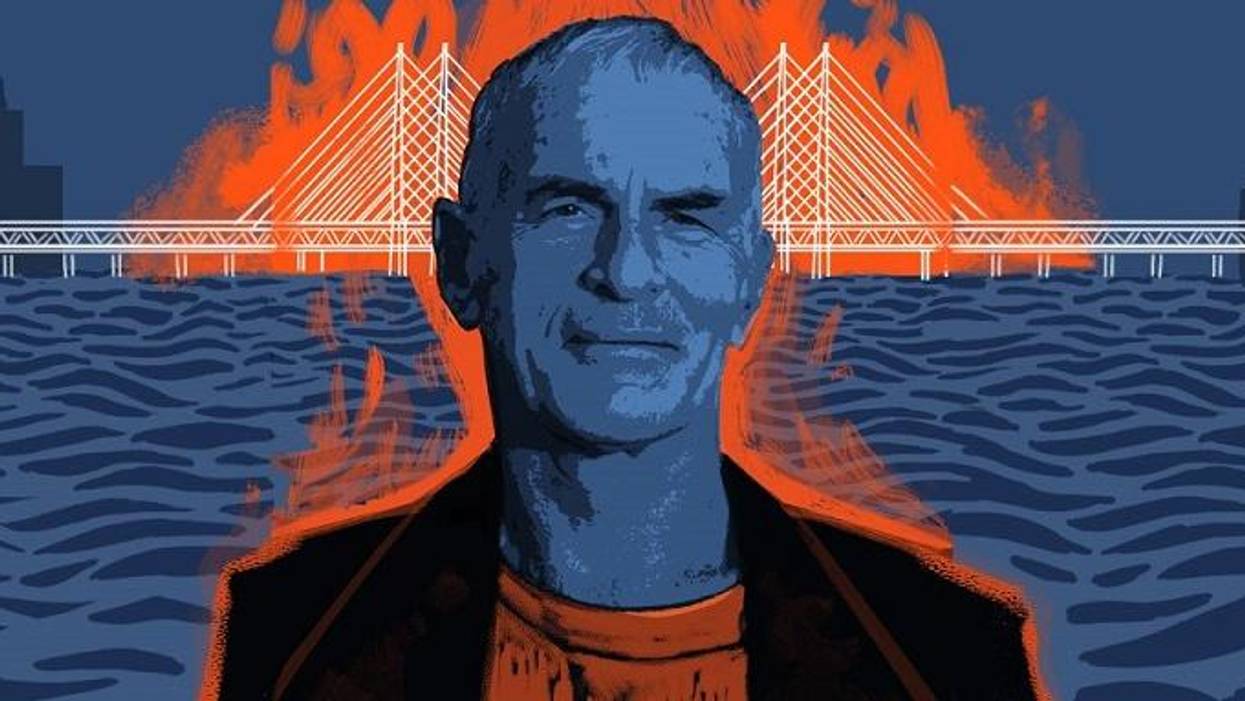
A few thoughts on the new book, "I'll Burn That Bridge When I Get to It!"
As I was reading Norman Finkelstein's new book, I'll Burn That Bridge When I Get to It!: Heretical Thoughts on Identity Politics, Cancel Culture, and Academic Freedom, I thought early on of Obama's joke at the expense of Rahm Emanuel: "he's one of a kind, and thank god he's one of a kind." Finkelstein, too, is very much one of a kind. But the analogy with Emanuel fails, because in fact one Rahm Emanuel is far too many whereas one Finkelstein is not nearly enough. We need hundreds of him. That is to say, we need hundreds of left intellectuals with the courage and intelligence to think for themselves and never sell out, to refuse to compromise—even to risk alienating fellow leftists by publicly repudiating woke culture and the more vacuous forms of identity politics in favor of an unstinting adherence to class politics. Nor would it hurt to have more writers who are as eloquent and hilarious as him.
It is widely known on the left that Finkelstein is, as it were, a martyr to truth and justice, having been subject to outrageous calumniation and denied an academic career because of his relentless advocacy of the Palestinian cause. With I'll Burn That Bridge, he shows his willingness to burn bridges not only with the establishment but also with the "left" of today, for which he shows scarcely mitigated contempt. He considers it, or dominant tendencies within it, to have degenerated from soaring moral and intellectual heights with Rosa Luxemburg, W. E. B. DuBois, and Paul Robeson into a censorious, narcissistic, morbidly navel-gazing culture preoccupied with subjectivist trivialities like personal pronouns at the expense of solidaristic struggle for a better world. "Whenever I see he/him or she/her, I think fuck/you." ("You must be living an awfully precious life," he goes on, "if, amid the pervasive despair of an economy in free fall, your uppermost concern is clinging to your pronouns.") If the book is not simply ignored, one can expect that it will elicit a flood of vituperation from leftists and liberals: "racist, misogynistic, transphobic, white supremacist, juvenile, incoherent, petty!" The intelligent reader will not be tempted by such facile judgments but instead will engage with the book's substance, because it has important things to say.
It consists of two parts: in the first, Finkelstein "deconstructs" identity politics and the cancel culture it has given rise to, focusing on five figures whom he eviscerates: Kimberlé Crenshaw, Ta-Nehisi Coates, Robin DiAngelo, Ibram X. Kendi, and Barack Obama. In the second part, he considers a related subject with which he is intimately familiar: academic freedom. To what extent should a regime of free speech reign on the university campus, and under what circumstances should an academic's "offensive" speech in the public square result in disciplinary action? Is it wrong for universities to grant Holocaust deniers a platform? When teaching, should professors strive for "balance"—presenting with equal force all sides of an issue so that students can make up their own minds—or should they teach only their own perspective? What should we think of campus speech codes? Finkelstein addresses all such questions at length and in a spirit of uncommon seriousness.
The intelligent reader will not be tempted by ... facile judgments but instead will engage with the book's substance, because it has important things to say.
One difficulty with the book is that it has a sprawling and meandering character, consisting variously of memoir, brutal polemic, dense argumentation, forensic dissection of texts, scores of long quotations, innumerable long footnotes, and very funny ridicule of everything and everyone from Michelle Obama to Bari Weiss, from the New York Times to woke terms like Latinx ("why would an ethnic group want to sound like a porn site?"). At its core, however, beneath the variegated surface, the book is an anguished cri de coeur against pervasive cultural, political, and intellectual rot—an unapologetic defense and exegesis of the heavily maligned "Western canon" (John Stuart Mill, Karl Marx, Bertrand Russell, Kant, DuBois, Frederick Douglass, and the like), a sustained lamentation over how far the left has fallen, a furious denunciation of rampant philistinism and pusillanimous groupthink (quoting Mill: "That so few now dare to be eccentric marks the chief danger of the time"), and a proudly unfashionable celebration of such quaint notions as Truth, Reason, and Justice (which Finkelstein capitalizes, in a consciously anti-postmodernist flourish). The book's kaleidoscopic nature and intimidating length might bewilder the reader, so in this review I propose to summarize and comment on several of its main arguments, to facilitate their diffusion.
Before doing so, however, I can't resist quoting a few Finkelsteinian zingers, to preface the following heavy discussion with a bit of levity. On MSNBC's Joy Reid: "living proof that not all yentas are Jewish and not all bovines are cows." On Angela Davis: "Once upon a time she was on the F.B.I.'s Ten Most Wanted List. Now she's on Martha's Vineyard's Five Most Coveted List." On Henry Louis Gates: "a virtuoso at crawling on the ground while typing on his keyboard." On Amy Goodman (whom he doesn't name): "Goddess of Wokeness…a woke machine, churning out insipid clichés as her mental faculty degenerates to mush." On Ibram X. Kendi: "mallet-wielding grifter…preposterous poseur…[whose] 'definitive history of racist ideas in America' reduces to a compendium of prepubescent binary name-calling." On Robin DiAngelo's morbid obsession with diagnosing "racism": "She is the monomaniacal Captain Ahab in pursuit of the White Whale. She is little Jackie Paper out to slay Puff the Racist Dragon. Her palette comprises two colors—white and black… What an unremitting, remorseless, insufferable bore!" On the widespread fascination with transgender people: "the first day of a graduate seminar, students used to describe their intellectual interests. Nowadays, it's de rigueur to declare your sexual orientation. It's only a matter of time before a student announces, 'I'm she/her and I'm packing a thick, juicy nine-incher.'"
In an adaptation of Emma Goldman's "If I can't dance, I don't want your Revolution," Finkelstein declares: "If I can't laugh, I don't want your Revolution." Political conservatives, too, have complained about the humorlessness of the woke crowd, but if you're alienating even die-hard leftists, maybe it's time to rethink your messaging.
Debates on the left over identity politics go back decades, and it is easy to be sick of them. Unfortunately, there is no prospect of their ending as long as identity politics and woke culture remain dominant on the left and in the Democratic Party—as they surely do today, at the expense of a class politics. Finkelstein is aware that the identity politics of the left isn't quite the same as the identity politics of the Democrats, but he is right that they overlap, and that such a politics is more conducive to being neutered into empty symbolism (statues, token representation in the corporate class, electing a vapid con artist like Obama) than a Bernie Sanders-style—or more radical—class politics is.
Serious leftists, like Robin D. G. Kelley, have written competent defenses of identity politics, and Finkelstein certainly isn't arguing against the necessity of incorporating anti-racism, anti-sexism, anti-homophobia, and other such "woke" agendas into popular movements. What he objects to are the forms that identity politics often takes, and its tendency to devolve into celebration of an insular tribal identity. The binary, balkanizing drawing of lines between groups and near-contempt for the "oppressing" group—white vs. black, cis vs. trans, straight vs. gay, man vs. woman—is, in its parochialism and vitiating of solidarity against capitalism, not what a real left politics looks like. He quotes at great length some words of Frederick Douglass in 1894 that might well have gotten him "cancelled" today:
We hear, since emancipation, much said by our modern colored leaders in commendation of race pride, race love, race effort, race superiority, race men, and the like… [But] I recognize and adopt no narrow basis for my thoughts, feelings, or modes of action. I would place myself, and I would place you, my young friends, upon grounds vastly higher and broader than any founded upon race or color… We should never forget that the ablest and most eloquent voices ever raised in behalf of the black man's cause, were the voices of white men. Not for the race; not for color, but for man and manhood alone, they labored, fought and died… It is better to be a member of the great human family, than a member of any particular variety of the human family… I put my foot upon the effort to draw lines between the white and the black…or to draw race lines anywhere in the domain of liberty.
Moreover, the very idea of being "proud" of what group one happens to belong to—proud of being black or a woman or gay or trans—is puzzling. "[I]t perplexes why one should feel proud of one's zoological difference," Finkelstein writes. "[W]hat sense is there in making a 'cult' of that over which one has no choice…? Shouldn't one aspire to transcend the 'inevitable' part—the color of one's skin—so as to be judged by the 'free part'—the content of one's character?" Similarly, the idea of "loving one's people" is odd, first in that it amounts to "loving one's self writ large," which, in its narcissism, hardly seems like a noble thing. It easily becomes chauvinism. Second, one would certainly not love all the individuals who are alleged to constitute "one's people." Many or most of them one would likely personally despise—just as, on the other hand, one would "love" many people belonging to a "different group." Too much identification with some imposed identity such as race is exactly what leads to irrational racial hostility (including against whites), sexist hostility (also against men), and other divisive social forces. Identity politics can be dangerous and destructive, not only on the right but even the left. "In their goodness and badness, there exist only persons, not peoples."
The vacuousness of contemporary identity politics is best exposed by considering its "great minds," the Crenshaws, Coateses, Kendis, and DiAngelos. For a really thorough demolition, Finkelstein would have had to review the record of various feminist and queer theorists too, but it's a big enough task to critique the writers on race. Or, more precisely, that isn't a difficult task—it's so easy that Finkelstein is able to devote huge chunks of these chapters to sheer mockery—but it does require patience and a willingness to wade through endless intellectual muck. Take Crenshaw. Unsurprisingly, in her seminal 1989 article on intersectionality "Demarginalizing the Intersection of Race and Sex," "she conspicuously omits class in her dissection of oppression." It disturbs her that white feminists are presumptuous enough to speak for black women, but she "seems less concerned or, for that matter, even conscious that a high-achieving Black woman speaking for Black working-class women might also be problematic."
The vacuousness of contemporary identity politics is best exposed by considering its "great minds," the Crenshaws, Coateses, Kendis, and DiAngelos.
Or take DiAngelo. She has a pathological obsession with racism and an utterly Manichean, paranoid view of the world. If you're white, you're a racist—whether you're John Brown or Jefferson Davis, a fascist or an anti-fascist. Racism is ubiquitous, "immovably entrenched in our psyches and structures" (as Finkelstein paraphrases), "the air we breathe and the water we drink," all-encompassing and constantly reproduced, she says, "automatically"—and therefore, evidently, ineradicable. At best, it can occasionally be "interrupted"—through the "diversity training" at which DiAngelo excels and for which she charges a hefty fee. Meanwhile, her book White Fragility has sold almost a million copies and has had quite an influence on woke culture, helping to instill a collective fixation on—incidentally—the same idée fixe of Ta-Nehisi Coates (according to Cornel West): the almighty, unremovable nature of white supremacy. "Whites," says DiAngelo, "control all major institutions of society and set the policies and practices that others must live by." Yes, whites are a homogeneous master-class: the billionaires and the working class, they're all equally guilty, they're all oppressors. And to blacks she says, as Finkelstein summarizes, "Beware! Don't trust white people! They're all racists, racists to the core! Every last one of them! They're hard-wired for racism; it's in their DNA." This is a message perfectly calculated to pit workers against each other. No wonder the business class has so enthusiastically promoted her book!
What about Ibram X. Kendi? Finkelstein seems to take particular pleasure in disemboweling this (as he says) non-scholar and non-activist, for his critique/massacre is a full 110 pages long and features withering juxtapositions with a titan, DuBois. It's sad that a book review can't communicate the verve or the slicing humor of this chapter (and others). Kendi's book Stamped from the Beginning: The Definitive History of Racist Ideas in America, for example, whose "only novelty is to shoehorn the epithets racist or antiracist, segregationist or assimilationist into every other sentence…[is] less a definitive history than an exhaustive, and exhausting, taxonomy that's as supple as a calcified femur and as subtle as an oversized mallet. It proceeds from the fatuous, almost juvenile, conceit that fastening binary, wooden labels on the actors and ideas incident to Black history will shed light on it." One problem with Kendi's and our culture's promiscuous, indiscriminate use of the label "racist" is that the concept becomes diluted: "to be a racist ceases to be what it ought to be: a scarlet badge of shame… [W]hat information is conveyed by a label that collapses the distinction between Frederick Douglass [whom Kendi considers a racist] and the Grand Wizard of the K.K.K.?" The abolitionists were all racists, as were DuBois, Martin Luther King Jr., Richard Wright, E. Franklin Frasier, etc. etc.—while Kendi singles out for praise Harry Truman, Michelle Obama, Eldridge Cleaver, Pam Grier, Bo Derek, Kanye West, etc. "[T]he rigor of his taxonomy recalls not the Periodic Table but, on the contrary, Pin the Tail on the Donkey."
As Finkelstein says, Kendi embraces the woke conceit that, over four hundred years, "African-Americans haven't registered any progress in the struggle against racism. Each seeming stride forward has been attended by a step backward." If anything, he implies, things have only gotten worse! Such an "analysis" recalls the flagrantly ahistorical, unabashedly gloomy academic school of Afro-pessimism, and, by reifying differences between "whites" and "blacks" and valorizing anti-white resentment among the latter, serves the same function of hindering the class solidarity necessary to achieve real progress in struggles over the distribution of wealth, working conditions, affordable housing, high levels of unemployment, expansion of public resources, abysmal healthcare, environmental destruction, hypertrophying militarism, and the like. (No wonder, again, Kendi has been fêted by the establishment and can charge $45,000 for his talks. It helps, too, that his only real policy proposal is…affirmative action.)
After Finkelstein's devastating exposure of Kendi's countless inconsistencies, hypocrisies, and idiocies—his woke dismissal of the Civil Rights Movement in favor of the macho Black Panthers (who, by comparison, achieved almost nothing); his (in Kendi's words) "striving to accept and equate and empower racial difference" even as he argues that the idea of race is a "mirage" that was invented to rationalize exploitation; his insistence that all racial disparities in society are purely a result of racism; his valorizing of racial differences (e.g., he praises the "irrepressible Blackness" of his friend) at the same time as he says anti-racists see only individuals and not racial behavior ("there is no such thing as Black behavior"); his positing of a deep separation between so-called white culture and black culture; his arguing against the racist "assimilationist" urge to value white culture over black even as he manifestly values white culture over black (lecturing before white audiences, accepting a fellowship at Harvard University, presiding over a research center at Boston University, being proud of publishing in white journals like The Atlantic)—nothing remains but the empty husk of a social-climbing charlatan. That such a person can be widely considered to be more or less on the left is a crushing indictment of the state of the left.
For charlatanry, though, few can beat the next entry on Finkelstein's shit list: Obama. "Barack Obama is the perfected and perfect instrument of identity politics, its summa summarum. He represents the cynical triumph of form over substance, color over character. He is the cool Black dude who is also the reliable—in Professor Cornel West's words—'mascot of Wall Street.'" Most leftists are hardly enamored of Obama, so I need not summarize the case against him. Nor would I even try, because I couldn't possibly reproduce the distinctive Finkelsteinian humor—and most of this very long chapter consists of (factually grounded) ridicule, directed at nearly everyone in Obama's presidential coterie, a "revolting retinue of bootlickers." Aside from Obama himself, the most satisfying skewering, I found, was of Samantha Power, the "Battleaxe from Hell…downright evil…[whose] conscience only bestirs at the suffering of victims of official U.S. enemies." One might argue that in this chapter Finkelstein's profound contempt for the "Elmer Gantry in blackface" at the head of this gaggle of amoral mediocrities gets the best of his prodigious literary gifts, since the ruthless mockery goes on and on and becomes somewhat tiresome, but it can't be gainsaid that it's all well-deserved.
After six chapters and almost 400 pages on the subject, Finkelstein's summary of identity politics is worth quoting:
Identity politics has distracted from and, when need be, outright sabotaged a class-based movement [viz., Bernie Sanders'] that promised profound social change. It counsels Black people not to trust whites, as their racism is so entrenched and so omnipresent as to poison their every thought and action. It conveys to poor whites that they, no less than the white billionaire class, are beneficiaries of racism, so that it would be foolhardy of them to ally with Black people… Then, identity politics puts forth demands that either appear radical but are in fact politically inert—Defund the police, Abolition of prisons—as they have no practical possibility of achievement; or that leave the overall system intact while still enabling a handful, who purport to represent marginalized groups, to access—on a "parity" basis—the exclusive club of the "haves." This, in effect, performance politics has spawned a disgusting den of thieves who brand themselves with radical-sounding hashtags, churn out radical-sounding tweets, and insinuate themselves into positions of prominence, as they rake in corporate donations, cash corporate paychecks, hang out at the watering holes of the rich and famous, and thence can be safely relied upon not to bite the hand that feeds them…
One might object that he's painting with too broad a brush here, that advocacy of the interests of minorities and women can, depending on the context and the cause, indeed be an essential political program, but he wouldn't deny this. He has the highest regard for the Civil Rights Movement, after all—although he would deny that that was identity politics. "The human rights of a victimized group must, of course, be uncompromisingly defended." More problematic than such defense is to make a cult of group differences (group "pride") in the way of the woke, and to place class issues at the bottom of the heap rather than the top, where they belong. "Human dignity is not possible without the ability to pay for a roof over one's head, clothes on one's back, and food on one's table."
Just consider how the woke mob reacted to the Sanders campaign, the most serious challenge to the establishment in more than a generation...
Whatever genuinely emancipatory political impulses exist in identity politics have long been, on the whole, coopted and buried under an avalanche of left-liberal virtue-signaling, preening and posing, careerism, and sabotage of a substantive left. Just consider how the woke mob reacted to the Sanders campaign, the most serious challenge to the establishment in more than a generation: they tried to "cancel" Sanders for his being a "privileged white male" with a supposed blind-spot on race. His "economic reductionism," according to Angela Davis, prevented him from "developing a vocabulary that allows him to speak…about the persistence of racism, racist violence, state violence." As Finkelstein says, "When the 'hour of serious danger' to the status quo struck during Bernie Sanders' class-struggle insurgency, the 'true nature' of woke radicalism—not just its opportunism but, even more, its rancid, reactionary core—was exposed as each and all of these erstwhile 'radicals' enlisted under the banner to stop him." Woke cancel culture cooperated with the establishment media's cancel culture to stop the Sanders juggernaut.
"Cancel culture might be defined as the turning of a person into a non-person." By that definition, it has been around for a very long time. Arguably, it is as old as civilization. The first and second Red Scares in the U.S. were instances of cancel culture; so is the corporate media's treatment of virtually everyone on the left; so is the woke treatment of anyone who publicly strays from the party line. Even if such victims of woke defamation campaigns usually find their footing again or don't always suffer career consequences in the first place, the mob's impulse to censor and silence remains operative and ever-vigilant. Finkelstein knows cancel culture from the inside, and it is unsurprising that he resolutely opposes it.
His defense of a regime of nearly untrammeled free speech is rooted, first and foremost, in his conviction that this is the surest way to Truth. He quotes DuBois: when free speech is stifled, "the nation…becomes morally emasculated and mentally hog-tied, and cannot evolve that healthy difference of opinion which leads to the discovery of truth under changing conditions." But John Stuart Mill's On Liberty is the text he primarily grounds his argument in, and he quotes from it liberally in his chapter on the right of even Holocaust deniers to make their case in public forums such as a college campus. "Complete liberty of contradicting and disproving our opinion," Mill writes, "is the very condition which justifies us in assuming its truth… The beliefs which we have most warrant for, have no safeguard to rest on but a standing invitation to the whole world to prove them unfounded." As Finkelstein translates, "if you want to rationally hug your certainty, you must first meet the challenge of every naysayer." Your opponents can even be useful for prodding you to rethink weak points in your reasoning or evidentiary basis, exposing little errors in your arguments, giving you something to think about that you had overlooked, in general giving you the opportunity to more rationally ground your beliefs.
The mob's desire to silence, attack, and destroy comes from feeling threatened, not from being rationally certain and confident. The latter attitudes are more likely to yield calm composure and willingness to give opponents a hearing because you know you're able to refute them. When a mob tries to prevent someone from talking because it feels threatened by his speech, it's quite possible, often, that his speech has some truth in it. Suppressing it—unless it's merely emotive speech like "fuck you!"—possibly allows his opponents to persist in having false or partially false views.
But someone might reply, "What if his speech is socially harmful? Isn't that a legitimate reason to suppress it?" Well, the definition of "harmful" is, of course, contested, and it evolves over time. Eugenics and forced sterilization were once considered a very enlightened movement, being supported by progressives like Bertrand Russell, Helen Keller, Jane Addams, and Oliver Wendell Holmes. Now eugenics is considered downright evil. Who is to say your definition of "socially harmful" is, in all cases, the right one, or that your application of it is always right? "When it comes to curbing speech," Finkelstein says, "experience thus confirms the general rule in human affairs: humility is to be preferred over arrogance."
The mob's desire to silence, attack, and destroy comes from feeling threatened, not from being rationally certain and confident.
Moreover, if the "harmful" speech is socially marginal such that hardly anyone believes it, what's the great danger in letting someone say it now and then? If, on the other hand, it's not marginal but holds the assent of millions, letting someone express it presents an opportunity to argue against it and thus inoculate people. The strategy of pure suppression is apt to lead many to think there might be something "dangerously truthful" to it—"the establishment doesn't want us to hear this because it's threatened by its truth!"—and thus might contribute to its diffusion across the population. People might think they're being "rebellious" or anti-establishmentarian by believing it, and furthermore that they're upholding noble values of free speech against authoritarian censoring leftists (as the reactionary right thinks today). I might also note that giving authorities the right to suppress or punish certain kinds of speech, and even encouraging them to do so, will soon lead to their suppressing speech you like.
The left has historically been in the vanguard of fights for free speech, from the abolitionists to the IWW (and most other unions, in fact) to the Socialists during World War I to the Civil Rights Movement. Its departure today from these honorable traditions is yet more evidence that it's become a pseudo-left, a reactionary left—for the empowering of authorities to regulate speech is ultimately reactionary. It's ironic that many self-styled anarchists advocate increasing the power of unaccountable bureaucrats to control what is said and what isn't.
Admittedly, it might have strengthened Finkelstein's discussion to consider in more depth possible counterarguments. It is, after all, very unfortunate that media operatives like Rush Limbaugh, Alex Jones, and the whole stable of Fox News social arsonists have brainwashed millions of people. It is likely they couldn't have had such a destructive impact had the FCC's Fairness Doctrine not been repealed in 1987. Maybe it was right to repeal it, but a case can at least be made that it was wrong. Issues of online content moderation, too, come into play in any debate over censorship, and Finkelstein doesn't say much about these. The reason, it seems, is that he doesn't think the internet has raised significantly new questions about free speech, and in any case there is already an extensive literature on web censorship.
Wokeness is what happens when the destruction of the labor movement proceeds so far, and social atomization becomes so all-consuming, that even the "left" adopts an individualistic, moralistic, psychologistic, censorious, self-righteous, performative approach to making social change.
Among the many excellent points he makes is one that cuts to the heart of wokeness: the collective obsession with pinning a label—racist or not, sexist or not, transphobic or not—on every thought passing through one's head and every utterance one makes, and then cancelling all the thoughts that (and all the people who) stray an inch past what's deemed "acceptable," is ridiculous and paranoid. It's also reactionary, because it makes solidarity vastly more difficult. One of the more memorable passages in the book is when he imagines, in some alternate universe, a Robin DiAngelo who actually does care about fighting oppression of blacks and not only grifting off a culture's pathologies. Were she to speak before a group of workers, she might say something like this (italics in the original):
Although racism is real and you should always be at the ready to fight it whenever it rears its ugly head, you all, Black and white, have a helluva lot more in common. You're all, Black and white, trapped in dead-end jobs. You all earn poverty wages… [You have to] organize together, as one because you are one, to overthrow this wretched, corrupt, god-forsaken system. You can't eliminate every fleeting, non-p.c. thought passing through your head… You can't wait until everyone's thoughts are simon-pure. You don't have the time, and they never will be. You cannot police your thoughts, and it's probably better that way. Were it otherwise, you wouldn't be human. You're fallible, you're imperfect vessels… If you unite to change the system, then your psyches will fall into place. It's common struggle, common sacrifice, that produces mutual respect, even mutual love. A connection that binds will be forged by you, united in the heat of battle facing a common enemy, each marching beside the other, each lifting the other, each protecting the other. You don't become better persons by each of you, singly, struggling with your racist demons. You become better persons by all of you, together, struggling against an antihuman system…
Wokeness is what happens when the destruction of the labor movement proceeds so far, and social atomization becomes so all-consuming, that even the "left" adopts an individualistic, moralistic, psychologistic, censorious, self-righteous, performative approach to making social change.
"The fight against racism must focus…not on the intangible, impalpable, unchangeable, invisible, or unprovable, but, instead, on what's substantive, meaningful, and corrigible. In the first place, securing economic opportunity and legal equality." The Sanders program was far more substantively "anti-racist" than the puny liberal programs of most of his woke critics. (As for Sanders' being constantly hounded to support "reparations" for blacks, I've explained elsewhere why that demand is anti-solidaristic, politically impossible, and ultimately a diversion from radical social transformation.)
The last chapter of I'll Burn That Bridge delves into a specific dimension of cancel culture: when is it appropriate for a professor to be disciplined for his public behavior and statements, whether on social media or in some other context? This issue bears, of course, on Finkelstein's own career, but he is hardly the only academic to have been disciplined in recent decades for alleged "incivility" or taking unpopular political stands. The chapter is tightly argued and has a more disciplined structure than others, consisting of analyses of four academic freedom cases (Bertrand Russell in 1940, Leo Koch in 1960, Angela Davis in 1969, and Steven Salaita in 2014) and then general reflections that conclude in a discussion of his own case. He endorses the American Association of University Professors' standard that "a faculty member's expression of opinion as a citizen cannot constitute grounds for dismissal unless it clearly demonstrates the faculty member's unfitness to serve [i.e., to teach]"—which was surely not the case in the four instances he examines. But he goes much further and questions whether it should even be seen as a professional obligation that one always use civil language in one's scholarship (which Finkelstein didn't when writing about the Holocaust industry and Alan Dershowitz's lies). Given all the invective in Marx's Capital, for example, the book would never have been published by a university press today and Marx wouldn't get a position at a top university. "But if the likes of Marx wouldn't qualify for a tenured appointment at a first-rank university, isn't that a reductio ad absurdum? Doesn't it conclusively demonstrate the inanity of a standard commanding restrained and temperate language?"
It can at least be said for Finkelstein that he practices what he preaches: his book, to put it mildly, does not shrink from uncivil words.
One might connect Finkelstein's lengthy discussion of academic civility with his book's focus on woke politics by pointing to something his targets have in common: a preoccupation with policing language and thought at the expense of more substantive concerns. Academia insists on politeness, decorum, "neutral" language, which often serves to enforce conventions, emasculate dissent, and uphold power structures; wokeness insists on ceaselessly monitoring your own and others' language, in fact making that a priority, allowing people to feel "radical" by doing nothing that remotely challenges real power structures. (No surprise that woke culture has largely emerged from the academy.) To do justice to Truth and Justice, though, requires more than this. In the case of scholarly writing and speaking,
There are moments that might positively require breaking free of the constraints imposed by polite public discourse in order to sound the tocsin that, as we indifferently carry on in a privileged sanctuary of peace and prosperity, innocent people are being butchered by our own state. The uncivil reality, not uncivil words, should be cause for reproach and excoriation, while uncivil words might be called for to bring home the uncivil reality.
It can at least be said for Finkelstein that he practices what he preaches: his book, to put it mildly, does not shrink from uncivil words.
It should be clear from what has been said here that I'll Burn That Bridge When I Get to It is an unusual book. It requires a lot of patience to read, but I think the effort is worth it. It's not a "polished" work, but in an academic and literary environment that sometimes seems to value polish above all else, including moral and intellectual substance, one appreciates something a little more raw. And someone with the courage to tear down—in order to build up.
Finkelstein is in the tradition of the great incorruptible truth-tellers. He relates an anecdote from when he was a graduate student at Princeton in 1984: his work exposing a bestselling scholarly hoax on the Israel-Palestine conflict had gotten the favorable attention of the editor of the New York Review of Books and his friend (Arthur Hertzberg) at Columbia University, and he sensed that career possibilities were opening up for him. But then, in a meeting with Hertzberg, he was bluntly asked, "Are you in Chomsky's stable?" Despite knowing the probable consequences of giving the wrong answer, he unhesitatingly said he deeply admired Chomsky and was grateful for his support—which, of course, was the wrong answer. He never heard from the men again. Even so, "I was proud of myself," he writes, "not to be tempted, at all, by the lure of fame and fortune, and I was grateful for this test of my fidelity to Truth (and Chomsky), so that I could prove in my own person dead wrong the cynics who imagine, or console themselves, that everyone has a price."
That unshakeable commitment, that willingness not to conform, combined with intellectual power, is chiefly what has set Finkelstein apart from most of his peers. One hopes that his book and his example will inspire young idealists to follow in his path.
Former Secretary of State Madeleine Albright tried to issue a mea culpa in The New York Times last week for her recent remarks suggesting that women who are not planning to vote for her friend Hillary Clinton should be condemned to hell. Although it was "the wrong context and the wrong time to use that line," Albright wrote, "I so firmly believe that even today, women have an obligation to help one another."
She added:
The battle for gender equality is still being waged, and it will be easier if we have a woman who prioritizes these issues in the Oval Office and if the gender balance among elected officials reflects that of our country. When women are empowered to make decisions, society benefits. They will raise issues, pass bills and put money into projects that men might overlook or oppose.
Of course, the more women make decisions, the more likely it is that women-centered policies will emerge. However, having female politicians in office does not ensure that feminism, progressive values, or compassion are priorities. To assume so is sexist.
Women like Albright and Clinton--who have climbed the ladders of the political establishment--are to be strongly commended for the chauvinist barriers they have undoubtedly faced and overcome. But in breaking through the glass ceiling, they have conducted themselves first and foremost as skillful politicians rather than as progressive women.
Reading Albright's op-ed reminded me of Afghanistan, a different arena in which the same dynamic has played out.
Remember that the war in Afghanistan was supported by liberals and conservatives, Democrats and Republicans alike. After a GOP president started the war, a Democratic president continued it. Rebuilding a post-Taliban Afghanistan that was friendly to women was touted as one of the outstanding post-9/11 U.S. foreign policy achievements--except that it didn't work. Today, Afghanistan is such a hostile place for women that they might as well be living under the Taliban, as the horrific fatal beating of a young woman by a mob showed last year.
In the aftermath of the Taliban's fall in 2001, women in Washington often spoke about rebuilding the country in a way that ensured that "women had a seat at the table." Indeed, this language has become so ubiquitous that it is now shorthand for women's equality and human rights. The image of a sizeable diplomatic roundtable bringing together all the "stakeholders" (another favored term)--armed warlords and Taliban as well as "women" (any women will do)--conjures up an idealistic vision of democracy and peace. It is a vision that has proved to be empty.
As Afghanistan demonstrated, any woman that the country's myriad fundamentalist armed commanders (most of whom have at some point been beneficiaries of U.S. largesse) would accept would be a woman who would not challenge their power. Clinton (along with Laura Bush) upheld such intellectually bankrupt notions of women's rights through her work with the U.S.-Afghan Women's Council. Educated and well-placed liberal Afghan women were trained to speak with the media and thrust into positions of power as placeholders to demonstrate that women's rights had been achieved. Yet it turns out that most Afghan women in the country's new parliament are "sisters and wives of warlords or tribal leaders chosen merely to fill the required quota of women."
One notable exception was Malalai Joya, the fiery young feminist activist who was legitimately elected to parliament by her community and who spoke out forcefully for women's rights and against domestic warlords and foreign occupiers. But Afghanistan's parliament wasn't designed for women like Joya. It was designed (by the U.S.) to achieve a superficial victory for democracy by showcasing the mere presence of women. Any feminist members of parliament who attempted to exercise their rights in the interests of all women--and ordinary Afghans in general--were excoriated, and her nemeses eventually kicked out Joya. You cannot simply seat women at a table full of armed woman-haters and magically produce democracy and justice.
The same sort of women in Washington, D.C.--including Clinton and Albright--want us to believe that placing a woman, specifically a woman who will not rock the boat, in the White House is a panacea for women's rights. Ordinary American women are expected to celebrate this as a victory, whether it impacts their lives positively and practically or not.
This is the type of identity politics that has long been favored by the U.S. liberal establishment precisely because it distracts us from the political demands of progressive and independent voters.
Eight years ago, we saw a similar dynamic play out in the election of Barack Obama. Most Americans voted for him, first and foremost, because he wasn't George W. Bush but also the ideal demographic alternative to Bush--a blank slate upon whom we could write our hopes and dreams. He could be anything to anybody, just about. The fact that he would be the first black president was the best part of it.
However, Obama was never the progressive candidate we imagined him to be, no matter how much we wanted it. Campaign adviser Anita Dunn, in a recent interview with Ezra Klein, said, "Obama had significant establishment support in his campaign, including from the traditional Democratic donor base." She added, "Obama promised change, not a revolution." Obama's former chief strategist David Axelrod told Klein, "Obama's was not an ideological campaign. There was a big difference in the war, but Obama was not the candidate of the left." Obama's nearly two full terms as president reveal how moderate and pragmatic his approach has been.
Clinton is banking on voters seeing her through a similar lens--as a candidate whose female gender will be enough to quell desires for change and distract the electorate from her Wall Street campaign donations, sizeable personal wealth, foreign policy disasters, and former board membership at Walmart.
Clinton wants voters to see her as a successful woman who has broken through the political glass ceiling and earned her credentials as commander-in-chief. Indeed, through the Clinton Foundation, the former secretary of state initiated a program called No Ceilings: The Full Participation Project, aimed at the "full and equal participation of women in political, civil, economic, social and cultural life." Such a program reflects a standard liberal feminist approach to women's rights that ignores the fact that all women need to have the floor raised to break through any ceilings. The full rights of women to food, water, shelter, education, employment, and health care are subservient to tokenism in political arenas that often keep people who are at the bottom well.
No one doubts that Clinton and Albright are brilliant, tough, and experienced women who are probably overqualified for their jobs compared to their male counterparts. However, none means anything to voters tired of prevailing conditions if their political values tend toward preserving the status quo. Feminism cannot be defined solely by helping the highest-achieving women get a "seat at the table."
While the problems that American women face are far smaller echoes of what Afghan women face, as Afghanistan's continued misogyny has shown, putting establishment women into positions of power only ensures one thing--that the establishment view will prevail. That is just as true in the U.S. as it is in Afghanistan.