

SUBSCRIBE TO OUR FREE NEWSLETTER
Daily news & progressive opinion—funded by the people, not the corporations—delivered straight to your inbox.
5
#000000
#FFFFFF
To donate by check, phone, or other method, see our More Ways to Give page.
Daily news & progressive opinion—funded by the people, not the corporations—delivered straight to your inbox.
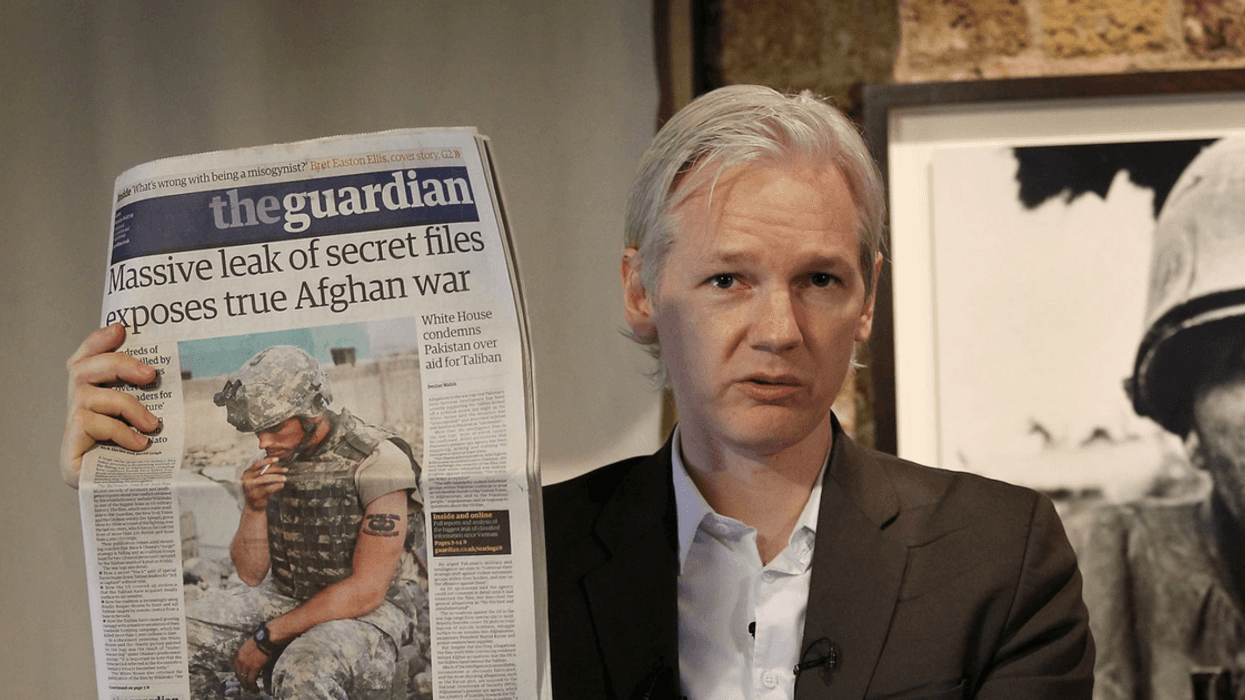
"As long as the Biden administration continues to deploy tools like the Espionage Act to imprison those who dare to expose war crimes, no publisher and no journalist will be safe," said one of the tribunal's co-chairs.
As Julian Assange awaits the final appeal of his looming extradition to the United States while languishing behind bars in London's notorious Belmarsh Prison, leading left luminaries and free press advocates gathered in Washington, D.C. on Friday for the fourth sitting of the Belmarsh Tribunal, where they called on U.S. President Joe Biden to drop all charges against the WikiLeaks publisher.
"From Ankara to Manila to Budapest to right here in the United States, state actors are cracking down on journalists, their sources, and their publishers in a globally coordinated campaign to disrupt the public's access to information," co-chair and Democracy Now! host Amy Goodman said during her opening remarks at the National Press Club.
"The Belmarsh Tribunal... pursues justice for journalists who are imprisoned or persecuted [and] publishers and whistleblowers who dare to reveal the crimes of our governments," she continued.
"Assange's case is the first time in history that a publisher has been indicted under the Espionage Act," Goodman added. "Recently, it was revealed that the CIA had been spying illegally on Julian, his lawyers, and some members of this very tribunal. The CIA even plotted his assassination at the Ecuadorean Embassy under [former U.S. President Donald] Trump."
Assange—who suffers from physical and mental health problems including heart and respiratory issues—could be imprisoned for 175 years if fully convicted of Espionage Act violations. Among the classified materials published by WikiLeaks—many provided by whistleblower Chelsea Manning—are the infamous "Collateral Murder" video showing a U.S. Army helicopter crew killing a group of Iraqi civilians, the Afghan War Diary, and the Iraq War Logs, which revealed American and allied war crimes.
According to the United Nations Working Group on Arbitrary Detention, Assange has been arbitrarily deprived of his freedom since he was arrested on December 7, 2010. Since then he has been held under house arrest, confined for seven years in the Ecuadorean Embassy in London while he was protected by the administration of former Ecuadorean President Rafael Correa, and jailed in Belmarsh Prison, for which the tribunal is named.
Human rights, journalistic, peace, and other groups have condemned Assange's impending extradition and the U.S. government's targeting of a journalist who exposed American war crimes.
In a statement ahead of Friday's tribunal, co-chair and Croatian philosopher Srećko Horvat said:
The First Amendment, freedom of the press, and the life of Julian Assange are at stake. That's why the Belmarsh Tribunal is landing literally just two blocks away from the White House. As long as the Biden administration continues to deploy tools like the Espionage Act to imprison those who dare to expose war crimes, no publisher and no journalist will be safe. Our tribunal is gathering courageous voices of dissent to demand justice for those crimes and to demand President Biden to drop the charges against Assange immediately.
Belmarsh Tribunal participants include Pentagon Papers whistleblower Daniel Ellsberg, U.S. academic Noam Chomsky, British parliamentarian Jeremy Corbyn, former Assange lawyer Renata Ávila, human rights attorney Steven Donziger, and WikiLeaks editor-in-chief Kristinn Hrafnsson.
Assange's father, John Shipton, and the whistleblower's wife and lawyer Stella Assange, are also members, as are Shadowproof editor Kevin Gosztola, Chip Gibbons of Defending Rights, Selay Ghaffar of the Solidarity Party of Afghanistan, investigative journalist Stefania Maurizi, The Nation publisher Katrina vanden Heuvel, and ACLU attorney Ben Wizner.
"One of the foundation stones of our form of government here in the United States... is our First Amendment to the Constitution," Ellsberg—whom the Richard Nixon administration tried to jail for up to 115 years under the Espionage Act, but due to government misconduct was never imprisoned—said in a recorded message played at the tribunal.
"Up until Assange's indictment, the act had never been used... against a journalist like Assange," Ellsberg added. "If you're going to use the act against a journalist in a blatant violation of the First Amendment... the First Amendment is essentially gone."
Ávila said before Thursday's event that "the Espionage Act is one of the most dangerous pieces of legislation in the world: an existential threat against international investigative journalism."
"If applied, it will deprive us of one of our must powerful tools towards de-escalation of conflicts, diplomacy, and peace," she added. "The Belmarsh Tribunal convenes in Washington to present evidence of this chilling threat, and to unite lawmakers next door to dismantle the legal architecture that undermines the basic right of all peoples to know what their governments do in their name."
The Belmarsh Tribunal, first convened in London in 2021, is inspired by the Russell Tribunal, a 1966 event organized by philosophers Bertrand Russell and Jean-Paul Sartre to hold the U.S. accountable for its escalating war crimes in Vietnam.
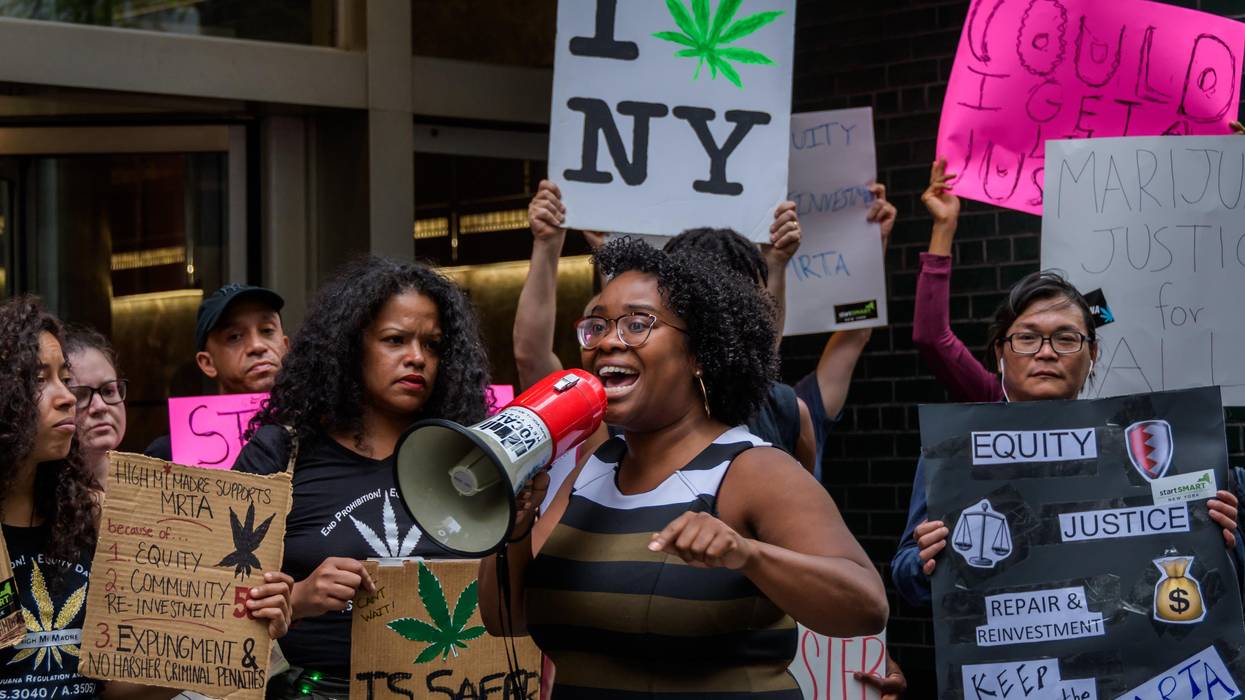
While welcoming U.S. President Joe Biden's executive action Thursday pardoning Americans convicted of low-level federal marijuana possession offenses, immigrant rights advocates expressed disappointment that the policy does not apply to noncitizens--and hope that the administration will ensure that everyone benefits from the clemency.
"Federal immigration authorities regularly deny green card and citizenship applications due to marijuana possession convictions."
As Common Dreams reported, Biden granted "a full, complete, and unconditional pardon to all current U.S. citizens and lawful permanent residents who committed the offense of simple possession of marijuana," a plant listed by the Drug Enforcement Administration in the same category as heroin and in a more serious class than cocaine, methamphetamine, and fentanyl.
While progressives largely applauded Biden's move, many expressed hope and expectation that is was only a first step toward federal decriminalization and, ultimately, legalization of a plant that is legal for recreational or medical use in most states today.
Some called for the inclusion of noncitzens and undocumented people in the policy. The California Collaborative for Immigrant Justice tweeted that Biden "says no one should be in jail for just using or possessing marijuana, but fails to include immigrants without status in his pardon."
"It's not the first time the government actively excludes immigrants without status from important decisions or reparations," the advocacy group added.
Although Drug Policy Alliance executive director Kassandra Frederique said Thursday that her group was "thrilled to see President Biden holding true to his commitment to pardon every person with simple marijuana charges at the federal level," she tempered her praise during a Friday interview with Democracy Now! host Amy Goodman.
Frederique lamented that "noncitizens were excluded from this, which is really unfortunate, because people who are noncitizens, cannabis is one of the main reasons why people are detained or deported."
"Drug Policy Alliance has learned an incredible amount of the intricacies between immigration policy and drug policy over the last decade," she continued. "And in fact, most people don't realize that our first drug laws were xenophobic immigration policies."
"And so," Frederique added, "this is why Drug Policy Alliance is working with our groups around the country to really figure out how do we continue to push where the president is right now, to a broader conversation that's actually going to bring the necessary material condition changes that our community needs."
Jane Shim, senior policy attorney at the Immigrant Defense Project, called Biden's move "one step in addressing" the harms caused by marijuana prohibition, which she said "has devastated poor communities and communities of color for too long."
"However, it is extremely disappointing that the administration went out of its way to exclude undocumented immigrants," she continued. "Furthermore, even immigrants who were pardoned may remain at risk of detention and deportation because of a marijuana offense, thanks to our punitive immigration laws."
"President Biden can and should ensure that marijuana possession convictions do not jeopardize a person's immigration status," Shim argued. "Federal immigration authorities regularly deny green card and citizenship applications due to marijuana possession convictions."
Shim noted that U.S. Immigration and Customs Enforcement (ICE) "has already deported thousands of people for marijuana possession, and continues to do so today."
"Pardons that clear the way for employment, housing, and educational opportunities will be little solace to families threatened with separation through deportation by ICE," she added.
Proponents of a negotiated diplomatic solution to end Russia's invasion of Ukraine this week decried the Biden administration's latest military assistance package for the embattled country, warning that the longer the fight continues, the greater the chance of a catastrophic nuclear war.
"The chances of a nuclear war increase significantly every day that passes."
The Pentagon announced Tuesday that the U.S. will deliver up to $625 million worth of additional armaments and ammunition to Ukraine following Russia's illegal annexation of four Ukrainian regions last week, a move that prompted Ukrainian President Volodymyr Zelenskyy to formally apply for NATO membership.
The new package includes four High Mobility Artillery Rocket Systems (HIMARS) and an unknown number of guided missiles; 16 155mm howitzers and 75,000 precision-guided artillery rounds; 1,000 155mm remote anti-armor mines; 16 105mm howitzers; 30,000 120mm mortar rounds; 200 MaxxPro mine-resistant ambush-protected vehicles; 200,000 rounds of small arms ammunition; and other armaments.
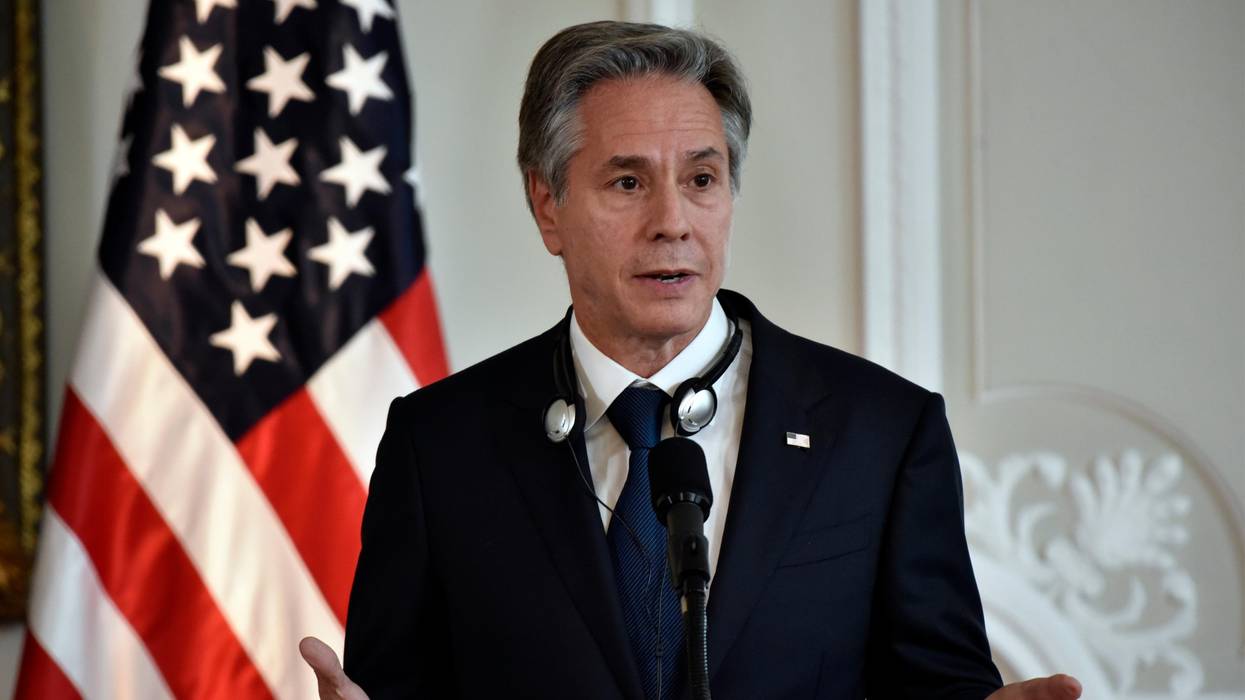
U.S. Secretary of State Antony Blinken said the new aid--which comes on top of more than $15 billion in American military assistance to Ukraine since Russia invaded on February 24--is "carefully calibrated to make the most difference on the battlefield and strengthen Ukraine's hand at the negotiating table when the time is right."
Peace advocates stressed that--with Russian President Vladimir Putin's repeated threats to use nuclear weapons--the right time is right now, and that the United States and NATO allies should stop trying to weaken Russia by prolonging the war.
"The longer the war goes on, the longer it's maintained, the more the prospects for a diplomatic settlement diminish," U.S. political dissident and professor Noam Chomsky told Democracy Now! host Amy Goodman in a Monday interview. "The longer the war continues, the more the window closes."
However, Chomsky noted that the United States and Britain "are keeping to the principle that the war must continue to severely weaken Russia--meaning no negotiated settlements, with all the consequences that follow."
Harry J. Kazianis, senior editor at 19FortyFive and president of the Rogue States Project, a bipartisan national security think tank based in Washington, D.C., wrote Monday for the Quincy Institute for Responsible Statecraft that "tensions are rising by the second," while "the chances of a nuclear war increase significantly every day that passes."
"Considering the stakes--among them, the possibility that Russia will feel so boxed in that it will turn to its arsenal of 6,400 nuclear warheads and try to end the Ukraine war on its own terms despite the risk of a nuclear holocaust--one would think talks would already be happening as we speak," Kazianis continued.
"Sadly," he added, "due to the Western narrative that Ukraine is 'winning' the war against Moscow, the Biden administration appears to believe it can put enough pressure on Putin with more weapons for Ukraine that he will give up his newly annexed territories and go home with his atomic tail between his legs."
According to recent polling by the Quincy Institute and Data for Progress, 49% of Americans want Biden to do more to seek a diplomatic solution to the war.
"This is not just the United States," Jacobin staff writer Branko Marcetic told "Breaking Points" podcast hosts Krystal Ball and Saagar Enjeti on Tuesday. "There was a poll in Germany that shows most Germans, who are really feeling harshly the economic blowback of the sanctions, they want more diplomacy to try to end the war."
"This is also the prevailing opinion in most of the rest of the world, the Global South," he added. "You can look at... countries like Turkey, or say Mexico, who have attempted to try and broker some sort of peace agreement."
China has been a leading proponent of de-escalation and finding a diplomatic solution to the war. Speaking last week, Zhang Jun, China's permanent representative to the United Nations, said that his country's government "calls on all parties concerned to exercise restraint, refrain from actions that exacerbate tensions, and leave space for settlement through diplomatic negotiations."
"Where is the peace movement? There used to be a robust peace movement throughout the Cold War."
"The pressing priority is to make every effort to de-escalate the situation," he added, "and guide the parties to restart diplomatic negotiations as soon as possible to open the door to a political settlement with legitimate concerns brought into the negotiations and viable options put on the table, in an effort to achieve an early ceasefire."
With Zelenskyy having signed a decree Tuesday asserting that the prospect of talks with Putin is "impossible"--while signalling an openness to future negotiations with a change in Russian leadership--many Western observers have argued that seeking a diplomatic solution is an exercise in futility at this point.
"Are there still negotiation possibilities? There's only one way to find out. That's to try," said Chomsky. "If you refuse to try, of course, there's no option, no possibilities."
Marcetic asked: "Where is the peace movement? There used to be a robust peace movement throughout the Cold War."
"All that seems to be gone," he added. "I wish that people were more active and more outspoken about this to demonstrate that, no, you know, nuclear war is not worth anything."
"Wildly here without control,
Nature reigns and rules the whole..."
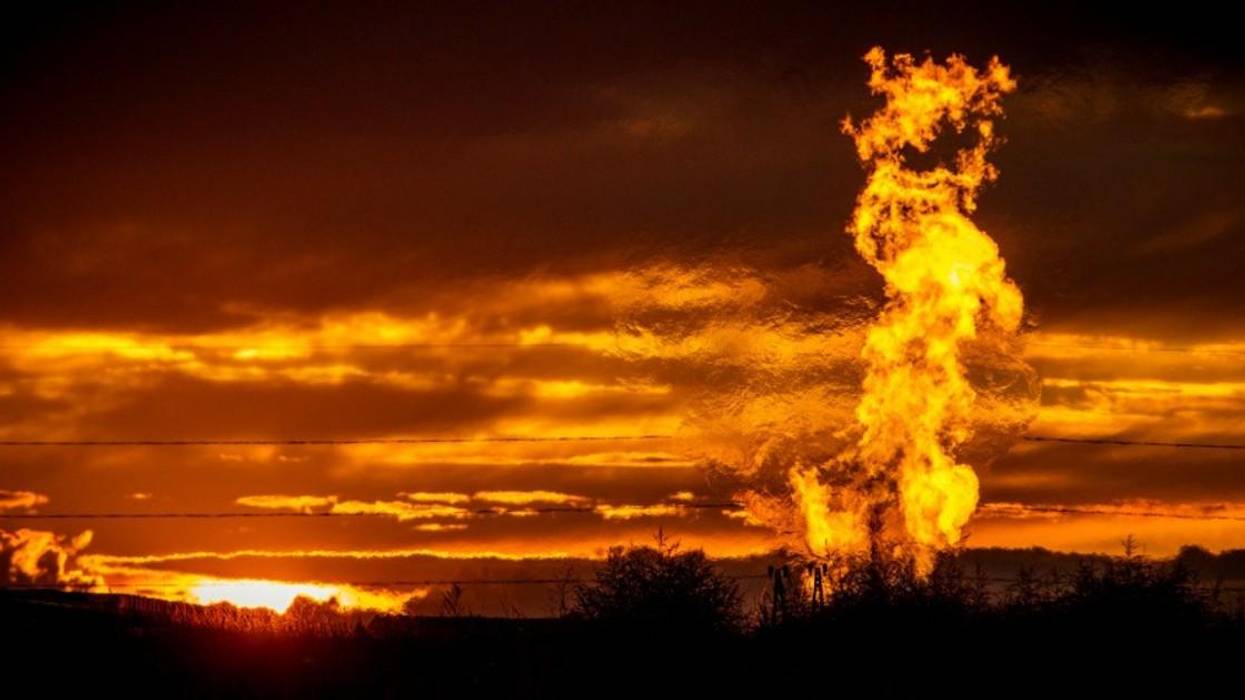
Scotland's most famous poet, Robert Burns, wrote those lines in 1787. If only the delegates to COP26, the United Nations climate summit that wrapped up last Saturday in Glasgow, had heeded his words. The negotiations ended with a document dubbed the "Glasgow Climate Pact" which many climate activists called a failure. "We should call it the 'Glasgow suicide pact' for the poorest in the world," Asad Rehman of the COP26 Coaltion said on the Democracy Now! news hour. "It does not keep us below the 1.5 degree [Celsius, or 2.7 degrees Fahrenheit] guard rail. In fact, it heads us closer to 3 degrees [C, or 5.4 degrees F]...They're ramming through so many loopholes that it makes a mockery of these climate negotiations."
Poor, developing nations haven't contributed significantly to the overall climate crisis, but are suffering disproportionately.
One draft of the climate pact included an historic first, calling for "the phasing out of coal and subsidies for fossil fuels." Polluting nations and armies of fossil fuel industry lobbyists managed to dilute that down to "the phase-out of unabated coal power and of inefficient subsidies for fossil fuels." Thus, coal, the dirtiest fossil fuel, can still be burned with the promise that the resulting pollution will be "abated" with carbon capture and storage, an unproven technology. And the same fossil fuel corporations that have profited for so long while sowing disinformation about the climate will continue to enjoy lavish subsidies at taxpayer expense.
"This summit was betrayal," Mitzi Jonelle Tan, a climate justice activist from the Philippines, said on Democracy Now! "It is painful for me, knowing that the Philippines is such a vulnerable country for the climate crisis and that we know that we are hit year after year, month after month, with climate impacts." The Philippines, described as the most storm-vulnerable nation on earth, has been hard hit by a succession of especially destructive, climate change-fueled typhoons over the past decade. "All countries," she added, "should be phasing out the fossil fuel industry. That doesn't just stop at coal, but also oil and gas, which the U.S. and the U.K. conveniently took out of the text."
Indigenous land defenders from the Amazon were also in Glasgow for COP26. The world's largest rainforest is called "the lungs of the planet" for the vital role it plays in absorbing carbon dioxide from the atmosphere. "We must first change our relationship to nature, change the way we think about the world, and really put at the center of our thinking our connection to life and our commitment to future generations," Domingo Peas, an Achuar indigenous leader from the Ecuadorian Amazon, said on Democracy Now! "There are 30 indigenous nations and 30 million hectares of intact forest that are at stake. We must protect this...The forest is calling on us."
The United States and European nations built their enormous wealth by burning coal with abandon for over a century and a half, a cheap but dirty way to achieve growth. The U.S. remains the single largest historical emitter of greenhouse gases, with close to twice the total that China has emitted, based on 2017 data. China is now by far the largest emitter globally.
In recent years, the U.S., the U.K., and most European Union nations have been able to decrease their reliance on coal, shifting to oil, fracked gas, and renewable sources.
Poor, developing nations haven't contributed significantly to the overall climate crisis, but are suffering disproportionately. To recover from disasters, to adapt to the changing climate, and to build their economies responsibly toward a zero carbon future, these countries need money. COP26 was supposed to deliver on long-promised financing for these needs, but failed to do so.
At COP15 in Copenhagen in 2009, the U.S. and other developed countries pledged $100 billion per year to developing and climate-vulnerable nations from 2020 through 2025. Only a fraction of those funds have materialized, much of it as loans, not as climate aid. Meanwhile, a consortium of African nations recently estimated that the true cost for them to effectively respond to climate change would be closer to $1.3 trillion per year. Polluters should pay, and the United States should lead the way.
Robert Burns died in 1796, when the age of coal was in its infancy. The current National Poet of Scotland is Kathleen Jamie. Inspired by the River Clyde that flows through Glasgow, this week she penned "What the Clyde said, after COP26," which ends,
"sure, I'm a river,
but I can take a side.
From this day, I'd rather keep afloat,
like wee folded paper boats,
the hopes of the young folk
chanting at my bank,
fear in their spring-bright eyes
so hear this: fail them, and I will rise."

U.S. taxpayers who want to see their tax dollars at work should look no further than the Gaza Strip, the besieged enclave where 2 million Palestinians live in what former Conservative British Prime Minister David Cameron described as "an open-air prison." Israel has launched another of its horrific, periodic bombing campaigns against the embattled Gazans--slaughters that Israeli commentators have long called "mowing the grass"--leaving hundreds dead, including scores of children. At least 17 hospitals and clinics have been damaged, including Gaza's only COVID-19 testing facility, clean water has been cut to hundreds of thousands, schools have been destroyed, and a major high rise building hosting media organizations including Al Jazeera and the Associated Press was leveled. The United States enables all this by providing Israel with billions of dollars in aid annually and unparalleled access to sophisticated weaponry.
With a new, more diverse generation of elected representatives, popular resistance to Israel's occupation of Palestine is finding a voice in Washington.
Jewish Voice for Peace, a grassroots human rights group, asked of American Jews in a recent press release, "Do we accede to a future rooted in denial and continue to allow apartheid, ethnic cleansing and massacre in our names? Or do we engage with hard truths and bring our whole selves to the struggle of teshuva, of repair for these harms?" Israel has long enjoyed vigorous, bipartisan support in the U.S. Now, with a new, more diverse generation of elected representatives, popular resistance to Israel's occupation of Palestine is finding a voice in Washington.
"I am the only Palestinian American member of Congress now, and my mere existence has disrupted the status quo," Congressmember Rashida Tlaib, Democrat of Detroit, said during an emotional address on the floor of the House of Representatives. "I am a reminder to colleagues that Palestinians do indeed exist, that we are human, that we are allowed to dream. We are mothers, daughters, granddaughters. We are justice seekers and are unapologetically about our fight against oppressions of all forms."
Tlaib was speaking on Eid al-Fitr, the celebration that follows the Muslim holy month of Ramadan, and just two days before the Palestinian commemoration of Nakba Day. The Nakba, or, in English, the Catastrophe, was the violent expulsion of hundreds of thousands of Palestinians that accelerated following the May 15th, 1948 founding of Israel.
Since then, Israel has systematically expanded its illegal military occupation of Palestinian land, killed thousands of innocent Palestinians, and imprisoned tens of thousands more without charge. None of this could have been accomplished without the robust support and approval of the United States.
In the past, Rashida Tlaib might have been a lone voice. Now, she has a groundswell of support. Democratic Congressmembers Alexandria Ocasio-Cortez of New York and Mark Pocan of Wisconsin joined Tlaib in offering a joint resolution to Congress, opposing the pending $735 million sale to Israel of so-called "smart" bombs, the Joint Direct Attack Munitions, or JDAMS, manufactured by Boeing. Sen. Bernie Sanders is introducing a similar resolution in the Senate.
John Ossoff, the first Jewish Senator elected from Georgia, led 28 Democratic Senators in calling for a ceasefire in Gaza, from both Israel and Hamas, whose missiles have killed 12 people inside Israel. Thousands of people have been rallying across the United States, demanding a cease fire.
On Tuesday, Biden made a trip to Detroit, Rashida Tlaib's home district, to visit the plant where Ford's all-electric vehicles will be manufactured. Tlaib met him on the airport tarmac. NPR reported that an aide to Tlaib summarized Tlaib's comments to Biden as, "Palestinian human rights are not a bargaining chip and must be protected, not negotiated...The U.S. cannot continue to give the right-wing Netanyahu government billions each year to commit crimes against Palestinians. Atrocities like bombing schools cannot be tolerated, much less conducted with U.S.-supplied weapons." Biden praised Tlaib in his speech at the Ford plant, adding, "I pray that your grandma and family are well."
Palestinian grandmothers living under Israeli occupation don't need Biden's prayers; they need his intervention.
As Biden was about to test drive an electric truck, he had this exchange with a reporter:
"Mr. President, can I ask you a quick question on Israel before you drive away, since it's so important?"
"No, you can't-not unless you get in front of the car as I step on it. I'm only teasing," Biden replied.
He then tore off, reportedly hitting 80 mph. For the millions of Palestinians living under Israeli occupation, it is as if they are hit daily by a truck driven by the American government.
Israel's latest deadly assault has driven more people around the world into active solidarity with the Palestinan people in their resistance, rejecting what the late, great Palestinian scholar and activist Edward Said described as the "gregarious tolerance for the way things are."

The January 6th insurrection was one way to try to overthrow democracy: incite a mob to ransack the Capitol and threaten to kill key leaders who dared renounce Donald Trump's Big Lie that Joe Biden stole the 2020 election. People were killed and injured, public property was damaged, but Congress still counted the Electoral College votes, delayed by only about 12 hours. U.S. Attorney General Merrick Garland called the insurrection the most "dangerous threat to democracy" he has witnessed. "And in the FBI's view, the top domestic violent extremist threat we face comes from racially or ethnically motivated violent extremists, specifically those who advocate for the superiority of the white race."
Now, a more sophisticated effort to subvert democracy is underway. Across the country, voter suppression bills are being rushed through Republican-controlled state legislatures. These, coupled with partisan gerrymandering that will follow the 2020 U.S. Census results, could erase a century and a half of struggle and progress for voter rights in this country, potentially allowing permanent control of our government by a white supremacist minority.
Massive public pressure will be needed to get the For the People Act through the Senate.
The Brennan Center for Justice has been tracking these bills, and, as of April 1st, had counted an astounding 361 of them in 47 states. Georgia and Arizona have already enacted significant voter suppression laws. Both states were Republican strongholds for decades. In 2020, Joe Biden won them both, as did Democratic Senate candidates Mark Kelly in Arizona, and Jon Ossoff and Raphael Warnock in Georgia. Biden's win in those states, and the loss of those three senate seats, and thus, control of the U.S. Senate, was a devastating defeat for the Republican Party.
Senator Lindsey Graham, Republican of South Carolina, reacted on the Fox News Channel shortly after the election, saying, "If Republicans don't challenge and change the U.S. election system, there will never be another Republican president elected again." Republicans have heeded Graham's warning, flooding the country with strikingly similar bills designed to restrict and deter voting (with the help of the rightwing group ALEC, the American Legislative Exchange Council). "Our leverage in the elections goes up as the voting populace goes down," the late conservative activist Paul Weyrich said in 1980, articulating a longstanding tenet of GOP electoral strategy.
"The issue is not Democrats versus Republicans. The issue is Republicans versus democracy. They're making it harder for everybody to vote," journalist Ari Berman, the author of "Give Us the Ballot: The Modern Struggle for Voting Rights in America," said on the Democracy Now! news hour.
The bills target traditionally Democratic voters, primarily in communities of color in urban centers, through a range of tactics: from purging voter rolls and felon disenfranchisement to strict requirements for photo identification, imposing voter registration barriers, making drastic cuts to early, absentee and mail-in voting, and reducing or eliminating curbside voting, ballot drop box locations and the number and capacity of polling places. There is also a concerted effort to bring back the Jim Crow-era tactic of aggressive voter intimidation by partisan "poll watchers."
In Arizona, Republican Governor Doug Ducey just signed a bill that could purge over 100,000 voters from the early mail-in voting list. In Georgia, even more voters were purged prior to the 2018 election -- purged by the Republican candidate for Governor, Brian Kemp, who was then the Secretary of State, overseeing the very election he would later narrowly win. Senator Raphael Warnock, in his first floor speech as a U.S. Senator, said, "I hail from a state that purged 200,000 voters from the roll one Saturday night, in the middle of the night. We know what's happening here: Some people don't want some people to vote."
Georgia's new, draconian "election integrity" law delivered a slew of voter suppression methods, even criminalizing giving food or water to people waiting in line to vote. Florida enacted its voter suppression law, including the ban on providing voters with snacks and water. Republican Governor Ron DeSantis angered Florida news broadcasters by giving an exclusive, live interview to Fox & Friends, reportedly Trump's favorite program, as he signed the bill into law.
News of democracy's death may be greatly exaggerated, however, as grassroots activism to protect the right to vote gathers momentum. Public Citizen, Common Cause, Black Voters Matter, Indivisible and other groups are pushing Congress to pass historic, pro-democracy legislation this year. H.R.1/S.1, the For the People Act, would restore and expand the protections of the 1965 Voting Rights Act, gutted by the Supreme Court in a 5-4 decision in 2013. It would immediately render most of these voter suppression bills illegal.
Massive public pressure will be needed to get the For the People Act through the Senate. As the late voting rights icon, Congressmember John Lewis wrote, in his final essay published last summer on the day of his funeral, "Democracy is not a state. It is an act, and each generation must do its part...by getting in what I call good trouble, necessary trouble."

Independent media outlets are partnering up to cover Super Tuesday Democratic primary results with a pair of live-streamed evening broadcasts that offer progressives an alternative to the U.S. corporate media that has been widely criticized for favoring centrist candidates and putting the interests of their advertisers over those of viewers and the common good.
"This race is not gonna just determine who takes on Donald Trump--it also has at its center the future of the Democratic Party and movements for justice."
-- Amy Goodman, Democracy Now!
Democracy Now! and The Intercept's Super Tuesday live special runs from 7:00pm to midnight Eastern Time (4:00pm to 9:00pm Pacific).
Rising Up With Sonali's live program--a production of KPFK Pacifica Radio in collaboration with the nonprofit RootsAction Education Fund--runs from 10:00pm to 1:00am Eastern Time (7:00pm to 10:00pm Pacific) and will be streamed at Truthdig.com, KPFK.org, FreeSpeech.org, TheRealNews.com, and RisingUpWithSonali.com.
Detailing its special coverage, Democracy Now! explained its chief anchors--Amy Goodman, Juan Gonzalez, and Nermeen Shaikh--would be joined by The Intercept's Jeremy Scahill to host "a rolling roundtable discussion with guests across the country, reporting real-time results and analysis as polls close in 14 states."
Registered Democrats turned out Tuesday in Alabama, Arkansas, California, Colorado, Maine, Massachusetts, Minnesota, North Carolina, Oklahoma, Tennessee, Texas, Utah, Vermont, and Virginia to cast votes for the party's primary candidates. Tuesday also featured American Samoa's caucuses and the first day for "Democrats living abroad" to vote.
In a clip that kicked off the Intercepted podcast's Tuesday episode, Goodman said that "the stakes in this Democratic primary are very high, and the corporate media's failing to bring people the crucial context necessary for voters to make informed decisions... This race is not gonna just determine who takes on Donald Trump--it also has at its center the future of the Democratic Party and movements for justice."
The Intercept's Aida Chavez, Lee Fang, Ryan Grim, Mehdi Hasan, Naomi Klein, Akela Lacy, and Robert Mackey are slated to participate in the program, according to promotional tweets by the outlet and journalists. Other guests will include Linda Sarsour, Masha Gessen, Katrina vanden Heuvel, Rashad Robinson, Briahna Joy Gray, Joe Salazar, and Raquel Willis.
On Tuesday morning, Intercepted published a special episode titled "Super Tuesday: Which Side Are You On?" The episode, hosted by Scahill, features Fang discussing the impact of dark money and super-delegates on the Democratic presidential primary as well as former Hillary Clinton adviser Peter Daou explaining why he is now supporting Sen. Bernie Sanders (I-Vt.) in 2020 contest.
Sanders and four other candidates--former Vice President Joe Biden, billionaire businessman and former New York City Mayor Mike Bloomberg, Rep. Tulsi Gabbard (D-Hawaii), and Sen. Elizabeth Warren (D-Mass.)--still remain in what was once a crowded race. In the wake of South Carolina's primary last Saturday, former South Bend, Indiana Mayor Pete Buttigieg and Sen. Amy Klobuchar (D-Minn.) both dropped out and endorsed Biden.
Biden's win in South Carolina followed weak performances in the first three contests in Iowa, New Hampshire, and Nevada, where Sanders collected the most pledged delegates and continued to build his "Not Me, Us." movement. Sanders' strong support in early states culminated in anchors and contributors at Comcast-owned MSNBC descending into what one observer called a "full-blown freakout" after the progressive senator's massive victory in Nevada last month.
"Democracy depends on a free and independent press that can hold power accountable, but sadly, the corporate media does not meet that standard," Sonali Kolhatkar of Rising Up With Sonali (RUWS) and Norman Solomon of RootsAction argued in an op-ed published last week.
Kolhatkar and Solomon made a broad case for the value of independent media:
Truly independent journalism relies on facts, just as corporate media often does, but frames issues with a clearly stated bias--a bias that lights a fire under the powerful and roots for the vulnerable, amplifies the voices of working people to topple power, and strengthen the powerless. The function of the press in a democracy is to pursue truth in the interest of progress, not in the interest of an unjust status quo. Seen through such a lens it isn't hard to judge whether the likes of The New York Times (or CNN, MSNBC, The Washington Post, etc.) truly meet the definition of independent journalism.
A crucial way to fight back is to drastically amp up support for independent progressive media. Information flow is key, whether in small communities or nationwide. That flow is essential to the health of the body politic, but blockage is routine from massive clots of concentrated wealth and corporate power. Media organizations that are fueled by people power instead of money power can disrupt the dominant media narratives--and replace them with authentic stories about people's lives and grassroots efforts to create a more humane society.
The op-ed also highlighted the RUWS Super Tuesday program featuring Solomon and other guest commentators and reporters, including Jane McAlevey, Zahra Billoo, John Nichols, Kshama Sawant, Arun Guta, Mitch Jeserich, and Julio Ricard Varela.
"This year is the first time that California--the nation's most populous and most racially diverse state--will participate in primary elections so early in the season," RUWS noted ahead of Tuesday's broadcast. "Based in the Los Angeles area, Rising Up With Sonali is poised to offer a unique perspective on the race for presidential nominations."

"I have a lot of respect for whistleblowers," President Donald Trump said at a news conference Wednesday, before qualifying, "but only when they are real." It remains unclear what the first U.S. president who comes from reality television means by "real." What is clear is that the impeachment inquiry announced last week by House Speaker Nancy Pelosi has infuriated Trump as it picks up steam. The inquiry is based largely on the complaint of a single whistleblower, who revealed, through legally prescribed channels, details of Trump's efforts to pressure Ukraine's newly elected president, Volodymyr Zelenskiy, to investigate one of Trump's 2020 presidential rivals, former Vice President Joe Biden and his son Hunter Biden. That a single whistleblower could trigger Trump's potential impeachment reminds us how important whistleblowers are to a functioning democracy. It also compels us to recognize that far too many of them over the years have been vilified, persecuted and prosecuted for their courageous acts.
"How is it that there has been just one whistleblower?" Preet Bharara, former U.S. attorney for the Southern District of New York, asked in a tweet. "Gee I wonder," replied Edward Snowden, one of the world's most famous whistleblowers. Ed Snowden has been living in exile in Moscow since 2013 after he released to journalists millions of pages of documents he had taken out of the National Security Agency, where he had worked on the nation's most closely guarded surveillance programs.
Snowden's derisive quip to Bharara is grounded in his own hard-earned experience. Snowden witnessed what he thought was a vast web of illegal, unconstitutional surveillance activities being conducted at the NSA. He left his home in Hawaii with a trove of top-secret electronic files and flew to Hong Kong, where he met with journalists Glenn Greenwald, Laura Poitras and Ewen MacAskill. Holed up in a hotel room over the course of days, Snowden walked the trio of reporters through the myriad spy programs that he considered illegal, including the dragnet collection of all cellphone call records in the U.S., potentially vacuuming up the internet browsing activity of everyone on the planet and spying on cellphone calls of world leaders, for starters.
"The question that we have to ask is: Why?" Snowden said on the "Democracy Now!" news hour, days after the release of "Permanent Record," his memoir. "Don't we need, as a public, to understand what the government is doing ... behind closed doors?" Snowden's memoir details his trajectory as a young computer expert, inspired by the attacks of 9/11 to join the military and then, after an accident, to move into the intelligence community.
Snowden became increasingly alarmed by the vast surveillance state that he was helping to build, but knew that, if he were to follow the formal channels for raising concerns, it wouldn't end well. "NSA whistleblowers who did go through this process had their lives destroyed," he said on "Democracy Now!" "They lost their careers, they lost their homes, in some cases they lost their families, because of the stress and retaliation and consequences they face."
The list of whistleblowers who have suffered for their acts gets increasingly longer: NSA whistleblowers Thomas Drake, Bill Binney and NSA contractor Reality Winner; the CIA's Jeffrey Sterling; and U.S. Army whistleblower Chelsea Manning, to name just a few. Some went through official channels; others went straight to the press. Their disclosures served the public, and, in return, zealous government prosecutors brought the hammer down on them.
"Some of them lost their freedom," Snowden said from his home in exile. "Chelsea Manning right now is sitting in prison. We have had so much mistreatment of whistleblowers here."
Lawyers for the current whistleblower have written that their client is currently under federal protection, and that they fear for the person's safety. Edward Snowden understands what worries this whistleblower. "The government made me public enemy number one. I was the most wanted man in the world," he said. Ultimately, he chose to go directly to the press, instead of risking the official channels that often fail the whistleblower. He is willing to return to the U.S. to face trial, provided it is fair and open to the public, not if he is tried in secret, unable to present his reasons for his disclosures. "I don't believe participating in that kind of system advances the interests of justice; I think that perpetuates a system of injustice."

House Speaker Nancy Pelosi has launched an impeachment inquiry against President Donald Trump. "The president must be held accountable," she announced Tuesday. Pelosi has been pressured for months on impeachment, from congressional and grassroots progressives. An intelligence community whistleblower raised concerns over a phone call last July that Trump held with Ukraine's new president, Volodymyr Zelenskiy, pushing more moderate Democrats to support an impeachment inquiry. Trump admitted that he asked Ukraine to investigate his political rival, former Vice President Joe Biden, and his son Hunter Biden, and ordered withholding of Ukrainian aid. Such behavior may rise to the "high crimes and misdemeanors" standard for impeachment. But isn't Trump already deserving of an impeachment inquiry, many times over?
The policy agenda that Donald Trump is pursuing based on climate science denial amounts to an impeachable offense.
On May 17, 2017, less than three months into Trump's presidency, Democratic Congressmember Al Green of Houston was the first to take to the House floor calling for Trump's impeachment. Within days, Green, who is African American, was receiving death threats. One voicemail threatened: "You ain't gonna impeach nobody, you [bleep]. Try it, and we'll lynch all you [bleep]. You'll be hanging from a tree."
On Wednesday, the day after Pelosi announced the impeachment inquiry, Green, appearing on the "Democracy Now!" news hour, agreed that the Ukrainian issue was an impeachable offense. "I would also mention the emoluments clause," he added, "with the president benefiting from persons who are staying in his hotels. ... I would also never forget the racism, the bigotry, the xenophobia, the homophobia, the Islamophobia."
The case for an emoluments impeachment is ever-growing, it seems. Foreign delegations and lobbyists regularly stay at Trump International Hotel in Washington, D.C., and spend lavishly there. Ukrainian President Zelenskiy, according to the declassified transcript released by the White House Wednesday, let Trump know that he stayed at Trump Tower in New York's Central Park.
Trump has been accused of rape, sexual assault and sexual harassment by at least 24 women. These accusations alone certainly provide cause for an impeachment inquiry. Trump has retaliated against many of these women, threatening to sue them or crassly insulting them as not his "type." Trump himself has admitted, on the notorious "Access Hollywood" tape, that he forces himself on women. "When you're a star ... you can do anything," Trump said.
The authority to wage war, to direct the U.S. military to kill people, is the presidential power that demands the most intense oversight, by Congress and by the public.
The policy agenda that Donald Trump is pursuing based on climate science denial amounts to an impeachable offense. He is accelerating environmental destruction, leading to irreversible, catastrophic climate change. The Trump administration pulled out of the Paris climate agreement, and tirelessly rolls back environmental regulations while boosting the extraction and sale of fossil fuels. "We are in the beginning of a mass extinction, and all you can talk about is money and fairy tales of eternal economic growth. How dare you," 16-year-old Swedish climate activist Greta Thunberg said, ferociously reprimanding the adults gathered at the United Nations Climate Action Summit Monday. Showing up at the summit for 14 minutes, Trump mocked Thunberg on Twitter, saying she looked like "a very happy young girl looking forward to a bright and wonderful future."
The authority to wage war, to direct the U.S. military to kill people, is the presidential power that demands the most intense oversight, by Congress and by the public. Trump ran for president promising to withdraw from foreign wars, but has delivered the opposite. Recently in Afghanistan, the U.S. launched a drone strike that killed 30 civilians--pine nut farmers resting in the shade--and participated in a nighttime raid that killed an estimated 40 civilians, prolonging the longest war in U.S. history.
Trump continues to support Saudi Arabia's devastating bombing of Yemen that has killed thousands of civilians. A recent Saudi bombing of a community college killed at least 109 people there. Millions of Yemenis are at risk of starvation in what is described as the world's worst humanitarian crisis. Congress has twice passed bipartisan legislation to block arms sales to the Saudis, which Trump has vetoed. He has also ordered more troops to Saudi Arabia to protect its oil facilities and lavishes praise on Saudi Crown Prince Mohammed bin Salman. Oct. 2 marks the first anniversary of the brutal murder and dismemberment of Washington Post columnist Jamal Khashoggi in a Saudi Consulate in Turkey, which the CIA concluded was ordered by bin Salman. Trump's warmongering is an impeachable offense in itself.
Trump's refusal to support gun control legislation, mass shooting after mass shooting; his prolific lying; his relentless attacks on the press; his elimination of critical programs in our social safety net; his discrimination against trans people in the military and in schools; his Muslim ban, his separation of families and caging of children--all are worthy of an impeachment inquiry. As Congressmember Al Green said, "At some point, we have to stand up to him and let him know that the line has been drawn, and you will go no further."

On July 25, in a surprise announcement, U.S. Attorney General William Barr said that the federal government would be resuming executions, with five scheduled in the coming months. This overturns an effective moratorium on the federal death penalty that has lasted over 16 years.
"Punishment must be swift," Barr said.
Just a week later, President Donald Trump exploited the mass killings in El Paso, Texas, and Dayton, Ohio, by demanding not an assault weapons ban, but that capital punishment "be delivered quickly, decisively and without years of needless delay." Needless delay? Since 1973, over 160 wrongfully convicted people have been freed from death row.
Trump's death penalty dictate is a tragic step backward.
In fact, the death penalty is rapidly losing favor in the United States. Twenty-one states and the District of Columbia have banned executions, while four more states have formal moratoriums in place. Around the world, 106 countries have outlawed capital punishment, and another 28 either have moratoriums or don't carry out the death sentences. Trump's death penalty dictate is a tragic step backward.
"I'm not surprised that William Barr did this or the Trump administration wants to expedite federal executions," renowned anti-death penalty activist Sister Helen Prejean said on the "Democracy Now!" news hour. "It's their whole way of approaching everything: the way is through violence to try to solve social problems." Prejean is the Catholic nun who rose to global prominence in 1995 after her book "Dead Man Walking: An Eyewitness Account of the Death Penalty" was turned into an Oscar-winning film starring Susan Sarandon and Sean Penn.
In her new memoir, "River of Fire," Prejean eloquently describes the path that led her from a life as a semi-cloistered young nun in New Orleans in the 1960s to become one of the world's most celebrated and effective campaigners against capital punishment. In it, she writes, "From years on the road talking with people in every state of this nation I realized that most folks have never reflected deeply about capital punishment and have almost no information about how the penalty actually works--or doesn't work."
Prejean co-founded a group, Survive, that works with the families of murder victims. Bud Welch lost his daughter Julie in the Oklahoma City bombing in 1995, which killed 168 people. Timothy McVeigh was later executed for the crime. Welch said on "Democracy Now!": "One cannot go through the healing process at all when you're living with revenge. And that's all the death penalty is, revenge. It is not a deterrent. It doesn't, as the media says, bring closure to family members."
The Death Penalty Information Center presents clear and compelling statistics on the 2,500 people currently on death row in the U.S., and how unjustly the death penalty is implemented. The most significant factors in determining whether or not a person is given the death penalty are the location where they are tried, whether they are poor, and the race of the victim. For example, over half of all death sentences are handed down in just 2% of U.S. counties. Similarly, over 75% of capital punishment cases involve murders where the victim was white. According to the DPIC, "In Louisiana, the odds of a death sentence were 97% higher for those whose victim was white than for those whose victim was black. Jurors in Washington state are three times more likely to recommend a death sentence for a black defendant than for a white defendant in a similar case."
Not only is the death penalty administered in an unjust, biased way, but it is also irreversible. Death is final. Clifford Williams Jr. and Charles Ray Finch became the 165th and 166th death row prisoners to be exonerated. Each of these innocent African American men spent over 40 years on death row. With the expedited execution schedule fancied by Trump and Barr, they would have been long dead.
Helen Prejean believes Trump and Barr "seem to have no understanding about how the courts work. They can claim all they want that they're going to fast-track this and speed up these executions, but there is the Constitution, and there are the appeals." While her focus remains on grassroots organizing, she also points to the importance of dedicated death penalty defense attorneys.
One such lawyer is Bryan Stevenson, founder of the Equal Justice Initiative in Montgomery, Alabama. The group's Legacy Museum and the accompanying lynching memorial is deeply moving, documenting the 400-year history of African Americans, from enslavement to Jim Crow to the current crisis of mass incarceration.
Said Stevenson on "Democracy Now!," "The death penalty is lynching's stepson."