

SUBSCRIBE TO OUR FREE NEWSLETTER
Daily news & progressive opinion—funded by the people, not the corporations—delivered straight to your inbox.
5
#000000
#FFFFFF
To donate by check, phone, or other method, see our More Ways to Give page.
Daily news & progressive opinion—funded by the people, not the corporations—delivered straight to your inbox.
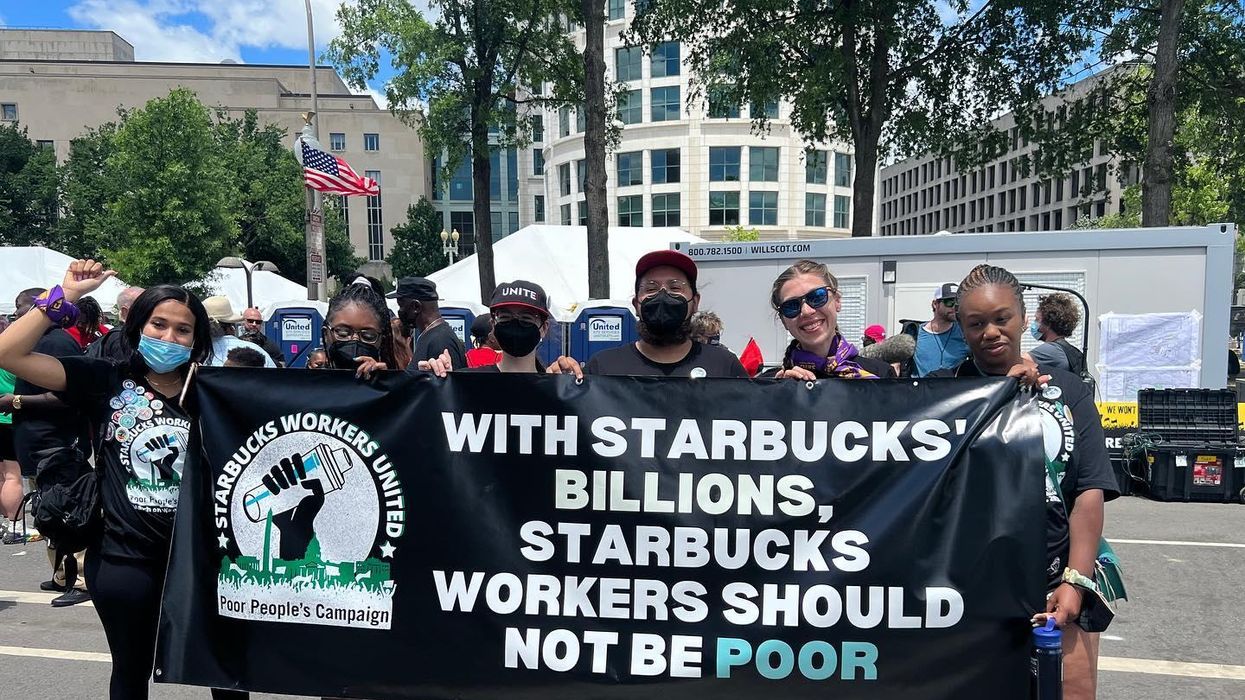
Working families are getting hammered by inflation while corporate leaders and politicians are calling for belt-tightening. But there's one group of Americans that's actually profited from increasing prices.
One pending bill would use tax incentives to encourage companies to narrow their divides -- the wider the gap between a company's CEO and worker pay, the higher their corporate tax rate.
Big company CEOs have enjoyed soaring pay, even as their employees have been struggling to keep their families safe and their bills paid.
Look at Target, for example. Last year, the median Target worker salary did not even keep pace with inflation, rising by less than 4 percent to just $25,501.
Did the giant retailer lack the money to make sure wages kept up with rising prices?
No, just the opposite. In 2021, Target spent $7.2 billion of their extra cash on stock buybacks. That would've been enough to give every one of their 450,000 employees a $16,000 raise.
When a company repurchases their own shares, it does nothing for workers. Instead, it makes rich CEOs even richer by artificially inflating the value of their stock-based pay. Last year, Target CEO Brian Cornell made $19.8 million, which is 775 times more than the median pay for his employees.
How do CEOs get away with making hundreds of times more than their workers? Corporate pay practices are still based on the ridiculous notion that the "genius" in the corner office is almost single-handedly responsible for company value.
This was always pure nonsense, but during the pandemic it became even clearer that lower-level workers are essential to their companies and our whole economy.
Target is just one example of corporate America's obscene disparities. At the Institute for Policy Studies, we looked at 300 low-wage employers and found that the average gap between CEO and worker pay rose to 670 to 1 in 2021. That was up from an already obscene 604 to 1 the year before.
And among the companies where worker pay fell below inflation, about two-thirds spent huge sums on stock buybacks to further enrich their CEOs. With such extreme unfairness, it's no wonder we're seeing record numbers of workers quitting their jobs and a surge in unionization.
One recent poll shows 87 percent of Americans view the growing gap between CEO and worker pay as a problem for the whole nation.
What can we do about it?
Workers can fight for equitable pay through collective bargaining. In other countries with higher unionization rates, CEOs tend to earn much less than their U.S. counterparts. In Canada, for example, the share of workers who are union members is about triple the rate in the United States, while average CEO pay there is less than half the U.S. level.
But policymakers need to step up as well.
On Capitol Hill, one pending bill would use tax incentives to encourage companies to narrow their divides -- the wider the gap between a company's CEO and worker pay, the higher their corporate tax rate. But companies with narrow gaps wouldn't owe an extra dime.
President Biden could also take action on his own without waiting on Congress.
For instance, he could make it hard for companies with huge pay gaps to land lucrative federal contracts. That would have a big impact, because federal contractors employ an estimated 25 percent of the private sector workforce.
Biden could also ban contractor CEOs from personally profiting from stock buybacks. And he could order contractors to be neutral in union organizing drives. That would help combat the union-busting we've seen at some major federal contractors, like Amazon.
These kinds of executive actions would build on Biden's executive order requiring federal contractors to pay a minimum of $15 an hour.
By wielding the power of the public purse against excessive CEO pay, the president could strike another blow against extreme inequality. All workers, up and down the corporate ladder, deserve a fair share of the wealth they create.
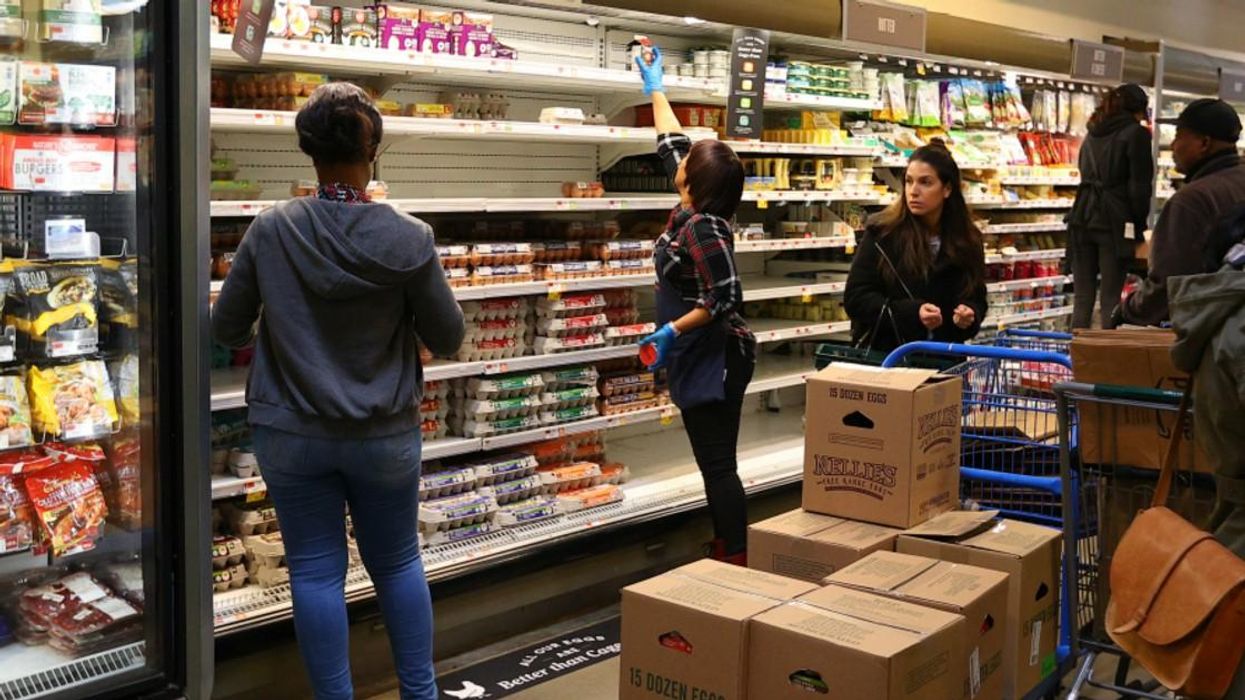
The truth about inflation is getting covered up by countless myths spewed by corporations and their political lackeys.
Here are the facts:
Fact #1: Inflation is not being driven by wage increases
Although wages have been rising, they've been rising more SLOWLY than prices. Hourly wages grew by 5 percent in the past year--but prices rose 8.6 percent. This means, when you adjust for inflation, workers actually got a 3.5 percent pay cut over the past year.
Fact #2: Corporate profits are one of the main drivers of inflation
Corporations are raising prices above what's needed to cover their higher costs. These mark-ups have soared. Corporations are getting away with this price gouging because they face little to no competition. And they're using the specter of inflation as a cover.
Last year, corporations raked in their highest profits in 70 years. One recent study found that over half the increase in prices we've been experiencing can be attributed to fatter corporate profits.
Fact #3: Federal assistance to people during the pandemic did not overheat the economy
Most families--who haven't had a real wage increase in years--used the assistance to pay down debt or save for the future. The assistance was barely enough to keep working families afloat.
Fact #4: Inflation is not the result of President Biden's or Democrats' policies
Republicans want to blame them for rising prices. But Democrats have tried advancing bills to bring down prices and address corporate price gouging, yet Republicans and a handful of corporate Democrats refuse to pass them.
So don't fall for the corporate myths about inflation.
Higher prices are not being driven by wage increases. They were not driven by federal assistance to people during the pandemic. And Democrats aren't to blame.
Inflation is being driven in large part by record corporate profits. The best way to fight it is to remove corporate incentives to raise prices through a windfall profits tax. And reduce monopoly power through tougher antitrust enforcement.
Know the truth.
Watch:
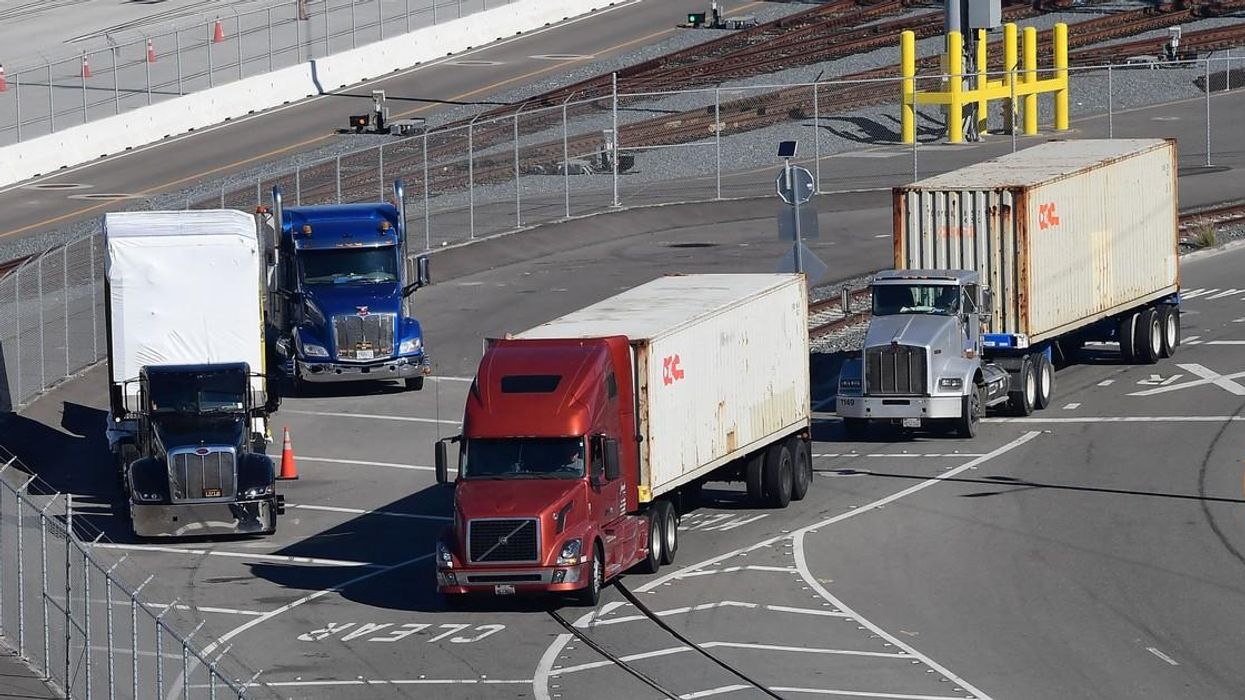
The recent traffic-clogging protests in Canada, Washington, D.C., Europe and elsewhere by long- and short-haul truck drivers were about them being angry over having to comply with COVID-19 vaccine mandates--right?
Uh... no. That's the line being put out by right-wing extremists trying to use the legitimate gripes of truckers for their own political gain. As usual, the extremists are nuts--not the truckers.
Pay today is so abysmal that most truckers on the road have to drive dangerously long shifts of well over 60 hours a week (with many topping 100 hours) to make a bare-bones living.
My Uncle Emmitt was a coast to coast, high-balling trucker in the 1960s, and would attest that back then, trucking was an honest job with decent pay, union protections, benefits and normal hours. Then came the anti-government, deregulation craze of the 1980s, pushed by corporate profiteers and right-wing ideologues. Since then, cheap-rate trucking outfits have become predominant, unions have been cast aside, driver pay has crashed and working conditions have become punishing.
Pay today is so abysmal that most truckers on the road have to drive dangerously long shifts of well over 60 hours a week (with many topping 100 hours) to make a bare-bones living. It's a grind, too--you can't stand up for hours, you travel alone, dinner is a gas station burrito, bathroom breaks mean pulling out the plastic jug you carry along... and you won't get home for days. Exhaustion is a constant companion and a real hazard, especially because you're wrangling bulky machines known as "40 tons of death."
Yet corporate, political and media elites--oblivious to all of the above--whine that America has a trucker shortage. They might ask themselves, why? After all, there are plenty of people who are licensed truck drivers, but--get this--nine out of 10 quit within a year of getting a job! That's not because of a vaccine mandate, as right-wing political manipulators want us to believe. It's because truckers are underpaid, overworked, endangered and even dehumanized by bosses who install surveillance cameras, sensors, and other technology to record and report every twitch a driver makes.
Today's explosive truck-convoy protests are not a right-wing expression--it's a rebellion against the plutocratic system that the right wing has imposed on truckers... and on America.
"Keep On Truckin" was an iconic underground cartoon of the hippie era, created in 1968 by comic master Robert Crumb. Featuring various big-footed men strutting jauntily through life, the image became widely popular as an expression of young people's collective optimism. "You're movin' on down the line," Crumb later explained, "It's proletarian. It's populist."
But today the phrase has become ironic, for America's truck drivers themselves are no longer moving on down the line of fairness, justice and opportunity. What had been a skilled, middle-class job in the 1960s is now largely a skilled poverty-wage job, thanks to the industry's relentless push for deregulation, de-unionization and decoupling of drivers from middle-class possibilities. America's trucking system has been turned into a corporate racket, with CEOs feeling entitled to arbitrarily abuse the workers who move the corporate products across town and country. Why entitled? To enable the abuse, their lawyers have fabricated a legal dodge letting them claim that their truck drivers are not their employees, but "independent contractors."
Thus--hocus pocus!--drivers don't get decent wages, overtime pay, workers' compensation, Social Security, health care, rest breaks, reimbursement for truck expenses (including gasoline, tires, repairs and insurance) ... and as "contractors" they're not allowed to unionize. This rank corporate rip-off has become the industry standard, practiced by multibillion-dollar shipping giants like XPO, FedEx, Penske and Amazon. The National Employment Law Project recently reported that two-thirds of truckers hauling goods from U.S. ports are intentionally misclassified as contractors rather than as employees of the profiteers that hire them, direct them, set their pay levels and fire them.
Of course, corporate bosses try to hide their greed with a thin legalistic fig leaf: "We believe our (drivers') classifications are legal," sniffed an XPO executive. Sure they are, sport, because your lobbyists write the laws! But might doesn't make right, "legal" doesn't mean moral and "boss" spelled backward is double-S.O.B.
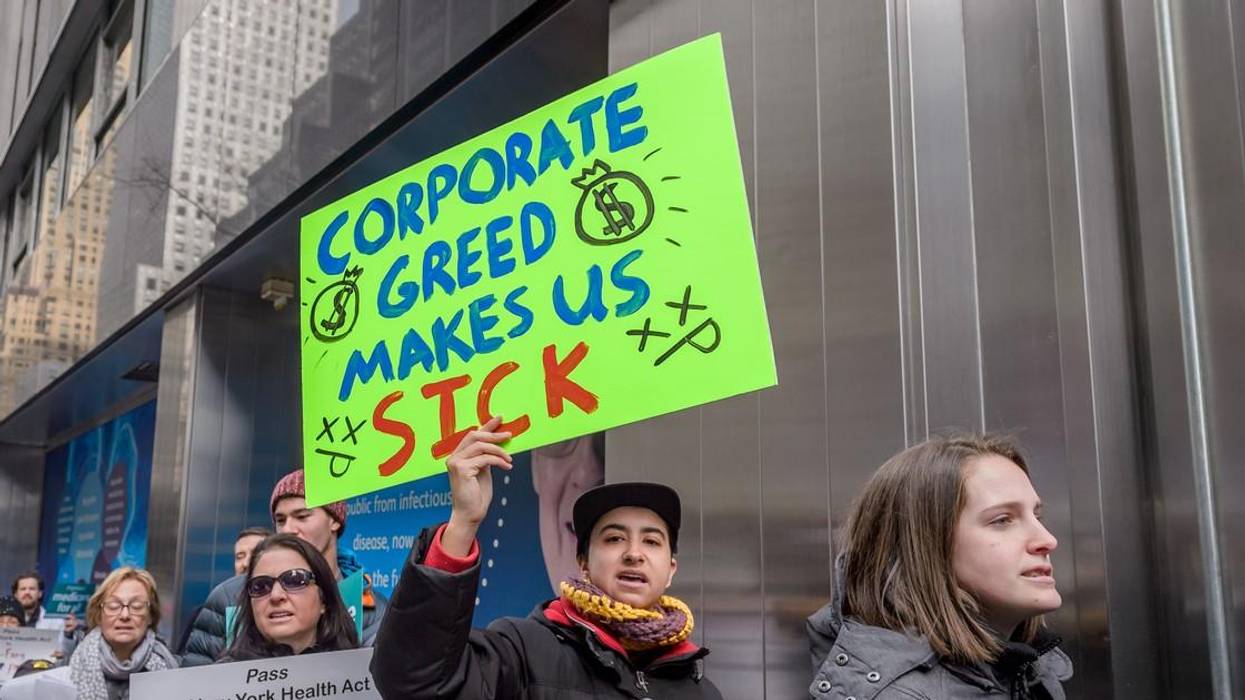
Inflation! Inflation! Everyone's talking about it, but ignoring one of its biggest causes: corporate concentration.
Now, prices are undeniably rising. In response, the Fed is about to slow the economy -- even though we're still 2 million jobs short of where we were before the pandemic, and millions of American workers won't get the raises they deserve.
Meanwhile, Republicans haven't wasted any time hammering Biden and Democratic lawmakers about inflation.
Don't fall for their fear mongering.
Everybody's ignoring the deeper structural reason for price increases: the concentration of the American economy into the hands of a few corporate giants with the power to raise prices.
Watch:
If the market were actually competitive, corporations would keep their prices as low as possible as they competed for customers.
Even if some of their costs increased, they would do everything they could to avoid passing them on to consumers in the form of higher prices, for fear of losing business to competitors.
But that's the opposite of what we're seeing. Corporations are raising prices even as they rake in record profits. Corporate profit margins hit record highs last year. You see, these corporations have so much market power they can raise prices with impunity.
So the underlying problem isn't inflation per se. It's a lack of competition. Corporations are using the excuse of inflation to raise prices and make fatter profits.
Take the energy sector.
Only a few entities have access to the land and pipelines that control the oil and gas powering most of the world. They took a hit during the pandemic as most people stayed home. But they are more than making up for it now, limiting supply and ratcheting up prices.
Or look at consumer goods.
In April 2021, Procter & Gamble raised prices on staples like diapers and toilet paper, citing increased costs in raw materials and transportation. But P&G has been making huge profits. After some of its price increases went into effect, it reported an almost 25% profit margin.
Looking to buy your diapers elsewhere? Good luck. The market is dominated by P&G and Kimberly-Clark, which--NOT entirely coincidentally--raised its prices at the same time.
Another example: in April 2021, PepsiCo raised prices, blaming higher costs for ingredients, freight, and labor. It then recorded $3 billion in operating profits through September. How did it get away with this without losing customers?
Pepsi has only one major competitor, Coca-Cola, which promptly raised its own prices. Coca-Cola recorded $10 billion in revenues in the third quarter of 2021, up 16% from the previous year.
Food prices are soaring, but half of that is from meat, which costs 15% more than last year. There are only four major meat processing companies in America, which are all raising their prices and enjoying record profits.
Get the picture?
The underlying problem is not inflation. It's corporate power. Since the 1980s, when the U.S. government all but abandoned antitrust enforcement, two-thirds of all American industries have become more concentrated.
Most are now dominated by a handful of corporations that coordinate prices and production. This is true of: banks, broadband, pharmaceutical companies, airlines, meatpackers, and yes, soda.
Corporations in all these industries could easily absorb higher costs -- including long overdue wage increases -- without passing them on to consumers in the form of higher prices. But they aren't.
Instead, they're using their massive profits to line the pockets of major investors and executives -- while both consumers and workers get shafted.
How can this structural problem be fixed? Fighting corporate concentration with more aggressive antitrust enforcement. And imposing a windfall profits tax on profitable corporations that are using this period of rising costs to gouge consumers.
So don't fall for the fear mongering about inflation. The real culprit here is corporate power

Poorly paid bus drivers in a rural Mississippi school district went on strike last Friday morning and by the end of the day, they had won an hourly pay raise of at least $5, lifting their wages to $20 an hour.
The strike happened after the Jefferson Davis County school board authorized paying $25 per hour to drivers hired on an emergency basis, Magnolia State Live first reported Wednesday.
The emergency pay proposal--meant to incentivize retired teachers, coaches, and bus drivers to help alleviate an ongoing labor shortage--passed 4-1. However, the pay bump didn't apply to existing drivers, some of whom were making as little as $12 an hour--less than half the newly established emergency rate.
"I have zero problem with having anyone that is willing to drive our busses," said Bobby Wilson, the lone District 2 school board member to vote against the measure. "I do have a problem with $25 an hour. I would like to know why we are doubling the salary for certified personnel to drive versus the $12-$15 for our regular drivers."
On Friday morning, the bus drivers went on strike. After one hour, district superintendent Ike Haynes "met with the bus drivers at the bus shop over their pay concerns," according to Magnolia State Live.
During a special board meeting called that evening, Haynes said that "we are here tonight to make sure that our bus drivers in this district, many of which have worked here over 11 years, feel respected and compensated."
Haynes recommended that the board increase current bus drivers' hourly pay rate to $20. The motion passed unanimously.
"According to Haynes the strike was not necessary and didn't cause any major issues," Magnolia State Live reported.
"The parents stepped up and dropped off kids, every driver drove their route, every student that was going to school today went to school and every teacher that had an opportunity to teach, taught," said the superintendent.
Fight for 15, however, argued that the brief work stoppage--and the substantial wage hike that resulted--is further evidence that "strikes work."

Skyrocketing inequality and persistent racial inequities are erasing the American dream for all but the lucky few and hobbling true economic prosperity. Tackling this toxic inequality must be the fight of this decade, and doing so requires breaking up the stranglehold of wealth at the top, growing the largest and most diverse middle class in history, and ensuring that no person or family falls below a standard of living that affords them economic security and dignity.
One crucial tool that would go a long way toward establishing a new baseline of economic security for all is a Federal Job Guarantee: a public option for a good job that pays a living-wage and offers full benefits on projects that address long-neglected community needs and produce public benefits.
Environmental restoration and energy efficiency retrofits to address our climate crisis; sidewalk and street repair, public art, and greening projects to reinvigorate disinvested neighborhoods; and new teachers' aides, child care workers, and eldercare workers to create a care infrastructure are just a few examples of the community-building work that would become possible with a job guarantee.
Guaranteed jobs would address a key failure of our economy: the inability to provide jobs for all even in the best of times. Today, amidst record-low unemployment, millions of Americans -- 11.2 million as of the most recent jobs report -- want full-time work but cannot find it. Some 5.8 million workers are actively job-seeking. Another 4.2 million are working part-time but want more hours. And 1.2 million want a job but have given up looking for one. This is a chronic crisis that disproportionately harms Black, brown, and rural communities.
A job guarantee would also target our epidemic of low-wage, unstable jobs. A recent Brookings Institution analysis revealed that 44 percent of American workers earn less than $18,000 per year. And the latest Fed study found that 17 percent of workers contend with unpredictable, varying schedules. Guaranteed jobs would provide them with a far better option. A Federal Job Guarantee would set a new, higher standard -- not only for wages but also for hours, schedules, and benefits -- that private employers would need to compete against to find workers.
Ensuring that all who want to work can have a good job would transform our economy. No one would need to go through the devastating experience of not finding employment. Workers facing discrimination because of their race, their gender identity, or for having a criminal record would gain economic opportunity.
People stuck in jobs where they are harassed or unsafe would have a viable alternative. Poverty, racial inequity, and working poverty would decline. And, when the next recession hits, workers could take up guaranteed jobs -- maintaining consumer demand and moderating the effects of the downturn for workers and businesses alike.
This vast potential to deliver on economic security, dignity, and stability is why hundreds of individuals, leaders, and organizations working for racial, economic, and environmental justice have signed on to a Jobs for All manifesto calling on policymakers to enact a job guarantee. We hope that the readers of this blog will also sign on.
In putting forth this manifesto, we seek to bolster growing political momentum for a job guarantee. Last fall, Senator Cory Booker and Representatives Bonnie Watson Coleman and Ilhan Omar introduced legislation for a pilot job guarantee program in 15 communities across the country. A job guarantee is also a key feature of the Green New Deal Resolution introduced by Representative Alexandria Ocasio-Cortez with 98 cosponsors. And Senator Bernie Sanders has made a job guarantee a key plank in his economic policy agenda in his bid for the presidency
A job guarantee is also one of the most popular economic policies around. Multiple polls show that a majority of eligible voters support guaranteed jobs--including a good share of Republicans (48 percent according to one poll).
At this time of unprecedented economic and ecological upheaval, it is time for bold policies that move us toward an inclusive and sustainable economy. It is time for a Federal Job Guarantee.

Sen. Bernie Sanders got some good news Monday as his campaign for the 2020 Democratic presidential nomination approached 5 million donations and, at an average of $18, looked set to end 2019 head and shoulders above his competitors for total money raised over the year.
" Bernie Sanders demolished all of the other candidates," tweeted activist and Sanders surrogate Shaun King. "It's not even close."
The numbers came from New York Times reporting on the Democratic field's fundraising for the end of the year. The Sanders campaign reported raising $26 million in the fourth quarter, putting the Vermont senator firmly in the top tier of candidates in the 2020 primary.
As the Times explained:
Mr. Sanders is expected to remain a financial pacesetter in the 2020 contest. He has about 1.6 million individual donations this quarter alone and is nearing a goal of five million total contributions. With an average donation of $18 for the year, and slightly less than that now, the numbers suggest he has already raised about $26 million in the fourth quarter--more than any Democratic candidate has raised in any quarter this year.
According to Times reporter Shane Goldmacher, extrapolating on the data in a Twitter thread, Sanders is on track to raise roughly $87.5 million by the end of 2019.
"His campaign said today he's at 4.865 million donations for the year, with a previous disclosed average donation of $18," tweeted Goldmacher. "That means he's raised ~$87.5 million for the year."
The campaign is hoping to hit 5 million donations by the stroke of midnight on New Year's Eve, telling supporters in an email that they can donate as little as $2.70 to help the senator reach the mark.
"Our movement has all the momentum right now," the campaign said in an email. "And reaching our goal of 5 million donations will ensure we continue to hold onto our momentum as we approach the Iowa caucus."
That Sanders was able to raise at least $87.5 million without Super PACs, bundlers, and other forms of big money donations favored by rivals like former Vice President Joe Biden and South Bend, Indiana Mayor Pete Buttigieg, said HuffPost senior reporter Zach Carter, is an indication the senator is defying expectations and conventional wisdom.
"He out-raised literally everyone else in the field," said Carter.
The Sanders campaign on Monday released health information for the 78-year-old senator, showing him to be in excellent shape for his age.
"At this point, I see no reason he cannot continue campaigning without limitation and, should he be elected, I am confident he has the mental and physical stamina to fully undertake the rigors of the presidency," Dr. Martin M. LeWinter, Sanders' personal cardiologist, said in a statement.
Monday's fundraising news came as Sanders supporters made #PresidentSanders the top trending hashtag in the U.S., tweeting their hopes for the accomplishments of the senator's future presidency.
"It can happen," tweeted filmmaker and Sanders supporter Adam McKay. "An actual President not owned by banks, oil or billionaires. A President not motivated by lining his own pockets. Free healthcare, a living wage, taxes on billionaires and corps, clean air and water... #PresidentSanders."

Everyone who wants global warming to be true -- raise your hand. Of course, I mean the whole idea that burning fossil fuels has led to a rapid increase in the earth's temperature which is causing a climate crisis that is escalating in its destruction and scientists say we have only a few years to avert worldwide cataclysmic devastation.
Again, raise your hand if you want that to be true. No sane person has his hand up.
About 15 years ago I realized that this crisis was a political issue. Teaching science to about 40 fifth-graders, using simple chalkboard diagrams, I explained fossil fuels, alternative energy sources, and how global warming occurs. I showed a video on the consequences of a too warm Earth (in fact, it predicted the very things that are happening now); the next day a student asked in what political party I was registered. Her dad wanted to know. I was stunned.
A few days later with urgency, I asked my principal if the video could be shown at a PTA meeting. "No, that's a controversial subject," was her flat response.
I knew we were in trouble; I just didn't know how much.
How in the world did scientific research become so politicized, particularly when it's about the havoc of extreme weather events which is killing humans, destroying homes, forests, animal species, and our ability to get food in the oceans and from drought and flood-ravaged farmland?
It was only after I quit teaching in 2012 to pursue a second career that I took the time to understand the answer to that question. And it's simple. The fossil fuel companies that produce oil, natural gas, and coal, and the companies that benefit from those extracted products (like refineries that take oil and produce gasoline) have spent billions and billions of dollars to do two things:
And think about it: When a region is destroyed by one of these extreme weather events (that scientists say is a result of climate change), who pays to rebuild? Well, of course, the American taxpayer, not the industries that knowingly caused the damage. There's proof that fossil fuel companies knew in the 1980s what was happening as a result of burning their products, but their greed was too great to sound the alarm. They did the opposite.
I'm writing about the climate crisis, but look at a few other issues. The massive amounts of money going to a bloated defense budget so we can continue endless destructive wars that destroy American soldiers' lives and blow up other human beings (often civilians) while the military-industrial complex gets richer and richer. Congress is passing a $738 billion defense budget, which is a $120 billion increase over the Obama administration's last budget. And according to Sen. Bernie Sanders in his recent op-ed in the Washington Post, "... the $120 billion increase in Pentagon spending -- compared with the final year of the Obama administration -- could have made every public college, university, trade school and apprenticeship program in the United States tuition-free, eliminated homelessness and provided universal school meals to every kid in our nation's public schools."
What else? Drug companies are gouging sick people. Insurance companies are making billions in profit, often denying coverage to those that need it most. There are chemical corporations polluting our own West Virginia water. I urge you to see the movie "Dark Waters" about DuPont poisoning its workers and the waters around Parkersburg because the product, Teflon, brought them $1 billion a year in profits.
It's easy to spot the politicians taking these incentives. Here's what to look for: denying the climate crisis or wanting a slow response to the problem; supporting more and more defense spending; voting for more poison being released in our water; pushing hard for no changes to our gun laws; purporting that a living wage for American workers is unreasonable; taking and taking from our public school systems.
Get on a computer and do research on climate change. This is an "All hands on deck!" moment. Figure out how you can help; at the very least, vote for uncorrupted candidates who take this problem seriously. Your children and grandchildren's future depend on it.

Like the Passover story, the celebration of Hanukkah reminds us that people can overcome great obstacles and achieve great things if they have a vision of a better society and build movements that challenge the conventional ideas of their day.
Election results and public opinion polls reveal that among white Americans, Jews have consistently been the most liberal and progressive ethnic and religious group. In 1920, when only 3 percent of Americans voted for Eugene Debs, the Socialist Party candidate for president, Jews gave him 38 percent of their votes. In 1932, when Franklin Roosevelt defeated Herbert Hoover for president with 57 percent of the popular vote, 82 percent of Jews supported FDR. In 1960, John F. Kennedy squeaked out a victory over Richard Nixon, getting barely more than 50 percent of all votes, but among Jews, it was no contest, with JFK garnering 82 percent of their votes. In 2008, Barack Obama bested John McCain by a 53-46 margin, but he won the Jewish vote 78-22.
Despite the prominence of a small number of Jews in the Trump administration - including Treasury Secretary Steve Mnuchin, son-in-law Jared Kushner, and policy aide and alter-ego Stephen Miller - only a small number of Jews are conservatives or Republicans. In 2016, Hillary Clinton won the popular vote against Donald Trump by 48 to 46 percent, but Jews favored Clinton by 71 to 23 percent. In the 2018 midterm elections that swept in a Democratic majority in the House of Representatives, Jews led the "blue wave," giving Democrats 79 percent of their votes.
A 2012 survey found that 81 percent of Jews, compared with only 48 percent of all Americans, favored same-sex marriage should be legal. In the same survey, 93 percent of Jews believed that abortion should be legal in contrast to 53 percent of all Americans.
More than most other demographic groups - particularly among white Americans - Jews overwhelmingly disapprove of President Donald Trump's handling of most policy issues, including family separations at the Mexican border (78 percent), treatment of DACA recipients (74 percent), guns (74 percent), the Mueller Report (73 percent), building the border wall (71 percent), taxes (70 percent), Supreme Court nominations (69 percent), health care (69 percent), and banning immigration from certain Muslim-majority countries (66 percent). percent). Seventy-one percent of Jews disapprove of Trump's handling of the upsurge of anti-Semitism in America, a trend that Trump himself has provoked by consistently expressing anti-Semitic stereotypes and encouraging the rise of white nationalist hate groups.
Voting is the most basic of political activities, but social change happens only when people participate in activist movements that influence how people think and vote. Throughout American history, Jews have played and continue to play a disproportionately large role in the key social justice movements - as organizers and activists, politicians and jurists, and thinkers, artists, journalists, playwrights, poets, and novelists.
In 1900, anyone who advocated for women's suffrage, laws protecting the environment and consumers, an end to lynching, the rights of workers, a progressive income tax, or old-age insurance was considered a dangerous dreamer or a dangerous radical. Today such ideas are taken for granted. The radical ideas of one generation have become the common sense of the next.
Jews were among leaders and rank-and-file activists in all the great movements of the past century -- labor, civil rights and civil liberties, feminism, environmentalism, gay rights and the crusade against militarism - that have made America a more humane, democratic and inclusive country.
Consider Rose Schneiderman, a fiery socialist union organizer. She was on the front lines of the Progressive Era battles against slums and sweatshops. So were settlement house pioneer Lillian Wald, Rabbi Stephen Wise and lawyer Louis Brandeis (later a Supreme Court justice), whose writings and legal activism helped tame the growing power of corporate monopolies. Victor Berger, an Austrian immigrant and in 1910 the country's first Socialist congressman, introduced the first bill to provide old-age pensions. Eventually, the idea was adopted in 1935 when President Franklin Roosevelt created Social Security.
Jewish social activism helped spearhead the early civil rights movement as well. In 1909, Joel Spingarn was a founder and then long-term president of the NAACP. Julius Rosenwald of Sears & Roebuck was a pioneer in the new field of progressive philanthropy. He endowed Jane Addams' Hull House and Booker T. Washington's Tuskegee Institute, funded more than 5,000 schools for African Americans in the rural South, and supported the Highlander Folk School, a Tennessee-based training center for labor and civil rights activists.
During the Great Depression of the 1930s, labor leaders Sidney Hillman, David Dubinsky, Rose Pesotta, and Ralph Helstein led battles for workers' rights and economic reform, while composers Yip Harburg ("Brother Can You Spare a Dime?" and "Over the Rainbow") and Aaron Copland ("Fanfare for the Common Man"), artist Ben Shahn and playwright Clifford Odets ("Waiting for Lefty") gave shape to radical ideas that caught the public's imagination.
During the 1960s, Allard Lowenstein, along with African-American organizer Bob Moses, created the Freedom Summer project, which brought more than 1,000 college students to the South to register black voters. About half of the white volunteers were Jews. Many of them -- including Barney Frank, Heather Booth and Vivian Rothstein -- pursued careers in activism and reform that have lasted into the 21st century. Two of them - Michael Schwerner and Andrew Goodman - died at the hands of extremist segregationists.
Lowenstein, along with Rabbi Abraham Joshua Heschel, journalist I.F. Stone, critic Noam Chomsky and other Jews, gave voice to the rising tide of anti-Vietnam War sentiment. Jews constituted at least one-third of the early leaders of Students for a Democratic Society, the leading campus anti-war organization.
Betty Friedan, Bella Abzug, Gloria Steinem, Judy Chicago, and Andrea Dworkin were at the forefront of second-wave feminism. San Francisco activist Harvey Milk, poet Alan Ginsberg, scientist Frank Kameny, writer Larry Kramer, and Edie Windsor (plaintiff in the Supreme Court case that legalized same-sex marriage) helped catalyze the gay rights movement. A 1970 Time cover story called scientist Barry Commoner the "Paul Revere of ecology." Saul Alinsky inspired several generations of community organizers. Jews in the arts and the academy -- including playwright Arthur Miller, filmmakers Sidney Lumet and Stanley Kramer, TV producer Norman Lear, folksingers Bob Dylan, Peter Yarrow, Theo Bikel, and Phil Ochs, writers Grace Paley, Adrienne Rich and Studs Terkel, and social critics like writer Paul Goodman, Lenny Bruce, historian Howard Zinn, and Harvey Kurtzman (founder of MAD magazine) -- gave voice to movements of dissent.
Today, when Jews represent less than two percent of the nation's population, a new generation of Jewish progressives is extending this activist tradition. The individuals listed below are deeply rooted in today's movements for social justice. Some of them are directly involved in the Jewish community, but most of them work for unions, community organizing and environmental groups, and other issue advocacy organizations, or serve in public office as allies and activists within government.
I have focused on organizers and activists, rather than writers, journalists, entertainers, artists, musicians, and academics, even though they make critically important contributions to progressive movements. Any history of contemporary progressivism would be incomplete without reference to opinion-shapers like Kate Aronoff, Dick Flacks, Eric Foner, Ruth Bader Ginsberg, Michelle Goldberg, Amy Goodman, Jacob Hacker, Janis Ian, Sarah Jaffe, Naomi Klein, Jonathan Kozol, Paul Krugman, Tony Kushner, Robert Kuttner, Sarah Leonard, Nelson Lichtenstein, Harold Meyerson, Phranc, Francis Fox Piven, Sarah Silverman, Jill Soloway, George Soros, Jon Stewart, Evan Rachel Wood, and David Zirin.
I don't pretend this is a comprehensive list. These are people I know, or know about. They represent a wide spectrum of activism, but there are tens of thousands of other Jews who could be included on others' lists. These are a few of my favorite Jews:
1. Nan Aron is founder and president of the Alliance for Justice, which fights for federal court appointees who respect civil rights and civil liberties
2. Ady Barkan, a veteran activist and publicist for progressive causes, has become well-known as a fighter for Medicare for All after he was diagnosed with amyotrophic lateral sclerosis (A.L.S.), a disease that slowly takes away nearly every physical function while keeping the mind intact, and confined to a wheelchair. Politico called him "the most powerful activist in America."
3. Jeremy Ben-Ami is president of J Street, the leading organization within the American Jewish community committed to challenging Israel's rightward shift.
4. Medea Benjamin is the co-founder of the human rights group Global Exchange and founder of the women-led peace group Code Pink that uses create civil disobedience and humor to challenge corporate and government decision-makers around issues of militarism and the environmental crisis.
5. Rabbi Sharon Brous founded IKAR, a progressive Los Angeles synagogue, in 2004, to attract unaffiliated Jews alienated from the mainstream Jewish community. Brous and IKAR have helped spark a revival of interest in Jewish spirituality, inter-faith ties, and political activism.
6. Heather Booth has been an organizer since the civil rights, anti-Vietnam War and women's movements of the 1960s. She created JANE, an underground abortion service started before Roe, and founded the Midwest Academy, a training center for social change leaders and organizers. She has been a key strategist and activist in movements immigrant rights, voting rights, bank reform, marriage equality, tax reform, and health care reform. She is the subject of the recent documentary "Heather Booth: Changing the World."
7. Dan Cantor was described in New York magazine as the "model of a grassroots political boss" for his role as Executive Director of the Working Families Party (WFP) of New York, a progressive third party established in 1998. Under his leadership, WFP led successful campaigns to reform New York's Rockefeller Drug Laws, maintain access to affordable mass transit, and raise New York's minimum wage. The WFP has helped elect progressive mayors, state legislators, city council members and members of Congress.
8. Alex Caputo-Pearl, president of United Teachers Los Angeles, led a major transformation of the union into a more militant, inclusive, and effective organization. Under his leadership, UTLA won major educational victories in 2019 following a week-long strike that catalyzed widespread support by building bridges with community and faith-based groups, parents and students in the country's second-largest school system.
9. Donald Cohen, founder of In The Public Interest, which works with unions, community groups, and local governments to challenge privatization, develop progressive policy ideas, and improve the effectiveness of progressive government
10. Stosh Cotler is the CEO of Bend the Arc, a Jewish social justice group, which has led the Jewish resistance to the Trump administration.
11. Janice Fine, spent more than 20 years as a community, labor, and electoral organizer before joining Rutgers University's labor studies faculty. She is a co-convenor of the New Jersey Alliance for Immigrant Justice, and works closely with many national and local immigrant rights, labor, and community organizing groups.
12. Lew Finfer, a Boston-based community and tenants rights organizer since 1970, is currently executive director of the Massachusetts Communities Action Network, a network of faith-based community organizations that has won significant victories around economic, housing, and racial justice. He has led successful campaigns around rent control, redlining, health care, paid family leave and the minimum wage.
13. Jacob Frey served on the Minneapolis City Council before being elected Mayor in 2017. A college track star and a lawyer by training, Frey provided legal aid to tenants who lost their homes after a tornado struck Minneapolis in 2011. The next year he organized the first Big Gay Race, a 5K charity race to raise money for Minnesotans United for All Families, a political group organizing for marriage equality. On the City Council, he drafted the city's minimum wage law and paid sick leave ordinance, led an effort to require landlords to provide tenants with voter registration information, and sponsored an ordinance requiring polluters to pay fees based on the amount of pollution they produce in order to fund green jobs. As mayor, he has dramatically increased city funding for affordable housing and pushed for a comprehensive zoning reform plan to allow three-family homes in the city's residential neighborhoods, abolish parking minimums for all new construction, and allow high-density buildings along transit corridors, making Minneapolis the first major city to end single-family zoning and confront the city's segregation, high housing costs, and sprawl.
14. Leah Fried, an organizer with the United Electrical Workers union, along with local union president Armando Robles led 240 workers to illegally occupy their Chicago workplace in 2008 after their employer, Republic Windows and Doors, abruptly told them that it was shutting down the factory, denying employees severance and vacation pay they had earned. The workers formed and incorporated New Era Windows, a worker-run cooperative, and raised the funds needed to buy the machinery from their former employer and keep producing windows under the new arrangement. It remains open for business.
15. Andrew Friedman is co-executive director of the Center for Popular Democracy, a national network of local and state community organizing groups with 53 affiliates in 34 states that organize campaigns to advance a pro-worker, pro-immigrant, racial and economic justice policy agenda nationwide.
16. Marshall Ganz, the son of a rabbi, joined the Southern civil rights movement before serving as the organizing director for the United Farm Workers union. He teaches community organizing at Harvard, serving as a guru for activists around the world. He was the architect of Obama's 2008 grassroots election campaign
17. Jackie Goldberg's activism started with the Free Speech Movement at UC-Berkeley in 1964. After teaching in public schools, she won seats on the LA school board, LA City Council, and California state legislature, serving as an effective advocate for progressive causes, including spearheading battles for a living wage and responsible development. After a decade hiatus in public office, she was elected to the school board again in 2019.
18. Robert Greenwald, an award-winning TV and movie director, founded the nonprofit Brave New Films in 2000 to use documentary films to educate and mobilize for progressive causes. Its films have tackled such topics as Fox News, immigration, mass incarceration and the prison industrial complex, Walmart, the NRA, the Koch brothers, racism, and voter suppression.
19. Leah Greenberg and Ezra Levin co-founded Indivisible soon after Trump was elected president in 2016. Their on-line handbook for progressives soon mushroomed into a nationwide movement of volunteer activists, with over 6,000 chapters, devoted to mobilizing voters around progressive issues and candidates.
20. Ilyse Hogue, CEO of NARAL-Pro-Choice America, a leading women's rights organization. She previously worked at MoveOn.org, the Rainforest Action Network, and Media Matters for America.
21. Eddie Iny is the organizing director for OUR Walmart, a nationwide grassroots organization of Walmart employees, which has successfully pushed the nation's largest private employer to raise based pay from $7.25 to $11 an hour, institute paid family leave, and improve conditions for pregnant employees.
22. Rabbi Jill Jacobs, executive director of T'ruah, the Rabbinic Call for Human Rights, which raises awareness and engages in direct action to protect human rights in the United States and Israel.
23. Madeline Janis, organizer and founder of the LA Alliance for a New Economy and Jobs to Move America, has for over 35 years, been on the inside and outside of local and state government, working to create high road, equitable economic development.
24. Cameron Kasky, a survivor of the tragic shooting in 2018 at Marjory Douglas High School in Parkland, Florida, is a founder of March for Our Lives and Never Again MSD, organizations that advocate for stronger gun control.
25. Larry Kramer is an iconic gay rights activist, playwright, and co-founder of the Gay Men's Health Crisis. He helped start the AIDS Coalition to Unleash Power (ACT UP) in 1987, an influential direct action protest organization that is widely credited with raising awareness of HIV and AIDS-related diseases. Among his many plays are The Normal Heart (1985) and The Destiny of Me (1992).
26. Rabbi Sharon Kleinbaum is the spiritual leader of New York's Congregation Beit Simchat Torah, the largest LGBTQ synagogue in the country. She joined CBST in 1992, at the height of the AIDS crisis, and has become a powerful voice on social justice issues within the Jewish and LGBTQ communities.
27. Larry Krasner, a veteran radical defense attorney, won a surprise victory to become Philadelphia's District Attorney with a mission to end mass incarceration and the criminal justice system's racism.
28. Sheila Kuehl, a former child actress (Zelda on "The Many Loves of Dobie Gillis"), co-founded and served as managing attorney of the California Women's Law Center. In 1997, she became the first woman to be named Speaker pro Tempore of the California State Assembly, just three years after becoming the state's first openly gay legislator. In the legislature, she sponsored successful bills to establish paid family leave, protect victims of domestic violence, establish nurse to patient ratios in hospitals, and prohibit workplace discrimination on the basis of gender and disability and led the campaign for a statewide single-payer health care system.She is currently one of five elected members of the powerful Los Angeles County Board of Supervisors which serves over 10 million people, where she has fought to reduce homelessness and to establish LA County's first affordable housing trust.
29. Brad Lander spent over a decade as a community organizer and neighborhood planner before being elected to the NY City Council, where he co-founded its Progressive Caucus. He has fought successfully to protect freelancers from wage theft, give fast-food workers a fair workweek, and make sure Uber/Lyft drivers earn a living wage, improve public transit, challenge the NYPD's discriminatory practices, combat school segregation, and expand affordable housing. Through #GetOrganizedBK, he brought Brooklyn residents together to stand up to the Trump administration's bigotry, corruption, and injustice. He serves as chair of Local Progress, a national network of over 800 progressive local elected officials in 45 states.
30. Stephen Lerner has spent three decades unionizing hundreds of thousands of farmworkers, garment workers, and other low-wage workers. He was the architect of SEIU's Justice for Janitors campaign, a nationwide campaign that led to dramatic improvements in the wages and conditions of mostly immigrant service workers. He is currently a fellow at Georgetown University's Kalmanovitz Initiative and working with unions and community organizing groups to expose and change the lax regulations and unsustainable practices of private equity firms.
31. Rabbi Joshua Levine-Grater served congregations in the greater New York and Los Angeles for 17 years before shifting gears and become the executive director of Friends in Deed, a local, religious-based non-profit addressing homelessness and poverty in Pasadena. He serves on the board of T'ruah: The Rabbinic Call for Human Rights and the National Religious Campaign Against Torture.
32. Yonah Lieberman, Emily Mayer, and Simone Zimmerman are founders of If Not Now, a movement to end the American Jewish community's support for Israel's occupation of Arab territories, including their criticism of Birthright tours of Israel for young American Jews.
33. Ruth Messinger is a former NY City Council member and Manhattan borough president, who served as president of (and current ambassador for) the American Jewish World Service, which has provided about $400 million to support thousands of social justice organizations in the developing world to reduce poverty, amplify the voices of poor and persecuted minorities, defend the land and water rights of indigenous communities most affected by climate change, and advance sexual health and rights for women, girls and LGBT people.
34. Karen Nussbaum co-founded 9to5, an organization to address the concerns of women office workers in 1973. That group inspired the 1980 film "9 to 5" starring Jane Fonda, Dolly Parton and Lily Tomlin. She founded a vision of SEIU devoted to organizing office workers and during the Clinton administration directed the Department of Labor's Women's Bureau. She is the founding director and now a board member of Working America, the community organizing arm of the AFL-CIO, dedicated to giving non-unionized workers a voice in such issues as raising the minimum wage, paid family leave, and health care reform.
35. Eli Pariser, was executive director of MoveOn from 2004-2009 and has been a pioneer in figuring out how technology can be utilized to promote progressive movements. He is currently a fellow at New America.
36. Rabbi Jonah Pesner is director of Reform Judaism's Religious Action Center, which mobilizes Jews around immigration, health care, voting rights, gun control, civil rights, poverty, Islamophobia, LGBTQ equality, environmental justice and other social justice issues.
37. Jane Ramsey, for over three decades, led the Jewish Council on Urban Affairs, leading struggles against poverty, racism and anti-Semitism in partnership with Chicago's diverse communities.She is now a consultant to nonprofit advocacy groups and a member of the Illinois Coalition for Immigrant and Refugee Rights.
38. Cong. Jamie Raskin served in the Maryland state legislator before his 2016 election to Congress. Harvard Law Professor Lawrence Tribe called Raskin, who taught law at American University for a quarter-century, "the best constitutional lawyer in all of Congress." In 2008 he started Democracy Summer, a program to teach political activist skills to 16-to-22-year olds. As a member of the Judiciary Committee, he's played an important role in the current impeachment fight.
39. Hillary Ronen was an immigrant rights lawyer before being elected to the San Francisco Board of Supervisors, where she's been a strong advocate for tenants' rights, public transit, and environmental justice. She led the successful fight for a tax on big business to fund affordable housing, a ballot measure approved by 60% of the voters.
40. Steve Rosenthal has been described by the New York Times as one of the Democratic Party's "smartest and most influential strategists" and by the Washington Post as, "one of the party's best-known voter turnout specialists." He began is career in the labor movement as an organizer with the Communication Workers of America, served as Associate Deputy Secretary of Labor under Secretary Robert Reich in the Clinton administration, founded America Coming Together (one of the largest voter mobilization campaigns in Democratic Party history), and served as political director of the AFL-CIO. He is currently president of The Organizing Group, which works with unions and other progressive organizations to increase voter turnout.
41. Amy Rutkin, chief of staff for Cong. Jerrold Nadler, has been a key behind-the-scenes architect of the Democrats' impeachment strategy.
42. Senator Bernie Sanders (I-Vermont) has sparked a grassroots upsurge and changed the national debate with his two presidential campaigns, putting democratic socialism on the political map.
43. Cong. Jan Schakowsky (D-Illinois) has been one of the most progressive members of Congress since she was elected in 1998, after serving for eight years in the Illinois State Assembly. During the previous 20 years, she was a community organizer, serving as program director of Illinois Public action and director of the Illinois State Council of Senior Citizens. In Congress, she has been deeply involved in the fight to protect women's reproductive freedom, supports a single-payer health care system, opposed the Iraq war, and has been a leader on issues of consumer safety, opposition to U.S. military, and LGBT equality.
44. Amy Schur, the organizing director of the Alliance of Californians for Community Empowerment, spearheaded the successful campaign for statewide rent control and just-cause eviction law in 2019, and building the power of the tenants rights movement
45. Marilyn Schneiderman, longtime union organizer, is currently director of the Center for Innovation in Worker Organization at Rutgers University, which conducts research and sponsors workshops to strengthen the influence of community organizations, worker centers, and labor unions. She previously directed the National AFL-CIO's Department of Field Mobilization and served as executive director of AVODAH, a national Jewish social justice organization.
46. Leah Simon-Weisberg has been on the front lines of the housing crisis for over a decade. She is the Directing Attorney of the Tenant Rights Program at Centro Legal de la Raza in Oakland, working closely with community organizers to fight rent increases and evictions. She's worked with Tenants Together, the Alliance of Californians for Community Empowerment, and other groups to challenge bank foreclosures and predatory lending, drafted rent control and other laws for Bay Area cities, and serves as an elected member of Berkeley's Rent Board.
47. Daniel Sokatch is CEO of the New Israel Fund, the largest funder of grassroots activist groups in Israel that promote Arab-Jewish cooperation, human rights, LGBT rights, and democratic change and oppose the Occupation and violation of Palestinian rights.
48. Gloria Steinem is a feminist icon and founder of MS magazine, the Coalition of Labor Union Women, and the National Women's Political Caucus.
49. Becky Wasserman is the director of Government Relations for the Service Employees International Union. She previously worked for J Street and the American Jewish World Service and was President of the United States Student Association for two years. She serves on the boards of Local Progress and the Center for Community Change.
50. Randi Weingarten, president of the 1.7 million-member American Federation of Teachers since 2008, has pushed to improve education standards, raise teachers' salaries, and challenge efforts to allow teachers to carry guns in schools.

Former President Barack Obama recently offered some pointed criticism of the Democratic party's "activist wing," cautioning candidates to not move too far left and to remain "rooted in reality."
"The average American doesn't think we have to completely tear down the system and remake it," Obama told an audience in Washington, D.C. "This is still a country that is less revolutionary than it is interested in improvement."
This is an odd take from a candidate who famously ran (and won!) on making major change, but it mirrors the feelings of establishment Democrats who remain uneasy of popular candidates including Vermont Sen. Bernie Sanders and progressive policies like Medicare for All.
Yet Obama's comments highlight an important division in the Democratic Party, one that's prompted the recent emergence of two new candidates: Deval Patrick, the former governor of Massachusetts and personal friend of Obama, and Michael Bloomberg, the former mayor of New York City.
Patrick says he entered the race over fears of a floundering Joe Biden, and Bloomberg was apparently prompted to run by his personal anxiety over the possible nomination of Sanders or Massachusetts Sen. Elizabeth Warren.
As much as the donor class is concerned with preserving old systems, voters are mainly funneling their energy towards building new ones.
These tensions come down to two competing theories of the Obama presidency. The first holds that Obama pushed the country too far left, causing a political backlash against a progressive administration that was out of touch with the American people. This is a favorite of the donor class and Democratic establishment, which urge a more moderate approach to win back Obama-Trump voters.
The other theory is almost exactly opposite. It holds that Obama promised "Hope and Change" but instead delivered boilerplate centrism that produced a disillusioned working-class, paving the way for a right-wing populist resurgence. Proponents believe the fabled Obama coalition is still out there, waiting to be ignited by a genuine leftwing platform, as shown by the enthusiasm for Sanders and Warren -- candidates who have called for "political revolution" and "big, structural change," respectively.
Obama's call for incrementalism shows he clearly believes the former. I think the evidence proves him wrong.
The fact is, Trump's voters did not crave centrism and moderation when they elected him in 2016. Trump, like Obama before him, was the candidate of big-time change. If anyone wanted to tear down "the system," it was the 2016 Trump voter.
When asked whether Obama was right in saying that "the average American doesn't think we have to completely tear down the system," Sanders replied, "Well, it depends on what you mean by tear down the system." He went on to note that his political agenda, including raising the minimum wage to a living wage, and guaranteeing health care coverage for all, is "supported by the vast majority of working people."
Which system is Obama worried about "tearing down," exactly? Of the progressive policies on the docket this primary, the only systems I see endangered are insurance companies, corporate profiteers, flagrant threats to a livable planet, and whatever hellish system is the one that puts kids in cages on the U.S.-Mexico border.
As much as the donor class is concerned with preserving old systems, voters are mainly funneling their energy towards building new ones. In the case of health care, America doesn't really have a "system" so much as a marketplace that sells health care services. Medicare for All is about finally building a system that works for everybody.
The Democratic establishment fails to properly recognize where the momentum lies, and Obama's calls for incrementalism only stand to embolden the status quo and needlessly stifle the most energized portion of his own party.