

SUBSCRIBE TO OUR FREE NEWSLETTER
Daily news & progressive opinion—funded by the people, not the corporations—delivered straight to your inbox.
5
#000000
#FFFFFF
To donate by check, phone, or other method, see our More Ways to Give page.
Daily news & progressive opinion—funded by the people, not the corporations—delivered straight to your inbox.
In a divided America, there is at least one universal left, and that is the shared world we inhabit.
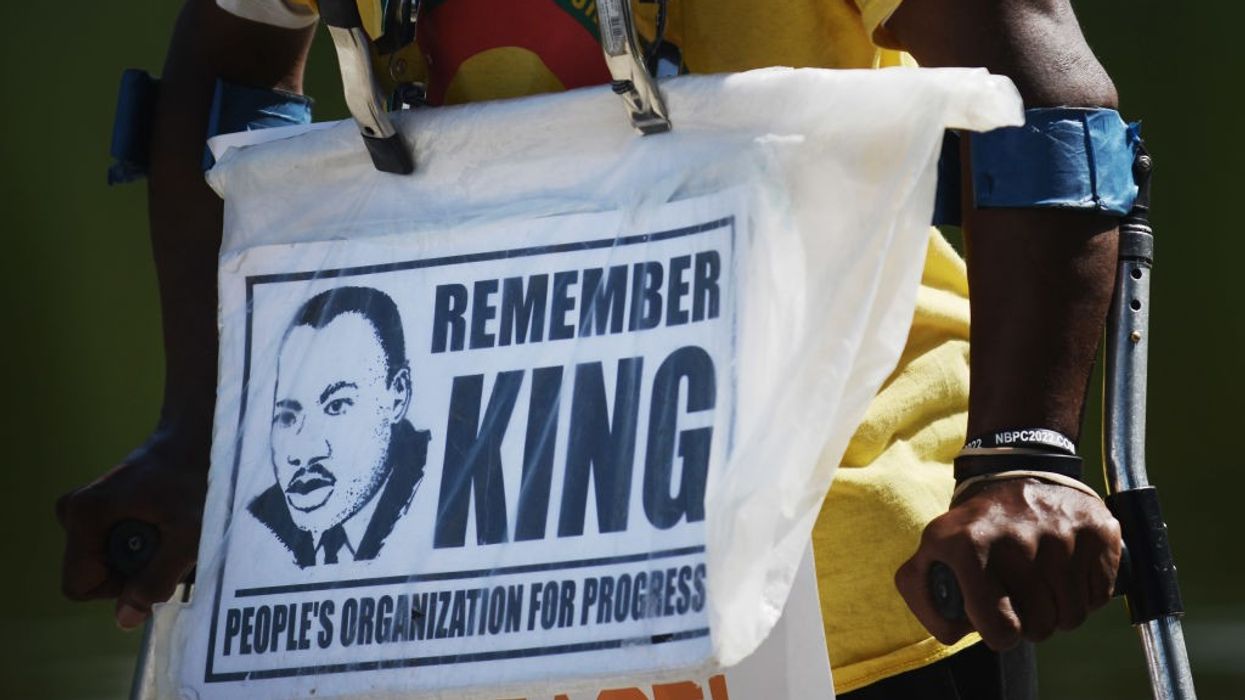
It may not surprise readers of this newsletter when I say that my great American hero is the Reverend Martin Luther King Jr. To mark the 60th anniversary of the March on Washington, I’ve been reading Jonathan Eig’s very fine new biography and re-reading for the umpteenth time the unsurpassable three-volume account of King and the civil rights movement by Taylor Branch.
And as ever I come back to the same place: King’s heroism came from his unmatched ability to combine the prophetic and the practical. We have plenty of great Americans who exemplified one or the other, but perhaps only Lincoln comes close to mixing them with the same alchemical power. King had many tools that lent him strength: He was able to listen, capable of keeping his ego in check, naturally empathetic, grounded from youth in the (not inconsiderable) politics of the church. He had the support of a strong family and a stronger wife; all of that allowed a kind of low-key and appropriate messianism that never overwhelmed him. He wasn’t a saint (the job description of prophets and saints are very different) but he was radiant.
But King also had the advantage of timing. He spoke to an America that could—in its middle—be moved by the two appeals that were his specialty: to the shared Christian faith of the great majority of Americans, and to a shared sense of America’s unique small-d democratic history. He was, obviously, no sucker: He knew as well as anyone the limits of both that faith and that history. But through those lenses America could glimpse his deeper truths.
This summer almost everyone has a) sucked smoke b) dodged floods c) endured preposterous heat. Many have hit the trifecta.
We’re not in that America any more, which perhaps helps explain why the many speakers at this weekend’s 60th anniversary of the March reached fewer souls. There’s little that’s universal left to appeal to in a deeply divided America. Which is why, as my last book argues, it was probably unwise of progressives to surrender the flag and the cross, but that Jordan has been crossed in reverse.
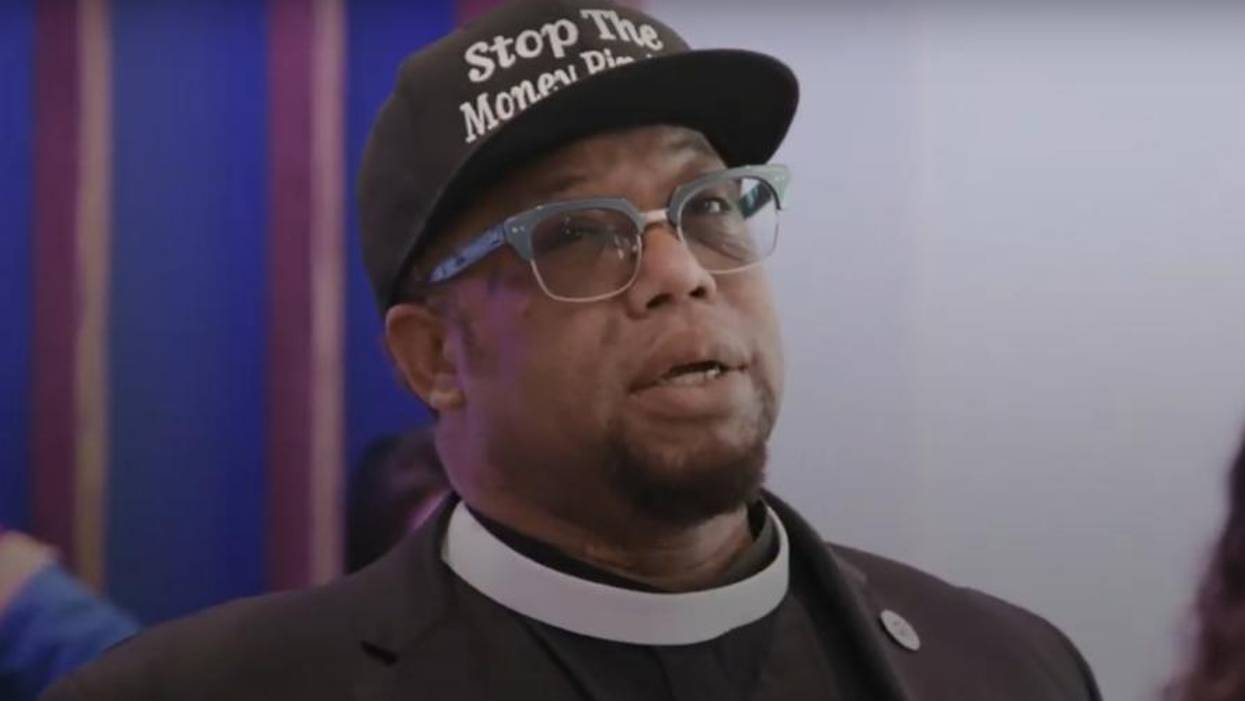
Still, there is at least one universal left, and that is the shared world we inhabit. No one invoked this more movingly on the weekend than Rev. Lennox Yearwood, one of King’s great heirs. The founder of the Hip Hop Caucus (and a board member with me at Third Act), Yearwood used his two minutes to get a lot across:
We stand here because climate change is a civil rights issue. We have a right to clean air and a right to clean water. And it’s critical for us to understand that this climate crisis that is happening from California to Arizona, where our mothers and fathers are literally cooking to death in their homes… And we understand right now that to be in this movement… that we must be intersectional environmentalists. And that means that we must connect the dots and break the silos. That means that racial justice is climate justice. And climate justice is racial justice. And we understand that we must connect a dot between voter suppression and healthcare and education. We understand that we must fight for those who are fighting for clean water in Jackson, Mississippi. And we must fight for those who are in Atlanta, Georgia, saying, stop cop city.
We applaud this administration for what they’ve done with the Inflation Reduction Act and the bipartisan infrastructure law. We applaud them, but that’s not enough because you can’t put up solar panels on Monday and build pipelines for liquified natural gas on Tuesday. You can’t put renewable energy on Wednesday and discuss an all-of-the-above strategy for fossil fuels on Thursday. And so what we are calling for right now are three main things that first, that we must stop the expansion of petrochemicals across this country right now. And secondly, we must ban vinyl chloride, that explosive chloride that exploded in East Palestine. And the last thing, if the administration is watching right now, we must declare a climate emergency!
To unpack a little, as the scholars say, it seems to me that Yearwood is making at least two key points. One is that there are specific parts of the climate crisis that are far worse for poor people of color, here and around the world, and that empowering them is a key task, both for practical reasons of power and moral reasons of justice. It’s a point made with great grace by Rhiana Gunn-Wright, the transcendently nerdy author of the Green New Deal, in an essay that came out this morning in Hammer & Hope, the new online magazine of Black politics and culture. As Gunn-Wright put it
More than 170,000 green jobs have been created in the wake of the IRA, a majority of them in red states, some of which, like Texas and Georgia, have the largest and fastest-growing Black populations in the country.
I should be happy about that. I want to be happy about that. By “derisking” clean technology through public subsidies and other forms of industrial policy, the IRA is succeeding, at least in its mission to spur private investment in clean energy and low-carbon goods. And after 40 years of exclusively neoliberal economic policy, that is something to celebrate. But the transition to clean energy, like every other economic transition, is inherently distributive and redistributive—especially in a capitalist society—and this time, we need Black people to significantly benefit. Yet, with the exception of a few targeted policies, the IRA and the debates that have emerged since its passage suggest that the U.S. is again (at this big age!) relying on white supremacy to decide how to allocate the power and resources that come from going green.
Her recommendations are tremendously useful (the whole essay is essential reading), and they include some clear specifics:
For the green transition to be equitable, racial justice must thread through all the decisions about how it is structured and how public resources are distributed. One of the best ways to do this is to expand Justice40, a Biden administration initiative that aims to direct 40% of the benefits of federal clean energy and other climate investments to disadvantaged communities. The White House should update that order to include all of the programs in the IRA, and agencies should ensure that 40% of the funding (not nebulous “benefits”) are going to the communities identified by the White House’s new screening tool to identify communities that have faced historical environmental and economic injustices. In programs where it is not possible to ensure that 40% of funding reaches frontline communities, as with individual tax credits, agencies need to create partnerships with community organizations and local governments to try to increase tax-credit participation among eligible Black households.
This seems inarguable to me. But to the degree that it requires a big movement to get it done, it requires an elevated sense of justice that I’m not sure we have at the moment. In King’s world, a concern for justice grew out of both religion and patriotism, and with those gutted it’s harder to reach the broad middle.
But it also—and this is the second part of Yearwood’s message—seems inarguable that we have a rare moment to establish that new universal. This summer almost everyone has a) sucked smoke b) dodged floods c) endured preposterous heat. Many have hit the trifecta. Yes, some people have had it worse than others, and since this is America those people are likely to be poor and Black. But we’re at the point where everyone can start to feel the threat. (Even asocial billionaires, though they tend to respond by buying up land they imagine will offer an escape). That collective fear/sadness/anger/maybe a little hope constitutes a shared self-interest—one that we can build on to make the kind of broad movement that might make justice real again.
I think it’s likely we’ll get to see this strategy play out in the months ahead at a place that Gunn-Wright mentions in her essay: Calcasieu Pass, Louisiana, site of yet another proposed giant LNG terminal. And I imagine that Yearwood, concentrating on his work with Beyond Petrochemicals, will be heavily involved. But that is a story to come.
For now, enough to end with this thought. Were MLK still alive (and it’s not impossible—his friend and colleague Harry Belafonte was born two years earlier and just died in May) it seems certain to me that the climate crisis would be at the top of his agenda, because he was drawn to any project that emphasized commonality. The Poor People’s Campaign, which he was building when he was murdered, was a multiracial effort to unite impoverished people for radical change; the climate movement is perhaps the first truly global campaign, designed to bring everyone who lives beneath our shared sky on board. As Dr. King put it, “We are caught in an inescapable network of mutuality, tied in a single garment of destiny.” Climate change is the ultimate proof of that truth.
I first wrote this article in March, to be published in April for the 50th anniversary of Earth Day. I couldn't get it published. Outlets kept turning it down, even the most hard core environmental outlets. It was just one of countless indigities and frustrations that come with being a Black leader in the climate movement.
Here I am, a fairly prominent climate activist, trying to alert our movement to the fact that we shouldn't be using racist language, and the feedback from friendly, or so I thought, media outlets was more or less, "Eh, what's the big deal? We're going to pass."
Like the high profile missteps of brands and influencers in recent years evoking racist imagery or messages (see: Gucci releasing a sweater mimicking blackface or Pepsi and Kendall Jenner releasing a commercial trivializing the Black Lives Matter movement), the climate finance movement is evoking a racist framework in the language of 'brown.'
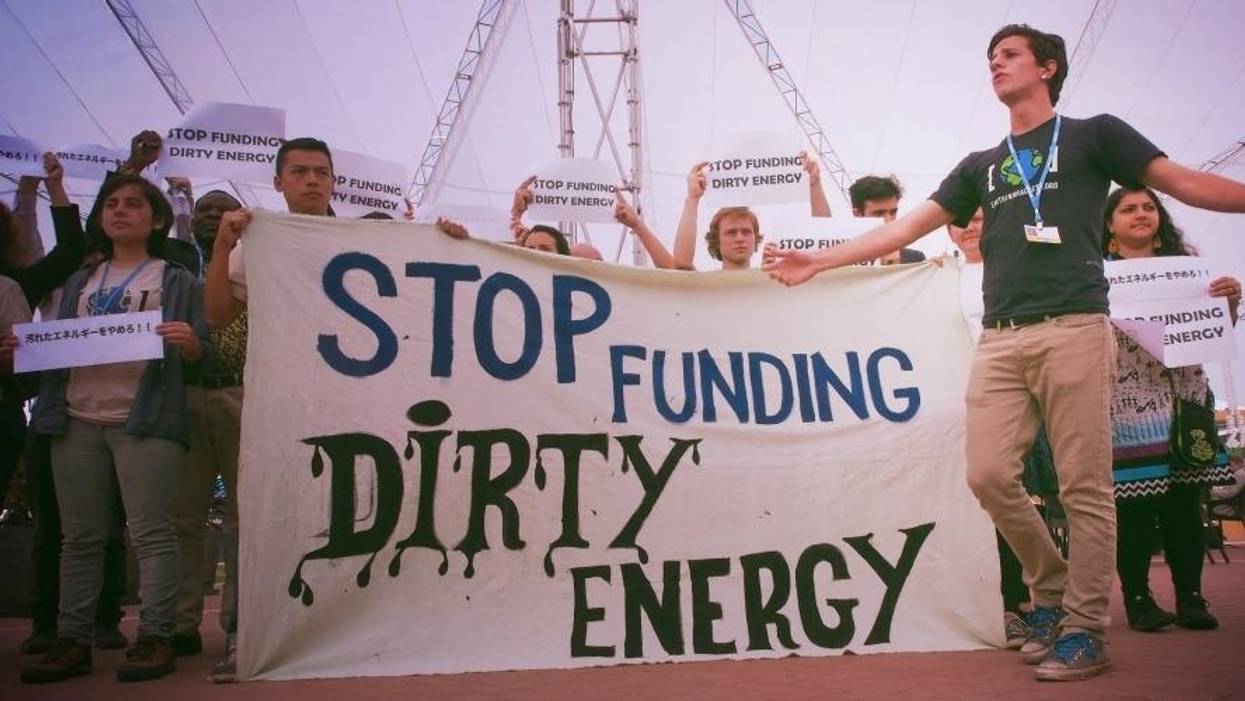
Finance leaders and climate campaigners are increasingly referring to carbon-intensive industries that are causing the climate crisis as 'brown finance'. It's all over the climate finance world, and now we sometimes hear fossil fuel divestment activists chanting 'down with the brown!'
I am a vocal, and I mean vocal, advocate for divesting from fossil fuels, and investing in climate solutions. Here I am at Chase Bank getting arrested right before the pandemic, because JP Morgan Chase is the largest investor in fossil fuels in the world.
Any investor, wealth manager, banker, or activist working to move money away from the industries that are killing us and our planet and into climate solutions, I support you. But, if you use the language of 'brown' to mean fossil fuels and carbon-intensive industries, you do not support me, or any other person of color.
If you cannot hear the problem with the term 'brown finance' yourself, let me explain. And if after my explanation, you still cannot hear the problem, then please just trust me and stop using the term.
"Brown is not just another color like green. It is a color associated with people, and in particular people of color. And it has meaning in the world and in the environmental movement."
While not a cornerstone of U.S.-based climate activism, using the color brown as a proxy for dirty, fossil fuel industries has picked up steam in financial circles in Europe, which has begun to influence other parts of the world. 'Brown' is juxtaposed to 'green': the first is bad, the latter is good. And herein lies the problem.
To avoid the worst impacts of the climate crisis, we have to act now to transition to a low carbon economy--often dubbed a 'green economy'. This 'greening' has been used to describe a suite of desirable attributes to meet the sustainable development goals and basic human needs such as clean air, water, and land.
The finance and investment community in particular uses the term 'green finance' to describe finance that is beneficial for the environment, including investing in climate solutions such as renewable energy and electric vehicles. The European Union recently issued green finance taxonomy to determine what economic activities can be considered environmentally friendly by banks and asset managers. The opposite of this green finance has unfortunately been branded as 'brown finance'--finance that is destructive to the environment.
But brown is not just another color like green. It is a color associated with people, and in particular people of color. And it has meaning in the world and in the environmental movement.
For people of color, it is hurtful and damaging to associate something that is detrimental to society with the word brown. 'Brown' has been linked to dirty and 'white' to clean, and this has significant racial undertones. Some good reading on this is Carl Zimring's book Clean and White. Language that frames 'brown' as bad is painful, exclusionary, and ultimately structurally damaging to people of color.
Why not just call dirty, dirty and clean, clean? If colors are absolutely necessary to describe an economy, why not just use colors disassociated with human skin, such as gray and green? This seems to be the approach taken by UN Secretary General Antonio Guterres, when he stated, "Place your bets on the green economy, not the grey economy, because the grey economy will have no future" at the launch of the UN Principles for Responsible Banking.
Last month, the Stop the Money Pipeline Coalition resolved to ensure the language of 'brown finance' is no where in their campaigning, and is committed to continue calling fossil fuel financing what it is--dirty finance. I commend this commitment, the movement is leading the way, and now we need those in financial institutions to commit as well. (Full disclosure, Hip Hop Caucus, for which I am President & Founder, is a member of Stop the Money Pipeline.)
In a recent article about diversity in environmental STEM, Rhodes Scholar Wanjiku "Wawa" Gatheru is quoted as saying, "Black and Brown people experience environmental hazards and crises first and worst but are not the ones in the environmental fields making the decisions that are going to mitigate these issues."
One reason the 'brown = bad' language choice can even emerge is because there is a lack of people of color in leadership in climate finance institutions and in climate NGOs and organizations. Green 2.0, an initiative that elevates and sustains public attention to the racial demographics of the leadership of the environmental field, recently published its 2019 NGO and Foundation report card that shows this lack of diversity at leadership levels. Green 2.0 concludes:
Young people are already building separate lanes of influence on climate change. Their leadership, messaging and organizing strategies are noticeably more inclusive and racially diverse than the institutions that comprise the wider movement. They are nimble and rapidly responsive, and they are in part because they are the communities they are trying to save. We trust that the longstanding, mainstream environmental movement can push itself to remain relevant by evolving similarly and rapidly.
I fully agree. If the climate finance movement and the institutions and NGOs therein want to find relevance among broader stakeholders and communities, using the word 'brown' with a negative connotation must stop. Frankly, using the word 'brown' in this context must stop simply because it is racist. 'Dirty Finance' or 'Grey Finance' it is.
The beautiful global uprisings for Black lives has centered for the world the truth that white supremacy, racism, and the greed of capitalism are at the root of our ills, including the climate crisis. Brown people are powerful, and we will not achieve climate solutions without Brown leadership. Brown = good.
Do you remember where you were 10 years ago? For many of us, we were glued to the television. We watched in horror as Hurricane Katrina surged to a Category 5 hurricane as it raced across the Gulf of Mexico, wondering when it would touch U.S. ground and fearing the worst.
Hitting the Gulf coast on the early morning of Aug. 29, 2005, Katrina would soon prove to be one of the most catastrophic storms in American history, causing more than 1,800 deaths and $100 billion in damage.
Fast-forward to today and you'll find vastly different opinions on the recovery of New Orleans following Katrina's aftermath. According to a study published this week by Louisiana State University, about four out of five white, Louisiana residents believe the state has mostly recovered from the storm while about three out of five African-American, Louisiana residents believe the opposite--and rightfully so.
Over the past 10 years, only two-thirds of New Orleans' pre-Katrina residents have returned. Thousands of the city's most vulnerable people are permanently displaced from their homes with no way of returning or attempting to rebuild their past. Schools, hospitals and social programs that served and supported these communities were devastated and never reinstated.
What has remained constant and a true barrier to fully rebuilding since Katrina in the face of this tragedy is the ever-looming presence of the fossil fuel industry. We know that African-American families are disproportionately affected by climate change and live closer to the sources of pollution that cause climate change: power plants, highways, drilling sites and factories. They suffer increased health impacts such as heart and respiratory diseases, higher health care costs, missed work and school and difficultly with learning. On top of that, climate change continues to drive more extreme weather events such as Superstorm Sandy and record-breaking heat waves--events to which many people of color and low-income communities are defenseless due to financial instability.
Too many lose their lives to climate change before they should. I've witnessed it far too many times.
As the fossil fuel industry continues to profit at the expense of the most vulnerable and contribute to climate change, we are facing the next greatest economic and racial injustice of our time. Just as my parents fought for equality, I find myself fighting today for existence--not just for access to a particular water fountain but any water fountain with clean water that is free of harmful pollution. We must look at climate change as a serious civil and human rights issue for the health of our world because if we don't solve this now, nothing else will matter.
As leaders like President Obama and former Presidents Clinton and Bush head to New Orleans this week to remember Hurricane Katrina and the lives lost, I hope they hear the cry of the thousands who are still victim to injustices since Hurricane Katrina. I hope they see all that was taken away from these communities and what has yet to be returned. I hope they pursue radical action to prevent such a climate change-related disaster from ever happening again.
We need these leaders' support in this fight, as a fossil-free future is the right future for all of us. We must divest from fossil fuels and invest in the transition to a 100 percent clean energy future. We must implement the Clean Power Plan to its fullest extent and beyond. And as world leaders prepare to travel to Paris this December for the United Nations conference on climate change, we must add to the demand for a bold agreement and then hold governments accountable for their commitments.
To rally urban communities and the U.S. public at large in major support of this action, the Hip Hop Caucus is working with allies like 350.org, LCV, NRDC, Earthjustice, Solutions Project and Sierra Club as well as top music artists such as Common, Antonique Smith, Dee 1, Crystal Waters and Malik Yusef to launch the People's Climate Music "Act on Climate" National Bus Tour. This month-long run of concerts, meetings, community events and on-the-ground toxic tours will reach more than a dozen U.S. cities with music and messages that inspire climate change awareness and action, giving a voice to those who cannot be heard.
We kick the tour off in New Orleans this Saturday on the 10th anniversary of Hurricane Katrina to remember the past and fight for the future. We'll join together in beautiful music, thoughtful discussion and a spirit of advocacy in:
To catch the announcement of the People's Climate Music "Act on Climate" National Bus Tour and updates on tour activities, follow Hip Hop Caucus on Twitter.
As we remember Hurricane Katrina, I extend my deepest condolences to the families of the lives lost, my encouragement to the families still suffering, and my call to global leaders and U.S. citizens of all backgrounds to join the fight against the injustices caused by the fossil fuel industry. We can solve this in our generation, for all future generations. The time is now and I hope you'll join me.
The time for timid visions and baby steps is over.
Last fall, we wrote an article explaining why zero has become the most important number for humanity. Since that time, zero emissions has been embraced as an idea that's time has come by nearly 120 countries, leading European companies, high-profile CEOs, two Pontifical Academies, climate visionaries like Al Gore, mainstream media outlets and, if you can believe it, even the leaders of the G7. We now address the critical issue of timelines.
Currently, the two target dates most commonly cited for achieving zero greenhouse gas emissions are 2050 and 2100. Given the extreme weather weirding we are witnessing at current levels of pollution, we shudder to think what 35 years--let alone 85 years--of continued emissions will bring. Everyone can see that the climate is already on steroids and wreaking havoc.
The urgency of our planetary emergency requires that we transition from fossil fuels to renewables not in decades, but in years. We must move beyond what conventional wisdom views as politically feasible to what this existential crisis truly demands: an all hands on deck societal mobilization at wartime speed.
To be clear, we are not suggesting ending the use of fossil fuels tomorrow. Decarbonizing our industries, homes, transportation, power generation and food production will take time, probably longer than 2020. Let's hope it doesn't take us until 2030. But we must make this transition as quickly as humanly possible.
In 2011, an unprecedented coalition of planetary protection leaders called on the presidents of the U.S. and China to declare a global climate emergency by launching a wartime-like mobilization to cut carbon emissions 80 percent by 2020. Because that urgent call was not heeded, we have lost precious time in the race to save civilization, and must now set our sights even higher.
To this end, we join with our allies at The Climate Mobilization in calling on Congress and the White House to revitalize our economy and put America back to work by declaring a U.S. goal of net zero greenhouse gas emissions by 2025.
Some will no doubt call this bold national goal unrealistic, but they would underestimate the innovative genius and social conscience of the American people. America has a long and proud history of overcoming seemingly insurmountable odds (consider World War II, Apollo program and Abolitionist movement). What is unrealistic is thinking we can put off for decades action that is desperately needed now to ensure our survival as a species.
We will be reminded of the fragility of our existence this summer when the victims of Hurricane Katrina are honored on the 10th anniversary of that savage storm. We will be reminded again this fall when the victims of Hurricane Sandy are commemorated on the third anniversary of that superstorm's lethal landfall.
Five months from today, delegates from more than 190 nations will gather in Paris for the 21st UN Convention on Climate Change (COP21) to negotiate a global climate accord--this after decades of failed international talks have only watched fossil fuel emissions continue to soar. For the sake of all that we love, we cannot allow COP21 to become yet another climate cop-out.
Intergenerational justice demands that the centerpiece of the Paris agreement be zero emissions, a goal UN Secretary-General Ban Ki-moon calls "ambitious but achievable." Five months is ample time for the nations of the world to draft their legally binding zero emissions commitments for Paris.
In his widely anticipated encyclical, timed to influence the Paris talks, Pope Francis writes, "Reducing greenhouse gases requires honesty, courage and responsibility, above all on the part of those countries which are more powerful and pollute the most." As the nation that historically contributed the most to global climate pollution, and that is in the strongest position to respond, the U.S. has a moral imperative to lead the zero emissions charge at COP21.
The current weak U.S. target of 26-28 percent emissions cuts by 2025 cannot be described as honest, courageous or responsible when what is needed is what the pontiff calls a "cultural revolution" to free ourselves from fossil fuels.
The time for timid visions and baby steps is over. The time for our generational mission is at hand.
Zero emissions: because the first step to making things better is to stop making things worse.
It's quite simple, we (the climate movement) must be the change we want to see in the world.
This upcoming weekend at the University of the District of Columbia Law School, Bill McKibben, Dr. Michael Dorsey, Lester Brown, Professor Mark Jacobson, Mustafa Ali from the U.S. Environmental Protection Agency, Professor Phillip Harvey, Barbara Arnwine, Rev. Rodney Sadler, Jay Nightwolf, Krystal Williams, Joe Uehlein, Ted Glick, Chuck Rocha, Professor Joel Rogers, Nikisha Glover, Mike Ewall, Jeffrey Wolfe, Joel Segal, State Sen. Ben Ptashnik, Jacquelyn Patterson, Terrence Muhammad, Mark Magana, Dr. Gabriela Lemus, Leslie Fields, Andrea Miller and many, many more, will address these two central questions in a convening sponsored by People Demanding Action:
The objective of this convening is to build a movement of solidarity which includes climate crisis action and reestablishment of justice.
Many in the climate movement will agree that these questions must be answered, but will also wonder silently, why stop and deal with this question of building an inclusive climate movement now, when we are starting to win on so many fronts?
Last year was the biggest year of climate activism ever. More leaders from various sectors--from environmentalists and scientists, to CEOs and business leaders, to faith and moral leaders--are now lending their considerable influence to call for climate action at all levels of government, as well as in civic institutions and corporations.
Yet, to some degree, we are singing to the choir. The next critical step for the climate movement is contending for indelible mainstream cultural relevance. Put plainly, if the climate movement does not become more inclusive, the goal of transitioning from fossil fuels to clean energy will not happen.
This is the key to winning public support and political will for climate action that will meet the demands of science.
The modern environmental movement, some 50 years old, has invested tremendous amounts of resources in predominantly white and predominantly elite communities to fight for clean air, clean water, open space and a sustainable planet for all of us. This movement model has achieved incredible victories for the public good. The reality, however, is that there is not enough power in the environmental community alone to lead a global transition from fossil fuels to clean energy. The movement needs to expand, and to do so we need to re-frame the issue of climate change to make it an everyday, every person issue.
This gathering at UDC School of Law will bring together some of the brightest minds in the progressive, climate, human and civil rights movement to discuss how the climate movement builds an inclusive climate movement to create community power.
This free conference encourages community participation (although space is limited). The conference will work to bring new voices of great value to the climate movement. Through both democratic and economic strategies we are working to empower diverse communities to mobilize for powerful climate solutions.
I'm proud that we can have this ongoing conversation in the climate movement of what following people of color-led work is and means. With each iteration of the conversation we get closer to making fundamental change within our movement, which is a process we must model, because we are fundamentally asking the entire world to make some big and important changes for an equitable, sustainable, 100 percent clean energy future. It's quite simple, we (the climate movement) must be the change we want to see in the world.
Zero has become the most important number for humanity. Why?
"Zero emissions is an ambitious but achievable goal." --UN Secretary-General Ban Ki-moon
Zero has become the most important number for humanity. Why?
Any chance of stabilizing the climate hinges on transitioning to zero greenhouse gas emissions as quickly as humanly possible. Simply slowing the rise of emissions will not work. For the first time, the world's leading climate authority, the Intergovernmental Panel on Climate Change (IPCC), has embraced a goal of near zero greenhouse gas emissions or below.
Top military experts and government institutions like the U.S. Department of Defense and National Intelligence Council warn that climate destabilization threatens our national security, yet global emissions just keep going up. Leading biologists like E.O. Wilson warn that the sixth great extinction is now upon us, yet emissions keep going up.
By heating the globe at such a relentless rate, we are playing a deadly game of planetary Russian roulette. In the words of Michael Mann, professor of meteorology at Penn State University: "There is no precedent for what we are doing to the atmosphere. It is an uncontrolled experiment." If you believe your own eyes that climate chaos has already gone too far, the only logical response is to stop making things worse.
We are not suggesting ending the use of fossil fuels tomorrow. Decarbonizing our industries, homes, transportation, power generation and food production will take years of concerted effort and require every ounce of courage, ingenuity, patience and humility we possess. But intergenerational justice demands that we commit ourselves now as a nation to leading this green industrial revolution.
Some will no doubt call this goal unrealistic, saying it cannot be achieved, but they would underestimate the creative genius of the American people. What is unrealistic is thinking we can continue with business as usual and leave a habitable planet for our children. Americans are a supremely resourceful people with a long history of meeting, and exceeding, monumental challenges. While we have never faced anything as daunting as the global climate crisis, there are precedents for the U.S. overcoming seemingly insurmountable odds.
When destiny came knocking during World War II, we initially resisted, then answered by leading the allied forces to victory in three and a half short years.
It took a Civil War to end the scourge of slavery, and a monumental civil rights struggle to outlaw segregation, Jim Crow laws and discrimination, but we not only overcame, we elected a person of color as President of the United States.
When President John Kennedy boldly challenged America to land a man on the moon in less than a decade, our best and brightest responded by accomplishing this seemingly impossible task ahead of schedule.
It is now time for our generation to do something great.
Zero Emissions Bandwagon
It may surprise you to learn that zero emissions has already been embraced as a goal by business leaders as well-known as Bill Gates, and world leaders as prominent as UN Secretary-General Ban Ki-moon; OECD Secretary-General Angel Gurria; UN climate chief Christiana Figueres; Prince Charles; and former President Jimmy Carter, former UN Secretary-General Kofi Annan, and Archbishop Desmond Tutu of The Elders.
Again, even the conservative, consensus-based IPCC supports near zero emissions or below, albeit on a year 2100 timeline that belies the urgency of their August draft report, which warns of "irreversible impacts" from continued emissions.
Major corporations, like Google, have embraced a zero carbon goal. Others like Microsoft and Deutsche Bank are moving in this direction by committing to net zero emissions, or carbon neutrality (using carbon offsets or carbon credits to balance out remaining emissions). 684 college and university presidents (and growing) have taken a similar climate neutrality pledge. And a fossil fuel divestment movement is picking up steam on college campuses (including Stanford University, Sydney University and historically black colleges and universities) and in houses of worship around the world.
Sweden, Iceland, Costa Rica and the Maldives are among the nations vying for carbon neutrality. Denmark is committed to becoming fossil fuel free, with Copenhagen seeking to become the world's first carbon-neutral capital by 2025. In the U.S., cities like Austin and Boulder are striving for carbon neutrality, with San Francisco pledging to generate all of its electricity from renewables by 2020.
Scotland is on track to generate 100 percent of its electricity from renewables by 2020. The Philippines aims to shift the country's fuel system to 100 percent renewables in ten years. The German state of Schleswig-Holstein is set to go 100 percent renewable this year. Munich's goal is 100 percent renewables by 2025. The British Labour Party wants to decarbonize the UK's electricity grid by 2030. And the island nation of Tokelau is already 100 percent renewable.
In stark contrast, neither the U.S. President, nor a single member of the U.S. Congress, has yet publicly called for a zero emissions goal for America.
2oC Wrong Target
Just because the governments of the world accept 2deg Celsius of heating above the preindustrial average as the agreed-upon target does not make it the right target. To the contrary, last December, preeminent climate scientist James Hansen and seventeen co-authors released a study in the scientific journal PLOS ONE revealing the UN-approved 2degC ceiling is based on politics, not science, and would unleash "disastrous consequences" beyond our control.
Dr. Hansen, economist Jeffrey Sachs, and others argue that "morality" demands a rapid and dramatic cut in global carbon emissions to stay as close as possible to a 1degC ceiling (we are already at 0.85degC). Here's what they said about the urgency of dropping from the current level of 400 parts per million (a level not reached in at least 800,000 years) of carbon dioxide (CO2) in the atmosphere to 350 parts per million (ppm), the level many consider the uppermost safe limit for civilization:
"It is instructive to see how fast atmospheric CO2 declines if fossil fuel emissions are instantly terminated. Halting emissions in 2015 causes CO2 to decline to 350 ppm at century's end. A 20 year delay in halting emissions has CO2 returning to 350 ppm at about 2300. With a 40 year delay, CO2 does not return to 350 ppm until after 3000. These results show how difficult it is to get back to 350 ppm if emissions continue to grow for even a few decades."
We're obviously not going to achieve zero emissions by 2015. The point is we need to do it as soon as necessary to avoid catastrophe impacts from global climate change. Every day we delay buries us deeper in the climate hole.
Failure of Moral Leadership
The United Nations, Congress and the White House are all failing in their moral obligation to stem the tide of this gathering storm.
The United Nations is not leading on this issue, as it must. Since 1990, when the IPCC issued its first report, CO2 emissions have increased by approximately sixty percent. Last year in Warsaw, after 19 successive sessions of the UN Conference of the Parties (COP) failed to achieve meaningful emissions reductions, labor and environmental groups walked out after deciding governments were performing so poorly they could no longer legitimize the climate cop-out with their presence.
Congress is not leading on this issue, as it must. Since refusing to ratify the 1997 Kyoto protocol, the U.S. Congress has failed to enact any significant climate legislation. The closest they came was a Wall Street-friendly "cap and trade" bill passed by the Democratic-controlled House of Representatives in 2009. Described as an "unacceptable compromise" by Greenpeace and "a step backwards" by Friends of the Earth, it called for a modest 17 percent reduction of carbon emissions by 2020. Five years later, too few members of the Republican-controlled House of Representatives are even willing to admit humans are changing the climate.
The White House is not leading on this issue, as it must. The EPA's proposed rules to limit carbon pollution from existing coal-fired power plants are a step in the right direction, but President Obama's widely heralded "climate action plan" will be more PR than plan, with no chance of stabilizing the climate, unless the White House takes bold action. In fact, the administration's attempt to please all during this climate crisis with its all-of-the-above energy strategy promises more climate chaos by promoting natural gas fracking; mountaintop removal mining; deepwater and Arctic oil drilling; tar sands mining; and deafening seismic oil and gas exploration off the Atlantic coast. That the President has not yet denounced a scheme as "absurdly reckless" as Keystone XL's northern leg speaks volumes.
Even the renewable energy industry is not leading on this issue, as it must. Four years after it was first pointed out, America's largest wind, solar and geothermal trade associations continue to embrace incrementalism, when the times call for revolutionary change.
Because the climate crisis threatens all life on Earth, it is first and foremost a moral issue. We have already seen how the poor and communities of color bear the brutal brunt of fossil fuel extraction and suffer the most from extreme weather disasters. Three out of four African Americans live within 30 miles of a coal-fired power plant. African-American children have an 80 percent higher rate of asthma, and are nearly three times more likely to die from asthma, than their white peers. The moral urgency of this crisis requires a rainbow coalition of people - reflecting the diversity of our great nation - coming together to solve it.
Alarmingly, latest projections by the U.S. Energy Information Administration have fossil fuels supplying almost 80 percent of the world's energy use through 2040, with carbon dioxide emissions rising 46 percent from 2010 levels. If this perilous trend is not reversed, runaway climate change could cause most of life on Earth to go extinct, testing the survival of humanity itself.
As the nation that historically contributed the most to global climate pollution, and is in the strongest position to respond, the U.S. has a moral imperative to lead this global charge.
Making the Great Transition
It is time for America to unleash its entrepreneurial can-do spirit through a wartime-like mobilization to help save America, and the world. Innovating to zero emissions will not only help ensure our collective survival, it is the key to revitalizing our ailing economy and putting America back to work. But we don't have until 2100, or even 2050, to transition off of fossil fuels. Scientists are calling for deep cuts in emissions now. Leaders showing us how to get there include:
Zero Emissions Mandate
We have solutions. They even have names: conservation; energy efficiency; solar power; wind power; geothermal power; standing forests; organic farms; industrial hemp; electric vehicles; bicycles; mass transit; wave energy; tidal power; zero waste ...
Here and there aggressive initiatives are underway. China is developing a single 38,000 MW wind project large enough to electrify a country the size of Poland. Four states in Germany already get more than 50 percent of their electricity from wind power, while in the U.S., Iowa and South Dakota are generating more than 25 percent of their electricity from wind farms. But progress is not being made at anything close to a speed and scale commensurate with the scope of the planetary emergency we face.
On, Sept. 23, a UN Climate Summit is being held in New York City. UN Secretary-General Ban Ki-moon has challenged world leaders to bring their pledges to set the world on a low-carbon path. We entreat Mr. Ban, who calls zero emissions an "achievable goal," to challenge attendees of the UN Climate Summit to bring their zero emissions plans to COP20 in Peru this December and to COP21 in France in 2015. Anything less will show our governments are not serious about solving this existential threat.
Our colleague Bill McKibben, who earlier this year called out the Obama administration for sabotaging the 2009 Copenhagen climate negotiations through NSA spying, has issued a "call to arms" inviting all who "give a damn about the biggest crisis our civilization has ever faced" to gather in New York City on Sept. 21 for a People's Climate March to demand bold climate action at the UN Summit. We ask, what could be bolder than zero emissions?
Earth is the only known habitable planet in the universe, making the climate risks to humanity so great as to warrant the utmost precaution. Now is the time for the climate justice movement to rally around a goal of zero emissions, with the U.S. leading the way by enacting zero emissions policies at the local, state and federal levels. For the love of humanity, and our children, we must act now.
Zero emissions: because the first step to making things better is to stop making things worse.
'What's Going On'
Here's a question whose answer might surprise you: what American songwriter penned the most-listened-to piece of environmental protest music of all time? Somebody with an acoustic guitar? John Denver?
The answer, almost certainly, is Marvin Gaye. "Mercy, Mercy Me (The Ecology)" appeared on What's Going On, the album he released in May 1971, which went straight to the top of the charts, even though Motown boss Berry Gordy thought it was too political to sell. "I realized that I had to put my own fantasies behind me if I wanted to write songs that would reach the souls of people. I wanted them to take a look at what was happening in the world," Gaye said later. The Vietnam War, protested in the album's title song, was part of that story, and so was drug abuse--and so was "oil wasted on the oceans and upon our seas," and "radiation in the ground and in the sky," and "fish full of mercury."
Where did all the blue sky go?
Poison is the wind that blows
From the north, east, south and sea
For a brief moment after the first Earth Day, it made perfect sense for the civil rights and environmental movements to be singing the same tune. Tragically, those movements soon diverged--diverged so far that some people still find it odd that activists like ourselves are working side by side again on issues like global warming and poverty. But it makes perfect sense--there is no threat to social justice greater than the breakdown of our earth's physical systems, and no way to ease that threat without rearranging power, both in America and around the world.
Think for a minute about Hurricane Katrina: those high winds blew in a lot of truths. For one, we've amped up nature in a dangerous way: scientists now expect ever stronger storms to rake our shores. For another, poverty puts some people at far more risk than others. No one will ever forget those pictures of the Lower Ninth Ward when the levee broke, but in almost every city on earth the poorest people live in the equivalent of the Lower Ninth. It's not that everyone won't eventually be affected by climate change--plenty of middle-class white people lost their homes when the storm rampaged across Louisiana and Mississippi. But almost everywhere, rich people occupy higher ground, and the places that flood belong to those who can't afford better. As the oceans rise throughout this century, those are the places that will turn wet and swampy first--substandard housing in the twenty-first century still means lead paint and asthma, but now it means you better cut a hole in the attic so you can get on the roof and wait for the helicopter.
And of course there are whole nations built on low ground--places like Bangladesh, which may see a fifth of its land under water. In this decade we've watched diseases like dengue fever spread through the poorest parts of the poor world, driven by the mosquitoes that like the warm, wet world we're building. We've watched blocs of nations--low-lying islands, for instance--turn to the UN to demand action to ensure their very survival. Almost without exception, these endangered places are filled with people of color, and with poor people.
That's why the fight against climate change is a very basic fight for people in New Orleans, or in Oakland, or in DC--or in Dhaka, and Calcutta, and Lagos. These are the places that will drive the demographic future, here and abroad; the centuries to come belong to black and brown and yellow humans. But 200 years of burning coal and gas and oil, mostly by Americans and Europeans, threaten to make that future impossible. That's why, right now, we've got to take a united stand to slow it down--why 350.org will be holding demonstrations around the planet on October 24 to demand that our leaders pay attention to science and limit carbon concentrations to 350 parts per million. That's the most important number on the planet, though no one knew it eighteen months ago. NASA's Jim Hansen and his team reported recently that concentrations higher than 350 are not compatible with "the planet on which civilization developed and to which life on earth is adapted." Since we're at 387 and rising right now, that's very bad news. It explains why the Arctic is melting, why Australia is drying up and why we watch the hurricane season with more trepidation with each passing year.
It also explains why more than a thousand actions are already planned for October 24, in every corner of the planet. The earth's immune system is finally kicking in, people are signing up to march in China and India, and churches across America are pledging to ring their bells 350 times that day. It may turn out to be the largest global environmental action of all time, and beyond any doubt the most beautiful and diverse. Some of those protests will be atop lofty mountains, or undersea off the Great Barrier Reef, or on the lovely organic farms of Vermont. And some will be in grittier places, where the battle is even more crucial.
That battle--which began when the Hip Hop Caucus and Green for All announced the Green the Block campaign on August 4 from the West Wing of the White House--is for many things. One of those is a stronger deal at the Copenhagen climate conference in December than the weak agreement currently under consideration. Yvo de Boer, the international diplomat who is chairing those talks, recently pointed out as diplomatically as possible that the numbers on the table are nowhere near what the science demands. "This is not enough to address climate change," he said. Later he told activists that it would help the process enormously if they would mobilize: "If you could get your members out on the street before Copenhagen, that would be incredibly valuable." So we will--and if Copenhagen is to succeed, we must move American policy too. The Waxman-Markey legislation on Capitol Hill goes further than any climate legislation in the past, but it's still riddled with loopholes and giveaways, because members of Congress still fear the coal industry more than they fear the effects of climate change (or climate-minded voters).
But this environmentalism can't just be about the dangers we'll face if we don't take action--Green the Block means embracing the changes we must make as a way to build inclusive, thriving local economies. We need to put people to work swinging hammers--not building luxury condos for people with easy credit but installing insulation in old homes and solar hot-water heaters on roofs. We need urban farming and strong local businesses standing up to the big boxes that suck the life and money from communities.
We believe we will be able to affect the decisions in Copenhagen and in Congress, because some of the leaders of this new movement are different from the environmental lobbyists of the past. The old school are still important, but their constituencies are also graying, their work too often confined to making cozy arrangements with the powers that be. The new environmentalism draws everyone from church people to business people. The world's greatest mountain climbers are busy recruiting their brethren for October 24, urging them to get up high with banners. Michael Pollan and Barbara Kingsolver are rallying small farmers and food activists; people will rally at many a farmers' market that day. And b-boys and graffiti artists are busy recruiting their friends to create images of 350.
But most of all, the constituency is young people, who understand that they will bear the results of inaction for their whole lives--and who understand in a visceral way the hopeful possibilities that come from a newly connected world. Marvin Gaye and the soul era gave voice to the oppressed during the struggle for civil rights. Now young people are singing new freedom songs and identifying with one another under an umbrella known as hip-hop. The swagger and style that young people and their urban-influenced culture bring to the green movement bear little resemblance to the old tree-hugging brand of environmentalism. But as the conscious caretakers of a "block" on the brink of climate catastrophe, they are powerful partners in the green movement.
That's why the soul of modern environmentalism is right where Marvin Gaye left it in 1971, the spot we never should have walked away from:
Oh, things ain't what they used to be
What about this overcrowded land?
How much more abuse from man can she stand?
'There must be no compromise, because it is immoral to compromise with snakes'
As you may know the D.C. Voting Rights Act has been postponed in the Congress, and will likely not be brought up in the House until late April.
The bill provides full congressional representation to the District of Columbia and an additional House seat to Utah, with wide support on the Hill. However a handful of legislators are manipulating the bill with a nonrelated amendment.
There is no excuse for Sen. John Ensign attaching an amendment to the voting act that would eliminate the city's ability to enforce necessary gun laws. The Senator may reside in the district when the Congress is in session, but he does not live in the part of the city plagued by gun violence.
When I walk the streets of Washington I do not hear cries for more guns, I hear cries of loss. I urge the Senator to meet with Kenny Barnes, who lost his son in 2001. Barnes now runs Reaching Out to Others Together, an organization that mentors young people and encourages them to steer clear of crime. If he did, Ensign would meet a man who is caring for his own community, not meddling in the affairs of others.
If he did he would realize that Washington does not demand more guns. The city marches and speaks out only to end "taxation without representation."
Even still, opinions on D.C. guns should have no place in the discussion about our city becoming an equal part of the American democracy. To try to combine two separate issues is to play politics with essential rights.
NRA members in Idaho and Oklahoma are trying to impose an ideology on an urban community that does not ask for it. As a leader of an inner-city I do not concern myself with the legal prostitution in Senator Ensign's state; I'm concerned only with the murders on my block.
So there must be no compromise, because it is immoral to compromise with snakes, too scared to bring their own cause to a vote by itself.
I encourage the sane members of Congress - a Congress I hope to soon have a say in - to keep the gun amendment out. If it does remain though, and the NRA keeps tabs on how members vote, I want to make it clear that I will be keeping tabs too. The Hip Hop Caucus may not have the funding of the NRA, but we do have a grassroots constituency.
The Caucus is up to 700,000 members in 30 states, including Nevada. And our members will flood the Capitol with phone calls, not to impose an ideology, but to look out for each other's safety and liberty. For the Hip Hop Caucus this is not only about the right to vote, for us it is life and death.
Let the voices, ideas and actions of the oppressed drive a movement that can finally grow to that critical mass.
On July 1, 2007 I sought the support of regular Americans after receiving notification from the U.S. Air Force Reserve that they were threatening to discharge me on the basis of behavior that, in their words, is "clearly inconsistent with the interest of national security." The behavior in question is my outspoken opposition to the occupation of Iraq and the inadequate and inhuman response to the tragedy of Katrina.
As a result of the outpouring of support I received from all over the United States and from around the world, the Air Force backed down. Thanks to my brothers and sisters in the movement, I will end my service with the honorable discharge that I earned. I am eternally grateful, and evermore committed to taking on the powers that be for the powers that ought to be.
At first, when I informed the Air Force that I would fight their harassment, they threatened me with deployment to Iraq, or even prison time. Then with the tremendous circulation and widespread publishing of my first Open Letter, the Air Force realized if they were going to challenge me, they would have to challenge thousands of Americans from across the nation outside of Robbins Air Force Base in Georgia, on my hearing date.
Even now, after all the pain we have been through as a nation these last years, the reaction of the Air Force shows that when we are organized in the face of a government that does not represent us, we the people have the power.
Mine is the third case in which the military has backed down when the people have challenged their attempts to silence dissent. When former Sgt. Adam Kokesh spoke out after risking his life in Fallujah, Iraq, the U.S. Marines threatened him with a "less than honorable" discharge but backed down after many came out in support of Adam. When Marine Sgt. Liam Madden spoke out about this "war of aggression" in which war crimes were being committed, the Marines threatened him but again backed down when they saw organized opposition. The military now knows they will feel the wrath of the people if they threaten veterans who speak out against the occupation of Iraq.
The anti-war movement truly supported me in my case against the Air Force, which as a young African-American minister was so empowering to me personally that I pledge to increase my opposition to the U.S. occupation of Iraq. I pledge to continue my work in solidarity with the Iraqi people who are resisting U.S. occupation. I will not let the media spin that portrays all Iraqi resistors as insurgents linked to Al Qaeda and other terrorists groups, silence my moral support for the good people in Iraq who are fighting to free their land.
Indeed, I have just returned from a trip to the Middle East where I visited with Iraqi refugees. As a person of color, I have no issue with my brothers and sisters in Iraq. I also have no issue with the U.S. troops who serve with honorable intentions and so often join the military under the poverty draft. My issue is with the Bush Administration and our co-dependent Congress.
These are the six ways I see to oppose the U.S. occupation of Iraq: 1. Speaking out and creating an echo chamber of opposition; 2. Participating in acts of civil disobedience; 3. Joining the economic boycott led by the Iraq Moratorium beginning September 21st; 4. Casting your vote at the polls; 5. Giving direct aid to humanitarian programs for Iraqi refugees and internally displaced; and, 6. Counter-recruiting campaigns.
All these methods become effective when a critical mass of people is mobilized. The anti-war movement in the U.S. has yet to reach that critical mass. The critical mass that is necessary to have a real anti-war movement can be achieved by mobilizing those who are most oppressed by the U.S. government. We must link the struggles of the oppressed in the U.S. and in Iraq.
The displaced Katrina survivors and the displaced Iraqis is a good place to start. But it must go deeper than that. Literally, the money that was supposed to go to levees in New Orleans was diverted to the war in Afghanistan. The money that is being spent to kill Brown people in Baghdad is being diverted from programs that educate Black people in the U.S. For example, for what the State of North Carolina has sacrificed in war spending in Iraq, they could have provided nearly 600,000 students four-year scholarships at public universities.
I pray that our movement finds the strength of character to listen to the very oppressed for whom we claim to speak, and let the voices, ideas and actions of the oppressed drive a movement that can finally grow to that critical mass.
For Future Generations,
Rev. Lennox Yearwood, Jr.