

SUBSCRIBE TO OUR FREE NEWSLETTER
Daily news & progressive opinion—funded by the people, not the corporations—delivered straight to your inbox.
5
#000000
#FFFFFF
To donate by check, phone, or other method, see our More Ways to Give page.
Daily news & progressive opinion—funded by the people, not the corporations—delivered straight to your inbox.
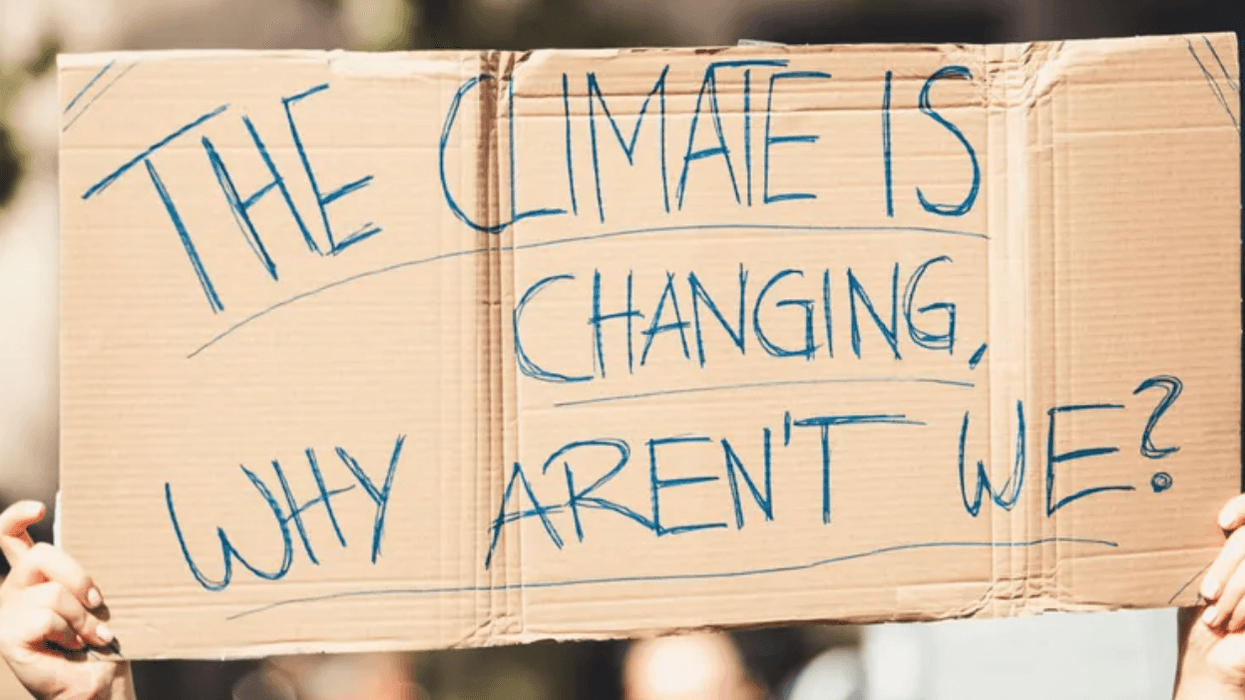
"In order to be equipped for a warmer world, we have to anticipate changes, get the affected parties on board, and take advantage of local knowledge," said one researcher.
Scientists at the University of Hamburg in Germany argued Wednesday that meeting the 2015 Paris climate agreement's goal of limiting planetary heating to 1.5°C is "currently not plausible"—but warned that despairing over climate "tipping points" risks taking attention away from "the best hope for shaping a positive climate future... the ability of society to make fundamental changes."
The Hamburg Climate Futures Outlook assessed the planetary impacts of several "physical processes that are frequently discussed as tipping points." These include the melting of sea ice in the Arctic and glaciers at the North and South Poles; the weakening of the Atlantic Meridional Overturning Circulation (AMOC), the system of ocean currents that carries warm water upward into the North Atlantic; and "dieback" in the Amazon rainforest, in which rising temperatures would dry out trees and eventually change the forest landscape into a savanna, releasing billions of tons of stored carbon.
Those scenarios "are serious developments," said researchers at the university, but the melting of ice "will have very little influence on the global temperature until 2050." The weakening of AMOC and Amazon dieback will have a "moderately" greater influence on global temperatures.
"Human agency has a large potential to shape the way climate futures will evolve."
"By extrapolating current trends," reads the study, "permafrost thaw and Amazon Forest dieback are expected to release somewhat more than one year's worth of today's anthropogenic CO2 emissions between now and 2050. Thus, the contributions of these two processes to the remaining carbon budget are small. Since both will only moderately affect the global surface temperature, we deduce that they also only moderately inhibit the plausibility of attaining the Paris agreement temperature goals."
Such tipping points "could drastically change the conditions for life on Earth," but for experts, progressive politicians, and campaigners who share the goal of limiting planetary warming to 1.5°C—or as close to that as possible—"they're largely irrelevant," said Jochem Marotzke, a study co-author and professor at the university's Cluster of Excellence "Climate, Climatic Change, and Society" (CLICCS).
In other words, The Hill explained, "Keeping global warming below 1.5°C—the goal set in the Paris agreement—is implausible for social reasons, not technical ones."
The researchers also examined 10 "drivers of social change" including media, United Nations climate policies, transnational initiatives, climate regulations, climate litigation, knowledge production, consumption patterns, corporate responses, fossil fuel divestment, and climate and social movements like the global Fridays for Future movement and Extinction Rebellion.
With fossil fuel companies continuing to make long-term investments in oil and gas extraction even as they announce pledges to reach net-zero carbon emissions, and rampant consumption of carbon-intensive goods showing no sign of slowing down, the study says, corporate responses and consumption patterns "continue to undermine the pathways to decarbonization, let alone deep decarbonization."
A number of social drivers including social movements, climate regulations, and fossil fuel divestment were found to currently "support decarbonization, but not deep decarbonization by 2050," which is needed to attain the 1.5°C goal.
"There are promising reforms underway, especially at the E.U. level," reads the report, adding that "general and ongoing public interest in and focus on climate policies" is an "enabling condition" that could help strengthen global movements and ramp up pressure on policymakers.
The researchers' assessment of the 10 social drivers demonstrates "that human agency has a large potential to shape the way climate futures will evolve," tweeted CLICCS. "However, human agency is strongly shaped by injustices and social inequalities, which inhibit social dynamics toward deep decarbonization by 2050."
The study identified how human actions can help shift the current trajectory "toward deep decarbonization," including:
"In order to be equipped for a warmer world, we have to anticipate changes, get the affected parties on board, and take advantage of local knowledge," said Anita Engels of the Center for Earth System Research and Sustainability at University of Hamburg. "Instead of just reacting, we need to begin an active transformation here and now."
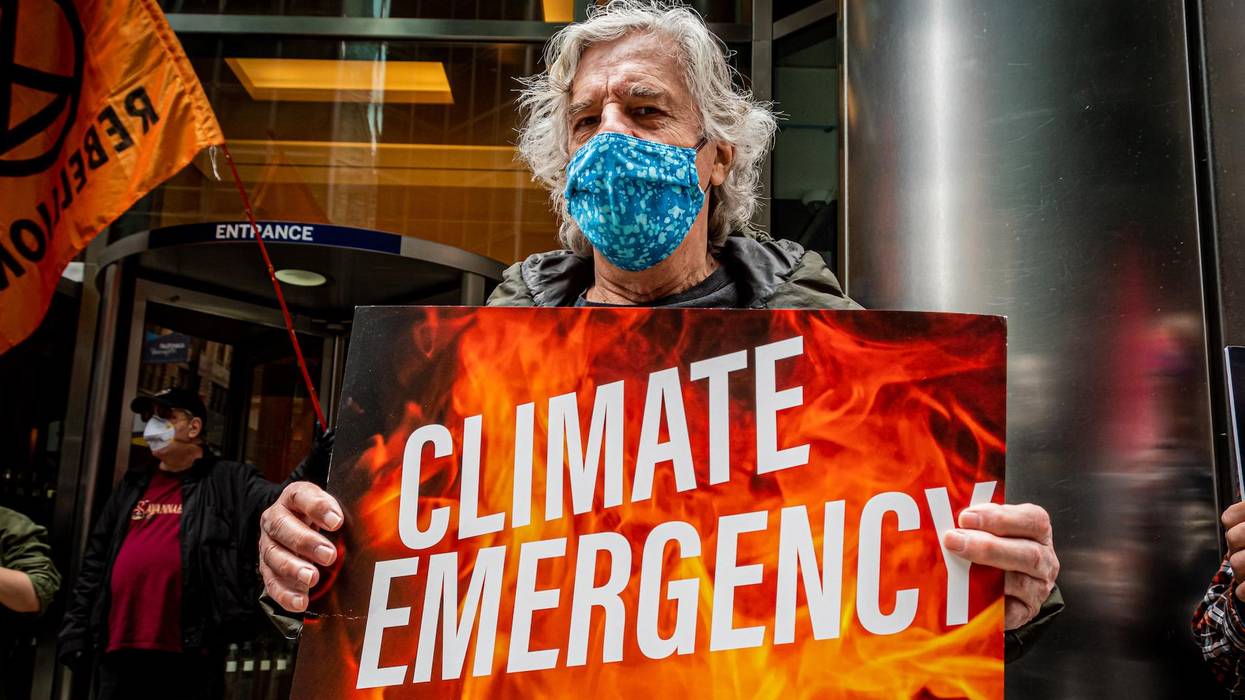
Hawaii is poised to become the first U.S. state to declare a climate emergency after the Legislature's adoption Thursday of State Senate Concurrent Resolution 44.
The bill "acknowledges that an existential climate emergency threatens humanity and the natural world, declares a climate emergency, and requests statewide collaboration toward an immediate just transition and emergency mobilization effort to restore a safe climate."
It calls on the state to commit to "a just transition toward a decarbonized economy that invests in and ensures clean energy, quality jobs, and a statewide commitment to a climate emergency mobilization effort to reverse the climate crisis."
The passage was welcomed by Hawaii Climate & Environmental Coalition member 350 Hawaii, which declared on its Facebook page: "We are the ones the future generation is counting on."
"Hawaii is the first state to join a movement largely led by cities and counties to declare a climate emergency which reflects the commitment our state Legislature continues to make to address the causes and the impacts of climate change," state Rep. Lisa Marten (D-51), who led the House version of the measure, said in a statement.
According to the Climate Mobilization Project, such declarations have been made by over 1,900 jurisdictions worldwide, including 144 within 24 U.S. states. Climate emergency declarations have previously been made by the Hawaii Island Council and Maui County Council.
Dyson Chee, advocacy director for the Hawaii Youth Climate Coalition, another member of the Hawaii Climate & Environmental Coalition, also hailed the resolution's passage, saying that "climate change is an emergency that needs to be dealt with accordingly."
"Every day we wait to take action is another day lost. The climate crisis is a clear and present threat for both current and future generations," said Chee.
At the federal level, President Joe Biden is facing calls to declare a climate emergency.
In February, Reps. Earl Blumenauer (D-Ore.) and Alexandria Ocasio-Cortez (D-N.Y.) joined with Sen. Bernie Sanders (I-Vt.) in introducing the National Climate Emergency Act of 2021, which calls for investment in "large scale mitigation and resiliency projects" that advance "a racially and socially just transition to a clean energy economy."
"Our country is in crisis and, to address it, we will have to mobilize our social and economic resources on a massive scale," Ocasio-Cortez said at the time. "If we want to want to avoid repeating the mistakes of the past--if we want to ensure that our nation has an equitable economic recovery and prevent yet another life-altering crisis--then we have to start by calling this moment what it is, a national emergency."
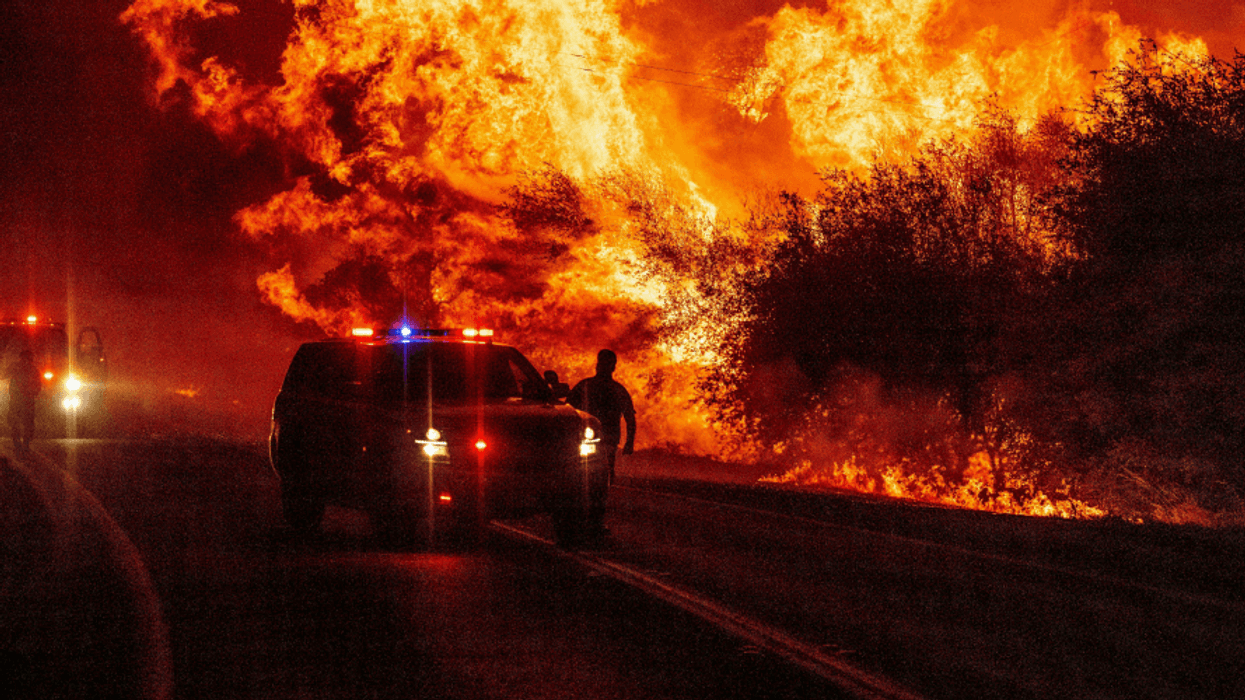
In a sign that some members of Congress intend to hold President Joe Biden accountable for climate promises he made as a candidate, three lawmakers on Thursday introduced a bill directing him to declare a national climate emergency and mobilize every resource available to halt, reverse, mitigate, and prepare for this crisis.
"Scientists and experts are clear, this is a climate emergency and we need to take action."
--Rep. Earl Blumenauer
Reps. Earl Blumenauer (D-Ore.) and Alexandria Ocasio-Cortez (D-N.Y.) joined with Sen. Bernie Sanders (I-Vt.) to spearhead the National Climate Emergency Act of 2021 (pdf)--which builds on a climate emergency resolution demanding a national mobilization that the trio introduced in the last congressional session.
"Scientists and experts are clear, this is a climate emergency and we need to take action," Blumenauer said in a statement. "Last Congress, I worked with Oregon environmental activists to draft a climate emergency resolution that captured the urgency of this moment."
"President Biden has done an outstanding job of prioritizing climate in the first days of his administration, but after years of practiced ignorance from [former President Donald] Trump and congressional Republicans, an even larger mobilization is needed," he added. "I am glad to work with Rep. Ocasio-Cortez and Sen. Sanders again on this effort, which takes our original resolution even further. It's past time that a climate emergency is declared, and this bill can finally get it done."
Ocasio-Cortez--who also led the Green New Deal resolution with Sen. Ed Markey (D-Mass.) in the last session--noted Thursday that "we've made a lot of progress since we introduced this resolution two years ago, but now we have to meet the moment. We are out of time and excuses."
The National Climate Emergency Act recognizes that 2010 to 2019 was the hottest decade on record, atmospheric concentrations of carbon dioxide and other pollutants have soared since pre-industrial times and are increasing at an alarming rate, and global temperature rise "is already having dangerous impacts on human populations and the environment."
"Our country is in crisis and, to address it, we will have to mobilize our social and economic resources on a massive scale."
--Rep. Alexandria Ocasio-Cortez
"Climate-related natural disasters have increased exponentially over the past decade," the bill notes, "costing the United States more than double the long-term average during the period of 2014 through 2018, with total costs of natural disasters during that period of approximately $100,000,000,000 per year."
"Individuals and families on the frontlines of climate change across the United States, including territories, living with income inequality and poverty, institutional racism, inequity on the basis of gender and sexual orientation, poor infrastructure, and lack of access to healthcare, housing, clean water, and food security are often in close proximity to environmental stressors or sources of pollution, particularly communities of color, Indigenous communities, and low-income communities," the bill says.
These communities, the bill continues, "are often the first exposed to the impacts of climate change; experience outsized risk because of the close proximity of the community to environmental hazards and stressors, in addition to collocation with waste and other sources of pollution; and have the fewest resources to mitigate those impacts or to relocate, which will exacerbate preexisting challenges."
As Ocasio-Cortez put it: "Our country is in crisis and, to address it, we will have to mobilize our social and economic resources on a massive scale. If we want to want to avoid repeating the mistakes of the past--if we want to ensure that our nation has an equitable economic recovery and prevent yet another life-altering crisis--then we have to start by calling this moment what it is, a national emergency."
The congresswoman's comments echoed months of calls from campaigners across the globe for a just, green recovery from the ongoing coronavirus pandemic. Bolstering those calls, a recent United Nations report shows that while the world is on track for a temperature rise beyond 3degC this century, such a recovery could cut projected greenhouse gas emissions for the next decade by about a quarter.
"It is imperative that the United States lead the world in transforming our energy system away from fossil fuel to energy efficiency and sustainable energy."
--Sen. Bernie Sanders
The new legislation requires the president to deliver a report within one year of the bill's enactment, and continue the practice annually, detailing the executive branch's actions to address the climate emergency and ensure a habitable planet for future generations. The bill urges the pursuit of major mitigation and resiliency projects, including building and infrastructure upgrades, investments in public health and regenerative agriculture, and protections for public lands.
The legislation highlights that the United States is a primary driver of climate change, underscoring its responsibility to mobilize a response not only at home but around the world--particularly in frontline communities that have contributed least to the crisis but are already dealing with its consequences.
The bill also points out that "according to climate scientists, addressing the climate emergency will require an economically just phase-out of the use of oil, gas, and coal in order to keep the carbon that is the primary constituent of fossil fuels in the ground and out of the atmosphere."
Sanders, who now chairs the Senate Budget Committee, declared that "as we face the global crisis of climate change, in addition to other crises we face, it is imperative that the United States lead the world in transforming our energy system away from fossil fuel to energy efficiency and sustainable energy."
"What we need now is congressional leadership to stand up to the fossil fuel industry and tell them that their short-term profits are not more important than the future of the planet," Sanders added. "Climate change is a national emergency, and I am proud to be introducing this legislation with my House and Senate colleagues."
Thanks to a pair of runoff wins in Georgia, Democrats now control both chambers of Congress along with the White House. The bill's introduction comes after Senate Majority Leader Chuck Schumer (D-N.Y.) said on MSNBC last month, "I think it might be a good idea for President Biden to call a climate emergency."
The legislation was lauded by a range of advocacy groups including 350.org, Center for Biological Diversity, the Climate Mobilization, Food & Water Watch, Friends of the Earth, Greenpeace USA, Justice Democrats, Public Citizen, and the Sunrise Movement--whose executive director, Varshini Prakash, said that "this bill is a good sign that our leaders are finally understanding what young people and climate activists have been shouting from the rooftops for years--that the fires that burned our homes to rubble, the floods that took our family and friends with them, are a climate emergency, and bold action must be done now to save our humanity and our future."
Jean Su, energy justice director and attorney at the Center for Biological Diversity, explained that "by declaring a climate emergency, President Biden will be able to redirect military funds to build clean energy systems, marshal private industry for clean technology manufacturing, generate millions of high-quality jobs, and finally put an end to dangerous crude oil exports."
Given that potential, Laura Berry, research and policy director for the Climate Mobilization, said that passing the bill "is a key next step to implementing a national climate response before it's too late--by declaring climate change a national emergency, President Biden must use the powers of his office to launch the whole-of-society mobilization we need to ensure a just transition away from fossil fuels, and to build a safe and equitable future for all."
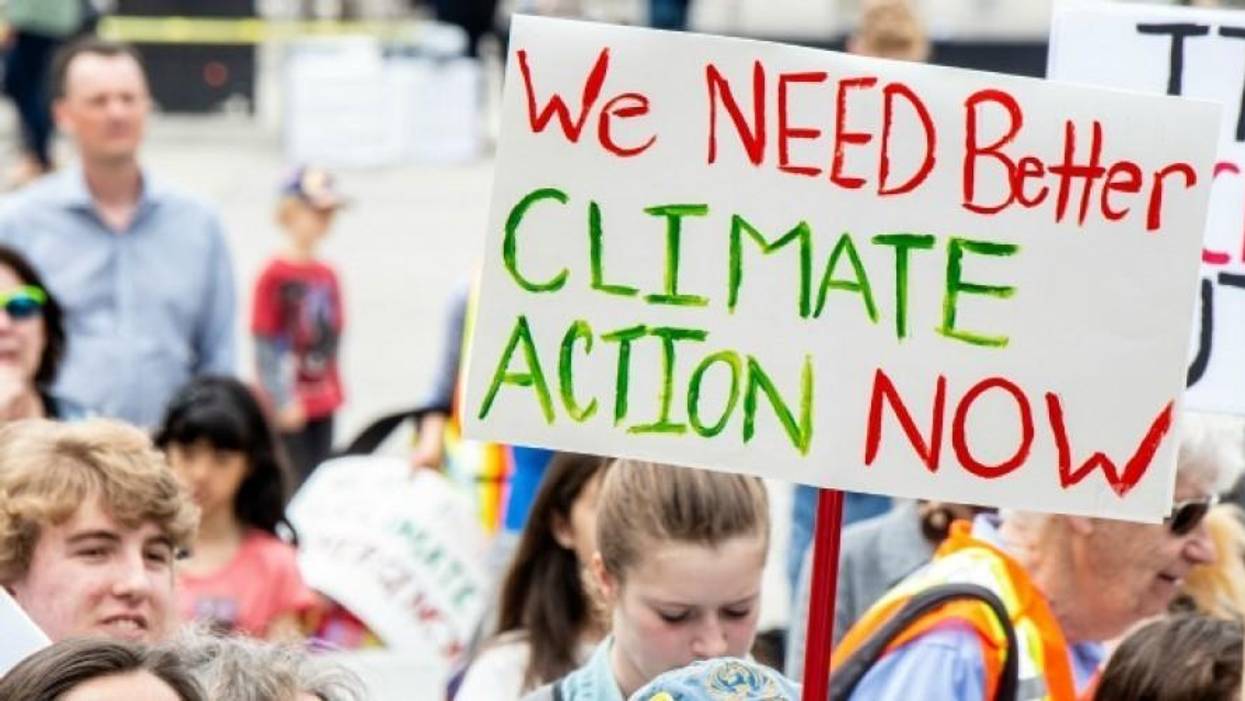
On Sunday night, America met Michael Mann on "60 Minutes", one of the country's most watched and influential television news programs for nearly 50 years now. A professor at Penn State University, Mann is one of the world's most eminent climate scientists, and also one of the most outspoken. The "60 Minutes" segment, titled "Cause And Effect," focused on climate change and California's ongoing record wildfires, which have burned more than 4 million acres to date. After showing the viral clip of Donald Trump telling state officials that the Earth will "start getting cooler," correspondent Scott Pelley asked Mann about the president's additional assertion that "science doesn't know."
"The president doesn't know," Mann retorted. "And he should know better."
The geophysicist explained to "60 Minutes"' roughly 10 million viewers that all of the world's leading scientific institutions, including the US National Academy of Sciences, had reached a consensus. In a sound bite that journalists across the United States should quote in their own climate reporting, Mann kept it simple enough for an eight-year-old: "There's about as much scientific consensus about human-caused climate change as there is about gravity."
In most other countries, such an elementary statement would be unnecessary in a major news outlet. But in the US, where only one person in five understands how overwhelming the scientific consensus about climate change is, it makes sense to spell it out.
Covering Climate Now was happy to work with our partners at CBS News in developing this "60 Minutes" story. CBS broadcast it two days after The Guardian, Covering Climate Now's lead media partner, published a companion interview with Mann, in which he delivered a rarity: pathbreaking climate news that isn't depressing.
There has been "a dramatic change in [scientists'] understanding" of the climate system in recent years, Mann said. It's a change many journalists may be unaware of, he added, noting that the scientific community hasn't done a great job of explaining it. Humanity, it turns out, may have a bit more time to prevent climate breakdown than previously believed.
Mann is well positioned to explain this shift in scientific understanding. He directs the Earth Systems Science Center at Penn State and has published more than 200 peer-reviewed papers, none more famous than 1999's "hockey stick" study that showed, as "60 Minutes" put it, that "today's rate of warming began with the Industrial Revolution."
Until recently, Mann explained in The Guardian, scientists believed the climate system--a catch-all term for the interaction among the Earth's atmosphere, oceans, and other parts of the biosphere--carried a long lag effect. This lag effect was mainly a function of carbon dioxide remaining in the atmosphere and trapping heat for many decades after being emitted. So, even if humanity halted all CO2 emissions overnight, average global temperatures would continue to rise for 25 to 30 years, while also driving more intense heat waves, droughts, and other climate impacts. Halting emissions will take at least twenty years, under the best of circumstances, and so humanity was likely locked in to at least 50 more years of rising temperatures and impacts.
Research over the past ten years, however, has revised this vision of the climate system. Scientists used to "treat carbon dioxide in the atmosphere as if it was a simple control knob that you turn up" and temperatures climb accordingly, "but in the real world we now know that's not what happens," Mann said. Instead, if humans "stop emitting carbon right now ... the oceans start to take up carbon more rapidly." The actual lag effect between halting CO2 emissions and halting temperature rise, then, is not 25 to 30 years but, per Mann, "more like three to five years."
This glimmer of hope is only empowering if humans--especially those with governmental and policy-making positions--actually act. In short, this game-changing new scientific understanding suggests that humanity can turn down the heat almost immediately by slashing heat-trapping emissions. "Our destiny is determined by our behavior," said Mann, who finds that information "empowering."
Of course, this glimmer of hope is only empowering if humans--especially those with governmental and policy-making positions--actually act. Mann has said before, and he reiterated in The Guardian interview, that a second presidential term for Trump would be "game over" for the climate. That's not Mann's partisan judgement, he insisted. It's straightforward math.
To prevent a catastrophic rise in global temperature, humanity must cut emissions in half by 2030, Mann said, citing 2018's landmark report by the UN's Intergovernmental Panel on Climate Change. That will require a rate of change "unprecedented" in human history, according to the IPCC scientists: emissions had to fall by 5 percent year after year. But if a re-elected Trump spent an additional four years pushing the world's biggest economy in the opposite direction, hitting the 2030 target would become "essentially impossible," Mann said. If emissions don't begin falling until 2025, they would have to decline by roughly 15 percent every year over the following five years. "That may be, although not physically impossible, societally impossible," Mann said. "It just may not be economically possible or socially viable to do it that [fast]."
Just as The Guardian has long been the gold standard for print coverage of climate change, so "60 Minutes" is now setting an example of how broadcast journalists can cover what Mann calls "the greatest crisis that we face as a civilization." In fact, this was the second consecutive Sunday that "60 Minutes" ran a segment covering climate change; last week, Sir David Attenborough, the legendary naturalist and BBC filmmaker, described how human activity over the past sixty years has not only overheated the planet but driven many plant and animal species to the brink of extinction, in turn threatening humanity's own future. (Attenborough's new autobiographical documentary, "A Life On Our Planet," premiered on Netflix on October 3.)
That future is on the ballot in the US this election year. Between now and Election Day, November 3, newsrooms should make abundantly clear not only what's at stake but what voters can do about it. As Mann said in the Guardian story's kicker, "The future of this planet is now in the hands of American citizens."
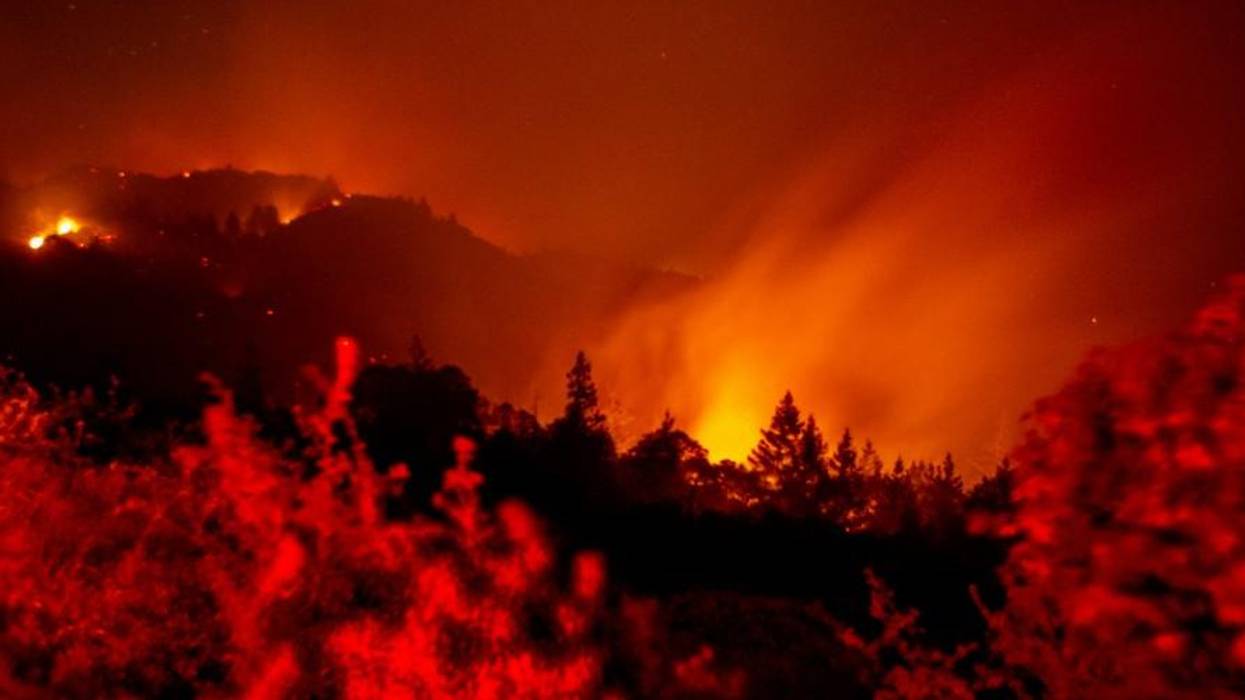
As California endures unprecedented wildfires fueled by climate change, county leaders in an agricultural community west of Sacramento continued a global trend of local governments issuing climate emergency declarations on Tuesday by approving a resolution that calls for an inclusive, justice-focused countywide mobilization.
"Being on the front lines of the fires and suffering from heatwaves and days of hazardous, smoke-filled air this summer has definitely created a new sense of urgency."
--Juliette Beck, Yolo County Climate Emergency Coalition
"Being on the front lines of the fires and suffering from heatwaves and days of hazardous, smoke-filled air this summer has definitely created a new sense of urgency," Juliette Beck, an organizer with Yolo County Climate Emergency Coalition, told Common Dreams in an email Tuesday after the resolution passed.
"Yolo County's action today of declaring a climate emergency in our predominantly rural agricultural county of 220,000 residents," Beck added, "is a testament to the social movement power demanding both transformative climate action and concrete steps to remedy the legacy of systemic racism."
Organizers with the Yolo Climate Emergency Coalition spearheaded the resolution, which was endorsed by over 100 grassroots groups and individuals in the community from local farms, businesses, faith-based alliances, educational institutions, and various advocacy campaigns.
Approved 4-1 by the Yolo County Board of Supervisors, the resolution recognizes that the Covid-19 pandemic "has spurred a health and economic crisis that has exposed and amplified pervasive social and economic disparities that will be further amplified by the climate change crisis." It also notes the climate impacts many California residents are already facing and the county's previous actions to address the crisis.
"Yolo County can continue its leadership by initiating with urgent speed a Climate Mobilization of countywide resources to effect a just transition to an inclusive, equitable, sustainable, and resilient local economy while also supporting and advocating for regional, national, and international efforts necessary to reverse the climate, social justice, and economic crises," the document says.
The resolution specifically calls for working "to achieve a just economic recovery and transition to a countywide carbon negative (climate-positive) footprint by 2030."
During the meeting, Supervisor Don Saylor said: "We need to hold ourselves accountable to real deadlines just to keep things from getting worse. The goal of carbon neutrality by 2030 might not be fast enough. I'd like to make sure we as a county have done our part and have made measurable progress by 2025."
The sole supervisor who didn't support the declaration, Duane Chamberlain, was voted out of office earlier this year and will be replaced in January by Woodland City Council Member Angel Barajas--a son of local farmworkers.
The approved resolution commits Yolo County to a planning and implementation process "that engages and empowers all stakeholders, including historically under-represented and disproportionately impacted communities."
Adelita Serena of Mothers Out Front, a grassroots climate action organization that backed the resolution, said in a statement: "I have two sons and I want them to have a future. We must act now with great urgency."
"As a mother and Indigenous woman, what we are currently seeing is a very clear and loud alarm from our Mother Earth and ancestors," said Serena, who is based in Woodland. "We must change course off fossil fuels before it's too late."
A farmworker who has worked during the devastating LNU Lightning Complex Fire shared in a statement from organizers, "My lungs are still irritated from breathing contaminated air, all the smoke, dust, ash I inhaled while working in the fields."
"I'm still working every day even though I can't stop coughing because I know the work will end soon and I need to be responsible and help take care of my family," added the farmworker, who asked to remain anonymous. "What other choice do I have?"
In addition to passing the resolution, the Yolo County Board of Supervisors committed $50,000 to an advisory committee "tasked with helping the county achieve just and equitable outcomes for marginalized communities and to retool livelihoods," according to the Climate Mobilization, which supports U.S. climate emergency campaigning.
With the vote Tuesday, Yolo County joined a decentralized global campaign that has led over 1,750 local governments--along with 17 national and supranational governments--to declare a climate emergency, most of them in the past two years. By the Climate Mobilization's count, more than 833,500,000 people are living under such declarations in 30 countries and the European Union.
"Declarations of climate emergency are a key starting point to get local governments on record and to accelerate their climate goals."
--Matt Renner, The Climate Mobilization
Across the United States, over 11% of the total population lives in a jurisdiction that has declared a climate emergency, Matt Renner, executive director of the Climate Mobilization, told Common Dreams.
"Declarations of climate emergency are a key starting point to get local governments on record and to accelerate their climate goals--these declarations give organizers and activists leverage to hold the actions of their local governments accountable," Renner said. "The next step is fighting for justice-based mobilization-scale policies to drive down emissions using local powers."
"This means ending neighborhood oil drilling, ending the use of methane gas in homes, building out low-carbon transportation infrastructure, and supporting the creation of good union jobs as we sprint to 100% renewable energy," he explained. "It will look different in every locality--that's why it's so critical that there's a community advisory committee helping to develop the plan and overseeing implementation."
Recognizing the power of local governments, under pressure from organizers, to advance "tangible policy to accelerate climate action now," regardless of what happens in national politics, Renner added, "I think this campaign can give us hope in a dark time for the climate movement."
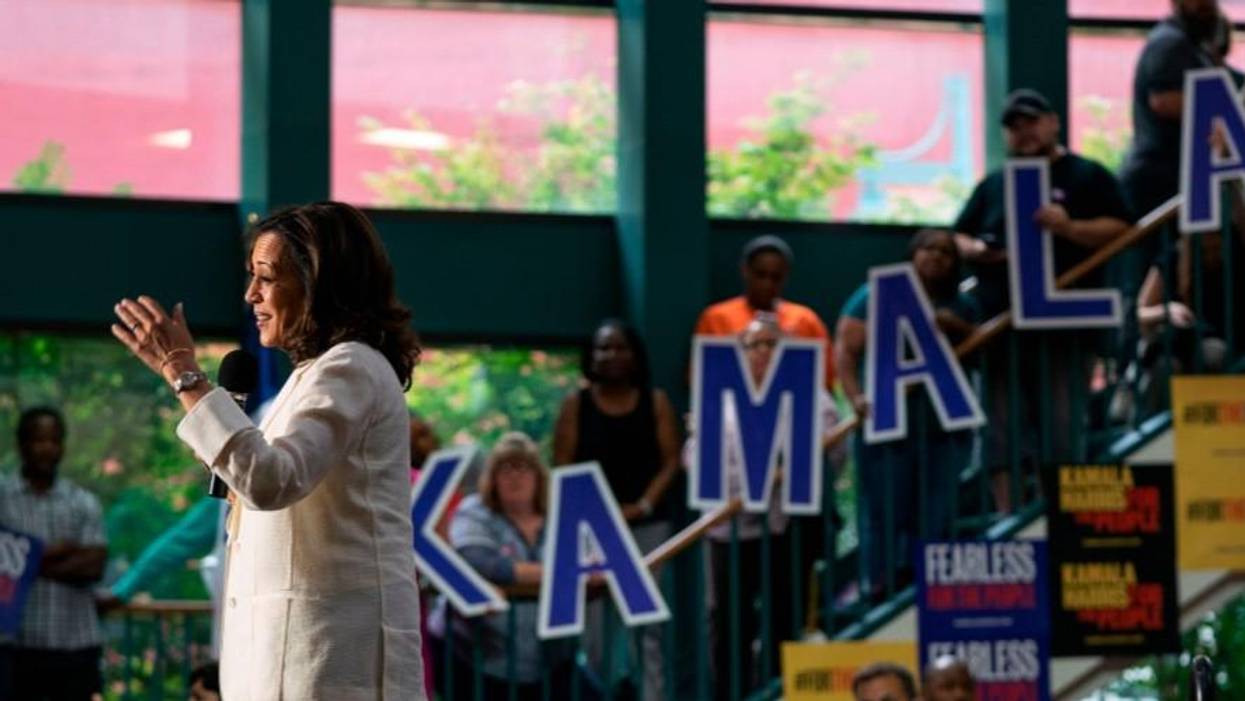
Since presumptive Democratic presidential nominee Joe Biden on Tuesday announced Sen. Kamala Harris as his running mate, green groups have responded by welcoming the choice and expressing hope that the California Democrat will push for ambitious, justice-focused climate and environmental policies if they win in November.
As a 2020 presidential primary candidate until late last year, Harris "showed her responsiveness to activist and movement pressure to make climate a top priority, and demonstrated her willingness to be held accountable," Sunrise Movement co-founder and executive director Varshini Prakash said Tuesday. "She took our No Fossil Fuel Money Pledge, ran on the Green New Deal as a core part of her platform, and mentioned it more in the presidential debates than almost any other candidate."
Harris was an original co-sponsor of the Green New Deal, a resolution introduced in February 2019 by Sen. Ed Markey (D-Mass.) and Rep. Alexandria Ocasio-Cortez (D-N.Y.) that calls for creating a 100% renewable U.S. energy system along with millions of jobs. She also signed on to a resolution urging Congress to declare a climate emergency and initiate a major mobilization in response to it.
Noting that Harris is a sponsor of that latter resolution, Matt Renner of the Climate Mobilization said that "her addition to this ticket is a good first step toward the future that the people are demanding, and serves as an opportunity to continue to push the Democratic Party toward emergency climate mobilization."
In recent weeks, Harris has also partnered with Ocasio-Cortez to unveil the long-anticipated Climate Equity Act and with other congressional colleagues for the Environmental Justice for All Act.
The Climate Equity Act "demonstrates her willingness to tackle environmental and racial injustice head on and we applaud her prioritization of communities most impacted by the climate crisis," said 350 Action North America director Tamara Toles O'Laughlin. "We're confident that Harris' stated commitments to climate action means that she will work with Biden to implement a Green New Deal that prioritizes Black, Indigenous, and communities of color and builds in a just transition that phases out fossil fuels by 2021 for our health and safety."
Greenpeace USA climate campaigner Charlie Jiang declared that "the Biden-Harris administration must take transformative action from day one to advance a Green New Deal and end the era of fossil fuels."
"The baseline for ambitious climate action has shifted dramatically for Democrats over the past year--it will be up to both Biden and Harris to move beyond false solutions like carbon capture and storage (CCS) and tackle social, environmental, and economic injustice at their roots," he said. "The evolution of Senator Harris' climate platform as a presidential candidate speaks to her commitment to holding big polluters accountable for their role in the climate crisis."
Jiang, whose group ranked Harris one spot above Biden in its 2020 primary climate scorecard, added that "we hope to see her continue this pursuit of climate justice for vulnerable communities as a vice presidential nominee and double down on ending fossil fuel production in the United States and around the world."
"Notably, she was one of the first candidates to publicly commit to abolishing the filibuster in order to make a Green New Deal the law of the land," Prakash said of Harris. "She took on Big Oil as California Attorney General, has consistently shown a strong record on ensuring environmental justice for Black, Brown, and poor communities, and has worked together with frontline communities, environmental justice organizations, and Rep. Ocasio-Cortez over the course of the last year to develop legislation that would ensure Green New Deal investments benefit and prioritize those communities."
Prakash also acknowledged concerns about Harris' past as a prosecutor, for which she faced criticism even before the latest wave of protests demanding systemic reforms to address how the U.S. criminal justice system impacts people of color:
Over the past few months, our country has had a reckoning over issues of policing and racial justice, and our movement has taken to the streets alongside allies demanding transformative change. As a young Indian-American woman, I am holding the significance of this moment to see the first mixed-race Black and Indian woman on a presidential ticket. I'm also deeply aware of Sen. Harris' record as a prosecutor and the ways in which a number of her decisions harmed communities of color, which our movement has spoken out about in the past and will continue to. We hope that she has learned from her past mistakes and continues listening to the activists who have taken to the streets as she has joined alongside them.
While praising Harris for showing "a solid understanding of the scale of the climate crisis" and committing to hold the fossil fuel industry accountable, Toles O'Laughlin concurred that "as the contest unfolds, Harris has work to do to prove her support for the movement for Black lives, considering her record on police and prosecutorial misconduct. We need leaders who are ready to address the compound crisis of climate, racial injustice, economic inequity, and human health."
Given that Harris "has been known to be somewhat of a political chameleon" with a "habit of aligning her stance with the prevailing political winds," climate action advocates hope she will respond positively to political pressure for progressive policies. The impact of the planetary emergency on her home state of California, which Harris has previously discussed, could also compel her to act.
Harris "has come up against the effects of climate change firsthand in California, where wildfires, rising sea levels, and drought are near-constant sources of concern," Grist reported Tuesday. "As a result, her state has become a leader of the charge to tackle rising emissions in the United States. Let's hope Harris brings a little bit of that urgency to the ticket."
Biden--who is expected to formally accept the nomination to take on President Donald Trump next week--recently put forth a $2 trillion green energy plan that progressives celebrated as a "major step forward" and a signal that he is responding to calls for bolder climate policies from activists and Democratic voters who backed Sens. Bernie Sanders (I-Vt.) or Elizabeth Warren (D-Mass.) in the primary race.
"Meanwhile, Trump's climate policies are a raging dumpster fire," said Jiang of Greenpeace. "Communities across the United States are reeling from the compounding crises of climate change and the Covid-19 pandemic. But instead of taking action to prevent further suffering, Trump and his cabinet are bending over backwards to bail out fossil fuel CEOs."
Sunrise's Prakash vowed that "our movement remains committed to defeating Trump and Pence this November and hope to hold her accountable in office--just like we will with Joe Biden."
"Let's do our part to end this era of chaos and defeat Republicans up and down the ballot," she said. "Then, let's turn up to make a Biden-Harris administration lay the groundwork for a Green New Deal."
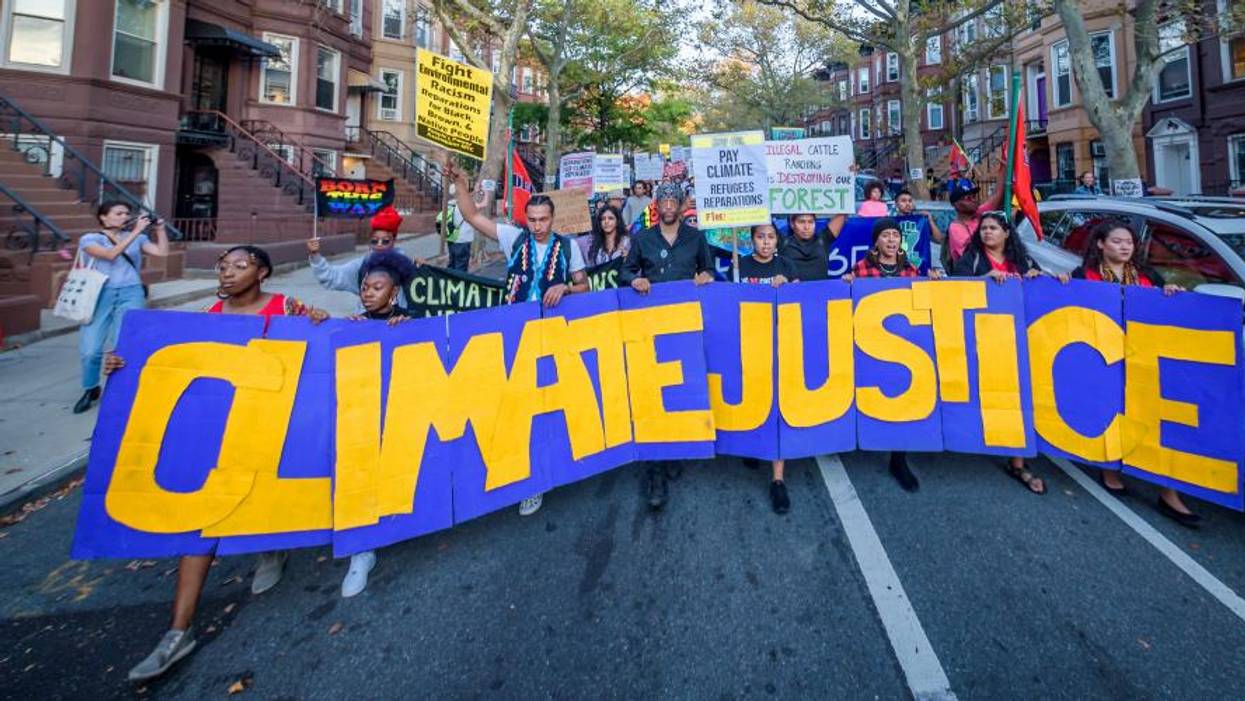
The national think tank Demos and 115 progressive organizations on Wednesday unveiled the Frontlines Climate Justice Executive Action Platform, which urges the next president of the United States to urgently take steps that "address continuing disparities, establish greater accountability for a just transition, and lay groundwork for systemic changes needed to end fossil fuel dependency and build a just and equitable renewable energy future."
"This Frontlines Climate Justice Executive Action Platform provides urgently needed, actionable policies that an administration must implement in order to ensure that we meet the challenge of climate change by dismantling environmental racism, and centering the needs and voices of the communities most affected."
--K. Sabeel Rahman, Demos
The presidential policy agenda, directed at President Donald Trump or presumptive Democratic nominee Joe Biden, comes with just over three months left until the November general election and in the midst of the coronavirus pandemic. The United States remains a global hotspot for the crisis, with more than 3.9 million confirmed cases--which is likely far below the number of actual infections--and over 142,000 deaths nationwide.
"In the face of continued crises of police violence, a global pandemic, and economic collapse, one lesson is clear: Black and brown communities are consistently marginalized and subjected to chronic and deadly inequities, so long as they remain excluded from public investment and decision-making power," Demos president K. Sabeel Rahman said in statement Wednesday.
Rahman explained that "the looming climate crisis raises the same stakes. It is Black and brown communities who are already bearing the brunt of the costs of our climate crisis and these are the communities whose voices and needs are consistently ignored."
"Built in deep collaboration with the grassroots movement signatories," he continued, "this Frontlines Climate Justice Executive Action Platform provides urgently needed, actionable policies that an administration must implement in order to ensure that we meet the challenge of climate change by dismantling environmental racism, and centering the needs and voices of the communities most affected."
The new platform details possible regulatory rulemakings, executive orders, and other presidential actions that aim to "advance an equitable climate agenda from day one." All of the actions fall into four key categories "that speak to the policy work and movement-building that frontline leaders in the climate movement have developed over many years, as they have forged a clear vision of equitable and resilient social and economic transformation."
The platform's preamble recognizes the related work of some previous proposals--specifically, the Equitable and Just National Climate Platform, the Climate Justice Alliance's Just Transition: A Framework for Change, the Indigenous Principles of a Just Transition, the Climate President Action Plan, and "the emerging paradigm of Green New Deal."
The preamble also says:
The promise of climate policy for frontline communities lies in targeted policy design that prioritizes protections, direct emissions reductions, job creation and other economic benefits, and resiliency gains for the most impacted communities, including greater control of decision-making--all of which animates the executive action platform that follows. It also lies in addressing deeply interconnected crises of housing affordability, gentrifying economic development, and financial extraction of labor, community, and natural resources. Those challenges cannot be solved by the executive branch on its own and will require extensive state and local action, major federal legislation in some cases, and massive public investment through appropriations, bonding, and other means.
The platform, said 350.org North America director Tamara Toles O'Laughlin, "speaks to the climate movement's commitment to justice and equity. We are holding fast to our demand for the next president to take immediate and transformative action."
"The compound crises of Covid-19, racial injustice, and climate change are being paid for in struggle throughout the lives and livelihoods of Black and Indigenous Peoples, and poor families on every frontline, many of whom are already surviving on mutual aid, and a unified demand that democracy delivers," she said. "From a responsive civil structure and executive, to federal agencies that provide resources and empower the people, we demand the next president commits to end fossil fuels, hold polluters accountable, and stand up for climate justice and human rights."
Specific policy recommendations include directing the Environmental Protection Agency to impose a "No Hotspots Policy" to limit local pollution, establishing a Climate Equity Accountability System based in the Office of Management and Budget, creating a Presidential Commission on Energy Democracy and Renewable Energy Futures, and institutionalizing "strong federal standards and procedural requirements of federal agencies respecting self-determination and consent of tribal nations."
Although he did not name the president, Vijay Das of Greenpeace USA's Climate Leadership Project took aim at Trump's track record on Wednesday.
"We must not tolerate anyone who will exploit a pandemic to further a racist, pro-polluter agenda, one that bails out oil CEOs and corporate polluters while Black, Brown, and Indigenous communities remain under attack."
--Vijay Das, Greenpeace USA
"People across the country are rising up to confront the interwoven crises of climate change, racial injustice, and Covid-19. They deserve an ally in the White House who is going to fight alongside them in advancing the transformational policies outlined in this platform," Das declared.
"We must not tolerate anyone who will exploit a pandemic to further a racist, pro-polluter agenda, one that bails out oil CEOs and corporate polluters while Black, Brown, and Indigenous communities remain under attack," Das said. "Our next president must reject an economy that profits off destruction in favor of one that puts the people and planet first."
Along with 350.org and Greenpeace USA, the initial signatories were Center for Biological Diversity, Climate Justice Alliance, Democracy Collaborative, GreenFaith, Hip Hop Caucus, Indigenous Environmental Network, Institute for Policy Studies Climate Policy Program, Maine People's Alliance, Michigan Environmental Justice Coalition, MoveOn, National LGBTQ Task Force, New Economy Coalition, New Florida Majority, Oil Change U.S., People's Action, Sunrise Movement, and Working Families Party.
Nearly 100 other groups also endorsed the proposal, including multiple local 350 chapters, Center for International Environmental Law, Climate Hawks Vote, CodePink, Data for Progress, Earth Day Initiative, Friends of the Earth US, Rainforest Action Network, SustainUS, the Climate Mobilization, the Solutions Project, and UPROSE.
"The president has the power to move us forward to a society where we are closer to achieving true environmental and climate justice," said Sunrise Movement co-founder and executive director Varshini Prakash. "This platform provides a well-researched and legally sound roadmap for some of the Executive Actions that will get us there, and should be implemented as soon as possible."
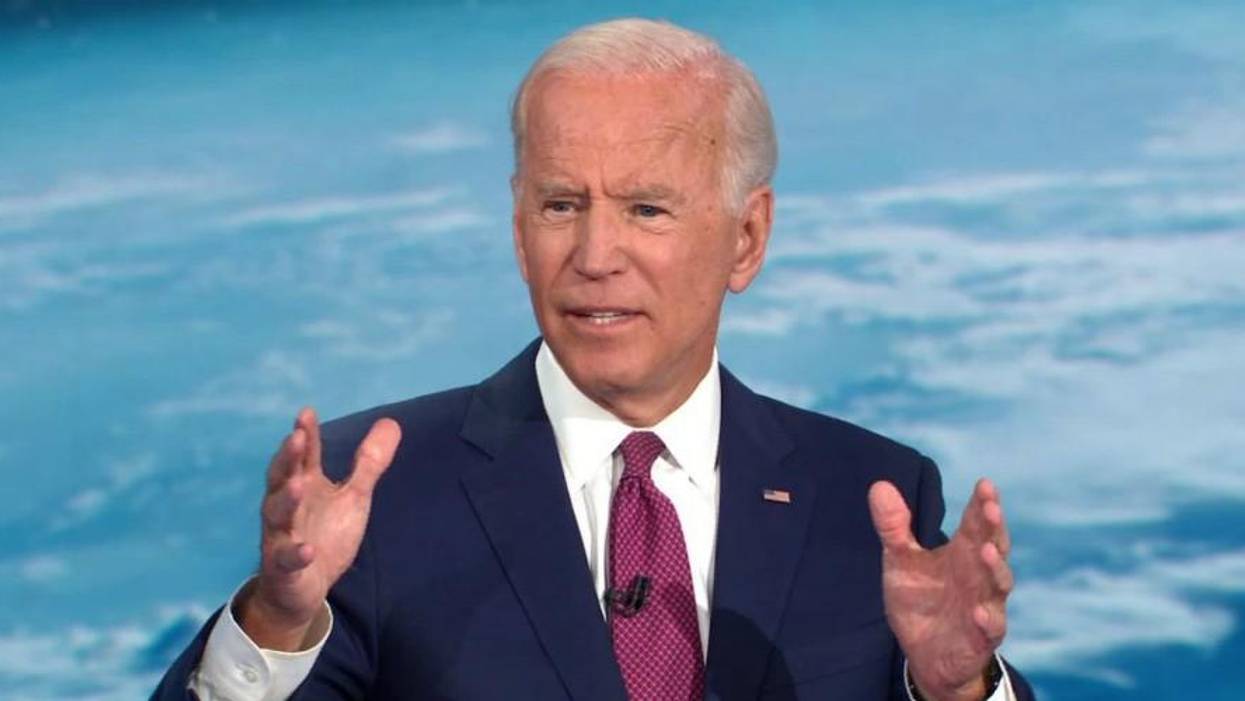
U.S. environmental and climate activists on Tuesday welcomed presumptive Democratic presidential nominee Joe Biden's "Plan to Build a Modern, Sustainable Infrastructure and an Equitable Clean Energy Future"--a proposal that is notably bolder than what he called for earlier in the primary.
"It's no secret that we've been critical of Vice President Biden's plans and commitments in the past. Today, he's responded to many of those criticisms."
--Varshini Prakash, Sunrise Movement
"Biden will make a $2 trillion accelerated investment, with a plan to deploy those resources over his first term, setting us on an irreversible course to meet the ambitious climate progress that science demands," his campaign website says, detailing related polices on agriculture, the automobile industry, buildings, electricity, environmental justice, housing, infrastructure, public transportation.
The plan calls for creating a million new jobs in the American auto industry, shifting to a power sector free from carbon pollution by 2035, and upgrading four million buildings and weatherizing two million homes over four years. Those building upgrades would create more jobs, as would the construction of 1.5 million sustainable homes and initiatives in "climate-smart agriculture, resilience, and conservation."
The New York Times reported that "in a call with reporters on Tuesday morning, senior Biden campaign officials said the proposal was the product of discussions with scientists, climate and environmental justice leaders, union members and leaders, mayors and governors, and representatives from the small-business and manufacturing communities."
In response to reporting on the proposal ahead of its official unveiling Tuesday, meteorologist and climate correspondent Eric Holthaus tweeted: "Wow. And wow in a good way." Julian Brave NoiseCat, vice president of policy and strategy at Data for Progress, acknowledged the plan's overlap with the Green New Deal.
Washington Gov. Jay Inslee, a former challenger in the Democratic presidential primary race who ran with the climate crisis as his top priority and endorsed Biden in April, praised the proposal in a series of tweets Tuesday, saying that it "shows that he's serious about defeating climate change, and has a roadmap to become the climate president that America needs."
Evergreen Action, which is led by some former Inslee staffers, also welcomed the plan. In a Tuesday Medium post, Sam Ricketts, the group's co-founder, highlighted that Biden's proposal calls for major investments in a clean power-led economic recovery from the coronavirus pandemic; includes enforceable, sector-specific benchmarks for a rapid transition to 100% renewable energy; and aims to hold polluters accountable for environmental injustice.
In a speech about his proposal Tuesday, Biden drew clear contrasts between himself and President Donald Trump. Climate reporter Emily Atkin, who tweeted some of his remarks, observed that "Biden's strategy here is to frame Trump's climate denial as costing America tons of money and jobs. And, to frame his climate plan as an economically exciting, job-heavy solution."
Evan Weber, co-founder and political director of the youth-led Sunrise Movement, also noted the contrast that Biden drew between himself and the current president and pointed out the popularity of job-creating climate policies. As Common Dreams reported Tuesday, new Data for Progress polling shows majorities of U.S. voters support transitioning to a clean energy economy by 2035 and incorporating green infrastructure into the nation's recovery from the ongoing pandemic.
Varshini Prakash is executive director of the Sunrise Movement--which endorsed Sen. Bernie Sanders (I-Vt.) in the presidential primary race--and served on the Sanders-Biden Unity Task Force, which released its policy recommendations on climate and other key issues last week. She addressed Biden's new proposal in a statement Tuesday that noted her group's efforts to pressure every single candidate in this cycle to put out climate plans that matched the severity of the crisis.
"It's no secret that we've been critical of Vice President Biden's plans and commitments in the past," Prakash said. "Today, he's responded to many of those criticisms: dramatically increasing the scale and urgency of investments, filling in details on how he'd achieve environmental justice and create good union jobs, and promising immediate action--on day 1, in his first 100 days, in his first term, in the next decade--not just some far off goals."
"Our movement made this possible, but there's more work to do, and the urgency of this crisis demands that we keep pushing," she continued. "Vice President Biden must build on these commitments and make these actions an immediate and urgent priority on day 1. Our movement, alongside environmental justice communities and frontline workers, has taught Joe Biden to talk the talk. Now let's defeat Trump and mobilize in mass after the election to get Biden to walk the walk."
Members of The Climate Mobilization also praised elements of Biden's new plan in a statement Tuesday while urging him to deliver concrete action addressing the planetary emergency and to consider even more ambitious policies in the future.
"Biden gets a lot right, especially around in the areas of racial and climate justice and equity for historically marginalized groups and working people; but he's still got a lot of room for improvement in increasing the scale, scope, and speed in which he addresses the climate emergency," said Matt Renner, the group's executive director. "Support for a Biden presidency from the climate movement should be contingent on his commitment to actually achieving climate safety in a just and equitable way, not simply going beyond what is considered politically possible."
Laura Berry, director of research and policy for The Climate Mobilization, argued that the proposed decarbonization targets don't go far enough.
"The last twelve months were the hottest we've ever experienced--an average of 1.3oC above pre-industrial temperatures. Vice President Biden's plan, while a clear departure from the market-based solutions of the past two decades, ultimately fails to reckon with the massive climate risks we face within the next decade," Berry said. "Eliminating greenhouse gas emissions from the power sector would only cut domestic emissions by 27%--but we need to be eliminating emissions across the economy as quickly as possible."
We stand on the brink of the collapse of civilization. The United States is hurtling into an era of crisis as deep as the Great Depression and World War II. Our coastal cities are facing devastation, and urban and rural communities are being divided into islands of partisanship and poverty. California and the Amazon Rainforest are on fire, the Caribbean is besieged, and the permafrost is melting down. Entire continents are combusting. The rule of law is under attack. Wealth inequality has never been higher, demagogues are commandeering governments across the world, and millions of people are fleeing collapsing societies in search of safety. Every day, we are inching closer to points of no return for our democracy, our civilization, and the biosphere that sustains all life. The stakes could not be higher.
Protecting humanity and the living world from the climate emergency would be an extremely tall order in a society that was functioning well. But the American political system today is barely functioning at all. The foundations of our democracy are crumbling. Donald J. Trump is our president, and Congress is paralyzed by a nihilistic Republican Party and hijacked by corporate interests that have infiltrated both parties.
We, the people, need to take power back. We need an unprecedented grassroots movement--one that is now beginning to rise across the world--to demand and to win the emergency mobilization we need to save our future. But we also need a deeply principled and courageous leader who can motivate millions and millions of Americans to do whatever it takes to prevent the collapse of civilization and rebuild our economy and democracy. We need a leader that can support and inspire this movement in the U.S. and around the world.
The only candidate running for President this year who has earned our trust as well as the trust of the Climate Emergency Movement--the only candidate with the moral courage to lead the United States, and the world, through the era of the climate and ecological emergency--is Senator Bernie Sanders. We are proud to endorse him.
"Bernie understands that we need transformative, not incremental, change."
Bernie understands that we need transformative, not incremental, change. He has repeatedly shown that he has the courage to stand up to the fossil fuel and other special interests and entrenched power structures. During the 2016 presidential primary, Bernie was ahead of the times in criticizing the severe inadequacies of the Paris Climate Agreement and speaking out about the need for a World War II-scale climate mobilization. He has since stated unequivocally that "climate change is a global emergency." He has pledged to declare climate change a national emergency and do "whatever it takes" to ensure a habitable planet. That is precisely the mindset we need--and it is a mindset that has been badly missing from climate politics for decades. The Congressional Climate Emergency Declaration and the fracking ban bill (which would completely phase out fracking by 2025) that he has recently sponsored, as well as his Green New Deal plan, all indicate this stance is not idle rhetoric.
Bernie's $16.3 trillion Green New Deal plan is by far the strongest plan offered by any presidential candidate, ever. However, it is not the total mobilization of national resources we believe is now necessary to save our future. In our new Climate Reality Check scorecard, Bernie's plan receives a B+. (Meanwhile, Tom Steyer and Elizabeth Warren's plans receive a C+, while Mike Bloomberg's so-called "doable" climate plan receives a D-). But the truth is that Bernie's plan will not restore safe climate conditions or fully address the broader ecological emergency. If strengthened to match the standard outlined in our Victory Plan, however, Bernie's Green New Deal could become the first phase of the emergency response that saves life on earth.
The movement--all of us who are working for emergency climate action--must make the climate and ecological emergency the #1 voting issue in both the primary and the general election and sweep in a wave of climate emergency leaders at all levels of government.
This is our chance, our moment, and our president. Onward!
*Written with the input and help of the whole Climate Mobilization team.

Imagine there is a fire in your house.
What do you do?
What do you think about?
You do whatever you can to try to put out the fire or exit the house. You make a plan of action.
"Those of us who have entered emergency mode--who understand the mobilization imperative--need to get talkative and loud."
Your senses are heightened, you are focused like a laser, and you put your entire self into your actions. You enter emergency mode.
The climate crisis is an unprecedented emergency. How we react to the climate crisis will shape centuries and millennia to come. Given the stakes, and the extremely short timetable, it is imperative that we strive to maximize the efficacy of our actions -- from ourselves as individuals, from our nation, from the global community of nations, and from the organizations that are trying to avert this catastrophe.
In a longer version of this condensed essay--titled "Leading the Public into Emergency Mode: Introducing the Climate Movement"-- I expand on the psychological concept of "emergency mode" and argue that the goal of the climate movement must be to lead the public out of "normal" mode.
Emergency Mode: Optimal Functioning in an Existential (or Moral) Crisis
Emergency mode is the mode of human psychological functioning that occurs when individuals or groups respond optimally to existential or moral emergencies. It is a state of enhanced performance-- markedly different from "normal" functioning--characterized by an extreme focus of attention and resources on working productively to solve the emergency.
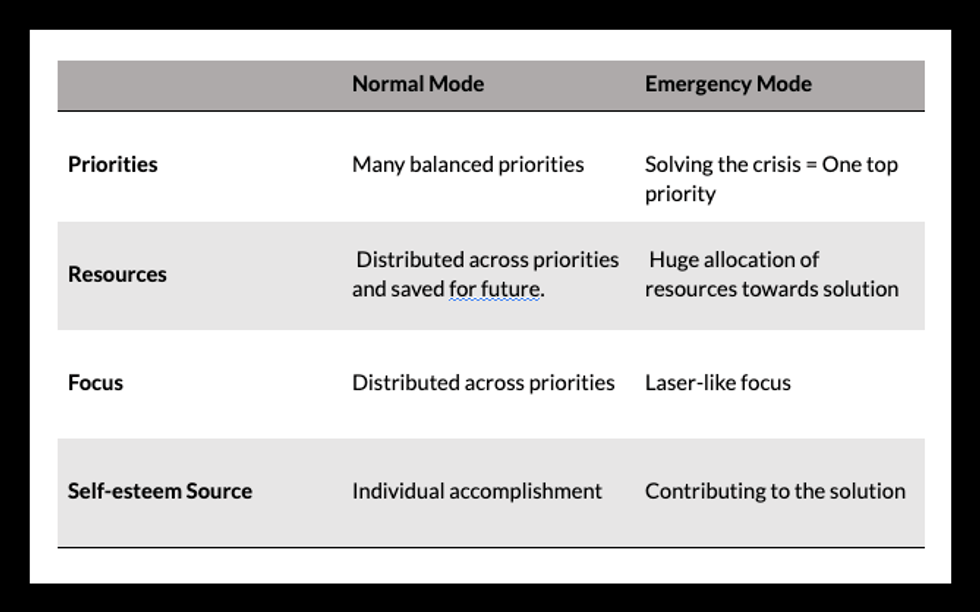
Emergency mode occurs when an individual or group faces an existential threat, accepts that there is a life-threatening emergency and reorients by:
1. Adjusting their hierarchy of priorities so that solving the emergency is the clear top priority
2. Deploying a huge amount of resources toward solving the crisis
3. Giving little priority to personal gratification and self-esteem enhancement for their own sake, and instead seeking them through engagement with the emergency. People seek to "do their part" to solve the crisis and build their skills to contribute more effectively.
Emergency mode is not limited to individuals facing short term threats such as a fire. In fact, large groups or even entire societies can enter emergency mode and remain there for years. The U.S. during World War II provides a historical model for a society operating in long-term emergency mode. The surprise attack on Pearl Harbor ended American isolationism and initiated a full-scale mobilization in which the entire industrial economy and labor force were harnessed to support the war effort. By entering emergency mode and mobilizing for total victory, the United States accomplished truly staggering feats, producing unprecedented numbers of ships, planes, tanks, and other necessities of the war effort.
Moving Towards Emergency Mobilization
Emergency mobilization on this scale is precisely what we need if we are to prevent a global cataclysm and restore a safe and stable climate. We need to transition away from fossil fuels and carbon-intensive agriculture as soon as possible, draw down all the excess CO2 and cool the planet below present levels. This will happen only with public planning coordinated by the federal government, global cooperation, massive public investment, forceful regulations and economic controls, and full societal participation.
We therefore cannot count on people entering emergency mode reflexively, historically we have only mobilized on that scale in order to go to war against a hated and feared human enemy. This time, the dangerous enemy is invisible gases in the atmosphere. The climate movement must lead the public into emergency mode through education, organizing, and by setting an example. First we must go into emergency mode ourselves, and then communicate about the climate emergency and need for mobilization with clarity, dedication, and escalating assertiveness.
"The forces arrayed against us are mighty. But on our side is the extremely potent truth--what science tells us and is becoming more apparent all the time--as well as the human desire to survive and protect other people and species."
Those of us who have entered emergency mode--who understand the mobilization imperative--need to get talkative and loud. We need to spread our message as far and wide as possible. We must not stay "closeted" and appear that we believe everything is fine. Rather we need to "come out" as being in emergency mode and in favor of a WWII-scale climate mobilization that rapidly sweeps away business-as-usual--to our friends, family, neighbors, fellow climate activists, and the public. We need to spread our message as clearly, loudly and in the most attention-grabbing ways we can.
Rise of the Climate Emergency Movement
Fortunately, a new front is rapidly emerging on the global stage that is geared toward doing just that: The Climate Emergency Movement.
The Climate Mobilization was a pioneer in this movement, spending years promoting maximal intensity mobilization in relative obscurity. Today, the Climate Emergency Movement has captured the public imagination and is rapidly gaining power. There is a militant movement of young people marching in the streets and occupying the offices of elected officials, embarrassing representatives who refuse to act with urgency. In the U.S., the Green New Deal is shaping the Democratic Party platform around a 10-year national mobilization to achieve a carbon-neutral economy. More than 620 cities around the world have declared a Climate Emergency.
Join the Movement to Protect Humanity and All Life
This young movement has tremendous momentum and is growing all the time. However, relative to the epic nature of the challenge, the Climate Emergency Movement is still small, and broke. We need all the support we can get. We need you. The forces arrayed against us are mighty. But on our side is the extremely potent truth--what science tells us and is becoming more apparent all the time--as well as the human desire to survive and protect other people and species.
"It's time to leave gradualism, business as usual, and "normal mode" behind until we have solved the climate crisis."
So what are some next steps?
Demand Congress Declare a Climate Emergency!
Volunteer with a Climate Emergency Organization. Here are some: Extinction Rebellion, Sunrise, the Justice Democrats, the School Strikers, or The Climate Mobilization. Or work to bring your current organization into "Emergency Mode."
Have frank conversations with people you care about and respect about the climate emergency.
Support The Climate Mobilization's work with a donation. This movement needs you, and it also needs resources.
We are now in a time of tremendous consequence. Incredibly, the choices we make now and in the near future matter a great deal to the future of humanity and all life on earth. It's time to leave gradualism, business as usual, and "normal mode" behind until we have solved the climate crisis. The time has come to enter emergency mode, both as a society and as individuals. The stakes could not be higher.
*Author's note: Thank you to Jim Streit for his help in creating this condensed version.