

SUBSCRIBE TO OUR FREE NEWSLETTER
Daily news & progressive opinion—funded by the people, not the corporations—delivered straight to your inbox.
5
#000000
#FFFFFF
To donate by check, phone, or other method, see our More Ways to Give page.
Daily news & progressive opinion—funded by the people, not the corporations—delivered straight to your inbox.
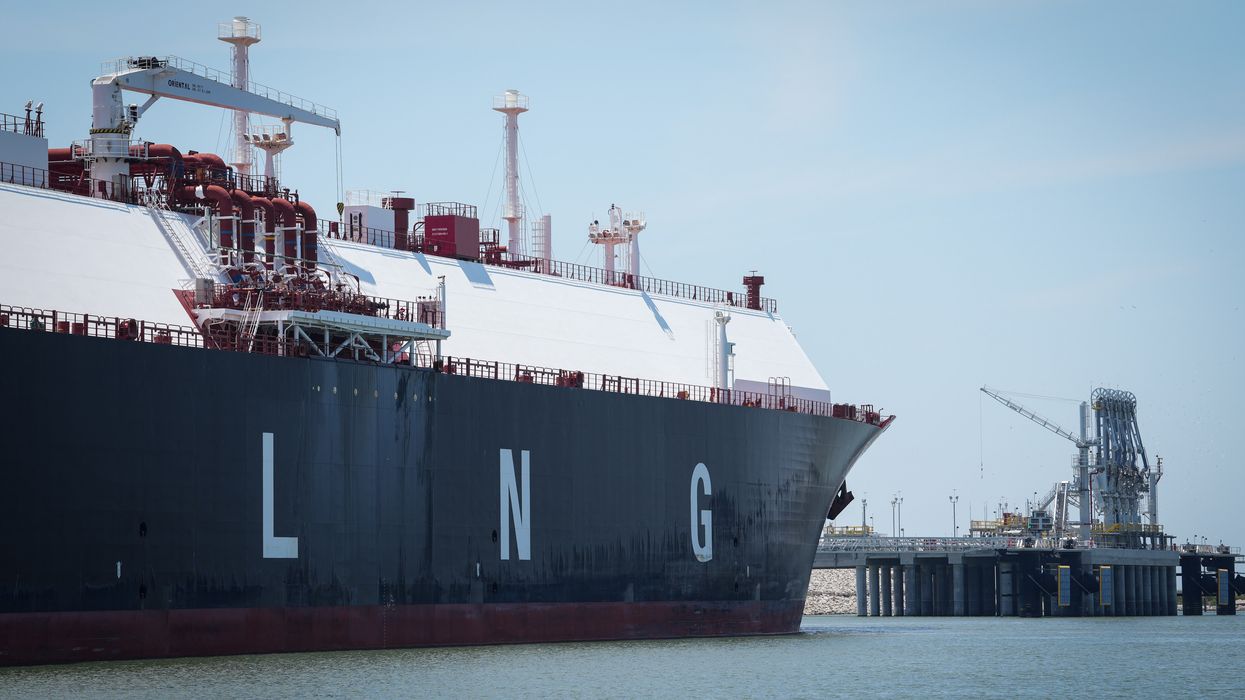
A lawyer for the plaintiffs argues that the Department of Energy "is using an untested loophole to avoid considering the impacts of this project on Americans’ health and on the environment."
A coalition of green groups filed a lawsuit Tuesday contesting the Trump administration's approval of what would be one of the world's largest liquefied natural gas facilities—permission granted despite the project's threats to frontline communities, the environment, and climate.
The National Resources Defense Council (NRDC) and Earthjustice are representing the Sierra Club, which is suing the US Department of Energy (DOE) for approving Venture Global’s application to export liquefied natural gas (LNG) from the Calcasieu Pass 2, or CP2, terminal, which is now under construction in Cameron Parish, Louisiana.
“We’re suing over DOE’s unlawful approval of this facility that will increase climate-warming pollution and do nothing to lower energy costs for Americans,” NRDC senior attorney Caroline Reiser said. “DOE is using an untested loophole to avoid considering the impacts of this project on Americans’ health and on the environment. The agency also failed to consider how LNG exports could increase US energy prices.”
As Earthjustice explained:
CP2’s pollution, traffic, sprawl, and visual impact would add to the harms the nine overburdened local Gulf Coast communities located near the facility already experience from nearby existing LNG terminals. These communities already bear the burden of other heavy industry and are on the frontlines of the bigger hurricanes and storms fueled by the worsening climate crisis. Approving CP2’s exports will add to environmental injustice, fuel additional climate change, and increase prices for domestic consumers.
CP2 is one of the key projects in what climate campaigners called a "staggering" LNG expansion under former President Joe Biden. In January 2024, his administration announced a temporary pause on DOE approvals of pending and future LNG export applications to nations with which the US did not have free trade agreements. A federal judge appointed by President Donald Trump later ruled the pause illegal.
The United States is the world’s leading natural gas producer and LNG exporter. While the fossil fuel industry often calls LNG a “bridge fuel”—a cleaner alternative to coal that will ease the transition to sustainable energy sources—critics have warned that the fossil gas actually hampers the transition to a green economy. LNG is mostly composed of methane, which has more than 80 times the planetary heating power of carbon dioxide during its first two decades in the atmosphere.
Trump's DOE—headed by former fracking CEO Chris Wright—granted preliminary approval to CP2 last March, with the final green light coming in October. If built as planned, it would export around 20 million metric tons per year of LNG.
"The estimated lifecycle greenhouse gas from this methane gas would be more than the annual emissions of 47 million gas-powered cars, or 54 coal-fired power plants," said NRDC.
CP2 construction has already harmed local communities in Cameron Parish—especially local fishers. Last summer, dredging despoiled hundreds of acres of marshland, burying crab traps and oyster beds, and killing wildlife including the crabs, fish, and shrimp upon which fishers depend for their livelihood.
“We’re routinely seeing less and less catch. LNG has polluted our waters and disrupted the wildlife," one local fisher and dock manager said last year. "The shrimp just do not want to come in because of the LNG projects.”
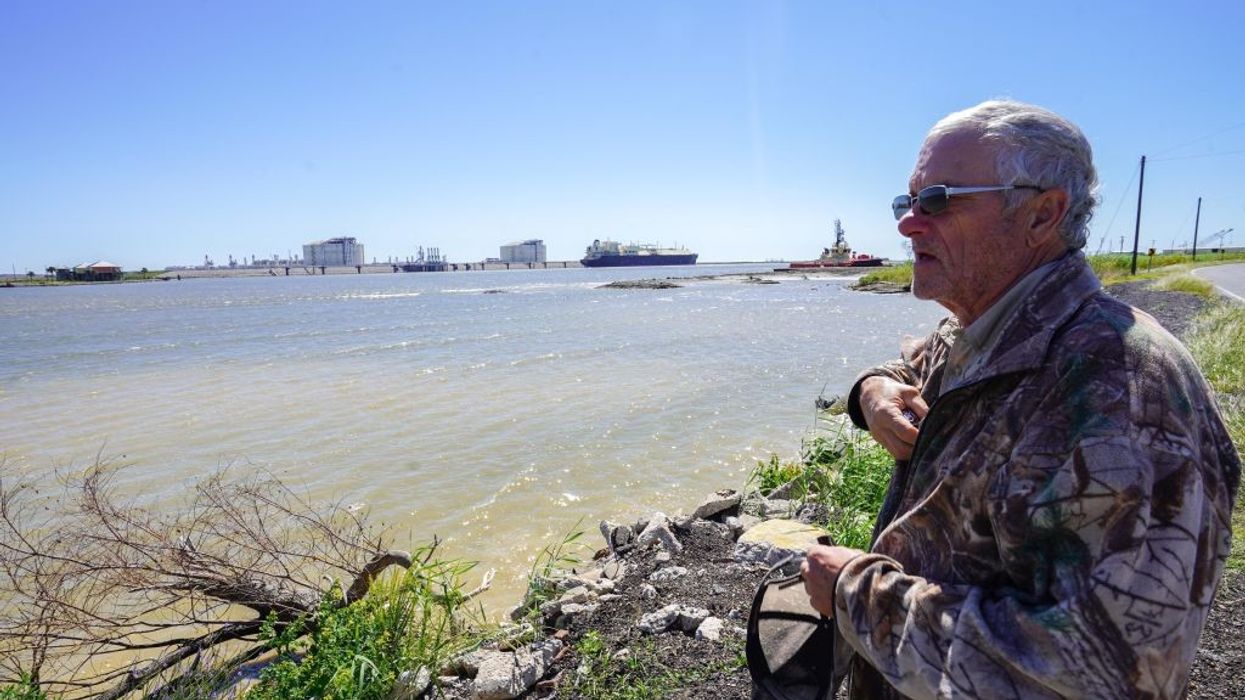
The climate and global equity impacts of the mass expansion of U.S. LNG exports cannot be understated.
In a welcome move, the Biden Administration’s Department of Energy (DOE) has opted to pause the approval of Liquefied Natural Gas (LNG) exports to non-Free Trade Agreement (nFTA) countries while the agency works to develop new criteria for determining whether to approve gas exports. This decision bears significant implications for communities directly impacted by gas export infrastructure, communities disproportionately impacted by the effects of climate change, and energy consumers—particularly those with high energy burdens. The Administration’s announcement is worth celebrating, but the impact of these reforms will depend on the breadth and depth of DOE’s analysis, as well as the agency’s willingness to create meaningful opportunities for public participation.
LNG production and export facilities are regularly proposed and sited in low-income communities, communities of color, and Indigenous and tribal lands. Communities most impacted by the production of exported gas often face disproportionate cumulative impacts of pollution and associated health burdens including asthma, lung and cardiovascular disease, cancer, preterm births, and premature deaths. Other impacts related to the exports of fossil gas include visual and pervasive light impacts from facilities, sound impacts, and (particularly in the Gulf where projects are often sited) disruption of heritage industries such as commercial fishing and shrimping. Moreover, many of these communities face the first and worst impacts of climate change-attributable extreme weather events, such as hurricanes and floods that threaten community safety and resilience.
From climate justice to community health, cost impacts, and public participation, the benefits of this decision reverberate across communities who are all too accustomed to being sidelined and overlooked.
The announced temporary halt on new nFTA export authorizations may provide some much-needed reprieve for impacted communities who currently expend outsized time and resources advocating for their health, safety, resilience, culture, and self-determination. Communities along the Texas and Louisiana Gulf Coasts are already disproportionately burdened by the existing LNG export infrastructure and the under-construction projects not impacted by DOE’s pause (not to mention the dozens of refineries and petrochemical facilities.) These harms cannot be ignored and will still need to be addressed. But a promise to actually consider these disproportionate impacts before permitting new facilities in these same communities is a big step in the right direction. As DOE reviews its public interest guidelines, it must do so in a manner that requires the agency to take a hard look at the impacts of projects on impacted communities, particularly through the lenses of health, quality of life, and economic impacts.
The climate and global equity impacts of the mass expansion of U.S. LNG exports cannot be understated. The U.S. is forecast to have the largest increase of annual oil and gas production of any country in the world between now and 2030, and US LNG exports are the driving force behind US gas production growth. Meanwhile, multiple studies have shown that LNG is more GHG-intensive than initially estimated, due to methane leaks and other emissions along the supply chain: production, transport, liquefaction, shipping, and combustion. LNG facilities are built to last 20-40 years, locking in planet-warming emissions for decades. From hurricanes in Louisiana to wildfires in California, from flooding in Bangladesh to drought in Brazil, the impacts of climate change disproportionately affect underprivileged communities least able to deal with those impacts. In pausing new export approvals, the Biden Administration is signaling a willingness to seriously consider the global, unequal impact of U.S.-caused climate pollution.
The pause on new LNG export permits also gives DOE the opportunity to consider equity concerns related to energy burden and consumer costs. By reevaluating the impacts of such exports, DOE’s pause on exports is likely to have a direct, positive impact on energy consumers both domestically and abroad. A boom in LNG exports has strapped domestic consumers with rising costs, causing disproportionate harm to households that spend a large percentage of their income on energy (i.e. that have a “high energy burden”). DOE’s export pause stands to advance economic justice, but must be met with genuine studies on the economic impacts of gas exports. These analyses must replace illogical Trump-era studies concluding that all consumers stand to benefit from increased returns for LNG export stockholders, and they should evaluate the actual implications for public interest analyses when a proposed export would raise consumer costs.
DOE's decision also marks a positive step towards meaningful public participation in the context of LNG exports. Frontline communities and other stakeholders have championed the longstanding request to the DOE for updated fossil gas export guidelines; beginning with a public comment period that allows for community voices to weigh in on what reformed guidelines might look like. This aspect of DOE reform efforts is central to ensuring procedural justice, and the meaningful opportunity for the public to voice their concerns and share insights. DOE is positioned to create a new model for reimagining outdated and exclusive determinations and thresholds, one that pauses, addresses inequities and disparities, and invites diverse stakeholders to meaningfully participate in that reimagining process. Not only is this the right approach—it is the smart one—ensuring that the decision-making process is transparent, inclusive, and considers the diverse perspectives of those directly affected by energy policies.
The DOE's pause on LNG exports to Non-FTA countries signifies a crucial step towards embedding environmental justice at the core of energy policy decisions. From climate justice to community health, cost impacts, and public participation, the benefits of this decision reverberate across communities who are all too accustomed to being sidelined and overlooked. It is an encouraging sign that the Biden administration and DOE recognize the imperative to center the well-being of communities and the planet in their decision-making processes. Transitioning to a clean, renewable, future is a shared responsibility and today, the Biden administration, DOE, front and fenceline groups, and the environmental advocacy community partnered to meet the moment and spark change. Roishetta Ozane, Founder, Director, and CEO of The Vessel Project of Louisiana captured this sentiment in her reflections on the news stating “We will win. And the way we are going to win is together.”

The congressionally mandated assessment finds that the climate crisis is already increasing the number of deaths, injuries, and illnesses in every region of the United States.
I’ve read dozens of harrowing stories about extreme heat this year, but there’s one I just can’t shake. Ramona and Monway Ison, who were in their 70s, died along with their dog Belle from heat-related causes the very night they were approved for a loan to fix their broken air conditioner. The A/C in their mobile home had been out for days during a brutal heatwave. But due to limited income, mobility issues, and a belief that they were used to the Texas heat, the couple stayed put—and perished as a result.
Heatwaves and other climate-fueled extremes are coming for us all, but they’re coming faster and harder for people with intersecting vulnerabilities like the Isons. That’s one of the main messages from the Fifth National Climate Assessment, released Tuesday by the Biden-Harris administration. The congressionally mandated assessment of the current and future risks of climate change finds that the climate crisis is already increasing the number of deaths, injuries, and illnesses in every region of the United States. Systematic racism, discrimination, and disinvestment are exacerbating these harms, particularly in low-income households, communities of color, and Indigenous communities.
For example, the report repeatedly invokes the threat of heat to workers—particularly farmworkers, who toil for long hours outdoors for little pay. Anyone who’s spent hours doing yard work or outdoor exercise has an inkling of how rough the heat can be. But regular exposure to high temperatures combined with insufficient access to food, drinking water, indoor cooling, and healthcare is a recipe for tragedy. Even workers who don’t die from heat face lost work hours and high healthcare costs.
Cutting emissions will help households like the Isons survive the summers of the future, but adaptation is needed to protect people now.
Lest you think farmworkers dying in the heat is a sad problem, but not your problem, think again. As the assessment states, “These effects on farmworker safety and productivity influence the broader economy through reduced agricultural output and higher food prices.”
So, what’s to be done?
One: We need to drastically reduce the pollution from fossil fuels that’s heating our climate up to dangerous levels. Although the United States still has a lot of work to do to meet its national commitments, historic investments through the Infrastructure Investment and Jobs Act of 2021 and the Inflation Reduction Act of 2022 will help move us in the right direction.
Policies that cut climate-changing pollution—known as mitigation—also protect our health by cleaning up the air. In fact, the assessment finds that “The economic value of avoided hospitalizations and premature deaths from mitigation activities is larger than the cost of implementation.”
Two, and just as importantly: We need to reduce the risks of climate impacts that we’re already experiencing today and prepare for additional impacts in the future. This set of actions, known as climate adaptation, is admittedly complex and getting harder the warmer the world gets. Policymakers, funders, and the private sector have also moved far more slowly on adaptation than on mitigation.
But relying solely on mitigation is not an option. Per the assessment, “Even if greenhouse gas emissions fall substantially, the impacts of climate change will continue to intensify over the next decade.” Cutting emissions will help households like the Isons survive the summers of the future, but adaptation is needed to protect people now.
The National Climate Assessment offers multiple adaptation options to protect health, including:
However, none of these options are sufficient on their own. For example, the Isons would probably still be alive today if their A/C was repaired more quickly or if they had spent a few days with a neighbor. But we can’t air condition our way out of the growing threat of extreme heat, and instead need to rethink how entire neighborhoods and cities are laid out. Similarly, occupational heat standards are essential to protect the workers repairing our roads, delivering our packages, and growing our food. But heat standards will only get us so far without tackling the exploitative labor practices that force heat-vulnerable workers to choose their job over their lives.
In other words, adaptation will have to be nothing less than transformational. That will require upending the historic laws, policies, and practices that are putting Americans in harms’ way and keeping them from living their full, productive, joyful potential. And it requires getting started now.
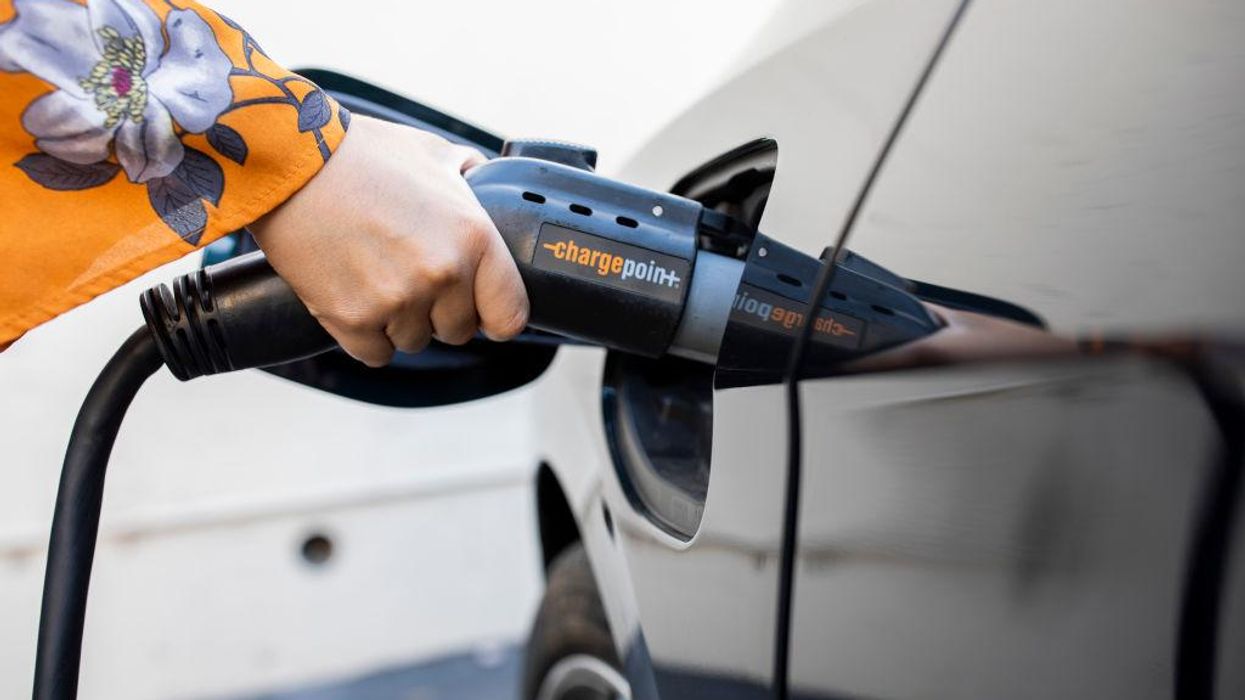
We have the opportunity to make this transition as sustainable as possible through innovation, mining reform, and battery recycling to create a fully circular economy.
This summer, we’ve seen flooding in the Northeast, historic heatwaves in the Southeast, record ocean temperature in Florida, and wildfire smoke from fires raging in Canada. It’s clear, now more than ever, that we need a swift transition away from the fossil fuel industry that has been fueling the climate crisis for decades. A key piece of this transition will be the switch to electric vehicles, or EVs, and demand for them is already rising.
Just last year, 10 million EVs were sold, and it’s expected that sales will jump 35% this year. With EVs ramping up in production and sales, it’s critical that this transition is done sustainably, and that starts with how the minerals needed for EV batteries are mined.
The Natural Resource Defense Council’s recently released report, Building Batteries Better: Doing the Best With Less, lays out the necessary policies to reduce the type and amount of minerals needed—lithium, nickel, cobalt, manganese, and graphite—as well as limit the harms from battery supply chains on communities, Tribes, wildlife, and the environment. We have the minerals needed to meet the current demand. And as demand grows even further, we have the opportunity to make this transition as sustainable as possible through innovation, mining reform, and battery recycling to create a fully circular economy.
Continued research and innovation will get us to a point where EV batteries are used over and over again, reducing our reliance on mining and making gasoline-powered vehicles obsolete.
The Biden administration has already started making strides to improve the efficiency of EV batteries by investing $192 million in Department of Energy (DOE) recycling research and technology development. This investment builds on $3 billion in funding awarded to batteries last year through the Bipartisan Infrastructure Law. The Inflation Reduction Act passed last August is also a step toward creating more battery manufacturing and incentivizing domestic recycling.
Continued research and innovation will get us to a point where EV batteries are used over and over again, reducing our reliance on mining and making gasoline-powered vehicles obsolete. The fossil fuel industry is fighting tooth and nail to keep the status quo, but relying on the continued extraction and burning of fossil fuels in our changing climate just doesn’t make sense. The future of transportation lies in cleaner solutions that put communities first.
Community engagement must be part of the process from the beginning to ensure their health and safety. Right now, we are using the sorely outdated Mining Law of 1872 as our standard. It’s time to bring this law into the 21st century and take cues from communities and Tribes on the ground when deciding on new mining practices and projects.
The Interagency Working Group on Mining Reform—a group of federal agencies and experts in mine permitting and environmental law—was due in July to release recommendations to update the existing Mining Law and regulations. This group must issue their recommendations as swiftly as possible because they will represent a guidepost for not only future legislation but also what agencies like the Department of Interior can do today to improve mining and permitting including more thorough community engagement and waste management.
The Biden administration must urge Congress to take action on mining reform and continue to fund DOE’s essential research to make this transition as clean and safe for communities across the country. We have the tools necessary to break away from fossil fuels, fight the climate crisis, and enter a more sustainable transportation system with efficient EV batteries. It’s time to put them into action.

"The new testing data shows that escaping PFAS is nearly impossible," said one campaigner. "The EPA has done its job, and the Biden White House must finalize drinking water standards this year."
Environmental justice advocates on Thursday renewed calls for the Biden administration to finalize drinking water standards after the Environmental Protection Agency published data showing 26 million people in hundreds of U.S. communities have toxic "forever chemicals" in their water supply.
The EPA released data from an initial round of testing that confirmed per- and polyfluoroalkyl substances (PFAS)—called forever chemicals because they do not biodegrade and accumulate in the human body—in 431 water systems at levels above minimum reporting limits. The Safe Drinking Water Act requires U.S. utilities to test drinking water for 29 different PFAS compounds and publish results every five years.
The findings—which are far more conservative than those of the U.S. Geological Survey and some nongovernmental research—come after the EPA in March proposed limits on the amounts of certain PFAS compounds in drinking water.
"The initial data indicate that multiple forever chemicals are being detected in public water systems, with two specific PFAS (PFOS and PFOA) concentrations above the proposed maximum contaminant levels (the highest levels of a contaminant that is allowed in drinking water) in over 150 systems," said Elizabeth Southerland, a former EPA water specialist now with the advocacy group Environmental Protection Network. "It is critically important that EPA continue to release this data every quarter so the public can see as quickly as possible if their drinking water has PFAS levels of concern."
Katie Pelch, a scientist at the Natural Resources Defense Council (NRDC), said in a statement that "the PFAS testing results suggest that there is extensive contamination of tap water."
"Our concern remains that these testing results significantly underreport the presence of PFAS in tap water, potentially misleading communities about the safety of their drinking water," Pelch added. "This is because only a fraction of the PFAS that may be present in drinking water are monitored for, and utilities are not required to report PFAS detected, but at levels below the reporting limits."
Erik Olson, NRDC's senior strategic director for health, asserted that "the focus needs to remain on people in our communities who deserve to know if their drinking water is contaminated with harmful PFAS chemicals."
"Federal, state, and local governing bodies must act swiftly to stop contamination, clean up polluted water, and safeguard the health of everyday people," he added.
Forever chemicals have myriad uses, from nonstick cookware to waterproof clothing to firefighting foam. According to the U.S. Agency for Toxic Substances and Disease Registry, PFAS is linked to cancers of the kidneys and testicles, low infant weight, suppressed immune function, and other adverse health effects. It is found in the blood of 99% of Americans and a similar percentage of people around the world.
The EPA's findings follow a 2020 Environmental Working Group (EWG) study that found more than 200 million Americans could have PFAS in their drinking water. The advocacy group maintains an interactive map showing more than 2,800 PFAS-contaminated sites in all 50 states, Washington, D.C., and multiple U.S. territories.
"For decades, millions of Americans have unknowingly consumed water tainted with PFAS," EWG senior vice president for government affairs Scott Faber said in a statement. "The new testing data shows that escaping PFAS is nearly impossible. The EPA has done its job, and the Biden White House must finalize drinking water standards this year."
Melanie Benesh, EWG's vice president of government affairs, said that "the PFAS pollution crisis threatens all of us. The EPA's proposed limits also serve as a stark reminder of just how toxic these chemicals are to human health at very low levels."
"The agency needs to finalize its proposal and make the limits for PFAS in water enforceable," she added.
The Bipartisan Infrastructure Law signed by President Joe Biden in 2021 allocated $9 billion to invest in communities where drinking water is contaminated with PFAS and other toxins.
However, other bills to limit PFAS have died in Congress under intense lobbying from the chemical industry, which has long known—and conspired to conceal—the health and environmental dangers of forever chemicals.
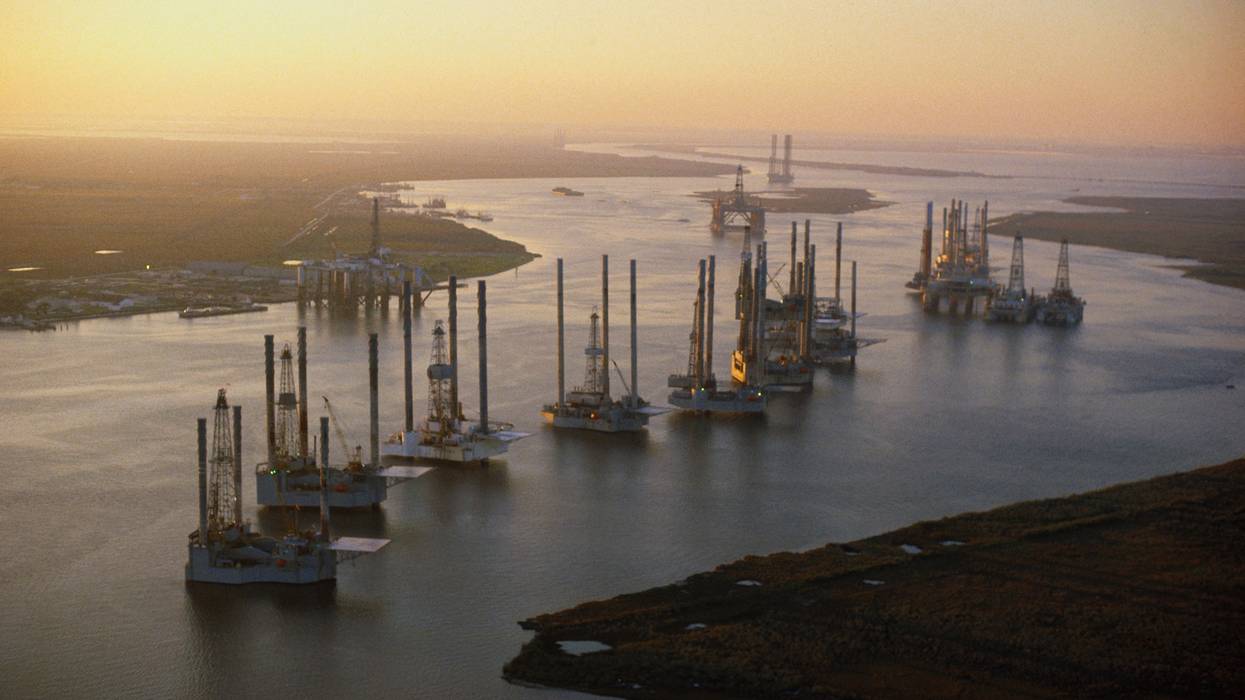
The Republican majority’s latest in a series of attempts to hand over our public lands and waters to Big Oil, this bill strips away the Department of Interior’s land and ocean management discretion.
In their latest legislative attack on our climate, the Republican majority in the House has written a bill that is so detrimental to our environment and communities, it may rank as the worst appropriations bill in decades.
For both our shared public lands and oceans, the bill carves out giveaways for the fossil fuel industry that go against not only our climate goals but also common sense. Instead of recognizing that federally managed lands and oceans host a myriad of uses and industries and contribute in countless ways to the national economy, the House majority seems to view them as having one purpose: unabated production of oil, gas, and coal.
The Republican majority’s latest in a series of attempts to hand over our public lands and waters to Big Oil, this bill strips away the Department of Interior’s land and ocean management discretion. In doing so, it tips the scales toward congressional control of the oil and gas leasing process, dictates the number of lease sales the administration must offer, and overrides any commonsense considerations as to which areas should or should not be leased.
At a time when we need to act swiftly on climate, these congressional proposals to write fossil fuel interests into law undermine the progress we need to make to tackle the climate crisis.
For offshore ocean areas, House Republicans have proposed:
For onshore federal public lands, House Republicans have proposed:
At a time when we need to act swiftly on climate, these congressional proposals to write fossil fuel interests into law undermine the progress we need to make to tackle the climate crisis. To say these provisions would have devasting impacts to both climate and communities would be an understatement. This effort by the Republican House majority is a slap in the face to the millions of Americans suffering through weeks long heat waves and devastating floods and who are looking to Congress for solutions to meet this historic and challenging moment.

While applauding the Biden administration's new "baby steps" to address "forever chemicals" in drinking water, green groups this week also emphasized that far more sweeping action is needed to protect people and the planet.
"The EPA needs to go much further by implementing strong, enforceable regulations on the entire class of PFAS chemicals."
"This is a step in the right direction," said Stel Bailey, co-facilitator of the National PFAS Contamination Coalition, welcoming that the Environmental Protection Agency (EPA) finally "had the courage to follow the science, something we've been demanding for years."
Per- and polyfluoroalkyl substances (PFAS) are widely called forever chemicals because they persist in the human body and environment for prolonged periods of time. They are used in everything from firefighting foam and food packaging to nonstick pans to water-resistant fabrics.
PFAS are also linked tied to health issues--such as cancers and damage to immune and reproductive systems--prompting some states to take action. However, the federal government has yet to make any major moves to regulate the substances.
"People on the frontlines of PFAS contamination have suffered for far too long," EPA Administrator Michael Regan said Wednesday. "That's why EPA is taking aggressive action as part of a whole-of-government approach to prevent these chemicals from entering the environment and to help protect concerned families from this pervasive challenge."
The EPA released lifetime drinking water health advisories for common PFAS--lowering the levels for PFOA and PFOS as well as establishing new guidance for GenX and PFBS. The levels in parts per trillion are now 0.004 for PFOA; 0.02 for PFOS; 10 for GenX; and 2,000 for PFBS.
Along with the advisories, Reagan announced a new grant program, explaining that thanks to the bipartisan infrastructure legislation that President Joe Biden signed last year, "we are also investing $1 billion to reduce PFAS and other emerging contaminants in drinking water."
Consumer Reports and The Guardian last year tested drinking water at 120 locations across the United States for arsenic, lead, and PFAS, and found forever chemicals in 117 samples. As Michael Hansen, a senior staff scientist at the group, put it Wednesday: "Toxic PFAS chemicals are everywhere, including in the drinking water we rely on every day."
"This is a major victory for science and represents an important first step to ensure everyone has access to safe drinking water," he said of the advisories. "Now it's up to the EPA to adopt legally binding standards so that everyone can have confidence that their drinking water is safe."
A 2021 analysis by the Environmental Working Group (EWG) found PFOA and PFOS above the new levels in the drinking water of 2,013 U.S. communities serving over 43 million people.
"No one should have to worry about the safety of their drinking water," Melanie Benesh, EWG's legislative attorney, said Wednesday. "These proposed advisory levels demonstrate that we must move much faster to dramatically reduce exposures to these toxic chemicals."
"The EPA must move quickly to set limits on industrial discharges of PFAS into the air and water, require testing for sludge that may be contaminated with PFAS, immediately designate PFOA and PFOS as hazardous substances under our federal cleanup laws, and properly dispose of PFAS wastes," she asserted.
Mary Grant, director of Food & Water Watch's Public Water for All Campaign, also called on the federal government to go further.
"This modest action by the EPA to warn communities of the harm caused by these four specific chemicals is good, but it only represents the tip of the iceberg in terms of adequately acknowledging and mitigating the hazards posed by the thousands of highly toxic variants existing in the PFAS 'forever chemical' family," Grant declared.
"The EPA needs to go much further by implementing strong, enforceable regulations on the entire class of PFAS chemicals that are sickening communities around the country as we speak," she said, adding that the 2021 infrastructure law "provided a down payment on what needs to be a continuing stream of adequate funding to properly address the drinking water crisis facing our country."
Erik D. Olson of the Natural Resources Defense Council said the new advisories reflect the "robust science" that "these chemicals are shockingly toxic at extremely low doses" and "will send a welcome signal that government and industry must do more to protect public health."
"EPA has had to continuously fight polluters and opponents of any meaningful action on PFAS. But we cannot continue taking a 'whack-a-mole' approach to the ever-expanding avalanche of 12,000 PFAS chemicals," Olson argued. "It's time to regulate all PFAS with enforceable standards as a single class of chemicals. Any other approach will leave every one of us at risk from these forever toxics for decades to come."
Public Employees for Environmental Responsibility executive director Tim Whitehouse, a former EPA enforcement attorney, similarly warned against a chemical-by-chemical approach.
"EPA should be congratulated on today's actions, but those kudos should be tempered by the knowledge that these are just four of thousands of these toxic substances," he said. "Health advisories are a long way from enforceable limits and an even much longer way to actual cleanups where these substances are finally removed from our waters, soil, and food chain."
"Since EPA does not appear to be ready to regulate all PFAS as a class, it may be condemned to playing a futile game of regulatory whack-a-mole for generations to come," he added. "Further, EPA's failure to regulate PFAS wastes makes containing contamination almost impossible."

Public health advocates said Thursday that they plan to resume litigation against the Environmental Protection Agency after the Biden administration announced it would uphold former President Donald Trump's decision to not regulate drinking water levels of a chemical used to make rocket fuel and explosives.
Former President Barack Obama's administration proposed limits for perchlorate after finding in 2011 that drinking water for 16 million people may have unsafe levels of the contaminant, which poses a risk to the development of children and fetuses.
"Tap water across America will remain contaminated by this toxic chemical."
Groups including the Natural Resources Defense Council (NRDC) were outraged when Trump refused to impose the limits, claiming regulation was "not in the public interest." The EPA's announcement this week sparked renewed criticism, with the NRDC calling the decision "unscientific and unlawful."
"The Trump EPA gave perchlorate a pass; it was a bad decision then, and it's a bad decision now," said Erik D. Olson, senior strategic director for health at the organization. "Tap water across America will remain contaminated by this toxic chemical, which threatens the brain development of babies in the womb, infants, and young children at extremely low levels."
The Trump administration claimed that 56 parts per billion (ppb) was an acceptable level of perchlorate in drinking water--far higher than limits that Massachusetts and California have imposed at the state level, requiring water to contain no more than two ppb and six ppb, respectively.
Before Thursday's announcement, the American Academy of Pediatrics had called on the EPA to establish the "strongest possible" limits on the chemical.
Exposure to perchlorate has been linked to measurable decreases in IQ in newborns; the chemical interferes with the thyroid gland and stunts the production of hormones needed for proper child development.
High concentrations of perchlorate have been found in at least 26 states, with communities near military bases at high risk for exposure because the chemical is a component in munitions.
The limits proposed by the Obama administration were met with aggressive lobbying by military contractors including Northrup Grumman and Lockheed Martin and were never imposed. The NRDC sued the EPA after it failed to set new standards, securing a court order requiring the agency to regulate the chemical by 2019.
The group then sued the Trump administration when it announced it would not impose limits, but paused the litigation after Biden won the 2020 election.
The risk sciences department at the Johns Hopkins Bloomberg School of Public Health said the EPA's decision represents "a step backwards that leaves the states and communities most impacted out there by themselves."
The EPA said that instead of imposing limits, it will develop a plan to clean up detonation sites with very high levels of perchlorate contamination, provide a "web-based toolkit" to advise water systems about perchlorate, and "continue to consider new information on the health effects and occurrence of perchlorate."
According to Olson, "By refusing to establish a standard or water testing requirements, the EPA decision will also keep members of the public in the dark, without even basic information about whether they are being exposed to perchlorate."

Amid "astounding losses" of bees in the U.S., a California Democrat on Tuesday introduced legislation for a state ban on nearly all non-agricultural uses of insecticides linked to pollinator and environmental harm.
"Its passage in the most populous state in the nation would mark a turning point in the years-long battle to rein in neonics."
"Our pollinators are threatened. We know the cause, and it's time to take action," said Assemblymember Rebecca Bauer-Kahan (D-), who introduced the measure.
The proposal, AB 2146, targets imidacloprid, clothianidin, thiamethoxam, dinotefuran, and acetamiprid. All five are part of a class of insecticides called neonicotinoids or "neonics." Their future use on places like home lawns or golf courses would be banned under the measure.
Bauer-Kahan, in her statement, noted that "the European Union has already banned many of these pesticides altogether" and called it "time to catch up to the rest of the world in protecting bee and human health."
The most widely used pesticides in the U.S., neonics can be toxic to insects--including honey bees and native bees--at even small levels, and the reach and persistence of the chemical compounds can extend harm to many pollinators, with residues remaining in soils and even getting into waterways, according to studies.
A statement from Bauer-Kahan's office points to data from the Bee Informed Partnership showing that beekeepers in California reported a nearly 42% loss in their colonies last year.
That's particularly important for a state where "declining bee populations threaten over $15 billion annually in agricultural production," as Lucas Rhoads, staff attorney with NRDC's Pollinator Initiative, wrote in a blog post Tuesday. "Many of the state's most valuable crops, including almonds, grapes, and a variety of berries, are dependent--in whole or in part--on pollination by bees and other insects."
Environment California and California Native Plant Society joined NRDC in co-sponsoring AB 2146.
"Its passage in the most populous state in the nation," Rhoads wrote, "would mark a turning point in the years-long battle to rein in neonics, which contaminate lands and waters nationwide and threaten bees, birds, and entire ecosystems--and even people."
Laura Deehan, state director at Environment California, said the legislation can't come soon enough.
"Bees, butterflies, and birds all play a critical role in the web of life--from pollinating the flowering plants that make up much of the food we eat to filling our world with beauty and wonder. The drastic decline in their numbers is disturbing and calls for immediate action," she said in a statement.
"Getting rid of neonics on lawns, gardens, and golf courses," added Deehan, "would provide a lifeline to pollinators and other key species just in the nick of time."

As U.S. President Joe Biden prepares for a consequential United Nations climate summit in Scotland, the Supreme Court on Friday provoked widespread alarm by agreeing to review the Environmental Protection Agency's authority to limit planet-heating pollution.
"The Supreme Court could destroy the planet. Pass it on," tweeted Rep. Earl Blumenauer (D-Ore.) in response to the decision.
"This is ominous."
Republican-led states and coal companies asked the justices to weigh in after the U.S. Court of Appeals for the District of Columbia Circuit in January struck down the Affordable Clean Energy (ACE) Rule issued under former President Donald Trump.
The day before Biden took office, a divided three-judge panel said that the Trump-era rule--intended to replace former President Barack Obama's Clean Power Plan, which never took effect--"hinged on a fundamental misconstruction" of a key section of the Clean Air Act that resulted from a "tortured series of misreadings" of the law.
The justices will now consider whether that section of the Clean Air Act "clearly authorizes EPA to decide such matters of vast economic and political significance as whether and how to restructure the nation's energy system."
Though there was some initial confusion about the forthcoming review due to a typo in Friday's order that was later corrected, climate action advocates and legal experts frantically issued warnings about how a ruling from the high court's right-wing supermajority may impede the Biden administration's efforts to combat the climate emergency.
"This is the equivalent of an earthquake around the country for those who care deeply about the climate issue," Harvard University law professor Richard J. Lazarus told The New York Times. The court's decision threatens "to sharply cut back, if not eliminate altogether, the new administration's ability to use the Clean Air Act to significantly limit greenhouse gas emissions from the nation's power plant[s]."
The development comes a day after Biden announced a $1.75 trillion watered-down version of the Build Back Better Act that stripped out some climate provisions due to opposition from Sen. Joe Manchin (D-W.Va.), one of the corporate-backed, right-wing party members who has held up the package designed to include much of the president's agenda.
Although the Biden administration is still working on ways to cut emissions that don't rely on the section of the Clean Air Act in question, HuffPost's Alexander Kaufman explained how an unfavorable ruling from the Supreme Court could cause problems, given current conditions in Congress:
"It's only this one statute of the Clean Air Act, which is one of many tools the administration has," Michael Gerrard, director of Columbia Law School's Sabin Center on Climate Change Law, told HuffPost. "I don't think it's a problem for most of the measures the administration might want. But there's this one particular tool that might be in trouble."
The court could, however, seek to "take this as an opportunity to rule more broadly about the ability of Congress to delegate decisions to agencies," by going after the non-delegation doctrine, and might "say Congress is going to have to give EPA authority over such an important area and be more clear and explicit."
That would likely constitute a victory for the plaintiffs. With a 50-50 split in the Senate, Democrats need to vote in lockstep to pass a bill, giving unique power to lone senators like Manchin, whose opposition to climate regulations and personal family fortune tied up in a coal business have made him a magnet for fossil fuel industry donations throughout the past year. He'd be unlikely to vote for legislation granting the EPA new powers to regulate greenhouse gases. And Republicans are favored to win back at least one chamber of Congress in next year's midterm election.
This "is the most significant climate case to reach the Supreme Court since 2007, when the justices ruled in Massachusetts v. EPA that greenhouse gases could be regulated as air pollutants under the Clean Air Act," noted E&E News.
As the petitioners, including 19 states led by West Virginia, celebrated the court's announcement, campaigners such as David Doniger, senior strategic director at the Natural Resources Defense Council's Climate & Clean Energy program, vowed that "we will vigorously defend EPA's authority to curb power plants' huge contribution to the climate crisis."
EPA Administrator Michael Regan, meanwhile, signaled in a pair of tweets that the Biden administration will keep up its work to address climate-wrecking pollution.
The federal agency, Regan vowed, "will continue to advance new standards to ensure that all Americans are protected from the power plant pollution that harms public health and our economy."