SUBSCRIBE TO OUR FREE NEWSLETTER
Daily news & progressive opinion—funded by the people, not the corporations—delivered straight to your inbox.
5
#000000
#FFFFFF
To donate by check, phone, or other method, see our More Ways to Give page.

Daily news & progressive opinion—funded by the people, not the corporations—delivered straight to your inbox.
If we face a century of crises, it’s good to have songs to sing, friends you can count on, and recipes that remind you of good times.
I’ve written repeatedly about community resilience over the years; for example, I penned an article in 2017 for Bloomberg on rebuilding for resilience after the devastating wildfires in Sonoma County, California, where I live.
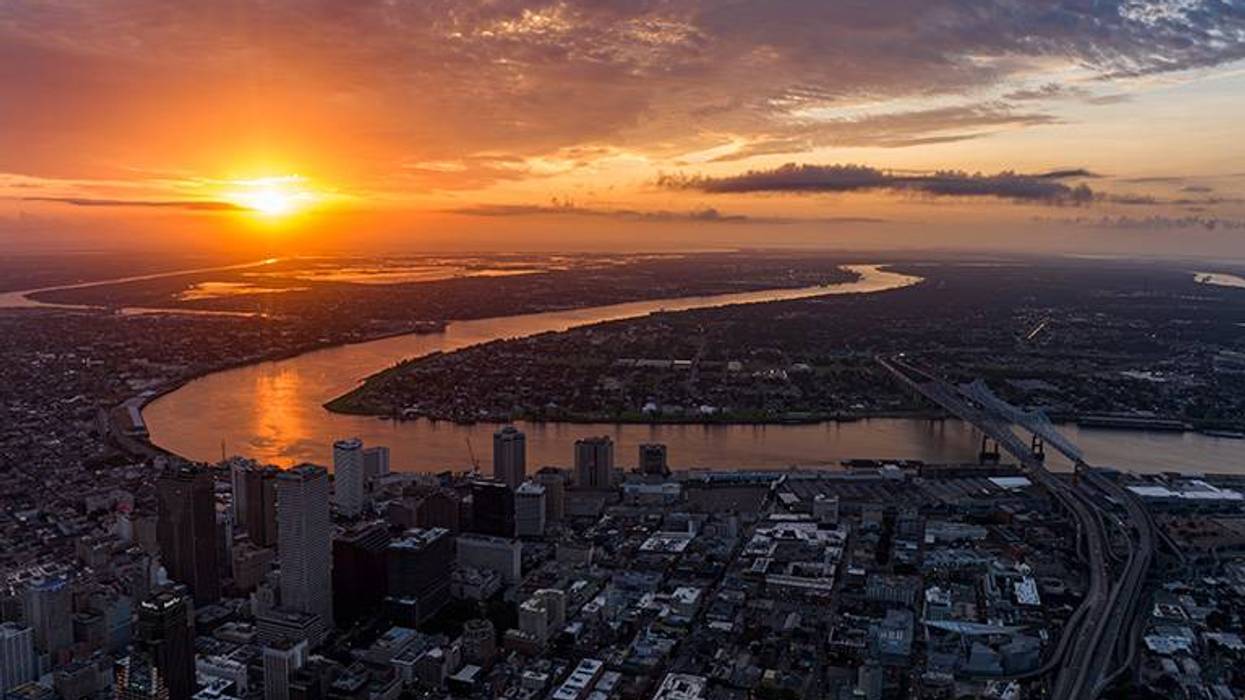
In this piece, I want to tackle an even tougher case. The city of New Orleans dramatically exemplifies all the paradoxes, problems, and opportunities of resilience building. It is also a second home to me and my wife Janet: She was born there, many of her relatives still live there, and we spend at least a week each year in the Big Easy. So, I know a bit about New Orleans, and I care about the place and its people.
New Orleans also happens to be a lot of fun to write about. So, let’s go!
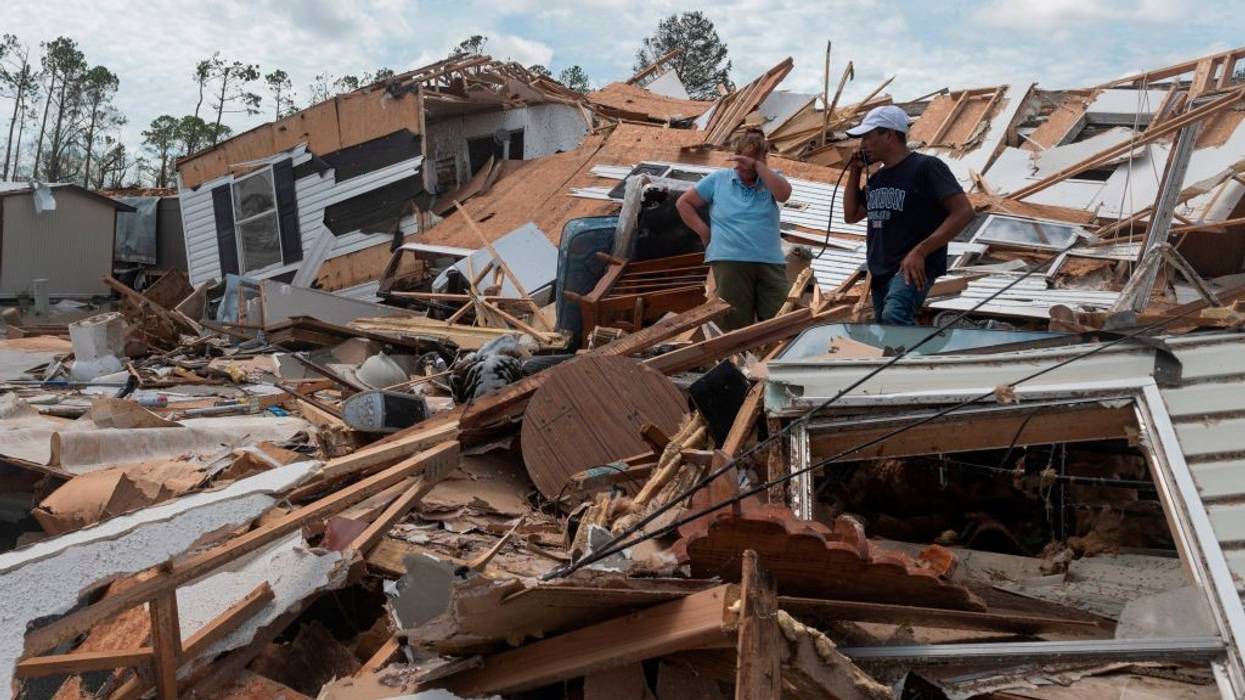
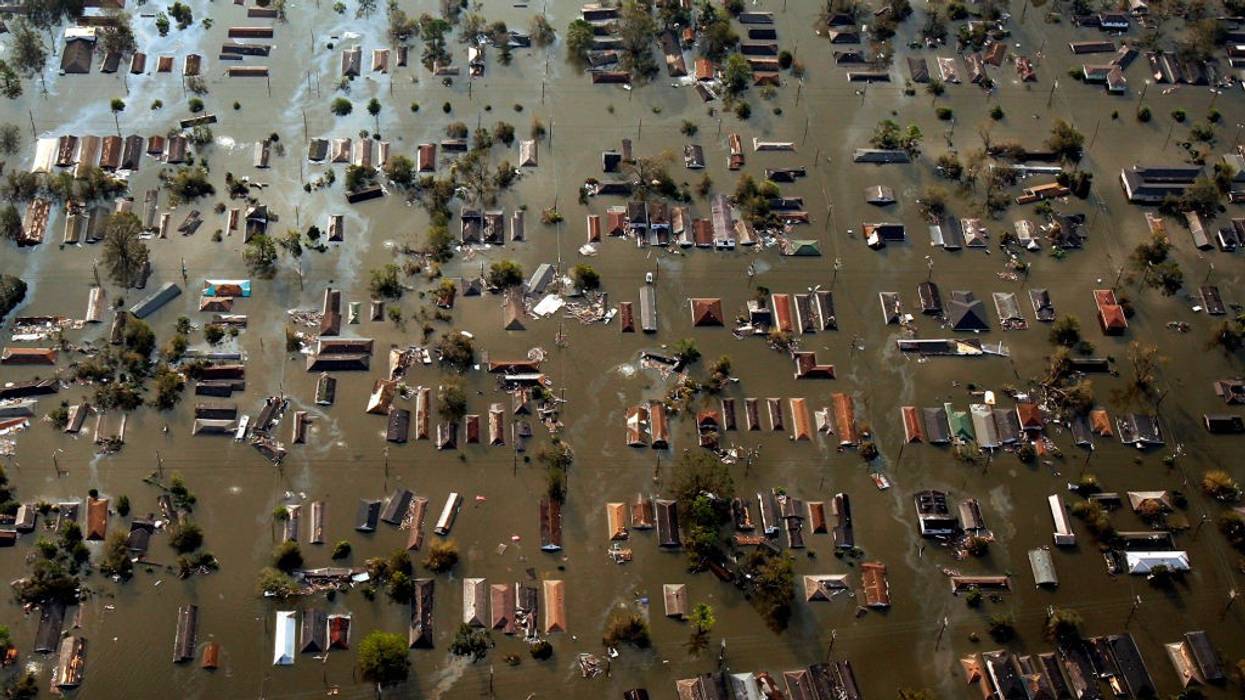
Just 21 years ago, New Orleans was nearly wiped away. Hurricane Katrina brought high winds and drenching rain; after levees and pumping stations failed due to human error, much of the city was flooded. It took 43 days to pump the floodwater into the Mississippi River and Lake Pontchartrain. Nearly all the surviving residents had been evacuated. They returned after weeks or months to find buildings destroyed, possessions ruined or gone, entire neighborhoods devastated, and the city steeped in the stench of decay. Over a thousand fatalities were recorded. The hurricane quickly achieved a mythic status, and, today, every New Orleanian over age 30 has an emotion-charged story to tell about loss and survival.
The inherent challenges of maintaining New Orleans are so great that there’s an ongoing debate about whether the city should simply be permanently abandoned.
This wasn’t the first hurricane or flood for New Orleans. The city is geographically disaster prone, built on a subsiding river delta, mostly below sea level, with a bowl-like topography. The metropolis is squeezed between two major bodies of water, making it highly susceptible to catastrophic storm surges and flooding, which have taken a heavy toll on several occasions. One was Hurricane Betsy (September 9, 1965), a massive Category 3 storm that flooded eastern New Orleans. It was the first US hurricane to cause $1 billion in damages.
The Crescent City is kept habitable by a 90-mile system of canals and pumping stations, along with huge levees along the river and lakefront. The stations together can pump a staggering 24,300 cubic feet of water per second. Yet, during heavy rains, they sometimes struggle to keep up. That struggle is about to get harder in the context of more extreme temperatures, ongoing loss of coastal land, stronger hurricanes, and rising seas.
New Orleans also faces inherent economic challenges. Its revenues derive mostly from tourism, offshore oil and gas production, shipping, and fishing. Oil and gas production in the Gulf of Mexico oil is currently riding high, but oil is, after all, a depleting non-renewable resource. Tourism is sensitive to gasoline and jet fuel prices, and dependent on tourists having disposable income. Fishing is vulnerable to a host of environmental and economic issues, including overfishing, oil spills, runoff pollution from the Mississippi (which has created a growing “dead zone” in the Gulf), and rising ocean temperatures.
The inherent challenges of maintaining New Orleans are so great that there’s an ongoing debate about whether the city should simply be permanently abandoned. I’ll return to that.
Still, New Orleans residents are fiercely protective of their city. And lots of folks who live elsewhere love to visit the Big Easy. That’s because New Orleans has some things going for it.
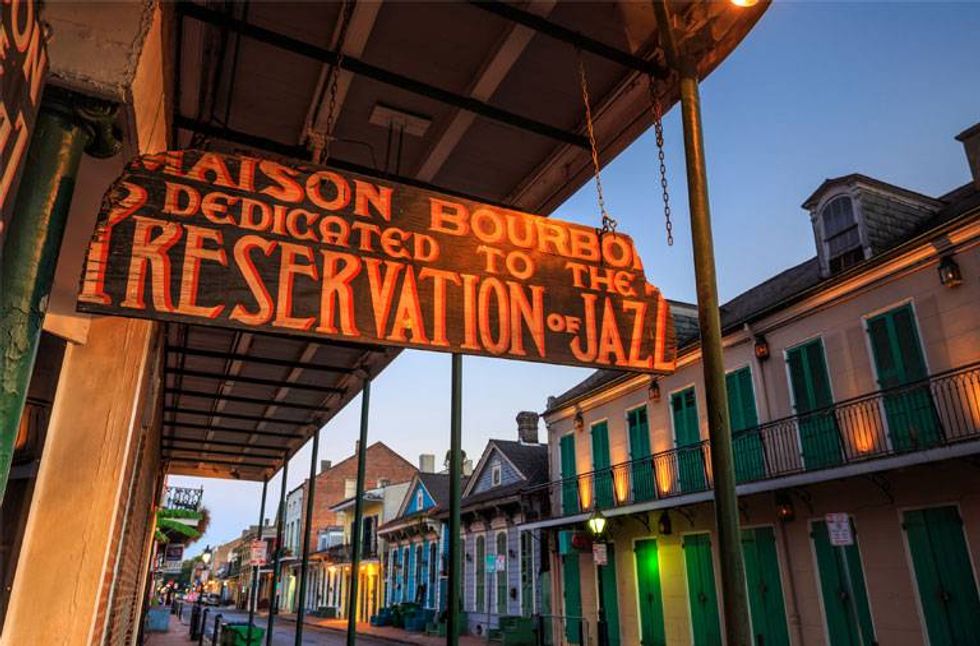
The Crescent City has a long, colorful cultural history; for a taste, I recommend Gary Krist’s book Empire of Sin: A Story of Sex, Jazz, Murder, and the Battle for Modern New Orleans. Today, the city’s culture persists in a unique dialect (“Yat,” derived from the common greeting, “Where y’at?”), as well as foods, architecture, and music that often make you feel you’re somewhere in the Caribbean rather than the United States.
Of all the city’s unique cultural achievements, its music is perhaps its greatest source of pride. Hundreds of full-time musicians carry on New Orleans-related traditions, somehow making a living alongside potential competitors. The fact that so many succeed is largely due to the city’s plethora of live music venues. WWOZ (a listener-supported radio station that plays New Orleans music of all varieties 24/7) publishes a daily online and radio-delivered summary of who’s playing where (the Livewire); even on a weekday, it usually takes the announcer several minutes to name all the performers and venues.
What does culture have to do with survival in the face of past and impending disasters? Plenty, it turns out.
To illustrate the degree to which New Orleans’s music culture has gotten under my own skin, permit me to divulge a little personal info. When I first started visiting the Crescent City, I was a semi-professional classical violinist. Most of the music I listened to consisted of Bach, Brahms, and Paganini. Gradually I added a little Louis Armstrong to my sonic diet. Then, in 2021, a fingertip injury forced me to abandon the violin altogether. I decided to learn piano instead (its flat keys don’t trigger the same nerve pains that metal strings did). I started with a few easy pieces by Bach and Scarlatti but soon found myself gravitating to the New Orleans sound.
New Orleans boasts a long tradition of jazz and blues piano playing, stretching from Jelly Roll Morton in the early years of the 20th century to Fats Domino, Professor Longhair, James Booker, and Dr. John in the rock era; to Jon Batiste, Tom McDermott, Jon Cleary, Harry Connick, Jr., and many others today. There are currently so many great New Orleans pianists that WWOZ hosts an annual “Piano Night” of live performances, during which each of the invited piano pros is given 10 minutes to shine; the quality of their playing ranges from terrific to phenomenal, and the event typically lasts five to six hours. That’s plenty of inspiration for an aspiring keyboard novice like me. These days, I’m working on learning several songs by Jelly Roll Morton and one by Dr. John.
It’s a common story: Many of the “New Orleans musicians” I’ve talked to were born elsewhere, but then became so enraptured by the relaxed, bluesy style of the city’s music that they decided to move to the Big Easy and devote their lives to its culture. One example is a band of 40-somethings called Tuba Skinny, whose eight-or-so members formerly played in grunge bands around the US (its leader, cornetist Shaye Cohn, had a legit musical education on piano). They individually moved to New Orleans after Katrina, then gradually coalesced into a street band with a shared interest in the collective improvisation of 1920s and ’30s jazz and blues. There are plenty of other trad jazz (and so-called Dixieland) groups in New Orleans, but Tuba Skinny has brought an admirable commerciality-be-damned dedication to their art. They can still be heard on the streets of the French Quarter playing for tips, but they also perform at many of the city’s music clubs, and they’ve recorded numerous CDs and toured North America and Europe.
Okay, so New Orleans has plenty of unique culture. What does culture have to do with survival in the face of past and impending disasters? Plenty, it turns out.
Political scientist Daniel Aldrich, who was living in New Orleans as Hurricane Katrina approached, later decided to conduct a sociological study centered on the question, “Why do some communities recover more quickly and successfully than others in the wake of disaster?” He reported his findings in a book, Building Resilience: Social Capital in Post-Disaster Recovery.
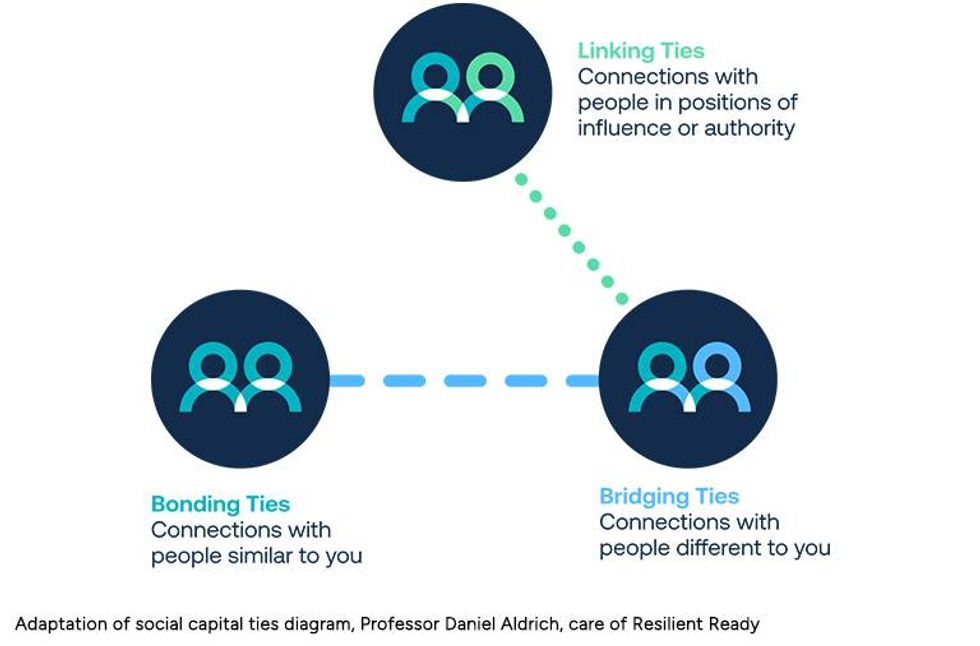
Aldrich’s research suggested that an important factor in determining how well communities recover from crisis is social capital (specifically, the balance of three different kinds of social capital; see my interview with Aldrich). Social capital is essentially the relationships that people in a community have with one another, manifested in trusting neighborly relations, local gatherings and celebrations, formal and informal community “institutions” (e.g., a convivial neighborhood cafe, a quirky local tradition, a long-standing religious community), and participation in civic life, etc.
New Orleans has a lot of social capital, including not only thriving community organizations but also identifiable local traditions in food, architecture, and music. People talk to one another on the street and ask about their families. Still, as Aldrich found, this fabric of social connections does vary from one neighborhood to the next.
After Katrina, Aldrich studied two neighborhoods, both with approximately equal per capita pre-Katrina incomes: the Lower Ninth Ward, and the largely Vietnamese Village de l’Este in the northeast corner of the city. The Ninth Ward was still devastated years after the disaster, whereas Village de l’Este was 90% repopulated within two years. The difference: While there was plenty of one-on-one social bonding in the Ninth Ward, the neighborhood had poor bridging with government at all levels. Social capital isn’t just about the richness of direct contact between people (though that’s vital), but also the functionality of connections between different ethnic and religious groups within the community, and between ordinary people and the holders of resources and decision-making power both within the community and in the larger society.
Tragically, social capital is undervalued in modern society: Globalization undermines it, and usually only deep cultural traditions and activist efforts can preserve it against the onslaught of atomizing trends. We stare at our screens rather than talking to our neighbors.
The New Orleans Chamber of Commerce lists 66 community and civic organizations currently active in the city—but this is a fraction of the institutions supporting social capital. There are countless informal clubs, interest groups, and associations, and the city is chock full of locally owned businesses, religious communities, gorgeous parks and museums, vibrant music venues and art galleries, and is home to several community-oriented local radio stations.
In short, New Orleans has tons of social capital. But sadly, its cultural richness and rootedness may not be enough to enable it to survive much longer.
I think a lot about the future of New Orleans, so naturally I watched Dr. Emily Shoerning’s recent climate video on the prospects for Louisiana in a 2°C world. Her forecast for the southern region of the state, based on the most recent county-by-county National Climate Assessment, is devastating. Later this century, New Orleans will be an island effectively cut off from the Mississippi River and hence its main source of fresh water. Even if people continue living in the parts of the city that are still above sea level and they manage to harvest and purify rainwater on a sufficient scale, the prospects for maintaining anything like current levels of population and economic activity are dim indeed.
A recent study published in Nature Sustainability concluded that New Orleans residents should plan now to move away from the city. For the hundreds of thousands who live in New Orleans, and the millions of others, like me, who love the Crescent City, this is an incredibly sad conclusion. And it’s a conclusion that many other cities rich in culture and history will face around the world as sea levels rise.
We’re all living in some version of New Orleans. Every place on Earth is now vulnerable, each community held together by ecosystems under attack and culture that’s unraveling.
Somehow, we must imagine ways to transplant the culture of New Orleans to other places. Musicians and listeners can adopt the city’s music anywhere, and chefs in Los Angeles and Peoria can learn to make decent beignets and red beans (many already do). But it would be even more important to identify one or two places where archives, people, and perhaps even some buildings could be rehomed. The American Resiliency climate video for Louisiana, linked above, suggests Lafayette or Baton Rouge as possible sites.
It’s been a life-changer to know New Orleans these last 35 years or so. I hope to keep going back as long as I can. I feel as privileged as the folks who knew Paris in the 1890s or Harlem in the 1920s must have felt. Those of us who’ve been to the Big Easy can make our own communities more resilient through what we’ve seen, heard, and tasted there.
Meanwhile, we’re all living in some version of New Orleans. Every place on Earth is now vulnerable, each community held together by ecosystems under attack and culture that’s unraveling. Still, if we face a century of crises, it’s good to have songs to sing, friends you can count on, and recipes that remind you of good times. Those are just some of the gifts of New Orleans.
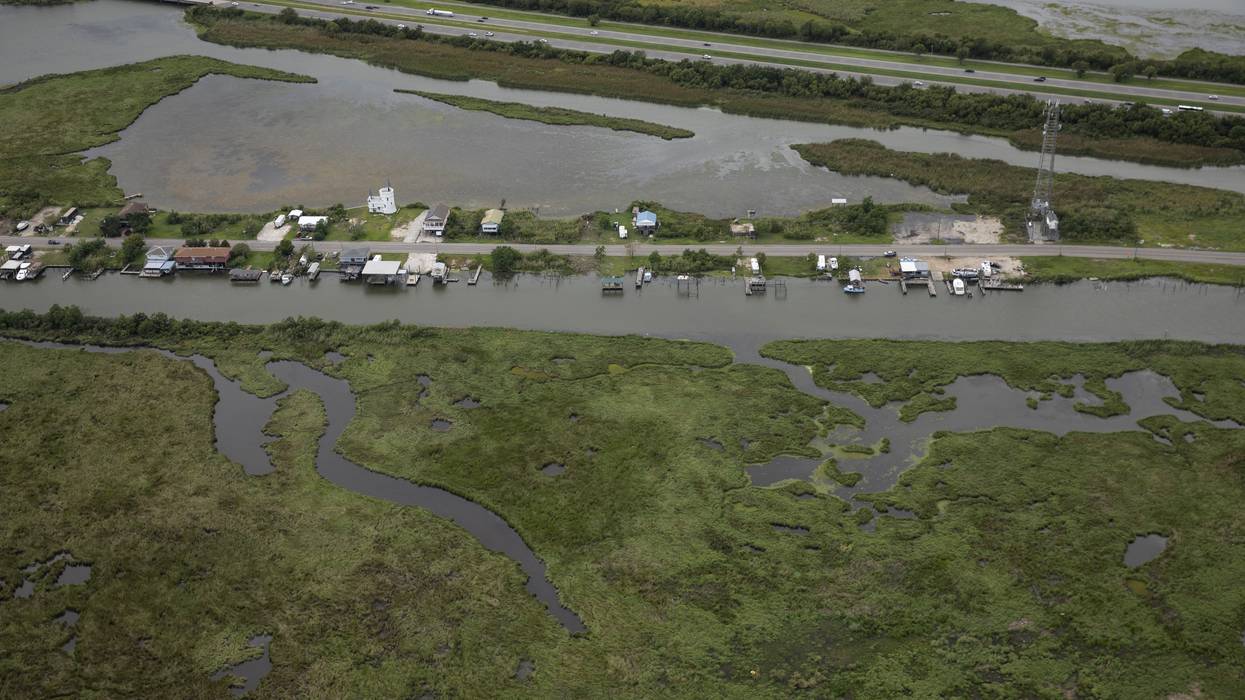
"Coastal Louisiana has evidently already crossed the point of no return," says new research.
A study published Monday warns that New Orleans must immediately begin planning and gradually implementing its permanent evacuation to avert a dangerously rushed exodus later, because it has passed a "point of no return" as climate-driven sea-level rise slowly swallows the storied city.
"With global temperatures poised to exceed the 1.5°C Paris Agreement threshold—a level that triggered substantial ice sheet collapse during the Last Interglacial—low-elevation coastal zones face sea-level commitments far beyond current planning horizons," says the study, which was published by the journal Nature Sustainability.
"With this geological frame of reference, we examine the impact of sea-level rise on what may be the most physically vulnerable coastal zone in the world using prehistoric and contemporary patterns of human mobility," the publication continues. "We highlight the positive aspects of the recently commenced out-migration in this region and argue that the fate of communities landwards of this coastal zone will be decided in the next few decades."
"While climate mitigation should remain the first step to prevent the worst outcomes, coastal Louisiana has evidently already crossed the point of no return,” the paper adds.
That's because rising waters are slowly eroding Louisiana's coast, including New Orleans, which “may well be surrounded by the Gulf of Mexico before the end of this century," according to the study's authors.
“Louisiana is a canary in the coal mine. It is one of the rare places where we’re already clearly seeing climate-motivated depopulation combined with other social and economic factors,” said Yale School of the Environment professor and study co-author Brianna Castro.
The authors argued that by acknowledging the inevitability of New Orleans' underwater future, government and residents can avert a fraught rushed retreat by planning and executing a managed multigenerational relocation and set an example for other threatened coastal communities.
According to one widely cited study published a decade ago, around 13 million Americans living in coastal areas could be forced to relocate to higher ground by the end of the century due climate-driven sea-level rise, with the Gulf Coast and Florida expected lose the most livable land. Globally, hundreds of millions of people are expected to be displaced by 2100 due to rising seas.
After Hurricane Katrina—which inundated the city and killed nearly 1,000 people in the New Orleans metro area—billions of dollars were spent fortifying the city's levee system, which failed catastrophically during the 2005 storm. However, experts warn that in the long term, levees won't be able to stop the rising waters any longer.
That's why the study's authors said officials must begin the city's orderly depopulation as soon as possible.
"What kind of retreat do you want?" asked Castro. "Do you want to incentivize it and then people go naturally for jobs, housing, and lifestyle amenities—or do you want people to wait and then have to leave abruptly in crisis?”
You can’t save lives and rebuild communities while gutting FEMA’s workforce and keeping the agency under incompetent and overtly political control.
While Americans were preparing to ring in the new year, Department of Homeland Security Secretary Kristi Noem and Federal Emergency Management Agency Chief Karen Evans were firing dozens of disaster response workers. The employees who lost their jobs on New Year’s Eve weren’t bureaucrats shuffling papers in Washington—they were members of FEMA’s Cadre of On-Call Response and Recovery teams who deploy when hurricanes flatten communities, when floods trap families in their homes, and when wildfires consume entire towns.
This wasn’t a budget decision. This was sabotage.
I spent years at FEMA and working disaster response, and I know what it takes to save lives when disaster strikes. You need trained personnel who can mobilize immediately; who know how to coordinate search and rescue operations; who understand the complex logistics of getting food, water, and shelter to people who’ve lost everything. You can’t save lives and rebuild communities while gutting FEMA’s workforce and keeping the agency under incompetent and overtly political control. These New Year’s Eve firings guarantee that when the next disaster hits, Americans may very well pay the price with their lives.
The timing tells you everything about this administration’s priorities. FEMA’s workforce has already been traumatized by DOGE, endured a revolving door of unqualified political leadership, witnessed retaliation against staffers who speak out, and heard President Donald Trump himself threaten to destroy the agency. Most recently, senior FEMA leaders were tasked with an agency-wide “workforce capacity planning exercise,” with the stated goal of cutting 50% of FEMA’s workforce (a target the administration claims was included in error). Now they’re watching their colleagues get fired on a holiday while the nation faces a looming crisis.
Every day that FEMA remains under Noem’s control, every firing of trained disaster workers, every delayed disaster declaration brings us closer to a preventable catastrophe.
Nearly 200 FEMA employees warned that this combination of political obstruction and resource depletion risks another Katrina-level catastrophe. They’re not exaggerating. I fear that we’re on a course to painfully relearn the lessons of Hurricane Katrina. Those who watched that disaster unravel in real time remember that it was a bad time for emergency management. FEMA was underfunded, it wasn’t a respected agency, and we saw the result: a bungled response to a major disaster that failed Americans when they needed help most. And now, we’re watching it happen again, in real time, and this time the warnings are coming from inside the agency itself.
The pattern under Noem’s leadership at DHS has been consistent: political interference that kills. When catastrophic flooding struck Texas, her bureaucratic approval requirements delayed Urban Search and Rescue deployment for more than 72 hours while Americans feared for their lives. Disaster declarations are being weaponized along partisan lines, with Democratic states denied relief at alarming rates while Republican states receive swift approvals, turning emergency management into political retaliation.
The administration’s contempt for professional emergency management extends beyond Noem’s obstruction. Trump appointed Gregg Phillips—a conspiracy theorist and election denier with zero emergency management experience—to lead FEMA’s Office of Response and Recovery, one of the agency’s most critical offices. Karen Evans, whose reputation for eliminating programs and slashing staff preceded her appointment as FEMA chief, is now overseeing the systematic dismantling of disaster response capabilities. A leaked report exposed plans to gut FEMA and slash the workforce in half. When the White House faced criticism, they didn’t abandon the plan. They just canceled the public meeting and stopped talking about it.
FEMA’s placement under DHS has enabled Noem to impose political interference and red tape that directly endangers American lives. Last month, Sabotaging Our Safety sent a letter to the FEMA Review Council with a straightforward solution: Make FEMA an independent, cabinet-level agency. Give the FEMA administrator a direct seat at the table with the president so the agency can respond to disasters without political obstruction from DHS leadership. This isn’t a radical proposal. It’s the only way to ensure that when Americans need help, they get it based on need rather than which party controls their state government.
This administration’s actions will cost lives. Every day that FEMA remains under Noem’s control, every firing of trained disaster workers, every delayed disaster declaration brings us closer to a preventable catastrophe. Our leadership must decide whether protecting FEMA’s capacity to respond to disasters matters more than political expediency. The agency that stands between American communities and disaster is being dismantled piece by piece, and we’re running out of time to stop it.
Hurricane Katrina not only exposed the vulnerability of communities to extreme weather events exacerbated by climate change, but also systemic injustices and a deeply flawed US insurance system.
It’s been 20 years since Hurricane Katrina struck the Gulf Coast of the United States, wreaking havoc in Louisiana, Mississippi, and Alabama. An estimated 1,833 people died in the hurricane and the flooding that ensued. The storm destroyed or damaged more than a million housing units and more than 200,000 homes, causing one of the largest relocations of people in US history.
In the months and years that followed, entrenched inequalities, questionable policy choices, and predatory practices by private insurers decided who could return home and rebuild. For instance, countless residents impacted by the hurricane learned too late that their standard homeowners’ insurance offered no protection against flood damage, leaving them to shoulder devastating repair costs themselves. In cities such as New Orleans, these dynamics further marginalized Black residents, who were more likely to live in flood-prone neighborhoods. The result was widespread and often permanent displacement, with longtime communities effectively erased from the map.
Hurricane Katrina not only exposed the vulnerability of communities to extreme weather events exacerbated by climate change, but also systemic injustices and a deeply flawed US insurance system. Private insurers pour billions of dollars into the fossil fuel industry, which is the main contributor to climate change. Thus, insurers help fuel the very crisis that is driving more frequent and severe climate disasters like Hurricane Katrina. Meanwhile, they are passing the financial risk of the escalating impact of climate change onto policyholders and forcing them to bear the costs of the crisis the industry itself helps perpetuate.
As climate-driven storms grow more frequent and increasingly destructive, the same insurance failures, housing crises, and inequitable recovery that followed Katrina now threaten communities nationwide. Two decades later, Katrina’s hard lessons cannot be ignored. Everyone deserves to live in safety and the opportunity to stay in the place they call home. Corporate greed and government negligence cannot continue to undermine these rights.
On August 29, 2005, Hurricane Katrina made landfall with winds that reached 140 miles per hour. These high-velocity winds drove a storm surge that raised sea levels 25 to 28 feet above normal along parts of the Mississippi coast, and 10 to 20 feet along the southeastern Louisiana coast. The surge breached protective levees, causing catastrophic flooding. Two days after the hurricane struck, 80% of the city of New Orleans was underwater. Other coastal towns and cities in Louisiana, Mississippi, Alabama, and along the western Florida panhandle also experienced significant storm surges and destructive winds, which caused widespread flooding and damage to homes.
Approximately 1.5 million people aged 16 years and older had to leave their residences in Louisiana, Mississippi, and Alabama because of Hurricane Katrina. In New Orleans, where the mayor issued a mandatory evacuation order, a population of around 500,000 was reduced to a few thousand people within a week of the storm.
As water was pumped out of the flooded areas and basic services and infrastructure were restored, New Orleanians were allowed to return. But tens of thousands were not able to do so. One year after Katrina, approximately 197,000 residents had not come back to the city; many relocated to the relatively close cities of Houston and Baton Rouge, but others as far away as Alaska and Massachusetts. Still today, many of those who evacuated the city, hoping to return, remain displaced. New Orleans’s metropolitan area population remains 20% below pre-Katrina levels.
The development of New Orleans has been fraught with injustices. Racial segregation, redlining, and chronic underinvestment in Black communities pushed residents and renters into areas with crumbling infrastructure, poorer-quality homes, and greater exposure to environmental hazards and contaminants.
When Katrina hit, Black residents were concentrated in the most vulnerable parts of New Orleans, located well below sea level and poorly protected by inadequate levees. Accordingly, neighborhoods with the highest percentages of Black residents saw greater housing destruction from the storm.
Did You Know?
The disparate impact of climate disasters on property and infrastructure in US minority communities is the result of nearly a century of discriminatory home lending and insurance policies.
In the 1930s, the US federal government used a rating system in its low-cost home loan program to assess lending risk. Assessors created maps ranking the perceived risk of lending in certain neighborhoods, with race often used as the determining factor in assessing a community’s risk level. Black and immigrant neighborhoods were typically rated as “hazardous” and outlined in red, warning lenders that the area was a perilous place to lend money. Known as redlining, these and other discriminatory practices led to a lack of investment in minority communities.
This lack of financial access resulted in shoddy construction and poor infrastructure that have made minority neighborhoods less resilient to climate disasters and more prone to other financial risks. For instance, insurers are more likely to increase premiums if they determine that properties are less resilient to climate damage. This new financial practice is known as bluelining, and it occurs when insurers raise their prices or pull out of areas that they perceive to be at greater environmental risk.
For Lousina’s Black residents, Katrina’s damage was compounded by discriminatory recovery policies that deepened inequalities. After the storm, the federally funded Road Home program was launched to help residents repair or rebuild damaged homes. It offered grants of up to $150,000 per homeowner, but payments were based on whichever was lower—the home’s pre-storm value or the cost to rebuild.
Because property values in Black neighborhoods were often far lower than in white neighborhoods, this meant many Black homeowners would receive only a fraction of what they needed to rebuild. In one case, a woman had rebuilding costs of over $150,000, but because the estimated value of her home pre-storm was much lower, she would’ve received an essentially useless grant of $1,400. As a result, the program was alleged to discriminate against Black homeowners, and a federal class action suit was filed on November 12, 2008, on behalf of 20,000 homeowners. The litigation settled with Louisiana agreeing to reward approximately 1,300 homeowners with $62 million in additional compensation.
Renters fared no better. Hurricane Katrina damaged or destroyed 82,000 rental units in Louisiana, 20% of which were affordable to extremely low-income households. The impact on public and federally subsidized rentals was especially severe. In New Orleans, public-housing residents were displaced at a rate of nearly 90%. And reconstruction policies only exacerbated the disparities these residents faced.
Consider this.
Before the storm hit and floodwaters rose, the Housing Authority of New Orleans evacuated all residents living in its 7,379 public housing units. After the waters receded, residents were allowed to return to approximately 1,600 units. Most other units were sealed off with steel doors and barbed wire—officially due to storm damage—before being slated for demolition. Yet, the redevelopment that followed included far fewer mixed-income apartments. By 2010, five years after the hurricane, less than half of the original 7,379 units were open in any form. The dramatic decrease in public housing contributed to the permanent displacement of many of New Orleans’ longtime residents.
After Katrina, renters faced a range of economic pressures. Many landlords delayed repairs or rebuilding, especially in low-income areas, which are seen as less profitable. Some used the disaster as an opportunity to renovate and target higher-paying tenants, further shrinking the supply of affordable rentals. Within five years of the Hurricane, the stock of mid-priced housing units in New Orleans had declined by more than two-thirds, pushing the median rent from $689 in 2004 to $876 in 2009. These rising costs hit Black residents hardest, forcing many to leave and permanently altering the city’s character.
Even those who could afford to return to New Orleans and buy a new home after Katrina faced soaring prices—up 14% in the first year alone—as demand outpaced the reduced housing supply. In addition, homeowners’ insurance premiums jumped 22% in Louisiana between 2005 and 2007, adding yet another barrier to homeownership.
Then, as now, and to the surprise of many victims of the Hurricane, standard home insurance policies in the US did not protect homeowners from floodwater damage. This means residents must buy additional flood insurance to be protected in the event of a disaster like Katrina.
New Orleans residents had among the highest participation rates in the country in the National Flood Insurance Program (NFIP), a federal government program that provides flood insurance to homeowners, renters, and businesses. However, the majority of residents in areas affected by Katrina had not purchased flood insurance. Uninsured property losses due to flooding were economically devastating, exceeding an estimated $41.1 billion (USD 100 billion in 2024 prices). In addition, the NFIP incurred some $16.1 billion in losses and a deficit exceeding $18 billion as a direct result of the flooding caused by Katrina.
Even for New Orleanians with flood insurance, coverage likely fell short. Policies typically covered about $152,000—the city’s median house price at the time. But this was rarely enough to replace the damaged household contents or to pay residents for temporary housing while their home was uninhabitable.
More and more, whether people hit by climate-driven storms get anything from their insurers depends not on the fact that their homes were damaged, but on how they were damaged.
While the standard home insurance policy does not cover water damage from a hurricane, it does cover wind damage. This gap left residents and insurers arguing about whether Katrina’s destruction to their homes was caused by its high-velocity winds or the flooding that followed, with multiple lawsuits challenging the validity of flood exclusions in insurance policies. Even before the flooding receded and residents of Louisiana and Mississippi could start to rebuild their lives, courts were inundated with litigation, with about 6,600 insurance-related lawsuits being instigated in the US District Court. Yet, Katrina’s destructive flooding was driven by a storm surge powered by the hurricane’s high winds—the very peril homeowners’ policies are supposed to cover.
On September 15, 2005, Mississippi’s Attorney General Jim Hood filed a case against five of the largest homeowners’ insurers in the state. Attorney General Hood sought a court declaration that the flood exclusion provision in standard home insurance policies was “void and unenforceable” and in violation “of the public policy of the State of Mississippi.” However, in that case and others, courts ruled that the flood exclusions were spelled out clearly in homeowners’ insurance policies and did not violate public policy.
The exclusion of water damage from insurance coverage remains a present issue for existing homeowners. According to the Federal Emergency Management Agency, since 1996, 99% of US counties have been impacted by flooding, but only 4% of homeowners have flood insurance. And, more importantly, over half (56%) of American homeowners don’t know that their home insurance policy excludes flood damage. As hurricane season intensifies, many homeowners will be shocked to learn that their insurance does not cover flood loss.
After Katrina, some insurers exploited the false dichotomy between wind and water damage, classifying losses as water damage to shift liability onto homeowners or the NFIP.
In 2013, a federal jury in Mississippi found that State Farm Fire and Casualty Co. defrauded the NFIP after avoiding covering a policyholder’s wind losses from Katrina by blaming the damage on storm surge, which is covered by federal flood insurance. Almost 10 years later, in August 2022, State Farm settled the case, agreeing to pay $100 million to the federal government.
State Farm was not the only insurer engaged in nefarious behavior, attributing Hurricane Katrina damage to flooding instead of wind. In oral argument before the Mississippi Supreme Court in 2009, insurance company USAA publicly admitted that it shifted its own costs to the NFIP and thus taxpayers.
The false dichotomy between the wind and water damage resulting from a hurricane remains nebulous. The damage caused by Hurricane Ian in Florida, North Carolina, and South Carolina in 2022, with its record-high wind speeds, generated $63 billion in private insurance claims. In contrast, 2018’s Hurricane Florence primarily caused water—not wind—damage in North and South Carolina, leaving uninsured flood losses estimated at nearly $20 billion and letting private insurers largely escape liability. More and more, whether people hit by climate-driven storms get anything from their insurers depends not on the fact that their homes were damaged, but on how they were damaged.
Hurricane Katrina exposed widespread gaps in home insurance coverage that persist today. In the 20 years since Katrina, unmitigated climate change has fueled rising temperatures and made extreme weather events such as hurricanes both more frequent and more severe. As storms grow costlier and more destructive, insurers have raised home insurance premiums and declined to renew many policies, leaving households with fewer options for protection. This escalating cycle has produced today’s insurance crisis.
Federal and state lawmakers must respond. The federal government must reform the NFIP to improve federal flood insurance and ensure it provides affordable coverage for more hazards. At the same time, the NFIP should do more to support community-based mitigation. States, meanwhile, must use their regulatory authority over insurance markets to address skyrocketing insurance costs and growing coverage gaps resulting from mounting climate change impacts.
Regulators should adopt legislation, like New York’s Insure Our Future bill, to prohibit insurers from underwriting new fossil fuel projects, require them to phase out support for existing projects, and force insurers to divest from fossil fuel companies.
The insurance industry cannot ignore its role in fueling the very crisis it now faces. Climate change-induced disasters are indisputably driven by fossil fuel emissions. And insurance companies facilitate climate change by investing in fossil fuel companies and underwriting fossil fuel projects. US insurance companies have investments of more than $500 billion in fossil fuel-related assets, including coal, oil, and gas. In 2022 alone, insurers worldwide collected $21 billion in premiums for underwriting fossil fuel projects—directly enabling their expansion.
Regulators should adopt legislation, like New York’s Insure Our Future bill, to prohibit insurers from underwriting new fossil fuel projects, require them to phase out support for existing projects, and force insurers to divest from fossil fuel companies. Without bold action, insurers will continue to profit from climate destruction while leaving families and communities to bear the costs.
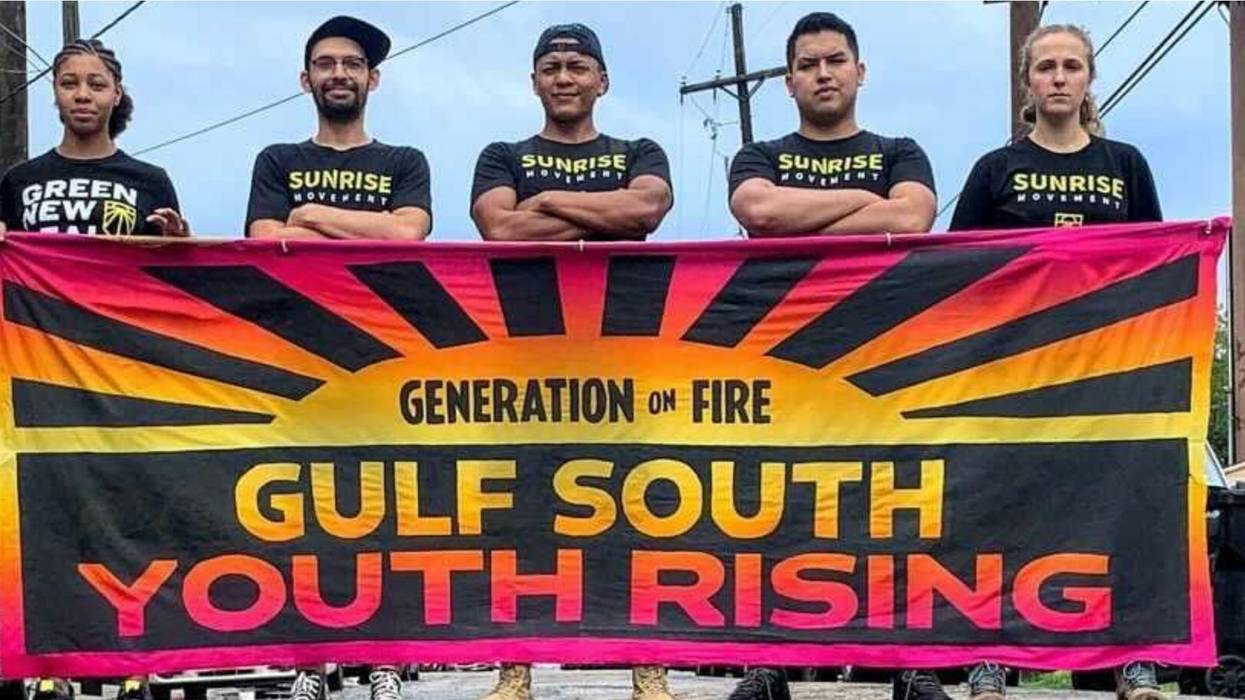
Following the path of thousands of families who permanently fled the lowest-lying major city in the United States in the wake of storms like Hurricane Katrina, a group of activists from the youth-led Sunrise Movement on Monday began a 400-mile march from New Orleans to Houston to demand President Joe Biden include "good jobs for all" and a Civilian Climate Corps in his $2.26 trillion infrastructure plan.
"This march symbolizes my story as a climate refugee who fled New Orleans and moved to Houston after Hurricane Katrina destroyed my city. This is me claiming agency over my future."
--Chante Davis, Sunrise Movement
Participants in the Sunrise Movement's "Generation on Fire" campaign set out from the New Orleans Superdome--the site of so much suffering and a symbol of state failure following Katrina in 2005--and walked along the Mississippi River following a delay due to flash flood warnings.
The climate campaigners are marching "to make clear that young people are unsatisfied with Biden and Congress' incremental, watered down proposals," according to a statement from the group.
With Democrats in control of both Congress and the White House, "young people expect more from their political leaders," the statement added.
The activists will stop in cities and towns along the march route to stage protests, rallies, and visioning sessions with community members. They will be joined by political leaders, environmental justice advocates, and other supporters.
"As a young person in the Gulf South, we're living in constant crisis: hurricanes, superstorms, jobs that break our bodies and could be taken away at any minute," said Chante Davis, a high school senior and Sunrise Movement organizer.
"This is an emergency, but it isn't an accident," Davis continued. "We know there is money that can provide living wages, stop the climate crisis, and take us back from the edge of survival. There's always money to rebuild rich neighborhoods after storms, always money for petrochemical plants and oil wells, always money for border walls and jails."
"This march symbolizes my story as a climate refugee who fled New Orleans and moved to Houston after Hurricane Katrina destroyed my city," Davis added. "This is me claiming agency over my future."
The White House has touted Biden's American Jobs Plan as "an investment in America that will create millions of good jobs, rebuild our country's infrastructure, and position the United States to out-compete China."
However, since the plan was unveiled on March 31, Sunrise Movement and other climate campaigners have said it needs to go further.
Sunrise Movement executive director Varshini Prakash said at the time that the plan "lacks a commitment to the full scale of transformation that is needed of our economy."
"We cannot miss this moment," Prakash insisted. "Congress must strengthen this plan and Biden must pass it into law as quickly as possible. If Republicans don't cooperate, do it without them. If the filibuster obstructs progress, abolish it. Money needs to go out the door and flow into communities now."
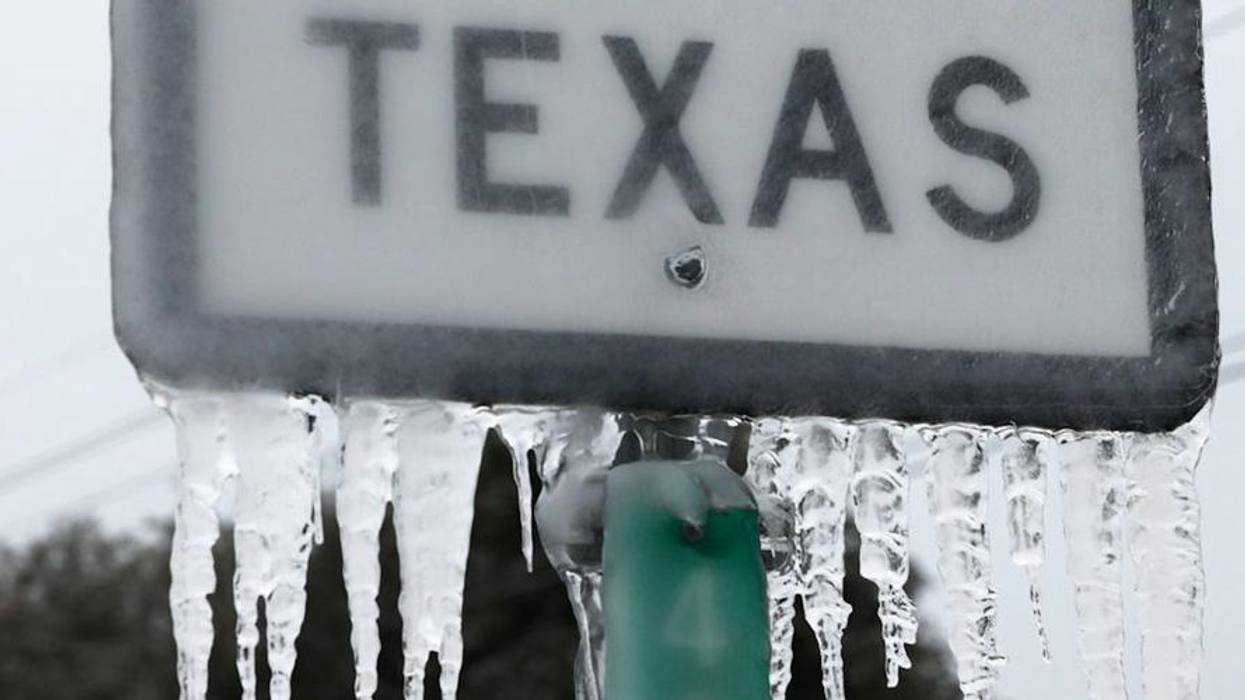
The Texas Freeze illustrates just some of the shortcomings of conservative economics as a basis for public good. The nation's problems will only get worse the longer we pretend private solutions are best for all situations.
"In Texas, everybody agreed that everybody needed a robust electricity grid. But nobody wanted to pay for it."
But notice something important: the mainstream media never discusses the fact that a failed economic system is at the heart of so many of our nation's woes. And they won't, either, because they are the public relations arm of the owners of that system and the owners are making out like bandits. So, we need to discuss the problems ourselves.
The first problem with conservative economics is that it wants to imagine that only private economic interactions are legitimate, and that public intervention in the economy is illegitimate.
The truth is that public goods are ones that benefit everybody, but where it is difficult to assign individual ownership for the benefits. That makes it difficult to collect individual payments for the services. The result is underinvestment in public goods.
Hurricane Karina, in New Orleans, in 2005, exposed the failure of inadequate investment in public infrastructure. In that case, it was in the levees that were supposed to protect the city, but that had not been sufficiently maintained, for years.
Adequate investment would have cost tens of millions of dollars, but would have averted tens of billions of dollars of damage. Private motivations made such allocations uneconomical. More than 1,800 people died and the city has still not fully recovered.
The coronavirus pandemic exposed the chronic underinvestment in public health infrastructure. The U.S. response to the pandemic has been one of the worst in the world, with almost half a million people dead because of it. We see its effects, still, today, in the haltering testing and vaccination programs.
The damage to the society from the pandemic and the failed response has been incalculable, though we can calculate that 2020 was the worst year of economic performance in 75 years. Tens of millions of people have been harmed, many grievously, with poor and minority communities--those with the least economic power--bearing the brunt of the costs.
A second problem with conservative economics is that it wants to maximize private profits in the short run, so fails to invest adequately in the long run.
"The Republican response is typical Republican blame-shucking: it was the Green New Deal, which doesn't exist except as a concept, and AOC, a second-term Congressperson who lives in another state."
In Texas, everybody agreed that everybody needed a robust electricity grid. But nobody wanted to pay for it. It has been known since 2011, the last crisis, that this kind of freeze would inflict this kind of damage on this many people. But rather than bear the honest costs, Republican authorities up and down the state simply kicked the can down the road.
We're now down the road and the effect is catastrophic. The Republican response is typical Republican blame-shucking: it was the Green New Deal, which doesn't exist except as a concept, and AOC, a second-term Congressperson who lives in another state. It's beyond irresponsible. It is immature, and reckless.
The deindustrialization of the U.S. economy over the past four decades is a case of issues one and two, above, coming together. Private parties dismantled the largest manufacturing base in the world in order to maximize private profits in the short run. It devastated the larger economy and society, giving rise to the seething rage that is Trumpism.
The U.S. has an unambiguous public interest in a vibrant economic foundation. But that is being undermined by leaving so many essential decisions only in private hands. The fallout--Trumpism, and its efforts to reverse a national election--threatens our democracy, a negative spillover from the economy to the constitutional basis of our society itself.
A final flaw in conservative economic thinking is that adaptation to change is resisted unless the benefits can be captured by those who already hold power and wealth.
This is why it is impossible to reform the U.S. health system. We pay twice what other industrial nations pay for health care but get inferior results. People suffer higher costs and worse outcomes, while the nation bears a burden to GDP of about 10%, making the entire economy that much less competitive in world markets.
That excess 10% of GDP--amounting to about $2 trillion a year--flows into the pockets of the very rich, who own the pharmaceutical and hospital and insurance companies. And media companies. They invest billions in politics and media to protect trillions in profits, meaning that things are all but impossible to change.
Similarly, with climate change. The science is clear: pumping carbon into the atmosphere threatens cataclysmic planetary damage. But the oil companies have a death-grip on Congress, with the result that something as beneficial as the Green New Deal is invoked only as an epithet by conservatives rather than as the godsend that it could be.
If we cannot, will not, adapt to a changing climate by changing our energy choices, we will inflict existential damage on the planet and every life form on it. And that, to protect the stratospheric profits of a few dozen oil companies and the few hundred families that own most of them.
"If we cannot, will not, adapt to a changing climate by changing our energy choices, we will inflict existential damage on the planet and every life form on it."
Underinvestment in public goods. Short term profit maximization. And resolute resistance to essential change. These limitations of our conservative economic ideology inflict trillions of dollars a year of costs on the American economy and all of its members. Unless they are changed, they will continue to enervate, to weaken and drain, the economy, the constitutional order, the society, and, ultimately, the planet.
The mainstream media are not going to inform us of these failings because the system is working like a charm for its owners. They have been glutted with the greatest transfer of wealth in the history of the world. That is the economic news the media should be talking about.
Don't hold your breath. We need to begin changing our fundamental ethic, from "I'm getting mine. Screw you," to "We're all in this together." Because we are. Pretending we're not, in order to satisfy a destructive ideology, doesn't change the outcomes, or reduce the temperature. Just ask the people freezing in Texas.
Fifteen years after Hurricane Katrina made landfall on the Gulf Coast, it remains a cautionary tale for how distorted budget priorities can result in militaristic, rather than humanitarian, disaster response.
After broken levees left 80% of New Orleans submerged and tens-of-thousands stranded, news reels fixated on scenes of "looting" and lawlessness. Rich with racist overtones echoed in coverage of Black-led movements today, media narratives described the city as "under siege," as more of a war zone than a humanitarian crisis. The thinly-coded language depicted the predominantly poor and Black population--struggling to survive one the deadliest storms in U.S. history--as aggressors. Amidst such rhetoric there was another violent reality: white vigilante violence and police brutality that terrorized the stranded population.
And then there were the private contractors. While some were hired by businesses and wealthy individuals to protect property, the notorious private security firm Blackwater arrived in New Orleans 36 hours after the levees broke on a federal contract. As police seized weapons from civilians, heavily armed private security patrolled the city in SUVs and unmarked vehicles.
Alongside private security forces, 58,000 troops were deployed to New Orleans in the wake of Hurricane Katrina. Ten days after the storm hit, reports described the city as an "armed camp" patrolled by local, state, and federal law enforcement officers, National Guard troops, and active-duty soldiers. Post-Katrina New Orleans quickly became a highly militarized federal relief effort.
While Blackwater operators described their mission as "securing neighborhoods," Louisiana National Guard's Joint Task Force Commander declared, "This place is going to look like Little Somalia. We're going to go out and take this city back. This will be a combat operation to get this city under control." Even community groups offering mutual aid felt treated as threats.
The role of active-duty troops in any domestic disaster is limited under the Posse Comitatus Act, which prohibits use of federal troops in domestic law enforcement. Active-duty troops are frequently called upon to help in a disaster, but they take support roles such as search and rescue. Federal troops assisting in a disaster leave law enforcement to the National Guard troops, who are subject to the dual authority of states and the federal government. As the recent violent repression of Black-led uprisings against police brutality and systemic racism have demonstrated, the massive U.S. military budget adds military might to policing in spite of federal regulations limiting the role of federal troops in law enforcement.
After Hurricane Katrina, President Bush suggested that the role of the military in disasters should be expanded. The spread of the coronavirus pandemic earlier this year renewed calls for the creation of a disaster response command within the military to respond to threats including future pandemics and climate-linked natural disasters. We only need to look as far as Hurricane Laura, which made landfall last week as a Category 5, to recognize that climate change brings stronger storms that put a growing number of people at risk. That's not to mention the summer of oppressive heat waves and extreme wildfires setting pollution records. Each crisis compounds the next.
And yet--just like the U.S. military is not a public health organization and should not be in charge of a public health crisis, the U.S. military is far from a humanitarian organization and should not manage disaster response. It's clear that in a climate-changed future, we need more resources to meet the greater-humanitarian needs that more ecological disasters will bring. We can't meet humanitarian ends with militarized means, but when the only robustly funded agencies are militarized, how can we expect our responses to crises not to be?
For the Pentagon, climate change is yet another security issue requiring more militarism. For defense contractors, its a business opportunity: there's a lucrative industry that revolves around a militarized, security-led, and for-profit approach to climate adaptation and disaster response.
But there's another way. Instead of funneling hundreds of billions of dollars each year into militarism, we can invest in the infrastructure of care we need to keep each other safe. Fifteen years after Hurricane Katrina, the need to demilitarize disaster relief is clearer than ever.
The National Oceanic and Atmospheric Administration (NOAA) has just released its Atlantic hurricane season outlook for 2020, forecasting an above-average hurricane season with 13-19 named storms, of which 6-10 could turn into hurricanes. Of these hurricanes, 3-6 could become major. If the outlook projections materialize, 2020 would be the fifth year in a row with above-normal tropical cyclone activity. In addition, the NOAA outlook comes on the heels of the first named Atlantic tropical storm of the season, Arthur, which - for the sixth year in a row - formed before the official start of hurricane season, June 1.
The United States is reeling from the novel coronavirus pandemic, with over 1.5 million cases and roughly 93,500 deaths nationally as of this writing. The full economic and social impacts of both the disease and the measures to contain it are still not clear, as the situation is in constant flux, but we do know it will take a long time for people and the country to recover. And while there is increasing pressure for the states to reopen for the sake of the economy, and stay-at-home orders and other restrictions are being lifted, doing so too soon may lead to a fall second wave of the disease. While we cannot say what the situation of the pandemic will be in the coming months, we do know hurricane season is about to start and its risks will only grow and potentially compound any impacts from the pandemic.
The NOAA outlook mirrors the Colorado State University forecast released in April. Both base their predictions mainly on the absence of an El Nino throughout the summer, in addition to above-average tropical and subtropical sea surface temperatures. El Nino has been linked to increased westerly winds that prevent optimal conditions for hurricanes to form in the tropical Atlantic, while warmer-than-average sea surface waters act like fuel for hurricanes to gain strength, as warm waters bring with them more humidity and other conditions conducive to the formation of hurricanes.
Scientists have compared the conditions this year to those in 2005, when 28 storms developed in the Atlantic and Katrina made landfall, and believe that this could be the most dangerous season since then.
There is definitive evidence that climate change is making hurricane seasons progressively worse, as I describe in a previous blog. If the past five hurricane seasons have taught us anything, it is that hurricanes are becoming stronger, wetter, slower, and more destructive, and all these trends have been linked to anthropogenic global warming.
A just-released study found that, in the period between 1979 and 2017, global warming increased the likelihood of a given tropical cyclone becoming a Category 3-5 by roughly 8 percent per decade. Hurricanes are also intensifying faster compared to historical records - we saw that with hurricanes Harvey (2017), Michael (2018), and Lorenzo (2019), and just this week with cyclone Amphan in the Bay of Bengal, located to the East of India.
A National Center for Atmospheric Research (NCAR) study also found that storms could reach farther inland with stronger winds and more rainfall. For these reasons alone, it is extremely important that hurricane preparedness takes into account the pandemic constraints and compound risks. The administration, federal agencies and local and state governments must have disaster relief plans and resources in place.
While hurricane season is upon us, flood, wildfires, and of course, it being summer, extreme heat also threaten to overtax federal disaster relief in the coming months. The NOAA running list of billion dollar disasters includes many instances of hurricanes, as well as wildfires, floods, storms, and other extreme weather events. With the potential for several of these disasters to happen simultaneously throughout hurricane season, the capacity for response if a hurricane hits may be significantly diminished.
The map below is a view of the pandemic projections as of June 27th, early in hurricane season. Projections show that roughly 8.7 million people may be infected altogether in the states at risk of hurricane impacts if there is a 20 percent weekly reduction in social contact.
Highest risk for hurricanes is usually in states from the Mid-Atlantic coast down to Florida and along the Gulf coast to Texas. However, New England states are not completely out of the woods, as since 1938 seven hurricanes have made landfall in the region. New England and many inland states have also been impacted by hurricanes after landfall, especially due to extreme precipitation and floods, even if they've been downgraded to tropical storms.
As of the 2019 hurricane season, an estimated 7.2 million homes were at risk of storm surge damage in states along the Atlantic and Gulf coasts, with Florida, Texas and Louisiana topping the list, and numbers should be similar this year. NOAA estimated in 2010 that 39 percent of the U.S. population resided in coastal shoreline counties.
Map shows the difference in the number of COVID-19 cases between the scenario used for the Florida map below and one in which there's just the 20% weekly reduction-no increase in social contact in reopening counties. These are total number of cases rather than the confirmed number of cases. Data source: https://github.com/shaman-lab/COVID-19Projection
Florida is one of the most vulnerable states when it comes to hurricanes. A recent study by Florida Atlantic University (FAU) showed that 10 of its 67 counties - mostly in the Panhandle and including some of the hardest hit by hurricane Michael in 2018 - are woefully unprepared for hurricane season evacuations, especially one about to occur in the midst of a pandemic. When you add projections of coronavirus infections for those counties (see figure below), the picture is grim - and that is just one state. Being prepared for both hurricanes and COVID-19 is a tall order for any state, sure, but state priorities now need to be identifying and filling the most dangerous gaps in their preparedness, in light of compound risks and hazards.
Projections are the total number of COVID-19 cases by June 27th and are based on a scenario in which: 20% weekly reduction in social contact in counties where cases are increasing + 10% weekly increase in contact for counties that have reopened, with the latter overriding the former. Map of evacuation preparedness by FAU (https://cues.fau.edu/research/evacuation/). Projections data source: https://github.com/shaman-lab/COVID-19Projection
The Federal Emergency Management Agency (FEMA) is the agency in charge of COVID-19 response and recovery for all states and territories. It is also responsible for hurricane emergency preparedness, emergency response, and disaster recovery. The intersection of the pandemic with hurricane season is unprecedented and unfortunate, as it will play out as FEMA's resources and staff are stretched thin with the pandemic response and a series of disasters since 2017, which will make it harder for the agency to rise to the challenge of simultaneously occurring disasters. FEMA has prepared specific guidance for hurricane preparedness in a COVID-19 era, and its Administrator stated that they are planning for safe evacuation, protection of vulnerable segments of the population, and the possibility of other simultaneous disasters and compound risks, such as wildfires. Read more about hurricane and COVID-19 preparedness and response policies and solutions in my colleague Rachel Cleetus' blog.
In addition to government assistance, we know people's socio-economic status contributes to disaster preparedness and recovery, as well as their ability to cope and make sound decisions. A project started 10 years after Katrina's landfall looked for long-term predictors of resilience, and found a range of factors that seem to help with resilience and recovery after a disaster: financial resources, yes, but also social and cultural ties, and access to stable housing after the event appeared to be important factors. Those are important to consider in an emergency, when a community is asked to evacuate, and also in their decision to return. After Katrina, many people relocated, particularly to the Houston area, but one study based on American Community Survey data found that one year after landfalling, roughly 53 percent of New Orleans adult residents were back, many to their original housing.
The various measures to limit movement in and across states add to those decisions: where could people go safely, if they can evacuate?
A scenario where many people don't evacuate at all is not out of the question either, as evacuating necessitates resources many may not have - transportation, lodging, money. Sheltering in place is also a resource-intensive endeavor, where people may see an increase in electricity bills, food consumption, and other expenses. How can people who have been laid off because of the COVID-19 crisis cope when they are low on cash?
We know Latinos and Blacks are becoming unemployed during the current economic crisis at higher rates than Whites and others, and many in these population segments are also harder hit by COVID-19. People of color and those struggling with low incomes are also historically hit differentially and harder by disaster such as hurricanes and floods, and the way relief is handled makes it more difficult for them to rebound.
Identification of those most vulnerable to these compound risks has to be an integral part of any disaster response plan--a lesson we should have learned from past disasters such as Katrina.
Over one million people were under evacuation orders as Hurricane Dorian approached the U.S. last year. Imagine one million people on the move right now, all trying to find safe shelter. Emergency response officials need to develop COVID-19-safe evacuation plans, with safe locations and enforced social distancing, taking into consideration those most vulnerable socially and economically. Communities should also learn about preparing now for this unique hurricane season, so that together, everyone comes out safe and well.
George W. Bush's record in office became the subject of numerous tweets after a video message released Saturday from the former president elicited praise from some Democrats.
In the video statement, shared on Twitter by the George W. Bush Presidential Center, Bush called on people to come together to face the "shared threat" of the coronavirus pandemic. The former president said "we have faced times of testing before," referencing the post 9/11 period when he said the nation rose "as one to grieve with the grieving"--a time period his administration rolled out its war on terror, which included a torture program.
Progressive journalists pushed back against those who appeared to be sanitizing Bush's record and suggesting he was preferable to President Donald Trump.
Writing in 2018, Andy Worthington, investigative journalist and author of The Guantanamo Files, criticized the "bizarre propensity, on the part of those in the center and on the left of U.S. political life, to seek to rehabilitate the previous Republican president, George W. Bush."
Worthington pointed to a Pew poll as Trump took office showing that 48% of Americans backed the use of torture in some circumstances, saying it was "a sign of the enduring power of the Bush administration's bellicose pro-torture maneuverings in the wake of the 9/11 attacks."
Due to the coronavirus pandemic, public schools in Seattle have closed for the remainder of the school year. But before that decision was made, the local school board gave away one of the public's most critical needs in a crisis--democratic oversight of the district leader's contract agreements and other expenditures.
"During moments of cataclysmic change, the previously unthinkable suddenly becomes reality."
Relinquishing the public's right to scrutinize how its money is being spent has become common in school districts across the country, as democratically elected officials facing an emergency have loosened, to varying degrees, the reins controlling how school leaders conduct business.
In a time of crisis and chaos, either real or manufactured, some consider it an opportunity to take greater control and change policies in a significant manner. As Naomi Klein said about the coronavirus and its effects on the United States:
"I've spent two decades studying the transformations that take place under the cover of disaster. I've learned that one thing we can count on is this: During moments of cataclysmic change, the previously unthinkable suddenly becomes reality."
In Detroit, when Robert Bobb was made an emergency financial manager of the city's public schools because of a financial crisis, he used his complete autonomy to hire a slew of private contractors that kept schools mired in debt.
After earthquakes devastated Haiti in 2010, Paul Vallas--who was key in establishing charter schools in New Orleans after Hurricane Katrina--reconstructed the country's school system by way of privatization.
In Seattle, charter schools crept into the public school system after years of battles against them by the city and the people of the state of Washington. The one battle that has not been won by the "reformers" is mayoral control, although it was tried by former Seattle Mayor Ed Murray.
Mayoral control of schools, rather than through democratically elected boards, is ideal for those who want to promote and establish privatized education. This is exactly what happened in New York, Chicago, and Washington, D.C.
Seattle Superintendent Denise Juneau, who has political aspirations beyond running Seattle schools, already has a troubling record.
With mayoral impunity, it's hard to predict what can become a target for privatization.
She outraged parents by refusing to respond to cases of frontline educators' abusive actions toward children. The imperious way she ended the Highly Capable Cohort, the district's gifted and talented program, angered students, disillusioned parents and ignored the opinions of experts as well as the general public.
Juneau also hired a private strategy firm Strategies 360, while teachers were losing their jobs due to budgetary restraints. Seattle Public Schools has a communications department well established within the district. Why was an additional private firm needed? A former Seattle superintendent, Dr. Goodloe-Johnson, hired the same firm to assist with her public image, but to no avail.
When COVID-19 broke out, Juneau frustrated teachers and angered city leaders when she failed to release a clear plan of action.
These behaviors, along with a compliant school board, set the stage for drastic change as guardians, teachers, and the general public are unable to view the decisions that Juneau makes. And her political aspirations put her in league with mayoral control advocates who have the power and money to advance her ambitions.
With mayoral impunity, it's hard to predict what can become a target for privatization.
Parents are voicing concerns about the potential dismantling of the gifted learning program at Washington Middle School, one of the most diverse schools in the Seattle Public School District. Juneau is replacing it with a private enterprise that offers online learning to students, basically swapping teachers with computers.
Another target are Seattle's Option Schools, which provide a project-based learning alternative to other public schools. The Option Schools have always been a target of the charter school cohort, who view these schools as a viable option--and therefore a competitor--to charter schools.
In the coming months, numerous contracts--such as requests for additional computer software and online testing--will pass over the superintendent's desk, options that are normally debated in public at school board meetings. Though board meetings are being held online, Juneau can approve any and all contracts as she sees fit.
As Milton Friedman wrote in 2015 after Hurricane Katrina devastated New Orleans, "Most New Orleans schools are in ruins, as are the homes of the children who have attended them. The children are now scattered all over the country. This is a tragedy. It is also an opportunity to radically reform the educational system." What Friedman meant by "reform" was to privatize public education by replacing public schools with charter schools.
Naomi Klein refers to this as "disaster capitalism," and it can happen far more easily now in Seattle and in other parts of the country, when schools are closed and no one is watching.
With the pandemic's disruption, this is precisely the time to be watching and protecting public interests, rather than giving them away through silent consent.