SUBSCRIBE TO OUR FREE NEWSLETTER
Daily news & progressive opinion—funded by the people, not the corporations—delivered straight to your inbox.
5
#000000
#FFFFFF
To donate by check, phone, or other method, see our More Ways to Give page.

Daily news & progressive opinion—funded by the people, not the corporations—delivered straight to your inbox.
"Make no mistake, this type of reactor has major safety flaws compared to conventional nuclear reactors that comprise the operating fleet," said one expert.
A leading nuclear safety expert sounded the alarm Tuesday over the Trump administration's expedited safety review of an experimental nuclear reactor in Wyoming designed by a company co-founded by tech billionaire Bill Gates and derided as a "Cowboy Chernobyl."
On Monday, the US Nuclear Regulatory Commission (NRC) announced that it has "completed its final safety evaluation" for Power Station Unit 1 of TerraPower's Natrium reactor in Kemmerer, Wyoming, adding that it found "no safety aspects that would preclude issuing the construction permit."
Co-founded by Microsoft's Gates, TerraPower received a 50-50 cost-share grant for up to $2 billion from the US Department of Energy’s Advanced Reactor Demonstration Program. The 345-megawatt sodium-cooled small modular reactor (SMR) relies upon so-called passive safety features that experts argue could potentially make nuclear accidents worse.
However, federal regulators "are loosening safety and security requirements for SMRs in ways which could cancel out any safety benefits from passive features," according to Union of Concerned Scientists nuclear power safety director Edwin Lyman.
"The only way they could pull this off is by sweeping difficult safety issues under the rug."
The reactor’s construction permit application—which was submitted in March 2024—was originally scheduled for August 2026 completion but was expedited amid political pressure from the Trump administration and Congress in order to comply with an 18-month timeline established in President Donald Trump’s Executive Order 14300.
“The NRC’s rush to complete the Kemmerer plant’s safety evaluation to meet the recklessly abbreviated schedule dictated by President Trump represents a complete abandonment of its obligation to protect public health, safety, and the environment from catastrophic nuclear power plant accidents or terrorist attacks," Lyman said in a statement Tuesday.
Lyman continued:
The only way the staff could finish its review on such a short timeline is by sweeping serious unresolved safety issues under the rug or deferring consideration of them until TerraPower applies for an operating license, at which point it may be too late to correct any problems. Make no mistake, this type of reactor has major safety flaws compared to conventional nuclear reactors that comprise the operating fleet. Its liquid sodium coolant can catch fire, and the reactor has inherent instabilities that could lead to a rapid and uncontrolled increase in power, causing damage to the reactor’s hot and highly radioactive nuclear fuel.
Of particular concern, NRC staff has assented to a design that lacks a physical containment structure to reduce the release of radioactive materials into the environment if a core melt occurs. TerraPower argues that the reactor has a so-called "functional" containment that eliminates the need for a real containment structure. But the NRC staff plainly states that it "did not come to a final determination of the adequacy and acceptability of functional containment performance due to the preliminary nature of the design and analysis."
"Even if the NRC determines later that the functional containment is inadequate, it would be utterly impractical to retrofit the design and build a physical containment after construction has begun," Lyman added. "The potential for rapid power excursions and the lack of a real containment make the Kemmerer plant a true ‘Cowboy Chernobyl.’”
The proposed reactor still faces additional hurdles before construction can begin, including a final environmental impact assessment. However, given the Trump administration's dramatic regulatory rollback, approval and construction are highly likely.
Former NRC officials have voiced alarm over the Trump administration's tightened control over the agency, which include compelling it to send proposed reactor safety rules to the White House for review and possible editing.
Allison Macfarlane, who was nominated to head the NRC during the Obama administration, said earlier this year that Trump's approach marks “the end of independence of the agency.”
“If you aren’t independent of political and industry influence, then you are at risk of an accident,” she warned.
When a mega-billionaire carps that a “doomsday outlook” is harming the climate movement, it's important to say many things in response, including this: he's dead wrong.
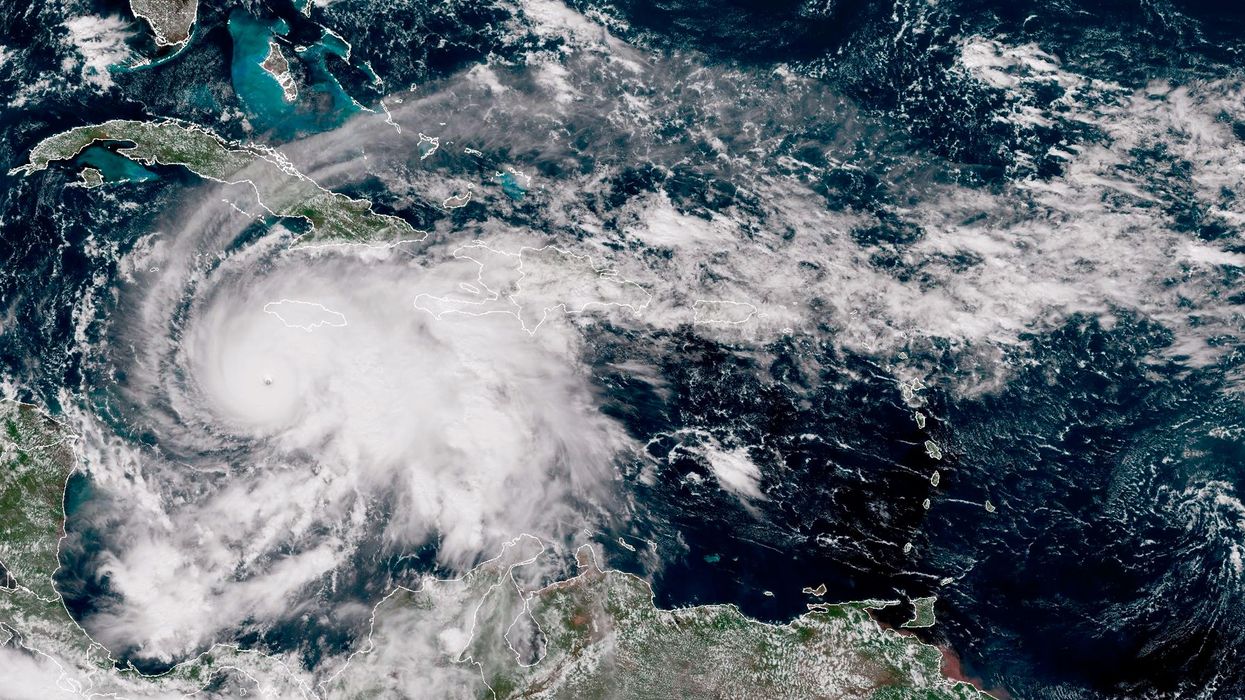
In late October, Hurricane Melissa (that should have been called “Godzilla”) battered western Jamaica with 185-mile-an-hour winds. It tossed the roofs of buildings about like splintering javelins, demolished municipal buildings and hospitals, snapped telephone poles like matchsticks, flattened crops, and dumped torrential floodwaters everywhere, leaving $8 billion in damage. That Category 5 storm’s unprecedented ferocity was driven by an overheated Caribbean Sea, produced by 275 years of industrial civilization that has spewed obscene amounts of heat-trapping carbon dioxide into the atmosphere annually.
The same week that U.N. officials spoke of an “apocalypse” in Jamaica, American billionaire Bill Gates expressed a certain unease about officials and scientists concerned with climate change who, he thought, were being hysterical. He urged them to chill the hell out. It was an arrogant and manipulative oracle, uttered with all the privilege of the world’s 19th richest man. A symbol of monopoly capitalism, his individual net worth rivals the annual gross domestic product of the Dominican Republic. And when he responded to Hurricane Melissa, he did so (not surprisingly, I suppose) in the narrow sectional interests of the world’s wealthiest class in Silicon Valley.
“My House Is a Rubbish Heap”
Gates rejects the view that climate change “will decimate civilization,” insisting instead that it “will not lead to humanity’s demise.” Of course, no one in the scientific community had argued that climate change would actually wipe out humankind, so he is indeed (and all too conveniently) attacking a straw man.
That he resorted to a description of such fallacious relevance shows how intent he is on engaging in a bad-faith argument. And that, in turn, raises the question of his motivation. After all, the possible decimation of civilization, as did indeed occur in parts of Jamaica recently, is quite different from the full-scale extinction of the human species, and it certainly raises questions of equity. The nearly half a million Jamaicans who will be without electricity for weeks and who may face severe food shortages because of crop damage will, of course, not be enjoying much in the way of “civilization” In the wake of Melissa. As Sherlette Wheelan of that island’s Westmoreland Parish said, “My house is like a rubbish heap, completely gone. If it wasn’t for the shelter manager, I don’t know what I would’ve done. She found space for me and others, even though her own roof was gone.”
And imagine this: the hurricanes of the future world we’re now creating by burning such quantities of fossil fuels, in which temperatures could rise by a disastrous 3 degrees Celsius, are likely to be so gargantuan as to make our present behemoths look sickly. Melissa was already a third more powerful than it would have been without climate breakdown. Heat up the Caribbean Sea even more, and the power of storm winds won’t increase on a gentle slope but exponentially. Scientists are already suggesting that we need a new Category 6 classification for such hurricanes, since our present 5 categories are inadequate, given their increasing power. Remember, at present, with Melissas already appearing, we have only experienced a global 1.3 degrees Celsius increase in temperature over the preindustrial norm. At issue is the quality of life and the degree of civilization that will be possible in a world where the temperature increase could be at least double that.
The Demand for Data Centers Cannot Be Met Sustainably
A decade ago, many of the companies in Silicon Valley seemed willing to take on the role of climate champions. Microsoft, where Gates made his career, pledged to be carbon negative by 2030. Jeff Bezos’s Amazon has already put more than 30,000 electric vehicles on the road and has pledged to reach net-zero carbon emissions by 2040. In general, you would think that Silicon Valley would be pro-science and hence willing to combat the use of fossil fuels and so the worsening of climate change. After all, the industry depends on basic scientific research, much of it produced by government-funded scientists.
As it turns out, though, the high-tech sector that has produced so many billionaires is instead simply pro-billionaire. This year, we were treated to the spectacle of future trillionaire Elon Musk, while still working with Donald Trump, firing 10% to 15% of all government scientists under the rubric of “the Department of Government Efficiency,” an act that, in the long run, could also help destroy American scientific and technological superiority. Climate scientists were especially targeted. The National Oceanic and Atmospheric Agency is now so understaffed that the carnage of Hurricane Melissa had to be monitored by volunteers.
The high-tech world’s abrupt turn to a rabid anti-science stance is likely the result of the emergence of large language models (also known as “artificial intelligence” or AI) and a consequent new romance with the burning of fossil fuels. This development made Nvidia, which produces the graphics-processing units that run much of AI, the first $5 trillion company. That AI has not yet proven able to increase productivity or produce any measurable added value has not stopped the hype around it from driving the biggest securities bubble since the late 1990s.
The AI phenomenon may functionally print money for tech billionaires, at least for the time being, but it comes with a gargantuan environmental cost. Its data centers are water and energy hogs and are poised to use ever more fossil fuels and so increase global carbon emissions significantly. MIT researchers estimate that “by 2026, the electricity consumption of data centers is expected to approach 1,050 terawatt-hours,” rivaling that of the energy consumption of whole countries like Japan or Russia. By 2030, it’s estimated that at least a tenth of electricity demand is likely to be driven by new data centers. MIT’s Noman Bashir concludes ominously, “The demand for new data centers cannot be met in a sustainable way. The pace at which companies are building new data centers means the bulk of the electricity to power them must come from fossil fuel-based power plants.”
Bashir’s analysis provides us with the smoking gun for solving the mystery of why the high-tech sector is now trying to kill climate science. Suddenly, Silicon Valley has a monetary reason for wanting to slow down the global movement to reduce the use of fossil fuels (no matter the cost of heating this planet to the boiling point), allying it with Big Oil in that regard. Scientists Michael E. Mann and Peter Hotez have analyzed this sort of billionaire-driven anti-intellectualism in their seminal new book Science Under Siege.
Turbocharging the Climate
One of Bill Gates’s half-truths is that there is good news about our climate progress and so no grounds for doomsaying. It certainly is true that we now have the levers to limit climate damage. That, however, doesn’t change our need to jolt the world aggressively with those very levers. The United Nations has recently concluded that we are indeed on a path to limit (if, under the circumstances, that’s even an adequate word for it) global heating to 2.8 degrees Celsius over the preindustrial average, if the countries of the world were to continue with their current policies, which reflect, however modestly, the global consensus that grew out of the 2015 Paris Agreement on climate change. Before that milestone, the world was marching toward an increase of 3.5º Celsius or more in the average surface temperature of the globe by 2100. The reduction in that projection, achieved over a decade, certainly represents genuine progress and should be celebrated, but the one thing it should not be used for (as Gates indeed does) is as an excuse for now slacking off.
The world’s peoples could shave another significant half a degree off that number if they simply met their Paris Agreement Nationally Determined Contributions, or NDCs. But even were they indeed to be faithful to their promises, we’re being taken inexorably toward at least a 2.3º Celsius global heat increase and, to put that in perspective, climate scientists worry that anything above 1.5º Celsius could ensure that the world’s climate will become devastatingly more chaotic. Imagine repeated Hurricane Melissas, far more turbocharged and striking not just islands in the Caribbean but, say, the U.S. Atlantic coast.
Just as we can’t afford to give in to a sense of doom, we can’t afford to be Pollyannas either. The news already isn’t good and we in the United States in the age of Donald Trump are now facing ever stronger headwinds against climate action. His Republican Party has, of course, enacted wide-ranging pro-carbon policies that will take effect next year and will also take pressure off China and the European Union to accelerate their paths to end the use of fossil fuels. Nor is it likely that the U.N. projections have truly reckoned with the coming proliferation of dirty data centers globally.
Worse yet, even before that hits, the world hasn’t found a way to get on a trajectory that is likely to truly decrease carbon dioxide (CO2) emissions substantially. In fact, the International Energy Agency has reported that “total energy-related CO2 emissions increased by 0.8% in 2024, hitting an all-time high of 37.8 Gt [gigatons] CO2.” In other words, we’re still putting more CO2 into the atmosphere in each succeeding year. It’s only the rate of increase that has slowed somewhat.
And that’s not the end of the bad news either. The 2.8-degree Celsius (5-degree Fahrenheit) increase toward which we’re still headed poses tremendous dangers. The numbers may not sound that dauntingly large, but remember, we’re talking about a global average of surface temperatures. If the average temperature goes up 5º F, that increase could translate into double-digit rises in places like Miami, Florida, and Basra, Iraq. And scientists now believe that, if cities with humidity levels of 80% experience a temperature of 122º F., that combination could be fatal to us humans.
Scientists have a formula for combining humidity and temperature, yielding what they call a “wet bulb” temperature. We cool off by sweating and letting the moisture evaporate from our skins, but that kind of heat and humidity would prevent such a cooling process from kicking in, which could mean that we humans would essentially be cooked to death.
And the danger won’t only be in places like the Gulf of Mexico and similar regions. As NASA warns, “Within 50 years, Midwestern states like Arkansas, Missouri, and Iowa will likely hit the critical wet-bulb temperature limit.” In short, significant parts of this planet could be turned into what might be thought of as the Hot Tub of Death. And with that comes, of course, the possibility of now almost inconceivable mega-storms, droughts, wildfires, and sea-level rise. It’s already projected that, by 2050, only 25 years from now, 200 million people annually will need humanitarian assistance to deal with an increasingly raging climate. That would be a billion people every decade.
Davy Jones’ Locker
In a sense, we’ve lucked out so far because until now so much carbon dioxide has been absorbed by the oceans and other carbon sinks on this planet. On the old, cold Earth of preindustrial times, half of the carbon dioxide produced went into the oceans or was absorbed on land by rainforests, chemical weathering, or rock formations. But the absorptive capacity of the oceans is now decreasing, which means that, if humanity continues to burn staggering quantities of fossil fuels and emit staggering amounts of CO2, we’ll overtax the capacity of the planet’s major carbon sink and ever more new carbon dioxide could then stay in the atmosphere, heating the globe for thousands of years.
The oceans absorb carbon dioxide in more than one way. Carbon dioxide mixes with cold sea water to form carbonic acid, which then splits into hydrogen and bicarbonate ions and the bicarbonate tends to stay in the water. More hydrogen, however, makes the oceans more acidic, which is not good for the marine life on which so many of us depend for food.
Some carbon is also used up by phytoplankton for photosynthesis, turning it into organic matter that is then eaten by other sea creatures and which also ultimately sinks to the ocean floor. But note that the oceans simply can’t take in infinite amounts of carbon dioxide. And if the increasing acidity of the ocean or its rising surface heat kill off a lot of phytoplankton, then their role in absorbing carbon will decline and ever more CO2 will stay in the atmosphere.
Some 90% of global heating is still absorbed by the world’s oceans, the surfaces of which are experiencing rapidly rising temperatures — and the hotter their surfaces get, the less carbon they can bury in Davy Jones’ locker because the water beneath them is growing ever more alkaline.
The Blue Screen of Death
Billionaire Bill Gates carps that a “doomsday outlook” is causing climate activists to “focus too much on near-term emissions goals.” Well, he’s wrong. The focus on near-term emissions goals comes from science. Gates doesn’t even mention the phrase “carbon budget” in his blog entry, which is telling.
After all, we are definitely in a race against time — and there’s no certainty that we’ll win. There is only so much carbon dioxide we can put into the atmosphere if we want to keep the increase in temperature under 1.5º C. And more than that is likely to cause weird, unexpected, and distinctly unpleasant changes in the world’s climate system. Unfortunately, as of 2025, we can only put 130 billion more tons of CO2 into the atmosphere and still meet that goal. At our current rate of emissions, we would use up that budget in — can you believe it? — just three years. What if we want to hold the line at 1.7º C? That budget would be exceeded in only nine years. So, the urgency climate activists feel in limiting short-term emissions derives from a knowledge that we’re rapidly depleting our carbon budget.
Most estimates are that, at current rates of emissions, we’ll use up the carbon budget for limiting warming to 2º C by 2050. Moreover, we will start losing a friend we had in that endeavor. The Earth’s biggest carbon sink, the oceans, will gradually cease being able to take up CO2 in the same quantities.
If cutting our use of fossil fuels means slowing (or even stopping) the rollout of AI data centers, inconveniencing Microsoft, Amazon, Google, and the rest of the crew, well, too bad. AI has its uses, but we clearly don’t need so much more of it desperately enough to thoroughly wreck our planet.
For a couple of decades, when I used a computer with Bill Gates’s Microsoft operating system, I would occasionally lose a day’s work because it abruptly crashed (through no fault of my own). We used to call that malfunction “the blue screen of death.” We don’t need the same thing to happen to the planet’s climate. As climate scientist Michael E. Mann has pointed out, once you’ve crashed this planet, unlike a computer, you won’t be able to reboot it.

If we were listening to people on the grounds of whether they had a good track record, the world would not spend a lot of time on Gates and climate. But if you have a hundred billion dollars all is forgiven.
I feel quite strongly that we should pay less attention to billionaires—indeed that’s rather the point of this small essay—so let me acknowledge at the outset that there is something odd about me therefore devoting an edition of this newsletter to replying to Bill Gates’ new missive about climate. But I fear I must, if only because it’s been treated as such important news by so many outlets—far more, say, than covered the United Nations Secretary General’s same-day appeal to international leaders that began with a forthright statement of the science. Here’s António Guterres:
The truth is that we have failed to avoid an overshooting above 1.5°C in the next few years. And that going above 1.5°C has devastating consequences. Some of these devastating consequences are tipping points, be it in the Amazon, be it in Greenland, or western Antarctica or the coral reefs.
In fact, I could probably just note that Gates, with impeccable timing, decided to drop his remarks at the same moment that Hurricane Melissa plowed into Jamaica, doing incalculable damage because of winds made stronger by the ocean heat attributable to global warming. As Jeff Masters reported:
Human-caused climate change increased Hurricane Melissa’s wind speeds by 7% (11 mph, or 18 km/h), leading to a 12% increase in its damages, found researchers at the Imperial College of London in a rapid attribution study just released. A separate study by scientists at Climate Central found that climate change increased Melissa’s winds by 10%, and the near-record-warm ocean waters that Melissa traversed—1.2°C (1.2°F) warmer than average—were up to 900 times more likely to be that warm because of human-caused climate change.
And, oh, the same day Hue, in Vietnam, reported one of the two or three greatest rainfalls in recorded human history: 5 feet of rain in 24 hours, the kind of deluge made ever more likely by a warming atmosphere that can hold more water vapor. As the Associated Press reported, “Global warming is making tropical storms stronger and wetter, according to experts, because warmer oceans provide them with more fuel, driving more intense winds, heavier rainfall and shifting precipitation patterns across East Asia.”
Anyway, Bill Gates’ letter.
It was wrong of him to write it because if his high-priced pr team didn’t anticipate the reaction, they should be fired. I assume they did, and that they were okay with the entirely predictable result from our president. Here’s how the Washington Times described it:
“I (WE!) just won the War on the Climate Change Hoax,” said Mr. Trump in a Wednesday post on Truth Social. “Bill Gates has finally admitted that he was completely WRONG on the issue. It took courage to do so, and for that we are all grateful. MAGA!!!”
Bill Gates didn’t, of course, say that. He said climate change was real and we should be worried about it, but that it wouldn’t lead to “humanity’s demise” or “the end of civilization” (which seems like the lowest of low bars) and that:
Although climate change will hurt poor people more than anyone else, for the vast majority of them it will not be the only or even the biggest threat to their lives and welfare. The biggest problems are poverty and disease
and therefore that’s where we should focus our money. His letter is actually directed at delegates to the global climate conference next month in Brazil, essentially telling them to back off the emissions reductions and concentrate on growing economies in the developing world because “health and prosperity are the best defense against climate change.”
Any conversation about Bill Gates and climate should begin by acknowledging that he’s been wrong about it over and over again. He’s explained that up until 2006—i.e., 18 years after Jim Hansen’s testimony before Congress laying out the science, and well past the point where George W. Bush had acknowledged its reality—he like Trump thought the whole thing was a crock. “I had assumed there were cyclical variations or other factors that would naturally prevent a true climate disaster,” he explained—at the time he was the richest man in the world, and yet his scientific advisers couldn’t get across the simple facts to him.
And he was last heard from on the topic in 2021, when he wrote a book explaining that it was going to be very hard to do renewable energy because it came with a “green premium”—i.e. it cost more. Sadly for his argument, that was pretty much the year that sun and wind crossed the invisible line making them less expensive than coal and oil and gas. (You can read my review from the New York Times here, and you can read his response to it in Rolling Stone here where he explains, “McKibben is stuck in this time warp.”)
So—if we were listening to people on the grounds of whether they had a good track record, the world would not spend a lot of time on Gates and climate. But if you have a hundred billion dollars all is forgiven, and so there has been lots of fawning coverage. The fact that Gates framed all this in a way designed to appeal to the president is so obvious that it hardly bears mentioning (the richest men in the world have all been sucking up to him, so no extra shame here); let’s instead just go to the heart of his argument. Which is weak in the extreme.
Take the case of Jamaica. The warming-fueled hurricane that smashed into the island on Tuesday did a lot of damage. How much? The first estimates from the insurance industry say between 30 and 250% of the country’s annual GDP. The wide range is because we don’t yet have pictures from much of the country, so let’s go with the very low end of the range. Thirty percent of a country’s GDP is… a lot of money. It’s as if Hurricane Katrina had cost America $8 trillion. If America suddenly had an $8 trillion hole, what do you think that would do to its ability to pay for education and healthcare and the like? That’s what “development” is. Jamaica is in a hole it will spend forever getting out of.
And oh, Cuba and Haiti got smacked too. And Vietnam. And… and that was just last week. According to the National Bureau of Economic Research, every one degree climb in temperature knocks 12% off GDP. The paper concluded that “by the end of the century people may well be 50% poorer than they would’ve been if it wasn’t for climate change.” And who gets hurt the most? That would be the developing countries that Gates in theory worries about. Here’s a Stanford study showing that “the gap between the economic output of the world’s richest and poorest countries is 25% larger today than it would have been without global warming.”
Gates goes on and on about public health, but as the US Global Leadership Coalition (a group he has lauded extensively) said a few years ago:
Warmer temperatures could expose as many as one billion people to deadly infectious diseases such as Zika, dengue, and chikungunya. In the US alone, disease cases from mosquitoes, ticks, and fleas more than tripled from just under 30,000 to almost 100,000 a year from 2004 to 2016. A warmer climate could lead to an additional 250,000 people dying of diseases including malaria each year between 2030 and 2050, according to the World Health Organization.
Is this a smaller effect than the things he worries about? On the same day that Gates issued his letter, the premier medical journal the Lancet issued its annual update on climate and health, and what it found was:
Rising global heat is now killing one person a minute around the world, a major report on the health impact of the climate crisis has revealed.
It says the world’s addiction to fossil fuels also causes toxic air pollution, wildfires, and the spread of diseases such as dengue fever, and millions each year are dying owing to the failure to tackle global heating.
The irony of Gates’ new letter is that he acknowledges, in passing, how wrong he was four years ago about the “green premium”:
You probably know about improvements like better electric vehicles, dramatically cheaper solar and wind power, and batteries to store electricity from renewables. What you may not be aware of is the large impact these advances are having on emissions.
Ten years ago, the International Energy Agency predicted that by 2040, the world would be emitting 50 billion tons of carbon dioxide every year. Now, just a decade later, the IEA’s forecast has dropped to 30 billion, and it’s projecting that 2050 emissions will be even lower.
But he uses that new knowledge to argue that since they’ve done so well we’ve knocked the high end off climate projections and hence can calm down about it all. He misses the most obvious point, which is that if you care about development the rapid expansion of solar and wind power gives us the greatest possible chance we’ve ever had to really knock down poverty, at exactly the same point that we’re spreading the technology that can help limit how high the temperature eventually gets.
Jigar Shah, who led the Department of Energy loans office under Biden, put it best:
Bill Gates hasn’t made sense on Climate since he teamed up with Bjorn Lomborg in 2009. This is just a restating of Bjorn’s book from this year about how we have a finite amount of money and we shouldn’t use it for climate. What they get wrong is that climate solutions are now fully profitable.
Here’s Rajiv Shah, writing in the New York Times last year, about the opportunity:
As world leaders gather this week for the United Nations General Assembly they should reimagine their approach. In today’s digital world, nothing matters more to individual well-being than energy: Access to electricity determines fundamental aspects of individuals’ lives, like whether they are healthy or have a job.
Instead of treating electrification as one of many goals, it’s time to see it is essential to all of them. And that means the world needs to focus investment and effort on getting reliable, clean electricity to the nearly 700 million people who don’t have any—and the 3.1 billion more who don’t have enough.
As Rajiv Shah explained in the headline to that article, “Want to End Poverty? Focus on One Thing.” Clean electricity.
I doubt Rajiv Shah can say anything about Gates’ letter—he worked at the Gates Foundation for years as part of his long and distinguished career. In fact, not many people can really reply—Gates money is too important to too many agencies and organizations. But since I don’t get any of it, let me say: He’s really not the guy to be listening to on this stuff. Really.
The longer we let inequality define our contemporary daily lives, new research helps us understand, the more the unethical behavior all around us will seem to reflect just the way our world naturally works.
Just what exactly happens when a society becomes substantially more unequal, when a few become fabulously richer than the many?
Defenders of our deepest pockets have a ready answer. What happens when wealth starts concentrating at a society’s summit? Nothing we need worry about. In fact, the richer our richest become, these cheerleaders for grand fortune posit, the better the lives the rest of us get to lead.
Or so the American Enterprise Institute’s James Pethokoukis would have us believe.
“Rather than wishing for a world without billionaires, as some radical thinkers do,” Pethokoukis declared last month, “we might want to think about the immense value that uber-successful entrepreneurs provide.”
People who live in highly unequal societies feel “a lower sense of control” and look less askance at unethical behaviors, either from others or from themselves, than do people who live in distinctly more equal societies.
“Without the possibility of amassing significant wealth,” this think-tanker went on to add, “we wouldn’t have benefited from the contributions of entrepreneurs like Bezos and Bill Gates.”
But those “contributions,” researchers have made plain over recent years, have all come at an exceptionally high price. People who live in societies with wide gaps between the wealthy and everyone else turn out to live briefer lives than people who call more equal societies home. People who live in more equal societies, meanwhile, tend to live happier lives than their unequal-society counterparts. They face less crime. Their economies crash less often.
Epidemiologists and economists the world over are exploring all these sorts of phenomena. So are sociologists and political scientists. And, over recent years, psychologists have been jumping big-time into the fray, as an analysis from Northwestern University’s Kellogg School of Management has just highlighted.
One example: Recent studies from Northwestern’s Maryam Kouchaki and her colleagues Christopher To from Rutgers and Dylan Wiwad, a former Kellogg postdoc, have been illuminating how unequal distributions of income and wealth are serving to increase “the acceptability of self-interested unethical behaviors.”
Why do unequal societies tend to be more accepting of this “immoral behavior”? Kouchaki and her colleagues have been exploring that question. They’ve dug deep into huge international data sets that go back decades. They’ve also conducted experiments to dig even deeper into the psyches of both high- and low-inequality societies.
One of these fascinating experiments, involving some 800 participants, used images of ladders to help show how levels of inequality can impact attitudes on the importance of behaving ethically. The research team showed the participants five different ten-rung ladders. Each ladder represented a different society, with each ladder rung representing 10% of each society’s population. The top rung represented the richest 10%, the bottom the poorest.
Upon each rung, the researchers placed images of money bags to indicate the total net worth of households in each particular 10%. In the most equal of these five ladder societies, no one rung carried many more money bags than any other rung. In the most unequal ladder societies, just the opposite. In these unequal societies, the overwhelming bulk of the money bags sat on the ladders’ top-most rungs.
Northwestern’s Kouchaki and her colleagues then asked their experiment’s participants to choose the ladder image that best reflected the distribution of wealth in their own real-life society. They also asked these participants to rate how acceptable unethical behaviors—everything from cheating on exams to illegally downloading software—have become in their own real-life societies.
The bottom line from this particular experiment matched up with the findings from all the rest of this research effort: People who live in highly unequal societies feel “a lower sense of control” and look less askance at unethical behaviors, either from others or from themselves, than do people who live in distinctly more equal societies.
“Overall,” Kouchaki and her colleagues conclude, “our results suggest inequality changes ethical standards.”
Other recent psychological research has come to the same core conclusion.
“When are people more open to cheating?” asked the Canadian researchers Anita Schmalor, Adrian Schroeder, and Steven Heine in a paper published earlier this year. “Economic inequality makes people expect more everyday unethical behavior.”
The longer we let inequality define our contemporary daily lives, this new research helps us understand, the more the unethical behavior all around us will seem to reflect just the way our world naturally works. Economic inequality, in effect, normalizes unethical behavior. The sun will always rise and set, we come to assume, on a deeply unequal world that no mere mortals can ever change.
We need, some observers of our fraying social fabric suggest, more people in public life noble enough to champion basic ethical norms. True, we do need those champions. But what we need even more: a world of distinctly more equal societies.
Many will argue that chemicals are needed to feed the population, but this is a false dilemma.
Our world is being propelled into a techno tyranny where a small band of billionaires owns our information, our water, our energy, and increasingly—our food. The billionaire doing more than most to shape the future of what we eat is Microsoft founder Bill Gates. Not content with being the largest private farmland owner in the U.S., Gates is hell-bent on creating a new green revolution for Africa. Just like the last green revolution in the 1960s, Gates aims to end world hunger by supercharging industrial farming through planting hectare after hectare of "magic seeds" in order to resist bugs and adapt to the climate crisis.
Anyone familiar with the original green revolution in the 1960s may be feeling a tingling sense of déjà vu. Back in 1960, approximately 37% of people living in developing countries were undernourished. Fast forward to 2019 and the number had fallen to 8.9%. This is an achievement that rightly won Norman Borlaug a Nobel Peace Prize. Borlaug—the father of the green revolution—spent his life working to reduce global hunger, and he can hold his head high for a mission accomplished. Unfortunately for Borlaug and the rest of humanity, his method for reducing world hunger was to create genetically modified monocrops which were reliant on massive amounts of pesticides, synthetic fertilizer, and water. This led to the consolidation of farms with the wealthier farmers able to afford the necessary inputs. Those who could not, lost out.
Today, the average farm in the United States is $1.3 million in debt. Noneconomic impacts have been even worse. Our soils are dying, insects are going extinct, bird and mammal populations are crashing, and we are fast approaching a time when demand for water outstrips supply by 40%. While Borlaug may be resting in peace, the unforeseen impacts of his green revolution mean the rest of us may find it difficult to do so. And due to the Messiah complex of billionaires like Gates, we are about to fuel the destruction again. It doesn’t have to be this way. There are other futures we can choose.
We are in the middle of the sixth extinction with as many as 274 species going extinct every day—we have lost an average of 68% of all bird, fish, mammal, amphibian, and reptile species in the past 50 years.
Before we look at an alternative solution, let’s look at the problems industrial agriculture is causing. We are in the middle of the sixth extinction with as many as 274 species going extinct every day—we have lost an average of 68% of all bird, fish, mammal, amphibian, and reptile species in the past 50 years—and the decline is continuing at more than one percentage point per year. Agriculture is the largest cause of these declines—86% of those species threatened—with animal agriculture (60%) the salient perpetrator. A simple switch to plant-based diets could free up enough land that we could leave 50% of our planet to nature, just as the late biologist E.O. Wilson emphasized was necessary in his book Half-Earth. We could also sequester at least 14.7 GtCO2e per year—which is more than double what the Intergovernmental Panel on Climate Change states is necessary to remove to limit warming to 2.7°F (1.5°C) by mid-century.
While the majority of our extremely compromised attention is focused on the fast-dwindling species we can witness disappearing, many of the species being lost are out of sight and out of mind. Of the 69,003 vertebrate species, 69% have had their risk of extinction assessed whereas the number of insects to have been assessed is just 0.8%. While the plight of the polar bear might sell more advertising space than Sloane's Urania, E.O. Wilson was correct in his assumption that it was “the little things that run the world.” They might be small, but combined, insects weigh 17 times more than humanity, and whether it be pollinating plants, maintaining soil structure, or dispersing seeds, our insect friends pack a prodigious punch.
Unfortunately, industrialized farming—in addition to light pollution and our warming world—is pushing our tenacious troops to the brink. It is estimated we are losing 2.5% of insect biomass each year and we risk living on a bug-free ball by 2100. While a shift toward plant-based diets will free up the land to provide copious habitat, a shift toward genuine organic farming will ensure insects can thrive on the land unhindered by insecticides. The soil under our feet will also benefit.
In 1937, President Franklin D. Roosevelt wrote that “a nation that destroys its soils, destroys itself.” The United States is firmly on course for the former, and how long it can avoid the latter is debatable. To the average eye, soil looks like barren brown blobs, but up close and personal, contains a staggering quarter of all biodiversity. It prevents flooding, and drought, and is essential for providing clean water. Just a handful of soil contains billions of microscopic organisms. Sadly, the past tense needs to be used now, because the soil under our feet is being degraded at a staggering 30 soccer fields per minute. That’s around 24 billion tonnes of fertile topsoil being lost every year. Half of our topsoil has disappeared since the industrial revolution. The main reason for this degradation—as with insects—is Borlaug’s package. It’s not just the soil that is being affected, but its inhabitants too. Earthworms help to keep soil healthy and on land that is sprayed with pesticides, they grow to just half their weight and don’t reproduce as well as those where pesticides are not used.
So, how can we get out of this mess? Gates and the billionaire brood wish to convince us that further industrialization is the only answer to feeding 10 billion people. Are they correct? Or are they purely profit-driven? Considering we already grow enough food for 10 billion people yet have 828 million going hungry every night suggests industrialization is not the answer. Many people simply can’t afford to pay for food. If Gates and his ilk are really serious about ending world hunger, perhaps they could cough up the $259 billion that Oxfam claims it would cost. This is a drop in the ocean for the world’s richest; unfortunately, it’s difficult for them to profit from, so it may never happen. Likewise, they could quietly ask supermarkets to stop wasting 30% of all food grown or pay their money-hungry friends in government to stop paying subsidies to harmful industries. It seems highly unlikely that an escalation of the sterile monocrops dependent on fertilizer, pesticides, and herbicides is going to reverse the damage.
Something much more likely to succeed would be a return to our roots. The share of people employed by agriculture has dropped precipitously since 1800. U.S. agriculture has gone from almost 60% of the workforce to 1.36% in 2019. In Britain, barely 1% help to satiate hunger. Globally—since 1991—the share of agricultural employment dropped from 43.7% to 26.76% in 2019. As artificial intelligence begins to strip humans of their worth, imagine if humans began working the land once again. What could be earthlier than returning to the land and reconnecting human animals with the natural world that gives them life?
Removing oneself from the deafening noise of car horns and replacing it with bird song wouldn’t be the only benefit. Organic farmers need less mechanization than conventional farmers and so need less money to get going. Once up and running, they also require fewer inputs and again this reduces overheads. While research into organic versus conventional yields provides varying results, when the time comes to sell the produce, organic produce sells for between 13-22% more than those reliant on chemicals. This is necessary because organic farming requires more labor but remember: This is the whole point. Young Americans between the ages of 24 and 40 are already doing this with around 30,000 opting to relocate each year since 2014. Can you imagine millions of people opting to return to revitalize rural areas? The benefits to these communities left behind by globalization would be immense.
With the climate crisis upon us, it is imperative for young people to get into politics to try and direct their futures down a sustainable path.
Around the world, whether the U.S., U.K., or Japan much of the population living in urban areas tends to be more progressive than those in rural areas. As we have seen with the polarization of the United States, this divide desperately needs to be bridged. What better way than for progressives to move back to the heartlands and get their hands dirty along with those with more conservative leanings? With the climate crisis upon us, it is imperative for young people to get into politics to try and direct their futures down a sustainable path. This is far more easily achieved in lowly populated areas where communities can hold politicians' feet to the flames.
Many will argue that chemicals are needed to feed the population, but this is a false dilemma and it’s worth noting that much of this propaganda comes from the chemical companies themselves. The transition isn’t without hurdles though. The world can thank Sri Lanka for their disastrous attempt at going organic without adequate planning or training for farmers. We can and must learn from their mistakes. We shouldn’t forget, either, that Borlaug himself made this argument 60 years ago when he warned that by “predicting doom for the world through chemical poisoning, the world will be doomed not by chemical poisoning but from starvation.” In the space-race-’60s, perhaps this was hard to argue against. In 2023, however, it is not.
Even if we accept that organic yields are 15% lower than conventional farming, with an area the size of Brazil and North America combined freed up by our switch to plant-based diets or the adoption of cellular meat, we could easily accept lower yields. We don’t necessarily have to accept lower yields though. A 2022 meta-analysis that looked at 30 long-term experiments from Europe and Africa found that ecological intensification (EI) practices had a generally positive effect on staple crop yields. EI refers to the utilization of natural processes instead of human-made inputs such as pesticides and fertilizers to sustain or enhance food production per unit area. These practices include increasing crop diversity, adding fertility crops to add nitrogen naturally, and planting flower-rich habitats around fields to provide natural enemies for crop pests.
Forget food revolutions, forget green revolutions, what we need is not a revolution but an evolution—of consciousness. And we won’t get this in cities saturated with advertising, we won’t get this online, we won’t get this with AI robot vacuums, but we will get it surrounded by nature.Education pundits are a lot like the guy in the "Distracted Boyfriend" meme.
It's interpersonal relationships that guide the journey and even the most sophisticated chatbot can't do that yet and probably never will have that capacity.
They're walking with teachers but looking around at the first thing possible to replace them.
This weekend it's AI chatbots.
If you've ever had a conversation with Siri from Apple or Alexa from Amazon, you've interacted with a chatbot.
Bill Gates already invested more than $240 million in personalized learning and called it the future of education.
And many on social media were ready to second his claim when ChatGPT, a chatbot developed by artificial intelligence company OpenAI, responded in seemingly creative ways to users on-line.
It answered users requests to rewrite the 90s hit song, "Baby Got Back," in the style of "The Canterbury Tales." It wrote a letter to remove a bad account from a credit report (rather than using a credit repair lawyer). It explained nuclear fusion in a limerick.
It even wrote a 5-paragraph essay on the novel "Wuthering Heights" for the AP English exam.
Josh Ong, the Twitter user who asked for the Emily Bronte essay, wrote, "Teachers are in so much trouble with AI."
But are they? Really?
Teachers do a lot more than provide right answers. They ask the right questions.
They get students to think and find the answers on their own.
They get to know students on a personal level and develop lessons individually suited to each child's learning style.
That MIGHT involve explaining a math concept as a limerick or rewriting a 90's rap song in Middle English, but only if that's what students need to help them learn.
It's interpersonal relationships that guide the journey and even the most sophisticated chatbot can't do that yet and probably never will have that capacity.
ChatGPT's responses are entertaining because we know we're not communicating with a human being. But that's exactly what you need to encourage the most complex learning.
Human interaction is an essential part of good teaching. You can't do that with something that is not, in itself, human--something that cannot form relationships but can only mimic what it thinks good communication and good relationships sound like.
Even when it comes to providing right answers, chatbots have an extremely high error rate. People extolling these AI's virtues are overlooking how often they get things wrong.
Anyone who has used Siri or Alexa knows that--sometimes they reply to your questions with non sequiturs or a bunch of random words that don't even make sense.
ChatGPT is no different.
As more people used it, ChatGPT's answers became so erratic that Stack Overflow--a Q&A platform for coders and programmers-- temporarily banned users from sharing information from ChatGPT, noting that it's "substantially harmful to the site and to users who are asking or looking for correct answers."
The answers it provides are not thought out responses. They are approximations--good approximations--of what it calculates would be a correct answer if asked of a human being.
The chatbot is operating "without a contextual understanding of the language," said Lian Jye Su, a research director at market research firm ABI Research.
"It is very easy for the model to give plausible-sounding but incorrect or nonsensical answers," she said. "It guessed when it was supposed to clarify and sometimes responded to harmful instructions or exhibited biased behavior. It also lacks regional and country-specific understanding."
Which brings up another major problem with chatbots. They learn to mimic users, including racist and prejudicial assumptions, language and biases.
For example, Microsoft Corp.'s AI bot 'Tay' was taken down in 2016 after Twitter users taught it to say racist, sexist, and offensive remarks. Another developed by Meta Platforms Inc. had similar problems just this year.
Great! Just what we need! Racist, sexist Chatbots!
This kind of technology is not new, and has historically been used with mixed success at best.
ChatGPT may have received increased media coverage because its parent company, OpenAI, was co-founded by Tesla Inc. CEO Elon Musk, one of the richest men in the world.
Eager for any headline that didn't center on his disastrous takeover of Twitter, Musk endorsed the new AI even though he left the company in 2018 after disagreements over its direction.
However, AI and even chatbots have been used in some classrooms successfully.
Professor Ashok Goel secretly used a chatbot called Jill Watson as an assistant teacher of online courses at the Georgia Institute of Technology. The AI answered routine questions from students, while professors concentrated on more complicated issues. At the end of the course, when Goel revealed that Jill Watson was a chatbot, many students expressed surprise and said they had thought she was a real person.
This appears to be the primary use of a chatbot in education.
"Students have a lot of the same questions over and over again. They're looking for the answers to easy administrative questions, and they have similar questions regarding their subjects each year. Chatbots help to get rid of some of the noise. Students are able to get to answers as quickly as possible and move on," said Erik Boylestad Nilsen from BI Norwegian Business School.
However, even in such instances, chatbots are expensive as yet to install, run and maintain, and (as with most EdTech) they almost always collect student data that is often sold to businesses.
Much better to rely on teachers.
You remember us? Warm blooded, fallible, human teachers.
The tire fire that Elon Musk seems to be making out of his new toy, Twitter, is leading some to call for an overdue, society-wide jettisoning of the whole "if he's a billionaire, that means he's a genius" myth.
These global groups--focused on food sovereignty and justice--take non-symbolic issue with Gates' premises, and those of the outlets megaphoning him and his deep, world-saving thoughts.
Here's a hope that that critical lens will extend not just to Elon "don't make me mad or I won't fly you to Mars" Musk but also to, can we say, Bill Gates, who, while he doesn't talk about other planets, has some pretty grandiose ideas about this one.
Fifty organizations, organized by Alliance for Food Sovereignty in Africa and Community Alliance for Global Justice, have issued an open letter to Gates, in response to two high-profile media stories: an AP piece headlined "Bill Gates: Technological Innovation Would Help Solve Hunger" (9/13/22) and a Q&A in the New York Times by David Wallace-Wells (9/13/22) that opened with the question of the very definition of progress: "Are things getting better? Fast enough? For whom?" and asserting that "those questions are, in a somewhat singular way, tied symbolically to Bill Gates."
In their letter, these global groups--focused on food sovereignty and justice--take non-symbolic issue with Gates' premises, and those of the outlets megaphoning him and his deep, world-saving thoughts.
First and last, Gates acknowledges that the world makes enough food to feed everyone, but then goes on to suggest responses to hunger based on low productivity, rather than equitable access.
He stresses fertilizer, which the groups note, makes farmers and importing nations dependent on volatile international markets and contributes to greenhouse gas emissions, while multiple groups in Africa are already developing biofertilizers with neither of those issues.
Gates tells Times readers, "The Green Revolution was one of the greatest things that ever happened. Then we lost track." These on the ground groups beg to differ: Those changes did increase some crop yields in some places, but numbers of hungry people didn't markedly go down, or access to food markedly increase, while a number of new problems were introduced.
AP says the quiet part loud with a lead that tells us: Gates believes that,
the global hunger crisis is so immense that food aid cannot fully address the problem. What's also needed, Gates argues, are the kinds of innovations in farming technology that he has long funded.
Presumably "Squillionnaire Says What He Does Is Good, By Gosh" was deemed too overt.
But AP wants us to know about the "breakthrough" Gates calls "magic seeds"--i.e., those bioengineered to resist climate change. Climate-resistant seeds, the letter writers note, are already being developed by African farmers and traded in informal seed markets. Gates even points a finger at over-investments in maize and rice, as opposed to locally adapted cereals like sorghum. Except his foundation has itself reportedly focused on maize and rice and restricted crop innovation.
Finally, the groups address Gates' obnoxious dismissal of critics of his approach as "singing Kumbaya": "If there's some non-innovation solution, you know, like singing Kumbaya, I'll put money behind it. But if you don't have those seeds, the numbers just don't work," our putative boy-hero says. Adding pre-emptively, "If somebody says we're ignoring some solution, I don't think they're looking at what we're doing."
The open letter notes respectfully that there are "many tangible ongoing proposals and projects that work to boost productivity and food security." That it is Gates' "preferred high-tech solutions, including genetic engineering, new breeding technologies, and now digital agriculture, that have in fact consistently failed to reduce hunger or increase food access as promised," and in some cases actually contribute to the biophysical processes driving the problem. That Africa, despite having the lowest costs of labor and land, is a net exporter is not, as Gates says, a "tragedy," but a predictable and predicted result of the fact that costs of land and labor are socially and politically produced: "Africa is in fact highly productive; it's just that the profits are realized elsewhere."
At the end of AP's piece, the outlet does the thing elite media do where they fake rhetorical balance in order to tell you what to think:
Through his giving, investments and public speaking, Gates has held the spotlight in recent years, especially on the topics of vaccines and climate change. But he has also been the subject of conspiracy theories that play off his role as a developer of new technologies and his place among the highest echelons of the wealthy and powerful.
The word "but" makes it sound like a fight: between holding a spotlight (because you're wealthy and powerful) or else being subject to presumably inherently ignorant critical conjecture (because you're wealthy and powerful). Not to mention this anonymously directed "spotlight"--that media have nothing to do with, or no power to control.
Fifteen activists were arrested for shutting down the entrances to airports serving private jets across the United States on Thursday as part of worldwide climate protests led by groups including Extinction Rebellion, Scientist Rebellion, New York Communities for Change, and the New York City chapter of the youth-led Sunrise Movement.
"Taking a private jet while the planet is on fire is utter insanity."
According to a representative of New York Communities for Change, seven demonstrators were arrested at Teterboro Airport in New Jersey--the nation's busiest private jetport--while four activists were apprehended at Van Nuys Airport outside Los Angeles, and four protesters were taken into police custody at Wilson Air Terminal at Charlotte International Airport in North Carolina.
"The rich are burning down the planet and the damage is irreversible," climate scientist Peter Kalmus, who was arrested in Charlotte, said in a statement. "We must stop them. Banning private jets would be a start."
Referring to the billionaire founders of Amazon.com and Microsoft respectively, Scientist Rebellion member Gianluca Grimalda said: "It is obscene that Jeff Bezos or Bill Gates can fly their private jets tax-free, while global communities starve. It's only fair that wealthy polluters pay the most into climate loss and damage funds to help the most vulnerable countries adapt."
While private jets account for a tiny fraction of global greenhouse emissions, the world's richest 1% produce more than double the emissions of the poorest 50%, and a single billionaire produces a million times more emissions than an average person, as an Oxfam study reported by Common Dreams earlier this week explained.
Earlier this week, more than 100 activists were arrested during a similar protest against private jets in Amsterdam.
"Taking a private jet while the planet is on fire is utter insanity," said Will Livernois, a bioelectronics researcher at the University of Washington who took part in a protest in Seattle on Thursday. "The science has been clear for half a century and we have not changed trajectory. The elite who have funded this crisis must pay back what they have taken from our world."
Dear Bill Gates:
You were recently featured commenting on the global state of agriculture and food insecurity, in a recent New York Times op-ed by David Wallace-Wells and also in an Associated Press article.
It is your preferred high-tech solutions, including genetic engineering, new breeding technologies, and now digital agriculture, that have in fact consistently failed to reduce hunger or increase food access as promised.
In both articles, you make a number of claims that are inaccurate and need to be challenged. Both pieces admit that the world currently produces enough food to adequately feed all the earth's inhabitants, yet you continue to fundamentally misdiagnose the problem as relating to low productivity; we do not need to increase production as much as to assure more equitable access to food. In addition, there are four specific distortions in these pieces which should be addressed, namely: 1) the supposed need for "credit for fertilizer, cheap fertilizer" to ensure agricultural productivity, 2) the idea that the Green Revolution of the mid-20th century needs to be replicated now to address hunger, 3) the idea that "better" seeds, often produced by large corporations, are required to cope with climate change, and 4) your suggestion that if people have solutions that "aren't singing Kumbaya," you'll put money behind them.
First, synthetic fertilizers contribute 2% of overall greenhouse gas emissions and are the primary source of nitrous oxide emissions. Producing nitrogen fertilizers requires 3-5% of the world's fossil gas. They also make farmers and importing nations dependent on volatile prices on international markets, and are a major cause of rising food prices globally. Yet you claim that even more fertilizer is needed to increase agricultural productivity and address hunger. Toxic and damaging synthetic fertilizers are not a feasible way forward. Already, companies, organizations, and farmers in Africa and elsewhere have been developing biofertilizers made from compost, manure, and ash, and biopesticides made from botanical compounds, such as neem tree oil or garlic. These products can be manufactured locally (thereby avoiding dependency and price volatility), and can be increasingly scaled up and commercialized.
Second, the Green Revolution was far from a resounding success. While it did play some role in increasing the yields of cereal crops in Mexico, India, and elsewhere from the 1940s to the 1960s, it did very little to reduce the number of hungry people in the world or to ensure equitable and sufficient access to food. It also came with a host of other problems, from ecological issues like long-term soil degradation to socio-economic ones like increased inequality and indebtedness (which has been a major contributor to the epidemic of farmer suicides in India). Your unquestioning support for a "new" Green Revolution demonstrates willful ignorance about history and about the root causes of hunger (which are by and large about political and economic arrangements, and what the economist Amartya Sen famously referred to as entitlements, not about a global lack of food).
Third, climate-resilient seeds are already in existence and being developed by farmers and traded through informal seed markets. Sorghum, which you tout in your interview as a so-called "orphan crop", is among these already established climate-adapted crops. You note that most investments have been in maize and rice, rather than in locally-adapted and nutritious cereals like sorghum. Yet AGRA (the Alliance for a Green Revolution in Africa), which your foundation (the Bill and Melinda Gates Foundation) created and financed, has been among those institutions that have disproportionately focused on maize and rice. In other words, you are part of creating the very problem you name. The AGRA initiative, which your foundation continues to fund, has also pushed restrictive seed legislation that limits and restricts crop innovation to well-resourced labs and companies. These initiatives don't increase widespread innovation, but rather contribute to the privatization and consolidation of corporate monopolies over seed development and seed markets.
Finally, your assertion that critics of your approach are simply "singing Kumbaya," rather than developing meaningful (and fundable) solutions, is extremely disrespectful and dismissive. There are already many tangible, ongoing proposals and projects that work to boost productivity and food security-from biofertilizer and biopesticide manufacturing facilities, to agroecological farmer training programs, to experimentation with new water and soil management techniques, low-input farming systems, and pest-deterring plant species. What you are doing here is gaslighting-presenting practical, ongoing, farmer-led solutions as somehow fanciful or ridiculous, while presenting your own preferred approaches as pragmatic. Yet it is your preferred high-tech solutions, including genetic engineering, new breeding technologies, and now digital agriculture, that have in fact consistently failed to reduce hunger or increase food access as promised. And in some cases, the "solutions" you expound as fixes for climate change actually contribute to the the biophysical processes driving the problem (e.g. more fossil-fuel based fertilizers, and more fossil-fuel dependent infrastructure to transport them) or exacerbate the political conditions that lead to inequality in food access (e.g. policies and seed breeding initiatives that benefit large corporations and labs, rather than farmers themselves).
In both articles, you radically simplify complex issues in ways that justify your own approach and interventions. You note in the New York Times op-ed that Africa, with the lowest costs of labor and land, should be a net exporter of agricultural products. You explain that the reason it is not is because "their productivity is much lower than in rich countries and you just don't have the infrastructure." However, costs of land and labor, as well as infrastructures, are socially and politically produced. Africa is in fact highly productive-it's just that the profits are realized elsewhere. Through colonization, neoliberalism, debt traps, and other forms of legalized pillaging, African lives, environments, and bodies have been devalued and made into commodities for the benefit and profit of others. Infrastructures have been designed to channel these commodities outside of the continent itself. Africa is not self-sufficient in cereals because its agricultural, mining, and other resource-intensive sectors have been structured in ways that are geared toward serving colonial and then international markets, rather than African peoples themselves. Although you are certainly not responsible for all of this, you and your foundation are exacerbating some of these problems through a very privatized, profit-based, and corporate approach to agriculture.
There is no shortage of practical solutions and innovations by African farmers and organizations. We invite you to step back and learn from those on the ground. At the same time, we invite high profile news outlets to be more cautious about lending credibility to one wealthy white man's flawed assumptions, hubris, and ignorance, at the expense of people and communities who are living and adapting to these realities as we speak.
From:
Community Alliance for Global Justice/AGRA Watch
Alliance for Food Sovereignty in Africa (AFSA)
Southern African Faith Communities' Environment Institute (SAFCEI)
GRAIN
African Centre for Biodiversity
Kenya Food Rights Alliance
Growth Partners
Grassroots International
Agroecology Fund
US Food Sovereignty Alliance
National Family Farm Coalition
Family Farm Defenders
Oakland Institute
A Growing Culture
ETC Group
Food in Neighborhoods Community Coalition
Detroit Black Community Food Security Network
Sustainable Agriculture of Louisville
Haki Nawiri Afrika
Real Food Media
Agroecology Research-Action Collective
Environmental Rights Action/ Friends of the Earth Nigeria (ERA/FoEN)
Les Amis de la Terre Togo/ Friends of the Earth Togo
Justica Ambiental/ JA FoE Mozambique
Friends of the Earth Africa
Health of Mother Health Foundation (HOMEF)
Committee on Vital Environmental Resources (COVER)
The Young Environmental Network (TYEN)
GMO Free Nigeria
Community Development Advocacy Foundation
African Centre for Rural and Environmental Development
Connected Advocacy
Policy Alert
Zero Waste Ambassadors
Student Environmental Assembly Nigeria (SEAN)
Host Community Network, Nigeria (HoCON)
Green Alliance Nigeria (GAN)
Hope for Tomorrow Initiative (HfTI)
Media Awareness and Justice Initiative (MAJI)
We The People
Rainbow Watch and Development Centre
BFA Food and Health Foundation
Corporate Accountability and Public Participation Africa (CAPPA)
Women and Children Life Advancement Initiative
Network of Women in Agriculture Nigeria (NWIN)
Gender and Environmental Risks Reduction Initiative (GERI)
Gender and Community Empowerment Initiative
Eco defenders Network
Urban Rural Environmental Defenders (URED)
Peace Point Development Foundation (PPDF)
Community Support Centre, Nigeria
In March, the Southern African Faith Communities' Environment Institute (SAFCEI) sent letters to the U.S. Agency for International Development (USAID) and other donors calling on them to stop funding the Alliance for a Green Revolution in Africa (AGRA). Evidence from a donor-commissioned evaluation, released in February, confirmed the findings of an independent academic assessment that the billion-dollar program was failing to significantly improve yields, incomes or food security for Africa's small-scale farming households.
The seed and fertilizer companies are the true beneficiaries, turning public subsidies and support into private profits for major seed and fertilizer companies.
Unfortunately, USAID was quick to dismiss the evaluation's findings, and its support for funding AGRA continued. That is why one of us was among the African civil society leaders who, in March, briefed members of the House Foreign Affairs Committee and asked them to stop the appropriation of any further funds for the alliance when Congress reauthorizes the Global Food Security Act later this year.
Reps. Ilhan Omar (D-Minn.,) Sara Jacobs (D-Calif.,) and Tom Malinowski (D-N.J.) have sent a "dear colleague" letter to the co-chairs of the House Appropriations Committee asking them to reexamine the funding for the Alliance for a Green Revolution in Africa. We thank those members for taking our concerns to heart.
As a multi-faith environmental NGO, SAFCEI works regionally with faith leaders concerned about environmental and climate issues. Those faith leaders represent their communities across Africa and they see what is happening on the ground.
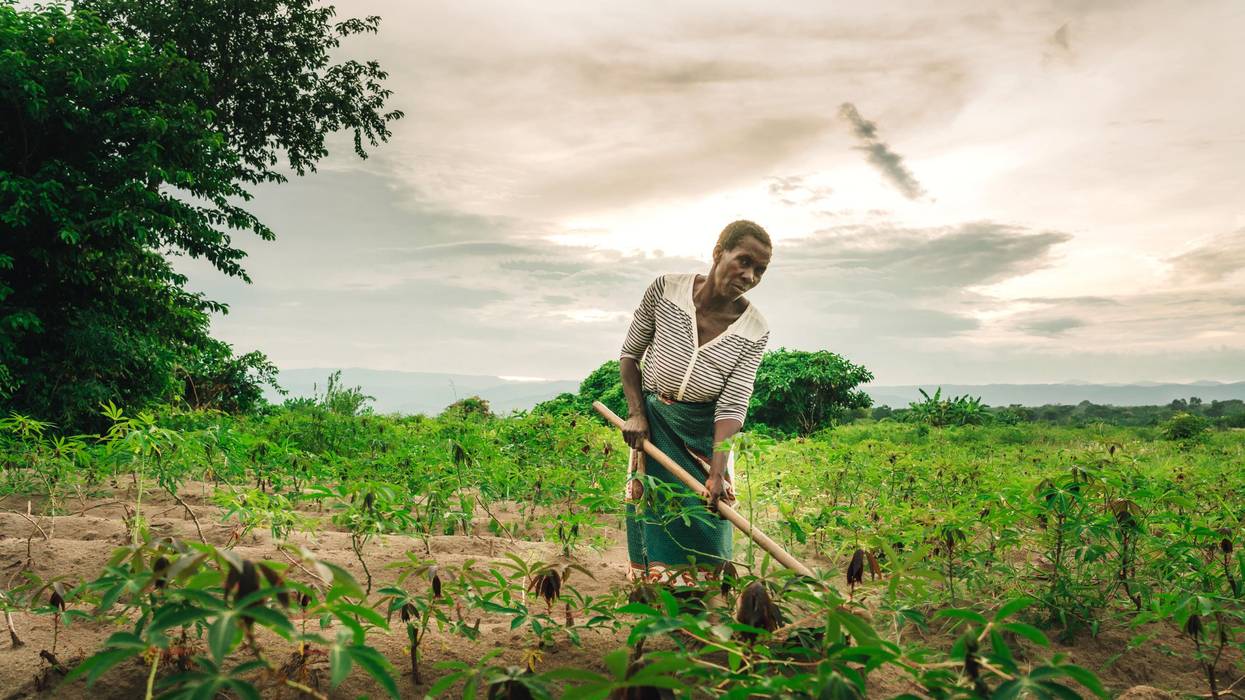
For years, African smallholder farmers have been the supposed beneficiaries of top-down initiatives such as AGRA, which promote the use of commercial seeds and fertilizers and changes in government policies that recent studies show are harming poor farmers and the environment. Farmers lose control over their seeds and become dependent on expensive inputs. The diversity of their crops, and their families' diets, decline with the promotion of monocultural cropping and subsidized commercial seeds. Their soils become depleted.
Meanwhile, the seed and fertilizer companies are the true beneficiaries, turning public subsidies and support into private profits for major seed and fertilizer companies.
We wrote recently to AGRA donors about this issue, following an open letter sent last May to the Bill and Melinda Gates Foundation, AGRA's largest funder. Signed by more than 500 African faith leaders and organizations, the letter cites the growing evidence that this model of agriculture is not serving the people of Africa nor creating a climate-resilient future for small-scale farmers. We received no acknowledgment or reply from the Gates Foundation nor most of the other donors to date.
A recent evaluation confirmed poor outcomes for farmers who are recipients of AGRA's approach, concluding that "AGRA did not meet its headline goal of increased incomes and food security for 9 million smallholders." In fact, an assessment by a Tufts University researcher who works with us at the Institute for Agriculture and Trade Policy to raise awareness about this issue found that the number of undernourished people in AGRA's focus countries increased 30 percent since the initiative began in 2006.
In Africa, women farmers form the backbone of farming, often creating and providing nutritional diversity for their families and communities from smallholdings or backyard farming. However, as the donor evaluation pointed out, "Farmers who adopted improved inputs and experienced yield increases were typically younger, male, and relatively wealthier.... [P]roductivity and income gains were also concentrated among these relatively high-resource farmers."
This finding directly contradicts the stated goals of USAID and other AGRA donors to ensure that their assistance programs benefit smallscale farmers and empower women.
That is why we were dismayed to read that a USAID spokesperson quickly responded to the critical evaluation and pledged continued support for AGRA, stating, "We appreciate AGRA's response to the report conclusions and concur with their proposed next steps to improve performance outcomes."
Faith leaders ask USAID to pause, listen to farmers, reconsider that position and stop funding AGRA and other green revolution approaches. We ask that, instead, USAID shift its support to locally-defined, holistic approaches that enable agroecological transitions to sustainable food systems in Africa. Such farming methods work with, rather than against biodiversity, and promote the equitable production and local marketing of nutritious food.
As people of faith, we believe in working to support those most vulnerable to food insecurity and climate change. We welcome support that is appropriate and provides resources that will make hunger and poverty issues of the past.
We also hope that members of Congress will, when it comes time to reauthorize funding for AGRA later this year, consider our view and that of the many communities that faith leaders represent.