

SUBSCRIBE TO OUR FREE NEWSLETTER
Daily news & progressive opinion—funded by the people, not the corporations—delivered straight to your inbox.
5
#000000
#FFFFFF
To donate by check, phone, or other method, see our More Ways to Give page.
Daily news & progressive opinion—funded by the people, not the corporations—delivered straight to your inbox.
Karyn Strickler
President
240-498-8726
Vote Climate U.S. PAC is releasing their national, 2020 Presidential voters guide today, rating presidential candidates on climate change, and there is a major divide among Democratic frontrunners on the issue.
"The difference between Democratic frontrunners for president on climate change in our voter's guide is huge. Elizabeth Warren and Bernie Sanders score the highest among any candidate, each with an overall climate calculation of 93.75. By contrast Joe Biden's overall climate calculation is 68.75. Those scores compare to Republican incumbent Donald Trump who is a climate zero," said Karyn Strickler, President of Vote Climate U.S. PAC.
"The difference between climate calculations for Elizabeth Warren, Bernie Sanders and Joe Biden comes partially from Biden's failure to advocate for 100% renewable energy by 2030. In his climate plan Biden calls for a 100% clean energy economy and net-zero emissions by no later than 2050. Senators Sanders and Warren have both committed to 100% renewable energy by 2030," said Strickler.
"Among other things, we score candidates on their plan to keep fossil fuels in the ground. Vice President Biden supports ending fossil fuel subsidies and ending fossil fuel extraction on public lands, as does Sanders and Warren. But Biden signed the No Fossil Fuel Money Pledge and subsequently violated that pledge by attending a fundraising event co-hosted by Western LNG's co-founder Andrew Goldman. Senators Warren and Sanders signed the No Fossil Fuel Money Pledge and have not violated the pledge," according to Karyn Strickler.
"No presidential candidate received an overall climate calculation of 100 because all three frontrunners for the Democratic nomination need to improve their climate calculations in the "Carbon Fee" category. Warren, Sanders and Biden all support a fee on carbon pollution, but all three score 75 on carbon fee, due to their need to become powerful advocates and strong voices on that issue," according to Strickler.
Vote Climate U.S. PAC's voter's guide is a tool to help voters to make climate change a top, voting priority. Polls show that American voters want political action on climate change. Karyn Strickler, President of Vote Climate U.S. PAC said, "It's up to voters to choose presidential climate-action in 2020, perhaps one of our last chances to prioritize climate change in the voting booth. Our voter's guide makes it easy for every American to vote climate."
The voter's guide is unique in its side-by-side assessment of each Democrat and Republican running for the highest office in the land. It goes well beyond a normal score card to include not only position, but also candidate's climate plan, leadership and putting a fee on carbon. Our climate calculations show definitive separation between frontrunners in the Democratic primary.
Vote Climate U.S. PAC's voters guide is accessible and simple to use. Go to our voter's guide page, where you can find our climate calculations to take into the voting booth and choose climate-action candidates. Click the green + button for more details on each candidate.
Later in 2020, Vote Climate U.S. PAC will rate U.S. House and U.S. Senate incumbents and challengers, giving climate calculations to each, as we did in 2018. We will also add a "Climate Rankings" page, where we look at the big picture of American politics and climate change, by analyzing our research data for party and regional differences.
Vote Climate U.S. PAC works to elect candidates to get off fossil fuels, transition to clean, renewable, energy and reduce carbon pollution by putting a fee on carbon, in order to slow climate change and related weather extremes.
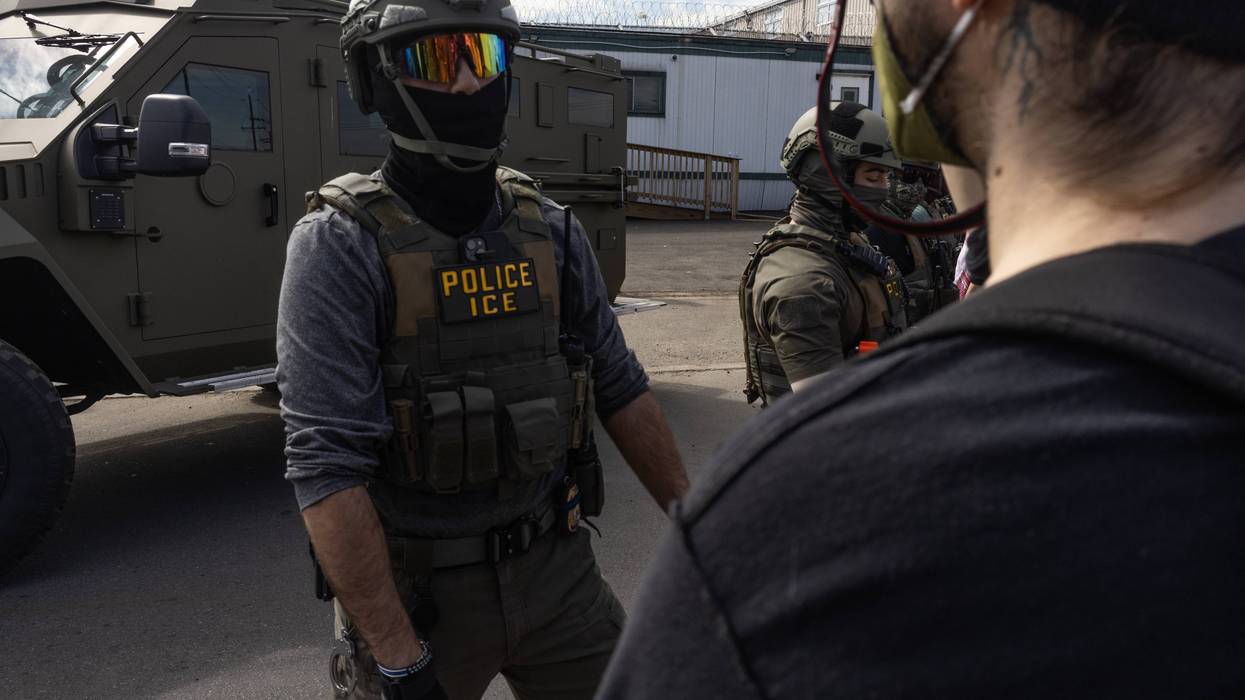
The reported change would grant "pure impunity for ICE to do horrible things," said one journalist.
New guidance distributed to US Immigration and Customs Enforcement agents across the country in recent days said that the FBI will no longer investigate confrontations that officers have with protesters or people who are subjected to immigration enforcement—leaving the agency to investigate its own violent encounters with the public following at least two recent killings by ICE agents.
The guidance pertained to claims of assault against Department of Homeland Security (DHS) officers, but FBI investigations have gathered evidence that implicated agents themselves after they claimed to have been attacked.
According to the message sent to ICE officers, Homeland Security Investigations, which operates under ICE, would begin examining incidents in which an agent claimed they were assaulted.
HSI does not have jurisdiction to investigate allegations of civil rights allegations, so in cases in which a confrontation escalates to a use of force by an officer, the unit would be unlikely to investigate whether the agent violated the victim's rights, The New York Times reported.
"The fox is guarding the hen house," said American Immigration Council senior fellow Aaron Reichlin-Melnick of the reported change.
Despite the guidance that was circulated to agents, the US Department of Justice, which oversees the FBI, released a joint statement with DHS denying that the change would take place.
“The relationship between DHS and DOJ in investigating assault on federal officer cases has not changed, and FBI will continue to investigate in accordance with agency policy,” the statement said. “This administration has been clear, anyone who assaults law enforcement will be prosecuted to the fullest extent of the law.”
According to a New York Times investigation, the Trump administration filed charges against more than 550 people who it said assaulted federal immigration officers. More than 400 of the cases had been resolved, and in nearly half of them, charges of assault had been thrown out or withdrawn, or the defendants had been acquitted.
As it's filed such charges, the Trump administration has frequently repeated its assertion that federal agents are regularly facing violent attacks from the public—including in cases in which agents have killed US citizens and immigrants, including Renee Good, Alex Pretti, and earlier this month, Lorenzo Salgado Araujo.
The reported change was also made public less than a week after an ICE agent fatally shot Johan Sebastián Guerrero in Biddeford, Maine.
Journalist Sam Stein said the guidance that was given to federal agents could grant "pure impunity for ICE to do horrible things."
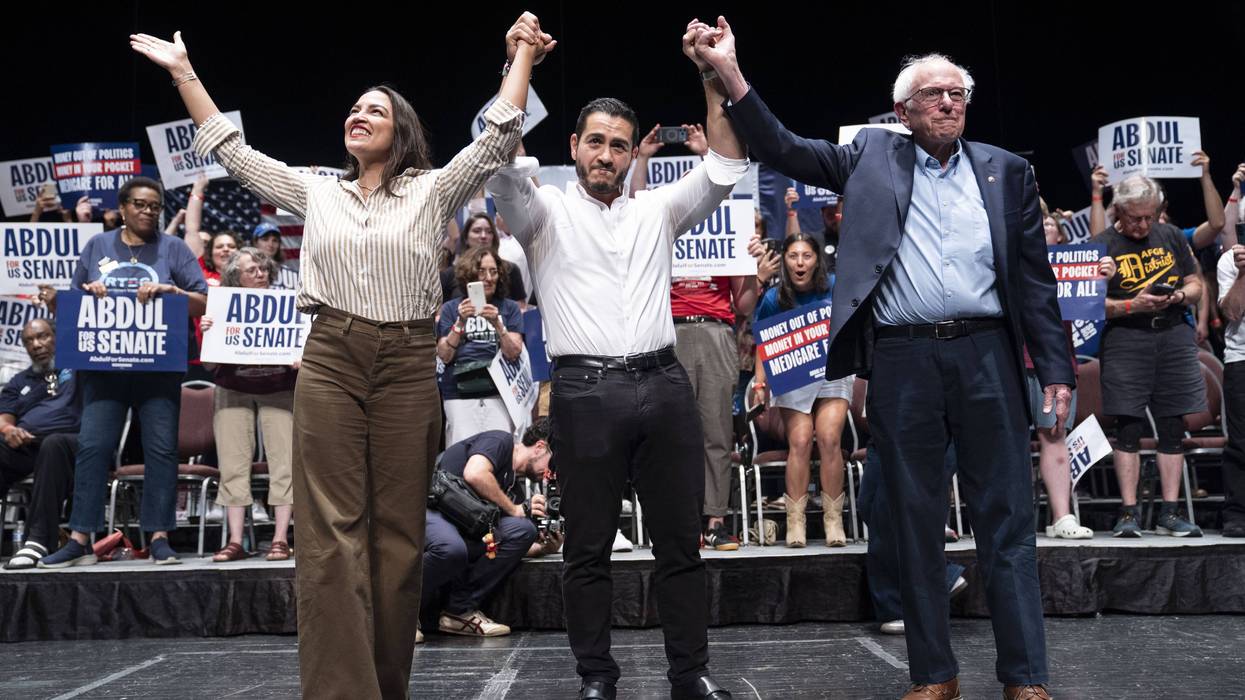
"When the stakes are so high," said Rep. Alexandria Ocasio-Cortez, "is the answer to our problems to turn to the same playbook over and over again?"
Ahead of early voting in Michigan's Democratic US Senate primary, candidate and Medicare for All advocate Abdul El-Sayed was joined in Detroit Saturday evening by progressive leaders, including Sen. Bernie Sanders and Reps. Alexandria Ocasio-Cortez and Rashida Tlaib, for a rally titled: "The People vs. The Powerful."
The senator declared to 1,600 attendees that the choice in the primary is not simply between El-Sayed and his opponent, Rep. Haley Stevens.
"In all due respect to Congresswoman Stevens, everyone knows that this is not an election between her and Abdul El-Sayed," said the Vermont Independent senator. "This is an election between Abdul and the billionaire class."
Sanders: In all due respect to Congresswoman Stevens, everyone knows that this is not an election between her and Abdul El-Sayed. This is an election between Abdul and the billionaire class. That is what this election is about.
A billionaire class which has already—and there are… pic.twitter.com/BPZ9NSar4d
— Acyn (@Acyn) July 18, 2026
The final weeks of the primary, in which Michigan voters will go to the polls on August 4, have been marked by reports of massive outside spending in favor of Stevens and against El-Sayed, who has made the refrain, "Money out of politics, money in your pocket, and Medicare for All" the central message of his campaign.
As Common Dreams reported last week, El-Sayed led the way in fundraising in the second quarter of 2026, bringing in $4.6 million while Stevens raised $2.2 million.
But Federal Election Commission (FEC) campaign finance filings showed that outside spending by people and groups supporting Stevens has soared to an estimated $50 million, according to an analysis by Punchbowl News.
"More than half of the total ($28.4 million) is coming from United Democracy Project (UDP)," said congressional reporter Ally Mutnick, referring to the super political action committee (PAC) affiliated with the American Israel Public Affairs Committee (AIPAC), which has also backed the vehemently pro-Israel Stevens in the past.
UDP acknowledged last week that it had spent nearly $15 million on the Michigan Senate primary race so far, including $9.3 million in support of Stevens and $5.7 million against El-Sayed.
El-Sayed is a strong supporter of Palestinian rights and—like a growing majority of Democratic voters after more than two years of Israel's assault on Gaza—has called for the US to end military aid to Israel.
In recent weeks he has responded to reporters' frequent questions on his views about whether Israel has a "right to exist," by asking whether Palestine has a right to exist and, in a Sunday interview with CNN's Jake Tapper, saying that a more pertinent question for American voters is whether Israel has "a right to our tax dollars."
Does Michigan Senate candidate Abdul El-Sayed think there’s room in the Democratic Party for both supporters and opponents of Israel?
EL-SAYED: “There's always room in the tent for folks. And I'm for human rights. I'm for equal rights to peace, dignity, and self-determination.… pic.twitter.com/Amfvsnmx6J
— State of the Union (@CNNSOTU) July 19, 2026
At the rally on Saturday night, Sanders said that AIPAC's focus on funding Stevens' campaign "has everything to do with the fact that they understand that Abdul and I, and the vast majority of the American people, want a foreign policy that is based on morality and decency."
"This is an election that will show the nation whether AIPAC and other billionaire-funded super PACs can spend tens and tens and tens of millions of dollars to buy a US Senate seat, or whether, within a corrupt campaign finance system, the voices of ordinary Americans—the people of Michigan—can prevail," said Sanders. "That is what this campaign is all about. It is about democracy versus oligarchy, and we are on the side of democracy."
Sanders: Why is the whole country looking at this election? In fact, people all over the world are watching what’s going on here in Michigan.
And the answer is that this is an election that will show the nation whether AIPAC and other billionaire-funded super PACs can spend tens… pic.twitter.com/ALMk10YzJu
— Acyn (@Acyn) July 18, 2026
Ocasio-Cortez noted that the contest between El-Sayed and Stevens comes as Americans are struggling to afford groceries, gas, and other essentials while President Donald Trump continues his war against Iran, dismisses working families' financial struggles, and insists the federal government cannot afford to provide universal public services.
"When the stakes are so high, when more people than ever are living so close to the bone, eventually we have to ask ourselves: Is the answer to our problems to turn to the same playbook over and over again?" said Ocasio-Cortez. "A playbook that says, in order to win, Democrats must rely on the same dark money—$50 million and counting—from the same people who backed 35 election deniers to Congress who voted to overturn the 2020 election?"
"I believe Michiganders—Democrats, Republicans, and independents—believe that good leadership swings for the fences," said the congresswoman, who has been named as a potential presidential or US Senate candidate in 2028. "Good leadership gets big money out of our system. It takes on the corruption that blocks commonsense solutions that lift working people. And, by the way, it helps not to take their money in the first place."
AOC: When the stakes are so high, when more people than ever are living so close to the bone, eventually we have to ask ourselves:
Is the answer to our problems to turn to the same playbook over and over again? A playbook that says, in order to win, Democrats must rely on the… pic.twitter.com/oqIaQzSQfH
— Acyn (@Acyn) July 18, 2026
"We can choose to reward the $50 million in dark money by voting their way—which, by the way Michigan—do you think that $50 million is for free?" continued Ocasio-Cortez. "Do you think it’s an act of charity? We know how this works. There’s $50 million in this race because they’re expecting a return. It’s an investment... So we can choose that or we can choose Dr. Abdul El-Sayed for the United States Senate."
On Sunday, as El-Sayed and his high-profile supporters in Congress prepared to rally more voters in Grand Rapids and Lansing, CNN reported that House Minority Leader Hakeem Jeffries (D-NY) and Rep. Gregory Meeks (D-NY) had confronted Sanders in a phone call, complaining about his "meddling" in primary elections.
"The candidates we are supporting are candidates who are representing working people, and I think it's a long time overdue for the Democratic Party to stop worrying about their wealthy campaign funders and start worrying about the needs of working people," Sanders told CNN.
CNN correspondent Seung Min Kim suggested that Stevens is seen by Democratic leaders as a safer bet to win the general election in Michigan in a crucial election year. But recent polls have shown her views on Israel and her support from AIPAC, as well as her donations from the for-profit health insurance industry and her opposition to Medicare for All, could harm, not help, Stevens.
Along with big spending from the pro-Israel lobby, the primary race has been characterized in recent weeks by El-Sayed's call for social media users to refrain from mocking and making personal attacks against Stevens and to focus instead on the issues at the center of the campaign, as well as recent Islamophobic vitriol against El-Sayed, including from Sen. John Fetterman (D-Penn.).
Fetterman told Fox News Saturday that El-Sayed is "essentially, a pro-Hamas candidate that's been anti-American and deeply anti-Israel," adding that "44% of Muslims, you know, they have positive views of Hamas."
Journalist Prem Thakker of Zeteo News called on Stevens to "condemn this racist and Islamophobic rhetoric coming from your allies," as El-Sayed had earlier called for civility from his own supporters.
El-Sayed pointed to the recent attacks at the rally, saying his opponents "have taken to calling me 'dangerous.'"
"If you're a worker who wants our economy to work for you, I'm not dangerous," said El-Sayed. "If you're someone sitting in medical debt, wondering what your financial future is because you deigned to see a doctor in the richest, most powerful country in the world, if you're that person, I'm not dangerous."
El-Sayed: They’ve taken to calling me dangerous.
If you’re a worker who wants our economy to work for you, I’m not dangerous.
If you’re AIPAC and want to send our money abroad, you damn well better believe I’m dangerous.
If you’re Chuck Schumer and want to keep doling out… pic.twitter.com/S7HhzThsST
— Acyn (@Acyn) July 18, 2026
"But if you're Blue Cross Blue Shield shareholders, yep, I'm dangerous!" he added. "If you’re AIPAC and want to send our money abroad, you damn well better believe I’m dangerous. If you’re Chuck Schumer and want to keep doling out corporate money to elect people who are going to do your bidding, I am so damn dangerous!"
"If you're somebody who wants government to work for you," El-Sayed said, "I aim to be the best friend you ever had."

"We're well on our way to getting the government that we deserve," said Jackson.
As Democratic US Senate candidate Troy Jackson pulled far ahead of his opponents in the race to replace Graham Platner as the party's nominee on Saturday, one commentator credited the former state Senate president's campaign with an "extremely impressive organizational feat"—one that was focused on nominating a working-class champion.
Eight of Maine's 16 counties held in-person and virtual delegate nominating meetings on Saturday, deciding on the first 319 of 500 total delegates who will vote for the Democratic nominee at next weekend's convention, which was rapidly organized after Platner dropped out of the race last week following rape allegations that he denied.
At least 290 of the delegates who were chosen in the first eight counties backed Jackson, the Bangor Daily News reported. The former logger, who previously ran for governor, has deep union ties, and has been endorsed by Sen. Bernie Sanders (I-Vt.), won at least 148 of the 149 delegates in Cumberland County, all 44 delegates in Penobscot, and 22 of 23 in Hancock, dominating in several other counties as well.
The rest of the state's counties will vote on delegates at similar meetings on Sunday, but as one election watcher said, "Troy Jackson will almost certainly be the next Democratic nominee for Maine's 2026 US Senate election."
Jackson appeared confident enough in Saturday's results to announce a celebratory tailgate planned for Sunday in York County as voters there would be selecting delegates. The Maine State Nurses Association also announced its endorsement of the candidate on Sunday morning.
After Saturday's county meetings, Jackson addressed some of his supporters virtually, giving his volunteer network credit for quickly organizing on his behalf after many had previously expected to be campaigning for Platner, who spent nearly a year mobilizing Mainers from across the political spectrum with a platform focused on taxing billionaires, ending US "forever wars" and military aid for Israel, and passing Medicare for All.
"I can't tell you how much I appreciate all the hard, hard work. I've been getting text messages all day about what a great job I did. I didn't do a goddamn thing, all of you just smoked it," said Jackson in a video posted on social media. "It's really, really incredible, so thank you so much. We're well on our way to getting the government that we fucking deserve, and that's what I'm excited about."
Organized volunteers attended some of the county conventions, some wearing "Jackson for Maine" t-shirts leftover from the candidate's gubernatorial run and passing out flyers with the names of the pro-Jackson delegate slate—supporters whom volunteers had spent the past week calling to secure their commitment to the progressive candidate.
The eight remaining counties will select 181 more delegates on Sunday. Another 101 Democratic state committee members have already been chosen to attend the statewide convention on July 25. Together they make up the 601 delegates who will vote for the party's nominee.
The party's nominee will face five-term Republican Sen. Susan Collins, whom Jackson has condemned in recent days for voting to fund US Immigration and Customs Enforcement, which he has called to abolish. An ICE agent fatally shot 25-year-old Johan Sebastián Guerrero in Biddeford, Maine last week.
A poll by Wedgewood earlier this month found Jackson leading Collins in a hypothetical matchup, 48-43, with 9% of voters undecided.
Ahead of Saturday's meetings, Jackson addressed a crowd of about 100 supporters in Portland.
"I'm running for the logger in Allagash who does not think that anyone in Washington knows about them," said Jackson. "I'm running for the nurse that's working another double shift because their hospital is understaffed, and all the while billionaires and massive corporations are making record profits, buying influence in Washington, and telling the rest of us that there is just nothing that we can do."
“I’m asking for your vote, but I’m also asking for more than that,” he added. “I’m asking you to organize... I’m asking you to talk to your neighbors. I’m asking you to show up at your county meetings, make the calls, send the texts, and bring even more people into this movement.”
Writer Cole Sandick suggested that despite the excitement that Platner's campaign had generated, many of his supporters appeared to have quickly pivoted toward Jackson, also a Medicare for All supporter and opponent of military aid for Israel, in an effort to ensure progressive priorities are represented in the Senate.
"Working-class organizing wins," said one Maine-based writer.

The mayor said he is in "an active conversation with our legal department" on the matter.
In a wide-ranging interview with The New York Times Saturday, New York City Mayor Zohran Mamdani made clear that he plans to take any action available to him to ensure the city complies with the International Criminal Court's warrant for the arrest of Israeli Prime Minister Benjamin Netanyahu if the opportunity arises.
Netanyahu, said Mamdani, "belongs in The Hague," and he is currently examining whether his government has the authority to arrest the prime minister if he visits the city for the United Nations General Assembly in September.
"He’s a war criminal who has been charged by the International Criminal Court," said the mayor. "I will follow the laws that we have here in New York City because I believe that there is an importance in following the law as a leader who presides over our city."
He then clarified that "whatever the law allows me to do in New York City, that’s what we will do, but we won’t be writing our own laws to that end."
WATCH: NYC Mayor Zohran Mamdani said he is in "an active conversation" with the city's Law Department about whether he has the authority to order the arrest of Israeli Prime Minister Benjamin Netanyahu if he visits New York for the U.N. General Assembly.
"I believe that Prime… pic.twitter.com/GZJAfbvWGU
— Clash Report (@clashreport) July 18, 2026
The mayor told Lulu Garcia-Navarro, host of the newspaper's "The Interview," that he is having "an active conversation with our legal department" to determine the scope of Mamdani's authority on the matter.
In November 2024, the ICC issued a warrant for Netanyahu, former Israeli Defense Minister Yoav Gallant, and Hamas leader Mohammed Diab Ibrahim Al-Masri, who was killed by Israeli forces. Netanyahu was accused of crimes against humanity and war crimes in Gaza, where Israel began a relentless assault in 2023 in retaliation for a Hamas-led attack.
Israel and its top military funder, the US government, have insisted that the Israel Defense Forces (IDF) have been targeting Hamas in attacks that are still continuing in Gaza despite a ceasefire that was reached last October.
But evidence has steadily mounted that children, aid workers, refugee camps, schools, and hospitals have been attacked, and experts found last year that Israel was intentionally starving Palestinians in Gaza as a method of warfare.
More than 73,000 Palestinians have been killed in Gaza, and more than 173,000 people have been wounded. Israeli attacks have made Gaza home to the largest number of child amputees in the world, and have decimated over 90% of housing units in the exclave.
Garcia-Navarro questioned Mamdani on the "political weight" he gives to the issue of Israel and Palestine, which has seen a marked shift in US public opinion since Israel began its latest US-backed assault on Gaza. More than half of Democratic voters and nearly a third of all voters told The Associated Press last month that they viewed the war in Gaza as a genocide against Palestinians.
Three-quarters of respondents to a New York Times poll in May said they opposed continuing to send military aid to Israel, compared to 45% three years ago.
"It’s hard to explain to a New Yorker why their needs are not even being discussed, and yet we have billions of dollars to kill civilians halfway across the world," said Mamdani, who has been laser-focused during his term and his campaign last year on lowering the cost of living for New Yorkers and passing universal public programs.
"I think what we have seen from New Yorkers, what we’ve seen from Americans, when we talk about this hunger for a new kind of politics, it’s a hunger to move beyond the bankruptcy that characterizes a lot of politics today," said Mamdani. "And it is hard to find a more bankrupt policy approach than what our country has done to Gaza and to Palestine and how it hasn’t been specific to any one party. It’s been, again and again, an insistence to tell New Yorkers, and to tell Americans, that what they are seeing is not something they should in fact either be concerned by or believe in. It is hard to then turn to another issue and say, Believe me here."
Israel's ambassador to the United Nations said Saturday that Netanyahu will be at the UN meeting in New York City in September, despite Mamdani's threats—which date back to his mayoral campaign—while the prime minister said on a radio show this week that the mayor "hates America" and champions Hamas.
Journalist Mehdi Hasan said it was "pretty amazing to hear" Mamdani repeat his earlier conviction that Netanyahu should be arrested under the ICC warrant, given that he first publicly remarked on the issue "when he was polling at 1% in the Democratic primary polls and no one expected him to actually be mayor."
Netanyahu has thus far evaded arrest when traveling to countries that recognize the ICC's authority under the Rome Statute. The court opened an inquiry into Hungary last year when it failed to detain the prime minister when he visited. France also said it would not execute the warrant for Netanyahu because Israel is not a party to the Rome Statute.
UN Ambassador Michael Waltz responded to Mamdani's interview on Saturday, saying the US is also not party to the Rome Statute.
Journalist Zaid Jilani said that although the mayor of New York likely lacks the authority to arrest Netanyahu, "he can certainly troll him."

Iranian officials said the country was suspending its commitments to June's memorandum of understanding following repeated US attacks.
About 10,000 people in nearly two dozen villages in southern Iran were without drinking water while the region was under an excessive heat warning on Saturday, after the US struck a water desalination plant in the village of Bonji in one of its latest attacks on Iranian civilian infrastructure.
Islamic Republic of Iran Broadcasting said the drinking water supply was expected to be restored within a week, and emergency supply operations had begun.
Drop Site News reported comments from the deputy governor for political and security affairs in Hormozgan province, who said several missiles had hit power infrastructure and water desalination plants in the region near the Strait of Hormuz, which President Donald Trump has demanded control over as he's ramped up attacks on Iran in recent days, despite a ceasefire and a memorandum of understanding (MOU) to end hostilities that was agreed to in June.
On Saturday, Iranian officials said the country was suspending its commitments to the MOU after the US violated the agreement repeatedly over the past week.
“The US has violated and suspended all its commitments within the framework of the Islamabad MOU," said Deputy Foreign Minister Kazem Gharibabadi. “We also likewise have suspended all of our commitments as a result; we are no longer implementing those commitments."
He added that Tehran is now "busy defending the country."
A representative for Hormozgan province, Ahmad Moradi, told Iran's Tasnim news agency that over the past two nights, "about seven to eight people" have been killed in US attacks, all of whom were civilians. One attack targeted a bridge and hit two family cars. The neighborhood of Tappeh Allaho Akbar in Bandar Abbas was also hit, killing a woman and injuring a one-year-old, whose wounds required doctors to amputate.
At least 116 telecommunication towers were out of service in southern Iran Saturday, Al Jazeera reported.
The Iranian Embassy in India posted a video of the destruction of a bridge and also condemned the US attack on a maritime surveillance tower at the Chabahar Port, which US Secretary of Defense Pete Hegseth boasted about on social media on Thursday.
"For a state that once cast itself as the global champion of order, liberalism, and the war on terrorism, proudly displaying images of destroyed bridges and civilian infrastructure has become its only remaining 'victory,'" said Esmaeil Baqaei, a spokesperson for Iran's Ministry of Foreign Affairs, on Saturday. "Yet with the collapse of every bridge, every tower, and every civilian facility, it is not merely steel and concrete that is being reduced to rubble. It is America’s moral standing—along with the entire architecture of international law and the civilizational claims of the West—that is crumbling before the world’s eyes."
According to Drop Site, US attacks have targeted nine bridges, two airports, a railroad junction, and a road tunnel since Wednesday. At least 41 Iranians have been killed and 408 have been wounded in US attacks so far this month, with Iranian authorities reporting that at least three women and one child are among those killed.
In a letter to United Nations Secretary General António Guterres, Amir-Saeid Iravani, Iran's permanent UN representative, wrote on Saturday that US attacks had “targeted and caused extensive damage to ports, transportation networks, communications facilities, logistics hubs, radar installations, coastal defense systems and other infrastructure indispensable to the civilian population, and to the functioning of the national economy."
“The continued commission of these unlawful armed attacks poses a grave threat to international peace and security, freedom of navigation, regional stability, and the security of the Persian Gulf and the Strait of Hormuz,” wrote Iravani.
Iran has retaliated against the US this week by striking American allies, including Kuwait, Bahrain, and Jordan. Kuwait's government Saturday said a power plant and water treatment plant had been attacked for the second time in two days, as well as an oil facility.
Two US soldiers were killed and a third was missing after an Iranian attack on a US military base in Jordan—the first American service members to be killed from hostile fire since an initial ceasefire was brokered in April.
Roxane Farmanfarmian, a professor of Middle East politics at the University of Cambridge, told Al Jazeera that Iranian forces are "using Kuwait, in particular, as an example of what they can do in retaliation."
“The US is clearly hitting the south in Iran and hitting airports, desalination plants, and bridges, and so the same kinds of things are being hit now in Kuwait to show what kind of effect Iran really can have on those countries that are hosting American bases," she said.
Kenneth Roth, former executive director of Human Rights Watch, echoed Iranian officials' condemnation of the US attack on the southern water desalination plant on Saturday, saying it was "not a legitimate military target."
"It is a war crime to target it," he said.
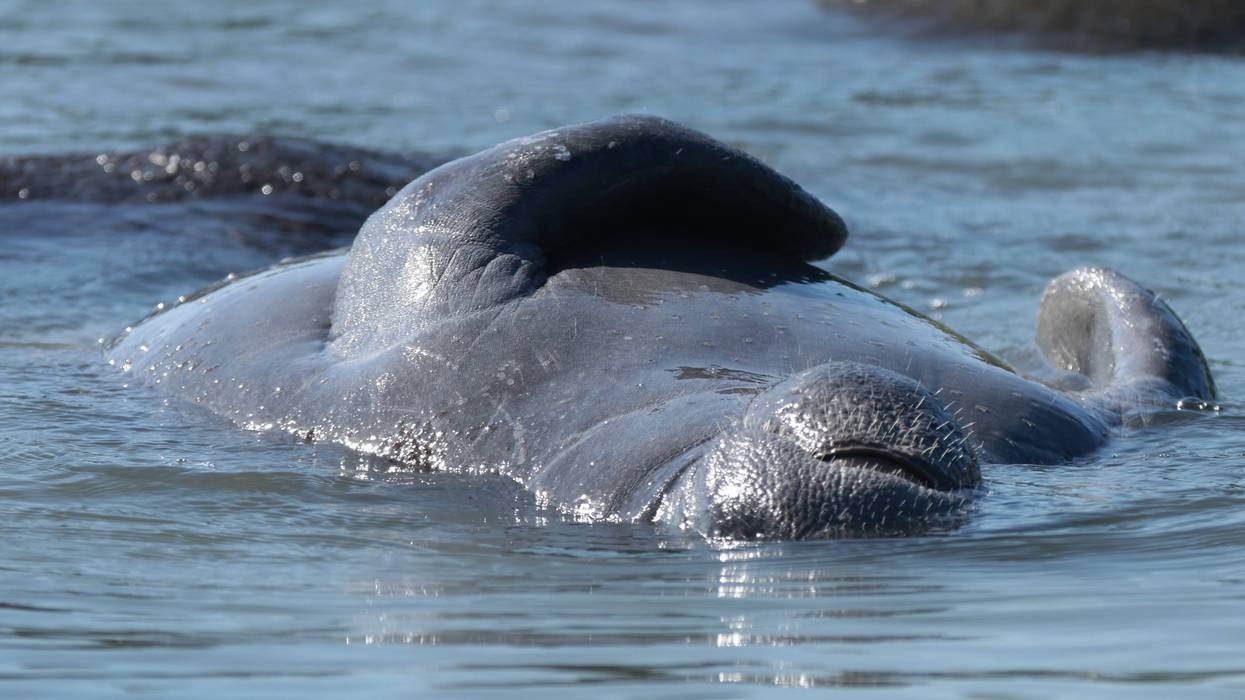
“In the midst of an extinction crisis," said one advocate, "the Trump administration is gutting protections to benefit industry interests."
“Yet again, the Trump administration has sold out our endangered wildlife to the highest bidder,” said one biodiversity advocate after the US Department of Interior, in a Friday news dump, issued two new policy changes that would weaken the Endangered Species Act and make it easier for corporate polluters to prioritize their own bottom lines over habitat protection.
The US Fish and Wildlife Service (FWS) rescinded a policy that has been known as the "blanket rule" since 1975, which has given threatened species the same protections from illegal killing, trapping, harassment, and other forms of "take" under the ESA, as species that are officially designated as endangered.
The rollback would apply to species that have been newly declared as threatened, including the Florida manatee, the Pygmy rabbit, the Aztec Gilia, and Clover's Cactus—which could now go for years without protections despite their habitat loss and declining populations.
“Today’s decision represents a profound failure by Interior Secretary [Doug] Burgum and his department, and it amounts to an utter abdication of the federal government’s responsibility to protect America’s wildlife," said Sara Amundson, president of the Humane World Action Fund. "The department’s role is to faithfully implement—and certainly not to dismantle—the Endangered Species Act.”
The other policy change will require the FWS to consider the economic impact on various industries of designating areas as "critical" habitats in order to protect threatened and endangered species. The agency has previously had discretion over whether to consider economics when making habitat protection decisions.
Under President Donald Trump's new rule, said the Center for Biological Diversity, the FWS will be forced "to accept at face value claims by corporations and landowners of economic impacts from designating critical habitat, which could greatly limit the amount and quality of habitat protected for imperiled wildlife."
“Trump is bending over backward for corporate polluters by ripping away the blanket that protects so many struggling wildlife species as well as the air we breathe, the water we drink, and the natural places where we seek peace of mind."
"The way this is written, a landowner could falsely claim they planned to build the next Disneyland on their property, so designating critical habitat would supposedly cost them tens of millions of dollars,” said Noah Greenwald, CBD's endangered species co-director. “This rule is clearly intended to prevent the protection of the wild places that endangered animals and plants need to survive. It’s a despicable move that cheapens the value of our most imperiled wildlife so corporations can make more money. Anyone can make outrageous claims about how much their property is worth, but that shouldn’t be taken as gospel.”
Advocacy groups said both policy changes amounted to giveaways to the logging, mining, drilling, and cattle ranching industries. The latter industry has long lobbied against land being designated as a critical habitat for the ‘I‘iwi bird in Hawaii, Clay Samford, an attorney with the environmental legal group Earthjustice, told The Washington Post.
“It’s part of this administration’s push to reduce protections for public lands and wildlife that are enjoyed by all Americans, in favor of narrow business interests,” Samford told the newspaper.
A senior attorney for the group, Elizabeth Forsyth, said in a statement that "the Trump administration is turning the law on its head by letting extractive industries dictate where critical habitat can be destroyed."
"This prioritization of industry interests over science is fundamentally at odds with the clear purpose of the Endangered Species Act," said Forsyth. "We won’t let this dangerous giveaway go unchallenged.”
There is currently a backlog of more than 500 species awaiting consideration for listing as threatened or endangered, and the rule changes, along with the Trump administration's 18% reduction in the FWS workforce, are expected to leave imperiled species waiting even longer for protections.
“In the midst of an extinction crisis, with hundreds of species like the Florida manatee and the wolverine desperately needing stronger protections for their habitats, the Trump administration is gutting protections to benefit industry interests," said Ryan Shannon, a senior attorney at Defenders of Wildlife. "Where we see our nation's irreplaceable wildlife, they see dollar signs. But our federal lands and waters, and the species they support, belong to all Americans, not to the logging, drilling, and mining industries that oppose all limits on maximizing their private profits.”
In a statement, Interior Secretary Doug Burgum asserted that the ESA has long been "weaponized to stop almost any new project in America, driving up costs for families, weakening our competitiveness, and undermining our national security,” continued Secretary Burgum.
He added that the endangered species list has "fallen short," with 97% of listed species remaining designated as endangered, and called for "species recovery and delisting."
But Defenders of Wildlife noted that the ESA "has succeeded in preventing extinction for 99% of listed species."
"Public support for protecting our native wildlife remains overwhelmingly high, with 84% of voters supporting the ESA, according to nationwide polling conducted by Defenders of Wildlife," said the group.
The rules announced on Friday came days after the Interior Department proposed a new rule under which management of threatened grizzly bears would be transferred from the federal government to the states, where Republican leaders have pushed to end protections for the species.
The administration also exempted oil and gas companies from having to protect endangered species in the Gulf of Mexico, and earlier this month changed the regulatory interpretation of the word "harm" in the ESA.
“These rules are a one-way ticket to extinction for our most imperiled animals and plants, from monarch butterflies to giraffes to alligator snapping turtles,” said Greenwald. “Trump is bending over backward for corporate polluters by ripping away the blanket that protects so many struggling wildlife species as well as the air we breathe, the water we drink, and the natural places where we seek peace of mind. This is the last thing we need in the middle of an extinction crisis, and we’ll fight it with everything we’ve got.”

"This is some Bond villain-level lunacy," said one Reddit user.
The Israeli government this week stripped Nile crocodiles of their protected status in order to advance a proposal that National Security Minister Itamar Ben-Gvir said was inspired by the Trump administration's now-shuttered Alligator Alcatraz to build a prison for Palestinians surrounded by a moat full of the ravenous reptiles.
"You read that right," the liberal US Jewish group J Street said in response to the news. "When cruelty becomes a governing principle instead of an aberration within the Israeli government, something has gone deeply wrong."
Israeli Environmental Minister Idit Silman signed a directive Wednesday reclassifying Nile crocodiles as "specially managed wild animals," a novel legal category enabling the government to keep them for security purposes.
Ben-Gvir, who heads the Israel Prison Service (IPS), said he was inspired by the Trump administration's recently closed Alligator Alcatraz immigrant detention center in Florida. He is seeking to first introduce crocodiles into a moat around Ketziot Prison in southern Israel.
While it is not certain that the plan will come to fruition, Ben-Gvir celebrated Silman's decree in a social media post showing him petting a crocodile, with the caption: "Cursed terrorist, thinking of trying to escape? Think again."
Palestinians have occasionally escaped from Israeli lockups, such as in September 2021, when six men used improvised tools, including spoons, to tunnel out of the high-security Gilboa Prison. All six escapees were caught within weeks.
 (Photo by Itamar Ben-Gvir/Facebook)
The move by Silman—who gained international notoriety by calling for the ethnic cleansing of all Palestinians from the Gaza Strip—came despite objections from her own ministry's legal adviser and the Nature and Parks Authority.
IPS, which sent a fact-finding mission to the Hamat Gader crocodile farm in January, argued that its employees could handle the animals, citing the agency's experience working with the attack dogs that Palestinian prisoners and human rights groups have claimed were used to maul and even sexually abuse detainees.
Silman's approval is contingent upon IPS meeting animal welfare requirements and appropriate holding conditions.
Meanwhile, Ben-Gvir has openly boasted about the dramatic deterioration in conditions endured by Palestinian prisoners since the Hamas-led attack of October 7, 2023 and Israel's retaliatory obliteration of Gaza, which United Nations and other experts describe as a genocide.
“We go into the prisons, and they wet themselves," Ben-Gvir said of Palestinian prisoners during a speech on Friday. "I'm not joking. They're afraid. Fear rules them, and that's how it should be.”
Ben-Gvir and other Israeli officials have worn noose lapel pins to celebrate a recently passed bill legalizing the execution by hanging of so-called "terrorists."
Former Palestinian detainees and Israeli personnel have described beatings, rape and sexual torture by male and female soldiers, routine amputations due to constant shackling, burnings, electrocutions, attacks by dogs, ice-water dousings, denial of food and water, sleep deprivation, constant loud music, and other abuse.
The Israeli military is investigating the deaths of dozens of detainees at the Sde Teiman prison in the Negev Desert, including one who died after allegedly being sodomized with an electric baton.
Ben-Gvir has defended Israeli reservists accused of torturing Palestinian prisoners, and called the reservists who allegedly gang-raped a man at Sde Teiman prison "heroes."
The minister is banned from entering a number of Western countries for his incitement to violence against Palestinians.
Several Israeli environmental groups issued a joint statement opposing the use of crocodiles in prisons.
"Crocodiles are sentient beings, with complex needs for space, water, temperature, and natural behavior," the groups said. "It is also highly doubtful that the crocodiles intended for this purpose have aggressive temperaments, and in any event, during the winter they slow their metabolism dramatically, become very sluggish, and stop eating.”
"Security should be achieved through real security measures, not through animals," they added. "We are considering filing a petition with the High Court of Justice over the matter.”
Last year, the Israeli military massacred 262 crocodiles that were being kept on a farm in the occupied West Bank near the illegal Israeli settler colony of Petzael, claiming the reptiles posed a risk to the public.
“They just slaughtered them," farm owner Danny Bitan told reporters at the time, describing the scene as "some kind of killing valley."
Ben-Gvir's plan comes amid ongoing slaughter in Gaza—where Israeli forces have killed more than 73,000 Palestinians, over 21,500 of them children, since October 2023—and accelerating colonization and ethnic cleansing in the West Bank.
News of Silman's approval sparked disbelief around the world and on social media, where Reddit users called the plan "cartoonish idiocy" and "Bond villain-level lunacy."
"The fact that Israel is trying to surround a prison with [crocodiles] tells you all you need to know about these camps, which are designed to torture, rape, and murder Palestinians, often held as hostages without charges," Israeli researcher and political commentator Shaiel Ben-Ephraim said Thursday on X.
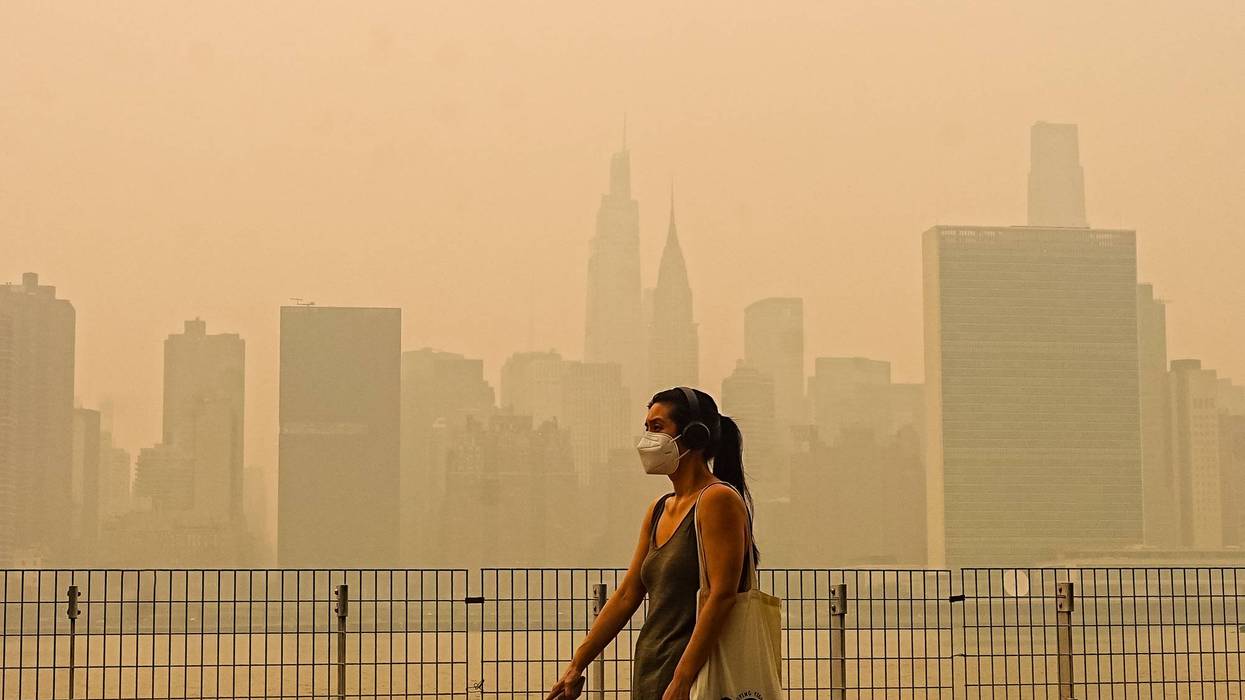
"When wildfires hit America, Canada sends firefighters," said one journalist. "When wildfires hit Canada, America sends tariffs."
A day after a Republican senator pledged to introduce legislation sanctioning Canada for the wildfire smoke impacting various US communities this week, President Donald Trump on Friday threatened the United States' northern neighbor with new tariffs.
"We are holding Canada responsible for the fact that they are not properly maintaining their Forests, and Brush therein, and the United States is being unnecessarily invaded by filthy, polluted, and unhealthy air, the quality of which is dangerous, and totally unacceptable!" Trump wrote on his Truth Social platform. "I will call the Prime Minister during the day to find out what they are going to do about it."
"The cost is incalculable! Canada has refused to engage in basic Forest Management and Debris Removal, knowing that such refusal will lead to exactly this result," Trump continued. "This is Willful Negligence, and becoming a yearly occurrence, costing the United States Billions of Dollars, which cost of this pollution must of necessity be added to the TARIFFS Canada is currently paying."
Melanie D'Arrigo, a campaigner for single-payer healthcare in the United States, responded, "So can Canada hold US oil companies, their lobbyists, and the congresspeople they bribe for the climate crisis that increases droughts and the risk of these wildfires?"
"When Trump talks about increasing tariffs on Canada, he's talking about Americans paying more for the things they need—because the increased costs are paid by American consumers," she also stressed.
According to the Canadian Broadcasting Corporation, when asked for a comment on Trump's post, a spokesperson for Canada's Embassy in Washington, DC only said Ambassador Mark Wiseman has "engaged directly with key administration and Hill officials regarding the wildfire emergency in Canada, our efforts to address it, and the impact of wildfire smoke on Canada and the US."
CBC noted that a day earlier, four Michigan Republicans in the US House of Representatives had made similar statements in a letter to Prime Minister Mark Carney, who didn't address the missive when asked about it, but told reporters in French that "climate change is everyone's responsibility—truly everyone's—including the United States."
Big Oil-backed Trump has notably rejected scientific conclusions about the fossil fuel-driven climate emergency on the world stage and, throughout both terms, made various policy decisions that serve industry polluters—even as his own government continues to publish climate science.
While Carney has publicly embraced climate science, the Liberal leader has also recently faced criticism for "pouring fuel on the flames of the climate emergency" by "expanding tar sands and the fracked gas industry."
Meanwhile, the fires raging across Canada—and prompting air quality alerts across the US Midwest and Northwest—have spurred calls for "Nuremberg trials for Big Oil," given that the burning of fossil fuels has made the blazes more extreme and frequent.
Despite the science, Republicans on Capitol Hill seem hell-bent on strictly blaming Canadian forest management. Sen. Bernie Moreno (R-Ohio), a key ally of Trump and the fossil fuel industry, said Thursday on the social media platform X that "I'll be introducing a bill next week to sanction Canada and the responsible Canadian government officials for this atrocity."
Replying to the post, climate reporter Kate Aronoff wrote that a "major function of this site during climate-fueled disasters now is providing a space for right-wingers to beta test increasingly insane talking points for avoiding the obvious."
More Perfect Union producer Jordan Zakarin also fired back on X, writing, "The United States sanctioning another country, much less Canada, for pollution and environmental destruction is the stuff of bad satire."
Fossil Free Media director Jamie Henn said, "How about sanctioning the companies fueling the climate crisis that’s making these fires more frequent and intense?"
Democrats in Washington, DC "should introduce a Make Polluters Pay bill that taxes oil and gas companies' record profits and uses the revenue for wildfire relief, air purifiers, and all the adaptations we need to... deal with these climate disasters they helped create," he proposed.
Sen. Bernie Sanders, a Vermont Independent who caucuses with Democrats, also took aim at Republican climate lies in a lengthy social media post on Thursday, noting that "in both the United States and Canada, this heat and drought is driving longer and more intense wildfire seasons, including the more than 800 wildfires across Canada and northern Minnesota that are currently causing dangerous levels of air pollution for at least 115 million people across 20 states."
"NO, Mr. President: Climate change is not a hoax. It is reality. And your ignorance is putting our kids and grandkids at risk in exchange for the short-term profit of your billionaire friends in Big Oil," Sanders said. "Our job: Reject President Trump's lies and take on the crisis of climate change and the greed of the fossil fuel industry by transitioning our energy system to energy efficiency and sustainable forms of power. When we do that, we cut carbon emissions, reduce energy bills, and create millions of good union jobs."
Cassidy DiPaola, communications director for the Make Polluters Pay campaign, charged that "blaming Canada for these wildfires is like blaming a homeowner when an arsonist sets their house on fire. Canada is choking on the same smoke we are, and sanctioning our closest ally doesn't clear a single acre of burned forest or stop the next fire from starting."
"If Republicans actually wanted to hold someone responsible, they'd go after the fossil fuel companies whose executives knew what their products were doing to the planet and buried the science anyway," she argued. "Instead, Congress is moving in the opposite direction, weighing legislation that would grant the fossil fuel industry total immunity from climate liability. And if Republicans wanted policies that actually protect their constituents' health, they'd support climate superfund bills that fund public health programs, help wildfire survivors rebuild, and prepare communities for the risks still ahead."
Moreno's bill, she added, "is a shameless attempt to make sure the blame lands anywhere but on the fossil fuel industry, and everyday Americans will pay the price for that misdirection while the companies that caused this crisis walk away untouched."

GEO Group employee Brandon Booth faces attempted murder and assault charges for shooting a woman who sustained non-life-threatening injuries in Colorado.
Police in Aurora, Colorado on Friday announced that they had arrested an employee of a local US Immigration and Customs Enforcement detention center after he allegedly shot a woman protesting at the facility.
The Aurora Police Department said in a social media post that its officers on Thursday night responded to a report of a shooting and subsequently found two women on the scene, one of whom had been shot in her lower body.
Officers would soon after detain 42-year-old Brandon Booth, an employee of private prison firm The GEO Group, after pulling over his vehicle near the site of the shooting and finding a firearm in his possession.
The police found that, before the shooting, the two women were taking part in a protest at the Aurora ICE Processing Center where Booth works.
After the two women "initiated a verbal confrontation and took pictures of the employees’ vehicles before walking away," police said, "Booth retrieved his personally owned pistol and fired a single shot in their direction, striking one of the women on her lower body" before getting into his vehicle and fleeing the scene.
After Booth was taken into custody, he was charged attempted second-degree murder, first-degree assault, attempted first-degree assault, felony menacing, and unlawful carrying of a concealed weapon.
Booth's alleged victim was transported to a hospital where she was treated for her wounds, which police said "are believed to be non-life-threatening."
The GEO Group told local news station Fox 31 that Booth "has been placed on unpaid administrative leave," while vowing to "fully cooperate with law enforcement."
Booth's former sister-in-law, a woman named Destiny Winter, told The Denver Post on Friday that the alleged shooter "was not a good person at all," and described an incident where he gave her a concussion by slamming her into a wall more than a decade ago.
"This is not a person who does the right thing or respects boundaries, especially of women and kids," Winter explained. "This is not a person who is willing to hold himself accountable for mistakes."

The Michigan Democrat encouraged his followers to focus less on Stevens' voice and more on the $50 million in support she's received from "AIPAC, Trump-aligned billionaires, and corporate PACs."
Rep. Haley Stevens has become the subject of mockery in recent days after a viral clip showed her on the campaign trail for Michigan's Democratic US Senate primary attempting to rev up supporters with an almost comically Midwestern drawl.
“I am gonna be workin’ on our behalf, I am gonna be tellin’ the stories on our behalf,” Stevens said in the 19-second clip, which was posted over the weekend by the social media arm of the Republican National Committee. “And you better believe I’m gonna be doin’ it with a little bit of joy, a little bit of enthusiasm, a little bit of energy, and a little bit of ‘stick it to ’em!’ Because that’s the Michigan way!”
While Stevens may have been attempting to portray an authentic working-class affect, it came off as anything but to the denizens of X, the everything app.
Rather than a salt-of-the-earth Michigander, users said she sounded more like one of Chris Farley's characters on Saturday Night Live, Millhouse from The Simpsons "trying to give a class presentation," or a "baseball coach from the Great Depression."
But one person has refrained from joining the pile-on: Her Democratic primary opponent, Dr. Abdul El-Sayed.
In a post to social media on Friday, he discouraged his supporters online from ridiculing Stevens "for things that have nothing to do with her policies or politics," which he said was "unkind and unhelpful."
El-Sayed, the former director of public health for Detroit, who has championed a progressive agenda including Medicare For All, increased taxes on the wealthy, and an end to military aid to Israel, instead urged his backers to "focus on the issues" in the last weeks before the primary that will be held on August 4.
Since state Sen. Mallory McMorrow (D-8) dropped out of the race earlier this month, out-of-state donors have revved up their pro-Stevens spending in what Punchbowl News reporter Ally Munick described as a "full court press to stop" El-Sayed.
As Common Dreams reported on Thursday:
Outside spending for Stevens from what the Detroit Free Press described as “murky” groups has dwarfed the amount spent for El-Sayed. The political advertisement tracker AdImpact said that of the $46 million spent or reserved by the two campaigns for television ads, nearly three-quarters has been spent on behalf of Stevens or against El-Sayed...
Additional outside spending in support of Stevens is estimated to have soared to roughly $50 million, according to an analysis by [Mutnick].
Last Friday, United Democracy Project (UDP), which is affiliated with the American Israel Public Affairs Committee (AIPAC), disclosed that it has spent nearly $15 million on the Michigan US Senate race so far, including $9.3 million in support of Stevens and $5.7 million against El-Sayed.
El-Sayed has faced some criticism for how he's spoken about his opponent—he recently said: "Haley Stevens is a suit with a large AIPAC bank account, that’s it. I hope maybe they find some way to teach her how to string together two coherent sentences."
However, he stressed Friday that this tidal wave of big money is what his followers should truly find worthy of scorn.
"Congresswoman Stevens has welcomed corporations and special interests to support her," he said. "She votes to send our money abroad while Michiganders struggle. She’s bought by DTE, Blue Cross, Big Tech, and Big Pharma who pick our pockets. AIPAC, Trump-aligned billionaires, and corporate PACs are spending $50,000,000+ to support her."
"THOSE are the issues," El-Sayed said. "We don’t need to be unkind to be honest."