
SUBSCRIBE TO OUR FREE NEWSLETTER
Daily news & progressive opinion—funded by the people, not the corporations—delivered straight to your inbox.
5
#000000
#FFFFFF
To donate by check, phone, or other method, see our More Ways to Give page.


Daily news & progressive opinion—funded by the people, not the corporations—delivered straight to your inbox.
“In the midst of an extinction crisis," said one advocate, "the Trump administration is gutting protections to benefit industry interests."
“Yet again, the Trump administration has sold out our endangered wildlife to the highest bidder,” said one biodiversity advocate after the US Department of Interior, in a Friday news dump, issued two new policy changes that would weaken the Endangered Species Act and make it easier for corporate polluters to prioritize their own bottom lines over habitat protection.
The US Fish and Wildlife Service (FWS) rescinded a policy that has been known as the "blanket rule" since 1975, which has given threatened species the same protections from illegal killing, trapping, harassment, and other forms of "take" under the ESA, as species that are officially designated as endangered.
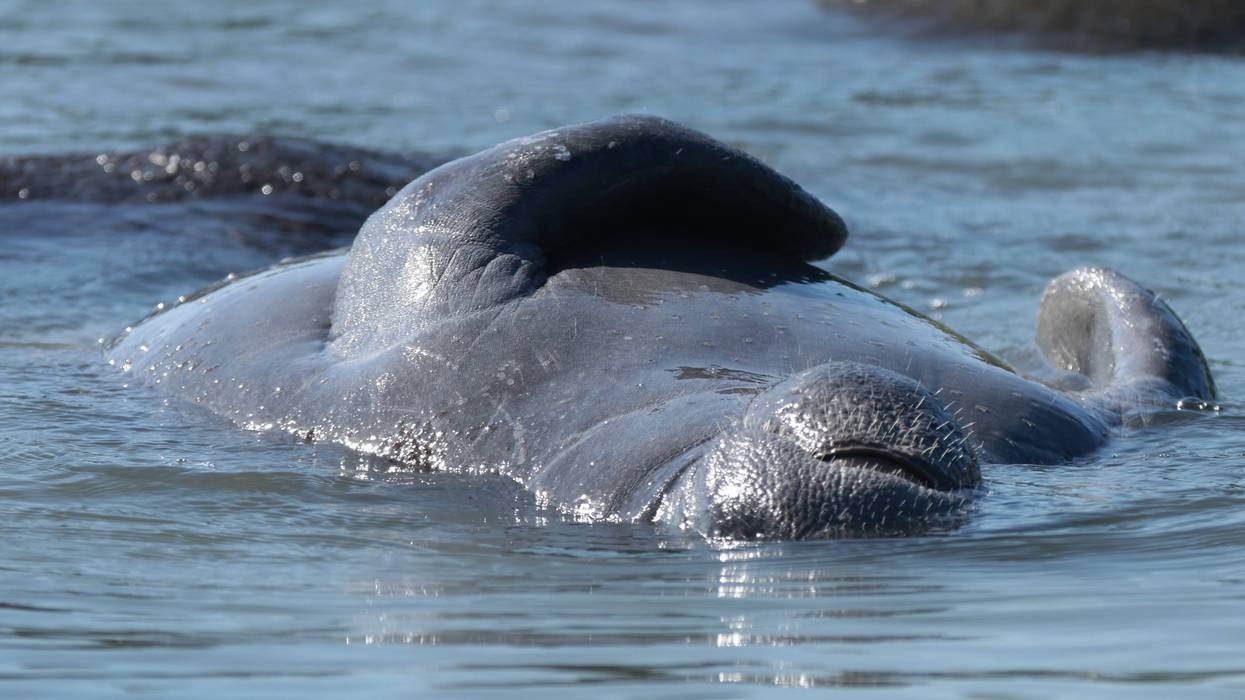
The rollback would apply to species that have been newly declared as threatened, including the Florida manatee, the Pygmy rabbit, the Aztec Gilia, and Clover's Cactus—which could now go for years without protections despite their habitat loss and declining populations.
“Today’s decision represents a profound failure by Interior Secretary [Doug] Burgum and his department, and it amounts to an utter abdication of the federal government’s responsibility to protect America’s wildlife," said Sara Amundson, president of the Humane World Action Fund. "The department’s role is to faithfully implement—and certainly not to dismantle—the Endangered Species Act.”
The other policy change will require the FWS to consider the economic impact on various industries of designating areas as "critical" habitats in order to protect threatened and endangered species. The agency has previously had discretion over whether to consider economics when making habitat protection decisions.
Under President Donald Trump's new rule, said the Center for Biological Diversity, the FWS will be forced "to accept at face value claims by corporations and landowners of economic impacts from designating critical habitat, which could greatly limit the amount and quality of habitat protected for imperiled wildlife."
“Trump is bending over backward for corporate polluters by ripping away the blanket that protects so many struggling wildlife species as well as the air we breathe, the water we drink, and the natural places where we seek peace of mind."
"The way this is written, a landowner could falsely claim they planned to build the next Disneyland on their property, so designating critical habitat would supposedly cost them tens of millions of dollars,” said Noah Greenwald, CBD's endangered species co-director. “This rule is clearly intended to prevent the protection of the wild places that endangered animals and plants need to survive. It’s a despicable move that cheapens the value of our most imperiled wildlife so corporations can make more money. Anyone can make outrageous claims about how much their property is worth, but that shouldn’t be taken as gospel.”
Advocacy groups said both policy changes amounted to giveaways to the logging, mining, drilling, and cattle ranching industries. The latter industry has long lobbied against land being designated as a critical habitat for the ‘I‘iwi bird in Hawaii, Clay Samford, an attorney with the environmental legal group Earthjustice, told The Washington Post.
“It’s part of this administration’s push to reduce protections for public lands and wildlife that are enjoyed by all Americans, in favor of narrow business interests,” Samford told the newspaper.
A senior attorney for the group, Elizabeth Forsyth, said in a statement that "the Trump administration is turning the law on its head by letting extractive industries dictate where critical habitat can be destroyed."
"This prioritization of industry interests over science is fundamentally at odds with the clear purpose of the Endangered Species Act," said Forsyth. "We won’t let this dangerous giveaway go unchallenged.”
There is currently a backlog of more than 500 species awaiting consideration for listing as threatened or endangered, and the rule changes, along with the Trump administration's 18% reduction in the FWS workforce, are expected to leave imperiled species waiting even longer for protections.
“In the midst of an extinction crisis, with hundreds of species like the Florida manatee and the wolverine desperately needing stronger protections for their habitats, the Trump administration is gutting protections to benefit industry interests," said Ryan Shannon, a senior attorney at Defenders of Wildlife. "Where we see our nation's irreplaceable wildlife, they see dollar signs. But our federal lands and waters, and the species they support, belong to all Americans, not to the logging, drilling, and mining industries that oppose all limits on maximizing their private profits.”
In a statement, Interior Secretary Doug Burgum asserted that the ESA has long been "weaponized to stop almost any new project in America, driving up costs for families, weakening our competitiveness, and undermining our national security,” continued Secretary Burgum.
He added that the endangered species list has "fallen short," with 97% of listed species remaining designated as endangered, and called for "species recovery and delisting."
But Defenders of Wildlife noted that the ESA "has succeeded in preventing extinction for 99% of listed species."
"Public support for protecting our native wildlife remains overwhelmingly high, with 84% of voters supporting the ESA, according to nationwide polling conducted by Defenders of Wildlife," said the group.
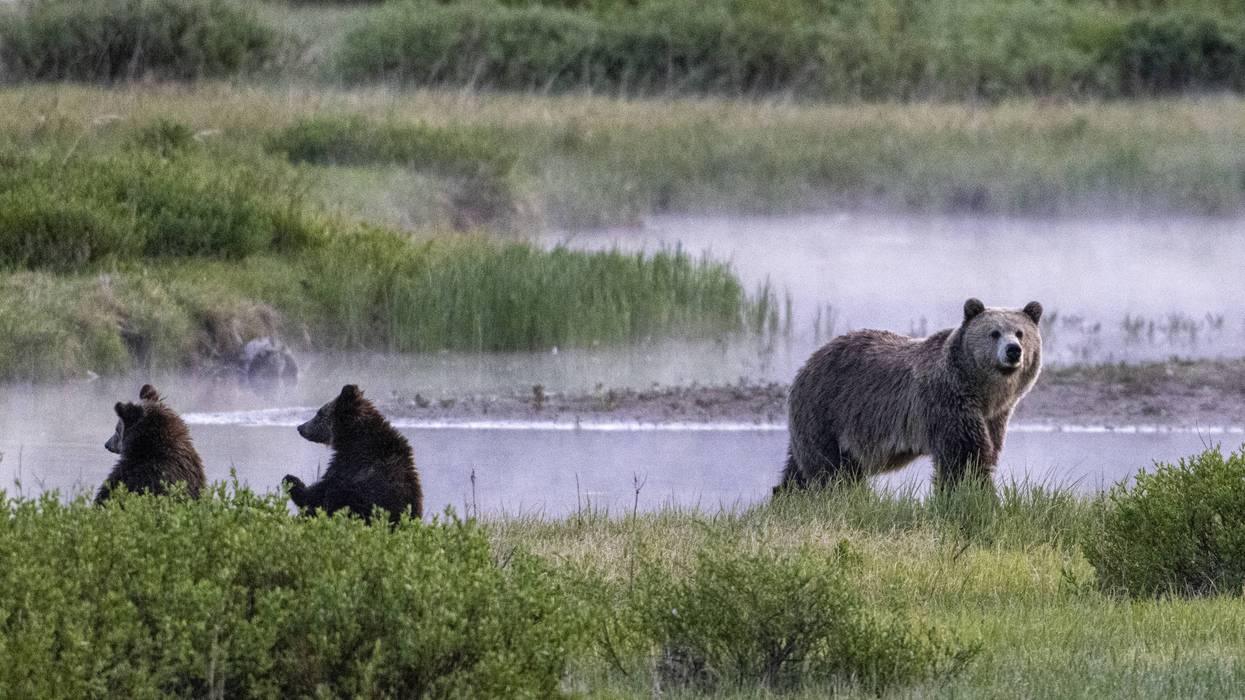
The rules announced on Friday came days after the Interior Department proposed a new rule under which management of threatened grizzly bears would be transferred from the federal government to the states, where Republican leaders have pushed to end protections for the species.
The administration also exempted oil and gas companies from having to protect endangered species in the Gulf of Mexico, and earlier this month changed the regulatory interpretation of the word "harm" in the ESA.
“These rules are a one-way ticket to extinction for our most imperiled animals and plants, from monarch butterflies to giraffes to alligator snapping turtles,” said Greenwald. “Trump is bending over backward for corporate polluters by ripping away the blanket that protects so many struggling wildlife species as well as the air we breathe, the water we drink, and the natural places where we seek peace of mind. This is the last thing we need in the middle of an extinction crisis, and we’ll fight it with everything we’ve got.”
"Grizzlies shouldn’t be killed at the whim of the livestock industry while it exploits our public lands for its own personal profit."
Conservationists warned on Tuesday that a new proposal by President Donald Trump's Interior Department would permit more killing of grizzly bears, which are a threatened species in the lower 48 states of the US.
The Interior Department's proposed rule would transfer management of grizzly bears from the federal government to states where Republican leaders have sought to strip the species of protections. Interior Secretary Doug Burgum announced the new proposal—with little specific detail—alongside Montana Gov. Greg Gianforte, Wyoming Gov. Mark Gordon, Idaho Gov. Brad Little, and Republican members of Congress.
Jenny Harbine, managing attorney for the Northern Rockies office at Earthjustice, said it is "extremely concerning that the Trump administration is seeking to hand over more management of the species to hostile Northern Rockies states."
"While we need to see the details of this proposal, it could put grizzly bears at greater risk at a time of record mortality for the species," said Harbine. "Anti-science political maneuvers should not be allowed to thwart grizzly bear recovery. If this proposal will further harm the species, we are prepared to take the administration to court."
Andrea Zaccardi of the Center for Biological Diversity said that with its new proposal, "the Trump administration is trying to make it easier to kill imperiled grizzly bears."
"Grizzlies shouldn’t be killed at the whim of the livestock industry while it exploits our public lands for its own personal profit," said Zaccardi. "The science is clear that grizzlies need full federal protection to recover, not a rule that will lead to more grizzly bear mortality. We’ll be reviewing the rule and considering next steps.”
Fewer than 2,000 individual grizzly bears remain in isolated populations in the lower 48 states.
The Interior Department said its new proposal wouldn't alter the bear's listing status under the Endangered Species Act, which the Trump administration is trying to weaken. Opponents of the new proposal cautioned that giving more management to GOP-controlled states could be disastrous for the species, rejecting Republican officials' claim that the bears have sufficiently recovered.
"This is a decision being made for political reasons, it is not based on science, in the best interest of the survival of the species, or in compliance with the requirements of the Endangered Species Act,” Greg LeDonne, Idaho director of Western Watersheds Project, said in a statement.
"America’s 250th anniversary celebration is supposed to be an occasion for strengthening public trust in our democratic institutions," said one advocate. "Freedom 250 is a privately managed slush fund."
As the 250th anniversary of the United States' independence approaches, a government watchdog group is warning that the Trump administration has refused to release key documents regarding President Donald Trump's Freedom 250 project, in which the White House has partnered with corporations including Palantir and ExxonMobil to organize what it's called "a celebration of America like no other."
Public Employees for Environmental Responsibility (PEER) filed a lawsuit Monday against the Department of Interior (DOI) in the US District Court for the District of Columbia, more than two months after the group filed multiple Freedom of Information Act (FOIA) requests regarding the funding of the "controversial and secretive" Freedom 250 initiative.
As the agency that oversees the National Parks Service, DOI and Interior Secretary Doug Burgum are playing a major role in the organization of Freedom 250, with the celebration including projects like the National Garden of American Heroes, the proposed Freedom 250 Grand Prix at the National Mall, and the proposed Independence Arch.
In late February, PEER's FOIA requests sought information from DOI on reports that public funds are being directed to Freedom 250 through the congressionally chartered National Park Foundation, "with no transparency, no accountability, and no guardrails."
“America’s 250th anniversary celebration is supposed to be an occasion for strengthening public trust in our democratic institutions, not eroding it,” Tim Whitehouse, PEER’s executive director, said late Monday. “In contrast, Freedom 250 is a privately managed slush fund... It epitomizes what is wrong with politics today."
In its lawsuit, PEER said the DOI "has failed to make a final determination on any of PEER’s FOIA requests and has failed to disclose any of the requested records within the time stipulated under FOIA."
The department has failed to respond to the requests as reports have mounted that Trump is using Freedom 250 to:
In its lawsuit, PEER noted that the DOI was required to respond to the FOIA requests by March 20, but communications from the department have indicated officials plan to respond no sooner than August 3—after the main 250th anniversary celebrations occur.
Whitehouse said DOI's failure disclose information about the funding mechanisms for Freedom 250 continue "a pattern of Secretary Doug Burgum dispensing with a variety of legal safeguards to improperly facilitate Trump projects—particularly around the nation’s capital."
"Just look no further than his more than $1 billion ballroom or vanity projects, such as the arch," said Whitehouse.
Burgum has pushed for the construction of a 250-foot arch in Washington, saying it "embodies American freedom." Trump has said the project could be paid for by private donors, while veterans groups and historians have filed legal challenges over the proposed project, arguing Congress needs to approve its construction.
"We the taxpayers are going to pay companies $900 million... to NOT build wind power at a time when electricity prices are spiking and we need more clean power?" said one expert.
President Donald Trump's administration this week shelled out even more US taxpayer money to get energy firms to cancel planned renewable energy projects.
As The New York Times reported, the US Department of the Interior on Monday announced plans to reimburse energy companies a combined $885 million in exchange for forfeiting their leases to build wind farms in federal waters off the coasts of New York, New Jersey, and California.
The companies involved in the projects have promised promised to invest in fossil fuel energy projects, "including liquefied natural gas facilities along the Gulf Coast," the Times reported.
The agreements with the energy companies are similar to a deal the administration struck earlier this year with French firm TotalEnergies, which agreed to forfeit its leases for projects off the coasts of New York and North Carolina in exchange for $928 million that would be plugged into fossil fuels.
Senate Minority Leader Chuck Schumer (D-NY) blasted the administration for killing the projects planned off the coast of his state, decrying "a reckless decision that hurts working families and the economy."
"Once again, Donald Trump is attacking New York offshore wind at the behest of his fossil fuel donors with no justification," Schumer said.
Costa Samaras, director of the Carnegie Mellon University Scott Institute for Energy Innovation, expressed disbelief that the administration was killing clean energy projects at a time when Americans are suffering from surging gas prices, which on Tuesday hit their highest level in four years.
"Hold on," he wrote in a social media post. "We the taxpayers are going to pay companies $900 million, which is more than six times what we spend on wind power research and development, to NOT build wind power at a time when electricity prices are spiking and we need more clean power?"
New polling suggests that Trump's blanket opposition to wind power projects is becoming politically costly.
As Gizmodo reported on Tuesday, a recent survey conducted by GOP public opinion research firm the Tarrance Group found that "nearly three-quarters (74%) of voters favor the construction of offshore wind projects off the coast of their own state, with majorities favoring in every state surveyed."
The poll found that even Republican voters have grown more supportive of wind power projects, with support for offshore wind rising by 30 percentage points over the last year.
In its analysis of the poll, the Tarrance Group said that more voters have come around to supporting offshore wind due in part to "ongoing concerns about energy prices," which have spiked since Trump launched an illegal war with Iran in February.
"The Trump administration is trying to take us back in time with its reckless fossil fuels agenda."
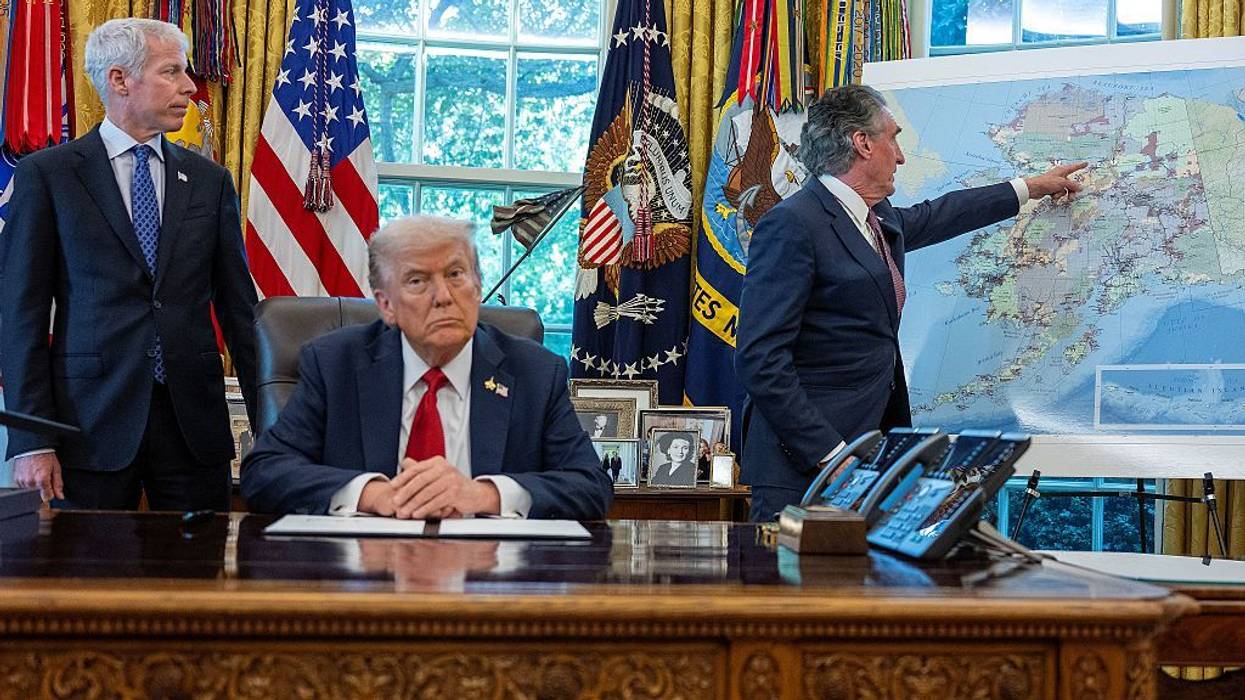
The Trump administration on Thursday killed Biden-era rules that protected around 13 million acres of the western Arctic from fossil fuel drilling, another giveaway to the industry that helped bankroll the president's campaign.
The decision by the US Interior Department, led by billionaire fossil fuel industry ally Doug Burgum, targets the National Petroleum Reserve-Alaska (NPR-A). Last year, the Biden administration finalized rules that shielded more than half of the 23-million-acre NPR-A from drilling.
Conservationists were quick to condemn the repeal of the rules as a move that prioritizes the profits of oil and gas corporations over wildlife, pristine land, and the climate.
Monica Scherer, senior director of campaigns at Alaska Wilderness League, ripped the administration for ignoring the hundreds of thousands of people who engaged in the public comment process and spoke out against the gutting of NPR-A protections.
“Today’s actions make one thing painfully clear: this administration never had any intention of listening to the American people," Scherer said Thursday. "By dismantling these protections, Interior isn’t ‘restoring common sense,’ it’s sidelining science and traditional knowledge, silencing communities, and putting irreplaceable lands and wildlife at risk."
Earthjustice attorney Erik Grafe called the administration's weakening of Arctic protections "another example of how the Trump administration is trying to take us back in time with its reckless fossil fuels agenda."
"This would sweep aside common-sense regulations aimed at more responsibly managing the Western Arctic’s irreplaceable lands and wildlife for future generations," said Grafe. "It rewinds the clock to regulations last updated in 1977. This is no way to secure our future.”
"Where others see the most ecologically intact landscape in the United States, the Interior Department sees another American treasure poised for ruination."
Thursday's move came less than a month after the Trump administration announced plans to open Alaska’s Arctic National Wildlife Refuge for drilling. At the time, Burgum declared, "Alaska is open for business."
ConocoPhillips, the oil and gas giant behind the much-decried Willow project that the Biden administration approved in 2023, is among the possible beneficiaries of the Trump Interior Department's decision to roll back drilling protections in the western Arctic.
Inside Climate News reported earlier this week that ConocoPhillips "has applied to extend ice roads and well pads farther west into the Arctic wilderness beyond its Willow oil project."
"The company also wants to build roads to the south of Willow, where it would use heavy-duty equipment to thump the ground with seismic testing searching for crude," the outlet added.
Bobby McEnaney, director of land conservation at the Natural Resources Defense Council, said Thursday that the Trump administration's latest attack on Arctic protections "is nothing more than a giveaway to the oil and gas industry."
"Weakening protections is reckless, and it threatens to erase the very landscapes Congress sought to safeguard," said McEnaney. "Where others see the most ecologically intact landscape in the United States, the Interior Department sees another American treasure poised for ruination.”
"The announcement is another giveaway to the fossil fuel billionaires who spent millions to put Trump back in the White House, justified by a fake 'energy emergency.'"
The Trump administration announced late Wednesday that it is moving to implement new permitting procedures designed to speed up reviews and approvals of oil and gas development, a plan that environmentalists called an attack on the public's right to weigh in on projects that would directly impact communities across the United States.
The U.S. Department of the Interior, led by billionaire oil industry ally Doug Burgum, said the new permitting measures would "take a multi-year process down to just 28 days at most," citing President Donald Trump's declaration of a "national energy emergency" at the start of his second term.
"In response, the Department will utilize emergency authorities under existing regulations for the National Environmental Policy Act, Endangered Species Act, and the National Historic Preservation Act," the agency said.
The expedited permitting procedures will apply to crude oil, fracked gas, coal, and other energy sources favored by the president, according to the Interior Department.
Notably absent from Interior's list are wind and solar, which accounted for a record 17% of U.S. electricity generation last year. As it has moved to boost the fossil fuel industry—the primary driver of the global climate emergency—the Trump administration has canceled grants and halted construction for renewable energy projects.
"The real national emergency is the cabal of oil and gas CEOs harming working people and wrecking the climate to line their pockets."
Collin Rees, U.S. campaign manager at Oil Change International, said in a statement that the Interior Department's announcement of accelerated permitting procedures for dirty energy "is an attempt to silence the public's voice in decision-making, taking away tools that ensure our communities have a say in the fossil fuel project proposals that threaten our water, land, and public health."
"The announcement is another giveaway to the fossil fuel billionaires who spent millions to put Trump back in the White House, justified by a fake 'energy emergency,'" said Rees. "The U.S. is the largest oil and gas producer and is expanding extraction faster than any other nation. The real national emergency is the cabal of oil and gas CEOs harming working people and wrecking the climate to line their pockets."
Alejandro Camacho, a professor of environmental law at the University of California, Irvine, wrote on social media that the Trump administration is "once again disregarding the law, environment, and even market data. Ignoring environmental laws to approve dirty projects claiming an energy emergency that does not exist."
"Meanwhile, he's killing massive private wind power projects," Camacho added. "Sounds like an emergency to me."
The permitting announcement comes days after an internal document, leaked on Earth Day, showed that Trump's Interior Department intends to prioritize weakening environmental protections and opening federal lands to fossil fuel extraction.
The department is also "looking at whether to scale back" national monuments, including Baaj Nwaavjo I’tah Kukveni-Ancestral Footprints of the Grand Canyon, Ironwood Forest, Chuckwalla, Organ Mountains-Desert Peaks, Bears Ears, and Grand Staircase-Escalante, The Washington Post reported Thursday.
"Interior Department officials are poring over geological maps to analyze the monuments' potential for mining and oil production and assess whether to revise their boundaries," according to the Post.
"Doug Burgum will just be another rubber stamp for Trump's reckless energy agenda," wrote one conservationist.
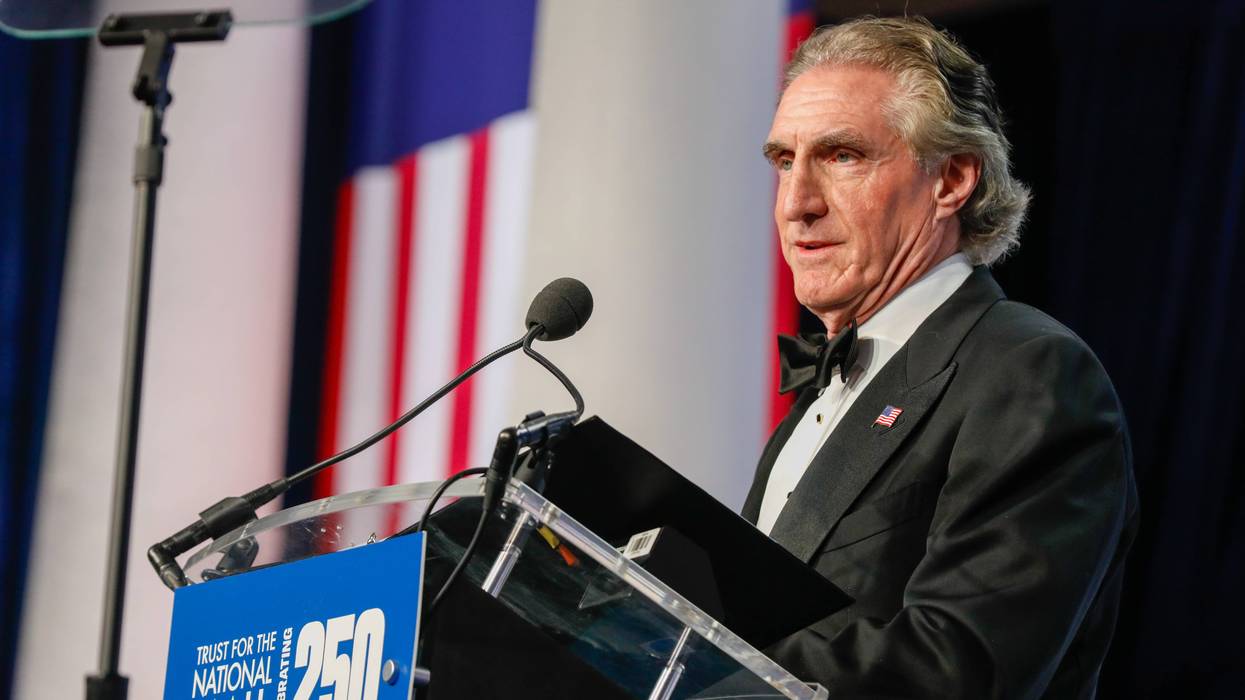
With the help of 25 Democrats, the Senate voted Thursday to confirm U.S. President Donald Trump's pick to lead the Department of the Interior, billionaire and former North Dakota Gov. Doug Burgum—an ally of the fossil fuel industry.
Environmental groups expressed alarm over Burgum's nomination. As secretary of the interior, Burgum will oversee hundreds of millions of acres of federal land and water, and he has also been tapped as the president's "energy czar" and to lead a separate White House energy council.
During his confirmation hearing, Burgum told senators that the U.S. can use energy development as a way to promote peace and to lower consumer costs, and also raised concerns about the reliability of renewable energy sources promoted during the Biden administration, according to CBS News.
Burgum sailed through his confirmation process, securing his position atop the agency with a vote of 79-18.
The 18 senators who did not vote for him were: Lisa Blunt Rochester (D-Del.), Chris Coons (D-Del.), Tammy Duckworth (D-Ill.), Mazie Hirono (D-Hawaii), Andy Kim (D-N.J.), Ed Markey (D-Mass.), Jeff Merkley (D-Ore.), Chris Murphy (D-Conn.), Patty Murray (D-Wash.), Alex Padilla (D-Calif.), Gary Peters (D-Mich.), Jack Reed (D-R.I.), Bernie Sanders (I-Vt.), Adam Schiff (D-Calif.), Chuck Schumer (D-N.Y.), Chris Van Hollen (D-Md.), Elizabeth Warren (D-Mass.), and Ron Wyden (D-Ore.).
Sens. Cory Booker (D-N.J.), John Fetterman (D-Pa.), and Jon Ossoff (D-Ga.) were absent.
Mike Sommers, president and CEO of the American Petroleum Institute, a trade associate and lobbying firm for the U.S. oil industry, expressed enthusiasm about Burgum's confirmation, according to The Washington Post.
"Doug Burgum has long been a champion for American energy leadership," Sommers said in a statement to the Post. "We look forward to working with him to implement a pro-American energy approach to federal leasing, starting with removing barriers to development on federal lands and waters and developing a new five-year offshore program."
Meanwhile, environmental groups blasted the Senate's confirmation of Burgum.
"Doug Burgum will just be another rubber stamp for Trump's reckless energy agenda. That isn't the leadership our public lands need," said Kristen Miller, executive director of Alaska Wilderness League, in a statement Friday. "Burgum's loyalty to Trump ignores both the economic realities and the climate crisis we're facing today, especially in Alaska."
The youth climate organization Sunrise Movement called Burgum's confirmation "a win for Big Oil billionaires" and pointed to Burgum's reported role in planning a meeting between Trump and energy executives in spring 2024, during which Trump suggested that they raise $1 billion for his campaign in exchange for tax breaks and large-scale deregulation.
"From opening more public lands for extraction to attacking countless protections of lands, water, and wildlife, it's clear that President Trump is committed to expanding fossil fuels and catering to industry at the expense of our climate, public lands and waters, and wildlife," according to a Wednesday letter sent to the Senate from over 30 environmental, watchdog, and public interest groups. "Doug Burgum will be charged with carrying out this unpopular and dangerous agenda."
"Burgum is an oligarch completely out of touch with the overwhelming majority of Americans who cherish our natural heritage," said the executive director of the Center for Biological Diversity.
President-elect Donald Trump announced Thursday that he has chosen billionaire North Dakota Gov. Doug Burgum, a close ally of the fossil fuel industry and vocal proponent of oil drilling, to serve as head of the Interior Department in the incoming administration, a critical post tasked with overseeing hundreds of millions of acres of federal land and water.
Burgum, a friend of oil billionaire Harold Hamm, served as a kind of middleman between Trump's presidential campaign and the fossil fuel industry during the 2024 race. The Washington Post reported that Burgum's selection as interior secretary will "give Hamm expansive influence over policy related to drilling on public lands, at a time his company stands to benefit from the rule changes Trump envisions."
Burgum and Hamm have already worked to shape Trump's energy policy during the presidential transition, with Reuters reporting Thursday that the pair is leading the push for a repeal of electric vehicle tax credits—a key component of the Biden administration's signature climate law, the Inflation Reduction Act.
During a fundraiser over the summer, Burgum said Trump could "on day one" move to unleash "liquid fuels," accusing the Biden administration of waging war on "American energy."
"Whether it's baseload electricity, whether it's oil, whether it's gas, whether it's ethanol, there is an attack on liquid fuels," Burgum declared.
"We're ready to fight Burgum and Trump's extreme agenda every step of the way."
Trump campaigned on a pledge to "drill, baby, drill" in the face of a fossil fuel-driven climate emergency that is wreaking deadly havoc in the United States and around the world. While the Biden administration has presided over record oil and gas production and approved many new drilling permits to the dismay of climate advocates, Trump has made clear that he intends to take a sledgehammer to any guardrails constraining the fossil fuel industry.
In Burgum, Trump will have an enthusiastic champion of oil and gas drilling in a Cabinet that is shaping up to be a boon for the fossil fuel industry. Burgum helped organize the dinner at which Trump urged the oil and gas industry to raise $1 billion for his campaign in exchange for tax breaks and large-scale deregulation.
"We're going do things with energy and with land—Interior—that is going to be incredible," Trump said late Thursday.
Kierán Suckling, executive director of the Center for Biological Diversity, said in a statement that "Burgum is an oligarch completely out of touch with the overwhelming majority of Americans who cherish our natural heritage and don't want our parks, wildlife refuges, and other special places carved up and destroyed."
"We're ready to fight Burgum and Trump's extreme agenda every step of the way," Suckling added.
In his current capacity as North Dakota governor, Burgum is pushing a 2,000-mile carbon pipeline project set to be built by Summit Carbon Solutions with the stated goal of capturing planet-warming CO2 and storing it underground. Climate advocates have long derided carbon capture and storage—a method boosted by the fossil fuel industry—as a dangerous scam that can actually result in more emissions.
The Associated Press reported earlier this year that "the blowback in North Dakota to the Summit project has been intense with Burgum caught in the crossfire."
"There are fears a pipeline rupture would unleash a lethal cloud of CO2," the outlet noted. "Landowners worry their property values will plummet if the pipeline passes under their land."
The North Dakota Public Service Commission is planning to meet Friday to vote on the project.
"Donald Trump has made it clear that a second Trump term would look worse than his first—with broader attacks on science and the environment driving the day."
A union representing thousands of Environmental Protection Agency workers raised alarm Tuesday over former President Donald Trump's pledge to slash key federal climate departments if he's reelected in November and condemned his attempt to downplay concerns about the planetary emergency, which is fueling destructive extreme weather and
pushing global temperatures to record highs.
"Donald Trump has made it clear that a second Trump term would look worse than his first—with broader attacks on science and the environment driving the day," Marie Owens Powell, president of American Federation of Government Employees (AFGE) Council 238, said in a statement.
"His first four years were a fiasco for the agency bargaining unit workers whose mission it is to protect human health and the environment during this climate emergency, with cuts to the workforce, rollbacks of regulations, and more," Powell added. "Trump has made it clear that a second term would be catastrophic for the environment and reverse the progress made against climate change."
The union's statement came in response to a Sunday Fox News interview in which Trump, the presumptive GOP presidential nominee, said that federal environmental agencies have been "so bad for us," claiming they've "stopped you from doing business in this country."
"We're going to do, like, Department of Interior," Trump said, naming one of the agencies he plans to target. "There's so many things you can do."
The former president, whose administration dismantled more than 100 federal environmental rules during its four years in power, also mocked President Joe Biden's description of the climate crisis as an existential threat and ridiculed fears about rising sea levels.
Trump falsely claimed that rising sea levels mean "you have a little more beachfront property," ignoring catastrophic flooding and other disastrous impacts of ever-rising seas. The U.S. experienced a record number of billion-dollar extreme weather events last year, including destructive flooding.
Trump says he supports climate change and rising sea levels because it “means basically you have a little more beachfront property” pic.twitter.com/qLh0Y1yu6Q
— Biden-Harris HQ (@BidenHQ) June 2, 2024
Powell said Tuesday that Trump's "all-out assault on science and our employees" during his first four years in the White House "led us to issue an EPA Workers' Bill of Rights, which had over 10,000 signatures, many of which were agency employees, and was endorsed by nearly fifty members of Congress and partners in the science community."
"And the prospect of a second Trump term is why we fought so hard to win a first-of-its-kind Scientific Integrity Article in our new contract that will help protect our work from political interference," Powell continued. "Our contract win means workers can stand up for scientific integrity without fear of retaliation, and sends any disputes related to scientific integrity to an independent arbitrator instead of a political appointee."
"The climate emergency we are facing hurts everyone, regardless of political party," the union leader added, "and the EPA and its employees protect everyone's health and the environment, regardless of their political agenda."
Trump and his right-wing allies have repeatedly expressed their intention to aggressively target federal environmental agencies and rules if the former president wins the November election against Biden.
During an April fundraiser attended by major fossil fuel executives, Trump—who was convicted last week on 34 felony counts of falsifying business records—pledged to swiftly roll back climate regulations if the industry most responsible for the climate emergency forks over $1 billion to support his presidential bid.
"He will sacrifice our planet for the profits of fossil fuel executives. We cannot let that happen."
Politico reported last month that oil and gas industry lobbyists and lawyers are already in the process of "drawing up ready-to-sign executive orders for Donald Trump aimed at pushing natural gas exports, cutting drilling costs, and increasing offshore oil leases in case he wins a second term."
Meanwhile, the right-wing Project 2025 initiative spearheaded by the Heritage Foundation is pushing "a sweeping battle plan to dismantle federal agencies and public health standards, including vital environmental protections," freelance climate journalist Dana Drugmand wrote last week.
A recent study by Carbon Brief estimated that a second Trump term would unleash an extra 4 billion tonnes of carbon dioxide equivalent into the atmosphere, imperiling global efforts to rein in planet-warming emissions.
"He will sacrifice our planet for the profits of fossil fuel executives," Sen. Bernie Sanders (I-Vt.) warned Tuesday. "We cannot let that happen."
"Beyond the illegality of Willow's approval, Interior's decision to greenlight the project in the first place moved us in the opposite direction of our national climate goals in the face of the worsening climate crisis."
A federal judge in Anchorage ruled Thursday that ConocoPhillips' $8 billion oil drilling project on Alaska's North Slope can proceed, rejecting a pair of lawsuits arguing that the Biden administration failed to adequately consider the initiative's impact on the climate, local communities, and wildlife before approving it earlier this year.
Willow is the largest proposed oil and gas drilling project on public lands in U.S. history, and it comes at a time when scientists are warning that any new fossil fuel extraction is incompatible with preventing catastrophic planetary warming.
But despite warnings about Willow's potentially devastating impact, U.S. District Court Judge Sharon Gleason—an Obama appointee—deemed the Biden administration's environmental assessments of the project sufficient and in line with federal law. The ruling was handed down a day after a U.N.-backed report cautioned that fossil fuel expansion plans by the world's top producers are "throwing humanity's future into question."
Climate groups voiced strong disagreement and outrage in response to Gleason's decision, which gives ConocoPhillips a green light to resume construction of the massive project next month.
"This decision is bad news not just for our clients, but for anyone who cares about the climate and future generations," said Bridget Psarianos, senior staff attorney with Trustees for Alaska, which sued the Biden Interior Department on behalf of the Sovereign Iñupiat for a Living Arctic and others.
"The Biden administration added a little more window dressing when it rubber-stamped the previous Trump approvals, but Interior handed out permits without even looking at options that would reduce the impact on local people or preclude drilling in sensitive ecosystems," Psarianos added. "It again did not consider the accumulation of impacts of greenhouse gas emissions and climate change, nor the way those accumulations harm people, animals, habitat, and the planet in deep and tangible ways."
"While today's ruling is disappointing, we are entirely confident in our claims, and plan to appeal to the higher court."
In March, the Biden Interior Department—headed by Deb Haaland, who criticized the proposed Willow project when she was in Congress—approved what it characterized as a scaled-back version of the ConocoPhillips drilling initiative, drawing protests and criticism from environmentalists, Indigenous groups, and the United Nations.
The administration approved the project with three drilling sites instead of the five that ConocoPhillips wanted. But even the smaller version of Willow will be disastrous for the climate, green groups argued.
According to Earthjustice, which sued the administration on behalf of several climate organizations, the approved project "will still add about 260 million metric tons of carbon emissions into the atmosphere over the next 30 years, the equivalent of an extra two million cars on the road each year for 30 years."
"While today's ruling is disappointing, we are entirely confident in our claims, and plan to appeal to the higher court," Erik Grafe, deputy managing attorney in Earthjustice's Alaska regional office, said in a statement Thursday. "Beyond the illegality of Willow's approval, Interior's decision to greenlight the project in the first place moved us in the opposite direction of our national climate goals in the face of the worsening climate crisis."