SUBSCRIBE TO OUR FREE NEWSLETTER
Daily news & progressive opinion—funded by the people, not the corporations—delivered straight to your inbox.
5
#000000
#FFFFFF
To donate by check, phone, or other method, see our More Ways to Give page.
Daily news & progressive opinion—funded by the people, not the corporations—delivered straight to your inbox.
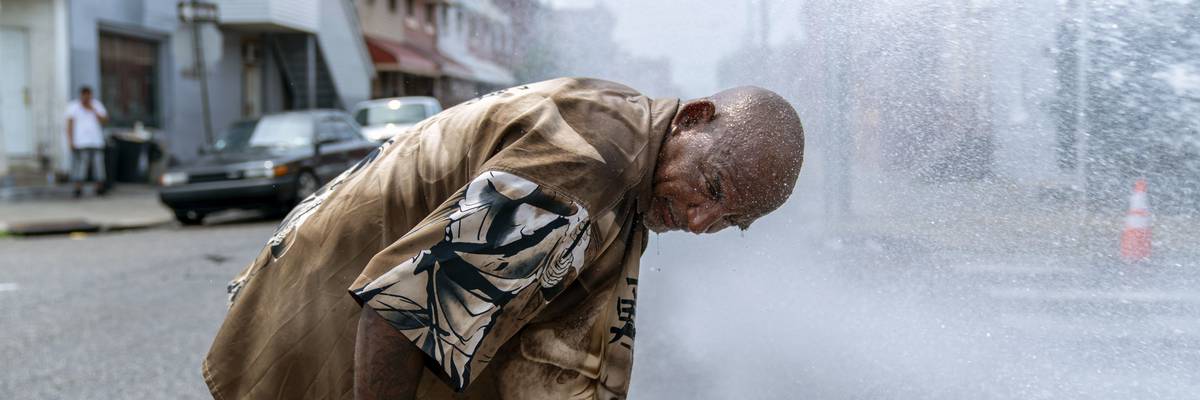
Eduardo Velev cools off in the spray of a fire hydrant during a heatwave on July 1, 2018 in Philadelphia, Pennsylvania.
“The next time your community is hit by a heatwave or flash flood, lay some blame with Big Oil. This report is yet another sign that we need to break away from this dangerous, polluting industry,” one scientist said.
A landmark report released by the National Academies of Sciences, Engineering, and Medicine on Thursday concludes that the science of linking individual extreme weather events to fossil fuel-driven climate change has advanced considerably in the past decade, findings that bolster the efforts of communities to hold oil and gas companies accountable for climate damages.
The report follows on the heels of deadly heatwaves in Europe and the US that were both deemed to be "virtually impossible" without the climate emergency.
“The new report makes clear that the science linking ever-worsening extreme weather events to climate change is rigorous and sound,” John Fleming, a senior scientist at the Center for Biological Diversity’s Climate Law Institute, said in a statement. “The next time your community is hit by a heatwave or flash flood, lay some blame with Big Oil. This report is yet another sign that we need to break away from this dangerous, polluting industry.”
The report from the National Academies, or NASEM builds on a 2016 report on the same subject and tracks the progress made since then in linking specific extreme weather events such as hurricanes or heatwaves to human-caused global warming—a field known as extreme event attribution (EEA). It found that a combination of improvements in tools, datasets, and methods had made such attributions increasingly reliable, especially for events clearly related to rising average temperatures such as heatwaves, cold spells, and heavy rainfall.
“The science is clear: The extreme heat killing thousands of people in the Northern Hemisphere this summer is neither an unpredictable event nor an accident—it is the result of corporate crime."
“Significant progress has been made over the last decade, with major advancements in methods and modeling that allow for more robust assessments of extreme events,” James Hurrell, who chaired the report committee and serves as the Scott presidential chair of Environmental Science and Engineering at Colorado State University, said in a statement.
EEA could still improve when it comes to analyzing the climate footprint on smaller-scale weather events like thunderstorms and tornadoes, as well as attributing events in parts of the Global South where climate data is less available.
Hurrell continued: "The field still faces challenges, and addressing them is necessary to fully realize the value of attribution science. We hope our recommendations will guide those efforts.”
Unaffiliated climate scientists and environmental advocates welcomed the report's findings.
"The robust conclusions that have been reached by the mainstream climate research community betray the dismissive claims that continue to be made by fossil fuel industry groups, right-wing think tanks, and Republican operatives who feel threatened by the scientific progress in this particular area," wrote climate scientist and University of Pennsylvania professor Michael Mann. "They have long understood... that Americans will increasingly demand meaningful policy action on climate as they come to understand the profound role that fossil fuel burning is playing in the worsening climate crisis."
Mann continued: "Nothing connects the dots better that the increasingly dangerous, damaging, and deadly climate change-fueled extreme weather events. As an aside, I could see and smell the hazardous wildfire smoke that blanketed the northeastern US while on vacation with my family in New Hampshire this week. Increasingly, Americans are connecting the dots between our reliance on fossil fuels and the hazards we face, whether its costly and dangerous wars of choice in far-flung lands like Iran, or the threat of increasingly extreme weather events."
Carly Phillips, a senior scientist at the Union of Concerned Scientists (UCS) who has co-authored attribution studies, said in a statement: “Attribution science confirms what billions of people around the world have experienced firsthand—deadly events like extreme heatwaves are occurring more often and tropical cyclones are more intense due to climate change. Despite efforts by the fossil fuel industry and its cronies to intimidate panelists and misrepresent the research, the academies’ report affirms the scientific consensus: Attribution science is based on rigorous peer-reviewed methods and provides critical information about how climate change is driving increases in the frequency or severity of extreme events."
The report is notable not only for its findings but for their context. It's publication comes amid the Trump administration's aggressive climate denial, including the Environmental Protection Agency's repealing of the so-called "endangerment finding" connecting carbon dioxide emissions to climate and public health harms.
At the same time, the fossil fuel industry and its right-wing political allies are scrambling to find a way out of the increasing number of lawsuits attempting to hold them accountable for the harms caused by the climate crisis. This has included pushing bills in the House of Representatives and Senate that would grant the industry immunity from any lawsuits over damages caused by the use of their products.
Both the fossil fuel industry and climate justice advocates see the NASEM report as a potential weapon in the fight over climate liability. Argus Insight, an opposition research firm co-founded by former Trump staffers that has a history of working to undermine climate lawsuits, sent at least nine records requests to public universities where NASEM report authors work, as Politico reported ahead of its release.
Andrew Dessler, a professor of atmospheric sciences at Texas A&M University, advised that journalists covering the NASEM report "not frame any story as 'Can we believe extreme event attribution research?' The actual story is: Fossil fuel interests are wetting their pants about this and will do anything to try to stop it."
Yet climate justice advocates argue that the report gives the advantage to communities over the industry.
“For decades, Big Oil knowingly poisoned our atmosphere and deceived the public about the impacts of burning fossil fuels—all the while lining executives’ pockets as communities continue to suffer from extreme heat, floods, and fires," Stephanie Brancaforte, climate accountability campaign director with Public Citizen’s Climate Program, said in a statement.
Brancaforte added: “The science is clear: The extreme heat killing thousands of people in the Northern Hemisphere this summer is neither an unpredictable event nor an accident—it is the result of corporate crime. With the backing of the National Academies, survivors of climate catastrophes now have strong evidence to pursue justice against fossil fuel polluters to pay for the devastation they have unleashed.”
Cassidy DiPaola, communications director for the Make Polluters Pay campaign, said: "The National Academies just gave courts, cities, and communities something they've long needed: the full weight of the country's most authoritative scientific body behind attribution science. It affirms what researchers and international bodies like the IPCC [Intergovernmental Panel on Climate Change] have long recognized—that we can say, with real confidence, which extreme weather events were made worse by fossil fuel pollution, and how much damage that pollution caused."
DiPaola continued: "The fossil fuel industry understands exactly what this means. That's why they've spent years trying to discredit attribution science as a field, and why they and their allies in Congress and state legislatures are racing right now to pass liability shield laws. They can't out-argue hundreds of peer-reviewed studies backed by the country's most respected scientific institution, so instead they're trying to make the law immune to the science. They know this research doesn't just describe a hotter world, but draws a line from their products to specific floods, heatwaves, and deaths, and from there to who should pay for the damage."
"Attribution science now underpins how cities plan for disaster, how insurers price risk, how public health officials prepare for heat deaths, and how courts weigh accountability," she concluded. "The only people with an interest in pretending otherwise are the ones being asked to pay for the damage they caused."
Dear Common Dreams reader, It’s been nearly 30 years since I co-founded Common Dreams with my late wife, Lina Newhouser. We had the radical notion that journalism should serve the public good, not corporate profits. It was clear to us from the outset what it would take to build such a project. No paid advertisements. No corporate sponsors. No millionaire publisher telling us what to think or do. Many people said we wouldn't last a year, but we proved those doubters wrong. Together with a tremendous team of journalists and dedicated staff, we built an independent media outlet free from the constraints of profits and corporate control. Our mission has always been simple: To inform. To inspire. To ignite change for the common good. Building Common Dreams was not easy. Our survival was never guaranteed. When you take on the most powerful forces—Wall Street greed, fossil fuel industry destruction, Big Tech lobbyists, and uber-rich oligarchs who have spent billions upon billions rigging the economy and democracy in their favor—the only bulwark you have is supporters who believe in your work. But here’s the urgent message from me today. It's never been this bad out there. And it's never been this hard to keep us going. At the very moment Common Dreams is most needed, the threats we face are intensifying. We need your support now more than ever. We don't accept corporate advertising and never will. We don't have a paywall because we don't think people should be blocked from critical news based on their ability to pay. Everything we do is funded by the donations of readers like you. When everyone does the little they can afford, we are strong. But if that support retreats or dries up, so do we. Will you donate now to make sure Common Dreams not only survives but thrives? —Craig Brown, Co-founder |
A landmark report released by the National Academies of Sciences, Engineering, and Medicine on Thursday concludes that the science of linking individual extreme weather events to fossil fuel-driven climate change has advanced considerably in the past decade, findings that bolster the efforts of communities to hold oil and gas companies accountable for climate damages.
The report follows on the heels of deadly heatwaves in Europe and the US that were both deemed to be "virtually impossible" without the climate emergency.
“The new report makes clear that the science linking ever-worsening extreme weather events to climate change is rigorous and sound,” John Fleming, a senior scientist at the Center for Biological Diversity’s Climate Law Institute, said in a statement. “The next time your community is hit by a heatwave or flash flood, lay some blame with Big Oil. This report is yet another sign that we need to break away from this dangerous, polluting industry.”
The report from the National Academies, or NASEM builds on a 2016 report on the same subject and tracks the progress made since then in linking specific extreme weather events such as hurricanes or heatwaves to human-caused global warming—a field known as extreme event attribution (EEA). It found that a combination of improvements in tools, datasets, and methods had made such attributions increasingly reliable, especially for events clearly related to rising average temperatures such as heatwaves, cold spells, and heavy rainfall.
“The science is clear: The extreme heat killing thousands of people in the Northern Hemisphere this summer is neither an unpredictable event nor an accident—it is the result of corporate crime."
“Significant progress has been made over the last decade, with major advancements in methods and modeling that allow for more robust assessments of extreme events,” James Hurrell, who chaired the report committee and serves as the Scott presidential chair of Environmental Science and Engineering at Colorado State University, said in a statement.
EEA could still improve when it comes to analyzing the climate footprint on smaller-scale weather events like thunderstorms and tornadoes, as well as attributing events in parts of the Global South where climate data is less available.
Hurrell continued: "The field still faces challenges, and addressing them is necessary to fully realize the value of attribution science. We hope our recommendations will guide those efforts.”
Unaffiliated climate scientists and environmental advocates welcomed the report's findings.
"The robust conclusions that have been reached by the mainstream climate research community betray the dismissive claims that continue to be made by fossil fuel industry groups, right-wing think tanks, and Republican operatives who feel threatened by the scientific progress in this particular area," wrote climate scientist and University of Pennsylvania professor Michael Mann. "They have long understood... that Americans will increasingly demand meaningful policy action on climate as they come to understand the profound role that fossil fuel burning is playing in the worsening climate crisis."
Mann continued: "Nothing connects the dots better that the increasingly dangerous, damaging, and deadly climate change-fueled extreme weather events. As an aside, I could see and smell the hazardous wildfire smoke that blanketed the northeastern US while on vacation with my family in New Hampshire this week. Increasingly, Americans are connecting the dots between our reliance on fossil fuels and the hazards we face, whether its costly and dangerous wars of choice in far-flung lands like Iran, or the threat of increasingly extreme weather events."
Carly Phillips, a senior scientist at the Union of Concerned Scientists (UCS) who has co-authored attribution studies, said in a statement: “Attribution science confirms what billions of people around the world have experienced firsthand—deadly events like extreme heatwaves are occurring more often and tropical cyclones are more intense due to climate change. Despite efforts by the fossil fuel industry and its cronies to intimidate panelists and misrepresent the research, the academies’ report affirms the scientific consensus: Attribution science is based on rigorous peer-reviewed methods and provides critical information about how climate change is driving increases in the frequency or severity of extreme events."
The report is notable not only for its findings but for their context. It's publication comes amid the Trump administration's aggressive climate denial, including the Environmental Protection Agency's repealing of the so-called "endangerment finding" connecting carbon dioxide emissions to climate and public health harms.
At the same time, the fossil fuel industry and its right-wing political allies are scrambling to find a way out of the increasing number of lawsuits attempting to hold them accountable for the harms caused by the climate crisis. This has included pushing bills in the House of Representatives and Senate that would grant the industry immunity from any lawsuits over damages caused by the use of their products.
Both the fossil fuel industry and climate justice advocates see the NASEM report as a potential weapon in the fight over climate liability. Argus Insight, an opposition research firm co-founded by former Trump staffers that has a history of working to undermine climate lawsuits, sent at least nine records requests to public universities where NASEM report authors work, as Politico reported ahead of its release.
Andrew Dessler, a professor of atmospheric sciences at Texas A&M University, advised that journalists covering the NASEM report "not frame any story as 'Can we believe extreme event attribution research?' The actual story is: Fossil fuel interests are wetting their pants about this and will do anything to try to stop it."
Yet climate justice advocates argue that the report gives the advantage to communities over the industry.
“For decades, Big Oil knowingly poisoned our atmosphere and deceived the public about the impacts of burning fossil fuels—all the while lining executives’ pockets as communities continue to suffer from extreme heat, floods, and fires," Stephanie Brancaforte, climate accountability campaign director with Public Citizen’s Climate Program, said in a statement.
Brancaforte added: “The science is clear: The extreme heat killing thousands of people in the Northern Hemisphere this summer is neither an unpredictable event nor an accident—it is the result of corporate crime. With the backing of the National Academies, survivors of climate catastrophes now have strong evidence to pursue justice against fossil fuel polluters to pay for the devastation they have unleashed.”
Cassidy DiPaola, communications director for the Make Polluters Pay campaign, said: "The National Academies just gave courts, cities, and communities something they've long needed: the full weight of the country's most authoritative scientific body behind attribution science. It affirms what researchers and international bodies like the IPCC [Intergovernmental Panel on Climate Change] have long recognized—that we can say, with real confidence, which extreme weather events were made worse by fossil fuel pollution, and how much damage that pollution caused."
DiPaola continued: "The fossil fuel industry understands exactly what this means. That's why they've spent years trying to discredit attribution science as a field, and why they and their allies in Congress and state legislatures are racing right now to pass liability shield laws. They can't out-argue hundreds of peer-reviewed studies backed by the country's most respected scientific institution, so instead they're trying to make the law immune to the science. They know this research doesn't just describe a hotter world, but draws a line from their products to specific floods, heatwaves, and deaths, and from there to who should pay for the damage."
"Attribution science now underpins how cities plan for disaster, how insurers price risk, how public health officials prepare for heat deaths, and how courts weigh accountability," she concluded. "The only people with an interest in pretending otherwise are the ones being asked to pay for the damage they caused."
A landmark report released by the National Academies of Sciences, Engineering, and Medicine on Thursday concludes that the science of linking individual extreme weather events to fossil fuel-driven climate change has advanced considerably in the past decade, findings that bolster the efforts of communities to hold oil and gas companies accountable for climate damages.
The report follows on the heels of deadly heatwaves in Europe and the US that were both deemed to be "virtually impossible" without the climate emergency.
“The new report makes clear that the science linking ever-worsening extreme weather events to climate change is rigorous and sound,” John Fleming, a senior scientist at the Center for Biological Diversity’s Climate Law Institute, said in a statement. “The next time your community is hit by a heatwave or flash flood, lay some blame with Big Oil. This report is yet another sign that we need to break away from this dangerous, polluting industry.”
The report from the National Academies, or NASEM builds on a 2016 report on the same subject and tracks the progress made since then in linking specific extreme weather events such as hurricanes or heatwaves to human-caused global warming—a field known as extreme event attribution (EEA). It found that a combination of improvements in tools, datasets, and methods had made such attributions increasingly reliable, especially for events clearly related to rising average temperatures such as heatwaves, cold spells, and heavy rainfall.
“The science is clear: The extreme heat killing thousands of people in the Northern Hemisphere this summer is neither an unpredictable event nor an accident—it is the result of corporate crime."
“Significant progress has been made over the last decade, with major advancements in methods and modeling that allow for more robust assessments of extreme events,” James Hurrell, who chaired the report committee and serves as the Scott presidential chair of Environmental Science and Engineering at Colorado State University, said in a statement.
EEA could still improve when it comes to analyzing the climate footprint on smaller-scale weather events like thunderstorms and tornadoes, as well as attributing events in parts of the Global South where climate data is less available.
Hurrell continued: "The field still faces challenges, and addressing them is necessary to fully realize the value of attribution science. We hope our recommendations will guide those efforts.”
Unaffiliated climate scientists and environmental advocates welcomed the report's findings.
"The robust conclusions that have been reached by the mainstream climate research community betray the dismissive claims that continue to be made by fossil fuel industry groups, right-wing think tanks, and Republican operatives who feel threatened by the scientific progress in this particular area," wrote climate scientist and University of Pennsylvania professor Michael Mann. "They have long understood... that Americans will increasingly demand meaningful policy action on climate as they come to understand the profound role that fossil fuel burning is playing in the worsening climate crisis."
Mann continued: "Nothing connects the dots better that the increasingly dangerous, damaging, and deadly climate change-fueled extreme weather events. As an aside, I could see and smell the hazardous wildfire smoke that blanketed the northeastern US while on vacation with my family in New Hampshire this week. Increasingly, Americans are connecting the dots between our reliance on fossil fuels and the hazards we face, whether its costly and dangerous wars of choice in far-flung lands like Iran, or the threat of increasingly extreme weather events."
Carly Phillips, a senior scientist at the Union of Concerned Scientists (UCS) who has co-authored attribution studies, said in a statement: “Attribution science confirms what billions of people around the world have experienced firsthand—deadly events like extreme heatwaves are occurring more often and tropical cyclones are more intense due to climate change. Despite efforts by the fossil fuel industry and its cronies to intimidate panelists and misrepresent the research, the academies’ report affirms the scientific consensus: Attribution science is based on rigorous peer-reviewed methods and provides critical information about how climate change is driving increases in the frequency or severity of extreme events."
The report is notable not only for its findings but for their context. It's publication comes amid the Trump administration's aggressive climate denial, including the Environmental Protection Agency's repealing of the so-called "endangerment finding" connecting carbon dioxide emissions to climate and public health harms.
At the same time, the fossil fuel industry and its right-wing political allies are scrambling to find a way out of the increasing number of lawsuits attempting to hold them accountable for the harms caused by the climate crisis. This has included pushing bills in the House of Representatives and Senate that would grant the industry immunity from any lawsuits over damages caused by the use of their products.
Both the fossil fuel industry and climate justice advocates see the NASEM report as a potential weapon in the fight over climate liability. Argus Insight, an opposition research firm co-founded by former Trump staffers that has a history of working to undermine climate lawsuits, sent at least nine records requests to public universities where NASEM report authors work, as Politico reported ahead of its release.
Andrew Dessler, a professor of atmospheric sciences at Texas A&M University, advised that journalists covering the NASEM report "not frame any story as 'Can we believe extreme event attribution research?' The actual story is: Fossil fuel interests are wetting their pants about this and will do anything to try to stop it."
Yet climate justice advocates argue that the report gives the advantage to communities over the industry.
“For decades, Big Oil knowingly poisoned our atmosphere and deceived the public about the impacts of burning fossil fuels—all the while lining executives’ pockets as communities continue to suffer from extreme heat, floods, and fires," Stephanie Brancaforte, climate accountability campaign director with Public Citizen’s Climate Program, said in a statement.
Brancaforte added: “The science is clear: The extreme heat killing thousands of people in the Northern Hemisphere this summer is neither an unpredictable event nor an accident—it is the result of corporate crime. With the backing of the National Academies, survivors of climate catastrophes now have strong evidence to pursue justice against fossil fuel polluters to pay for the devastation they have unleashed.”
Cassidy DiPaola, communications director for the Make Polluters Pay campaign, said: "The National Academies just gave courts, cities, and communities something they've long needed: the full weight of the country's most authoritative scientific body behind attribution science. It affirms what researchers and international bodies like the IPCC [Intergovernmental Panel on Climate Change] have long recognized—that we can say, with real confidence, which extreme weather events were made worse by fossil fuel pollution, and how much damage that pollution caused."
DiPaola continued: "The fossil fuel industry understands exactly what this means. That's why they've spent years trying to discredit attribution science as a field, and why they and their allies in Congress and state legislatures are racing right now to pass liability shield laws. They can't out-argue hundreds of peer-reviewed studies backed by the country's most respected scientific institution, so instead they're trying to make the law immune to the science. They know this research doesn't just describe a hotter world, but draws a line from their products to specific floods, heatwaves, and deaths, and from there to who should pay for the damage."
"Attribution science now underpins how cities plan for disaster, how insurers price risk, how public health officials prepare for heat deaths, and how courts weigh accountability," she concluded. "The only people with an interest in pretending otherwise are the ones being asked to pay for the damage they caused."