SUBSCRIBE TO OUR FREE NEWSLETTER
Daily news & progressive opinion—funded by the people, not the corporations—delivered straight to your inbox.
5
#000000
#FFFFFF
To donate by check, phone, or other method, see our More Ways to Give page.
Daily news & progressive opinion—funded by the people, not the corporations—delivered straight to your inbox.
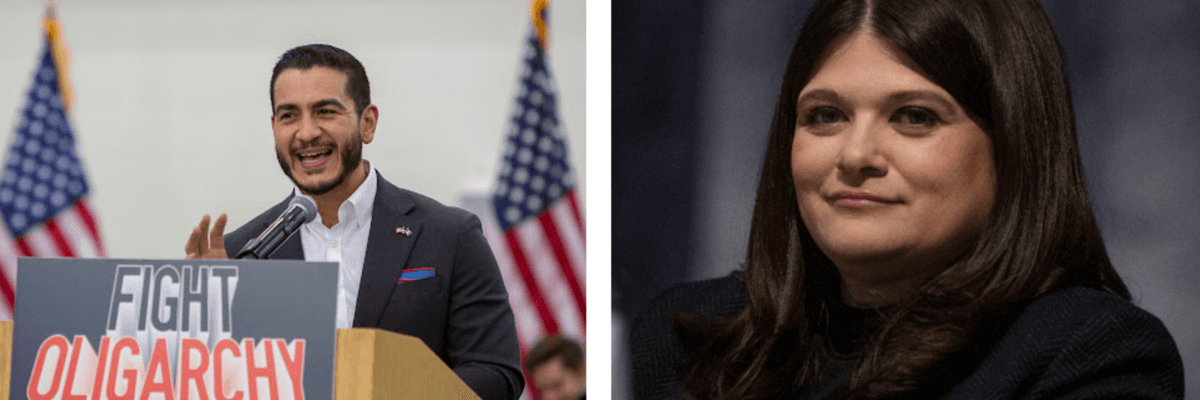
Abdul El-Sayed speaks at a Fighting Oligarchy rally on May 3, 2026 in Detroit, Michigan and US Rep. Haley Stevens (D-Mich.) attends the 38th Annual Michigan Democratic Women's Caucus Legacy Luncheon on April 18, 2026 in Detroit, Michigan.
State Sen. Mallory McMorrow dropped out of the race on Sunday after having positioned herself as a "moderate" choice.
With state lawmaker Mallory McMorrow having suspended her US Senate campaign, progressives on Monday were looking ahead to the final weeks of a primary race in which Michigan Democrats have a clear choice to make about who should run in the general election as the party hopes to wrest control of the chamber from Republicans: a candidate backed by the pro-Israel lobby or one who has focused his campaign largely on the broadly popular Medicare for All proposal.
US Rep. Rashida Tlaib (D-Mich.) said in a video for the grassroots advocacy group Our Revolution that "the contrast could not be clearer" ahead of the August 4 primary as voters decide between Rep. Haley Stevens, who is backed by Senate Majority Leader Chuck Schumer (D-NY), and former Detroit health official Abdul El-Sayed, who's been endorsed by progressive leaders including Sen. Bernie Sanders (I-Vt.) and Rep. Alexandria Ocasio-Cortez (D-NY).
With early voting already underway in parts of Michigan, said Tlaib, voters are choosing between "a people-powered movement versus the establishment pick."
"Abdul is on the ballot right now to be our next US senator, the only candidate that is unapologetic in supporting Medicare for All," said Tlaib, urging supporters to canvass for the progressive candidate, who has also spoken out against military funding for Israel and abolishing US Immigration and Customs Enforcement.
"All of us know the importance of direct human contact. That's how we get elected, especially someone like Dr. Abdul El-Sayed, who is unbought and doesn't take corporate [political action committee] money," she said.
Our Revolution emphasized that with McMorrow out of the race, "the numbers show this is winnable."
As El-Sayed has faced Stevens and McMorrow in the three-way race in recent months, the progressive candidate has surged in several polls following his opponents' attacks on his campaigning with vocal anti-Israel critic and streamer Hasan Piker and as he has remained focused on what he says are his top three priorities: "money out of politics, money in your pocket, and Medicare for All."
The most recent polling, from Quantus Insights, showed El-Sayed with 41% support compared with Stevens' 36% and McMorrow's 8%. Other surveys, like one from Tulchin Research for the pro-El-Sayed Fighting for Michigan PAC, found the candidate up 19 points over Stevens, with McMorrow in a distant third place.
A poll by a super PAC that supports El-Sayed also asked voters ahead of McMorrow's suspension of her campaign how they would vote if El-Sayed and Stevens were the only two candidates, and found the progressive up 54-34.
El-Sayed has argued during the campaign that Stevens' support from the American Israel Public Affairs Committee (AIPAC) as well as for-profit health insurance companies is emblematic of a corrupt political system that's been worsened in recent years by the US Supreme Court Citizens United ruling.
As Common Dreams reported in May, AIPAC has appealed to its direct donors to send contributions of Stevens during the campaign, as well as spending $10 million to boost the candidate.
“I’m the only candidate today who didn’t ask AIPAC for their support," said El-Sayed at a debate in May. "I don’t think that our taxpayer dollars which we pay every April ought to be going to bomb children, to fund bombs and tanks for other countries, when we got kids who can’t afford basic things in our own.”
Before suspending her campaign, McMorrow cast herself as a candidate who could be seen as a midway point between Stevens' establishment connections and El-Sayed's demands for bold changes to the US political system and the Democratic Party's priorities.
But Lever News founder David Sirota pointed to McMorrow's dismissive comments about Medicare for All as evidence that she was far out of step with voters.
She claimed in an interview and a debate that public support for a government-run universal healthcare program "isn't there yet," despite the fact that the proposal was backed by 78% of Democratic voters and 65% of overall voters in one recent poll.
New York Times politics reporter Reid Epstein also pointed to McMorrow's decision to join in a weekslong smear campaign against El-Sayed, over his appearances with Piker, as a move that "backfired quickly."
"Her remarks helped burnish Dr. El-Sayed's claim that he was the lone progressive candidate in the race and the one most willing to criticize American funding of the Israeli military," wrote Epstein.
While Stevens supporters have suggested she's likely to appeal to more Michigan Democratic voters, recent public polling regarding AIPAC and Israel tells a different story following Israel's US-backed assault on Gaza, which has been called a genocide by top Holocaust scholars and human rights groups.
Last October, nearly half of Democrats in competitive primary districts said they "could never" vote for a candidate backed by AIPAC, and another survey in March showed a double-digit decline in support for Israel among US voters.
One campaigner for El-Sayed said Monday that interactions with voters have suggested Stevens' AIPAC ties are seen as a liability, even among people who haven't yet heard of her opponent in the primary.
Following McMorrow's announcement that she was suspending her campaign, El-Sayed thanked the state senator and said the race has been and remains a fight against "a politics that rigs the system against too many of us."
"The same party insiders she had the courage to challenge have been bullying anyone who opposes their chosen candidate," said El-Sayed. "After spending $30 million to drown Sen. McMorrow and me out, they're now spending even more to attack me. It's everything we stand against."
"I welcome her supporters to our movement to stand up against money in politics, to put money back in pockets, and pass Medicare for All," said El-Sayed. "We cannot allow the establishment to decide our nominee for us."
Dear Common Dreams reader, It’s been nearly 30 years since I co-founded Common Dreams with my late wife, Lina Newhouser. We had the radical notion that journalism should serve the public good, not corporate profits. It was clear to us from the outset what it would take to build such a project. No paid advertisements. No corporate sponsors. No millionaire publisher telling us what to think or do. Many people said we wouldn't last a year, but we proved those doubters wrong. Together with a tremendous team of journalists and dedicated staff, we built an independent media outlet free from the constraints of profits and corporate control. Our mission has always been simple: To inform. To inspire. To ignite change for the common good. Building Common Dreams was not easy. Our survival was never guaranteed. When you take on the most powerful forces—Wall Street greed, fossil fuel industry destruction, Big Tech lobbyists, and uber-rich oligarchs who have spent billions upon billions rigging the economy and democracy in their favor—the only bulwark you have is supporters who believe in your work. But here’s the urgent message from me today. It's never been this bad out there. And it's never been this hard to keep us going. At the very moment Common Dreams is most needed, the threats we face are intensifying. We need your support now more than ever. We don't accept corporate advertising and never will. We don't have a paywall because we don't think people should be blocked from critical news based on their ability to pay. Everything we do is funded by the donations of readers like you. When everyone does the little they can afford, we are strong. But if that support retreats or dries up, so do we. Will you donate now to make sure Common Dreams not only survives but thrives? —Craig Brown, Co-founder |
With state lawmaker Mallory McMorrow having suspended her US Senate campaign, progressives on Monday were looking ahead to the final weeks of a primary race in which Michigan Democrats have a clear choice to make about who should run in the general election as the party hopes to wrest control of the chamber from Republicans: a candidate backed by the pro-Israel lobby or one who has focused his campaign largely on the broadly popular Medicare for All proposal.
US Rep. Rashida Tlaib (D-Mich.) said in a video for the grassroots advocacy group Our Revolution that "the contrast could not be clearer" ahead of the August 4 primary as voters decide between Rep. Haley Stevens, who is backed by Senate Majority Leader Chuck Schumer (D-NY), and former Detroit health official Abdul El-Sayed, who's been endorsed by progressive leaders including Sen. Bernie Sanders (I-Vt.) and Rep. Alexandria Ocasio-Cortez (D-NY).
With early voting already underway in parts of Michigan, said Tlaib, voters are choosing between "a people-powered movement versus the establishment pick."
"Abdul is on the ballot right now to be our next US senator, the only candidate that is unapologetic in supporting Medicare for All," said Tlaib, urging supporters to canvass for the progressive candidate, who has also spoken out against military funding for Israel and abolishing US Immigration and Customs Enforcement.
"All of us know the importance of direct human contact. That's how we get elected, especially someone like Dr. Abdul El-Sayed, who is unbought and doesn't take corporate [political action committee] money," she said.
Our Revolution emphasized that with McMorrow out of the race, "the numbers show this is winnable."
As El-Sayed has faced Stevens and McMorrow in the three-way race in recent months, the progressive candidate has surged in several polls following his opponents' attacks on his campaigning with vocal anti-Israel critic and streamer Hasan Piker and as he has remained focused on what he says are his top three priorities: "money out of politics, money in your pocket, and Medicare for All."
The most recent polling, from Quantus Insights, showed El-Sayed with 41% support compared with Stevens' 36% and McMorrow's 8%. Other surveys, like one from Tulchin Research for the pro-El-Sayed Fighting for Michigan PAC, found the candidate up 19 points over Stevens, with McMorrow in a distant third place.
A poll by a super PAC that supports El-Sayed also asked voters ahead of McMorrow's suspension of her campaign how they would vote if El-Sayed and Stevens were the only two candidates, and found the progressive up 54-34.
El-Sayed has argued during the campaign that Stevens' support from the American Israel Public Affairs Committee (AIPAC) as well as for-profit health insurance companies is emblematic of a corrupt political system that's been worsened in recent years by the US Supreme Court Citizens United ruling.
As Common Dreams reported in May, AIPAC has appealed to its direct donors to send contributions of Stevens during the campaign, as well as spending $10 million to boost the candidate.
“I’m the only candidate today who didn’t ask AIPAC for their support," said El-Sayed at a debate in May. "I don’t think that our taxpayer dollars which we pay every April ought to be going to bomb children, to fund bombs and tanks for other countries, when we got kids who can’t afford basic things in our own.”
Before suspending her campaign, McMorrow cast herself as a candidate who could be seen as a midway point between Stevens' establishment connections and El-Sayed's demands for bold changes to the US political system and the Democratic Party's priorities.
But Lever News founder David Sirota pointed to McMorrow's dismissive comments about Medicare for All as evidence that she was far out of step with voters.
She claimed in an interview and a debate that public support for a government-run universal healthcare program "isn't there yet," despite the fact that the proposal was backed by 78% of Democratic voters and 65% of overall voters in one recent poll.
New York Times politics reporter Reid Epstein also pointed to McMorrow's decision to join in a weekslong smear campaign against El-Sayed, over his appearances with Piker, as a move that "backfired quickly."
"Her remarks helped burnish Dr. El-Sayed's claim that he was the lone progressive candidate in the race and the one most willing to criticize American funding of the Israeli military," wrote Epstein.
While Stevens supporters have suggested she's likely to appeal to more Michigan Democratic voters, recent public polling regarding AIPAC and Israel tells a different story following Israel's US-backed assault on Gaza, which has been called a genocide by top Holocaust scholars and human rights groups.
Last October, nearly half of Democrats in competitive primary districts said they "could never" vote for a candidate backed by AIPAC, and another survey in March showed a double-digit decline in support for Israel among US voters.
One campaigner for El-Sayed said Monday that interactions with voters have suggested Stevens' AIPAC ties are seen as a liability, even among people who haven't yet heard of her opponent in the primary.
Following McMorrow's announcement that she was suspending her campaign, El-Sayed thanked the state senator and said the race has been and remains a fight against "a politics that rigs the system against too many of us."
"The same party insiders she had the courage to challenge have been bullying anyone who opposes their chosen candidate," said El-Sayed. "After spending $30 million to drown Sen. McMorrow and me out, they're now spending even more to attack me. It's everything we stand against."
"I welcome her supporters to our movement to stand up against money in politics, to put money back in pockets, and pass Medicare for All," said El-Sayed. "We cannot allow the establishment to decide our nominee for us."
With state lawmaker Mallory McMorrow having suspended her US Senate campaign, progressives on Monday were looking ahead to the final weeks of a primary race in which Michigan Democrats have a clear choice to make about who should run in the general election as the party hopes to wrest control of the chamber from Republicans: a candidate backed by the pro-Israel lobby or one who has focused his campaign largely on the broadly popular Medicare for All proposal.
US Rep. Rashida Tlaib (D-Mich.) said in a video for the grassroots advocacy group Our Revolution that "the contrast could not be clearer" ahead of the August 4 primary as voters decide between Rep. Haley Stevens, who is backed by Senate Majority Leader Chuck Schumer (D-NY), and former Detroit health official Abdul El-Sayed, who's been endorsed by progressive leaders including Sen. Bernie Sanders (I-Vt.) and Rep. Alexandria Ocasio-Cortez (D-NY).
With early voting already underway in parts of Michigan, said Tlaib, voters are choosing between "a people-powered movement versus the establishment pick."
"Abdul is on the ballot right now to be our next US senator, the only candidate that is unapologetic in supporting Medicare for All," said Tlaib, urging supporters to canvass for the progressive candidate, who has also spoken out against military funding for Israel and abolishing US Immigration and Customs Enforcement.
"All of us know the importance of direct human contact. That's how we get elected, especially someone like Dr. Abdul El-Sayed, who is unbought and doesn't take corporate [political action committee] money," she said.
Our Revolution emphasized that with McMorrow out of the race, "the numbers show this is winnable."
As El-Sayed has faced Stevens and McMorrow in the three-way race in recent months, the progressive candidate has surged in several polls following his opponents' attacks on his campaigning with vocal anti-Israel critic and streamer Hasan Piker and as he has remained focused on what he says are his top three priorities: "money out of politics, money in your pocket, and Medicare for All."
The most recent polling, from Quantus Insights, showed El-Sayed with 41% support compared with Stevens' 36% and McMorrow's 8%. Other surveys, like one from Tulchin Research for the pro-El-Sayed Fighting for Michigan PAC, found the candidate up 19 points over Stevens, with McMorrow in a distant third place.
A poll by a super PAC that supports El-Sayed also asked voters ahead of McMorrow's suspension of her campaign how they would vote if El-Sayed and Stevens were the only two candidates, and found the progressive up 54-34.
El-Sayed has argued during the campaign that Stevens' support from the American Israel Public Affairs Committee (AIPAC) as well as for-profit health insurance companies is emblematic of a corrupt political system that's been worsened in recent years by the US Supreme Court Citizens United ruling.
As Common Dreams reported in May, AIPAC has appealed to its direct donors to send contributions of Stevens during the campaign, as well as spending $10 million to boost the candidate.
“I’m the only candidate today who didn’t ask AIPAC for their support," said El-Sayed at a debate in May. "I don’t think that our taxpayer dollars which we pay every April ought to be going to bomb children, to fund bombs and tanks for other countries, when we got kids who can’t afford basic things in our own.”
Before suspending her campaign, McMorrow cast herself as a candidate who could be seen as a midway point between Stevens' establishment connections and El-Sayed's demands for bold changes to the US political system and the Democratic Party's priorities.
But Lever News founder David Sirota pointed to McMorrow's dismissive comments about Medicare for All as evidence that she was far out of step with voters.
She claimed in an interview and a debate that public support for a government-run universal healthcare program "isn't there yet," despite the fact that the proposal was backed by 78% of Democratic voters and 65% of overall voters in one recent poll.
New York Times politics reporter Reid Epstein also pointed to McMorrow's decision to join in a weekslong smear campaign against El-Sayed, over his appearances with Piker, as a move that "backfired quickly."
"Her remarks helped burnish Dr. El-Sayed's claim that he was the lone progressive candidate in the race and the one most willing to criticize American funding of the Israeli military," wrote Epstein.
While Stevens supporters have suggested she's likely to appeal to more Michigan Democratic voters, recent public polling regarding AIPAC and Israel tells a different story following Israel's US-backed assault on Gaza, which has been called a genocide by top Holocaust scholars and human rights groups.
Last October, nearly half of Democrats in competitive primary districts said they "could never" vote for a candidate backed by AIPAC, and another survey in March showed a double-digit decline in support for Israel among US voters.
One campaigner for El-Sayed said Monday that interactions with voters have suggested Stevens' AIPAC ties are seen as a liability, even among people who haven't yet heard of her opponent in the primary.
Following McMorrow's announcement that she was suspending her campaign, El-Sayed thanked the state senator and said the race has been and remains a fight against "a politics that rigs the system against too many of us."
"The same party insiders she had the courage to challenge have been bullying anyone who opposes their chosen candidate," said El-Sayed. "After spending $30 million to drown Sen. McMorrow and me out, they're now spending even more to attack me. It's everything we stand against."
"I welcome her supporters to our movement to stand up against money in politics, to put money back in pockets, and pass Medicare for All," said El-Sayed. "We cannot allow the establishment to decide our nominee for us."