
Being There: Are These People In the Room With Us?
These truly-through-the-looking-glass days, it seems the drunk great-uncle you really didn't wanna ask to dinner is somehow getting worse. Scarily and no longer mirthfully, the befuddled "head" of a GOP blitzed on projection daily spirals deeper into phantasmagoria - slurring words, crafting fictions, renaming oceans, rekindling grievances, losing it over trifles and consorting with imaginary friends as the world burns. An Orange-Stain plea from No Kings for the coming election: "Clean Up On Aisle USA" please. Soon.
To be clear, Trump was a lying fabulist from way back. In the glitzy 1980s and 1990s, he regularly posed as a successful businessman, savvy dealmaker and cad-about-town who'd infamously call reporters or publicists as "John Barron" to boast about his money or conquests - a ploy he admitted in later court depositions he learned from his Nazi father. In power, like "a pre-teen with a girlfriend in Canada nobody's met," he's long invented "friends," fans, sources who praise him and his dreadful policies, from cultists invariably with tears in their eyes who "thank me for saving the country" to U.S. CEOs and "one of the great people of China, from the highest echelons" who inexplicably extol his disastrous tariffs.
Lately, though, the GOP is reportedly freaking out, watching the line between fact and fiction increasingly blur in Dear Leader's mashed-potato mind as the economy keeps tumbling and vital mid-terms approach. They want him to celebrate (albeit largely imaginary) tax cuts, trade deals, safe borders, winning fights against drag shows and "transgender for everyone" (sigh). Instead, he raves about livestreamed executions, the hotness of GOP candidates, often in the wrong state - "His ass, shit, it's like a pile of muscle" - his bestie Putin who's been "fine on Ukraine," how "not a single" undocumented immigrant has entered America since he took office, how soaring gas and diesel costs are "a small price to pay," though it's unclear for what.
He garbles words or makes them up - "When we had the hurricane...We call it a watercane" - prompting excited patriots to up their expectations: "OK, cancel the Blue Wave, we want a Blue Watercane." Wearily, he jokes about creating a robot lookalike on the campaign trail- "Nobody would know the difference" - so he can stay home and watch TV, his true, small vocation. Weirdly, he fantasizes about trashing other countries: He boasts about "polling higher than anyone has ever polled in Venezuela," which is why "after I finish with this" he'll to go Venezuela, "learn Spanish quickly, it won't take long, I'm good at languages" and run for president there, and yes we are here for it.
Hopefully, Venezuela won't have pesky reporters asking him questions that drive him to melt down in "dementia anger-flare." Because he lacks both impulse control and any trace of decency, he's also lauded Vivek Ramaswamy's grotesque ad against rape survivor and Dem opponent Amy Acton, wherein her estranged, unhinged mother calls her a liar, charging the Fake News "is trying to convince everyone this Ad is bad because it’s so good!...It's called 'hitting pay dirt.’” He adds that if his "legendary" mother "said anything bad about me, (it) would go down as the Ad of the Decade — Maybe the Century!" Vivek should keep the ad up, he says, so people know Acton is "a DISASTER who, uncontrollably, lies, cheats, and steals!” Killer pot/kettle.
There are more. The racist fraudsters who got rich on corruption - and turned Minneapolis into Fallujah - want us to rat on our neighbors for...fraud under Trump's stammered "Fraud Whistle...Blower Incentive...Program" whereby "Americans (can) report theft of taxpayer dollars," with DOGE "skunk-works" stragglers helping. Turn in someone with $1 billion, you get 1%: "That's a lot of money.” Except the cap is $30K, you probs won't see it, and it's queasily akin to Nazi bounties on Jews. Stephen Goebbels was even there to smear phantom Somalis who get $30 million for a fake daycare, buy BMWs or mansions, fly their kids "first class all over the world...living the high life." What a sick fuck. Meanwhile, America urges, "Call in fraud at 1600 Pennsylvania Avenue."
Alas, the more loopy he gets, the more openly he flies his violent, racist, crassly unfettered flag. There are more curses and more bellicose AI slop like the video of a macho white guy put in prison with three scary black guys, by one scary black cop, who takes them all down: "Bullies Can’t Break a Strong Man." (So many pots/kettles!) The rallies grow more pugnacious too: In the second assault this month, a South Carolina sheriff's office is investigating an attack on a protester - punched in the head, neck and chest - that Trump cheered on, praising the thugs' "courage." "Who's the guy that threw that punch?" he excitedly asked. "I love that." He also mocked the victim as "a very unattractive guy," for a rare combo sick fuck and pot/kettle.
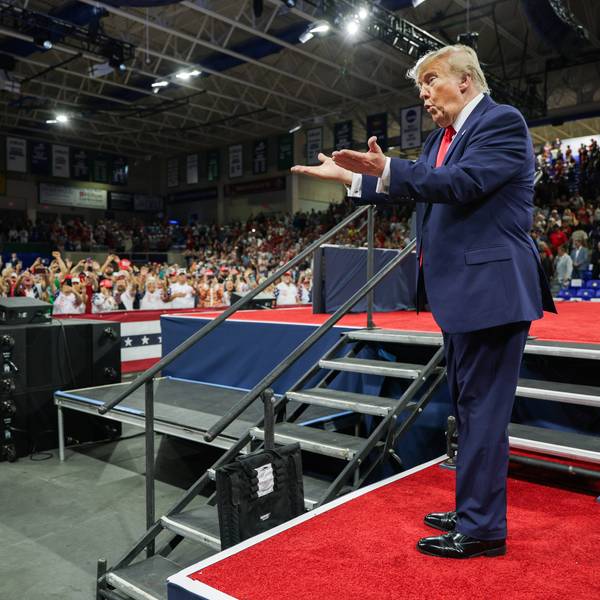
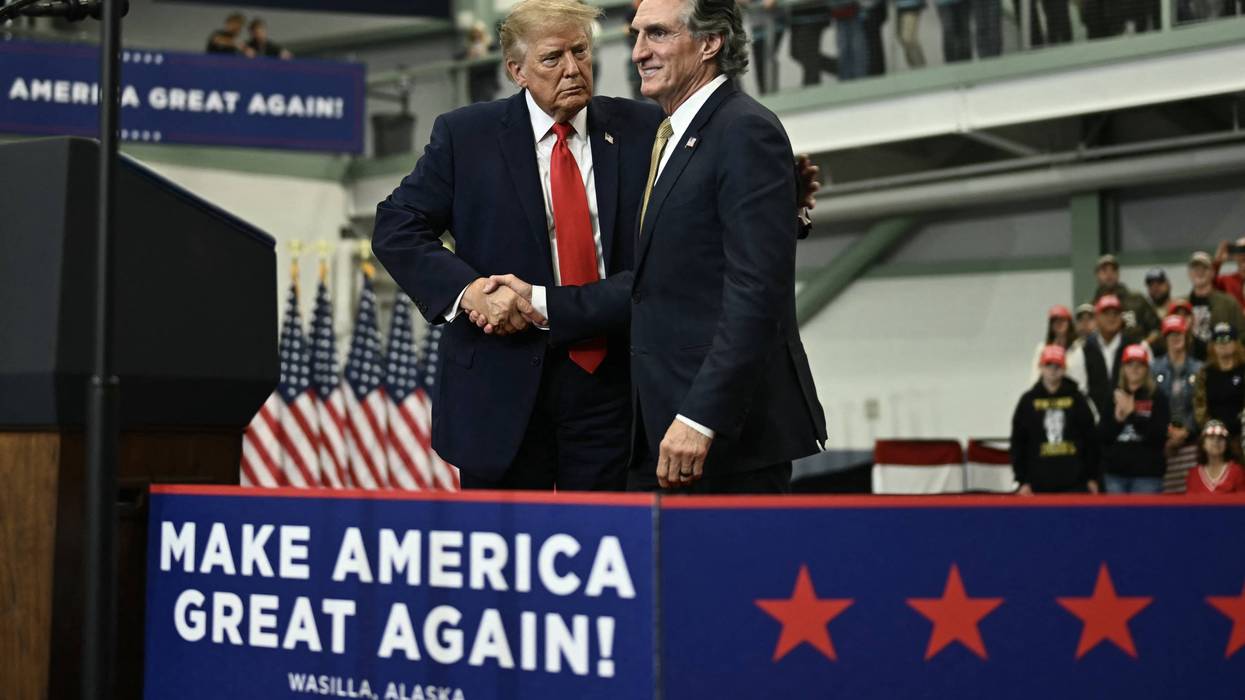
That was at a rally, in a reported “livestock arena” say what, for Darlene Graham, who’s “gonna have a big win.” If so, no thanks to his shambolic speech, which roamed from renaming the Atlantic Ocean - “I was always high end” - to insisting he doesn’t ramble while rambling - “I got - I know everything I’m doing. I got aptitude they dream about” - to again whining about the prizes he didn’t win: The Pulitzer for writing - “The people that got it shouldn’t have gotten it” - and the usual Nobel, despite being “one person who deserves it more than any yuman being." ”Not that I want it - it’s just ridiculous,“ he babbled. ”How the hell do you not get the Nobel Prize? i settled like 8 wars. The woman that got it, I don’t know where the hell she comes from.“ Losingest loser ever.
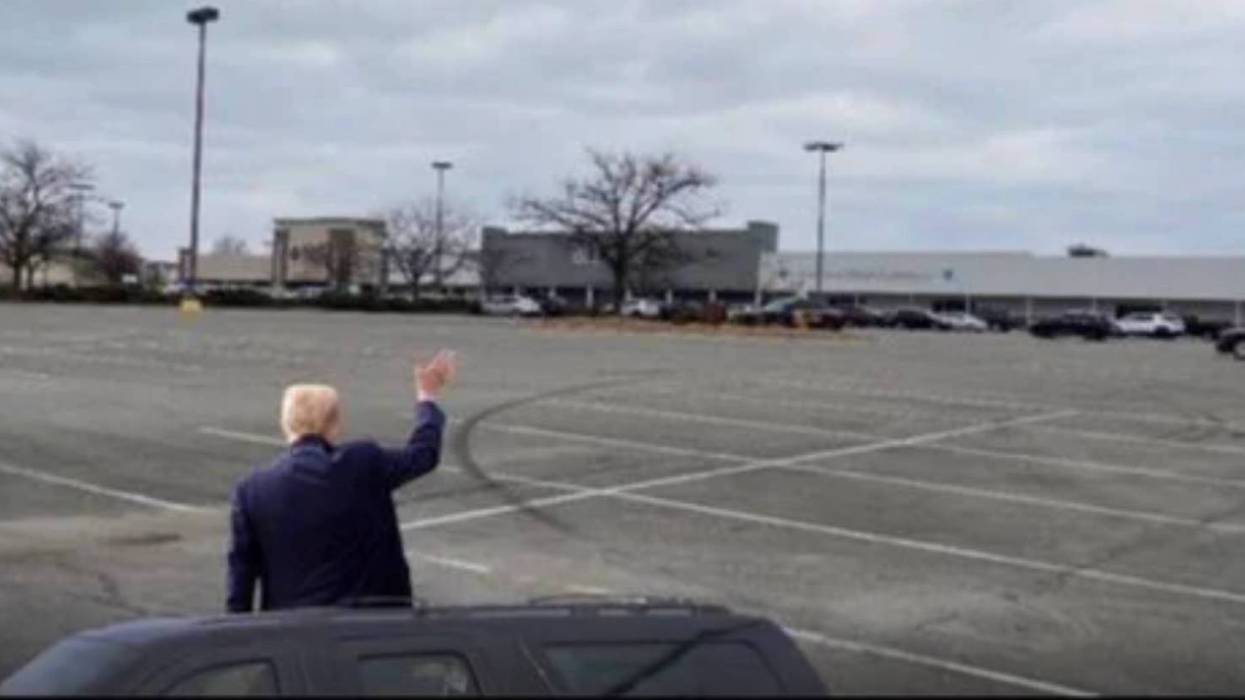
Finally, amidst all the lame, foul, daft fails, there are his deeply undignified transfers: The careening burlesque of a walk to his helicopter in Alaska. The ambling approach to his beloved, million-year helipad when he suddenly stops to acknowledge, salute and wave to a crowd of supporters, aka thin air. Eventually, the camera zooms out to show...empty space. A few seconds later, aides walk out from a different direction; other angles - here and here - show the same abyss, for which Fox would've run Biden out of town. Same for last week's event, ostensibly to honor first responders where, amidst a losing war, crumbling economy, burning planet and hungry children, Nero nattered and raved about his house projects. Nothing to see here.
“You're seeing this for the first time. This used to be grass. So if we did this, you couldn't do it. It was unusable. You know, this is built on a wetland. So the grass was always wet. Even if you were in a drought, the grass was soaking wet. And especially women with the high heels, they'd be holding their shoes. They go out and buy beautiful new high heels that go into the White House and they come back and their shoes are destroyed. But we did a job with the same stone that matches the White House stone and hasn't been totally finished. We're going with the black over here, too, because the limestone doesn't hold up well. Never, never did. Never will. But what we've done here is really amazing. We put a brand new coat over the White House, brand new coat. We fixed up the walls. They were all broken, chopped, terrible shape. A lot of the ornamentation, like around the windows, was broken. And many years ago, 30, 40, 50 years ago, probably a lot during Biden three years ago because he had no idea what the hell he was doing. But you'd look at a window and you'd see ornament on the right side. And on the left side, you'd see it was it had fallen off. Some people think that's OK, but I don't think it's OK. So we had molds made of the right side. We put it on the left side. It's all perfect now. So we re-skinned. Basically, it's a re-skinning. And that building is good to go for another 100 years or at least actually. But even this, the you see the the top sections where it was so bad, I didn't even like standing under it. The thing was all cracked and broken all over the place. We put the sign up, solid brass, half inch thick, as opposed to laminate. You ever see these laminate? They they don't want to spend the money on the brass. So they have a piece of brass laminated. It's about a hundredth of an inch thick. And they put it on a piece of wood to save a lot of money. And then in about two years, it decomposes and it's laying all over the floor. We don't do that. But up there is the Rose Garden. And then we, as you know, that wall has sat for 150 years empty. And I said, something has to be on that wall. And I just had the the notion I've often thought of it because I've never seen it before. A presidential walk of fame. So we went from George Washington to Trump. And that will be extended on this wall right up here because somebody said, oh, but you have no room for anybody else. I said, no, it extends this way. And but I'm going to have to leave that because whoever it is, maybe they won't be able to figure that out. And if they don't figure it out, I don't know what they're going to do. You know, but we have we have at least one hundred and twenty five years of extension going this way. So it's fun. But everybody loves the presidential walk of fame. Nobody knows if there is any. And we have a very generic, very good description of every president from Washington all the way down. And we get a little bit more personal as we get closer to my my year. Talk a little bit about in more detail about what we've had to put up with....All I do is write the truth.” - Donald J. Trump
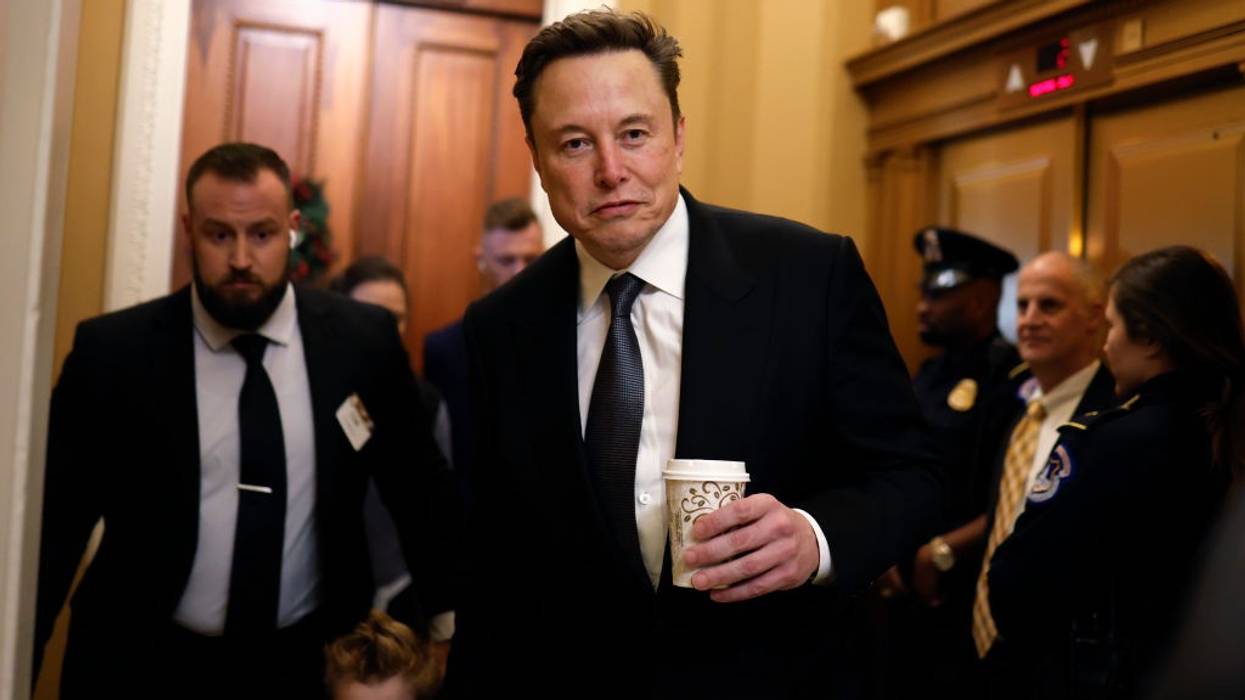
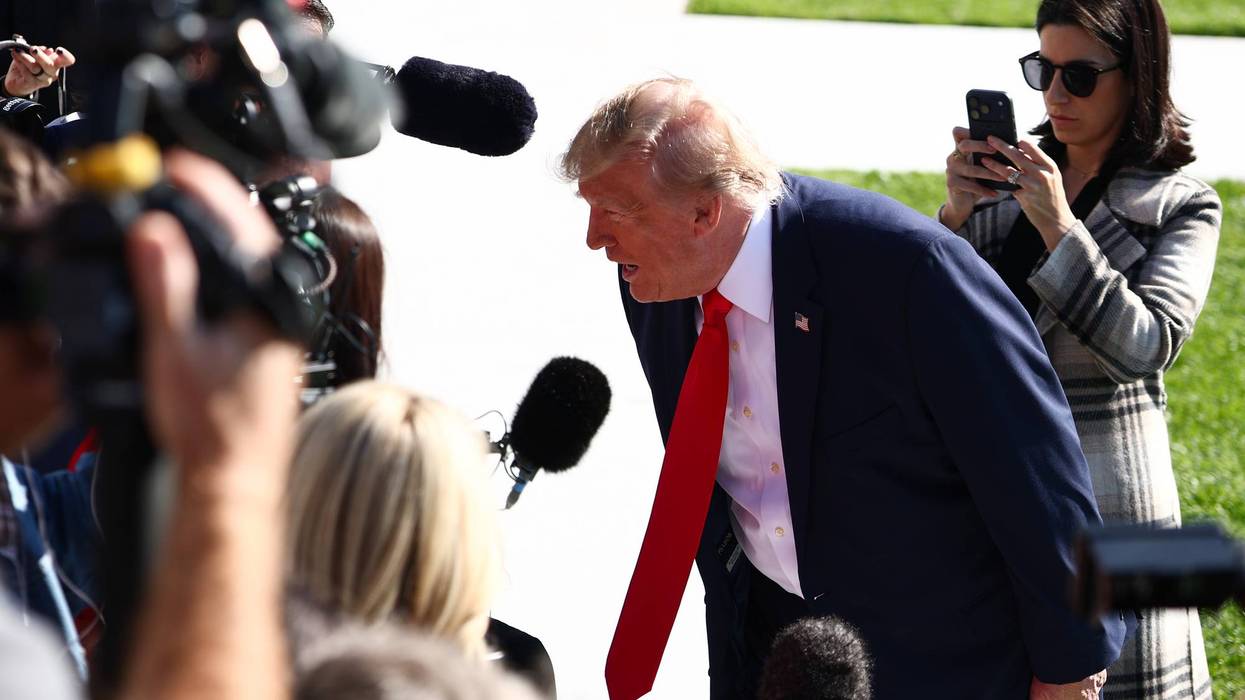
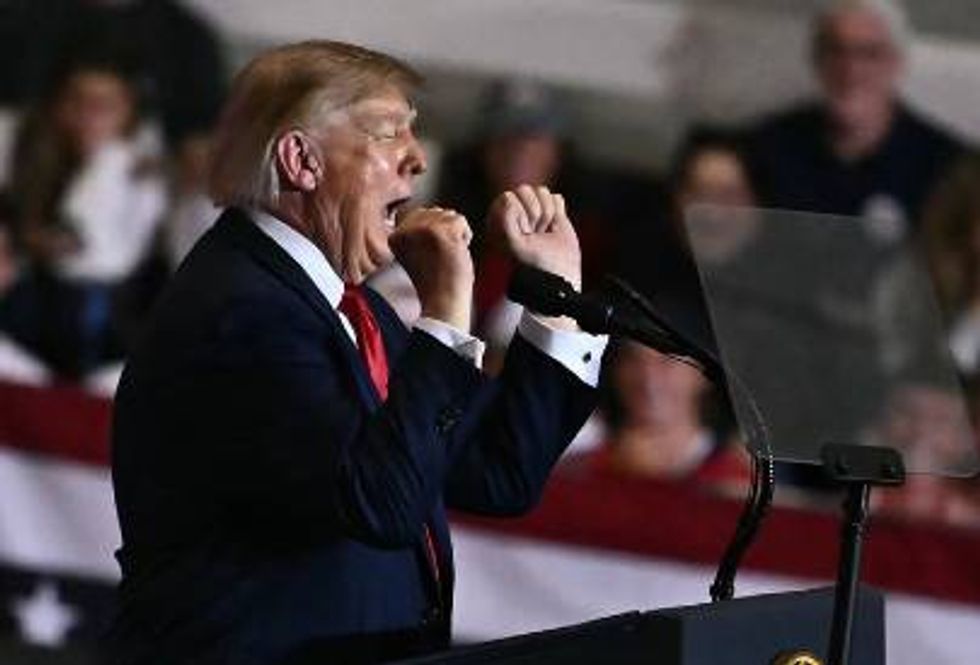 Ladies and gentlemen, the President (sic) of the United StatesGetty Image
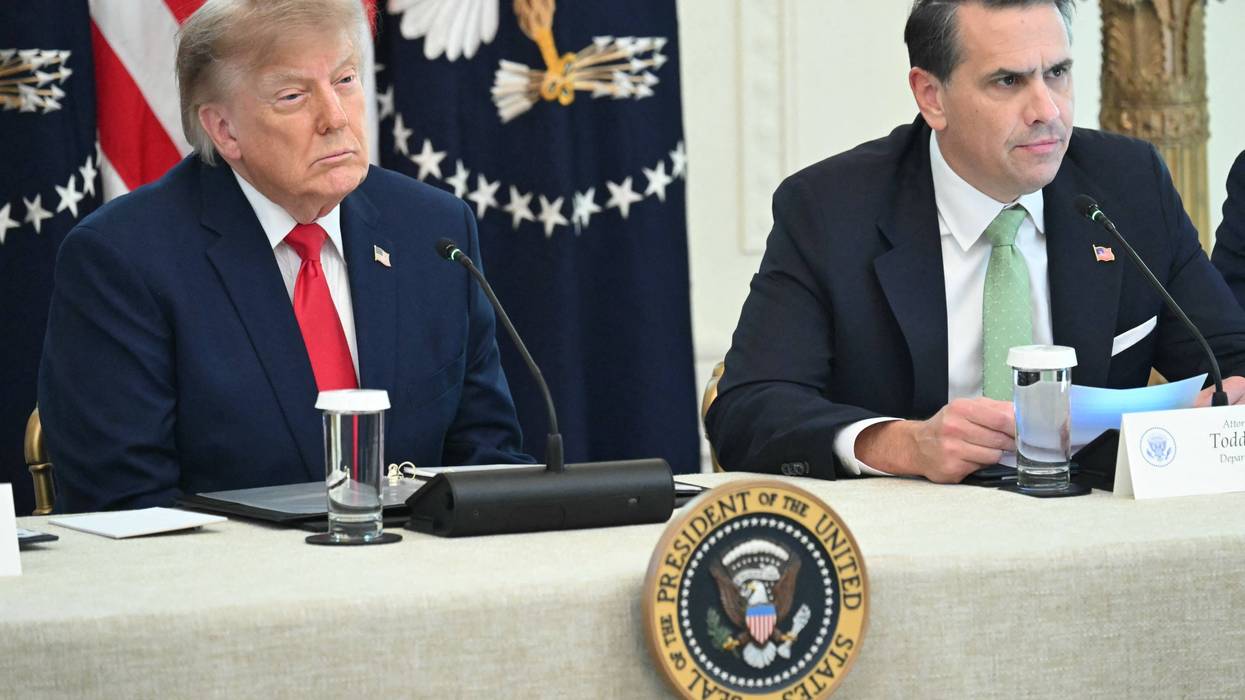
‘Let’s Be Clear,’ Expert Says, There Is ‘No Role’ for DOJ or Todd Blanche in Election Certification
"I don’t think it’s proper to make any kind of conclusory statements about what’s going to happen in the future because I have no idea what’s going to happen in the future," he continued. "It is not DOJ’s intention—and it’s never our intention—to improperly interfere with elections or the state certification process, but to say that there’s no circumstances that we would ever do that—of course I’m not going to say that.”
“But am I planning my days around the election to be somewhere to not certify? Of course not,” added Blanche, who was previously President Donald Trump's personal attorney.
Lauren Miller Karalunas, senior counsel for democracy at the Brennan Center for Justice, emphasized on Friday that regardless of what hypothetical "scenario" Blanche may have been alluding to, there is no legitimate way for the DOJ to stop the certification of election results.
"Let's be clear: The state certification process is just that—a state process," Karalunas said. "There is no role for the federal government to play that's not inherently improper."
"Rest assured, state certification processes were created to meet this moment," she continued. "Centuries ago, state legislatures recognized that bad actors could use the process to manipulate election outcomes. They built in safeguards specifically designed to stop that from happening."
Blanche's refusal to categorically rule out federal intervention alarmed many observers, especially in light of Trump's threats to meddle in elections, including by having them "nationalized" against federal law.
Trump used false claims of widespread voter fraud to pressure states to decertify unfavorable election results in 2020 and pushed the DOJ to assist those efforts. In January, FBI agents seized 2020 election ballots and records from a voting hub in Fulton County, Georgia, in an attempt to legitimize the allegations, which had already been extensively investigated.
Under Blanche—who days ago declared "I work for President Trump"—the DOJ has already sued California in an attempt to prevent ballots from more than 20,000 registered voters from being counted, based on largely unsubstantiated claims that they were noncitizens.
On Thursday, the DOJ sued Alaska to potentially block certification of its Senate election if Democrat Mary Peltola defeats Republican Sen. Dan Sullivan and votes for another candidate—also named Dan Sullivan—could have changed the outcome. The DOJ alleges that the challenger entered the race to confuse the senator’s supporters into voting for him.
Armed agents from Homeland Security Investigations, a branch of Immigration and Customs Enforcement, have been going door to door in California and other states, questioning residents about their citizenship and voting histories.
On Wednesday, a federal court ruled that these operations likely violated the Voting Rights Act's prohibition on voter intimidation.
Blanche and Homeland Security Secretary Markwayne Mullin have also declined to rule out sending immigration or other federal agents to polling places, despite federal laws banning "troops or armed men" from places where elections are being held.
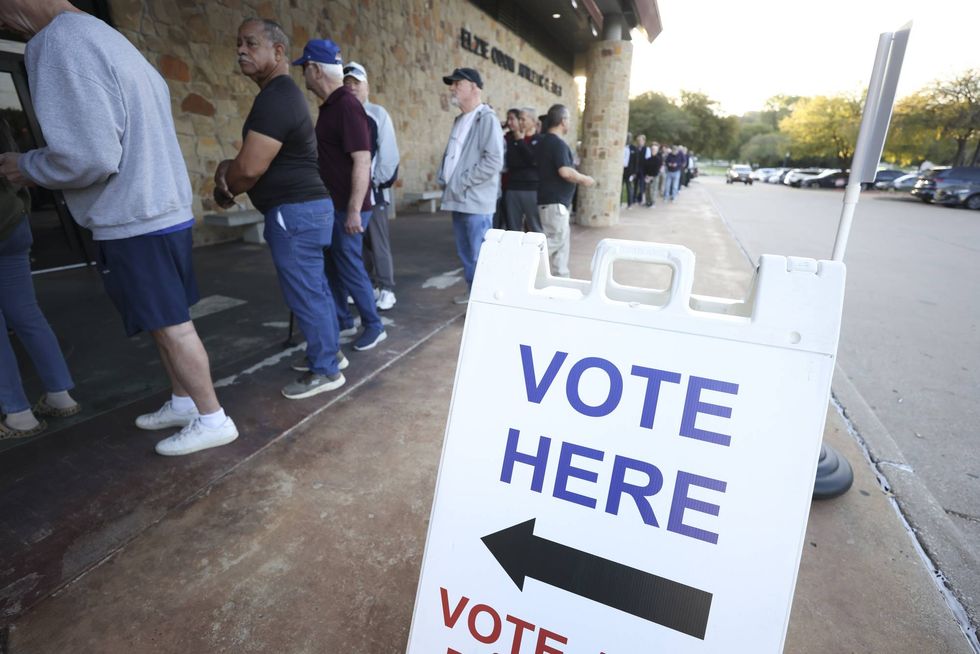 Voters line up outside the Elzie Odom Athletic Center in Arlington, Texas, on October 19, 2026, the first day of early voting for the November 3 midterm elections. (Photo by Chitose Suzuki/The Dallas Morning News via Getty Images)
Max Flugrath, communications director for the voting rights group Fair Fight Action, said Blanche's comments on Thursday were unprecedented.
"I don’t know of another US attorney general who has publicly entertained using the DOJ to block states from certifying an election," he said.
Senate Minority Leader Chuck Schumer (D-NY) responded that "Senate Democrats have been preparing" for potential election shenanigans by the Trump administration "for months, and will be ready for whatever they try."
"As Trump and his cronies attempt to steal this election, we are fighting them at every turn," he wrote on social media.
Sen. Brian Schatz (D-Hawaii) agreed during an interview with CNN that Democrats remained "vigilant" and were "ready for any scenario."
"We've got litigators ready," he told host Kasie Hunt. "We've got... organizers ready in case things get difficult... and so we're not going to have a failure of imagination in terms of what people are capable of in terms of overturning an election."
"But I also think—it's important to remember that part of the game here is that people are desirous of making voters feel like their vote won't count," Schatz added. "And so, the best way to overcome any kind of people screwing around is to get out there and vote in large enough numbers that these little marginal moves that they could or may or may not make won't work."
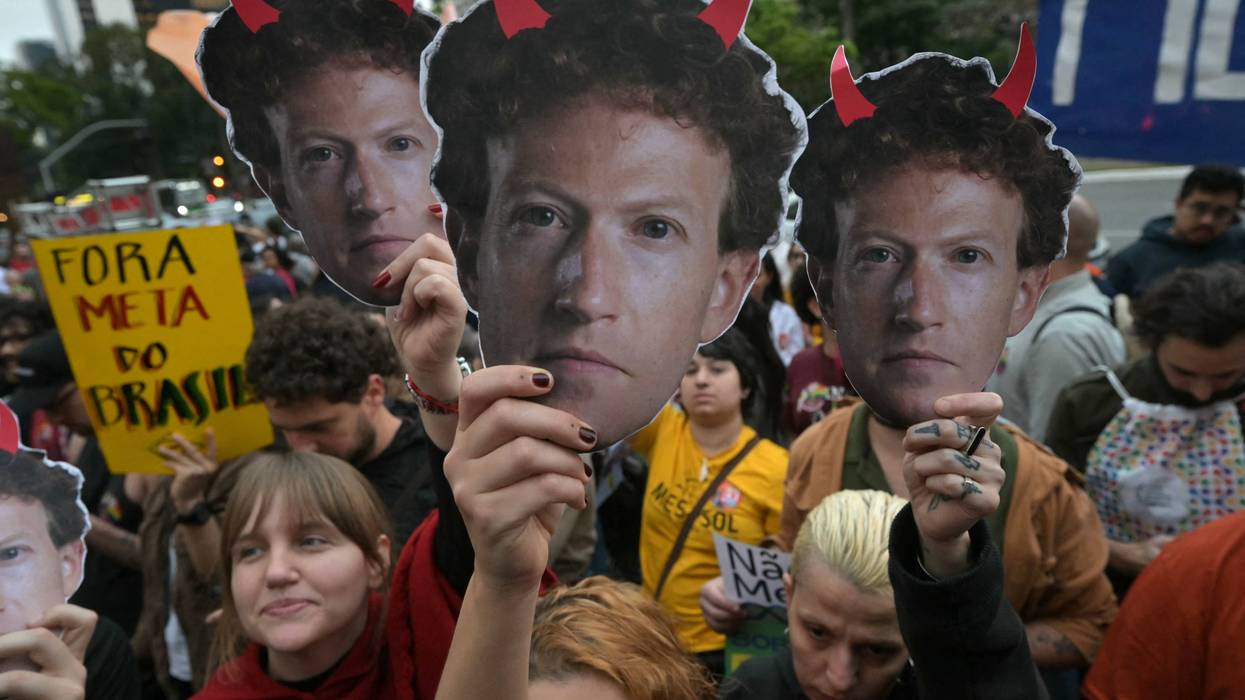
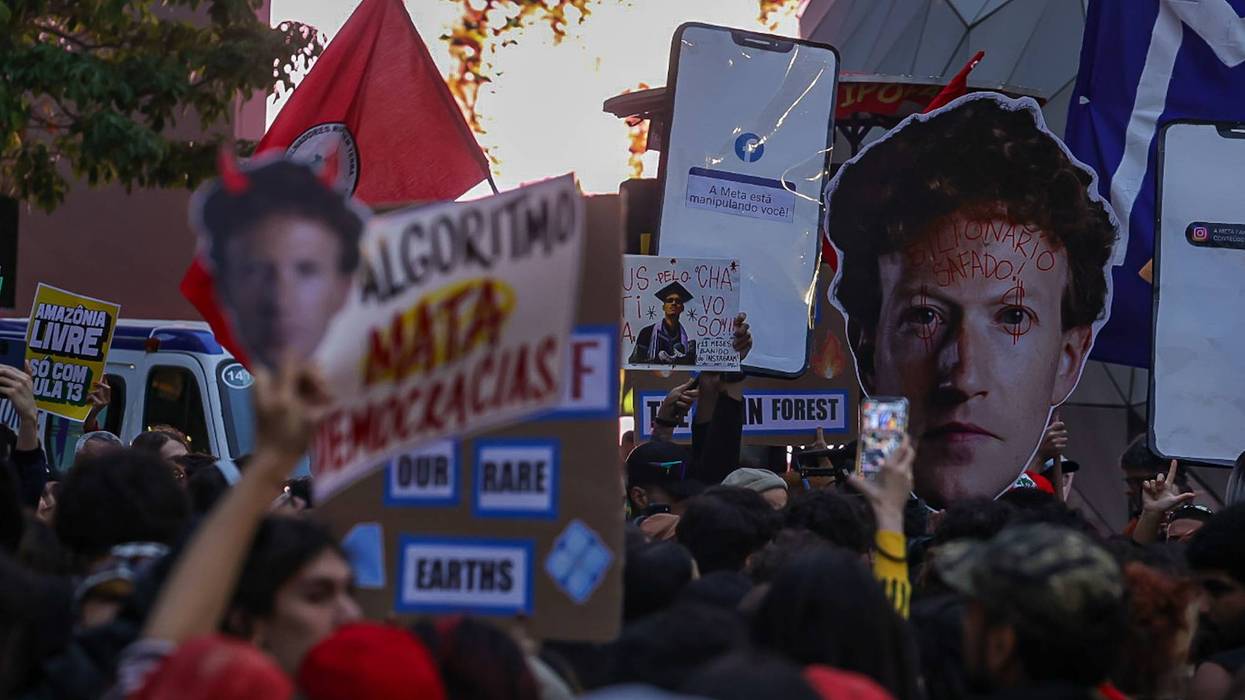
Research Shows Meta Algorithm 'Actively Boosting' Bolsonaro Ahead of Brazil Election
The researchers concluded at the end of their experiment that "Instagram’s algorithm aggressively promoted pro-Bolsonaro and right-leaning content" while "actively suppressing Lula’s official campaign account."
The content that Instagram's algorithm pushed toward the newly created account "was overwhelmingly political," the researchers found. "Of all 50 posts, 74%, were pro-Bolsonaro/right/leaning and only 18% were pro-Lula/left-leaning—glaring evidence of a significant right-wing bias in Instagram’s recommender systems."
"Pro-Lula/left-leaning content performed better per post on every engagement measure, yet was recommended far less often, undercutting any claim that Instagram’s algorithm is simply showing users content that is performing best," Ekō said. "Pro-Lula/left-leaning posts averaged 398,000 likes, around 64,000 comments, and 108,000 shares each—more than double the likes and over seven times the comments, and more than nine times the shares of the average pro-Bolsonaro/right-leaning post."
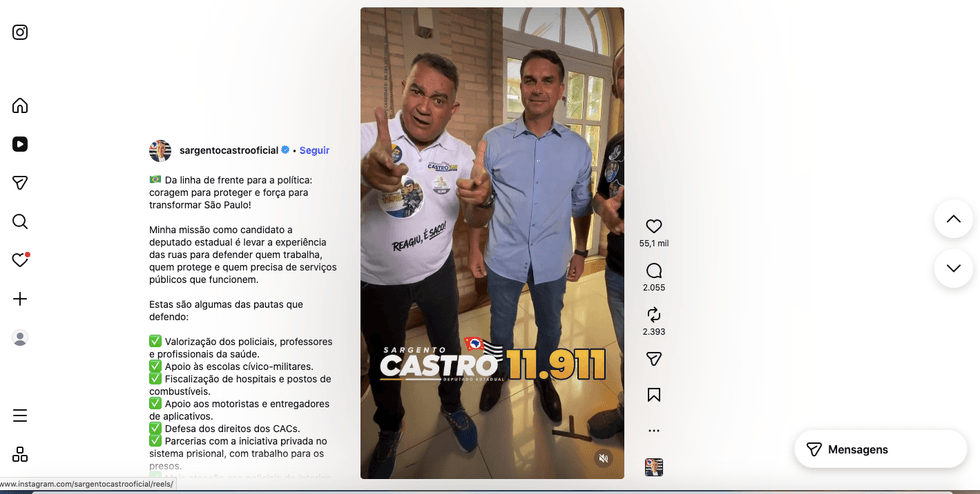
One of the posts that Instagram's algorithm served up to the new account features military police officer Sargento Castro standing alongside a smiling Bolsonaro.
"If you try to fight back," the caption of the post reads, "you’re going straight into a body bag."
Vanessa Lemos, a senior campaigner at Ekō, said the research shows Meta is "interfering in Brazil’s elections in plain sight—boosting Bolsonaro and suppressing Lula content."
"Meta must prove it is complying with the electoral court’s equal-treatment order, verify who pays for political ads, and make its moderation decisions appealable," said Lemos. "Unaccountable Big Tech cannot be allowed to derail democracy."
On Tuesday, Meta told Brazil's Superior Electoral Court that it "has adopted measures to ensure equal treatment," of Lula and Bolsonaro ahead of the October 25 runoff, Reuters reported. Lula has requested Bolsonaro's disqualification from the presidential race over Meta's alleged election interference. Meta employees have acknowledged internally that Lula's accounts have faced restrictions in the lead-up to the election.
Meta's conduct has drawn scrutiny from United Nations experts, who warned on Wednesday that "reports of restrictions on legitimate political expression on Meta platforms during Brazil’s elections raise concerns for freedom of expression, association, political participation and equal treatment of political viewpoints."
"Monitoring reports show thousands of accounts and posts have faced suspensions, reduced visibility, and sharing limits, including journalists, human rights defenders, civil society actors, and content creators,” the UN experts said. “Information, including from Meta employees, suggests that accounts linked to one side of the presidential race were disproportionately curtailed.”
Lawmakers from the US, where Meta is headquartered, wrote a letter to Meta CEO Mark Zuckerberg earlier this week demanding that the company "take immediate action to ensure that, going forward, candidates and their campaigns in democratic elections receive equal treatment and access on your platform."