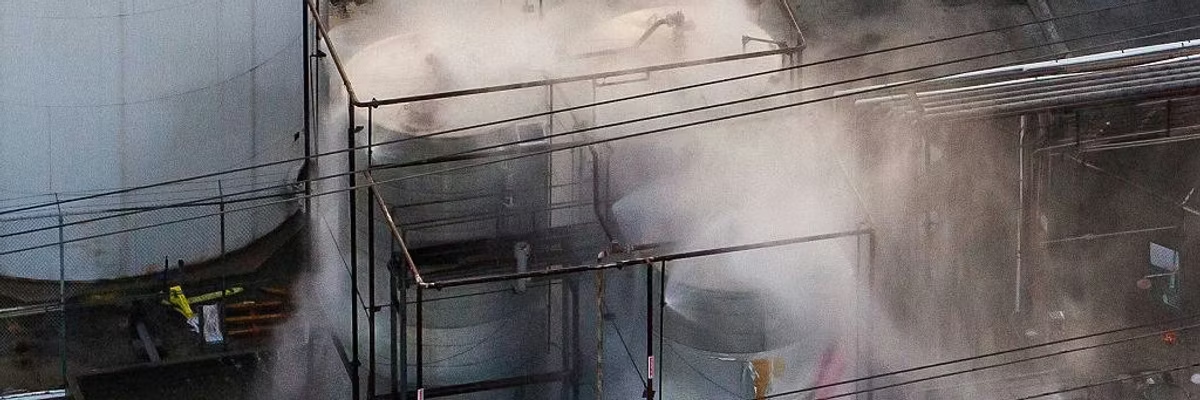
An aerial view of water being sprayed onto an overheated 34,000-gallon tank at GKN Aerospace on May 23, 2026 in Garden Grove, California.
‘Profits Over Safety’: Chemical Disasters Under Trump Pile Up as More Safety Cuts Loom
"Instead of protecting workers and families from death, injury, and illness, Trump’s EPA is putting communities at greater risk of harm," said the Coalition to Prevent Chemical Disasters.
Two recent high-profile chemical plant disasters are putting a spotlight on the Trump administration's aggressive deregulation of the industry, with even more cuts to chemical safety regulations expected in the coming months.
The disasters—one at a paper mill in Washington state that killed 11 people and the other in an aerospace plastics facility in California that forced tens of thousands of people to evacuate their homes—came after months of warnings from experts and labor unions about the impact of the administration's deregulatory agenda.
In late March, for instance, members of United Steelworkers (USW) rallied in Washington, DC to protest against a US Environmental Protection Agency plan to scrap regulations enacted under former President Joe Biden, which included "new safeguards such as identifying safer technologies and chemical alternatives, requiring implementation of safeguard measures in certain cases, more thorough incident investigations, and third-party auditing."
USW Local 13-228 process safety specialist Phil Stagg at the time warned that scrapping the rule would put "profits over safety" by prioritizing cost cutting over worker safety.
Following last week's twin disasters, the Coalition to Prevent Chemical Disasters also pointed to plans to weaken Biden-era safety regulations as a grave mistake that will put American workers at greater risk.
"The fatal and shocking incidents communities have faced in recent days demonstrate the urgent need to implement and build on existing regulatory safeguards so communities near chemical facilities are protected from chemical disasters," the group said. "But, instead of protecting workers and families from death, injury, and illness, Trump’s EPA is putting communities at greater risk of harm by weakening the nation’s primary defense against chemical facility incidents."
The administration has also been targeting the Chemical Safety Board (CSB), an independent federal watchdog charged with investigating the root causes of industrial chemical accidents.
As The New York Times reported last month, Trump's proposed budget all but eliminates the CSB by cutting its funding down to $0 while arguing that the watchdog merely duplicates work already done by the EPA.
Rep. Marie Glusenkamp Perez (D-Wash.) said in a Sunday social media post that the CSB did essential work in preventing future accidents, and she vowed to fight the administration's plans to zero out its budget.
"I’ll be making it my priority ensuring [CSB] has the resources they need for a through, unbiased investigation," Perez said. "They also have three vacancies currently on that board of directors, and my hope is that we're able to work with the administration to ensure that people with real trades experience are appointed to that board."
The horrifying loss of life in Longview last week demands a thorough impartial investigation conducted by the independent watchdog Chemical Safety Board.
Unfortunately the presidents proposed budget has zeroed out the CSB budget.
Next week, I’ll be making it my priority to… pic.twitter.com/3SqbDSASWJ
— Rep. Marie Gluesenkamp Perez (@RepMGP) May 31, 2026
Jordan Barab, a former deputy assistant secretary at the Occupational Safety and Health Administration (OSHA), explained in an interview published by Mountain State Spotlight last week that CSB produces invaluable work about chemical disasters' root causes, whereas the EPA's work focuses on whether disasters were caused by violating federal regulations.
In particular, Barab noted that CSB can "look at other problems, other causes that aren’t necessarily covered by regulations or standards," and added that "a lot of the ways the industry has modernized to improve safety are based on recommendations that came out of the CSB."
We are at a crossroads
This country and this world are at a monumental crossroads. In a few short weeks, US voters will have an opportunity to beat back the forces of fascism and confront the billionaires who are rigging the economy, our media system, and our democracy, making it increasingly impossible for ordinary people to get by. We’re not just talking about the election. We’re talking about what must be done once these fascist elements are vanquished from power. We need a bolder set of solutions than what either major party has so far been willing to offer and a working-class movement ready to fight like hell for it. Trump didn't emerge from nowhere. The conditions that fueled MAGA authoritarianism were created by decades of radical neoliberal economic policies and a corrupt political system dominated by corporate interests. They slashed taxes on the super-rich, promising that the benefits would trickle down. They said giveaways to the corporate titans would make life more affordable for the rest of us. It was all bullshit. And when a bitter, betrayed populace searches for someone to blame, right-wing demagogues have little trouble finding scapegoats. People know when they're being lied to, but you won't hear any of this from the corporate media. Only independent journalism—powered and funded by people who believe in building a better world—can deliver truly trustworthy daily news. Our Fall Campaign is underway, and we need your help. To power our newsroom through the rest of the year, we need to raise $125,000 by midnight on October 31. So if you share our vision, please contribute whatever you can to sustain our work. |
Two recent high-profile chemical plant disasters are putting a spotlight on the Trump administration's aggressive deregulation of the industry, with even more cuts to chemical safety regulations expected in the coming months.
The disasters—one at a paper mill in Washington state that killed 11 people and the other in an aerospace plastics facility in California that forced tens of thousands of people to evacuate their homes—came after months of warnings from experts and labor unions about the impact of the administration's deregulatory agenda.
In late March, for instance, members of United Steelworkers (USW) rallied in Washington, DC to protest against a US Environmental Protection Agency plan to scrap regulations enacted under former President Joe Biden, which included "new safeguards such as identifying safer technologies and chemical alternatives, requiring implementation of safeguard measures in certain cases, more thorough incident investigations, and third-party auditing."
USW Local 13-228 process safety specialist Phil Stagg at the time warned that scrapping the rule would put "profits over safety" by prioritizing cost cutting over worker safety.
Following last week's twin disasters, the Coalition to Prevent Chemical Disasters also pointed to plans to weaken Biden-era safety regulations as a grave mistake that will put American workers at greater risk.
"The fatal and shocking incidents communities have faced in recent days demonstrate the urgent need to implement and build on existing regulatory safeguards so communities near chemical facilities are protected from chemical disasters," the group said. "But, instead of protecting workers and families from death, injury, and illness, Trump’s EPA is putting communities at greater risk of harm by weakening the nation’s primary defense against chemical facility incidents."
The administration has also been targeting the Chemical Safety Board (CSB), an independent federal watchdog charged with investigating the root causes of industrial chemical accidents.
As The New York Times reported last month, Trump's proposed budget all but eliminates the CSB by cutting its funding down to $0 while arguing that the watchdog merely duplicates work already done by the EPA.
Rep. Marie Glusenkamp Perez (D-Wash.) said in a Sunday social media post that the CSB did essential work in preventing future accidents, and she vowed to fight the administration's plans to zero out its budget.
"I’ll be making it my priority ensuring [CSB] has the resources they need for a through, unbiased investigation," Perez said. "They also have three vacancies currently on that board of directors, and my hope is that we're able to work with the administration to ensure that people with real trades experience are appointed to that board."
The horrifying loss of life in Longview last week demands a thorough impartial investigation conducted by the independent watchdog Chemical Safety Board.
Unfortunately the presidents proposed budget has zeroed out the CSB budget.
Next week, I’ll be making it my priority to… pic.twitter.com/3SqbDSASWJ
— Rep. Marie Gluesenkamp Perez (@RepMGP) May 31, 2026
Jordan Barab, a former deputy assistant secretary at the Occupational Safety and Health Administration (OSHA), explained in an interview published by Mountain State Spotlight last week that CSB produces invaluable work about chemical disasters' root causes, whereas the EPA's work focuses on whether disasters were caused by violating federal regulations.
In particular, Barab noted that CSB can "look at other problems, other causes that aren’t necessarily covered by regulations or standards," and added that "a lot of the ways the industry has modernized to improve safety are based on recommendations that came out of the CSB."
Two recent high-profile chemical plant disasters are putting a spotlight on the Trump administration's aggressive deregulation of the industry, with even more cuts to chemical safety regulations expected in the coming months.
The disasters—one at a paper mill in Washington state that killed 11 people and the other in an aerospace plastics facility in California that forced tens of thousands of people to evacuate their homes—came after months of warnings from experts and labor unions about the impact of the administration's deregulatory agenda.
In late March, for instance, members of United Steelworkers (USW) rallied in Washington, DC to protest against a US Environmental Protection Agency plan to scrap regulations enacted under former President Joe Biden, which included "new safeguards such as identifying safer technologies and chemical alternatives, requiring implementation of safeguard measures in certain cases, more thorough incident investigations, and third-party auditing."
USW Local 13-228 process safety specialist Phil Stagg at the time warned that scrapping the rule would put "profits over safety" by prioritizing cost cutting over worker safety.
Following last week's twin disasters, the Coalition to Prevent Chemical Disasters also pointed to plans to weaken Biden-era safety regulations as a grave mistake that will put American workers at greater risk.
"The fatal and shocking incidents communities have faced in recent days demonstrate the urgent need to implement and build on existing regulatory safeguards so communities near chemical facilities are protected from chemical disasters," the group said. "But, instead of protecting workers and families from death, injury, and illness, Trump’s EPA is putting communities at greater risk of harm by weakening the nation’s primary defense against chemical facility incidents."
The administration has also been targeting the Chemical Safety Board (CSB), an independent federal watchdog charged with investigating the root causes of industrial chemical accidents.
As The New York Times reported last month, Trump's proposed budget all but eliminates the CSB by cutting its funding down to $0 while arguing that the watchdog merely duplicates work already done by the EPA.
Rep. Marie Glusenkamp Perez (D-Wash.) said in a Sunday social media post that the CSB did essential work in preventing future accidents, and she vowed to fight the administration's plans to zero out its budget.
"I’ll be making it my priority ensuring [CSB] has the resources they need for a through, unbiased investigation," Perez said. "They also have three vacancies currently on that board of directors, and my hope is that we're able to work with the administration to ensure that people with real trades experience are appointed to that board."
The horrifying loss of life in Longview last week demands a thorough impartial investigation conducted by the independent watchdog Chemical Safety Board.
Unfortunately the presidents proposed budget has zeroed out the CSB budget.
Next week, I’ll be making it my priority to… pic.twitter.com/3SqbDSASWJ
— Rep. Marie Gluesenkamp Perez (@RepMGP) May 31, 2026
Jordan Barab, a former deputy assistant secretary at the Occupational Safety and Health Administration (OSHA), explained in an interview published by Mountain State Spotlight last week that CSB produces invaluable work about chemical disasters' root causes, whereas the EPA's work focuses on whether disasters were caused by violating federal regulations.
In particular, Barab noted that CSB can "look at other problems, other causes that aren’t necessarily covered by regulations or standards," and added that "a lot of the ways the industry has modernized to improve safety are based on recommendations that came out of the CSB."