SUBSCRIBE TO OUR FREE NEWSLETTER
Daily news & progressive opinion—funded by the people, not the corporations—delivered straight to your inbox.
5
#000000
#FFFFFF
To donate by check, phone, or other method, see our More Ways to Give page.
Daily news & progressive opinion—funded by the people, not the corporations—delivered straight to your inbox.
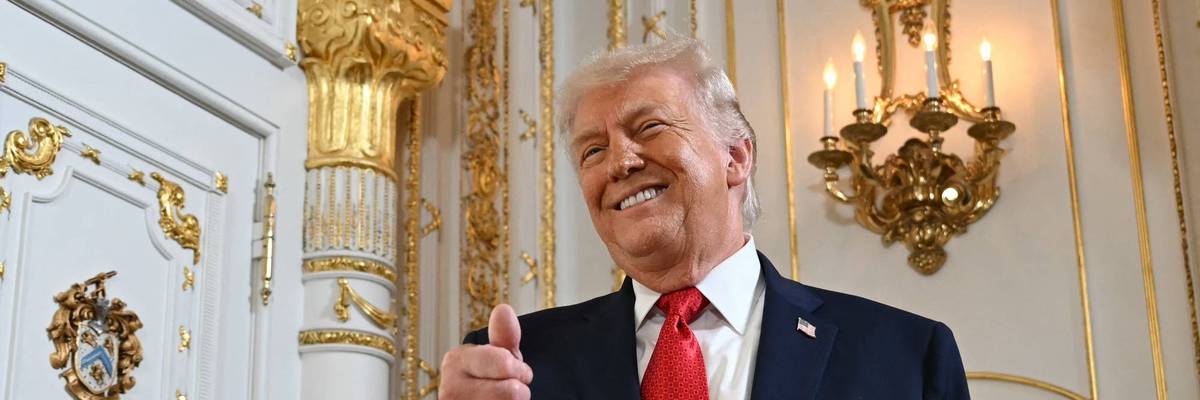
A new poll finds that large majorities of voters believe corruption is a big problem across politics and government and back bold reform.
I’ve written that corruption is the sleeper issue of 2026. Well, it’s awake. And the issue may be bigger than I realized.
That’s the implication of a new national poll released Tuesday by the Brennan Center. The survey was conducted in late April and early May, just before the president’s attempt to create a $1.8 billion slush fund to funnel taxpayer money to his political allies.
The results are striking. More than 9 in 10 voters believe corruption is a big problem across politics and government. Large majorities view corruption as endemic and deeply embedded in government institutions, from the Supreme Court to Congress to the presidency. They are dejected about the fact that scandals continuously go without consequences and shocking revelations fail to produce reform.
Margins are overwhelming among Democrats, Republicans, and independents.
Vast majorities believe this corruption is part of why government doesn’t respond to major issues, including concerns like affordability and housing.
Most importantly, voters back bold reform. Eighty-three percent want a law that bars presidents from having conflicts of interest and holds them to stronger ethical standards. Eighty-one percent want a new federal ethics enforcer. Seventy-nine percent want a constitutional amendment that restores limits on money in elections, and other anti-corruption measures received similar levels of support.
It’s hard to find a set of proposals with a wider bipartisan appeal.
Yet there are notes here that should jar complacency. Listen carefully to voters. They define corruption broadly. Vast majorities see the spectacle of politicians catering to the interests of billionaires and big corporations as corrupt, not surprisingly. But to most Americans, wasting taxpayer dollars and even failing to respond to constituent needs are also forms of corruption.
Vast majorities believe this corruption is part of why government doesn’t respond to major issues, including concerns like affordability and housing. How do we connect these arcane government rules to people’s economic well-being? Voters are already doing so.
There are warning signs aplenty for politicians from both parties. Other polls have shown that voters think neither Democratic nor Republican politicians are better than the other on the issue.
Policymakers should understand that the public’s conception of what has gone wrong goes far deeper than super PACs or White House ballrooms or even slush funds. To them, it is a system that is fundamentally misfiring. A government that is not performing. And there is a willingness to name names and assign blame.
In some ways, these results are ominous. We often note that the 2024 election was the first time since the 1800s where the incumbent party lost the White House three times in a row (2016, 2020, 2024). This survey shows a deeply disquieted electorate, scornful of the political system and furious at its flaws. That environment created the conditions for President Donald Trump’s populist nationalism to emerge in 2016. It hasn’t gone away.
Yet this is also the kindling that can fuel new approaches, sharper critiques, and stronger solutions. If polls are to be believed, Sen. Jon Ossoff (D-Ga.) has turned his political fortunes through a relentless and often stirring stump-speech focus on corruption.
The breadth of public unhappiness suggests a deeper moral critique. Even now, amid wrenching technological change and evaporating standards, people seem focused on an underlying core of personal responsibility.
My old boss, President Bill Clinton, often talked this way, especially when he was running for president in 1992. “The American dream that we were all raised on is a simple but powerful one,” he would say. “If you work hard and play by the rules, you should be given a chance to go as far as your God-given ability will take you.”
More recently, that ethos was given voice in Hungary by its new president, Péter Magyar. Running against the authoritarian kleptocrat Viktor Orbán, Magyar vowed that Hungary would no longer be “a country without consequences.” He pledged to oversee not just new policies but a thorough effort to clean house and to hold accountable those who had stolen from the people.
The new Brennan Center research suggests that voters here, too, are ready for a country with consequences. That will help shape the next political era—if we are ready to make it happen.
Dear Common Dreams reader, It’s been nearly 30 years since I co-founded Common Dreams with my late wife, Lina Newhouser. We had the radical notion that journalism should serve the public good, not corporate profits. It was clear to us from the outset what it would take to build such a project. No paid advertisements. No corporate sponsors. No millionaire publisher telling us what to think or do. Many people said we wouldn't last a year, but we proved those doubters wrong. Together with a tremendous team of journalists and dedicated staff, we built an independent media outlet free from the constraints of profits and corporate control. Our mission has always been simple: To inform. To inspire. To ignite change for the common good. Building Common Dreams was not easy. Our survival was never guaranteed. When you take on the most powerful forces—Wall Street greed, fossil fuel industry destruction, Big Tech lobbyists, and uber-rich oligarchs who have spent billions upon billions rigging the economy and democracy in their favor—the only bulwark you have is supporters who believe in your work. But here’s the urgent message from me today. It's never been this bad out there. And it's never been this hard to keep us going. At the very moment Common Dreams is most needed, the threats we face are intensifying. We need your support now more than ever. We don't accept corporate advertising and never will. We don't have a paywall because we don't think people should be blocked from critical news based on their ability to pay. Everything we do is funded by the donations of readers like you. When everyone does the little they can afford, we are strong. But if that support retreats or dries up, so do we. Will you donate now to make sure Common Dreams not only survives but thrives? —Craig Brown, Co-founder |
I’ve written that corruption is the sleeper issue of 2026. Well, it’s awake. And the issue may be bigger than I realized.
That’s the implication of a new national poll released Tuesday by the Brennan Center. The survey was conducted in late April and early May, just before the president’s attempt to create a $1.8 billion slush fund to funnel taxpayer money to his political allies.
The results are striking. More than 9 in 10 voters believe corruption is a big problem across politics and government. Large majorities view corruption as endemic and deeply embedded in government institutions, from the Supreme Court to Congress to the presidency. They are dejected about the fact that scandals continuously go without consequences and shocking revelations fail to produce reform.
Margins are overwhelming among Democrats, Republicans, and independents.
Vast majorities believe this corruption is part of why government doesn’t respond to major issues, including concerns like affordability and housing.
Most importantly, voters back bold reform. Eighty-three percent want a law that bars presidents from having conflicts of interest and holds them to stronger ethical standards. Eighty-one percent want a new federal ethics enforcer. Seventy-nine percent want a constitutional amendment that restores limits on money in elections, and other anti-corruption measures received similar levels of support.
It’s hard to find a set of proposals with a wider bipartisan appeal.
Yet there are notes here that should jar complacency. Listen carefully to voters. They define corruption broadly. Vast majorities see the spectacle of politicians catering to the interests of billionaires and big corporations as corrupt, not surprisingly. But to most Americans, wasting taxpayer dollars and even failing to respond to constituent needs are also forms of corruption.
Vast majorities believe this corruption is part of why government doesn’t respond to major issues, including concerns like affordability and housing. How do we connect these arcane government rules to people’s economic well-being? Voters are already doing so.
There are warning signs aplenty for politicians from both parties. Other polls have shown that voters think neither Democratic nor Republican politicians are better than the other on the issue.
Policymakers should understand that the public’s conception of what has gone wrong goes far deeper than super PACs or White House ballrooms or even slush funds. To them, it is a system that is fundamentally misfiring. A government that is not performing. And there is a willingness to name names and assign blame.
In some ways, these results are ominous. We often note that the 2024 election was the first time since the 1800s where the incumbent party lost the White House three times in a row (2016, 2020, 2024). This survey shows a deeply disquieted electorate, scornful of the political system and furious at its flaws. That environment created the conditions for President Donald Trump’s populist nationalism to emerge in 2016. It hasn’t gone away.
Yet this is also the kindling that can fuel new approaches, sharper critiques, and stronger solutions. If polls are to be believed, Sen. Jon Ossoff (D-Ga.) has turned his political fortunes through a relentless and often stirring stump-speech focus on corruption.
The breadth of public unhappiness suggests a deeper moral critique. Even now, amid wrenching technological change and evaporating standards, people seem focused on an underlying core of personal responsibility.
My old boss, President Bill Clinton, often talked this way, especially when he was running for president in 1992. “The American dream that we were all raised on is a simple but powerful one,” he would say. “If you work hard and play by the rules, you should be given a chance to go as far as your God-given ability will take you.”
More recently, that ethos was given voice in Hungary by its new president, Péter Magyar. Running against the authoritarian kleptocrat Viktor Orbán, Magyar vowed that Hungary would no longer be “a country without consequences.” He pledged to oversee not just new policies but a thorough effort to clean house and to hold accountable those who had stolen from the people.
The new Brennan Center research suggests that voters here, too, are ready for a country with consequences. That will help shape the next political era—if we are ready to make it happen.
I’ve written that corruption is the sleeper issue of 2026. Well, it’s awake. And the issue may be bigger than I realized.
That’s the implication of a new national poll released Tuesday by the Brennan Center. The survey was conducted in late April and early May, just before the president’s attempt to create a $1.8 billion slush fund to funnel taxpayer money to his political allies.
The results are striking. More than 9 in 10 voters believe corruption is a big problem across politics and government. Large majorities view corruption as endemic and deeply embedded in government institutions, from the Supreme Court to Congress to the presidency. They are dejected about the fact that scandals continuously go without consequences and shocking revelations fail to produce reform.
Margins are overwhelming among Democrats, Republicans, and independents.
Vast majorities believe this corruption is part of why government doesn’t respond to major issues, including concerns like affordability and housing.
Most importantly, voters back bold reform. Eighty-three percent want a law that bars presidents from having conflicts of interest and holds them to stronger ethical standards. Eighty-one percent want a new federal ethics enforcer. Seventy-nine percent want a constitutional amendment that restores limits on money in elections, and other anti-corruption measures received similar levels of support.
It’s hard to find a set of proposals with a wider bipartisan appeal.
Yet there are notes here that should jar complacency. Listen carefully to voters. They define corruption broadly. Vast majorities see the spectacle of politicians catering to the interests of billionaires and big corporations as corrupt, not surprisingly. But to most Americans, wasting taxpayer dollars and even failing to respond to constituent needs are also forms of corruption.
Vast majorities believe this corruption is part of why government doesn’t respond to major issues, including concerns like affordability and housing. How do we connect these arcane government rules to people’s economic well-being? Voters are already doing so.
There are warning signs aplenty for politicians from both parties. Other polls have shown that voters think neither Democratic nor Republican politicians are better than the other on the issue.
Policymakers should understand that the public’s conception of what has gone wrong goes far deeper than super PACs or White House ballrooms or even slush funds. To them, it is a system that is fundamentally misfiring. A government that is not performing. And there is a willingness to name names and assign blame.
In some ways, these results are ominous. We often note that the 2024 election was the first time since the 1800s where the incumbent party lost the White House three times in a row (2016, 2020, 2024). This survey shows a deeply disquieted electorate, scornful of the political system and furious at its flaws. That environment created the conditions for President Donald Trump’s populist nationalism to emerge in 2016. It hasn’t gone away.
Yet this is also the kindling that can fuel new approaches, sharper critiques, and stronger solutions. If polls are to be believed, Sen. Jon Ossoff (D-Ga.) has turned his political fortunes through a relentless and often stirring stump-speech focus on corruption.
The breadth of public unhappiness suggests a deeper moral critique. Even now, amid wrenching technological change and evaporating standards, people seem focused on an underlying core of personal responsibility.
My old boss, President Bill Clinton, often talked this way, especially when he was running for president in 1992. “The American dream that we were all raised on is a simple but powerful one,” he would say. “If you work hard and play by the rules, you should be given a chance to go as far as your God-given ability will take you.”
More recently, that ethos was given voice in Hungary by its new president, Péter Magyar. Running against the authoritarian kleptocrat Viktor Orbán, Magyar vowed that Hungary would no longer be “a country without consequences.” He pledged to oversee not just new policies but a thorough effort to clean house and to hold accountable those who had stolen from the people.
The new Brennan Center research suggests that voters here, too, are ready for a country with consequences. That will help shape the next political era—if we are ready to make it happen.