SUBSCRIBE TO OUR FREE NEWSLETTER
Daily news & progressive opinion—funded by the people, not the corporations—delivered straight to your inbox.
5
#000000
#FFFFFF
To donate by check, phone, or other method, see our More Ways to Give page.

The Environmental Working Group is a community 30 million strong, working to protect our environmental health by changing industry standards.
(202) 667-6982

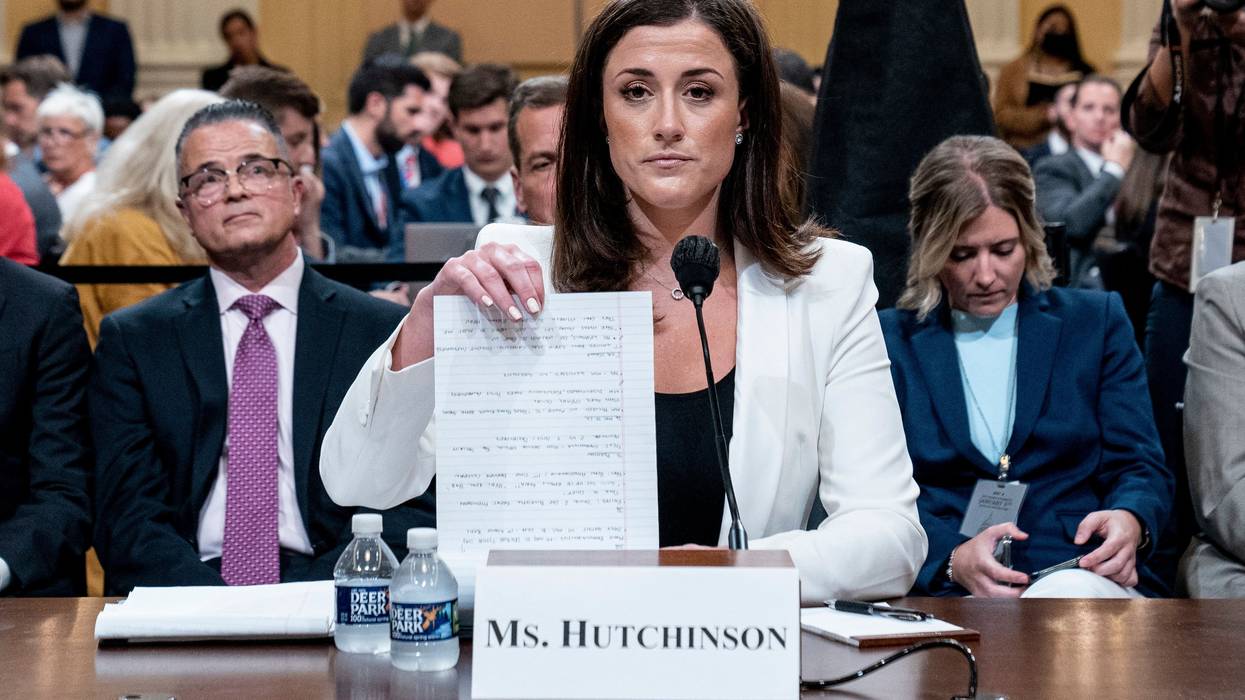
Hutchinson, who was an aide to then-White House chief of staff Mark Meadows, told Congress she overheard Trump demand the removal of metal detectors at his rally near the White House before the riot, despite knowing that some attendees were armed. She quoted him saying, "They're not here to hurt me."
She also relayed information she claimed to have learned secondhand from others in the Trump White House. She said that Anthony Ornato, the deputy White House chief of staff for operations, told her that Trump tried to grab the steering wheel of his SUV away from the Secret Service agent driving it so he could join supporters at the Capitol.
Ornato has since said he does not recall recounting this incident to Hutchinson, and the agents in the vehicle have denied that it took place, according to a subsequent investigation by Republicans in the House of Representatives. However, other witnesses have testified more broadly to Trump's anger that he could not join his supporters at the Capitol.
Hutchinson also said Meadows was reluctant to intervene as rioters threatened to hang then-Vice President Mike Pence. She claimed Meadows told her that Trump believed Pence—who'd refused to assist his efforts to overturn the election result—deserved the threats and that the rioters had done nothing wrong.
Trump has since pardoned every one of the more than 1,500 people convicted of offenses related to the Capitol attack, including those who committed violent felonies.
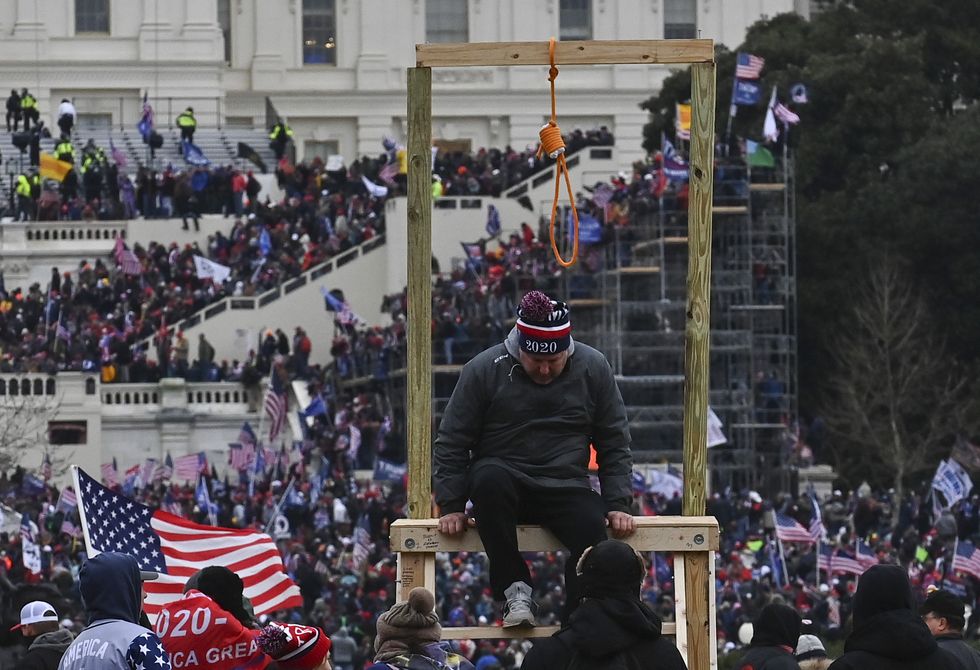 A man climbs down after being photographed with a noose during a protest calling for legislators to overturn the election results in President Donald Trump's favor at the US Capitol on January 6, 2021 in Washington, DC. (Photo by Ricky Carioti/The Washington Post via Getty Images)
Asked about plans to bring charges against Hutchinson, a DOJ spokesperson said, "The department does not confirm or deny the existence of investigations, or the lack thereof."
But the department's pursuit of Hutchinson has been public knowledge since at least April, when The New York Times reported that a criminal investigation into the former White House aide had been opened.
The Times noted that it was highly unusual for such a probe to be undertaken by the Civil Rights Division—which usually handles cases of discrimination—rather than the US attorney for the District of Columbia.
Efforts to prosecute Hutchinson follow attempts by the DOJ to bring charges against the president's other perceived enemies, including former FBI Director James Comey and New York Attorney General Letitia James, both of which have been thrown out of court.
In a post on social media, Andrew Fleischman, a Georgia-based trial and appeals lawyer, decried the targeting of Hutchinson as "a chilling and corrupt indictment of a woman who told the truth," but also "yet another opportunity for the Trump DOJ to shit its pants in court."
On Wednesday, Raskin announced a bill that would compel the Smithsonian to collect and preserve objects "reflecting the rise of governmental propaganda, corruption, and authoritarianism" under Trump's two presidencies.
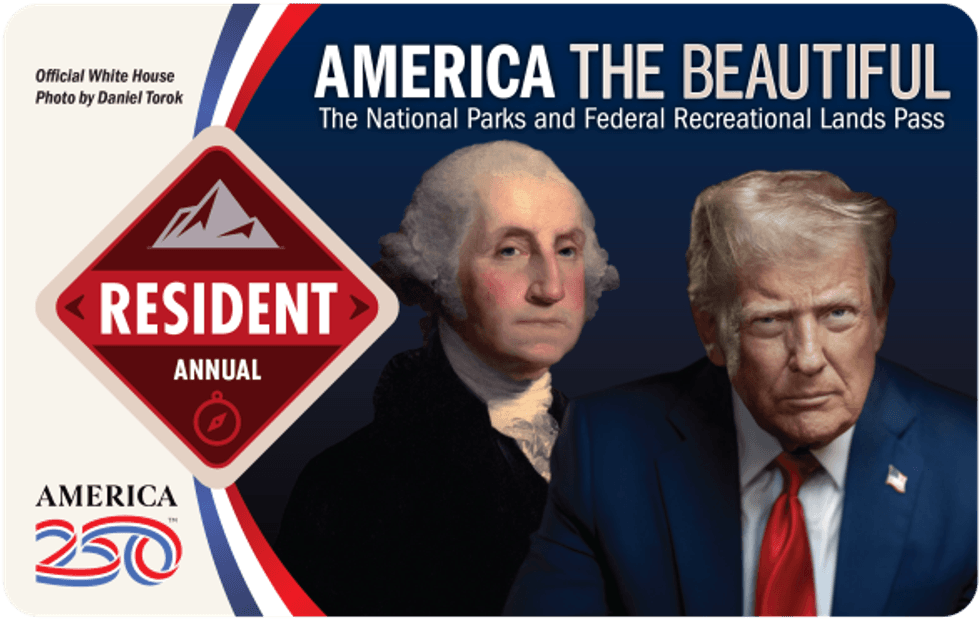 The 2026 America the Beautiful annual national parks pass features President Donald Trump alongside George Washington. (Photo from the US Department of the Interior via Wikimedia Commons)
The legislation comes amid Trump's attempts to warp the Smithsonian's content to reflect his personal view of the nation's history. In July, he signed an executive order directing the Interior Department to erect signs along the walkway warning that it contained exhibits that reflect the “personal, radical ideologies" of the curators.
The language is pulled from a 162-page report released that same month objecting to exhibits that it claims demonstrate "extreme political activism"—including some which highlight the experiences of immigrants, LGBTQ+ people, Native Americans, and other historically marginalized groups. It also claims that the museum does not adequately venerate the nation's founders, while accentuating their faults, including participation in slavery and other historic injustices.
Raskin said that the signs warning passersby of the Smithsonian's dangerous content—which are expected to cost $84,000 to install—are among the artifacts that should be preserved as an example of how authoritarians seek to control media, government, and culture.
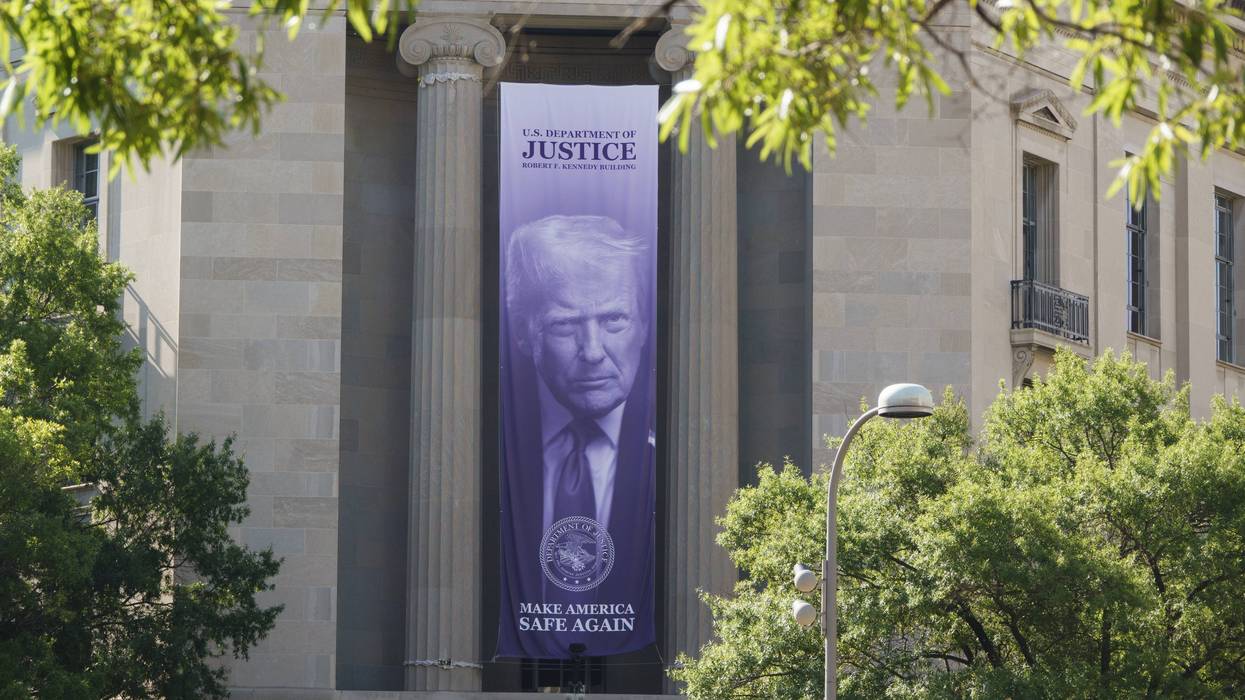
He said the signs should be among several other "manifestations of authoritarian narcissism" that the museum should put on display, as well as the "Stalinist" banners of Trump's face that have adorned the departments of Agriculture, Labor, Justice, and Interior.
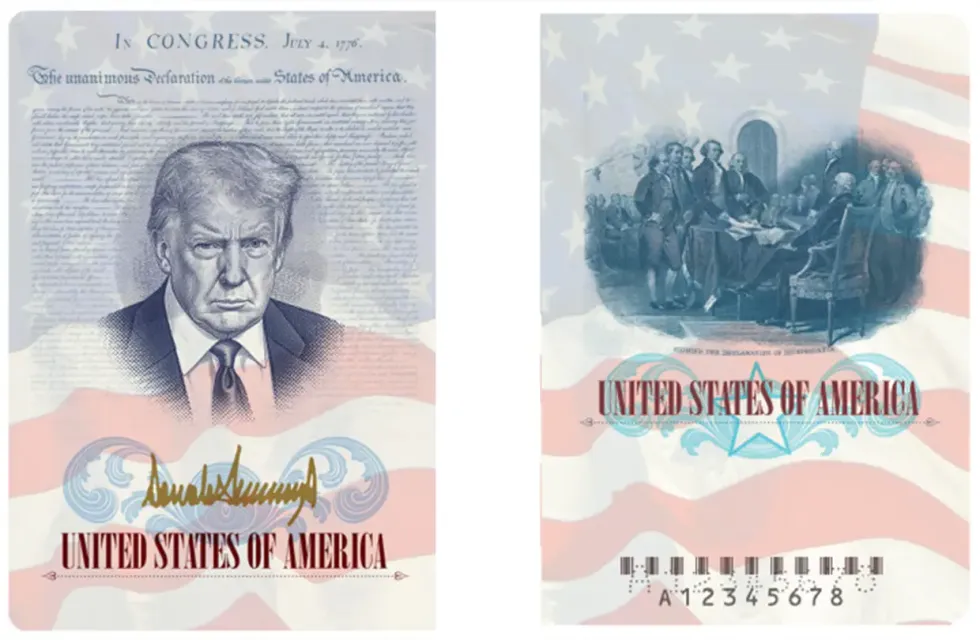 The inner cover of an official commemorative passport for the 250th anniversary of the United States, which featured the image of President Donald Trump. (Photo from the US Department of State via Wikimedia Commons)
In addition, Raskin said the exhibition should include other photos and videos captured by journalists and private citizens documenting the Trump era, as well as personal testimonials from Americans who "resisted and opposed the rise in authoritarianism," including those who participated in protest movements.
In March 2025, Trump signed an executive order directing the Smithsonian to purge its halls of what he called "improper ideology" or risk losing funding, which was followed by sweeping content reviews.
Earlier this week, The Atlantic reported that the White House had conditioned nearly $190 million in Smithsonian funding on its adherence to the order's vague ban on "exhibits or programs that degrade shared American values, divide Americans based on race, or promote programs or ideologies inconsistent with Federal law and policy.”
The museum has bowed to the pressure sometimes in ways that critics deemed "Orwellian," such as when references to Trump were scrubbed from an exhibit on presidential impeachments before being restored following backlash.
In January, a Smithsonian staff member told The Guardian that administrators had objected to the description of the World War II-era internment of Japanese Americans as "unjust" because the label could appear partisan. Another said they changed "diversity" to "variety" in text discussing astronomical objects, fearing that the administration might flag the word during its content reviews.
Raskin said his legislation is aimed at making sure this sort of heavy-handed censorship is not forgotten.
“To avoid repeating this descent into authoritarianism," he said, "we must study this corrupt president’s actions and allow the public to learn about the numerous tools he deployed while attempting to remake American history in his own image and according to his own autocratic and white nationalist beliefs.”