SUBSCRIBE TO OUR FREE NEWSLETTER
Daily news & progressive opinion—funded by the people, not the corporations—delivered straight to your inbox.
5
#000000
#FFFFFF
To donate by check, phone, or other method, see our More Ways to Give page.
Daily news & progressive opinion—funded by the people, not the corporations—delivered straight to your inbox.
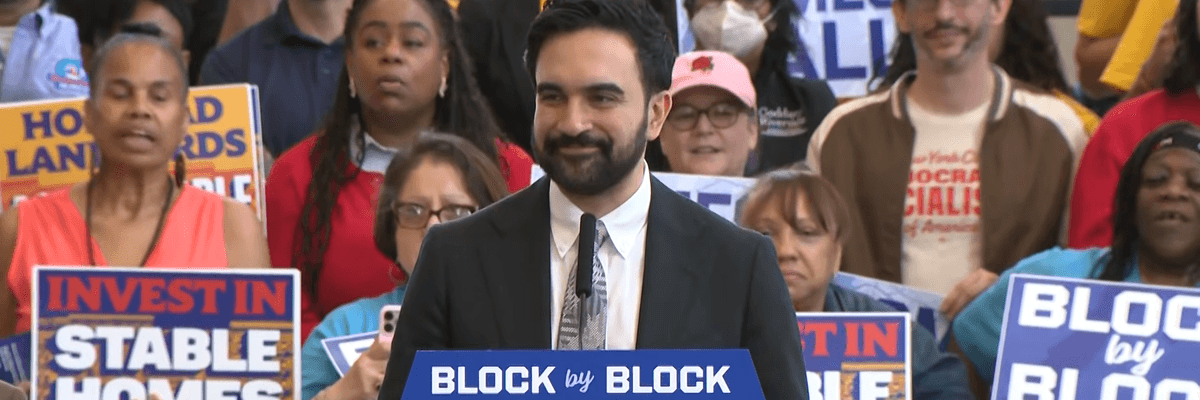
New York City Mayor Zohran Mamdani unveils his "Block by Block" housing initiative at a rally on March 26, 2026 in Brooklyn, New York.
"We are the largest city in the nation," the mayor said of the bold new proposal. "We have the resources, the talent, and the will to achieve this."
New York City Mayor Zohran Mamdani unveiled his long-anticipated plan on Tuesday that he said will confront the city's housing crisis "with the urgency it demands," setting out the goal of building and preserving 400,000 affordable housing units.
Aimed at driving down housing costs in one of the nation's most expensive rental markets, the mayor described his program—titled "Block by Block: The Housing Plan For A New Era"—as one that will set about meeting "two of the most ambitious housing targets in modern New York City," during a press conference in Brooklyn on Tuesday.
Using a $22 billion capital investment over the next five years, the city is set to build 200,000 new affordable and rent-stabilized homes while preserving and stabilizing another 200,000 over the next decade.
According to a press release from the mayor's office, the large investment—which makes up about a sixth of the mayor's five-year capital plan—will be paired "with an ambitious land use agenda to boost housing production across the five boroughs and innovative new financing tools to build and preserve affordable housing more quickly and efficiently."
It will also include modifications to the zoning code to create hundreds of housing co-ops.
Mamdani said on Tuesday that the construction and maintenance of these units would increase the number of homes available to New Yorkers facing homelessness by 45%.
"We are the largest city in the nation. We have the resources, the talent, and the will to achieve this," Mamdani said on Tuesday, surrounded by a coalition of housing advocates, labor union representatives, and city officials.
He said the construction boom will "kickstart" the city's economy. According to the city's Department of Housing Preservation & Development, the program will create an average of 30,000 jobs per year during construction and 12,700 permanent jobs once it's completed.
Mamdani is also directing around $5.6 billion to the New York City Housing Authority to renovate existing units and reduce long wait times. NYCHA has over 170,000 units, and many of them are decades old and badly in need of repairs.
In addition to around $5 million aimed at helping landlords to fix longstanding maintenance issues and cover missed rent, the plan also targets landlords with troubled histories with "roof-to-cellar" inspections of their properties.
"This is about putting city government in the driver's seat. This is about delivering the changes that New Yorkers have been demanding with little avail," Mamdani said. "We will prove that government can deliver on the solutions to the toughest problems, not just debate them."
Dear Common Dreams reader, It’s been nearly 30 years since I co-founded Common Dreams with my late wife, Lina Newhouser. We had the radical notion that journalism should serve the public good, not corporate profits. It was clear to us from the outset what it would take to build such a project. No paid advertisements. No corporate sponsors. No millionaire publisher telling us what to think or do. Many people said we wouldn't last a year, but we proved those doubters wrong. Together with a tremendous team of journalists and dedicated staff, we built an independent media outlet free from the constraints of profits and corporate control. Our mission has always been simple: To inform. To inspire. To ignite change for the common good. Building Common Dreams was not easy. Our survival was never guaranteed. When you take on the most powerful forces—Wall Street greed, fossil fuel industry destruction, Big Tech lobbyists, and uber-rich oligarchs who have spent billions upon billions rigging the economy and democracy in their favor—the only bulwark you have is supporters who believe in your work. But here’s the urgent message from me today. It's never been this bad out there. And it's never been this hard to keep us going. At the very moment Common Dreams is most needed, the threats we face are intensifying. We need your support now more than ever. We don't accept corporate advertising and never will. We don't have a paywall because we don't think people should be blocked from critical news based on their ability to pay. Everything we do is funded by the donations of readers like you. When everyone does the little they can afford, we are strong. But if that support retreats or dries up, so do we. Will you donate now to make sure Common Dreams not only survives but thrives? —Craig Brown, Co-founder |
New York City Mayor Zohran Mamdani unveiled his long-anticipated plan on Tuesday that he said will confront the city's housing crisis "with the urgency it demands," setting out the goal of building and preserving 400,000 affordable housing units.
Aimed at driving down housing costs in one of the nation's most expensive rental markets, the mayor described his program—titled "Block by Block: The Housing Plan For A New Era"—as one that will set about meeting "two of the most ambitious housing targets in modern New York City," during a press conference in Brooklyn on Tuesday.
Using a $22 billion capital investment over the next five years, the city is set to build 200,000 new affordable and rent-stabilized homes while preserving and stabilizing another 200,000 over the next decade.
According to a press release from the mayor's office, the large investment—which makes up about a sixth of the mayor's five-year capital plan—will be paired "with an ambitious land use agenda to boost housing production across the five boroughs and innovative new financing tools to build and preserve affordable housing more quickly and efficiently."
It will also include modifications to the zoning code to create hundreds of housing co-ops.
Mamdani said on Tuesday that the construction and maintenance of these units would increase the number of homes available to New Yorkers facing homelessness by 45%.
"We are the largest city in the nation. We have the resources, the talent, and the will to achieve this," Mamdani said on Tuesday, surrounded by a coalition of housing advocates, labor union representatives, and city officials.
He said the construction boom will "kickstart" the city's economy. According to the city's Department of Housing Preservation & Development, the program will create an average of 30,000 jobs per year during construction and 12,700 permanent jobs once it's completed.
Mamdani is also directing around $5.6 billion to the New York City Housing Authority to renovate existing units and reduce long wait times. NYCHA has over 170,000 units, and many of them are decades old and badly in need of repairs.
In addition to around $5 million aimed at helping landlords to fix longstanding maintenance issues and cover missed rent, the plan also targets landlords with troubled histories with "roof-to-cellar" inspections of their properties.
"This is about putting city government in the driver's seat. This is about delivering the changes that New Yorkers have been demanding with little avail," Mamdani said. "We will prove that government can deliver on the solutions to the toughest problems, not just debate them."
New York City Mayor Zohran Mamdani unveiled his long-anticipated plan on Tuesday that he said will confront the city's housing crisis "with the urgency it demands," setting out the goal of building and preserving 400,000 affordable housing units.
Aimed at driving down housing costs in one of the nation's most expensive rental markets, the mayor described his program—titled "Block by Block: The Housing Plan For A New Era"—as one that will set about meeting "two of the most ambitious housing targets in modern New York City," during a press conference in Brooklyn on Tuesday.
Using a $22 billion capital investment over the next five years, the city is set to build 200,000 new affordable and rent-stabilized homes while preserving and stabilizing another 200,000 over the next decade.
According to a press release from the mayor's office, the large investment—which makes up about a sixth of the mayor's five-year capital plan—will be paired "with an ambitious land use agenda to boost housing production across the five boroughs and innovative new financing tools to build and preserve affordable housing more quickly and efficiently."
It will also include modifications to the zoning code to create hundreds of housing co-ops.
Mamdani said on Tuesday that the construction and maintenance of these units would increase the number of homes available to New Yorkers facing homelessness by 45%.
"We are the largest city in the nation. We have the resources, the talent, and the will to achieve this," Mamdani said on Tuesday, surrounded by a coalition of housing advocates, labor union representatives, and city officials.
He said the construction boom will "kickstart" the city's economy. According to the city's Department of Housing Preservation & Development, the program will create an average of 30,000 jobs per year during construction and 12,700 permanent jobs once it's completed.
Mamdani is also directing around $5.6 billion to the New York City Housing Authority to renovate existing units and reduce long wait times. NYCHA has over 170,000 units, and many of them are decades old and badly in need of repairs.
In addition to around $5 million aimed at helping landlords to fix longstanding maintenance issues and cover missed rent, the plan also targets landlords with troubled histories with "roof-to-cellar" inspections of their properties.
"This is about putting city government in the driver's seat. This is about delivering the changes that New Yorkers have been demanding with little avail," Mamdani said. "We will prove that government can deliver on the solutions to the toughest problems, not just debate them."