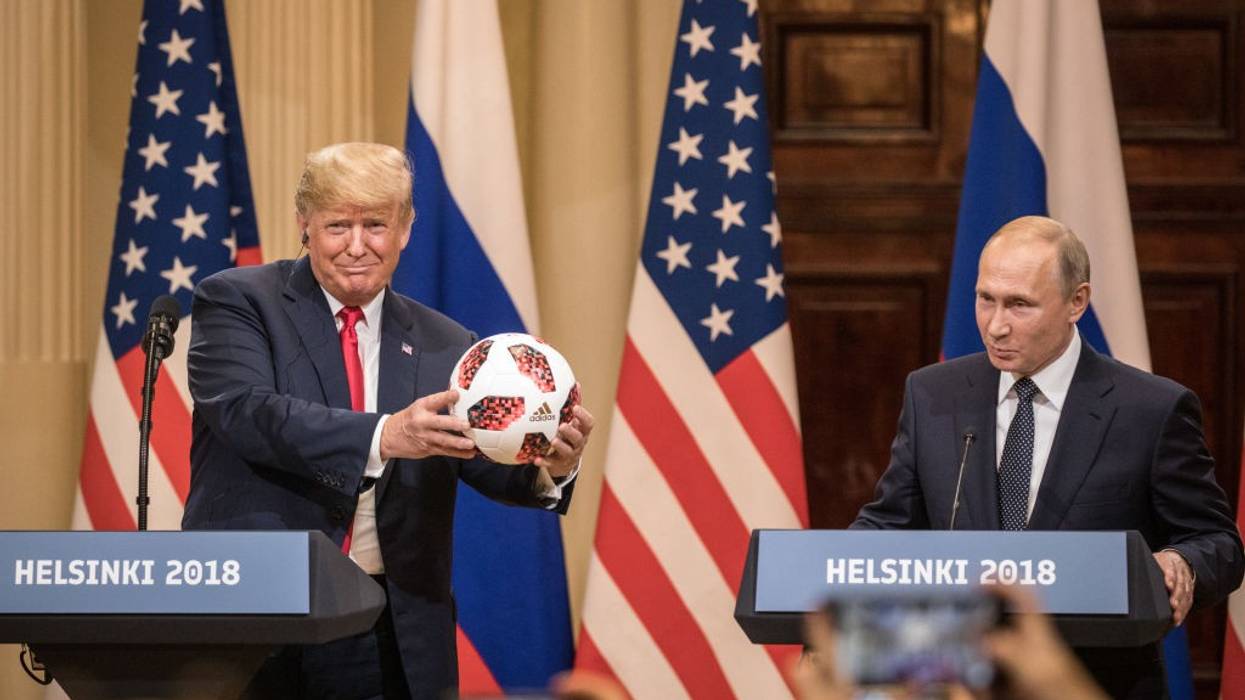
Who Needs a Dystopian Novel When You Have the Daily News?
A world with Donald Trump and Vladimir Putin in power is not the world that anyone should want to be on at a time when humanity has discovered at least two ways of doing this planet in.
I’ve read The New York Times since I was a teenager. It was once a way to keep up on the news. It’s now a daily way to experience a living nightmare of a world.
I’m thinking, of course, of Donald Trump’s world—although it could be Vladimir Putin’s, too—and that’s just to start down an ever-lengthening grim list. This, in all honesty, is not the world that anyone should want to be on at a time when humanity has discovered at least two ways of doing this planet in, the slow-motion version known as climate change and the (more or less) instantaneous version of nuclear war. And in this strange world of ours, who honestly knows what Artificial Intelligence, or AI, might be able to do when it comes to creating a potential third pathway to ultimate destruction? (Not this old man, that’s for sure.)
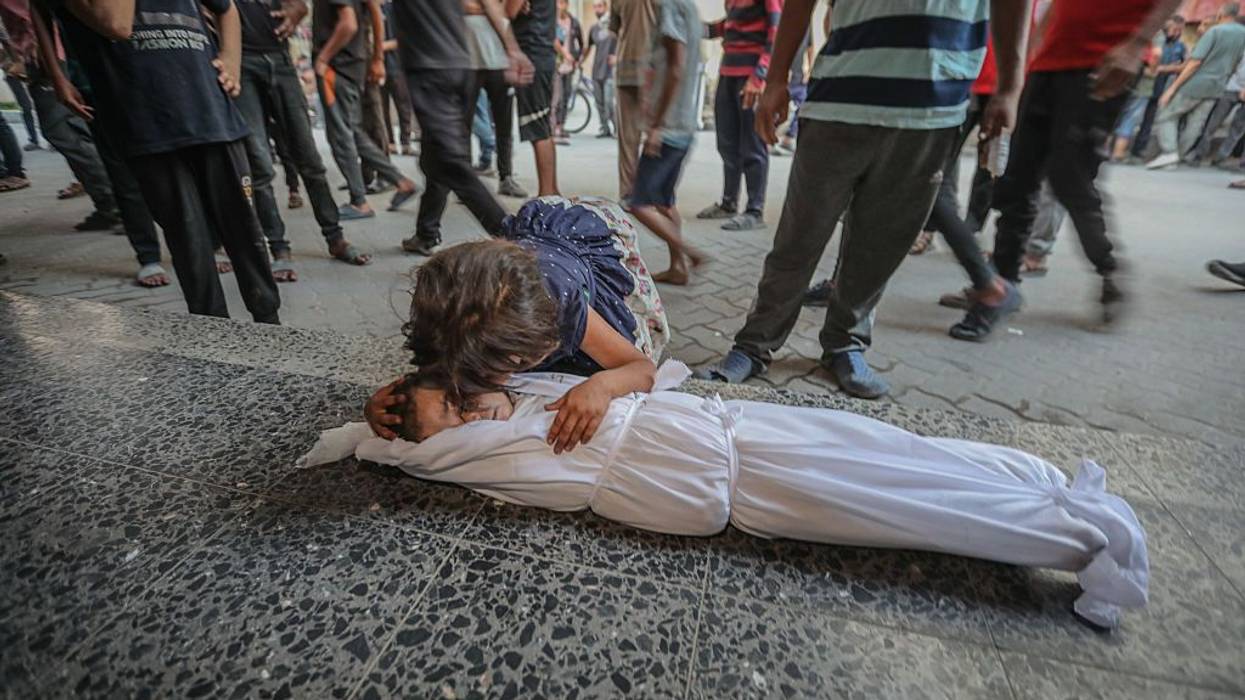
Consider it strange, given that nuclear weapons are clearly also doomsday ones, that, in the 80-plus years since the US dropped two of them on the Japanese cities of Hiroshima and Nagasaki with devastating effect, including the deaths of more than 200,000 people (almost 40,000 of them believed to have been children), nine countries have come to possess far more devastating versions of just such weaponry. It’s now estimated that there are more than 12,000 nuclear weapons on this planet, with the US and Russia each believed to possess more than 5,000. That’s enough, of course, to destroy any number of planets, with most of those weapons six to 50 times more powerful than the bomb that destroyed Hiroshima. Worse yet, their cumulative numbers only continue to grow in this world of ours, and they are ever more devastatingly powerful.
Can you explain to me what kind of creatures would plan for, pour funding into, and work to create anything-but-obvious or easy-to-produce ways of bringing about their own extermination, not to speak of that of all life around them?
Given our history over all these centuries (and the global hellscapes we’ve already created), what could possibly go wrong? Count on this (if you’re still counting): In the near future, the number of countries in possession of such weaponry will undoubtedly only rise again.
Once upon a time, end-of-the-world scenarios were nightmarish fantasies of fiction, the sort of thing that novelists like George Orwell or Aldous Huxley came up with and that I read with fascination in my youth.
Now, who needs a dystopian novel when, just sitting down each morning (or evening) to read the Times, as I still do (one day late, of course, since I read the paper version, which says plenty about this old man), has a strangely end-of-world feeling to it? After all, we humans have come up with at least a second (slow-motion) way to do in ourselves and every other living thing on this planet that has gained the all too mild label “climate change.” Why it’s not “climate devastation,” “climate destruction,” “climate catastrophe,” or something even worse? Change, really? Gee, climate mutation doesn’t sound so bad either, does it?
In mid-October, as I was starting this piece, I went out on my daily early morning walk in New York City, wearing just khakis, a long-sleeved shirt, and a light jacket. By 8:30 am, I had already tied my jacket around my waist and rolled up my shirt sleeves—and I still felt slightly uncomfortable.
I know, I know, any passingly hot day or even a warm few weeks doesn’t truly prove a thing. Still, only recently, record highs were “forecast to stretch all across the central and eastern United States, with temperatures running about 20°F above average, according to Weather.com meteorologist Rob Shackelford.”
In addition, the British medical magazine The Lancet‘s Commission on 21st Century Global Threats recently offered this apocalyptic scenario (as reported by The Guardian): “’Malicious use of AI, including bioweapons, and nuclear conflict with nuclear famine carry risks of extinction in the next 75 years,’ the report said, adding that, while their likelihood remained low, they had the potential to end humanity in the case of nuclear conflict by injecting enough particles into the upper atmosphere to block sunlight and cause famine, or via AI-created biological weapons.”
And as Jeet Heer recently pointed out at The Nation magazine, “AI is clearly the most dangerous technology that humankind has developed since nuclear weapons, and our current lack of oversight for it is a travesty.”
Am I surprised? Not really... sigh...
Living in a Dystopian Novel of a World
In truth, I’m already too damn old to genuinely grasp that third possibility for ultimate destruction, involving AI—though anything AI-related makes me instantaneously anxious as hell. Though it’s not possible anymore to avoid AI if you’re simply looking for something online, I still do my damnedest (so to speak) to avoid it otherwise, since I prefer to be on a planet where the best and worst things in life aren’t caused by some almost unimaginable computer-created irreality—or do I mean surreality, since this world seems (thank you Donald Trump and Vladimir Putin!) ever more surreal in all too many ways?
Of course, here’s the truly strange thing: Can you explain to me what kind of creatures would plan for, pour funding into, and work to create anything-but-obvious or easy-to-produce ways of bringing about their own extermination, not to speak of that of all life around them?
I know, I know, that first way of doing us all in, atomic weaponry, still passes for war. But explain to me, what a country could possibly win with more than 5,000 nuclear weapons? Honestly, how mad can you be to purposely create ever more world-ending weaponry to—yes!—(theoretically) defend yourself?
In truth, if this heavily nuclear-armed world of ours and leaders like Donald Trump and Vladimir Putin weren’t our reality, this piece would be the most unbelievable kind of dystopian fiction around.
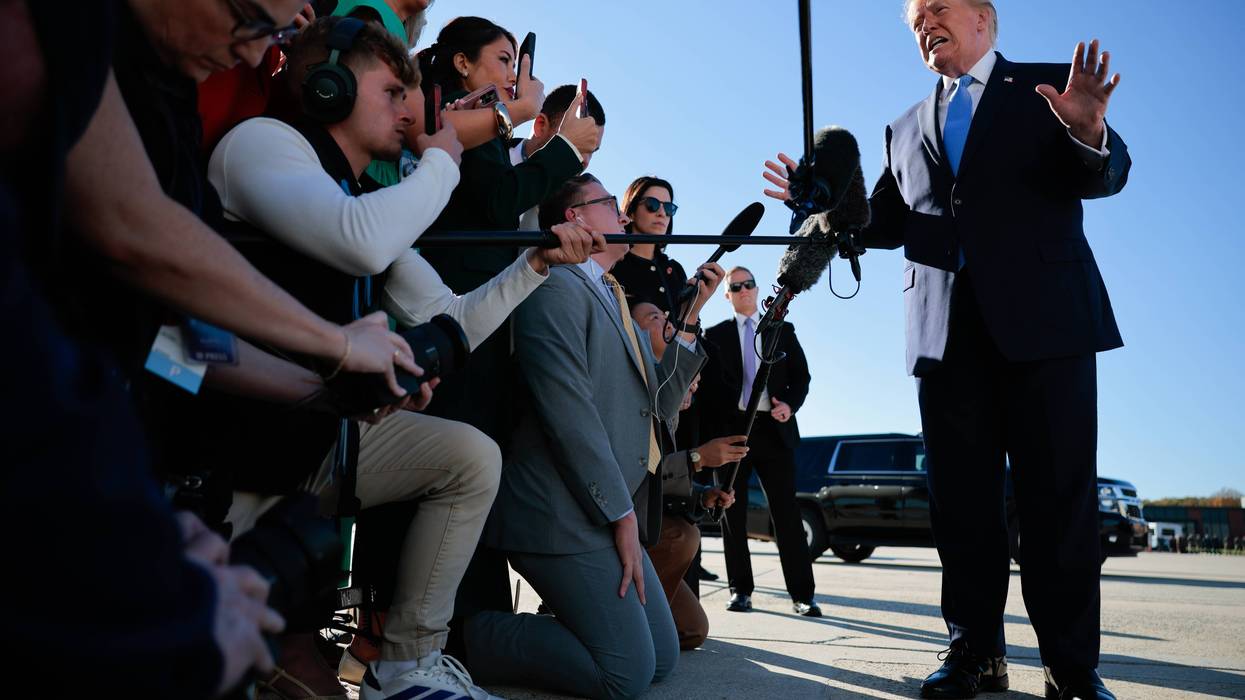
And then, of course, we humans put in power characters like Donald Trump, who, at the United Nations this September, implicitly threatened to use such weaponry to “annihilate” Iran, or Vladimir Putin, who has actually threatened to use nuclear weapons in any future conflict with other European powers that might develop out of his war on Ukraine. Ask yourself, would you really choose to put either of their trigger fingers on the American or Russian nuclear arsenals?
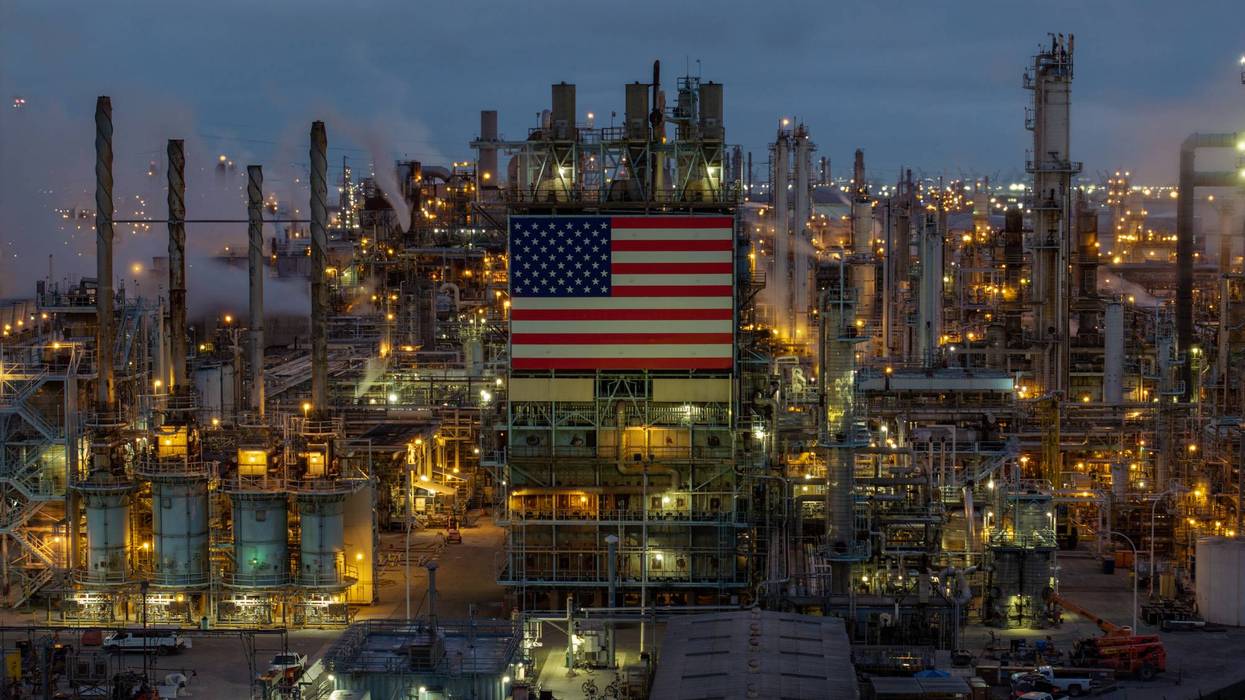
And how much madder do you have to be, as president of the United States (no less), than to put so much of your extra energy into promoting anything that will burn down (or do I mean burn up) this planet of ours? That, of course, is what “our” president is now doing when it comes to the full-scale promotion of the ever greater use of oil, coal, and natural gas. And, of course, he not only continues to essentially deny that climate change is even happening, but at the UN last year called it “the greatest con job ever perpetrated on the world.” Consider him nothing short of a promoter (of course, who doesn’t know that he’s a promoter?) of a world-ending reality—or do I mean surreality?
Honestly, I’d like to bring George Orwell and Aldous Huxley back from the dead so many years later, because I’d love to read Orwell’s next novel: 2030 or Huxley’s Brave New Trump (or, for that matter, Brave New Putin). And give me some credit here, since I haven’t even bothered you with the possibility that India and Pakistan, both nuclear armed, could someday engage in a globally devastating “limited” nuclear war, creating what’s known as a “nuclear winter” on this planet that might kill not just Indians and Pakistanis but billions of the rest of us.
In truth, if this heavily nuclear-armed world of ours and leaders like Donald Trump and Vladimir Putin weren’t our reality, this piece would be the most unbelievable kind of dystopian fiction around. And yet, keep in mind that, at this very moment, given climate change, we’re already experiencing a slow-motion version of nuclear-style disaster on this planet of ours. Hopefully, I’m (mis)reading the times (as well as the Times) when it comes to our future nuclear peril. Unfortunately, when it comes to the slow-motion version of nuclear war, which we call climate change and the overheating of this planet of ours, a distinctly dystopian future is already well underway.