

SUBSCRIBE TO OUR FREE NEWSLETTER
Daily news & progressive opinion—funded by the people, not the corporations—delivered straight to your inbox.
5
#000000
#FFFFFF
To donate by check, phone, or other method, see our More Ways to Give page.
Daily news & progressive opinion—funded by the people, not the corporations—delivered straight to your inbox.

At a time when so many Latin American governments have shifted to the right—or even the far right—all eyes are on Brazil.
This week marks the beginning of Brazil's presidential campaign, with the two front-runners—current President Luiz Inácio Lula da Silva and Senator Flávio Bolsonaro—officially launching their campaigns. After visiting Brazil and talking with politicians, activists, journalists, and ordinary citizens, I came away with the conviction that this is one of the most consequential presidential elections in Brazil's recent history. The outcome on October 4 will shape not only Brazil's future but also the political direction of Latin America.
President Luiz Inácio Lula da Silva, now 80 years old, is seeking a fourth presidential term. Brazil's Constitution allows presidents to serve only two consecutive terms, but they may run again after sitting out at least one term. That is how Lula returned to office in 2023 after governing from 2003 to 2010.
Following the four-year presidency of the far-right Jair Bolsonaro, Lula’s supporters say he has rebuilt many of the institutions and policies weakened under Bolsonaro. His government has reduced hunger, expanded social programs, strengthened environmental protections for the Amazon, and pursued a more independent foreign policy rather than simply following Washington's dictates. Brazil has reasserted itself as an important voice in the Global South, advocating for a more multipolar world and strengthening ties with countries across Africa, Asia, and Latin America.
Although Lula remains popular and has a good chance of winning the election, many Brazilians are frustrated by sluggish economic growth, persistent concerns about crime, and political fatigue after years of bitter polarization. His more ardent critics say Lula is a corrupt left-wing politician who has remained in public life for too long.
The outcome on October 4 will shape not only Brazil's future but also the political direction of Latin America.
Lula also has detractors on the left, who accuse him of being too centrist. They point to his inability to deliver many campaign promises, harsh austerity measures under his administration, policies that expand privatization, and his reluctance to reverse several of Bolsonaro-era regressive policies. They criticize him for moving too slowly on land reform and for accommodating powerful agribusiness and fossil fuel interests. Some also call on him to go much further in challenging US influence in Latin America, including by sending oil to Cuba as it suffers under the cruel decades-long US blockade.
Yet despite these criticisms, most of Brazil's progressive movements remain united behind Lula. Whatever their frustrations with his government, they see defeating the far right as the overriding priority. They also recognize that Brazil's far right is stronger, better organized, and more deeply rooted than it was a decade ago. They believe Lula's cautious approach reflects not only political pragmatism but also a desire to avoid provoking forces that have already demonstrated a willingness to challenge democratic institutions through violence.
That became clear when the right, led by President Jair Bolsonaro, refused to accept that Lula had won the 2022 elections. On January 8, 2023, Bolsonaro supporters stormed Brazil's Congress, Supreme Court, and presidential palace in an effort to overturn the election. The similarities with the January 6 insurrection by Trump supporters are striking.
But in Brazil, Bolsonaro was actually convicted for his role in the conspiracy. He is now serving a prison sentence under house arrest and is unable to run for president. So his movement is represented by his son, 45-year-old Senator Flávio Bolsonaro.
Flávio brings his own political baggage. His reputation was damaged by allegations that members of his legislative staff were required to kick back part of their taxpayer-funded salaries in a scheme to enrich him personally. His campaign has also been shaken by revelations that he sought millions of dollars from a jailed banker to finance a film celebrating his father's presidency in hopes of boosting his own presidential campaign. Even his own family has become a political liability. A bitter public dispute with his stepmother, former First Lady Michelle Bolsonaro, exposed deep divisions within the Bolsonaro movement and deprived him of one of the Brazilian right's most influential voices among women voters.
As Flávio struggles to broaden his support at home, he has sought help from abroad. Argentine President Javier Milei traveled to Brazil to campaign on his behalf. Donald Trump and members of his administration have openly supported Flávio, aggravating US-Brazil tensions that recently blew up when Lula's government refused visas to two US State Department officials on grounds that they intended to interfere in Brazil's democratic process. The Trump administration responded by revoking the US visa of Brazil's ambassador to Washington. The episode reflects growing concern about US attempts to influence Brazil’s election.
Perhaps the most astonishing example of foreign influence comes from Israel. Instead of announcing his presidential ambitions to the Brazilian people at home, Flávio first did so during a visit to Israel, where he accused Lula of antisemitism and pledged to move Brazil's embassy to Jerusalem. Benjamin Netanyahu later publicly endorsed him.
At a time when so many Latin American governments have shifted to the right—or even the far right—all eyes are on Brazil. It is Latin America's largest country, its largest economy, and one of the most influential voices in the Global South.
Polls show Lula with a narrow lead over Flávio. But if no candidate secures more than 50% of the vote in the October 4 first round, the election will go to a runoff between the top two contenders on October 25.
If Lula is reelected, Brazil is expected to continue pursuing an independent foreign policy, strengthening South-South cooperation, deepening its role in BRICS, and resisting efforts to pull Latin America back into Washington's geopolitical orbit. A Flávio Bolsonaro victory, by contrast, would likely bring Brazil into much closer alignment with the Trump administration and revive the nationalist, authoritarian politics associated with his father's presidency.
That is why so many Brazilians see this election as far more than a contest between two political rivals. For them, it is a choice between two fundamentally different visions of Brazil's future—and of its place in the world.
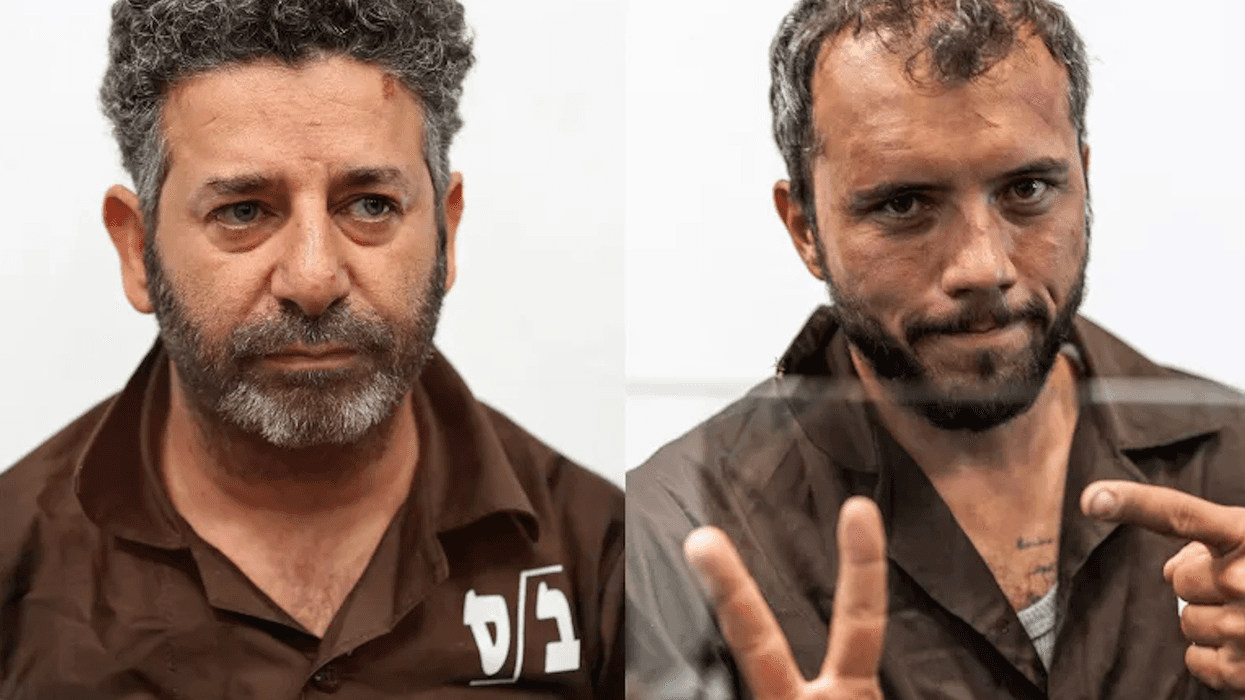
Brazil's president called Israel's continued detention of Brazilian Thiago Ávila and Spanish-Swedish national Saif Abu Keshek "a serious affront to international law."
Brazilian President Luiz Inácio Lula da Silva on Tuesday condemned Israel's twice-extended detention of two Global Sumud Flotilla members abducted last week off the coast of Greece while attempting to break the decadeslong Israeli blockade of Gaza and deliver humanitarian aid to its people amid an ongoing genocide.
"Maintaining the imprisonment of Brazilian citizen Thiago Ávila, a member of the Global Sumud Flotilla, is an unjustifiable action by the Israeli government, causes great concern, and must be condemned by all," Lula said on X.
"The detention of the flotilla activists in international waters had already represented a serious affront to international law," he added. "For this reason, our government, together with that of Spain, which also had a citizen detained, demands that they receive full guarantees of safety and be immediately released."
Spain's government has also condemned Israel’s capture of Abu Keshek and demanded his immediate release, and like Lula, called the detention illegal because it occurred in international waters. Abu Keshek is also a citizen of Sweden, which has not condemned his detention—or even mentioned him by name—but has asked that "the rights of any Swedish citizens will be respected."
Adalah Legal Center, the Palestinian group in Israel representing Ávila and Abu Keshek, said Tuesday that the Ashkelon Magistrates’ Court approved Israel's request to extend the pair's detention through May 10. This, after the court on Sunday prolonged their detention by two days.
“The court’s decision to extend the detention of humanitarian activists abducted in international waters amounts to judicial validation of the state’s lawlessness,” Adalah assertedad, vowing to appeal the decision, which the group said was based on "secret evidence."
Adalah noted that “because the activists were abducted over 1,000 kilometers away from Gaza and are not Israeli citizens, Israeli domestic law does not apply to them."
Israel contends that it is enforcing a lawful naval blockade of Gaza Strip, and that under the laws of naval warfare, that blockade can be enforced not only in its territorial waters, but also on the high seas.
Adalah said, "Crucially, the court granted the full six-day extension requested by the state without imposing any limitations or judicial constraints on the interrogation period,” adding that the stated purpose of their continued detention is further interrogation.
"Ávila reported being subjected to repeated interrogations lasting up to eight hours,” the group reported. “Interrogators have explicitly threatened him, stating he would either be ‘killed’ or ‘spend 100 years in jail.'”
“Both activists remain in total isolation, subjected to 24/7 high-intensity lighting in their cells, and kept blindfolded whenever they are moved, including during medical examinations,” Adalah said, accusing interrogators of "trying all the time to connect the humanitarian aid with Hamas to present it as a service to Hamas."
Israel's Ministry of Foreign Affairs claims that both men were affiliated with the Popular Conference for Palestinians Abroad, which the US government accuses of "clandestinely acting on behalf of" Hamas, the militant Palestinian resistance group that led the October 7, 2023 attack on Israel.
Still, no charges have been filed against the pair, who Adalah said have been on hunger strike since April 30 in protest of their detention.
Abu Keshek and Ávila were among the more than 170 Global Sumud Flotilla members intercepted and seized last week in international waters 45 nautical miles west of the Greek island Kythira and 600 nautical miles from Gaza in what many critics have called an act of piracy.
All of the other flotilla members have been released. Many said they brutally abused by their Israeli captors, who threatened to kill them. The Washington Post reported 34 people—including citizens of Australia, Colombia, Italy, Ukraine, and the United States—required medical attention for broken ribs, noses, and other injuries. Detained activists also said they were denied food and water, and were forced to sleep on deliberately flooded floors. Both Abu Keshek and Ávila had visible facial injuries during their first court appearances.
In a statement issued on Monday, Global Sumud Flotilla said Abu Keshek and Ávila "are being subjected to systemic psychological torture and explicit threats to the lives of their families."
The statement also noted the growing calls for their release from advocacy organizations and governments.
"We urge the international community and their representatives to immediately take action for the safety and freedom of Saif and Thiago, the freedom of all Palestinian hostages, and the end of Israel's illegal siege of Gaza and its genocide," Global Sumud added.
American journalist Alex Colston, who was aboard the flotilla on assignment for Zeteo, said he was beaten by his captors, and corroborated accounts of broken bones, concussion symptoms, and other signs of abuse inflicted by Israeli forces on flotilla members, as well as death threats, property theft, and other mistreatment.
Hannah Smith, a representative of the flotilla's public affairs team who was also aboard one of the vessels, told Democracy Now! on Monday that, after intercepting the boats, Israeli forces "pointed guns at us. They had lasers pointed at us. We had our hands in the air. They threatened lethal force."
"Many people were subject to aggressive physical force," she said. "We were denied access to adequate water. We were denied access to sanitary supplies."
Smith continued:
The nights were extremely cold. People’s jackets were stolen. When I advocated for one of the participants, who’s a doctor, who was pacing for two hours trying to stay warm—she had a short-sleeve shirt in like 50-degree weather that was cold and damp. When I advocated for blankets, they flooded the sleeping area. And then we had a dozen people pacing, trying to stay warm, trying not to get hypothermia.
When we nonviolently resisted, many people were beat. Many people were dragged. I was held in a stress position for many hours... I heard people screaming. I heard people being dragged around. And it was absolutely horrifying.
The reports of torture and other abuse are consistent with Israeli forces' brutal treatment of members of past Gaza flotillas, including Ávila, who has taken part in at least three such missions. Victims have included Swedish climate campaigner Greta Thunberg, who was allegedly dragged, beaten, and made to kiss an Israeli flag in which she was allegedly wrapped after Israeli forces intercepted last October's Global Sumud mission.
It's not just activists who reported Israeli brutality. Journalist Noa Avishag Schnal—who was covering last October's flotilla—described rape threats and being “hung from the metal shackles on my wrists and ankles and beaten in the stomach, back, face, ear, and skull by a group of men and women guards, one of whom sat on my neck and face, blocking my airways.”
In 2010, Israeli forces raided one of the first Freedom Flotilla Coalition convoys carrying humanitarian aid intended for Gaza, which Israel blockaded three years earlier. The Israeli attackers killed nine volunteers aboard the MV Mavi Marmara, including Turkish-American teenager Furkan Doğan.
In a letter to his daughter dictated to his lawyer from prison, Ávila said, "I’m sorry for not being home with you right now."
"Today over a million children are suffering a genocide, being starved to death, being amputated without anesthesia, and suffering from horrific, hateful ideas, despite not knowing what Zionism and Imperialism is," he continued.
More than 250,000 Palestinians have been killed or wounded by Israeli forces in Gaza since October 2023. Around 2 million others have been forcibly displaced, starved, or sickened. Israeli Prime Minister Benjamin Netanyahu and former Defense Minister Yoav Gallant are wanted by the International Criminal Court for alleged crimes against humanity and war crimes in Gaza, and Israel is facing an International Court of Justice genocide case filed by South Africa and formally supported by numerous nations, including Brazil and Spain.
"Your world will be safer because many parents decided to give everything to build this better world for you," Ávila added. "I hope someday you understand that because I love you so much there was nothing more dangerous for you and for other children than living in a world that accepts genocide."

"While others open wounds, we want to mend them and cure them," said Spanish Prime Minister Pedro Sánchez.
Arriving in Spain on Friday for a two-day visit that will center on a gathering of progressive leaders from more than 100 political parties across five continents, Brazilian President Luiz Inácio Lula da Silva emphasized that the summit was not "an anti-Trump meeting."
But the contrast between US President Donald Trump's violent foreign and domestic policies and the international meeting, which will focus on wage inequality and electoral strategy for progressives, was unmistakable as Spanish President Pedro Sánchez opened the gathering at a press conference in Barcelona on Friday.
"We want to double our efforts to work for peace and for a reinforced multilateral order. While others open wounds, we want to mend them and cure them,” said Sánchez.
Da Silva—who is commonly called Lula—and Sánchez, as well as other leaders who will be attending the weekend event, have spoken out forcefully against Trump's policies and the rise of the far right in the US, Germany, Italy, and other European countries.
Sánchez has refused to allow US fighter planes to use Spanish military bases for missions in the US-Israeli war on Iran and closed the country's airspace to American military aircraft—plus doubled down on his condemnation of Trump and Israeli Prime Minister Benjamin Netanyahu's war even after the US president threatened Spain with a trade embargo.
Lula expressed solidarity with Pope Leo this week after the pontiff denounced the Iran war, and Mexican President Claudia Sheinbaum, who will also attend the meeting, took aim last month at Trump's claim that her country is the "epicenter of cartel violence"—blaming the US for the flow of illegal weapons into Mexico.
Lula emphasized that the 3,000 attendees of the summit, which will include the IV Meeting in Defense of Democracy as well as a gathering called the Global Progressive Mobilization on Saturday, will "discuss the state of democracy, to see what went wrong and what we have to do to repair it."
The Brazilian president added that "Brazil and Spain are side by side in the trenches together."
“We are an example that it is possible to find solutions to problems without giving into the empty promises of extremism," said Lula. "Democracy must go beyond just voting and bring real benefits to people’s lives.”
Sánchez added that "in a world that doubts and fragments, Spain and Brazil open a new chapter convinced that our countries have something the world needs: the strength to build bridges where others raise walls."
The Global Progressive Mobilization meeting will include roundtables dedicated to discussing economic inequality and other issues at a time when, as one report showed earlier this month, the richest 0.1% of people on the planet are stashing more than $2.8 trillion in tax havens—more than the wealth owned by the entire bottom 50% of humanity.
The economic hardships of working people have only been exacerbated by the war on Iran, which has sent global energy prices soaring.
US Sen. Chris Murphy (D-Conn.) is the only federal US official planning to attend the gathering, while New York City Mayor Zohran Mamdani—who has swiftly taken steps toward enacting a universal childcare program and announced a plan to tax second homes valued at over $5 million since taking office in January, is scheduled to participate virtually.
Also on Saturday, Lula and Sánchez will host the IV Meeting in Defense of Democracy, a summit first held in 2024 with the aim of combating "extremism, polarization, and misinformation."
European Council President António Costa, South African President Cyril Ramaphosa, Colombian President Gustavo Petro, and leaders from Albania, Ghana, and Lithuania are among those attending the meeting on democracy.
Lula said the large number of attendees is evidence that progressive governments are winning more influence around the world despite the rise of authoritarian political parties.
"Our flock is growing. We must give hope to the world," said Lula. "Otherwise, what happened with [Nazi leader Adolf] Hitler is going to happen."
Economist Gabriel Zucman, who joined Mamdani this week in publishing an op-ed calling for an end to regressive tax systems and highlighting a proposal for a 2% tax on the wealth of those with more than €100 million, or $117 million, expressed hope that the global left is amassing power by building a cooperative international movement.
"The good news is that, from Zohran Mamdani and [Congresswoman] Alexandria Ocasio-Cortez in New York to Pedro Sánchez in Spain, from Lula in Brazil to [Green Party Leader] Zack Polanski in the UK, we may be seeing the early signs of a new cross-border alliance taking shape against global oligarchy," said Zucman. "And I have no doubt that in this fight—the defining battle of the 21st century—democracy will prevail. See you in Barcelona this weekend to press ahead!"
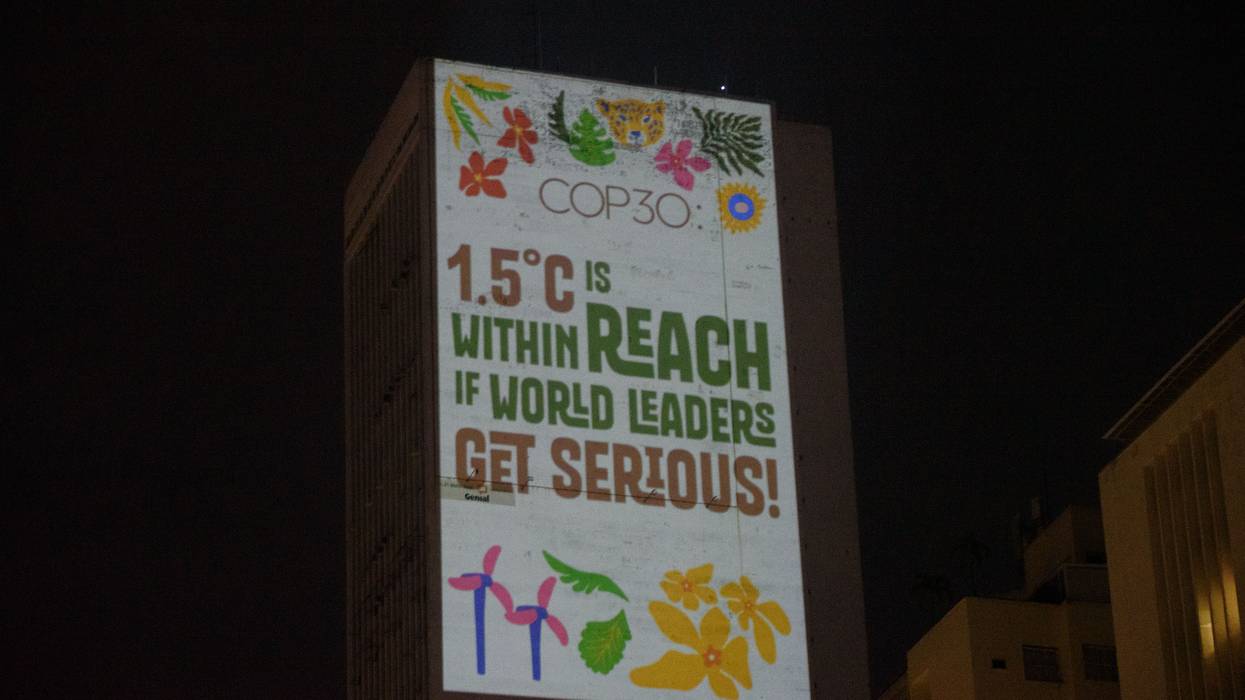
"We need to make sure that any and all plans towards a fossil fuel-free future are built with community and frontline needs at the heart, and implemented in a way that does not leave vulnerable communities behind."
Despite concerns over the presence of hundreds of corporate lobbyists peddling "false solutions" at the United Nations Climate Change Conference in Belém, Brazil, campaigners on Monday expressed optimism about the "remarkable speed" with which global support has grown at the summit for a Transition Away From Fossil Fuels Roadmap.
Brazilian President Luiz Inácio Lula da Silva opened the Leader's Summit on November 6 with a call for the TAFF Roadmap, which would build on the 2023 conference's (COP28) promise to “transition away from fossil fuels” in a “just, orderly, and equitable manner."
He urged leaders to map out how their countries will "overcome dependence on fossil fuels," reverse deforestation, and mobilize resources to achieve those goals, as the presidencies of this year's conference (COP30) and last year's released a Baku to Belém Roadmap with a plan to mobilize $1.3 trillion per year in climate finance for developing countries.
350.org found on Monday that within nine days, support for the TAFF Roadmap grew from one to 62 countries.
Suluafi Brianna Fruean, a 350.org Pacific Council elder, acknowledged that a call for "a transition away from fossil fuels is not a new concept for the Pacific, it’s a demand we’ve made at every COP and every room we’ve been in."
Still, she said, "the growing support for a roadmap to this reality is a sign that the age of fossil fuels is over. We need to make sure that any and all plans towards a fossil fuel-free future are built with community and frontline needs at the heart, and implemented in a way that does not leave vulnerable communities behind."
"The presidency calls on developing countries to lead, prioritize public, grant-based, concessional finance to protect the world’s most vulnerable, and break the vicious debt cycle. However, it misses the urgency to simplify direct access to finance for communities, especially Indigenous peoples."
350.org analyzed public statements and written inputs from countries and country groups to the COP30 presidency, and released its analysis of the conference's momentum as the Brazil presidency released its "consultation text."
That document lays out options for a final agreement at COP30, including "the ingredients for a highly ambitious outcome," said 350.org.
Options in the text include establishing a three-year program to implement Article 9.1 in the Paris Agreement, which requires wealthy countries to finance adaptation and a transition away from fossil fuels for the Global South; tripling adaptation finance; and implementing Article 3.5 of the UN Framework Convention on Climate Change, which requires parties to support an economic system that leads "to sustainable economic growth and development in all parties... thus enabling them better to address the problems of climate change."
“Finance is the engine of climate action. The presidency calls on developing countries to lead, prioritize public, grant-based, concessional finance to protect the world’s most vulnerable, and break the vicious debt cycle," said Fanny Petitbon, France team lead for 350.org. "However, it misses the urgency to simplify direct access to finance for communities, especially Indigenous peoples, who hold solutions on the ground yet face enormous barriers to securing the funds needed to scale them up."
A second package of options is set to be released in the coming days and "will cover the more technical negotiating areas," according to the World Wildlife Fund (WWF).
Andreas Sieber, associate director of policy and campaigns at 350.org, credited Lula with injecting "real momentum into a global roadmap to move away from fossil fuels."
But Sieber noted that Brazil recently gave its state-owned oil and gas company, Petrobras, license to drill a well in the Amazon rainforest, and Brazil is still one of the top 10 producers of crude oil globally.
"Lula spoke powerfully about justice and cooperation in a divided world, highlighting the need to get rid of fossil fuels and accelerate the energy transition," Sieber told Argus Media after the Leaders' Summit. "But he cannot be both a champion of climate justice and one of the world's biggest oil expanders."
350.org added that in a TAFF Roadmap, "finance, technology transfer, and capacity-building must be central pillars—not peripheral details—if the transition is to lift up communities rather than deepen inequality."
WWF also applauded the "momentum" at COP30, and urged "decisive political leadership" in order to "get back on track to the 1.5°C Paris Agreement temperature limit."
Manuel Pulgar-Vidal, WWF global climate and energy lead, and the president of COP20, said that "COP30 could make history by agreeing on roadmaps for both a transition away from fossil fuels and to combat deforestation. It must also respond to the emissions gap in national climate plans, and make advances on finance, including to help countries adapt to climate change."
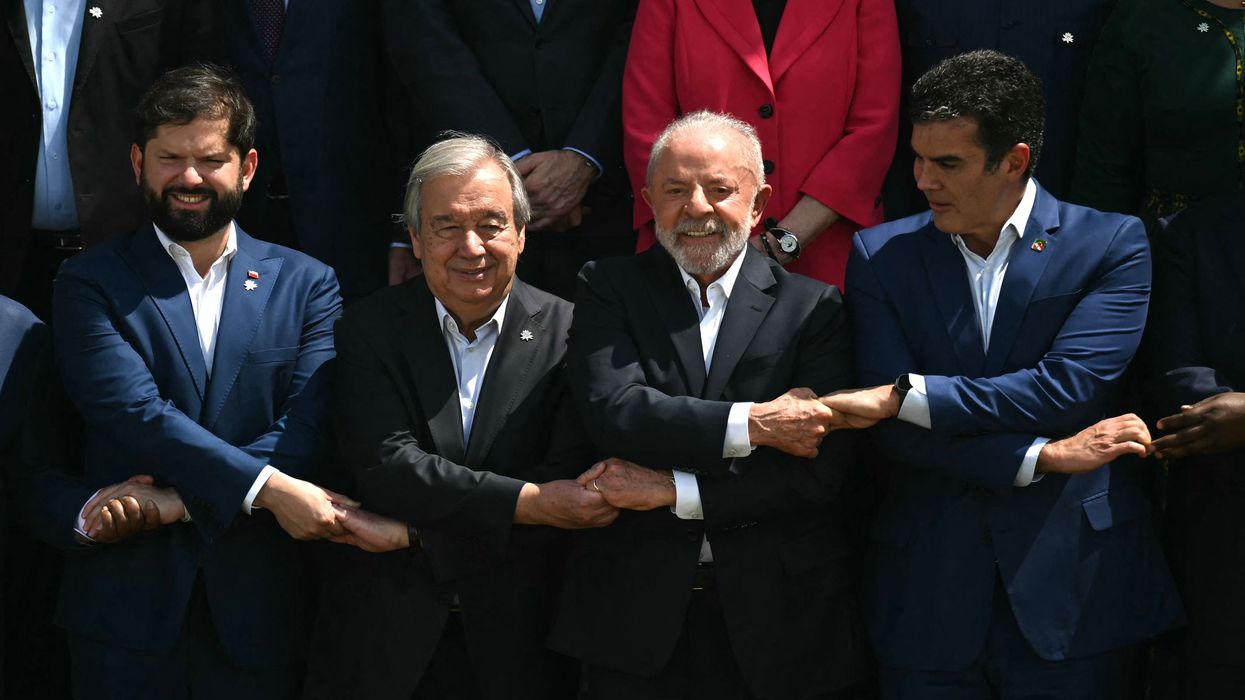
“Every fraction of a degree means more hunger, displacement, and loss—especially for those least responsible,” said UN Secretary General António Guterres on Thursday. “This is moral failure—and deadly negligence.”
As world leaders gathered in Brazil for this year's global summit on the accelerating climate crisis this week, many took note of the absence of US President Donald Trump.
This year’s United Nations Climate Change Conference (COP30) summit comes on the tenth anniversary of the Paris Climate agreement, in which nations committed to adopting policies intended to keep global temperature increases below the threshold of 1.5°C above preindustrial levels, considered a tipping point at which many of the worst ravages of climate change will become irreversible.
Ten years later, progress has fallen far short of the mark, with leaders scrambling to keep the deal’s goals intact—an aim that is likely untenable without the cooperation of the US, the globe’s largest historical emitter of carbon.
America’s president has not only once again pulled the US out of the Paris agreement, but also sought to turn climate denial into public policy and spent his term in office thus far grinding American investment in renewable energy to a halt—actions viewed as extraordinary abdications of responsibility at a time when the globe is ever more rapidly approaching the point of no return for warming.
Fresh on climate advocates' minds are Trump’s comments at the UN General Assembly in September, when he described climate change as the world’s “greatest con job.”
On Thursday, the World Meteorological Organization found that greenhouse gas emissions had reached a record high. Meanwhile, 2025 is on track to be the third hottest year on record, behind only 2024 and 2023.
“Every fraction of a degree means more hunger, displacement, and loss—especially for those least responsible," said UN Secretary-General António Guterres on Thursday. "This is moral failure—and deadly negligence."
Brazilian President Luiz Inácio Lula da Silva, who has emerged as one of the world's leading climate defenders from the heart of the Amazon rainforest, began the conference by delivering an indirect but unmistakable shot at Trump. He denounced the "extremist forces that fabricate fake news and are condemning future generations to life on a planet altered forever by global warming."
Other Latin American leaders were more direct. Colombian President Gustavo Petro, whom Trump recently hit with sanctions and threatened with military action, denounced the US president as "against humanity," as evidenced by "his absence" at the conference.
"The president of the United States at the latest United Nations General Assembly said the climate crisis does not exist," added Chilean President Gabriel Boric. "That is a lie."
In Trump's stead, over 100 other state and local figures from US politics have traveled to Brazil to take part in the conference: Among them are California Gov. Gavin Newsom, New Mexico Gov. Michelle Lujan Grisham, and Wisconsin Gov. Tony Evers.
Another attendee is Phoenix Mayor Kate Gallego, chair of the Climate Mayors network, who recently applauded Tuesday night’s elections in the US. More than 40 candidates associated with the network came out victorious, as well as the self-described ecosocialist New York City Mayor-elect Zohran Mamdani.
“Our climate mayors did very well on the ballot,” Gallego said to applause at a local leaders forum for COP30. “We want to send this message from the US.”
But despite the US delegation, even with officials from the Trump administration absent, climate campaigners fear the White House may still seek to sabotage the conference from afar. Last month, the administration did just that when it used the threat of tariffs to strong-arm countries into killing what would have been a global-first carbon fee on shipping.
Even without Trump present, COP30 is crawling with fossil fuel lobbyists seeking to stymie progress. A report released Friday from the climate advocacy group Kick Big Polluters Out found that over 5,350 fossil fuel lobbyists have attended UN climate negotiations over the past four years. The corporations they represent are responsible for more than 60% of global emissions.
“These companies have defended their fossil interests by watering down climate action for years," said Fiona Hauke of the German environmental group Urgewald. "As we head towards COP30, we demand transparency and accountability: Keep polluters out of climate talks and make them pay for a just energy transition.”
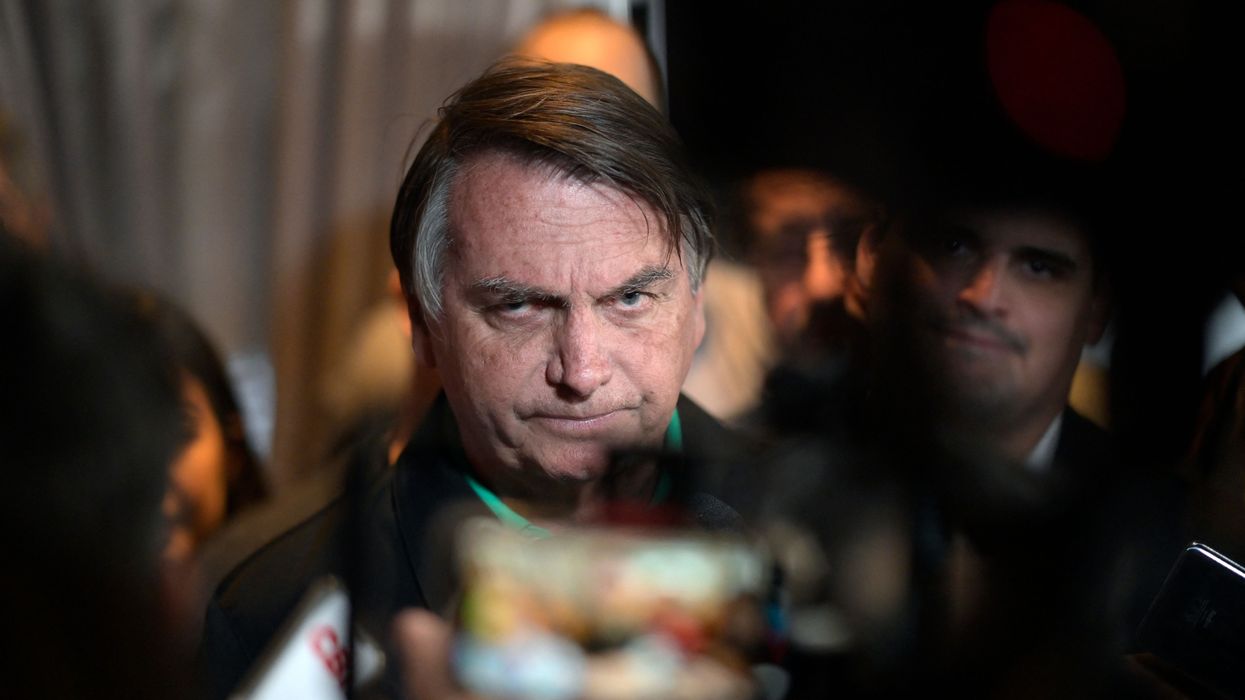
One commentator noted that Brazil's Supreme Court "refused to cave to imperialist threats" from the Trump administration.
Former Brazilian President Jair Bolsonaro was sentenced to over 27 years behind bars Thursday after four of five Supreme Court justices on a panel voted to convict the far-right leader and seven associates of plotting a military coup and assassination of current President Luiz Inácio Lula da Silva and other officials.
"This criminal case is almost a meeting between Brazil and its past, its present, and its future," said Justice Cármen Lúcia Antunes Rocha, on Thursday cast the third and decisive vote to convict the former president and seven co-plotters, referring in part to the two decades of US-backed military dictatorship, during which Bolsonaro served as an army paratrooper.
Lúcia joined Justices Flávio Dino, Cristiano Zanin, and Alexandre de Moraes—who, along with Lula and Brazilian Vice President Geraldo Alckmin were targeted for assassination by the plotters—in voting to convict the defendants of attempting to subvert Lula's victory in the 2022 presidential election.
The defendants—who in addition to Bolsonaro include army generals and former Defense Ministers Walter Braga Netto and Paulo Sérgio Nogueira de Oliveira; former Institutional Security Minister Augusto Heleno Ribiero; admiral and former Navy Commander Almir Garnier Santos; former Justice Minister Anderson Torres; and former presidential adviser Márcio Mirando—were found guilty of crimes including attempting a coup, involvement in an armed criminal organization, attempting the violent abolition of democratic rule of law, and aggravated damage of the state's assets.
Lt. Col. Mauro Cid, a former Bolsonaro aide who turned state's witness, was sentenced Thursday to two years of confinement under open conditions, the most lenient form of carceral punishment in the Brazilian justice system.
"The government wanted to remain in power by simply ignoring democracy—and that is what constitutes a coup d'état," Moraes said ahead of his vote on Tuesday. "The leader of the criminal group made it clear—publicly and in his own words—that he would never accept defeat at the ballot, a democratic loss in the elections, and that he would never abide by the will of the people."
Bolsonaro was sentenced to 27 years, 3 months in prison, with penalties for the other convicted defendants still uncertain as of Thursday evening. Bolsonaro, who is 70 years old, denies any wrongdoing. He is currently under house arrest and could remain there until after exhausting the appeals process. He is already banned from running for any office until 2030 due to his abuse of power related to baseless claims of electoral fraud.
Justice Luiz Fux voted Thursday to absolve Bolsonaro, asserting that there was "absolutely no proof" that the former president took part in or was even aware of the coup and assassination plot.
However, Lúcia argued that there was copious evidence indicating that Bolsonaro and his accomplices acted "with the purpose of eroding democracy and institutions."
"They acted to hijack the soul of the republic," she said. "The case files show a coordinated criminal enterprise by the defendants, who adopted the methods of a digital militia to attack the judiciary, the electoral system, and the electronic voting machines."
The landmark verdict came amid acute political polarization in Latin America's biggest democracy and threats from the office of US President Donald Trump to unleash American "military might" in defense of the "Trump of the Tropics," as Bolsonaro is often called. The Trump administration has already slapped 50% tariffs on Brazilian imports and has sanctioned Moraes.
US Secretary of State Marco Rubio responded to Thursday's developments by vowing on social media that "the United States will respond accordingly to this witch hunt."
Like Trump in 2020, Bolsonaro made many baseless allegations that his loss in the 2022 election was due to fraud, fueling lies and conspiracy theories that led to the January 8, 2023 mob attacks on government buildings. Around 1,500 Bolsonaro supporters were arrested in the days following the storming of Congress and the presidential offices.
While many right-wing Brazilians were outraged by the convictions, leftist lawmakers and others applauded what Lula's Workers' Party (PT) called "a historic moment for Brazil."
Brazilian Secretary of Institutional Affairs Gleisi Hoffmann (PT) said on social media, "The conviction of Jair Bolsonaro and his accomplices by the Federal Supreme Court expresses the vigor of democracy and national sovereignty."
"They were convicted in due legal process, based on compelling evidence of the crimes they committed," she continued. "It is a historic, unprecedented decision so that they may never again dare to attack the rule of law and the will of the people expressed at the ballot box."
"It is also the proud response of Brazil's judiciary to the economic sanctions and absurd coercion of the Donald Trump government, in conspiracy with the traitors to the homeland in the service of Bolsonaro," Hoffmann added. "Today... Brazil told the world that crimes against democracy are intolerable. And they are unforgivable."
Federal Deputy Talíria Petrone (Socialism and Liberty-Rio de Janeiro) called Thursday "the greatest day ever," while former colleague Jean Wyllys also hailed this "great day."
Erika Hilton, a Socialism and Liberty federal deputy representing São Paulo, taunted Bolsonaro with the prospect of a lengthy stay at a notorious maximum security penitentiary.
Federal Deputy Benedita da Silva (PT-Rio de Janeiro) said on social media that "democratic Brazil is proud and celebrating the firm decision" of the high court, "whose members suffered countless threats, including death threats, from the conspirators against the democratic rule of law."
Referring to the United States, da Silva praised the justices, who "did not bow to the threats to our sovereignty from the greatest external power."
"Now we have to defeat the amnesty coup of the convicted plotters that they are still trying to pass," she added, a reference to efforts by the right-wing Congress to pass clemency legislation for Bolsonaro. "No amnesty!"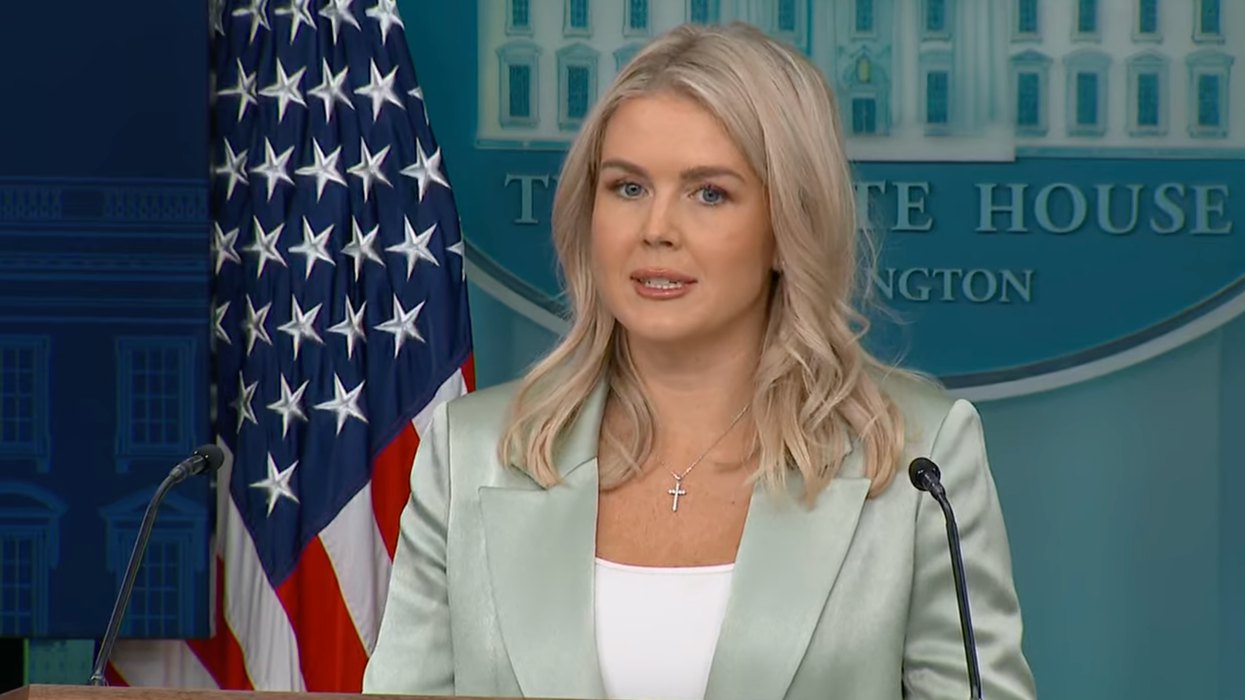
"Instead of protecting absolute freedom of speech to shield groups like the Ku Klux Klan and the right of murderers to enter schools with rifles, our Constitution addresses issues relevant to our country," one leftist lawmaker retorted.
A White House spokesperson suggested Tuesday that US President Donald Trump could use military force against Brazil as two of the country's Supreme Court justices said they would vote to convict former far-right Brazilian President Jair Bolsonaro of a coup plot involving the assassination of current President Luiz Inácio Lula da Silva and other officials, including a leading member of the high court.
Speaking during a daily press briefing, White House spokesperson Karoline Leavitt said that Trump—a staunch Bolsonaro ally who has called the effort to bring him to justice a "witch hunt"—has "taken significant action with regards to Brazil in the form of both sanctions and also leveraging the use of tariffs."
In addition to imposing 50% tariffs on Brazilian imports, Trump has sanctioned Brazilian Supreme Court Justice Alexandre de Moraes—who has led efforts to hold Bolsonaro accountable and who placed the former president under house arrest during his trial—while threatening further punitive action.
.@PressSec: "Freedom of speech is arguably the most important issue of our time. It is enshrined in our Constitution and @POTUS believes in it strongly... we have take significant action with regards to Brazil in the form of both sanctions, and also leveraging the use of tariffs… pic.twitter.com/mkWz3eA7tR
— Rapid Response 47 (@RapidResponse47) September 9, 2025
The alleged coup plot for which Bolsonaro and seven other defendants are being tried allegedly involved assassinating Moraes, Lula, and Vice President Geraldo Alckmin.
Leavitt dubiously couched her threat as defense of "free speech," saying that "this is a priority for the administration, and the president is unafraid to use the economic might, the military might of the United States of America, to protect free speech around the world."
In 1964, the US assisted a coup against the mildly reformist democratically elected government of Brazilian President João Goulart, ushering in two decades of military dictatorship that crushed dissent and free speech under the pretext of fighting communism. In a move similar to Trump's deployment of US warships to the coast of Venezuela, then-President Lyndon B. Johnson secretly deployed a naval task force to Brazil for possible invasion.
While there was no invasion, the US subsequently supported the 21-year dictatorship, including by sending specialists who taught Brazilian security forces more efficient torture techniques.
Bolsonaro, who was a young army paratrooper during the dictatorship, has infamously praised the brutal regime and pined for its return.
Tuesday's threat came as Moraes and fellow Supreme Court Justice Flávio Dino voted to find Bolsonaro and the seven other defendants—who include senior military and intelligence officers—guilty of plotting a coup.
"The defendant, Jair Bolsonaro, was leader of this criminal structure," Moraes told the court in the capital city of Brasília.
"Brazil nearly went back to being a dictatorship... because a criminal organization made up of a political group doesn't know how to lose elections," the justice added. "Because a criminal organization made up of a political group led by Jair Bolsonaro doesn't understand that the alternation of power is a principle of republican democracy." s
In addition to attempting a coup, Bolsonaro is charged with involvement in an armed criminal organization, attempted violent abolition of the democratic rule of law, violent damage of state property, and other charges. A coup conviction carries a sentence of up to 12 years' imprisonment under Brazilian law. However, if convicted on all counts, Bolsonaro and his co-defendants could face decades behind bars.
The former president and seven other defendants are accused of being the "crucial core" of a plan to overturn the results of the 2022 election, which Lula narrowly won in a runoff. Like Trump in 2020, Bolsonaro and many of his supporters falsely claimed the contest was "stolen" by the opposition. And like in the US, those claims fueled mob attacks on government buildings. Around 1,500 Bolsonaro supporters were arrested in the days following the storming of Congress and the presidential offices.
Bolsonaro is already banned from running for any office until 2030 due to his abuse of power related to baseless claims of electoral fraud.
Members of Lula's Workers' Party (PT) and other leftist lawmakers applauded Tuesday's conviction votes.
"Our expectation is that justice will be done," Federal Deputy Nilto Tatto (PT-São Paulo) said outside the court. "It was, clearly, an attempted coup. They tried to discredit the electoral system and even set up a scheme to assassinate President Lula."
Leftist lawmakers also condemned the White House's threat, with Federal Deputy Lindbergh Farias (PT-Rio de Janeiro) calling it "a blatant attempt to interfere with our sovereignty and judicial independence."
"This has nothing to do with 'freedom of expression': It is external pressure, blackmail, and intimidation to sabotage Brazilian justice," Farias asserted. "Brazil is neither a backyard nor a colony of anyone. And the trial of the coup plot, which already has two votes in favor... will continue to the end, because here the Constitution decides, not Donald Trump."
Federal Deputy Erika Hilton (Socialism and Liberty-São Paulo) called Leavitt's "free speech" justification "ridiculous."
"First of all, no one is restricting Bolsonaro's freedom of speech," she said. "He can say whatever he wants, from inside his house, where the ineligible individual is serving house arrest due to the risk of flight."
"It's also important to remember that US legislation does not apply to Brazil," Hilton continued. "Instead of protecting absolute freedom of speech to shield groups like the Ku Klux Klan and the right of murderers to enter schools with rifles, our Constitution addresses issues relevant to our country, our democracy, and our people. And in this Constitution, made after the end of a military dictatorship, there is provision for... punishment against those who attempt a coup d'état."
"Of course, besides not caring, Trump isn't even capable of understanding all this," she added. "He's too busy planning his defense for the next public accusation of child sexual exploitation, his next round of golf, or his next dip in a pool of Doritos-flavored sauce. And with his brain in an advanced state of degeneration, Trump was only capable of an empty threat."
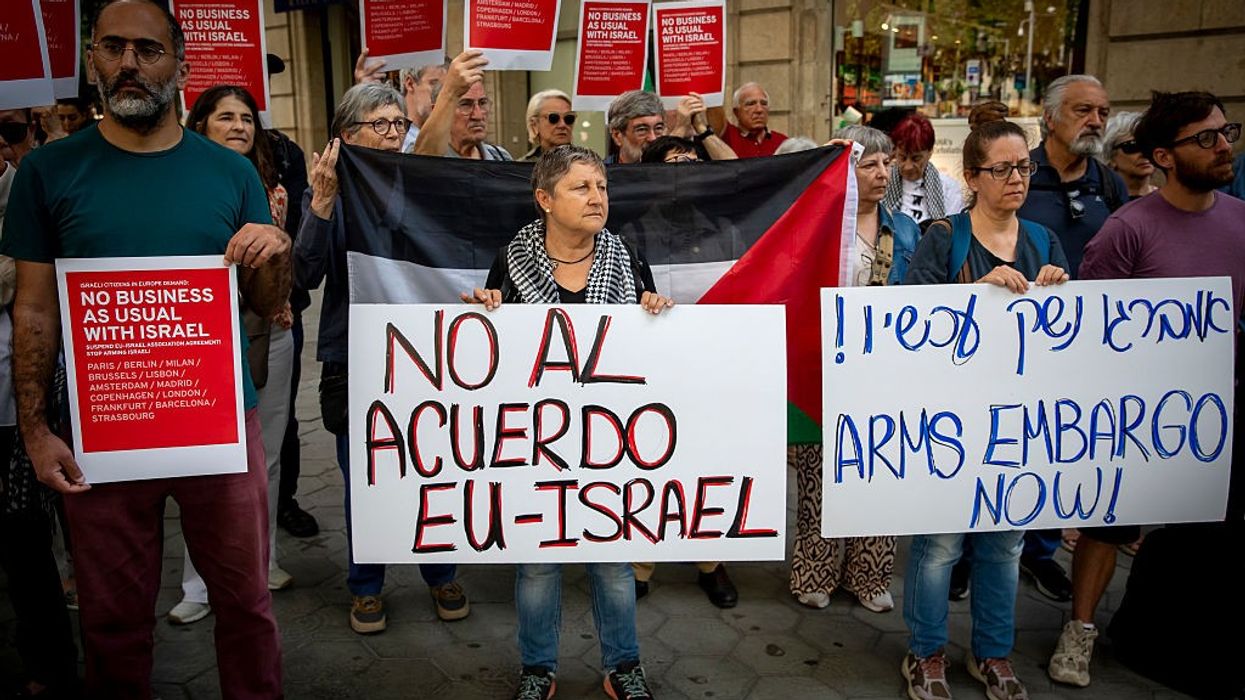
"The people have spoken and they refuse to be complicit," said one campaigner. "Across continents, ordinary citizens demand an end to the fuel that powers settler colonialism, apartheid, and genocide."
Large percentages of people in five nations want arms, fuel, and machinery embargoes on Israel in response to its obliteration and starvation of Gaza, a poll published Thursday revealed.
The survey—which was conducted last month by Pollfish for the Global Energy Embargo for Palestine and endorsed by Progressive International—queried people in Brazil, Colombia, Greece, South Africa, and Spain about whether their governments, fuel companies, weapons makers, and heavy machinery manufacturers should stop, reduce, continue, or increase business with Israel.
Nearly two-thirds of Spanish respondents said they strongly support or support their government taking action "to reduce trade in weapons, fuel, and other relevant goods to pressure Israel to end its military actions in Gaza." In Greece, 63% back an embargo, while 35% oppose it. Sixty percent of Colombians, 58% of South Africans, and 48% of Brazilians strongly or somewhat support punitive sanctions on Israel.
Conversely, 27% of Brazilians said they do not support or strongly oppose an embargo on Israel, while 20% of South Africans, 14% of Colombians and Greeks, and 12% of Spaniards feel the same.
Support for ending or reducing weapons transfers was strong in all five nations, with 76% of Colombian respondents, 75% of Spaniards and Greeks, 66% of South Africans, and 59% of Brazilians favoring such action.
A majority of respondents in all five countries also said that companies providing arms, fuel, or heavy machinery to Israel "should be held responsible for how those products are used in Gaza."
📊 New poll: People across the world say companies selling weapons, fuel, or heavy machinery to Israel should be held accountable for how those products are used in Gaza.🇪🇸 76%🇬🇷 71%🇨🇴 70%🇧🇷 62%🇿🇦 60%#EnergyEmbargoNow #NoFuelForGenocide@progintl.bsky.social
[image or embed]
— Global Energy Embargo For Palestine (@palenergyembargo.bsky.social) August 7, 2025 at 2:33 AM
"The people have spoken and they refuse to be complicit," Global Energy Embargo for Palestine campaigner Ana Sánchez said in a statement.
"Across continents, ordinary citizens demand an end to the fuel that powers settler colonialism, apartheid, and genocide," Sánchez added. "No state that claims to uphold democracy can justify maintaining energy, military, or economic ties with Israel while it commits a genocide in Palestine. This is not just about trade; it's about people's power to cut the supply lines of oppression."
The poll was published 670 days into Israel's U.S.-backed assault and siege on Gaza, which has left at least 226,600 Palestinians dead, maimed, or missing and hundreds of thousands more starving amid increasingly deadly famine as Israel blocks aid from entering the embattled enclave.
The far-right government of Israeli Prime Minister Benjamin Netanyahu—a fugitive from the International Criminal Court wanted for alleged crimes against humanity and war crimes in Gaza—is moving ahead with plans for the "full conquest," reoccupation, and ethnic cleansing of the strip, which U.S. President Donald Trump wants to transform into "the Riviera of the Middle East."
Israel's conduct in the war is the subject of an International Court of Justice genocide case brought by South Africa and supported by around two dozen nations. Among the countries in the survey, Colombia—which severed diplomatic ties with Israel in May 2024—Spain, and Brazil have formally joined or signaled their intent to join South Africa's case.
The ICJ also found last year that Israel's occupation of Palestine is an illegal form of apartheid.
"What the Israeli government is doing to the Palestinian people is not war, it is genocide," Brazilian President Luiz Inácio Lula da Silva said in February 2024 shortly after recalling his ambassador to Tel Aviv. "If this isn't genocide, I don't know what is."
On Thursday, European Commission Executive Vice President Teresa Ribera—who is Spanish—told Politico, "If it is not genocide, it looks very much like the definition used to express its meaning."
"What we are seeing is a concrete population being targeted, killed, and condemned to starve to death," Ribera said. "A concrete population is confined, with no homes—being destroyed—no food, water, or medicines—being forbidden to access—and subject to bombing and shooting even when they are trying to get humanitarian aid. Any humanity is absent, and no witness[es] are allowed."
Of the surveyed nations, all but Greece support an arms embargo on Israel. The other four countries took part in last month's Hague Group emergency ministerial conference in Colombia, which was organized by Progressive International and ended with the publication of a joint action plan for "coordinated diplomatic, legal, and economic measures to restrain Israel's assault on the occupied Palestinian territories and defend international law at large."
"The message from the peoples of the world is loud and clear: They want action to end the assault on Gaza—not just words," Progressive International co-general coordinator David Adler said in a statement accompanying the new survey's publication.
"Across continents, majorities are calling for their governments to halt arms sales and restrain Israel's occupation," Adler added. "That's why states are coming together through the Hague Group to take concrete measures toward accountability. It's time for others to follow their lead."
Meanwhile, a survey published Tuesday by the Israel Democracy Institute revealed that 8 in 10 Israeli Jews "are not so troubled or not at all troubled personally" by "the reports of famine and suffering among the Palestinian population in Gaza."
Eight people, including a child, starved to death in Gaza that day, on which local officials said that more than 80 Palestinians were killed by Israel's bombs, bullets, and blockade.
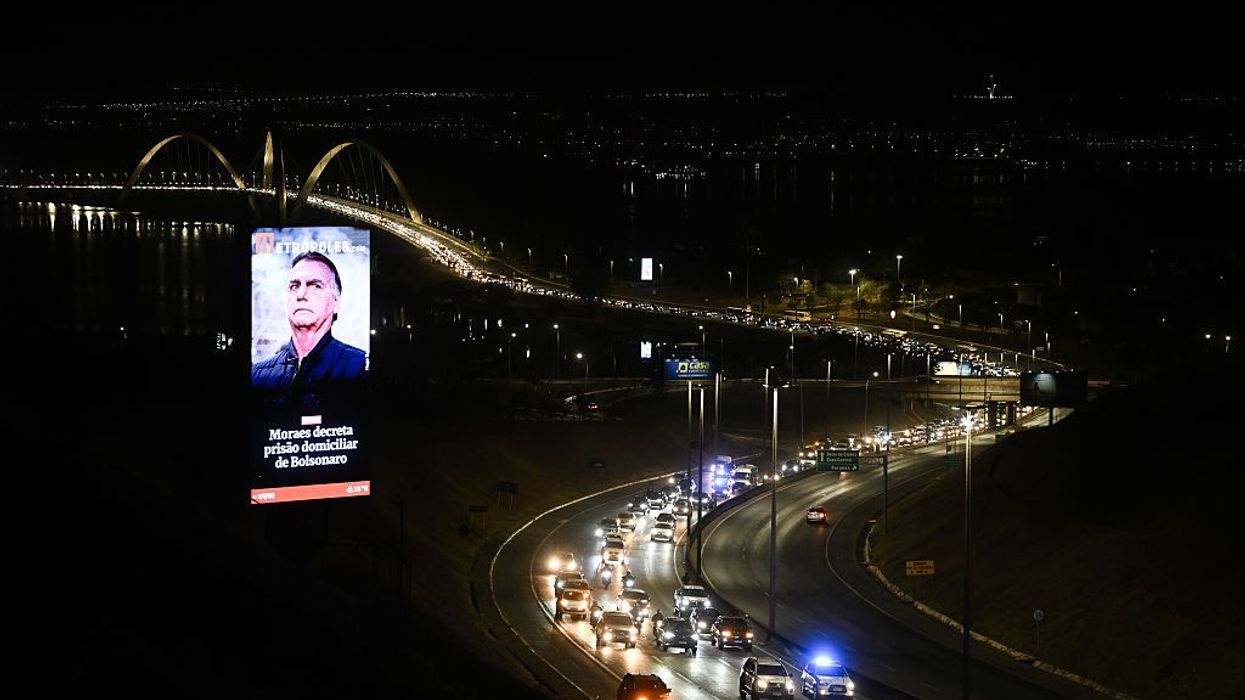
"Bolsonaro and Donald Trump are plotting a coup against Brazil," said a Brazilian geopolitics scholar.
Brazil's Supreme Court placed far-right former President Jair Bolsonaro under house arrest Monday in anticipation of his trial for allegedly attempting a coup following his loss in the 2022 election.
The order has heightened the current government's already simmering tensions with U.S. President Donald Trump, who has imposed high tariffs on some Brazilian imports over what he calls a "witch hunt" against his ally.
Bolsonaro's house arrest was ordered by Justice Alexandre de Moraes, who says the former president had violated restrictions imposed last month banning him from using social media, which he'd been using to rile up supporters to attack the Supreme Court.
The justice said Bolsonaro had used the accounts of allies, including his politician sons, to send "clear encouragement and incitement to attack the Supreme Federal Court, and overt support for foreign intervention in Brazil's judiciary."
The Associated Press reports that Bolsonaro had his phones seized from his Brasilia residence.
Trump slapped Moraes, who is presiding over Bolsonaro's trial, with Magnitsky sanctions—typically reserved for major human rights abusers—last week, which supporters of Brazil's left-wing president Luiz Inácio Lula da Silva called "a direct attack on Brazilian democracy."
Brazilian journalist Brian Mier says Bolsonaro has been emboldened by Trump's support to defy Moraes' orders, assuming that threats from the U.S. would cause the judge "to back down."
"It backfired," Mier said.
The U.S. State Department's Bureau of Western Hemisphere Affairs issued a furious condemnation of Bolsonaro's arrest, promising to "hold accountable all those aiding and abetting sanctioned conduct."
The department hinted that it may place more sanctions on other members of the Supreme Court.
Maria do Rosário, a federal deputy for Lula's Workers' Party (PT), hit back in a post on X.
"With what authority does this attempt to interfere in Brazil's judiciary power, and the threat to Brazilian authorities and citizens persist?" she asked. "None."
The charges against Bolsonaro, often called the "Trump of the tropics," bear a striking resemblance to those leveled against the U.S. president following his 2020 election loss.
Like Trump, Bolsonaro flagrantly spread false claims that his election loss was the result of rampant fraud, which prompted a mob of supporters to attack the legislature in hopes of overturning the "stolen" election.
Brazilian state police have accused Bolsonaro of going even further—allegedly enlisting military officers in a plot to assassinate Lula and forcibly retake power.
Trump has nevertheless drawn parallels between his own legal struggles and those faced by Bolsonaro.
"This is nothing more, or less, than an attack on a Political Opponent – Something I know much about! It happened to me, times 10," Trump wrote last month on Truth Social.
Vinicios Betiol, a geopolitics scholar from the University of Rio de Janeiro, says that "Bolsonaro and Donald Trump are plotting a coup against Brazil."
While he said the arrest of Bolsonaro is worth celebrating, he cautioned that provoking the Supreme Court was part of his strategy "to fuel the narrative of persecution" and whip up civil unrest among his supporters.
"Radical Bolsonarists," he said, "are already talking about blocking roads, toppling power towers, and attacking the [Supreme Court]."
Video: Terra Brasil
Following the announcement of Bolsonaro's arrest, supporters of the former president flooded the streets and drove around the capital Brasilia, with some chanting, "Brazil will stop."
Many of Bolsonaro's supporters view Trump as a key cog in the effort to shield Bolsonaro from prosecution. As The Guardian reports:
On Monday night, hundreds of followers flocked to the gates of Bolsonaro's upmarket condominium to vent their anger, some carrying U.S. flags.
"We want Trump to help us," said one protester, Ricardo, who wore a red MAGA cap and declined to give his second name as he stood outside Bolsonaro's compound holding up a star-spangled banner. "Our solution can no longer come from within [Brazil]. It has to come from abroad. The sanctions are working. More people need to be hit with Magnitsky."
"They know that Bolsonaro will be convicted and have thus gone all-in," Betiol said. "They are willing to cause civil unrest, force the [Supreme Court] to act, and then seek a coup with Trump's help."
"We must indeed celebrate Bolsonaro's arrest," he continued, "but we cannot lower our guard at this decisive moment in our country's history."

"Lula says Brazil will lead the environmental agenda by example," said one prominent Brazilian climate defender. "A veto, on the eve of COP30, is the perfect opportunity to make the discourse into practice."
Opponents including native and Afro-descendant communities and environment defenders are urging progressive Brazilian President Luiz Inácio Lula da Silva to veto legislation passed Thursday by the lower house of the National Congress that would dramatically weaken environmental protections and Indigenous peoples' control over their own lands.
Bill 2159/2021—commonly called the "Devastation Bill"—was approved by the Chamber of Deputies in a 267-116 vote in the dead of night following its passage by the Senate in May. The vote, which took place at approximately 3:40 am, was called by Chamber of Deputies President Hugo Motta of the right-wing Republicans party. Both houses of the National Congress have strong right-wing majorities; some members of Lula's leftist Workers' Party also voted for the bill.
If approved by Lula, the legislation would introduce an online self-declaration process for environmental licensing for many mining and agricultural projects that critics say will fuel deforestation and other destruction. The bill also speeds up the review process for development projects prioritized by the federal government and eliminates reviews for highway upgrades.
"As approved, the bill encourages deforestation and aggravates the climate crisis," Marcio Astrini, executive director of the Climate Observatory," said following the vote.
"Lula says Brazil will lead the environmental agenda by example. A veto, on the eve of COP30, is the perfect opportunity to make the discourse into practice," he continued, referring to this November's United Nations Climate Change Conference in Belém.
"We hope that he will meet his campaign commitments and reject this absurd text approved by the Brazilian Congress," Astrini added.
Lula has 15 days to either approve or veto the measure. However, the right-wing congressional majority could overturn a veto, prompting the Supreme Court to intervene.
Proponents argue the bill would simplify the regulatory process.
"Finally, we have improved legislation to unlock investments, streamline the system, and generate opportunities and income for the country," said Pedro Lupion, a deputy from the right-wing Progressistas party representing Paraná and president of the Parliamentary Agriculture Front.
However, Climate Observatory public policy coordinator Suely Araújo said that the proposal represents "the greatest setback to Brazil's environmental legislation" since licensing requirements were introduced in the 1980s.
Some critics of the bill pointed to Article 225 of the Brazilian Constitution, which states that "everyone has the right to an ecologically balanced environment, which is an asset of common use and essential to a healthy quality of life, and both the government and the community shall have the duty to defend and preserve it for present and future generations."
Brazilian Minister for Indigenous Peoples Sônia Guajajara, a member of the Socialism and Liberty Party (PSOL), said on the social media site X that Thursday's vote "should be forever remembered as the moment when the Chamber of Deputies attacked Brazilian environmental legislation and showed its lack of commitment to the future."
"In the year we will host the COP, our parliamentarians show what example not to set for the world," she added.
Célia Xakriabá, a PSOL deputy representing Minas Gerais, called the bill "legislative ecocide."
Quilombolas—residents of quilombos, Afro-Brazilian communities formed by self-liberated slaves or their descendants—and their advocates also sounded the alarm over the bill, pointing to existing efforts by extractive industries to kick them off their lands.
"The Devastation Bill threatens over 80% of quilombos and 32% of Indigenous lands in Brazil," progressive Rio de Janeiro consultant Lázaro Rosa noted on X. "Let's put strong pressure to ensure this abomination is not approved."
Erika Hilton, a PSOL federal deputy representing São Paulo, said that if the bill is approved by Lula, "mining companies will be able to renew their licenses automatically, without technical studies or prior analysis."
"This is a recipe for new tragedies like those in Brumadinho, Mariana, and Braskem in Maceió," she warned. "Other points of the bill include the end of environmental licensing for agriculture to deforest and the end of control over the use of our water resources... And the Devastation Bill will also destroy the control of pollutant emissions, putting at risk the very air we breathe."
Hilton continued: "Even so, the tendency is that, with the narrative that all our environmental legislation is bureaucracy that hinders development, the deputies will approve this horror. But what country develops with an environmental tragedy every other day? What country develops if children start being born without brains due to pollution, like in the '70s in Cubatão? What country develops if the people no longer have water to drink, air to breathe, and life to live?"
"These are the questions that the deputies are ignoring," she added.
Journalist Amanda Miranda denounced members of Congress who voted to authorize "the destruction of Brazil while its citizens sleep."
"Brazil will be handed over to the interests of businessmen who will help reelect each one of them," she added. "Every climate catastrophe is part of this reckoning too."