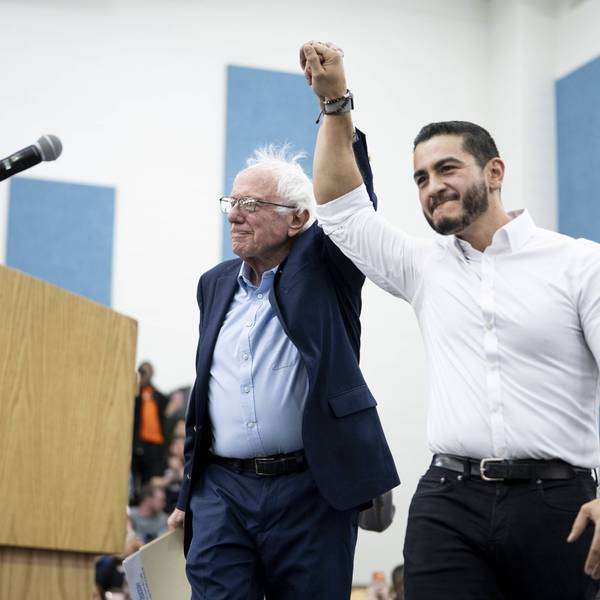
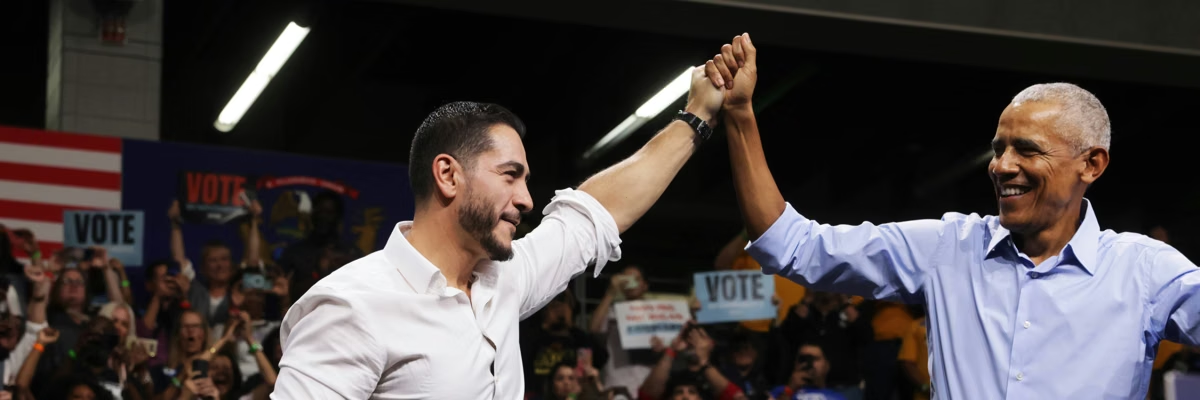
Former President Barack Obama stands with Democratic candidate for Senate, Dr. Abdul El-Sayed, during a “Get Out the Vote" rally on October 24, 2026, in Detroit, Michigan.
The Most Important Midterm Race Is El-Sayed vs. Rogers in Michigan
If Abdul El-Sayed wins, he will have succeeded in shattering taboos and raising issues that will have a lasting impact.
The Michigan Senate race between the Democratic nominee, Abdul El-Sayed, and his Republican opponent, Mike Rogers, is this year’s most important election.
It’s significant, on a number of levels, not the least of which is that El-Sayed is an Arab American Muslim of Egyptian descent. Prior to this, we’ve had four Arab Americans elected to the US Senate—former Majority Leader George Mitchell (D-ME), James Abourezk (D-SD), James Abdnor (R-SD), and John Sununu (R-NH)—none of them Muslim.
If elected, El-Sayed would be the first Muslim in the Senate. This is a breakthrough that hasn’t been lost on Republicans and President Trump, who have made a determined effort to exploit it at every turn. They’ve done TV ads alleging that El-Sayed’s mother was affiliated with the Muslim Brotherhood in the 1970s. The problem with this charge is that El-Sayed’s parents separated when he was three; she moved back to Egypt and he grew up with his father in Michigan. But when using slanderous attacks to tarnish a candidate is the goal, facts don’t matter. And so, the GOP has persisted in spreading the Muslim Brotherhood lie on social media and by sending paid hecklers to El-Sayed’s campaign events pestering him with questions and comments like: “Will you denounce the Muslim Brotherhood?” A recent exchange of this sort backfired on the Republican instigators.
At a town hall when a young man asked whether El-Sayed would denounce the group, El-Sayed shot back, “Yes, absolutely,” and then pivoted by asking the questioner, “Why are you asking me this?” wanting to know whether it was because of his name and how he prayed. He then made clear that the document to which he would take an oath was the US Constitution and smartly compared the attacks against his religion with those leveled against President Kennedy—that Kennedy would be more loyal to the Catholic Pope than to the Constitution. El-Sayed concluded noting that he wasn’t running to be a Muslim senator, but a senator who happened to be a Muslim.
That exchange went viral on social media, drawing more than 50 million viewers the first night. The next day it was revealed that the heckler was a former staffer for a very conservative anti-Muslim Senator. He had been hired by a group that had received a very substantial contract to hire hecklers to disrupt El-Sayed events.
This brings into focus another reason why this election is so important: the role of dark money in American politics. Dark money refers to money raised by “super PACs” and independent expenditure funds that are not required to report donors before elections. This has allowed billionaires and special interest groups to amass large sums and spend them to defame candidates who oppose their agendas. Increasingly, these dark money sources are raising and spending more on campaigns than the candidates raise for themselves.
In the primary, El-Sayed was confronted by dark money expenditures of $70 million ($31 million from pro-Israel groups), much of it on negative attacks against him. Despite being outspent by a margin of 11 to 1, El-Sayed won. In the general election, it is estimated that another $100 million in dark money will be spent against him. If he wins, it will demonstrate the limits of dark money and help advance the argument that dark money should be banned because of its corrosive role in our democracy.
From the beginning of his campaign, El-Sayed has been a clear and consistent critic of US support for the Israeli genocide in Gaza. This was the main reason why so much pro-Israel super PAC money was spent to defeat him. His Democratic primary opponent made support for Israel central to her campaign, at one point emotionally noting how much she loved and would always stand by Israel. Pro-Israel Jewish organizations denounced El-Sayed and did their best to tarnish him, labeling him antisemitic. This succeeded in costing El-Sayed some support from Jewish American Democratic voters. In spite of this attrition, he won the primary, with one pre-election survey saying he had nevertheless retained the support of a bloc of progressive Jewish voters.
Now in the general, El-Sayed is still being confronted by the same attacks and an organized effort among these same pro-Israel groups who are pledging to vote for his opponent. El-Sayed has made it clear that instead of spending billions to buy bombs to kill Palestinians, America’s wealth ought to go to build better schools, provide health care, and provide for people’s needs here at home. While this was once a taboo topic, it has resonated with Democrats and independent voters. This, in itself, is a breakthrough.
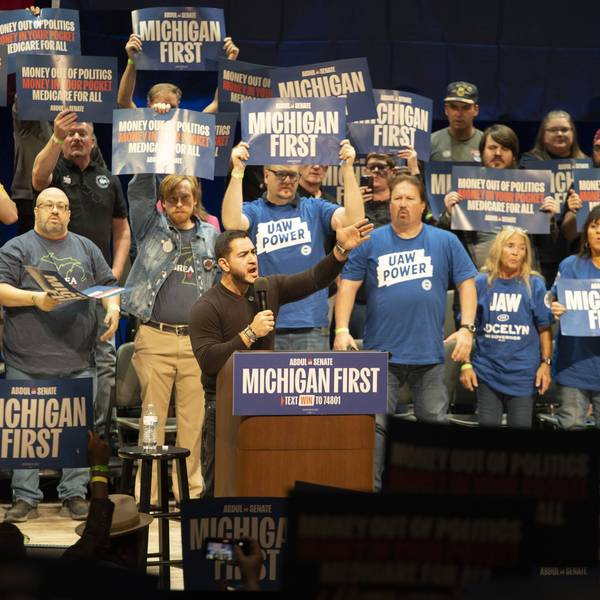
Finally, an El-Sayed victory will succeed in advancing a progressive agenda. Despite being attacked as a socialist, he maintains that he is a supporter of capitalism who wants to see it work to meet the needs of people. He makes this point with a mantra he uses to begin his rallies: “Money out of politics, money in your pockets, Medicare for all.” His arguments are simple: It shouldn’t be easier for a billionaire to make another billion than it is for a family to be lifted out of poverty. Health care should be seen as a human right for all, not a privilege that can only be afforded by some. And instead of spending billions for wars, we need to invest in schools and the quality of life here at home.
These are the challenges El-Sayed presents to our politics. If he wins, he will have succeeded in shattering taboos and raising issues that will have a lasting impact. And even if, God forbid, he loses, our politics will never be the same. On so many levels, this is a historic, transformative campaign.
We are at a crossroads
This country and this world are at a monumental crossroads. In a few short weeks, US voters will have an opportunity to beat back the forces of fascism and confront the billionaires who are rigging the economy, our media system, and our democracy, making it increasingly impossible for ordinary people to get by. We’re not just talking about the election. We’re talking about what must be done once these fascist elements are vanquished from power. We need a bolder set of solutions than what either major party has so far been willing to offer and a working-class movement ready to fight like hell for it. Trump didn't emerge from nowhere. The conditions that fueled MAGA authoritarianism were created by decades of radical neoliberal economic policies and a corrupt political system dominated by corporate interests. They slashed taxes on the super-rich, promising that the benefits would trickle down. They said giveaways to the corporate titans would make life more affordable for the rest of us. It was all bullshit. And when a bitter, betrayed populace searches for someone to blame, right-wing demagogues have little trouble finding scapegoats. People know when they're being lied to, but you won't hear any of this from the corporate media. Only independent journalism—powered and funded by people who believe in building a better world—can deliver truly trustworthy daily news. Our Fall Campaign is underway, and we need your help. To power our newsroom through the rest of the year, we need to raise $125,000 by midnight on October 31. So if you share our vision, please contribute whatever you can to sustain our work. |
The Michigan Senate race between the Democratic nominee, Abdul El-Sayed, and his Republican opponent, Mike Rogers, is this year’s most important election.
It’s significant, on a number of levels, not the least of which is that El-Sayed is an Arab American Muslim of Egyptian descent. Prior to this, we’ve had four Arab Americans elected to the US Senate—former Majority Leader George Mitchell (D-ME), James Abourezk (D-SD), James Abdnor (R-SD), and John Sununu (R-NH)—none of them Muslim.
If elected, El-Sayed would be the first Muslim in the Senate. This is a breakthrough that hasn’t been lost on Republicans and President Trump, who have made a determined effort to exploit it at every turn. They’ve done TV ads alleging that El-Sayed’s mother was affiliated with the Muslim Brotherhood in the 1970s. The problem with this charge is that El-Sayed’s parents separated when he was three; she moved back to Egypt and he grew up with his father in Michigan. But when using slanderous attacks to tarnish a candidate is the goal, facts don’t matter. And so, the GOP has persisted in spreading the Muslim Brotherhood lie on social media and by sending paid hecklers to El-Sayed’s campaign events pestering him with questions and comments like: “Will you denounce the Muslim Brotherhood?” A recent exchange of this sort backfired on the Republican instigators.
At a town hall when a young man asked whether El-Sayed would denounce the group, El-Sayed shot back, “Yes, absolutely,” and then pivoted by asking the questioner, “Why are you asking me this?” wanting to know whether it was because of his name and how he prayed. He then made clear that the document to which he would take an oath was the US Constitution and smartly compared the attacks against his religion with those leveled against President Kennedy—that Kennedy would be more loyal to the Catholic Pope than to the Constitution. El-Sayed concluded noting that he wasn’t running to be a Muslim senator, but a senator who happened to be a Muslim.
That exchange went viral on social media, drawing more than 50 million viewers the first night. The next day it was revealed that the heckler was a former staffer for a very conservative anti-Muslim Senator. He had been hired by a group that had received a very substantial contract to hire hecklers to disrupt El-Sayed events.
This brings into focus another reason why this election is so important: the role of dark money in American politics. Dark money refers to money raised by “super PACs” and independent expenditure funds that are not required to report donors before elections. This has allowed billionaires and special interest groups to amass large sums and spend them to defame candidates who oppose their agendas. Increasingly, these dark money sources are raising and spending more on campaigns than the candidates raise for themselves.
In the primary, El-Sayed was confronted by dark money expenditures of $70 million ($31 million from pro-Israel groups), much of it on negative attacks against him. Despite being outspent by a margin of 11 to 1, El-Sayed won. In the general election, it is estimated that another $100 million in dark money will be spent against him. If he wins, it will demonstrate the limits of dark money and help advance the argument that dark money should be banned because of its corrosive role in our democracy.
From the beginning of his campaign, El-Sayed has been a clear and consistent critic of US support for the Israeli genocide in Gaza. This was the main reason why so much pro-Israel super PAC money was spent to defeat him. His Democratic primary opponent made support for Israel central to her campaign, at one point emotionally noting how much she loved and would always stand by Israel. Pro-Israel Jewish organizations denounced El-Sayed and did their best to tarnish him, labeling him antisemitic. This succeeded in costing El-Sayed some support from Jewish American Democratic voters. In spite of this attrition, he won the primary, with one pre-election survey saying he had nevertheless retained the support of a bloc of progressive Jewish voters.
Now in the general, El-Sayed is still being confronted by the same attacks and an organized effort among these same pro-Israel groups who are pledging to vote for his opponent. El-Sayed has made it clear that instead of spending billions to buy bombs to kill Palestinians, America’s wealth ought to go to build better schools, provide health care, and provide for people’s needs here at home. While this was once a taboo topic, it has resonated with Democrats and independent voters. This, in itself, is a breakthrough.
Finally, an El-Sayed victory will succeed in advancing a progressive agenda. Despite being attacked as a socialist, he maintains that he is a supporter of capitalism who wants to see it work to meet the needs of people. He makes this point with a mantra he uses to begin his rallies: “Money out of politics, money in your pockets, Medicare for all.” His arguments are simple: It shouldn’t be easier for a billionaire to make another billion than it is for a family to be lifted out of poverty. Health care should be seen as a human right for all, not a privilege that can only be afforded by some. And instead of spending billions for wars, we need to invest in schools and the quality of life here at home.
These are the challenges El-Sayed presents to our politics. If he wins, he will have succeeded in shattering taboos and raising issues that will have a lasting impact. And even if, God forbid, he loses, our politics will never be the same. On so many levels, this is a historic, transformative campaign.